Equivalence in Scientific and Technical Translation
A Text-in-Context-based Study
Momka KREIN-KUTIILE
European Studies Research Institute School of Languages
University of Salford, Salford, UK
The central problem of translation practice is that of finding TL translation equivalents. A central task of translation theory is that of defining the nature and conditions of translation equivalence.
Table of contents
Table of contents
List of figures and tables Acknowledgements
Declaration of already published sections List of abbreviations and acronyms Abstract
Introduction
1 The concept of equivalence in scientific and technical translation 1.1 A brief overview of scientific and technical translation (STT)
from both a cliachronic and a synchronic point of view 1.2 The concept of equivalence in STT as it is perceived in the
literature
1.2.1 Jumpelt: Gleichwertigkeit
1.2.2 Pinchuck: Equivalence of grammatical units vs. equivalence of effect
1.2.3 Sager: Equivalences
1.2.4 Hom-HeIf An ST-defectiveness-based approach to Aquivalenz 1.3 An overview of more recent views of equivalence in
translation studies
1.4 Towards a redefinition of equivalence in scientific and technical translation
1.4.1 Delimitation and definition of the subject matter of 'translation' 1.4.2 Redefinition of equivalence and the establishment of
equivalence-relevant features
1.4.3 The research report as an equivalence-relevant genre 1.5 Summary of this chapter
2 Methodology
2.1 A corpus-based investigation of translation
51 51 64 65 66 71 77 79 80 81 81 87 89 91 93 97 100 100 100 101 102 103 104 105 105 106 108 111 113 114 2.2 Towards a theoretically well-founded and refined translation
corpus-based comparative methodology for the investigation of equivalence in STT
2.2.1 Towards a theoretically well-founded translation comparison
2.2.2 Towards an equivalence-relevant translation corpus
2.2.2.1 Corpus selection criteria
2.2.2.1.1 General selection criteria
2.2.2.1.2 Qualitative selection criteria based on textual and extra-textual data
2.2.2.1.3 Quantitative selection criterion
2.2.2.2 Description and analysis of the translation corpus, and the aims of corpus-based research
2.2.2.2.1 Analysis of the corpus
2.2.2.2.2 Aims of corpus-based research
2.3 Sumniaiy of this chapter
3 Equivalence at the syntactic level:
An investigation of the English non-finite verb forms and their German potential equivalents
3.1 English infinitive constructions and their German potential equivalents
3.1.1 Infinitive clauses expressing purpose
3.1.1.1 Regular infinitive clauses of purpose
3.1.1.1.1 Special infinitive clauses of purpose
3.1.2 Other equivalence-relevant infinitive constructions
3.1.2.1 Modal infinitive constructions
3.1.2.1.1 The catenative verb construction seem and appear +
infinitive
3.1.2.1.2 Pseudo- subject it+be+adjective+to-infinitive
3.1.2.1.3 The infinitive in statements of the aims of a study/project
3.1.2.1.4 Nd constructions with the verbs of assumption expect
and project 3.1.2.1.5 Ad constructions
3.1.2.2 Nonmodal infinitive constructions
3.1.2.2.1 Nd constructions with the verbs of knowledgejind and
show
3.1.2.2.2 The terminological infinitive
3.1.3 Summary of this section
3.2 English past participle constructions and their German potential equivalents
3.2.1 The past participle used in clause reduction and its German potential equivalents
3.2.1.1.1 The expanded postmodifiing past participle as reduced
relative clause 115
3.2.1.1.1.1 The expanded postmod*jing past participle as
'detached' reduced relative clause 120 3.2.1.1.2 The unexpanded postmodifying past participle 121
3.2.1.2 The past participle used in adverbial clause reduction 123 3.2.1.2.1 The related past participle clause 123
3.2.1.2.2 'tinking as-clauses" 125
3.2.1.3 Prepositional past participles and/or sentential past participles 128 3.2.1.3.1 Based on as a prepositional and/or sentential past
participle 128
3.2.1.3.2 Compared with as a prepositional past participle 130 3.2.1.3.3 Followed by as a sentential past participle 131
3.2.4 Summary of this section 133
3.3 English -ing form constructions and their German potential
equivalents 138
3.3.1 The present participle used in clause reduction and its German
potential equivalents 140
3.3.1.1 The postmodif.,ring present participle as reduced relative clause 140 3.3.1.1.1 The expanded postmodifjing present participle as
reduced relative clause 141
3.3.1.1.1.1 The expanded postmodifjing present participle
as 'detached' reduced relative clause 144 3.3.1.2 The postmodifying present participle as reduced sentential relative
clause 146
3.3.1.3 The unrelated present participle used in adverbial clause reduction 149 3.3.2 The gerund used as an adverbial phrase and its German potential
equivalents 153
3.3.3 Summary of this section 156
3.4 Summaty of this chapter 160
4 Equivalence at the lexical-semantic level:
An investigation of have and be as main verbs, modal auxiliaries and instances of 'secondary subjectification' and their German
potential equivalents 164
4.1 Have and be used as main verbs and their potential equivalents 166
4.1.1 Have and its potential equivalents 168
4.1.1.1 Have ill SPave)Od structure, in which a characteristic or quantity is
allocated to the subject 168
4.1.2 Be and its potential equivalents 172
4.1.2.1 Be with adjectival C5 172
4. 1.2.2 Be with nominal C,, 174
4.1.2.3 Be with adverbial complementation 177
4.1.2.4 Be with "existential there" 178
4.1.2.5 Be as part of a 'functional verb structure' 180
4.1.2.6 Be after pseudo-subject it 181
4.1.2.7 Stock phrases with be 182
4.1.2.8 Subject+be+explicit indicator of apposition or colon 182
4.1.3 Summary of this section 183
4.2 English modal auxiliaries and their German potential equivalents 188 4.2.1 May and might and their German potential equivalents 191
4.2.1.1 May and its potential equivalents 191
4.2.1.1.1 'Uncertainty' may 191
4.2.1.1.2 'Rhetorical' may 193
4.2.1.2 Might and its potential equivalents 194
4.2.1.2.1 'Present relative to past axis' might 194
4.2.1.2.2 'Hypothetical' might 195
4.2.2 The modals of necessity must (have to/had to) and need, and
their potential equivalents 196
4.2.3 Should and its potential equivalents 198
4.2.3.1 Should expressing 'logical expectation' 199 4.2.3.2 Should expressing recommendationladvisability 199
4.2.3.3 'Rhetorical' should 200
4.2.4 Can and could and their German potential equivalents 202
4.2.4.1 Can and its potential equivalents 202
4.2.4.1.1 'Objective' can 203
4.2.4.1.2 'Rhetorical' can 204
4.2.4.2 Could and its potential equivalents 205
4.2.4.2.1 'Deep past tense' could 206
4.2.4.2.2 'Present relative to past axis' could 207
4.2.4.2.3 'Hypothetical' could 208
4.2.5 Will and would and their potential equivalents 210
4.2.5.1 Will and its potential equivalents 210
4.2.5.1.1 'Regularity' will 211
4.2.5.1.2 'Futurity' will 212
4.2.5.2 Would and its potential equivalents 214
4.2.5.2.1 'Hypothetical' would 215
4.2.5.2.2 'Present relative to past axis' would 217
4.2.6 Summary of this section 219
4.3 Instances of 'secondary subjectification' and their German
4.3.1 Verbs/predicates occurring in instances of'secondaiy subjectification'
4.3.2 Subject types plus predicates occurring in 'secondary subjectification' and their potential equivalents
4.3.2.1 'Documentary' subjects
4.3.2.1.1 'Documentary' subject+verb(non.
prepositionallprepositional]+COmpleflleflt[direct object, how-clause/prepositional object] 4.3.2.1.2 'Documentary' subJect+verb(nonprepositionalJ
+that-clause
4.3.2.2 Concrete chemical substances/technical objects and processes/methods in subject position
4.3.2.2.1 Subject plus non-prepositional verb plus direct object 4.3.2.2.2. Subject plus prepositional verb plus prepositional
complement
4.3.2.3 Deverbal nouns and verbal nouns, i.e., gerunds, in subject position
4.3.2.3.1 Gerund plus non-prepositional verb/prepositional verbs+ direct or prepositional object
4.3.2.3.2 Deverbal nouns plus non-prepositional/prepositional verb+direct/prep ositional object/or that-/wh-clause
4.3.2.4 This-subject
4.3.2.5 Names of institutions, consortia, companies as subjects 4.3.2.6 Other subject types
4.3.3 active]+object[directStmCtU1e fiilfiThng the constraint of 'secondary subjectification'
4.3.3.1 Documentary subjects+verb[ , , 0]+object[J 4.3.3.2 'Non-documentary' subjects+verb [ 0]+object[]
4.3.4 Results for verbs/predicates in 'secondary subjectification' 4.3.5 Summary of this section
4.4 Sunimai-y of this chapter
5 Equivalence at the terminological-phraseological level
5.1 Compounding as an equivalence-relevant feature at the terminological-phraseological level
5.2 English 2-element compound terms and their German potential equivalents
5.2.1 2-element compound noun structures and their potential equivalents
5.2.1.1 Noun+noun compounds and their potential equivalents 5.2.1.2 Eponymic compounds and their potential equivalents
5.2.1.2.1 (VingcoprOcessing)+nOIlfl compounds 5.2.1.2.2 abbreviatedlacronymic proper name+(Vmg=
coprocessing) compounds
5.2.1.3 Ving+notm compounds and their potential equivalents 5.2.1.4 Technical abbreviation+noun compounds and their
Appendix I Appendix
II
Appendixifi
potential equivalents 293
5.2.1.5 Noun+preposition+noun structures and their potential
equivalents 297
5.2.1.6 NOUfl+Vmg compounds and their potential equivalents 299 5.2.1.7 Summaiy of the investigation of compound noun structures 300
5.2.2 Adjective+noun compound structures and their potential
equivalents 303
5.2.2.1 Adjective+noun compounds and their potential equivalents 304 5.2.2.2 Past participle+noun compounds and their potential equivalents 309 5.2.2.3 Adjective+V mg compounds and their potential equivalents 310 5.2.2.4 Adjective+technical abbreviation compounds and their potential
equivalents 311
5.2.2.5 Summary of the investigation of adjective+noun compounds 312
5.3 Summary of this chapter 315
6 Equivalence at the overall textual level
Cohesion and coherence in translation: The case of the English demonstrative determiner/pronoun this and its German
potential equivalents 323
6.1 The case of demonstrative determiner/pronouns this and its German potential equivalents
6.1.1 This used as demonstrative determiner and its potential equivalents
6.1.2 This used as demonstrative pronoun and its potential equivalents
6.2 Summary of this chapter
7 Conclusion 7.1 Outlook
326 328
332 336
338 353
358 359 364 365 381 Wotjak' s (1997) multi-level model (Mehrebenenmodell)
of equivalence
A brief discussion of the methodological approaches adopted by some of the descriptive scholars
Macro-structure of the ST-IT pair: The research report
Bibliography I Translation studies, LSP research and linguistics Bibliography
II
Science and technology, parallel texts, dictionaries andTable 7
Table 8
Table 9
List of figures and tables
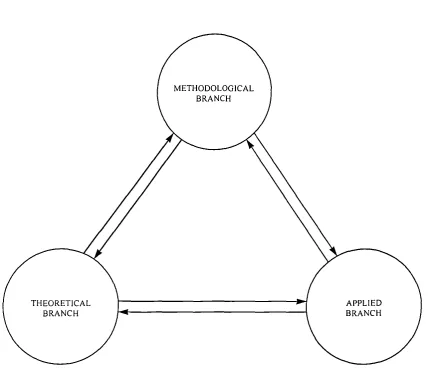
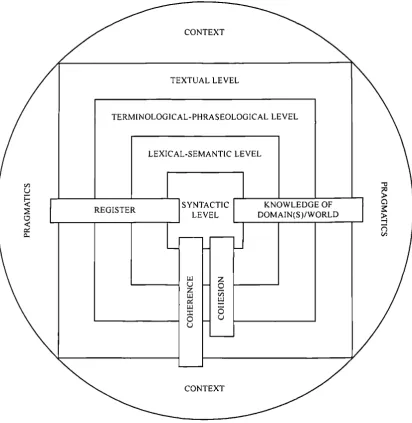
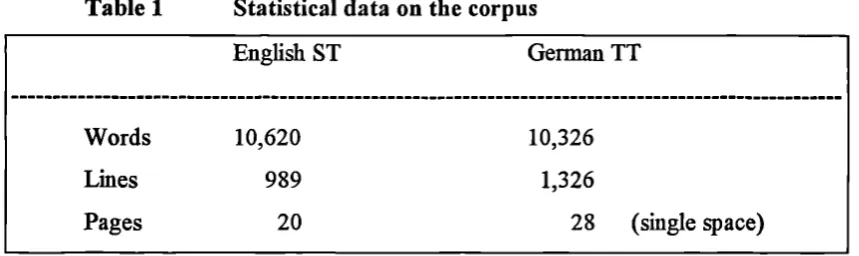
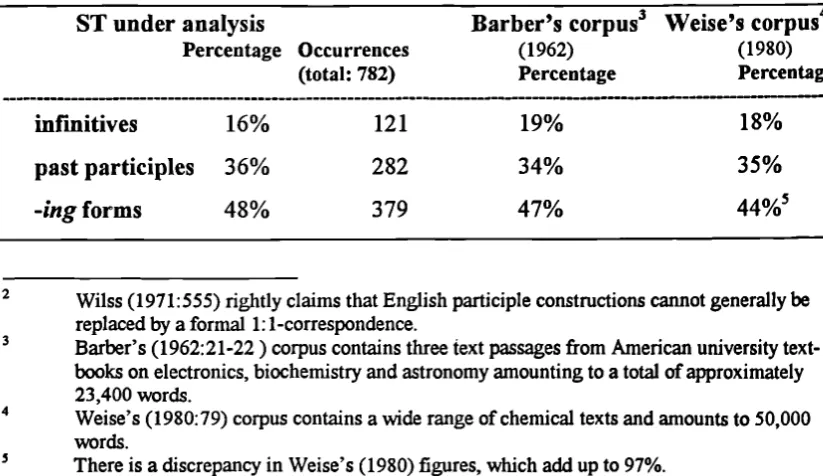
Fig. 1 Fig. 2 Table 1 Table 2 Table 3 Table 4
Interrelation triangle combining the methodological, theoretical and applied branches of translation studies Taxonomy of interrelated text levels in context
Statistical data on the corpus
Distribution of the features (non-finite verb forms) investigated at syntactic level
Distribution of translation solutions for infinitive clauses ofpurpose (categories 3.1.1.1 and 3.1.1.1.1)
Recommended transfer procedure for English infinitive clauses of purpose
5 la 57a
79
88
108
109 Table 5 Distribution of translation solutions for the expanded
postmodifying past participle as reduced relative clause, the expanded postmodiFying past participle as 'detached' reduced relative clause and the unexpanded
postmodif,iing past participle (categories 3.2.1.1.1,
3.2. 1. 1. 1.1 and 3.2.1.1.2) 123
Table 6 Distribution of translation solutions for the expanded postmodifjing past participle as reduced relative clause
(categoiy 3.2. 1. 1.1) 133
Distribution of translation solutions for the unexpanded postmodif3ing past participle (category 3.2.1.1.2) Distribution of translation solutions for the related past participle (category 3.2.1.2. 1)
Distribution of translation solutions for linking as-clauses" (Swales 1971:153) (category 3.2.1.2.2)
134
135
135 Table 10 Distribution of translation solutions for based on as a
prepositional and/or sentential past participle
(category 3.2.1.3.1) 136
Table 11 Distribution of translation solutions for compared with
as a prepositional past participle (category 3.2.1.3.2) 136 Table 12 Distribution of translation solutions for followed by as a
Table 16 Table 17 Table 18 Table 20 Table 21 Table 22 Table 23 Table 24 Table 25
Table 13 Distribution of translation solutions for the expanded postmodifjing present participle as reduced relative clause and the expanded postmodifjing present participle
as 'detached' reduced relative clause
(categories 3.3.1. 1.1 and 3.3.1. 1.1. 1) 146
Table 14 Distribution of translation solutions for the expanded postmodifjing present participle as reduced relative
clause (category 3.3.1.1. 1) 156
Table 15 Distribution of translation solutions for the postmodifjing present participle as reduced sentential relative
clause (category 3.3.1.2) 157
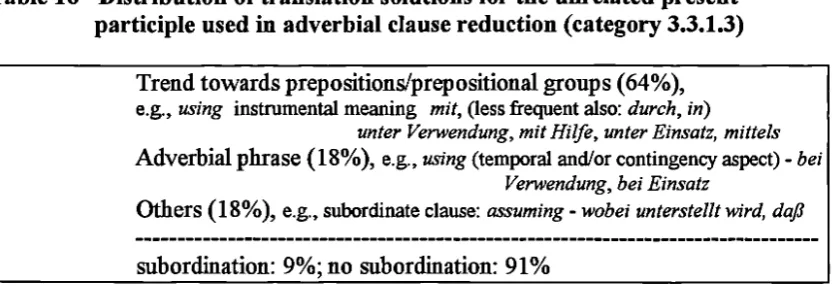
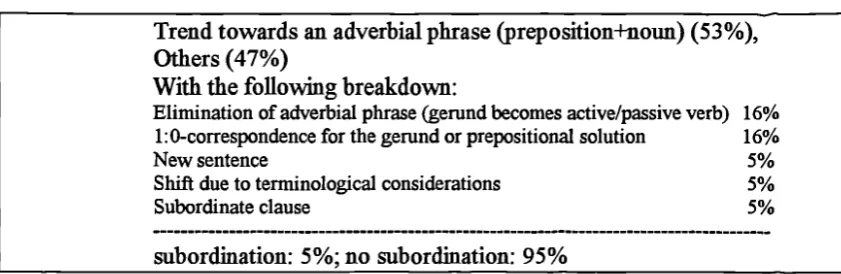
Distribution of translation solutions for the unrelated present participle used in adverbial clause reduction (category 3.3.1.3) Distribution of translation solutions for the gerund used as an adverbial phrase (category 3.3.2)
Distribution of the features (have and be used as main verbs, modal auxiliaries and instances of 'secondary
subjectification') investigated at lexical-semantic level
158
159
166 Table 19 Distribution of translation solutions for have in SPave) Od
structure and have as part of a 'functional verb structure'
(categories 4.1.1.1 and 4.1.1.2) 171
Distribution of translation solutions for be used as main verb (category 4.1.2)
Distribution of translation solutions for have in SPave)Od structure (category 4.1.1.1)
Distribution of translation solutions for have as part of a 'functional verb structure' (category 4.1.1.2) Distribution of translation solutions for have used as main verb (category 4.1.1)
Distribution of translation solutions for be with adjectival C (category 4.1.2.1)
Distribution of translation solutions for be with nominal C (category 4.1.2.2) 183 183 183 183 184 184 Table 26 Distribution of translation solutions for be with adverbial
Table 27 Distribution of translation solutions for be with
"existential there" (category 4.1.2.4) 185 Table 28 Distribution of translation solutions for be as part of a
'functional verb structure' (category 4.1.2.5) 185
Table 29 Distribution of translation solutions for be after
pseudo-subject it (category 4.1.2.6) 185
Table 30 Distribution of translation solutions for stock phrases
with be (category 4.1.2.7) 186
Table 31 Distribution of translation solutions for subject+be+explicit
indicator of apposition or colon (category 4.1.2.8) 186 Table 32 Distribution of modal auxiliaries in the English ST 190 Table 33 Distribution of translation solutions for 'uncertainty' may and
'rhetorical' may (categories 4.2.1.1.1 and 4.2.1.1.2) 193 Table 34 Distribution of translation solutions for 'present relative
to past axis' might and 'hypothetical' might
(categories 4.2.1.2.1 and 4.2. 1.2.2) 196
Table 35 Distribution of translation solutions for modals of necessity
(category 4.2.2) 197
Table 36 Distribution of translation solutions for should of logical expectation, should of recommendationladvisability, 'rhetorical' should (categories 4.2.3.1, 4.2.3.2, 4.2.3.3)
and should of instruction (not in the corpus) 201 Table 37 Distribution of translation solutions for 'objective' can
and 'rhetorical' can (categories 4.2.4.1.1 and 4.2.4.1.2) 205 Table 38 Total percentage distribution of translation solutions for can 205
Table 39 Distribution of translation solutions for 'deep past tense' could, 'present relative to past axis' could and 'hypothetical'
could (categories 4.2.4.2. 1, 4.2.4.2.2 and 4.2.4.2.3) 209 Table 40 Total percentage distribution of translation solutions for could 209 Table 41 Total percentage distribution of translation solutions for
can and could on a textual basis 210
Table 42 Distribution of translation solutions for 'regularity' will and 'futurity' will (categories 4.2.5.1.1 and 4.2.5. 1.2) and
Table 43 Distribution of translation solutions for 'hypothetical' would and 'present relative to past axis' would
(categories 4.2.5.2.1 and 4.2.5.2.2) 218
Table 44 Total percentage distribution of translation solutions for would 218 Table 45 Overview of translation solutions for modal auxiliaries
in the ST 219-220
Table 46 Distribution of translation solutions for 'documentary' subjects
(categories 4.3.2. 1.1 and 4.3.2. 1.2) 234
Table 47 Distribution of translation solutions for concrete chemical substances/technical objects and processes/methods in
subject position (categories 4.3.2.2.1 and 4.3.2.2.2) 238
Table 48 Distribution of translation solutions for deverbal nouns and verbal nouns, i.e., gerunds (categories 4.3.2.3.1
and 4.3.2.3.2) 241
Table 49 Distribution of translation solutions for all instances
of 'secondary subjectification' (categories 4.3.2.1 to 4.3.2.6) 246 Table 50 Distribution of German prepositions/pronominal adverbs
established with the translation solutions for instances
of 'secondary subjectification' 247
Table 51 Distribution of translation solutions for subject+verb[frItIVC, aetivej+ObjeCt[dircctrStrUCtUre flulfihling the constraint of
'secondary subjectification' (categories 4.3.3.1 and 4.3.3.2) 250 Table 52 Overview of translation solutions for instances of 'secondary
subjectification' 254
Table 53 Overview of translation solutions for subject+verb[tnitiVc, active]+Object[directrstrUCtUIe fI1fih1ing the constraint of 'secondary
subjectification' (category 4.3.3) 255
Table 54 Distribution of the compounds occurring in the ST 268 Table 55 Distribution of 2-element compound noun structures in the ST 273 Table 56 Distribution of translation solutions for noun+noun
compounds 285-286
Table 57 Overview of German potential equivalents for English
noun+noun compounds 286
Table 58 Distribution of translation solutions for eponymic compounds
Table 59
Table 60 Table 61
Table 62
Table 63 Table 64
Overview of translation solutions for 2-element compound noun
structures 301
Distribution of 2-element adjective+noun compounds in the ST 304 Overview of translation solutions for 2-element adjective+noun
compounds 312-313
Overview of translation solutions for all 2-element compound
structures investigated (categories 5.2.1 and 5.2.2) 314 Distribution of demonstratives occuning in the ST 327 Overview of the main translation trends for modal auxiliaries
Acknowledgements
Although writing a Ph.D. thesis is a singular and often very lonely experience, no thesis is created in a vacuum. I would like to thank the European Studies Research Institute (ESRJ) at the University of Salford for granting me a fee-waiver and for supporting me financially when I presented my first papers at international conferences. I also benefited much from the friendly atmosphere and guidance I received at the ESRI Postgraduate Seminar Days. These I consider to be a sound platform designed to help postgraduate students test-fly their research projects. I am particularly indebted to former ESR1 director Prof. Geoffrey Harris and to the ESRI secretaries Wendy Dodgson and Louise Graham.
Since research into scientific and technical translation hinges on sound domain knowledge, I would like to thank Mr. J. Wawrzinek of Rheinbraun AG and Dr. Friederike Krey for enlightening me on the intricacies of the domain in question, viz., coprocessing, and my father-in-law Dr. Engelbert Kithie for elucidating some finer points of chemistry. I would also like to express my gratitude to Dr. U. Lenz, Rheinbraun AG, for permission to use the classified translation corpus and to Ms. Uhike Schreck, head of the language service at Rheinbraun AG, for allowing me access to the in-house Multi Term database.
Since research also hinges on the availability of an efficiently working library, I would like to thank the staff at Fachhochschulbibliothek Köln, with a special mention for Ms. Bilker, Ms. Hoeh, Ms. Wolff; Ms. Henning, Ms. Berger, and Mr. Poche for their invariably kind and competent assistance.
Since I owe very much of what I know about LSP translation and scientific and technical translation, in particular, to my former teachers, now colleagues, mentors and friends, Friedheim Schröter, DipL-Ubersetzer, and Arthur Jordan, MA, Fachhochchule KOln, I extend my thanks to both of them.
I would like to thank my family and friends for their moral support. A special thank you goes to Gabriele Hamacher and Arthur Jordan for their unswerving belief in me and my work and for helping me go on when contrary winds were blowing in my direction. A special thank you also to my physician Dr. Anton Dräbne for his support. I am also indebted to Ingeborg SchUler and BArbel Messmann for services rendered. Most of all, however, I owe a debt of gratitude to my supervisor Dr. Myriam Salama-Can, who stimulated my interest in the theoretical/descriptive branch of translation studies, when I attended her very interesting seminars during my MA course at Salford and who guided me through this thesis in the kindest and most professional way. I owe very much of what I have so far achieved in my academic career to her. Also, I am indebted to Dr. Uwe Zemke for having assumed the task of German
advisor to my thesis.
Declaration of already published sections
A brief overview of the methodology applied (sections 2.2.1 and 2.2.2) and
Ad AE ASTM BE CAT CL
CTS DIN
DIP DTS i. a.
LGP LSP MT Nd
R&D
SL ST STT TL TT UN-ECE
List of abbreviations and acronyms
Accusativus cum infinitivo American English
American Society for Testing Materials British English
Computer-aided/assisted translation Contrastive linguistics
Corpus-based translation studies Deutsches Institut fur Normung (German institute for standardization) Desktop publishing
Descriptive translation studies inter alia
Language for general purposes Language for special purposes Machine translation
Nominativus cum inlinitivo Research and development Source language
Source text
Scientific and technical translation Target language
Target text
Abstract
Scientific and technical translation has always played a pivotal role in disseminating knowledge. Today, the domain of science and technology is the main area of translation work. Nevertheless, there is still a discrepancy between the growing need for high-quality technical translations and the short supply of competent technical translators to produce them, a situation which may be due in part to the recent neglect of the equivalence concept in the theoretical/descriptive and applied branches of translation studies (TS).
This thesis sets out to redefine, reassess, and reinstate equivalence as a useflul concept in TS by adopting an approach based on the English-German language pair and on one specific text genre and type. The investigation of equivalence as a qualitative complete-text-in-context-based concept is embedded in an equivalence-relevant methodology based on two methodological pillars, the first being a theoretically sound translation comparison and the second a highly refined translation corpus. Within this methodological framework, equivalence-relevant features are investigated and described at the syntactic, lexical-semantic, terminological-phraseological and overall textual levels. These levels are hierarchically interrelated in descending and ascending order and may be conditioned by pragmatic aspects, viz., domain knowledge and register considerations. The comparison is made using a high-quality corpus selected on the basis of a threefold set of selection criteria, with a special emphasis on the qualitative criteria. This helps us generate well-underpinned intersubjectifiable regularities in the form of potential equivalents established in the TT for ST equivalence-relevant features and enables us to obtain meaningful generalizations.
Introduction
Die Klarung der Ubersetzungsbeziehung (Aquivalenzrelation), das heil3t der fir die Ubersetzung konstitutiven Beziehung zum Ausgangstext ist nach meiner Auffassung von fundamentaler Bedeutung fir die Ubersetzungstheorie. Ubersetzungspraxis heif3t - urn es auf diese (alizu) einfache Formel zu bringen - Herstellung von Aquivalenz; die
Ubersetzungstheorie hat die vorrangige Aufgnbe, sich mit deren Voraussetzungen, Bedingungen, Faktoren, Moglichkeiten und Grenzen zu beschaftigen.
(Koller 1992:9)
Trotz der Ubersetzerschwemme kiagen Industrie und Ubersetzerdienste über einen Mangel an qualifizierten FachUbersetzern. (Schmitt 1985:37)
Das Stichwort fir die zukilnitige Ubersetzungswissenschaft heil3t Praxisbezug [...] (Wilss 1995:104)
The impetus for an examination of the concept of equivalence in scientific and technical translation (STT) is both theoretically and practically motivated, since these two aspects are closely interrelated. The theoretical aspect addresses the low status of equivalence as a concept in translation studies (TS) today (e.g., Baker 1993; Munday 2001), while the practical aspect involves the discrepancy between the growing need for high-quality technical translations and the short supply of competent technical translators to produce them (Schmitt 1985:37, Schmitt 1998a, BDU' Memorandum 19872), a situation which may itself be due in part to the recent neglect of the equivalence concept in the theoretical/descriptive and applied branches of TS.
While some translation theorists have tried to (re)deflne the equivalence concept and do consider it an integral part of the discipline, even if they understand it in different ways (e.g., Jakobson [1959]1992; Nida 1964; Catford 1965; Kade 1968, 1973, 1977; Koller 1978, 1981, 1992, 1995, 2000; Newmark [198211988, 1988; Neubert 1970, 1984, 1985, 1988, 1994; Neubert and Shreve 1992; Pinchuck 1977; House 1977, 1997; Horn-HeIf 1999; Sager 1993; Wilss 1977, 1982, 1996; Pym 1992, 1995; Toury 1980, 1995; Halverson 1997; Wotjak 1997), others question its universal usefulness
1
Bundesverband der Dolmetscher und Ubersetzer (German Nat! onalAssociati on of Interpreters and Translators, my translation).
2
(e.g., Hatim and Mason 1990; Nord 21991; ReiI3 and Vermeer 21991; Stolze 1994) or
even reject it outright (e.g., Holz-Mänttäri 1984; Honig and KuBmaul 1982; KuI3maul 1986; Ladniiral 1981; Vermeer 1984; Schmitt 1986; Snell-Homby 1986, [1988]1995). Certainly, the concept of equivalence has been a fundamental though controversial issue ever since the early days of writing on translation, and its indeterminacy and ambiguity have led to very different interpretations and definitions which have tended to cloud the issue rather than c1arifj it. However, as Wilss (1996:16-17) rightly claims, the solution cannot be simply to dispense with the concept altogether, although this option has become very popular in Germany, in particular, in the wake of a preoccupation with culture-specific, 'translatorial action'-based (Translatorisches Handein), functional and/or skopos-oriented approaches to translation,3 in which the actual language transfer plays only a subordinate role or is,
at most, an upstream activity in the overall translation process (Snell-Hornby et al 1998 fairly accurately mirrors this trend) and 'equivalence' is either degraded to a special form of 'adequacy'4 (ReiB and Vermeer 2l991:139140) or completely
abandoned (HoIz-MAnttäri 1984; Kuflmaul 1986; Vermeer 1984). An even more rigorous attempt to dispense with the concept can be found in some recent corpus-based approaches to translated texts which claim that "the move away from source texts and equivalence is instrumental in preparing the ground for corpus work" (Baker 1993:237) (see 2.1).
In much the same vein, the above approaches have shifled the emphasis in STT away from translational issues to a preoccupation with 'culture-specific' 5 and
terminographical aspects (Schmitt 1989), considerations of layout and typography (Schopp 1998) and electronic tools (Schmitt 1998b), creating the impression that successful STT may be merely a matter of being equipped with the latest technology,6
As for example represented by Holz-Mänttäri (1984), Nord (21991), Reil3 and Vermeer (21991); see Schäffner (1998a) and Dizdar (1998) for overviews of skopos theory, and Schäffiier (1998b) and Risku (1998) for overviews of the theory of 'translatorial action', see Witte (1998) for aspects of cultural specificity. For a very critical account of skopos, culture-specific and 'translatorial action'-based approaches to translation see Kelletat (1987).
For different interpretations of 'adequacy' see Chapter 1, f.n. 10.
The notion of 'cultural specificity' in Sri' (Schmitt 1986, 1989) is often used as a renamer for old problems, such as lexical and terminological issues, or to refer to aspects of localization or adaptation which are not strictly translational.
6
such as DiP, CAT, translation memory, voice type dictating machines, or having access to large term banks and electronic hypertexts in the Internet (Stolze 1996:2-3, 2002:72). While the practical usefulness of these tools and the importance of these aspects cannot be denied, the fact should not be ignored that they remain tools and that preoccupation with such aspects begs the central question of how to achieve equivalence which - it is argued here - is at the heart of successful STT and is still imfinished business. Instead of dealing with this unfinished business, the focus of STT has shifted to aspects of software localization (Gerhardt 1998) and technical writing (Schmitt 1998c, 1999; Gopferich 1998), in Germany, at least. Even if such topics, too, should be considered within the larger framework of TS, they do not belong to our central object of study and are not typical of the multi-faceted standard range of scientific and technical translation work. The central object of TS is the description and explanation of the specificity of its subject matter, viz., translation (for a definition see 1.4.1), and the existential legitimation of translation studies as a discipline in its own right lies precisely in the fact that - as Kade (1977:39) has pointed out - no other discipline explains the specificity inherent in this particular
subject matter.
While the majority of translation scholars - even those who question the usefulness of the equivalence concept - nonetheless admit the relevance of the equivalence criterion in STT (e.g., ReiB and Vermeer 21991:137), only few writers (Jumpelt 1961; Pinchuck 1977; Sager 1993; Horn-HeIf 1999) deal with the critical question of how to determine and define equivalence in this field. This may be due to the fallacious and widely held opinion that successful STT is mostly a matter of using the 'correct terminology' (as still reflected, e.g., in Wilss 1999a:81-98) and that equivalence in the sense of one-to-one correspondences at terminological level can be taken for granted. This view, rightly criticized by Schmitt (1986:252), may be one reason for the poor quality of so much STT (for examples see Schmitt 1999:15 if), an issue much discussed in Germany.
Thus, the general underestimation of the difficulties involved in STT, in tandem with culture-specific and functional/slcopos orientations in approaches to translation, giving rise to an ad infinitum extension of the concept of translation which, as a result, "risks losing its practicability for the scientific study of texts" (Schreiber 1993:2, my translation), to a 'degradation' of the source text (ST) to a mere 'offer of information' (Informationsangebot) (ReiB and Vermeer 21991) and to overemphasis of the above extra-translational aspects - as reflected in the current training of scientific and technical translators at university and college levels (Snell-Homby et a!. 1998: 341 if; Schmitt 1987a; Kelletat 1996) - may be held responsible for the present low status of the equivalence concept, a fact which in our view -directly correlates with the above poor translation quality. Today, the concept is obviously denied its theoretical and practical status even in its 'traditionally legitimate' field of application, i.e., scientific and technical translation, in Germany, at least. 7 However, the above aspects - in our view - are merely symptoms of a deeper fundamental misunderstanding that perceives equivalence as a 'narrow linguistic' concept that is concerned with sameness, identity or even symmetry (Snell-Honiby [1988]1995:22). Such a view may be rooted in the concept's first emergence in writings on translation, i.e., in the development of machine translation (MT) 8 (Zenner 197 1:2-4) involving a mathematical and logical background. However, as early as 1978, van den Broeck (op. cit. :32-33) pointed out that the precise definition of equivalence in mathematics 'Torms the main obstacle to its use in translation theory", since "the properties of a strict equivalence relationship (symmetry, transitivity, reflexivity) do not apply to the translation relationship." And Pym (1995:164) has rightly pointed out in his criticism of Snell-Hornby, that concepts such as Nida's 'dynamic equivalence' 'presuppose substantial linguistic asymmetry." In 1969, Wandruszka (op. cit.: 528) concluded from his multi-lateral translation comparison that languages are characterised by and to be admired for their non-systematic availability (asystematische Disponibilität), a circumstance that may involve
The veiy few instances of the terms Aquivalenz or aquivalent in Schmitt (1999) betray the basic misunderstanding as regards equivalence and correspondence (op. cit.: 344) (see our discussion in 1.4.2) and confine the use of these notions to the terminological context. Schmitt's book is more about technical writing than about translation and at one point (op.cit. :33) he even equates specialized (i.e., technical translation) with "interlingual Technical Writing".
considerable asymmetries in translation at various textual levels, as the present research will show (see Chapters 3 to 6).
A look at the etymology of the term alone (1.4.2) would have pointed the way to a potentially more useflul understanding of the concept in the translation context. Moreover, early German research into equivalence, which is often criticized for having adopted such a narrowly defined notion of equivalence (as mentioned, e.g., in Halverson 1997:211), would not have yielded its meaningful insights (see, e.g., the contributions in Spitzbardt 1972, Wilss 1977, 1982, and the contributions of the 'Leipzig school', e.g., Kade, for one, or the work by House) if it had set its sights on something such as identity or symmetry. Also, a view that dismisses the concept on the grounds of its having an allegedly 'narrowly linguistic' slant and disregarding the contextual-situational dimension points to a misunderstanding that arises when correspondence as a concept of langue is equated with equivalence as a concept of parole (Koller 1978) as regards actually occurring source text-target text (ST-TT)
pairs in context (1.4.2). Neubert (1994:4 14) has aptly summarized the problent The narrow and hence mistaken interpretation of translational equivalence in terms of linguistic correspondence is in our opinion one of the main reasons that the very concept of equivalence has fallen into disrepute among many translation scholars. But, I think, it is a typical case of throwing the baby out with the bath water. Equivalence can never rest entirely on linguistic pillars.
In this context it should be pointed out that linguistics is at the heart of TS (cf also Malmkjr 1998a: 535) and that translation scholars have benefited much from linguistic theories and insights, such as those of contrastive linguistics (Kuhlwein and Wilss 1981), functionalist linguistics (e.g., Firth 1974, Halliday et al 1964, Halliday 1978), e.g., in the area of register analysis, and text linguistics (de Beaugrande and Dressler 1981), e.g., aspects of cohesion and coherence as translation-relevant standards of textuality (see, e.g., the work by Hatim and Mason
1990, 1997).
Is it possible that this fundamental misconception has been more a problem for translation scholars and teachers than for competent professional translators who have always set their sights on equivalence in translation, perhaps without naming it
It is almost a truism that a meaningful notion of equivalence must involve an extra-linguistic dimension, and this wider framework has in fact been employed already by those scholars who work successfully with the concept (such as House 1997). Also, as Pym (1995) reminds us, equivalence has scored well in counteracting "theories of untranslatability", has contributed to the "institutional legitimation" of TS, and has helped distinguish translation from non-translation. The latter is an important aspect at a time when the boundaries of translation are being stretched beyond a meaningful use of the concept. However, it does involve a problem of definitional circularity, which we try to overcome by moving away from equating translation with equivalence, a step which we deem necessary if our investigation is to yield meaningful insights.
With the ultimate aim of reinstating equivalence as a useful concept in the theoretical/descriptive and applied branches of TS, this doctoral thesis sets out to redefine, reassess and investigate the concept of equivalence in STT by adopting an approach based on one language pair (English and German) and on one specific text genre, i.e., the research report, and type, i.e., what ReiB (1971:31-37) calls the 'content-centred' and later 'informative' text type (ReiB and Vermeer 21991:206 if.). The object is to demonstrate that equivalence - when understood as defined in this thesis - can be a valuable theoretical concept which helps us achieve the much-sought-after improvement in the quality of scientific and technical translation on the basis of the regularities or patterns in translation solutions which are established in this research (Chapters 3 to 6) and can be used as input in the applied branches of the discipline. At the same time, the theory itself (2.2.1) in whose terms our research is performed will be tested out (Toury 1995:1), and it is hoped that this test will contribute to the much-needed clarification, dynamization 9 and objectivization of the complex concept of equivalence.
A detailed examination and description of the concept of equivalence that goes beyond the investigations carried out so far - which were more or less confined
Wilss (1996:16-17) points to the need to dynaniize ("dynamisieren") the equivalence concept, i.e., to make it operational for specific situations and texts. In this thesis, the dynaniization of the equivalence concept involves not only making it operational for a specific text genre and type and mode of translation, but also treating it as both a prospective and a retrospective concept, an aspect which is discussed in greater detail in
to the grammatical, word or, at most, sentence levels within the realm of applied linguistics (Jumpelt 1961; Pinchuck 1977) - is the main object of this thesis. Such an examination is an indispensable prerequisite for achieving equivalence at the text-in-context level and for doing justice to this highly complex concept. Hence, this thesis investigates and describes equivalence-relevant features that have different degrees of structural-semantic complexity at the syntactic (Chapter 3), lexical-semantic (Chapter 4), terminological-phraseological (Chapter 5) and overall textual levels (Chapter 6), and establishes their potential equivalents in the TT. Since all of these levels are hierarchically interrelated and may be conditioned and modified by pragmatic considerations, i.e., the highly important aspects of knowledge of domain(s), register and genre, it is necessary to examine the underlying pragmatics as well. Consideration of all levels is crucial for achieving equivalence at the text-in-context level, which is not merely the sum of these levels but the cohesive and coherent final result of all the relations operating between them.
Since - as Kade (1973:16 1) rightly claims - an exact account of interlingual
equivalence relations between STs and TTs for practical applications remains one of the predominant tasks in translation theory, it is hoped that the findings of this thesis, from a theoretical point of view, will contribute toward dynamizing and objecti1,ring the equivalence concept and, from an applied point of view, will be useful in professional translation work, translation teaching and criticism and, in this way, help close the unfortunate gaps in the quality of STT. Hence, this thesis also aims at providing a link between the theoretical/descriptive and applied branches of translation studies (cf Holmes's basic 'map' of the discipline as illustrated in Toury
1995:10) which must be complementary, since each can benefit from the results of
the other. Such a link, in turn, may contribute toward defusing the unproductive confrontational tension (see the harsh criticism of German TS by Berglund 1990)
between the two, in order to achieve a more productive dialectic tension.'°
This thesis is organized in 7 chapters. Chapter 1 gives a brief overview of scientific and technical translation from both a diachronic and a synchronic standpoint and reviews the concept of equivalence as it is perceived in STT and in more recent approaches within TS in general. The concepts of translation and equivalence are then redefined for the purpose of our investigation with a definition of the equivalence-relevant features that are to be analysed. Chapter 1 ends with a description of the research report genre, which is examined here as a translation/equivalence-relevant text genre. Chapter 2 looks at the methodological issue in TS and gives an overview of existing approaches, in particular, descriptive and corpus-based approaches to translation, and propounds our own equivalence-relevant methodology, which is based on a theoretically well-founded translation comparison and a highly refined translation corpus. As regards the llrst point, both theoretical and comparative aspects involving the establishment of comparative parameters are discussed in greater detail; as regards the second point, an extensive threefold set of criteria for the selection of our corpus is presented. The following
10
See, e.g., Lambert and van Gorp (1985:42) who claim that "the links between the different branches of translation studies still have to be established more firmly." Cf. also Hewson and Martin (1991:6) who rightly claim that "theory and practice are the two
1
The concept of equivalence in scientific and technical
translation
In this chapter, scientific and technical translation (STT) will be briefly reviewed from a diachronic and a synchronic point of view (1.1). This will be followed by an overview of the concept of equivalence as it is perceived in STT (1.2) and in more recent approaches to translation studies (TS) in general (1.3) before our own attempt to define the concept (1.4 if) is discussed.
1.1 A brief overview of scientific and technical translation (Sri') from both a dia chronic and a synchronic point of view
Technical and scientific translation, more than any other mode of translation perhaps, is an instrument of cross-fertilization, transformation and progress. Without translation, the modern phenomenon of "technology transfer" would not exist.
(Salama-Carr et al. 1995:101)
As research into the history of translation has shown (Carr 1990, Salama-Carr et a!. 1995:101-127; Montgomery 2000; see also the various traditions in Baker 1998), scientific and technical translation has always played an instrumental role in imparting knowledge down the ages, and - ever since the invention of writing - has been "the great multiplier" (Montgomery 2000:293-294) and "the great pollinator" (Fischbach 1992) of science and technology.' In some major cultures (e.g., China, Japan), in fact, modem science is closely linked to translation or, indeed, started as translation (Montgomery 2000:272). The transfer of scientific and technical knowledge across linguistic-cultural borders had considerable linguistic and epistemological consequences, such as
the creation of new vocabularies; the deletion and addition of epistemological matter; alterations in logic and organization; major shifts in the rhetoric of persuasion; even such deep-seated philosophical differences as the declaration of "facts" vs. the suggestion of factual possibilities. (Montgomery 2000:269)
Science and technology find their expression in language. This does not mean that there is one monolithic scientific and technical language, but rather a plethora of special languages and sub-languages manifesting themselves through various discourse genres and types, and these special languages reflect various technical
domains/sub-domains which may be intersecting and overlapping. Despite its diversity, scientific and technical discourse in general exhibits certain common features or universals such as "das Streben nach Kiarheit, Effizienz, Formalisierung, Standardisierung, Widerspruchsfreiheit, Vollstandigkeit, Objektivität, Unpersonllchkeit, expressiver und emotionaler Neutralität und Ausschaltung von Redundanz" (Beier 1980:84), although these parameters may vary with specific text genres and types. Certainly, scientific and technical languages are not always 'clear', 'standardized', 'objective', 'non-redundant' or 'unequivocal' (e.g., English multiple compound nouns, see Chapter 5). From the point of view of translation, it can be said that the higher the degrees of specialization and abstraction, the lesser the clarity for the translator. The main point is, however, that each language realizes specific common features or universals in a different way and that in order to overcome these differences in translation - as Riilker (1972) rightly points out - the translator has to know the equivalence relations operating at both the grammatical-semantic and the pragmatic levels:
[Es gibt] eine Vielzahl von Unterschieden zwischen der Art und Weise, wie em Fachtext in zwei verschiedenen Sprachen abgefaI3t, wie eine bestinunte Intention des Autors in zwei verschiedenen Sprachen realisiert wird. Wenn sich die Ubersetzung wie em Original lesen soil, müssen auch these Unterschiede vom Ubersetzer Uberwunden wrden. Dazu mul3 dieser neben den Aquivalenzbeziehungen auf der grammatisch-semantischen Ebene auch die auf der pragmatischen Ebene kennen.
(Rülker 1972:56)
The above aspects, together with the fact that scientific and technical language cannot be perceived as one "universal lingua scientia" (Montgomery 2000:27 1) due to the highly diverse content of scientific and technical work, should in themselves be a sufficient argument to defy any atten.lpt to relegate STT to an inferior rank relative to other modes of translation. 2 In their long history, scientific and technical translators have not been 'just' translators, but often scientists as well. Sound linguistic-translational knowledge, together with sound domain knowledge, has always been of prime importance to felicitous scientific and technical translation. Also, translators have acted as "popularizers" and teachers by explaining the specialist works they translated to a non-specialist readership (Salama-Carr Ct aL
2
1995:103), which shows that the boundaries between translations and adaptations have always been as fluid as they are today.
Since the end of World War II, LSP translation has spread considerably in the German-speaking countries (Wilss 1998, 1999a:83, 1999b), and Wilss (1996:viii) estimates that specialist or LSP translation (Fachtextubersetzungen) accounts for Ca. 90% of the total volume of translation. Today, the domain of science and technology itself accounts for the lion's share of total translation work. According to Schmitt (1998a: 9), 76% of the translators/interpreters in Germany work in technical fields, although only 43% had specialized in scientific and technical translation during their university education. 3 This situation is certainly similar to that in other countries and merits greater consideration in curriculum planning. The main working language in Germany is English (Schmitt 1990, 1998a), which as lingua franca has outdistanced German in the course of the last 80 years and especially after 1945, particularly in the domain of the sciences (Hoberg 1995:3). Today, English is the dominant language of science (see the various contributions in Ammon 2001) and its predominant status is reflected in the volume of publications in the scientific and technical arena. In 1996 -according to Amnion (1998:152) - English accounted for 90.7% of the publications in the hard sciences4, whereas Russian accounted for 2.1%, Japanese for 1.7%, French for 1.3% and German for a mere 1.2%. Although these figures may suggest that there is a very great demand for translations from English, the situation on the German translation market shows that translations from German into English and from English into German almost hold the balance in quantity terms with a slightly stronger demand for translations from German into English (Schmitt 1998a:8). As regards the English-German translation direction, many Germans working in the domain of science and technology have a reasonable command of English and therefore may not need' translations, a circumstance which may lead to an impoverishment of German scientific and technical register (Trabant 2000, see Chapter 7), especially in the English-language oriented cutting-edge research domain.
Schmitt's figures are based mainly on two surveys conducted in Germany (the former West German federal states) between 1989 and 1992 (Schmitt 1998:5). Though his figures are somewhat dated, we may still safely assume that any changes will have led to an increase rather than a decrease in the above 76%.
This situation is made even more critical by the fact that German scientists today are more or less forced to publish in English if they want to make their contributions known in the international scientific community (Ammon 1998). Such publications by non-native English speakers are, however, not without problems from a qualitative point of view (Ammon 200 l:354).
The rise in the general demand for English, in particular, but also other language translations due to the "Anglophone globalization of markets" (Stoll 2000:53)6 and the situation in Germany described above - which may be similar to that in other countries - are not only a challenge to translation studies in both its theoretical/descriptive and applied branches, but also point to the enormous potential of translation both as a 'corrective' force (see, e.g., 4.3) and language/register-developing force (see Chapter 7).
Scientific and technical translation (STT) plays a pivotal role in imparting knowledge internationally and at all levels, i.e., all the way from research and development to industrial application. The growth in the exchange of information and in the transfer of knowledge due to the internationalization of science and technology, the globalization and diversification of business and commerce, and the greater sophistication of industrial products has also led to a growth in translation needs. Hence, translation has come to be viewed against this industrial background, and a broader definition of translation has been provided to include, for instance, the production of autonomous documents from SL drafts, excerpts, abstracts, or 'gist' translations (Sager 1993). Though these 'special cases of translation' ("Sonderfälle der Translation", Wotjak 1997:141), which also include software localization (for an overview see, e.g., Gerhardt 1998), should certainly be given due consideration within the larger framework of translation studies (TS), any investigation of equivalence requires a refocussing on TS's central object of study, viz., translation per Se, which has to be demarcated from all other forms of text (re)production
Anunon (2001:354) has pointed out that texts in English published by Germans in the field of sociolinguistics have been criticized for their linguistic (grammatical and stylistic) defectiveness. This observation is certainly not restricted to the sociolinguistic field.
6
According to Crystal (1997:12), "there has never been such a strain placed on the conventional resources of translating and interpreting." Schmitt (1998:5) mentions that the annual demand for translation amounts to 30 million standard pages per year in Germany (West). In 1987 Logos Computer Integrated Translation GmbH mentioned a volume of 200 million pages world wide with a rate of increase of 15% p.a. (Schmitt
(1.4.1). This is because the brief of scientific and technical translation still has a focus on the production of functionally equivalent high-quality Ii texts and is geared to disseminating information and enabling communication to take place between specialists from different linguistic-cultural communities in order to advance scientific and technological progress. In an industrial environment with increasingly stringent customer/supplier quality audits, 'high quality documentation implicitly communicates an overall, company-wide commitment to high quality products, user-friendly operation and responsive customer support" (Wright 1993:70; cf also Schmitt 1999:15). In this context, however, there is a striking discrepancy between the growing demand for STT, on the one hand, and the short supply of qualified and competent translators, on the other, which is reflected in the poor quality of so many translations (cf., e.g., Schmitt 1985). This is the moment when the concept of equivalence comes into play, since equivalence - when understood as defined here - is a valuable theoretical text-in-context-based concept (1.4.2) that is able to help achieve the much-sought-after improvement in the quality of STT and also serve as a basis for translator training in the field (Krein-Küble 1995a: 104-110).
This brief diachronic and synchronic overview makes us realize that what we now call LSP translation has always played an instrumental role in the dissemination of knowledge down the ages, so that it would deserve to be the object of more intensive research. Such research, however, must crucially hinge on three fundamental questions: first, how is the object of our inquiry, viz., translation, defined (Woodsworth 1998:101; Koller 2000:17), second, how can we make sure that the data under analysis is qualitatively acceptable and, third, what methods and theoretical models can best be applied in the investigation. Finding answers to these questions is all the more important in an equivalence-related investigation, since equivalence is indivisibly connected to translation quality (House 1997:31) and its investigation presupposes a definition of the concept of translation. Before the concept of translation is discussed in greater detail (1.4.1), an overview of the concept of equivalence in STT (1.2) and a cursory overview of more recent
approaches to the concept in TS in general (1.3) will be given in the following sections.
1.2 The concept of equivalence in ST1' as it is perceived in the literature
While the majority of translation scholars admit the relevance of the equivalence criterion in STT (see, e.g., Jumpelt 1961; Pinchuck 1977; Reil3 and Vermeer 21991:137; Koller 1981:276; Fluck 21997:259 if), only few writers deal with the critical question of how to determine and define equivalence in this field. This may be due to the fallacious opinion that successful STT is mostly a matter of 'correct terminology' and that equivalence in the sense of one-to-one correspondences at the terminological level can be taken for granted. As Schmitt (1986:252) critically points out:
Em gewisses Ma13 an Aquivalenzproblemen gesteht man allenfalls den
Fachübersetzungen auf den Gebieten Recht, Wirtschaft und Sozialwissenschaft zu [...] Die überwältigende Mehrheit der Sprachwissenschaftler, literarischen CJbersetzer und nicht-technischen FachUbersetzer scheint sich indessen einig daxin zu scm, daJ3 man, wean überhaupt irgendwo, dann in der Technik von Aquivalenz im Sinne einer 1:1-Entsprechung zwischen den Begriffen verschiedener Sprachen ausgehen könne [...]
scientific and technical discourse. In order to objectify and dynamize (Wilss 1996:16-17) the concept of equivalence and establish patterns in translation solutions, one specific text genre, type and domain has been selected (2.2.2.1 if) to furnish more specific results as regards regularities and generalization. Since the equivalence-relevant features established here (see 1.4.2 and Chapters 3 to 6) may also occur in other scientific and technical discourse genres and types, the present research may furnish insights that go beyond the ST-TT pair examined here (see 2.2.1, f.n. 50 and 3.2.4).
Among those scholars who take a more detailed look at the concept are Jumpelt (1961), Pinchuck (1977), Sager (1993) (cf also Krein-Kithle 1995a:39-48) and more recently Horn-HeIf (1999). Their concepts of equivalence will be briefly presented and discussed in the following:
1.2.1 Jump elt: Gleichwertigkeit
Nach den moderneren Auffassungen werden Ubersetzungen nicht nach der textlichen Ubereinstimmung, sondern nach der G 1 e I c h we r t i g k e it (Aquivalenz) der Aussagegehalte gewertet. Vollsthndige Gleichwertigkeit [...] bedeutet bei FEDOROV [...] ãul3erste Genauigeit in der Wiedergabe des semantischen Gehaltes der Vorlage und vollstandige gleichwertige Ubereinstimmung (mit dem Originaltext) infunktioneller und stilistischer Hinsicht. Bekanntlich sind selten alle Forderungen gleichzeitig erfüllbar.
(Jumpelt 1961:45)
Jump elt (1961), who introduced the term Gleichwertigkeit in the German literature on translation, distinguishes between Entsprechung (correspondence) and Gleichwertigkeit (equivalence). For Jumpelt (1961:45), Gleichwertigkeit implies equal value in propositional content, whereas Entsprechung (correspondence) refers to the "state of congruence achieved between units of sense 8 in two languages and their semantic functions in similar contexts and situations and with similar communicative intentions" (my translation, f.n. added). Jumpelt assumes that there is a certain relationship between the Sinneinheiten (units of sense) of two languages and distinguishes between three types of correspondence, viz., one, one-to-many, and many-to-one correspondence (op. cit. :44).
8
For Jumpelt (op. cit. :46), Gleichwertigkeit (equivalence) is merely a result-oriented auxiliaiy concept (Hilfsbegrfj) which we use to examine elements to be considered equivalent in their dependence on situation, context, text typology and text use. In STT these are mainly content-related elements.
Still, in a given translation, correspondences are additionally governed by his equivalence conditions, which have to be fulfilled in order to achieve full correspondence between ST and TT units of sense (op. cit:46-49), viz.:
1. Statistische Gleichwertigkeit (statistical equivalence)
Frequency and relative frequency are important factors in achieving equivalence. Jumpelt (op. cit. :46-47) quotes the example of the English SL unit aircraft. Although the apparent German correspondence is Luftfahrzeug, the term is translated in most cases byFlugzeug, first, because aircraft in English is used both as the generic term and the subordinate term and, second, because German, in this instance, prefers the more concrete designation.
2. Zeitliche Gleichwertigkeit (temporal equivalence)
This equivalence type means checking correspondences for their temporal validity, such as "airship, aeroplane, aircraft" (op. cit. :47, f.n. 169). To achieve equivalence in a text on the history of telecommunications, for example, the translator may also need to have recourse to older terminology.
3. Konventionelle Gleichwertigkeit (conventional equivalence)
Unlike the international standardization of terminology, industrial concerns and international organizations produce their own 'correspondences' which are semantically and genetically often not 'equivalent'. For instance, although the German term Kohlenartenmischung (blended coal) is a DIN-registered term (DIN 22005), the term used in the German brown coal industry is Mischkohlen (Krein-Kulile 1995b). In this case, equivalence is merely based on habitual use, which nonetheless has to be respected, since it reflects the conventions of a limited language
community.
4. Institutionelle Gleichwertigkeit (Institutional equivalence)
text, however, the original title should be retained and an explanation given in parentheses, e.g., the legal form GmbH should be explained as private limited company under German law.
Equivalence of units of sense considered separately is, however, not sufficient to achieve equivalence of the content conveyed in the translation as a whole. The weighting of the individual units of sense can valy. Hence, the term Gleichwertigkeit (equivalence) refers to "sequences of statements rather than to individual units" (op. cit:46, my translation). In other words, equivalence of individual units of sense says nothing about the equivalence of the text as a whole.
Although this important aspect clearly points the way towards a text-related approach to equivalence, Jumpelt does not pursue this aspect any further, so that his approach to equivalence, which is rooted within the framework of linguistics, remains restricted to the grammatical and lexical levels. However, his demonstration of how correspondences (in his sense) are governed by certain equivalence conditions (see above) may be considered a helpful tool in achieving equivalence at the lexical and terminological levels.
1.2.2 Pinchuck: Equivalence of grammatical units vs. equivalence of effect
Translation may be defined as a process of finding a TL equivalent for an SL utterance. (Pinchuck 1977:38)
forms examined and that the word always takes priority over the morpheme. Although the morpheme is "a clue to meaning" (op. cit. :42), it cannot be used as a basic unit of equivalence.
This statement is also true of the word, as is demonstrated in the following example: die Anschlufileitung - service pipe lines (op. cit. :42), which shows an expansion of the U structure relative to the ST term. The weakness of an examination based on grammatical rank and function lies not only in the size of the unit but in the static approach as such. Since translation is part of the communication process, which is dynamic, "the equivalence that matters, then, is one of effect. This can be described in terms of the sender achieving the same effect on the reader with the U text as would be achieved if the reader were able to read the SL text. In technical translation, the emphasis will be placed on the effect on the reader" (op. cit. :43-44).
Although he claims that "the larger the unit of translation, the more accurate the equivalence" (op. cit. :44), he concludes on the basis of his examples that "the sentence is probably the typical unit of translation equivalence" (op. cit. :46), providing, however, that due account is taken of the subject field. Hence, where specialized knowledge is necessary, the "equivalent unit will lie on the conceptual plane" (op. cit. :47). He concludes, therefore, that in the hierarchy of translation equivalents, the concept ranks first, "followed by the lexical and syntactic equivalents on the level of the sentence, and then the smaller units - phrase, word, morpheme" (op. cit. :48).
Pinchuck (op. cit. :49) distinguishes four types of equivalence, first, structural similarity + meaning similarity (e.g., she is - sie ist), second, structural similarity + dissimilarity in meaning (typical examples are faux amis), third, structural dissimilarity + similarity in meaning (e.g., Gerauschempfindlichkeit - noisiness), and, forth, structural dissimilarity + dissimilarity in meaning (involving incorrect translations or untranslatable utterances). Since the ideal case of equivalence (type 1) is rare, the best we can expect in practical conditions is the third type. Pinchuck (op. cit.: 50-51) also suggests making a scale of levels of equivalence "in ascending order from the substitution of the simplest linguistic signs to more elaborate groupings."9
Pinchuck's approach to equivalence perceives the concept as being above all related to analyzable grammatical and lexical units. This is due to the fact that he -like Jumpelt (1961) (1.2.1) - regards translation as a branch of applied linguistics. Although he claims that the sentence governs phrasal meaning, the complete text the sentential meaning and the situation the textual meaning (op. cit. :41) and although he stresses the importance of equivalence of effect - though without telling us how recipient response may be established and assessed - and of contextual and situational aspects, including extra-linguistic data, his investigation into equivalence remains restricted to the word or, at most, the sentence leveL
He uses the concept of adequacy to describe the aim of the translation process and argues that "the technical translator sets his sights on adequacy, not on perfection" (1977:206). Adequacy is said to be determined by three factors, viz., accuracy, intelligibility and speed. Adequacy, however, implies that the purpose or skopos (e.g., Vermeer 1984; Reil3 and Vermeer 21991) of the translation becomes the determinant of eveiy translation. This being so, the concept of adequacy, which involves functional variance, should be conlined to special forms of translation and should not be applied to translation in its proper sense. 10
1.2.3 Sager: Equivalences
Units of translation and the search for equivalents for these units lie at the heart of any theoretical or practical discussion about translation. But, just as units of translation are flexible and a matter of cognitive and linguistic factors, there are many types of equivalence [...] the choice of which is determined by cognitive, pragmatic as well as
purely linguistic factors.
(Sager 1993:222)
2. Substitution of morpheme for morpheme. 3. Substitution of word for word.
4. Substitution of phrase for phrase. 5. Substitution of sentence for sentence.
6. Substitution of a context larger than a sentence for a similar one.
7. Substitution on the rank of situation, i.e. having recourse to extra-linguistic data.
10
It should be noted in this context that the concept of 'adequacy' is interpreted very
differently in the translational context. Unlike Reil3 and Vermeer (21991), Toury (1995:56-57) defines 'adequacy' as an ST-related concept, i.e., "adherence to source norms
determines a translation's adequacy as compared to the source text". For the problems involved in the use of his term 'adequate translation' both as counterpart to
In his industrially oriented approach to translation, Sager revisits the concept of equivalence and claims that it is a recognized fact that the ST-TT relationship "is one of cognitive, pragmatic and linguistic equivalences" (Sager 1993:142). However, how these equivalences are implemented and how they work is 'far from clear" and there is "diversity in the evaluation of what is considered successfiul equivalence" (op. cit.: 142). He concludes that equivalence is a relative notion, "because all decisions on equivalence are based on the alternative perceptions of adequacy and correspondence, which, however, themselves presuppose some form of norm against which we can measure equivalence" (op. cit.: 144). However, for Sager (op. cit.: 145) a "concept of equivalence or correspondence" is still necessary to evaluate the translation product at the micro-levels.
In order to establish equivalence at the word or expression level, Sager (op. cit.: 225-229) suggests using the techniques introduced by Vinay and Darbelnet [1958](1977), i.e., borrowing, loan translation or caique, literal translation, transposition, modulation, equivalence [sic!], adaptation, explanation, and allusion. The search for equivalents is confirmed by matching an SL unit with an appropriate TL unit. Obligatory matching is expected for lexical units, syntactic matching for sentence units. The units identified as matches at one level may have to meet the requirements of a higher leveL Sager therefore concludes that "matching at the rhetorical and pragmatic levels takes precedence over matching at the lexical and syntagmatic levels" (op. cit. :230). However, this important approach, which is related to Neubert's (1970) syntactic-semantic-pragmatic equivalence complex (2.2.1), is one that he does not investigate any further.
The main problem with Sager's somewhat unstructured approach to equivalence lies in his attempt to apply the concept - which he has split up into three types of equivalence - to his extended definition of translation, which is to include
so-called "flmctional types of translation", such as the production of autonomous documents from SL drafts, "selective document translation", i.e., excerpts, "reduced document translation", i.e., abstracts and 'gist' translations (op. cit.: 179-182), so that his approach to equivalence does not mark it off from the concepts of adequacy and correspondence. Moreover, at one point in his argumentation he equates equivalence with correspondence (op. cit.: 145); at another point he defines it as an "approximation between two messages" (op. cit. :224). And by taking Vinay's and Darbelnet's [195 8](1977) translation technique of 'equivalence' as one possibility of achieving equivalence at the word or expression level, he would end up defining equivalence by equivalence.