Evolution & Voting:
How Nature Makes us Public Spirited
John P. Conley1
University of Illinois [email protected]
Ali Toossi
University of Illinois [email protected]
Myrna Wooders
University of Warwick [email protected]
Revised: November 2001
Abstract
1. Introduction
Any rational voter in a large society should realize that the probability that his
vote will have an effect on the outcome of an election is negligible. Many classical
writers in voting theory, Downs (1957) and Tullock (1968) for example, have argued
that it simply does not pay to a citizen to show up at the polls. Even if a voter
cares passionately about the outcome, the odds that his vote will be pivotal are so
small that the expected benefit of casting a ballot would always be offset by even
minor costs of voting. It is difficult to reconcile this with the fact that more than
one hundred million Americans voted in the most recent presidential election.
Not surprisingly, there have been many attempts to provide a theory of voting
that comports with actual observations. Ferejohn and Fiorina (1974), for example,
suggested that voters might not be fully informed and so may not be able to calculate
the probability that their vote would make a difference. They noted that this
precludes voters from making an expected utility calculation and proposed instead
that voters might be using minimax strategies. Since having voted when an agent
ends up not being pivotal involves only a small regret (the cost of voting) but not
having voted when an agent would have been pivotal may involve very large regret,
minimax agents will generally choose to participate in elections.
Ferejohn and Fiorina’s argument has the virtue that it does provide a
founda-tion for rafounda-tional voting. It is open to criticism, however on at least two grounds.
Most obviously, it calls for agents to choose strategies in an extremely conservative
and probably unrealistic way. For example, a minimax agent should never cross a
street because it is possible that he might be hit by a car. More fundamentally,
Ferejohn and Fiorina ignore the fact that the benefit of voting to any given agent
depends on the actions of all of the other agents. While the expected utility
ap-proach can also be criticized for taking the probability a voter will be pivotal as
Fiorina go one step further. In suggesting that agents follow a minimax strategy,
they are asserting that voters give no consideration at all to the strategic choices of
others. It may be possible to justify this as an approximation for large economies,
but it is at least a bit troubling to build a theory of voting on a foundation of
strategic myopia.
More recently, several authors have reformulated the problem of why people
vote to allow for strategic interaction between voters. For example, Palfrey and
Rosenthal (1983) consider a model in which agents are completely informed about
costs of voting and preferences of other voters. These agents play a noncooperative
game in which they can either vote or abstain. They show that in some equilibria,
there are substantial turnouts even for large economies. Unfortunately, these high
turnout equilibria seem to be fragile, and as Palfrey and Rosenthal point out, the
assumption of complete information is rather strong for large populations. The work
of Palfrey and Rosenthal is partly based on the pioneering work of Ledyard (1981).
There, and in a 1984 paper, Ledyard first explores the idea of strategic interaction
among voters. In contrast to Palfrey and Rosenthal, Ledyard considers the case of
voters who have incomplete information about the voting costs and preferences of
their fellow citizens. Ledyard’s key result is that equilibria with positive turnouts
exist. Unfortunately, Palfrey and Rosenthal (1985) were able to show that when
the electorate gets large, the cost of voting would again be the dominant factor for
rational voters in Ledyard’s model and so turnouts would be low. These results are
reinforced by the recent work of DeMichelis and Dhillon (2001) in the context of a
complete information learning model.
To summarize, although the game theoretic approach taken by Ledyard,
Pal-frey and Rosenthal do suggest that turnouts will be positive in many cases, their
approach still does not explain what we actually observe. What is missing is a model
in which agents have incomplete information and which at the same time exhibits
Riker and Ordeshook (1968) propose quite a different explanation of why it
could be rational to vote. They suggest that agents might actually get utility from
the act of voting itself. They show that if agents feel a sense of civic duty that
is satisfied by going to polls, then large positive turnouts are not at all
surpris-ing regardless of the size of the electorate. This seems quite plausible, and the
recent literature provides both empirical and experimental evidence that agents do
indeed feel a “warm glow” from public-spirited activity. See Andreoni (1995), and
references therein.2 Despite the intuitive appeal of the civic duty explanation, it is somewhat disappointing from a theoretical standpoint. Saying that agents vote
because they like to vote is essentially assuming the answer. As Andreoni (1990)
points out in a somewhat different context, making such an assumption tends to
rob the theory of its predictive power.
This provides the starting point for the current paper. Our main objective
is to address the question of why agent might indeed have such a sense of civic
duty. Is there some sense in which public-spiritedness in the context of voting is
beneficial to agents? If so, to what degree of altruism is optimal? Fundamentally,
we are asking how agents might come to have preferences that incorporate the
welfare of others. We approach this question from an evolutionary standpoint. We
show, for a range of situations in a voting game, that public-spirited agents have an
evolutionary advantage over those who are not as public-spirited. We also explore
when this kind of altruistic behavior is disadvantageous to agents. In general, we
find that agents who like to vote will have an evolutionary advantage when voting
is not too costly compared to the potential benefits of winning elections, and when
the population of like-minded voters is large enough that winning an election is
a realistic possibility. The broader message is that evolution may be a force that
causes agents to internalize the benefits their actions confer on others, at least to
the extent that they all share a common set of preferences.
The plan of this paper is the following. In section 2 we describe the model.
In section 3, we explore how the cost of voting, the size of the opposition and
the degree to which preferences over public policies differ between groups affect
the evolutionary benefits of voting. In section 4, we connect these results to the
literature on evolution and altruism more generally and discuss possible extensions.
Section 5 concludes.
2 . The Model
We consider a dynamic economy with continuum of agents uniformly
dis-tributed on the interval [0,1]. Agent are divided into two types which we will
designate H and L for “high” and “low” type voters, respectively. Two factors
distinguish these types: preferences over public policies and propensities to vote.
We denote the share of each type in the population by Sj. Since the population is
divided between these two types we have
Sj ∈[0,1] forj =H, L, andSH = 1−SL.
Each period, agents vote on a randomly generated public proposal.3 These proposals
produce a cost or benefit for each type of agent that is uniformly distributed on
the interval [−1,1]. We assume that all agents of the same type have the same
preferences over proposals, but that preferences between the types differ. Formally,
we denote the benefit that agents of type H receive from a proposal in any given
period as a random variableBH where:
BH ∼ U(−1,1).
We will allow the preferences of the two types to vary between perfectly
corre-lated and perfectly independent.4 Thus, we denote the benefit that agents of type L receive from a proposal in any given period as a random variable BL where
BL =αBH + (1−α)UI
UI is an independent uniform distribution on the interval [−1,1], and α ∈ [0,1]
is the preference correlation parameter. More generally, the correlation coefficient
between BH and BL is:
Corr(BH, BL) =
α
√
1−2α+ 2α2.
We denote thepropensity to vote of the two types byVH and VL where
Vj ∈(0,1) forj =H, L.
We also define therelative public-spiritedness of the two types as:
β = VH VL
,
whereβ ≥1. We shall assume that the likelihood of an agent choosing to vote for a
proposal depends both on his innate propensity to vote (Vj) and the benefits that
passage of a given realization the proposal will produce for him. More formally,
we shall assume for any realization of the public proposal bj, that vj |bj | is the
probability that a voter of typej will cast a ballot. This implies that the net turnout
of voters of type j in any given election is a random variable given by:
T Oj =SjVjBj.
Note that this number can be positive or negative. We will use the convention
that a negative turnout measures the number of “No” votes while a positive one
measures the number of “Yes” votes. Putting both types together implies that the
total net turnout is a random variable given by:
T Onet =T OH+T OL =SHVHBH+SLVLBL,
We denote the cost of casting a ballot by C > 0 and assu me it is the same for
all agents. Since the voters show up at the polls with probabilities less than one,
the realized voting cost to a voter of typej in any given election is also a random
variable:
Cj =Vj |Bj | C.
Note that it is the probability of voting that affects the expected cost and not
whether the vote was positive or negative, and this explains the absolute value
term in the expression above.
From an algebraic standpoint, the expected payoff that members of each type
receive in each period is rather complicated. It requires calculating the net turnout
for any given realization of a proposal, and then integrating over all the proposals
that pass, while subtracting the expected voting cost in each case. The net turnout,
in turn, depends on the share of each type of agent in the population, the relative
public-spiritedness of the types and the preference correlation parameter. We
rel-egate both the expression and the derivation to the appendix. We shall, however,
¯
πj, forj =H, L
To model the evolution of the shares of each voter type over time we use
standard replicator dynamics. According to this dynamic, the growth rate of the
proportion of each type in the population is determined by the difference between
its expected payoff and the population average payoff. Any type whose expected
payoff is greater than average increases its share of the total population. Formally,
the average payoff is:
¯
π =SHπ¯H+SLπ¯L.
In the interest of simplifying the model, we will treat the dynamics as taking
place in continuous time. Since we will mainly be interested in showing how the
parameters of the models and initial conditions of the economy influence which
steady state the system converges to, this is innocuous. On the other hand, if we
wanted to calculate the actual dynamic path we would have to explicitly take into
account the fact the proposals are distinct and arrive at discrete points in time.
This would introduce an degree on uncertainly in the paths since a particular set
of initial conditions could lead to different steady states depending what specific
proposals happened to randomly appear. We can think our choice to look at the
continuous time version of the problem as moving the focus to ”average” dynamics
instead of exploring the entire distribution of possible paths. Thus, we shall assume
that population shares evolve according to the following dynamic:
˙
Sj =Sj(¯πj −¯π)
where ˙Sj is derivative of Sj with respect to time. The state of system at time t is
given by the currently population shares:
We close this section with a remark. In the introduction, we told a story about
evolution taking place over preferences and nature selecting for agents who felt a
“warm glow” from altruistic actions. In the model above, however, altruistic actions
appear to be programmed into behavior and evidently do not relate preferences at
all. It would have been possible to derive the behavioral voting parameter (Vj)
indirectly from an altruism parameter in preferences. Since the preference and
behavioral parameters would be completely correlated in this case, we do not believe
that much is to be gained from looking at these microfoundations. We therefore
consider a reduced form in which Vj serves as a proxy for altruism in preferences.
We do not believe any loss of generality results. In the appendix we provide an
example of a utility function from which the behavior rule we describe can be
derived. Further discussion on this point may also be found there.
3. Results
In this section, we focus on the steady states of the game. We will be most
interested in showing how the parameters of voting game determine the population
shares in the steady state to which the system converges.
The literature on evolution in economics is most concerned with the
evolution-arily stable states (ESS). Testing for the stability of a steady state requires that
the strategies agents play be shown to survive the introduction of small proportions
of “mutant” strategies in the sense that they yield higher average payoffs. We will
take up the question of how the presence of mutant players affects our equilibria in
section 4. In this section, however, we will concentrate on finding the steady states
themselves and will also study the likelihood a particular steady state will emerge as
j wins the evolutionary game if the parameters and initial conditions are such that
the economy converges over time to a stable steady state in which typej makes up
the entire popu lation (Sj = 1). We do this to simply our discussion, however, and
not to assert that this necessarily is a compelling definition of evolutionary success.
We begin by the showing that steady states will always exist, and that there
are three distinct possible dynamic situations for the economy.
Theorem 1. Depending on values of parametersα,β andCthere are three possible outcomes for the system:5
1. High type wins: The system has two steady statesSH = 0and SH = 1where
SH = 1 is globally stable and SH = 0 is unstable.
2. Large population wins: The system has three steady states,SH = 0,SH = 1 and SH =SH∗ ∈(0,1) where SH = 0 and SH = 1 are asymptotically stable and
their basins of attraction are [0, SH∗) and (S∗H,1] respectively, and SH = SH∗ is
unstable.
3. Low type wins: The system has two steady states SH = 0 and SH = 1 where
SH = 0 is globally stable and SH = 1 is unstable.
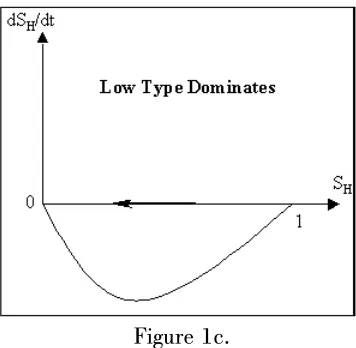
Figure 1 illustrates the three cases given in Theorem 1. What this result says
is that sometimes, the high voter types will increase their share of the population
until they make up the entire society regardless of how small their numbers are to
begin with. This case is shown in Figu re 1a. For other parameters, the low types
will come to dominate the population regardless of their initial share. Figure 1c
illustrates this. Both of these situations, however, are just limiting cases of what
5 LetF
we think of as the more typical case in which the initial population shares matter.
In general, there will be two stable steady states and one unstable steady state that
divides the basins of attraction. Figure 1b illustrates this. We will call this unstable
steady state the tipping point and denote itSH∗ .
We now turn to the question of when being public-spirited is more likely to
lead to evolutionary success. We begin by considering what happens as the cost of
voting increases.
Theorem 2. Assume that the parameters of the game are such that there are three steady states. Then all else equal, the higher the cost of voting C, the less likely
the high voter types will win the evolutionary game.
Proof/
See appendix.
To be slightly more formal, Theorem 2 says that if the parameters of the system
are such that we are not in one of the two degenerate cases, then all else equal, asC
increases,SH∗ approaches one and the basin of attraction of SH = 0 expands. This
means that as the cost of voting increases, the high voter type has to have a larger
initial population share to prevent themselves from being squeezed out by the low
voter type. Of course, this makes sense. If voting is costly, then the act of voting
conveys that much less net increase in payoff to the high voter types. If voting is
extremely costly, voting is a net loss, even to the group collectively. In this case, it
is better to have a low voting parameter and we end in up in case 3 with the only
stable steady state being SH = 0 and the tipping point forced all the way up to
SH = 1.
Next we consider how the parameter of relative public-spiritedness β affects
the evolutionary advantage of voting. It turns out that the cost of voting and the
degree of preference correlation (which in turn affects the degree of free riding that
Figure 1a.
No matter what the initial population share, the high voting type will eventually make up the entire population. Thus, SH=1is a globally absorbing state
Figure 1b.
The larger its initial population share, the more likely a type is to win the evolutionary game. The SH=S* is an unstable steady state that divides the basins of attraction for the two
stable steady states SH=1 and SH=0.
Figure 1c.
[image:13.612.218.400.74.228.2] [image:13.612.216.396.274.426.2] [image:13.612.215.393.489.663.2]effect. As a consequence, more public spiritedness does not alway benefit a type.
The next theorem shows this for the case of when voting is very costly.
Theorem 3. If voting is too costly, then voting does not convey an evolutionary advantage.
Proof/
The benefit and losses that voters get from each period from the public
propos-als that happen to pass by lie in the interval [−1,1] by assumption. On the other
hand, voters must pay Vi|Bi|C each period for voting. Thus, if C is high enough,
the expected voting cost the high types pay compared to the low types each period
(which grows without bound in C) will be larger than the expected difference the
benefits from public projects. It follows that for large enoughC, the low voter types
get a higher expected payoff and so will always win the evolutionary game.
When voting is costless, a symmetric result is holds: public-spiritedness is
always an advantage.
Theorem 4. If voting is costless and preferences are not perfectly correlated, then voting conveys an evolutionary advantage.
Proof/
If the agents with the high voter propensity increase their propensity to vote
even more, the expected payoff from public projects relative to that received by the
low voter type cannot decrease. This is easy to see. For any particular realization
of a public proposal, the additional votes contributed by the high type voters either
do or do not affect the outcome of the election. If the outcome is not affected, the
relative payoff is not affected. If the outcome is affected it can only be because
a proposal favored by the high type that would have failed passes instead (or the
Given this, and since voting is costless, there is nothing on the negative side to
offset these gains, and so the relative gains of the high voter type compared to the
low increase as the VH increases. A symmetric argument holds for the low types.
We now consider the effects of the preference correlation parameter α. The
question is: Is public-spiritedness more or less of an advantage for a group when they
have preferences that are similar to the remaining population? Again it depends
on the details of the economic parameters, but we are able to show an important
result for the limiting case.
Theorem 5. If preferences are perfectly correlated, then the low voter always win the evolutionary game.
Proof/
Note that the payoff each type of agent gets from public proposals is identical
in this case. Thus, if voting cost is positive, the type that votes more often gets
a lower per capita payoff. The higher voting type therefore loses the evolutionary
game.
The fact that in the extreme case of perfect correlation, the high types are
always supplanted by the low types in the steady state regardless of the initial
population shares will turn out to have significant implications for the interpretation
of our steady states as Evolutionary Stable Equilibria. We explore this more in the
next section.
The previous two theorems explore only for extreme values of the parameters
of the game. One might wonder whether voting conveys an evolutionary advantage
in a more general case. We close by showing that for a range of parameters voting
Theorem 6. If voting is sufficiently cheap and preferences are sufficiently uncor-related, then the more public-spirited the low voter types are compared to the high
voter types, the more likely they are to win the evolutionary game.
Proof/
See appendix.
More formally, this says that the tipping point SH moves in a way that favors
the low type voters when they vote with higher frequency. This means that, all
else equal they can win the evolutionary game with a lower initial share of the
population. (A symmetric result holds when high type voters increase their voting
propensity.) For this to be true, however, it must be the case voting is not too costly
C < (12V−α)
H . Otherwise, voting may be self-defeating. In addition, the preferences
of voters must not be too highly correlated (α < 1/5). Otherwise the free-riding
benefits that the other type of agent gets from the costly voting efforts of the first
may more than offset the advantages of winning a higher number of elections.
4. Evolution and Altruism.
The literature on evolution in economics is very large, and it is not our intention
to survey it here. Instead, we shall concentrate on a discussion of how the model
we present agrees with and differs from the existing literature.
Evolutionary game theory is typically used to explain who how agents might
choose strategies in an arational way. Thus, evolution takes place over strategic
choices. See Taylor and Jonker 1978, Friedman 1991, or more recently Lagunoff
2000, among many others. In contrast, we propose that evolution takes place over
choices.6 In this, we follow such authors as Becker (1976), Hirshleifer (1978) more recently Bergstrom and Stark (1993) and Robson (1996). (See Robson 2000 for a
more complete survey.)
This raises an interesting question regarding whether or not our story can be
reconciled with the traditional view in economics which seems to take evolution as
metaphor for learning or imitation in strategic situations. See Kandori, Mailath
and Rob (1993) or Fudenberg and Levine (1998) chapter 3, for example. We take a
somewhat neutral view on this. Whether preferences come from nature (no learning)
or nurture (passive learning) does not really matter for the results in our model.
In either case, the actions of the parents are passed on through preferences to the
children. What our model does not allow is a kind of active learning in which agents
might somehow choose to undertake actions to shape their preferences as in Reiter
(2001), for example. All in all, the major difference that evolving over preferences
rather than strategies makes in interpretation is that the agents in our model are
fully rational and behave in a strictly optimal way at all points.
The literature most closely related to the current paper relates to the
evolu-tionary viability of altruism. In their seminal piece, Bergstrom and Stark (1993)
consider a number of models but focus on one in which benefits of altruistic actions
are felt amongst groups of siblings. Selfish siblings are at an advantage over
altru-istic ones in the same family, but pass on their selfish genes to their children. Since
groups of altruistic siblings are at an advantage over groups of selfish siblings, the
momentary benefit of exploiting one’s own altruistic sibling is out-weighed by the
evolutionary disadvantage of having a set of completely selfish children. The
altru-istic genes end up being successful. Eshel, Samuelson and Shaked (1998) pick up on
another model described in Bergstrom and Stark in which agents are arranged in
6 Recall that the voting propensity parameter (V
j) is a behavioral expression that reflects optimal
a circle and experience positive externalities when their direct neighbors choose to
undertake costly altruistic actions. Agents choose a strategy each period by
adopt-ing the highest yieldadopt-ing action that they can directly observe. They show that for a
correctly parameterized model, altruistic behavior survives and is stable against the
introduction of mutations. Bester and Guth (1999) propose a model of externality
producing duopolists. They show that if the production of one duopolist lowers the
marginal cost of production for the other firm, then production choices are
strate-gic complements. This means that when an altruistic firm chooses a higher than
privately optimal production level, the other firm responses with its own higher
production level, and this in turn benefits the first firm. Clearly, it is better to be
selfish when paired with an altruist. Altruists, however, do much better when they
happen to be paired with other altruists while egoists do much worse when they are
paired with other egoists. As a result, altruists do better on the average, and are
more successful from an evolutionary standpoint. (See also the comments of Bolle
2000 and Possajennikov 2000.)
There is common thread in all of these papers: local interaction. Eshel,
Samuel-son and Shaked’s externalities extend only to adjacent neighbors, Bergstrom and
Stark’s only to groups of siblings, and Bester and Guth’s only to pairs of duopolists.
It is doubtful that any of these results could be generalized to more widespread
externalities. What allows altruism to survive is that the altruist gene is able to
re-capture some part of the external benefit of its behavior.7 In Eshel, Samuelson and Shaked’s case, it is through teaching one’s neighbors to be altruist, for Bergstrom
and Stark it is by producing kids who have an evolutionary advantage, and for
Bester and Guth it is though the strategic complementarity. It may appear that
the model we describe breaks with this thread and does indeed allow for widespread
externalities. This is only partly true. Our two groups of voters each consist of a
continuum of agents, and when a proposal passes, the costs and benefits that result
are purely public in nature. In this sense, the externalities are widespread. Notice,
however, that preferences and voting propensity are completely linked by
construc-tion in our model. Thus, while benefits of proposals that pass are spread across
many individuals, they are in a sense localized within a given genotype. We
con-clude that the gene recaptures much of the externality even though the individuals
themselves do not get an advantage from voting.
Although the mechanism that allows altruism to survive in our group selection
setting is similar the one at work for local interaction models described above, there
remains the key question of the robustness of the steady states to the occurrence of
mutations. Unless the steady states we find can survive strategic experimentation
and random genetic drift, there is little reason to believe that we would ever observe
them as the outcome of any evolutionary process.
As it turns out, the steady states in which the high voter types prevail are
robust to the introduction almost all types of mutants. To see this, suppose we
are in a steady state in which the high voter type makes u p the entire popu lation.
Now introduce a small fraction of mutants with tastes that differ from the dominant
type. Because the mutants make up such a small fraction of the economy, they have
a negligible effect on elections and the proposals most favored by the dominant type
will continue to pass. Thus, provided that the tastes of the mutant are sufficiently
differentfrom the dominant type, they will get a systematically smaller payoff than
the dominant type regardless of their propensity to vote and will not upset the
steady state. On the other hand, if the mutants have the same (or at least very
similar) tastes for public proposals as the dominant type, then they can
success-fully free-ride on their voting efforts. Thus, a mutant with the same tastes, but a
lower voting parameter can upset the steady state and will eventually supplant the
vulnerable to even less public-spirited mutants who otherwise share their tastes.
At first glance, this may seem like bad news. This analysis suggests that no
steady state with agents who have any positive voting propensity is an ESS. There
is a kind of Gresham’s Law at work in which bad citizens force out good ones. We
believe that the news is not so bad, however, and there are at least two possible
ways to address the fact that the steady states we discover in our model are not
ESS.
First, notice that the mutants we are worried about must have the same tastes
but different voting propensity as the dominant type. There are reasonable
argu-ments for why this may be an unlikely scenario in the real world. To the extent
that preferences are literally based on genes, for example, it might be impossible
to inherit a love of high levels of public spending without also having the
public-spiritedness to vote. Both may be driven by the same “empathy” or “responsibility”
gene, for example. To the extent that preferences are learned from the environment,
the same argument might apply. Parents may teach their children to be empathetic
and socially responsible and this would inform both the children’s voting
behav-ior and preferences over public proposals. If a child rejects his parent’s teaching
or gets a truly mutant gene he would necessarily find himself equipped both with
preferences over public proposals and voting propensities that differ from those of
his parents. Even if such mixed mutations were possible, it might be that there
exist social sanctions to keep it from taking over. In other words, suppose a free
rider arises. If this is detectable, the dominant group may protect itself by refusing
to provide a mate for this mutant. After all, who wants a child to marry a selfish
person? At a less extreme level, it may be that smaller social sanctions imposed
by the dominant group more than offset the gain the free rider receives from not
voting.8 Thus, even though having the high voter types win the evolutionary game
is not an ESS in a strict sense, there are still reasons to believe that this steady
state my arise in real world settings.
Second, let us put aside the arguments just given, and suppose that free riding
mutants with high type tastes can arise. The remarkable thing is that provided
that mutation happens slowly enough, this actually improves the welfare of the
dominant type and in a sense does not threaten its evolutionary success. Consider
the following dynamic story: Initially we have two types of agents, high and low,
and a small leavening of all possible types of mutants. Suppose that we are in
a situation that converges to the high types dominating the population. If the
mutants are small enough in number, their presence is not enough to prevent the
high type for forcing the low voter types close to extinction. The only agent type
that manages to increase its population proportion is the free riding mutant with
high type tastes. Eventually, of course, enough time passes that the free riding
mutant replaces the high type. This mutant in turn is eventually replaced by an
even less public-spirited mutants with the same taste as the original high type and
so on until public-spiritedness converges to zero. Thus, tastes of the original high
types are evolutionary stable, but the altruism is not in the long run.
Notice, however, that in the initial state, there is a compelling social reason for
the high types to vote. If there are many low voter types in the population with
different tastes over public policies, voting by the high types is needed to assure
that the public proposals favored by the high voter types win. As the low voter
types begin to disappear, however, the high voters could win the elections even if
they were less public-spirited since there are fewer of the low types to oppose them.
Thus, in the steady state, continuing to vote is socially wasteful because all of the
opposition has been vanquished. At this point, not only the individuals, but also
the species itself benefits from having a lower voting parameter. In this modified
environment, free riders can thrive without threatening the survival of their type.
We think of this as a kind of decline and fall of the Roman empire story.
Ini-tially, for Rome to thrive, its citizens must be vigilant and willing to make sacrifices
for the common good. If the neighboring cities contain less public-spirited citizens,
they will be conquered and added to the empire. Eventually, however, Rome will
have vanquished all of its enemies, and then it is better for everyone to spend
pub-lic money on bread and circuses instead of a large standing army. Pubpub-lic-spirited
sacrifice ceases to serve a useful purpose and it is time for Romans to rest on their
laurels. The key, however, is to make sure that all of Rome’s enemies have been
destroyed before this decline into decadence. If the decline happens before all the
Gauls have been pacified, decline turns into fall.
5. Conclusion
A feature of our model which may be open to criticism is that we find that only
one type of agent can survive in the steady state. In reality, however, we seldom
observe a completely homogeneous society. An interesting extension of our model
might be to assume that agents experience diminishing marginal utility in public
projects. In this case, the benefits accruing to whichever type of voter makes up
the winning coalition would decline, while the prospective benefits to the opposition
group of winning an election would remain high. This would suppress the winning
coalition’s turnout, make it more likely the opposition would begin to win elections,
and slow the winning coalition’s rate of growth even if they continued to win. It
might be possible to find a stable interior solution in which both types of agents
persist for such a model. Another interesting generalization would be allow more
preferences over public policies are uncorrelated and voting is cheap enough, then
the type with the highest voting propensity will prevail in the evolutionary game.
It is harder to prove theorems about this case, however, as the initial conditions
(especially the covariance of tastes between agent types) can vary widely, and it is
not immediately clear which are the most compelling benchmark cases.
Our work is motivated by our interpretation of the literature as suggesting
that it is difficult to explain observed voting behavior on the basis of rational choice
u nless one assu mes that agents get u tility from the act of voting itself. In this
paper we have attempted to provide a foundation for the warm glow associated with
behaving in a public-spirited manner using evolutionary game theory. The basic
result is that being public-spirited can confer an evolutionary advantage. Having
a high propensity to vote is more advantageous when voting is less costly, when
your group’s preferences over public project differ sharply from those of competing
groups, and when the competing group is less public-spirited or less numerous.
We conclude that evolutionary forces may indeed play a role in causing agents to
internalize the benefits their actions confer on their fellow agents, at least to the
degree that they share a common set of preferences.
Appendix
Derivation of Payoff Functions
We begin with some preliminary that will simplify our calculations. First we define an the following:
θ=−(1−α)(1−SH) α+SH(β−α)
.
P =P rob(SHVHBH+SLVLBL >0|BH = bH)
=P rob(SHVHbH+ (1−SH)VL(αbH + (1−α)UI)>0)
=P rob(UI >−
α+SH(β−α)
(1−α)(1−SH)
bH)
=P rob(UI >
bH
θ ) = 1−P rob(UI < bH θ ) =
1 for bH
θ ≤ −1 1
2 − bH
2θ for −1< bH
θ <1
0 for bH
θ ≥1.
In the calculations below, it will be more convenient to express this as follows:
P =
1 for−θ ≤b
H ≤1 1
2 − bH
2θ forθ < bH <−θ
0 for−1≤bH ≤θ
.
The payoff that a high voting parameter agent can expect for a given proposal as follows:
E(πH |BH =bH) =P(bH −CH) + (1−P)(−CH)
=P bH −CH.
Therefore the average payoff of a high voting type agent over all possible values of bH is:
¯
πH =EbH[E(πH |BH =bH)]
=
1
−1
(P bH −CH)
2 dbH.
Substitution for P in the above integral gives:
¯ πH =
bH=θ
bH=−1
−VHC |bH |
2 dbH +
bH=−θ
bH=θ bH 2 ( 1 2 − bH
2θ)−
VHC |bH |
2
dbH+
bH=1
bH=−θ
bH
2 −
VHC |bH |
2
dbH
=.25− θ
2
12 − VHC
2 .
Recall that bH is constrained to lie in the interval [−1,1]. Therefore, the
within these bounds. It is immediate that θ ≤ 0. Thus, the calculation above is correct if and only if θ ≥ −1. We will therefore need to distinguish this case. It is easy to verify the following:
Case A:−1≤θ ≤0 if one of the following is true: i. 12 ≤α≤1
ii. 0≤α ≤ 12 and S1 ≡ (1−1−2α)+β2α ≤SH ≤1. Case B: θ <−1 if the following is tru e:
i. 0≤α ≤ 12 and 0≤SH < (1−1−2α)+β2α ≡S1.
Note that these two cases are exhaustive.
Clearly, if case B holds, it can never be true that −1 ≤ bH ≤ θ or that −θ ≤ bH ≤ 1. Therefore the probability that a proposal passes is always given by
the middle case: 12 − bH
2θ. This gives the following equation:
¯ πH =
bH=1
bH=−1 bH 2 ( 1 2 − bH
2θ)−
VHC |bH |
2
dbH
=− 1 6θ −
VHC
2 .
For the calculation of the low voting parameter agent payoff, we take a different route. Recall from the calculation of P that for values of UI > bθH, the proposal
passes, and otherwise it fails. Therefore we can calculate the payoff a low voting type can expect for a given proposal,BH =bH as:
E(πL |BH =bH) =
bH θ
−1 −CL
2 duI +
1
bH θ
(bL−CL)
2 duI.
After a change of variable and taking expectation over all possible values of bH we
will have:
¯
πL =EbH[E(πL |BH =bH)]
= 1
4(1−α)
1
−1
αbH+(1−α)
bH(αθ+1−α) θ
bLdbLdbH−
1
−1
αbH+(1−α)
αbH−(1−α)
CLdbLdbH .
To make the presentation of the calculations easier we separate the above integration into two and substitute for CL. We get:
M ≡ 1
4(1−α)
1
−1
αbH+(1−α)
bH(αθ+1−α) θ
N ≡ VLC 4(1−α)
1
−1
αbH+(1−α)
αbH−(1−α)
|bL|dbLdbH
This means that ¯πL =M −N.
Not surprisingly, we run into similar problems regarding limits of integration. For different cases the calculation are as follows:
Case A.i:
M = 1 4(1−α)
−θ
θ
αbH+(1−α)
bH(αθ+1−α) θ
bLdbLdbH +
1
−θ
αbH+(1−α)
αbH−(1−α)
bLdbLdbH
=− αθ
2 12 − θ 6 + αθ 6 + α 4
N = VLC 4(1−α)(
−(1−α) α
−1
−2α(1−αbH)dbh +
(1−α) α
−(1−α α
α2b2H+ (1−α)2dbh+
1
(1−α) α
(2α(1−α)bH)dbh =
(4α2−2α+ 1)V LC
6α
Case A.ii:
In this case the calculation of the M is the same as in case A.i, bu t the calcu -lation of N is as follows:
N = VLC 4(1−α)
1
−1
(α2b2H + (1−α)2)dbh =
(4α2−6α+ 3)VLC
6(1−α)
Case B:
In this case the calculation of the N is the same as in case A.ii, but the calcu-lation of M is as follows:
M = 1
4(1−α)
1
−1
αbH+1−α
bH(αθ+1−α) θ
bLdbLdbH =−
α 6θ −
(1−α) 12θ2 +
(1−α) 4
To summarize all of these results, the value of payoff functions for high and low voting types is the following:
Case π¯H π¯L
A. i. .25− θ122 − VHC
2 − αθ2 12 − θ 6 + αθ 6 + α
4 −VLCd1
A. ii. .25− θ122 − VHC
2 − αθ2 12 − θ 6 + αθ 6 + α
4 −VLCd2
B. −6θ1 − VHC
2 −
α 6θ −
(1−α) 12θ2 +
(1−α)
where d1 = 4α
2−2α+1
6α and d2 =
4α2−6α+3
6(1−α) . Note that ¯πH and ¯πL are continuous
and well behaved functions in SH.
Proofs of Theorems
Theorem 1. Depending on values of parametersα,β andCthere are three possible outcomes for the system:
1. High type wins: The system has two steady statesSH = 0and SH = 1where
SH = 1 is globally stable and SH = 0 is unstable.
2. Large population wins: The system has three steady states,SH = 0,SH = 1 and SH =SH∗ ∈(0,1) where SH = 0 and SH = 1 are asymptotically stable and their basins of attraction are [0, SH∗) and (S∗H,1] respectively, and SH = SH∗ is unstable.
3. Low type wins: The system has two steady states SH = 0 and SH = 1 where
SH = 0 is globally stable and SH = 1 is unstable.
Proof/
The steady states are solution to ˙SH = 0. The replicator dynamics can be
written as follows:
˙
SH =SH(¯πH −π) =SH(1−SH)(¯πH−π¯L).
It is immediate that SH = 0 and SH = 1 are always steady states. The other
steady state, if it exists, is the solution to ¯πH −π¯L = 0. Calculating the roots of
this equation is tedious, but the results are straightforward to verify. We show the calculations in detail for different cases.
Case A.i:
Substituting the values of payoff functions for this case into ¯πH−π¯L = 0 gives
us:
Γ1 ≡ −(1−α)θ2+ 2(1−α)θ−6VLC(β−2d1) + 3(1−α) = 0.
We need some preliminary observations that makes the proof easier to understand. Note that the second derivative of Γ1with respect toθis negative (for everyθ). Thus
Γ1 is a concave function for all its range. Assuming α = 0, a little algebra shows that both roots of equation Γ1 = 0 are real if and only if C ≤ 2(1−α)
3VL(β−2d1) ≡ C
∗
1.
Thus for all values of C < C1∗ the equation has two real roots. To simplify the equation define the constant term as follows: K1 ≡ 6VLC(β −2d1)−3(1 −α).
Thus, the above equation becomes:
We call the two roots of this equationθ+1 and θ1− where:
θ1+ = (1−α) +
(1−α)2−K
1(1−α)
(1−α)
θ1− = (1−α)−
(1−α)2−K
1(1−α)
(1−α)
The fact that Γ1 is concave implies the following: A. θ < θ−1 or θ > θ1+ ⇒Γ1 <0⇒S˙H <0.
B. θ−1 < θ < θ+1 ⇒Γ1 >0⇒S˙ H >0
Also recall that θ is a function of SH and other variables. Solving for SH in
terms of θ gives the following:
SH =
αθ−α+ 1 αθ−α+ 1−βθ
Therefore, by substituting any valid roots, we can obtain the other steady state(s) of the system. The solution of the equation Γ1 = 0 depends on the value of α.
1. First consider the case whereα = 1 (which implies the two types preferences are perfectly correlated). In this case ¯πH−π¯L = 0 if and only if 6VLC(β−1) = 0,
which in is tu rn is tru e if and only ifβ = 1 (which implies there is no difference in voting behavior between the two types). For all β > 1, we have ¯πH < ¯πL.
Thus, the only steady states in this case are SH = 0 and SH = 1. For all
other values of SH, ˙SH <0. This means that SH = 0 is globally stable while
SH = 1 is globally unstable. Therefore, if preferences are perfectly positively
correlated, no matter what the cost of voting is, the low voting type will be the winner. This means that case (3) of theorem obtains.
2. Next suppose 12 ≤α <1.
As we saw above in this case, if C < C1∗, the equation Γ1 = 0 has two roots
θ+1 and θ−1. However, θ+1 cannot be a solution. This is because θ1+ > 0 and therefore either SH∗ >1 (for 0< θ+1 < β1−−αα) or SH∗ <0 (for θ+1 ≥ β1−−αα).
Now consider the other root, θ1−. As we mentioned above, for a root to give a valid solution, the associated steady state must satisfy the following: 0 ≤ SH∗ ≤1. A little algebra shows that this implies that:
−(1−α)
α ≤θ
−
Substituting the solution for θ−1 given above and solving for allowable values of C gives u s the following:
−4α3+ 4α2+α−1 6α2V
L(β−2d1)
≡C1min≤C ≤C1max ≡ (1−α) 2VL(β−2d1)
It is easy to verify that C1min < C1max< C1∗.
Our final step is to determine the number and nature of the steady states as C varies.
a. If C ≤ C1min then from the above, we know θ1− < −(1−αα). This in turn implies that −β−αα < SH∗ ≤ 0. There is no interior steady state in this case, only the boundaries, SH = 0 and SH = 1, remain. For stability
properties of the steady states we find the sign of ˙SH for all values of
0 ≤ SH ≤ 1. For this note that the values of 0 ≤ SH ≤ 1 correspond to
θ−1 < −(1−αα) ≤ θ ≤ 0 < θ+1. As we saw above for these value of θ we have Γ1 > 0 which implies ˙SH > 0. This means that SH = 0 is globally
unstable while SH = 1 is globally stable. Thus, case (1) of the theorem
obtains.
b. If Cmin
1 < C < C1max then − (1−α)
α < θ
−
1 < 0. This in turn means that
0 < SH∗ < 1 and so we also have an interior SH = SH∗ in addition to
the two at the boundaries. For determining the stability properties of steady states note that for values of 0 < SH < SH∗, which correspond to −(1−α)
α ≤ θ < θ
−
1 we have Γ1 < 0 which means ˙SH < 0. Also for values
of SH∗ < SH < 1 which correspond to θ−1 < θ < 0 we have Γ
1 > 0 which
means ˙SH >0. Therefore we have single interior steady state which is not
stable. In addition, since ˙SH < 0 for SH close to zero, SH = 0 is stable,
and since ˙SH >0 forSH close to one, SH = 1 is stable. Thus, case (2) of
the theorem obtains.
c. If C1max ≤ C < C1∗ then θ− > 0. As in the case of the positive root discussed above, this implies either SH∗ > 1 or SH∗ < 0 . Thu s, there is no interior steady state. For any interior value of the share of the high type (0 ≤ SH ≤ 1 which implies θ < θ−1) we have Γ1 < 0 which means
˙
SH < 0. This means that SH = 0 is globally stable while SH = 1 is
globally unstable. Thus, case (3) of theorem obtains.
d. Finally, if C ≥C1∗, then equ ation Γ1 = 0 will not have any roots and since Γ1 is concave, it will always be negative. Again, this means that there will be only two steady statesSH = 0 andSH = 1 and for values of 0≤SH ≤1
Substituting the values of payoff functions for this case into ¯πH−π¯L = 0 gives
us:
Γ2 ≡ −(1−α)θ2+ 2(1−α)θ−6VLC(β−2d2) + 3(1−α) = 0.
Note that Γ2 is also a concave function. Both roots of equation Γ2 = 0 are real if and only if C ≤ C2∗ ≡ 3V2(1−α)
L(β−2d2). Thus for all values of C < C
∗
2 the equation
has two real roots. The same argument about the relationship of the location of θ relative to the roots of the equation and the sign of Γ2 holds as in the previous case.
To simplify the equation define the constant term as follows: K2 ≡6VLC(β−
2d2)−3(1−α). Thus, the above equation becomes:
Γ2 ≡ −(1−α)θ2+ 2(1−α)θ−K2 = 0
We call the two roots of this equationθ+2 and θ2− where:
θ2+ = (1−α) +
(1−α)2−K
2(1−α)
(1−α)
θ2− = (1−α)−
(1−α)2−K
2(1−α)
(1−α)
However, θ2+ cannot be a solution. This is because θ2+ > 0 and therefore either SH∗ >1 orSH∗ < 0. Now consider the other root,θ2−. As we mentioned above, for a root to give a valid solution, the associated steady state must satisfy the following: 0≤SH∗ ≤1. In this case this implies that:
−1≤ θ−2 ≤0.
Substituting the solution for θ−2 given above and solving for allowable values of C gives us the following:
0≤C ≤C2max ≡ (1−α) 2VL(β−2d2)
It is easy to verify thatC2max < C2∗.
Our final step is to determine the number and nature of the steady states as C varies.
a. If C ≤Cmax
2 then from the above, we know−1≤θ2− ≤0. This in turn implies
that S1 ≤ SH∗ ≤ 1. There is an interior steady state in this case in addition
to the boundary solution SH = 1. For stability properties of the steady states
S1 ≤ SH ≤ SH∗ , correspond to −1 ≤ θ < θ−2. For these value of θ we have
Γ2 < 0 which implies ˙S
H < 0. Also the values SH∗ < SH ≤ 1, correspond to
θ−2 < θ ≤0. For these value of θ we have Γ2 >0 which implies ˙SH > 0. This
means that SH = 1 is stable whileSH =SH∗ is unstable. We will show in case
B that irrespective of valu e of C, there is no other interior solution between 0 and S1 and there is only a boundary solution SH = 0, which is stable. Thus,
case (2) of the theorem obtains.
b. If C2max < C ≤C2∗ then θ−2 >0. Therefore the same argument for θ+2 applies here and we don’t have any interior solution. Thus the only steady state is SH = 1. For determining the stability properties of steady state note that for
values ofS1 < SH <1, which correspond to−1≤θ < θ2−we have Γ2 <0 which
means ˙SH < 0. As we will show in case B, irrespective of value of C, there
is no other interior solution between 0 and S1 and there is only a boundary
solution SH = 0, which is unstable. This means thatSH = 0 is globally stable
and SH = 1 is unstable. Thus, case (3) of the theorem obtains.
c. Finally, if C > C2∗, then equ ation Γ2 = 0 will not have any roots and since Γ2 is concave, it will always be negative. Again, this means that there will be only one steady states SH = 1. For valu es of S1 ≤ SH ≤ 1 Γ2 is negative, which
means ˙SH <0 . Considering our results in case B, again, case (3) of theorem
obtains.
Case B:
Substituting the values of payoff functions for this case into ¯πH−π¯L = 0 gives
us:
Γ3 ≡ −θ2(6VLC(β−2d2) + 3(1−α))−2(1−α)θ+ (1−α) = 0.
To simplify the equation define the constant term as follows: K3 ≡6VLC(β−2d2) +
3(1−α). Thus, the above equation becomes:
−K3θ2−2(1−α)θ+ (1−α) = 0.
Note thatK3 >0 and that Γ3 is also a concave function. The same argument about the relationship of the location of θ relative to the roots of the equation and the sign of Γ3 holds as in the previous cases.
We call the two roots of this equ ation θ3+ and θ3− where:
θ3+ = −(1−α) +
(1−α)2+ (1−α)K 3
K3
θ3− = −(1−α)−
(1−α)2+ (1−α)K 3
Note that here since (1−α)2+ (1−α)K3 >0 the two real roots always exist. For a
root to give a valid solution, the associated steady state must satisfy the following: 0 ≤ SH∗ ≤ S1. In this case this implies that the roots must be between −1−αα
and −1. The first root, i.e. θ+3 is positive. So there is no interior steady state corresponding to this root. It is also easy to check that −1 < θ3− < 0. Therefore there are no interior steady states. Hence in this case for any value of C > 0 the steady states are SH = 0 and SH = 1. As to the stability property of the steady
state, we note that for values of 0≤SH∗ ≤S1 which correspond to valu es of θ < θ−3,
we have Γ3 <0 which means that ˙SH <0. This means that SH = 0 is stable.
Theorem 2. All else equal, the higher the cost of voting C, the less likely the high voter types will win the evolutionary game.
Proof/
We assume that there is an interior steady state SH∗ . Therefore we should only consider cases A.i and A.ii. Since the two cases are very similar we will provide a proof only for case A. i. since the other cases are essentially repe-titions of the same argument. As we argue above, SH∗ = αθ−αθ+1−−+1α−−αβθ− where
θ−= (1−α)−
√
(1−α)2−K 1(1−α)
(1−α) ,K1 = 6VLC(β−2d1)−3(1−α), and d1 =
4α2−2α+1 6α .
Since we are considering case A. i., we know that 12 ≤ α ≤ 1. It is easy to verify that this implies that 13 ≤d1 ≤ 12 and since β >1
∂K1
∂C = 6VL(β−2d1)>0
It is also the case that ∂θ∂K−
1 >0, and that
∂SH∗ ∂θ− =
(1−α)β
(αθ−+ 1−α−βθ−)2 >0.
Putting this altogether we get ∂S∗H
∂C > 0. Therefore as C increases SH∗ will move
towards 1. This means that the high voter types must make up a larger share of the initial population if they are to win the evolutionary game. Thus, asC increases it is less likely that the high voter types will win.
Theorem 6. If voting is sufficiently cheap and preferences are sufficiently uncor-related, then the more public spirited the low voter types are compared to the high voter types, the more likely they are to win the evolutionary game.
More formally, we shall demonstrate that if C < (12V−α)
H and α < 1/5 that
∂SH∗
∂VL >0, that is, the basin of attraction for SH = 0 expands.
Note that we are now considering a result for case (A. ii) By arguments similar to those given for theorem 1, we can establish that
SH∗ = αθ
−
2 + 1−α
αθ2−+ 1−α−βθ−2
whereθ−2 = (1−α)−
√
(1−α)2−(1−α)K 2
(1−α) . and K2 = 6VLC(β−2d2)−3(1−α)
To prove ou r resu lt, we need to take the derivative of SH∗ with respect to VL.
The algebra is dense, but after simplification we get the following:
∂SH∗ ∂VL
=
VH
2(1−θ2−)[θ
−
2 2
(2αθ2−+ 1−3α)−6CVH + 3(1−α)]
[(α−1−αθ2−)VL+θ−2VH]2
.
The denominator is positive. Since we are considering case (A. ii.), −1 < θ2− < 0 and therefore 1−θ−2 >0 and so VH
2(1−θ−2) >0. We focus on the rest of the numerator.
1. First consider 2αθ−2 + 1−3α. We know −1< θ2− <0. We multiply by 2α and then add (1−3α) to get:
−2α+ 1−3α <2αθ−2 + 1−3α < 1−3α. Simplifying gives:
1−5α <2αθ−2 + 1−3α <1−3α.
Since α >1/5 by assu mption, 1−5α is positive and so is the expression under consideration.
2. Now consider−6CVH+ 3(1−α). Very directly, sinceC < (12V−α)
H by assumption the expression is positive. Therefore, ∂SH∗
∂VL >0 and so higher voting propensity conveys an evolutionary advantage on the low type voters. A similar result is true for the high type voters in this case.
Derivation of the voting behavioral rule for a rational agent
Suppose that an agent has the following utility function where
B - exanti per capita cost or benefit of a the public proposal to agents of his type Br -expost cost of benefit received by an agent (may be zero if the proposal fails)
p-probability of voting x -private good consumption
U(B, Br, C, p, x) =x+Br+ (B+C)p−(
1 2V )p
2
.
The budget constraint is ω = x+pC. Substituting this in to the utility function and maximizing this with respect to p gives the following first order condition:
∂U
∂p =−C+B+C− 1
V p= 0,
Which gives a solutionp=vB. This is the linear behavior rule we explore in above. This utility function warrants some discussion. The idea we are attempting to capture is that the agent is an altruist who enjoys voting in proportion to how much benefit the proposal would covey to his type and how much effort he has to go to in order to vote. The second part of this may seem strange at first as it says that the more the agent has to exert himself to vote, the happier he is, at least as far as his altruistic feelings go. While we would not want to argue that this is always the case, it seems reasonable that in some cases agents get a warm glow from working hard to help their fellow man. (Note, however, that cost of voting is still a negative in that it affects the budget constraint.) If we were to remove this term, the behavioral rule would get more complicated in that agents would choose not to vote when the per capita benefits of voting were lower than the expected costs of voting. This would introduce discontinuities into the behavior and would substantially complicate the proof of the results. Since the proofs are already algebraically dense, we do not pursue this further.
References
Aldrich, John H.(1997): “When is it rational to vote,” inPerspectives on Public Choice, by Dennis C. Muller Cambridge University Press, chapter 17.
Andreoni, James (1990): “Impure Altruism and Donations to Public Choice: A Theory of Warm-Glow Giving,” The Economic Journal,100: 464-477.