Munich Personal RePEc Archive
On the Conditional Effect of Fine
Particulate Matter on Cancer Mortality:
Case Study of OECD Countries
O’Nwachukwu, Chinedu Increase and Anani, Makafui
Wang Yanan Institute for Studies in Economics, Xiamen University,
China
26 June 2017
Online at
https://mpra.ub.uni-muenchen.de/81123/
1
Int.J.Curr.Res.Aca.Rev.2017; 5(8): 88-92
International Journal of Current Research and Academic
Review
ISSN: 2347-3215 (Online) Volume 5, Issue 8, August, 2017.
www.ijcrar.com doi: https://doi.org/10.20546/ijcrar.2017.508.013
On the Conditional Effect of Fine Particulate Matter on Cancer Mortality: Case Study of
OECD Countries
O’Nwachukwu, Chinedu Increase
1:
[email protected]
Anani, Makafui
2:
[email protected]
Wang Yanan Institute for Studies in Economics, Xiamen University, China.
Abstract
Given the adverse effects of air pollution on human health, a lot of studies have empirically investigated the causal effect of air pollution on health. However, no study has considered how fine particulate matter interacts with GDP per capita to affect cancer mortality. This study therefore uses data for 20 OECD countries to estimate the conditional effect of air pollution on cancer mortality. To this end, a fixed effect panel regression model which takes both country and time fixed effects into consideration is estimated. The conditional causal effect of fine particulate matter was found to be negative 0.22 and significant at 1% level.
Introduction
The problem of pollution has continued to worsen both in developing and developed countries. It is more pronounced in emerging economies due to the struggle to become industrialized. Having realized the effects it has on health, eliminating the problem has become a goal that every country of the world seeks to achieve. Though the problem could not be eradicated completely, a lot has been done to reduce it, and mitigate its effects on human health. Different countries have employed different means, including the siting of industries in non-residential areas, producing technologies that emit less smokes, imposing high pollution tax on industries according to their emission levels and sensitizing people about pollution.
Empirical studies have identified a strong relationship between air pollution and health problems. For instance, the study of Tang et al. (2017) showed that death from circulatory and respiratory problems and tumors are associated with sulphate, nitrate, ammonium and formaldehyde. Owens et al. (2017) in their study showed that causality runs from air pollution to certain health problems.
Moore et al. (2017) investigated to see if pollution is associated with regional changes in death by lung cancer in the united states. Their results suggest that a positive association exists between them. See also the study of Pope and Dockery (2006), Ghosh et al. (2013), Hamra et al. (2014), Hankinson & Danforth (2006), and Risbridger et al. (2010).
On the contrary, some studies have found no relationship between air pollution and some health issues. Take the study of Toledo et al. (2017) for instance, they investigated the relationship between air pollution and lung functioning in Brazil. They found no association between them. Pedersen et al. (2016) in their study examined if there is a relationship between ambient air pollution and the problem of cancer of the bladder in European countries. Their results showed no evidence in support of that.
Again, a lot of studies have estimated the effect of air pollution on human health in various countries. Chen et al. (2017) used data for China to estimate the effect of pollution including its spillover effect on health. Their result showed that pollution and the spillover effect negatively impact on human health. The effect of industrial pollution on the incidence of breast and prostate cancer in Spain was investigated by Perez et al. (2016). They found no evidence in support of the claim. They however, pointed out that some statistical relationship they found suggest the need for further studies in that line. See also the work of Calle et al. (2009), Hosgood et al. (2015), Nielsen et al (2011), Stober & Abel (1996), and Katsouyanni & Pershagen (1997).
This study will establish the relationship between fine particulate matter and cancer mortality, and also estimate the causal effect the former has on the latter. Also, it will consider something different by looking at how fine particulate matter interacts with per capita Gross Domestic Product (GDP) to affect death by from cancer. In this way, it will contribute to existing literature.
Review of Empirical Literature
3
Lipfert (1991) examined the effect of pollution on mortality for short run, daily and long run periods. The results of his short run analysis showed that particulate matter and Sulphur dioxide are significant in explaining mortality. The results of his long run study were not clear, but there were indications that long run mortality rate is affected by air pollution. This study is consistent with the findings of Park et al. (2015). They found that mortality is associated with air pollution in South Korea.
The relationship between air pollution, smoking and lung cancer in Shanghai, China was examined by Jie et al. (1994). Their sample size included both males and females living in urban, suburb and outer suburb of Shanghai. They estimated standardized mortality ratio (SMR) for both smokers and nonsmokers. While there are no meaningful changes in SMR for nonsmokers, they found the highest SMR for smokers in urban areas with outer suburb having the lowest SMR. Their study also showed that cigarette smoking is significantly related with the risk of lung cancer.
Xu et al. (2013) investigated how the air pollution affects survival length of respiratory cancer in Los Angeles, United State for a period of 17 years. They found that the survival length of respiratory cancer patients got shortened when exposed to air pollution.
To find out the link through which traffic-related air pollution affect breast cancer in Denmark, Huynh et al. (2015) carried out a cohort analysis. They employed logistic regression to estimate the relationship between of long term exposure to traffic air pollution and mammographic density (MD). This is because they believe that MD is the link which connects them. Their study revealed a negative significant relationship between them. They therefore concluded that traffic-related air pollution could cause breast cancer, but not through MD. This is at variance with the study of Hystad et al. (2015). They found that traffic-related air pollution is associated with breast cancer.
The study of White et al. (2014) showed something somewhat different. They investigated the relationship between indoor air pollution and the risks of breast cancer. They used unconditional logistic regression to estimate probabilities and confidence intervals. Nothing definitive could be concluded from their results. Thus, they suggested the need for further studies to be done.
In a bid to understand how exposure to pollution due to occupation relates with the risk of cancer among urban mail carriers in Denmark, Soll-Johanning & Bach (2004) conducted a cohort study covering a sample size of 17,233 for 99 years. They found that male mail carriers who have been employed for more than 3 months had low incidence of cancer as shown by the low risk estimates for different types of cancer. However, there is excess risk of cervical cancer for female mail carriers.
Again, Moore et al. (2017) estimated a logistic regression to understand if regional variations on cancer mortality are explained by pollution in the United States from 2004 to 2014. They categorized counties as clustered and non-clustered before estimating their model. Their results suggest that cancer mortality is high in counties with high pollution.
A recent study by Downward et al. (2017) investigated the effect exposure to quartz on lung cancer. They found no significant effect. Perez et al. (2016) also found that no significant relationship exists between residing in the area of pollutant industries and the risk of breast and prostate cancer.
Given the lack of agreement and inconsistency of results, this study will show the relationship between fine particulate matter and cancer mortality, the effect of the former on the latter, and the conditional effect of the former on the latter given the level of per capita GDP.
Methodology
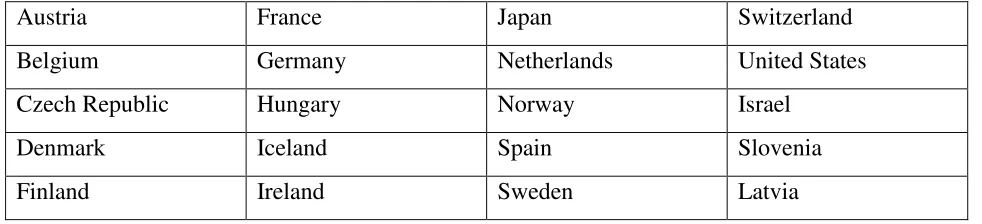
This study involves 20 OECD and it covers the period of 1998 and 2014. All the data were obtained from OECD website. The Panel fixed effect model below will be estimated.
CMORTit = 𝜓1PM2.5it + 𝜓2GDPPCit + 𝜓3PM2.5it×GDPPCit + 𝜓4NMEDGit + Ci + Tt + µit (1)
Where CMORT is cancer mortality and it stands for the number of people that died from cancer-related health problems. PM2.5 is fine articulate matter, GDPPC is GDP per capita, NMEDG is number of medical doctor graduates, i and t are entity and time subscripts respectively, Ci and Tt are country and time
fixed effects, and 𝜇𝑖𝑡 is the error term. We expect 𝜓1 to be positively signed, 𝜓2 to be either positively or negatively signed, and 𝜓3 and 𝜓4 to be negatively signed. Also, both country and entity fixed effects are taken into consideration. Logs of the explanatory variables are taken so as to interpret the coefficients in a special way. Thus, the working model is stated as
CMORTit = 𝜓1log(PM2.5it) + 𝜓2log(GDPPCit)+ 𝜓3[log(PM2.5it) × log(GDPPCit)] +
𝜓4log(NMEDGit) + Ci + Tt + µit (2)
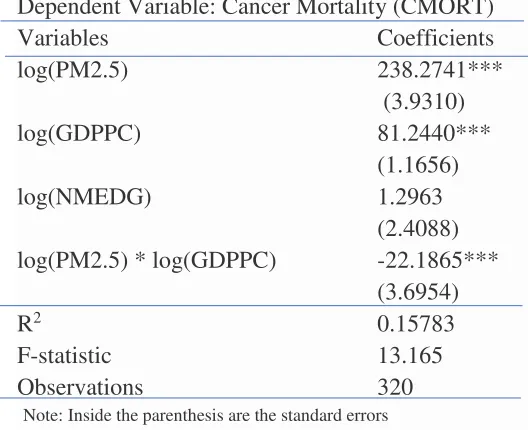
[image:5.612.50.314.478.693.2]Results and Conclusion Table. 1 Regression Results
Dependent Variable: Cancer Mortality (CMORT) Variables Coefficients
log(PM2.5) 238.2741*** (3.9310)
log(GDPPC) 81.2440*** (1.1656)
log(NMEDG) 1.2963
(2.4088) log(PM2.5) * log(GDPPC) -22.1865***
(3.6954)
R2 0.15783
F-statistic 13.165
Observations 320
5
From the result, it is seen that log(PM2.5) is correctly signed and significant. It means that 1% increase/decrease in fine particulate matter would lead to a 2.38 increase/decrease in cancer mortality. Log(GDPPC) is significant and negatively signed. Thus, a 1% increase in/decrease GDP per capita would lead to 0.81 increase/decrease in cancer mortality. This is true if we consider the fact that increase GPD through industrial production would increase air pollution level.
Log(NMEDG) was included to control for the number of medical doctors that graduate each year in the countries of interest. It was not significant. Finally, log(PM2.5) ×log(GDPPC) which is the main interest of this study is negatively signed and significant. This is the conditional effect of PM2.5 on cancer mortality given GDP per capita and it is 0.22. It does make sense, since countries with higher GDP per capita are in better position and have the economic wherewithal to treat the adverse effects of pollution, thereby reducing the number of people that die from cancer. Our model explains 15.8% of the variation in the dependent variable while the significant f-statistic shows the overall significance of the model. Both country and time fixed effects are significant from our results.
Having shown how fine particulate matter interacts with per capita GDP to affect cancer mortality, this study recommends the need to raise per capita income, so as to mitigate the negative effect of pollution on human health.
References
Chen, X., Shao, S., Tian., Z., et al. (2017). Impacts of air pollution and its spatial spillover effect on public health based on China's big data sample. Journal of Cleaner Production Volume 142, Part 2, Pages 915-925
Ghosh, J. K. C., Heck, J, E., et al. (2013). Prenatal Exposure to Traffic-related Air Pollution and Risk of Early Childhood Cancers. American Journal of Epidemiology, Volume 178, Issue 8, 15 October 2013, Pages 1233–1239, https://doi.org/10.1093/aje/kwt129
Hamra G. B., Guha, N., Cohen, A., et al. (2014). Outdoor Particulate Matter Exposure and Lung Cancer: A Systematic Review and Meta-Analysis. Environmental Health Perspective, volume 122, Issue 9, page 906–911
Hankinson, S.E., Danforth, K.N. (2006). Ovarian cancer. In: Schottenfeld, D., Fraumeni Jr., J.F. (Eds.), Cancer Epidemiology and Prevention, third ed. Oxford University Press, New York, pp. 1013e1026
Huynh, S., Hertel, O., et al. (2015). Long-term exposure to air pollution and mammographic density in the Danish Diet, Cancer and Health cohort. Environmental Healt,
https://doi.org/10.1186/s12940-015-0017-8
Lipfert, F.W.; Morris, S.C.; Friedman, R.M.; Lents, J.M.; Miller, B.; Chapman, D.; Krupnick, A.J.; and
Portney, P.R. 1991. ‘Air pollution benefit-cost assessment’, Science, New Series, vol. 253, no. 5020, pp.606-9.
Moore, J. X., Akinyemiju, T., Wang, H. E. (2017). Pollution and regional variations of lung cancer mortality in the United States. Cancer Epidemiology
Volume 49, Pages 118-127.
Owens, E. O., Patel, M. M., et al. (2017). Framework for assessing causality of air pollution-related health effects for reviews of the National Ambient Air Quality Standards. Regulatory Toxicology and Pharmacology Volume 88, Pages 332-337
Pedersen, M., Stafoggia, M., et al (2016). Is There an Association Between Ambient Air Pollution and Bladder Cancer Incidence? Analysis of 15 European Cohorts. European Urology Focus, Available online 26 November 2016 at https://doi.org/10.1016/j.euf.2016.11.008
Perez, J. G., Lope, V., Lopez-Aenter., et al. (2015). Ovarian cancer mortality and industrial pollution. Environmental Pollution Volume 205, October 2015, Pages 103-110.
Pope, C. A., Dockery, D. W. (2006). Health Effects of Fine Particulate Air Pollution: Lines that Connect. Journal of the Air & Waste Management Association, Volume 56, Issue 6, page 709-742.
Soll-Johanning, H., Bach, (2004). Occupational exposure to air pollution and cancer risk among Danish urban mail carriers. International Archives of Occupational and Environmental Health
June 2004, Volume 77, Issue 5, pp 351–356
Tang, G., Zhao, P., et al (2017). Mortality and air pollution in Beijing: The long-term relationship. Atmospheric Environment Volume 150, Pages 238-243.
Toledo, M. F., Romanholo, M. S., Oliveira R. C. et al. (2017) Air pollution and its relationship to lung function among adolescents from Taubate, São Paulo, Brazil. Allergologia et Immunopathologia Available online 27 July 2017.
White, A. J., Stellman, S., et al. (2014). Indoor air pollution exposure from use of indoor stoves and fireplaces in association with breast cancer: a case-control study. Environmental Health.
https://doi.org/10.1186/1476-069X-13-108
Xu, X., Ha, S., et al. (2013). Health effects of air pollution on length of respiratory cancer survival. BMC Public Health, https://doi.org/10.1186/1471-2458-13-800
7
[image:8.612.56.547.114.226.2]Appendix
Table of Countries
Austria France Japan Switzerland
Belgium Germany Netherlands United States
Czech Republic Hungary Norway Israel
Denmark Iceland Spain Slovenia