warwick.ac.uk/lib-publications
A Thesis Submitted for the Degree of PhD at the University of Warwick
Permanent WRAP URL:
http://wrap.warwick.ac.uk/79959
Copyright and reuse:
This thesis is made available online and is protected by original copyright. Please scroll down to view the document itself.
Please refer to the repository record for this item for information to help you to cite it. Our policy information is available from the repository home page.
New Materials from Renewable Sources in the
Development of a Non-Stick Coating for Bakeware
By
Andrew Henry Ross
A Thesis Submitted for the Degree of
Doctor of Philosophy
Supervised by
Dr Andrew Clark
and
Professor Stefan Bon
Department of Chemistry
University of Warwick
i
Contents
List of Figures ... vii
List of Tables... xv
Acknowledgements ... xviii
Declaration ... xix
Abstract ... xx
Abbreviations ... xxii
1 Introduction ... 1
1.1 Wood and Agricultural Waste ... 1
1.1.1 Materials from Cellulose ... 2
1.1.2 Materials from Hemicellulose ... 4
1.1.3 Materials from Lignin ... 5
1.2 Carbohydrates ... 6
1.3 Vegetable Oils ... 10
1.3.1 Reactions at the allylic carbon ... 12
1.3.2 Reactions at the Carbonyl ... 13
1.3.3 Reactions at the Alkene ... 16
1.3.4 Epoxidation of Vegetable Oils ... 20
1.3.5 Polymers from Epoxidised Oils ... 23
ii
1.4 Non-stick Surfaces ... 34
2 Development of a Renewable Binder for Non-Stick Coating for Bakeware ... 38
2.1 Introduction ... 38
2.2 Background of Industrial Sponsors ... 41
2.3 Analysis of Coatings ... 42
2.3.1 Solid Particles ... 43
2.3.2 Polymer Binder ... 45
2.3.3 Solvents ... 48
2.3.4 Final Composition of Commercial Formulations ... 48
2.3.5 Cured Coating Samples ... 50
2.3.6 Non-stick Properties of Commercial Samples ... 52
2.3.7 Summary and Aims for Making More Sustainable Formulation ... 53
2.4 Renewable Polymer Binder... 54
2.4.1 Epoxidation of Plant Oils ... 55
2.4.2 Ring Opening Polymerisation - Catalyst... 56
2.4.3 Ring Opening Polymerisation – UV initiated ... 59
2.4.4 Ring Opening Polymerisation – Thermally initiated ... 62
2.5 Addition of Solid Particles ... 64
2.5.1 Fumed Silica ... 64
2.5.2 Addition of Pigments ... 66
iii
2.6 Alternative Catalysts: Food Safe Sulfonic Acids ... 68
2.6.1 Curing Characteristics of Polymerisation of ESBO with Sulfonic Acids . 69 2.6.2 Thermal and Dropshape Analysis of Coatings ... 72
2.7 Addition of Solvents ... 74
2.8 Real World Product Testing ... 77
2.8.1 Removal of Fish Eye Defect ... 78
2.9 Conclusion and future work ... 79
3 Investigation into a Silicone Containing Additive Produced by Hydrosilylation for use in Non-stick Coatings ... 82
3.1 Introduction ... 82
3.1.1 Hydrosilylation ... 83
3.2 Aims ... 85
3.3 Results and Discussion ... 86
3.3.1 Hydrosilylation of Oleic and Linoleic Acids with Triethyl Silane ... 86
3.3.2 Hydrosilylation with Polysiloxane ... 88
3.3.3 Silicone Rubbers ... 92
3.3.4 Silicone Containing Coating Additive ... 98
3.3.5 Synthesis of Silicone / Epoxy Fatty Acid Hybrids... 100
3.3.6 Thermal properties of silicone additives ... 109
3.3.7 Silicone additives in non-stick coating ... 111
iv 4 Renewable Polyesters from Ring Opening Polymerisation of Epoxidised
Vegetable Oils and Cyclic Anhydrides. Comparison of Grapeseed and Soybean
Oils. 115
4.1 Introduction and Aims ... 115
4.1.1 Background. ... 115
4.1.2 Aims ... 117
4.2. Results and Discussion ... 118
4.2.1. Composition of vegetable oils ... 118
4.2.2. Epoxidation of vegetable oils ... 119
4.2.3 Copolymerisation of epoxidised oils with a commercial anhydride hardener Aradur® 917 ... 123
4.2.4 Copolymerisation of epoxy oils with methyl-5-norbornene-2,3-dicarboxylic anhydride (methyl nadic anhydride MNA) ... 131
4.2.5 Copolymerisation of Epoxy Oils with Food Safe Anhydride ... 137
4.3 Conclusions and Future Work ... 147
5 Nanocomposites and Polymer Blends of Renewable Polyesters from Vegetable Oils 149 5.1 Introduction ... 149
5.2 Aims ... 150
5.3 Results and Discussion ... 150
5.3.1 Increased Hardener Ratio ... 150
v
5.3.3 Addition of Polyaromatic Hydrocarbon ... 159
5.3.4 Addition of Styrene Oxide ... 162
5.3.5 Epoxy Grapeseed and Euphorbia Blends ... 166
5.4 Conclusions and future work ... 168
6 Experimental ... 170
6.1 Instruments ... 170
6.2 Materials ... 170
6.3 Analysis Techniques ... 171
6.4 Experimental Techniques for Non-Stick Coatings (Chapter 2) ... 172
6.4.1 Analytical Techniques for Commercial Samples ... 172
6.4.2 Epoxidation of Vegetable Oils ... 173
6.4.3 Industry Coating Surface Tests. ... 178
6.4.4 Renewable Polymer Binder... 179
6.4.5 Addition of Solid Particles ... 181
6.4.6 Sulfonic acid initiators ... 183
6.5 Experimental for Hydrosilylation (Chapter 3) ... 186
6.5.1 The Hydrosilylation Reaction ... 186
6.5.2 Silicone and Plant Oil Rubbers ... 190
6.5.3 Synthesis of Silicone / Epoxy Fatty Acid Hybrids... 190
6.5.4 Silicone Additives in Non-stick Coating... 197
vi
6.6.1 General procedure for epoxidation of vegetable oils ... 198
6.6.2 Epoxidation of grapeseed oil without solvent. ... 202
6.6.3 General procedure for polymerisation of epoxy vegetable oils and cyclic anhydrides. ... 203
6.7 Experimental data for Modifications to Plant oil Polyesters (Chapter 5). ... 218
6.7.1 Increased Hardener Ratio ... 218
6.7.2 Addition of Silica Nanoparticles ... 219
6.7.3 Nanocomposites with Polyaromatic Hydrocarbon... 225
6.7.4 Copolymerisation with Styrene Oxide ... 226
6.7.5 Grapeseed and Euphorbia Blends ... 228
vii
List of Figures
Figure 1.1. Chemical structure of cellulose. ... 2
Figure 1.2. Functionalization of cellulose with maleic anhydride. ... 3
Figure 1.3. Cellulose acetate butyrate, can be strengthened significantly with the addition of cellulose nanofibres. ... 4
Figure 1.4. Basic structure of hemicellulose. ... 4
Figure 1.5. Functionalization of hemicellulose for hydrogels ... 5
Figure 1.6. Basic structure of lignin. ... 6
Figure 1.7. Hyperbrached epoxy resin formed in 1-pot reaction of bisphenol-A, starch and epichlorohydrin. ... 9
Figure 1.8. Reagents use in carbohydrate crosslinked polyurethanes. ... 10
Figure 1.9. Triglyceride showing constituent parts and areas for chemical modification. ... 11
Figure 1.10. Common fatty acids present in vegetable oils. ... 11
Figure 1.11. Bromination of the allylic carbon of fatty acid methyl esters. ... 13
Figure 1.12. Hydroxyl terminated fatty amide and bis(2-hydroxyl ethyl)terephthalate for polyurethane coatings. ... 14
Figure 1.13.Synthesis of fatty acid methyl esters for biodiesel. ... 15
Figure 1.14. Autoxidation of polyunsaturated oils (drying oils).[80,] ... 18
Figure 1.15 Self metathesis of methyl oleate using Grubbs second generation catalyst.[] ... 19
Figure 1.16. Epoxidation of an alkene by mCPBA showing the 'butterfly mechanism'. ... 20
viii
Figure 1.18. Enzymatic route to epoxidation of vegetable oils... 23
Figure 1.19. Ring opening of epoxides with nucleophiles. ... 24
Figure 1.20. Synthesis of polyurethanes from epoxidised methyl oleate. ... 25
Figure 1.21. Copolymerisation of THF and epoxidised vegetable oil.[127] ... 26
Figure 1.22. Polyurethane synthesis from TDI and a polyol showing the urethane linkage. ... 26
Figure 1.23. Synthesis of a cyclic anhydride from ɑ-pinene. ... 29
Figure 1.24. Schematic impression of an alkyd resin used as a binder compound in alkyd paint. The fatty acid chain shown is linoleic acid. ... 31
Figure 1.25. Ricinodendro oil, anhydrides and acrylates used in the formation of hybrid alkyd-acylate waterborne coatings. ... 32
Figure 1.26. Tributyltin tin acrylate - methacrylate copolymer used in antifouling marine paints. ... 36
Figure 2.1. Chemical structure of Teflon (PTFE). ... 39
Figure 2.2. Bisphenol-A diglycidyl ether and poly(arylene ether sulfone) commonly used binder in coating formulations. ... 40
Figure 2.3. A new coil ready for loading onto the start of the coil coating line. ... 42
Figure 2.4. TGA/DSC of the solid components of commercial samples provided by the sponsors. Heating rate was 10 °C min-1 from 25 – 600 °C in an ambient atmosphere. ... 44
Figure 2.5. EDAX (Zeiss Supra 55-VP) spectrum of the solids in the Single Coat formulation. ... 45
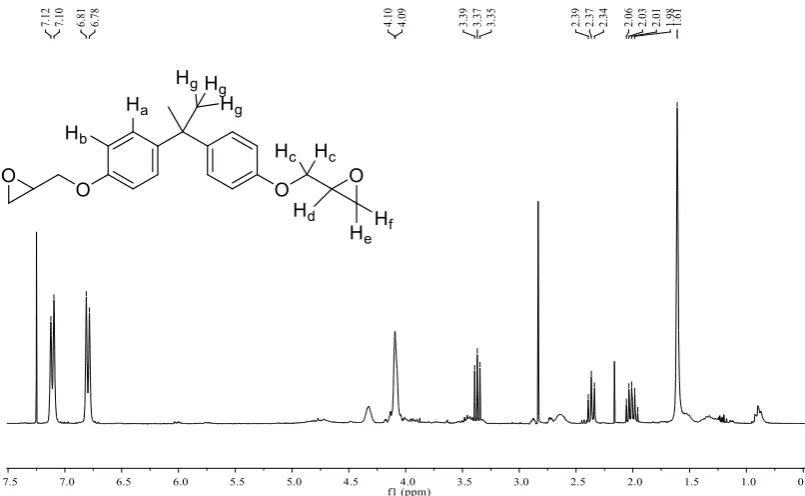
ix Figure 2.7. 1H NMR (300MHz, CDCl3) analysis of polymer binder from Single
Coat. ... 46
Figure 2.8. 1H NMR (300MHz, CDCl3) analysis of polymer binder used in Base Coat and Top Coat. ... 47
Figure 2.9. SEM (Zeiss Supra 55-VP, 440x magnification) and Profilometry (Wyko, Vision 4.1 software) of scratched Easy Clean coating. ... 51
Figure 2.10. TGA analysis of cured coating samples. Heating rate was 10 °C min-1 from 50 – 800 °C in an ambient atmosphere. ... 52
Figure 2.11. Epoxidation of rapeseed oil ... 55
Figure 2.12. 1H NMR (300MHz, CDCl3) analysis of epoxidation of soybean oil. .... 56
Figure 2.13. Triarylsulfonium hexafluoroantimonate salts (TAS) a thermally and UV active catalyst ... 57
Figure 2.14. Triarylsulfonium hexafluoroantimonate salt a photoacid generator producing aicd upon exposure to UV light. ... 58
Figure 2.15. UV cured epoxy plant oil coatings on ECCS. ... 60
Figure 2.16. Curcumin a photosensitizer extracted from turmeric. ... 61
Figure 2.17. Thermally cured epoxy plant oil coatings on ECCS. ... 63
Figure 2.18. ESBO and fumed silica coatings on ECCS. ... 65
Figure 2.19. Coating formulations containing ESBO, fumed silica, carbon black and TAS. ... 66
Figure 2.20. Sulfonic acids used as catalysts for ring opening polymerisation of ESBO coatings ... 69
Figure 2.21. DSC analysis of ESBO curing with sulfonic acid catalysts. Heating rate 10 °C min-1 from 25 – 300 °C under ambient atmosphere. ... 70
x Figure 2.23. TGA analysis of sulfonic acid cured ESBO coatings containing silica.
Heating rate 10 °C min-1 from 25 – 600 °C under ambient atmosphere. 72
Figure 2.24 Drop shape analysis of sulfonic acid cured coatings, CSA shown in red
and DBSA in blue. Contact angles are from water droplets and error bars
are from the standard deviation about the mean. ... 73
Figure 2.25. Propyl acetate... 75
Figure 2.26. Rheometry measurements of ESBO based formulations with varied amounts of solvent. Shear rate varied from 0 to 800 revolutions per second at 25 °C under ambient atmosphere. ... 76
Figure 2.27. Adsorption of fatty acids to an ECCS surface. ... 79
Figure 3.1. Structures of commonly used catalysts for hydrosilylation. ... 83
Figure 3.2. Silanes used in this study ... 85
Figure 3.3. Hydrosilylation of linoleic acid with triethyl silane. ... 86
Figure 3.4. 1H NMR (300MHz, CDCl3) of triethyl silane, linoleic acid and the hydrosilylation product 3.1. ... 87
Figure 3.5. NMR (400MHz, CDCl3) analysis of compound 3.2. ... 89
Figure 3.6. NMR (400MHz, CDCl3) analysis of compound 3.3 two linoleic acid molecules joined by a PDMS chain ... 89
Figure 3.7. Potential route for silicone containing epoxy polymers. ... 90
Figure 3.8. GPC analysis of hydrosilylation of grapeseed oil with DMS-H11. Detected by refractive index, calibrated against a polystyrene standard, eluent was chloroform. ... 91
xi Figure 3.10. Structure of the reactive silicones used in this study. ... 93
Figure 3.11. TGA of DMS-H11 and DMS-H25 copolymerised plant oil silicone
rubbers. Heating rate was 10 °C min-1 from 25 – 600 °C under ambient
atmosphere. ... 96
Figure 3.12. TGA of grapeseed, soybean and rapeseed oil and HMS-991 copolymer
gels. Heating rate was 10 °C min-1 from 25 – 600 °C under ambient
atmosphere. ... 97
Figure 3.13. Potential silicone containing epoxide monomers for non-stick coating
formulations. ... 99
Figure 3.14. Proposed route to fatty acid containing silicone release agent. ... 100
Figure 3.15. Epoxidation of vinyl fatty amide 3.16 showing nearly 100% selectivity towards internal C=C bonds (3.19). ... 102 Figure 3.3.16. 1H NMR (300 MHz, CDCl3) monitoring of 3.16 epoxidation by
peracetic acid. ... 103
Figure 3.3.17. Conversion to 3.19 with time... 103
Figure 3.18. 1H NMR (300 MHz, CDCl3) showing selectivity of hydrosilylation
towards vinyl groups over internal C=C bonds. ... 104
Figure 3.19. Fatty amide 3.17 with terminal epoxides. ... 104 Figure 3.20. 1H NMR (300 MHz, CDCl3) of 3.18 showing epoxide groups intact
after hydrosilylation of the alkenes ... 106
Figure 3.21. Synthetic route to 3.20. ... 107 Figure 3.22. 1H NMR (300 MHz, CDCl
3) analysis of compound 3.20. ... 108
xii Figure 3.24. TGA analysis of silicone containing epoxy monomers for non-stick
coatings. Heating rate 10 °C min-1 from 25 – 600 °C in an ambient
atmosphere. ... 110
Figure 3.25 Contact angle measurements of silicone additives at various wt%. Compound 5.18 shown in red and compound 5.20 in blue, error bars are the standard deviation about the mean. ... 112
Figure 4.1. Epoxidised Soybean Oil. ... 116
Figure 4.2. 1H NMR (400 MHz, CDCl3) spectrum of grapeseed oil. ... 119
Figure 4.3. Epoxidation of unsaturated vegetable oils. ... 119
Figure 4.4. 1H NMR (300 MHz, CDCl3) spectra of soybean oil (black) and epoxidised soybean oil (blue). ... 120
Figure 4.5. Epoxidised vegetable oils, average number of epoxides and % yield in brackets ... 122
Figure 4.6. Methyl tetrahydrophthalic anhydride commercially available as Aradur® 917 and 4-methyl imidazole used as a catalyst. ... 123
Figure 4.7. DSC analysis of curing of plant oils with Aradur® 917. Heating rate was 10 °C min-1 in ambient atmosphere. ... 124
Figure 4.8. Standard size dogbone for tensile testing, conforms to BS EN ISO 527. ... 125
Figure 4.9. Stress Strain curves of polyesters of EGSO, ESBO and ERSO with Aradur® 917 hardener (1:1 ratio). Extension rate 2mm min-1 using 1 kN load cell at 20 °C. ... 126
xiii Figure 4.11. TGA analysis of epoxidised plant oil based polyesters with Aradur® 917
with a epoxy:anhydride ratio of 1:1. Heating rate was 10 °C min-1 from
25 – 600 °C in air. ... 129
Figure 4.12. Methyl-5-norbornene-2,3-dicarboxylic anhydride curing agent and 4-methyl imidazole as catalyst. ... 132
Figure 4.13. Stress Strain curves of EGSO ESBO and ERSO polyesters with MNA hardener (1:1 ratio). Extension rate 2mm min-1 using 1 kN load cell at 20 °C. ... 133
Figure 4.14. Stress Strain curves of EPO and EuO polyesters with MNA hardener (1:1 ratio). Extension rate 2mm min-1 using 1 kN load cell at 20 °C. ... 133
Figure 4.15 Molecular structures of Aradur 917 (left) and MNA (right) ... 135
Figure 4.16. TGA analysis of plant oil based polyesters with methyl nadic anhydride hardener (1:1 ratio). Heating rate was 10 °C min-1 from 25 – 600 °C in air. ... 136
Figure 4.17. Dodecenyl succinic anhydride ... 138
Figure 4.18. 2-Octadecenyl succinic anhydride, (2-OSA). ... 138
Figure 4.19. Ene reaction of maleic anhydride and 1-octadecene ... 139
Figure 4.20. Stress strain curves of polyesters of EGSO ESBO and ERSO with 2-octadecenyl succinic anhydride (1:1 ratio). Extension rate 2mm min-1 using 1 kN load cell at 20 °C. ... 140
xiv Figure 4.22. TGA analysis of epoxidised vegetable oils and 2-octadecenyl succinic
anhydride polymers (1:1 ratio). Heating rate was 10 °C min-1 from 25 –
600 °C in air. ... 144
Figure 4.23 Tan δ from DMTA analysis of Aradur 917 and 2-OSA cured polymers
(1:1 ratios). ... 146
Figure 4.24. Stress Strain chart showing typical curves of plant oil polyesters... 148
Figure 5.1. Stress - Strain chart of epoxy grapeseed oil polyesters with increased
hardener ratio. Extension rate 2mm min-1 using 1kN load cell. ... 152
Figure 5.2. Stress - Strain chart of euphorbia oil polyesters with increased hardener
ratio. Extension rate 2mm min-1 using 1kN load cell. ... 152
Figure 5.3. Epoxidised linoleic acid and vernolic acid. ... 153
Figure 5.4. Epoxy silane coupling agents used in the formation of silica
nanoparticles... 154
Figure 5.5. Synthesis of hollow silca particles from a calcium carbonatesubstrate. 155
Figure 5.6. Tetraethyl orthosilicate (TEOS) and 1,8-bis (triethoxysilyl) octane used
in the formation of hollow silica particles. ... 156
Figure 5.7. Stress Strain charts of original and alkyl functionalised silica
nanocomposites with epoxy soybean and grapeseed oils. Extension rate
2mm min-1 using 1kN load cell. ... 157
Figure 5.8. Synthesis of a poly aromatic hydrocarbon PAH... 160
Figure 5.9. Stress Strain chart of PAH reinforced grapeseed polyesters. Extension
rate 2mm min-1 using 1kN load cell. ... 160
Figure 5.10. DSC chart of styrene oxide - EGSO polyesters cured at 80 °C. Heating
xv Figure 5.11. Stress Strain chart of styrene oxide - epoxy grapeseed oil polyesters.
Extension rate 2mm min-1 using 1kN load cell. ... 164
Figure 5.12. TGA data of styrene oxide - EGSO polyesters. Heating rate was 10 °C min-1 under an ambient atmosphere ... 165
Figure 5.13. Stress Strain chart of epoxy grapeseed - euphorbia oil blends. Extension rate 2mm min-1 using 1kN load cell. ... 167
List of Tables
Table 1.1. Typical fatty acid composition of some common plant oils.[] ... 12Table 2.1. Chemical composition of liquid coating samples used by industrial sponsors. ... 49
Table 2.2. Contact angles of CCC coated samples and a competitors spray coating. Errors are reported as one standard eviation away from the mean. ... 52
Table 2.3. Industry tests on UV cured epoxy plant oil coatings. ... 61
Table 2.4. Industry standard tests of UV cured coatings with the addition of curcumin. ... 62
Table 2.5. Industry tests performed on thermally cured epoxidised oil coatings. ... 63
Table 2.6. Industry tests of silica containing coatings. ... 65
Table 2.7. Surface tests of coating formulation containing carbon black pigment. ... 67
Table 2.8 Coating tests of sulfoninc acid catalysed formulations ... 71
Table 2.9. Composition of coating for product testing. ... 77
Table 3.1. Physical appearance of silicone- plant oil polymers. ... 94
Table 3.2. Crosslinking density of plant oil silicone rubbers. ... 95
xvi Table 3.4. Industry coating tests of surface properties of silicone monomers in
non-stick coatings. ... 111
Table 4.1. Fatty acid composition and double bond number of vegetable oils used in
this study. aCalculated from 1H NMR analysis. bFrom references [, , ]
cincludes vernolic acid[] ... 118
Table 4.2. DSC data from polymerisation of epoxidised plant oils and Aradur 917®.
... 124
Table 4.3. Tensile testing data (average values) from plant oil and Aradur 917®
polyesters. a Ultimate Tensile Strength, b Youngs Modulus, c Elongation at
break point. Errors are one standard deviation from the mean. ... 127
Table 4.4. Crosslinking density of vegetable oil and Aradur® 917 based polyesters
calculated from the Flory-Rehner equation (above table). ... 128
Table 4.5. Glass transition and thermal degradation data of epoxidised vegetable oils
and Aradur® 917 polymers. ... 130
Table 4.6. Tensile data of plant oil polyesters copolymerised with methyl nadic
anhydride. aUltimate tensile stress, bYoung’s Modulus, cElongation at
break point. Errors are stated as one standard deviation from the mean
value. ... 134
Table 4.7. Crosslinking density of MNA-plant oil polyesters. Aradur 917 samples in
brackets. ... 135
Table 4.8. Thermal analysis data of MNA copolymerised plant oil polyesters. ... 137
Table 4.9. DSC data from polymerisation of epoxidised plant oils and 2-octadecenyl
succinic anhydride. ... 139
Table 4.10. Tensile testing data (average values) of plant oil and 2-Octadecenyl
xvii
cElongation at break point. Errors are stated as one standard deviation
from the mean value. ... 142
Table 4.11. Crosslinking density of epoxidised vegetable oils and 2-OSA polyesters,
value with Aradur® 917 are in brackets as a comparison. ... 143
Table 4.12. Thermal data of epoxidised vegetable oils and 2-octadecenyl succinic
anhydride polymers. ... 145
Table 4.13. Thermal data of Aradur 917 and 2-OSA cured plan oil polymers data
from DMTA and DSC. ... 146
Table 5.1. Tensile data of epoxy grapeseed and euphorbia oils polyesters with
increased hardener ratio. aUtimate Tensile Stress, bYoung’s Modulus,
cElongation at Break Point. Errors are stated as one standard deviation
from the mean value. ... 151
Table 5.2. Tensile data of epoxy grapeseed oils polyesters with silica nanopoarticles.
Errors reported as one standard deviation from the mean. ... 157
Table 5.3. Tensile data of graphene oxide polyester composites. Errors stated as one
standard deviation fom the mean. ... 161
Table 5.4. Thermal data of styrene oxide - EGSO polyesters. ... 166
Table 5.5. Tensile data of epoxy grapeseed - euphorbia oil blends. Errors reported as
xviii
Acknowledgements
Firstly I would like to thank my academic supervisors Dr Andrew Clark and
Professor Stefan Bon for their guidance and advice during my study at Warwick.
And a thank you to Cooper Coated Coil for part funding of this research. I’d also like
to extend my thanks to the technical staff at the NMR service, mass spectrometry
suite and thermal analysis for any help during this project
On a personal note I’d like to thank members of the Clark group Collette, Lauren and
Deborah for their advice on laboratory work and techniques and welcoming me into
the group when I first started. And thanks to Andy Sellars (aka 2) who’s been a good
friend during my time at Warwick. In more recent times thanks goes to Paul, Jess,
Nikki and Helen for creating a most banterous workplace
Finally I would like to thank my Mum, Dad and family for their encouragement and
support throughout my life, and one last thanks to my best mates who are always up
for a laugh and few beers to keep me sane.
Right, now time for a pint or two…
xix
Declaration
The work presented in this thesis is the original work of the author. Reference to
previous related results and ideas has been fully acknowledged. All work has been
performed in the Department of Chemistry at the University of Warwick unless
otherwise stated between October 2011 and September 2015 and has not been
submitted for a degree at any other institution.
xx
Abstract
The work presented in this thesis reports the development of a non-stick coating for
bakeware from renewable materials. Also investigated is the use of epoxidised
vegetable oils for renewable polyesters and nanocomposites. Chapter 1 provides a
brief introduction to materials from renewable sources leading to a more detailed
overview of triglyceride chemistry and finishes with a brief background of non-stick
coatings.
Chapter 2 presents the development of the non-stick coating. Current commercial
coatings were analysed identifying the key components that could be replaced with
more environmentally friendly alternatives. Thermal and photo-initiated curing
regimes were studied on a range of epoxidised vegetable oil monomers for use as a
polymer binder. Thermally cured epoxy soybean oil using a sulfonic acid catalyst
was deemed superior. Additives to this resin such as silica, pigments and solvents
were investigated to produce a coating formulation which was analysed by TGA and
industry standard surface tests including pencil hardness, flexibility and
cross-hatching.
Chapter 3 reports the hydrosilylation reaction on vegetable oils. A model system
with fatty acids and triethylsilane was proposed which lead to the formation of
crosslinked silicone rubbers using di- and polyfunctional silanes and vegetable
triglycerides. Epoxy fatty acid – silicone hybrids were used as release agents in the
non-stick coating formulation described above.
Chapter 4 focuses on the ring opening polymerisation of epoxidised vegetable oils
with cyclic anhydrides forming crosslinked polyesters. Mechanical properties such
xxi analysis (TGA, DSC and DMTA). It was found that the physical properties were
related to the crosslinking density with a higher density lead to strong but brittle
polymers whereas lower crosslinking density samples were soft and elastic. The
crosslinking density could be controlled by the choice of the vegetable oil type,
anhydride type and the epoxide : anhydride ratio.
Chapter 5 uses these polyester resins in the formation of nanocomposites.
Nanocomposites were created using hollow silica shells and polyaromatic
hydrocarbons and the mechanical properties measured and compared to the
vegetable oils resins alone and other work in this area. This was followed by the
copolymerisation of epoxy vegetable oils and styrene oxide and blends of grapessed
and euphorbia oils with different epoxide functionality. It was found that blends
could achieve properties of both oils such as high strength and elasticity in the same
polymer sample.
Chapter 6 describes the experimental procedures and chemical analysis of reactions
xxii
Abbreviations
BADGE Bisphenol A diglycidyl ether
br Broad
CDCl3 Deuterated Chloroform
CHCl3 Chloroform
CSA Camphor sulfonic acid
d Doublet
DBSA Dodecylbenzene sulfonic acid
DCM Dichloromethane
dd Doublet of doublets
DMF Dimethylformamide
DSC Dynamic Scanning Calorimetry
EB Elongation at break
ECB Epoxidised cocoa butter
EEuO Epoxidised euphorbia oil
EHOSO Epoxidised high oleic sunflower oil
ELA Epoxidised linoleic acid
EPO Epoxidised palm oil
ER Erichsen test
ERSO Epoxidised rapeseed oil
ESBO Epoxidised soybean oil
ESI Electrospray Ionisation
Et2O Diethyl ether
Flex Flexibility test
GPa Giga Pascal
GPC Gel Permeation Chromatography
h Hours
H2O2 Hydrogen Peroxide
Hz Hertz
IR Infrara-Red
m Multiplet
xxiii
Mn Number average Molecular weight
MNA Methyl Nadic Anhydride
MPa Mega Pascal
Mw Weight average Molecular weight
N2 Nitrogen
NMR Nuclear Magnetic Resonance
OH Hydroxyl
OSA Octadecenyl Succinic Acid
PAH Polyaromatic Hydrocarbon
PDi Polydispersity Index
PET Polyethylene Terephthalate
PH Pencil Hardness test
ppm Parts per million
q Quartet
s Singlet
s Second
t Triplet
TAS Triarylsulfonium hexafluoroantimonate salts
Tg Glass Transition Temperature
TGA Thermo Gravimetric Analysis
THF Tetrahydrofuran
UTS Ultimate Tensile Stress
1
1
Introduction
In the modern world demand for materials is ever increasing, however as supplies of
crude oil are becoming limited[1] the use of renewable feed-stocks become ever more
attractive. Typically renewable materials are sourced from living organisms, most
commonly plant matter biomass not used as human or animal feed, which can
include vegetable oils and fats,[2] carbohydrates,[3] wood and agricultural waste.[4]
Biomass can be used for the production of a number of environmentally friendly
products which typically occupy two areas, energy[5] and materials.[6] Biomass for
energy can be solid biofuels for heating or electricity generation, liquid biodiesel
used as transport fuel and natural gas from landfill sites for household heating and
cooking. In the materials industry, biomass can be used for building materials[7] or
bioplastics such as polymers and composites.[8]
In recent years polymers from renewable sources have generated much interest as
alternatives to petrochemical products. A very brief review is given of recent
advances in this area but will be mainly focused on the use of plant oils in polymer
synthesis. Most renewable sources undergo chemical modification before they can
be used effectively in materials applications, and we will mainly focus on the
chemical modification of vegetable oils although one or two modern examples of
applications of other plant materials will be illustrated.
1.1
Wood and Agricultural Waste
A wide range of materials can be obtained as by-products from agricultural or wood
processing industries. The structural properties of plants are determined by the
components of the cell wall such as cellulose and lignin, these materials can be
2
1.1.1 Materials from Cellulose
Cellulose, as the main structural component of cell walls in green plants is the most
abundant organic polymer on earth. The polysaccharide cellulose is a
semi-crystalline linear chain of D-glucose building blocks, it is hydrophilic, biodegradable
and has broad potential for chemical modification through the 3 hydroxyl groups per
repeat unit (Figure 1.1). Cellulose has a variety of uses in paper manufacture,[10]
cotton clothing[11] and cellophane packaging.[12]
Figure 1.1. Chemical structure of cellulose.
Cellulose has been used in polymeric materials for many years, in 1995 Gatenholm
et al[13] produced composites with cellulose fibres in a low density polyethylene
(LDPE) and polystyrene (PS) matrix. It was found that a fibre content of 30 wt%
increased the tensile strength from 9.8 MPa of the base polymer to 11.3 MPa of the
composite. The tensile strength was further increased to 17.4 MPa by first
functionalising cellulose with a maleic anhydride. The increased strength was
thought to arise from greater bonding between the polymer and fibre chains. This
highlights that it is often neccessary to chemically modify biomass to obtain the
optimum properties for any application.
Cellulose has high strength due to the strong hydrogen bonds between hydroxyl
groups on the 2-, 3- and 6- positions (Figure 1.1). These intermolecular bonds are not
broken easily by heat, which means that cellulose degrades below its theoretical
ɛ-3 caprolactone and cyclic anhydrides such as maleic and phthalic anhydride. The
pendant ester groups reduced the level of hydrogen bonding allowing for a reduced
melting point (Figure 1.2). This work shows the potential of a melt processable
polymer from renewable sources.
Figure 1.2. Functionalization of cellulose with maleic anhydride.
More recently in 2011 Oksman et al[14] used nano scale cellulose fibres to create
composites with cellulose acetate butyrate (Figure 1.3). Nanofibres were mixed with
the cellulose resin at 3, 6, 9 and 12 wt%. It was found that 9 wt% gave the greatest
improvements in tensile strength and Young’s modulus giving a 95% increase in
tensile strength from 29.3 MPa to 57.1 MPa and a 73% increase in Young’s modulus
from 1260 MPa to 2180 MPa compared to the base resin. No significant change in
elasticity was observed by increasing fibre content. This work shows an interesting
concept for composite manufacture where both polymer resin and filler components
4
Figure 1.3. Cellulose acetate butyrate, can be strengthened significantly with the addition of cellulose
nanofibres.
1.1.2 Materials from Hemicellulose
Cellulose is a linear crystalline polymer purely of glucose, whereas hemicellulose
contains a mixture of sugars including xylose, mannose and galactose which varies
by plant source. Hemicellulose has shorter chains than cellulose (500-3000 units)
and has a branched structure making it an amorphous polymer (Figure 1.4).
Hemicellulose can be obtained from a wide variety of plant material, such as straw
from cereal crops in agriculture or sawdust from timber production, and is isolated
by extraction with alkaline solutions[15] or pyrolysis.[16] In recent years hemicellulose
has shown use as a cheap green component in food additives,[17] films[18] and wound
dressings.[19]
Figure 1.4. Basic structure of hemicellulose.
In 2010 Sun et al[20] functionalized hemicellulose with maleic anhydride
5 of hydroxyl groups could be controlled by varying the reaction conditions. Maleic
anhydride (MA) in a 4:1 excess (relative to sugar content) was found to give highest
functionalization of 0.26 (MA per sugar). This work produced a novel biopolymer
with C=C double bonds and pendant carboxyl groups to increase the functionality of
hemi-cellulose for a wider range of applications.
In 2015 Xiao et alI[21] produced hydrogels that show high water absorption from
hemicellulose. The hemicellulose polymers (HC) are functionalised with acrylic acid
(AA) and acrylamide (AM) and crosslinked with N,N-methylenebisacrylamide
(Figure 1.5). It was found that an increase of acrylic acid in the formulation
(AA:AM:HC = 6:3.5:1 to 15:3.5:1) increased water absorption by 122% attributed to
the increase of hydrophilic groups promoting water take up. Conversely increasing
the hemicellulose content from AA:AM:HC = 15:3.5:1 to 15:3.5:2.5 per sample
decreased water absorption by 60% thought to be due to formation of a tighter
network.
Figure 1.5. Functionalization of hemicellulose for hydrogels
1.1.3 Materials from Lignin
Lignin is a more complex polymer than cellulose or hemicellulose and is a
crosslinked network of aromatic and oxygen containing groups.[22] Representing
between 20 and 35% of wood based vegetation, lignin provides an increased strength
to cell walls. The total lignin availability is around 300 billion tonnes which
represents 30% of all non-fossil carbon in the biosphere.[23] Lignin can be isolated
6 The aromatic nature of lignin and the oxygen functional groups make this an
attractive renewable raw material (Figure 1.6).
Figure 1.6. Basic structure of lignin.
In 2015 Sixta[24] investigated extraction of lignin from ‘black liquor’ a waste product
from paper processing. It was found that extraction at different pH levels affected the
size of the lignin isolated. Higher pH (10.5) extracted larger lignin samples (1508 –
1347 gmol-1) than extraction at low pH (2.5, 798 – 787 gmol-1) and had a higher
purity (lower sulphur content). Polymeric blends of these lignin samples and high
density polyethylene (HDPE) 50:50 by weight showed that materials from lower
molecular weight lignin had a greater tensile strength and Young’s modulus due to a
better distribution of lignin in the HDPE matrix. There was insignificant difference
in elongation between various sized lignin samples. This investigation shows that
different extraction techniques of biomass (in this case lignin) can have an effect on
physical properties of the composites produced.
1.2 Carbohydrates
Carbohydrates are a term for a group of materials consisting of sugars, starch or
7 oligosaccharides and polysaccharides. Carbohydrates are important in all living
organisms as an energy source (starch or glycogen) or structural (chitin in
anthropoids or cellulose in plants) but are also useful in polymer/materials chemistry
such as catalysts,[25] adhesives[26,27] and composites[28]
In 2014 Zhang[27] investigated the use of expanded corn starch in polyvinyl alcohol
(PVOH) in the formation of hot melt adhesives. Expanded starch was esterified with
propionate anhydride to increase thermal stability and hydrophobicity. Thermal
degradation temperatures were increased with an increased degree of substitution
(DS) from 0.38 to 2.54, however Tg and melting point were largely unaffected (0 °C
and 160 °C respectively). Expanded starch with no pendant ester groups showed the
greatest adhesive strength (2.0 MPa) which was stronger than unexpanded starch due
to larger surface area (176 m2g-1 compared with <5 m2g-1) leading to greater
availability of hydroxyl groups promoting greater non-covalent interaction with
PVOH. Adhesive strength decreased with increasing ester substitution and a degree
of substitution of 1.46 -1.82 was similar to unexpanded corn starch. This work shows
use of starch is effective in bio-based hot melt adhesives, which may be beneficial to
our work on coatings where adhesion strength is an integral property of a
formulation.
Recently there has been keen interest in polyalkanoates (PHA) as biodegradable
polymers as a replacement for petrochemical based materials.[29,30,31] A common
PHA is polyhydroxyl butyrate (PHB) it has similar mechanical properties to
polypropylene (tensile strength = 19 – 40 MPa),[32] however PHB can be costly to
produce. One route to PHB is to use modified E. coli bacteria with a PHB
polymerase gene using glucose solution as a feedstock, the process itself is not
8 production costs. Yang et al[33] investigated the further modification of E. coli with
plasmids containing genes for starch hydrolysis and PHB polymerase so cheap starch
can be used as feedstock. This shows how modifying the organisms that produce the
biomass to be used can lead to cheaper feedstocks.
In 2015 Karak et al[34] described a 1-pot synthesis of hyperbranched starch based
epoxy resins. The reaction mixture consisted of bisphenol-A, 5, 10 or 20% starch and
epichlorohydrin (3 eq relative to amount of OH). At first epichlorohydrin reacts with
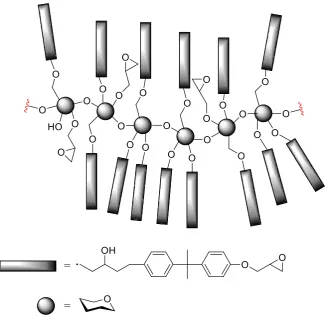
bisphenol-A forming bisphenol-A digylcidylether (BADGE, a common epoxy resin)
which is then grafted to the starch backbone. This order is due to the greater
reactivity of primary hydroxyl groups compared to the secondary hydroxyls of starch
any that didn’t react with BADGE reacted with epichlorohydrin forming the
hyperbranched epoxy resin (Figure 1.7). Polymerisation with poly(amido
amine)(PAA) led to a highly crosslinked material with a tensile strength of 29 MPa
(10% starch sample) which was lower than BADGE/PAA alone at 62 MPa. However
the starch based polymer had greater impact resistance (>1 m compared to 0.65 m)
and adhesive strength (2906 MPa vs 598 MPa) than purely BADGE. There was no
significant change in thermal properties with any amount of starch (0 – 20%) with
9
Figure 1.7. Hyperbrached epoxy resin formed in 1-pot reaction of bisphenol-A, starch and
epichlorohydrin.
In 2014 Thakore[35] investigated polyurethanes crosslinked with carbohydrates for
drug delivery. Using lamotrigine as a model it was found that release properties
could be tailored by changing the crosslinker type or the polyol/crosslinker ratio. The
polyurethanes were synthesised from polypropylene glycol, diethylene glycol and
2,4-toluene diisocyanate (2,4-TDI, Figure 1.8) and crosslinked with either glucose,
10
Figure 1.8. Reagents use in carbohydrate crosslinked polyurethanes.
The results show that release rates increased with an increase in ‘soft segment’
which was achieved with a lower isocyanate/OH ratio or higher polyol/crosslinker
ratio. It was also found the type of crosslink affected release rates
cellulose>glucose>starch. This work outlines bio-based polymers as a useful
material for drug delivery and the release properties can be tailored increasing the
range of applications.
1.3 Vegetable Oils
This thesis describes work undertaken with vegetable oil based polymers and
consequently, we will focus on the chemistry and applications of these materials.
Fats and oils (known as lipids) and are an integral part of cell membranes present in
all living organisms. Vegetable oil is the common name given for triglycerides
derived from plant sources which are often liquids at room temperature (solid
triglycerides are known at fats). A triglyceride is an ester of glycerol and three fatty
acid chains which can vary depending on the organism in which they are found
11
Figure 1.9. Triglyceride showing constituent parts and areas for chemical modification.
The variation in fatty acids is typically in chain length or level of unsaturation often
denoted with a number (18:1 for oleic acid) (Figure 1.10). Warm blooded organisms
generally have lipids that contain shorter saturated chains (14:0 myristic acid), while
marine organisms (which exist at lower temperatures) have longer polyunsaturated
chains (22:4 adrenic acid). Plant lipds are moderately unsaturated (18:2 linoleic
acid). The composition of a variety of common vegetable oils, determined by fatty
acid methyl ester (FAME) analysis are shown in Table 1.1.
12
Plant Oil Fatty acid composition /%
C16:0 C18:0 C18:1 C18:2 C18:3
Cocoa
Butter 26 34 35 - -
Corn 13 3 31 52 1
Cottonseed 23 2 17 56 -
Linseed 6 3 17 14 60
Olive 10 2 78 7 2
Palm 44 4 39 11 -
Rapeseed 4 2 62 22 10
Safflower 7 3 14 75 -
Soybean 11 4 23 53 -
Sunflower 6 5 65 26 -
Table 1.1. Typical fatty acid composition of some common plant oils.[36]
Vegetable oils offer various reactive sites for chemical modification, such as alkenes
and their allylic positions, the carbonyl groups or in some cases hydroxyls and
epoxide functionality (Figure 1.10). Consequently, plant oils are widely used in
industry, for example as biofuels (carbonyl modification),[37,38] hydrogenation for
margarine (alkene modification),[39,40] and polyurethanes (reaction at hydroxyl
sites).[41,42] World production of plant oils in 2014 was 166 million metric tonnes[43]
making triglycerides an attractive feedstock from which to synthesise renewable
materials. A brief review of chemistry of triglycerides is presented to give the reader
an overview of the subject.
1.3.1 Reactions at the allylic carbon
The allylic carbon in a fatty acid chain is susceptible to oxidation, even more
reactive is the allylic carbon between two alkene groups such as in linoleic acid and
it is oxidation at these positions which occurs in the autoxidation of fatty acids.[44]
Hydroxyl groups are attractive functionality to incorporate into renewable feedstocks
as they can be used to make polyurethane and polyesters. Znothe et al[45]
13 positions using SeO2 and t-BuOOH to give a mixture of mono and dihydroxy
compounds.
The allylic bromination of methyloleate and methylerucate (C22:1) was investigated
by Winker et al in 2014. The reaction of a fatty acid methyl ester with N
-bromosuccinimide (NBS) and AIBN at 60 – 100 °C in solvent or bulk yielded
monobrominated fatty esters (Figure 1.11). These brominated fatty esters could be
used as initiators for the atom transfer radical polymerisation (ATRP) of methyl
methacrylate (MMA). At 80 °C PMMA was produced in 15 min with Mn = 11500 –
34600 Da and a PDi of 1.05 – 1.35. using [M]:[I] of 50:1 – 300:1 This work shows
the potential of plant oil based compounds as useful renewable initiators for radical
polymerisation.
Figure 1.11. Bromination of the allylic carbon of fatty acid methyl esters.
1.3.2 Reactions at the Carbonyl 1.3.2.1 Aminolysis
Reactions at the carbonyl position are one of the most common procedures in
triglyceride chemistry. Aminolysis is the splitting of an ester linkage with amines
which produces amides, this reaction can be achieved by sodium methoxide,[46]
microwave irradiation[47,48,49] or enzymes.[50,51]
In 2012 Lligdas[52] investigated the use of fatty acid based amides for tissue
10-14 undecanoate diols were subjected to aminolysis by 1,6-hexamethylene diamine. The
pendant amide groups increased the non-covalent interaction of chondroitin sulfate
(CS) a major component of cartilage, CS immobilization is a promising way to
enhance biological activity of fatty acid-derived PUs.
Hyaric et al[53] in 2013 investigated aminolysis of a triglyceride from Passiflora
edulis which contains linoleic (69%), oleic (14%), palmitic (10%) and stearic (3%)
fatty acids.[54] Aminolysis was performed with ethanolamine and a range of metal
catalysts and the amide product was achieved in good yields, for
ZnO.La2CO5.LaOOH a yield of 100% was achieved after 8h at 100 °C. A year later
More[55] also produced fatty amides from ethanolamine but with Jatropha oil
(linoleic 80%, palmitic 15%, strearic 5%).[56] The fatty amides were mixed with
bis(2-hydroxyethyl) terephthalate (PET monomer Figure 1.12) from recycled
polyethylene terephthalate (PET) and cured with isocyanate to form
renewable/recycled coatings. The coatings showed excellent balance of flexibility
and hardness due to the structural differences between PET and the fatty amide,
adhesion was also increased compared to PET alone due to non-covalent interactions
from the amide linkage.
Figure 1.12. Hydroxyl terminated fatty amide and bis(2-hydroxyl ethyl)terephthalate for polyurethane
15
1.3.2.2 Transesterification
One of the most common reactions at the carbonyl site is transesterification.
Glycerolysis involves the breaking of an ester link of triglycerides with glycerol
forming a mixture of mono- and diglycerides.[57] The increased OH functionality can
be used for further modification or the mono- and di-glycerides are often used as
food additives.[58,59]
The most common application of transesterification is in the production of biofuels,
which have received a lot of attention recently due to the depletion of fossil fuel
reserves.[60] Biodiesel is typically manufactured from triglycerides from plant
sources rather than animal fats. Standard diesel engines cannot run on standard plant
oils as they are too viscous and have low volatility. Modification of triglycerides by
transesterification by short chain alcohols produces methyl or ethyl esters of fatty
acids which have properties closer to conventional diesel fuel (Figure 1.13).
Branched alcohols such as isopropyl alcohol are also used in biodiesel to lower
crystallisation temperature important for use in colder climates.[61] Alkali catalysts
are most common for transesterification due to increased yields but other methods
are used such as lipase enzymes[62,63] and microwave irradiation[64] if continuous
processing is required.
16
1.3.3 Reactions at the Alkene 1.3.3.1 Hydrogenation
Conversion of C=C double bonds of an unsaturated oil to fully saturated oils can be
achieved by hydrogenation. A large scale application of this reaction is in the
processing of polyunsaturated oils in the manufacture of margarine. Hydrogenation
of most of the C=C bonds in an oil increases the melting range, converting a liquid
oil to a semi-solid or solid fat or wax this process is also known as hardening. This
process commonly used in the food industry was first proposed in 1902[65] and has
been used widely ever since.[66,67] Other uses for hydrogenated oils are in
cosmetics[68] and substitutes for paraffin wax in candles.[69]
Most common procedures use high pressure hydrogen gas and a metal catalyst such
as platinum,[70,71] palladium[72,73] or nickel[74] a standard process would be heating the
oil to 80 – 120 °C in the presence of a nickel catalyst under 200 – 300 bar of H2 gas
depending if full or partial hydrogenation is desired.[75]
One of the side effects of using partially hydrogenated vegetable oils in food use is
the formation of trans fatty acids. Nearly all naturally occurring unsaturated oils
have cis C=C bonds but during partial hydrogenation these can isomerise to the trans
isomer which is favoured due to being a lower energy (thermodynamic product).
Trans fatty acids are linked to circularity problems such as heart disease.[76,77] A
method proposed by Singh in 2009[78] used mild conditions to partially hydrogenate
soybean oil with minimal trans fat production. The reaction was performed at 70 °C
under only 65 psi (4.5 bar) H2 and catalysed by platinum immobilised by a porous
polyetherimide membrane. The products contained 4% trans fatty acid compared to
17
1.3.3.2 Crosslinking and Metathesis
Triglycerides with a high level of unsaturation are often called drying oils as they
have the ability to polymerise via radical polymerisation with ambient oxygen.[79]
The process is shown in Figure 1.14 and starts with the removal of a hydrogen atom
from the allylic position most commonly the methylene carbon between a diene of a
polyunsaturated fatty acid (C11). The energy to remove a hydrogen atom from C11
is 50 kcal/mol compared with 75 kcal/mol at C8 or C14. This accounts for the
reactivity order of fatty acids of linolenic>linoleic>oleic.[80] The double bond
adjacent to the carbon radical in linoleic/linolenic acids shifts to give the more stable
isomer 1.3 and to conjugation of the double bonds. The fatty acid radical 1.3 then reacts with oxygen from the air to form a peroxy radical 1.4 which can abstract a hydrogen from another triglyceride forming a hydroperoxide 1.5 and propagating the chain reaction. Thermal degradation of the hydroperoxide leads to oligomerisation of
fatty acid chains creating ether links 1.6, if two alkyl radicals react in a termination step alkyl linkages can be produced. However the reaction of alkyl radicals with
oxygen at ambient pressures occurs very quickly, consequently the concentration of
alkyl radicals is much lower than peroxy radicals so alkyl oligomers are not often
18
Figure 1.14. Autoxidation of polyunsaturated oils (drying oils).[80,82]
The ability to crosslink via autoxidation makes these oils useful as film formers in
paints and coating formulations.[83,84] Typically in film formation, drying agents such
as cobalt 2-ethylhexanoate or manganese catalysts, are added to enhance degradation
of hydroperoxides hence increasing drying rate.[85] However, in thicker films rapid
drying can form an oxygen impermeable barrier on top of the coating while the
remaining compound is liquid underneath. Autoxidation rates can also be increased
with gamma and infra-red irradiation inducing free radical formation.[86,87]
Olefin metathesis is a reaction involving redistribution of alkenes by the scission and
regeneration of C=C bonds.[88] Olefin metathesis of vegetable oils is a useful
technique for producing materials with improved drying properties. An inclusion of
5% self-metathesized soybean oil into unmodified soybean showed reduced drying
times from 312 min to 182 min.[89] Standard metathesis conditions use a WCl6 and
Me4Sn catalyst system, however this has some disadvantages such as the use of
halogenated solvents, large catalyst loadings and sensitivity to oxygen and
19 the metathesis reaction to be tolerant of oxygen and even works in water (Figure
1.15).[91,92]
Figure 1.15 Self metathesis of methyl oleate using Grubbs second generation catalyst.[93]
Acyclic diene metathesis (ADMET) is a type of olefin metathesis to polymerise
molecules with two alkene groups. ADMET is a step growth condensation
polymerisation forming linear chains with an unsaturated backbone. Typically
terminal alkenes are polymerised liberating ethylene gas as the driving force.[94]
In 2002 Larock et al[95] investigated ADMET polymerisation of soybean oil using
Grubbs second generation catalyst. The reactions were performed between room
temperature and 55 °C using 0.1 to 1.5 mol % catalyst loading and produced a range
of polymers from sticky oils to soft rubbers. In 2010 Meier further investigated
triene metathesis with high oleic sunflower oil and proposed ATMET[96] where
hyperbranched/crosslinked polymers were formed. The molecular weight of these
polymers could be controlled with the addition of methyl acrylate as a chain stopper,
with greater acrylate concentrations producing smaller polymers. Using only
sunflower oil the molecular weight was 4695 gmol-1 compared to 1547 gmol-1 using
20
1.3.4 Epoxidation of Vegetable Oils
One of the most important reactions in oleochemisty is the epoxidation of
unsaturated fatty acids of a triglyceride.[97] These reactions add value to the oils as
the epoxides allow a wide range of possibilities for further modification in many
applications. There are many methods of epoxidation involving
peroxides/peracids,[98] metal catalysts[99] or enzymes.[100] One of the most common
procedures is the reaction of double bonds with peracids such as meta-chloro
perbenzoic acid (mCPBA) known as the Prilezhaev reaction. This reaction follows a
concerted step known as the ‘butterfly mechanism’ (Figure 1.16).[101]
Figure 1.16. Epoxidation of an alkene by mCPBA showing the 'butterfly mechanism'.
However this process is not suitable for an industrial scale due to the production of
benzoic acid which is costly to remove. For commercial applications more volatile
peracids (such peracetic acid or performic acid) are used which can be generated in
situ.
The most widely used process for epoxidation of vegetable oils used in industry
utilises concentrated hydrogen peroxide (30 - 50%) and carboxylic acids with an acid
catalyst (which generates peracid in situ).[102] In 2008 Dinda[103] investigated a range
of inorganic acid catalysts along with acetic and formic acids in the epoxidation of
cottonseed oil. The reactions were performed at 60 °C with 0.5 equivalents of
carboxylic acid and 2 wt% acid catalyst, an increase of acid concentration lead to
21 the reactivity of inorganic acids was H2SO4 > H3PO4 > HNO3 > HCl. The same year
Meyer[104] used formic acid and H
2O2 to epoxidise soybean and jatropa oils and
achieved a conversion of 83 and 87% respectively.
However the presence of inorganic acids leads to unwanted side reactions such as
ring opening of epoxides, hydrolysis of the ester linkage and oligomerisation (Figure
1.17), which is not ideal industrially due to expensive purification required.[105]
Figure 1.17. Ring opening of an epoxide forming a diol and leading to oligomerisation.
Acidic ion exchange resins (AIER) are insoluble gels or polymer beads impregnated
with inorganic acids such as H2SO4 and are often used to minimise side reactions
during epoxidation. Peracids are formed between H2O2 and carboxylic acids in the
conventional way but inside the AIER, this minimises side reactions as triglycerides
cannot enter the pores of the resin so are not exposed to strong acids.[106]
Investigation into fatty acid epoxidation using formic and acetic acids with an AIER
showed different conversion rates depending on the type of vegetable oil. With
soybean oil Petrović[107] showed formic acid was more efficient than acetic acid
possibly due to smaller molecule having easier access through pores in the resin.
22 <2% higher weight oligomers were obtained. In 2006 Goud[108] optimised this
reaction and found a
That the temperature of 55 – 65 °C, with 0.5 equivalents of carboxylic acid and 1.5
equivalents of H2O2 (per C=C number) was optimal.
There are several drawbacks of the peracid method of epoxidation which could be
improved;
i) Conversion is limited by competing acid catalysed oxirane ring opening.
ii) Removal of the acidic oxygen carrier whose presence may be detrimental
to final application.
iii) Safe handling of concentrated hydrogen peroxide and strong acids.
To address these issues Campanella[109] investigated the epoxidation of soybean oil
and soybean methyl esters using a titanium catalyst, dilute hydrogen peroxide (6%
v/v) and t-BuOH. Only a small excess of peroxide was required (with anything over
1.1 mol equivalent compared to C=C bonds having no effect on conversion) and no
epoxide ring opening was observed. This process negates the need for concentrated
peroxide or strong acids. Other metal catalysts have been investigated and can be
based on Mo, W, Re, Rh, Pt or Pd.[110,111]
A more environmentally friendly method of epoxidation is via an enzymatic route
and is a good alternative to the peroxide/peracid method as the need for strong acids
is reduced. Enzymes such as Candida Antarctica can be used to form the
percarboxylic acid in place of inorganic acids. The peracids then donate oxygen to
23 synthesised from acetic or formic acids as fatty acids themselves can be used or
created in situ from ester cleavage of triglycerides (Figure 1.18).[112]
Figure 1.18. Enzymatic route to epoxidation of vegetable oils.
Enzyme catalysed epoxidation is a useful technique when the substrates are fatty
acids, however with triglycerides some ester hydrolysis is required to form the
peracid intermediate. Enzymes are also sensitive to reaction conditions such as
temperature or H2O2 concentration which needs to be considered if used on industrial
scales. Sun et al showed that the addition of 14 wt% stearic acid to the epoxidation
of Sapindus Mukorossi oil as an efficient oxygen carrier suppressed ester
hydrolysis.[113] It was also shown that using free fatty acids, from the same source as
the triglyceride to be epoxidised, hydrolysis was suppressed at only 5 wt% of fatty
acid.[114] The use of octanoic acid in the epoxidation of sunflower oil methyl esters
increased conversion to 99% with C. Antarctica.[115]
1.3.5 Polymers from Epoxidised Oils
Vegetable oil epoxides are strained due to their small ring size and as a result are
relatively reactive readily undergoing nucleophilic ring opening by a variety of
nucleophiles including amines, alcohols or halogens (Figure 1.19).[116,117,118,119,120]
24 groups which can then be used for polyurethane synthesis.[121] Alternatively ring
opening polymerisation of epoxides themselves can lead to polyethers,[123] or
copolymerisation with diacids or anhydrides leads to polyesters.[122]
Figure 1.19. Ring opening of epoxides with nucleophiles.
1.3.5.1 Polyethers
The reaction of epoxides with Lewis acids initiates cationic ring opening
polymerisation leading to polyethers, this process has been known for a number of
years. In 1992 Crivello et al[123] investigated cationic ring opening polymerisation of
epoxidised plant oils for the formation of polyether films. The catalysts were
diaryliodium and triarylsulfonium salts (3 wt%) and the polymerisations were
initiated by UV light (300 W). It was found that coatings from oils with higher
epoxide functionality had a harder surface but were less resistant to impact due to
brittleness caused by greater crosslinking. The work suggests that due to the wide
variety of oils with varied levels of unsaturation the final properties of the films
could be tailored for any application. In 2004 Park et al[124] reported cationic ring
opening polymerisation of epoxidised castor oil using N-benzylpyrazinium
hexafluoroantimonate as a catalyst. The thermally latent catalyst showed no signs of
polymerisation at temperatures below 60 °C. This system showed potential for
pre-mixed polymer formulations with a stable pot life that could be activated when
required. In 2006 Lligdas[125] investigated ring opening polymerisation of epoxidised
methyl oleate using hexafluoroantimonic acid (HSbF6) producing methyl oleate
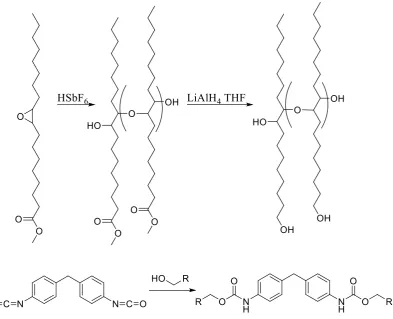
25 number of hydroxyl groups which were then crosslinked with MDI to form
[image:50.595.127.521.135.454.2]polyurethanes ranging from rubbery to hard plastics (Figure 1.20).
Figure 1.20. Synthesis of polyurethanes from epoxidised methyl oleate.
Ring opening can also be achieved with Lewis acids, such as BF3.OEt2as shown by
Liu et al[126] in 2010. The polymerisation of epoxy soybean oil with 1wt% BF 3.OEt2
at 0 °C produced crosslinked polyethers insoluble in common solvents. These
polymers could be converted to hydrogels by saponification of the ester linkage
which could be used in the healthcare or cosmetic industries. Recently Clark[127]
reported the ring opening polymerisation of plant oils in THF producing
copolyethers. Polymers from epoxy methyl oleate, cocoa butter and palm oil showed
molecular weights ranging from 8000-56000 with palm oil giving larger weights due
26 copolymers showed superior mechanical properties compared to polyurethanes from
purely vegetable oils with little effect on thermal stability.
Figure 1.21. Copolymerisation of THF and epoxidised vegetable oil.[127]
1.3.5.2 Polyurethanes
Polyurethanes are most commonly synthesised from polyols and di- or
polyisocyanates such as hexamethylene diisocyantate (HDI), 2,4-toluene
diisocyanate (TDI), or methylene bis(phenylisocyanate) (MDI) (Figure 1.22).
Polyurethanes (PU’s) have excellent structural properties owing to a balance
between a hard section (urethane link) providing high strength and a soft section
from the polyol increasing flexibility and impact resistance. The physical properties
of PU’s can be tailored to meet the application demands, for flexibility, longer
polyols (3000-6000 Da) with lower hydroxyl functionality (2 – 3) are used. Using
shorter chain polyols or increasing hydroxyl functionality increases crosslinking
density forming a more rigid material.
27 Petrović et al[128] investigated the preparation of polyurethane foams from polyols
derived from epoxidised soybean oil. The foams were created by blowing agents
hydrochlorofluorocarbon and pentane. The soybean oil based foams were found to
have mechanical and insulating properties comparable with commercially available
polypropylene oxide (PPO) foams. It was also reported the soybean oil
polyurethanes had greater thermal degradation temperatures thought to be from a
reduced number of ether links in soybean oil compared to PPO. The Petrović
group[129] also studied polyurethanes from polyols formed by hydroformylation.
Hydroformylation is an important industrial process which can be used to prepare
aldehydes from alkenes. The reaction involves addition of a formyl group (CHO)
and a hydrogen across a C=C double bond. The alkenes of soybean oil were
converted to aldehydes using rhodium or cobalt catalysts, the aldehydes were then
reduced to alcohols forming polyols. Polyols from the rhodium catalysed reaction
(95% conversion) resulted in rigid PU’s whereas the cobalt reaction (67%) produced
rubbery materials with lower tensile strength. Polyurethanes were produced from a
range of isocyanates 2,4-TDI, MDI and Desmodur N-3300 (a triisocyanate from 3
HDI molecules). It was reported that PU’s from triisocyanates showed higher
density, higher Tg and greater tensile strength than diisocyanate PU’s.
Wang et al[130] synthesised polyurethanes using polyols from epoxidised soybean oil
ring opened with methanol, ethylene glycol and 1,2-propanediol. Hydroxyl
functionality ranged from 2.6 – 4.9 and PU’s were synthesised using 2,4-TDI.
Increased hydroxyl functionality produced PU’s with increased crosslinking density
which gave greater tensile strength, glass transition temperatures but lower thermal