during different annealing temperatures : experiment and phase-field simulation. Acta
Materialia. doi: 10.1016/j.actamat.2017.03.043
Permanent WRAP URL:
http://wrap.warwick.ac.uk/87901
Copyright and reuse:
The Warwick Research Archive Portal (WRAP) makes this work by researchers of the
University of Warwick available open access under the following conditions. Copyright ©
and all moral rights to the version of the paper presented here belong to the individual
author(s) and/or other copyright owners. To the extent reasonable and practicable the
material made available in WRAP has been checked for eligibility before being made
available.
Copies of full items can be used for personal research or study, educational, or not-for-profit
purposes without prior permission or charge. Provided that the authors, title and full
bibliographic details are credited, a hyperlink and/or URL is given for the original metadata
page and the content is not changed in any way.
Publisher’s statement:
© 2017, Elsevier. Licensed under the Creative Commons
Attribution-NonCommercial-NoDerivatives 4.0 International
http://creativecommons.org/licenses/by-nc-nd/4.0/
A note on versions:
The version presented here may differ from the published version or, version of record, if
you wish to cite this item you are advised to consult the publisher’s version. Please see the
‘permanent WRAP url’ above for details on accessing the published version and note that
access may require a subscription.
M
AN
US
CR
IP
T
AC
CE
M
AN
US
CR
IP
T
AC
CE
PT
ED
Effect of Ni alloying on the microstructural evolution and
mechanical properties of two duplex light-weight steels
during different annealing temperatures: experiment and
phase-field simulation
Alireza RahnamaI, Hiren Kotadia, Seetharaman Sridhar
International Digital Laboratory, Warwick Manufacturing Group, University of Warwick, Coventry, United Kingdom, CV4 7AL
Abstract
This paper presents a study of two lightweight steels, Fe-15Mn-10Al-0.8C-5Ni and
Fe-15Mn-10Al-0.8C where strength is dependent upon the microstructure of2ndphase
precipitates. We investigate the effects of annealing temperature from 500◦C to 1050
◦C on the precipitation of ordered phases size and morphology through phase-field
modelling and experimental studies based on laboratory scale annealing and
charac-terization. The chemical composition of carbides and B2 compounds as a function of
isothermal annealing temperature and the matrix within which they formed are
eluci-dated in this study. It is found that nano-sized disk-shaped B2 particles form at higher
annealing temperatures (e.g. 900◦C and 1050 ◦C). The simulation results on
car-bides demonstrated the effects of energetic competition between interfacial energy and
elastic strain energy on the morphological evolution of carbides. In addition to that,
different ordering behaviours observed depending on the Ni content into the steel. The
results demonstrate processing route designed through the phase-field simulations led
to a better combination of strength and ductility. The tensile testing results indicate an
increase in the strength and elongation when B2 precipitate morphology changes from
micro-size faceted shape to nano-size disk-like particles.
Keywords: Low density steel, phase-field, intermetallic,κ-carbide, characterization
I
M
AN
US
CR
IP
T
AC
CE
PT
ED
2010 MSC: 00-01, 99-00
1. Introduction
Lightweight steel alloys based on the Fe-Al-X alloying system (where X stands
for Mn, Ni and/or C) combine the low density and corrosion resistance of aluminium
with the low cost of manufacturability of steel based alloys. Fe-Mn-Al-C steels show
significantly varying characteristics, depending on their respective Al concentration
5
[1]. Depending on the constituent phases in their microstructure, lightweight steels can
possess a wide range mechanical properties, with yield strength (YS) from 500 to 940
MPa, ultimate tensile strength (UTS) from 710 to 1020 MPa and tensile elongation
(TE) from 8 to 78 % [1]. The key to obtain desired properties is dependent upon the
ability to form complex strengthening precipitates [2, 3, 4, 5, 6, 7, 8, 9, 10]. In addition
10
toκ-carbide, B2 (space group: Pm3M) andDO3(space group: Fm3M) ordered phases
can also appear in the lightweight steels [17, 18]. Depending on the chemical
composi-tion and heat treatment condicomposi-tions,β-Mn phases can also form in the microstructure of
low density steels [11, 12, 13, 14, 15, 16]. In recent years, two main lightweight steel
grades have been explored, namely ferritic Fe-Al (with an Al content up to 10 wt.%
15
and additions of microalloying elements such as B, V, Ti and Nb (<0.03 wt.%)) and
austenitic high-Mn (Fe-Al-Mn-C) steels [19, 20]. These steels possess a much better
strength-to-weight ratio (specific strength) and toughness, and their density is reduced
from∼7.85 to 6.5 g/cm3 compared to transformation induced plasticity (TRIP) steels
and twinning-induced plasticity (TWIP) steels [21, 22, 23, 24, 25, 26].
20
The formation and metallurgical control of the ferrite phase, (Fe,Mn)3AlCx κ
-carbide (perovskite-type crystal structure) and Al-containing intermetallic compounds,
which determine the mechanical properties and may result in the poor rollability of
this type of steel [26, 27, 28], is one the main aims of the current studies. The
cur-rent challenges for manufacturing high Al lightweight steels include: re-oxidation and
25
inclusion control of the liquid metal (increasing amount of Mn can lead to the
for-mation of MnS inclusion, while decreasing Mn content results in the forfor-mation ofα
M
AN
US
CR
IP
T
AC
CE
PT
ED
of Al with the mold slag and cracking during cold working [29]. Lu and Qin showed
that cold workability of lightweight steels is affected by the lattice misfit and interface
30
shape betweenκand matrix [29]. They employed high density short duration electric
current pulses for fabrication of this type of steel and demonstrate that electric current
promotes the spheroidization and refinement ofκstructure and leads to a decrease in
the volume fraction ofκ-carbides. Yao et al. also reported that the strain caused by the
κ/γmismatch results in the occupation of Al sites inκ-phase by Mn atoms and thus
35
leads to off-stoichiometric concentration of Al[30]. Other recent studies on duplex
austenite-ferrite lightweight steels directed towards the effect of annealing
tempera-ture on the microstructural evolution and mechanical properties [31, 32], work
hard-ening behaviour [33], and tensile deformation [34]. In 2014, the Minerals, Metals and
Materials Society organized a special lightweight steel meeting where recent research
40
progress of low density steel was discussed and various in-depth studies on the
metal-lurgical behaviours, thermodynamic calculations and hot deformation mechanisms of
lightweight steels were published [35, 36, 37]. Ding et al. studied different grades of
lightweight steels with Mn content less than 20% and Al content more than 8%
(Fe-12Mn-8Al-0.8C and Fe-18Mn-10Al-(0.8-1.2)C) and demonstrated that the ductility of
45
duplex(austenite+ferrite) steels is less than that of steels with microstructure consisted
of austenite and dispersedκ-carbide. However, their results showed that TRIPLEX
lightweight steels (ferrite+austenite+κ-carbide) exhibits similar mechanical properties
to that of austenitic lightweight steel [38, 39].
Nickel is one of the most effective alloying element for forming B2 with aluminium
50
[40]. A recent study showed that nickel can expand the stability domain of B2 above
the recrystallization temperature (800-900◦C) of deformed austenite and improve the
mechanical properties of lightweight steels [41]. However, although NiAl-type B2
in-termetallics are inherently strong, their inadequate ductility at room temperature
con-stitutes a bottleneck that limits their widespread engineering applications [42]. One
55
major reason for the low ductility of Ni-containing lightweight steels is the ordering
of theα(body-centred cubic [BCC]) phase and its transformation to B2, which results
in the formation of brittle, coarse (>100µm, HV=492 HV10) B2 stringer bands. One
M
AN
US
CR
IP
T
AC
CE
PT
ED
thus, avoid the formation of coarse, brittle B2 stringer bands through an appropriate
60
treatment [43]. In such a way, theαmatrix provides the ductility whereas the
nano-sized B2 precipitated inαyield the desirable strength. Therefore, this strategy can lead
to an elevated strength and improved ductility. Moreover, the precipitation of coarse
triangle-like (>2µm) B2 precipitates at the grain boundaries results in very poor
rolla-bility making the industrial-scale production of this type of lightweight steels difficult.
65
Theκ-carbides and B2 particles contribute to the strength only if their shape, size and
density are carefully designed [44] Otherwise, the precipitates will lead to brittleness,
causing poor low-temperature ductility and the initiation of cracking (stress
concentra-tion) during thermomechanical processing.
The morphology of the precipitates can be explained in terms of the competing
en-70
ergetic contributions during the growth process [45]. Whereas the gradual increase in
the importance of the strain energy relative to the interfacial energy may be known, the
point during growth at which the effect is noticeable would naturally depend on the
sys-tem, and the quantitative predictability of this point is critical when designing a
micro-structure in which the precipitate morphology is key. Also the additive Ni element
75
substantially changes the precipitations of ordered phases and their chemical
compo-sitions. Such a study is of scientific importance since the precipitation behaviours of
ordered phases are substantially different in austenite and ferrite due to the different
formation processes as well as different coherencies with the matrix [42, 46, 47]. In
duplex microstructure, ferrite and austenite have different compositions. Thus, the
80
composition of ordered phases will be different in each phase depending on the Ni
content.
The first aim of the present study was to simulate the morphology of ordered phases
in Fe-Mn-Al-C system for the evolution ofκ-carbides and in Fe-Al and Fe-Al-Ni for
the evolution of B2 intermetallic compounds. This was done in order to better
under-85
stand the microstructure evolution during the ordering processes at different isothermal
holding temperatures in bothγandαphases. In this regard, phase-field modelling was
employed because this method is currently considered as the most powerful approach
for predicting the mesoscale morphological evolution [48, 49, 50, 51, 52, 53, 54, 55, 56,
57]. For the simulation of the B2 phase in binary Fe-Al and ternary Fe-Al-Ni systems,
M
AN
US
CR
IP
T
AC
CE
PT
ED
a phase-field model was developed based on the Ginzburg-Landau theory initially
pro-posed by Khachaturyan [58, 59] and further developed by Poduri and Chen [63]. In
order to study the energetic contributions of interfacial energy and elastic strain energy
on the morphological evolution ofκphase, a phase-field method connected to
CAL-PHAD was employed based on our recent report [61], where a three sublattice model
95
was used to allow intermixing between Mn and Fe atoms [62].
It is worth to mention that the primary purpose of these simulations was to
investi-gate the combined effects of ordering and long-range elastic interaction on the growth
and coarsening kinetics and the microstructural development of ordered phases in light
weight steels. For this, composition order parameter was chosen since it enabled us to
100
formulate the relationship between the gradient coefficients in the coarse grained free
energy model and the interatomic interaction energies in the microscopic free energy
model.
These simulations enabled us to design the thermal profile of heat treatments more
precisely. Based on the simulation results, the heat treatments were then performed at
105
500◦C,700◦C,900◦Cand1050◦Cfor two grades of lightweight steels: the first grade
contained 5%Ni and the second grade was Ni-free. For each heat treated sample, the
following changes were investigated:
(i) The microstructural evolution e.g. the formation of ordered phases in theγand
αphases as a function of isothermal holding temperature.
110
(ii) The effect of Ni on the microstructural evolution in both disordered γ and α
phases.
(iii) The change in the chemical compositions of the ordered phases as a function of
temperature, the chemical composition of the bulk material and the phase within
which they were formed.
115
(iv) The room temperature mechanical properties of each heat treated sample and its
M
AN
US
CR
IP
T
AC
CE
PT
ED
2. Methods
2.1. Experiments
2.1.1. Materials
120
Ni is expected to substantially change the precipitations of ordered phases and their
chemical compositions and is one of the most effective alloying elements for forming
B2 precipitates. A scientific study explaining the precipitation in austenite vs. ferrite
and the role of Ni would be of technical importance when designing low density steels.
For this purpose, two duplex alloys 0.8C-5Ni (S1) and
Fe-15Mn-10Al-125
0.8C (S2) were selected for the current study. This enabled us to compare the effects of
FeAl-type B2 intermetallic in austenite vs. ferrite (S1) and the role of Ni compounds
on both the strength and ductility with those of NiAl-type B2 (S1 vs. S2). Furthermore,
the base composition of Fe-15Mn-10Al-0.8C-5Ni was used as a base-line composition
since it corresponds to the one reported in literature [41] where the role of ordered
pre-130
cipitates was noted but the kinetics of formation was not investigated and the formation
of disk-like B2 particles was not reported.
The steels under study were produced by an induction melting furnace. The
hot-rolled material was first solution-treated for 35 min at1250◦C in a protective argon
atmosphere and then water quenched. The samples were prepared with dimensions of
135
3-mm (length), 3-mm (width) and 1-mm (thickness). Subsequent ordering treatments
were applied at 500◦C and 700◦C (for κand B2 ordering), and 900 ◦C for B2
or-dering. We also performed an annealing treatment at 1050◦C because, based on our
simulations, we anticipated that Ni-enriched nanosized B2 precipitates can form in the
αphase at this temperature. The reason to select such a high annealing temperature was
140
only to validate our simulation results and these materials are not designed to withstand
such high temperature. After each heat treatment, the samples were water-quenched.
2.1.2. Characterisation and tensile test
The ordered phases were characterized by selected-area diffraction patterns (SADPs),
bright-field (BF) images of transmission electron microscopy (TEM) JEOL 2000FX.
145
M
AN
US
CR
IP
T
AC
CE
PT
ED
10% perchloric acid and 90% ethanol with an applied potential of 25 V. The steel
spec-imens were, also, polished and etched in a 5% nital solution and the microstructures
were observed by a Carl Zeiss Sigma Field Emission Scanning Electron Microscope
(FE-SEM) operated at 20 kV. The equipment was fitted with high speed X-ray energy
150
dispersive spectroscopy (EDS). The subsequent tensile testing was performed on
sub-sized specimens according to ASTM E8M in an Instron 5800R system at a strain rate
of10−3/s.
2.2. Phase-field models
2.2.1. B2 intermetallic compound
155
A microscopic phase-field model was employed based on the Ginzburg-Landau
theory [58]. In this approach, the atomic configuration and morphology were expressed
by single-site occupation probability functionsPA(r, t),PB(r, t), andPC(r, t), which
correspond to the probabilities of finding an A, B, or C atom at any given lattice siter
at a given timet. SincePA(r, t) +PB(r, t) +PC(r, t) = 1.0for a ternary system, only
160
two equations are independent at each lattice site. Assuming the independent variables
arePA(r, t)andPB(r, t), their evolution can be expressed as:
dPA(r, t) dt =
1
kBT
X
r0
[LAA(r−r0) ∂F ∂PA(r0, t)
+LAB(r−r0) ∂F ∂PB(r0, t)
]
dPB(r, t) dt =
1
kBT
X
r0
[LBA(r−r0) ∂F ∂PA(r0, t)
+LBB(r−r0) ∂F ∂PB(r0, t)
] (1)
wherekB is the Boltzmann constant, T is the temperature, Lαβ(r−r0) (αand β=A, B or C) is the kinetic coefficient proportional to the exchange probabilities of
elementary diffusion jumps from the lattice sitertor0 per unit of time andF is the
165
M
AN
US
CR
IP
T
AC
CE
PT
ED
F=−1
2
X
r X
r0
[VAB(r−r0)PA(r)PB(r0) +VBC(r−r0)PB(r)PC(r0) +VAC(r−r0)PA(r)PC(r0)] +kBT
X
r
[PA(r)ln(PA(r)) +PB(r)ln(PA(r)) +PC(r)ln(PC(r))] (2) VAB(r−r0)is the effective interactive energies between A and B at lattice site
randr0 which contains both the short-range chemical interaction and the long-range strain-induced elastic interaction. Hence, we can write:
VAB(r−r0) =VAB(r−r0)ch+VAB(r−r0)el (3)
In the current study, the fourth nearest-neighbour interatomic model was used, and
170
the data for the interchange energies were deducted from Refs [63, 64, 65]. Fourier
transforming both side of the kinetic equation (1) gives:
dP˜A(k, t) dt =
˜
LAA(k) kBT
{V˜AC(k) ˜PA(k, t)+1 2[−
˜
VAB(k)+ ˜VBC(k)+ ˜VAC(k)] ˜PB(k, t) +kBT{ln(
PA(r, t) 1−PA(r, t)−PB(r, t)
)}k}+ ˜
LAB(k) kBT
{V˜BC(k) ˜PB(k, t) +1
2[− ˜
VAB(k)+ ˜VBC(k)+ ˜VAC(k)] ˜PA(k, t)+kBT{ln(
PA(r, t) 1−PA(r, t)−PB(r, t)
)}k}
M
AN
US
CR
IP
T
AC
CE
PT
ED
anddP˜B(k, t) dt =
˜
LBA(k) kBT
{V˜AC(k) ˜PA(k, t)+ 1 2[−
˜
VAB(k)+ ˜VBC(k)+ ˜VAC(k)] ˜PB(k, t) +kBT{ln(
PA(r, t) 1−PA(r, t)−PB(r, t)
)}k}+ ˜
LBB(k) kBT
{V˜BC(k) ˜PB(k, t) +1
2[− ˜
VAB(k)+ ˜VBC(k)+ ˜VAC(k)] ˜PA(k, t)+kBT{ln(
PB(r, t) 1−PA(r, t)−PB(r, t)
)}k}
(5)
where{ln( PA(r,t)
1−PA(r,t)−PB(r,t))}k,{ln(
PB(r,t)
1−PA(r,t)−PB(r,t))}k,
˜
PA(k, t),P˜B(k, t),L˜AA(k), ˜
LAB(k),L˜BA(k), andL˜BB(k)are Fourier transforms of corresponding functions in
real space.
175
2.2.2. κ-carbide
We simulated the precipitation of the orderedκ-carbide from both disordered γ
andαphases, according to our recent report [61]. The Gibbs free energy for the
multi-component Fe-Mn-Al-C systems was connected to the CALPHAD-type equations in
order to provide realistic thermodynamic parametrization. We employed a Gibbs
en-180
ergy single formalism for theκ/γandκ/αphases with a three-sublattice model for
this quaternary system [62]. In these simulations, the order parameter of each element
corresponds to long-range ordering in theκphase because the order parameter is
ex-pressed using the element site fractions of a three-sublattice model in the CALPHAD
method [61, 66].
185
The site fraction of each alloying element ’i’ (i=Al, Mn, C or Va) on each sublattice
’s’ was represented byyi(s). The molar Gibbs energy for the disorderedγandαand
M
AN
US
CR
IP
T
AC
CE
PT
ED
G(ci, y(s)i) =Gdisord(ci) + ∆Gord
= [X i
ciGdisordi +RT
X
i
cilnci+
X
i
X
j>i cicj
m
X
n=0
(nLdisordi:j (ci−cj)n)+
X i X j>i X k>j
cicjckLdisordi,j:k ] + [
X i X j X k
y(1)i y(2)j y(3)k ∆GL012
i:j:k+ RT 4 X s X i
y(s)i ln(y(s)i )
+X s X i X j>i y(s)i yj(s)
1
X
n=0 (nLL012
i:j (y (s) i −y
(s) j )] (6)
cirepresents a mole fraction of element ’i’,Rrefers to the gas constant, andT is
temperature.Gdisord
i represents a molar Gibbs energy of element ’i’ with the structure
190
of FCC or BCC.nLdisordi,j andLdisordi , j, kare binary and ternary interaction
parame-ters, respectively. The total free energyFin the Fe-Mn-Al-C system included the local
free energy density and the interface energy, was expressed as:
F≡
Z
V ( 1
Vm
Gdisord or L12+α
2
3
X
i=M n,Al,(C,V a) (∇ci)2
+ [β 2
3
X
i=M n,Al,(C,V a)
(∇φji)2] +gVel)dV (7)
whereVmrefers to the molar volume which is assumed to be constant. αandβ
are the gradient energy coefficients for the compositions and order parameters,
respec-195
tively. Interfacial anisotropy was introduced into the phase-field model by makingβ
orientation-dependant [67]. Gel
V is the elastic energy density which was expressed as
in Ref. [58]. The temporal evolution of the elemental concentrations and order
M
AN
US
CR
IP
T
AC
CE
PT
ED
and time-dependant Ginzburg-Landau equations:
200
∂ci ∂t =
X
j
∇.( ˜Mij∇ δF δcj
), i=M n, Al,(C, V a), j =M n, Al,(C, V a) (8)
∂φji ∂t =−L
δF
δφji, i=M n, Al,(C, V a), j= 1,2,3 (9)
whereM˜ij andLare the diffusion mobility and the structural relaxation,
respec-tively. The system size for the simulation is300∆x×300∆x×300∆x(grid size:
∆x = 0.25nm) for 3D single particle simulations. The thermodynamic parameters,
elastic constants, coefficients and mobilities were taken from (Ref. [61, 62, 65, 67, 68,
69, 70]). The required values for the calculation of interfacial energies were determined
205
by the methods and experimental values presented in a study by Doi [71], for instance:
0.152Jm−2for Fe-Al system with coherent interface, 0.74Jm−2for Fe-C system with
incoherent interface, 0.014Jm−2 for Ni-Al system with coherent interface. A
semi-Implicit-Fourier-Spectral-Method [72] is used for numerical analysis with a periodical
boundary condition.
210
3. Results & discussion
3.1. Simulation results on B2
We performed four controlled phase-field simulations for four different annealing
temperatures -500◦C,700◦C,900◦C, and1050◦C- to determine whether there is any
difference in the B2 precipitation process in theαphase and to examine its
composi-215
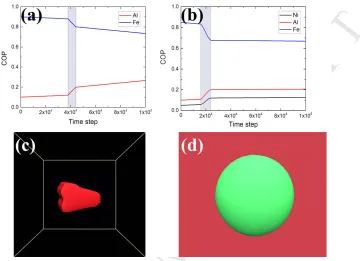
tional dependency on the formation temperature (Fig.1). We noted that two jumps in
the composition order parameter (COP) occur when the simulations were performed
at900◦Cand1050◦C(Fig.1c and d). The first jump corresponds to the ordering
pro-cess of theαphase and its transformation to B2 stringer bands. The second jump
corresponds to the precipitation of disk-like B2 particles in the orderedαphase. This
220
finding is notably different from that of an earlier study [41] and motivated its
M
AN
US
CR
IP
T
AC
CE
[image:14.612.138.509.131.202.2]PT
ED
Figure 1: Variation of the COP with ageing time. (a) and (b) represent the changes in the COP for isothermal
annealing at500◦Cand700◦C, respectively. After a jump att∗= 1800∆t, a slight increase in the value
of COP is evident. Phase-field simulation revealed that the Ni content is richer in the B2 particles formed at
700◦C. (c) and (d) represent the variations of the COP with ageing time for ordering treatments at900◦C
and1050◦C, respectively. Two jumps in the values occur: the first jump (t∗= 1800∆t) corresponds to the
ordering ofαat the start of the precipitation, and the second jump (t∗= 6800∆t) is related to the formation
of disk-like B2 particles in the ordered BCC phase. Phase-field simulations revealed that the Ni content of
the disk-like particles formed at1050◦Cis richer than that of B2 compounds formed after annealing at
900◦C.
The variations of the COP for the binary Al system (Fig.2a) and the ternary
Fe-Al-Ni system (Fig.2b) were computed. For the ternary Fe-Fe-Al-Ni system, Fe atoms were
substituted by Ni and Al atoms, forming NiAl-type B2 compounds. For the binary
Fe-225
Al system, Fe atoms were replaced by Al, indicating the formation of FeAl-type B2.
According to these figures, the compositional changes in all three elements occurred
during the early stages of simulation in the presence of Ni (Fig.2b), whereas these
changes occurred later in the absence of Ni (Fig.2a). Our simulation results for B2
intermetallic compounds revealed that the morphology of B2 depends on the matrix
230
within which they precipitate: a disk-like shape in theαmatrix (Fig.2 c) and a faceted
interface with sharp edges in theγphase (Fig.5d). The change in the morphology of the
B2 particles is the direct manifestation of the orientation relationship with the matrix:
B2 has a Kurdjumov-Sach (KS) relationship with the FCCγphase and a cube-to-cube
relationship with the BCCαphase [73]. This morphology is technically important
235
because the spheroidization of particles facilitates increasing their ductility while
re-taining desirable strength [43]. The formation of disk-like B2 particles in theαmatrix
means that the hard B2 stringer bands would no longer exist after heat treatments at
higher temperature and instead the microstructure would consist of softαphase which
provide the ductility and hard nanosized disk-like B2 particles as the strengthening
240
M
AN
US
CR
IP
T
AC
CE
PT
ED
Figure 2: (a) Variation of the COP in the Fe-Al system with ageing timet∗= 10000∆t. (b) Variation of the
COP in the Fe-Al-Ni system with ageing timet∗= 10000∆t. (c) Simulated morphology of a FeAl-type
B2 particle in theγphaset∗= 10000∆t. (d) Phase-field simulation of a NiAl-type B2 precipitate in theα
matrixt∗= 10000∆t.
3.2. Simulation results onκ-carbide
We developed a phase-field method coupled with a Computer Coupling of Phase
Diagrams and Thermochemistry (CALPHAD)-type database for three different
scenar-ios: interfacial energy as the only contributing energy with elastic strain ignored, elastic
245
strain energy as the only contributing energy with interfacial energy of10mJ m−2, and
finally, the contributions of both energies to the final morphology (Fig.3). To
investi-gate each energetic contribution to the precipitation of aκparticle in theαphase, the
total elastic strain energyEeland total interfacial energyEintwithin the simulation
re-gion were computed (Fig.3c). In addition, the change in the length of theκprecipitates
250
along the[100],[010]and[001]directions was computed during the phase-field
simu-lations (Fig.3d). Considering the interfacial energy only, theL[100]/L[010]aspect ratio
[image:15.612.146.506.135.396.2]M
AN
US
CR
IP
T
AC
CE
PT
ED
contributes, theL[100]/L[010]aspect ratio continuously increased with a rate faster than
that of the scenario where only interfacial energy was considered as the contributing
255
energy. The elongated needle-likeκ-carbides in theαphase result from a high lattice
mismatch betweenαandκ. Due to the high misfit value, the morphological evolution
of the precipitates in theαphase was mainly determined by the elastic coherency term
rather than by the interfacial energy contribution.
As shown in Fig.3a and b,κ-carbides contain two main morphologies: a faceted
260
cuboidal shape in theγ-phase, and an elongated needle-like morphology inα. These
results were in agreement with those determined experimentally [24, 46, 47].
Ad-ditionally, phase-field simulations demonstrated the interaction between the energetic
contributions and the relative values of the interfacial energy and elastic strain energy.
The main difference between these two contributing energies was that elastic energy
265
exists throughout the precipitate, whereas the interfacial energy only contributes to the
γ/κorα/κinterfaces. Expectedly, the total interfacial energy of the system was larger
than the total elastic strain energy when the initial nucleus was small because, in the
context, the area-to-volume ratio is high. As theκprecipitate grew, the value of the
area-to-volume ratio reduced, and the elastic energy contribution to the morphological
270
evolution became dominant. Therefore, the interfacial energy determined the
morphol-ogy ofκ-carbides in the initial stages of the simulation, whereas the effect of the elastic
strain energy became dominant as the precipitate grew.
Based on our simulation results, we performed the following experiments to
inves-tigate:
275
(i) the morphologies of ordered phases in both disorderedγandαphases,
(ii) the formation of disk-like B2 particles in αfor heat treatments at 900◦C and
1050◦C,
(iii) the variation of chemical compositions of ordered phases as a function of
anneal-ing temperature and the matrix within which they form and
280
(iv) the change in the room temperature mechanical properties as a function of
M
AN
US
CR
IP
T
AC
CE
PT
ED
Figure 3: (a) The simulated morphology ofκ-carbide (t∗= 70000∆t) in theαmatrix. (b) The simulated
morphology of aκparticle (t∗= 70000∆t) in theγphase. (c) Evolution of the ratio of total elastic strain
energy to total interfacial energy under different anisotropy conditions. (d) Evolution of thel[100]/l[010]
aspect ratio ofκprecipitate in theαphase under different anisotropy conditions.
3.3. Microstructure before heat treatment
Fig.4a and b show the as-quenched microstructures of the S1 and S2 samples,
re-spectively. The microstructures of both samples consist of coarse-grain austenite (γ)
285
and ferrite (α). The microstructures were examined under TEM and neitherκ-phase
[image:17.612.148.506.122.375.2]nor B2 particles were observed in the as-quenched samples.
[image:17.612.132.477.524.644.2]M
AN
US
CR
IP
T
AC
CE
PT
ED
3.4. Heat treatment at 500◦C
Fig.5 shows the SEM micrographs of S1 (Fig.5a) and S2 (Fig.5b) after isothermal
holding at500◦C. The final microstructure of S1 is composed ofγ+κand coarse
NiAl-290
type B2 intermetallics dispersed within theγphase. The ferrite phase was transformed
to B2 by the ordering of the phase and the enrichment of Ni forming stringer-type
B2 (Fig.6). Coarse B2 intermetallic particles were formed both at grain boundaries and
within theγphase. The microstructure of S2 after isothermal holding at500◦Cconsists
ofγ, ferritic matrix (α) and the lamellar structure formed along the grain boundaries.
295
In the lamellar structure, there are fine ferrite andκ-carbide. Hence, theγphase was
partially decomposed into ferrite and needle-likeκ-carbide.
Figure 5: SEM micrographs of (a) Fe-15Mn-10Al-0.8C-5Ni and (b) Fe-15Mn-10Al-0.8C after isothermal
M
AN
US
CR
IP
T
AC
CE
[image:19.612.135.510.124.322.2]PT
ED
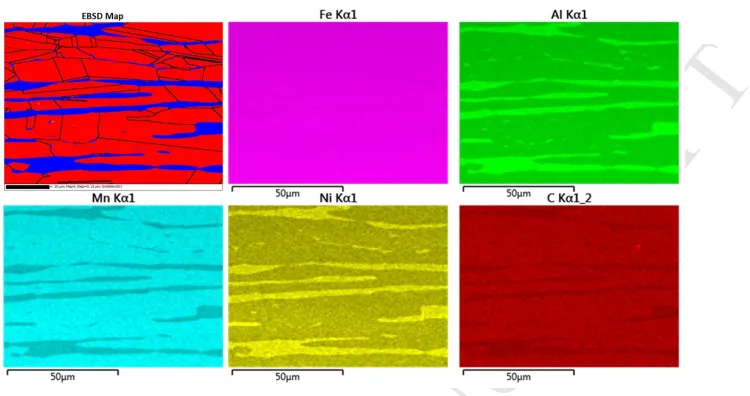
Figure 6: EBSD map (austenite is red and ferrite is blue) and corresponding elemental maps of
Fe-15Mn-10Al-0.8C-5Ni after annealing at500◦C. This figure shows the partitioning of Ni (yellow) and Al (green)
atoms into theαphase and hence the formation of NiAl-type B2 stringer bands.
Fig.7a,b,c and d show the TEM-BF micrographs of the steels after isothermal
hold-ing at500◦C and corresponding SADPs. Fig.7a shows the TEM micrograph of S1
confirming thatκ-phase was formed in theγphase with size of less than 100 nm. No
300
κ-carbide were found in theαphase due to the transformation of originallyαphase to
the thermodynamically stable B2-phase (Fig.7b). This is because Ni is a very strong
intermetallic former with Al [41] and this type of intermetallics is generally
thermo-dynamically more stable thanκ-phase. [42, 74, 75]. In the absence of Ni (S2), the
needle-likeκ-phase was observed inα(Fig.7c), while dense cuboidκ-carbide was
de-305
tected in theγphase (Fig.7d). In general,κformed in theγphase in the absence of Ni
(S2) was smaller (less than 90 nm) and denser than that formed in theγphase in the
M
AN
US
CR
IP
T
AC
CE
PT
ED
Figure 7: (a) TEM bright-field image of theγphase of Fe-15Mn-10Al-0.8C-5Ni isothermally annealed at
500◦Cshowing the formation ofκ-carbides. (b) TEM bright-field image of orderedα(transformed into
NiAl-type B2 stringer) and corresponding SADP (B=[110]). (c) TEM micrograph taken fromαphase of
Fe-15Mn-10Al-0.8C subjected to isothermal holding at500◦Cshowing the needle-like morphology of a
κparticle in this phase. (d) TEM micrograph and corresponding SADP demonstrating the formation of
nano-sized (<50 nm)κ-phase in theγphase of Fe-15Mn-10Al-0.8C.
3.5. Heat treatment at 700◦C
The microstructures of S1 and S2 after isothermal holding at700◦Care shown in
310
Fig.8. Similar to500◦Cisothermal holding, theαphase of S1 was entirely transformed
to B2 stringer and noκ-carbide was observed in this phase. However, a very dense
population of theκ-phase were formed in the grain interior ofγ. The closely packedκ
-carbides in theγphase had a size of≤150 nm. B2-type particles were, again, observed
both at theγgrain boundaries and in theγ grain interiors. No significant change in
315
the size of B2 particles were observed as the isothermal temperature increased. For S2,
κ-carbide lamellar was formed inα-phase while no intermetallics were found in either
γorα. Theκ-phase formed in theα-phase of S2 after isothermal annealing at700◦C
[image:20.612.138.510.127.402.2]M
AN
US
CR
IP
T
AC
CE
[image:21.612.131.510.125.240.2]PT
ED
Figure 8: SEM micrographs (a) for Fe-15Mn-10Al-0.8C-5Ni after isothermal holding at700◦Cshowing
the formation ofκ-phase (after etching appeared as white) inγphase while theαphase was transformed
into B2-type intermetallics. In addition, the formation of B2 particles at grain boundaries and theγgrain
interiors was observed and (b) for Fe-15Mn-10Al-0.8C after annealing at700◦Cshowing the formation of
coarse boundaryκ-carbides (darker phase).
Fig.9 shows the simulations of multi-particle system in austenite (Fig.9a) and ferrite
320
(Fig.9b). Table.1 shows a comparison between the simulated widths ofκ-carbides in
αfor the isothermal holding temperature of500◦C and700◦C with those measured
experimentally. During isothermal holding at500◦C, a larger driving force for theκ
-carbide precipitation exists. The difference in the evolution ofκ-particles for different
isothermal holding temperatures is due to the fact that during isothermal annealing at
325
500◦Ctheγdecomposition kinetics intoκphase is retarded due to the lower diffusion
rate of solutes, especially C, compared to the simulation carried at700◦C. Thus, theκ
-carbides formed at500◦Cshow a finer distribution compared to that formed at700◦C.
During the growth process, it is the diffusion of C during annealing treatment that
primarily controls the morphology ofκparticles [46, 61].
330
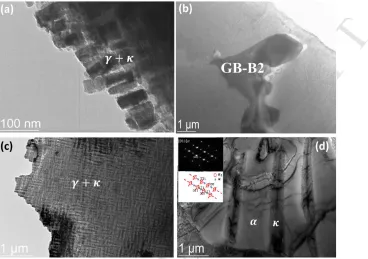
TEM-BF images ofγandαphases of S1 and S2 are shown in Fig.11. A more dense
and closely packed population of cuboidalκ-carbides were observed in theγphase of
S1 compared to that formed after isothermal holding at500◦C (Fig.7a). Moreover,
the average size of cuboidalκ-carbides after isothermal holding at700◦Cincreased to
about 150 nm compared with those formed during the isothermal holding at500◦C.
335
For S2, the width ofκ-particles increased with a higher annealing temperature: the
average widths of theκ-particles at500and700◦Care200±27nm and500±33nm,
respectively. These values are much greater than the widths ofκ-particles reported in
M
AN
US
CR
IP
T
AC
CE
PT
ED
This implies the great dependency of the morphology of theκ-particles on the
com-340
position. The coarserκ-particles formed in the current investigation in comparison to
the previous studies [47] can be due to the higher amount of alloying elements (Al and
[image:22.612.135.512.125.378.2]Mn) available for the formation of this phase.
Figure 9: Multi particle phase-field simulations ofκ-precipitates in (a)γand (b)αfor isothermal holding at
700◦C(t∗= 60,000∆t).
Table 1: Comparison between simulation results and experimental values.
Description simulation experiment
Isothermal temperature 500◦C 700◦C 500◦C 700◦C
Width (nm) 188 519 200±27 500±33
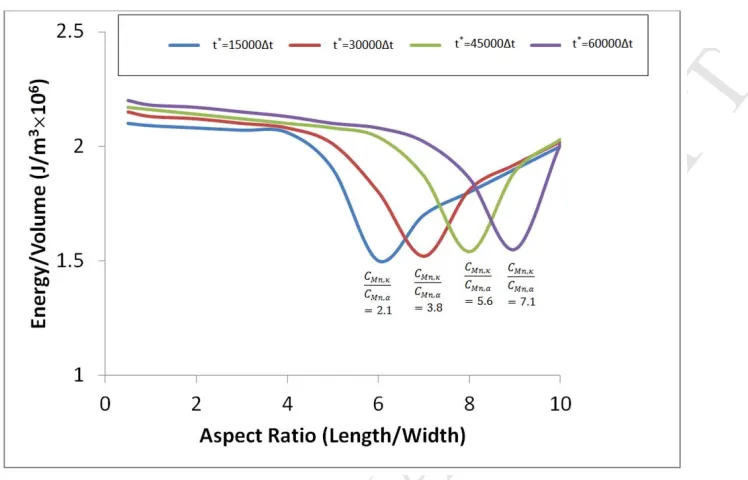
Fig.10 shows the effect of partitioning of Mn on the morphology of aκ-particle.
At initial stages of simulation where the Mn content of κis almost twice that ofα
345
phase (CM n,κ
CM n,α, blue curve), the minimum value of the energy/volume ratio occurs at
an aspect ratio (length of the particle/width of the particle) equal to 6. At later stages
when the ratio of the Mn contents becomes larger, the minimization of energy shifts
towards higher aspect ratios. In other words, as Mn partitions into theκ-particle the
morphology becomes rod-like. This happens because the partitioning of Mn into the
350
particle increases the lattice misfit betweenκandα(by increasing the lattice parameter
ofκ[68]) and thus, in order for elastic strain energy to become minimum, the particle
M
AN
US
CR
IP
T
AC
CE
[image:23.612.134.508.122.362.2]PT
ED
Figure 10: The ratio of energy/volume of aκ-particle as a function of time step and the elemental partitioning
of Mn. The larger than unity the ratio, the severe the partitioning for the corresponding element.
The volume fraction ofκ-particles in theα-phase increased by the increasing
an-nealing temperature from 7% to 14%, as can be seen by a comparison between Fig.11d
355
with Fig.7c. This can be due to the easier diffusion of constituent elements at a higher
annealing temperature. The growth mechanism ofκ-carbide was reported [47] to be
nucleation-growth process, however, although it seemed to be the corresponding
mech-anism forκformed inα, the formation ofκwithin theγphase appeared to be due to
spinodal decomposition [78], as can is evident from the TEM micrographs taken from
360
M
AN
US
CR
IP
T
AC
CE
PT
ED
Figure 11: (a) TEM bright-field image of the cuboidalκ-carbides formed within theγmatrix in
Fe-15Mn-10Al-0.8C-5Ni after annealing at700◦C. (b) TEM bright field image of Fe-15Mn-10Al-0.8C-5Ni showing
the formation of a coarse grain boundary B2 (GB-B2) at a triple point. (c) TEM bright-field micrograph of
aγgrain in Fe-15Mn-10Al-0.8C after isothermal holding at700◦C, showing the densely populated cuboid
κ-particles in this phase with a size of<50nm. (d) TEM image of coarse needle-likeκ-carbides in theα
phase of Fe-15Mn-10Al-0.8C and the corresponding SADP.
Fig.12 shows the SEM micrograph and TEM bright field image of a depleted zone
atγ-αboundary in S1 after isothermal annealing at700◦C. As can be seen in this
figure, a coarse B2 intermetallic was formed atγ-αgrain boundary. This prevented
the formation ofκ-phase in the vicinity of the grain boundary, because Al was
con-365
sumed by the NiAl-type B2 intermetallic compound formed at the boundary. Similar
phenomenon was also observed for the same sample annealed at500◦C. In contrast,
[image:24.612.141.509.128.387.2]M
AN
US
CR
IP
T
AC
CE
[image:25.612.136.510.127.364.2]PT
ED
Figure 12: SEM and TEM bright-field images of a depleted zone in the neighbourhood of a coarse GB-B2 particle.
3.6. Heat treatment at 900◦C
Fig.13 shows the microstructures of S1 (Fig.13a) and S2 (Fig.13b) after isothermal
370
holding at900◦C. As is shown in Fig.13a, coarse, densely packed NiAl-type B2
inter-metallics were formed in theγgrains. Almost allγ-γgrain boundaries were decorated
by B2 precipitates. The morphology of B2 particles were rod-type and triangle-type
with size of 2-7µm. Similar phenomenon was observed for the S1 after annealing at
900◦C (Fig.13b). However, B2 particles were of FeAl-type. B2 particles were also
375
formed atγ grain boundaries similar to what was observed for S1 after annealing at
this temperature. Noκwas found in the microstructure of S2 nor in that of S1. The
M
AN
US
CR
IP
T
AC
CE
PT
ED
Figure 13: (a)The microstructure of Fe-15Mn-10Al-0.8C-5Ni after annealing at900◦Cshowing the
forma-tion of coarse closely packed B2 NiAl-type particles inγ. The coarse B2 precipitates were also formed atγ
grain boundaries. (b) SEM micrograph taken from Fe-15Mn-10Al-0.8C after isothermal holding at900◦C
showing the formation of B2 FeAl-type intermetallics. The morphology and size of particles were similar to that observed for Fe-15Mn-10Al-0.8C-5Ni.
A close inspection showed that in addition to coarse triangle-like B2 particles with
sharp edges (Fig.14b), nano-sized disk-like B2 precipitates were also formed in α.
380
Similar morphologies of B2, namely triangle-like and disk-like, with equivalent sizes
were detected in the microstructure of S2. Although coarse B2 particles were observed
at lower isothermal holding temperatures, 500◦C and700◦C, the fine disk-like B2
particles were only observed after annealing at900◦C. As is evident in this figure,κ
was not formed at this temperature. Fig.14c shows the simulated front view of a
disk-385
like FeAl-type B2 inαmatrix. Fig.14d shows a NiAl-type B2 precipitate inγmatrix.
The compositional variation of a B2 precipitate formed in S1 shows the similar trend
as was predicted by our simulation (Fig.2b). The formation of disk-like B2 particles
inαmatrix corresponds to the second jump in the simulated COP for annealing at
900◦C (Fig.1c). This means that during annealing at higher temperatures, Ni atoms
390
partition and form disk-like B2 particles within theαmatrix together with Al atoms.
This means that Ni and Al are depleted within theαphase and thus this phase becomes
softer compared to the situation whereαphase completely transformed into B2 stringer
[image:26.612.138.509.124.319.2]M
AN
US
CR
IP
T
AC
CE
[image:27.612.142.510.128.394.2]PT
ED
Figure 14: TEM micrograph taken from the BCC phase of Fe-15Mn-10Al-0.8C-5Ni showing nanosized
disk-like B2 NiAl intermetallics with sizes of<150 nm and the corresponding SADP. Similar morphologies
and sizes were observed for FeAl-type B2 particles in the BCC phase of Fe-15Mn-10Al-0.8C after annealing
at900◦C. (b) A coarse triangle-like FeAl-type B2 particle with a size of a fewµm in aγmatrix for
Fe-15Mn-10Al-0.8C after annealing at900◦C. (c) Phase-field simulation of a FeAl-type B2 precipitate in theα
matrixt∗= 10000∆t. (d) Simulated morphology of a NiAl-type B2 particle in theγphaset∗= 10000∆t.
3.7. Heat treatment at1050◦C
395
Fig.15 shows the microstructures of (a) S1 and (b) S2 after annealing at1050◦C. A
simple comparison between this figure and Fig.13 reveals that (i) the volume fraction
of both coarse NiAl-type and FeAl-type B2 intermetallic compounds in the austenite
phase of S1 and S2 decreased from 38% (isothermal holding at900◦C) to 11%
(isother-mal holding at1050◦C) and (ii) the microstructures of both S1 and S2 are much more
400
uniform in terms of the distribution of B2 particles in theαphase after isothermal
holding at1050◦Ccompared to that after annealing at900◦C. This was due to the fact
that during the annealing at1050◦C the driving force for the formation of B2 phase
was much smaller (smaller undercooling (≈1200◦C−1050◦C)) compared with that
during the isothermal holding at900◦C(≈ 1200◦C−900◦C). Fig.16 also
M
AN
US
CR
IP
T
AC
CE
PT
ED
strate that disk-like B2 particles were uniformly distributed in the ferrite phase of both
S1 and S2. These observations meant that mechanical properties of samples could be
[image:28.612.143.509.140.308.2]improved after annealing at1050◦.
Figure 15: SEM micrographs of heat treated samples at1050◦Cfor (a) Fe-15Mn-10Al-0.8C-5Ni and (b)
Fe-15Mn-10Al-0.8C. B2 particles in theγmatrix are shown with white arrows.
Figure 16: TEM bright-field image of (a) disk-like NiAl-type B2 particles formed in ferrite matrix of 10Al-0.8C-5Ni and (b) of disk-like FeAl-type B2 particles formed in the ferrite matrix of
Fe-15Mn-10Al-0.8C and corresponding SADP. The images were taken from samples heat treated at1050◦C.
3.8. The variation of chemical compositions of ordered phases
The post-annealing compositions of samples are summarized in Table. 2. Starting
410
with S1, Mn, Al, and Ni contents of B2 phase (in both orderedαand inγ) increased
with increasing annealing temperature because of an easier diffusion of substitutional
atoms at higher temperatures. Al content of B2 stringer (initiallyαphase) was higher
than those formed inγwhereas the Ni contents were almost the same. This means that
B2 stringer are much harder than B2 particles formed within theγmatrix [75]. Al and
415
M
AN
US
CR
IP
T
AC
CE
PT
ED
the Mn content ofκ-phase occurred as the annealing temperature increased. Similarly
in S2, Al content ofκ-carbides in bothαandγslightly increased whereas Mn content
of the carbides increased considerably. In general, the Mn content ofκformed in the
γ matrix was higher than that of lamellarκin the αphase. Here, we observed the
420
formation of non-stoichiometricκ-carbides in both steels, in agreement with previous
reports onκ-carbides existing over a range of varying Mn and Al contents [42, 78].
According to these results, Al is energetically stable inside either B2 intermetallic orκ
[image:29.612.123.594.315.532.2]and both product phases are competing sites for Al.
Table 2: Chemical compositions ofκ-carbide and B2 compounds as a function of isothermal annealing
temperature and the matrix within which they formed. Please note that the chemical compositions for B2 in
theαphase for isothermal holdings at500◦Cand700◦Crefer to orderedαor namely stringer B2 bands.
Matrix
α
γ
Temperature(
◦C
)
500
700
900
1050
500
700
900
1050
Fe-15Mn-10Al-0.8C-5Ni
B2
Mn
3.1
3.2
3.3
3.2
4.4
4.5
4.5
4.5
Al
18.1
19.5
20.4
21.3
14.5
15.6
17.1
18.7
Ni
8.2
10.4
15.1
19.2
9.1
9.4
9.7
10.1
κ
-carbide
Mn
-
-
-
-
18.9
22.5
-
-Al
-
-
-
-
8.1
8.3
-
-Ni
-
-
-
-
0.1
0.1
-
-Fe-15Mn-10Al-0.8C
B2
Mn
-
-
3.3
3.2
-
-
5.1
5.1
Al
-
-
22.8
24.6
-
-
18.3
19.1
κ
-carbide
Mn
18.4
24.8
-
-
20.4
25.1
-
-Al
10.2
10.7
-
-
9.7
10.1
-
-Despite the fact thatκ-phase formed at500◦Chad a stronger undercooling and thus
425
an increased driving force for pro-eutectoid ferritic transformation, the Mn content of
κ-phase increased with increasing annealing temperature because of easier diffusion of
relatively large substitutional Mn atoms at higher temperature. This in turn led to an
increase in the contents of Mn in theγphase and thus the formation ofκ-carbide with
a higher content of Mn. This finding is in contradiction with the results reported in
430
Ref.[47] where the authors explained the higher content of Mn inκ-carbides at lower
annealing temperature (500◦C) in terms of stronger driving force for the formation of
κ-phase at lower isothermal holding temperature.
tempera-M
AN
US
CR
IP
T
AC
CE
PT
ED
ture. This can be also due to the easier diffusion of Ni atoms at higher temperatures
435
(900◦Cand1050◦C). Breuer et al. conducted a series of experiment and measured the
enthalpy of formation ofB2−Fe1−x−Alx andB2−(Fe,Ni)1−x−Alx at 1073K.
Their results showed that generally enthalpy of formation ofB2−(Fe,Ni)1−x−Alx
is of greater magnitude than that ofB2−Fe1−x−Alx. It was also shown that starting
with binaryB2−Fe1−x−Alxand replacing Fe with Ni,B2−(Fe,Ni)1−xAlxwhile
440
keeping the Al content at a constant value, the enthalpy of formation becomes
increas-ingly more negative [75]. In other words, increasing the Ni content of B2 can result in
the formation of a harder B2 phase. More information about composition change with
increasing annealing temperature as well as EDX maps for each holding temperature
are presented in supplementary information.
445
3.9. Mechanical properties
To confirm our hypotheses about the effects of following microstructural changes
on the mechanical properties:
(i) the formation of disk-like B2 particles after annealing at900◦Cand1050◦C
(ii) the increase in the Mn content ofκ-carbides with increasing annealing
tempera-450
ture which can result in the formation of harderκ-carbides
(iii) the increase in the volume fraction of needle-like κ-carbides formed in the α
phase of S2 after annealing at700◦Ccompared to that after isothermal holdeing
at500◦C
(iv) the formation of much more uniform microstructure and decreased in the
vol-455
ume fraction of B2 particles formed with theγ matrix of both S1 and S2 after
isothermal holding at1050◦Ccompared to that formed at900◦C
(v) the increase in the Ni and Al contents of B2 phase with increasing annealing
tem-perature which may lead to formation of harder strengthening secondary phase
(B2)
460
We performed tensile testing of the samples annealed at these four temperatures.
M
AN
US
CR
IP
T
AC
CE
PT
ED
ultimate tensile strength (UTS) of as-quenched S1 was measured to be 630 MPa with
an elongation (E) of 22.4%; the UTS of as-quenched S2 was determined to be 590
MPa with an El of 25.7%. As shown in this figure, the subsequent annealing at500◦C
465
significantly increased the UTS for both samples while reduced their ductility: UTS
increased to 980 MPa and El decreased to 10% for S1; UTS increased to 840 MPa for
S2 and its El reduced to 11%.
Fig.17 shows that by increasing the isothermal annealing temperature from500◦C
to1050◦C, the UTS increases significantly (from 980 MPa to 1350 MPa for S1 and
470
from 840 MPa to 1040 MPa for S2) whereas the ductility remarkably improved the
elongation of S1 to 22% and that of S2 to 25%. In general, S1 had higher UTS and
lower elongation than S2. This is due to the formation of GB-B2 and B2 stringer phases
in S1 which added extra strengths and reduced the ductility of the steel. Fig.17a,b show
that by increasing the isothermal annealing temperature from 500◦C to700◦C, the
475
ultimate tensile strength (UTS) increased slightly: in S1 from 980 MPa to 1040 MPa
and in S2 from 840 MPa to 910 MPa. For S1, the dense closely packed populations of
κ-carbides formed after annealing at700◦Cresulted in the enhancement of the strength
compared to that of the sample annealed at 500◦C. Moreover, the increase in the
Mn content ofκphase makes this phase harder and thus increases the strength. For
480
S2, in addition to the increased number of Mn-C bonds which results in harder κ
-carbides [68], the increase in the volume fraction of needle-likeκ-phase after annealing
at700◦Cled to an increase in the strength of the material. The formation of depleted
zones in the microstructure of S1 has a negative effect on the mechanical properties and
the increment of strength. That explains why the value of UTS of S1 is only slightly
485
higher than that of S2, despite the coexistence of both hard B2 intermetallic particles
andκ-carbides in the microstructure of S1.
At900◦C, κ-carbides were not form in the microstructures of S1 and S2. This
explained the larger ductility of S2 isothermally hold at900◦Ccompared to that of the
same material annealed at700◦C. However, S1 showed almost the same ductility after
490
annealing at900◦Cto that isothermally hold at700◦C. This was due to the formation
of hard, coarse and densely packed population of NiAl-type B2 particles within theγ
M
AN
US
CR
IP
T
AC
CE
PT
ED
whereasκ-carbide has a shearable nature [41, 83]. Moreover, the formation of coarse
GB-B2 also resulted in the reduction of the ductility of S1.
495
Comparing the samples annealed at900◦Cand1050◦C, the strength of both S1
and S2 slightly increased (<20 MPa) while the ductility significantly improved. This
can be due to the formation of more uniform distribution of B2 particles as well as
the reduction of the volume fraction of them in theγphases of S1 and S2. The slight
increase in the strength of the materials can be explained by the increase of the Ni
500
and Al contents of B2 particles in S1 and the Al content of B2 phase in S2 resulting
in the formation of harder B2 particles. The strength of S1 after annealing at900◦C
and1050◦Cwas about 300 MPa higher than that of S2 isothermally hold at the same
temperature because Ni-Al bonds in the B2 phase are generally stronger than Fe-Al
bonds [75, 76]. This also explains the larger ductility of S2 in comparison with that of
505
S1: B2 particles formed in the microstructure of S2 was not as strong as those formed
in the microstructure of S1.
The fracture surfaces of both steels were examined under SEM as is shown in the
Fig.17. The fracture mechanism for both S1 and S2 samples annealed at500◦C and
700◦C was mainly cleavage, and it became more fibrous for isothermal holding at
510
1050◦C, confirming their significantly improved ductility. In general S2 showed a
larger ductility compared to S1 because after annealing at500◦Cand700◦C, the
mi-crostructure of S2 was devoid of B2 phase while significant amount of B2 particles
were formed in theγphase of S1. Moreover, theαphase of S1 transformed into B2
stringer bands resulting in additional strength and in the reduction of ductility.
515
In an elegant study, Gutierrez-Urrutia and Raabe [81] investigated the strain
hard-ening and the evolution of dislocation configuration in lightweight Fe-Mn-Al-C steels.
They showed that this type of steels exhibit a noticeable evolution of the dislocation
substructure during deformation and attributed this to the effect of solute carbon on
dislocation movement. The results demonstrated that aluminium and carbon
signifi-520
cantly increases the stacking fault energy (SFE). In addition carbon provides strong
dislocation-solute interaction. They argued that high carbon content in solid
solu-tion retards the formasolu-tion of dislocasolu-tions associated with cross-slip and shifts them
M
AN
US
CR
IP
T
AC
CE
PT
ED
of lightweight steels by dynamic slip band refinement. They showed that the presence
525
of short range order (SRO) and finely distributed long range ordered (LRO) clusters
remarkably increases the stress required to ”bow out” single dislocations in
compari-son with disordered crystal. The abovementioned effects together with the formation
of various ordered precipitates thus elucidate the observed mechanical properties of the
samples under study.
M
AN
US
CR
IP
T
AC
CE
PT
ED
Figure 17: (a) Room-temperature tensile properties of Fe-15Mn-10Al-5Ni-0.8C (S1) after isothermal
an-◦ ◦ ◦ ◦
[image:34.612.146.497.110.692.2]M
AN
US
CR
IP
T
AC
CE
PT
ED
4. Summary
In summary, we investigated the microstructural evolution of
Fe-15Mn-10Al-0.8C-5Ni (S1) and Fe-15Mn-10Al-0.8C (S2) (all in wt.%) duplex steel through phase-field
[image:35.612.115.498.129.695.2]modelling and during the isothermal annealing at500◦C, 700◦C, 900◦C, 1050◦C.
Fig.18 shows a schematic overview of the microstructural evolutions of S1 and S2.
535
Table.3 summarizes the formed phases at each isothermal temperature and the
corre-sponding mechanical properties. Various aspects of the formation of ordered phases
discussed in this paper are listed below.
Table 3: Summary of microstructural modifications and the variations of mechanical properties as a result of different annealing temperatures.
Alloy 500◦C 700◦C 900◦C 1050◦C
F
e-15Mn-10Al-0.8C-5Ni
Matrix phase γ γ γ+α γ+α
Precipitations
Cuboidalκ(<100 nm) Cuboidalκ(<150 nm) Coarse B2 particles (2-7 nm) Coarse B2 particles (2-4 nm) Coarse B2 particles (2-7 nm) Coarse B2 particles (2-7 nm) Disk-like B2 (≈200 nm) Disk-like B2 (≈200 nm)
B2 stringer bands B2 stringer bands
Mechanical properties UTS: 960 MPa UTS: 980 MPa UTS: 1335 MPa UTS: 1350 MPa
Elongation:10.2 Elongation:9.8 Elongation:10.4 Elongation:22
F
e-15Mn-10Al-0.8C
Matrix phase γ+α γ+α γ+α γ+α
Precipitations
Cuboidalκ(<90 nm) Cuboidalκ(<90 nm) Coarse B2 particles (2-4 nm) Coarse B2 particles (2-4 nm) Coarse B2 particles (2-4 nm) Coarse B2 particles (2-4 nm) Disk-like B2 (≈200 nm) Disk-like B2 (≈200 nm) needle-likeκ(width of 200±33 nm) needle-likeκ(width of 500±33 nm)
M
AN
US
CR
IP
T
AC
CE
PT
ED
Figure 18: Schematic overview of the microstructural evolution of the materials under investigation as the annealing temperature increases.
1. Our simulations on B2 intermetallic compounds showed that the ordering in the
BCC (α) occurs in two discrete stages: This first stage - shorter times and lower
540
temperatures (500◦C and700◦C) - corresponds to the ordering of disordered
α, whereas the second stage is activated at higher temperatures (900◦C and
1050◦C) and correlates with the formation of disk-like B2 particles within the
orderedαphase. The formation of Ni-enriched disk-like B2 particles in a triplex
lightweight steel (γ,αand B2) can significantly improve the room-temperature
545
tensile properties of the material by providing increased resistance to shear and
M
AN
US
CR
IP
T
AC
CE
PT
ED
2. The simulations onκ-carbides clearly demonstrate that the morphological
evo-lution ofκ-carbide is highly dependent on the matrix within which it forms and
on the energetic interactions between the interfacial and elastic strain energy.
550
3. Starting with S1, we observed:
(i) After annealing at500◦C, the microstructure consisted of coarse B2
par-ticles, frequently with sharp edges and flat interfaces, formed within the
γ grains interiors and at the grain boundaries, and nanosized κ-carbides
dispersed within theγphase and B2 stringer bands.
555
(ii) After annealing at700◦C, a dense closely packed population ofκ-carbides
were formed in the γphase. Coarse B2 particles were also present both
within theγgrains and at the grain boundaries. B2 stringer bands was also
formed by the ordering process ofαphase.
(iii) After annealing at900◦C, a dense population of coarse B2 particles were
560
formed in theγphase while nanosized disk-like Ni-enriched B2 particles
were formed in theαphase. Hence, the B2 stringer bands formed after
annealing at500◦Cand700◦Cwas transformed intoα+disk-like B2
par-ticles. Noκ-carbides were found in the microstructure.
(iv) After annealing at1050◦C, a more uniform distribution of B2 phase within
565
γwas observed. The volume fraction of coarse B2 particles in theγphase
was reduced due to the reduction of undercooling and thus the decrease in
the driving force for the formation of B2 phase. Nanosized disk-like B2
particles was also found within theα-phase.
With increasing annealing temperature, we observed an increase in (all in wt.%):
570
(i) the constituent elements of B2 particles formed in theγphase of S1: Ni
content increased from 9.1 to 10.1, Al content increased from 14.5 to 18.7
and Mn content remained almost constant.
(ii) the constituent elements of B2 stringer bands formed after annealing at
500◦Cand700◦C: Ni content increased from 8.2 to 10.4, Al content
in-575
M
AN
US
CR
IP
T
AC
CE
PT
ED
(iii) the constituent elements of nanosized disk-like B2 particles formed after
annealing at900◦Cand1050◦C: Ni content increased from 15.1 to 19.2,
Al content increased from 20.4 to 21.3 while Mn content did not change
significantly.
580
(iv) the constituent elements of cuboidalκ-carbides formed within theγphase
of S1 after isothermal holdings at500◦Cand700◦C: Mn content increased
from 18.9 to 22.5, Al content slightly increased from 8.1 to 8.3 while Ni
content remained constant.
We performed tensile testing on S1 and it was found that:
585
(i) The samples annealed at500◦Cand700◦Cexhibited similar mechanical
properties (UTS≈980 MPa and elongation around 10%). This was due
to the formation similar microstructures in the samples after annealing at
these isothermal holding temperature e.g. nanosized cuboidalκ-carbides
and coarse B2 particles inγ, and B2 stringer bands formed by the ordering
590
of theαphase. The fracture surfaces of the samples were mostly cleavage.
(ii) The samples annealed at 900◦C and 1050◦C showed almost the same
strength (UTS= 1350 MPa). However, the sample annealed at 1050◦C
had a larger ductility (elongation around 22%) because of the less volume
fraction of coarse B2 particles in theγand their uniform distribution.
595
4. For S2, the following microstructural changes were observed:
(i) After annealing at500◦C, the microstructure consisted of cuboidalκ-carbides
in theγand coarse needle-likeκcarbides with a width of 200 nm±33 in
theα. No B2 particles were found within the microstructure.
(ii) After annealing at700◦C, cuboidal nanosizedκ-carbides and coarse
pearlitic-600
like α+κ structure was observed. The volume fraction and the
aver-age width of needle-like κ-carbides was increased to 500±33 compared
M
AN
US
CR
IP
T
AC
CE
PT
ED
(iii) After annealing at1050◦C, noκ-carbides was formed inγ nor in the α
phase. Instead, coarse FeAl-type B2 particles were found with theγphase
605
while nanosized disk-like FeAl-type B2 particles were observed in theγ.
(iv) After annealing at1050◦C, the volume fraction of coarse B2 particles
de-creased compared to the sample annealed at 900◦C. The more uniform
distribution of B2 particles within theγwas also observed. Nanosized
Al-enriched disk-like B2 precipitates were formed in theαphase.
610
With increasing the isothermal holding temperature, we observed an increase in
(all in wt.%):
(i) the Al content of B2 particles formed in the both disorderedγ(from 18.3
to 19.1) and α(from 22.8 to 24.6) phases after annealing at900◦C and
1050◦C.
615
(ii) the Mn content (from 20.4 to 25.1 inγand from 18.4 to 24.8 inα) and Al
content (from 9.7 to 10.1 inγand from 10.2 to 10.7 inα) ofκ-carbides
after annealing at500◦Cand700◦C.
We performed tensile testing on S1 and it was found that:
(i) The samples annealed at500◦C and700◦C showed almost similar
me-620
chanical properties (UTS≈840 MPa and elongation around 10%). This
was due to the formation similar microstructures in the samples after
an-nealing at these two isothermal holding temperatures e.g. nanozised cuboidal
κ-carbides, and a lamellar structure ofα+κ.
(ii) The samples annealed at 900◦C and 1050◦C showed almost the same
625
strength (UTS≈1050 MPa). However, the sample annealed at 1050◦C
had a larger ductility (elongation around 27%) because of the less volume
fraction of coarse B2 particles in theγand their uniform distribution.
5. Comparing the microstructural evolution, chemical composition change and the
variation of mechanical properties of S1 and S2, we can conclude that: