Cognitive behaviour therapy to prevent harmful compliance
with command hallucinations (COMMAND): a randomised
controlled trial
Max Birchwood, Maria Michail, Alan Meaden, Nicholas Tarrier, Shon Lewis, Til Wykes, Linda Davies, Graham Dunn, Emmanuelle Peters
Summary
Background Acting on command hallucinations in psychosis can have serious consequences for the individual and for other people and is a major cause of clinical and public concern. No evidence-based treatments are available to reduce this risk behaviour. We therefore tested our new cognitive therapy to challenge the perceived power of voices to infl ict harm on the voice hearer if commands are not followed, thereby reducing the hearer’s motivation to comply.
Methods In COMMAND, a single-blind, randomised controlled trial, eligible participants from three centres in the UK who had command hallucinations for at least 6 months leading to major episodes of harm to themselves or other people were assigned in a 1: 1 ratio to cognitive therapy for command hallucinations + treatment as usual versus just treatment as usual for 9 months. Only the raters were masked to treatment assignment. The primary outcome was harmful compliance. Analysis was by intention to treat. The trial is registered, number ISRCTN62304114.
Findings 98 (50%) of 197 participants were assigned to cognitive therapy for command hallucinations + treatment as usual and 99 (50%) to treatment as usual. At 18 months, 39 (46%) of 85 participants in the treatment as usual group fully complied with the voices compared with 22 (28%) of 79 in the cognitive therapy for command hallucinations + treatment as usual group (odds ratio 0·45, 95% CI 0·23–0·88, p=0·021). At 9 months the treatment eff ect was not signifi cant (0·74, 0·40–1·39, p=0·353). However, the treatment by follow-up interaction was not signifi cant and the treatment eff ect common to both follow-up points was 0·57 (0·33–0·98, p=0·042).
Interpretation This is the fi rst trial to show a clinically meaningful reduction in risk behaviour associated with commanding voices. We will next determine if change in power was the mediator of change. Further more complex trials are needed to identify the most infl uential components of the treatment in reducing power and compliance.
Funding UK Medical Research Council and the National Institute for Health Research.
Introduction
Schizophrenia aff ects 0·8% of the UK population, usually starts in young adults, and, in some cases, leads to persistent disability.1 Individuals with this illness have a high risk of suicide (8%) and deliberate self-harm and, although the risk is small, they are more likely to perpetrate aggression than are those without schizophrenia.2 Individuals acting on delusions, including commanding voices, are a cause for concern at societal and political levels because members of the public are at risk of apparently random acts of violence, even when the perpetrators are well supported by services. These concerns are shown in national policy documents—eg, the UK national mental health strategy aims to reduce avoidable harm to self or others.3
Although drug and other treatments have improved, nearly 50% of individuals will have treatment-resistant symptoms or symptoms arising from non-adherence to drug regimens.4,5
Auditory hallucinations are some of the most prominent and distressing of the treatment-resistant symptoms, and command hallucinations are the most high risk of these.6 Shawyer and colleagues6 reported a median
53% prevalence of command hallucinations in adult participants with psychiatric disorders; 48% of these participants said the commands stipulated harmful or dangerous actions, rising to 69% for participants in medium secure units.7
However, the link between the presence of command hallucinations and harm to self or others is not straightforward. In the MaCarthur study,8 no association was reported between the presence of delusions or command hallucinations and violence. Thoughts about violence, however, were a strong predictor of violence 6 months later.
Our cognitive model of voices has clarifi ed that it is not only the level of activity of voices, or indeed their content, that drives aff ect and behaviour, but also the nature of the relationship with the personifi ed voice.9–11 We showed that compliance or appeasement behaviour can occur when the hearer believes the voice to have malevolent intent, and crucially to have the power to deliver the threat.9 These fi ndings have been independently replicated in a forensic population.12
This theoretical framework informed the development of a cognitive behaviour therapy: cognitive therapy for
Lancet Psychiatry 2014; 1: 23–33
See Comment page 3 Division of Health and Wellbeing, Warwick Medical School, University of Warwick, Coventry, UK
(Prof M Birchwood DSc); Institute of Mental Health, School of Nursing, Midwifery and Physiotherapy, Faculty of Medicine and Health Sciences, University of Nottingham, Nottingham, UK (M Michail PhD); School of Psychology, University of Birmingham, Birmingham, UK (A Meaden DClinPsy); Institute of Brain Behaviour and Mental Health, School of Medicine, University of Manchester, Manchester, UK
(Prof S Lewis PhD); Institute of Population Health, University of Manchester, Manchester, UK (Prof G Dunn PhD,
Prof L Davies PhD); and King’s College London, Institute of Psychiatry, Department of Psychology, London, UK (Prof N Tarrier PhD, Prof T Wykes PhD, E Peters PhD)
command hallucinations, which was designed to weaken and challenge beliefs about the power of voices, enabling the individual to break free of the need to comply or appease and thereby reduce harmful compliance behaviour and distress.13,14 This therapeutic model was developed because of a major gap in the evidence base. Although cognitive behaviour therapy is recommended by the UK’s National Institute for Health and Care Excellence15 to reduce overall symptom severity, the guidance notes that there is insuffi cient evidence for voice compliance and frequency and inconsistent evidence for any direct eff ect on delusions.
We tested the model in a proof-of-principle trial16 in a group at high risk of compliance with commands because of recent (<9 months) harmful compliance or appeasement. This operational defi nition of risk was associated with a 39% rate of recurrence of harmful compliance within 12 months in the control group; in people receiving the therapy, the rate of compliance dropped to 14%, equivalent to an eff ect size of 1·1. This drop was accompanied by a reduction in the perceived power of the voice; there was a reduction in delusional distress and depression, but this was not maintained at 12 months’ follow-up. Crucially, as expected, no change was noted in the frequency or intensity of voices, but only in the (power) relation with them. The results of a similar trial by Shawyer and colleagues17 of a diff erent therapy based on acceptance of voices by “cultivating the capacity to just notice voices and associated thoughts rather than believe and act on them” showed no eff ect on compliance or other outcomes. However, this study had a low base rate of compliance.
The aim in the COMMAND trial was to assess the acceptability, eff ectiveness, and cost-eff ectiveness of cognitive therapy for command hallucinations. The primary hypothesis was that in participants with command hallucinations who have recently acted on the voices and are therefore at high risk of doing so again cognitive therapy for command hallucinations would increase resistance and thereby reduce the level of further harmful compliance behaviour and the associated risk. Secondary hypotheses were that the perceived power of the persecuting voice would be reduced, which would act as the mediator of change in compliance; there would be no changes in the frequency or topography of voices; and cognitive therapy for command hallucinations would reduce delusional distress and depression.
Methods
Study design
This was a single-blind, prospective, pragmatic randomised controlled trial for the comparison of cognitive therapy for command hallucinations + treatment as usual with treatment as usual alone.18 Eligible participants were recruited for the trial from three UK centres in Birmingham (which included a site
in Leicester), London, and Manchester. Recruitment to the trial began in February, 2008, and was completed in July, 2010. Follow-up assessments began in November, 2008, and were completed in January, 2012. Treatment was for 9 months and follow-up was at 9 months and 18 months after randomisation.
The West Midlands Research Ethics Committee (number 06/MRE07/71) provided ethics approval for the study.
Participants were eligible if they met the following criteria: had International Statistical Classifi cation of Diseases and Related Health Problems, 10th Revision (ICD-10), schizophrenia, schizoaff ective (F20, 22, 23, 25, 28, 29), or mood disorders (F32),19 and were under the care of a clinical team; were aged 16 years and older; had a history of harmful command hallucinations for at least 6 months with recent (<9 months) history of harm to self or others, or major social transgressions as a result of the commands (full or incomplete compliance); or had harmful command hallucinations whereby the individual was distressed and appeasing the powerful voice.
Exclusion criteria were organic impairment or primary diagnosis of addictive disorder or insuffi cient command of English.
Eligible participants were identifi ed by clinical studies offi cers from the UK Mental Health Research Network who reviewed electronic case records for history of auditory hallucinations and evidence of risky, aggressive, and violent behaviour. Trained researchers did a screening interview with each participant to confi rm eligibility for the trial. After the screening interview, eligible participants were invited to take part and asked to provide informed consent. Once written informed consent had been obtained, the researchers administered a battery of assessments and on completion participants were randomly allocated either to the cognitive therapy for command hallucinations + treatment as usual group or to the treatment as usual only group.
Randomisation and masking
randomisation were masked from the assessors and randomisation was independent.
Many strategies were used to assure masked ratings, including research workers who were not involved in the randomisation process; therapists were required to consider potential breaks in masking when planning room use and diary arrangements; and participants were reminded by assessors not to disclose treatment allocation. Overall, 19 (10%) breaks in masking were reported (four in the treatment as usual only group and 15 in the cognitive therapy for command hallucinations + treatment as usual group) of 197 participants. When masking was broken, another rater, masked to group assignment, assessed and rated the participant for all subsequent assessments; accordingly, all fi nal ratings were masked.
Interventions
In cognitive therapy for command hallucinations, cognitive behaviour therapy techniques are used to assess and modify conviction in four beliefs linked to the construct of voice power: the voice has absolute power and control; the individual must comply or appease or be severely punished; the identity of the voice (eg, the Devil); and the meaning attached to the voice (eg, the individual is being punished for a past misdemeanour).
Our protocol for cognitive therapy for command hallucinations was developed by MB and details are provided in our casebook manuals.13,14 The essence of the therapy is to test the perceived power of the voice by assessment of evidence for the omniscience of the voice, the apparent ability of the voice to predict the future and deliver its threats, and the voice hearer’s perceived lack of control over the voice. All trial therapists (qualifi ed clinical psychologists at National Health Service [NHS] band 8a and accredited cognitive therapists) received about 30 h of structured training led by MB and AM. Recordings of cognitive therapy for command hallucinations with pretrial participants were rated according to the cognitive therapy checklist (below). Therapists recording high adherence to cognitive therapy received their fi rst randomly assigned participant. All therapists were highly adherent to cognitive therapy for command hallucinations. Although the intervention is protocol based, diff erences are recognised in voice content, and beliefs about voices and compliance. Cognitive therapy for command hallucinations diff ers from previous and generic types and models of cognitive behaviour therapy for psychosis. First, it is informed by a well validated theoretical framework, which can be used to predict an individual’s compliance with voices and the associated distress rather than the presence of psychotic symptoms. Second, it adheres to a staged process informed by our cognitive model. Third, the model proposes a single variable that is the target of therapy and also the hypothesised mediator: the power diff erential between the voice and the hearer of the voice.
The intervention was delivered in NHS clinics with outreach to participants’ homes by nine cognitive
therapists who were supervised in each centre by a lead clinician with expertise in cognitive behaviour therapy for psychosis. Therapists delivered the intervention only to the cognitive therapy for command hallucinations + treatment as usual group. Group supervision at sites was done once a fortnight with videoconference to monitor adherence to protocol and to minimise centre diff erences in implementation. Adherence to protocol was monitored with our adapted version of the Cognitive Therapy Checklist18 using cases selected at random by the trial manager. Acceptability was assessed indirectly by monitoring the rate of treatment completion and dropout; a qualitative method, which will be reported in a further paper, was used.18 Cognitive therapy for command hallucinations was administered over a maximum of 9 months (about 25 sessions of therapy).
Treatment as usual was provided by community mental health and assertive outreach and early intervention teams. Treatment as usual including antipsychotic medication was documented in accordance with the trial protocol derived from our pilot study.18
Outcomes
The compliance or resistance was assessed at baseline (over the previous 9 months), then at 9 months and 18 months after the start of treatment with the Voice Compliance Scale (VCS).18 This scale is a categorical scale that requires a thorough interview in accordance with the Cognitive Assessment of Voices schedule to obtain a detailed record of all voices and emotional and behavioural responses towards them; and interviewing and using information from, where available, at least one other informant (carers, hostel worker, care coordinator, or psychiatrist). In all cases, care records were scrutinised to search for documented behaviours that were suggestive of compliance. If there was discrepancy between self and informant report that would change a rating, we recorded the more severe level of compliance.
This method yields specifi c behaviours that are
assembled into a summary and classifi ed as neither appeasement nor compliance; symbolic appeasement, including mental rehearsal or compliance with innocuous or harmless commands; actual appeasement (ie, preparatory acts or gestures); partial compliance with at least one severe command; and full compliance with at least one severe command. For each of these behaviours, defi nitions and examples were provided.
29 VCS interviews were selected and rated in a masked fashion by MM for the presence versus absence of full compliance, with an overall κ of 0·73. VCS was assessed for reliability in our pilot trial16 with similar results to those in this main trial.
The primary outcome was full compliance, assessed after completion of cognitive therapy for command hallucinations (highest score 5).
perceived power diff erential between voice and voice hearer. Score range was 7–35, with higher scores indicating greater power diff erential in favour of the voices. This scale has good internal reliability (Cronbach’s α=0·85) with high 1 week retest reliability (r=0·82). The fi rst item on the scale, the overall power diff erential between voice and voice hearer, was analysed separately in keeping with our protocol and underlying theory (my voice is much more powerful than me vs my voice is much less powerful than me).
The Personal Knowledge Questionnaire and Omniscience Scale10 was used to measure the hearer’s beliefs about the voice’s knowledge about personal information (eg, the voice knows everything about me and my past). The score range was 0–15.
The Beliefs About Voices Questionnaire-Revised (BAVQ-R)20 was used to assess key beliefs about the omnipotence and intentions of the voices, whether bene-volent or malebene-volent, and the emotional and behavioural reactions of the participants towards their voices (resistance vs engagement). The scale consists of fi ve
subscales: malevolence (score range 0–18), benevolence (0–18), omnipotence (0–18), resistance (0–27), and engagement (0–24). The scale has good test–retest (r=0·89) and internal reliability (Cronbach’s α=0·85) and is widely used for research into hallucinations.
Distress associated with voices was assessed with the Psychotic Symptoms Rating Scales (PSYRATS), Auditory Hallucinations (PSYRATS-AH) subscale.21 Score range on this subscale was 0–44, with higher scores indicating increasing severity. The items amount of distress and amount of negative content (range 0–4 for both items) are also reported separately. The scale has excellent psychometric properties with good inter-rater reliability for the auditory hallucinations section (range 0·78–1·00).
The Calgary Depression Rating Scale for Schizophrenia22 is a widely used nine-item observer-rated measure specifi cally designed for schizophrenia, mini-mising contamination with negative symptoms and the extrapyramidal side-eff ects of antipsychotic medication. Score range is 0–27, with higher scores indicating greater severity. The Beck Hopelessness Scale23 is used to assess feelings about the future, loss of motivation, and expectations; score range is 0–20, with higher scores indicating greater hopelessness. The Beck Scale for Suicidal Ideation allows a thorough assessment of suicidal intent; score range is 0–38, with higher scores indicating an increase in suicidal risk.
The Positive and Negative Syndrome Scale (PANSS)24 includes scales of positive symptoms (score range 7–49), negative symptoms (7–49), and general psychopathology (16–112); it is used widely in schizophrenia research. The items hallucinations and delusions (1–7 for each item) are also reported separately.
All prescribed antipsychotic medications at baseline and 18 months were recorded and converted to daily dose of olanzapine equivalents, with tables from the International Consensus Study of Antipsychotic Dosing.25 All adverse events were recorded on standard proforma, at each of the sites, signed off by MB, and collated for the trial data monitoring and ethics committee and the ethics committee.
Statistical analysis
Analysis was by intention to treat. The planned recruitment to the trial was based on a sample size of 100 individuals per group having a greater than 80% power to detect an absolute diff erence between a proportion who have acted on their voices (VCS score=5) of 40% under treatment as usual group and 20% in the cognitive therapy for command hallucinations group with a Pearson χ² test with two-tailed signifi cance of 0·05.
All analyses were done with Stata (version 12). The primary outcome was evaluated with an intention-to-treat analysis with a logistic regression to allow measure-ment of centre membership and baseline compliance on the VCS. A likelihood-based random eff ects (intercepts)
Figure: Trial profi le
98 allocated to cognitive therapy for command hallucinations group 86 received allocated intervention 12 did not receive allocated intervention
1 died
8 refused or not interested 3 moved out of area or could not be
contacted
99 allocated to treatment as usual group 434 excluded
407 did not meet inclusion criteria 27 declined to participate 676 patients assessed for eligibility
197 randomly assigned 242 eligible
98 included in intention-to-treat analysis 99 included in intention-to-treat analysis 18 lost to follow-up at 18 months
3 died 6 refused
8 moved out of an area or could not be contacted 1 unwell
7 discontinued intervention 1 died
5 refused or not interested 1 moved out of area
15 lost to follow-up at 18 months 11 refused
3 moved out of area or could not be contacted 1 unwell
model was used to simultaneously estimate treatment eff ects at both the 9-month and 18-month follow-up assessments and to allow for missing follow-up data that are assumed to be missing at random. Analogous random-eff ects models were used for the analysis of the quantitative secondary outcomes. All models included a centre-by-time interaction and a centre-by-baseline-covariate interaction. Any data within a questionnaire scale were prorated with the mean of the remaining items unless there were more than 5% missing data, in which case the scale was designated as missing (this did not apply to VCS)
Because data were from only two follow-up timepoints, no assumptions were needed about the autocorrelation of the longitudinal data. The estimated measures in the initial model included a main eff ect of treatment and an eff ect of treatment-by-time interaction; when there was no evidence of an eff ect of treatment-by-time interaction, the model was simplifi ed by removing the interaction to estimate a treatment eff ect that was common to both follow-up timepoints.
The trial is registered, number ISRCTN62304114.
Role of the funding source
The design of the trial was peer reviewed by the funders and amended accordingly. The funders had no role in the gathering, analysis, or interpretation of the data, nor in the writing of the paper. MB, GD, and MM had access to the raw data. The corresponding author had full access to all of the data and the fi nal responsibility to submit for publication.
Results
The fi gure shows the trial profi le. 676 participants were screened for eligibility and of these 407 (60%) did not meet the inclusion criteria and 27 (4%) declined to participate. 242 (36%) participants were eligible to participate in the study and 197 (81%) of these were randomly assigned. 45 (19%) individuals declined or could not be contacted after the baseline assessment, before randomisation. Recruitment was completed in July, 2010. The fi nal sample size was 197 participants (64 from Birmingham, 23 Leicester, 62 London, and 48 Manchester), with 98 participants allocated to the cognitive therapy for command hallucinations + treatment as usual group and 99 to the treatment as usual group. 165 (84%) participants were rated as being fully compliant and 32 (16%) as partly compliant or appeasing on VCS at baseline.
164 (83%) of 197 participants completed the 18-month follow-up assessment, 17 (9%) refused to complete the assessment, 11 (6%) could not be contacted, three (2%) died, and two (1%) were unwell. The clinical diagnoses in the sample of 197 participants were schizophrenia (98 [50%]), schizoaff ective disorder (29 [15%]), paranoid schizophrenia (17 [9%]), psychosis (50 [25%]), and bipolar disorder (three [2%]). 88 (45%) participants had hospital
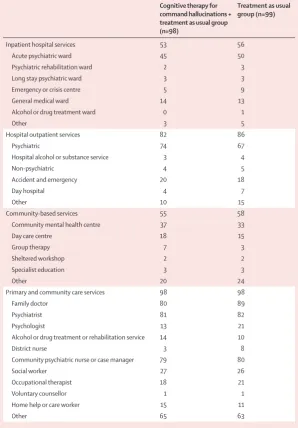
admissions in the previous 18 months, including 27 (31%) that were compulsory under the UK Mental Health Act. Table 1 shows the diff erent services used by the participants in the 18 months before randomisation. Conversion to olanzapine equivalents was done for 136 (69%) of 197 participants; in 61 (31%) cases, dose was not available or could not be converted. The mean dose of all prescribed antipsychotics, expressed as olanzapine equivalents, was 25·79 mg/day (SD 21·73), including 38 (28%) of 136 participants receiving more than 30 mg/day: 26·88 mg/day (22·02) in the cognitive therapy for command hallucinations + treatment as usual group and 24·77 mg/day (21·55) in the treatment as usual group. At 18 months, the dose was 19·34 mg/day (14·30) in the Cognitive therapy for command hallucinations + treatment as usual group (n=98)
Treatment as usual group (n=99)
Inpatient hospital services 53 56
Acute psychiatric ward 45 50
Psychiatric rehabilitation ward 2 3
Long stay psychiatric ward 3 3
Emergency or crisis centre 5 9
General medical ward 14 13
Alcohol or drug treatment ward 0 1
Other 3 5
Hospital outpatient services 82 86
Psychiatric 74 67
Hospital alcohol or substance service 3 4
Non-psychiatric 4 5
Accident and emergency 20 18
Day hospital 4 7
Other 10 15
Community-based services 55 58
Community mental health centre 37 33
Day care centre 18 15
Group therapy 7 3
Sheltered workshop 2 2
Specialist education 3 3
Other 20 24
Primary and community care services 98 98
Family doctor 80 89
Psychiatrist 81 82
Psychologist 13 21
Alcohol or drug treatment or rehabilitation service 14 10
District nurse 3 8
Community psychiatric nurse or case manager 79 80
Social worker 27 26
Occupational therapist 18 21
Voluntary counsellor 1 1
Home help or care worker 15 11
Other 65 63
[image:5.595.265.564.133.562.2]Data are numbers. *Participants received more than one service.
cognitive therapy for command hallucinations + treatment as usual group and 19·99 mg/day (14·32) in the treatment as usual group. 115 (58%) of 197 participants received one antipsychotic drug, 61 (31%) received two, and nine (5%) three or more; we were unable to fi nd the medication data for the remaining participants. 32 (16%) of 197 participants were prescribed clozapine at baseline: 16 (50%) in the cognitive therapy for command hallucinations + treatment as usual group and 16 (50%) in the treatment as usual group.
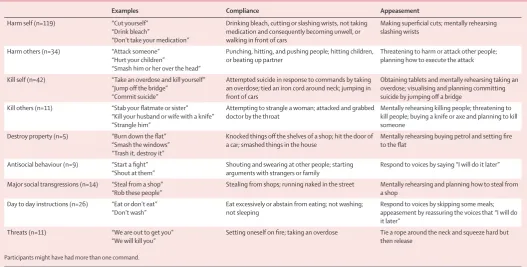
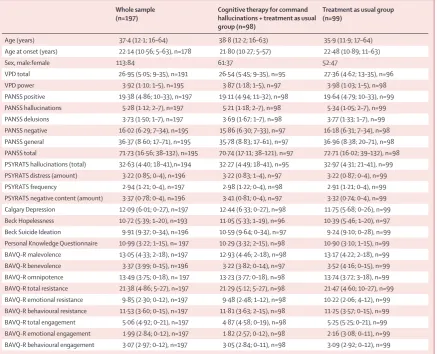
Table 2 shows the nature of the commands heard by participants and the high risk of harmful behaviours associated with the commands. Table 3 shows the baseline characteristics of the whole study sample and the two groups.
Participants allocated to the cognitive therapy for command hallucinations + treatment as usual group received a mean of 19 sessions of cognitive therapy (SD 9, range 0–36), each lasting about 1 h. Adherence to cognitive therapy was excellent, with only 12 (12%) of 98 participants not attending any sessions, and 79 (81%) completing the therapy (all manualised elements). Fidelity to the therapy model was assessed by supervisors EP and AM using the adherence scales with audio recordings. 17 (20%) of 86 participants in the cognitive therapy for command hallucinations + treatment as usual group were randomly selected and 117 of 1500 therapy sessions were rated (8% of all sessions in the cognitive therapy for command hallucinations + treatment as usual group). 72 (62%) of 117 therapy
sessions scored higher than the cutoff based on our fi delity protocol (score ≥3 is acceptable use of cognitive therapy for command hallucinations).
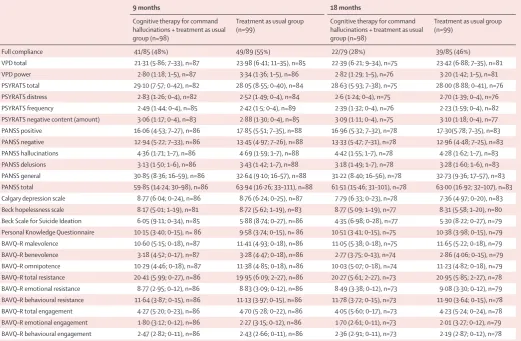
55% of the participants in the treatment as usual group complied fully (VCS score 5) with treatment during the fi rst 9 months after randomisation compared with 48% in the cognitive therapy for command hallucinations + treatment as usual group (table 4). In the 9 months after completion of cognitive therapy for command hallucinations + treatment as usual, 46% of the participants in the treatment as usual group complied fully compared with 28% of those in the cognitive therapy for command hallucinations + treatment as usual group (table 4).
The estimated parameters in the initial model included a main eff ect of treatment and an eff ect of treatment-by-time interaction. The treatment-by-treatment-by-time interaction indicates how the rates of compliance in the two treatment groups diverge over time. At 9 months, the odds ratio was 0·74 (95% CI 0·40–1·39, p=0·353). At 18 months, the odds ratio was 0·45 (0·23–0·88, p=0·021). Although both odds ratios are less than 1, there might be a discrepancy between the treatment eff ects at the two follow-up timepoints. However, the treatment-by-time interaction (a measure of this discrepancy), with an estimated odds ratio of 0·54 (0·27–1·1, p=0·091), was not signifi cant and was therefore removed from the model. The resulting estimate of the treatment eff ect, interpreted as the eff ect that is common to both follow-up timepoints, was an odds ratio of 0·57 (0·33–0·98, p=0·042).
Examples Compliance Appeasement
Harm self (n=119) “Cut yourself” “Drink bleach”
“Don’t take your medication”
Drinking bleach, cutting or slashing wrists, not taking medication and consequently becoming unwell, or walking in front of cars
Making superfi cial cuts; mentally rehearsing slashing wrists
Harm others (n=34) “Attack someone” “Hurt your children”
“Smash him or her over the head”
Punching, hitting, and pushing people; hitting children, or beating up partner
Threatening to harm or attack other people; planning how to execute the attack
Kill self (n=42) “Take an overdose and kill yourself” “Jump off the bridge”
“Commit suicide”
Attempted suicide in response to commands by taking an overdose; tied an iron cord around neck; jumping in front of cars
Obtaining tablets and mentally rehearsing taking an overdose; visualising and planning committing suicide by jumping off a bridge
Kill others (n=11) “Stab your fl atmate or sister” “Kill your husband or wife with a knife” “Strangle him”
Attempting to strangle a woman; attacked and grabbed doctor by the throat
Mentally rehearsing killing people; threatening to kill people; buying a knife or axe and planning to kill someone
Destroy property (n=5) “Burn down the fl at” “Smash the windows” “Trash it, destroy it”
Knocked things off the shelves of a shop; hit the door of a car; smashed things in the house
Mentally rehearsing buying petrol and setting fi re to the fl at
Antisocial behaviour (n=9) “Start a fi ght” “Shout at them”
Shouting and swearing at other people; starting arguments with strangers or family
Respond to voices by saying “I will do it later”
Major social transgressions (n=14) “Steal from a shop” “Rob these people”
Stealing from shops; running naked in the street Mentally rehearsing and planning how to steal from a shop
Day to day instructions (n=26) “Eat or don’t eat” “Don’t wash”
Eat excessively or abstain from eating; not washing; not sleeping
Respond to voices by skipping some meals; appeasement by reassuring the voices that “I will do it later”
Threats (n=11) “We are out to get you” “We will kill you”
Setting oneself on fi re; taking an overdose Tie a rope around the neck and squeeze hard but then release
[image:6.595.30.558.129.396.2]Participants might have had more than one command.
The independent data monitoring and ethics committee monitored all serious adverse events; the committee found no serious adverse events attributable to the therapy.
As with compliance, the treatment-by-time interaction was not signifi cant and we therefore report the eff ect of treatment for the two follow-up timepoints. For the VPD total, the estimated treatment eff ect (adjusted mean outcome for the cognitive therapy for command hallucinations + treatment as usual group minus the corresponding mean for the treatment as usual group) common to both timepoints was –1·82 (95% CI –3·46 to –0·18, p=0·03). For the VPD power diff erential item, the estimated treatment eff ect for both timepoints was –0·52 (–0·849 to –0·185, p=0·002).
Treatment eff ects for all other outcomes (PSYRATS total and distress, Calgary Depression, Beck Hopelessness and Beck Suicidal Ideation, BAVQ-R, and knowledge [omniscience] scale) were not signifi cant (appendix). Notably, all secondary outcomes fell signifi cantly over time, equally in both treatment groups (table 3; table 4).
No diff erences were noted between groups at baseline or follow-up in the total amount of antipsychotics prescribed (olanzapine equivalents). 32 (16%) of 197 participants received cognitive behaviour therapy as part of their routine care throughout the trial: 17 (53%) of 32 in the treatment as usual group and 15 (47%) in the cognitive therapy for command hallucinations + treatment as usual group (not concurrently with cognitive therapy for command hallucinations). There was no diff erence between the groups in baseline or follow-up PANSS total or subscale scores (table3; table 4).
Discussion
By 18 months’ follow-up, 46% of the participants in the treatment as usual group had at least one episode of full compliance compared with 28% in the cognitive therapy for command hallucinations + treatment as usual group (table 4). Hence, the cognitive therapy for command hallucinations + treatment as usual group Whole sample
(n=197)
Cognitive therapy for command hallucinations + treatment as usual group (n=98)
Treatment as usual group (n=99)
Age (years) 37·4 (12·1; 16–64) 38·8 (12·2; 16–63) 35·9 (11·9; 17–64) Age at onset (years) 22·14 (10·56; 5–63), n=178 21·80 (10·27; 5–57) 22·48 (10·89; 11–63)
Sex, male:female 113:84 61:37 52:47
VPD total 26·95 (5·05; 9–35), n=191 26·54 (5·45; 9–35), n=95 27·36 (4·62; 13–35), n=96 VPD power 3·92 (1·10; 1–5), n=195 3·87 (1·18; 1–5), n=97 3·98 (1·03; 1–5), n=98 PANSS positive 19·38 (4·86; 10–33), n=197 19·11 (4·94; 11–32), n=98 19·64 (4·79; 10–33), n=99 PANSS hallucinations 5·28 (1·12; 2–7), n=197 5·21 (1·18; 2–7), n=98 5·34 (1·05; 2–7), n=99 PANSS delusions 3·73 (1·50; 1–7), n=197 3·69 (1·67; 1–7), n=98 3·77 (1·33; 1–7), n=99 PANSS negative 16·02 (6·29; 7–34), n=195 15·86 (6·30; 7–33), n=97 16·18 (6·31; 7–34), n=98 PANSS general 36·37 (8·60; 17–71), n=195 35·78 (8·83; 17–61), n=97 36·96 (8·38; 20–71), n=98 PANSS total 71·73 (16·56; 38–132), n=195 70·74 (17·11; 38–121), n=97 72·71 (16·02; 39–132), n=98 PSYRATS hallucinations (total) 32·63 (4·40; 18–41),n=194 32·27 (4·49; 18–41), n=95 32·97 (4·31; 21–41), n=99 PSYRATS distress (amount) 3·22 (0·85; 0–4), n=196 3·22 (0·83; 1–4), n=97 3·22 (0·87; 0–4), n=99 PSYRATS frequency 2·94 (1·21; 0–4), n=197 2·98 (1·22; 0–4), n=98 2·91 (1·21; 0–4), n=99 PSYRATS negative content (amount) 3·37 (0·78; 0–4), n=196 3·41 (0·81; 0–4), n=97 3·32 (0·74; 0–4), n=99 Calgary Depression 12·09 (6·01; 0–27), n=197 12·44 (6·33; 0–27), n=98 11·75 (5·68; 0–26), n=99 Beck Hopelessness 10·72 (5·39; 1–20), n=193 11·05 (5·33; 1–19), n=96 10·39 (5·46; 1–20), n=97 Beck Suicide Ideation 9·91 (9·37; 0–34), n=196 10·59 (9·64; 0–34), n=97 9·24 (9·10; 0–28), n=99 Personal Knowledge Questionnaire 10·99 (3·22; 1–15), n= 197 10·29 (3·32; 2–15), n=98 10·90 (3·10; 1–15), n=99 BAVQ-R malevolence 13·05 (4·33; 2–18), n=197 12·93 (4·46; 2–18), n=98 13·17 (4·22; 2–18), n=99 BAVQ-R benevolence 3·37 (3·99; 0–15), n=196 3·22 (3·82; 0–14), n=97 3·52 (4·16; 0–15), n=99 BAVQ-R omnipotence 13·49 (3·75; 0–18), n= 197 13·23 (3·77; 0–18), n=98 13·74 (3·72; 3–18), n=99 BAVQ-R total resistance 21·38 (4·86; 5–27), n=197 21·29 (5·12; 5–27), n=98 21·47 (4·60; 10–27), n=99 BAVQ-R emotional resistance 9·85 (2·30; 0–12), n=197 9·48 (2·48; 1–12), n=98 10·22 (2·06; 4–12), n=99 BAVQ-R behavioural resistance 11·53 (3·60; 0–15), n=197 11·81 (3·63; 2–15), n=98 11·25 (3·57; 0–15), n=99 BAVQ-R total engagement 5·06 (4·92; 0–21), n=197 4·87 (4·58; 0–19), n=98 5·25 (5·25; 0–21), n=99 BAVQ-R emotional engagement 1·99 (2·84; 0–12), n=197 1·82 (2·57; 0–12), n=98 2·16 (3·08; 0–11), n=99 BAVQ-R behavioural engagement 3·07 (2·97; 0–12), n=197 3·05 (2·84; 0–11), n=98 3·09 (2·92; 0–12), n=99
[image:7.595.41.479.129.483.2]Data are mean (SD; range), unless otherwise indicated. Some scales have missing data and numbers are provided to indicate sample with complete data. VPD=Voice Power Diff erential. PANSS=Positive and Negative Syndrome Scale. PSYRATS=Psychotic Symptoms Rating Scales. BAVQ-R=Beliefs About Voices Questionnaire-Revised.
Table 3: Baseline characteristics of participants
had a large, signifi cant, and clinically meaningful reduction in the rate of compliance compared with the treatment as usual group (odds ratio 0·45). The odds ratio of the combined treatment eff ect at both follow-up timepoints was 0·57. This eff ect was matched by a change in the singular focus of the intervention: the voices’ perceived power to deliver a supposed threat to the individual (strictly the power diff erence between the voices’ ability to deliver the threat and the voice hearer’s ability to withstand and mitigate the threat). In accord with our model, changes in power might have mediated change in compliance. This outcome requires a complex analysis, which we will present in future papers alongside the results of a health-economic analysis. We believe that the results of this trial represent an important advance in the treatment of individuals with a high risk of committing harm to themselves or others. Reducing risk in those who have previously acted on their psychotic symptoms has not yet proved possible, other than ensuring that the best
evidence-based treatment is provided and, as a last resort, the use of compulsory detention, which has been steadily rising in the UK and across Europe.26
In accord with the fi ndings from our pilot study,16 no treatment eff ect was noted for psychotic symptoms, including hallucinations. Unlike the pilot study, however, there was no eff ect of cognitive therapy for command hallucinations on distress linked to voices or on depression; in the pilot study, these changes were lost at follow-up and the results of this trial confi rm absence of eff ect. Importantly, most of the symptoms measured in the current study fell signifi cantly over time in both groups (as in the pilot study), probably indicating that the sample was identifi ed at baseline at the peak of compliance and distress. In the treatment as usual group, despite improvement in symptoms and voice frequency with time, participants showed a much higher rate of compliance, with a fairly unchanged appraisal of the voices’ power, emphasising the importance of this appraisal. The eff ect of cognitive
9 months 18 months
Cognitive therapy for command hallucinations + treatment as usual group (n=98)
Treatment as usu al group (n=99)
Cognitive therapy for command hallucinations + treatment as usual group (n=98)
Treatment as usual group (n=99)
Full compliance 41/85 (48%) 49/89 (55%) 22/79 (28%) 39/85 (46%)
VPD total 21·31 (5·86; 7–33), n=87 23·98 (6·41; 11–35), n=85 22·39 (6·21; 9–34), n=75 23·42 (6·88; 7–35), n=81 VPD power 2·80 (1·18; 1–5), n=87 3·34 (1·36; 1–5), n=86 2·82 (1·29; 1–5), n=76 3·20 (1·42; 1–5), n=81 PSYRATS total 29·10 (7·57; 0–42), n=82 28·05 (8·55; 0–40), n=84 28·63 (5·93; 7–38), n=75 28·00 (8·88; 0–41), n=76 PSYRATS distress 2·83 (1·26; 0–4), n=82 2·52 (1·49; 0–4), n=84 2·6 (1·24; 0–4), n=75 2·70 (1·39; 0–4), n=76 PSYRATS frequency 2·49 (1·44; 0–4), n=85 2·42 (1·5; 0–4), n=89 2·39 (1·32; 0–4), n=76 2·23 (1·59; 0–4), n=82 PSYRATS negative content (amount) 3·06 (1·17; 0–4), n=83 2·88 (1·30; 0–4), n=85 3·09 (1·11; 0–4), n=75 3·10 (1·18; 0–4), n=77 PANSS positive 16·06 (4·53; 7–27), n=86 17·85 (5·51; 7–35), n=88 16·96 (5·32; 7–32), n=78 17·30(5·78; 7–35), n=83 PANSS negative 12·94 (5·22; 7–33), n=86 13·45 (4·97; 7–26), n=88 13·33 (5·47; 7–31), n=78 12·96 (4·48; 7–25), n=83 PANSS hallucinations 4·36 (1·71; 1–7), n=86 4·69 (1·59; 1–7), n=88 4·42 (1·55; 1–7), n=78 4·28 (1·62; 1–7), n=83 PANSS delusions 3·13 (1·50; 1–6), n=86 3·43 (1·42; 1–7), n=88 3·18 (1·49; 1–7), n=78 3·28 (1·60; 1–6), n=83 PANSS general 30·85 (8·36; 16–59), n=86 32·64 (9·10; 16–57), n=88 31·22 (8·40; 16–56), n=78 32·73 (9·36; 17–57), n=83 PANSS total 59·85 (14·24; 30–98), n=86 63·94 (16·26; 33–111), n=88 61·51 (15·46; 31–101), n=78 63·00 (16·92; 32–107), n=83 Calgary depression scale 8·77 (6·04; 0–24), n=86 8·76 (6·24; 0–25), n=87 7·79 (6·33; 0–23), n=78 7·36 (4·97; 0–20), n=83 Beck hopelessness scale 8·17 (5·01; 1–19), n=81 8·72 (5·62; 1–19), n=83 8·77 (5·09; 1–19), n=77 8·31 (5·58; 1–20), n=80 Beck Scale for Suicide Ideation 6·05 (9·11; 0–34), n=85 5·88 (8·74; 0–27), n=86 4·35 (6·98; 0–28), n=77 5·30 (8·22; 0–27), n=79 Personal Knowledge Questionnaire 10·15 (3·40; 0–15), n= 86 9·58 (3·74; 0–15), n= 86 10·51 (3·41; 0–15), n=75 10·38 (3·98; 0–15), n=79 BAVQ–R malevolence 10·60 (5·15; 0–18), n=87 11·41 (4·93; 0–18), n=86 11·05 (5·38; 0–18), n=75 11·65 (5·22; 0–18), n=79 BAVQ–R benevolence 3·18 (4·52; 0–17), n=87 3·28 (4·47; 0–18), n=86 2·77 (3·75; 0–13), n=74 2·86 (4·06; 0–15), n=79 BAVQ–R omnipotence 10·29 (4·46; 0–18), n=87 11·38 (4·85; 0–18), n=86 10·03 (5·07; 0–18), n=74 11·23 (4·82; 0–18), n=79 BAVQ–R total resistance 20·41 (5·99; 0–27), n=86 19·95 (6·09; 2–27), n=86 20·27 (5·61; 2–27), n=73 20·95 (5·85; 2–27), n=78 BAVQ–R emotional resistance 8·77 (2·95; 0–12), n=86 8·83 (3·09; 0–12), n=86 8·49 (3·38; 0–12), n=73 9·08 (3·30; 0–12), n=79 BAVQ–R behavioural resistance 11·64 (3·87; 0–15), n=86 11·13 (3·97; 0–15), n=86 11·78 (3·72; 0–15), n=73 11·90 (3·64; 0–15), n=78 BAVQ–R total engagement 4·27 (5·20; 0–23), n=86 4·70 (5·28; 0–22), n=86 4·05 (5·60; 0–17), n=73 4·23 (5·24; 0–24), n=78 BAVQ–R emotional engagement 1·80 (3·12; 0–12), n=86 2·27 (3·15; 0–12), n=86 1·70 (2·61; 0–11), n=73 2·01 (3·27; 0–12), n=79 BAVQ–R behavioural engagement 2·47 (2·82; 0–11), n=86 2·43 (2·66; 0–11), n=86 2·36 (2·91; 0–11), n=73 2·19 (2·87; 0–12), n=78
[image:8.595.35.557.131.472.2]Data are n/N (%) or mean (SD; range), unless otherwise indicated. Higher scores indicate poorer outcome.Some scales have missing data and numbers are provided to indicate sample with complete data. VPD=Voice Power Diff erential. PSYRATS=Psychotic Symptoms Rating Scales. PANSS=Positive and Negative Syndrome Scale. BAVQ-R=Beliefs About Voices Questionnaire-Revised.
therapy for command hallucinations seemed greater at 18 months than at 9 months; however, we should be cautious in coming to this conclusion because the analyses (testing for the time-by-treatment interaction) showed that the diff erence in the treatment eff ects at 9 months and 18 months was not signifi cant. Nevertheless, the eff ect at 9 months was not signifi cant, suggesting that cognitive therapy for command hallucinations might have had a delayed eff ect. This explanation is plausible because the intervention was delivered slowly and steadily over 9 months to vulnerable participants; thus, participants might have been more compliant during this period, before the intervention had time to fully take eff ect.
The results of the COMMAND trial confi rm the size and focal nature of the eff ect of cognitive therapy for command hallucinations on power and compliance, fi rst reported in our pilot trial. Cognitive therapy for command hallucinations was acceptable to clients, as shown by the high rate (>80%) of completion of treatment, among the highest reported for cognitive behaviour therapy (or indeed other treatment) for psychosis. Cognitive therapy for command hallu-cinations was not designed to be a panacea for all diffi culties linked to psychosis and commanding voices, but to target this one key appraisal (power diff erential) and behaviour (full compliance) for which it appears to be successful. At the end of therapy, many participants remained signifi cantly depressed and continued to be distressed by their voices. Other interventions will be needed to address these (eg, conventional cognitive behaviour therapy for psychosis). Our recent longitudinal study of voice compliance27 showed that in addition to voice power, impulsivity, but not anger, was a predictor, suggesting other potential intervention targets to improve outcome with cognitive therapy for command hallucinations (panel).
So far, COMMAND is the largest trial of treatment for the high-risk group of individuals who are traditionally diffi cult to study and to follow up; it is also one of the few trials focusing on risk of serious harm in psychosis, and the only such trial with commanding hallucinations. The high rate of consent to randomisation and level of completed follow-up (both >80%) assures the validity and generalisability of the fi ndings (the high rate of consent probably indicates treatment resistance and harm linked to this symptom). The primary outcome, the presence of any episode of full compliance in the follow-up, was a stringent test of the hypothesis. In situations in which the frequency of full compliance might have fallen, the rating was given as full compliance, potentially underestimating the treatment eff ect; for example, there were many instances in which major episodes of self-harm fell sharply (eg, from weekly to once in 9 months) but this benefi t was not indicated in the outcome. This limitation will need to be addressed in future work. Adherence to treatment was
excellent; however, the rated level of fi delity to cognitive therapy for command hallucinations, based on a random set of recordings, was good (62%), but not as high as expected. There were two broad reasons for this limitation. First, therapists strayed from pure cognitive therapy for command hallucinations to include broader cognitive behaviour therapy, probably because of the complexity of the clients. Second, clients were often distressed by the voices within sessions, requiring therapists to spend much time encouraging communication and talking about neutral topics, which could not be rated like cognitive therapy for command
Panel: Research in context
Systematic review
Two systematic reviews of cognitive behaviour therapy for psychosis have been reported.28,29 The results of the fi rst
systematic review28 showed small to moderate eff ect sizes of
therapy on positive psychosis symptoms. The results of the second,29 a Cochrane review, of the comparison of cognitive
behaviour therapy with a control psychosocial intervention, showed that defi nitive conclusions could not be drawn because of an insuffi cient number of trials, but there was some evidence of equivalence. The results of a rigorous trial in The Lancet30 showed cognitive behaviour therapy to be eff ective in
participants who had refused medication (all previous trials were of participants who were on medication). The results of a systematic review,28 which included our pilot trial16 with the
largest eff ect size, showed substantial heterogeneity, indicating that cognitive behaviour therapy might have better eff ectiveness in some contexts. The recent updated guidance from the National Institute for Health and Care Excellence for schizophrenia15 lends support to this view.
Interpretation
To the best of our knowledge, COMMAND is the fi rst large-scale trial to test the eff ect of cognitive behaviour therapy on harmful behaviour, rather than overall psychosis symptoms. The results are strong evidence of substantial reductions in harmful compliance. This outcome must be viewed in the context of the high-risk criteria we used. According to our results, individuals showing evidence of recent harmful compliance (<9 months) are at high risk of further compliance within 18 months (46%). Whether individuals who hear commands, but have yet to comply or do so infrequently, can be prevented from future compliance is not known. Because the cognitive behaviour therapy we used seems to be highly acceptable and most individuals completed the treatment, it might have wider application in some troublesome auditory hallucinations. Results of COMMAND resolve the uncertainty about the eff ectiveness of cognitive behaviour therapy in reducing harm from
hallucinations. These fi delity issues will be addressed in further papers drawing on the qualitative aspect of the trial protocol. The possibility of therapist eff ects needs to be acknowledged; the contribution of non-protocol-based therapeutic eff ects might create clustering within the data and therefore lead to imprecision in the actual eff ects. However, the benefi ts of cognitive therapy for command hallucinations might be due to qualities of some therapists that are not captured in the manualised treatment, which may weaken the eff ect of cognitive therapy for command hallucinations in routine care.
Cognitive behaviour therapy for psychosis has become a complex package and recent meta-analyses have shown that its eff ect is smaller than suggested by the results of initial trials. Trials of the comparison of cognitive behaviour therapy with treatment as usual might have limitations due to poor treatment as usual, as reported by the Schizophrenia Commission; however, as we report here, treatment as usual was characterised by a very high level of treatment and service contact with the participants due to the concern about the risks. The absence of an active control intervention raises the possibility that a non-specifi c aspect of cognitive therapy for command hallucinations (eg, extra treatment time) might account for some or all of the eff ect size. If this were the case, we would have expected non-specifi c changes in many outcome domains; however, as predicted, we noted changes in perceived voice power and compliance, but not psychosis or other symptoms. Another, equally credible therapy might have achieved the same outcome. We decided fi rst to establish whether this theoretically informed intervention could have a clinically signifi cant eff ect on treatment-refractory and high-risk participants. The results of the COMMAND trial now open the way for more complex and expensive trials to resolve these questions. We have previously argued,31 however, that the next generation of trials of cognitive behaviour therapy should move away from the conventional goal of reducing psychotic symptoms in participants to focus on the core goal of cognitive behaviour therapy—ie, changing aff ect and behaviour— with theoretically informed and more focused interventions. In this respect COMMAND might be considered a model of the next generation of cognitive behaviour therapy trials for psychosis.
Contributors
MB, EP, SL, TW, NT, LD, and GD designed the study. MB, MM, AM, EP, TW, NT, and SL administered the study. MM was the trial manager. MB developed the cognitive therapy for command hallucinations. MB and AM designed and led the training for cognitive therapy for command hallucinations, and AM and EP led the supervision process and the rating of therapy tapes. GD designed and undertook the statistical analyses and LD designed and undertook the economic analyses. All authors contributed to the interpretation of the data, the writing of the paper, and approved the fi nal manuscript. MB had full access to all the data in the study and had fi nal responsibility for the decision to submit for publication.
Declaration of interests
We declare that we have no competing interests.
Acknowledgments
The trial was funded by the UK Medical Research Council (G0500965). We acknowledge the support of the National Institute for Health Research (NIHR) Mental Health Research Network in recruiting participants; the trial steering committee (chair Elizabeth Kuipers) and the data monitoring and ethics committee (chair Andrew Gumley), for their assistance in setting up, conducting, and monitoring the trial. Helen Lester who was a co-investigator on COMMAND, sadly died in March, 2013. We thank the clinical teams and service users for their continuing support and participation in the trial. We would also particularly like to acknowledge the work of the researchers and therapists involved in the trial. MB was part funded by the NIHR through the Collaborations for Leadership in Applied Health Research and Care for the West Midlands. EP, NT, and TW acknowledge support from the NIHR Biomedical Research Centre for Mental Health at King’s Health Partners, London, UK. The views expressed in this publication are not necessarily those of the NIHR or the Department of Health management group.
References
1 Van Os J, Kapur S. Schizophrenia. Lancet 2009; 374: 635–45. 2 Fazel S, Gulati G, Linsell L, Geddes JR, Grann M. Schizophrenia
and violence: systematic review and meta-analysis. PLoS Med 2009; 6: 1–14.
3 Department of Health. No health without mental health, a cross-government mental health outcomes strategy for people of all ages. UK: Department of Health, 2011.
4 Leucht S, Arbter D, Engel RR, Kissling W, Davis JM. How eff ective are second generation antipsychotic drugs? A meta-analysis of placebo-controlled trials. Mol Psychiatry 2009; 14: 429–47. 5 Nose M, Barbui C, Tansella M. How often do patients with
psychosis fail to adhere to treatment programmes? A systematic review. Psychol Med 2003, 33: 1149–60.
6 Shawyer F, Mackinnon A, Farhall J. Command hallucinations and violence: implications for detention and treatment. Psychiatry, Psychol Law 2003, 10: 97–107.
7 Rogers R, Watt A, Gray NS, MacCulloch M, Gournay K. Content of command hallucinations predicts self harm but not violence in a medium secure unit. J Forens Psychiatry 2002; 13: 251–62. 8 Appelbaum PS, Robbins P, Monahan J. Violence and delusions:
data from the MacArthur Violence Risk Assessment study.
Am J Psychiatry 2000; 157: 566–72.
9 Chadwick P, Birchwood M. The omnipotence of voices: a cognitive approach to auditory hallucinations. B J Psychiatry 1994; 164: 190–201.
10 Birchwood M, Gilbert P, Gilbert J, et al. Do interpersonal schema infl uence the relationship with the dominant ‘voice’ in schizophrenia? A comparison of three models. Psychol Med 2004; 34: 1571–80.
11 Connor C, Birchwood M. Power and perceived expressed emotion of voices: their impact on depression and suicidal thinking in those that hear voices. Clin Psychol Psychother 2013; 20: 199–205. 12 Fox J, Gray N, Lewis N. Factors determining compliance with
violent content: the role of social rank, perceived power of the voice and voice malevolence. J Forens Psychiatry Psychol 2004, 15: 511–31. 13 Byrne S, Birchwood M, Trower P, Meaden A. A Casebook of
cognitive behaviour therapy for command hallucinations. A social rank theory approach. London and New York: Routledge, 2006. 14 Meaden A, Keen N, Aston R, Barton K, Bucci S. Cognitive therapy
for command hallucinations: an advanced practical companion. Hove: Routledge, 2013.
15 NICE. Psychosis and schizophrenia in adults. London: National Institute for Health and Care Excellence, 2014.
16 Trower P, Birchwood M, Meaden A, Byrne S, Nelson A, Ross K. Cognitive therapy for command hallucinations: randomised controlled trial. Br J Psychiatry 2004; 184: 312–20.
17 Shawyer F, Farhall J, Mackinnon A, et al. A randomised controlled trial of acceptance-based cognitive behavioural therapy for command hallucinations in psychotic disorders. Behav Res Ther
2012; 50: 110–21.
18 Birchwood M, Peters E, Tarrier N, et al. A multi-centre, randomised controlled trial of cognitive therapy to prevent harmful compliance with command hallucinations. BMC Psychiatry 2011; 11: 155–58.
19 WHO. The ICD-10 Classifi cation of Mental and Behavioural Disorders. Geneva: World Health Organization, 2009.
20 Chadwick P, Lees S, Birchwood M. The revised beliefs about voices questionnaire (BAVQ-R). Br J Psychiatry 2000; 177: 229–32. 21 Haddock G, McCarron J, Tarrier N, Faragher EB. Scales to measure
dimensions of hallucinations and delusions: the psychotic symptom rating scales (PSYRATS). Psychol Med 1999; 29: 879–89.
22 Addington D, Addington J, Maticka-Tyndale E. Assessing depression in schizophrenia: the Calgary Depression Scale.
Br J Psychiatry 1993; 22: 39–44.
23 Beck AT. The Beck Hopelessness Scale. Alexandria: VA: Psychological Corporation, 1978.
24 Kay SR, Opler LA, Fiszbein A. Positive and Negative Syndrome Scale (PANSS) rating manual. San Rafael, CA: Social and Behavioural Sciences Documents, 1987.
25 Gardner DM, Murphy AL, O’Donnell, H. International consensus study of antipsychotic dosing. Am J Psychiatry 2010; 167: 686–93. 26 Salize HJ, Dressing H. Epidemiology of involuntary placement of
mentally ill people across the European Union. Br J Psychiatry 2004; 184: 163–68.
27 Bucci S, Birchwood M, Twist L, Tarrier N, Emsley R, Haddock G. Predicting compliance with command hallucinations: anger, impulsivity and appraisals of voices’ power and intent. Schizophr Res
2013; 147: 163–68.
28 Jauhar S, McKenna PJ, Radua J, Fung E, Salvador R, Laws KR. Cognitive-behavioural therapy for the symptoms of schizophrenia: systematic review and meta-analysis with examination of potential bias. Br J Psychiatry 2014; 204: 20–29.
29 Jones C, Hacker D, Cormac I, Meaden A, Irving CB. Cognitive behaviour therapy versus other psychosocial treatments for schizophrenia. Cochrane Database Syst Rev 2012; 4: CD008712. 30 Morrison AP, Turkington D, Pyle M, et al. Cognitive therapy for
people with schizophrenia spectrum disorders not taking antipsychotic drugs: a single-blind randomised controlled trial.
Lancet 2014; 383: 1395–403.