Delta is a customer-oriented company, the aim of which is to offer top-quality products and first-class services. It delivers its products to about seven thousand sales points, keeping its eye on up-to-date trends and reflecting them in its activities. The most important customers are the global distribution chains, such as the Ahold (Albert and Hypernova divisions), Billa, Carrefour, Delvita, Eurest, Interspar, Lidl, Makro, Norma, Plus Discount, Sodexho, and Tesco. In the Czech Republic and Slovakia, Delta employs aproxi-mately 2 800 people.The complete product offering list includes 600 items.
The leader company of the Delta Group is Delta Pekárny, a.s. Its scope of business includes Bakery and Confectionery, Wholesale, Specialized Retail Sale, Inn Keeping, Accommodation Services, Business, Management and Financial Counselling, Production of Machines and Machinery for Specific Branches of Economy.
Delta Pekárny, a.s., sold 109.5 thousand tons of fresh pastry in 2003, about 267 tons more than in the previ-ous year. The turnover of the Fresh Pastry Division recorded an annual increase of CZK 39.5 million to CZK 2.256 billion.
Also other divisions of the Delta Group recorded a successful year. Non-consolidated turnover of the Delta Group, without turnovers of the new acquisitions in Poland, Hungary and Košice, Slovakia, amounted to CZK 3,887 billion in 2003 as opposed to CZK 4,258 billion in the year 2002. Factually, it was an increase in 2003, the visual decrease was effected by the transfer of CZK 0.6 billion, the turnover of Delta Mlýny (Mills) Division. Delta Mlýny had been removed from the Delta Group last year and became a part of the Unimills company. The analysis of the Delta Group was dealt with in the papers of Chládková (2005) and Chládková, Kudová (2004). Similar problems were solved generally by Tomšík (2004) and Hron (2004) in their papers.
Internal environment of a bakery and its analysis
Vnitřní prostředí pekařské firmy a jeho analýza
H. CHLÁDKOVÁ
Mendel University of Agriculture and Forestry, Brno, Czech Republic
Abstract: The Delta Group with its daughter company Delta Pekárny, a.s., belongs to the most significant firms in the Czech food processing industry and it is number one baking company in the Czech market of fresh, long-shelf-life and fro-zen bakery products. The Delta Group associates eleven industrial bakeries in the Czech Republic and four in Slovakia, in addition to mills, Delta Frozen Products frozen-pastry plant, Delibake and Harry’s Delta sweet long-shelf-life bakery pro-ducts’ plant, Vegilife company producing healthy food, Eureca Shops running Paneria, Fr. Odkolek fast-food outlets and Le Patio restaurants. In order to consolidate its status of a strong and successful Central-European company capable to meet all requirements of its customers, the company must perform a continuous analysis of external and internal environment. Key words: internal environment, analysis, strengths, weaknesses, success factors, key skills
Abstrakt: Skupina Delta, jejíž dceřinou organizací je společnost Delta Pekárny, a.s., patří mezi nejvýznamnější potravinář-ské subjekty v Čepotravinář-ské republice a je jedničkou na čepotravinář-ském trhu v pekárenpotravinář-ském odvětví čerstvého, trvanlivého i mraženého pečiva. Skupina Delta sdružuje vedle jedenácti velkopekáren v České republice a čtyř velkopekáren ve Slovenské republice, výrobnu mraženého pečiva Delta Frozen Products a sladkého trvanlivého pečiva Delibake a Harry‘s Delta, společnost Vegilife s produkcí zdravé výživy, Eureca Shops s prodejnami rychlého občerstvení Paneria, Fr. Odkolek a restaurace Le Patio. Aby mohla firma posilovat svoji pozici silného a úspěšného středoevropského podniku, který je schopen kvalitně uspokojovat požadavky zákazníků, je třeba kontinuálně provádět analýzy vnějšího i vnitřního prostředí.
Klíčová slova: vnitřní prostředí, analýza, silné stránky, slabé stránky, faktory úspěchu, klíčové schopnosti
MATERIAL AND METHODS
The goal of this paper is classification and analysis of the internal environment factor of the company Delta Pekárny using the value chain principle. Porter’s value chain defines and describes the activities which are different in a particular company and which have an influence on the company profit.
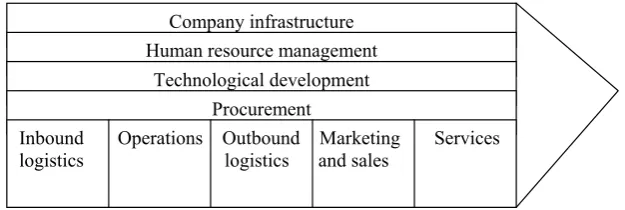
Porter differentiates the following activities of the value chain (Figure 1):
1. Primary activities among which there belong the inbound logistics, production and operations, out-bound logistics, marketing and sales, and services. 2. Secondary (supportive) activities which include the processes of creation of organization and manage-ment structure of an organization, human resources management, technical development and procure-ment (supplying).
RESULTS AND DISCUSSION Delta Group
The Delta Group ranks among the most significant entities in the Czech food processing industry and it is number one baking company on the Czech market of fresh, long-shelf-life and frozen bakery products. Registered capital was CZK 1 043 092 thousand, in 2003. Stock dividends have not been paid in 2003, alike in the previous years. Profits of the company were fully reinvested for the purpose of its further development.
DELTA Group plants:
Czech Republic: Plzeň, Kladno, Strakonice, Nymburk, Havlíčkův Brod, Znojmo, Brno, Hodonín, Uherský Brod, Vsetín, Uničov
Slovakia: Bratislava-Petržalka, Komárno, Hliník nad Hronom, Košice
Poland: Warsaw
Hungary: Budapest
Delta Group is formed into three divisions accord-ing to the type of products – fresh products division, frozen products division and long-shelf-life products division.
Fresh Products division is the priority of the business activities of the company. Production and distribu-tion of fresh bakery products come from eleven own production plants located in the whole territory of the Czech Republic. More than 7000 sales points, where the fresh bakery products under the DELTA PEKÁRNY trade mark are delivered daily. The
di-vision Fresh Products offer to its large number of customers a choice of its wide range of fresh products for all occasions. Except the basic range as breads, rolls, donuts, turnovers and tea-cakes, it offers local regional specialties typical for particular areas such as Walachian “frgál” (tart), from the Chodsko and bread from Sušice etc.
Delta Frozen Products division was established to market demands and the system of “BAKE-OFF” baking of frozen bakery products directly in the shops or in home is used here. Its range includes frozen breads, white and brown baguettes, sweet and savoury products of puff pastry and products of Danish pastry. DELTA started to extend actively the production of long-self-life bakery products in 1999 because of the market demand represented mainly by the largest business partners – big international retail chains, which want to sell the complete product line from one supplier. At the moment, the product range consists of Swiss rolls, biscuits and cookies with prolonged shelf life.
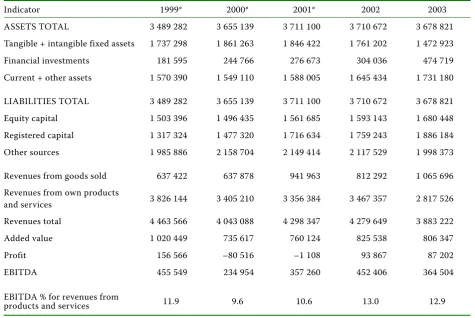
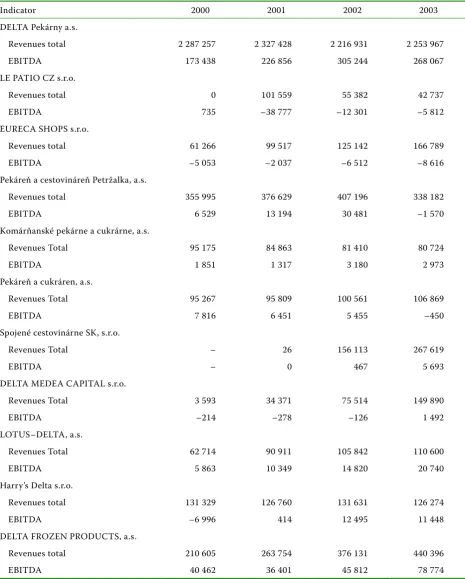
Table 1 and 2 document the trends of basic financial indicators in the period of 1999 to 2003.
Successes of the Delta Group:
In January 2005, products of the Delta Group have been awarded silver and bronze medals at the inter-national quality competition, which took place in Frankfurt/Main, Germany. The prestigious competi-tion is organized by the German Agricultural Society (DLG, Deutsche Landwirtschafts-Gesellschafts e.V.)
Secondary (supportive) activities
Company infrastructure Human resource management
Technological development Procurement
Inbound Operations Outbound Marketing Services logistics logistics and sales
[image:2.595.70.383.84.189.2]and awards excellent quality food products only. The silver medal goes to “makovka” from the Nymburk bakery of Delta, bronze medals to “kaisers” from the Delta Frozen Products and to “raisin cakes” from the Harry’s Delta, Strakonice production.
The Delta Frozen Products, a subsidiary of the Delta Pekárny a.s., became a member of the elite group of the best managed and most modern com-panies in Europe. After being awarded the HACCP certificate, the company received the prestigious BRC (British Retail Corporation) certificate in November 2004. Only 260 European food companies are proud holders of the BRC certificate. Seven of the Delta bakery plants located in Pilsen, Kladno, Strakonice, Hodonín, Vsetín, Bratislava, Nymburk, and Brno have received the international HACCP (Hazard Analysis Critical Control Points) certificate this year, which is a guarantee of impeccable hygienic standards of the produced food. “We are proud to claim that all of the bakery plants in the Delta Group operate well within the HACCP standards, but in some of them, an investment to modernize technical equipment is needed in order to receive the official certification in
recognition of our high standards. A lot of work has been done in all plants,” stated Jiří Novák, Quality Manager of the Delta Pekárny. The Delta Group bakery plant in Košice has been awarded the HACCP and ISO certificates in the past, and other bakery plants in the Group should be certified in 2005.
Delta Pekárny a.s.
[image:3.595.60.536.398.716.2]Delta Pekárny a.s. is the leading company of the Delta Group. The priorities of the business strategy in of the DELTA PEKÁRNY is production and distribution of fresh bakery products from eleven own production plants located in the whole territory of the Czech Republic. The Delta Pekárny sold 109.5 thousand tons of fresh pastry in 2003 which means the increase by 267 tons compared to the year before. Sales revenues in the division of fresh pastry increased on year by CZK 39.5 milion to CZK 2 256 bilion. In December 2003, the record-high monthly sales (over 10 thousand tons of pastry) were registered. The Delta employees represent the most precious capital of the company.
Table 1. Trend of basic financial indicators the DELTA Group in thousands CZK
Indicator 1999* 2000* 2001* 2002 2003
ASSETS TOTAL 3 489 282 3 655 139 3 711 100 3 710 672 3 678 821
Tangible + intangible fixed assets 1 737 298 1 861 263 1 846 422 1 761 202 1 472 923
Financial investments 181 595 244 766 276 673 304 036 474 719
Current + other assets 1 570 390 1 549 110 1 588 005 1 645 434 1 731 180 LIABILITIES TOTAL 3 489 282 3 655 139 3 711 100 3 710 672 3 678 821
Equity capital 1 503 396 1 496 435 1 561 685 1 593 143 1 680 448
Registered capital 1 317 324 1 477 320 1 716 634 1 759 243 1 886 184
Other sources 1 985 886 2 158 704 2 149 414 2 117 529 1 998 373
Revenues from goods sold 637 422 637 878 941 963 812 292 1 065 696 Revenues from own products
and services 3 826 144 3 405 210 3 356 384 3 467 357 2 817 526
Revenues total 4 463 566 4 043 088 4 298 347 4 279 649 3 883 222
Added value 1 020 449 735 617 760 124 825 538 806 347
Profit 156 566 –80 516 –1 108 93 867 87 202
EBITDA 455 549 234 954 357 260 452 406 364 504
EBITDA % for revenues from
products and services 11.9 9.6 10.6 13.0 12.9
Source: Delta Pekárny a.s. (http://www.deltapekarny.cz) *Non-Consolidated Data
The company increased wages by approx 10% in 2004 compared to the year before. The European Program was prepared, which emphasized further growth of professional abilities of the people as well as their language skills. But the leave of two executive
man-Table 2. Trend of revenues total on the division of the DELTA Group in thousands CZK
Indicator 2000 2001 2002 2003
DELTA Pekárny a.s.
Revenues total 2 287 257 2 327 428 2 216 931 2 253 967
EBITDA 173 438 226 856 305 244 268 067
LE PATIO CZ s.r.o.
Revenues total 0 101 559 55 382 42 737
EBITDA 735 –38 777 –12 301 –5 812
EURECA SHOPS s.r.o.
Revenues total 61 266 99 517 125 142 166 789
EBITDA –5 053 –2 037 –6 512 –8 616
Pekáreň a cestovináreň Petržalka, a.s.
Revenues total 355 995 376 629 407 196 338 182
EBITDA 6 529 13 194 30 481 –1 570
Komárňanské pekárne a cukrárne, a.s.
Revenues Total 95 175 84 863 81 410 80 724
EBITDA 1 851 1 317 3 180 2 973
Pekáreň a cukráren, a.s.
Revenues Total 95 267 95 809 100 561 106 869
EBITDA 7 816 6 451 5 455 –450
Spojené cestovinárne SK, s.r.o.
Revenues Total – 26 156 113 267 619
EBITDA – 0 467 5 693
DELTA MEDEA CAPITAL s.r.o.
Revenues Total 3 593 34 371 75 514 149 890
EBITDA –214 –278 –126 1 492
LOTUS–DELTA, a.s.
Revenues Total 62 714 90 911 105 842 110 600
EBITDA 5 863 10 349 14 820 20 740
Harry’s Delta s.r.o.
Revenues total 131 329 126 760 131 631 126 274
EBITDA –6 996 414 12 495 11 448
DELTA FROZEN PRODUCTS, a.s.
Revenues total 210 605 263 754 376 131 440 396
EBITDA 40 462 36 401 45 812 78 774
Source: Delta Pekárny a.s. (http://www.deltapekarny.cz)
agers into competitor company is a major weakness of the personal strategy.
[image:4.595.64.530.164.744.2]and the NAVISION system was implemented. In 2003, the Delta Pekárny signed partnership contract with Microsoft Business Solutions and the whole com-munication network was modernized.
Because the Czech Republic entered the EU, the bakery brand must accept new laws and rules, the top management of the company decided to enter the Business Group of Bakers and Confectioners to commit its experience, skills and knowledge and to help with lobbing for the bakery brand in 2004.
The General Meeting took place on 30th June, 2005,
and approved the 2004 Annual Report. The Company achieved the sales in amount of CZK 2.442 billion with interim growth of CZK 191 million in 2004. Net earnings amounting to CZK 14.8 million shall be rein-vested into a further development of the Company. New majority shareholders, the United Bakeries Luxembourg S.A. Company, presented themselves at the General Meeting; this Company has gained 94.61 percent of shares. Change of the shareholder structure does not concern the Company manage-ment nor the Company employees.
In 2004, the Delta Pekárny was given a fine by the antitrust authority, within the scope of cartel agreement between the Delta Pekárny, the Odkolek and the Penam companies. This fine was maximal – CZK 300 thousand.
The Office for the Protection of Competition (ÚOHS) gave a fine of 120 millions CZK to the three bakeries Delta, Odkolek and Penam for the agreement of increasing pastries’ prices in 2003. For the Delta Pekárny, the fine was CZK 55 million, but it appealed against this decision, and the office did not submit the final decision, yet.
Main strengths of the DELTA Group: – clear visions and goals of the group – forming an alliance of the DELTA
– large share in the Czech and Slovak market – being number one baking company in the Czech
market of bakery products – large product offer (600 items)
– producing basic range and local and regional spe-cialties typical for particular areas
– associating eleven industrial bakeries – supplying more than 7000 sales points
– being a member of Business group of bakers and confectioners
– personal policy
– using the WAN and NAVISION system – own web pages
– activities in Slovakia, Poland and Hungary – export to foreign countries
– improving image of the Delta brand – established tradition
– keeping eye on up-to-date trends and reflecting these in its activities
– financial results.
Main weaknesses of the DELTA Group:
– separation of the Delta Mlýny from the DELTA Group
– problems with cartel agreement, threat of the fines
– leave of two executive managers
CONCLUSION
From the viewpoint of competition, value is the amount buyers are willing to pay for what a firm offers them. A firm is profitable if the value it commands exceeds the costs involved in creating the product. Creating value for buyers that exceeds the costs of doing so is the goal of any strategy. The value chain is the basic instrument for the recognition and de-termination of competitive advantage and for finding the way to create and to keep it.
In the Delta Pekárny, all the categories of primary activities are presented. For competitive advantage of a bakery brand the most important are operations, activities associated with distributing the products (delivery vehicles operation, order processing, sched-uling) and marketing (advertising, promotion, quoting) and sales (channel selection, pricing).
The competitive advantage was achieved in every category of secondary activities. For procurement, a typical activity is connecting corn mills and bakeries. The costs of procurement activities themselves usually represent a small portion of total costs, but a large impact to competitive advantage has its influence to quality and methods and ways of purchasing. the Delta Pekárny achieved competitive advantage in section of technology development too. This company modern-izes the old operations, it uses a new technology in producing and in information and communication too. The average monthly wages in baking are very low (CZK 11.425 in 2003), but the company increases wages and the competency of employees every year. The infrastructure of the company supports the entire chain. Not only the image and credit of top man-agement, but also the company’s vision, credo and goals stabilize its position in the market. Within each category of primary and secondary activities, quality plays a very important role, but the costs of quality assurance are very large.
industry. It generates profits, keeps an eye on new trends and comes up with product range innovations. It is focusing on quality of its products and on the changes of consumers demand.
REFERENCES
Chládková H. (2005):Situační analýza vnitřního prostředí společnosti Delta pekárny.In: Agrární perspektivy. PEF ČZU, Praha (v tisku).
Chládková H., Kudová D. (2004): Úvodní studie k cha-rakteristice odvětví pekárenství v ČR. In: Trvale udržitelný rozvoj agrárního sektoru – výzvy a
rizi-ka. Agrární perspektivy XIII. ČZU, Praha: 298–302; ISBN 80-213-1190-8.
Chládková H., Kudová D. (2004a): Analýza trhu peká-renských výrobků. In: Medzinárodné vedecké dni, SPU, Nitra: 462–466; ISBN 80-8069-356-0 (CD). Hron J. (2004): Diagnosis of business health.
Agricul-tural Economics – Czech, 50 (12): 535–542. Porter M.E. (1996): Konkurenční výhoda. Victoria
Publishing, Praha, 626 p.; ISBN 80-85605-12-0. Tomšík P. (2004): Approaches to diagnostics of
agri-cultural and food-processing subjects. Agriagri-cultural economics – Czech, 50 (12): 552–555.
URL <http://www.deltapekarny.cz> [2004]
Arrived on 7th September 2005
Contact address:
Helena Chládková, Mendel University of Agriculture and Forestry in Brno, Zemědělská 1, 61300 Brno, Czech Republic