Original Article
The correlation between CYPA superfamily
gene polymorphisms and individualized,
post-operative pain management
Xingpeng Xiao, Yifan Jia, Xuan He, Hanling Ren
Department of Anaesthesiology, Renmin Hospital of Wuhan University, Wuhan 430060, Hubei, China Received June 13, 2018; Accepted January 11, 2019; Epub May 15, 2019; Published May 30, 2019
Abstract: Pain is one of basic sensations of our body. Particularly, post-operative pain that patients suffer from poses a critical problem. Individuals have variations in their sensitivity to anesthetic drugs. Dosage differences are therefore determined to be dependent on individual patients. However, the molecular mechanisms of pain sensitiv-ity are still elusive. This study aimed to investigate the correlation between polymorphisms of CYPA and the MDR
gene and the analgesic efficiency of anesthesia drugs. Esophageal cancer patients (n=2358) undergoing surgery from January 2012 to August 2017 were enrolled in this study, along with healthy individuals (n=1200). Blood sam -ples were collected and the PCR-restriction fragment length polymorphism (RFLP) approach was used to analyze
the genetic polymorphisms of the P450 gene. The efficiency of the anesthetic drug sodium oxybate was compared
among individuals with different genotypes of P450. A higher frequency of CYPA heterozygous, T allele, MDR homo-zygous and heterohomo-zygous, and G allele was found in surgical patients, compared to the frequency found in healthy
individuals (P<0.05). The genotype frequency of AG at the MDR site was significantly decreased compared to the
AA genotype (P<0.05). Logistic correlation analysis indicated the heterozygous genotype of CYPA, T allele, and MDR genotype as risk factors for anesthetic drug sensitivity on esophageal cancer patients after surgery. CYPA and the MDR A1283G genetic polymorphism are closely correlated with anesthetic drug sensitivity in esophageal cancer patients undergoing surgery. The heterozygous genotype at the CYPA loci, the allele at the T loci and the MDR1 genotype are risk factors for anesthetic drug sensitivity.
Keywords: Post-operative pain, P450, genetic polymorphism, individualized drug application, correlation analysis
Introduction
Pain is a negative emotional phenomenon, and subjective feelings regarding pain correlate with tissue damage [1]. Pain is one of the five major biological features, with the others being body temperature, respiration, blood pressure and pulse. Post-operative pain severely affects patient recovery and prognosis. During and af- ter surgery, cancer patients frequently receive anesthetic drugs to relieve pains [2]. Due to different sensitivities toward anesthetic drugs, dosages must be optimized for individual patients [3, 4].
Systemic anesthetic drugs are frequently ad- ministered to tumor patients during surgery. As the only non-barbital type intravenous anes-thetic drug with analgesia effects, for instance,
sodium oxybate can be used for both the induc-tion and maintenance of anesthesia [5]. Sodium oxybate functions as an NMDA receptor antago-nist. It can block the transmission of the sensa-tion of pain and activate the brain stem or lim-bic system. It contributes to the loss of pain sensation but leaves its recognition intact, thus achieving dissociative anesthesia. It is thus applicable for the anesthesia of elder people, children, and in neurosurgery, trauma and burn patients, on account of its wide body distribu-tion after intravenous infusion, slow onset, and longer persistent time [6, 7].
metabolism of endogenous and exogenous substances, including drugs and environmental compounds. The human hepatocyte P450 enzyme linage consists of at least 9 members that correlate with drug metabolism [10, 11]. The relationship between the CYP450 genetic polymorphism and anesthesia conditions by sodium oxybate is still unclear. Our study aims to analyze a possible correlation between the genetic polymorphisms of P450 members and the efficiency of sodium oxybate in analgesia based on data from esophageal carcinoma patients.
Research objects and methods
Research objects
Esophageal carcinoma patients received sys-temic anesthesia by sodium oxybate. The sen-sitivity toward sodium oxybate was graded based on criteria stipulated by the American Anesthesia Association. This study was appro- ved by the ethical committee of our hospital. All research objects signed informed consents. A total of 2358 esophageal carcinoma patients were recruited from Renmin Hospital of Wuhan University from January 2012 to August 2017, in parallel with 1200 healthy individuals. Inclusive criteria: All research subjects had nor-mal heart, liver and kidney function, no history of any major disease or any family history of a major disease, no history of smoking or drink-ing, no history of any allergy to anesthesia drugs, no cardiovascular disease or diabetes, and no neuropathic or chronic pain. The pati- ents did not take any convulsion, anti-depression, or corticosteroid drugs, nor did they have a history of taking opine analgesic drugs or non-steroid drugs, or a history of men-tal disorders. The Patients did not take P-glycoprotein substrate.
Collection of blood samples from esophageal carcinoma surgery patients and healthy indi-viduals
Using previously reported approaches [23], 5 ml venous blood samples were collected from esophageal carcinoma surgery patients and healthy individuals, and the samples were treated with heparin for anti-coagulation. The venous blood samples were collected from fasting patients and healthy individuals using negative pressure blood collecting tubes. The
blood samples were mixed with anti-coagulant at a 1:7 ratio. 2 mL venous blood was gently mixed at room temperature for measuring serum factors and for extracting genomic DNA. Genomic DNA extraction
Based on a previously reported method [8], genomic DNA was extracted from the blood samples using a genomic DNA extraction kit (Tiangen Bio, China). Specifically, 20 ml extract -ing buffer I was pre-heated at 60°C. 5-10 g tis-sue samples were homogenized into powder in liquid nitrogen and were immediately added into pre-warmed tubes for vigorous shaking, fol-lowed by 60°C incubation for 30-60 min. A 20 mL chloroform/ethanol/pentanol solution was added for mixing at room temperature for 5-10 min. If necessary, the mixture was centrifuged at 5000 rpm for 5 min to separate the aqueous and organic phases. The supernatant was care-fully saved and mixed with an equal volume of isopropanol. After mixing and gentle incubation at room temperature, a silk-like DNA precipita-tion was observed. The DNA pellet was then collected, dried using clean filter paper, and transferred to a TE buffer in a tube for dissolv-ing. If the DNA was still not transformed into a precipitate, a further 5000 rpm centrifugation for 5 min was performed, and the precipitate was transferred. DNA resolving can be acceler-ated using a 60°C water-bath for 15 min. The DNA solution was centrifuged at 12000 rpm for 5 min, and the supernatant was transferred, and then 5 μl of RNaseA (10 μg/μl) was added to it and then incubated at 37°C for 10 min. 1/10 mol/L NAAC and 2X volume of iced etha-nol were added for 20 min of mixing at -20°C. When the DNA was formed into a precipitate, 70% ethanol was used to rinse the pellets, which were dried using clean filter paper.
PCR
The PCR system consisted of a 0.5 μl genomic DNA template, 1.0 μl 10XPCR buffer, 1.0 μl dNTP mixture (1 mM), 0.5 μl of primer 1 and primer 2 (20 μM), 0.05 μl Taq DNA Polymerase, 0.75 μl MgCl2 (10 mM), 3 μl H2O. The PCR condi-tions were: 95°C pre-denature for 5 min, follo- wed by 30 cycles of 95°C 40 s, 56°C 30 s and 72°C 40 s, finally 72°C for 8 min.
Enzymatic digestion
PCR amplification and PCR-restriction fragment length polymorphisms (RFLP) were used to analyze the P450 member gene polymor- phisms from the blood samples, in order to compare differential responses to sodium oxy-bate among patients with different P450 mem-ber genotypes.
Each CYPA gene fragment has about 170 bp length after PCR amplification. The enzymatic reaction was performed after PCR, using a system that included a 4 μL 10X reaction buf -fer, 0.4 μL acetylated BSA (5 μg/μL), 1 μL Hsp92 II restriction endonuclease (10 U/μL), 14.6 μL water, for an 8h incubation at 37°C.
After PCR amplification, the MDR gene frag -ment was 153 bp. Enzymatic digestion was performed in a system containing 4 μL 10X reaction buffer, 0.4 μL acetylated BSA (5 μg/ μL), 1 μL Hsp92 II restriction endonuclease (10 U/μL), 14.6 μL water, for 37°C incubation for 8 h.
Agarose gel electrophoresis for PCR products and digestion products
Agarose gel electrophoresis was used to detect the PCR products. Specifically, PCR products were mixed with a 5X loading buffer and were loaded into an agarose gel well for 1% gel elec-trophoresis under 100 mV for 16 min. After the reaction ended, images of the gel were taken in a gel imaging system for analysis.
Sequence of PCR bands
Using P450 member gene primers, the PCR products were sequenced by Dingguo Biotech (China). The sequence of the P450 member gene was aligned with sequences from the NCBI database.
Data statistics and analysis
In this study, all data were analyzed by SPSS 17.0 software and were presented as the mean ± the standard deviation (SD). The enumeration data were tested by chi-square analysis, and the measurement data were processed by an analysis of variance (ANOVA) with Tukey’s post hoc test. Statistical significance was defined when P<0.05.
Results
General conditions of esophageal carcinoma patients and healthy individuals
The analysis of the general conditions of the esophageal carcinoma patients and healthy individuals is shown in Table 2. No significant differences were found regarding sex, age, BMI, and glucose indicators between the two groups. Genotyping of P450 member genes between esophageal carcinoma surgery patients and healthy individuals
The expression levels of the P450 member genes in those esophageal carcinoma patients receiving surgery and who were sensitive to anesthesia drugs are shown in Figure 1. No sig-nificant differences were identified.
The differential genotyping of the P450 mem-bers between the esophageal carcinoma sur-gery patients and the healthy individuals is shown as in Figure 2.
Gene polymorphisms of CYPA between the esophageal carcinoma surgery patients and the healthy individuals
The distribution of genotypes of the CYPA gene in esophageal carcinoma patients and healthy controls all fit the Hardy-Weinberg equilibrium (CC, 75.2%; TT, 0%, CT, 24.8%).
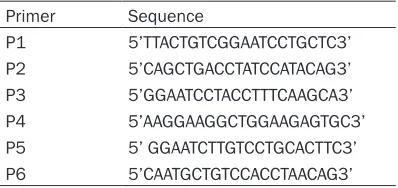
[image:3.612.90.289.84.178.2]We further analyzed the allele frequency of the CYPA gene between the esophageal carcinoma surgery patients and the healthy control group Table 1. Primer sequences
Primer Sequence
and found there was a significant difference between the two groups (P<0.05, Tables 3 and 4).
MDR gene polymorphisms between esopha-geal carcinoma surgery patients and healthy volunteers
The distribution of genotypes of the MDR gene in the esophageal carcinoma patients and the healthy controls all accorded with the Hardy-Weinberg equilibrium (AA, 71.0%; GG, 11.8%; AG, 48.1%).
We further analyzed the allele frequency of the MDR gene and found that in the esophageal
different from the frequency in the healthy con-trol group (P<0.01, Tables 5 and 6).
Correlation analysis between the P450 gene polymorphisms and anesthetic drug sensitivity in esophageal carcinoma surgery patients
A logistic correlation analysis (Figure 3) showed that the heterozygous genotype at the CYPA loci, the T allele, and the MDR genotype are risk factors for the anesthetic drug sensitivity of esophageal carcinoma surgery patients (OR=0.12 and 0.29). These results indicated a close correlation between the P450 gene poly-morphism and anesthesia drug sensitivity in esophageal carcinoma patients during surgery. We further analyzed the risk factors for anes-thesia drug sensitivity in esophageal carcinoma patients, including the heterozygous genotype at CYPA, the T allele, and the MDR genotype (CT vs CC: OR=0.42, 95% CI: 0.27-0.66; TT vs CC: OR=0.46, 95% CI: 0.26-0.81; CT + TT vs CC: OR=0.52, 95% CI: 0.39-0.70).
Discussion
Anesthesia during surgery is often accompa-nied by a sensation of pain. Due to individual differences, the same dosage of an anesthesia drug may lead to different levels of pain in indi-vidual patients [1]. In recent years, the idea of individualized drug delivery has emerged. The strategy of individualized drug delivery repre-sents an indispensable stage of anesthesia development and a future direction [6]. How- ever, due to the existence of gene polymor-phisms, the effective evaluation and prediction based on pain-related gene polymorphisms in different individuals requires further investiga-tion in clinical practice [12, 13]. For instance, the optimization of anesthesia drugs shows promise in the improvement of peri-operative efficiency and safety [14].
[image:4.612.87.523.99.152.2]The P450 CYP3A4 family consists of multiple genotypes that can fulfil the requirement of individualized drug administration, and in the Table 2. Analysis of the general conditions between esophageal carcinoma surgery patients and healthy individuals
Group N Sex (male/female) Age BMI (Kg/m2) Glucose (mm Hg)
Esophageal carcinoma surgery 2358 1297/1061 67.9 ± 2.5 24.3 ± 4.6 6.2 ± 2.5 Healthy individuals 1200 624/576 68.0 ± 0.9 24.6± 3.7 6.3 ± 2.1
[image:4.612.92.289.171.240.2]p value 0.089 0.180 0.192 0.245
Figure 1. Analysis of P450 member gene expression between esophageal carcinoma surgery patients and healthy individuals.
Figure 2. Genotyping results of P450 member genes between esophageal carcinoma surgery patients and healthy individuals. A. Gene polymorphisms of the CYPA gene. M, molecular marker; Lane 1-10, normal
people; Lane 11-20, surgery patients. B. MDR gene
[image:4.612.89.288.301.443.2]16]. It is worth noting that in clinical practice, anesthesia levels may be affected by smoking, surgery duration, and patient age [17]. The rela-tionship between CYP3A4 gene polymorphisms and anesthesia affects analgesic sensitivity and has direct effects on treatment efficiency, which can fully reflect the coming need for patient-centered medicine, and can help obtain satisfactory clinical efficiency [18]. Meanwhile, the MDR gene has significant polymorphisms, which determine that the MDR gene in individu-alized surgeries could achieve a satisfactory level of anesthesia [19]. The results of this study show that the P450 member gene poly-morphisms are closely correlated with anes-thesia drug sensitivity in esophageal carcino-ma patients. The heterozygous genotype at
tion, smoking on analgesic, were not included in the analysis. Further study may focus on exploring the molecular mechanisms between the P450 member gene polymorphisms and pain. After individualized surgery, the use of the MDR1 gene and 4P50 (CY3PA4) should be pro-moted in clinics, in order to improve analgesic effects.
Conclusion
This study suggests that the P450 member gene polymorphisms are closely related to the anesthesia drug sensitivity of esophageal carci-noma patients after surgery. The heterozygous genotype at the CYPA loci, the allele at M loci, and the MDR genotype are risk factors govern-Table 3. CYPA gene polymorphisms and genotype
frequencies between esophageal carcinoma surgery patient and healthy volunteers
Group N CC (%) TT (%) CT (%)
Esophageal carcinoma surgery 2358 75.2 0 24.8
Healthy individuals 1200 99 0 100
[image:5.612.91.335.108.162.2]p value 0.000 1 0.000
Table 4. CYPA gene polymorphisms and allele frequency analysis between esophageal carcinoma surgery pa-tients and healthy volunteers
Group N C (%) T (%)
Esophageal carcinoma surgery 2358 87.6 12.4
Healthy individuals 1200 99.5 0.5
[image:5.612.91.334.222.276.2]p value 0.000 0.000
Table 5. MDR gene polymorphisms and genotype frequencies between esophageal carcinoma surgery patients and healthy volunteers
Group N AA (%) GG (%) AG (%)
Esophageal carcinoma surgery 2358 71.0 11.8 48.1 Healthy individuals 1200 40.1 5.0 24.0
p value 0.000 0.000 0.000
Table 6. MDR gene polymorphisms and allele frequency analysis between esophageal carcinoma surgery pa-tients and healthy volunteers
Group N A (%) G (%)
Esophageal carcinoma surgery 2358 64 36
Healthy individuals 1200 83 17
p value 0.000 0.000
[image:5.612.91.334.333.389.2] [image:5.612.91.335.445.502.2]dura-ing anesthesia drug sensitivity in esophageal carcinoma patients after surgery.
Disclosure of conflict of interest
None.
Address correspondence to: Dr. Xingpeng Xiao, De- partment of Anaesthesiology, Renmin Hospital of Wuhan University, No. 99, Zhang Zhidong Road, Wuchang District, Wuhan 430060, Hubei, China.
Tel: +86-027-88041911; Fax: +86-027-88041911;
E-mail: [email protected]
References
[1] Ren ZY, Xu XQ, Bao YP, He J, Shi L, Deng JH,
Gao XJ, Tang HL, Wang YM, Lu L. The impact of genetic variation on sensitivity to opioid anal-gesics in patients with postoperative pain: a systematic review and meta-analysis. Pain Physician 2015; 18: 131-152.
[2] Xia S, Persaud S, Birnbaum A. Exploratory
study on association of single-nucleotide poly-morphisms with hydromorphone analgesia in ED. Am J Emerg Med 2015; 33: 444-447. [3] Wu SB, Cai LN, Yang XH, Fu HG, Sun K, Yuan F,
Dong TL. Impact of CYP2D6 polymorphisms on postoperative fentanyl analgesia in gastric
cancer patients. Genet Test Mol Biomarkers
2015; 19: 248-252.
[4] Duan F, Jiang J, Song C, Wang P, Ye H, Dai L,
Zhang J, Wang K. Functional long non-coding
mada M, Ikeda K, Miyamoto Y and Nitta A. The
piccolo intronic single nucleotide polymor-phism rs13438494 regulates dopamine and serotonin uptake and shows associations with dependence-like behavior in genomic associa-tion study. Curr Mol Med 2015; 15: 265-274. [7] Yi Y, Zhao M, Xu F, Liu C, Yin Y and Yu J. CGRP
4218T/C polymorphism correlated with post-operative analgesic effect of fentanyl. Int J Clin Exp Pathol 2015; 8: 5761-5767.
[8] Zhang W, Ren H, Xu C, Zhu C, Wu H, Liu D, Wang J, Liu L, Li W, Ma Q, Du L, Zheng M, Zhang C, Liu J and Chen Q. Hypoxic mitophagy regulates mitochondrial quality and platelet activation and determines severity of I/R heart injury. Elife 2016; 5.
[9] Ide S, Nishizawa D, Fukuda K, Kasai S, Hasega
-wa J, Hayashida M, Minami M and Ikeda K. As -sociation between genetic polymorphisms in
Ca (v) 2.3 (R-type) Ca2+ channels and fentanyl
sensitivity in patients undergoing painful cos-metic surgery. PLoS One 2013; 8: e70694. [10] Yuan Y, Zhang W, Yan R, Liao Y, Zhao L, Ruan C,
Du X and Dai K. Identification of a novel
14-3-3zeta binding site within the cytoplasmic do-main of platelet glycoprotein Ibalpha that plays a key role in regulating the von Willebrand fac-tor binding function of glycoprotein Ib-IX. Circ Res 2009; 105: 1177-1185.
[11] Kim KM, Kim HS, Lim SH, Cheong SH, Choi EJ, Kang H, Choi HR, Jeon JW, Yon JH, Oh M and
Shin JG. Effects of genetic polymorphisms of
[image:6.612.92.369.76.284.2]OPRM1, ABCB1, CYP3A4/5 on postoperative
Figure 3. Logistic correlation analysis result. CYPA loci heterozygous geno-type, T allele and MDR genotype are risk factors for anesthesia drug
sensi-tivity in esophageal carcinoma patients (OR=0.12, 0.29).
RNAs associated with gas-tric cancer susceptibility and evaluation of the
epidemio-logical efficacy in a central
Chinese population. Gene 2018; 646: 227-233. [5] Sugino S, Hayase T, Higuchi
M, Saito K, Moriya H, Kume
-ta Y, Kurosawa N, Namiki A, Janicki PK. Association of
mu-opioid receptor gene (OPRM1) haplotypes with postoperative nausea and
vomiting. Exp Brain Res
2014; 232: 2627-2635. [6] Uno K, Nishizawa D, Seo S,
Takayama K, Matsumura S, Sakai N, Ohi K, Nabeshima
T, Hashimoto R, Ozaki N, Hasegawa J, Sato N, Tanioka
F, Sugimura H, Fukuda KI,
Higuchi S, Ujike H, Inada T,
Iwata N, Sora I, Iyo M, Kondo
N, Won MJ, Naruse N,
-fentanyl consumption in Korean gynecologic
patients. Int J Clin Pharmacol Ther 2013; 51: 383-392.
[12] Chi LQ, Lu X, Wang L, Liu SP, Ding N, Zhang HY and E W. Detection of cytochrome P450 3A4 gene polymorphism guides for labor analgesia
with sufentanil medication. Beijing Da Xue Xue Bao Yi Xue Ban 2015; 47: 653-656.
[13] Singh PK, Chandra G, Bogra J, Gupta R, Kumar
V, Hussain SR, Jain A, Mahdi AA and Ahmad
MK. Association of genetic polymorphism in
the interleukin-8 gene with risk of oral cancer
and its correlation with pain. Biochem Genet
2016; 54: 95-106.
[14] Tong QY, Ma W and Shen WD. Discussion about acupuncture anesthesia applied to na-sal operation. Zhongguo Zhen Jiu 2012; 32: 448-450.
[15] Ma J, Wang S, Zhang M, Zhang Q, Zhou Y, Lin C, Lin G and Wang X. Simultaneous determina-tion of bupropion, metroprolol, midazolam, phenacetin, omeprazole and tolbutamide in rat plasma by UPLC-MS/MS and its application to cytochrome P450 activity study in rats.
Biomed Chromatogr 2015; 29: 1203-1212.
[16] Liao Q, Chen DJ, Zhang F, Li L, Hu R, Tang YZ, Ou-Yang W and Huang D. Effect of CYP3A4*
18B polymorphisms and interactions with
OP-RM1 A118G on postoperative fentanyl require-ments in patients undergoing radical gastrec-tomy. Mol Med Rep 2013; 7: 901-908.
[17] Al-Shayyab MH and Baqain ZH. Factors predic -tive of the onset and duration of action of local anesthesia in mandibular third-molar surgery: a prospective study. Eur J Oral Sci 2018; 126: 110-117.
[18] Zhang H, Chen M, Wang X and Yu S. Patients with CYP3A4*1G genetic polymorphism
con-sumed significantly lower amount of sufentanil
in general anesthesia during lung resection.
Medicine (Baltimore) 2017; 96: e6013.
[19] Bukaveckas BL, Valdes R Jr and Linder MW.
Pharmacogenetics as related to the practice of cardiothoracic and vascular anesthesia. J Car-diothorac Vasc Anesth 2004; 18: 353-365. [20] Lopez-Garcia MA, Feria-Romero IA, Serrano H,
Rayo-Mares D, Fagiolino P, Vazquez M, Esca-milla-Nunez C, Grijalva I, Escalante-Santiago D
and Orozco-Suarez S. Influence of genetic
va-riants of CYP2D6, CYP2C9, CYP2C19 and CY-P3A4 on antiepileptic drug metabolism in pe- diatric patients with refractory epilepsy. Phar-macol Rep 2017; 69: 504-511.
[21] Avila-Vergara MA, Peraza-Garay FJ, Meraz-Cruz
N, Hernandez-Guerrero C, Palacios-Gonzalez B