25
CELLULAR DAMAGE AND STORAGE STABILITY OF
LACTOBACILLUS
RHAMNOSUS GG
DRIED IN DISACCHARIDE MATRICES UNDER
VACUUM
Sunny-Roberts, Elizabeth Oluwaseun*
aband Knorr, Dietrich
aa
Department of Food Biotechnology and Food Process Engineering,
Berlin University of Technology, Koenigin–Luise-Strasse 22, Berlin D-14195, Germany.
b
Department of Food Science and Engineering,
Ladoke Akintola University of Technology, P.M.B. 4000, Ogbomoso, Oyo State, Nigeria.
*Corresponding author. E-mail address
: [email protected] (E.O. Sunny-Roberts)ABSTRACT
The survival of cell concentrates of Lactobacillus rhamnosus GG (LGG) in selected dissacharides after drying under vacuum was evaluated. Drying is a useful technique for preserving foods, agricultural products and pharmaceuticals. However, biological materials can be irreversibly damaged during this treatment resulting in substantial loss of viability and activity. In this paper, disaccharide systems (trehalose, sucrose and lactose) were used as protectants for L. rhamnosus GG. Among the solutes examined, trehalose improved the recovery of viable cells after drying as well as during storage at 4°C and 25°C. Stored vacuum-dried trehalose systems were found as viscous syrups which indicated that they were not glassy. Damage of cell membrane and reduction in colony sizes occurred as a result of dehydration inactivation. Comparison of the conventional techniques with flow cytometric viability assessment after drying revealed the occurrence of certain cell population which were stressed and lost their ability to grow on agar. The protecting ability of trehalose on bacterial cells was only against lysozyme and pepsin actions. These results could have some relevance, especially in underdeveloped and /or developing countries, for the production of functional confections.
Keywords: Lactobacillus rhamnosus GG, trehalose, storage, viability, flow cytometry.
Introduction
The industrial preservation of lactobacilli involves processes such as freezing, freeze-drying and air-drying. These processes can result in structural and physiological injury to the bacterial cells, resulting in substantial loss of viability (Prasad et al., 2003). Viability and activity loss occurring on bacteria during drying are related to damages to the cell wall, cytoplasmic membrane and the DNA (Teixeira et al., 1995a, b).
Viability and thermal stability of sensitive strains to dehydration could be improved by the addition of certain amounts of disaccharides to the suspending media (Cerruti et al., 2000) in which the cells are to be dried. The non-reducing disaccharides, sucrose and trehalose have mostly been used as protectants of dry labile biomaterials such as protein, enzymes, liposomes etc. They could be used to preserve intact cells during drying if these sugars are present on both sides of the membrane and in contact with internal, cytosolic proteins. Trehalose is one of the most stable sugars, since it has extremely low disaccharide bond energy (less than 4kJ/mol). It has been described to act as the best stabilizer of structure and function of several macromolecules.
This extraordinary effect was attributed to several of its properties such as making hydrogen bonds with membranes or the ability to modify the solvation layer of proteins, however its ability to substitute more water molecules in the solution than other related sugars such as sucrose, maltose (Sola-Penna and Meyer-Fernandes, 1998) have been shown. On the other hand, sucrose has a fructofuranoside disaccharide bond greater than 115kJ/mol and the furanosic ring confers sucrose a relatively unstable disaccharide bond; therefore, the disaccharide splits readily (under adequate conditions) to form glucose and fructose (Schebor et al., 1999).
26 on a direct physical interaction between the hydroxyl groups of the sugars and the polar residues of the phospholipids headgroups in dehydrated state as explained also by the water replacement theory (Crowe and Crowe, 2000; Crowe et al., 1993a,b).
The stabilizing properties of sugars can also be explained by the formation of glassy state by the sugar upon dehydration (Sun and Leopold, 1997). The most important parameter describing the glassy state of amorphous materials is the glass transition temperature (Tg), below which the materials exhibit extremely high viscosities, which gives them a “solid-like” property. Above the glass transition temperature, viscosity drops sharply in the rubbery state and the mobility of the system increases accordingly (Ananta, 2005).
The roles played by probiotic microorganisms in promotion and maintenance of health stimulated significant interests in their incorporation into functional foods and pharmaceutical products and it is recommended that probiotic products contain at least 107 live microorganisms per g or ml (Ishibashi and Shimamura, 1993).
For probiotic bacteria in foods to be beneficial in the host, they should be able to survive gastric transit, reach the small intestine in sufficient numbers and persist in this environment to be effective (Charteris et al., 1998).The harsh environment of the gastrointestinal tract is mainly attributed to the low pH conditions of the stomach, in addition to the presence of bile in the stomach (Ananta, 2005).
The application of the commercial available LIVE/DEAD®BacLightTM bacterial viability kit differentiates live and dead bacteria based on plasma membrane permeability. The first component is SYTO9®, membrane permeant, which acts as total cell stain while the second component is PI, membrane impermeant, which penetrates into cells upon cell death and membrane damage thus nullifying the green SYTO9® fluorescence. When used in combination, intact cells are labeled green while cells with damaged membranes are labeled red (Ananta, 2005)
Due to the economic situations in developing and/or underdeveloped countries and the economic importance of probiotic bacteria, this paper investigates the preservation of bacterial cells in commonly available disaccharides using affordable drying facility hoping that the results will be of relevance in the production of confections from under-utilized crops.
The viability of Lactobacillus rhamnosus GG cells, a model system, in the presence of sucrose, trehalose and lactose after drying under vacuum at 25oC was evaluated. Storage experiments were conducted at 4°C, 25°C and 37°C over a period of
6-8 weeks. Flow cytometric measurements were conducted to relate the data obtained with that of plate enumeration method.
Materials and Methods. Culture and growth conditions.
The bacterial strain, Lactobacillus rhamnosus GG (LGG) ,was obtained from Valio R and D, Helsinki, FL.The culture which was sent in freeze-dried form in glass ampoule was later stored as glass beads cultures (Roti(R)_Store, Carl-Roth, Karlsruhe, D) in a –80oC freezer (U101, New Brunswick Scientific, Nürtingen, D) for long-term maintenance. One bead from deep-frozen culture was transferred into MRS broth (Oxoid, Basingstoke, UK) and incubated over-night. This broth was later used to inoculate a final broth (50ml) at OD600 0.1. Growth was carried out at 37oC over a period of 24h and monitored spectrophotometrically at 600nm (Graphicord uV-240, Schimadzu, JPN) until the exponential phase ,having 3.0x10⁷ cfu mL-1 cell concentration, and stationary phase of growth were reached. Stationary growth phase cultures were harvested, washed twice in Ringer‟s solution (No. 15525, Merck, Darmstadt, D) and finally resuspended in Ringer‟s solution to an OD600 value of 10. This corresponded to a cell concentration of 3.4 x 10⁹ cfu mL-1.
Drying.
Cells were grown in MRS broth at 37oC and harvested at both exponential and stationary phases of growth. Harvested cells were washed in Ringer‟s solution (No. 15525, Merck, Darmstadt, Germany). Cells from the exponential phase were mixed with equal volume 20% (w/w) trehalose (Carl Roth GmbH Karlsruhe), 20%(w/w) sucrose (Merck KgaA, Darmstadt) and 20%(w/w) lactose (Merck KgaA, Darmstadt) in order to obtain the sugar that would give the best protection to the cells after drying . Cells from the stationary phase were concentrated to OD10 before mixing with equal volumes of 20% w/w, 25% w/w and 30% (w/w) trehalose. 50l aliquots of each cell- protectant mixture were distributed into 1.5mL Eppendorf tubes and dried in a vacuum oven(Heraeus)above saturated LiClsolution (aw=0.11) at 25oC for 24h. The final pressure achieved in the vacuum oven was 200Torr.
Enumeration of probiotics after drying.
27 (Oxoid, Basingstoke, UK). Plates were placed in an anaerobic jar (Anaerocult®, A, Merck, Darmstadt Germany) and incubated at 37oC for 48h. Survival rates were calculated as % survival =N/Nox100, where No represented the number of bacteria before drying and N was the number of bacteria after drying.
Storage tests.
Dried samples were stored at 4oC, 25oC and 37oC in closed Eppendorf tubes. Storage experiments were performed in three replicate trials for 6-8 weeks. Storage inactivation data were expressed as logarithmic value of relative survival fraction (logN/No). N refers to the bacterial count at a particular storage period while No refers to the bacterial count at the beginning of storage.
Salt tolerance test.
In order to study the potential cellular damage arising from the drying method, the sensitivity of cultures to NaCl before and after processing was determined (Gardiner et al., 2000). Fresh cultures and dried ones were plated on MRS agar plates supplemented with NaCl (5%, Merck KGaA, Darmstadt, Germany)). The plates were examined after 5-6 days incubation in anaerobic jar (Anaerocult® A, Merck, Darmstadt; Germany) and viable numbers were compared with numbers obtained on MRS plates without NaCl.
Staining procedure with LIVE/DEAD® BacLightTM bacterial viability kit
The LIVE/DEAD® BacLight bacterial viability kit (Molecular Probes Europe BV, Leiden, NL) consisting of two separate stock solutions, SYTO9 and PI, were prepared according to manufacturer‟s instructions by dissolving both in dimethyl sulfoxide at 3.34mM and 20mM respectively. 20 to 60l of the dissolved samples were then added to 1mL sterilized distilled water. The mixtures were incubated on ice for 10min with 1. 5l of SYTO9® and 20l of PI in the dark before fluocytometric measurements.
Flow cytometric measurement and data analysis
Analysis was performed on a Coulter®EPICS® XL-MCL flow cytometer (BeckmanCoulter Inc., Miami-FL, USA) equipped with a 488 nm laser. Cell was delivered at the low flow rate, corresponding to 400 to 600 events per s. Forward scatter (FS), sideward scatter (SS), green (FL1) and red fluorescence (FL3) of each single cell were measured, amplified, and converted into digital signals for further analysis. SYTO9 emits green fluorescence at 530 nm following excitation with laser light at 488 nm, whereas red fluorescence at 635 nm is emitted by PI-stained cells.
A set of band pass filters of 525 20 nm and 620
15 nm was used to collect green fluorescence (FL1) and red fluorescence (FL3), respectively. All registered signals were logarithmically amplified. A gate created in the density-plot of FS vs SS was preset to discriminate bacteria from artefacts. Data were analysed with the software package Expo32 ADC (BeckmanCoulter Inc., Miami-FL, USA). Density plot analysis of FL1 vs FL3 was applied to resolve the fluorescence properties of the population measured by flow cytometer (Fig. 1&2). With this graph the population was able to be graphically differentiated and gated according to their fluorescence behaviours.
Two regions were created in this plot for gating cells with intact membrane and the ones with ruptured membrane.
The designation of gates according to the properties of cellular membranes was performed by means of measuring fluorescence density plot signals of untreated cells, which were located in gate LIVE. On the other hand, cells heat treated at 95°C for 15 min were entirely encountered in the area
surrounded by gate DEAD (Ananta, 2005)
Screening of acid, bile, lysozyme and pepsin tolerances.
Equal volume of dried bacterial samples was treated separately with equal volumes of PBS Buffer adjusted to pH 2.0 with HCl and 1.5% Bile (Sigma- Aldrich, Munich, Germany) (Saarela et al., 2004). Treatment was also conducted in 5mg mL-1 Lysozyme (Sigma Aldrich, Steinheim, Germany) and 3mg mL-1 Pepsin (Sigma- Aldrich, Steinheim, Germany).Samples were incubated at 37oC in water-bath for 3h and only 2h for acid treatment. Appropriate dilutions of samples were drop plated on MRS agar and incubation was conducted for 48h at 37oC.
Statistical Analyses
Statistical analyses were performed by the ANOVA methodology. Differences were considered significant at p< 0.05. All statistical analyses were performed with Origin7 software package (OriginLab, Northhampton, MA, USA).
Results and Discussion
28 trehalose, with drying in fungal spores, nematodes and cysts of the brine shrimp Artemia ; or of sucrose in pollens and seeds of higher plants (Hoekstra et al., 1992; Chapman, 1994 ) improves the tolerance to drying.
Trehalose and sucrose samples were found as viscous syrups irrespective of the period of drying. Vacuum drying of enzyme solution in the presence of trehalose and sucrose were not found in a glassy state but rather yielded a paste or very viscous fluid (Rossi et al., 1997), which did not become solid even after extensive desiccation (Uritani et al., 1995). Enzyme activity was retained both after drying and during storage irrespective of the physical state of the dried samples, thus it was proposed that the stabilization of the biological structure was through a preferential interaction with trehalose rather than to a modification of the properties of water (Rossi et al., 1997). The absence of solid-like properties was an indication that the dried systems, in this study, were not in the glassy state. Therefore the protective ability of trehalose could be explained as a result of the hydroxyl groups of the sugar making a direct interaction with the polar residues of the phospholipids head groups as described by the water replacement hypothesis (Crowe et al., 1993a,b, Crowe and Crowe, 2000). The replacement leads to maintenance of phospholipids bilayers at their hydrated spacing, which in turn preserves the structure of the membrane, thereby preventing damage during freezing or drying (Crowe et al., 1987). The property of trehalose as an effective glass former has been used to partly explain its superior protective ability (Miller et al., 1997; Miller at al., 1998). There is literature evidence that sucrose may be hydrolysed during freezing, dehydration and storage (Karel and Labuza, 1968; Flink, 1983). There could be a possibility of sucrose presenting same effectiveness as trehalose if the concentration of sucrose was corrected by the percentage of the occupied volume; but the improvement of tolerance to desiccation by accumulation of sucrose has mostly been reported in plants (Hoekstra, 1992).
Lactose could not protect the bacterial cells against dehydration though the samples were in glassy form. Lactose serves as the major constituent (ca. 52%) of skim milk, a commonly used drying medium but researches have proved that the protecting ability of skim milk was due to the milk components other than lactose (Ananta, 2005; Daemen and van der Stege, 1982; Abadias et al., 2001).
Cells in the stationary phase of growth are of higher densities compared to cells in the exponential phase thus a higher concentration of trehalose was needed to improve the viability status of cells in the
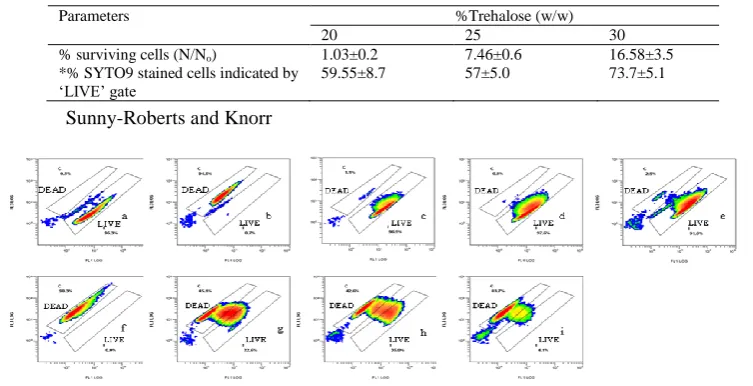
stationary phase (Table 1). The exhibition of tolerance to drying showed that cells of L. rhamnosus GG were able to take up trehalose in order to protect the functional proteins embedded in the bacterial membranes besides the membranes. Bacterial cells were sensitive to NaCl following drying. Prior to drying, there were no differences between the colony counts of this strain on MRS containing 5% NaCl and MRS alone but after drying, cells numbers decreased in the presence of NaCl. The strain exhibited 52% sensitivity to NaCl after drying. This indicated that cell membrane damage occurred as a result of long period of drying process. At low drying temperatures, thermal inactivation is negligible but dehydration inactivation may impose serious problems and cell membrane damage is associated with this dehydration inactivation (Linders et al., 1997). Colony sizes were also reduced (data not shown). The flow cytometric measurements of osmotically treated cells showed the presence of majority of non-dried cells in „LIVE‟ gates (Fig 1 & 2). After drying, some of these cells moved towards the „DEAD‟ gates. The protection provided by compatible solute, such as trehalose, to cells during osmotic stress can be reported to differ from the one given when cells are subjected to drying processes which bring much reduction in available cell water.
29
Fig 1: Flow cytometry density plots of FL1 (fluorescence collected at 525nm) vs FL3 (fluoresecence collected at
620nm) of Lactobacillus rhamnosus GG to assess the impact of drying on the integrity of cellular membranes of
stationary phase cells. Two gates were fixed for discrimination of the two extreme states of membrane conditions i.e. intact and completely ruptured represented by ‘LIVE’ and ‘DEAD’ respectively. Upper figures represent non-dried
(a) control cells; (b) cells treated at 95oC for 15 min (negative control); fresh cells suspended in (c) 20% w/w (d) 25%
w/w, and (e) 30% w/w trehalose : lower figures represent (f)control cells dried without sugars; cells dried under vacuum after treatments with (g) 20%, (h) 25% and (i) 30% w/w trehalose respectively
Table 1: The impact of trehalose concentration during drying of L. rhamnosus GG under vacuum on the % surviving cells (N/No) on MRS agar and % viable cells encountered in ‘LIVE’ gates. An initial cell count of bacterial solution was ~109 cfu mL-1. Data are means of 3 drying experiments.
*The FL1-FL3 density plots are as shown in Fig 1.
Parameters %Trehalose (w/w)
20 25 30
% surviving cells (N/No) 1.03±0.2 7.46±0.6 16.58±3.5
*% SYTO9 stained cells indicated by „LIVE‟ gate
59.55±8.7 57±5.0 73.7±5.1
Sunny-Roberts and Knorr
Fig 2: Flow cytometry density plots of FL1 (fluorescence collected at 525nm) vs FL3 (fluoresecence collected at
620nm) of Lactobacillus rhamnosus GG to assess the impact of drying on the integrity of cellular membranes of
exponential phase cells.
Two gates were fixed for discrimination of the two extreme states of membrane conditions i.e. intact and completely ruptured represented by’ LIVE’ and ‘DEAD’ respectively.
Upper figures represent non-dried (a) control cells; (b) cells treated at 95oC for 15 min (negative control); cells
treated with 20% w/w (c) trehalose; (d) sucrose, and (e) lactose : lower figures represent (f)control cells dried without sugars; cells dried under vacuum after treatments in 20% w/w (g) trehalose; (h) sucrose and (i) lactose.
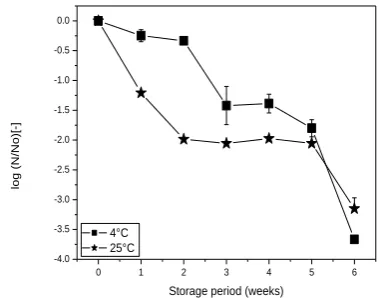
The weight of vacuum dried samples was estimated to be ca.5mg which might contain some residual water. The moisture content could not be determined accurately by the conventional oven gravimetric method due to the obtained small mass. The storage stability of vacuum dried L. rhamnosus GG in 30% (w/w) trehalose during prolonged storage at 4°C, 25°C and 37oC was investigated.
30 required (Boylston et al, 2004) although in some cases a minimal level of 105 cfu/g till the expiry date was considered as sufficient (Shah and Lankaputhra, 1997; Schillinger, 1999).
Lactobacillus acidophilus cells vacuum dried in 20% trehalose exhibited 8.7% recovery rate after 16 days of storage at room temperature (Conrad et al., 2000). At 37oC, LGG exhibited increased fluidity and within a week, viability reduced drastically by more than 4 log cycles (data not shown). Temperature is a critical factor for microbial survivability during storage and higher survival rates have been obtained at lower storage temperatures (Gardiner et al, 2000). Storage at refrigeration temperature, though impractical from a commercial point of view, is optimal for culture viability in vacuum-dried samples. The viscous nature of the dried samples portrays the limitation of the use of these probiotics samples. However, their use could be of significance in the production of functional confections since high viability (~108 cfu mL-1 ) syrup containing probiotic lactobacilli was obtained.
0 1 2 3 4 5 6
-4.0 -3.5 -3.0 -2.5 -2.0 -1.5 -1.0 -0.5 0.0
lo
g
(N
/N
o
)[
-]
Storage period (weeks) 4°C
25°C
Fig 3: Viability loss of dried Lactobacillus rhamnosus GG expressed as the logarithmic values of relative survival fraction (log N/No) as described in Materials and Methods during storage at 4°C and 25°C.
Bacterial samples treated with lysozyme showed log reductions of ~ -0.4 after drying. This sensitivity, though minimal, could be a manifestation of damage to the cell wall component. Log reduction of ~ -0.8 was observed with pepsin treatment. Trehalose could not protect samples against the actions of acid and bile; resistance to bile and acid being recognized as an important feature of LAB used as probiotics. Reducing the period of drying under vacumm may help to overcome this challenge since irrespective of the drying period, only syrups were obtained. An
earlier study revealed the ability of the strain of study to resist bile action after its subjection to osmotic stress by trehalose treatment (unpublished). Therefore in this study, drying must have brought about much reduction in available cell water thus leading to additional stress. Microorganisms that have been damaged, but not killed, by exposure to stress often become more sensitive to other types of agents (Teixeria et al., 1995c).
Conclusions
The results of this study suggested that since solid-like properties were absent, the protective ability of trehalose was as a result its hydroxyl groups making a direct interaction with the polar residues of the phospholipids head groups as described by the water replacement hypothesis. The growth phase of an organism determines the amount of sugars needed for drying processes in order to protect the organisms against drying damages. Drying in the presence of sugars can result in the occurrence of stressed and non-culturable cells but viable as indicated by flow cytometric methods. The protection conferred on membranes by sugars during osmotic stress and drying processes were seen to be different from one another. In both under-developed and developing countries, the use of available non-sophisticated equipment and processes can be employed in the production of syrup- containing probiotic bacteria which can be tailored for use in functional food applications such as chocolates, candies, etc.
References
Abadias, M., A. Benabarre , N. Teixido, J. Usall, and I. Vinas , 2001. Effect of freeze- drying and protectants on viability of the biocontrol yeast Candida sake. Int. J. Food Microbiol. 65(3):173-182
Ananta, E. ,2005. Identification of environmental factors involved in viability and stability of probiotic bacteria Lactobacillus rhamnosus GG (ATCC 53103) during spray drying and application of high pressure pre-treatment for the improvement of stress tolerance. PhD Thesis University of Technology Berlin. 123-129pp
Boylston, T.D., C.G Vinderola, H.B. Ghodussi and J.A. Reinheimer, 2004. Incorporation of bifidobacteria into cheeses: challenges and rewards. Int. Dairy J. 14(5): 375-387 Cerrutti, P., M.S. de Huergo, M. Galvagno, C.
31 Appl. Microbiol. Biotechnol. 54(4):575-580
Chapman, D., 1994. The role of water in biomembrane structures. J. Food Eng. 22(3): 367-380
Charteris, W.P., P.M. Kelly, L. Morelli and J.K. Collins, 1998. Development and application of an in vitro methodology to determine to determine the transit tolerance of potentially probiotic
Lactobacillus and Bifidobacterium species in the upper human gastrointestinal tract. J. Appl. Microbiol. 84(5):759-768 Conrad, P.B., D.P Miller, P.R. Cielenski and J.J. de
Pablo, 2000. Stabilization and preservation of Lactobacillus acidophilus in saccharide matrices. Cryobiology 41:17-24
Crowe, J.H. and L.M. Crowe, 2000. Preservation of mammalians cells-learning nature‟s tricks. Nat. America 18:145-146
Crowe, J.H., L.M. Crowe and J.F. Carpenter, 1993a Preserving dry biomaterials. The water replacement hypothesis. Part 2. BioPharm 6:40-43
Crowe, J.H., L.M. Crowe and J.F. Carpenter, 1993b. Preserving dry biomaterials: The water replacement hypothesis. Part 1. Biopharm 6:28-33
Daemen, A.L.H. and H.J. van der Stege, 1982. The destruction of enzymes and bacteria during spray drying of milk and whey 2. The effect of drying conditions. Neth. Milk Dairy J. 36:211-229
Eleutherio, E:C:A., P.S. de Araujo and A.D. Panek,1993. The role of trehalose carrier in dehydration resistance of saccharomyces cerevisiae. Biochim. Biophys Acta 1156: 263-266
Flink, M.J.,1983. Non enzymatic browning of freeze-dried sucrose. J. Food Sci. 48 (2):539-542
Gardiner, G.E., E. O‟Sullivan, J. Kelly, M.A.E. Auty, G.F. Fitzgerald, J.K.Collins, R.P. Ross and C. Stanton,2000. Comparative survival rates of human-derived probiotic
Lactobacillus paracasei and L. salivarius
strains during heat treatment and spray drying. Appl. Environ. Microbiol. 66 (6):2605-2612
Hoekstra, F.A., J.H. Crowe, L.M. Crowe, T. van Roekel and E. Vermeer, 1992. Do phospholipids and sucrose determine membrane phase transitions in dehydrating pollen species? Plant Cell Environ. 15(5): 601-606
Ishibashi, N. and S. Shimamura, 1993. Bifidobacteria: research and development in Japan. Food Technol. 46:126-135
Karel, M. and T. Labuza, 1968. Non enzymatic browning in model systems containing sucrose. J. Agric. Food Chem. 16:717 Leslie, S., E. Isreali, B. Lightart, J. Crowe and L.
Crowe, 1995. Trehalose and sucrose protect both membranes and proteins in intact bacteria during drying. Appl. Environ. Microbiol. 61(10):3592-3597 Linders, L.J.M., G. Meerdink and K. Van‟t Riet,
1997. Carbohydrates and the dehydration inactivation of Lactobacillus plantarum- The importance of moisture distribution and water activity. J. Food Eng. 31(2): 237-250
Miller, D.P., R.E. Anderson and J.J. de Pablo, 1998. The stabilization of lactate dehydrogenase following freeze-thawing and vacuum-drying of trehalose and borate. Pharm. Res. 15(8): 1215-1221 Miller, D.P., J.J. de Pablo and H.R. Corti, 1997.
Thermo-physical properties of trehalose and its concentrated aqueous solutions. Pharm. Res. 14(5):578-590
Ouwehand, A.C. , S. Tölkkö, J. Kulmala, S. Salminen and E. Salminen. 2000, Adhesion of inactivated probiotic strains to intestinal mucus. Lett. Microbiol. 31: 82-86
Pessi, T., Y. Sütas, M. Saxelin, H. Kallioinen, and E. Isolauri, 1999. Antiproliferative effects of homogenates derived from five strains of candidate probiotic bacteria. Appl. Environ. Microbiol. 65: 4725-4728 Prasad, J., P McJarrow and P. Gopal, 2003. Heat
and osmotic stress responses of probiotic
Lactobacillus rhamnosus HN001 (DR 20)
in relation to viability after drying. Appl. Environ. Microbiol. 69(2):917-925
Rossi, S., M.P. Buera, S. Moreno and J. Chirife, 1997. Stabilization of the restriction enzyme EcoRI dried with trehalose and other selected glass forming solutes. Biotechnol. Prog. 13(5):609-616
Saarela, M., M. Rantala, K. Hallama, L. Nohynek, I. Virkajärvi and J. Mätto, 2004. Stationary-phase acid and heat treatments for improvement of the viability of probiotic lactobacilli and bifidobacteria. J. Appl. Microbiol. 96(6):1205-1214 Schebor, C., L. Burin, M. del Pilar Beura and J.
Chirife, 1999. Stability to hydrolysis and browning of trehalose and raffinose in low moisture systems in relation to their use as protectants of dry biomaterials. Lebens. Wiss. U.-Technol. 32:481-485
32 refrigerated storage. Int. J. Food Microbiol. 47(1-2): 79-87
Shah, N.P. and W.E.V. Lankaputhra, 1997. Improving viability of Lactobacillus acidophilus and Bifidobacterium spp. in yoghurt. Int. Dairy J. 7(5): 349-356 Sola-Penna, M. and J.R. Meyer-Fernandes, 1998.
Stabilization against thermal inactivation promoted by sugars on enzyme structure and function: Why is trehalose more effective than other sugars? Arch. Biochem. Biophys. 360(1):10-14
Sun, W.Q. and C. Leopold, 1997. Cytoplasmic vitrification and survival of anhydrobiotic organisms. Comp. Biochem. Physiol. 117A:327-333
Teixeira, P.M., H.P. Castro and R. Kirby, 1995a Death kinetics of Lactobacillus bulgaricus
in a spray-drying process. J. Food Prot.
58(8):934-936
Teixeira, P.M., H.P. Castro and R. Kirby, 1995b Spray dying as a method for preparing concentrated cultures of Lactobacillus bulgaricus. J. Appl. Bacteriol. 78: 456-462 Teixeria, P.C, M.H. Castro, F.X. Malcata and R.M. Kirby, 1995c. Survival of Lactobacillus delbrueckii ssp. bulgaricus following spray drying. J. Dairy Sci. 78(5):1025-1031
Uritani, M., M. Takani, and K. Yishinaga, 1995. Protective effect of disaccharides on restriction endonucleases during drying under vacuum. J. Biochem. 117:774-779
Acknowledgments