2018
Constructing the perfect post: The effects of
incivility and news selection on online engagement
Carlos Eduardo Back ViannaIowa State University
Follow this and additional works at:https://lib.dr.iastate.edu/etd
Part of theJournalism Studies Commons, and theMass Communication Commons
This Thesis is brought to you for free and open access by the Iowa State University Capstones, Theses and Dissertations at Iowa State University Digital Repository. It has been accepted for inclusion in Graduate Theses and Dissertations by an authorized administrator of Iowa State University Digital Repository. For more information, please [email protected].
Recommended Citation
Back Vianna, Carlos Eduardo, "Constructing the perfect post: The effects of incivility and news selection on online engagement" (2018).Graduate Theses and Dissertations. 16968.
on online engagement by
Carlos Eduardo Back Vianna
A thesis submitted to the graduate faculty
in partial fulfillment of the requirements for the degree of MASTER OF SCIENCE
Major: Journalism and Mass Communication
Program of Study Committee: Daniela V. Dimitrova, Major Professor
Jan Lauren Boyles Amy Erica Smith
The student author, whose presentation of the scholarship herein was approved by the program of study committee, is solely responsible for the content of this thesis. The
Graduate College will ensure this thesis is globally accessible and will not permit alterations after a degree is conferred.
Iowa State University Ames, Iowa
2019
DEDICATION
I dedicate this thesis to my parents, who are the driving force in my life, and to my wife, Nicolle, who is the light of my world.
TABLE OF CONTENTS Page LIST OF FIGURES ... iv LIST OF TABLES ... v ACKNOWLEDGMENTS ... vi ABSTRACT ... vii CHAPTER 1. INTRODUCTION ... 8
CHAPTER 2. LITERATURE REVIEW ... 11
Incivility and Online Engagement ... 11
News Values ... 17 CHAPTER 3. METHODS ... 20 Variables ... 21 Sampling ... 22 Coding Process ... 23 CHAPTER 4. RESULTS ... 25 CHAPTER 5. DISCUSSION ... 34
Incivility and Online Engagement ... 38
News Values and Online Engagement ... 41
Theoretical Implications ... 43
Practical Implications ... 44
Limitations and Future Research ... 45
Conclusion ... 47
REFERENCES ... 49
APPENDIX A. CODEBOOK ... 56
APPENDIX B. FREQUENCY DISTRIBUTION OF INCIVILITY ACROSS POLITICAL CATEGORIES ... 65
APPENDIX C. FREQUENCY DISTRIBUTION OF INCIVILITY ACROSS TYPES OF STATUS ... 66
LIST OF FIGURES
Page Figure 1 Sampling distribution across three quartiles of total engagement ... 22 Figure 2 Frequency distribution of incivility across political categories ... 65 Figure 3 Frequency distribution of incivility across types of status ... 66
LIST OF TABLES
Page
Table 1 Means and standard deviations for online engagement, incivility and news
values ... 26
Table 2 Negative binomial regression and Poisson regression models predicting
total online engagement of Facebook posts by incivility and news
values ... 28
Table 3 Negative binomial regression on the number of comments, shares, and
reactions of Facebook posts by level of incivility and news values ... 30
Table 4 Negative binomial regression on total engagement, number of comments,
shares, and reactions of Facebook posts by dimensions of incivility ... 32
Table 5 Negative binomial regression on total engagement, number of comments,
ACKNOWLEDGMENTS
I would like to thank my major professor and mentor, Dr. Daniela V. Dimitrova, for the friendship and guidance during the program, and my committee members, Dr. Jan Lauren Boyles, and Dr. Amy Erica Smith, for the help, patience, and support throughout this research.
In addition, I would also like to thank my family, friends, colleagues, the Greenlee faculty and staff for making my time at Iowa State University a wonderful experience. I want to also offer my appreciation to Dr. Heike Hofmann, who was a statistical savior under challenging moments. Without you all, this thesis would not have been possible.
ABSTRACT
This study investigates the relationship between incivility and news values in Facebook posts and online engagement. The study combines secondary data from Facebook API with a content analysis of 408 posts from partisan Facebook pages to test whether incivility and news values affect online engagement. Using a negative binomial model, the results show that the use of incivility strongly increases engagement from Facebook users in the sample. Results also show that traditional news values are not significant predictors of online engagement on partisan Facebook pages, suggesting that online partisan media do not follow the same model used by traditional media for content publishing. Implications for political communication scholars and practitioners are
discussed in the context of increased political polarization and reliance on social media as an information source for the American public.
CHAPTER 1. INTRODUCTION
The outcomes of the 2016 presidential election raised questions about the role of social media networks in spreading fake or misleading stories, the impact of such stories in the election results and how uncivil language in online messages was used by news media to engage the audience. A recent report by Silverman, Lytvynenko, Thuy Vo and Singer-Vine (2017) from Buzzfeed News presented a comprehensive study about how online partisan media (specifically websites and Facebook pages) have used the Internet to spread incivility and collect profit and increase user engagement and political polarization. According to the report, companies and political groups seeking online engagement and, thus, profit have transformed partisan pages on Facebook into an aggressive and divisive source of political content. Also, the results show that liberal pages and top liberal content generate more overall engagement than their conservative counterparts, but there are more conservative Facebook pages, and they reach more fans than liberal pages, i.e., the conservative universe online is larger than the liberal universe. Interestingly, none of the top 50 posts in overall engagement contained pro-Trump messages, and several of them contained non-political content (Silverman et al., 2017). More than exploring how the audience interacts with partisan media, the Buzzfeed report showed that different political leanness affects
engagement, i.e., conservatives and liberals have particular reactions to posts according to the content and types of posts. However, neither the report or the dataset determine what kind of language makes a post more engaging or what drives the news selection of themes that would attract more audience.
Recent studies have approached these topics, focusing on the characteristics and content of political messages on social media (Flaxman, Goel, & Rao, 2013; Gil de Zúñiga,
Valenzuela, & Weeks, 2016; Messing & Westwood, 2014; Pang et al., 2016; Scacco & Muddiman, 2016; Vargo, Guo, & Amazeen, 2017) and emphasizing the role of incivility over the last few election cycles (Hill, Capella, & Cho, 2015; Hopp & Vargo, 2017; Vargo & Hopp, 2017). Most of these studies, however, have examined the role of incivility on
comment sections or discussion boards (Diakopoulos & Naaman, 2011; Prochazka, Weber, & Schweiger, 2016; Stroud, Muddiman, & Scacco, 2017) rather than looking at its potential use by online partisan media to engage users. Considering the lack of research in this area, this thesis intends to contribute to a better understanding of how the use of incivility may affect engagement on social media.
Scholars have already investigated the similarities and differences between traditional and social media (Gil De Zúñiga, Puig-I-Abril, & Rojas, 2009; Halpern & Gibbs, 2013). Previous studies have found that, despite their global reach, social media networks facilitate personalization of messages, lack a rigid content structure and encourage virality (Vosoughi, Roy, & Aral, 2018). Such features lead to questions about what type of online content resonates most with individual users and whether specific topics are more effective in engaging audiences online.
Another question that has new relevance in the online media world is how news values, or factors for news selection used in traditional news media, apply to social media content (Caple & Bednarek, 2016; Harcup & O’Neill, 2009, 2017; Welbers, van Atteveldt, Kleinnijenhuis, Ruigrok, & Schaper, 2016). It remains unclear whether these news values can apply directly to online content producers, more specifically to online partisan media, or whether they need to be updated or modified. Therefore, the second goal of this research is to
systematically investigate how traditional news selection criteria may contribute to engagement on social networks.
To examine the effects of message incivility and news values on online user
engagement, the study combines the Buzzfeed dataset, which provides a valuable amount of information about content and patterns of engagement of partisan Facebook pages, to a unique content analysis data to explore (1) how the use of uncivil language relates to online engagement, and (2) whether traditional news values are used by online partisan media within Facebook posts to increase engagement from the audience.
This study can contribute to our understanding of incivility as a strategy for online engagement, which is important for political communication scholars as well for social media researchers. This thesis can also inform content producers about the underlying structures of online partisan media, their messages, and the effects on their individual audiences.
CHAPTER 2. LITERATURE REVIEW Incivility and Online Engagement
Online incivility has been a major focus of study across several areas of research, such as advertising (Ansolabehere & Iyengar, 1996; Hill et al., 2015; Hopp & Vargo, 2017), nursing education (Clark & Springer, 2007; Gerry Altmiller, 2007; Nordstrom, Bartels, & Bucy, 2009) and human resources (Andersson & Pearson, 1999; Cortina, Magley, Williams, & Langhout, 2001). Most of the work that has been done so far focuses on the role of incivility on political communication or the effects of exposure to uncivil behavior in online discussions. For example, Johnson and Johnson (2009), Pang et al. (2016) and Papacharissi (2004) found different levels of incivility to be associated with the willingness to participate in political discussions and to the spread of angry discussions in the Internet, along with moderating factors such as anonymity, absence of interpersonal cues and physical isolation (Papacharissi, 2004). A study that investigated the effects of online civility on the
perceptions about nanotechnology, Anderson, Brossard, Scheufele, Xenos, & Ladwig (2014) found that exposure to uncivil online discussions contributed to the polarization of
perceptions about the issue.
Public pages and profiles in social media networks, defined by Antoci et al. (2016) as "accounts of actors of public interest" (p. 2) such as celebrities, media outlets, and political parties, have become a typical environment where online incivility can be seen. Social media users share a particular interest even though they are likely to be heterogeneous in personal traits and interaction behavior (Antoci et al., 2016; Barberá, Jost, Nagler, Tucker, &
Despite the growing interest in understanding incivility, a comprehensive definition of its boundaries and characteristics of this concept is still lacking. Mutz (2015) defines civility as actions that “violates the norms of politeness” (p.6) and the sense of reciprocity towards opposing views. However, Papacharissi (2004) argues that the use of civility and politeness interchangeably may affect fundamental aspects of democracy, including heated discussions, disagreement, and opposing views. According to her, it is possible for a
conversation to be impolite but still civil. Civility, in such context, is “valued as an indicator of a functional democratic society” (Papacharissi, 2004, p. 260); politeness, then, emerges as conceptually connected to social norms. To Papacharissi (2004), adherence to etiquette and formality may restrict a conversation, while adherence to civility goes beyond proper manners by guiding the argumentation using democratic principles. Ultimately, the author argues that incivility can be operationalized as a set of behavior that menaces democracy, assigns stereotypes and threatens individual liberties of others.
Another definition by Antoci, Delfino, Paglieri, Panebianco, and Sabatini (2016, p. 1), considers online incivility “a manner of offensive interaction that can range from aggressive commenting in threads, incensed discussion and rude critiques, to outrageous claims, hate speech and harassment.” In a similar attempt to measure incivility, Sobieraj and Berry (2011) adopted the term “outrage” to analyze media messages. According to the authors, outrage was a more dramatic type of incivility that included 13 different manifestations, including sensationalism, ideologically extreme language, and obscene words. In a study that analyzed negative campaign advertising, the authors found that conservatives used more outrage in their media messages than liberals. Adding to that, they
found that 86% of the cases in the sample (including cable television, talk radio and newspaper columns and blogs) showed some incidence of outrage.
In line with the predominant focus on online discussions, Coe, Kenski, and Rains (2014) defined incivility as “features of discussion that convey an unnecessarily disrespectful tone toward the forum, its participants, or its topics” (p. 660). Considering the lack of a universal definition, in this study incivility is defined based on previous research as a form of discourse (textual or visual) that makes use of offensive language, outrageous claims, hate speech and harassment to invoke stereotypes, threaten individual liberties and disqualify opposing points of view.
Although incivility has been blamed for online conflicts, it is important to investigate how uncivil behavior works outside the Internet. In that realm, Antoci et al. (2016) built a model using the Evolutionary Game Theory to investigate the consequences of uncivil interactions online in offline environments and their impacts on social capital and collective welfare. According to the authors, users of social media may respond to hostile online environments by adopting uncivil behavior or by ultimately abandoning the network. More drastically, the authors suggest that when individuals leave social media networks, they adopt a strategy of reducing face-to-face interaction with others, a practice of self-preservation and social isolation called "social poverty trap" (Antoci, Sacco, & Vanin, 2007).
Adding to that, several studies have analyzed how news organizations have been handling hostile discussions online and offline, either by closing (Diakopoulos & Naaman, 2011) or limiting (Santana, 2014) such sections. Another strategy for media organizations has been to use reporters to moderate heated debates (Stroud, Muddiman, & Scacco, 2017). Interestingly, Prochazka, Weber, and Schweiger (2016) found that, besides the negative
effect that incivility in comments brings to the perceived formal quality of a news article, the presence of a space dedicated to online comments in a webpage decreases the perceived quality of a news story.
In an interesting investigation about content creation and audiences, Muddiman and Stroud (2017) observed that journalists and users engage with partisan incivility within comment sections differently. According to the authors, journalists tolerate incivility as a response to professional norms, which tend to value disagreement, avoid bias and selectively allow some incivility. Also, the authors suggest that there may be a business rationale for allowing uncivil comments if journalists suspect that will increase page views and, hence, ad revenue. That study showed that users do engage with incivility and that engagement in comment sections using uncivil language is amplified by partisan content (Muddiman & Stroud, 2017).
The relationship between incivility, political content and online discussion is worth investigating more closely. Papacharissi (2004), for example, explored online messages and found that impoliteness and incivility were not dominant in online political discussions. Another study by Gervais (2014) investigated the connections between the consumption of uncivil political media and the use of incivility in political discussion and found that
individuals that use partisan cable news channels and talk radio shows that aligned with their political stand views are more prone to use incivility in discussions about politics. fact, Metzger, Hartsell, and Flanagin (2015) showed that individuals judge news sources that are attitude-consistent with their political views as more credible than attitude-challenging ones.
Credibility, therefore, plays a part in how people interact with incivility. Thorson, Vraga, and Ekdale (2010), for example, explored the relationships between incivility and
news credibility and found that a news article used in an adjacent and uncivil blog was perceived as more credible than in its traditional placement. In another study, Ng and
Detenber (2006) found that users that adopt uncivil approaches online are perceived as more dominant (aggressive and intimidating) and less credible (unreliable).
Researchers have investigated the impact of incivility in comment sections in studies about partisanship (Hwang, Kim, & Huh, 2014), emerging technologies (Anderson et al., 2014) and immigration (Santana, 2014). However, not all the studies relate incivility and engagement. Muddiman, Pond-Cobb, and Matson (2017), for example, explored the impact of negativity bias, operationalized by levels of incivility in online news, on engagement. The results revealed incivility negatively correlated with online engagement. Moreover, news articles containing higher levels of incivility or higher levels of negativity towards opposing political groups were found to discourage users from engaging. On the other hand, Borah (2014) found that exposure to uncivil messages made participants more willing to participate in discussions. Moreover, the results showed that incivility in online posts that are framed using values, or "value conflicts," could lead to less open-mindedness and more ideological extremism.
Comment sections on news websites or social media networks have also been studied as a fosterer of attitude polarization (Coe et al., 2014; Muddiman & Stroud, 2017). Anderson, Yeo, Brossard, Scheufele, and Xenos (2016) found that uncivil comments following a post in a news blog affect the perception of bias. However, conservative individuals showed more perception of bias than their counterparts. Following the findings of Mutz (2007), besides creating disdain for opposite viewpoints, incivility helps to foster the idea that the opposing side has pernicious intentions. Adding to that, Herbst (2010) argues that incivility, by the use
of negative words and associations, is used to discredit adversaries and mobilized individuals with shared mindsets around the same ideology. Such a strategy is particularly effective to make messages to be spread and reused in echo chambers (Jamieson & Cappella, 2009; Kenski & Zaller, 1993).
Considering the participatory nature of social media, it becomes relevant to investigate how incivility and the audience engage online beyond comment boxes.
Gerodimos and Justinussen (2015) argued that likes, comments, and shares on Facebook are affirmations of content and that the metrics generated by the use of such features should be used to understand the relationship between engagement and political content.
A recent study investigated whether spiral of silence on Facebook would predict opinion expression through the use of reactions ("like," "love," "wow," "haha," "sad," "angry"), comment and share buttons. Pang et al. (2016) found that fear of isolation was positively related to civility levels regarding “likes” in posts. Thus, individuals with low fear of isolation were more likely to use the “like” button when the climate in a post was uncivil. Also, the authors argued that such type of engagement allows content to be distributed easier and quicker than written or spoken words, increasing the ability to across other social
networks. The research proposes that such features have implications for the diversity, intensity, and frequency of content.
To Schulz and Roessler (2012), the number of "likes" or "shares" reached by a post is a clue about the level of attention or popularity it has gained. Although the use of opinion expression features on social media may carry different meanings, it is generally accepted that higher levels of incivility should increase the number of shares, comments and other reactions, i.e., higher levels of audience engagement. Considering the current knowledge
about incivility and different forms of online engagement, the study advances the following research question:
RQ1: What is the relationship between incivility and online engagement (shares, comments, and reactions)?
News Values
News values provide an operational explanation of the editorial decisions about what makes an appealing news story. According to Harcup and O’Neill (2017), research about news values has been focused on newsworthiness, or why a news story is selected, and on cultural, economic, and organizational factors that may influence news selection. Galtung and Ruge (1965), in a seminal study, analyzed the flow of foreign news in Norway and set the basic taxonomy of news factors that are still been used in research today: frequency,
threshold, unambiguity, meaningfulness, consonance, unexpectedness, continuity,
composition, referencetoelitenations, referencetoelitepeople, referencetopersons and
referencetosomethingnegative.
Such factors, along with contributions that have been offered by other authors throughout the years help us to better understand a process and just a fragment of the editorial process (Harcup & O’Neill, 2017). Since news values are not based solely on intrinsic aspects of events, but also in cognitive decisions and external functions, their
application may appear incoherent (Harcup & O’Neill, 2009). Schultz (2007) showed that the factors behind the selection of hard news are more orthodox, while soft news stories are selected using fewer universal factors.
In a study that analyzed articles and comments on a local newspaper’s website, Coe, Kenski and Rains (2014) found a high occurrence of incivility in online discussions and, more importantly, that the use of uncivil arguments is associated with contextual factors such
as the topic of the article and the sources that are cited in the article. The results also showed that hard news articles had more uncivil comments than soft news articles.
Welbers, van Atteveldt, Kleinnijenhuis, Ruigrok and Schaper (2016) analyzed the five largest newspapers in the Netherlands and found that commercial pressures, such as the number of online clicks per news stories, affect the news selection for future articles. In social media, the immediate feedback available online allows journalists to understand whether the news factor chosen to select a story matches what the readers want (Harcup & O’Neill, 2017). In that sense, the authors suggest exploring alternative factors of news selection, such as choosing only stories that would create more outrage and, thus, reach a broader audience online.
According to Harcup and O’Neill (2009), Manning (2000) and O’Neill (2007), more in-depth understanding about news values should not be exclusive to journalists; critics of mainstream media could use existent factors or create new criteria for news selection to use in alternative forms of media. In that sense, Caple and Bednarek (2016) suggest a more comprehensive approach to news values, considering different semiotic resources as a way of including visual information. There is a lack of research about the relationships between news values and online engagement regarding the use of social media interaction features, such as the like, comment, share and reaction buttons.
The closest to such gap is the study by Harcup and O’Neill (2017) that analyzed ten of the most engaging news stories on Facebook in the UK in 2014 and fifteen most engaging messages on Twitter and found that, using the factors outlined by Harcup and O’Neill (2001), the most common news value measured was entertainment, followed by surprise and bad news. The authors inferred that a new factor should be taken into consideration in future
studies: shareability, defined as “stories that are thought likely to generate sharing and comments via Facebook, Twitter and other forms of social media” (p. 1482). Adding to that, the most shared stories on Twitter and Facebook were highly visual, consistent with the suggestions made by Caple and Bednarek (2016).
Considering the lack of knowledge about the relationship between modern news values, as proposed by Harcup and O’Neill (2017) and levels of engagement such as those present on Facebook (shares, comments, and reactions), we advance the following research question:
RQ2: What is the relationship between traditional news values and online engagement?
CHAPTER 3. METHODS
The study combines existing secondary data with data from a manual content analysis to investigate the relationship between incivility, news values, and online engagement. The secondary data come from Facebook API protocols systematically collected by Buzzfeed News between January 1st, 2015 to March 31st, 2017 and used in a report published on August 8th, 2017 (Silverman et al., 2017). The original dataset contains more than four million posts gathered from 452 Facebook pages associated with partisan news media websites selected by Buzzfeed News in the United States and includes numbers of Facebook engagement (i.e., comments, shares, and reactions) for each post. The dataset includes additional information about posts such as identification number, date of publication, title, content, type of content, link title and a link to the post's content (photos, videos or external websites). The unique dataset also contains information about the parent Facebook page for each post, including its name (e.g., OccupyNow or InfoWars), page description, fan count, engagement count, ideological leaning, webpage link, page identification number, and date of creation (if provided in the Facebook page).
The secondary data collected by Buzzfeed News was combined with a content analysis specifically designed to capture the two variables of interest in this study—i.e., post incivility and news values. According to Wimmer and Dominick (2013), content analysis is efficient to investigate any type of media content, including social media content. Also, as Harris (2013) adds, combining content analysis with secondary data may “provide results more easily amenable to replication and to validity and reliability checks than some methods used to collect primary data in social setting" (p. 193). The unit of analysis was the individual Facebook post, and two trained coders performed the coding (more details below).
Variables
The first independent variable, incivility, is defined as a form of discourse (textual or visual) that makes use of offensive language, outrageous claims, hate speech and harassment to explore stereotypes, threaten individual liberties and disqualify opposing points of view, following Antoci et al. (2016) and Papacharissi (2004). The level of post incivility is
measured by adding the following nine categories of incivility: insulting language, obscenity,
histrionics, mockery, verbal fighting, outrage language, conspiracy, call to action and
ideological extremist language, based on the coding schemes developed by Gervais (2014), Sobieraj and Berry (2011) and Coe et al. (2014). Each dimension of incivility is coded as 0 (not present) or 1 (present) in the Facebook post. Considering that the sample contains different types of content (such as text, videos, and photos), it became essential to develop measures that can control for different types of social media content.
The second independent variable used in this study is news values, as defined by Galting and Ruge (1965) and updated by Harcup and O’Neill (2017). Thus, the study relies on a modified set of news values based on the original taxonomy but also updated to reflect contemporary processes of news selection (Harcup & O’Neill, 2001, 2017). The dimensions of news values included here are as follows: good news, bad news, novelty, drama, impact,
conflict, power elite, entertainment, celebrity, and media. Similarly to incivility, each post was coded for the presence or absence of each dimension of news values.
Finally, the dependent variable in the study is the level of engagement for each post. User engagement data is provided directly in the Buzzfeed data and includes post comments, post shares and post reactions (reactions are the total of "likes," "loves," "wows," "hahas," "sads," and "angrys"). Thus, the additive score of the number of comments, shares, and reactions is referred to as total engagement and used as a dependent variable in the study.
While there may be a qualitative difference between a "sad" versus a "like," for example, the study's main research questions focus on any user engagement, be that positive or negative.
Sampling
In order to get an adequate sample of the large Facebook dataset and reduce sampling error, the posts were stratified into quartile groups according to the level of total engagement (Wimmer & Dominick, 2013). The importance of stratifying is justified by the wide range of possible scores for total engagement, which can vary from 0 to more than 5 million.
Figure 1 Sampling distribution across three quartiles of total engagement
The first quartile was not relevant (scores of less than 25 in total engagement) and therefore was excluded from the sampling. Thus, only posts that generated low, medium or
high engagement were included in the analysis. To ensure a sufficient as well as a
manageable number of cases that represent all the sub-sets of items present in the dataset, the sample was balanced by post type (status, link, photo, and video) and political leaning (left and right). This resulted in selecting 17 Facebook posts for each category for a total of 408 posts. Therefore, the final sample for the study is balanced across the level of engagement, type of post and political leaning (see Figure 1).
Coding Process
The content analysis of the sample required manually retrieving the original posts from Facebook since the original dataset did not include any multimedia content such as photos and videos. First, the coders extracted the post's identification number (which combines the page's identification number and the posts' unique number) from the dataset; second, the identification number was added as a suffix on Facebook's main address online (www.facebook.com), adjusting for appropriate link format. Due to Facebook’s policy, certain posts had been previously removed and, thus, were not available for coding. In this case, the aforementioned sampling parameters were utilized to select new posts for analysis.
To measure incivility and news values, the coders were trained to consider the entire area of the posts as object of analysis, meaning the text present below the page’s title, the images contained in the post (when photo and link posts), the full extent of video (when video posts), the post’s title, and the post’s subtitle (when video, photo and link posts). All the text overlaying photo and video posts were to be included in the analysis as well. The discussion sections of posts, in turn, were not included. The coding was performed by inserting the post's unique identification number in an online questionnaire, followed by selecting the presence or absence of each dimension of incivility and news values.
To measure intercoder reliability, a graduate student joined the main coder to code 54 (13%) of the Facebook posts randomly selected from the sample of 408 posts. All the
dimensions of incivility and news values reached more than 90% of agreement. The overall intercoder reliability was of 95.15%. According to Neuendorf (2002), reliability is
fundamental since “the goal of the content analysis is to identify and record relatively objective (or at least intersubjective) characteristics of messages" (p. 141). The results of the intercoder reliability testing exceeded recommended guidelines.
CHAPTER 4. RESULTS
The study investigated the relationship between incivility (M = 1.11, SD = 1.23) and traditional news values (M = 1.05, SD = 0.70) to online engagement by performing a content analysis of posts (N = 408) from Facebook partisan pages sampled from secondary data. In the process of model development, several observations were made that should be noted.
The first option for data analysis was using an Ordinary Least Squares (OLS) regression. The adoption of an OLS model was rejected after conducting the standard linear regression assumptions checks, following Cohen, Cohen, West, and Aiken (2014). A log transformation was performed in the dependent variable to address the correlation between expected values and residuals (heteroscedasticity), without satisfactory results. To Gardner, Mulvey, and Shaw (1995), such response is related to problems in the model, not in the data, since it is expected that the variance should increase according to its expected values
considering the nature of the dependent variable (count data). A count variable is a type of continuous variable that reflects the number of incidences of a specific event during an observation period or space rather than a true continuous variable. Using count data in a multivariate analysis presents some additional challenges, such as a likely skewed
distribution and specific discrete densities that lend themselves to a regression model using a likelihood function (DeMaris, 2004). Additionally, the count variable in our case can only take on positive values, which would prevent the possibility of negative means in results although OLS estimates would still yield less than zero values. In this case, the mean structure, or the function that relates the conditional mean to the linear predictor, would be misspecified in an OLS model. Such misspecification means that the parameters of the regression would not correctly estimate the effects of the independent variables in the
Table 1 Means and standard deviations for online engagement, incivility and news values M SD n Total Engagement 5,314.40 22,432.68 408 Comments 493.83 4,861.60 408 Shares 1,682.86 8,927.22 408 Reactions 3,137.71 12,071.85 408 Incivility 1.11 1.23 408 Insulting Language 0.20 0.40 408 Obscenity 0.07 0.26 408 Histrionics 0.46 0.50 408 Mockery 0.16 0.37 408 Verbal Fighting 0.04 0.19 408 Outrage Language 0.04 0.21 408 Conspiracy 0.02 0.15 408 Call to Action 0.05 0.21 408
Ideological Extremist Language 0.07 0.25 408
News Values 1.05 0.70 408 Good News 0.01 0.10 408 Bad News 0.06 0.24 408 Novelty 0.01 0.11 408 Drama 0.01 0.12 408 Conflict 0.09 0.28 408 Impact 0.01 0.10 408
Table 1 (continued) M SD n News Values Power Elite 0.60 0.49 408 Entertainment 0.11 0.31 408 Celebrity 0.04 0.19 408 Media 0.12 0.33 408 N=408
dependent variable. Therefore, a Poisson regression model where the variance in distribution is considered a function of the mean is preferred in such cases.
In order to adopt a Poisson regression model, it is essential to understand that the model assumes expected values to be an exponential function at every one-unit increase in the predictor variable. The first assumption of the model is independence, meaning that the occurrence of one observation is independent of the occurrence of a previous observation (DeMaris, 2004). The second assumption is homogeneity, i.e., the rate of observation occurrences is constant over time (DeMaris, 2004). However, one of the restrictions of the Poisson regression model is that the conditional mean and the variance of the dependent variable should be identical. This is unlikely in the case of count data due to its overdispersed nature – i.e., the variance exceeds the mean, which is the case with the dataset used in this study (DeMaris, 2004). As a result, we turn to use a negative binomial regression, which considers measurements of unobserved heterogeneity as disturbance terms and is a more appropriate model to deal with overdispersed data (DeMaris, 2004). The negative binomial regression estimation log-transforms the expected values of the dependent variable and
exponentially transforms the estimated coefficients to calculate effect sizes (Stieglitz & Dang-Xuan, 2013). One of the core features of the negative binomial model is the use of dispersion parameters that absorb the extra-variation likely to be present in the data,
Table 2 Negative binomial regression and Poisson regression models predicting total
online engagement of Facebook posts by incivility and news values
Negative Binomial Poisson
Predictors b exp(b) b exp(b)
Incivility 0.52*** 1.69 0.5*** 1.65 (0.07) (<0.01) News values -0.15 0.86 -0.48*** 0.62 (0.13) (<0.01) Constant 7.90*** 2686.84 8.27*** 3907.23 (0.17) (<0.01) Observations 408 408 Log Likelihood -3,490.05 -3,857.40 Dispersion parameter 0.31*** 1 (0.02) AIC 6,986.1 7,714.80
Note: Table presents negative binominal regression estimates with robust standard errors: b denotes the estimated regression coefficient and exp(b) denotes the exponentiated regression coefficient. Dispersion parameter is θ.
establishing relative weights between observed and predicted values and functioning a procedure for model fit.
While data interpretation is not as straightforward as it is with standard OLS
regression, it seems clear that a regression model specifically designed to address issues with count data such as the negative binomial model would be most appropriate in this case.
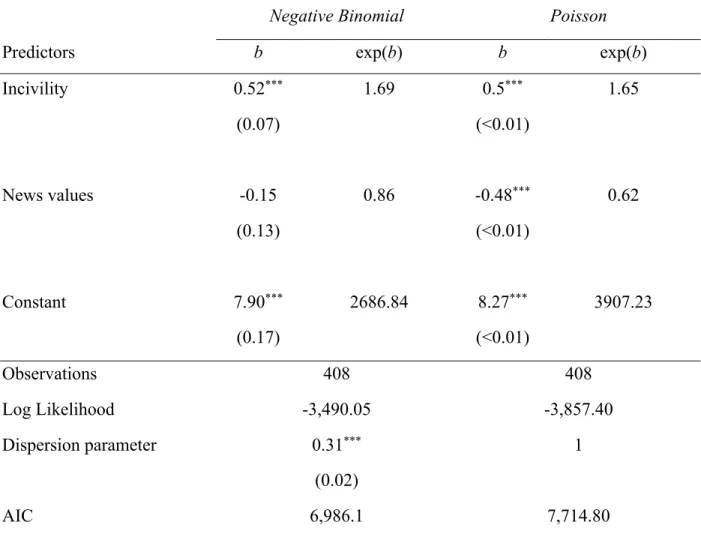
Table 2 reports the estimates of a negative binomial regression and Poisson regression predicting online engagement on Facebook as a function of the two established independent variables: post incivility and news values. Both models are used to account for data
overdispersion and compare model fit. The results of a likelihood ratio test (!2(4) = 3853.910, p = .00), a large dispersion index (D = 2871.081) and a smaller value of Akaike information criterion (AIC = 6986.1) in comparison to the Poisson model confirm that a negative binomial model is a better fit for the data.
The first research question asked about the relationship between Facebook post incivility and online engagement (i.e., the total number of shares, comments, and reactions to the Facebook post). The estimates of the negative binomial regression (b = 0.52, p <0.001) show that the association between the level of incivility (M = 1.11, SD = 1.23), and the total engagement (M = 5,314.40, SD = 22,432.68) is positive and statistically significant (see Table 2). The regression coefficient demonstrates that for each one-unit increase in the level of incivility the expected log count of Facebook user engagement increases by .52. The odds ratio indicates that for every unit increase in the level of incivility, the difference in the log of online engagement increases by a factor of 1.69. That is, the expected log count of online engagement will increase by 69% for each additional unit of incivility present in a Facebook post.
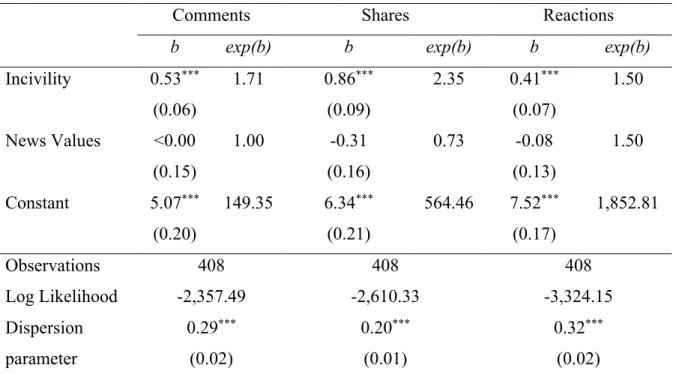
Considering the available engagement features, i.e. comments (M = 493.83, SD = 4,861.60), shares (M = 1,682.86, SD = 8,927.22), and reactions (M = 3,137.71, SD =
12,071.85), it is possible to perform further analyses. For each one-unit increase of incivility on posts, the log count on the number of comments (b = 0.53, p <0.001) will increase by a factor of 1.71, or 71%; the number of shares (b = 0.86, p <0.001) will increase by a factor of 2.35, or 135%; and the number of reactions (b = 0.41, p <0.001) will increase by 1.50, or 50% (see Table 3).
Table 3 Negative binomial regression on the number of comments, shares, and reactions of
Facebook posts by level of incivility and news values
Comments Shares Reactions
b exp(b) b exp(b) b exp(b)
Incivility 0.53*** (0.06) 1.71 0.86*** (0.09) 2.35 0.41*** (0.07) 1.50 News Values <0.00 (0.15) 1.00 -0.31 (0.16) 0.73 -0.08 (0.13) 1.50 Constant 5.07*** (0.20) 149.35 6.34*** (0.21) 564.46 7.52*** (0.17) 1,852.81 Observations 408 408 408 Log Likelihood -2,357.49 -2,610.33 -3,324.15 Dispersion parameter 0.29*** (0.02) 0.20*** (0.01) 0.32*** (0.02)
Note: Table presents negative binominal regression estimates with robust standard errors: b denotes the estimated regression coefficient and exp(b) denotes the exponentiated regression coefficient. Dispersion parameter is θ.
*p < .05; **p < .01; ***p < .001
The second research question asked about the relationship between news values (M = 1.05, SD = 0.70) in Facebook posts and online engagement. The negative binomial regression results presented in Table 2 show that the regression coefficient for the predictor variable is
negative and not significant (b = -0.15, p =0.24). Therefore, we conclude there is no significant association between news values and online engagement.
In a first model, a negative binomial regression was performed to explore the relationship between dimensions of incivility and levels of engagement, not controlling for news values (see Table 4). The results showed that insulting language (M = 0.20, SD = 0.40) is positively significant for total engagement (b = 0.72, p<0.05), and shares (b = 1.15, p
<0.01). This means that for every instance where insulting language is present in the post, the total engagement will increase by 105% and shares will increase by 216%. Following the same criteria, obscenity (M = 0.07, SD = 0.26) is significant for total engagement (b = 1.23, p
< 0.01), or 256%, shares (b = 1.84, p < 0.01), or 527%, and reactions (b = 1.03, p < 0.05), or 180%. Histrionics (M = 0.46, SD = 0.50) is positively significant for total engagement (b = 0.79, p < 0.001), or 119%, shares (b = 1.44, p < 0.001), or 323%, and reactions (b = 0.65, p < 0.01), or 91%. In turn, conspiracy (M = 0.02, SD = 0.15) is significant only for comments (b
= 2.98, p < 0.05), but with an impressive increase of 1,863% for each instance where the dimension is present in the post. In this model, mockery, verbal fighting, outrage language,
call to action, and ideological extremist language were not found significant at any level of engagement.
32 Table 4 Negative binomial regression on total engagement, number of comments, shares, and reactions of Facebook posts by
dimensions of incivility
Comments Shares Reactions Total Engagement
b exp(b) b exp(b) b exp(b) b exp(b)
Insulting Language 0.49 1.63 1.15** 3.16 0.47 1.60 0.72* 2.05 (0.25) (0.35) (0.29) (0.28) Obscenity 0.63 1.87 1.84** 6.27 1.03* 2.80 1.23** 3.56 (0.49) (0.62) (0.41) (0.45) Histrionics 0.06 1.07 1.44*** 4.23 0.65** 1.91 0.79*** 2.19 (0.21) (0.24) (0.20) (0.20) Mockery 0.06 1.06 0.16 1.17 0.11 1.12 0.09 1.10 (0.29) (0.36) (0.31) (0.30) Verbal Fighting 1.03 2.81 -0.38 0.68 -0.58 0.56 -0.33 0.72 (0.67) (0.81) (0.56) (0.60) Outrage Language 0.01 1.01 -0.94 0.39 -0.13 0.87 -0.27 0.76 (0.66) (0.76) (0.60) (0.62) Conspiracy 2.98* 19.63 0.26 1.30 0.70 2.02 0.92 2.50 (1.19) (1.34) (1.06) (1.10) Call to Action -0.09 0.91 1.04 1.82 0.75 2.12 0.88 2.42 (0.62) (0.72) (0.58) (0.59)
33 Table 4 (continued)
Comments Shares Reactions Total Engagement
b exp(b) b exp(b) b exp(b) b exp(b)
Ide. Ext. Language 0.54 1.72 -0.01 1.01 0.24 1.26 0.14 1.15
(0.45) (0.52) (0.42) (0.43) Constant 5.20*** 180.99 5.76*** 318.15 7.34*** 1,546.10 7.62*** 2,046.62 (0.13) (0.16) (0.12) (0.13) 2.05 Observations 408 408 408 408 Log Likelihood 2,348.15 -2,596.70 -3,320.09 -3,484.29 Dispersion parameter 0.29*** (0.02) 0.21*** (0.01) 0.32*** (0.02) 0.32*** (0.18)
Note: Table presents negative binominal regression estimates with robust standard errors: b denotes the estimated regression coefficient and exp(b) denotes the exponentiated regression coefficient. Dispersion parameter is θ.
Although news values were not found significant in the overall model, we conducted
additional analyses to investigate whether individual dimensions of news values are related to online engagement (see Table 5). The results show that good news (M = 0.01, SD = 0.10) is negatively related to comments (b = -3.67, p < 0.001), shares (b = -5.18, p < 0.001), reactions (b = -3.27, p < 0.001) and total engagement (b = -3.67, p < 0.001). In other words, for every instance good news is present in the post one would observe a decrease of 98% in comments, 99% in shares, 96% in reactions and 98% in total engagement. Badnews (M = 0.06, SD = 0.24) also has a negative effect on the number of comments (b = -1.73, p < 0.001), shares (b = -2.24, p < 0.001), reactions (b = -1.68, p < 0.001), and total engagement (b = -1.85, p < 0.001). This translates into a 84% decrease in the overall engagement of a post once bad news is present. In turn, novelty (M = 0.01, SD = 0.1) is negatively related to the number of shares (b = -3.45, p < 0.01), reactions (b = -2.75, p < 0.001), and total engagement (b = -2.57, p < 0.01), leading to a 92% decrease in overall engagement. Impact (M = 0.01, SD = 0.10) has a negative effect on all levels of engagement as well, with a decrease of 91% in
comments (b = -2.42, p < 0.05), 98% in shares (b = -3.84, p < 0.01), 97% in reactions (b = -3.43, p < 0.001), and 97% in total engagement (b = -3.38, p < 0.001) for each instance where the dimension was present in the post. Celebrity (M = 0.04, SD = 0.19) is negatively
associated with number of comments (b = -3.43, p < 0.01), leading to a 78% decrease. Power elite (M = 0.60, SD = 0.49) was the only dimension to be have a positively effect on
engagement, with an increase of 124% in the number of comments (b = 0.81, p < 0.01) for each instance the dimension was present in the post. The other news values were not found significant for any level of engagement.
35
Table 5 Negative binomial regression on total engagement, number of comments, shares, and reactions of Facebook posts by news values
Comments Shares Reactions Total Engagement
b exp(b) b exp(b) b exp(b) b exp(b)
Good News -3.67*** 0.02 -5.18*** 0.01 -3.27*** 0.04 -3.67*** 0.02 (1.03) (1.17) (0.89) (0.92) Bad News -1.73*** 0.18 -2.24*** 0.11 -1.68*** 0.19 -1.85*** 0.16 (0.50) (0.55) (0.41) (0.43) Novelty -0.92 0.40 -3.45** 0.03 -2.75*** 0.06 -2.57** 0.08 (0.91) (1.06) (0.81) (0.83) Drama 1.21 3.35 0.35 1.42 0.67 1.97 0.60 1.82 (1.01) (1.09) (0.81) (0.85) Conflict 0.71 2.04 0.49 1.63 -0.14 0.87 0.20 1.22 (0.42) (0.46) (0.35) (0.36) Impact -2.42* 0.09 -3.84** 0.02 -3.43*** 0.03 -3.38*** 0.03 (1.02) (1.19) (0.92) (0.94) Power Elite 0.81** 2.24 0.14 1.15 0.34 1.40 0.29 1.35 (0.26) (0.28) (0.22) (0.22) Entertainment -0.06 0.94 -0.71 0.49 -0.23 0.79 -0.37 0.69 (0.37) (0.41) (0.32) (0.33)
36
Table 5 (continued)
Comments Shares Reactions Total Engagement
b exp(b) b exp(b) b exp(b) b exp(b)
Celebrity -1.51** 0.22 -0.64 0.53 -0.22 0.80 -0.42 0.66 (0.53) (0.61) (0.47) (0.48) Media -0.47 0.63 -0.68 0.50 0.01 1.02 -0.23 0.79 (0.32) (0.37) (0.28) (0.28) Constant 5.71 *** 302.01 7.50*** 1,811.96 7.94*** 2,802.77 8.51*** 4,972.668 (0.25) (0.25) (0.19) (0.20) Observations 408 408 408 408 Log Likelihood -2,398.17 -2,627.14 -3,325.32 -3,501.88 Dispersion parameter 0.25 *** (0.01) 0.19*** (0.01) 0.31*** (0.02) 0.30*** (0.01) Note: Table presents negative binominal regression estimates with robust standard errors: b denotes the estimated regression coefficient and exp(b) denotes the exponentiated regression coefficient. Dispersion parameter is θ.
CHAPTER 5. DISCUSSION
Social media networks have been used worldwide as justification for political gains and losses (Bene, 2018; Bossetta, 2018). Taking advantage of its multifaceted features and subtle cultural nuances, the audience, the media, political figures, and other stakeholders have chosen social media to blame for the polarized political climate evident in recent electoral campaigns and the consequent deterioration of democratic ideals. Such perceptions were undoubtedly amplified after the 2016 US presidential election of President Trump, which came as a surprise to many. The intense political debate before and after this election often included discussion of social media's role as well as note the declining levels of civility in US society (“Civility in America 2018: Civility at work and in our public squares,” 2018). At the same time, driven by the public’s concerns about hate content present on its platforms, social media companies established a number of policies that were perceived as censorship by some media observers. These policies are still evolving and would inevitably raise further questions about social media’s responsibilities over the moderation of online discourse (Friedersdorf, 2018).
More than a matter of social norms, the lower level of incivility has been seen as a sign of the times and a reflection of broader social changes. In the age of social media, incivility has also been used as a tool for online mobilization by political operatives to gain certain advantages among an increasingly polarized electorate. Indeed, scholars in a number of disciplines ranging from sociology (e.g., Sobieraj & Berry, 2011) and political science (e.g., Coe, Kenski, & Rains, 2014; Strachan & Wolf, 2012; Wolf et al., 2012) to
communication and media studies (e.g., D. C. Mutz & Byron, 2005; Stroud et al., 2017; Stryker, Conway, & Danielson, 2016) have examined the role of incivility in different
contexts. Despite the existing body of research on incivility in various disciplines, the literature review did not point to a clear causal link between levels of online incivility and social media user engagement. Therefore, the primary purpose of this study was to
investigate the use of incivility by partisan Facebook pages empirically and measure its effects on audience engagement.
Incivility and Online Engagement
The rich publicly-available dataset of Facebook post data, combined with the manual coding of posts, allowed conducting a series of multivariate analyses to examine if there is an empirical relationship between levels of incivility in Facebook posts and user engagement. The analysis demonstrated that indeed there is a positive and statistically significant relationship between incivility and user engagement, measured by the number of shares, comments, and reactions. The results showed that increasing the post's level of incivility by one unit leads to a 69% increase in the post's level of total engagement.
Moreover, incivility was found to prompt higher engagement from users in the form of shares (135%) than in comments (71%), and reactions (50%), adding to current research that focuses mostly on incivility in comment sections. Following the three modes of
communication on Facebook introduced by Larsson (2017): redistribution (shares),
interaction (comments), and acknowledgment (reactions), we suggest that the use of
incivility is more effective for redistributing content net wide than for making users interact or acknowledge the content. This finding is aligned with Schulz and Roessler (2012) who considered the number of likes and shares of a post an indication of popularity. Pang et al. (2016), in turn, argues that the features of engagement on Facebook have implications for content, affecting its diversity, intensity, and frequency. In this case, the higher effect of incivility on post shares may indicate an attractive strategy for engagement and profit,
whereas this type of feedback allows the message to be spread beyond the page’s network, reaching other users, becoming “viral” (Klinger & Svensson, 2015), and being reused in echo chambers (Jamieson & Cappella, 2009).
When analyzing the relationship between dimensions of incivility and levels of engagement, we can draw more inferences. Insultinglanguage, obscenity, and histrionics
were found significant for total engagement and shares. Obscenity and histrionics were also significant for the number of reactions. Thus, these results demonstrate a strong association between engagement and the use of offensive or vitriolic language in online partisan media. Only conspiracy was found significant for comments, with an impressive increase of 863% in the number of comments when the dimension was present in the post. The results
corroborate Borah's (2014) findings that suggests an increase in audience willingness to participate in discussion when exposed to uncivil messages. However, conspiratory tone seems to drive more comments for partisan posts than nasty language, which aligns with the association of conspiracy topics, polarization, echo chambers, homophily and spread of fake news suggested by Anagnostopoulos et al. (2014), Bessi et al. (2016), and Del Vicario et al (2016).
Overall, the results lead us to conclude that incivility is, in fact, an effective
instrument of audience engagement for partisan media online and that less civil posts trigger more user interaction. This is a major finding for many reasons:
First, while incivility in political discussions on social media has been extensively explored in research (Gervais, 2014; Muddiman & Stroud, 2017; Papacharissi, 2004), incivility as a strategy for online content producers needs further investigation. More than a catalyst of social attitudes and behavior, in this study incivility was found to be an important
tool in deliberate engagement efforts. Such a finding suggests that the social network ecosystem is complex and instigates a revision in traditional approaches to the relationship between audiences and new media.
Second, it is vital not to alienate alternative partisan media from communication studies, especially those with a massive online presence. Although the secondary data used in this study contained posts from traditional companies such as MSNBC and Fox News, the majority of Facebook pages pertained to nontraditional outlets, such as Occupy Democrats and Infowars. Amidst an era of critical changes in news consumption and journalism
production, it becomes important to understand how outsiders are helping to shape the media landscape; incivility, in such context, has emerged as a critical tool for journalists and social scientists to consider.
Third, considering the still limited measurement of incivility available in the literature and the colossal amount of online content generated by partisan pages every day, the
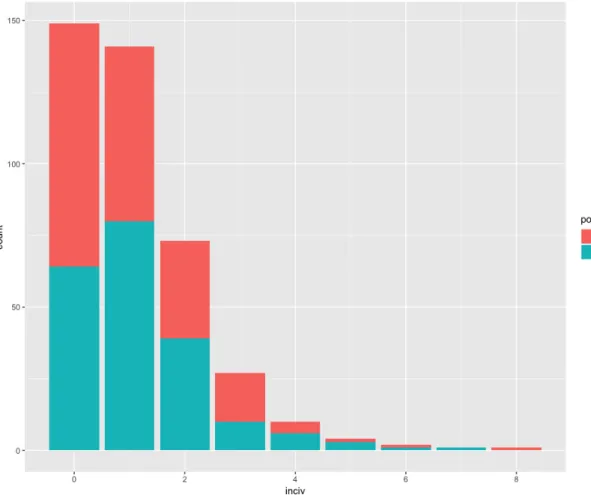
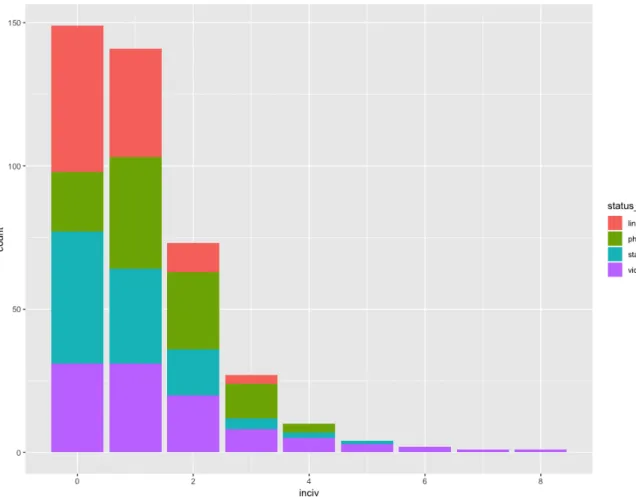
empirical finding that online incivility significantly increases the post’s total engagement is timely and important. While this study cannot capture the motivations behind the use of uncivil language by partisan pages, it shows that incivility appeared in Facebook content posted by both sides of the American political spectrum. The stratified nature of this study's sample prevents direct comparisons between left-leaning and right-leaning Facebook pages. Nevertheless, the frequencies of incivility were higher for posts from the "right," as they were higher for video posts (see Figures 2-3).
If we rely on additional information about the partisan Facebook selected for the original report from Buzzfeed News, it is possible to draw a few more inferences (Silverman et al., 2017). According to the Buzzfeed report, the Facebook pages selected initially were
connected to the most prominent political websites from each side of the political spectrum; thus, the original dataset contained 452 partisan Facebook pages (and respective posts), of which 142 pages were identified as liberal, and 310 pages were identified as conservative. Considering the larger size of the conservative universe online, and consequently, the more substantial amount of conservative content in the original dataset, one could conclude that the cumulative effect of incivility may be stronger on the conservative side.
News Values and Online Engagement
In addition to looking at how incivility is used to engage the audience, this study also set out to explore whether partisan Facebook pages use traditional news values on social media. By employing an updated version of the traditional news values developed by Galtung and Ruge (1965), following Harcup and O’Neill (2017), this study tested whether the presence of news values within Facebook posts increases online engagement. The analysis showed mixed results. In the overall model, the results of a negative binomial regression showed no statistically significant relationship between the use of traditional news values and user engagement with the posts. Disaggregating the dimensions of news values in a subsequent analysis, however, showed that some specific news values were statistically significant, with a mostly negatively effect on online engagement. This opens up avenues for further research to determine how the interplay of content selection and audience choices function in the social media environment.
Certainly, the rise of social media has not only lead to increasing audience
fragmentation, but has also challenged traditional media roles and practices. Messing and Westwood (2014) note that endorsements have a higher effect on social media content selection than selective exposure, which strongly suggests that individual online engagement is driven by the endorsement of others – i.e., other users' online comments, likes or shares. In
such context online partisan media will select posts based on how engaging they are, and such selection is not necessarily aligned with news selection principles followed by traditional media. Moreover, the immediate feedback available on social media allows journalists to better understand what the readers want, which suggests alternative factors of news selection that specifically aim to reach a broader audience online (Harcup & O’Neill, 2017). Unlike traditional media that embrace journalistic principles such as balance and objectivity, online partisan outlets may inadvertently be prone to promoting "catchy" social media content that gets immediate reaction and clicks, which ultimately drive the popularity of online content.
Prior research has indicated that the values embedded in social media may trigger audiences to respond to news guided by conflict and controversy (e.g., Eilders, 2006), and entertainment, surprise or bad news, which has a higher impact on online popularity and on what gets shared online (Harcup & O’Neill, 2001). The results of this study contradict a few of such findings. We found good news, bad news, impact, celebrity, and novelty appear to have a negative effect on engagement in Facebook partisan pages in our sample. At the same time, we found conflict to have no statistical significance on engagement.
However, power elite emerged as a positive predictor for the number of comments, possibly suggesting a preference, by those partisan pages, for content that features political leaders and elite groups. Such results could also explain the negative significance of some other dimensions. Interestingly, the most engaging post present in the dataset was not political but rather a human interest story about boys playing a soccer game.
It seems plausible as well that partisan media, perhaps even subconsciously, already employ alternative criteria of news selection when posting content on social media and that
new models for exploring those features should be developed. For example, Harcup and O’Neill (2001) recommend that shareability, or stories designed to generate engagement, should be considered a news value. In addition to that, we suggest that the significant effect of incivility, in this case, could serve as a clue for a different set of selection criteria used by partisan organizations.
Theoretical Implications
The results of this study bring attention to incivility as a factor in online engagement for partisan pages on Facebook and serve as a starting point for investigating deeper
relationships between content producers and audiences on social media. To investigate the proposed research questions, a broader definition of incivility was necessary. Therefore, we expanded the concept beyond social norms by bringing values from the democratic realm and enchasing in it a contemporary approach of the online media landscape. Previous studies were combined to construct a set of dimensions of incivility that, optimistically, will help to capture the nuances of social media and the different types of medium available online.
Likewise, the dimensions of news values used in this study represent an attempt to check how traditional factors of news selection function on partisan media Facebook pages. Even though the results of the analysis demonstrated that, in this case, such factors are not applicable or even affect engagement negatively in some cases, the quest for more
appropriate measures of news values befitting the online environment is likely to continue in future research.
It is important as well to note a difference in the results of this study compared to previous research. We suggest that incivility, more than a driving force for online
engagement in comment sections, is a powerful tool for content sharing and viralization. More than relying on the rich environment of online discussions, it is necessary for
researchers to investigate how incivility affects the flow of partisan news in social media, which feeds echo chambers and spreads messages intentioned for political and financial gains. Considering that conspiracy was identified as the only dimension of incivility significantly impacting the number of comments, it will be important for future studies to clearly distinguish between comments, shares and reaction when studying online
engagement. It will also be important to examine the specific themes that emerge in the user comments and see whether those specific messages can shed light on audience perceptions of political issues and candidates.
Practical Implications
The positive relationship between incivility and online engagement, which this study identified, has important practical implications for partisan media on social media. SNS networks such as Facebook and Twitter have been framed as sources of disinformation and political polarization and often seen as conduits for spreading hate, racism and other
objectionable material online. Some have even accused them of being propaganda weapons used by political agents and outside groups.
Although there is still ample scope for discussion, this study explored another prominent theme in the public sphere: incivility. By focusing on how intentional lack of civility could enhance the audience's engagement, we observed the distinctive characteristics of partisan media on Facebook and the possible powerful influence of such channels on users. That represents a step forward in the understanding of current aspects of news consumption, the importance of alternative media in social networks, and the parameters of news selection. More importantly, the results raise relevant questions about the role of incivility and its relationship with democratic values in the parallel world of online partisan media.
The implications of this study go beyond the current political landscape. Following the Buzzfeed News report, which provided a glimpse on how partisan media work in the online environment, the results of this study raise questions about the use of incivility as a factor of engagement in the future. More than a conduit of impoliteness, Facebook and other social networks seem to represent an instrument for polarization and potential manipulation of the general public. This study confirms that strategic uses of incivility online may lead to audience mobilization and consequently to larger profits for social media.
Limitations and Future Research
To measure incivility, this study relied on a combination of coding schemes developed by Gervais (2014), Sobieraj and Berry (2011), and Coe et al. (2014). The final dimensions of incivility were shaped to adapt to particular aspects of the secondary data, containing a myriad of media types: text, photos, and videos. Such characteristics impact the effectiveness of coding since it is necessary to apply textual and graphics parameters to measure the same concept. The dimension histrionics, for example, has a different measurement of text posts than it has of video posts. Verbal fighting, in turn, measures altercations present in video content but is not applicable to photos. For the reasons above, we chose not to analyze the dimensions of incivility individually in the overall model, since they occasionally depend on the media type. The nature of the secondary data also impacted the sampling process. In order to include a representative number of posts in the analysis, the sample was stratified by political category ("right" and "left") and type of status ("status", "link", "photo", and "video"), which prevented any predictions involving those variables and jeopardizing a more in-depth investigation on the topics.
The study opens up several avenues for future research. First, further exploration of the use of incivility by partisan Facebook pages or other online media should include
political categories, such as "left," "right," or similar classifications, and test for their separate effects. We found that pages from both sides of the political spectrum use incivility to engage users, although we could not perform any analysis because of the nature of the sample.
Similarly, the stratified sample balanced the number of Facebook posts from each type, which makes it impossible to measure directly the effects of post time. However, future research designs should consider incorporating post type as a predictor of online engagement since anecdotal evidence already suggest that photos and memes, as well as video content, hold special appeal online. Both suggestions would enrich future analyses and result in a better understanding of incivility within the social media environment.
Another limitation of this research was the use of existing news values criteria that were developed in the context of traditional media. The measurement of news values in future research should be modified to take into consideration the current online media structure and the presence of alternative content producers who have different goals when it comes to social media content. Moreover, it will be critical to investigate the possible
connection between incivility and news values, since the use of incivility could be considered a primary factor of news selection in the online environment and, therefore, an effective tool for online user engagement as well.
Future research should also try to develop a model of online communication that accounts for different arguments coming from the public, the media, and other stakeholders. One could argue that incivility is used by a determined media outlet from a particular political side to engage “uninformed” voters and try to get their support for a particular political candidate or party. Therefore, future research should examine closer the relationship