_____________________________________________________________________________________________________
*Corresponding author: E-mail: [email protected];
ISSN: 2231-0614, NLM ID: 101570965
SCIENCEDOMAIN international
www.sciencedomain.org
Knowledge and Behaviour of Physicians and
Surgeons Regarding Shisha Smoking
Ashok Kumar
1*, Mahvesh Mahmud
1, Nida Hussain
1, Zafar Abdul Nabi
2,
Barun Shah
3and Nadeem Rizvi
41
Department of Medicine, Dr. Ziauddin Hospital, Clifton, Karachi, Pakistan. 2
Department of Medicine, Sandeman Provincial Hospital, Quetta,Pakistan. 3
Department of Gastroenterology, Mayo Hospital, Lahore, Pakistan. 4
Department of Chest Medicine, Jinnah Postgraduate Medical Centre, Karachi, Pakistan.
Authors’ contributions
This work was carried out in collaboration between all authors. Author AK designed the study, wrote the protocol and supervised data collection. Author MM managed the literature searches and wrote the drafts of the manuscript. Author NH participated in the literature searches and the data analyses. Authors ZAN and BS managed data collection, entry into SPSS and analyses. Author NR supervised the whole study including data analyses and guided the development of the questionnaire.
Article Information
DOI: 10.9734/BJMMR/2016/24258 Editor(s): (1) Gauri Mankekar, ENT Department, PD Hinduja Hospital, Mumbai, India. Reviewers: (1) Anna Gumieniczek, Medical University of Lublin, Poland. (2)Eva Drevenhorn, Lund University, Sweden. Complete Peer review History:http://sciencedomain.org/review-history/13378
Received 11th January 2016 Accepted 25th January 2016 Published 22nd February 2016
ABSTRACT
Background: The aim of the study was to determine the prevalence, knowledge, attitude and practices of shisha (waterpipe) smoking among physicians and surgeons in five main cities of Pakistan. Shisha smoking is becoming more popular in Pakistan, and as medical doctors (both physicians and surgeons) serve as role models for healthy behavior, they can greatly influence shisha use in public by the example they set, and by the education that they provide to their patients.
Objective: To investigate and compare the knowledge, attitudes, and practices of shisha smoking among physicians and surgeons in Pakistan.
Materials and Methods: A cross-sectional study was done in five major public medical universities of Pakistan. A self-administered questionnaire was used with some modification.
Results: Out of 1000 distributed questionnaires, 786 doctors responded of which 51.4% were physicians and 48.6% were surgeons. Even though the vast majority (99%) of doctors agreed that
shisha smoking is detrimental to health, almost 20% of surgeons and 13% of physicians reported using shisha daily. More physicians than surgeons had never used shisha, and more physicians were willing to quit, with the difference achieving statistical significance. The knowledge about shisha smoking was not uniform amongst the doctors, with physicians demonstrating significantly more knowledge as outlined in three areas (smoking causing increased risk of Sudden Infant Death Syndrome [SIDS], lung and heart disease). More physicians than surgeons agreed that doctors who use shisha are less likely to advise people against it; they also agreed that doctors should get training on cessation techniques. The majority of participants agreed that doctors are role models for patients. More physicians thought that smoking should be banned in public places and that tobacco sale to children and adolescents should also be banned. More surgeons than physicians agreed that shisha use is socially more acceptable than cigarette smoking. It was also noted that for the majority of doctors, there is no workplace policy in place regarding smoking.
Conclusion: Social and recreational use of shisha is widespread among both physicians and surgeons (slightly higher among surgeons), despite being acknowledged by the majority as a health hazard. This is of concern as doctors are role models for patients, and doctors who smoke shisha raise public skepticism. Keeping in mind the health complications of this social practice, appropriate counter measures should be taken.
Keywords: Shisha; tobacco products; physicians; surgeons; doctors.
1. INTRODUCTION
The tobacco epidemic receives striking attention around the world. It is estimated that up to 10 million people will die annually by the year 2030 due to tobacco-related causes [1]. The prevalence of tobacco intake in Pakistan is high, reaching upto 33% among middle aged males [2]. While most of the research has focused on cigarettes, the increasing popularity of shisha has received much less attention. Shisha smoking has become fashionable and is widely used in the Arab world [3-5], and even in Europe and the United States [4,6]. Shisha, or the water-pipe, also known as narghile, hookah, and hubble-bubble in different countries and cultures, is a form of tobacco intake in which the smoke passes through water before inhalation. It’s origin from one historical account suggested that it was invented in India by a physician Hakim Abul Fath during the reign of Emperor Akbar as a less harmful method of tobacco use [7].
Even though several health hazards have been associated with water pipe smoking, the population at large has not yet fully understood the associated risks [4,6]. There exists a common belief in the general population that shisha smoking is less harmful than cigarette smoking, in particular because the water “filters” the smoke [8]. Shisha has a softer image with people, which can be attributed to its fruity flavours, making it more comfortable for females and younger individuals [9]. Another factor adding to the popularity of shisha smoking is its social acceptability as compared to cigarettes, and its portrayal as a symbol of modernization of
our cultural heritage [4]. Research however has proved that firstly, shisha is smoked over coal adding additional harmful toxins to the smoke, and the smoke inhaled is up to 200 times more in a single session as compared to cigarette smoke [10]. There is also a link to second-hand smoking due to its high social acceptance [11]. Shisha smoke contains carbon monoxide, nicotine, tar and heavy metals in equal amounts to cigarettes and thus, shisha smoking increases the risk of bronchogenic carcinoma as well as oral and bladder cancers [10]. A meta-analysis study also revealed that shisha smoking is significantly associated with lung cancer, respiratory illness, low birth-weight and periodontal disease [12]. Moreover, shisha smoke increases heart rate, decreases pulmonary function and is associated with markers of atherosclerosis, as well as an increased risk of coronary heart disease [13]. The smoke from shisha, besides other toxic elements, contains hundreds of potentially dangerous heavy metals like, arsenic, cobalt, chromium and lead [14].
Kumar et al.; BJMMR, 13(11): 1-12, 2016; Article no.BJMMR.24258
of knowledge regarding the hazards of shisha smoking [17]. A survey conducted on medical house-officers in Karachi showed that 32% of all male doctors are regular smokers [18]. In 2005, the WHO advisory panel on shisha smoking pioneered in putting forth a set of recommendations to help countries to plan strategies against this practice [19]. It was strongly recommended that shisha should be subjected to the same regulations as cigarette and other tobacco products. Unfortunately, Pakistan failed to implement any of those recommendations [20]. As such, there is no data on the prevalence of shisha use among the general population in Pakistan, so there is an information gap in this area. Most of the studies have concentrated on university students or doctors.
It is very important to evaluate the knowledge, attitude and practices of doctors regarding shisha use, so that areas can be identified which need to be targeted for educating them. Doctors are role models in society, and can play a crucial part in clearing misconceptions about shisha use, as well as in facilitating prevention and cessation of use among the community. We conducted this survey in five major cities of Pakistan to assess the knowledge, attitude and practices of medical doctors regarding the use of shisha, in order to ascertain areas where tangible steps can be taken towards reducing shisha use in the community.
2. METHODS
This cross-sectional study was carried out in 2015 amongst physicians and surgeons working in five hospitals in four major metropolitan cities of Pakistan: Karachi, Lahore, Islamabad and Quetta. The hospitals where the study was conducted were: Civil Hospital and Jinnah Post-graduate Medical Centre in Karachi, Mayo Hospital in Lahore, Pakistan Institute of Medical Sciences in Islamabad, and Sandeman Provincial Hospital in Quetta. These cities are also provincial capitals while Islamabad is the federal capital of Pakistan. Convenience sampling of medical doctors from the five hospitals was done. All doctors who had started or completed their postgraduate training were included so that their line of practice (Medicine or Surgery) was already established. Exclusion criteria included doctors who had not yet entered into a post-graduation training program. A self-administered questionnaire was developed after studying the current literature. The validity of the questionnaire was checked by pre-testing the
original questionnaire on ten medical practitioners and then applying the same with modifications. The results obtained were comparable, thus comparing the validity of the modified version [17]. The study was approved by the Ethics Committee of the Chest Health and Education Society, which is a registered society of Pakistan with more than 400 chest physicians from all over the country. It has its own research unit to facilitate research work in Pulmonary Medicine.
The information on individual doctors was kept confidential. Informed consent was obtained from all participants prior to voluntary participation. The questionnaire was administered at the doctors’ workplace, where they were given 20 minutes to fill out the questionnaire. The investigators of the study were responsible for administering and collecting questionnaires from each class. The questionnaire had 41 items in total, and the questionnaire was divided into three parts. The first part inquired about socio-demographic data, age at initiation of smoking, and the frequency of shisha use for smoking. The remainder of the questionnaire focused on the knowledge, attitude and practices of doctors regarding shisha smoking and associated hazards, and the respondents were asked whether they “agree, were unsure, or disagree” with the different statements used. The knowledge section included questions related to the morbidity associated with shisha use, including its link with an increased risk of pulmonary and cardiac disease, as well as increased risk of neonatal death and SIDS with maternal shisha use. The attitude section had questions regarding doctors being role models for patients, and their role in helping patients quit smoking, as well as questions asking if smoking should be banned in public places, the enforcement of bans on the advertisement of tobacco products and the sale of tobacco products to adolescents. It also inquired if shisha smoking is socially more acceptable than cigarette smoking. The practice section had questions on smoke-free policies at the workplace, and the use of self-help materials, counselling, medications and traditional remedies to help patients quit smoking. The different parts of the questionnaire are outlined in detail in the tables in the “Results” section.
2.1 Statistical Analysis
degree of error as 5%, and confidence interval as 95%. The sample size was inflated to 20%, taking into consideration wastage and non-response. Nominal variables such as gender and position were presented as frequencies and percentages. The Chi-square test was used to establish if significant associations existed between physicians and surgeons and the study variables. A p-value of < 0.05 was considered statistically significant. The results were analysed on SPSS version 21.
3. RESULTS
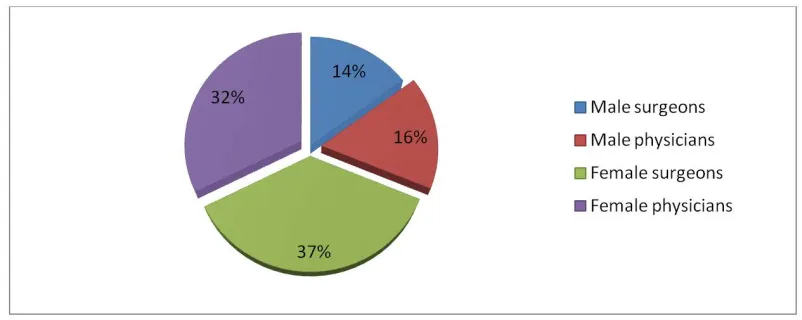
Out of 1000 distributed performas, 786 doctors responded with a response rate of 78.6%. Of these respondents, 404 were surgeons and 382 were physicians. Gender distribution is summarized in Fig. 1.
It was noted that 81.7% of surgeons and 82.7% of physicians worked in the public sector, whereas 18.3% of surgeons and 17.3% of
physicians worked in the private sector (p-value=0.703).
The age distribution is summarized in Table 1.
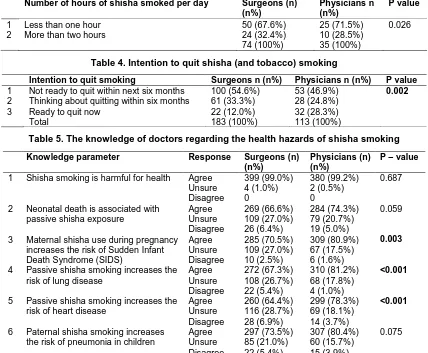
Shisha smoking was reported in 33% of surgeons and 24% of physicians, and the difference was not statistically significant difference (p= 0.078). There was no statistically significant difference between doctors in the age at which they started smoking, the number of cigarettes smoked per day, the duration of shisha use, or if they had tried quitting for a week. However, more physicians than surgeons had never used shisha (p<0.001), and more physicians were willing to quit, with the difference achieving statistical significance (p = 0.002).
Details of smoking behaviour are shown in Table 2 and Table 3 and future plans of smoking cessation are shown in Table 4. “Occasionally” was defined as smoking shisha socially and with friends in shisha cafes and restaurants.
Fig. 1. Gender distribution of study participants
Table 1. Age distribution of participants (Total: 786)
Surgeons n (n%) Physicians n (n%) P value
Age 20-30 yrs 220 (27.9%) 125 (15.9%) <0.001
Age 31-40 yrs 86 (10.9%) 155 (19.7%)
Age 41-50 yrs 70 (8.9%) 52 (6.6%)
Age > 50 yrs 25 (3.1%) 53 (6.7%)
Table 2. Smoking practices in doctors
Smoking behaviour Surgeons n (n%) Physicians n (n%) P value
1 Never smoked shisha 182 (46.7%) 231 (61.1%) <0.001
2 Quit smoking totally 18 (4.6%) 24 (6.3%)
4 Smoke both shisha and cigarettes occasionally 86 (22.0%) 63 (16.6%)
5 Smoke only shisha occasionally 28 (7.2%) 12 (3.2%)
6 Smoke shisha daily 76 (19.5%) 48 (12.7%)
Kumar et al.; BJMMR, 13(11): 1-12, 2016; Article no.BJMMR.24258
The results of the questions asked to assess the participants’ knowledge regarding the hazards of shisha smoking are shown in Table 5. Overall, the knowledge regarding shisha smoking was not uniform amongst the doctors, with physicians demonstrating significantly more knowledge as outlined in three areas (smoking causing increased risk of SIDS, lung and heart disease). Overall, 99% of medical practitioners agreed that shisha smoking is detrimental for health (p=0.687).
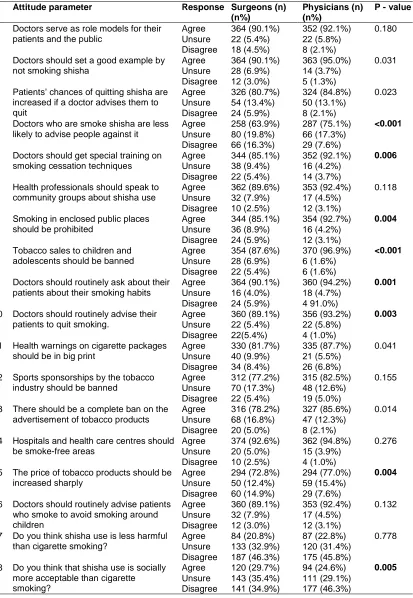
The results of assessment of doctors’ perception and practices towards shisha smoking are shown in Table 6 and 7, respectively. More physicians than surgeons agreed that health professionals who use shisha are less likely to advise people against it, that they should get training on cessation techniques (p=0.000 and 0.006, respectively). More physicians thought that smoking should be banned in public places (p=0.004), and that tobacco sales to children and
adolescents should be banned (p=0.000). More surgeons than physicians agreed that shisha use is socially more acceptable than cigarette smoking (p=0.005). The majority of doctors endorsed taking steps to decrease the prevalence of smoking. This included measures such as doctors routinely asking their patients about their smoking habits, and routinely advising their smoking patients to quit smoking, with surgeons being in the majority (p= 0.001 and p=0.003, respectively). There was no smoke-free policy in force at the work place for the majority of doctors (49.5%), and even if such a policy did exist, it was not enforced for the majority (53.2%). The majority of doctors used counselling rather than medications to help their patients stop smoking (77.0%). For the majority, self-help material and traditional remedies were not available to help patients stop smoking (71.6% and 82.4%, respectively). Statistically significant results of the parameters with difference in knowledge are displayed in Fig. 2.
Table 3. Number of hours of shisha smoked per day
Number of hours of shisha smoked per day Surgeons (n)
(n%)
Physicians n (n%)
P value
1 Less than one hour 50 (67.6%) 25 (71.5%) 0.026
2 More than two hours 24 (32.4%) 10 (28.5%)
74 (100%) 35 (100%)
Table 4. Intention to quit shisha (and tobacco) smoking
Intention to quit smoking Surgeons n (n%) Physicians n (n%) P value
1 Not ready to quit within next six months 100 (54.6%) 53 (46.9%) 0.002
2 Thinking about quitting within six months 61 (33.3%) 28 (24.8%)
3 Ready to quit now 22 (12.0%) 32 (28.3%)
Total 183 (100%) 113 (100%)
Table 5. The knowledge of doctors regarding the health hazards of shisha smoking
Knowledge parameter Response Surgeons (n)
(n%)
Physicians (n) (n%)
P – value
1 Shisha smoking is harmful for health Agree 399 (99.0%) 380 (99.2%) 0.687
Unsure 4 (1.0%) 2 (0.5%)
Disagree 0 0
2 Neonatal death is associated with
passive shisha exposure
Agree 269 (66.6%) 284 (74.3%) 0.059
Unsure 109 (27.0%) 79 (20.7%)
Disagree 26 (6.4%) 19 (5.0%)
3 Maternal shisha use during pregnancy
increases the risk of Sudden Infant Death Syndrome (SIDS)
Agree 285 (70.5%) 309 (80.9%) 0.003
Unsure 109 (27.0%) 67 (17.5%)
Disagree 10 (2.5%) 6 (1.6%)
4 Passive shisha smoking increases the
risk of lung disease
Agree 272 (67.3%) 310 (81.2%) <0.001
Unsure 108 (26.7%) 68 (17.8%)
Disagree 22 (5.4%) 4 (1.0%)
5 Passive shisha smoking increases the
risk of heart disease
Agree 260 (64.4%) 299 (78.3%) <0.001
Unsure 116 (28.7%) 69 (18.1%)
Disagree 28 (6.9%) 14 (3.7%)
6 Paternal shisha smoking increases
the risk of pneumonia in children
Agree 297 (73.5%) 307 (80.4%) 0.075
Unsure 85 (21.0%) 60 (15.7%)
Table 6. Attitude of doctors towards different aspects of shisha smoking
Attitude parameter Response Surgeons (n)
(n%)
Physicians (n) (n%)
P - value
1 Doctors serve as role models for their patients and the public
Agree 364 (90.1%) 352 (92.1%) 0.180
Unsure 22 (5.4%) 22 (5.8%)
Disagree 18 (4.5%) 8 (2.1%)
2 Doctors should set a good example by
not smoking shisha
Agree 364 (90.1%) 363 (95.0%) 0.031
Unsure 28 (6.9%) 14 (3.7%)
Disagree 12 (3.0%) 5 (1.3%)
3 Patients’ chances of quitting shisha are increased if a doctor advises them to quit
Agree 326 (80.7%) 324 (84.8%) 0.023
Unsure 54 (13.4%) 50 (13.1%)
Disagree 24 (5.9%) 8 (2.1%)
4 Doctors who are smoke shisha are less
likely to advise people against it
Agree 258 (63.9%) 287 (75.1%) <0.001
Unsure 80 (19.8%) 66 (17.3%)
Disagree 66 (16.3%) 29 (7.6%)
5 Doctors should get special training on smoking cessation techniques
Agree 344 (85.1%) 352 (92.1%) 0.006
Unsure 38 (9.4%) 16 (4.2%)
Disagree 22 (5.4%) 14 (3.7%)
6 Health professionals should speak to
community groups about shisha use
Agree 362 (89.6%) 353 (92.4%) 0.118
Unsure 32 (7.9%) 17 (4.5%)
Disagree 10 (2.5%) 12 (3.1%)
7 Smoking in enclosed public places
should be prohibited
Agree 344 (85.1%) 354 (92.7%) 0.004
Unsure 36 (8.9%) 16 (4.2%)
Disagree 24 (5.9%) 12 (3.1%)
8 Tobacco sales to children and
adolescents should be banned
Agree 354 (87.6%) 370 (96.9%) <0.001
Unsure 28 (6.9%) 6 (1.6%)
Disagree 22 (5.4%) 6 (1.6%)
9 Doctors should routinely ask about their patients about their smoking habits
Agree 364 (90.1%) 360 (94.2%) 0.001
Unsure 16 (4.0%) 18 (4.7%)
Disagree 24 (5.9%) 4 91.0%)
10 Doctors should routinely advise their patients to quit smoking.
Agree 360 (89.1%) 356 (93.2%) 0.003
Unsure 22 (5.4%) 22 (5.8%)
Disagree 22(5.4%) 4 (1.0%)
11 Health warnings on cigarette packages should be in big print
Agree 330 (81.7%) 335 (87.7%) 0.041
Unsure 40 (9.9%) 21 (5.5%)
Disagree 34 (8.4%) 26 (6.8%)
12 Sports sponsorships by the tobacco industry should be banned
Agree 312 (77.2%) 315 (82.5%) 0.155
Unsure 70 (17.3%) 48 (12.6%)
Disagree 22 (5.4%) 19 (5.0%)
13 There should be a complete ban on the advertisement of tobacco products
Agree 316 (78.2%) 327 (85.6%) 0.014
Unsure 68 (16.8%) 47 (12.3%)
Disagree 20 (5.0%) 8 (2.1%)
14 Hospitals and health care centres should be smoke-free areas
Agree 374 (92.6%) 362 (94.8%) 0.276
Unsure 20 (5.0%) 15 (3.9%)
Disagree 10 (2.5%) 4 (1.0%)
15 The price of tobacco products should be increased sharply
Agree 294 (72.8%) 294 (77.0%) 0.004
Unsure 50 (12.4%) 59 (15.4%)
Disagree 60 (14.9%) 29 (7.6%)
16 Doctors should routinely advise patients who smoke to avoid smoking around children
Agree 360 (89.1%) 353 (92.4%) 0.132
Unsure 32 (7.9%) 17 (4.5%)
Disagree 12 (3.0%) 12 (3.1%)
17 Do you think shisha use is less harmful than cigarette smoking?
Agree 84 (20.8%) 87 (22.8%) 0.778
Unsure 133 (32.9%) 120 (31.4%)
Disagree 187 (46.3%) 175 (45.8%)
18 Do you think that shisha use is socially more acceptable than cigarette smoking?
Agree 120 (29.7%) 94 (24.6%) 0.005
Unsure 143 (35.4%) 111 (29.1%)
Table 7. Doctors’ practices regarding the health hazards of shisha smoking
Practice parameter
1 What sort of smoke-free policy is
in place at your workplace?
2 Is the smoke-free policy enforced?
3 Are traditional remedies available to help your patients stop smoking?
4 Is self-help material available to help your patients stop
smoking?
5 Are medicines available to help
your patients?
6 Do you use self-help material to help your patients stop
smoking?
7 Do you use counselling to help
your patients stop smoking?
8 Do you use medications to help
your patients stop smoking?
9 How well-prepared do you feel
you are when counselling patients on how to stop cigarette smoking?
10 Have you received any formal training in smoking cessation techniques with your patients? 11 Have you received any training
in specialized programmes? 12 Have you received any training
in conferences, symposia, workshops?
Fig. 2. Statistically significant results of the parameters with
230 240 250 260 270 280 290 300 310 Maternal smoking during pregnancy increases risk of SIDS
Surgeons 285 Physicians 309 N u m b e r o f p o si ti v e r e sp o n se s
Kumar et al.; BJMMR, 13(11): 1-12, 2016; Article no.
Doctors’ practices regarding the health hazards of shisha smoking
Response Surgeons (n)
(n%)
Physicians (n) (n%)
free policy is No policy 205 (50.7%) 184 (48.2%)
Smoking room available
92 (22.8%) 85 (22.3%)
No smoking allowed
107 (26.5%) 113 (29.6%)
Yes 141 (35.1%) 138 (36.2%)
No 209 (52.0%) 208 (54.5%)
Don’t know 52 (12.9%) 36 (9.4%)
yes 74 (18.3%) 56( 14.7%)
no 324 (80.2%) 324 (84.8%)
unsure 6 (1.5%) 2 (0.5%)
help material available to yes 117 (29.0%) 106 (27.7%)
no 287 (71.0%) 276 (72.3%)
Are medicines available to help yes 299 (74.0%) 282 (73.8%)
no 105 (26.0%) 100 (26.2%)
help material to yes 115 (28.5%) 97 (25.4%)
no 289 (71.5%) 285 (74.6%)
Do you use counselling to help yes 315 (78%) 290 (75.9%)
no 89 (22.0%) 92 (24.1%)
Do you use medications to help Yes 134 (33.2%) 135 (35.3%)
no 270 (66.8%) 247 (64.1%)
prepared do you feel
patients on how to stop cigarette
Very well prepared
53 (13.1%) 42 (11.0%)
Somewhat well-prepared
235 (58.2%) 235 (61.5%)
Not at all prepared
116 (28.7%) 105 (27.5%)
Yes 82 (20.3%) 64 (16.8%)
no 322 (79.7%) 318 (83.2%)
Have you received any training Yes 60 (14.9%) 67 (17.5%)
No 344 (85.1%) 315 (82.5%)
Have you received any training Yes 107 (26.5%) 121 (31.7%)
no 297 (73.5%) 261 (68.3%)
Statistically significant results of the parameters with difference in knowledge
Maternal smoking during pregnancy increases risk of SIDS
Passive shisha smoke increases risk of heart
disease
Paternal shisha use increases risk of LRTI
in children
285 260 272
309 299 310
, 2016; Article no.BJMMR.24258
Doctors’ practices regarding the health hazards of shisha smoking
P - value
0.619 0.049 0.144 0.706 0.952 0.332 0.494 0.272 0.387 0.202 0.306 0.109
4. DISCUSSION
This study was done to investigate the knowledge, attitude and practices of shisha smoking among doctors in our society. A previous study was done in Karachi to investigate shisha use among doctors [17], but this is the first of its kind which has been done across five major metropolitan cities. Moreover, this is the first time that the attitude of physicians and surgeons towards shisha smoking has been compared in Pakistan. In the Karachi study [17], 5.2% of doctors admitted to using shisha daily, whereas our study showed that 15.7% of all doctors smoke shisha daily, with the number being higher amongst surgeons (p <0.001). In a study conducted on Iranian physicians, 4.3% used shisha regularly [21], whilst a Bahrain study showed it to be 4% [22]. Amongst the study participants, there was a higher number of female doctors (70%), which may reflect their willingness to participate in the study, and may also be due to social norms due to which females choose shisha smoking over cigarette smoking [23]. Of those who smoke shisha, 54.6% of surgeons and 46.9% of physicians said that they were not ready to quit in the next six months (p=0.002). This was a better result than a study conducted on Americans with Middle Eastern ethnicity, where 73% of shisha smokers reported no intention to quit smoking [24]. In a similar study conducted India, it was seen that 66.7% of participants had no intention to quit [25]. About 75% of those surveyed were age 40 or under, which may reflect the willingness of younger doctors to participate in the survey.
One reason for the higher prevalence of shisha use among surgeons maybe the higher stress level among surgeons as shown by a German study [26]. Surgeons work long hours, deal regularly with life-and-death situations with their patients, and make substantial personal sacrifices to practice in their field [27]. Distress among surgeons can have serious manifestations, including anxiety, depression, alcoholism, substance abuse, and suicide [27]. This increases level of work stress may also translate into more addictive behaviour as mentioned above, including tobacco use. It was also noted that the majority of the surgeon participants were in the age group 20-30 years, and the majority of physician participants were in the 30-40 year age group. It may be that surgeons start smoking shisha earlier due to higher work stress during surgical post-graduate training. The majority of doctors (71.6%) had
started smoking shisha at age 25 or less. In a previous study done on medical students at a university in Karachi, the majority were of the opinion that shisha cafes play an important role in promoting shisha smoking [28]. Similar results were observed in a study conducted on customers of shisha cafes in Egypt [29]. As the younger age group tends to visit these cafes and be more influenced by peers, this may be the reason that we found such a high prevalence of shisha smoking among the doctors surveyed. Shisha smoking is accepted by the youth as a safe recreational activity, due to lack of government policies, misperceptions about its safety and ignorance of general population and health care professionals [11]. In Pakistan, the most common reason for the initiation of shisha smoking was curiosity, followed by pleasure-seeking behaviour, peer pressure, boredom and stress [30]. These factors most likely extend to doctors’ attitudes and practices regarding shisha smoking, as these are the reasons they start smoking as medical students.
Kumar et al.; BJMMR, 13(11): 1-12, 2016; Article no.BJMMR.24258
increases the risk of transmitting tuberculosis, viruses such as herpes or hepatitis, and other illnesses[33,35,36].
The majority of respondents agreed that doctors serve as “role models” for their patients and that they should set up good examples by not smoking. Many people support the idea that health professionals ought to be positive health role models. It is important that smoking in the medical profession declines in future years, so that physicians can remain at the forefront of anti-smoking programs and lead the way as public health exemplars in the 21st century [37]. Doctors incur a certain responsibility as exemplars for patients with regard to healthy behaviour, as well as the public image they inadvertently portray outside of the work environment. Continued tobacco usage by health care workers undermines the message to smokers that quitting is important, and as early as 1976 it was suggested that physicians could best persuade patients to quit if they themselves did not smoke [37]. The main reason is that smoking is unhealthy for doctors, not because smokers are bad health professionals. Health authorities, health institutions, hospitals and medical schools should set out clear regulations about smoking behaviour when acting as a health professional and provide an architecture that discourages smoking (designated areas some distance away) [38]. In fact, the first epidemiological studies delineating the adverse health effects of smoking were actually conducted in a cohort of British physicians by Doll and Hill in 1954.
More physicians than surgeons agreed that doctors who smoke shisha are less likely to advise patients against it, and that they should receive training on cessation techniques, and advise their patients about quitting. This is because physicians probably spend more time than surgeons talking to patients in the wards and in clinics, so they are more likely to talk to patients about quitting. More physicians also agreed that smoking in enclosed public places should be prohibited and that tobacco sales to children and adolescents should be banned. This may be that physicians have more awareness of the dangers of second hand smoking due to their academic curricula. The majority of doctors also agreed that there should be a complete ban on the advertisement of tobacco products, and that hospitals and health-care facilities should be smoke-free zones. Second-hand smoke is not only hazardous for the patrons of public places,
but also for the staff working there, which has become a major occupational hazard [39]. In 2002, the Ministry of Health in Pakistan laid down an ordinance whereby public smoking was banned completely [40]. Sadly, the implementation of these laws has not been enforced properly, and people continue to endanger themselves and others by smoking shisha for recreation. Smoking cessation group sessions should be conducted in the community where health care professionals can focus on this growing problem and encourage people to control it before it destroys their medical, financial, social and emotional well-being.
The majority of the respondents endorsed that there is no sort of smoke-free policy at the workplace, and even if it does exist, it is not enforced. Moreover, self-help groups and traditional materials to stop smoking are not available for patients. The majority of all doctors have not received formal training in smoking cessation counselling. Scientists and policy makers need to understand that they function in an environment that is heavily influenced by covert tobacco industry efforts to subvert the normal decision-making processes[41]. Smoke-free legislation is associated with substantial reductions in preterm births and hospital attendance for asthma. Together with the health benefits in adults, this study provides strong support for WHO recommendations to create smoke-free environments [42]. Therefore, there should be legislative bans on smoking, and anti-shisha smoking campaigns should be initiated at the national level.
One of the limitations of the study is that convenience sampling was used, so the respondents may not be representative of all the doctors in the country. Moreover, there were more doctors working/training in the public sector due to the universities chosen for the study, and again, may not be representative of all of the population of doctors in the country, as several work in private clinics and hospitals as well. This may add to the bias in the study. A strength of the study is the large sample size, and the administration of the questionnaire in four different cities which added to the diversification of the respondents. It is the first study of its kind exploring the differences in the knowledge, attitude and practices of physicians and surgeons towards shisha smoking.
challenging than discouraging cigarette smoking [17]. Doctors also serve as role models for healthy behaviour, and the example they set in public is essential. Despite this argument, tobacco use has become an ingrained habit in a significant fraction of doctors [43]. Smoking represents a key issue in the medical profession, as physicians and surgeons can play a leading role not only in curbing tobacco usage in the community but in the development of overall public health policy as well. Medical professionals are on the front line of primary health care, and research has shown that medical interventions could be more effective if doctors would make a greater effort in attempting to convince their patients to quit smoking [43]. The curriculum in medical colleges should be revised to impart knowledge regarding the harmful effects of tobacco used in different forms. The academic curriculum for surgical post-graduate doctors probably merits more attention. It should also be emphasized to doctors that they have a responsibility towards society as they are role models. Other methods of restricting shisha smoking should also be implemented strictly, including increasing taxes and banning shisha cafes. The public and private health authorities should work to disseminate smoking cessation literature via the media and social media, and self-help groups in the community should be developed. The issues of the misconceptions about the hazards of shisha smoking should be addressed, and public health policies to curb the spread of this already flourishing practice should be implemented.
5. CONCLUSION
Our results revealed a high prevalence of shisha smoking among doctors, especially as it is considered to be a trendy social habit. It also showed that the knowledge and attitude of physicians was slightly better compared to that of surgeons. The general public looks up to doctors, and it is their duty to educate patients towards a healthy life-style, especially as they have more knowledge and awareness regarding the harmfulness of shisha smoking. The government should play a major role to provide information about the dangers of smoking the water-pipe, and legislation to curb smoking should be enforced as a public health measure.
COMPETING INTERESTS
Authors have declared that no competing interests exist.
REFERENCES
1. World Health Organization (WHO). World Health Report: Making a Difference. Geneva: WHO; 1999.
2. Ahmad K, Jafary F, Jehan I, Hatcher J, Khan AQ, Chaturvedi N, et al. Prevalence and predictors of smoking in Pakistan: Results of the National health survey of Pakistan. Eur J Cardiovasc Prev Rehabil. 2005;12:203-8.
3. Radwan GN, Mohamed MK, El-Setouhy M, Israel E. Review on water-pipe smoking. J Egypt Soc Parasitol. 2003;33:1051-71. 4. Maziak W, Eissenberg T, Rastam S, et al.
Beliefs and attitudes related to narghile (waterpipe) smoking among university students in Syria. Ann Epidemiol. 2004;14: 646-54.
5. Afifi Soweid RA. Lebanon: Water pipe line to youth. Tob Control. 2005;14:363-4. 6. Kandela P. Nargile smoking keeps Arabs
in wonderland. Lancet. 2000;356:1175. 7. Chattopadhyay A. Emperor Akbar as a
healer and his eminent physicians. Bull Indian Inst Hist Med Hyderabad. 2000;30:151-57.
8. Chaouachi K. The medical consequences of narghile (hookah, shisha) use in the world. Rev Epidemiol Sante Publique. 2007;55:165-70.
9. Hammal F, Wild TC, Nykiforuk C, Abdullahi K, Mussie D, Finegan BA. Waterpipe (hookah) smoking among youth and women in Canada is new, not traditional. Nicotine Tob Res; 2015.
10. Shihadeh A, Azar S, Antonios C, Haddad A. Towards a topographical model of narghile water pipe café smoking: A pilot study in high socioeconomic status neighbourhood of Beirut, Lebanon. Pharmacol Biochem Behav. 2004;79:75-82.
11. Sameer-ur-Rehman, Sadiq M, Parekh M, Zubairi A, Frossard P, Khan J. Cross-sectional study identifying forms of tobacco used by Shisha smokers in Pakistan. Journal of the Pakistan Medical Association. 2012;62(2):192-5.
12. Akl EA, Gaddam S, Gunukula SK, et al. The effects of waterpipe tobacco smoking on health outcomes: A systematic review. Int J Epidemiol. 2010;39:834-57.
Kumar et al.; BJMMR, 13(11): 1-12, 2016; Article no.BJMMR.24258
14. Shafagoj YA, Mohammed FI, Hadidi KA. Hubble-bubble (water pipe) smoking: Levels of nicotine and cotinine in plasma, saliva and urine. Int J Clin Pharmacol Therap. 2002;40:249-55.
15. Mustafa Haroon, Ahmed Munir, Waqas Mahmud, Omar Hyder. Knowledge, attitude and practice of water-pipe smoking aamong medical students in Rawalpindi, Pakistan. JPMA. 2014;64:155.
16. Khan N, Siddiqui MU, Padhiar AA, Hashmi SAH, Fatima S, Muzaffar S. Prevalence, knowledge, attitude and practice of Shisha smoking among medical and dental students of Karachi, Pakistan. J Dow Uni Health Sci. 2008;2:3-10.
17. Ashok Kumar, Shaista Ghazal, Maria Malik, Nadeem Rizvi, Shafaq Ismail. Knowledge, attitude and practice of Shisha smoking among medical practitioners in Karachi, Pakistan. Journal of Smoking Cessation; 2013.
18. Piryani RM, Rizvi N. Smoking habits amongst house physicians working at Jinnah Postgraduate Medical Center, Karachi, Pakistan. Trop Doct. 2004;34:44-5.
19. WHO Study Group on Tobacco Product Regulation (ToB Reg). Advisory note: water pipe tobacco smoking: Health effects, research needs and recommended actions by regulators. Geneva: WHO, Tobacco Free Initiative; 2005.
20. Javaid Khan. Shisha Epidemic; An emerging public health threat of Pakistan. Pak J Med Res. 2013;52(1).
21. Peykari NF, Tehrani FR, Afzali HM, Dovvon MR, Djalalinia SS. Smoking habits among Iranian general practitioners. Journal Egyptian Public Health Association. 2010;85:97-112.
22. Fadhil I. Tobacco education in medical schools: Survey among primary care physicians in Bahrain. East Mediterranean Health Journal. 2009;15:969-975.
23. Khalil J, Afifi R, Fouad FM, Hammal F, Jarallah Y, Mohamed M, Nakkash R. Women and waterpipe tobacco smoking in the eastern Mediterranean region: Allure or offensiveness. Women Health. 2013;53(1): 100-16.
24. Athammeh L, Sangsgiry SS, Essien EJ, Abughosh S. Predictors of intention to quit waterpipe smoking: A survey of Arab Americans in Houston, Texas. J Addict. 2015;2015:575479.
25. Kakodhar PV, Bansal SS. Hookah smoking: Characteristics, behavior and perceptions of youth smokers in Pune, India. Asian Pac J cancer Prevention. 2013;14(7):4319-23.
26. Olaf von dem Knesebeck, Jens Klein, Kirstin Grosse Frie, Karl Blum, Johannes Siegrist. Psychosocial stress among hospital doctors in surgical fields. Results of a Nationwide Survey in Germany, Results of a Nationwide Survey in Germany, Dtsch Arztebl Int. 2010;107(14): 248–253.
27. Charles M Balch, Julie A Freischlag, Tait D Shanafelt. Stress and burnout among surgeons understanding and managing the syndrome and avoiding the adverse consequences. JAMA Surger. 2009; 144(4).
28. Qudsia Anjum, Farah Ahmed, Tabinda Ashfaq. Knowledge, attitude and perceptions of water pipe smoking (Shisha) among adolescents ages 14-19 years. JPMA. 2008;58(6):312-317.
29. Israel E, El-Setouhy M, Gadalla S, Aoun el SA, Mikhail N, Mohamed MK. Water pipe (shisha) smoking in cafes in Egypt. J Egypt Soc Parasitol. 2003;33(3 Suppl):1073-85. 30. Jawaid A, Zafar AM, Rehman TU, Nazir
MR, Ghafoor ZA, Afzal O, et al. Knowledge, attitudes and practice of university students regarding waterpipe smoking in Pakistan. Int J Tuberc Lung Dis. 2008;12:1077-84.
31. Kandela P. Signs of trouble for hubble-bubble. Lancet. 1997;349:1460.
32. Ash News Release. Shisha 200 times worse than a cigarette; 2007.
Available:http://www.ash.org.uk
33. Knishkowy B, Amitai Y. Water-pipe (narghile) smoking: An emerging health risk behavior. Pediatrics. 2005;116:e113-9. 34. Tobacco Policy Trend Alert: An emerging deadly trend: Waterpipe tobacco use. American Lung Association. Washington D.C. lungusa.org; 2007.
35. City of Ottawa. Water-pipe smoking; 2010. Available:http://ottawa.ca/en/health_safety/ living/dat/tobacco/water_pipe/index.html 36. Nakkash R, Khalil J. Health warning
37. Smith DR, Leggat PA. An international review of tobacco smoking in the medical profession: 1974–2004. BMC Public Health. 2007;7:115.
38. Maeckelberghe ELM. Doctors and medical students as non-smoking role models? Using the right arguments.
DOI: http://dx.doi.org/10.1093/eurpub/ckt0 03. 190-192
(First published online: 23 January 2013) 39. Kumar SR, Davies S, Weitzman M,
Sherman S. A review of air quality, biological indicators and health effects of second-hand waterpipe smoke exposure. Tob Control. 2015;24(Suppl 1).
40. Prohibition of smoking in Enclosed Places and protection of Non-smokers Health Ordinance, 2002 (Ordinance No. LXXIV).
Ministry of Health, Government of Pakistan. Islamabad, 15th Oct; 2002. 41. Elisa K Ong, Stanton A Glantz. Tobacco
industry efforts subverting International Agency for Research on Cancer’s second-hand smoke study. The Lancet. 2000; 355:1253-59.
42. Dr Jasper V Been, Ulugbek B Nurmatov, Bianca Cox, Tim S Nawrot, Prof Constant P van Schayck, Prof Aziz Sheikh. Effect of smoke-free legislation on perinatal and child health: A systematic review and meta-analysis. The Lancet. 2014; 383(9928):1549–1560.
(Published Online: 27 March 2014)
43. Ben-Ami Sela. Time to set a good example: Physicians, quit smoking now. IMAJ. 2013;15.
_________________________________________________________________________________ © 2016 Kumar et al.; This is an Open Access article distributed under the terms of the Creative Commons Attribution License (http://creativecommons.org/licenses/by/4.0), which permits unrestricted use, distribution, and reproduction in any medium, provided the original work is properly cited.
Peer-review history: