Implicit and Explicit Measures of Visual
Processing Within
Inattentional Blindness’ and
‘Change Blindness’ Paradigms
Charlotte Lisa Russell
Ph D. Thesis in Psychology
University College London
ProQuest Number: U642605
All rights reserved
INFORMATION TO ALL USERS
The quality of this reproduction is dependent upon the quality of the copy submitted. In the unlikely event that the author did not send a complete manuscript and there are missing pages, these will be noted. Also, if material had to be removed,
a note will indicate the deletion.
uest.
ProQuest U642605
Published by ProQuest LLC(2015). Copyright of the Dissertation is held by the Author. All rights reserved.
This work is protected against unauthorized copying under Title 17, United States Code. Microform Edition © ProQuest LLC.
ProQuest LLC
789 East Eisenhower Parkway P.O. Box 1346
Abstract
This thesis examines two distinct yet interrelated topics. One concerns the role
of attention within ‘Change Blindness’ (CB) phenomena (e.g. Rensink, O’Regan &
Clark, 1997). The second contrasts direct and indirect measures, to examine
whether aspects of unattended visual stimuli, within CB and ‘Inattentional
Blindness’ (IB) paradigms, that are seemingly inaccessible to awareness may
nevertheless be implicitly extracted.
A series of new experiments were conducted on the role of attention in CB. Pre
cueing subjects’ attention to the locus of a change greatly reduced change
blindness. Moreover, presenting a post-cue could also improve change detection.
This evidence supports a role for attention in CB, but further suggests that more
detailed visual information can be retained across brief interruptions than
previously proposed. Further experiments with a modified CB paradigm examined
whether there is a spontaneous attentional bias to attend to foreground rather than
background items. These studies consistently found that changes were explicitly
reported for foreground but not background items, consistent with default allocation
of attention to the foreground.
Regarding the second main topic of the thesis, a series of experiments
demonstrated that Gestalt grouping may be implicitly extracted under conditions of
‘inattention’, despite the fact that such grouping may be unavailable for explicit
report, as measured by standard IB indices. Such grouping may also be implicitly
extracted even across saccadic eye movements. Further experiments showed that
undetected background luminance-changes, or background motion, can also be
implicitly extracted, and can influence explicit reports of foreground stimuli by
inducing illusions for them. Although both IB and CB have been taken to suggest
that little visual processing takes place outside the focus of attention, the present
Table of Contents
TITLE PAGE ABSTRACT
TABLE OF CONTENTS
LIST OF FIGURES 12
LIST OF TABLES 17
ACKNOWLEDGMENTS 20
CHAPTER 1 21
GENERAL INTRODUCTION 21
1.1. Traditional Theories of Selective Attention 24
The ‘Early’ versus ‘Late’ Selection Debate 24
Grouping, visual search and ‘Feature Integration Theory’ 30
Criticisms of ‘Feature Integration Theory’ 33
Grouping may occur ia te r’ than traditionally accepted 36
1.2. ‘Inattentional Blindness’: Is there any processing under complete inattention? 38
Further examples of ‘Inattentional Blindness’ 42
Effect o f reducing attentional resources on ‘pre-attentive’ processing 44
Implicit processing within ‘Inattentional Blindness’ paradigms 45
1 3 . ‘Change Blindness’ 51
Basic Phenomena 51
Further studies of ‘Change Blindness’ 56
Recent work on putative implicit detection in ‘Change Blindness’ 58
1.4. Integration of information across saccadic eye movements 65
Visual stability and the role of change detection 65
Problems relating to previous studies of transaccadic integration 69
Implicit processing across saccades 70
Outline o f Studies within this Thesis 75
CHAPTER 2 79
IMPLICIT MEASURES OF INATTENTIVE VISUAL GROUPING 79
Introduction 79
Evidence taken to suggest ‘preattentive’ processing 80
of the visual scene
‘Inattentional Blindness’ 82
Possible implicit processing without attention 83
Experiment 1 87
Subjects 88
Apparatus and Stimuli 88
Design 90
Procedure 91
Results and Discussion 93
Experiment 2 100
Subjects 100
Apparatus and Stimuli 100
Procedure 101
Results and Discussion 102
General Discussion 110
CHAPTER 3 114
IMPROVED INDIRECT MEASURES OF BACKGROUND VISUAL GROUPING: MANIPULATING THE DISTANCE AND DURATION OF UNATTENDED
ITEMS 114
Introduction 114
Experiment 3 117
Subjects 117
Apparatus and Stimuli 117
Design 119
Results and Discussion 121
Experiment 4 127
Subjects 127
Apparatus, Stimuli and Design 127
Procedure 127
Results and Discussion 127
General Discussion 133
CHAPTER 4 138
AN INDIRECT MEASURE OF BACKGROUND GROUPING CARRIED
FORWARD IMPLICITLY ACROSS SACCADIC EYE-MOVEMENTS 138
Introduction 138
Integration of information across saccades and 139
problems with past studies
Utilising the same/different congruency measure to assess transaccadic processing 141
Experiment 5 143
Subjects 144
Apparatus and Stimuli 144
Design 147
Procedure 147
Results and Discussion 149
CHAPTER 5 158
THE ROLE OF ATTENTION IN ‘CHANGE BLINDNESS’: PRECUEING AND
POSTCUEING STUDIES 158
Introduction 158
Posited role of attention in original ‘Change Blindness’ paradigm 160
Possible problems with Rensink et al’s (1997) methodology 164
Experiment 6 167
Subjects 167
Apparatus and Stimuli 168
Procedure 170
Results and Discussion 172
Experiment 7 176
Subjects 177
Apparatus and Stimuli 177
Procedure 177
Results and Discussion 180
Experiment 8 182
Subjects 182
Apparatus and Stimuli 182
Procedure 185
Results and Discussion 187
Experiment 9 190
Subjects 190
Procedure 191
Results and Discussion 193
General Discussion 196
CHAPTER 6 202
ATTENTIONAL CAUSES OF ‘CHANGE BLINDNESS’ FOR LARGE
BACKGROUND CHANGES 202
Introduction 202
Figure-Ground segmentation within ‘Change Blindness’ paradigm 203
A new method to assess ‘Change Blindness’ in terms of 206
foreground versus background items
Experiment 10 210
Subjects 210
Apparatus and Stimuli 210
Procedure 213
Results 214
Discussion 219
Experiment 11 220
Subjects 220
Apparatus and Stimuli 220
Procedure 221
Results 221
Experiment 12 224
Subjects 224
Apparatus and Stimuli 224
Procedure 225
Results 225
Discussion 227
General Discussion 229
CHAPTER 7 233
IMPLICIT PROCESSING OF UNATTENDED BACKGROUND CHANGES AS REVEALED BY ILLUSORY FOREGROUND CHANGES 233
Introduction 233
New method for assessing implicit processing of background change 235
Experiment 13 239
Subjects 241
Apparatus and Stimuli 241
Procedure 244
Results 246
General Discussion 250
CHAPTER 8 254
IMPLICIT PROCESSING OF UNATTENDED BACKGROUND MOVEMENT: MISSED BACKGROUND CHANGES CAN INDUCE ILLUSORY
FOREGROUND MOTION 254
Introduction 254
Method to assess implicit processing o f 255
unattended background movement
Experiment 14 260
Subjects 260
Apparatus and Stimuli 260
Procedure 264
Results 267
General Discussion 275
CHAPTER 9 280
GENERAL DISCUSSION 280
Suggestions for Further Study 298
Conclusion 303
REFERENCES 304
List of Figures
CHAPTER 1
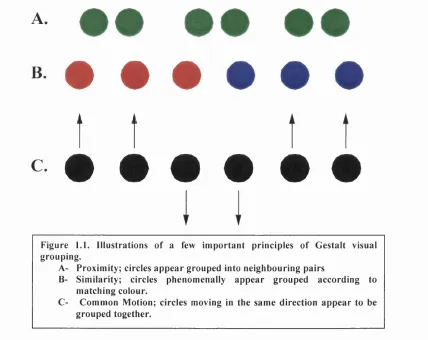
Figure 1.1 Illustrations of a few important principles of Gestalt visual grouping. 30
Figure 1.2A Diagram of a Kaniza triangle. 36
Figure 1.2B Example of stimuli from Palmer & Nelson (2000). 36
Figure 1.3 Schematic example of a trial sequence from Mack et al (1992). 39
Figure 1.4 Schematic representation of a sample trial from Moore & Egeth (1997). 48
Figure 1.5 Schematic example of a trial from Rensink et al (1997). 52
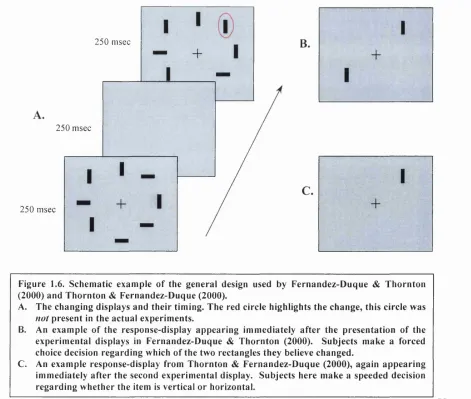
Figure 1.6 Schematic example of the general design used by Fernandez-Duque &
Thornton (2000) and Thornton & Fernandez-Duque (2000).
59
Figure 1.7 Example of the two trial types from Hayhoe et al (1998). 71
CHAPTER 2
Figure 2.1 Schematic example of a possible trial from Experiment 1. 85
Figure 2.2 Schematic example of two display sequences in Experiment I. 89
Figure 2.3 Mean error rate (%) data for Experiment 1. 93
Figure 2.4 Mean of median reaction time data (msecs) for Experiment 1. 94
Figure 2.5 Schematic example of an incongruent trial for Experiment 2. 101
Figure 2.6 Mean error rate (%) data for Experiment 2. 102
Figure 2.7 Mean of median reaction time data (msecs) for Experiment 2. 103
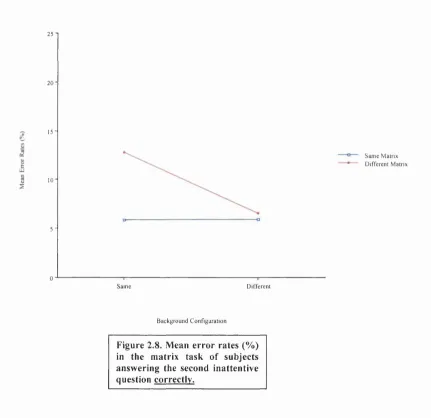
Figure 2.8 Mean error rates (%) in the matrix task of subjects answering the second 106
inattentive question correctly
Figure 2.9 Mean error rates (%) in the matrix task o f subjects answering the second 107
inattentive question incorrectly
CHAPTER 3
Figure 3.1 Example of an incongruent trial from Experiment 3. 118
Figure 3.2 Mean error rate ( %) data for Experiment 3. 122
Figure 3.3 Mean of median reaction time data (msecs) for Experiment 3. 123
Figure 3.4 Mean error rates (%) for all subjects of Experiment 4, pooled across colour 129
group.
Figure 3.5 Mean RT (msecs) for all subjects of Experiment 4, pooled across colour
group.
129
CHAPTER 4
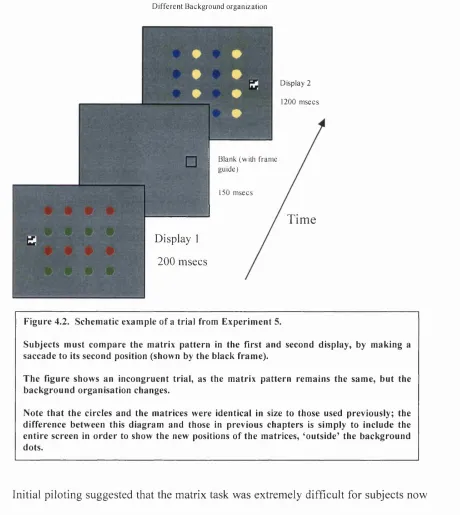
Figure 4.1 Schematic example of a trial from Experiment 5. 141
Figure 4.2 Schematic example of a trial from Experiment 5. 145
Figure 4.3 Mean error rate (%) for all subjects of Experiment 5. 149
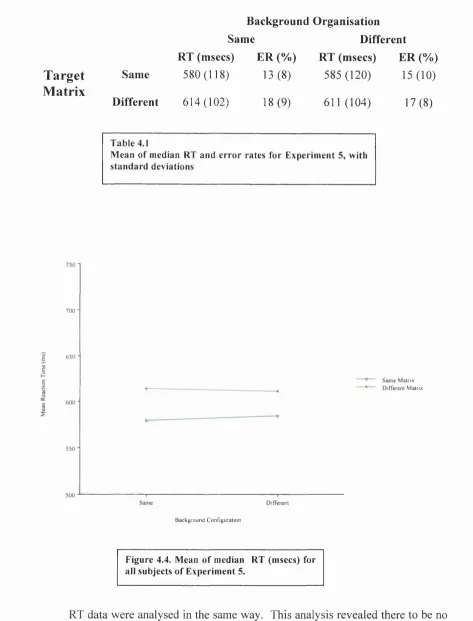
Figure 4.4 Mean of median RT (msecs) for all subjects of Experiment 5. 150
CHAPTER 5
Figure 5.1 Example of stimuli used by Rensink, O ’Regan & Clark (1997). 162
Figure 5.2 Example of a pre-cue trial from Experiment 6. 168
Figure 5.3 Mean accuracy in Experiment 6. 173
Figure 5.4 Schematic example o f post-cue trial from Experiment 7. 178
Figure 5.5 Schematic example of delayed-cue trial from Experiment 7. 179
Figure 5.6 Mean accuracy in Experiment 7. 181
Figure 5.7 Schematic example of the post-cue and delayed-cue trials within
Experiment 8.
184
Figure 5.8 Mean accuracy in Experiment 8. 188
Figure 5.9 Schematic example of pre-cue trials within Experiment 9. 191
Figure 5.10 Mean accuracy in Experiment 9. 194
CHAPTER 6
Figure 6.1 Example of ‘Rubin’s V ase’. 203
Figure 6.2 Example of possible trials from Experiment 10. 207
Figure 6.3 Schematic example of all display types from Experiment 10. 211
Figure 6.4 Schematic example displays from Experiment 12. 224
CHAPTER 7
Figure 7.1 Schematic example of the new critical trials in Experiment 13. 235
Figure 7.2 Schematic example of displays from Experiment 13. 242
CHAPTER 8
Figure 8.1 Sketch of events in a typical trial within Bacon, Gordon & Schulman (1982). 257
Figure 8.2 Schematic example of all the possible trial types in Experiment 14. 261
List of Tables
CHAPTER 2
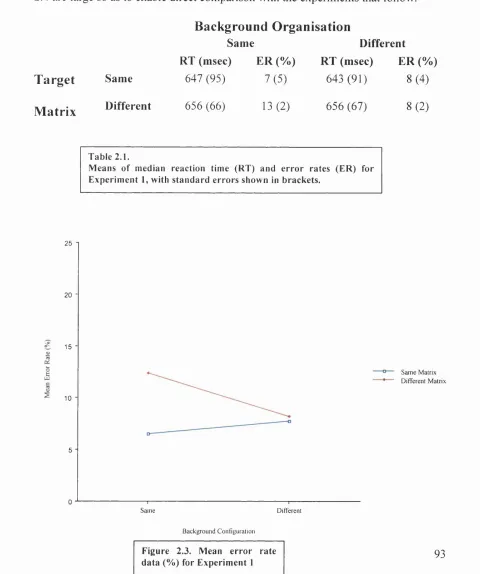
Table 2.1 Mean reaction time (RT) and error rates (ER) for Experiment 1. 93
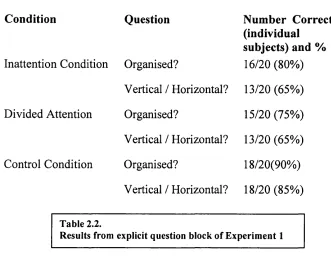
Table 2.2 Results from explicit question block of Experiment 1. 96
Table 2.3 M ean reaction time (RT) and error rates (ER) for Experiment 2. 102
Table 2.4 Results from explicit question block of Experiment 2. 104
CHAPTER 3
Table 3.1 Mean reaction time (RT) and error rates (ER) for Experiment 3. 122
Table 3.2 Results from explicit question block of Experiment 3. 124
Table 3.3 M ean reaction time (RT) and error rates (ER) for Experiment 4, pooled 128
across colour group.
Table 3.4 Results from explicit question block of Experiment 4. 130
CHAPTER 4
Table 4.1 Mean reaction time (RT) and error rates (ER) for Experiment 5. 150
Table 4.2 Results from explicit question block of Experiment 5. 151
CHAPTER 5
Table 5.1 Mean accuracy (%) for Experiment 6. 172
Table 5.2 Mean accuracy (%) for Experiment 7. 180
Table 5.3 Mean accuracy (%) for Experiment 8. 187
Table 5.4 Mean accuracy ( %) for Experiment 9. 194
CHAPTER 6
Table 6.1 Mean accuracy (%), and mean correct RT (msecs) for each experimental
section of Experiment 10.
216
Table 6.2 Mean RT (msecs) and accuracy (%) for each experimental section of
Experiment 11.
222
Table 6.3 Mean RT (msecs) and accuracy (%) for each experimental section. 226
CHAPTER 7
Table 7.1 Percentages of each response-type observed for each event-type in the
default-attention section.
247
Table 7.2 Percentages of each response-type observed for each event-type in the
divided-attention section.
248
CHAPTER 8
Table 8.1 Percentages of each response-type observed for each of the five conditions 268
during the default-attention section.
Table 8.2 Percentages of each response-type observed for each of the five conditions 271
during the attend-background blocks of the focused-attention section.
Table 8.3 Percentages of each response-type observed for each of the five conditions 273
during the attend-foreground blocks of the focused-attention section.
Acknowledgements
First, I would like to thank Jon Driver for the opportunity to study for this
Ph.D. and his help and advice throughout. Also, thanks to Massimo Turatto for
help during the work within Chapters 6 and 7. There are many other people at the
ICN and the Psychology Department who have helped me out, so thanks to them
too; particularly to all the students who have taken part in these studies.
Financial assistance during the completion of this work came first from a
research assistant position with Jon Driver funded by the ESRC, so thanks again to
him and to them. An additional position with Nilli Lavie funded by the HFSP gave
me continued money and an enjoyable diversion into some non- Ph.D. work!
Thanks very much to her and the grant body. Finally, for the last few months the
Psychology Department at UCL provided me with a studentship enabling me to
write-up and be a full-time student for the first time (with all the discounts that
provides!).
Finally, huge thanks to Emiliano Macaluso for reading a (small) part of the
thesis and to him and my family and friends for keeping me entertained so that this
thesis could never become the most important thing.
Chapter 1
General Introduction
“My experience is what I agree to attend to. Only those items which I notice shape my
mind - without selective interests, experience is an utter chaos”
William James, 1890
As indicated in the quotation above, William James recognised long ago that
the vast and complex visual input that typifies daily life is selectively processed,
leading to restricted awareness. However, there have been enduring disputes
concerning the point(s) at which processing becomes selective. Specifically, these
disputes concern whether selective attention, is applied to a pre-organised scene of
segmented items and objects, or whether only at the point of attentional allocation can
any complex processing begin to take place. In order to investigate this question,
research began to examine the extent of processing that may be possible without
attention. ‘Early’ selectionists believed that selective attention was the starting point
for detailed processing (e.g., Broadbent, 1958; Rock & Gutman, 1981), while prior to
attentional allocation only very simple physical properties could be extracted.
Conversely, those who argued for ‘Late selection’ proposed that some detailed
extraction of, for example, stimulus identities could occur prior to attention (e.g.,
Deutsch & Deutsch, 1963; Duncan, 1980; Tipper, 1985). This introductory chapter
will begin with a description of these traditional arguments in attention research and
The second major section of this Introduction will describe more recent work
appearing to contradict even the suggestion that extraction of simple features could
operate without attention. In the early 1990’s, Irvin Rock, Arian Mack and their
colleagues (e.g., Mack, Tang, Tuma, Kahn & Rock, 1992; Rock, Linnett, Grant &
Mack, 1992; Mack & Rock, 1998) questioned the experimental basis on which much
evidence for even simple ‘pre-attentive’ processing of visual features had been
founded. They claimed that previous studies, particularly those using ‘visual search’
methodology, did not control for the possibility of diffuse attention across the scene,
which could result from an intention to search the whole display. Mack, Tang, Tuma,
Kahn and Rock (1992) examined whether ignored Gestalt grouping could be
perceived when intention to search was controlled for, thereby eliminating diffuse
attention across the scene. This form of visual processing (i.e.. Gestalt grouping) was
examined as organisation of the visual scene according to the Gestalt principles of
grouping had previously been widely presumed to occur pre-attentively. Their results
suggested that processing of even simple grouping might not be possible without
attention. Mack et al termed this ‘Inattentional Blindness’ and initially concluded that
little visual processing was possible without attention. However, the paradigm used
by Mack, Rock and their colleagues did not address whether implicit processing of
unattended grouping was possible. More recent work investigating this issue will also
be discussed within this section.
The work of Rock, Mack & colleagues, appears to chime well with the
recently researched phenomenon o f ‘Change Blindness’, which is considered in the
third section. Rensink, O’Regan & Clark (1997) were among the first to describe in
detail conditions under which subjects appear unable (or take a surprisingly long time)
unless specifically attending to the changed item. Despite the fact that changes were
substantial (e.g., one image contained an engine being removed from a plane, which
was the largest object in the display), subjects consistently failed (or took tens of
seconds) to detect such changes in the presence of interruptions (such as flicker across
the screen). Rensink et al described their results as reflecting an inability to detect
changes without focused attention. They argued that the flicker prevented attention
being captured by the change, by masking the small transient associated with the
change via the large transient of the ‘flicker’. The seeming failure of conscious
perception outside the focus of attention is thus reflected in both ‘Change Blindness’
and ‘Inattentional Blindness’ phenomenon. Recent work on the ‘Change Blindness’
phenomenon has also examined whether more indirect and/or implicit measures may
reveal some processing of the unattended change which is inaccessible to explicit
questioning.
Finally, the fourth section will examine processing across saccadic eye
movements. One of the motivations of initial ‘Change Blindness’ research was some
evidence suggesting that little information appears to be integrated from one fixation
to the next, possibly due to the interruption caused by the intervening saccade (e.g.,
Blackmore, Brelstaff, Nelson and Troscianko, 1995; Grimes, 1996; McKonkie &
Currie 1996; Currie, McKonkie, Carlson-Radvansky & Irwin, 2000). Research on
saccadic eye-movements has some relation to attentional research, since saccades
provide one mechanism for overt orienting, and moreover some authors have
suggested attentional causes for the apparently restricted integration across saccades
(e.g., Rensink, O ’Regan & Clark, 1997). Furthermore, control o f overt saccades and
of covert attention may involve some overlapping structures within the brain (e.g.,
processing, particularly with regard to change detection, will be discussed. Finally,
evidence will be outlined suggesting that indirect methods might reveal residual
implicit processing from one eye fixation to the next, just as indirect (or implicit)
measures may also reveal more processing without attention than would otherwise be
observed.
1.1. Traditional Theories of Selective Attention
The ‘Early’ versus ‘Late’ Selection Debate
In 1958 Donald Broadbent formulated his influential theory concerning the
operation of selective processing. His seminal contribution, often referred to as ‘Filter
Theory’ or ‘Early Selection Theory’, made a great impact on the way in which
selective processing was presumed to occur. Broadbent forged his ideas from
auditory experiments of his own, and related studies by Cherry (1953), which utilised
the dichotic-listening technique. Within this paradigm, subjects receive two different
taped messages, one presented to each ear through headphones. They are instructed to
‘shadow’ one of these messages by repeating it aloud to the experimenter. Initial
results with this paradigm suggested that people knew very little about the ignored
stream presented to the unshadowed (or ‘unattended’) ear, at least when tested with
surprise retrospective questioning. For instance, they might not even notice changes
made to the language spoken in the ignored message, although they could notice a
salient physical change (e.g., switches from a male to female speaker). Broadbent’s
explanation of these phenomenon was that only attended messages can be processed
further than a simple analysis of physical characteristics, resulting in only these
terms arises prior to identification, with selection being directed on the basis of
physical cues such as location or pitch; hence the use of the term ‘early selection’ to
define Broadbenf s theory.
Within the visual domain, Rock and Gutman (1981) produced seemingly
analogous evidence that there could be little or no (conscious) processing of
unattended visual stimuli. Their subjects were presented with line drawings of two
different shapes at a time, one drawn in red and one in green. These pictures
overlapped one another, thus they occupied regions of similar acuity on the retina.
Subjects were then asked to rate the pleasantness of either just the red drawings or the
green. At the end of this task subjects were given a surprise recognition test, which
could feature the previously unattended shapes (i.e, those in the stream o f drawings of
the opposite colour to those that they had rated), interleaved with foils. Results
suggested that subjects were unable to recognise the shapes that had previously been
presented in the unattended stream, whereas recall was very good for the previously
attended figures. Rock and Gutman interpreted their findings to suggest that
perception of form may be impossible without attention (see also Rees, Russell, Frith
& Driver, 1999, for a related recent fMRI study looking at unattended processing of
words using measures of neural activity).
It should be noted that the ‘early selection’ evidence in both the auditory
shadowing tasks and in the visual example from Rock and Gutman (1981; see also
Mack, Tang, Tuma, Kahn & Rock, 1992; Mack & Rock, 1998, as discussed later) is
based primarily on explicit tests of memory for unattended items tested with surprise
questions after their presentation. This form of investigation can be criticised on the
basis that it is possible that subjects simply forget the information before being
methods use an explicit test, whereas it is possible that processing o f unattended
information could be implicit and therefore inaccessible to explicit testing. Thus, a
more indirect and on-line method could be more suitable (e.g., see Chapters 2-4 here
and also Castiello, Paulignan and Jeannerod, 1991; Luck, Vogel & Shapiro, 1996;
Moore & Egeth, 1997; Shapiro, Driver, Ward & Sorensen, 1997; Smith & Merikle,
1999; Castiello, 2001; Merikle, Smilek & Eastwood, 2001). These issues are
returned to later in this Introduction and throughout the thesis.
Broadbent’s (1958) theory has remained influential. However it was soon
suggested that ‘early selection’ as defined by his theory was unlikely to account for all
phenomena. For example, Moray (1959) established that if the subjects’ own name
appeared in the unattended channel during dichotic listening, this could effectively
“grab” their attention, such that they then attended this message instead; this
phenomenon is often referred to as the ‘cocktail party’ effect. The fact that attention
can be “grabbed” in this way appears to indicate that some processing of the
unattended stream may have taken place, over and above the simple physical
properties suggested by ‘early selection’.
Additionally, there were some experiments utilising indirect methods that
attempted to assess whether processing of the unattended stream occurred during
dichotic listening tasks. Corteen and Dunn (1974) conditioned people by pairing an
electric shock with certain words such that when these words were heard they initiated
a galvanic skin response (GSR) in the subject. These GSR inducing words were then
presented in the unattended stream of a standard dichotic listening task. Despite an
explicit failure to detect these words when unattended, subjects did demonstrate some
of the GSR response conditioned earlier to these words (see also. Von Wright,
priming could take place from non-shadowed (and thereby presumed unattended)
words, as their presence could bias the subjects’ interpretation of an ambiguous
sentence presented in the attended stream (see also, Lewis, 1970).
As research into these issues shifted more to the study o f visual processing
rather than auditory processing, further evidence amassed to suggest that more
extensive processing o f unattended stimuli was possible than envisaged by Broadbent,
These newer tests utilised more indirect methods. The behavioural effects of
irrelevant distractor items on responses to target items provided one way in which this
issue was addressed. The idea behind this method is that if irrelevant (thereby
designated ‘unattended’) items are processed to the extent that they are identified,
then it should be possible for their identity to alter responses to the attended task. For
example, Eriksen and Eriksen (1974) demonstrated that flanking distractor letters with
an incongruent response-mapping, in relation to the central target, could increase RT
to the target compared to flanking distractor letters with the same response-mapping
as the target. The result of this indirect measure was taken to suggest that it was
possible to identify the task-irrelevant items outside the focus of attention, even when
against one’s intention.
Tipper (1985) introduced another indirect measure, also designed to assess
whether unattended items are processed beyond mere physical characteristics. His
task was similar to that used by Rock and Gutman (1981), as subjects again viewed
two overlapping figures in each display, one drawn in green and one in red. Subjects
again attended only to one of the two coloured streams of objects. Rather than rate
the pleasantness of the attended image, subjects were asked to name the object as
quickly as possible. Tipper manipulated successive presentations in the attended and
stream could then reappear in the attended stream. Results suggested that naming
latency was consistently slower for attended items that had previously appeared in the
unattended stream. Tipper concluded that unattended items could be identified and
actively inhibited thereby producing a slowed response if the same (or a related) item
was subsequently attended. This phenomena was dubbed ‘negative priming’ (see also
Beech, McManus, Baylis, Tipper & Agar, 1991; Tipper, 1991).
Thus, the use of indirect tests, such as the effects on reaction time or accuracy
of irrelevant distractors and negative priming, appeared to turn the tide in the late
1980’s towards the ‘late selection’ theory of selective attention. Many researchers
believed complex analysis of unattended items could be revealed if assessed with the
correct method. For example, Duncan (1980, p. 291) suggested that before selection
“there is already a full analysis o f stimulus form and much extraction of stimulus
meaning”.
The fact that neither ‘early selection’, which suggested there was little
processing without attention, nor ‘late selection’, in which all items were said to
receive a great degree of processing prior to attention, were likely to describe
processing in all situations was first noticed and addressed many years ago by Anne
Treisman (1960). She suggested that the filtering required when processing a large
amount of stimuli may not completely prevent further processing o f unattended
stimuli (as ‘early selection theory’ would suggest), nor does it allow unrestricted
processing of all these stimuli (as ‘late selection’ would propound). Instead filtering
may result in an ‘attenuation’ in the processing of unattended stimuli, such that only
weak processing of these items is possible. However, as this processing is relatively
weak, only in some special circumstances will identification of these unattended items
can be recognised as being intrinsic to the stimulus itself; for example, if the stimulus
is primed in the context of the experiment (as in Corteen & Dunn, 1974 and Mackay,
1973, discussed above) or due to its personal pertinence (such as your own name, see
Moray, 1959).
The idea of some compromise between ‘early’ versus ‘late’ selection, is
echoed in recent work on the role of ‘perceptual load’ in determining the extent of
processing of unattended stimuli (see, Lavie & Tsai, 1994; Lavie, 1995; 2000). This
recent account states that a vital factor governing processing of unattended items may
be the amount of task-relevant clutter or information that the perceptual system is
dealing with at that time. Specifically, it is suggested that there is a point at which the
perceptual system reaches its capacity. Up until this vital point, all items are
involuntarily processed. Once capacity is fully consumed by task-relevant items,
processing of unattended items may become impossible. Therefore, according to this
theory, it is only in highly loaded situations that perceptual processing will be
selective.
The idea that selective attention results in attenuated responses to unattended
stimuli, with the amount of processing possible for them being dependent on the
present conditions, has recently been supported extensively by neuroscientific studies
of attention. Studies utilising single-cell recordings in animals, or ERP and functional
imaging studies in the human brain, have suggested that response to unattended items
is greatly reduced as compared to attended items, but is often not entirely obliterated,
especially under low-load conditions (e.g.. Van Voorhis & Hillyard, 1977; Moran &
Desimone, 1985; Corbetta, Meizin, Dobmeyer, Schulman & Petersen, 1990; Mangun,
Grouping, visual search and ‘Feature Integration Theory’
The classic issue concerning the extent of processing prior to attentional
selection may also be related to the work of Gestalt Psychologists in the early 20^
century (e.g., Wertheimer, 1923). They argued that the perceptual input was
automatically organised by the perceiver. The manner in which this organisation was
conceived to proceed followed Gestalt laws of grouping. These laws describe the
grouping together of items that are, for example, similar to one another, adjacent or
sharing common motion (see Figure 1.1).
A .
B.
C .
Figure 1.1. Illustrations of a few im portant principles of G estalt visual grouping.
A- Proximity; circles a p p e a r grouped into neighbouring pairs
B- Similarity; circles phenomenally a p p e a r grouped according to matching colour.
C- Com m on Motion; circles moving in the sam e direction a p p e a r to be
grouped together.
The idea of Gestalt organisation of the visual input can be related to the debate
discussed in the preceding section, as one can ask whether such organisation arises
pre-attentively or post-attentively. Traditionally, Gestalt grouping has been
considered to arise relatively early in visual processing (e.g., prior to object
recognition). Moreover, Gestalt grouping is a fundamental part of many recent
descriptions o f ‘pre-attentive’ processing (e.g., Treisman, 1982; Duncan, 1984; Driver
& Baylis, 1998). It appears to make potential sense that if the scene can indeed be
divided into candidate objects, attention might then be more usefully deployed to the
object of most interest. Note that while this segmentation of the visual scene into
‘grouped’ elements was presumed by many late selectionists (e.g., Duncan, 1980;
Tipper, 1985), it was also taken to be possible prior to selection by some early
selectionists (e.g., Treisman, 1982).
Much of the evidence taken to suggest pre-attentive segmentation of the visual
input has come from the ‘visual search’ paradigm (e.g., Treisman & Gelade, 1980;
Treisman, 1982; 1985). Within this method, subjects typically search for the presence
or absence o f a target item amongst a varied number of non-target items. The crux of
this paradigm is the time taken to detect a target in relation to the number of non
target distractor items in each display (the set size). If an item can be detected
efficiently in parallel, performance may be relatively unaffected by increases in the
number of non-target items. Such a target is said to ‘pop-out’ from its surrounding
distractor items efficiently and effortlessly. By contrast, a steeply linear increase in
target search time with number of non-target distractor items is often taken to reflect
serial application of focused attention to each display item in succession (e.g.,
Treisman & Gelade, 1980; but see Townsend, 1971, 1990). Plotting search time
against set size in such cases can reveal a characteristic pattern of slope gradients,
which are approximately twice as steep for trials in which there is no target item
(negative trials) than for trials with a target present (positive trials). This particular
on average require search o f only half the set, whereas negative trials may necessitate
an exhaustive search of all non-targets.
Treisman & Gelade (1980) classified items that could be detected in parallel as
those with a salient unique feature (e.g. colour, orientation or form) different to the
surrounding non-targets. However, targets unique only in a conjunction o f features
from the surrounding items (e.g. a red circle amongst blue circles and red crosses)
were originally reported to result in a linear increase in search time against set size,
with the characteristic 2:1 slope for negative versus positive trials (though see Wolfe,
1998, for more recent caveats). Treisman & Gelade (1980) developed the feature
integration theory to explain these results and related findings. They suggested that individual visual features (e.g. ‘red’ or ‘circle’) may be represented in feature-specific
maps of the entire scene, which are efficiently extracted in parallel. Targets with a
unique feature could then be detected automatically and effortlessly (feature search).
By contrast, detecting targets characterised only by a unique combination o f features
(conjunction search) was thought to require integration of information, at a shared
spatial location, from more than one feature-specific map. It is this integration that
Treisman & Gelade thought must require focused attention, leading to a recursive
serial process when conjunction search is required.
Treisman and Gelade (1980, see also Treisman, 1982) posited a role for
Gestalt grouping processes within their ‘Feature Integration Theory’. They believed
that if grouping processes operated pre-attentively, they should be mediated by
discriminations based on unique features but not by discriminations formed from a
conjunction of different features. That is, as simple features appear to be detected
pre-attentively, if grouping processes also operate pre-attentively they should rely on
Treisman and Gelade (1980) seemingly demonstrated that this was the case, as their
subjects efficiently segregated items differing in colour or shape into separate groups
but were inefficient if the elements differed according to a combination of colour and
shape. They concluded that processing of visual grouping on a feature basis was
possible pre-attentively.
Criticisms of ‘Feature Integration Theory’
Duncan & Humphreys (1989) challenged Treisman & Gelade's (1980)
‘feature integration theory’ account of visual search. They suggested that, in general,
search becomes less efficient with increased similarity between targets and non
targets and decreased similarity between non-targets, producing a continuum of
search efficiency rather than the dichotomy of strictly parallel versus strictly serial
search that feature integration theory had proposed. Duncan & Humphreys posited
that the importance of similarity lies in the part that this plays in grouping processes
(see also, Duncan & Humphreys, 1992). Less similarity between target and non
targets allows simpler segmentation of all non-targets into a discrete group.
Additionally, the more similar the non-targets, the easier their collective segmentation
becomes.
Further evidence against ‘feature integration theory’ in its original form came
from findings that some o f the properties leading to parallel search (i.e. ‘pop-out’) are
more complex than the simple 2D features that Treisman and colleagues envisaged.
For instance, Enns & Rensink (1990) demonstrated that parallel search was possible
for targets differing from non-targets only in three-dimensional properties, derived
from 2D pictorial cues. Search for 3D target boxes drawn at different orientations in
search was pre-attentive extraction of 3D stimulus characteristics. Furthermore,
Davis & Driver (1994) reported that parallel search can take place for items that are
distinguished by yielding subjective figures, suggesting their pre-attentive formation.
Recently Humphreys & Muller (2000) argued that the figure-ground relations of
stimuli can also be extracted in parallel. Visual search findings of this type suggest
that the ‘pre-attentive segmentation’ inferred from visual search performance might
be considerably more sophisticated than mere extraction of very simple 2D features.
There have also been criticisms of the theory based on limitations with the
terminology of ‘parallel’ versus ‘serial’ search. First, Townsend (1971; 1976; 1990)
has convincingly argued that judging whether a process is operating in a serial or a
parallel manner from just the search slopes themselves may be an inadequate method
to study the mechanisms involved. For example, serial search has been presumed on
the basis of steep search slopes, whereas in fact Townsend (1971; 1976; 1990) argued
that such search slopes could in fact reflect inefficient parallel search. Wolfe (1998)
raises further criticisms of the dichotomy. For example, he also suggests that slopes
appearing to indicate serial search could in fact reflect processing in a limited-
capacity parallel model (e.g., Ratcliff, 1978).
Object-based visual attention
In addition to evidence from visual search paradigms, proponents of
‘object-based’ theories of visual attention have forwarded the idea that pre-attentive processes
segment the visual input according to the Gestalt principles of grouping discussed
earlier, resulting in candidate visual objects to which attention is directed (see Driver
& Baylis, 1998; Scholl, 2001 for reviews). Duncan (1984) provided an influential
demonstration that visual attention may be allocated within segmented objects rather
were equally good at judging two properties o f one object as at judging just one
property of the same object. However if the two properties were on two separate (but
spatially overlapping) objects, performance was impaired (see also, Baylis & Driver,
1993; Lavie & Driver, 1996). Additionally, Egly, Driver & Rafal (1994)
demonstrated that an invalid spatial cue produced a greater cost to performance when
the target appeared in a different object than when the target was presented equally far
from the cue, yet within the same object.
Many studies have shown analogous ‘object-based’ attentional effects using
stimuli where the objects concerned are defined by Gestalt rules of perceptual
grouping. For example. Driver & Baylis (1989) demonstrated a dominance of
grouped objects compared to absolute spatial position for flanker interference effects,
akin to those studied by Eriksen & Eriksen (1974). Flanking distractors furthest from
the target item were grouped by common motion with the target. This grouping led to
greater distractor interference from these furthest flankers, as compared with flankers
much nearer to the target but not grouped with it by motion. These results and others
(e.g., Atchley & Kramer, 2001; Pomerantz & Gamer, 1973; Pomerantz & Pristach,
1989; Watson & Kramer, 1999) have been used as evidence to support the idea that
visual attention is directed towards already segmented groups or objects, the key
assertion being that these proto-objects are pre-attentively formed utilising Gestalt
mles of grouping (for recent studies on possible limits of object-based attention
proposals see, for example, Davis, Driver, Pavani & Shepherd, 2001; Lavie & Driver,
B.
Grouping may occur ‘later’ than traditionally accepted
Proposals that grouping may operate pre-attentively stemmed initially from the
belief that grouping processes typically operate at relatively early stage of visual
perception. However, some research suggests that this may not necessarily be the
case. Rock and Brosgole (1964) provided evidence apparently suggesting that one
form of grouping, retinal proximity, might not occur as early as previously assumed.
Their subjects correctly judged an arrangement of dots to be grouped into columns
despite the fact that the stimulus plane was tilted away from the subjects resulting in
the dots actually being closer horizontally on the retina. Thus, this result suggests that
proximity grouping must have been calculated after size-constancy operations on the
spacings, which took depth into account.
A.
Figure 1.2.
A- D iagram o f a K aniza triangle.
Palmer and colleagues have extended this work in an attempt to show that
grouping can be constrained by other relatively sophisticated perceptual processes.
For example, Palmer and Nelson (2000) proposed that grouping can follow the
perception of illusory figures. Illusory figures, such as the famous Kaniza triangles
(see Figure 1.2A), are figures wherein the viewer perceives areas containing zero
contrast (such as a monotonous white) as real contours based on the presence o f areas
of genuine contrast. However, the real high-contrast regions must conform to certain
rules. Most importantly, they must be arranged so as to create the impression that one
object is occluding another. Palmer and Nelson (see Figure 1.2B), working from the
idea that illusory contours are perceived only after computation o f depth cues created
from occluded surfaces, constructed displays wherein subjects were asked to chose
which side of a display a central column of figures appeared to ‘belong with’ (i.e.,
was grouped with).
The vital question was whether subjects would choose the side that was more
similar based on illusory contour information, or the side that had the most physically
similar inducers. Subjects consistently grouped the central stimuli with elements that
were similar based on illusory contours. The authors concluded that grouping
processes can be constrained by the perception of illusory contours. Other
experiments appear to suggest that grouping processes can similarly be affected by;
brightness constancy (Rock, Nijhawan, Palmer & Tudor, 1992) and amodal
completion (Palmer, Neff & Beck, 1996).
However, the evidence of Palmer and colleagues, discussed above, does not
take in account whether an earlier form of grouping could constrain the perception of,
for example, illusory figures. Certainly some grouping processes may operate later,
conclude that there is no grouping prior to this point. Moreover, subjects in these
experiments were generally given as much time as they wanted to make their decision
with unrestricted viewing, so their judgments could not be described as necessarily
capturing the earliest form o f perception. It is also controversial whether perception of
illusory contours can itself be characterised as ‘later’ processing, (see Davis & Driver,
1994). Indeed, neurophysiological evidence now suggests construction of illusory
figures is early both anatomically (within V2) and in time (e.g., Peterhans & von der
Heydt, 1989; von der Heydt & Peterhans, 1989). Additionally, the work of Palmer
and his colleagues assumes visual processing to be operating in a unidirectional feed
forward manner, which is unlikely to be the case. Finally, these experiments on
apparently sophisticated influences upon grouping (e.g.. Palmer and Nelson, 2000)
have not yet provided a critical test for the role of attention.
1.2. ‘Inattentional Blindness’: Is there any processing
under complete inattention?
It is not universally accepted that even simple forms of segmentation for the
visual input do occur automatically, at a ‘pre-attentive’ level of processing. Rock,
Mack and their colleagues (e.g.. Mack, Tang, Tuma, Kahn and Rock, 1992; Rock,
Linnet, Grant & Mack, 1992; see also Mack and Rock, 1998) strongly challenged the
suggestion that Gestalt grouping operates without attention. They argued that past
studies relied on methodologies that failed to eliminate the possibility of diffuse
attention. Specifically, in visual-search paradigms (and some of the studies on object-
based attention), observers had the intention to search for particular targets. This
intention to search can be considered as having at least two separate aspects: 1. An
and 2. The intention to search for the particular characteristics of the pre-defined
target. Hence, although the processing traditionally taken to reflect ‘preattentive’
vision in parallel search tasks may indeed arise without serial focused attention, it
could be due instead to diffuse attention across the image (as all locations are in fact
potentially task-relevant). Moreover, there may be active priming of the stimulus
characteristics that distinguish targets from non-targets. Treisman (1993) herself
suggested that “when attention is narrowly focused elsewhere, pop-out no longer
occurs”. If pop-out search is not possible with scarce attentional resources, then in
the extreme this could mean that no perceptual grouping (not even segregation of
highly distinct target and non-targets) can occur pre-attentively.
Mack et al (1992) developed a new methodology with the aim of assessing
whether visual grouping can take place entirely without attention, under conditions of
C R IT IC A L T R IA L
■ ■ ■ ■ ■ ■
□ □ □ □ □ □
■ ■ ■ ■ ■ ■
□ □ □
■ ■
■ ■ ■
□ □ □
Trial 1
so-called “true inattention”. Subjects performed a difficult central task wherein they
judged which of the two lines of a central cross was longer. This cross was presented
on an entirely task-irrelevant background pattern (see Figure 1.3 for example displays
from one of these studies). The irrelevance of the background and the difficulty of the
foreground task were expected to compel subjects to maintain their attention on the
cross.
After responding to the cross for a number of trials (usually two), subjects
were then unexpectedly asked after the next trial some questions about the patterns
that had appeared in the background. For example, they could be asked whether there
had been any change in the organisation of the background pattern o f the previous
display. If they detected this change, they were asked which area had changed. Mack
et al (1992) asked three sets of these questions. The first ‘surprise’ question was
taken to be a measure of background processing under pure “inattention”. Subjects
did not expect to be asked about the background, it had never been task-relevant up to
this point. During the trial immediately following this first question (on which
subjects again had first to judge the central cross), subjects were now presumably
aware that they might subsequently be asked about the background; thus, the
subsequent question was taken to be a measure of processing under “divided
attention” conditions. For the final control question, subjects were told to pay
attention both to the cross and the background in advance. Rock, Mack and their
colleagues repeatedly showed that subjects were at chance when attempting to answer
the first set of surprise ‘inattentive’ questions about the unattended background, for a
variety of stimulus types and stimulus dimensions (Mack, Tang, Tuma, Kahn and
They claimed that these results conclusively proved that there was no visual
grouping without attention stating that “«o perception of texture segregation or Gestalt
grouping” (Mack, Tang, Tuma, Kahn and Rock, 1992, p 488) takes place without
attention. They coined the term ‘Inattentive Blindness’ (IB) to describe this general
phenomenon. The word ‘inattentive’ was used to differentiate their conditions from
those previously used in supposed studies of putative ‘pre-attentive’ processing (e.g.,
visual search), which may in fact have involved diffuse attention, as noted above. The
term ‘Inattention’ asserts that the ignored items are utterly without attention (see also,
Joseph, Chun & Nakayama, 1997; Ben-Av, Sagi & Braun, 1992).
Mack et al’s (1992) experiments were taken to suggest that elements grouped
by similarity, proximity and simple texture-segregation were not perceived under
inattention within their paradigm. Following on from this original study. Rock,
Linnet, Grant and Mack (1992) further examined whether any different types of
stimuli could be perceived under inattention when using their ‘surprise question’
paradigm. These experiments utilised the same general procedure as Mack et al
(1992), in that subjects first judged which of the two lines o f a central cross was
longest, while task-irrelevant and unexpected stimuli could be placed in the
background behind the cross. This series of studies suggested that although subjects
could retrospectively report the presence, colour and location of an unattended ‘blob’
or geometric shape, judging its shape appeared impossible under inattentive
conditions. Further striking experiments reported by Mack and Rock (1998) placed
the cross stimulus for the line judgement task at the periphery o f subjects’ visual field,
and the ‘inattended’ item actually at fixation. Results suggested that ‘Inattentional
Blindness’ for simple geometric shapes, presented on the fovea, was actually more
item in the periphery. Many subjects (89% or 15/18 subjects) now apparently did not
even detect the presence of the shape.
It should be noted the Mack, Rock and their colleagues generally relied
entirely on retrospective explicit reports in their evidence for putative ‘Inattentional
Blindness’. As discussed earlier in relation to ‘late selection’, more indirect and on
line measures might reveal implicit processing. This point will be returned to in
detail, once some additional evidence (seemingly in support of Mack and Rock), plus
other experiments with a similar theme, have been examined.
Further examples of ‘Inattentional Blindness’
Simons (2000) highlights the fact that a striking example o f seeming
‘Inattentional Blindness’ was discovered as long ago as 1975. Neisser and Becklen
(1975) developed a paradigm that they termed ‘selective looking’, as an attempt to
create a visual analogue for dichotic listening (c.f. Cherry, 1953; Broadbent, 1958).
Within this method, a film was created of a number of people passing a basketball to
one another superimposed onto another film of other people playing a ‘hand-slapping’
game. Subjects were required to attend to one or other of the games. Results
demonstrated that unexpected events (such as the disappearance of the ball) occurring
in the unattended stream were not detected. In another study (Becklen & Cervone,
1983), observers failed to detect an additional person entering and opening an
umbrella in the centre of the screen, when part of the unattended stream.
Simons and Chabris (1999) followed up these studies with a similar paradigm.
They superimposed on film two sets of players passing a basketball, one dressed in
black and one in white. Subjects were required to count the number of passes made
by either the team in black or the team in white. Whilst this continued, a man in a
event, as over a number of conditions approximately 46% missed the unexpected
event. Simons and Chabris (1999) confirmed that such results were not due to the
transparency caused when superimposing the film, as they choreographed all the
events to occur in real time so that a single film could be taken without utilising any
special effects. These experiments are an entertaining demonstration of selective
attention. However, as in Mack and Rock’s studies (e.g.. Mack, Tang, Tuma, Kahn &
Rock, 1992), because of their reliance on explicit and/or retrospective measures they
leave open the possibility that there may be considerable implicit on-line processing
of unattended events.
Additionally, in a brain imaging study utilising fMRI, Rees, Russell, Frith and
Driver (1999) appeared to support the suggestion that observers can be effectively
‘blind’ to certain aspects of unattended events. Their study involved two
simultaneously presented stimulus streams, one in red and one in green superimposed
onto each other, similarly to the stimuli of Rock and Gutman (1981) and Tipper
(1985) that we discussed earlier. While in the MRI scanner, subjects were required to
attend to the red stream featuring pictures of everyday items, or the green stream
which contained words. Results demonstrated that activation specifically related to
word versus non-word processing (e.g. in the posterior left temporal cortex)
disappeared when subjects attended to the picture stream, despite the fact that words
were still presented directly at the fovea. Although this study supports the idea that
some aspects o f unattended items (here word identity) may not be processed, it is
possible that the null result for unattended words is due to limitations in imaging
techniques presently available. Moreover, word identification is presumably a higher-
Effect of reducing attentional resources on ‘pre-attentive’ processing
Some further research which appears harmonious with many of Mack and
Rock’s claims (e.g., Mack & Rock, 1998) has involved demonstrations of a
performance cost in tasks previously thought to be possible pre-attentively, when
attention is occupied to some extent on a second demanding task. Subjects within
Joseph, Chun and Nakayama’s (1997) study performed an attentionally-demanding
central task, within which they had to report the identity of the single white letter
amongst black letters in a rapid serial visual presentation (RSVP) of 12 letters. This
task has been previously demonstrated to effectively occupy attentional resources,
inducing the well known ‘attentional blink’ phenomenon (e.g., Raymond, Shapiro &
Amell, 1992). During the RSVP task, a visual search array of oriented Gabor patches
were presented for 150 msecs around the central task, and subjects were instructed to
detect the single Gabor patch that was at a different orientation to the others. Despite
this detection of the orientation ‘oddball’ being extremely accurate when performed
without the concurrent letter task (approx. 94%), it fell to around 60% when subjects
were also required to identify the white letter. Further experiments confirmed that the
orientated Gabor-patch search-task used in the task conformed to the standard pattern
of shallow search slopes, previously described as indicative of a parallel pre-attentive
processing, when performed as a single task. Joseph et al supported their attentional-
demand explanation for the results with the fact that 667 ms after presentation of the
white letter, performance in the search task recovered, suggesting that attention was
no longer occupied with processing of the target letter. This lag period is expected in
line with the ‘attentional blink’ phenomena (e.g. see Raymond, Shapiro & Amell,
1992; Duncan, Ward & Shapiro, 1994). Joseph et al concluded that their results
be extracted in primary visual cortex) are unlikely to be processed independently of
attention.
Further evidence suggesting that engaging attention within one task impairs
performance in another task that had previously been presumed to operate
independently from attentional allocation was outlined by Ben-Av, Sagi & Braun
(1992). Similarly to Joseph et al, their subjects performed two tasks, one to occupy
attentional resources and one to examine whether perceptual grouping could be
carried out while attention was occupied in this way. While performing an
attentionally-demanding identification task an array of items simultaneously
appeared; across a number of experiments these items could be grouped by stimulus
similarity or proximity into horizontal rows or vertical columns. Subjects were
required to indicate whether the grouped stimuli were vertically or horizontally
arranged. Results demonstrated that subjects were poor in identifying the grouping
while attending to the form identification task.
These experiments illustrate the limitations in making dogmatic statements
regarding whether certain processing strictly is or is not possible pre-attentively.
They demonstrate that processing can be ‘attenuated’ by attentional load in certain
circumstances, in a similar manner to that suggested by Treisman in 1960 (see also,
Lavie & Tsai, 1994; Lavie, 1995; 2000)
Implicit processing within ^Inattentional Blindness’ paradigms
The suggestion by Mack & Rock (see Mack, Tang, Tuma, Kahn & Rock, 1992;
Rock, Linnett, Grant & Mack, 1992; Mack & Rock, 1998) that earlier investigations
of so-called ‘pre-attentive’ processing without attention, may not have controlled for