
University of Windsor University of Windsor
Scholarship at UWindsor
Scholarship at UWindsor
Electronic Theses and Dissertations Theses, Dissertations, and Major Papers
9-27-2019
An Approach Of Features Extraction And Heatmaps Generation
An Approach Of Features Extraction And Heatmaps Generation
Based Upon Cnns And 3D Object Models
Based Upon Cnns And 3D Object Models
Shivani PachikaUniversity of Windsor
Follow this and additional works at: https://scholar.uwindsor.ca/etd
Recommended Citation Recommended Citation
Pachika, Shivani, "An Approach Of Features Extraction And Heatmaps Generation Based Upon Cnns And 3D Object Models" (2019). Electronic Theses and Dissertations. 7830.
https://scholar.uwindsor.ca/etd/7830
This online database contains the full-text of PhD dissertations and Masters’ theses of University of Windsor students from 1954 forward. These documents are made available for personal study and research purposes only, in accordance with the Canadian Copyright Act and the Creative Commons license—CC BY-NC-ND (Attribution, Non-Commercial, No Derivative Works). Under this license, works must always be attributed to the copyright holder (original author), cannot be used for any commercial purposes, and may not be altered. Any other use would require the permission of the copyright holder. Students may inquire about withdrawing their dissertation and/or thesis from this database. For additional inquiries, please contact the repository administrator via email
AN APPROACH OF FEATURES EXTRACTION AND HEAT MAPS
GENERATION BASED UPON CNNS AND 3D OBJECT MODELS
By
Shivani Pachika
A Thesis
Submitted to the Faculty of Graduate Studies
through the School of Computer Science
in Partial Fulfillment of the Requirements for
the Degree of Master of Science
at the University of Windsor
Windsor, Ontario, Canada
2019
AN APPROACH OF FEATURES EXTRACTION AND HEAT MAPS
GENERATION BASED UPON CNNS AND 3D OBJECT MODELS
by
Shivani Pachika
APPROVED BY:
______________________________________________
M. Hlynka
Department of Mathematics and Statistics
______________________________________________
A. Ngom
School of Computer Science
______________________________________________
X. Yuan, Advisor
School of Computer Science
iii
DECLARATION OF ORIGINALITY
I hereby certify that I am the sole author of this thesis and that no part of this thesis has
been published or submitted for publication.
I certify that, to the best of my knowledge, my thesis does not infringe upon anyone’s
copyright nor violate any proprietary rights. Any ideas, techniques, quotations, or any other
material from the work of other people included in my thesis, published or otherwise, are
fully acknowledged in accordance with the standard referencing practices. Furthermore, to
the extent that I have included copyrighted material that surpasses the bounds of fair
dealing within the meaning of the Canada Copyright Act, I certify that I have obtained a
written permission from the copyright owner(s) to include such material(s) in my thesis
and have added copies of such copyright clearances to my appendix.
I also declare that this is an exact copy of my thesis, including any final revisions, as
approved by my thesis committee and the Graduate Studies office and that this thesis has
iv
ABSTRACT
v
DEDICATION
To the almighty God, my beloved parents Mr. Devender Reddy and Mrs. Jaya, my loving
vi
ACKNOWLEDGMENTS
I would like to take this opportunity to thank my supervisor Dr. Xiaobu Yuan for his
encouragement and support in presenting this thesis work. I have been extremely fortunate
to have a supervisor who has given me the freedom to explore things on my own, and with
his patient guidance whenever my steps faltered. His kindness and support have helped me
overcome many problems, throughout my project. It has been a great pleasure to work
under him as one of his research project students.
I would like to extend my gratitude to my thesis committee members Dr. Myron Hlynka
(Department of Mathematics and Statistics) and Dr. Alioune Ngom (School of Computer
Science) whose suggestions and recommendations significantly improved the quality of
this work. I would also like to thank them for spending their valuable time to assess the
thesis from my proposal to defense. I would also like to thank the secretaries of the
Computer science department, Mrs. Christine Weisener and Mrs. Melissa Robinet for all
the assistance, motivation and support given to me.
My special thanks goes to my friends and relatives for their constant encouragement and
love they provided to me at all times. I express my sincere appreciation for my fellow lab
vii
TABLE OF CONTENTS
Declaration of Originality………...iii
Abstract ……….………….………iv
Dedication ……….………….…….v
Acknowledgments……….……….……vi
List of Tables………...………x
List of Abbreviations/Symbols………...xi
List of Figures...……….xii
1 Introduction ……….….….….1
1.1
Overview...1
1.2
Sensing Technology comparison...………2
1.3
Problem Statement ...……….3
1.4
Motivation.………3
1.5
Thesis Contribution………...4
1.6 Structure of the thesis ……….…...4
2 Background Study………...………...5
2.1 3D model……….…………...5
2.2 Rendering………...…………5
2.3 Virtual 3D city model………...………...…...5
2.4 3D GIS………...6
2.5 Feature………...7
2.6 Feature Extraction……….………….……7
2.7 Feature Selection……….………...7
2.8 2D Feature Extraction Techniques……….…………8
viii
2.10 Computer vision tasks………....16
2.11 Object detection Algorithms……….……….18
2.11.1 Traditional methods.……….19
2.11.2 Deep learning methods……….20
2.12 Heat maps ……….….28
2.13 Annotations………....29
3 Literature Survey.……….30
3.1 Static object feature extraction techniques……….…...30
3.2 Dynamic object feature extraction techniques………...31
3.3 Static and Dynamic object feature extraction techniques…………...35
3.4 Static and Dynamic object detection techniques………...38
3.5 Related Works………..40
4 Proposed Methodology...43
4.1 Proposed Methodology
Overview ………...43
4.1.1 Training information ...44
4.2 Cars..………45
4.3 Buildings.……….48
4.4 Trees ………...……….……55
4.5 Traffic light....……….………….58
4.6 Working of the overall system...………...61
4.7 Working of the individual modules..………62
5 Implementation and Experiments.……….….66
5.1 Software and Hardware Requirements...………66
5.2 Cars……….….67
5.3 Buildings.……….71
5.4 Trees ………74
ix
6 Results and Evaluation...……….….78
6.1 Cars...78
6.2 Buildings and Trees……….………79
6.3 Performances Measures...81
6.4 Evaluations and Comparisons………..82
6.5 Advantages of proposed methodology.………....84
6.5.1 Advantage to dependency modules……….85
6.6 Limitations……….……….….85
7 Conclusion and Future Works……….86
7.1 Conclusion……….……….….86
7.2 Future Works ………...86
References/Bibliography……….87
Appendix ………..94
x
LIST OF TABLES
Table 1: Sensing Technology Comparison [49]……… 2
Table 2: List of tools used for implementation and experiments ... 66
Table 3: Suwajanakorn, S., et al. 2018 vs Our approach ... 82
Table 4: Comparison between different Keypoint Orientation formulae ... 83
xi
LIST OF ABBREVIATIONS/SYMBOLS
2D 2-dimensional
3D 3-dimensional
RGB Red Green Blue
OSM OpenStreetMap
XML Extensible Markup Language
GIS Geographic Information System
GPS Global Positioning System
LIDAR Light Detection and Ranging
SIFT Scale Invariant Feature Transform
SURF Speeded-Up Robust Feature
HOG Histogram of Oriented Gradients
FAST Features from Accelerated Segment Test
NMS Non-Maximal Suppression
BoF Bag-Of-Features
SVM Support Vector Machine
SSD Single-Shot Detector
ReLU Rectified Linear Units
RoI Region of Interest
CNN / ConvNet Convolutional Neural Network
FCN Fully Convolutional Network
R-CNN Regions based/with Convolutional Neural Networks
RPN Region Proposal Networks
R-FCN Region-based Fully Convolutional Networks
YOLO You Only Look Once
xii
LIST OF FIGURES
Figure 1: Google's self-driving car [69]……… 2
Figure 2: Uber’s autonomous car [11]………. 2
Figure 3: Views of the virtual 3D city model of Nancy [4]……….. 6
Figure 4: 3D-GIS [4]……… 6
Figure 5: Illustrative image local features (a) input image (b) corners (c) edges (d) regions [5]…. 7 Figure 6: Common 2D Feature Extraction Methods [6]……….. 8
Figure 7: Left: Input image and Right: Canny edge image [10]……….………… 10
Figure 8: Classification of popular corner detectors and descriptors [54]……… 12
Figure 9: 3D shape model rendered with different virtual cameras [72]……….. 15
Figure 10: Three most common computer vision tasks [1]………. 16
Figure 11: Steps for image classification using CNN [1] ... 17
Figure 12: Input and Output for object localization problems [1] ... 17
Figure 13: Multiple object detection and localization [1] ... 18
Figure 14: Illustration of HOG feature descriptors & SVM weights used for classification [74]… 20 Figure 15: CNN Architecture [1] ... 21
Figure 16: R-CNN Architecture [75] ... 22
Figure 17: FAST R-CNN Architecture [20] ... 23
Figure 18: SSD Architecture [1] ... 24
Figure 19: Faster RCNN Architecture [17] ... 25
Figure 20: Region Proposal Network (RPN) [17] ... 25
Figure 21: R-FCN Architecture [1] ... 26
Figure 22: Applying ROI onto the feature maps to output a 3*3 vote array ... 26
Figure 23: An illustration showing the effect of increasing the dilation of 3*3 filter [31] ... 27
Figure 24: Heatmap generated on a sample image [28] ... 29
Figure 25: Definition and Illustration of 20 selected vehicle key points [46] ... 32
Figure 26: Corresponding 3D model for each detection box is shown [47] ... 32
Figure 27: Motivation for multi-view vehicle re-ID [34] ... 33
Figure 28: Semi-automatic annotation process [34] ... 33
Figure 29: Defined 66 3D keypoints for car models [48] ... 34
Figure 30: Training pipeline for 3D car understanding [48] ... 34
Figure 31: The process of the algorithm [59] ... 35
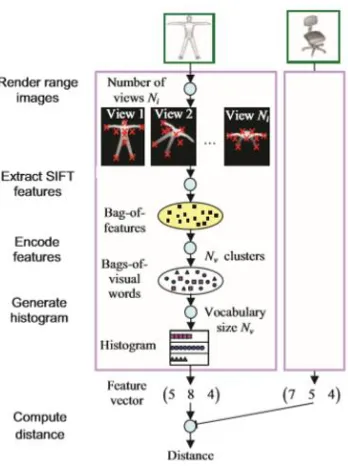
Figure 32: Local Visual features are integrated into a feature vector by using BoF approach [61] ... 36
Figure 33: 3D shape search engine [62] ... 37
Figure 34: The learned CNN is applied to estimate the viewpoints of objects [35] ... 38
Figure 35: Illustration of YOLO [33] ... 39
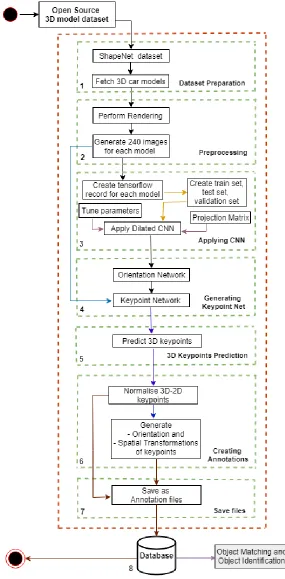
Figure 36: System Architecture for Feature Extraction of car models ... 46
Figure 37: A circle of 16 pixels around the pixel under test [70] ... 49
xiii
Figure 39: System Architecture for Heatmap generation for buildings ... 53
Figure 40: System Architecture for 3D Tree reconstruction ... 56
Figure 41: The architecture of Faster RCNN [68] ... 57
Figure 42: Flowchart for traffic light detection ... 59
Figure 43: YOLO v3 Network Architecture [67] ... 60
Figure 44: Overall System ... 61
Figure 45: Pipeline for Creation of 3D virtual city ... 63
Figure 46: Static object elimination ... 64
Figure 47: Dynamic object recognition and identification ... 64
Figure 48: Virtual city update and dynamic object masking ... 65
Figure 49: Image Formation: Pinhole model (Perspective model) [66] ... 67
Figure 50: Training and Inference phase using Keypointnet [18] ... 68
Figure 51: Car feature extraction result ... 70
Figure 52: 16 pixels circle involved in the FAST algorithm[70] ... 71
Figure 53: Building feature extraction result ... 72
Figure 54: Building heatmap generation ... 74
Figure 55: Tree 3D reconstruction ... 75
Figure 56: Traffic light color detection module ... 77
Figure 57: epoch vs accuracy in car's training ... 78
Figure 58: epoch vs total loss in car's training ... 78
Figure 59: epoch vs mean_overlapping_bboxes ... 79
Figure 60: epoch vs class_accuracy ... 79
Figure 61: epoch vs loss_rpn_cls ... 80
Figure 62: epoch vs loss_rpn_regr ... 80
Figure 63: epoch vs current_loss ... 81
1
CHAPTER 1
INTRODUCTION
1.1Overview
A self-driving or autonomous vehicle can detect its environment and navigate without
human input. It can detect an environment using a range of methods, including cameras,
GPS and computer vision[2]. Automated driving is a rapidly advancing application area
with a complex structure and lots of progress in Deep Learning. Companies like Google,
Uber, Tesla, Mercedes and BMW have already released or foraying quick. The examples
of the self-driving vehicle are shown in Figure 1 and Figure 2.
According to recent outcomes of studies [36], feature extraction techniques are of critical
significance to many pattern recognition applications and systems involving detection,
recognition, registration, matching, reconstruction and classification. Object detection in
real complex environments is a challenging task for autonomous driving in the
aforementioned applications. A typical pipeline for object detection can be divided into
three stages: the selection of informative regions, extraction of features and classification.
Deep Learning has reformed Computer Vision and is the core innovation behind the
capabilities of a self-driving vehicle [1]. Convolutional Neural Networks (CNNs) are
pivotal to the improvement of object detection in this deep learning revolution.
We propose the integration of a new source of a priori information, the virtual 3D city
2
Figure 1: Google's self-driving car [69]
Figure 2: Uber’s autonomous car [11]
1.2 Sensing Technology Comparison
Table 1: Sensing Technology Comparison [49]
In consideration of all these differences shown in Table 1, autonomous vehicles can use a
camera because of its added advantages and with better machine vision, it can identify
3
1.3 Problem Statement
• In the real world, there are many associated risks and cost issues to acquire training
data for self-driving artificial intelligence algorithms.
• The dependence on 3D object models and their annotations, collected and owned
by individual companies is a hindrance to the development of the new algorithms.
• Their approaches remain fundamentally bounded by massive amounts of
human-annotated training data.
• This time-consuming process impedes the progress of these deep learning efforts.
1.4 Motivation
In recent years, exploration in the area of self-driving cars has increased. Nowadays,
outdoor positioning systems often rely on GPS because of its affordability and
convenience. However, GPS suffers from the occurrence of satellite masks especially in
urban environments, under bridges, tunnels or in forests. To provide continuous, accurate,
and high integrity position data, satellite-based localization systems should incorporate
additional sensors (as proprioceptive sensors or environment perception sensors) or
database (for example 2D digital map). Nevertheless, using only incremental encoders
placed on the rear wheels and gyroscopes is not sufficient in case of long GPS outages,
because the Dead-Reckoning (DR) localization is prone to drift error due to accumulation
of data. As an alternative, a new approach to back up the limitations of GPS and DR sensors
based localization is required. The proposed approach must aim at providing absolute
positioning information by integrating a virtual 3D city model and an on-board camera in
the localization process. If a GPS measurement is available, then this data is used to update
the prediction, else the 3D model/camera-based pose estimation corrects the prediction.
We can determine the vehicle pose by registering a priori virtual 3D city model with a
captured 2D image. These virtual environments can be purposefully and increasingly
challenging for critical applications, and will also be able to train a self-driving car to drive
4
variances before being placed on a real assembly line. In addition to the above, there is still
a visible gap between machine performance and that of humans’, inspiring and
recommending promising future bearings for the deployment of computer vision
applications.
1.5 Thesis Contribution
• The target of ongoing research is to present an approach that directly uses graphic
models from open source datasets as the virtual presentation of real-world objects
to develop new computer vision tasks related to self-driving vehicles.
• To train the system in a way that they can not only detect objects but also
differentiate with high accuracy.
• To train a network to extract features of 3D models for verification and elimination
of static and variable objects and identification of dynamic objects.
• Sensor and object recognition technologies for self-driving cars must fulfill
enhanced requirements in terms of accuracy, unambiguousness, robustness, space
demand and of course, costs.
1.6 Structure of the thesis
The overall structure of the thesis is organized in the following way: Chapter 2 begins with
the background study for feature extraction and object detection techniques. In Chapter 3,
literature survey and related works about feature extraction and object detection techniques
are discussed extensively. The proposed system is introduced in Chapter 4: the feature
extraction of cars and buildings, details of the overall system and connection of this thesis
work with the overall system are also discussed. In Chapter 5, we delve into details about
the implementation and experimental setup. Experimental results, detailed quantitative and
qualitative analysis are performed by comparing them with existing techniques are reported
5
CHAPTER 2
BACKGROUND STUDY
This chapter discusses the basic definitions and technical background of feature extraction
and object detection techniques.
2.1 3D Model
A 3D model is a three-dimensional object’s mathematical representation. Until it is
represented, a model is not technically a graphic model. A model can be represented
visually through a method called 3D rendering as a two-dimensional picture [3].
2.2 Rendering
The process of converting 3D wireframe models to 2D images automatically on a computer is called 3D rendering [3]. Advantages of 3D modeling over exclusively 2D methods include flexibility, ease of rendering, accurate photorealism, spatial reality, etc. Graphical
Models are dependent on the synergy between computer graphics, computer vision and
image processing. The traditional approach for generating virtual views of an object or a
scene is to render directly from an appropriately constructed 3D model.
2.3 Virtual 3D city model
The Virtual 3D city model is a realistic and accurate representation of the environment in
three dimensions. It is a geographically textured model of the surroundings where the
vehicle navigates as shown in Figure 3. Such virtual 3D city models are produced using
aerial/satellite imagery (photogrammetry), airborne laser scanner data (LIDAR), GIS and
3D computer graphic. There are different terms utilized for 3D city models in writing, for
6
need for 3D city models is growing and expanding rapidly in various fields, including urban
planning and design, architecture, environmental visualization and many more [4].
Figure 3: Views of the virtual 3D city model of Nancy [4]
2.4 3D Geographical Information System
To manipulate the virtual 3D city model, we need to navigate effectively in the 3D model
by specifying the position and the orientation of theobserver in a chosen reference frame.
A computer tool has been developed for this purpose, referred to as the Three -
Dimensional Geographic Information System (3D-GIS). A 3D-GIS can conceptualize
terrain elevation, location of buildings, buildings facade texture, ground vegetation, rivers,
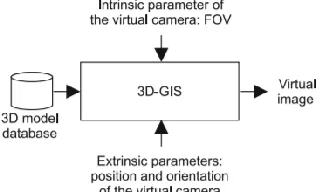
etc. The inputs of the 3D-GIS are the 3D model database and the desired calibration
parameters of the virtual camera. The 3D model database is composed of XML files
containing the tagged information of every place with geo-locations, height and area
information. The calibration parameters are the intrinsic parameters which are defined here
as the horizontal field of view (FOV) on the one hand and the extrinsic parameters on the
other. The latter being the position and the orientation of the virtual camera with respect to
the frame that is attached to the 3D model [4]. The design of 3D-GIS is shown below in
Figure 4.
7
2.5 Feature
A feature is described as “a piece of information which is relevant for solving the different
computational tasks related to a specific application” [54]. Feature points are also referred
to as keypoints/interest points/salient features. The idea of feature detection and description
refers to the process of identifying points in an image (interest points) that can be used to
describe the image’s contents such as edges, corners, ridges and blobs as shown below in
Figure 5. Features are categorized into two standard categories: local features and global
features. Local features are geometrical in shape, and global features are topological in
shape [5]. It is mainly aiming towards object detection, analysis and tracking from a video
stream to describe the semantics of its actions and behavior.
2.6 Feature Extraction
The term feature-detector (a.k.a extractor) traditionally refers to the algorithm or technique
that detects feature-points in an image. Subsequently, the recognized characteristics are
defined in logically distinct ways based on distinctive patterns that their adjacent pixels
possess. This method is called the feature description as it describes each feature by
assigning it a unique identity that allows for their efficient matching recognition. The terms
detector and extractor are used interchangeably in this work [5].
Figure 5: Illustrative image local features (a) input image (b) corners (c) edges (d) regions [5]
2.7 Feature Selection
Feature selection module is used for selecting a subset of relevant features from a large
8
contain better discriminatory power to help distinguish among different classes with better
accuracy. It also helps to reduce the dimensions of the feature space by selecting only the
distinguishable features [56].
2.8 2D Feature Extraction techniques
Several techniques have been created for feature extraction and their operating patterns are
quite distinct from each other as described in Figure 6. Each method’s performance is
optimal for a particular implementation.
Figure 6: Common 2D Feature Extraction Methods [6]
Different types of 2D traditional Feature Extraction techniques are:
Local Binary Patterns (LBP):
It is an optimal feature extraction technique for texture analysis. It divides the image
window into cells of 16 × 16 pixels, and every pixel in the cell is compared with eight of
its neighbors, in which the center pixel has a higher value than other pixels. After the cell
formation, a histogram is computed and normalized to make a feature vector. This feature
vector can be processed by machine learning algorithms or SVM for classification. The
improvements in LBP have enhanced the efficiency of face recognition applications, such
as over complete LBP, transition LBP, modified LBP, and RGB-LBP, which are enriched
with adjacent blocks overlapping, comparison of neighbor pixels, intensity values
9
channels, respectively. Another outstanding combination of HOG-LBP has proved that the
performance of LBP can be increased by combining it with other feature extraction
algorithms [6].
Color histogram:
A color histogram is the representation of the distribution of colors in a picture [9]. For
computerized pictures, a color histogram speaks to the number of pixels that have colors
in each of a settled list of color ranges that span the image’s color space, the set of all
conceivable colors. Color histograms are adaptable builds that can be built from pictures
in different color spaces, whether RGB or any other color space of any measurement. The
main disadvantage of histograms for classification is that the representation is dependent
on the object color, ignoring its shape and texture. Color histograms can be
indistinguishable for two pictures with distinctive protest substance which happens to share
color data. Then again, without spatial or shape data, comparative objects of diverse color
may be undefined based exclusively on color histogram comparisons [7].
Canny Edge Detection:
A well-known, general and robust approach for edge detection in digital images was
introduced by Canny. First, the input image is smoothed using a Gaussian filter.
Subsequently, the values of the first derivatives in the horizontal and vertical direction are
obtained by applying the Sobel operator to the smoothed input image. Using these values,
the gradient magnitude and the edge direction can be calculated. The resulting edges are
thinned using Non-Maximum Suppression (NMS). Subsequently, the remaining edge
pixels are classified using a high and a low threshold in the so-called hysteresis. Edges
above the high threshold are kept, edges below the low threshold are discarded. Edges
between the low and the high threshold are only kept if there is an edge pixel within the
respective 8-connected neighborhood [10]. This leads to a binary edge image as displayed
10
Figure 7: Left: Input image and Right: Canny edge image [10]
Structured Edge Detection (SED):
A more sophisticated, yet still real-time edge detection framework incorporating learning
and the use of information of the objects of interest has been proposed by Dollár and Zitnick
[71]. Therefore, in contrast to Canny edge detection, this approach requires a training
procedure using an annotated training corpus. Here, a Random Forest (RF)maps patches
of the input image I to output edge image patches using pixel-lookups and
pairwise-difference features of 13 (3 colors, 2 magnitudes, and 8 orientation) channels. While
testing, densely sampled, overlapping image patches are fed into the trained detector. The
edge patch outputs which refer to the same pixel are locally averaged. The resulting
intensity value (which lies in the interval [0,1]) can be seen as a confidence measure for
the current pixel belonging to an edge. Subsequently, an NMS can be applied to sharpen
the edges and reduce diffusion [10].
Scale Invariant Feature Transform (SIFT):
The SIFT method is used for extracting distinctive invariant features from images which
will be used to perform reliable matching between different images using a
nearest-neighbor algorithm. The significant steps in computation of SIFT are: 1) scale-space
extrema detection and keypoint localization based on Difference of Gaussian (DoG)
function to identify potential interest points; 2) orientation assignment to each keypoint
location based on local image gradient direction; 3) the keypoint descriptor measures the
11
Speeded-Up Robust Feature (SURF):
SURF is a local feature detection and matching method. The use of an integral image and
basic Hessian-matrix approximation has dramatically reduced the computational
complexity. The SURF parts consist of 1) interest point detection based on the Hessian
matrix that approximates second-order Gaussian derivative with box filters by using
integral images; 2) orientation assignment determined by constructing a circular region
around the detected interest point and the dominant orientation describes the orientation of
interest point; 3) interest point descriptors are built by extracting square windows around
the interest points and computing the Haar wavelet responses in horizontal and vertical
directions [8].
Histogram of Oriented Gradients (HOG):
Scale gradients, spatial binning, orientation binning, and contrast normalization are the key
steps for human detection using HOG. According to gamma normalization, different color
spaces that were used, such as LAB (LAB stands for Luminance/Lightness and A and B
are chromatic components) and RGB, and grayscale gamma normalization has reduced the
performance. This performance was evaluated by the false positive per window with
respect to the miss rate. Log compression was found to be weak compared to the square
root of gamma compression. Gaussian smoothing is used for gradient computation and
different scales are tested. In orientation binning, a weighted vote was calculated for each
pixel and these votes were summed up to make cells (orientation bins). The shape of cells
is of two types: rectangular and circular. These orientation bins were equally spaced as 0
degree to 180 degrees (unsigned) and 0 degree to 360 degrees (signed). Contrast
normalization and grouping blocks were performed for normalization. Two types of block
geometries have been introduced as rectangular and circular, which are known as R-HOG
12
Corner Detection Techniques
The term corner in detection does not mean to detect the physical corner such as the corner
of the table or chair, but these are points in images with high curvatures. Corner means a
point in the image whose gradient direction changes rapidly. The techniques of this class
select the portion of the image which possesses the distinct properties from their immediate
surroundings. Then, computes the key points or features which remain locally invariant or
constant. Using these features, the image can be detected in different scenarios: rotation,
scaling, translation and occlusion. Corner detection techniques are used for image
recognition, detection and analysis [55]. List of type of detectors and descriptors present in
Corner detection techniques are described in Figure 8 present below.
Figure 8: Classification of popular corner detectors and descriptors [54]
Forstner Corner Detector:
In 1986 Forstner presented a rotation-invariant corner identifier in light of the ratio between
the determinant and the trace of μ. The accuracy of sub-pixel is used to find the location of
a corner that is stable to a certain set of photometric and geometric transformations [54].
Harris Corner Detection:
Harris corner detection algorithm detects corners by forming a local search window and
13
algorithm identify peaks of low and high brightness levels. The center point of the window
detects the corner. The shifting process averages the variation in pixel intensity. When the
window is shifted along a flat or smooth part of the image where there is no drastic change
in the pixel intensities, no corners are detected. However, when there is no change in
intensity levels along the edge direction, an edge region is identified. When there is a
significant change in intensity level in every direction, a corner is recognized [27]. Harris
was successful in identifying robust features in any given image. But on account
that it was only detecting corners, his work suffered from a lack of connectivity of
feature-points which represented an essential obstacle for obtaining major level descriptors such
as surfaces and objects [7].
Shi and Tomasi (Min Eigen) Corner Detection:
Shi and Tomasi have proposed the modified version of the Harris corner detector. This
algorithm works in the almost same way like Harris but with a little change. Harris uses
corner selection criteria with the help of Response Function R, if the score of R greater
than a certain value, then the point will be called as a corner, where the score function
computed by using two Eigenvalues. Shi & Tomasi have used Eigenvalues to decide
corners instead of using score function [55]. It works quite well where even the Harris
corner detector fails. We consider a small window on the image then scan the whole image,
looking for corners. Shifting this small window in any direction would result in a large
change in appearance if that particular window happens to be located on a corner. Flat
regions will have no change in any direction. If there is an edge, then there will be no major
change along the edge direction [57].
2.9 3D Feature Extraction techniques
3D keypoint detection is a critical step of object recognition. Several 3D keypoint detectors
have been inspired by 2D feature engineering. The method for feature extraction should be
independent of data representation. The method also should be invariant under transforms
14
Different types of 3D Feature Extraction techniques are:
HOG 3D:
HOG3D is based upon histograms of oriented spatiotemporal gradients computed for a
space-time volume in the neighborhood of an interesting point. This volume is further
subdivided into video blocks. The gradient of each block is computed at different spatial
and temporal scales, using integral video representation. Then, regular polyhedrons are
used to uniformly quantize the orientation of the computed 3D gradients. The final gradient
vector for space-time volume is obtained by concatenating the gradient vectors of all
sub-blocks [58].
3D SIFT:
3D SIFT (Scale Invariant Feature Transform) extends the popular 2D SIFT to videos. The
authors use finite difference approximations to compute the magnitude and orientations of
3D gradients for space-time volume around the interest points. Orientations of 3D gradients
are parameterized by two angles: θ giving the gradient direction in 2D and φ encoding the
angle away from the 2D gradient. The gradient magnitude is quantified along uniform
orientations by dividing θ and φ into equally sized bins using meridians and parallels [58].
Harris 3D:
The Harris 3D detector is a space-time extension of the popular 2D (spatial) corner detector
known as the Harris detector. It is a spatiotemporal interest point detector. In order to find
spatiotemporal interest points, a second-moment matrix μ is computed for each video input
point (x,y,t), at different spatial (σ) and temporal (τ) scale values. It uses a separable
Gaussian smoothing function and space-time gradients. The descriptors used with Harris
3D are HOG/HOF descriptors. Harris3D might prove to be an inadequate representation of
video by giving only a sparse set of spatiotemporal interest points. To overcome this
limitation, dense sampling was introduced. Dense sampling extracts points at regular
15
However, each 3D object can be represented by a set of multiple rendered views as shown
in Figure 9 instead of the original 3D model, some existing 2D image processing (feature
extraction) methods can be employed. These images are captured with a static camera or
virtual camera array [59].
Figure 9: 3D shape model rendered with different virtual cameras [72]
Ideal features should typically have the following essential qualities:
(1) Distinctiveness: The intensity patterns underlying the detected features should be rich
in variationsthat can be used for distinguishing features and matching them.
(2) Locality: Features should be local to reduce the chances of getting occluded as well as
to allow a simple estimation of geometric and photometric deformations between two
frames with different views.
(3) Quantity: The total number of detected features (i.e., features density) should be
sufficiently (not excessively) large to reflect the frame’s content in a compact form.
(4) Accuracy: Features detected should be located accurately concerning different scales,
shapes and pixels locations in a frame.
(5) Efficiency: Features should be efficiently identified in a short time to make them
16
(6) Repeatability: Given two frames of the same object (or scene) with different viewing
settings, a high percentage of the detected features from the overlapped visible part should
be found in both frames. Repeatability is greatly affected by the following two qualities.
(7) Invariance: In scenarios where large deformation is expected (scale, rotation, etc.), the
detector algorithm should model this deformation mathematically, as precisely as possible
so as to minimize its effect on the extracted features.
(8) Robustness: In scenarios where a small deformation is expected (noise, blur,
discretization effects, compression artifacts, etc.), it is often sufficient to make detection
algorithms less sensitive to such deformations (i.e., no drastic decrease in the accuracy)
[5].
2.10 Computer Vision tasks
Computer Vision is the interdisciplinary scientific field that can recognize and understand images and scenes. As depicted in Figure 10, the three most common tasks in computer
vision are the classification of an image, object classification with localization and object
detection.
Figure 10: Three most common computer vision tasks [1]
Classification of an image:
Image Classification is the most common computer vision problem where an algorithm
looks at a picture and classifies the object in it. Image classification has an extensive variety
17
medicine. Such problems are usually modeled using Convolutional Neural Nets (CNNs).
Figure 11 shows the high-level steps involved in a typical image classification task. The
input image is sent through multiple convolutional, pooling, non-linear layers and the
output of the final layer of the CNN is passed into a softmax layer which converts the
numbers between 0 and 1, giving the probability of the image being of a particular class.
Figure 11: Steps for image classification using CNN [1]
Object classification and localization:
Localization of object’s algorithms not only spots an object’s class but also it draws a
bounding box around an object’s picture position as displayed in Figure 12. To get the
bounding box location, four more numbers are added to the output layer. The final output
contains class labels and four numbers to locate the bounding box.
18
Multiple objects detection and localization:
If multiple objects are present in the image and the task is to detect them all, then that
would be a multiple object detection and localization problem. These kinds of issues need
to leverage the concepts learned from image classification as well as from object
localization. For the algorithm to detect all types of objects in an image, it needs to be
capable of classifying and localizing all the objects in the picture as shown in Figure 13.
This process is typically done using either a simple sliding window approach, wherein, the
cropped window is passed through a ConvNet (Convolutional Neural Network) and have the ConvNet make the predictions. The sliding window is passed through the entire image.
In the end, a set of cropped regions will remain, which will have some object, together with
the class name and its bounding box. This sliding window approach is a fundamental object
detection approach, and to tackle this problem, many advanced object detection algorithms
have been devised [1].
Figure 13: Multiple object detection and localization [1]
2.11 Object Detection Algorithms Overview
Object detection algorithms work by finding out the specific object by matching the
object’s pixel values and equating them with the particular picture frame. There have been
19
uses. These algorithms have progressed from binary classified based approach to a
learning-based approach [13].
2.11.1 Object Detection Traditional Methods
Viola-Jones Algorithm:
Viola-Jones algorithm was one of the breakthrough algorithms which was devised in 2001.
It was mainly used for face detection but also was applicable for the general-purpose object
detection techniques. It had four modules which included Haar Feature Selection, Integral
Image Creation, Adaboost Training and Cascade Classifiers.
The algorithm searches for various features in a face like eyes, nose, mouth, etc. and
computes face cascades and compares them with the Haar features to check for faces in an
image. Due to this purpose, for the face to be detected, the images needed to be properly
oriented with the face being frontal upright. This algorithm had very low false positives
and very high detection rates. However, the recognition of faces was not quite developed
as compared to detection rates, thus reducing practical implications [13].
Histograms of Oriented Gradients (HOG):
This algorithm interprets robust low-level features that are based on HOG. It is still
grounded upon the approach of hardcoded features like the Viola-Jones method, but it is
an alternative to exhaustive search. It initially converts to grayscale image and then finds
the object by pixel-by-pixel in a particular frame. It matches each pixel with its surrounding
pixels with reference to the intensity of darkness. By doing this, it can create a map of the
gradients of the pixel intensity variation. These gradients can assist us to locate the nuances
in an image. The HOG method computes the gradient orientation in localized portions of
the image to identify multiple objects in a particular image. To highlight the required parts
of the image and eliminate other background noise, feature descriptor can be used as
presented in Figure 14. An image (size width x height x channels) to a feature vector/array
20
The feature vector produced by the algorithm produces excellent results when fed to an
image classification algorithm like Support Vector Machine (SVM) [13].
Figure 14: Illustration of HOG feature descriptors and SVM weights used for classification [74]
2.11.2 Deep learning methods
Deep learning is a component of a broader family of machine learning methods based on
learning data representation [73]. Learning can be supervised, semi-supervised, or
unsupervised. Deep learning models can attain state-of-the-art accuracy, sometimes
surpassing performance at the human-level [15].
Deep learning architectures:
Deep Neural Networks Deep Belief Networks Recurrent Neural Networks Convolutional Neural Networks
CNN
The basic building blocks of ConvNets (or CNN) are the convolutional layers, max-pooling
or average pooling layers, and fully-connected layers. CNNs are connected as an
arrangement of interconnected layers. The layers are made up of repeated pieces of
convolutional, Rectified Linear Units (ReLU) and pooling layers. With a set of channels,
the convolutional layers convolve their input. The channels are naturally found within the
21
enables the network to memorize nonlinear combinations of the initial inputs, which is
called feature extraction. These learned features, also known as activations, from one layer,
become the inputs for the next layer. The pooling layers down-sample their inputs and help
consolidate local image features. Finally, the learned features become the inputs to the
classifier or the regression function at the end of the network. For image classification
problems, the last layer is a classifier, and for object localization problems, the last layer is
a combination of both [1]. The basic CNN architecture is represented in Figure 15.
However, it is difficult to locate items precisely by directly mixing CNN with a sliding
window approach. To address these issues, region-based CNN, that is, R-CNN, SPPnet and Fast-R-CNN have been proposed to improve object detection performance [17].
Figure 15: CNN Architecture [1]
R-CNN
R-CNN stands for Region-Based Convolution Neural Network and is a method that
depends on the external region proposal system. R-CNN has proved to show better
performance than other ensemble methods and feature types. R-CNN takes an input image
and extracts region proposals and computes rich features using large CNNs and then
classifies the image [13]. The basic R-CNN Architecture is shown in Figure 16. Although
R-CNN was the new state-of-the-art system for general object detection, it is tough to
identify small objects such as far-away cars and human faces, since the low resolution and
lack of contexts in each candidate box significantly decrease the classification accuracy in
them. Moreover, the two different phases in the R-CNN pipeline cannot be jointly
22
Figure 16: R-CNN Architecture [75]
FAST R-CNN
The main advantage of Fast R-CNN over previous state-of-the-art techniques lies in
multi-stage pipeline training. In terms of space and time, training is expensive in R-CNN. On
testing, it was observed that R-CNN based object detection was slow. R-CNN work is
slowed down because of the execution of a ConvNet forward pass for each object proposal
without sharing computation makes. The input image and a set of object proposals are fed
into Fast R-CNN. It first processes the image through various convolutional and pooling
layers and produces a convolutional map and then a fixed-length feature vector is extracted
from the feature map for each proposal Region of Interest (RoI). To output, the K object
classes by bounding boxes, each of these feature vectors are fed into a succession of fully
connected layers that [13]. The basic Fast R-CNN Architecture is shown in Figure 17. The
limitation of this approach is the prolonged computation time in the region proposal
generation step. Therefore, Fast R-CNN was further improved by Ren et al., 2015 and
Faster R-CNN was developed, which attained state-of-the-date object detection accuracy
23
Figure 17: FAST R-CNN Architecture [20]
Recent Approaches:
Recent advances in self-driving cars have prompted researchers to build a variety of object
detection algorithms. Most of these object detection algorithms are based on three
meta-architectures: Single Shot multi-box Detector (SSD), Faster R-CNN (Regions with
Convolutional Neural Networks) and Region-based Fully Convolutional Networks
(R-FCN). Each of these architectures fundamentally differs in the way they build their object
detection pipelines. A typical object detection pipeline can be mainly divided into three
stages: informative region selection, feature extraction, and classification [1].
Single-Shot Detector (SSD)
The term single shot means the tasks of object localization and classification are handled
in a single forward pass of the network. It is relevant to methods that require object
proposals because it encapsulates all computation in a single network by eliminating
proposal generation and subsequent pixel or feature resampling stages.
Based on a feed-forward convolutional network, a fixed-size group of bounding boxes and
their corresponding scores for the target classification instances are shaped by this
technique. Now by performing the non-maximum suppression step, the final detections are
shaped. For high-quality image classification (with their last classification layer removed),
the initial network layers are built on a standard architecture called as a base network (here
24
The SSD architecture builds on these base networks, by discarding the fully connected
layers and replacing them with a set of auxiliary convolutional layers. These additional
Convolutional layers enable the algorithm to progressively decrease the size of the input to
each subsequent layer and extract features at multiple scales [1].
Figure 18: SSD Architecture [1]
Faster R-CNN
It consists of two networks one for region proposal network (RPN) (as shown in Figure 20)
for generating region proposals and another for the network for detecting the object using
these proposals. The main difference between Fast R-CNN is that it uses a selective search
to create region proposals. As RPN shares the most computation with object detection, the
time cost of making region proposals is much smaller in RPN than selective search. The
region proposal network produces a cluster of boxes that are inspected by a classifier or a
regressor to check for the occurrence of objects. After RPN, we get different sizes of
proposed regions. Different sized regions mean different sized CNN feature maps. It’s
challenging to make an efficient structure to work on features of diverse sizes. A region of
Interest Pooling simplifies the problem by reducing the feature maps to the same size. A
fixed number of roughly equal regions (say k) are produced when an input feature map is
divided with ROI splitting, and then Max-Pooling is applied to it. Therefore, the output of
ROI Pooling is always k regardless of the size of the input. With the fixed ROI Pooling
outputs as inputs, lots of choices are available for the architecture of the final regressor and
25
Figure 19: Faster RCNN Architecture [17]
Figure 20: Region Proposal Network (RPN) [17]
Region-Based Fully Convolutional (R-FCN)
Region-based Fully convolutional networks introduced by Dai, J., et al. [75] provides an
accurate and efficient object detection. R-FCN closely resembles the architecture of Faster
R-CNN but instead of cropping features from the same layer where region proposals (RoI)
are predicted, crops are taken from the last layer of features prior to prediction. Dai et al.
argue this approach of pushing the cropping to the last layer greatly minimizes the amount
of per-region computation that must be performed. This paper states that the R-FCN model
(using Resnet 101) could achieve comparable accuracy to Faster R-CNN often at faster
26
Figure 21: R-FCN Architecture [1]
In R-FCN architecture above, a given input object is divided into feature maps each
detecting the corresponding region of the object. The feature maps are also known as
position-sensitive score maps. Taking the example of the 3 X 3 ROI in Figure 21 above,
we ask ourselves how likely each in the 3 X 3 matrix contains the corresponding part of
the object and assign a score to it. This process of mapping score maps and ROIs to the
vote array is called position-sensitive ROI-pool. The average of the resulting ROI pool
gives the class score for a given object in the given ROI [1], as shown in Figure 22 below.
27
Dilated CNN
The architecture of Dilated convolutions (à-trous convolutions/convolution with holes) is
based on the fact that dilated convolutions support the exponential expansion of the
receptive field without introducing additional parameters and sacrificing the resolution of
data at the output layer and computational cost and filling the vacant positions with zeros
to learn multi-scale features. In practice, no expanded filter is created instead, the
filter features (weights) are matched to distant (not adjacent) features in the input matrix.
The distance is determined via the dilation coefficient D. Generally, dilated convolutions
have improved performance. With dilated convolutions in different dilation rates, receptive
fields in various sizes can be obtained, those multi-scale features extracted are as displayed
in Figure 23.
One of the critical components of our design is the dilated convolutional layer. A 2-D
dilated convolution can be defined as follow:
y(m,n) is the output of dilated convolution from input x(m,n) and a filter w(i,j) with the
length and the width of M and N respectively. The parameter r is the dilation rate. If r = 1,
a dilated convolution turns into regular convolution.
In dilated convolution, a small-size kernel with k × k filter is enlarged to k + (k − 1)(r − 1)
with dilated stride r. Thus it allows flexible aggregation of the multi-scale contextual
information while keeping the resolution same [21]. They feature the scale of each
convolutional kernel that is (2l + 1) 2 where l is the dilation rate of this kernel [22].
28
In dilation1, there is a 1-pixel distance between each filtered pixel and its nearest neighbor.
In dilation2, there is a 2-pixel distance: the filter is only applied to pixels that are in both
odd-numbered rows and columns of each 5×5 region. In dilation3, the filter is applied to
only pixels in every third row and column of each 7×7 region, and so on.
These dilations allow for a model to perceive higher-order abstractions without the need
for dimensionality reduction. The main advantage of this type of mechanism is that the
model is capable of capturing the frequency component from the input signal. Using this
simple trick, the CNN can accommodate a larger receptive field also, thus letting the model
accommodate longer-range dependencies. The dilated convolution technique opens up the
possibility of making as many as required skips in the input data, so we have a better global
view of the problem domain, in our case, one-dimensional vibration signal. It can alleviate
the severe loss of spatial acuity due to multiple down samplings in a traditional deep
network [24]. Another added advantage is if one wants to replace multiple dilated
convolutional layers with a single convolutional layer with large size filter, it is safe. For
instance, two 3×3 filters with 2-dilation can be replaced by one 9×9 filter with 1-dilation
[25]. Dilated CNN can deliver 5×5 information with only nine weights instead of
conventional CNN, which needs 25 weights [26]. However, a key drawback of dilated
convolutions is exactly what they do not perform any subsampling, which is essential for
reducing the complexity of deep layers. Thus, models that use dilation still rely on regular
subsampling layers [23]. They are frequently used in model compression, audio
generation, semantic image segmentation, generic image classification, sound wave
synthesis, machine translation, signal processing, weakly-supervised object location, etc.
2.12 Heatmaps
Heatmap is a data matrix visualizing values in the cells by the use of a color gradient. This
gives a good overview of the largest and smallest values in the matrix. Rows and/or
columns of the matrix are often clustered so that users can interpret sets of rows or columns
29
In other words, a heatmap is a type of graphical representation of data that consists of a set
of cells, in which each cell is painted for a specific color according to a specific value
attributed to the cell. The term “heat” in this context is seen as a high concentration of
geographical objects in a particular place. Heatmaps show the distribution of objects or
phenomena across the entire surface. More generally, heatmaps can be viewed as the
surfaces of densities. Such surface density well illustrates the location of the concentration
of points or linear objects [37]. An example of a heatmap is shown below in Figure 24.
At a fundamental level, heatmaps are implemented as spatial matrices with cells colored
after their values. Explicitly, they encode a continuous quantitative variable as a color in
space through a color transfer function to a sequential color scheme [38].
Broadly speaking they fall into two classes: (i) image-based heat maps and (ii) data-matrix
heat maps. Image-based heat maps display numerical information that is mapped over an
image, an object or a geographic location. On the other hand, data-matrix heat maps display
numerical data in a pseudo-colored tabular or matrix format. The data may be subsequently
clustered using various measures of similarity or dissimilarity [39].
Figure 24: Heatmap generated on a sample image [28]
2.13 Annotations
From a technical point of view, annotations are usually seen as metadata, as they give
additional information about an existing piece of data. We do not need a server to create
local annotations. We can store annotation data in a local file system (local annotations -
can be seen only by their owner) or it can store annotations remotely, on annotations servers
30
CHAPTER 3
LITERATURE SURVEY
This chapter discusses the relevant background of recent works in the Feature Extraction
and Object Detection techniques
3.1 Static object feature extraction techniques:
Kaneva, B., et al. 2011 [30] proposed to use a photorealistic virtual world to gain complete and repeatable control of the environment to evaluate image features. They used two sets
of images rendered from the Virtual City and from the Statue of Liberty to evaluate the
performance of a selection of commonly-used feature descriptors, including SIFT, GLOH
(Gradient Location and Orientation Histogram), DAISY, HOG, and SSIM (the
Self-SIMilarity descriptor). They then used the virtual world to study the effects on descriptor
performance of controlled changes in illumination and camera viewpoint resulting in the
best performance of DAISY descriptor.
Cappelle, C., et al. 2012 [4] explored that in structured scenes, as indoor environments, line and edge are favored. But outdoor environments are often textured, so the usually used
features are points, corners. In their work, the chosen features are the well-known Harris
points. Once the Harris points are detected in the real image and in the virtual image, they
have matched these two sets of points.
The Li, H., et al. 2018 [51] elucidates that when the number of images is too large, or the time of image feature extraction is long, it is not conducive to the implementation of the
31
shortcomings of Harris corner detection, and proposes an algorithm based on adaptive
threshold Harris feature point selection is proposed. Firstly, the Harris algorithm is
optimized from the two aspects of adaptive threshold and prescreening feature points.
Then, in order to further reduce the pseudo-corner and prepare the image matching, the
Forstner operator is used to determine the best feature point.
In [29], the algorithms compared by author are Moravec, Susan, Harris, FAST, Eigen and
Forstner. The kinds of noise used are Gaussian, Poisson, salt & pepper and speckle. Results
of testing the accuracy of each corner detector on the image noise mentioned that; a) not
all corner detectors are able to find the corner points appropriately, b) all corner detectors
do not show the location of the corner of the point accurately, c) all the corner detectors
are very sensitive to all types of noise. The test results in this study show that the entire
corner detector is very sensitive to noise, in other words, the degree of accuracy of detection
results every corner detector will be strongly influenced by the noise and the type of noise
The commonly used key point descriptors like SIFT or SURF fail to obtain feature points
[M. Yamaguchi et al., 2017]. Recently, new approaches for feature extraction based on
deep learning methods [T. Faulhammer et al., 2016 and W. Kehl et al., 2016 and E.
Simo-Serra et al., 2015] have demonstrated excellent performance.
3.2 Dynamic object feature extraction techniques:
In this Wang, Z., et al. 2017 [46] paper, the author elaborates that with orientation invariant feature embedding, local region features of different orientations are calculated based on
20 keypoint locations as mentioned in Figure 25 and are well aligned and combined.
Firstly, vehicle images are propelled into the region proposal module, which produces the
response maps of 20 vehicle key points. The key point regressor takes the input image and
outputs one response map for each of the 20 key points. Instead of directly predicting
32
locations or some main vehicle components, e.g. the wheels, the lamps, the logos, the
rear-view mirrors, the license plates.
Figure 25: Definition and Illustration of 20 selected vehicle key points [46]
Chabot, F., et al. 2017 [47] goes on to explain that the Deep MANTA (Deep Many-Tasks),
architecture consisting of the robust convolutional network provides vehicle part
coordinates (even if these parts are hidden), part visibility and 3D template for each
detection. They use a 3D vehicle dataset composed of 3D meshes with real dimensions.
Several vertices are annotated for each 3D model. These 3D points correspond to vehicle
parts (such as wheels, headlights, etc.) and define a 3D shape for each 3D model. The main
idea of this approach is to recover the projection of these 3D points (2D shape) in the input
image for each detected vehicle. Then, the best corresponding 3D model for each detection
box is chosen as shown in Figure 26. For this purpose, they proposed a semiautomatic
annotation process using 3D models to generate labels on real images for the Deep
MANTA training. Labels from 3D models (geometry information, visibility, etc.) are
automatically projected onto real images providing a large training dataset without
labor-intensive annotation work.
33
Zhou, Y., et al. 2018 [34] states the possible reasons for the slow progress in Vehicle re-identification (re-ID) as the shortage of the special 3D structure of a vehicle and suitable
research data. Previous works have mostly fixated on some specific views (e.g., front) but
these methods are less effective in realistic situations, where vehicles usually appear in
arbitrary views to cameras as explained in Figure 27. In this paper, the author focused on
the uncertainty of vehicle viewpoint in re-ID, proposing two deep end-to-end architectures:
The Spatially Concatenated ConvNet (SCCN) and Convolutional Neural Network
(CNN)-LSTM Bi-Directional Loop (CLBL). Their models exploit the great advantages of the CNN
and long short-term memory (LSTM) to learn transformations across different viewpoints
of vehicles. Thus, a multi-view vehicle representation containing information about all
viewpoints can be inferred from the only one input view and then used to calculate distance
from learning. The output is presented in Figure 28. Experimental outcomes demonstrate
that their models have achieved consistent improvements over the state-of-the-art vehicle
re-ID approaches.
Figure 27: Motivation for multi-view vehicle re-ID [34]
34
To enable efficient labeling in 3D, Song, X., et al. 2019 [48] has built a pipeline by considering 2D-3D key point correspondences for a single instance and 3D relationship
among multiple instances.To efficiently annotate complete 3D object properties, they have
developed a context-aware 3D annotation pipeline. Nonetheless, KITTI only labels each
car by a rectangular bounding box and lacks fine-grained semantic key point labels (e.g.
window, headlight). In this paper, authors offer to the community the first large-scale and
fully 3D shape labeled dataset. Besides, they contributed the first large-scale database
suitable for 3D car instance understanding – ApolloCar3D, where each car is fitted with an
industry-grade 3D (Computer-Aided Design) CAD model with the absolute model size and
semantically labeled key points as presented in Figure 29.
Figure 29: Defined 66 3D keypoints for car models [48]
This dataset is above 20× larger than PASCAL3D+ and KITTI, the current state-of-the-art.
To enable efficient labeling in 3D, they build a pipeline by considering 2D-3D keypoint
correspondences for a single instance and 3D relationship among multiple instances as
pipelined in Figure 30. Complementing existing related datasets, we hope this new dataset
could serve as a long-standing benchmark facilitating future research on 3D pose and shape
recovery.
![Figure 2: Uber’s autonomous car [11]](https://thumb-us.123doks.com/thumbv2/123dok_us/1342425.1167135/16.612.236.412.221.313/figure-uber-s-autonomous-car.webp)
![Figure 5: Illustrative image local features (a) input image (b) corners (c) edges (d) regions [5]](https://thumb-us.123doks.com/thumbv2/123dok_us/1342425.1167135/21.612.254.397.493.594/figure-illustrative-image-local-features-input-corners-regions.webp)
![Figure 19: Faster RCNN Architecture [17]](https://thumb-us.123doks.com/thumbv2/123dok_us/1342425.1167135/39.612.245.406.262.381/figure-faster-rcnn-architecture.webp)
![Figure 25: Definition and Illustration of 20 selected vehicle key points [46]](https://thumb-us.123doks.com/thumbv2/123dok_us/1342425.1167135/46.612.232.415.561.687/figure-definition-illustration-selected-vehicle-key-points.webp)
![Figure 34: The learned CNN is applied to estimate the viewpoints of objects [35]](https://thumb-us.123doks.com/thumbv2/123dok_us/1342425.1167135/52.612.229.420.383.485/figure-learned-cnn-applied-estimate-viewpoints-objects.webp)
![Figure 35: Illustration of YOLO [33]](https://thumb-us.123doks.com/thumbv2/123dok_us/1342425.1167135/53.612.235.418.73.189/figure-illustration-of-yolo.webp)
![Figure 37: A circle of 16 pixels around the pixel under test [70]](https://thumb-us.123doks.com/thumbv2/123dok_us/1342425.1167135/63.612.236.406.616.698/figure-circle-pixels-pixel-test.webp)
