University of South Carolina
Scholar Commons
Theses and Dissertations
2017
Meeting the Needs of Middle Grades Social
Studies Students with Language Based Learning
Disabilities: An Analysis of Students’ and Teachers’
Perspectives
Monica J. Hacker Hadwin University of South Carolina
Follow this and additional works at:https://scholarcommons.sc.edu/etd Part of theScholarship of Teaching and Learning Commons
This Open Access Dissertation is brought to you by Scholar Commons. It has been accepted for inclusion in Theses and Dissertations by an authorized administrator of Scholar Commons. For more information, please [email protected].
Recommended Citation
MEETING THE NEEDS OF MIDDLE GRADES SOCIAL STUDIES STUDENTS WITH LANGUAGE BASED LEARNING DISABILITIES: AN ANALYSIS OF STUDENTS’ AND
TEACHERS’ PERSPECTIVES
by
Monica J. Hacker Hadwin
Bachelor of Arts Clemson University, 1991
Master of Education Clemson University, 1993
_______________________________________________
Submitted in Partial Fulfillment of the Requirements
For the Degree of Doctor of Philosophy in
Teaching and Learning
College of Education
University of South Carolina
2017
Accepted by:
David Virtue, Major Professor
Daniella Ann Cook, Committee Member
Meir Muller, Committee Member
Jerry Mitchell, Committee Member
DEDICATION
This dissertation is dedicated to my son. You have inspired me to see the world
differently, to listen to what is being said, and to not make assumptions about people.
Because of you I have learned to be a better teacher and I hope a better person. You love
life and you work harder than anyone I know to get through school. You want to learn but
you need to do it differently. I am looking forward to co-authoring a book with you
about all of this one day as I am sure you have perspectives to share, stories to tell, and
someone will find comfort in knowing they are not alone in how they see the world. Keep
ACKNOWLEDGEMENTS
I would like to express my appreciation to my advisor, Dr. David Virtue, for
helping me to sort through an overwhelming number of potential research pursuits. I
appreciate your guidance towards this result. Another thank you is due to my mentor, Dr.
Daniella Cook. You taught me how to live within and outside of my cloud. Because of
your insight and encouragement, I have grown more than I dreamed possible as both a
scholar and a teacher. I would also like to acknowledge Dr. Jennifer Wilson, who was a
champion for international literacy and who inspired me beyond the walls of a classroom.
Many thanks are also due to my dissertation committee for their direction and support.
It is with deep gratitude that I thank my parents. It is because of my youth spent in
the halls of academia, the smell of the books, the discourse among the faculty and
students, including the heated pinball games with your students and fellow faculty, and
early morning bird banding trips, that I found comfort pursing this degree. You have long
supported my crooked path to get here.
Thank you to my children. You sacrificed many hours, playtime, and
opportunities to make some noise, so that I could do this. I appreciate all of the hanging
out you that did together and quietly so that I could write without distraction. I promise to
make more ham dinners and to babysit my granddaughters a lot more now!
I was fortunate to have many years with my grandparents. Each was an inspiration
to me. They provided me with the gifts of exploration, a wealth of worldly knowledge, a
Thank you to my brother, Captain Dr. Alec D. Barker, and his son Colin, for
showing me that I can do this. Thank you to my sister, Captain Adrienne Barker. Your
repeated service to our country, your trips to faraway places, and your literally colorful
view of life has inspired countless of my students but mostly me, to pursue my goal.
I offer much appreciation to my in-laws, Tom and Susie. While you may not
realize it, every time we spoke, you asked me how “it” was going and on some days, that
simple question and your delight in my goal inspired me to keep on keeping on.
My biggest cheerleader throughout his endeavor has been my husband Jeff.
Every time that I said that I was not going any further, that I had learned enough, you
were there to remind me that I was not done. Thank you for listening to my stories,
helping me find words, and to think clearly when I could not. Thank you for dreaming
ahead and believing in what I am doing. Thank you for the love!
To each of the thousands of students that I have taught, thank you for laughing at
my corny jokes and keeping me young. I love being a teacher and am so grateful that I
get to work with amazing kids every year. Along with that, thank you to all of my
co-workers and friends through the years who have supported me in my pursuits and listened
ABSTRACT
The purpose of this study was to investigate the consistency with which middle
level social studies and special education teachers and administrators assist, educate, and
guide middle level social studies students with language-based learning disabilities. The
study was an inquiry into the students’, teachers’, and administrator’s literacy beliefs and
practices and it examined the coherence and congruence among these beliefs and
practices.
Conducted as an action research study, it examined the extent of the alignment
using data collected from five teachers, six students and one administrator by means of
interviews, focus groups, photographs, journal entries, and inventories. The data from
teachers included interviews, observations, focus groups, a literacy journal and
inventories.
The primary aim of the study was to evaluate the extent to which schools provide
well-aligned and congruent structural and organizational systems to support a coherent
approach to literacy-based learning in middle level social studies classes. The findings
suggest that there is coherence and congruence between the literacy beliefs of the
students, teachers and administrator. They further suggest that for the most part, there
exists congruence and coherence between the participants’ practices. However, there are
some incongruences about students’ and teachers’ literacy based beliefs and practices in a
middle level social studies setting. These are largely misconceptions and may be the
Implications for the field include the need to improve teacher and administrator
opportunities for professional development and reflection as well as the need to define
best practices, including metacognitive skills for students with language-based learning
TABLE OF CONTENTS
DEDICATION ... iii
ACKNOWLEDGEMENTS ... iv
ABSTRACT ... vi
LIST OF TABLES ... xi
LIST OF FIGURES ... xii
LIST OF ABBREVIATIONS ... xiii
CHAPTER ONE: INTRODUCTION ... 1
Background of the Problem ... 1
The Problem ... 5
Theoretical Framework ...9
Conceptual Framework ...12
Study Design ... 14
Research Questions ... 18
Data Collection ...20
Research Purpose ...21
Significance of the Study ...22
Limitations ...23
Organization of the Dissertation ...25
CHAPTER TWO: REVIEW OF THE LITERATURE ...28
Introduction ... 28
Theory into Practice ... 31
Where do Middle Level Students Fit in? ... 45
Student Perspectives on Literacy ... 50
Teacher Perspectives about Students with LBLDs ...53
Findings ...56
The Gaps ...58
Conclusion ...61
CHAPTER THREE: RESEARCH DESIGN AND METHODOLOGY ...63
Introduction ...63
Research Questions ...63
Research Design...64
The Participants ...72
Data Collection ...77
Role of the Researcher ...85
Study Timeline ...92
Data Analysis ...92
Trustworthiness ... 105
Limitations and Delimitations...108
Conclusion ...111
CHAPTER FOUR: FINDINGS ...113
Beliefs ...114
Practices ... 122
Needs ...135
Misconceptions ... 138
CHAPTER FIVE: DISCUSSION AND IMPLICATIONS ...143
Discussion of Findings ... 143
Significance and Implications ... 158
Change at the Site ...162
Limitations ... 166
Generalizations ...170
Implications for Future Research ...173
Conclusions ... 177
REFERENCES ...182
APPENDIX A: DEFORD TORP ...213
APPENDIX B: LEARNING STYLES INVENTORY ...217
APPENDIX C: SAMPLE OF TRANSCRIPT OF TEACHER FOCUS GROUP WITH CODING NOTES ...222
LIST OF TABLES
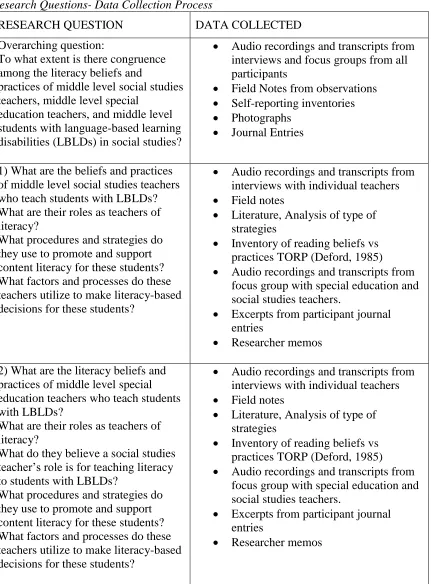
Table 3.1 Research Questions- Data Collection Process ...79
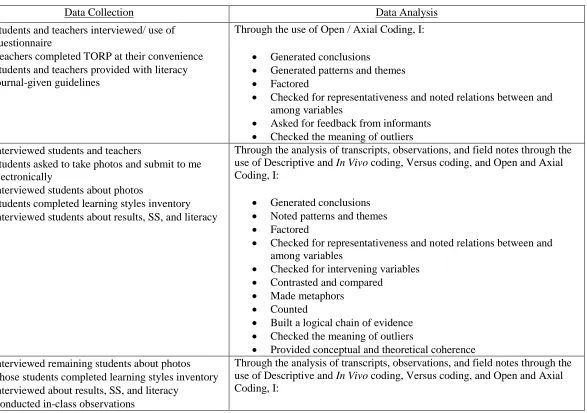
Table 3.2 Timeline for Data Collection and Analysis ...95
Table 3.3 Coding Scheme ...99
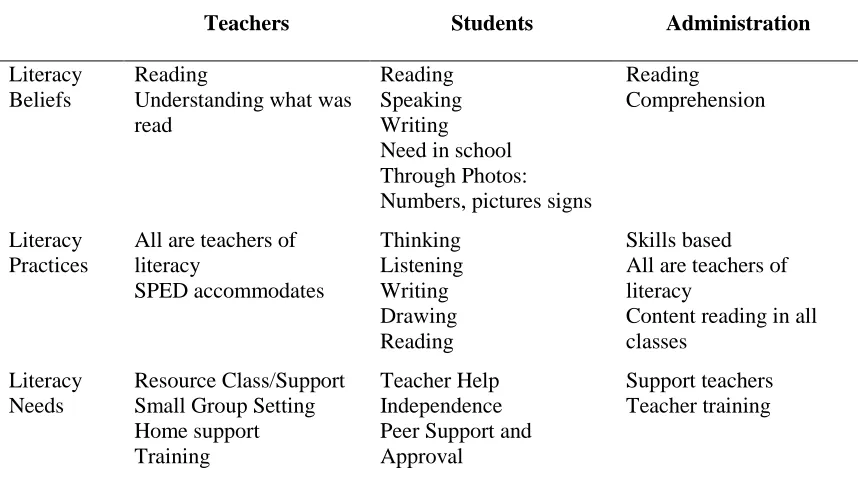
Table 3.4 Patterns and Themes from Data Analysis ...102
Table 3.5 In Vivo Codes-Teachers ...102
Table 3.6 In Vivo Codes-Students ...103
Table 3.7 Examples of Student Beliefs ...103
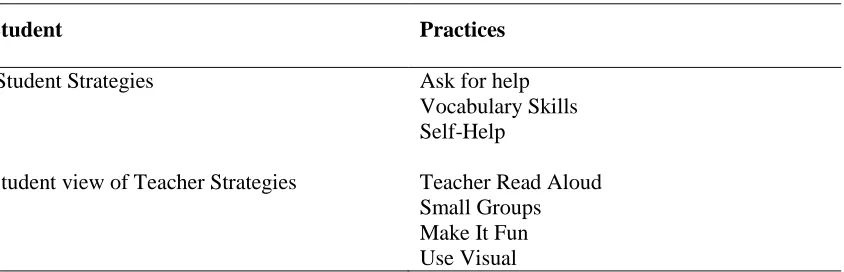
Table 3.8 Examples of Student Practices ...104
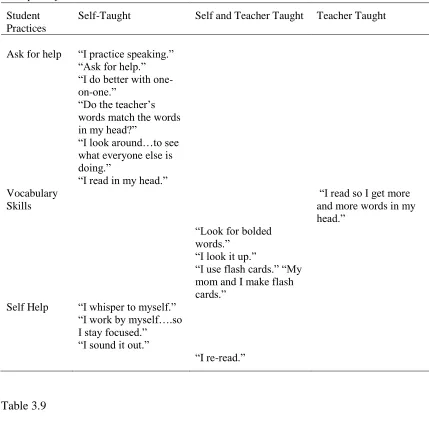
Table 3.9 Examples of Misconceptions ...104
LIST OF FIGURES
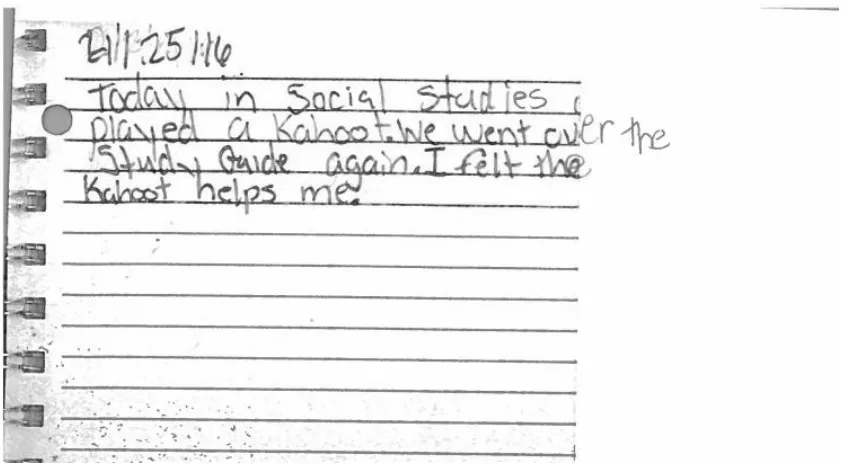
Figure 4.1 A page from Brielle’s journal in which she describes how she
used literacy during that day ...126
Figure 4.2 A page from Anastasia’s journal in which she suggests that an
LIST OF ABBREVIATIONS
BIP………. Behavior Intervention Plan
ESSA ... Every Student Succeeds Act
IDEA ... Individuals with Disabilities Education Act
IDEIA ... Individuals with Disabilities Improvement Act
LD………...Learning Disability
LDA ... Learning Disabilities Association of America
LBLD……… Language-Based Learning Disability
NCLB……….… No Child Left Behind
RE……….... Regular Education
CHAPTER ONE
INTRODUCTION
Many middle level students with language-based learning disabilities (LBLDs)
are unprepared and unlikely to succeed in social studies classes where textbook-based
and reading intensive content is often the method of instruction. Additionally, middle
level social studies teachers may be inadequately prepared to teach students with LBLDs
although they are frequently placed in their classes. The special education teachers with
expertise in this area tend to work in isolation, and have limited interaction with “regular
education” (RE) teachers who teach core subject areas. In this action research study, I
will evaluate these circumstances in the education of social studies students with LBLDs
in one middle level school. The study focuses on establishing and assessing the degree of
congruence and coherence of the literacy beliefs and practices of social studies students
with LBLDs, RE social studies teachers, and special education teachers and the
modifications that these participants make to their practices to fulfill their roles and
responsibilities.
Background of the Problem
Several federal policies and national initiatives influence and limit the ways
schools and teachers address the needs of students with special needs. These policies and
and delineate the rights of students with special needs and the responsibilities of schools
that serve them.
Standards and Accountability
In 1983, the Commission for Excellence on Education published A Nation at
Risk: The Imperative Educational Reform, which asserted that the American education
system had become inferior to those in other nations because it failed to meet the needs of
school aged-students. The report initiated reforms that led to standardization of
educational expectations and increased accountability. Presently, these content-based
standards include outcomes for knowledge and desired outcomes for academic
performances, skills, and life choices.
In 1994, the National Council for the Social Studies (NCSS) (NCSS, 2017)
published standards to describe interdisciplinary methods for social studies teachers to
use to enhance multiple themes, content, and core democratic citizenship values. The
standards now promote an active approach empowering teachers and students through
content, skills, and thought processes deemed necessary for students to become critical
thinkers and problem solvers.
The No Child Left Behind Act (NCLB) (2001) was an educational reform
designed to focus on certain student groups, including special education students, who
failed to meet the basic requirements of content mastery. NCLB mandated the focus on
the education of these students by holding states accountable for meeting students’ needs
within the RE setting. The goal was to have every student at a “proficient” level in
qualified.” Yet, the guidelines set forth in NCLB (2001) still failed to meet the needs of
many historically underperforming students.
The Common Core State Standards (CCSS, 2010) were an attempt to nationalize
teaching and learning standards in English/Language Arts and Math. The standards were
designed from “the best of state standards” (CCSS, 2010) to increase content knowledge
and language and literature skills in all content areas, including social studies. The
literature standards were designed to supplement the content standards, not replace
them. Intertwined with these were “College and Career Readiness Anchor Standards.”
These highlighted the grade-level skills, which focused on critical- thinking abilities that
allowed students to analyze and solve problems related to social studies and
history. While the state of South Carolina (SC) did not adopt the CCSS standards, the
rigorous SC Social Studies State Standards (2011) highlight the need to incorporate much
of the same cross-curricular, multimedia, and “21st-century skills” teaching and learning
processes.
Meeting the Needs of Students with Disabilities
The Individuals with Disabilities Education Improvement Act of 2004 (IDEIA)
was aligned with the NCLB (2001) to protect, provide rights, and create an
equal-opportunity learning environment. In 2015, the Every Student Succeeds Act (ESSA)
(United States Department of Education) established “critical protections” that could
affect the educational process for all students, but especially for those with special needs
(USDE, 2015, para. 8). ESSA demands that all students are held to rigorous academic
standards that support students at all levels so that they can become career and college
Middle school is a critical developmental time for students. Negative experiences
in middle school can greatly increase the chances that the student with differences will
drop out of high school (Balfanz & Fox, 2011; Ciullo et al., 2015). Conversely,
successful experiences could increase high school completion rates and the attainment of
the skills and strategies necessary to become contributing global citizens (Balfanz &Fox,
2011; Graves et al., 2011). Currently, the array of topics that middle level social studies
offers amplifies the opportunity to promote diversity, democratic ideals, and civic
responsibility.
Inclusive Middle Level Classrooms
In 1973, Congress passed The Free and Appropriate Education Act (FAPE) to
ensure that all children could attend public school. Later, under IDEA (1990) and IDEIA
(2004) students became the focus of the educational process, rather than their disabilities.
These acts also set forth plans for these students to help them transition beyond high
school (USDE, 2011, p. 4).
The acts proved that formulating plans and documentation for students identified
with disabilities was necessary. The Individualized Education Plan (IEP) (IDEA, 1990;
IDEIA, 2004) which describes the student’s academic performance levels and the type
and frequency of services the student will receive when placed in the Least Restrictive
Environment (LRE), facilitated this (IDEIA, 2004). The IEP also holds the school system
responsible for providing appropriate accommodations, academic challenges, and
non-disabled peers so that the student has equitable access to information (IDEIA, 2004).
Since NCLB (2001), IDEIA (2004), and ESSA (2015) and because of the LRE
as “inclusion” and place them in many regular, core subject classrooms, with non-special
education students. Inclusion students typically have specific classroom accommodations
and, often, a special education learning strategies class (IDEIA, 2004; LDA, 2016;
NCLB, 2001).
When they enter middle school, students transition from interacting with one or a
few elementary teachers to having four or more teachers who may offer multiple teaching
and learning approaches. Therefore, students with LDs may need specific content skills
and strategies to enhance their academic performance (Boyle, 2010; LDA, 2016).
Teachers in social studies and other content areas can create and implement literacy-rich
learning experiences and environments that allow students to have multiple interactions
with content and skills (Block & Pressley, 2002; Swanson et al. 2016).
The Problem
NCLB and IDEIA increased accountability mandating that states and school
districts focus on outcomes for students with disabilities, and include them in the RE
classroom setting. Over the last few decades, researchers have concentrated on strategies
to meet the diverse needs of middle level students with LBLDs as they learn social
studies. This research has centered on the discovery of ways to increase achievement in
the RE classroom by providing accommodations to the curriculum based on individual
student needs (Bulgren &Carta, 2002; Bulgren, Deschler & Lenz, 2007; Bulgren, Graner,
Deschler, 2013; Busby & Stork, 2014; Ciullo, Falcometa, Vaughn, 2015; Ellis, Deschler,
Lenz, Schumaker, Clark 1991; Fisher & Frey, 2008). Other studies have looked at the
effectiveness of the inclusion of students with LDs in RE classrooms, as well as the
(Conde, 2011; Conderman & Bresnahan, 2007; Dettmer, Thurston, Knackendoffel &
Dyck, 2009; Mastropieri et al., 2005, Mastropieri & Scruggs, 2007). Despite the
increased attention to these topics, gaps in knowledge and research-practice tensions
remain. Thus, administrators and teachers to ask questions such as, is it realistic for a
school to be able to support co-teaching models through additional staffing? To what
degree are middle level, regular education, in-service, social studies teachers receiving
special education training? How many and what type of professional development
opportunities are adequate to support regular education social studies teachers as they
seek to assist students with LBLDs. Why are students unable to transfer strategies taught
in special education support classes to literacy-based social studies settings?
As a middle level teacher of more than 20 years, I experienced the introduction of
the ideals and accountability measures brought forth by both NCLB and IDEIA. When I
first started to teach, the prospect of analyzing all students on a comprehensive basis was
daunting and discouraged me. However, these standards led me to seek out alternative
ways to convey content and I drew from my elementary education background where I
often taught subjects through cross-curricular connections rather than in isolation. I
learned to value the influences that social studies skills and content can have upon
students as they become inquisitive and self-sufficient learners. Through this approach, I
came to realize that many of the students with a LBLD appeared unable to transfer and
apply literacy strategies taught in the special education classes to their social studies
learning. I concluded that social studies does not center solely on the delivery of content;
rather, it may often be integrated with or embedded in a lesson in literacy or other content
teachers focus more on the quantity of content than the overall quality of the education
their students receive. Many social studies teachers struggle as they weigh the value of
teaching the breadth of content in the standards or the more complex underlying
rationales that foster deep understanding of events and concepts. For middle school
students, the latter process includes aspects of socialization, identification of self, and the
relationship between the individual and society (Armstrong, 2006; McDonald, 2010).
This led me away from textbook-driven teaching, but the realization also pushed some of
my colleagues towards it for fear of “not meeting the standards” without the guidance of
a textbook.
I found that many of my students with an LBLD could not proficiently and
accurately meet the demands of the content standards as measured by classroom and state
assessments. However, by middle school, these students had often constructed
alternative methods through which they gained knowledge. Instead of viewing these
characteristics as disabilities, I started to understand them as learning differences. From
that point on, I began to learn how to meet individual student literacy-based needs while
still adhering to the rigorous social studies content standards.
As the parent of a student with LBLDs, I also observed my son’s literacy
struggles in social studies as he attempted to engage in rote memorization activities. He
would often ask, “Why do I need to know this?” He thought of it as preparation for an
upcoming test not as mastery of a skill or comprehension of a concept. My son’s
statement led to me wonder, how many of my students would ask the same question,
which implied that focusing on the retention of content, to the exclusion of understanding
on his view of the world and he could categorize it as short term knowledge. I
reconsidered my learning beliefs and teaching practices as well as the learning practices
in which I was asking my students to engage. I aspired to model and provide meaningful
learning experiences in my social studies classroom, and facilitated the students
becoming active participants in their educational process by constructing meaning
through literacy-based and content-rich social studies activities.
To learn how to provide these productive learning experiences for my students, I
turned to my colleagues, many of whom were seasoned educators. I was surprised to find
that some of them admitted to a traditional form of textbook-centered teaching despite the
availability of supplemental resources. They felt the textbook provided them reassurance
that they were delivering the content. Driven by accountability pressures such as state
testing, these teachers were caught in a struggle between teaching content and
constructing alternative pathways for lifelong meaning.
Today, the success of teachers in the classroom is often measured by how many
students show mastery of the content standards on standardized assessments (e.g. USDE,
2015). These assessments are text-based and require students to use literacy skills,
therefore social studies teachers often struggle to teach the rigorous standards to all of
their students before state testing, knowing that those with LBLDs may not perform well
on the assessments. This presents a dilemma for social studies teachers: Do they teach to
deliver content to show mastery on a state test, or do they help to create active learners
through meaningful learning? Ideally, teachers should achieve both of these aims in
Theoretical Framework
Commitment to Democracy, Equity, and Justice
My theoretical framework is grounded in a commitment to democracy, equity,
and justice, which translates into, equal access, instruction, and support for all learners.
Yet, those with learning disabilities may become marginalized and may not be served
well (Cochran-Smith, 2004; Freire, 1970; Sleeter, 2008). Research and experience as a
teacher have led me to believe that curricula are more likely to be designed to privilege
“regular education” students over those with disabilities who may be treated differently
and stigmatized through such practices as labeling and ability grouping (Barden, 2011;
Dils, 2000; Hester, 2012). Freire (1970) used the term, “culture of silence”to describe the
negative and often suppressed self-image that marginalized students often develop.
The current curriculum determines a prescribed “agenda of legitimate knowledge”
(Apple, 1979) all students will gain. However, in its application, it is restrictive and
leaves little consideration for the students who learn differently (Ryndak, et al., 2014). It
tends to be structured for the efficient learning of the RE student population. This
curriculum does not uniformly account for, nor does it facilitate, the learning styles of
students with LDs (Vaughn, Schumm & Forgan, 1998). For these students, education is a
top-down, isolated, and highly structured process that perpetuates inequality and injustice
(Apple, 1979; Cochran-Smith, 2004; Freire, 1970; Shrewsbury, 1987; Sleeter, 2008).
School as a System and Learning Organization
To facilitate learning for students with LBLDs, it may be necessary to adopt a
continuing approach that systematically reflects on its outcomes, revises, and adapts to
most effectively when they engage in a process of “double-loop learning,” which is
complex and requires the modification of beliefs as integral to the process of change.
During “double-loop learning”, the stakeholders become subject to “growth-mindsets”
(Dweck, 2015) when “basic assumptions behind ideas or policies are
confronted…hypotheses are publicly tested… [and] processes are disconfirmable, not
self-seeking” (Argyris and Schön, 1982, pp.103-4). This process may reveal that some
beliefs remain valid and unchallenged (fixed-mindset) whereas others will begin a
process of positive transformation (Dweck, 2015). This process is vital to facilitating
rapid modifications within the school environment. The study maintains that if a review
of literacy beliefs is sustained and implementation is continuous, the process will result in
effecting necessary changes matched to the needs of students with LBLDs.
Teacher/Student Beliefs and Practices
Beliefs are “overarching frameworks for understanding and engaging with the
world” (Davis & Andrzejewski, 2009, para. 4). In education, the beliefs of administrators,
teachers, and students provide a foundation for teaching and learning. Educators should
systematically reexamine their beliefs in a collaborative effort to promote improvement
(Dweck, 2015; Fisher and Frey, 2008; Markman, 1989). Bruner (1996) suggested that
teachers often engage in “folk pedagogy” of “pre-wired” and ingrained assumptions
about how students learn (p.46), while Erkmen (2012), Kagan (1992), and Zeichner and
Tabachnick (1981) submitted that teacher beliefs are based on the nature of teaching and
the experiences of teachers in their own learning. Such “espoused” beliefs need to be
reconsidered by the individual because they may contradict a teacher’s actions and may
p.82). Teachers need to be reflexive and responsive to the needs of their students by
reassessing their own beliefs, which may also contradict well-established theories or
facts.
Identifying the nature of the beliefs students bring to the classroom concerning
literacy may help educators discover the students’ motivations to learn and may identify
special needs or changes that are necessary to encourage and facilitate active and
meaningful learning (Cantrell, Burns, & Callaway, 2009). By middle school, students
with LBLDs may have formed their own theories about the academic process, and
teachers should make them aware that engaging in a metacognitive process is appropriate
and important to do (Ciullo et al., 2015; Deschler et al., 2001; Girash, 2014; McDonald,
2010). These students should be dissuaded that their past struggles with literacy will
make learning more difficult (Ciullo et al., 2015; Vaughn et al., 2013). They need to be
encouraged by self-empowering practices that could lead to an increase in self-esteem
and support them becoming more active in their learning process.
Understanding Beliefs as a Basis for Change
Critical analysis of pedagogical beliefs and subsequent changes may produce
more vibrant and collaborative relationships in the classroom. These could lead to greater
critical thinking and knowledge acquisition (Rokeach, 1986). This requires an
epistemological approach on the part of all individuals (Chinn, 2009). It includes the
discovery of which life experiences may have shaped beliefs coupled with a realization
that personal history may be useful or detrimental to current actions (Mason & Boscolo,
to improve the academic process and lead to better understanding of how content
knowledge is provided and acquired.
The purpose of this action research study is to take a step in the direction towards
identifying the underlying beliefs that middle level students with LBLDs, social studies
teachers, special education teachers, and administrators have about the use and
application of content-based literacy. In addition, I intend to establish how these students
acquire and use text-based and other literacy skills in the social studies classroom. This
study will bring beliefs to the foreground as a first step in improving educational
opportunities and outcomes for students with LBLDs. This study has the potential to
show that increasing the academic confidence of marginalized students may have an
empowering effect on their scholastic experiences. The results of the study could assist in
the development of pedagogical approaches towards increasing self-esteem.
Conceptual Framework
The initial motivation for the research was driven by my observation that students
with LBLDs learn differently and that, by virtue of their needs, they must acquire
knowledge through different means. To determine the level of congruence amongst the
participants, I needed to examine the beliefs of each group as well as the nature and use
of content literacy as a cross-curricular process. Cross-curricular literacy includes the
methods in which the students and teachers engage when interacting with text. These
include but are not limited to previewing, engaging with, analyzing type, and reacting to
text (Vacca, Vacca & Mraz, 2011). Because learning is an active and constructive process
(Piaget, 1953; Vygtosky, 1978) fundamental to the intersectionality of these concepts,
opportunities to uncover the influences that determine the practices of students with
LBLDs and those of their content-area teachers.
Students with LBLDs are placed in LREs that are meant to enhance their learning.
While the teachers may believe that they have common motives, actions, and goals
concerning the education of students with LBLDs, I sought in my study to determine
whether these assumptions are indeed correct. I focused the study specifically on whether
or not there is congruence and coherence between the teaching methods, the learning
environment, and the ability of the students to learn, understand, and retain the
information successfully. To do this, I asked the following questions:
1. What are the beliefs of students regarding their literacy-based learning
experiences?
2. What are the beliefs of the teachers regarding the teaching methods they
currently employ when teaching students with LBLDs? Are they biased by
their own teaching and learning experiences?
3. Are the teachers properly trained to meet the needs of these students?
There are numerous educational theories and methodologies that provide support
and guidance on the methods designed to foster effective teaching and learning (e.g.,
Korthagen, 2004; Labaree, 2000; Piaget, 1952; Philips& Soltis, 2009; Putnam & Borko,
2000; Vygotsky,1978). This study focuses on a classroom design that is in alignment
with constructivist theories where classroom interactions center on higher order thinking,
problem solving, and collaborative work skills.
Multiple studies focus on types of professional development opportunities
Borko, 2000; Wilson &Berne, 1999). However, educators should be cautious because
many professional development opportunities are treated as an “event” (Opfer & Pedder,
2011) implemented from a “situated perspective, often fueled by current reform
movements in education” (Putnam & Borko, 2000, p. 4) which may lead to ineffective
use of time and resources within a school (Hanushek, 2005; Knapp, 2003; Opfer &
Pedder, 2011). Lortie (2000) cautioned that success with any type of approach, hinges
upon “reflective practice” (p. viii). For the purpose of this study, this introspective
practice involves teachers, students, and the administration actively thinking about what
they do in relation to teaching and learning and what greater purpose their actions serve.
This, in combination with constructivist teaching and learning approaches that involve
active and collaborative methods, may yield positive and productive growth in both
thinking and in action (Argyris & Schön, 1978; Dweck, 2015).
There are minimal studies centered on the longevity of the effects on the teaching
and learning practices (Borko, 2004) and the conditions that support and promote this
learning (Clarke & Hollingsworth, 2002). Additionally, few studies have addressed the
learning of middle school social studies students with LBLDs and their perspectives on
achieving meaningful interaction with content literacy (Boyle, 2010; Bulgren, Graner &
Deschler, 2013; Ciullo et al., 2015; Conderman, 2011).
Study Design
Much education research has been done from an outsider’s point of view.
Darling-Hammond and Berry (1998) identified that in-service teachers can have the most
significant impact on educational reform. Educators are best able to identify, assess, and
(Mills, 2003; Watts 1985). I designed an action research (AR) study to understand better
the beliefs, attitudes, and struggles of middle level students with an LBLD in their
attempts to learn social studies content. Additionally, I sought to help my colleagues and
myself to meet our needs better. While my findings and conclusions may resonate with
educators in other settings, my intent was to have an impact in the local, particular
environment in which the study was conducted. This is consistent with AR, which differs
from “traditional” research, in that it seeks to inform practice or make change in the
setting in which it occurs to reach a better situation or in this case, learning environment
(Elliot, 1991; Watts, 1985).
The overarching goal of this action research was for the teacher and administrator
participants to define and create solutions for problems by reflecting on their beliefs with
the goal of empowering them to improve their literacy practices and those of the school
as a whole (Elden & Levin, 1991; Elliot, 1991). Action research supports the
development of the realization and the transformation of values and beliefs, which have a
direct impact on literacy, practices (Morales, 2016). This process is consistent with
constructivist approaches to teaching and learning because the researcher is seeking
knowledge about how to actively improve the education of middle level students with
LBLDs in a social studies setting by reflecting on beliefs so that practices can be changed
or enhanced.
By design, AR supports a constant state of planning, action, reflection, and
evaluation (Watts, 1985). The systematic process involves identifying the problem,
gathering data, interpreting the data, acting on the evidence, evaluating the results and
designed to solve a problem, produce guidelines, and to influence the future of classroom
strategies (Elliot, 1991; Mills, 2003).
Initially, I was investigating a problem that I experienced in my own classroom
and from a mother-teacher point of view in relation to my son’s academic experiences.
As I continued the research and began questioning and observing my colleagues, the
focus shifted from my individual experiences, to the similar concerns that the other social
studies and special education middle level teachers in my school encounter. Integral to
this research was the perspectives of the students. The discussions with the students
provided insight into effective strategies based on how they perceived that they learn in a
literacy-rich environment. The results from all participants provided an understanding
into the goals and motivations of the educators.
I was a facilitator in the AR process. I did not provide my own thoughts,
observations, nor produce actions in this study. However, this study has some undertones
of participatory action research (PAR). For example, my study is similar to Morales’
(2016) findings when she describes PAR as a way to “produce knowledge and action
directly useful to a group of people through research…to empower people to provide
deep processing through knowledge construction and use” (p.158).
Social Studies is a broad area of knowledge that includes a number of topics and
skills that are cyclically taught during the K-12 years. In South Carolina, the sixth grade
curriculum is World Cultures: Early Man to the 1600’s (SCDE, 2011). This is the subject
that the students and teachers were addressing during the course of this study.
Within each social studies topic, there are types of literacies beyond reading,
address. They include but are not limited to history, economics, geography, sociology,
politics, law, government, and others. Within each of these subjects there are also specific
literacies such as interpreting charts and graphs and spatial literacy that allows students to
“see” the world, but also learn place, problem solve, and enhance other critical thinking
skills (National Research Council, 2006). Maps should not be limited to the use of
geographic terms but also include concept maps, and graphic organizers, which have
been shown to help students with LBLDs organize, retrieve, and retain content material
(Ciullo et al., 2015; Pressley et al. 1989; Vaughn et al., 2013). Teachers should consider
that these types of literacies may also assist the student with LBLDs to study the material
and learn the content that is being taught through the use of visual and graphic
representations (Deschler, et al., 2001; Gersten, 2001). For students who struggle with
reading and writing, this may afford them alternate venues to explore this literacy-rich
subject. “In theory, teaching students to construct meaning in a variety of complex texts
across content areas not only will serve to build reading ability but will increase
knowledge acquisition and improve content learning due to students’ improved reading
abilities” (Swanson, et al., 2016, p. 200).
I chose to limit the focus of study to the basic literacy skills of reading and
writing. The IEP accommodations often emphasize the skills that influence and may
direct the teachers’ focus towards using them and avoiding other possible approaches. In
my experience and observations as a teacher, content is often delivered using the
textbook and presented with PowerPoints. Formal assessments are often multiple choice,
short answer, and essay tests that require the student to read and write. It then becomes
other literacies such as map reading and debates. These could help students with LBLDs
to better engage with the content and create life-long learning through greater
comprehension of the material and the mastery of skills (Deshler, et al. 2001; Vaughn, et
al., 2013).
One result of the study was the finding that the social studies and special
education teachers in this study, planned and taught in isolation by subject or content. In
contrast, the AR method encourages the use of reflection, discussion, and collaboration
by creating a cohesive bond between the groups as they participate in a professional
development opportunity (Bondy, 2001; Glanz, 2003). In addition, one of the principles
of AR is that it is necessary to analyze alternative viewpoints to inform and enrich current
practices (Heron, 1971; Corey, 1953). Because of the opportunities this study created,
the teachers were able to reflect on classroom literacy experiences, plan, carry out and
apply those results, and were able to implement immediate changes within their
classrooms to support the needs of students with LBLDs (Burns, 1999).
Research Questions
The overarching question driving this study was: To what extent is there
congruence between the literacy beliefs and practices of middle level social studies
teachers, middle level special education teachers, and middle level social studies students
with LBLDs?
Congruence has been conceptualized as how well learning goals, activities, and
assessments are aligned, while maintaining the integrity of content standards (Könings,
Seidel, Brand-Gruwel, & Merriënboer, 2014). Congruence can be evaluated through the
environment. Ideally, congruence within a school or educational system can be achieved
through a coherent curriculum. A coherent curriculum “refers to an academic program
that is (1) well organized and purposefully designed to facilitate learning, (2) free of
academic gaps and needless repetitions, and (3) aligned across lessons, courses, subject
areas...” (Hidden Curriculum, 2014, para 1). For coherence to occur there must exist a
connectedness between the learning objectives, literacy goals, processes, and the
outcomes of learning (Roseman, Linn & Koppal, 2008). Coherence and congruence are
guided by state standards, made possible through appropriate and available instructional
materials, and supported by district and school initiated professional development
opportunities.
Based on student responses, I sought to identify the literacy beliefs and practices
of middle level students with an LBLD, in a social studies class. I sought to understand:
a) how these students define and perceive literacy including reading, writing and
speaking skills, b) how these students approach literacy in social studies and, c) whether
there is evidence that the students are consciously choosing a strategy to enhance their
literacy practices, and what are the underlying reasons for the preference of a specific
strategy (strategies).
Based on teacher responses I sought to identify the literacy beliefs and practices
of middle level social studiesteachers who teach the students with an LBLD. More
specifically: a) what middle level social studies teachers view as their roles as teachers of
literacy including reading, writing and speaking skills, b) what procedures and strategies
factors and processes do these teachers utilize to make literacy-based decisions for
students with an LBLD.
I also sought to identify the literacy beliefs and practices of middle level special
education teachers who teach students with an LBLD. More specifically: a) what their
roles are as teachers of literacy, which include reading, writing and speaking skills, b)
what procedures and strategies are used to promote and support content literacy for
students with an LBLD, and c) what factors and processes do teachers utilize to make
literacy-based decisions for these students. Furthermore, I asked special education
teachers what they believe a middle level social studies teacher’s role is for literacy
instruction of students with an LBLD.
Teachers’ beliefs are "constructed based on theories of how the world works, as
well as teachers’ social and cultural backgrounds––combined, these act to mold teachers’
thoughts about teaching and learning" (Flint, Maloch & Leland, 2010, p. 3). These beliefs
influence practices that are derived in part “by the understandings and experiences
educators bring to the classroom…which guide their practices" (Flint, et al., 2010, p.3).
Based on teacher and administration responses, with this research, I sought to: a)
identify administrator beliefs of the role of all middle level educators of teaching literacy
and, b) identify to what extent schools provide structural and organizational supports for
the development of a coherent approach to literacy learning in a social studies class.
Data Collection
I conducted this research as a qualitative, action research case study because I was
seeking to understand the perceptions of certain particularized groups and to develop a
collect and analyze data about participants’ perception of literacy, as well as the literacy
beliefs and practices of the students and teachers through interviews, photographs, focus
groups, field notes, and observations. Inadequate opportunities for cross-curricular
planning was a common topic between the groups of teachers. A goal of the study was to
identify the extent to which this site provided space for planning between the groups of
teachers based on their needs. Because the data collection processes supported intimate
reflection of teacher practices, immediate on-site change occurred as a result of the
collaborative discussions between the teachers.
Research Purpose
The overarching purpose of the research was to explore the extent to which there
is coherence and congruence among the literacy beliefs and practices of middle level
social studies teachers, middle level special education teachers, and middle level social
studies students with LBLDs.
The study fills a gap in the research regarding the perception of literacy practices
from the viewpoint of middle school social studies students with LBLDs, the teachers of
these students, and administrators of these groups. These perspectives were critical to the
study so that I could establish what works for all groups, and more importantly, why it
works. I will critically address the perspectives of these key informants in this field of
research.
Through this study, I also seek to contribute to the identification and
understanding of the needs of middle level social studies students with LBLDs. The study
supported discussion and collaboration in designing, establishing, and facilitating
contributes to the arena of preservice educators and to current teachers through
professional development, to train teachers to meet the diverse needs of sixth grade
inclusion students with LBLDs.
Significance of the Study
The classroom experiences of my colleagues and myself have shown me that
understanding how students with LBLDs learn and use metacognitive skills to create
successful pathways is paramount to identifying ways to design supportive school-based
and classroom configurations. Current education tends to be content-based with an
emphasis on reading and writing in all core content areas as a means to understand and
express comprehension of the subject matter (CCSS, 2010; Marzano, 2009; Shanahan &
Shanahan, 2008; Vacca, Vacca, & Mraz, 2011). This method of structuring schooling
leaves the students with learning differences isolated and left to their own means for
finding successful pathways to the knowledge (Cochran-Smith, 2004; Freire, 1970;
Shrewbery, 2007; Sleeter, 2008). Therefore, the research has the potential to transform
teaching methodology to address this gap. The study has the capability to inform the field
of education by paving the way for exploring alternative frameworks and methods by
giving the students a voice in how they can best acquire knowledge.
The study has practical implications for administrators in assisting with the
implementation, support, and success of professional development opportunities of
teachers of students with LBLDs. The responsibility of applying new curricular methods
falls upon the teacher. Nevertheless, the administrative structure of the school needs to
classroom literacy procedures. To be most effective, the system and structure of the
organization must be coherent and congruent to maximize teaching effectiveness.
My theoretical intention with this research was to investigate how students who
struggle with literacy-based material, construct, and define their literacy beliefs and
practices. As an educator, I know that educators can learn how to adapt their
methodologies to meet the individual student needs and beliefs. Therefore, the study has
the potential to affect social and academic change for students with LBLDs. It provides
an opportunity to increase motivation and self-esteem, as well as reduce the feelings of
student isolation. Those students who have introspectively evaluated their beliefs with
regard to literacy have realized that they only seem to struggle in the school setting, given
that they are often highly proficient in other non-literacy centered arenas. (Barden, 2011;
Hester, 2012).
Limitations
I was aware that the site and subjects could help identify the literacy-based
academic struggles of these students. As I collected the data, I realized that the study was
not only highlighting the efforts of students and teachers, but it was addressing needs and
creating changes in practices. Therefore, the study became action research.
This study was limited to RE middle level social studies teachers and middle level
special education teachers. I did this because at this site, and often in other schools, social
studies teachers who have daily interactions with students with LBLDs have minimal
special education training or the ability to receive support from special education
teachers. It was necessary to limit the type of teacher so that a focus would be on their
While the value of action research is in the change that occurs in everyday
practice at the research site rather than the generalization to a broader audience (Corey,
1953), and therefore imposes limits to generalizability, certain aspects of this study could
apply to or be considered in other sites and/or levels. I will discuss these possibilities in
Chapter 5.
An initial concern was my position as a teacher-researcher at the site. I was able
to address my perceived power over the students in the initial meeting by giving each
student power as an expert. Before the study began, I informally asked teachers if they
would consider participating in the study. Two teachers refused, believing that their
involvement was going to be “extra work.” To combat this perception, I presented
participation in the study as a way for the participants to provide expert opinions. I also
used the opportunity to create a professional development situation that is in alignment
with conducting action research.
A limitation that surprised me somewhat was that it became evident that there
may have been underlying or additional diagnoses (such as ADD or ADHD) that were
not identified on the IEP for some of the students. These issues, in addition to LBLDs,
can affect a student’s ability to learn. Since South Carolina does not require full
disclosure to the school and the identification of a specific disability, I selected the
students based on their IEP referencing only a “LearningDisability.”In my experience as
a classroom teacher, I have learned that this general designation can be highly limiting to
understanding how to help the student, since the IEP does not provide distinguishing
characteristics of the disability (e.g., dyslexia). The limitation is important when
replicated and could be transferable to other content areas and schools that have middle
level students identified with an LBLD.
An additional limitation as a teacher-researcher-mother, for which I was prepared,
was that my son was part of the study group. His teachers recommended him for
participation based on the study criteria. Like the other students, I kept confidentiality at
the forefront, insuring that the revealing details of his life remained private (Long &
Long, 2014). He had no interest in this study other than to participate in the interviews,
survey, and focus group. We did not discuss any part of the study outside of his
participation. Once I collected the data for each participant, I renamed each file with their
pseudonym and transcribed that information accordingly. To control for bias, while
interviewing him and during the focus group, I was mindful of my facial expressions and
body language with him and all of the students. I chose to be as neutral as possible during
the interactions. I asked my son the same questions as the other students, careful not to
ask leading questions of him or the other students. If I was unsure or felt as though he or
the other students were providing me with the “correct” answer instead of their own
reply, I would clarify, remind the students that I was looking for their expert opinions,
and tell them I was just interested in what they had to contribute. I reported the findings
without bias by stating and representing exactly what the participants told me.
Organization of the Dissertation
This chapter has provided the background and the basis for this action research
study. Chapter Two provides a review of the literature, focusing on beliefs and practices,
constructivist approaches to teaching and learning, and strategies that support the
Three discusses the research design, the data collection process, the foundations of the
data analysis process, and the role of the researcher. Chapter Four provides the findings
from the data collection process. Chapter Five presents a summary of the findings based
on conclusions from the data analysis. This chapter also includes implications for future
research.
Summary
This chapter introduced the purpose and motivation for this study. It summarized
the challenges facing students with LBLDs in social studies classrooms and those of the
teachers and administrators who seek to help them. Intervention strategies designed to
assist these students are many, yet, like the intricacies of the literacy-based learning
disabilities, the optimal strategy or approach to support students is still undefined. I
suggest that the misperceptions and incongruities in the approaches of both teachers and
students may also contribute to some of the difficulties. Many of these strategies have
and continue to assist some students. According to the literature, the issue is not with the
availability of strategies. Instead, it may be within the knowledge of and implementation
of these strategies with students with LBLDs. There is minimal research on these
students’ beliefs, attitudes, and perceptions of literacy, as well as their struggles with
facing literacy-rich content areas in school. It is important to study the students’
“emerging beliefs about the value and worth to them from investing” (Hattie, 2009) in
taking an active role in their education. Over time, the students’ constructs have the,
“ability to build a sense of self from engagement in learning and as a reputation as a
learner,” (Hattie, 2009). These beliefs have the potential to affect a student’s academic
possibility for teachers and administrators to develop more effective curricular
approaches. Based on this study, a more coherent curricular structure could be developed
that allows for a smoother entry from the special education setting into a more traditional
classroom with RE students. There has been minimal research on the beliefs and
practices of teachers of students with LBLDs and how administrators believe they can
best help both students and their teachers. I believe that the schools and districts must
give teachers of these students time and space with which to create a cohesive,
challenging, and engaging curriculum that will allow students with LBLDs to thrive and
CHAPTER TWO
REVIEW OF THE LITERATURE
Introduction
Educational theories provide support and guidance on the methods that result in
effective teaching and learning. Learning is considered an active process while
understanding requires the learner to “actively engage in making meaning that
incorporates prior knowledge, facts, and beliefs” (Jones & Brader-Araje, 2002, para. 6),
to reflect on what is learned, and to create action based upon this knowledge (Dewey,
1938).
Constructivism is a theory of education, psychology, and sociology (Hoover,
1996). It is based on the research of Piaget, who suggested that people are capable of
different levels of learning during different stages of early life. There are a number of
constructivism models relevant to teaching and learning. One of these is cognitive
constructivism, founded by Piaget. The cognitive constructivist theory of learning values
the ability of children to construct knowledge based on their currently held information
coupled with understanding gained from new information or experiences. The second
form is social constructivism. It is based on Vygotsky’s work that centered on the
socio-cultural environment as a basis for effective and meaningful learning experiences. “Any
function in the child’s cultural development appears twice, or on two planes. ... First it
as an intrapsychological category” (Vygotsky 1941/1997, p.105-106). This implies that
children learn through their culture in the socio-culture realm and then as an individual. It
is through the “process of engaging in mutual activities with more expert others [teachers
and students] that the child becomes more knowledgeable” (Smith & Cowie, 1991, p.
349-350).
There are benefits to both approaches in a dynamic, constructivist learning
environment, where students learn by interaction with peers and teachers, and
accommodation occurs based on prior knowledge and experiences. This dual approach
requires the learning atmosphere to be responsive and adaptive to the individualized
needs of students. In such an environment, teachers serve as guides who support students
in their own process of discovery by fostering a connection between an individual’s
knowledge, the group’s experiences, and content (Philips, 1995).
Constructivist teaching and learning methods depend on the student’s prior
knowledge and are influenced by the individual’s beliefs regarding learning. Beliefs are
formed from knowledge but are also tied to emotion which cause action or reaction
(Rokeach, 1968), and are subject to “espoused” and “in-use” theories (Argyris and;
Schön, 1978). This is meaningful for middle school students with LBLDs, who often
believe that they are incapable of learning literacy-based material and may therefore,
avoid language-based learning situations because they fear failure (Haneke, 1998;
Herber, 1970; Ivey, 1999; Lenz, Ellis & Scanlon, 1996; Mastropieri & Scruggs, 2010).
During middle school, the development of advanced language-based skills becomes
critical because adolescents are forming foundations for social and academic interactions
authentic learning situations, through assimilation of prior knowledge, and are
encouraged to reflect upon their personal learning skills through the use of
metacognition, may enable them to accommodate and enhance their learning ability
(Isaacson & Fujita, 2006).
While research on pedagogical methods that assist both the teachers and students
is increasing (Borko and Putnam, 1997; Cantrell et al., 2009; Ciullo, Falcomata, and
Vaughn, 2015; Cochran-Smith & Lytle, 1993; Hirai, 2010; Hughes & Parker-Katz, 2013;
Vaughn et al., 2013; Wilson & Berne, 1999), studies on literacy-based teaching and
learning strategies designed to assist middle level social studies students with LBLDs
remain limited (e.g., Bulgren, Deschler &Lenz, 2007; Jerome & Barbetta, 2005; Pressley,
Goodchild, Fleet, Zajchowski, & Evans, 1989). There is minimal current research on
studies that address students’ perceptions regarding literacy training within a middle
school social studies setting. Similarly, there is limited knowledge of the teachers’
insights on literacy practices for these students. Therefore, the intent of this research was
to study student, teacher, and administrator literacy-based, beliefs and practices as
applied to social studies. An additional component was to identify their perspectives as to
which classroom and personal literacy strategies teachers and students felt best assist
these students in social studies and attempt to identify why.
I designed this literature review to identify the direction of the research, based
upon what was available in the current literature. I was seeking to identify student and
teacher beliefs, practices, and perceptions of literacy that drive their approaches to the
education process and function as content-based approaches. Additionally, I searched for
identified as “successful methodologies” designed to be implemented within a social
studies curriculum and in a classroom environment.
Theory into Practice
The process of learning has been studied through many lenses (e.g. Bandura,
1977; Dewey, 1938; Gardner, 1983). The approach that best suits education is
constructivism (Brooks & Brooks, 1999; Naylor & Keogh, 1999). Jean Piaget
(1896-1980) was a theorist who created cognitive constructivism. He designed his cognitive
theory (1936) based on the premise that learning, and therefore, knowledge, is not
acquired. Rather, knowledge is individualistic and actively constructed from a series of
“mental representations” (Piaget, 1952). Piaget believed that humans progress through
four stages of cognitive development. Most relevant to this study are the third and fourth
stages. He suggested that students from ages seven through eleven, are in the third, or
“concrete operational” stage, which is when most students enter the sixth grade. Piaget
(1952) proposed that by the end of this stage, students achieve the ability to reason and
that learning should involve classification, ordering, and concrete representations. This is
in alignment with the assumption, made by many middle school teachers, that most
students have created those learning habits through reasoning and experimentation that
will assist them in finding academic success (Armstrong, 2006; Boyle, 2010; Brailsford,
Snart & Das, 1984; Brozo & Simpson, 2007; Dweck, 2015; Goodman, 1990; McDonald,
2010; Swanson & Vaughn, 2010; Torgesen, 2002).
Adolescents, ages 12 and older, transition into the final stage of cognitive
development, the “formal operational stage,” which is when they develop the ability to
adolescents are able to construct and apply their own beliefs and can actively formulate
practices based upon their own cognitive and environmental experiences (Piaget &
Inhelder, 1958). While many students do progress to this final stage, middle school
teachers need to be cautious because “formal operations is never attained by a significant
number of individuals” (Kuhn, 1979, p. 35), some of which could include those with
LDs.
Piaget (1952) described the different processes that individuals progress through
as they build their knowledge base. He used the terms, “assimilate” and “accommodate,”
to describe how students recognize, categorize, and accept newly learned material and
experiences into what they already know. Students with LBLDs who are either unable to
or incorrectly assimilate and accommodate knowledge, may become misguided, which
could lead to some incorrect or negative academic interactions. Therefore, right or
wrong, a student whose beliefs are left unchecked may approach learning through the
lens of learning differences based on individual beliefs. These beliefs then become part of
the student’s practice (Piaget, 1952) which may lead to academic frustrations.
Students with LBLDs may construct alternate approaches to activities in contrast
to the “traditional” learner who has an easier time reading and processing information.
Because learning disabilities are defined based on a discrepancy between ability and
output (Huey, 1908 as cited in Brailsford et al., 1984) it is critical for teachers to
recognize that students with LBLDs learn, process, and demonstrate knowledge
differently.
In order for students and teachers to understand each other, it is important that
Leland, 2010; Könings et al., 2014). By incorporating Piaget’s (1952) theories into
educational practices, it is apparent that both students and teachers need to accommodate
for learning new material as well as to create different pathways to guide students
towards assimilating new knowledge into prior learning.
Bruner’s (1996) constructive cognitivist theory of learning does not subscribe to
stages of learning, but aligns with the needs of middle level students with LBLDs. His
theory of instruction suggests that teachers need to achieve balance in the learning
environment to meet the individual learning needs of students (Bruner, 1966). He
theorized that education is optimal “when learning is, first, participatory, provocative,
communal, and collaborative; and second, when learning is a process of constructing
meaning rather than receiving [rote information]” (Bruner, 1996, p. 84).
Vygotsky’s (1978) scaffolding design and Social Development Theory suggests
that constructing a social, nurturing, and meaningful learning environment that depends
on the use of language and the presence of a more knowledgeable other. Vygotsky’s
studies offered several strategic methodological routes with which teachers could provide
students to increase their academic awareness and success. By design, scaffolding
instruction requires the combination of learners with more knowledgeable people, which
could include other students, teachers, or parents. These individuals provide supporting
systems, defined as scaffolds that facilitate the learner’s development. Vygotsky (1978)
states that these socially constructed scaffolds increase the student’s ability to build upon
prior knowledge, ultimately processing and comprehending the new information. This
approach has led researchers and theorists to establish multimethod avenues to maximize