7
TEACHER TRAINEES PERCEPTION
TOWARDS TEACHING PRACTICE
ROZIANA SHAARI
AZIZAH RAJAB
LILY SURIANI MOHD ARIF
SHAH ROLLAH ABDUL WAHAB
RAIHANA ROMLY
INTRODUCTION
We now live in a fast-paced nature of the world that needs us to react immediately to our surroundings and at the same time follow the norms and value that have been predetermined. But sometimes we cannot cope with the situations that occurred around us. As a result, we will feel tense and cannot work efficiently. This situation may lead to stress that will affect our daily performances. Laughlin (1984: 18) believes stress is the degree of tension, anxiety or pressure experienced by us which lead to the feelings of apprehension, agitation or annoyance.
Even though we do not notice it, stress has become a part of our life. Stress will definitely have an effect on our lives, family and health if we let it conquer our life. Up to 80 percent of all illnesses may well be stress-related. According to Smith (1993), stress is an important component of heart disease, cancer, respiratory disorders, ulcers, alcoholism, accidents, drug abuse and is the all leading causes of death in the West.
workplace is known as work stress that triggers negative impacts to the workers such as they cannot perform up to their levels, which may lead to depression and health problems. According to Okebukola and Jegede (1989), work stress is a condition of mental and physical exertion brought about as a result of harassing events or dissatisfying elements or general features of the working environment.
Everyone including teachers encountered work stress at schools. Sometimes, the job as an educator may become very stressful because they not only have to handle the students, but they also have to follow the instructions from administrators, handling parents or conflict with colleagues. At the present time, the responsibility of a teacher is not only involved with the act of teaching but also other things such as administrative work or helping the administrators in handling certain occasions or functions and activities in schools.
This feeling of helplessness can sometimes jeopardize the teachers’ work quality because it will give negative effects to the teachers’ emotionally and physically. A teacher that is under stress will have some common symptoms, such as irritability and moodiness which can trigger physical or physiological response within the body, which leads to the types of symptoms for instance headaches, diarrhea, fatigue, high blood pressure or skin rashes (Brecht, 1996). Stress beyond doubt will lead to negative effects on the students, the schools and for the teachers themselves.
Besides that, stress can reduce productivity, creativity and the ability to enjoy oneself (Smith, 1993). If a teacher is always under pressure, indirectly his/her students may become victims in certain situations. They may not get proper lessons from their teachers and results in low academic achievements among the students. This will not help our country in achieving the education vision of expanding human capital with a first class mind.
Subsequently, teacher trainees may encounter this common feeling during the early stages when they have to start teaching practice in schools. They may encounter problems to fit into the school system. For those who cannot handle the problems, they will become tense and this may lead to stress. Teacher trainees may not know that they are suffering from stress and certainly do not know how serious this feeling will become if they do not get professional help.
Stress may be something new to the teacher trainees because as soon as they step into the school environment, they have to learn to accept responsibilities not only towards their students but also cooperative teacher, supervisor and school itself. Teacher trainees who suffer from a high level of stress during their teaching practice may choose to leave the field if they cannot handle the pressure. This may be true for those who suffer from culture shock or traumatize by a bad experience during their practical teaching. Moreover, teaching is fast becoming a challenging profession and stress has continued to plague classroom teachers. Currently, it is estimated that more than 20 percent of the public school teachers leave their positions within three years and 9.3 percent quit before finishing their first year (Weiss & Weiss, 1999 as cited in Cushing 2001). If they choose to leave the field after they graduated, they will waste the government’s money that has provided facility and loans for them. Besides, the government’s intention to provide quality labor force for educational system may fail because these teachers may decide not to teach in schools due to the high level of stress that they have suffered during teaching practice.
OBJECTIVES
• To ascertain the causes of stress among the teacher trainees
(TESL) in UTM.
METHODOLOGY
This study is conducted through a survey method. A set of questionnaire is distributed to the respondents at the end of their teaching practice in 2007.
Instruments
This study uses a set of questionnaire for data collection. According to Mohd Najib (1999), questionnaire is easy to manage after it is wisely developed and not difficult to process for the data analysis. This questionnaire is adapted from The Administrative Stress Index (ASI) that was developed and validated by Gmelch and Swent in 1977 and also other items that was developed from other sources such as Laughlin (1984), Kyriacou and Sutcliffe (1974) and McCormick and Solman (1992), taken and adapted from Ahmad Syakri (1998). The Administrative Stress Index (ASI) is used by Gmelch and Swent (1977) as an instrument in their research to investigate occupational stressors of school administrators.
This questionnaire is divided into 3 sections. The first section is based on demographic factors of the respondents. In the second section, there are 46 items concerning the causes of stress among the teacher trainees. The factors that have been identified are school’s regulations, teaching workload, interpersonal relationships and problem with the students. The items that have been chosen to test the causes of stress are adapted from The Administrative Stress Index (ASI).
these scales. The score from 1.00-2.00 is an evidence of low stress level, the score from 2.01-3.00 shows moderate stress level while the score from 3.01-4.00 is an evidence for high stress level.
The third section is on causes of stress experienced by the teacher trainees. These items are developed using the instrument used by Norazian (1995). There are 16 items in this section. This section is developed to identify the signs of stress. The items in this section uses the 4 points Likert Scale from “1” to “4” which is also adapted from 5 points Likert Scale in Azizi Yahaya et. al (2007).
Respondents
The sample of this study is selected from a population of students in the Faculty of Education, Universiti Teknologi Malaysia, Skudai, Johor Bahru. The respondents are 32 students of 3 SPL (TESL) who have completed their teaching practice from July till October 2007. These teacher trainees enrolled in the Teaching English as a Second Language (TESL) course in the Faculty of Education and had attended microteaching classes before going for their teaching practice. They have to undergo 13 weeks of teaching practice as a requirement before graduation. The respondents are chosen because they have just completed their teaching practice, therefore, can still relate to their experience.
Data Analysis
RESULTS
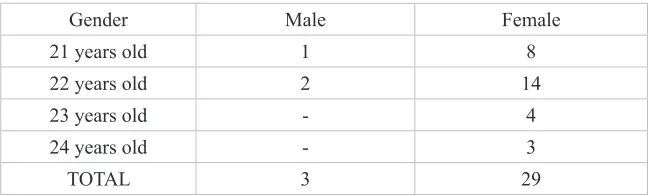
Table 1: Distribution of Respondents by Gender and Age
Gender Male Female
21 years old 1 8
22 years old 2 14
23 years old - 4
24 years old - 3
TOTAL 3 29
Table 2: Distribution of Respondents by Gender and Age
From 1, we can see that the age of the male respondents in only at the range of 21 to 22 years old while the age of the female respondents is between 21 to 24 years old. 14 female respondents are 22 years old which is the majority of the respondents in this study belonging to this group of age.
The Level of Stress Among Teacher Trainees
After the data analysis it is discovered that the level of stress among teacher trainees is at a moderate and low level. Table 1 results show that 66 percent of the respondents indicate a moderate levels of stress while the other 34 percent of the respondents indicate low levels of stress.
Moderate 66.0%
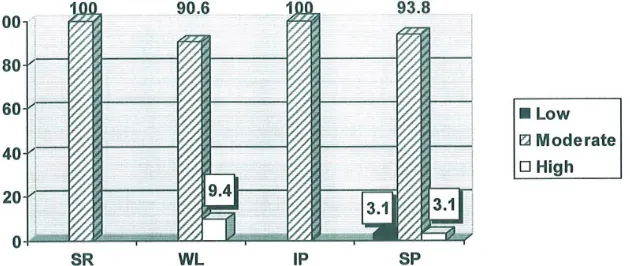
Figure 1: The Causes of Stress among Teacher Trainees
Note: SR = School’s Regulation WL=Teaching Workload IP=Interpersonal Relationships SP=Problems with the Students
The Causes of Stress Among Teacher Trainees
There are four main factors to measure the stress levels of teacher trainees. The four factors are school’s regulation, teaching workload, interpersonal relationships and problems with the students.
All 32 respondents have a moderate level of stress for the school’s regulation factor. 9.4 percent of the respondents indicate high level of stress based on teaching workload factor, 90.6 percent of the respondents show moderate level of stress during their teaching practice based on teaching workload factor and 100 percent respondents indicate a moderate level of stress for interpersonal relationships factor. Only 3.1 percent of the respondents indicate high and low levels of stresses for problems with the students factor, whereas 93.8 percent respondents show moderate level of stress.
The Level of Stress with the School’s Regulation Aspect
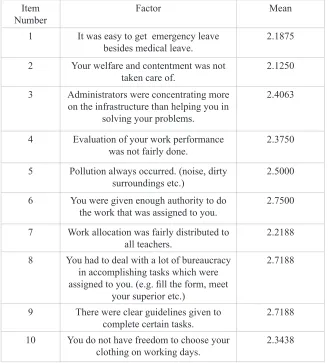
Table 3: Level of Stress with School’s Regulation Aspect
due to this factor. The mean from 1.00-2.00 indicated low stress level, the mean from 2.01-3.00 is an evidence of moderate stress level and the score from 3.01-4.00 shows that the level of stress is high. This can be seen from the table below.
Item
Number Factor Mean
1 It was easy to get emergency leave
besides medical leave. 2.1875 2 Your welfare and contentment was not
taken care of. 2.1250
3 Administrators were concentrating more on the infrastructure than helping you in
solving your problems.
2.4063
4 Evaluation of your work performance
was not fairly done. 2.3750 5 Pollution always occurred. (noise, dirty
surroundings etc.) 2.5000 6 You were given enough authority to do
the work that was assigned to you. 2.7500 7 Work allocation was fairly distributed to
all teachers. 2.2188
8 You had to deal with a lot of bureaucracy in accomplishing tasks which were
assigned to you. (e.g. fill the form, meet
your superior etc.)
2.7188
9 There were clear guidelines given to
complete certain tasks. 2.7188 10 You do not have freedom to choose your
There are 10 items in the school’s regulation factor. Most of the items only cause moderate pressure to the respondents based on the mean. However, two items, item number 8, “You had to deal with a lot of bureaucracy in accomplishing tasks which were assigned to you. (e.g. fill the form, meet your superior etc.)” and item number 9, “There were clear guidelines given to complete certain tasks” gave more pressure to the respondents compared to other items with the mean of 2.7188. The item that gave less pressure to the respondents is item number 2, “Your welfare and contentment was not taken care of” with the mean of 2.125.
The Level of Stress With Teaching Workload Aspect
In teaching workload aspects, there are 13 items that will determine the level of stress. The results show a moderate level of stress among the teacher trainees as indicated in the Table 4 below.
Item Number Factor Mean
11 The time given for you to accomplish a
particular task was short/limited. 2.3750 12 You were given too many tasks at a
particular time 2.4688
13 The tasks and responsibilities given to
you were clearly explained. 2.8750 14 You were always assigned a lot of last
minute work that had to be completed immediately.
2.5000
15 You had a lot of time in preparing your
lesson. 2.5938
16 You had to do work that is against your
will. 2.5000
17 The task that was given to you on that
day not necessarily mean for you to complete it on the same day.
Table 4: Level of Stress with Teaching Workload Aspect
18 You were given tasks which you have
no skills to complete them. 2.4375 19 You always had to do tasks that suits
your needs. 2.4375
20 You do not have sufficient break time
between your teaching periods. 2.1875 21 You do not have enough time to check
your students’ books. 2.3438 22 You had to spend your time for extra
classes 2.0313
23 You always had to replace an absent
teacher. 3.1875
Based on Table 4, we can see that most of the items only gave moderate level of stress to the respondents. The item that contributed a lot of stress to the respondents is the last item, item number 23, “You always had to replace an absent teacher” with mean of 3.1875.
The Level of Stress With Interpersonal Relationships Aspect
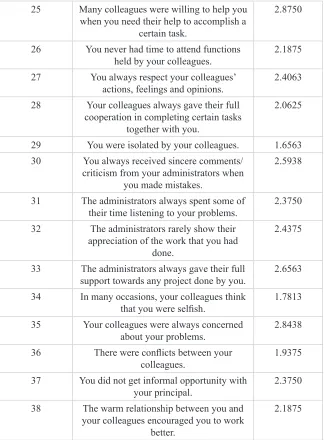
There are 16 items in this interpersonal relationships aspect. 3 items in this aspect gave a little bit of pressure to the respondents. There are item number 29, “You were isolated by your colleagues” with mean of 1.6563, item number 34, “In many occasions, your colleagues think that you were selfish” with mean of 1.7813 and item number 36, “There were conflicts between your colleagues” with mean of 1.9375.
Item Number Factor Mean
24 The administrators always encouraged you
Table 5: Level of Stress with Interpersonal Relationships Aspects
25 Many colleagues were willing to help you when you need their help to accomplish a
certain task.
2.8750
26 You never had time to attend functions
held by your colleagues. 2.1875 27 You always respect your colleagues’
actions, feelings and opinions. 2.4063 28 Your colleagues always gave their full
cooperation in completing certain tasks together with you.
2.0625
29 You were isolated by your colleagues. 1.6563 30 You always received sincere comments/
criticism from your administrators when you made mistakes.
2.5938
31 The administrators always spent some of
their time listening to your problems. 2.3750 32 The administrators rarely show their
appreciation of the work that you had done.
2.4375
33 The administrators always gave their full
support towards any project done by you. 2.6563 34 In many occasions, your colleagues think
that you were selfish. 1.7813
35 Your colleagues were always concerned
about your problems. 2.8438 36 There were conflicts between your
colleagues. 1.9375
37 You did not get informal opportunity with
your principal. 2.3750
38 The warm relationship between you and
your colleagues encouraged you to work better.
Two items, item number 25, “Many colleagues were willing to help you when you need their help to accomplish a certain tasks” with mean of 2.8750 and item number 35, “Your colleagues were always concerned about your problems” with mean of 2.8438 signify that the respondents suffered more pressure on these items compared to other items in this category. In general, items in this aspect only showed moderate level of stress to the respondents due to the range of mean between 2.0 to 2.9.
The Level of Stress In Relation to Problem with the Students Aspect
This aspect contains 8 items to determine the level of stress among the respondents. This aspect show high level of stress among teacher trainees.
Table 6: Level of Stress In Relation to Problem with the Students Aspect
Item
Number Factor Mean
39 You can still control your behaviour. 2.3438 40 You were disappointed because the students
were not interested with your teaching. 2.5938 41 You had to teach students that have different
levels of abilities. 3.4063 42 You were disappointed because your students
were constantly showing their bad attitude. 2.6250 43 You did not care if the students did not do their
homework properly. 1.6563
44 Noisy classes did not disturb your teaching. 1.5000 45 You did not scold the students who did not
follow school’s regulations. 1.7500 46 You need to change the students’ negative
The respondents show high level of stress from these two items, item number 41,“You had to teach students that have different levels of abilities” with mean of 3.4063 and item number 46, “You need to change the students’ negative attitudes towards their study and homework” with mean of 3.5. The respondents indicate low level of stress from these three items; item number 43, “You did not care if the students did not do their homework properly” with mean of 1.6563, item number 44, “Noisy classes did not disturb your teaching” with mean of 1.5 and item number 45, “You did not scold the students who did not follow school’s regulations” with mean of 1.75. The other 3 items, they are in a range of 2.0 to 2.9 that show the respondents give a moderate level of stress from these items.
DISCUSSION
Level of Stress Among Teacher Trainees
In general, the level of stress among TESL teacher trainees is at a moderate level. As can be seen in Table 2, 66 percent of the respondents gave a moderate level of stress while 34 percent of the respondents showed low levels of stress. There are several possible explanations for this result. First, the teacher trainees did not suffer from high levels of stress because they did not carry heavy teaching workload compared to the in-service teachers. Probably, the teaching hours of the teacher trainees is less than the in-service teachers, therefore, they may not endure high level of stress during the teaching practice. However, they did not endure low level of stress due to lack of experience in handling students and situations at the school that may give a little bit of pressure to them, therefore, giving moderate results.
from the research done by Azizi and Mazeni (2005), to determine the level of stress among 400 teachers from 16 schools from Johor, Melaka, Negeri Sembilan and Selangor. The level of stress among these teachers is also at a moderate level.
However, the findings of this study is not consistent with research done by Ngo (1995) on the levels of stress among 251 primary schools teachers in Hong Kong that revealed 31.1 percent of the teachers rated as either very stressful or extremely stressful. The findings of this study did not support previous research by Helen Malaka et.al (2005) that found 94.3 percent of the 35 respondents in one religious secondary school in Johor Bahru, experienced low stress level while only 5.7 percent endured moderate stress level. The present study also contradicted the study conducted by Azizah et. al (2005) that revealed the TESL teacher trainees experienced high level of apprehension levels during their teaching practice and also the study by Wan Zarina Wan Zakaria et. al (2007) that discovered the level of anxiety and concern level among the TESL teacher trainees was also high during teaching practice. Peters and Mayfield (1982) also found that 50% of faculty members report a high degree of stress due to various factors.
In this research, although the findings reveal that the level of stress among TESL teacher trainees is at a moderate level, it is possible that the level of stress among the teacher trainees can change to high or low level at anytime during their teaching practice depending on their current situation at that time. Therefore, moderate can also be considered as a danger zone because stress can either shift to high or low at any time. Low can cause low work quality while high can cause no work at all.
The Causes of Stress Among Teacher Trainees
Table 3, 4, 5 and 6. Generally, the respondents seem to have moderate levels of stress during their teaching practice based on these four factors. However, there are 9.4 percent of the respondents who show high stress level due to teaching workload factor and 3.1 percent of the respondents who endured high level of stress due to problems with the students. It seems possible that these results are due to factors that some teacher trainees still cannot handle the teaching workload. For example, the preparation for teaching and learning process, the materials’ preparations and at the same time they have to take over the classes of absent teachers may be time consuming for them. Their time management may not be as efficient as experienced teachers and this may cause them to suffer from high level of stress. These situations may give pressure to them since they are still new to the teaching profession, lack of experience and worry about an evaluation done by their supervisor and cooperative teachers. Besides, problems with the students can trigger stress among them as the students nowadays are slightly rowdy and pay less respect to their teachers especially to a new and less experience teacher trainees.
The present findings seem to be consistent which other research by Helen Malaka et. al (2005) that found the main cause of stress among 35 teachers in one religious secondary school in Johor Bahru, is their work load and followed by school factors.
Based on the result of this study, it seemed to confirm the findings by Cushing (2001). He discovered that the teachers’ experienced high level of stress when they are dealing with misbehaving students’ in schools. Besides, these findings also agree with Azizi and Nik Diana Hartika (2007) findings that show disciplinary problems among students became the main cause of stress among the teachers.
or 3 classes and have less teaching hours compared to the in-service teachers. They are not required to attend courses or other formal functions by the schools which may reduce their stress level.
CONCLUSION
The purpose of this research is to investigate the level of stress among teacher trainees in UTM after they had gone for their teaching practice. This study focuses on the level and causes of stress among these teacher trainees based on four factors; school’s regulations, teaching workload, interpersonal relationships and problems with the students. Results show that the teachers stress level is at a moderate level while the major causes of stress is the problem with the students. In conclusion, although the results from this research reveal that the TESL teacher trainees only endured a moderate level of stress, future teacher trainees should be taught on how to cope and handle stress from lecturers and Faculty before their teaching practice to avoid stress related problems.
REFERENCES
Ahmad Syakri Hj. Hashim (1995). Tinjauan Tahap dan Punca Stress Di Kalangan Guru-guru Sekolah Menengah Di Negeri
Perlis. Unpublished Degree Project. Universiti Teknologi
Malaysia.
Azizah Rajab, Wan Zarina Wan Zakaria and Norhanim Samat (2006)
An Investigation of the Apprehension Level of TESL Students
in Universiti Teknologi Malaysia: Pre and Post Experiences.
Azizi Hj. Yahya & Nik Diana Hartika, (2007). Tahap Stress dan Faktor-faktor yang Mempengaruhi Guru Sekolah di Negeri
Johor, Melaka, Selangor dan Negeri Sembilan.http://eprints.
utm.my/2254/1/AziziYahaya_Tahap_Stres_dan_Faktor_
Menpengaruhi.pdf. Accessed on 18th September 2007.
Azizi Yahaya et. al (2007). Menguasai Penyelidikan Dalam
Pendidikan. Teori, Analisis dan Interpretasi Data. Kuala
Lumpur: PTS Publications and Distributors Sdn. Bhd. Brecht, G. (1996). Sorting Out Stress. New York: Prentice Hall Cushing, A. E. (2001). Teacher Personality, Stress, and Difficult
Students: An Alderian Perspective. Doctoral Dissertation.
Atlanta: Georgia State University. http://proquest.umi.com/ pqdweb?index=135&did=732063731&SrchMode=1&sid=9 &Fmt=6&VInst=PROD&VType=PQD&RQT=309&VNam e=PQD&TS=1188311294&clientId=21690. Accessed on 8th
September 2007.
Gmelch, W. H. (1987). What Colleges and Universities Can Do About Faculty Stressors. In Seldin, P. (Ed.) Coping with Faculty Stress
(pp. 23). London: Jossey-Bass Inc., Publishers.
Helen Malaka et. al (2005) Hubungan Punca Stres Dan Tahap Stres Di Kalangan Guru-Guru Di Sebuah Sekolah Menengah Agama
Johor Bharu. http://161.139.52.254/epusatsumber/Seminar/
IsuPendidikan05/Kertaspenuh/Kertas%209.pdf. Accessed on
2nd September 2007.
Hom, W. (2002). New Evidence on the “No Opinion” Response
Option. http://www.ocair.org/files/KnowledgeBase/
Statistics/42F75BFF.pdf. Accessed on 18th September 2007.
Johnson, C. S. (2000) Teaching stress and student characteristics as
predictors of teacher behavior. Doctoral Dissertation. USA:
University of Virgina.
Kyriacou, C. (1997). Effective Teaching In School: Theory and
Practice. 2nd Edition. Cheltenham: Stanley Thornes.
Laughlin, A. (1984) Occupational Stress and Its Relationship To
of New South Wales.
Mohd Najib Abdul Ghafar. (1999). Penyelidikan Pendidikan. Johor: Penerbit Universiti Teknologi Malaysia.
Mohd. Sazali Nordin, (1997) Stres Pekerjaan Di Kalangan Guru-guru
Sekolah Menengah Daerah Kuala Kangsar, Perak. Unpublished
Degree Project. Kedah: Universiti Utara Malaysia. http://eprints.
uum.edu.my/416/1/Mohd._Sazali_Noordin.pdf. Accessed on
18th September 2007.
Ngo, F. P. (1995) Stress Among Primary School Teachers in Hong Kong. Master Dissertation. Hong Kong: The University of Hong Kong. http://sunzi1.lib.hku.hk/hkuto/view/B31958205/ft.pdf. Accessed on 8th September 2007.
Okebukola, P. A. and Jegede, O. J. (1989). Determinants of Occupational Stress Among Teachers in Nigeria. Educational
Studies. 15(1), 23-36.
Prof. Madya Dr Azizi bin Hj Yahaya & Mazeni Binti Ismail, (2005).
Faktor-faktor Yang Mempengaruhi Stres di Kalangan Guru
Sekolah Menengah Di Malaysia. http://eprints.utm.my/1563/2/
AziziYahay___Faktor-faktor_Yang_Mempengaruhi_Stres.pdf.
Accessed on 2nd September 2007.
Smith, J.C (1993). Understanding Stress and Coping. New York: Macmillan Publishing Company.
Wan Zarina Wan Zakaria, Azizah Rajab, Norfazila Sayuti and Nur Al-Huda Hashim (2002). A Study on The Anxiety and Concern Level of TESL Teacher Trainees During Their Practical Teaching in
Secondary School. Pusat Pengurusan Penyelidikan. Universiti