Type of the Paper: Article
1
Development of a transformation method for Metschnikowia borealis and other
2
CUG-serine yeasts.
3
4
Zachary Gordon1,2, Maximillian P.M. Soltysiak3, Christopher Leichthammer1, Jasmine A.
5
Therrien1, Rebecca S. Meaney1, Carolyn Lauzon1, Matthew Adams1, Dong Kyung Lee3, Preetam
6
Janakirama1, Marc-Andre Lachance3, Bogumil J. Karas1,2,*
7
1Designer Microbes Inc., London, ON, N6G 4X8, Canada
8
2Department of Biochemistry, Schulich School of Medicine and Dentistry, University of Western Ontario,
9
London, ON, N6A 5C1, Canada
10
3Department of Biology, University of Western Ontario, London, ON, N6A 5B7, Canada
11
12
*Correspondence: [email protected]
13
Abstract: Yeasts belonging to the Metschnikowia genus are particularly interesting for the unusual
14
formation of only two needle-shaped ascospores during their mating cycle. Presently, the meiotic
15
process that can lead to only two spores from a diploid zygote is poorly understood. The expression
16
of fluorescent nuclear proteins should allow the meiotic process to be visualized in vivo; however,
17
no large-spored species of Metschnikowia has ever been transformed. Accordingly, we aimed to
18
develop a transformation method for Metschnikowia borealis, a particularly large-spored species of
19
Metschnikowia, with the goal of enabling the genetic manipulations required to study biological
20
processes in detail. Genetic analyses confirmed that M. borealis, and many other Metchnikowiacea,
21
are CUG-Ser yeasts. Codon-optimized selectable markers lacking CUG codons were used to
22
successfully transform M. borealis by electroporation and lithium acetate, and transformants
23
appeared to be the result of random integration. Mating experiments confirmed that
transformed-24
strains were capable of generating large asci and undergoing recombination. Finally, random
25
integration was used to transform an additional 18 yeast strains, and all attempts successfully
26
generated transformants. The results provide a simple method to transform many yeasts from an
27
array of different clades and can be used to study or develop many species for various applications.
28
Keywords: genome engineering; synthetic biology; yeasts; Metschnikowia; genetic tools; DNA
29
delivery; CUG-Ser
30
31
1. Introduction
32
For decades, yeasts have proven to be tremendously useful in the study of life’s fundamental
33
processes. As single-celled models for eukaryotic life, they have short generation times, can be easily
34
manipulated, and contain thousands of conserved genes—many of which are vitally important across
35
nearly all living organisms[1,2]. While the discovery of new species provides us with new
36
opportunities, genetic tools previously developed for Saccharomyces cerevisiae and other model
37
organisms must be re-optimized for use in newly discovered species[3,4]. Altered membrane
38
composition, modified gene expression, and alternative codon usage can prevent the seamless
39
application of established transformation methods onto new species. Such transformation methods
40
are crucial in the development of targeted knockouts, changes in gene expression, and fusion proteins
41
that allow the study of biological processes in detail.
42
Of particular interest among yeasts are the 81 or more species assigned to the genus
43
Metschnikowia, some of which have become popular for their varied applications[5]. For example, M.
44
pulcherrima is of importance to winemakers for its generation of pleasant aromas in high-quality
45
wines, and its anti-microbial properties further its potential as an industrial microorganism[6,7].
46
Similarly, M. bicuspidata has been studied extensively for its role as a pathogen, and other species
47
(including M. agaves and M. hawaiiensis) are being studied as potential anti-aging agents in
48
cosmetics[5].
49
Metschnikowia species are particularly intriguing due to the unusual formation of only two
50
needle-shaped ascospores during their sexual cycle. A two-spored meiotic product stands in sharp
51
contrast to the four spores arising from meiosis in many other yeast species (like Saccharomyces
52
cerevisiae)[5]. Although the occurrence of meiotic recombination has been demonstrated in some
53
Metschnikowia species[8] the fate of the nuclei during meiosis remains unclear, and is yet to be
54
elucidated. The expression of fluorescent nuclear fusion proteins should allow the meiotic process to
55
be visualized in vivo, but the generation of such fusions is greatly hindered by the lack of genetic tools
56
available for Metschnikowia species. M. pulcherrima is the only species ever to have been
57
transformed[9]. Unfortunately, the small size of its ascospores and the difficulty of generating
58
abundant asci make M. pulcherrima less than ideal for the study of meiotic nuclei.
59
In contrast, M. borealis is one of many Metschnikowia species that form ascospores that can reach
60
20-50 times the size of normal budding cells[10]. The giant, elongated spores would greatly facilitate
61
the task of elucidating the meiotic process in Metschnikowia species. The initial selection of M. borealis
62
for study is further justified by the fact that the species has the highest maximum growth temperature
63
among the large-spored Metschnikowia species (37C), making it more likely to survive the
high-64
temperature incubations required by many of the conventional yeast transformation methods[11,12].
65
Therefore, we aimed to develop and optimize a transformation method for M. borealis to enable the
66
study of the species in more detail.
67
Our approach builds on the conventional methods used to transform other yeast species such as
68
S. cerevisiae and M. pulcherrima. After identifying antibiotics that can be used as selectable markers,
69
we developed various genetic constructs carrying the appropriate genes to allow growth on selective
70
plates. We then tested conventional transformation techniques, such as lithium acetate
71
transformation and electroporation to introduce the various genetic cassettes[11]. It was originally
72
anticipated that differences in membrane composition, antibiotic sensitivity, and origins of
73
replication may pose significant obstacles in our ability to seamlessly apply classical transformation
74
methods from S. cerevisiae onto M. borealis. Accordingly, we developed a systematic approach
75
entailing a variety of different transformation methods, using a variety of different antibiotic
76
resistance markers to develop a successful transformation method for Metschnikowia borealis and other
77
CUG-Ser yeasts.
78
2. Materials and Methods
79
Microbial strains and growth conditions
80
Metschnikowia borealis strains UWOPS 96-101.1 (MAT) and SUB 99-207.1 (MATa), and other
81
strains that were used in transformation experiments (Figure 4) were obtained from the yeast
82
collection of the Department of Biology, University of Western Ontario, where they are kept frozen
83
in liquid nitrogen. Saccharomyces cerevisiae VL6-48 (ATCC MYA-3666: MAT his3-200 trp1-1
ura3-84
52 lys2 ade2-1 met14 cir0). All strains were grown in YPAD broth (1% yeast extract, 2% peptone, 0.01%
85
adenine hemisulfate, 2% D-glucose) at 30C with shaking at 225 rpm, with the exception of M.
86
bicuspidata and M. orientalis, which were grown at 27C. Stationary cultures were grown on the same
87
media containing 1% agar at the same growth temperatures.
88
Codon-optimization of KanMX and Sh ble
89
To codon-optimize the KanMX and Sh ble selectable markers, each CTG codon was changed to
90
(http://genomes.urv.es/OPTIMIZER/)[13]. The codon frequencies from M. borealis in three highly
92
expressed yeast genes—ADH1, TDH3, and ENO1—were used to guide optimization. A table was
93
generated using the Codon Usage Database (https://www.kazusa.or.jp/codon/) and entered into
94
OPTIMIZER to guide codon-optimization. The method used for optimization was one amino acid to
95
one codon, with a maximum of 25 allowed codon changes. Optimized genes were called MbKanMX
96
and MbShBle.
97
Yeast DNA isolation
98
Genomic DNA was isolated from M. borealis using a modified alkaline lysis method. Individual
99
colonies were suspended in 1.0 mL of sterile double-deionized water (sddH2O) and pelleted at 3000
100
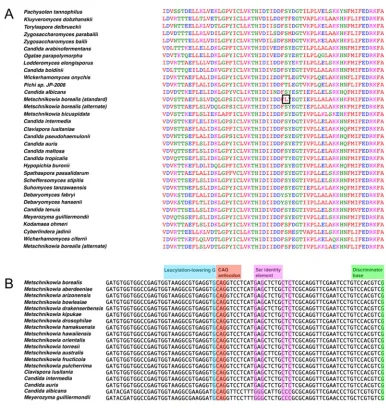
x g for 5 minutes. Cells were resuspended in 250 L P1 Buffer (Qiagen), 0.25 L of 14 M
-101
mercaptoethanol, and 12.5 L zymolyase solution (10 mg mL-1 zymolyase 20T in 25% glycerol), and
102
incubated at 37C for 1 hour. Following incubation, 250 L of P2 Buffer (Qiagen) was added, gently
103
mixed, and the suspension was incubated at room temperature for 5 minutes. Subsequently, 250 L
104
P3 Buffer (Qiagen) was added, gently mixed, and the suspension was incubated on ice for 10 minutes.
105
Cellular debris was pelleted at max speed for 10 minutes at 4C, and the supernatant was transferred
106
to a separate tube. Next, 750 L ice-cold isopropanol was added to the supernatant, and the mixture
107
was frozen at -80C for 15 minutes. The DNA was pelleted at top speed for 10 minutes at 4C, washed
108
with 750 L ice-cold 70% ethanol, and dissolved in 50 L Tris-EDTA (TE) pH 8.0.
109
Lithium acetate transformations
110
The lithium acetate transformations were conducted as described previously, with some
111
modifications[14]. Briefly, a 50-mL cell culture was grown to an OD600 of 1.0 and pelleted at 3000 x g
112
for 5 minutes. The pellet was washed 3 times with and resuspended in 1 mL sterile water. Next, 100
113
L of cells were transferred to a sterile tube and pelleted to remove the supernatant. The pellet was
114
resuspended in 360 L of transformation mix (33% PEG 3350 with 0.1 M LiOAc, 100 g salmon sperm
115
carrier DNA, and 1 g DNA), and vortexed briefly. The mixture was incubated with shaking at 39C
116
and 300 rpm for 30 minutes, and then pelleted to remove the transformation mix. The pellet was
117
resuspended in 1 mL of YPAD in 1.5 mL Eppendorf tube, recovered for 2 hours at 30C and 225 rpm,
118
plated on the appropriate selective media, and incubated at 30C for 2 days.
119
Electroporation conditions
120
Electroporation experiments were conducted as previously described[15], with slight
121
modifications. Briefly, cells were grown to an OD600 of 1.5 in 50 mL YPAD and pelleted at 5000 x g for
122
5 minutes. The pellet was resuspended in 10 mL 0.1 M LiOAc in 1xTE, pH 7.5, and incubated with
123
shaking at 150 rpm and 30C for 1 hour. Next, 250 L 1 M DTT was added, and cells were returned
124
to the incubator for 30 minutes. After adding 40 mL ice-cold sterile water, cells were pelleted, washed
125
with 25 mL ice-cold sterile water, washed again with 5 mL ice-cold 1 M sorbitol, and resuspended in
126
250 L 1 M sorbitol. Electro-competent cells were placed at -80C in 100-L aliquots. When needed,
127
cells were quickly thawed in a 37C water bath and immediately placed on ice. Electroporation
128
reactions were prepared in 0.2 cm cuvettes with 40 L electro-competent cells, 5 L DNA (1 g), and
129
20 g single-stranded carrier DNA, and conditions were 1.8 kV, 200 , and 25 F. Cells were collected
130
from each cuvette in 1 mL of YPAD and allowed to recover in Eppendorf tubes for 2 hours at 30C
131
and 225 rpm. For each transformation, 20 L were plated on the appropriate selective media and
132
incubated at 30C for 2 days.
133
Locating the insertion site
134
Metschnikowia borealis cells were transformed with PCR-linearized CaNAT1 flanked by 60
base-135
colonies by Alkaline Lysis as described above. DNA samples were digested with CfoI (Promega), with
137
expected cut sites every ~600 base-pairs in the M. borealis genome and no cut sites within CaNAT1.
138
Digested samples were then ligated using T4 DNA Ligase (New England BioLabs). Qiagen Multiplex
139
(Cat No. 206143) was used to PCR-amplify the unknown sequences surrounding the insertion site,
140
using primers that bind within CaNAT1 and that were oriented to amplify the surrounding sequence.
141
PCR conditions were 95°C melting for 30s, 60°C annealing for 90s, and 72°C extension for 90s, cycled
142
35 times. PCR products were sent for sequencing at the DNA Sequencing Facility and Robarts
143
Research Institute (London, Ontario). To identify insertion sites, sequences adjacent to the inserted
144
marker were analyzed using BLASTn with Geneious 11.1.5 to search the M. borealis genome[16]. For
145
secondary verification, primers were designed to anneal ~150 base-pairs upstream and downstream
146
of the insertion site, and PCR was used to observe the addition of the 693-base-pair cassette
147
(Supplementary Figure S3).
148
Mating Experiments
149
M. borealis MATa was transformed with MbShBle, and used in mating experiments with a MAT
150
strain that had been transformed with CaNAT1. MbShBle-transformed MATa was thinly spread on
151
2% agar plates containing ½ strength glucose media lacking histidine and uracil (Teknova).
CaNAT1-152
transformed MAT was then spread perpendicular to MATa, creating a grid with many sections
153
where both strains were mixed. The cells were incubated for 2 days at room temperature.
154
Approximately 20% of the cells were subsequently collected and resuspended in 25 mL of YPAD,
155
and then grown at 30ºC for 6 hrs with shaking at 225 rpm. Next, 1-mL aliquots of culture were plated
156
on YPAD containing 200 mg L-1 zeocin and 75 mg L-1 nourseothricin and incubated at 30ºC. After two
157
days, resulting colonies were collected, serially diluted, and plated on YPAD with 200 mg L-1 zeocin
158
and 75 mg L-1 nourseothricin. Purified recombinant colonies were grown overnight in YPAD, serially
159
diluted, and plated alongside wildtype MATa, wildtype MAT, MbShBle-transformed MATa, and
160
CaNAT1-transformed MAT (Figure 3C).
161
3. Results
162
3.1. Identification of antibiotics that inhibit growth of M. borealis
163
Before designing genetic cassettes (containing selection marker flanked by
164
homology/promoter/terminator sequences) for transformation, it was necessary to identify
165
antibiotics that inhibit the growth of M. borealis to enable us to choose appropriate antibiotic resistance
166
markers. Cultures of M. borealis MATa and MAT were grown to OD600 of 1.5, pelleted, and
167
resuspended to an OD600 of 3.0. Cultures were spot-diluted in 5-µL aliquots on YPAD agar plates with
168
various concentrations of geneticin, zeocin, or nourseothricin (Supplementary Table S1); and it was
169
determined that each antibiotic was effective at inhibiting growth at 400, 125, and 50 mg L-1,
170
respectively. To further prevent the occurrence of spontaneous colonies, higher concentrations of
171
nourseothricin (75 mg L-1 or 100 mg L-1) and zeocin (200 mg L-1) were used for selection.
172
3.2. Growth rate of M. borealis
173
Many conventional yeast transformation methods require that a culture be grown to a specific optical
174
density at 600 nm; accordingly, it was necessary to determine the growth rate of M. borealis, to enable
175
us to accurately calculate the growth time to the required optical density. Three cultures of each
176
mating type of M. borealis (MATa and MAT) were grown to mid-log phase (OD600 = 1.0), and diluted
177
in 50 mL of YPAD to an optical density of 0.065. Each culture was grown at 30ºC with shaking at 225
178
rpm, and OD600 was recorded at 1-hr time points for 8 hours. The average OD600 of the three cultures
179
for each mating type was recorded, and the doubling time was calculated as 76 minutes for mating
180
3.3. M. borealis codon usage
182
A series of transformation attempts were made with M. borealis using genetic cassettes
183
containing the NAT, KanMX, and Sh ble genes; however, no colonies were ever obtained for any of
184
the transformation attempts. While investigating factors that would prevent us from obtaining
185
colonies of M. borealis, the question of genetic code became significant. Some species (including M.
186
bicuspidata and M. fructicola) have been reported to recognize a CUG codon as a serine (yeast
187
alternative nuclear code)[17,18], which fits within the current view that the Metschnikowiaceae
188
belong to the CUG-Ser 1 clade of budding yeasts[19]. However, the only published literature
189
regarding the genetic code of M. pulcherrrima indicated that the species translates the CUG codon to
190
leucine (standard code)[20]. The NAT, KanMX, and Sh ble cassettes used in the transformation
191
attempts contain 8, 4, and 5 CUG codons in their open reading frames, respectively.
192
In an attempt to determine the genetic code of M. borealis, the coding sequence of URA3 from M.
193
borealis was translated with the ExPASy translate tool, using both the standard code and yeast
194
alternative nuclear code, and aligned with the 30 top hits from a URA3-BLASTx search using
195
MUSCLE (Figure 1A). A leucine aligned at a highly conserved serine or threonine position when
196
URA3 was translated with the standard genetic code; however, a serine aligned at that position when
197
translated with the yeast alternative nuclear code.
198
An examination of available Metschnikowiaceae genome sequences by tRNAscan-SE v2.0 [21]
199
revealed that most species encoded a single tRNA with a CAG anticodon. In exception, M. pulcherrima
200
had two copies, which is consistent with its diploid genome. The retrieved tRNA sequences were
201
analyzed through the tRNAscan-SE on-line web server, aimed at estimating the most probable
202
translated amino acid. All Metschnikowia species that were examined had serine as the most probable
203
translation with scores of 85 or more. Genome sequences for Candida bentonensis or relatives are not
204
available. Further evidence arose from aligning the sequence for tRNACAG from M. borealis with the
205
tRNACAGSer of related CUG-Ser clade yeast species (Figure 1B). The tRNACAG from M. borealis and
206
other Metschnikowiaceae contain the serine discriminator base and identity elements, indicating that
207
the tRNAs identified are in fact tRNACAGSer. No tRNACAGLeu could be identified in any of the
208
Metschnikowia species that were analyzed, including M. pulcherrima.
209
3.4. Transformation of M. borealis with codon-optimized cassettes
210
OPTIMIZER was used to codon-optimize the NAT, KanMX, and Sh ble genes for expression in
211
M. borealis based on the codon frequencies in three highly expressed yeast genes: ADH1, TDH3, and
212
ENO1. The optimized genes were translated with the ExPASy translate tool, using both the standard
213
code and yeast alternative nuclear code, and aligned with BLAST to ensure that the same protein
214
product would be produced. No differences were found between the wildtype gene products and
215
the optimized gene products, regardless of whether the optimized genes were translated with the
216
standard code or yeast alternative nuclear code. The optimized NAT gene was substantially similar
217
to CaNAT1, a gene optimized for expression in Candida albicans[22]. Due to its previous success in
218
transforming C. albicans, another CUG-Ser species, CaNAT1 was used in this experiment.
Codon-219
optimized KanMX and Sh ble genes were called MbKanMX and MbShble.
220
A second set of antibiotic resistance genes were created by reintroducing the same 8, 4, and 5
221
CUG codons found in the wildtype NAT, KanMX, and Sh ble genes, respectively, as a control for
222
codon usage. All six codon-optimized genes (three in standard code and three in yeast alternative
223
nuclear code) were ordered as separate G-block fragments from Integrated DNA Technologies. All
224
genes were amplified with primers containing homologous hooks to the M. borealis ADH1 promoter
225
and terminator and were used to transform the species by electroporation. Transformants were
226
plated on YPAD with appropriate concentrations of each antibiotic (75 mg L-1 neorseothricin for
227
CaNAT1, 200 mg L-1 zeocin for MbShBle, and 400 mg L-1 geneticin for MbKanMX) alongside negative
controls. Several colonies appeared for all samples that were transformed using the yeast alternative
229
nuclear code, but no colonies appeared on any of the other plates (Figure 2). Similar results were seen
230
using our best lithium acetate protocol. Selected transformants from the electroporation experiment
231
were verified by genotyping (Supplementary Figure S2). Transformation efficiencies were
232
determined for each method by transforming MATa and MAT by each method in triplicate, and
233
were calculated to be approximately 1600 and 817 CFUs per µg of DNA for electroporation, and 9
234
and 4 CFUs per µg of DNA for lithium acetate transformation, respectively (Supplementary Table
235
S2).
236
237
Figure 1. Bioinformatic analyses of the genetic code of M. borealis. (A) Sequence alignment of
238
URA3. The coding sequence of URA3 from M. borealis was submitted as a query sequence to BLASTx,
239
using the standard code for the predicted protein sequence. The protein sequences of the top 30 hits
240
were aligned in MUSCLE with the M. borealis URA3 gene, translated in both the standard code and
241
yeast alternative code using the ExPASy translate tool. A CUG codon aligned at a highly conserved
242
serine or threonine amino acid position, producing a leucine when URA3 was translated using the
243
standard code (black square). (B) tRNACAGSer sequences aligned for many species of Metschnikowia
244
and various CUG-Ser yeasts. Sequences were aligned in MEGA6 and annotated as described
245
previously[18].
246
The relatively high efficiency of electroporation was believed to be attributable to homologous
247
recombination, because each cassette contained by 60 base-pairs of homology to the ADH1 promoter
248
transforming M. borealis with CaNAT1 flanked by 60 base-pair sequences of the HIS3 promoter and
250
terminator. After transformation, ten colonies of each making type were spot-diluted and re-isolated,
251
but all grew on media lacking histidine. Subsequent genotyping by PCR identified the presence of
252
both HIS3 and CaNAT1, but failed to obtain bands across the HIS3 promoter and terminator junctions
253
with CaNAT1: bands that would be expected in the case of a successful targeted knockout
254
(Supplementary Figure S3).
255
256
Figure 2. Electroporation of M. borealis with CaNAT1, MbKanMX, and MbShBle in standard and yeast
257
alternative nuclear code. Electro-competent cells of M. borealis (MATa and MAT) were transformed
258
with 1 g of PCR-amplified CaNAT1, MbShBle, or MbKanMx, in standard or alternative code,
259
flanked by 60 base-pair sequences of the M. borealis ADH1 promoter and terminator, using the
260
electroporation protocol outlined in this study. After recovery, 20 L of each transformation was
261
plated on YPAD with the appropriate antibiotic and incubated at 30ºC for 2 days. NTC =
262
nourseothricin; Zeo = zeocin; G418 = geneticin.
263
3.5. Location of Insertion Site
264
Subsequent screening of more than 30 MATa and 30 MAT transformants for HIS3 knockouts
265
failed to identify any successful insertions in the HIS3 gene. To identify the correct insertion sites,
266
DNA was isolated from 6 MAT transformants, digested with CfoI, circularized with T4 ligase, and
267
the surrounding gDNA was PCR-amplified with primers binding within the inserted CaNAT1
268
cassette (oriented to amplify the surrounding sequence) (Supplementary Figure S3). We were
269
successful in obtaining a PCR-fragment from the third MAT transformant (clone 3), and the
270
amplified gDNA was sequenced. Analysis with BLASTn indicated that the CaNAT1 cassette was
271
inserted in scaffold bor-_s886 of M. borealis UWOPS 96-101.1, as annotated in GenBank
272
(PRJNA312754), just upstream of the gene for peroxin-14. PCR was used to amplify this site in
273
wildtype M. borealis, as well as all 6 isolated transformants, and the insertion was only observed at
274
this site in clone 3.
275
3.6. Mating experiments
276
To confirm that transformed-strains of M. borealis MATa and MAT were capable of successfully
277
mating, MbShBle-transformed MATa and CaNAT1-transformed MAT were mated to develop
278
and genotyped to confirm that they contain both MbShBle and CaNAT1 (Figure 3B). Mated cells were
280
then plated alongside wildtype MATa and MAT, MbShBle-transformed MATa, and
CaNAT1-281
transformed MAT on YPAD, YPAD with zeocin, YPAD with nourseothricin, and YPAD with
282
nourseothricin and zeocin for comparison (Figure 3C).
283
284
Figure 3. Mating experiments with marker-transformed M. borealis. (A) Photograph of a large mating
285
ascospore. MbShBle-transformed MATa and CaNAT1-transformed MAT were mated for two days
286
on ½-strength glucose broth lacking histidine and uracil (Teknova), collected in YPAD, and
287
photographed under a light microscope. (B) Genotyping results of marker-transformed diploids.
288
Recombinant colonies harbouring both selectable markers were purified by spot dilution on YPAD
289
with 200 mg L-1 zeocin and 75 mg L-1 nourseothricin. Recombinant colonies were genotyped by
290
Quiagen multiplex with primers that amplify the CaNAT1 and MbShBle genes, alongside
marker-291
transformed haploid strains and untransformed controls. MbShBle product size (C) Spot-dilutions of
292
mated-colonies alongside transformed haploid strains and untransformed controls on YPAD, YPAD
293
with 200 mg L-1 zeocin, YPAD with 75 mg L-1 nourseothricin, and YPAD with 200 mg L-1 zeocin and
294
75 mg L-1 nourseothricin. Plates were incubated at 30ºC for 2 days. NTC = nourseothricin; Zeo =
295
zeocin; G418 = geneticin.
296
3.7. Transformation of other CUG-Ser yeasts
297
To determine if our electroporation method would yield transformants of other yeasts by
298
random integration, we transformed strains of 19 yeast species with CaNAT1 cassettes (in standard
299
and yeast alternative nuclear code) flanked by the same 60-base-pair minimal ADH1 promoter and
300
terminator from M. borealis (Figure 4; Supplementary Table S3). Transformants were plated on YPAD
301
with 75-200 mg L-1 nourseotricin and incubated at 27-30˚C for 24-72 hrs until colonies appeared. All
302
strains yielded colonies for the alternative-coded CaNAT1, but only S. cerevisiae and Candida aff.
303
bentonensis yielded colonies when transformed with standard-coded CaNAT1 (Figure 4;
304
codons, and is therefore degenerate between the standard code and yeast alternative code; however,
306
the standard-coded CaNAT1 uses CUG codons to translate leucine and is only translatable to
CUG-307
Leu yeasts.
308
309
Figure 4. A phylogeny of the Metschnikowiaceae, modified from Lachance (2016), showing the
310
taxonomic range of successful transformations in the family. Representative strains were successfully
311
transformed with only the coded CaNAT1 construct (green) or with both the
alternative-312
coded and the standard-coded CaNAT1 (blue) construct. Species in grey were not examined.
313
4. Discussion
314
Through pioneering experiments, we were successful in determining the necessary conditions
315
to transform Metschnikowia borealis, and the method was effective in many other yeast species. We
316
were able to identify the tRNACAGSer in M. borealis, as well as many other Metschnikowia species, and
317
transformation experiments confirmed that many other—if not all—Metschnikowiae are also CUG-Ser
318
1 clade yeasts (Figure 2B; Figure 4). It is unclear why M. pulcherrima was previously reported to be a
319
Once we determined that M. borealis utilizes the yeast alternative nuclear code, the species was
321
successfully transformed with selectable markers that contain homologous hooks to the HIS3
322
promoter and terminator, with the high efficiency. Transformants were first believed to have been
323
obtained through a targeted knockout of HIS3 by homologous recombination; however, all colonies
324
grew on medium lacking histidine, and genotyping confirmed the presence of both the selectable
325
marker and the wildtype HIS3 gene. Additionally, we failed to observe any of the expected
326
genotyping bands associated with the knockout junctions. This indicated that the cassettes were not
327
incorporated into the genome by targeted integration, but by another mechanism with high
328
efficiency.
329
Although we only identified and confirm one insertion site (in clone 3), the HIS3-targeted
330
cassette was found to insert in the site just upstream of the peroxin-14 gene in clone 3, and not in any
331
of the other transformants tested (Supplementary Figure 2C). Therefore, the cassette must have
332
inserted in different locations in the other transformants, indicating that M. borealis appears to
333
integrate DNA cassettes randomly into its genome. Even though the species is not efficient at targeted
334
integration, its high efficiency at random integration makes it simple to transform and incorporate
335
exogenous sequences into the genome.
336
Finally, our transformation method was successful across all CUG-Ser yeasts that were
337
attempted, as well as S. cerevisiae and Candida aff. bentonensis. This confirms the suspicion[5] that C.
338
bentonensis is not a member of the Metschnikowiaceae. The results of this study indicate that the
339
species is in fact a CUG-Leu yeast. Fortunately, the CaNAT1, MbShBle, and MbKanMX genes used
340
in our experiments lack the use of a CUG codon and are degenerate to the standard and yeast
341
alternative nuclear code. Therefore, the markers would likely be universal to all CUG-Leu, CUG-Ser,
342
and CUG-Ala yeasts[19].
343
Through the use of random integration, the methods outlined in this study make it possible to
344
transform a large range of yeasts, and would likely be successful in numerous additional species in a
345
wide array of clades. Random integration can be used to introduce elements to many understudied
346
yeast species to enable their study in more detail. In particular, it is now possible to design
codon-347
optimized fluorescent nuclear-fusion proteins that can be used to elucidate the unusual meiotic
348
process in Metschnikowiae that leads to the production of only two ascospores from a diploid zygote.
349
Supplementary Materials: The following are available online at www.mdpi.com : Figures S1, S2, S3; Tables S1,
350
S2, S3
351
Author Contributions:
352
Conceptualization, Z. G., M.P.M.S., P.J., M-A.L., B.J.K; methodology, Z. G., M.P.M.S., C.L., J.A.T., R.S.M., C.L.,
353
M.A., D.K.L., P.J., M-A.L., B.J.K; validation, Z. G., M.P.M.S., C.L., J.A.T., R.S.M., C.L., M.A., D.K.L., P.J., M-A.L.,
354
B.J.K; formal analysis, Z. G., M.P.M.S., C.L., J.A.T., R.S.M., C.L., M.A., D.K.L., P.J., M-A.L., B.J.K; investigation,
355
Z. G., M.P.M.S., C.L., J.A.T., R.S.M., C.L., M.A., D.K.L., P.J., M-A.L., B.J.K; resources, M-A.L., B.J.K; data curation,
356
Z. G., M.P.M.S., C.L., J.A.T., R.S.M., C.L., M.A., D.K.L., P.J., M-A.L., B.J.K; writing—original draft preparation,
357
Z. G., M.P.M.S., R.S.M., M.A., M-A.L., B.J.K; writing—review and editing, Z. G., M.P.M.S., R.S.M., M.A., M-A.L.,
358
B.J.K; visualization, Z. G., M.P.M.S., C.L., J.A.T., R.S.M., C.L., M.A., D.K.L., P.J., M-A.L., B.J.K; supervision, Z.
359
G., P.J., M-A.L., B.J.K; project administration M-A.L., B.J.K; funding acquisition, M-A.L., B.J.K;
360
Funding:
361
This research was funded by: Designer Microbes Inc.; NSERC Experience grants to Z.G., C. L., C.L., R.S.M. The
362
B.J.K. lab is also supported by Natural Sciences and Engineering Research Council of Canada (NSERC), grant
363
number: RGPIN-2018-06172.
364
Conflicts of Interest:
365
B.J.K. is Chief Executive Officer of Designer Microbes Inc. B.J.K and M-A.L. hold Designer Microbes Inc. stock.
366
Bibliography
369
1. Deng, J.; Deng, L.; Su, S.; Zhang, M.; Lin, X.; Wei, L.; Minai, A.A.; Hassett, D.J.; Lu, L.J. Investigating the
370
predictability of essential genes across distantly related organisms using an integrative approach. Nucleic
371
Acids Res. 2011, 39, 795–807, doi:10.1093/nar/gkq784.
372
2. Zhang, R.; Ou, H.-Y.; Zhang, C.-T. DEG: a database of essential genes. Nucleic Acids Res. 2004, 32, D271–
373
D272, doi:10.1093/nar/gkh024.
374
3. De Backer, M.D.; Maes, D.; Vandoninck, S.; Logghe, M.; Contreras, R.; Luyten, W.H. Transformation of
375
Candida albicans by electroporation. Yeast Chichester Engl. 1999, 15, 1609–1618,
doi:10.1002/(SICI)1097-376
0061(199911)15:15<1609::AID-YEA485>3.0.CO;2-Y.
377
4. Yildirim, S.; Thompson, M.G.; Jacobs, A.C.; Zurawski, D. V.; Kirkup, B.C. Evaluation of Parameters for
378
High Efficiency Transformation of Acinetobacter baumannii. Sci. Rep. 2016, 6, 22110, doi:10.1038/srep22110.
379
5. Lachance, M.-A. Metschnikowia: half tetrads, a regicide and the fountain of youth. Yeast Chichester Engl.
380
2016, doi:10.1002/yea.3208.
381
6. González-Pombo, P.; Pérez, G.; Carrau, F.; Guisán, J.M.; Batista-Viera, F.; Brena, B.M. One-step purification
382
and characterization of an intracellular beta-glucosidase from Metschnikowia pulcherrima. Biotechnol.
383
Lett. 2008, 30, 1469–1475, doi:10.1007/s10529-008-9708-3.
384
7. Macwilliam, I.C. A survey of the antibiotic powers of yeasts. J. Gen. Microbiol. 1959, 21, 410–414,
385
doi:10.1099/00221287-21-2-410.
386
8. Marinoni, G.; Piškur, J.; research, M.L.-F. yeast; 2003, undefined Ascospores of large-spored
387
Metschnikowia species are genuine meiotic products of these yeasts. academic.oup.com.
388
9. Nigro, F.; Sialer, M.M.F.; Gallitelli, D. TRANSFORMATION OF METSCHNIKOWIA PULCHERRIMA
389
320, BIOCONTROL AGENT OF STORAGE ROT, WITH THE GREEN FLUORESCENT PROTEIN GENE.
390
J. Plant Pathol. 1999, 81, 205–208.
391
10. Lachance, M.-A.; Hurtado, E.; Hsiang, T. A stable phylogeny of the large-spored Metschnikowia clade.
392
Yeast Chichester Engl. 2016, 33, 261–275, doi:10.1002/yea.3163.
393
11. Kawai, S.; Hashimoto, W.; Murata, K. Transformation of Saccharomyces cerevisiae and other fungi. Bioeng.
394
Bugs 2010, 1, 395–403, doi:10.4161/bbug.1.6.13257.
395
12. Lachance, M.-A.; Rosa, C.A.; Starmer, W.T.; Schlag-Edler, B.; Baker, J.S.F.; Bowles, J.M. Metschnikowia
396
continentalis var. borealis, Metschnikowia continentalis var. continentalis, and Metschnikowia hibisci,
397
new heterothallic haploid yeasts from ephemeral flowers and associated insects. Can. J. Microbiol. 1998, 44,
398
279–288, doi:10.1139/w97-148.
399
13. Puigbò, P.; Guzmán, E.; Romeu, A.; Garcia-Vallvé, S. OPTIMIZER: a web server for optimizing the codon
400
usage of DNA sequences. Nucleic Acids Res. 2007, 35, W126-131, doi:10.1093/nar/gkm219.
401
14. Gietz, R.D. Yeast transformation by the LiAc/SS carrier DNA/PEG method. Methods Mol. Biol. Clifton NJ
402
2014, 1205, 1–12, doi:10.1007/978-1-4939-1363-3_1.
403
15. Froyd, C.A.; Kapoor, S.; Dietrich, F.; Rusche, L.N. The deacetylase Sir2 from the yeast Clavispora lusitaniae
404
lacks the evolutionarily conserved capacity to generate subtelomeric heterochromatin. PLoS Genet. 2013,
405
9, e1003935, doi:10.1371/journal.pgen.1003935.
406
16. Kearse, M.; Moir, R.; Wilson, A.; Stones-Havas, S.; Cheung, M.; Sturrock, S.; Buxton, S.; Cooper, A.;
407
Markowitz, S.; Duran, C.; Thierer, T.; Ashton, B.; Meintjes, P.; Drummond, A. Geneious Basic: an
408
integrated and extendable desktop software platform for the organization and analysis of sequence data.
409
17. Mühlhausen, S.; Kollmar, M. Molecular Phylogeny of Sequenced Saccharomycetes Reveals Polyphyly of
411
the Alternative Yeast Codon Usage. Genome Biol. Evol. 2014, 6, 3222–3237, doi:10.1093/gbe/evu152.
412
18. Riley, R.; Haridas, S.; Wolfe, K.H.; Lopes, M.R.; Hittinger, C.T.; Göker, M.; Salamov, A.A.; Wisecaver, J.H.;
413
Long, T.M.; Calvey, C.H.; Aerts, A.L.; Barry, K.W.; Choi, C.; Clum, A.; Coughlan, A.Y.; Deshpande, S.;
414
Douglass, A.P.; Hanson, S.J.; Klenk, H.-P.; LaButti, K.M.; Lapidus, A.; Lindquist, E.A.; Lipzen, A.M.;
415
Meier-Kolthoff, J.P.; Ohm, R.A.; Otillar, R.P.; Pangilinan, J.L.; Peng, Y.; Rokas, A.; Rosa, C.A.; Scheuner,
416
C.; Sibirny, A.A.; Slot, J.C.; Stielow, J.B.; Sun, H.; Kurtzman, C.P.; Blackwell, M.; Grigoriev, I.V.; Jeffries,
417
T.W. Comparative genomics of biotechnologically important yeasts. Proc. Natl. Acad. Sci. 2016, 113, 9882–
418
9887, doi:10.1073/pnas.1603941113.
419
19. Krassowski, T.; Coughlan, A.Y.; Shen, X.-X.; Zhou, X.; Kominek, J.; Opulente, D.A.; Riley, R.; Grigoriev, I.
420
V.; Maheshwari, N.; Shields, D.C.; Kurtzman, C.P.; Hittinger, C.T.; Rokas, A.; Wolfe, K.H. Evolutionary
421
instability of CUG-Leu in the genetic code of budding yeasts. Nat. Commun. 2018, 9, 1887,
422
doi:10.1038/s41467-018-04374-7.
423
20. Sugita, T.; Nakase, T. Non-universal usage of the leucine CUG codon and the molecular phylogeny of the
424
genus Candida. Syst. Appl. Microbiol. 1999, 22, 79–86, doi:10.1016/S0723-2020(99)80030-7.
425
21. Lowe, T.M.; Chan, P.P. tRNAscan-SE On-line: integrating search and context for analysis of transfer RNA
426
genes. Nucleic Acids Res. 2016, 44, W54-57, doi:10.1093/nar/gkw413.
427
22. Shen, J.; Guo, W.; Köhler, J.R. CaNAT1, a Heterologous Dominant Selectable Marker for Transformation
428
of Candida albicans and Other Pathogenic Candida Species. Infect. Immun. 2005, 73, 1239–1242,
429
doi:10.1128/IAI.73.2.1239-1242.2005.