OPEN SCIENCE AND PUBLIC ENGAGEMENT
EXPLORING THE POTENTIAL OF THE OPEN PARADIGM TO SUPPORT PUBLIC ENGAGEMENT WITH SCIENCE
ANN GRAND
A thesis submitted in partial fulfilment of the requirements of the University of the West of England, Bristol for the degree of Doctor of Philosophy
i Copyright:
ii
Acknowledgements
I owe a considerable debt of gratitude to my supervisors, Alan Winfield, Karen Bultitude and Clare Wilkinson, for their unceasing support, encouragement and advice throughout my studentship and during this research. I am also thankful for the continued support of my colleagues, past and present, in the Science Communication Unit at the University of the West of England, Bristol. This research was funded by a Doctoral Training Grant from the UK Engineering and Physical Sciences Research Council, to whom I extend my thanks.
iii
Abstract
Open science and public engagement
Exploring the potential of the open paradigm to support public engagement with science
Open science, a practice in which the entirety of a research project is made available, via the Internet, using a variety of tools and techniques, is an emerging approach to the conduct of science. The hypothesis that open science therefore has the potential to support public engagement with science has been investigated through the research outlined in this thesis. The research has also sought to address the related issues of how, or if, the science thus made available therefore needs to be translated and narrated for public consumption and how, or if, open science can or should develop as a deep and bidirectional mode of engagement between members of the public and researchers.
iv scientific and cultural background, motivations and opinions of visitors to open science project websites.
The results suggest that although the principle of openness is widely accepted, there are a number of issues to be addressed as research is opened up to a wider public. These include the development of shared praxis between researchers and members of the public, for example understanding of data analysis techniques and how to support judgements of validity and trustworthiness of information. Problems of data ownership are also foreseen, both in terms of proprietary and intellectual property rights, the maintenance of reputation, precedence and priority and in how to value non-professional and non-traditional contributions to research.
v
Contents
Acknowledgements ... ii
Abstract ... iii
Chapter 1. Introduction ... 1
1.1 Researcher’s background ... 9
1.2 Research aim and objectives ... 10
1.2.1 Aim ... 10
1.2.2 Objectives ... 10
1.3 Outline ... 11
1.3.1 Précis of results ... 13
1.3.2 Publications ... 16
Chapter 2. Literature Review... 17
2.1 Introduction ... 17
2.2 The evolution of open science ... 20
2.2.1 Open information ... 26
2.2.2 Open access ... 31
2.2.3 Peer review and openness ... 39
2.2.4 Science and social media ... 44
2.3 Science and the public ... 49
2.3.1 Scientists’ engagement with PEST ... 55
2.3.2 Public engagement with PEST ... 59
2.3.3 Scientists’ and public expertises ... 61
2.3.4 Citizen Science ... 65
Chapter 3. Research Methods ... 72
3.1 Introduction ... 72
3.2 Qualitative enquiry: (i) interview component ... 75
3.2.1 Interview guide... 77
3.2.2 Interviewee recruitment ... 79
3.3 Qualitative enquiry: (ii) case study component ... 86
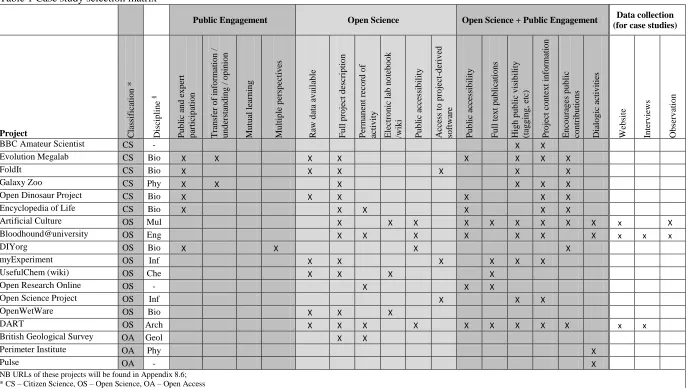
3.3.1 Case study selection ... 92
3.4 Quantitative enquiry: survey component ... 99
3.4.1 Survey design ... 101
3.4.2 Survey sampling ... 105
vi
Chapter 4. Results ... 112
4.1 Interview data ... 112
4.1.1 What is open science? ... 118
4.1.2 What does open science offer? ... 122
4.1.3 Why practise open science? ... 127
4.1.4 Difficulties posed by open science ... 135
4.1.5 Methods for open science... 147
4.2 Case studies ... 154
4.2.1 Bloodhound@university ... 154
4.2.2 The Emergence of Artificial Culture in Robot Societies ... 163
4.2.3 The Detection of Archaeological residues using Remote sensing Techniques ... 166
4.3 Survey data ... 175
4.3.1 Demographics ... 179
4.3.2 Resources and downloads ... 181
4.3.3 Public engagement and participation ... 182
Chapter 5. Discussion ... 191
5.1 Themes identified ... 191
5.1.1 Limits to the findings ... 204
5.1.2 Suggestions for future work ... 206
Chapter 6. Conclusion ... 209
Chapter 7. References ... 213
Chapter 8. Appendices ... 251
8.1 Appendix 1 Interviewee consent forms and information sheet ... 251
8.2 Appendix 2 Interview schedules ... 254
8.3 Appendix 3 Coding frame ... 256
8.4 Appendix 4 Case study selection criteria ... 258
8.5 Appendix 5 Website urls ... 259
vii List of figures
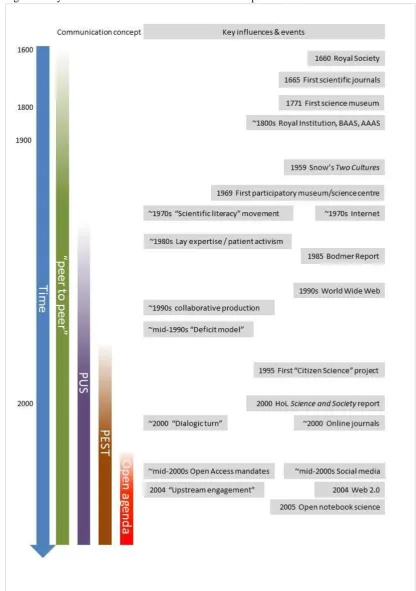
Figure 1 Key influences and events in the evolution of open science ... 21
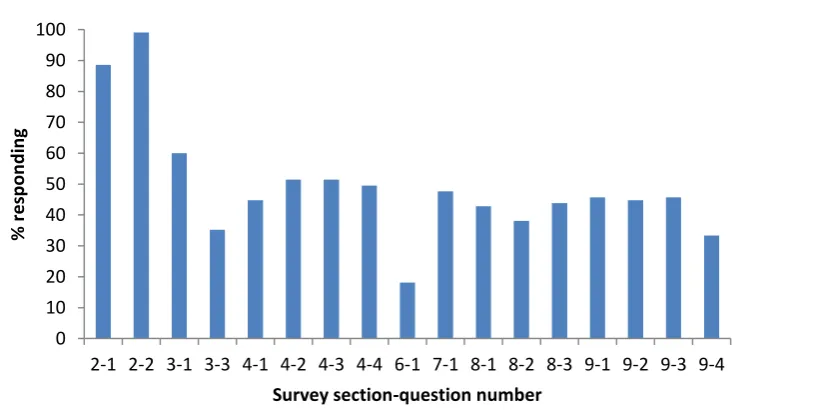
Figure 2 Drop-off in response rate ... 177
Figure 4 Reasons to support public participation in research ... 184
Figure 5 Inter-survey comparisons... 185
Figure 6 Public opinion and decision-making ... 186
Figure 7 Change in trust in scientists ... 186
viii List of tables
Table 1 Case study selection matrix... 96
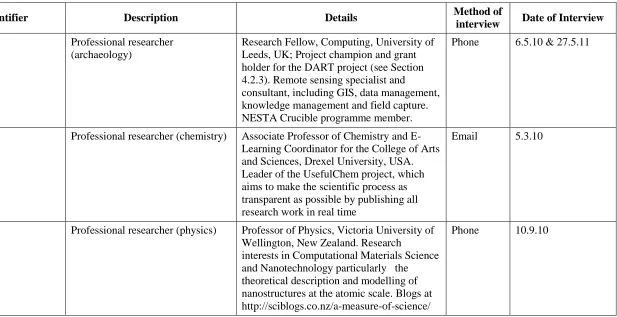
Table 2 Interviewees ... 113
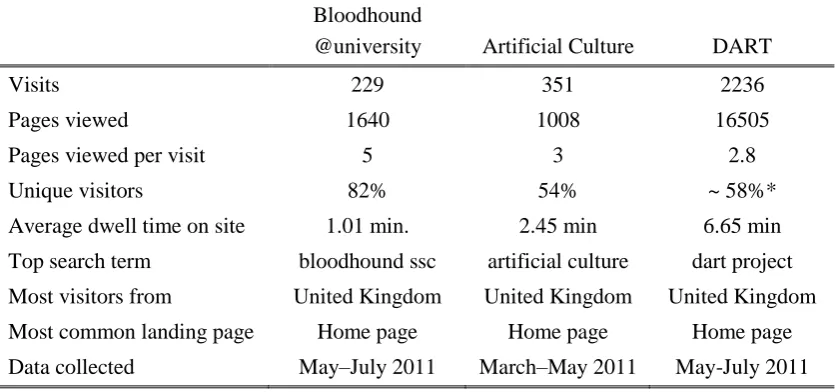
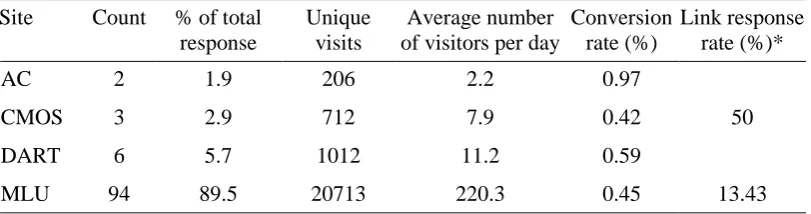
Table 3 Selected traffic data for case study websites ... 173
Table 4 Comparison of response rates across websites ... 178
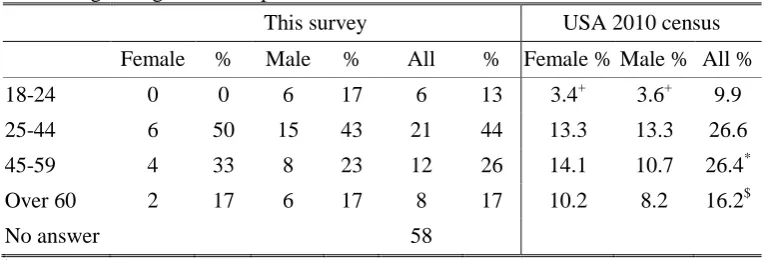
Table 5 Age categories of respondents ... 179
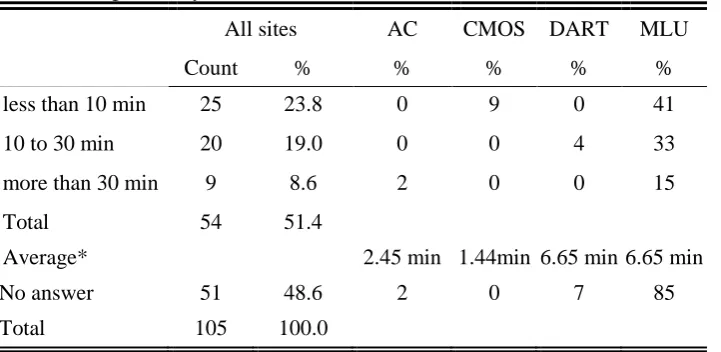
Table 6 Length of stay on site ... 180
1
Chapter 1.
Introduction
In 2006, for ‘seizing the reins of the global media, for founding and framing the new digital democracy, for working for nothing and beating the pros at their own game’,
Time magazine made ‘You’ its Person of the Year (Grossman, 2006). The year 2006, the citation read, had been about ‘community and collaboration on a scale never seen before’ and about a co-operation that would ‘change the way the world changes’. Community collaboration, with the concomitant demand for open access to information, is a highly-visible cultural trend of the early twenty-first century, in which we have seen the prefix ‘open’ attached to a range of activities: government, culture, archives, research, knowledge, source code, data, democracy, science and more.
Two of the most visible of Time’s ‘digital democracy’ projects are the
collaboratively-collated encyclopædia, Wikipedia and the community-written computer operating system, Linux. The principal characteristics of these and other user-created projects, which normally exist through and depend on the Internet and via freely-accessible websites, are that they are emergent,1 are not centrally controlled, are exposed to public scrutiny and community oversight and contain freely-available information. The impetus for openness has grown alongside increases in the number of people around the world who have Internet access. In particular, the growth in the number of people using social media (OFCOM, 2008; Alexa, n.d.) has led to expectations of openness which have affected science as much as any other social activity.
1
2 More scientific open projects include the Open Science Project2 (despite its wide-ranging title, this project is largely made up of researchers working in molecular and theoretical chemistry) which is ‘dedicated to writing and releasing free and Open Source software’.3
However, the scientists, mathematicians and engineers involved in the Open Science Project clearly envision a wider community and seek to ‘encourage a collaborative environment in which science can be pursued by anyone who is inspired to discover something new about the natural world’ (Open Science Project, 2010).
A further example, myExperiment,4 is a research project from the universities of Southampton and Manchester. The approximately 1300 members of myExperiment largely work in the field of bioinformatics. myExperiment describes its design as a ‘collaborative environment where scientists can safely publish their workflows and experiment plans, share them with groups and find those of others’ and its purpose as being to ‘enable scientists to contribute to a pool of scientific workflows, build communities and form relationships’ (myExperiment, 2011). As well as building a community, members report they have been able to use myExperiment to advance their science: ‘People claim they have done a new piece of science by making use of [workflows] in myExperiment’ (Collinson & Corbyn, 2009).
‘Open science’, which Nielsen defines as the sharing of ‘everything – data, scientific opinions, questions, ideas, folk knowledge, workflows and everything else as it happens’ (Nielsen, 2009, p. 32) is an overall description of an emerging approach to
2 http://www.openscience.org/blog/?page_id=44
3 Source code is the set of instructions written by programmers that is then turned into software. The
source code behind commercial software remains proprietary; programs written under Open Source agreements are distributed with their source code, which is therefore available for public modification and collaboration.
3 the practice of science, rather than a specific project, such as those described above. Potentially, open science allows active scientific investigations to be open to anyone to follow, analyse and contribute to. Although it is still a relatively rare protocol for scientists (Research Information Network, 2010b), as increasing numbers of people become ‘digital residents’ – individuals and groups who see the Web as a place to express opinions, form relationships, develop an identity and belong to a community (White & Le Cornu, 2011) – then the expectation that the Web will be the place where information is created and communicated can only grow.
The projects above, and other initiatives that classify themselves as open science, are, largely, designed by scientists for scientists, as effective ways to share methods, information and results with each other within the context of existing research groups and organisations. However, science performed in the open is open to anyone: to members of the public as much as to the scientists working on it. In the context of the myExperiment website, de Roure and colleagues, (2008, p. 7) noted that ‘the number of unique visitors […] is much larger than the number of registered users. This suggests that the publicly visible content on the site is of value to a wider audience’. This wider audience, potentially, is anyone who can access the information via the Internet. The experience of myExperiment is by no means unique: the existence of such a hidden group of observers and readers has been noted across a variety of websites and projects (Nielsen, 2006).
4 offering consumers the opportunity to explore the wider context of the published article or programme. For example, the website of the BBC Radio 4 programme, The Life Scientific, (BBC, 2011) whose format is a discussion between a scientist host and a leading scientist, links to another BBC site, Science Explorer, which in turn links to the scientists’ home pages and university websites, which in their turn offer links to newspaper articles, published papers and more. Articles on the Guardian
website (Harvey, 2011) routinely contain links to similar articles, relevant research groups and background material, offering interested readers direct access to the science behind the published text. However, while these and similar websites do facilitate access to full journal papers, complete data files and other information, those using such facilities also routinely encounter blocked access, pay walls, non-existent websites, subscription requirements, abstracts and summaries, which inevitably creates disappointment and lowers expectations.
5 controversies’ (McCallie, et al., 2009, p. 12). However, although the general trajectory of exchange between scientists and members of the public has, in the UK at least, been characterised as moving from a one-way transmission of information (the ‘deficit’ model (see Section 2.3 below) to a multi-way dialogue, some have suggested that this move is neither complete nor irreversible (Trench, 2008b) and that moments of deficit may be found in the midst of ostensible dialogue (Davies, 2009a; Wilkinson, et al., 2011b). The strategies of engagement are highly dependent on the time, culture and attitudes of the societies in which they are practised: both discourse and understanding have evolved (Bauer, 2009).
6 world following a systematic methodology based on evidence’ (The Science Council, 2010).
The concept of what or who constitutes the ‘public’ is equally shifting in its definition. At its simplest, every person in a society is a member of the public but within this assembly are many shifting and volatile sub-groups. This flexibility and movement can be seen in endeavours to describe categories of the public. Burns and colleagues (2003) identify six sub-groups of the public: scientists, communicators, policy-makers, the general public (which has sub-groups of its own), the well-informed [about science] public and the less well-well-informed public. McCallie and colleagues (2009, p. 27) defined publics as including ‘everyone who chooses to participate: parents, artists, students, senior citizens, scientists, or youth’. Braun and Schultz (2010, p. 408) construct four groups: the general public, the pure public (conceptualised as bringing an individual sensibility to debate, rather than being members of, for example, an interest group), the affected public (for example people affected by a medical disorder) and the partisan public (for example members of an interest group). Thus, the public has been – and continues to be – constructed in different ways, to the extent that language use has shifted from one ‘public’ to multiple ‘publics’ that form, re-form and overlap, depending on their interests, backgrounds, experiences and preoccupations.
7 were to avoid the possibility of an ignorant public offering insufficient support for science (Bauer, 2009). Bringing together scientists and members of the public in a social space could, it was hoped, effect a transformation of public literacy and understanding. However, for many scientists this space became ‘notable, even notorious, for the apparently interminable series of science-based controversies and, more threatening still, public contestation of science’ (Nowotny, et al., 2001, p. 201) and the model was gradually undermined. In the UK, for example, this destabilisation was seen in a series of debates over the regulation of genetically-modified crops and concerns over the government’s handling of the BSE crisis, and became the subject of considerable criticism (Miller, 2001; Falk, et al., 2007; Davies, 2009b).
In response, the issue of the public’s relationship with science was identified as being not so much a deficit of public understanding as a deficit of public trust in science and scientists, which could be cured by greater openness and consultation (Irwin, 2006). Where PUS saw communication of scientific understanding as flowing in one direction from scientists to members of the public, PEST offered a vision of a symmetrical, two-way flow (Miller, 2001) as scientists and members of the public were encouraged to come together to discuss issues in science and technology.
8 learning by publics and by scientists, civic empowerment, awareness of the cultural relevance of science and recognition of the importance of multiple perspectives and domains of knowledge. Supporting such mutual, multiple, sustained and continuing engagement throughout the process of science calls for ‘real openness and genuine open-mindedness’ (Stilgoe and Wilsdon, 2009, p.1). Allied to this is a ‘continuing demand for more information directly from scientists’ and an associated need to ‘look for innovative ways to provide people […] with access to scientific resources and information’ (DIUS, 2008, pp. 7-8).
9 1.1 Researcher’s background
For any research, it is necessary to recognise that the existing interests of the researchers involved may well influence the choices, plans and decisions made during the research. Therefore, it is important to clarify the context in which this project was designed, so that the potential of such influences can be judged against the choices ultimately made.
The basic premise of this research – that it should focus on the interface between open science and public engagement – was first established by the supervisory team. The team comprised a researcher in mobile robotics with a personal commitment to public engagement and an existing interest in open science and two researchers with interests in public engagement with science across a variety of topics (including robotics), different media and formal and informal settings. However, the detailed aims and objectives for the project, and the research plan, were determined by the author.
The author came to the project with a background in school science education and a long-term personal involvement with the café scientifique5 movement. In science cafés, researchers and members of the public meet in informal venues to talk about topics in current science and technology; over time, this has become a well-known model for public engagement with science, providing a medium for dialogue around current issues in science and technology. However, cafes have weaknesses; for example, the engagement tends to be with a fragment of a research programme and thus lacks context. Cafes offer little opportunity for long-term engagement and, widespread as they are, nevertheless reach relatively small audiences. While it seemed to the author that open science had the potential to be a new space for
10 dialogue, in which some of these challenges could be met, none the less, the interface between open science and public engagement presented some interesting challenges.
The author’s and supervisors’ backgrounds may be considered likely to have predisposed the author to set a high value on the importance of science communication and perhaps to adopt an uncritical position towards the philosophy of public engagement. To counterbalance such potential prejudices, throughout the research process the author took care to select methodologies that would reliably reduce, if not eliminate, any potential distortions arising from the inevitable biasses caused by previous experience and partialities.
1.2 Research aim and objectives 1.2.1 Aim
The aim of this research is to explore the hypothesis that open science can support public and community engagement with science.
1.2.2 Objectives
i. Through interviews, determine the views of researchers and members of the public on open science’s principles, methods, values, barriers and benefits and the implications and potential of open science practice for public engagement with science.
ii. Through case studies, explore how open science principles are thus far being implemented in practice.
11 1.3 Outline
Chapter 1: Introduction
Chapter 1 discusses the factors underpinning this research, that is, (i) the social influences that support the rise of emergent, collaboratively-created, distributed projects (such as Wikipedia) and the general cultural demand for open access to information; and (ii) changes in understandings of the public, science and the public’s relationship with science, from which the place of open science as a medium for public engagement with science may be derived.
Chapter 2: Literature review
Chapter 2 reviews the theoretical background to the research, considering (i) the development of the concept of communication both within and beyond the scientific community; (ii) the evolution of the practice of open science, including consideration of related issues such as open access; and (iii) the development of the relationship between science and the public, including the development of models of public engagement with science and public participation in science.
Chapter 3: Research Methods
Chapter 3 considers the methodological basis of the research: how validity is addressed, the design of the research project, the selection of data collection methods, sampling strategies, analytical approach and data management and ethical issues.
Chapter 4: Results
12 novel practices that open science can support; (iii) motivations for practising open science; (iv) difficulties of practising open science; and (v) methods and tools for open science. Second, a descriptive analysis of three case studies illustrates how different research and engineering projects are currently managing open science in an applied situation. Finally, the results of a web-based survey of members of the public visiting four websites with varying elements of open science are discussed. Chapter 5: Discussion
Chapter 5 draws together the results discussed in Chapter 4, identifying a number of themes (see Section 5.1 below) related to the implications of using open science’s inherent accessibility to extend and enhance collaboration between professional scientists and members of the public. It also considers the limitations of the research and the possibilities for future work based on issues uncovered during this research. Chapter 6: Conclusion
13 1.3.1 Précis of results
A number of themes have arisen in considering the results of this research:
1 Open science is not yet a tightly-defined practice
There is considerable diversity in understandings of what ‘open science’ means, with definitions including aspects of open publication, enabling open access to results and complete transparency throughout the research process. There is a similar diversity in practice, ranging from exploiting open science as medium for simple sender-receiver communication to supporting full professional-public collaboration.
2 Open practice supports flexibility in modes for engagement
Open science can support a range of engagement modes. This flexibility both arises from, and is a consequence of, the fact that the tools and practices of open science are found in the rapidly-changing, dynamic realm of Web 2.0. This situation allows those who practise open science to make use of new tools and models as they emerge and indeed, to create their own tools. However, the degree to which material is fully accessible is noted as a problem, for example where material is held in subscription-only journals or behind pay walls.
3 Open science offers support for public participation in research
14
4 Wider participation raises concerns over the quality and quantity of information
Methods must be found to address respondents’ concerns that non-professional participants in open science might find it difficult to cope with the quantity of data likely to emerge from some projects. Ideally, professionally-produced data would be richly contextualised, mediated and framed for public participants but there were concerns that this might necessitate extra work on the part of the researchers involved. The participation of members of the public as data gatherers and/organisers also raises concerns about the quality of the information thus provided. Although publicly-provided data can meet rigorous professional standards, this may involve adherence to strict methodologies, which might preclude deep intellectual involvement in the full process of science.
5 Practising open science underscores the need to develop shared practices
15
6 Open practice raises issues of ownership
Issues surrounding data ownership need to be resolved. This will involve a range of actors, including for example funders, publishers and businesses, as well as researchers. First, there may be a conflict between free availability of information and the protection and exploitation of intellectual property. Second, scientists have personal concerns regarding priority and precedence when results and data are accessible ahead of formal publication. Third, there are issues arising from varying disciplinary perspectives on information-sharing.
7 Open science may require the development of new tools and techniques
16 1.3.2 Publications
Conference papers:
Grand, A., Wilkinson, C., Bultitude, K., and Winfield, A. (2010). On Open Science and Public Engagement with Engineering. In: European Association for the Study of Science and Technology: Engineering Practice; performing a profession, constructing society. Trento, Italy, September 1–4 2010
(http://eprints.uwe.ac.uk/13541/)
Grand, A., Bultitude, K., Wilkinson, C. and Winfield, A. (2010) Muddying the waters or clearing the stream? Open Science as a communication medium. In: Science Communication without Frontiers: 11th International Conference on Public Communication of Science and Technology (PCST-2010). New Delhi, India, December 6–10 2010. New Delhi: INPCST (http://eprints.uwe.ac.uk/13540/)
Forthcoming:
Grand, A., Wilkinson, C., Bultitude, K., and Winfield, A. (2012) ‘It feels like the right thing to do’: ethical perspectives of open science. In: Quality, honesty and beauty in science and technology communication (PCST 2012) 12th International
Conference on Public Communication of Science and Technology. Florence, Italy, April 18–20, 2012.
Grand, A., Wilkinson, C., Bultitude, K., and Winfield, A. (2012) Seeing the strangeness of science. In: Science in Public 2012. UCL, London, 20–21 July 2012. In press:
17
Chapter 2.
Literature Review
Openness is arguably the great strength of the scientific method. Through open examination and critical analysis, models can be refined, improved or rejected. (Neylon & Wu, 2009, p. 540)
2.1 Introduction
Science functions because of the social manners by which scientists share models, discuss ideas and re-analyse others’ data (De Roure, et al., 2008). Since the seventeenth century, when within the space of a few months, the Royal Society’s
Philosophical Transactions was first published in the UK and the Journal des sçavans appeared in France, ‘scientists have been concerned to discourage secrecy with respect to the content of science, at least on the part of other scientists’ (Hull, 1985, p. 10).
From those modest beginnings, the opportunities afforded for communication – and thus for openness among researchers – have bourgeoned. The number of journals has proliferated; the Genamics JournalSeek database currently lists over 23,000 titles in the fields of science, technology, engineering and mathematics (Genamics, 2011). Opportunities for personal contact through symposia, conferences and workshops have likewise grown. For example, just one database, NatureEvents, held information on more than 1900 events planned around the world in 2011 (Nature, 2011).
18 scientists new modes for communication (De Roure, et al., 2008). This extends the opportunity for openness; to reach new audiences ‘beyond the borders of the scientific community’ (Suleski & Ibaraki, 2010, p. 112) who are located outside specialised scientific fields. Hess (2010) described this unofficial or emergent public, which uses alternative pathways and can arise from any social arena, as a scientific counter-public. The Internet is a tool that supports the creation of such dynamic, self-organised, shifting networks of individuals, and therefore the emergence of new counter-publics. It is also possible to imagine the Internet could support the emergence of ‘counter-scientists’; as Hess (2010) further commented, it is no longer possible to assume that scientists will be located in a physical institution, be that a university or an industrial organisation. They may be part of a civil organisation, belong to no organisation or move within a variety of situations. They might also not be professional scientists at all but emerge from a community organisation or interest group.6
The aspiration to attract a public audience to science can be dated to the late eighteenth and early nineteenth centuries. The impetus came from the scientific institutions: the Royal Institution, dedicated to scientific education as well as research, was founded in the UK in 1799, the British Association for the Advancement of Science followed in 1831 and the American Association for the Advancement of Science in 1848. Throughout the twentieth and twenty-first centuries, governments, media and the public, as well as scientists and scientific institutions, became involved as actors in the process of public engagement with
6 After the close of this research, the Royal Society has produced its report Science as an open
19 science. From the perception of the need for remedial education of a public deficient in scientific knowledge, to a situation in which it is assumed that it is the responsibility of all members of society to ‘discuss the issues that science raises for society’ (Poliakoff & Webb, 2007, p. 242), a multiplicity of modes for supporting public engagement with science has developed.
Scientists and members of the public can now choose to take part in a wide range of communicative activities (Mesure, 2007; Rowe & Frewer, 2005; Wilsdon & Willis, 2004; New Economics Foundation, 1999). However, while Wynne’s description of public citizen engagement as ‘something of a mirage’ (Wynne, 2005, p. 68) is perhaps a little severe, all science communication or public engagement mechanisms have limitations. For example, many require both scientist and public participants to positively choose to take part and thus necessarily exclude some in both communities. Those activities which take place through traditional media such as books, newspapers, television and radio, while they can reach large numbers, are largely one-way transactions, offering limited opportunities for feedback from the public. Face-to-face activities, although they offer greater deliberative possibilities, can, even at their greatest extent, only reach much smaller numbers.
20 potential to reveal the previously private spaces of science, with few technological constraints to preclude members of the public from being among those who view and interact with what lies within.
2.2 The evolution of open science
From the beginning, a tension existed between the need for scientists to cooperate and their desire to gain personal recognition for their achievements. Many scientists, Newton included, were loath to convey news of their discoveries to the Royal Society for fear that someone else would claim priority, a fear that was frequently realized. (Hull, 1985, p. 7).
21
22 The dilemma between secrecy and promulgation was partially resolved when, beginning in the seventeenth century, the learned societies devised protective systems: deposition in temporary secrecy to establish priority, peer review, and corroboration, which allowed scientists to make a discovery privately but be recognised as the progenitor of the work as it was disseminated. These principles, in many ways, remain current in all academic disciplines, not just the sciences: submission of novel work to a journal, anonymous peer-review, validation by publication and dissemination by journal distribution. This system both allowed researchers to be recognised as originators of work contributed to the common store and other researchers to use and acknowledge that contribution. Thus, the protocols of modern science, its etiquette of priority, publication and citation, are based in the concepts of trust and civility current in seventeenth and eighteenth-century England (Shapin, 1994).
23 Ten years ago [late 1990s] scholars and scientists did almost all
their reading from paper journal issues, obtained as personal copies, circulating inside their organisations, or by retrieving the issues from library archives. Today the predominating mode is to download a digital copy and either read it directly off the screen or as a printout. (Björk, et al., 2010, p. 1)
The Internet also made new ways of working possible. Instead of the workroom of ‘popular mythology [in which] science is a lonely activity, undertaken by eccentric boffins in dark laboratories late at night’ (Leadbeater, 2009, p. 154), the laboratory could become a ‘collabatory’ in which researchers could work together, through the exploitation of software that enabled them to ‘use remote libraries, collaborate with remote colleagues, interact with remote instruments, analyze data and test models’ (Wulf, 1993, p. 854). However, Wulf made it clear that, at that time, scientists still had much to learn not only about how to use information technology to best effect but also about how to support such new methods of collaboration, not least in interdisciplinary work.
24 science in the first place’ (Waldrop, 2008a, p. 5). These changes of paradigm underpin scientists’ characterisations of the value of openness.
However, the literature specifically relating to open science and its relationship with public engagement is limited. Nielsen’s (2009) definition (see Chapter 1) was probably the first to consider open science as a process and even his definition chiefly concerns how and what information might be shared, not with whom it might be shared. Other early papers (see for example Willinsky, 2005) consider open science through an economic lens, as (largely) do Cribb and Sari (2010), while community authored reports and websites tend to concentrate on open access to data. For example, the Open Knowledge Foundation’s Panton Principles began with the premise that:
For science to effectively function, and for society to reap the full benefits from scientific endeavours, it is crucial that science data be made open [permitting] any user to download, copy, analyse, re-process, pass them to software or use them for any other purpose without financial, legal, or technical barriers (Murray-Rust, et al., n.d.)
The collaboratively-edited Science Commons’ Principles for open science likewise stressed four elements as essential to open science: open access to research literature, open access to the research tools used, open access to the research data and an open cyber-infrastructure (Science Commons, n.d.). To these elements, Fry, Schroeder and den Besten (2009) add unrestricted access to tools and resources, free-of-charge tools and the adherence to non-exclusionary (open) standards.
25 … open science does not please everyone. Critics have argued that
while it benefits those at either end of the scientific chain – the well-established or the outsiders who have nothing to lose – [...] it is throwing out some of the most important elements of science and making deep, long-term research more difficult (Johnson, 2011, p. 1).
Further, transparency brings its own difficulties: more information may create grounds for criticism and concern; increasing rather than lessening controversy; more discussion, through analysis of positions, may lead to the breaking down of debate rather than effective deliberation (Jasanoff, 2003; Irwin, 2006). There is evidence that some researchers ‘regard blogs, wikis and other novel forms of communication as a waste of time or even dangerous’ (Research Information Network, 2010b, p. 5). Further, some scientists see risks in placing unreviewed, unmediated data in public view and therefore open to speculation:
[There are] dangers from […] mixing of contexts for discussions among experts and pedagogical discussions with lay people; weakening of the roles of accreditation, reputation and authorship in disciplining scientific discourse. (Smolin, 2008)
26 2.2.1 Open information
Demands for openness and access to data are, like it or not, indicative of a transformation in the way science has to be conducted in the twenty-first century (Russell, 2010, p. 15).
In the late twentieth and early twenty-first centuries, both the tools used and the nature of the problems addressed by science require increasing levels of collaboration among participants. Leadbeater (2009, p. 155), demarcated the issue thus: ‘Karl Popper distinguished between problems that are like clocks – complicated but soluble – and problems that resemble clouds – diffuse and complex. Science is increasingly about clouds’. To see through the clouds, information-sharing among scientists has long been considered critical to scientific progress; indeed, to be a quality that distinguishes scientific effort from work in other areas (Lakhani, et al., 2007). Open science extends sharing to wider groups of collaborators. To further their work, researchers may choose not only to share information with their immediate colleagues but also with fellow-researchers beyond their research groups (Brumfiel, 2011). Taking sharing into a further community, scientists and their funders have recognised the importance of ensuring that the outputs of ‘publicly-funded science should flow into an open infrastructure that supports and encourages reconfiguration and integration and use by both professional researchers and the taxpaying public’ (Research Information Network, 2010b, p. 30).
27 research laboratories (Wilbanks & Wilbanks, 2010). In contrast, collaborative production, as Shirky (2008, p. 109) suggested, allows large, often widely-dispersed alliances to take ‘advantage of nonfinancial motivations [and] wildly differing levels of contribution’ (although it must be acknowledged that Shirky was not discussing scientific research). The open source (for example the Linux operating system) and collaborative creation movements (such as the online encyclopaedia, Wikipedia), are exemplars of co-operative innovation and product development, which use the unpaid labour of a multiplicity of producers. While there are unresolved questions around the use of unpaid contributions and thus the skewing of competition, Langlois and Elmer (2009) argued that it must be recognised that this user-produced content is an important component of the digital information economy, without which it would be unable to function; open source is not different from capitalism, rather, an evolution of it.
28 How to value non-traditional contributions to science is thus an emerging problem for universities and other organisations and for national assessment, recognition and reward systems. For example, funding bodies acknowledge there is a need to develop ways to recognise ‘the intellectual contributions of researchers who generate, preserve and share key research datasets’ (EPSRC, 2011, p. iii). Open source communities could help to provide a system of accreditation that could work alongside traditional academic systems (Bruns, 2009) to ‘remove disincentives and take proper account of the various new ways in which researchers can communicate and share the results of their work’ (Research Information Network, 2010b, p. 53).
At present, there is no generally-recognised method for measuring reputation or assessing the trustworthiness of information on websites. The anonymity and unregulated nature of most open systems means that traditional methods for assigning trust – such as knowing that the source of the information is controlled or that the information has been scrutinised by professional editors or similar filterers (Keen, 2008) – are not available. This, and the sheer quantity of information about science available on the web, can make it difficult for high-quality, rigorously-written sites to differentiate themselves from sites of lower quality and less thorough production.
29 Open and unregulated systems, such as Wikipedia, oblige their readers to make judgements of articles’ quality. Adler and colleagues (2007) proposed a system, WikiTrust, to calculate quantitative values of trust for Wikipedia articles, combining the revision history of an article with information regarding the authors’ reputation, to provide an indication of the text’s reliability. The system codes the level of trust by using varying shades of background colouring of the text (WikiTrust, n.d.); the more intense the colour, the lower the reputation of the text. However, systems such as these both require positive action on the part of the user and may also affect the usability of the system being assessed. For example, Lucassen & Schragen (2011) noted that although WikiTrust influenced perceived trustworthiness, the effect of the colouring on readability considerably affected usability.
30 Such reputation management systems essentially replicate how trust relationships operate in real-world settings in which trust is ‘an emergent property of social relationships that are built up over time’ (Lipworth, et al., 2011, p. 804) and one’s opinion of a person’s (or a website’s) reputation may be based on a mix of informal, ‘friend of a friend’ information and the use of externally-validated qualifications (such as authors’ and publishers’ credentials, source references, funding information and organisational information) as cues to the credibility of a source and therefore the veracity of the messages (Metzger, 2007; Golbeck & Hendler, 2004; Treise, et al., 2003).
As Shulenburger (2009) noted, the outputs of publicly-funded research might be considered to be public goods and this may be the factor that ultimately ordains their public accessibility. Fortunately, this does not mean that their value is thereby reduced:
Public goods have the characteristic that use of them by one individual does not diminish their value to others. In fact, the knowledge presented through scholarship generally becomes more valuable as it is shared more widely and becomes a building block upon which further scientific advances may occur. (Shulenburger, 2009, p. 5)
31 example of this trend (see Section 2.2.2 below). There are also examples of scientific data sharing within restricted communities: for example, the Alzheimer’s Disease Neuroimaging Initiative7 makes data available to the ‘general scientific community’ (Jack, et al., 2008, p. 685), although it requires users to register, so some boundaries remain.
2.2.2 Open access
It is a sobering fact that some 90% of papers that have been published in academic journals are never cited. Indeed, as many as 50% of papers are never read by anyone other than their authors, referees and journal editors. (Meho, 2007, p. 32)
The mere existence of information cannot transform societies; for that, it must be accessed, shared and used (Gurstein, 2011). While Meho’s figures (above) are calculated in the context of citation studies, if they are realistic, and around half of papers are barely read, this constitutes a considerable waste of resources between the production and assembly and the dissemination, synthesis and exploitation of knowledge.
Improved access to scientific resources could serve many communities: researchers, educators, students, clinicians, patients, businesses and the public. For example, Houghton, Rasmussen and Sheehan (2010) judged that over a 30-year period following the implementation of an open access mandate, the potential economic benefits could be worth between four and 24 times the cost of the basic research, depending on the archiving model used. Researchers in low-income countries are among those who can find it especially difficult to gain access to information. This is recognised by the existence of programmes set up to facilitate such access. For
32 example, the World Health Organization’s HINARI programme offers funding to improve online access in low-income countries (WHO, 2011). While it may be impossible precisely to identify an absolute connection between lack of access to information and good-quality research, ‘access to timely, relevant, high-quality scientific information represents a substantial gain for researchers, students, teachers and policy-makers in low-income countries’ (Aronson, 2010, p. 968). Access to relevant research information can be just as problematic for commercial businesses, even in developed countries. Ware (2009) assessed information-use patterns and access to professional and academic information within large companies, small and medium-sized enterprises (SME), universities and colleges in the UK. Overall, only 28% of small and medium-sized enterprises described access to research articles as good or excellent, compared to 46% of large companies and 72% of universities, while 55% of SME respondents had experienced difficulty accessing research articles, compared to 34% in large companies and 24% in universities. Although enterprises made use of a wide range of access channels – including public libraries, subscriptions, open access journals and institutional repositories – the most-reported impediment to access was payment barriers. Access by paying for individual articles was infrequently used and unpopular; users perceived pay-per-view costs as high. This is likely to be an even greater consideration for researchers in low-income countries.
The move towards open access to research information began in the early 1990s (Laakso, et al., 2011). At present, around 120,000 articles are published each year in fully open access or hybrid (or delayed) model journals,8 spread reasonably evenly
8 A hybrid-model journal may charge an author or their institution a supplementary fee, in return for
33 across disciplines (Dallmeier-Tiessen, et al., 2010). The Budapest Open Access Initiative (a multi-national project, despite its title) stated that although there are ‘many degrees and kinds of wider and easier access’, open access could broadly be understood as:
... permitting any users to read, download, copy, distribute, print, search, or link to the full texts of these articles, crawl them for indexing, pass them as data to software, or use them for any other lawful purpose, without financial, legal, or technical barriers other than those inseparable from gaining access to the internet itself (Suber, 2004).
Two commonly-described routes for open access exist: the ‘gold route’ and the ‘green route’ (Harnad, et al., 2008). On the gold route, articles are made freely available in an open-access journal. Publication costs are met by a mix of author-side fees, grants, membership fees and the use of volunteer labour (ALPSP, 2005). However, the free access sometimes has caveats: as noted above, availability may be partial or hybrid, or subject to varying lengths of embargo. Bjőrk and colleagues (2010) estimated that approximately 8.5% of all scholarly content for 2008 was available through some form of gold open access.
For researchers who wish, or are asked, to take the gold route, the number of open-access journals is increasing: Laakso and colleagues (2011) found that the number grew at about 15% per year between 1993 and 2009. This considerable growth should be compared with the general growth in journal numbers: Ware and Mabe (2009) calculated that the number of scientific and technological journals of all types grew by approximately 3.5% per year from the 1800s to the present day.
34 Green open access relies on authors themselves archiving, in publicly-available repositories, work that they have already published by traditional means. Universities, with their ‘capacity for creating and transmitting knowledge’ (Hart, et al., 2009, p. 19) are well-placed to be gate-openers for public access to university-created knowledge, to the benefit of the universities’ research visibility, as well as improved access both for the wider research community and the public (Lawson, 2011). In 2010, there were 1640 institutional open access repositories world-wide: 195 are in the UK, 715 in other European countries and 451 in North America (OpenDOAR, 2010).9 However, other methods for self-archiving are also used, such as subject repositories (for example the particle physics repository, ArXiv,10 or the medical repository PubMedCentral11) and authors’ personal websites.
To meet the costs of publication, in the traditional, subscriber-pays, model, journals are paid for by readers, libraries and institutions, often through annual subscription or licence but occasionally through one-off payments or fees for specific articles (Wellcome Trust, 2004). This is costly: ‘in Britain, 65% of the money spent on content in academic libraries goes on journals, up from a little more than half ten years ago’ (The Economist, 2011, p. 70). In return for subscriptions, subscribers (or their employees in the case of institutions and businesses) receive unlimited access to the print and/or online editions of the journal. There are few extra publication fees levied on individual authors and peer-reviewers’ services are usually given gratis. Subscriptions can also cover the supply of offprints, the free provision of articles through (sometimes deferred) open access publication and additional ‘value-added’
9 For comparison, there are 280 universities or higher education institutions in the UK (Universities
UK, 2012) and approximately 2235 in the USA (University of Texas, Austin, 2012)
10
http://arxiv.org/
35 editorial content, such as letters, reviews and editorials (Wellcome Trust, 2004). Non-subscribers can often only obtain articles by paying a per-article, often time-constrained fee, for example US$32 for an article in Nature (Nature, 2011), US$25 for one day’s access to a paper in Science Communication (Sage, 2011)or US$15 for one day’s access to a research report in Science (Science, 2011).
In contrast, payment for gold open access is ‘author-side’; that is, authors (or their employer or funder) are charged a one-off fee for publication. Subsequent online access to the published journal is free to everyone, including members of the public. Author-side charges vary considerably among journals in when they are made, on what they are based and their absolute cost. In 2004, just over half of journals in the DOAJ ‘did not charge author-side fees of any type, whereas more than 75% of ALPSP, AAMC, and HW12 journals did’ (ALPSP, 2005, p. 44). Even for DOAJ journals, only just over 30% of their income came from author-side fees (ALPSP, 2005). Where fees are charged, there seems to be a degree of convergence: for example, in 2011-12, PLoS ONE (n.d.) and Nature: Scientific Reports (2011b) both charged US$1350 per article, although they also offered discounts and fee waivers under certain circumstances.
The attitudes of research funders and governments to open access are changing rapidly. In the UK, the House of Commons Science and Technology Committee (2004) concluded that institutional repositories represented a low-cost way to enhance access to scientific publications. The report suggested that not only should all UK higher education institutions establish free, online, repositories but also that
12 DOAJ – Directory of Open Access Journals; ALPSP - The Association of Learned and Professional
36 publicly-funded researchers should be required to deposit a copy of all their publications in such a repository.
Funders took time to formulate their responses to this recommendation. In 2009, Corbyn noted that funders’ policies varied; while the Medical Research Council compelled deposition of all papers in the PubMed repository, the Engineering and Physical Sciences Research Council (EPSRC) imposed no requirements (Corbyn, 2009). However in 2010, EPSRC resolved to mandate open access publication, requiring authors to ensure that ‘all published research articles arising from EPSRC-sponsored research, and which are submitted for publication on or after 1st September 2011, must become available on an Open Access basis through any appropriate route’ (EPSRC, n.d.). EPSRC’s statement offered no comment on which routes it considered appropriate, although it included a commitment to the principles of an earlier statement from Research Councils UK, which likewise made no judgement as to the most appropriate model but affirmed that it was for authors to choose where to place their papers (Research Councils UK, 2006). The Wellcome Trust – a private charitable funder – has also mandated that all papers from work it funds should be made freely available on the Internet (Poynder, 2008). Similarly, the European Union mandated in 2008 that peer-reviewed research articles arising from projects funded by the Seventh Research Framework Programme (FP7) should be deposited in open access repositories (OpenAIRE, 2011).
37 conditions. This fear can be compounded for researchers who work in multi-national groups, where regulations may differ from one country to another. However, many journals permit self-archiving of ‘post-prints’,13 which enables authors to deposit legally (Swan, 2008) and university repositories are beginning to provide help and support for researchers to negotiate the complexities of copyright (UWE, 2011; Open University, 2009).
Second, self-archiving can mean material lies in many places, in many formats, fragmented and variously recorded, making sustained and consistent searching difficult without prior knowledge. This is a problem likely only to increase as self-archiving is encouraged (see for example EPSRC, n.d.) and becomes more common. Third, there are the difficulties of ensuring that researchers comply with the mandate: green open access is, by its nature, dependent on researchers’ willingness – and willingness to use their time – to populate the archives. Poynder (2008) suggested that researchers’ difficulties in depositing material were possibly the ‘greatest obstacle to filling institutional repositories […] even now, only 15% of the records in ORO [the Open University’s research repository] are full-text’. In 2009, only 43% of Wellcome Trust-funded researchers had deposited their work as required, and just 20% of the work funded by the EU Framework 7 programme was open access (Corbyn & Reisz, 2009), despite the existence of the mandate referred to above.
Researchers’ disinclination to self-archive may be philosophical as much as practical; they may simply not agree with the principle of open access (Lawson, 2011). Deposition is also more expected and encouraged in some disciplines than
13
38 others: some subject-specific archives in the physical sciences have high deposition rates, as do some medical archives, although some medical researchers have expressed concerns about how to retain patients’ confidentiality in deposited datasets (Nelson, 2009).
Finally, there is impact: researchers want to ‘publish their findings in order to ensure widespread dissemination of their work, primarily within a community of their peers, where it will be discussed, assessed and built upon’ (House of Commons Science and Technology Committee, 2004, p. 9). For scientists, ‘journal quality and impact factor is most important when deciding where to submit’ (Vogel, 2011, p. 273).14
However, scientists’ perception of impact is almost as important as a journal’s actual impact factor: the SOAP15 project found that 30% of its respondents cited a lack of high-quality open access journals in their field as a reason not to publish in such journals (Dallmeier-Tiessen, et al., 2010), even though some open access journals have high impact factors (Kais, 2010).
It has been argued that open access affords researchers an impact advantage. Piwowar, Day and Fridsma (2007) showed that clinical cancer trials which shared their data were cited about 70% more frequently than trials which did not. However, this advantage is disputed: Eysenbach offered the alternative explanation that:
... important (high-citation) articles are more likely to be posted online by authors or users as a result of the articles’ importance, or because authors post them on their homepages because they get so many requests from peers. (Eysenbach, 2006, p. 0692)
14 Impact factor is a calculation based on how many times the ‘average article’ in a journal is cited by
other researchers within a given time (Thomson Reuters, 2012). It thus acts as a proxy for a journal’s importance in its field.
39 In other words, Eysenbach suggested, papers are found online because they are highly cited, rather than being highly cited because they are online.
2.2.3 Peer review and openness
While some open access journals are highly regarded by their community, and have high impact factors, only about two-thirds of open access journals are peer-reviewed (Kais, 2010). Most reputable journals (both open access and traditional) subject submitted texts to peer review; that is, the text is critically scrutinised (usually anonymously) by researchers working at a similar or higher level in the same research area, who are in a position to comment on, for example, the significance and originality of the research. Overall, authors are content with the peer review system, with the majority believing their work is improved by the process (Nature, 2006a). Similarly, peer review is trusted by both producers and consumers and considered as having practical utility as a means of selecting good-quality work: ‘[it is] a central aspect of scholarly communication [paving] the way towards the reproducibility that forms one of the foundations of modern science’ (Morris & Mietchen, 2010, p. 3). However, it is acknowledged that the work involved in reading, reviewing, checking and commenting for peer review places burdens on researchers, even as this burden is also understood to be an ‘integral part of the scientific and research process’ (House of Commons Science and Technology Committee, 2011, p. 153).
40 the system of peer review, although two points should be noted: first, citation counting as a measure of success is open to errors such as reciprocal citing by colleagues, double-counting of researchers with the same name, researchers changing their name, mis-spelling of names, deliberate self-citation and ceremonial citation16 (Meho, 2007). Second, citation counting ignores the possibility that papers in reputable journals may have higher counts simply because they are in those journals; in other words, that researchers will tend to turn first to the leading journals in their field. Other measures of success, such as download counts and Hirsch’s h -index, have been devised, to try to counteract the difficulties of citation-counting measures. Download counts, for example, mean the impact of an article can be measured immediately following publication, while the h-index quantifies a scientist’s individual impact (Meho, 2007).
Whatever measure is used, peer review of journal articles enjoys the reputation of underpinning the trust among authors, editors and reviewers (Nature, 2006b) and users. For scientists, peer review acts as an ‘invisible hand ... exerting [a] civilising influence to maintain quality’ (Harnad, 2000) and is the ‘key means to ensure that only high-quality research is funded, published and appropriately rewarded’ (Research Information Network, 2010a, p. 4). Members of the public, especially when considering medical research, are encouraged to use peer review as a measure that the research can be:
… considered valid, significant and original [...] statements made by scientists in scientific journals are critically different from other kinds of statements or claims, such as those made by politicians, newspaper columnists or campaign groups (Sense about Science, 2005, p. 1)
41 This renders peer review a motive force behind public trust in science and scientists. The Public Attitudes to Science 2011 (PAS) survey showed that approximately half of the respondents (51%) would be ‘more likely to trust scientific findings if they knew other scientists had formally reviewed them’ (IpsosMORI, 2011, p. 38) and that even respondents who did not normally think the information they heard about science was true were likely to trust peer-reviewed science. However, awareness of the information source, and the assumptions and partialities arising from that knowledge, may unwarrantedly influence users’ opinion of the quality of the information. Leggatt & McGuinness (2006) noted that, in some circumstances, users made more accurate judgements using anonymous sources, possibly because they then paid closer attention to the information itself.
42 does not cite particular cases but one example is that of the South Korean stem-cell researcher, Dr Woo Suk Hwang, whose 2004 and 2005 papers claiming success in creating human embryonic stem cells, published in the peer-reviewed journal
Science, were later retracted, having been found to contain fabricated data (Vogel, 2006). There were other contentious issues in Hwang’s research, such his research students being allowed to donate their eggs to the project (Cyranoski & Check, 2005, p. 536) and Hwang was ultimately expelled from his university.
Even where there are no suspicions of fraud, and the work submitted for review is scientifically robust, other issues may arise. For example, high-quality work may be rejected during peer review because it clashes with reviewers’ own work and opinions or is too radical. Technical problems may be missed and cross-disciplinary work may be reviewed by someone who is familiar with only part of the field (Gura, 2002). In particular, the quality of work in ‘post-normal’ science, the ‘highly-uncertain, highly-contested knowledge needed for many health, safety, and environmental decisions, […] cannot be assured by standard review processes’ (Jasanoff, 2003, p. 232). Such cross-disciplinary work may need extended peer review, involving not only scientists in that field but also scientists in other areas and even stakeholders affected by the issues surrounding the science.
Publishers have therefore tested both alternatives to, and extensions of, peer review. For example, the journals Atmospheric Chemistry and Physics (ACP), Cell, Nature
43 could remove inappropriate comments. The response rate was, however, low. Of two researchers who submitted papers to ACP, one received just two comments and the other three (Gura, 2002). Similarly to the results of ACP’s experiment, the editors of Nature concluded that, although there was ‘a significant level of expressed interest in open peer-review […] there is a marked reluctance among researchers to offer open comments’ (Nature, 2006a; Nature, 2006b).
In contrast, at around the same time, the British Medical Journal (BMJ) set up a ‘rapid response’ facility to allow the journal’s readership to reply to and comment on published articles on-line, from the moment of publication. This facility was clearly welcomed by the journal’s readers: the BMJ posted 30,000 rapid responses between 2002 and 2005; the editors judged the system to be a success, possibly even a pointer to new models of knowledge creation. However, eventually the editors acknowledged that the system had become a victim of its own popularity and they were forced to re-implement certain criteria for publication, for example that the comment be a substantial contribution and be below a specified word count (Davies & Delamothe, 2005).
44 for developing and sustaining networks and collaborations; or for finding out about what others are doing’ (Research Information Network, 2010b, p. 19).
2.2.4 Science and social media
By their nature, published papers are ‘effectively just [a] snapshot of what the authors have done and thought at [one] moment in time’ (Waldrop, 2008b). Field and Powell (2001) argued that for ‘established science’, with demonstrable results and clear implications for the public, a single presentation – be that article, film, book, museum exhibit or other account – was generally sufficient. However, they also recognised that ‘ongoing research is never static and new results are constantly changing the course of an investigation’ (ibid. p.422), thus rendering a single presentation impracticable. This recognition of research as existing in a state of flux obliges all parties to ‘revise and/or extend their routine practices of science communication to meet the requirements of a more demanding agenda’ (Holliman, et al., 2009, p. 3). To paraphrase Irwin (2008), this could be characterised not just as the requirement to move from first-order (deficit-model, one-way, top-down, science-focused) thinking to second-order (two-way, bottom-up, dialogic, engaged) but to third-order (multiply-framed, contextual, contended) thinking.
45 In this situation, the public communication of science and
technology both takes on new significance and faces substantial new challenges […] new possibilities emerge for forms of communication that […] open up fresh interconnections between public, scientific, institutional, political and ethical visions of change in all their heterogeneity, conditionality and disagreement. (Irwin, 2008, p.210)
It can readily be argued that the Internet has done much to make Irwin’s ‘fresh interconnections’ possible. In 1998, it was already difficult for scientists to remember how they worked without the Internet (Rowland, cited in Trench, 2008a); now, more than ten years later, communication is the mainspring of science, takes up an increasing amount of researchers’ time and indeed, ‘scientists are socialised into a world in which communication via the Internet is “natural”’ (Trench, 2008a, p. 185).
The concept of open science has advanced alongside the development of the group of innovative Internet technologies collectively termed ‘Web 2.0’. Although often used as a descriptor, Web 2.0 is not a new technology in itself, rather, it is applied to a constantly-changing collection of technologies, including web sites based on certain presentation technologies, sites with strong social components and sites which encourage user-generated content (Cormode & Krishnamurthy, 2008). These technologies, often collectively described as social media or social networking tools, enable users to be co-developers and to share, participate and syndicate (O'Reilly, 2005), because they allow users to ‘create, annotate, review, re-use and represent information in new ways’ (Research Information Network, 2010b).