warwick.ac.uk/lib-publications
Original citation:
The Pelvic floor Society, National Institute for Health Research: Chronic Constipation
Treatment Pathway (Including: Pilkington, S. A., Emmett, C., Knowles, C. H., Mason, James
and Yiannakou, Y.). (2017) Surgery for constipation : systematic review and practice
recommendations : Results V: Sacral Nerve Stimulation. Colorectal Disease, 19 (S3). pp.
92-100.
Permanent WRAP URL:
http://wrap.warwick.ac.uk/92939
Copyright and reuse:
The Warwick Research Archive Portal (WRAP) makes this work of researchers of the
University of Warwick available open access under the following conditions.
This article is made available under the Creative Commons Attribution 4.0 International
license (CC BY 4.0) and may be reused according to the conditions of the license. For more
details see:
http://creativecommons.org/licenses/by/4.0/
A note on versions:
The version presented in WRAP is the published version, or, version of record, and may be
cited as it appears here.
Surgery for constipation: systematic review and practice
recommendations
Results V: Sacral Nerve Stimulation
S. A. Pilkington*, C. Emmett†, C. H. Knowles‡, J. Mason§, Y. Yiannakou†, On behalf of the NIHR CapaCiTY working group¶and Pelvic floor Society**
*University Hospital Southampton, Southampton, UK,†County Durham and Darlington NHS Foundation Trust, Durham, UK,‡National Bowel Research Centre, Blizard Institute, Queen Mary University London, London, UK,§Warwick Medical School, University of Warwick, Coventry, UK,
¶National Institute for Health Research: Chronic Constipation Treatment Pathway, London, UK, and **Affiliate section of the Association of Coloproctology GB and Ireland, London, UK
Abstract
AimTo assess the outcomes of sacral nerve stimulation in adults with chronic constipation.
MethodStandardised methods and reporting of bene-fits and harms were used for all CapaCiTY reviews that closely adhered to PRISMA 2016 guidance. Main con-clusions were presented as summary evidence statements with a summative Oxford Centre for Evidence-Based Medicine (2009) level.
ResultsSeven articles were identified, providing data on outcomes in 375 patients. Length of procedures and length of stay was not reported. Data on harms were inconsistently reported and heterogeneous, making esti-mates of harm tentative and imprecise. Morbidity rates ranged between 13 and 34%, with overall device
removal rate between 8 and 23%. Although inconsis-tently reported, pooled treatment success was typically 57–87% for patients receiving permanent implants, although there was significant variation between studies. Patient selection was inconsistently documented. No conclusions could be drawn regarding particular pheno-types that responded favourably or unfavourably to sacral nerve stimulation.
ConclusionEvidence supporting sacral nerve stimula-tion is derived from poor quality studies. Three methodologically robust trials are have reported since this review and all have all urged greater caution.
Keywords Constipation, sacral nerve stimulation, neu-romodulation, slow transit constipation
Introduction
Background and procedural variations
Sacral nerve stimulation (SNS) is well established for pelvic urinary indications and for the treatment of faecal inconti-nence when conservative measures have failed [1,2]. Its role in the management of chronic constipation (CC) has been studied since 2001 [3], based on a century of experi-mental (multiple species: physiological and anatomical) and clinical data that the sacral innervation has a prokinetic effect on the rectum and colon via ascending colonic nerves [4]. Brindley stimulation has exploited this effect in small numbers of patients since the 1980s [5,6] and mech-anistic studies from Adelaide of SNS effects on transit and colonic contractile activity have confirmed potential to
increase anterograde contractile activity, reduce retro-grade activity and speed transit [7]. SNS in its current form uses chronic low amplitude stimulation of a chosen sacral nerve root (usually S3) via a percutaneously placed quadripolar electrode and implanted pulse generator. There are procedural variations in terms of testing phase (temporary wire ‘basic’ vs tined lead ‘advanced’ evalua-tion) however the final assembly of components is uniform reflecting a single current manufacturer (Medtronic Inc Medtronic Limited, Watford, Herts, UK) for this clinical indication.
Scope
The purpose of this study was to assess the efficacy and harms of implanted SNS for adult patients whose main presenting complaint is chronic constipation. Proce-dures beyond the scope of this review include other forms of neurostimulation (e.g. transcutaneous, vaginal,
Correspondence to: Miss Sophie Pilkington, Mailpoint 134, University Hospital Southampton, Tremona Road, Southampton, SO16 6YD, UK.
transanal, pudendal) and temporary SNS (i.e. where data are only available during the testing phase).
Previous reviews
Two systematic Cochrane reviews have focused on SNS for constipation, although faecal incontinence was also included. The first (2007 [8]) concluded that SNS can reduce symptoms in selected patients with constipation, however this was based on a single study which included two patients [9]. The second included two RCTs and concluded that SNS did not improve symptoms in patients with constipation, although it recognised that the evidence was severely limited [10].
Summary of search results and study quality
The search yielded a total of 20 citations for full text review from a total of 121 abstracts found by initial search criteria (Fig. 1: PRISMA diagram). From these, only seven articles published between 2001 and 2015 contributed to the systematic review, providing data on outcomes in a total of 375 patients (range 21–117 patients per study) (Table 1. Specific exclusions after full-text review (and after exclusion of non-English lan-guage publications: n=1) [11] included nine studies where the population sample was confirmed to be less than 20 patients [3,12–19], one study [20] which was a dual publication reporting a patient cohort that over-lapped with another study [21] and one study where
results were combined for mixed indication s [22]. Study follow up ranged from 20 to 51 months.
The general quality of studies was poor due to inade-quate description of methods. The seven included stud-ies were all observational and all provided uncontrolled LEVEL IV evidence, including one low quality prospec-tive cohort study, two prospecprospec-tive and four retrospec-tive case series. Mean patient follow up ranged from 20 to 51 months (median 27 months). All studies derived from European centres, with three from UK and one each from Spain, The Netherlands, Italy and Sweden.
Perioperative data
[image:3.595.85.486.475.689.2]There were few data concerning standard perioperative variables. All studies failed to include data on duration of procedure, number of cases performed as day surgery or duration of inpatient stay. A summary of periopera-tive data is provided in Table 2. Peculiar to SNS, data were reported on paradigm of test stimulation i.e. there is more than one way to perform test stimulation. The use of a previously described ‘standard procedure’ is sta-ted in the methods section in only three studies [23– 25]. The duration of temporary SNS was reported as 2 weeks in two of the studies [25,26] and 3 weeks in five of the studies [21,23,24,27,28]. The use of antibi-otics during permanent SNS placement was reported by one study only [23]. Type of anaesthesia for insertion of temporary and permanent leads was reported in two studies [20,27,28] and insertion of temporary wires in the outpatient setting was described in one study [24].
Figure 1 PRISMA diagram of search results.
ª2017 The Authors.Colorectal Diseasepublished by John Wiley & Sons Ltd
on behalf of Association of Coloproctology of Great Britain and Ireland.19(Suppl. 3), 92–100 93
Most studies used a tined quadripolar lead for perma-nent stimulation. Five studies used a single lead [21,23,24,28] whilst one study used bilateral stimula-tion [27] and another used either single or bilateral [25]. Some additional data pertaining to the cohort of patients in the Govaert [21] study were reported in an earlier study by Maedaet al.[20].
Summary evidence statements: perioperative data
1 Standard perioperative data (duration of procedure and length of stay) were not reported by any study (Level IV)
2 Where reported, general anaesthesia was used for SNS procedures (Level IV)
3 The number of temporary unipolar SNS leads used varied (1 or 2) between studies (Level IV)
4 Most studies used a single tined quadripolar lead for permanent stimulation (Level IV)
Harms
Surgical morbidity, reported as overall procedural com-plication rates, vary considerably with individual study rates varying from zero to 39% [24] (Table 3). This heterogeneity may have reflected (for example) differing inclusion, procedural content, context of care, or thresholds or conventions for recording complications. Random effects meta-analysis found the overall compli-cation rate to be 22.7% (95% CI: 12.9% to 34.1%),
I2=47% (Fig. 2). Device removal was similarly
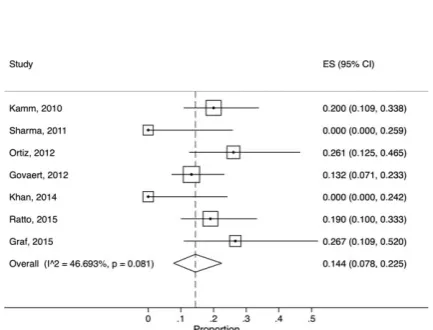
hetero-geneous: the overall device removal rate was 14.4% (95% CI: 7.8% to 22.5%), I2=47% (Fig. 3). There were 51 re-operations: 30 for device removal although five were replaced after resolution of pain or infection, 11 to move or replace the implant, 10 lead problems. In addition six operations were carried out for treat-ment of chronic constipation including three subtotal
colectomies [23,28], two stomas and one appendicos-tomy [28]. Infection resulting in device removal was reported in three patients. The commonest reason for explantation was lack of effect and this was reported in 19 cases (Table 3). Two explantations were carried out for pain associated with the implant and one for lead migration. There appeared to be no relationship between device explantation rate and length of follow up (Table 1).
Patients with SNS for constipation had high levels of reportable adverse events. Often this was resolved by reprogramming but more than one-third required surgi-cal intervention or discontinued therapy. Such data were specifically reported in the sub-cohort of Govaertet al.
[21], reported separately by Maedaet al.[20] who car-ried out a retrospective review of 38 patients who had SNS for constipation and found that 22 patients (58%) experienced at least one reportable event. The most common event was lack or loss of efficacy. In 19 events (33%), surgical intervention was required and the most common intervention was electrode replacement (14 events). Three adverse events lead to discontinuation of SNS. The remaining 35 patients were still using SNS but with a variable degree of benefit.
Summary evidence statements: harms
1 Data on harms were inconsistently reported and heterogeneous (Level IV).
2 The overall procedural complication rate resulting in reoperation was typically 13–34% (Level IV).
3 Common complications resulting in reoperation included lack of efficacy, infection, lead problems, pain at site of implant, unwanted effects relating to stimulation such as pain (Level IV).
4 Infection rates varied from 0 to 7% (Level IV).
[image:4.595.81.536.91.209.2]5 Overall device removal rate was typically 8–23% at mean follow up of 31 months (Level IV)
Table 1All studies included in systematic review.
Author Year Centre Country
Total N
Implanted
N FU*
Number at final
follow up N (%)‡ Design Level†
Kamm [23] 2010 St Marks UK 62 45 28 38 (61) PCH IV
Sharma [26] 2011 Hull UK 21 11 34 10 (48) RCS IV
Ortiz [24] 2012 Navarra Spain 48 23 26 14 (29) RCS IV
Govaert [21] 2012 Maastricht Netherlands 117 68 37 61 (52) RCS IV
Khan [27] 2014 Durham UK 22 12 20 12 (55) PCS IV
Ratto [25] 2014 Rome Italy 61 42 51 32 (76) RCS IV
Graf [28] 2015 Uppsala Sweden 44 15 24 11 (25) PCS IV
*Mean follow up in months. †Oxford 2009 CEBM.
Efficacy
Reported clinical outcomes varied in assessment tools used across the seven studies (Table 4). Most com-monly, these consisted of validated summative symptom scores or questionnaires. These included the Cleveland Clinic Constipation score [23,25], the SF-36 question-naire [23,25], the Wexner Score [21,24], and PAC-SYM and PAC-QOL questionnaire [27]. Additionally, patient bowel diaries were used by several studies, either as the principal outcome measure [26] or alongside other measures [21,24,28]. The definition of treatment success varied between studies. Of the two studies using the Wexner score, one [24] defined success as a 30% improvement in this score. The other [21] defined this as a statistically significant reduction in score from base-line. Kamm et al. [23] defined success as either ≥ 3 bowel motions per week or ≥50% improvement in straining or ≥50% improvement in incomplete evacua-tion. Other definitions of sustained treatment success included a statistically significant reduction in Cleveland Clinic Score and SF-36 from baseline [25], patient reported clinical improvement [27,28] and 50% improvement in bowel function (recorded on bowel diaries [26]). The percentage of initial study recruits providing data at final follow up varied between studies, from 25 to 76% (Table 1) denoting significant attrition in prospective studies.
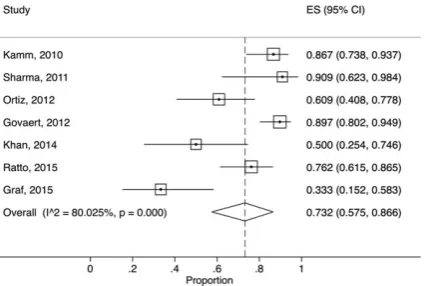
Accepting variation in definitions used, random effects meta-analysis found the overall SNS response rate (i.e. to those beginning treatment but not necessarily implanted) to be 56.9% (95% CI: 46.8% to 66.7%),I2=71%. Long term overall treatment success was 40.1% (95% CI: 26.3% to 54.7%), I2=87%, considering permanently
implanted patients only, treatment success was 73.2% (95% CI: 57.5% to 86.6%),I2=80% (Fig. 4).
Overall, success seemed to be dichotomised with four studies [21,23,25,26] demonstrating higher success rates, both in the short and long term, than others. The largest of these, by Govaertet al.[21], is a retrospective study at two centres in The Netherlands and Denmark, with follow up at 1, 3, 6 and 12 months (although this is difficult to verify for a retrospective study). It appears that data were collected during routine clinical follow up rather than as part of a planned research study. There was considerable drop-out with Wexner scores available for only 32 (47% of implanted cases) at 6 months. A multi-centre prospective cohort study [23] demonstrated the highest positive response rate to temporary SNS, as well as a high long term success rate (87% of patients with per-manent implants); the primary outcome was an improve-ment in one of three domains; bowel frequency, straining and incomplete evacuation, assessed using questionnaires
Table 2 Periop erative data by proce dure. Autho r To tal N Implanted N Dur ation tempo rary SNS (we eks) Tem porary SNS under GA Perm anent SNS under GA Type of tempo rary SNS lead Numb er o f tempora ry SNS leads used Numb er o f Perm anent SNS leads used Perm anent SNS using tined quadripo lar lead Anti biotic cov er duri ng permanent SNS Kam m [23] 62 45 3 N R N R U 1 1 Y Y Sharma [26] 21 11 2 N R N R N R N R N R N R N R Ort iz [24] 48 23 3 0 NR 14U: 34Q 1 1 Y NR Gov aert [21] 11 7 6 8 3 NR NR U 1 1 Y NR Kh an [27] 22 12 3 Y Y U 2 2 Y NR Ratt o [25] 61 42 2 N R N R U 1 O R 2 1 O R 2 NR NR Gr af [28] 44 15 3 Y Y U ≥ 21 Y N R NR, not repor ted; U, unipolar lead; Q, quadri polar lead; UT, un tined lead; T, tined lead; Y, yes.
ª2017 The Authors.Colorectal Diseasepublished by John Wiley & Sons Ltd
on behalf of Association of Coloproctology of Great Britain and Ireland.19(Suppl. 3), 92–100 95
and validated symptom scores. However, treatment suc-cess was assessed on last follow up and there was a high drop-out rate (38% drop-out at 24 months). A further retrospective study [26] of 21 patients in a single centre demonstrated a 47% success rate based on patient reported outcomes and laxative use. Ratto et al. [25] used a retrospective study design to evaluate outcome based on validated questionnaires. Although 32/42 (76%) of patients still had implant at the end of follow up (and therefore considered to be responders to some degree), only 15 (35%) had a 50% reduction of Cleveland Clinic Score. Three studies [24,27,28] demonstrated rel-atively poor efficacy of treatment (Table 4). Two of these are retrospective case series while the other [27] studied neurological constipation only.
Summary evidence statements: efficacy
1 Data on efficacy were inconsistently measured with high drop-out rates and heterogeneous findings, making estimates tentative and imprecise [level IV]
2 Pooled treatment success was typically 57–87% for patients receiving permanent implants, although there was significant variation between studies [level IV]
Patient selection
[image:6.595.88.320.90.425.2]Patient selection was inconsistent between the seven studies. There was no unifying criteria for establishing a diagnosis of chronic constipation (Table 5). Four studies excluded patients with neurological disease and one study only included patients with neurological disease. The proportion of participants with slow tran-sit constipation (STC) was recorded in six of the studies. There was no significant difference in response to SNS when studies were grouped by those with less or more than 50% of patients with STC (Fig. 5). Defaecating proctograms were performed in six of the studies but only used to stratify patients in two studies (Table 5).
Figure 2 Forest plot showing rates of total procedural
compli-cations (percentage of patients).
Figure 3 Forest plot showing rates of device explantation rate
[image:6.595.309.529.94.424.2](percentage of patients).
Table 3Harms.
Author
Total N
Implanted N
Total complications resulting in reoperation
Total adverse events
Infection resulting in device removal
Explantation (permanent device removal)
Additional surgery
Kamm [23] 62 45 11/45 (24%) 101 2/45 (4%) 2/45 (4%) (7/45 exit study)
Subtotal colectomy 1
Sharma [26] 21 11 3/11 (27%) NR 0 0 NR
Ortiz [24] 48 23 9/23 (39%) NR 1/23 (4%) 6/23 (27%) NR Govaert [21] 117 68 9/68 (13%) NR 3/68 (4.4%) 9/68 (13%) NR
Khan [27] 22 12 0 1 0 0 NR
Ratto [25] 61 42 14/42 (33%) 9 0 8/42 (19%) NR
Graf [28] 44 15 5/15 (33%) 12 PNE 5 PERM
1/15 (7%) 4/15 (27%) Stoma 2 Colectomy 2 Appendicostomy 1
[image:6.595.318.535.256.421.2]Summary evidence statements: patient selection
1 All studies included variable phenotypes of chronic constipation making populations heterogeneous (Level IV).
2 No conclusions could be drawn regarding particular phenotypes that responded favourably or unfavour-ably to SNS (Level IV).
Discussion
The possibility of a minimally invasive technique is a very attractive option for the management of patients with chronic constipation, especially as alternative options may involve potentially hazardous major surgery with colectomy and uncertain outcome. This systematic review has identified a number of published series that might suggest benefit of this treatment, with a pooled ‘success rate’ of 73% of those patients undergoing per-manent implantation and a device removal rate of around 12%. These findings would certainly merit fur-ther study but must be treated with caution as the majority of the studies were retrospective case series. There was evidence of considerable loss to follow up, irregular and imprecise measurement of outcomes, and ill-defined post-hoc analysis of the data. The outcomes were, for the most part, reported to the clinicians pro-viding the treatment and there is a well-recognised reporting bias here. In addition there may be a strong publication bias [29].
[image:7.595.300.514.75.218.2]Several important studies were not included in the review but merit consideration in the discussion. A ran-domised, double-blind, placebo-controlled, two-phase crossover study by Dinninget al.[30] comparing sham, subsensory and suprasensory stimulation in patients with STC was excluded from the review due to inade-quate follow up period (<12 months). The primary outcome measure was the proportion of patients who, on more than 2 days per week for at least 2 of 3 weeks,
Figure 4 Forest plot showing rates of implant long-term
suc-cess rate (percentage of patients).
T able 4 Clin ical outcome s o f SNS . Author Year Total N Implanted N Outcome measure used Definition of long-term success Median FU (Months) Response to PNS N (%) Long term success (Total) N (%) Long term
success (Implanted) N
(%) Kamm [23] 2010 62 45 Cleveland Clinic Constipation Score, Visual Analogue Scale, SF-36 One of: ≥ 3 bowel movements per week; >+ 50% improvement in straining and/or incomplete evacuation 28 45 (73) 39 (63) 39 (87) Sharma [26] 2011 21 11 Bowel function recorded in patient diaries. Use of laxatives 50% improvement in Bowel function 34 12 (57) 10 (47) 10 (90) Ortiz [24] 2012 48 23 Wexner score, bowel diaries 30% improvement in Wexner score 26 23 (48) 14 (29) 14 (61) Govaert [21] 2012 117 68 Wexner score, bowel diaries Retained implant 37 68 (58) 61 (52) 61 (90) Khan [27]* 2014 22 12 Patient assessment of symptoms (Likert scale). PAC-SYM, PAC-QOL, EuroQoL Clinical assessment 20 12 (55) 6 (27) 6 (50) Ratto [25] 2015 61 42 Cleveland Clinic Constipation Score, SF36 Retained implant 51 42 (69) 32 (52) 32 (76) Graf [28] 2015 44 15 Bowel diaries, validated symptom questionnaire Sustained symptom relief (patient reported) 24 15 (34) 5 (11) 5 (33) * Neurological const ipati on. NR, Not Reco rded.
ª2017 The Authors.Colorectal Diseasepublished by John Wiley & Sons Ltd
on behalf of Association of Coloproctology of Great Britain and Ireland.19(Suppl. 3), 92–100 97
reported a bowel movement associated with a feeling of complete evacuation. This well-conducted trial showed no clinical effect of sub- or suprasensory stimulation over sham in 55 patients undergoing permanent SNS implantation. The proportion of patients who met the primary outcome measure did not differ between
suprasensory (30%) and sham (21%) stimulations nor between subsensory (25%) and sham (25%) stimula-tions. In addition there was no significant change in quality of life scores. Long term data from this study have been reported since the systematic review was completed noting that 88% of patients in the original study [30] had undergone device removal at median follow up 5.7 years [31].
[image:8.595.80.538.90.380.2]A French group have presented data on 20 patients undergoing permanent SNS after a successful 3-week temporary test. A randomised on/off sham controlled sub-sensory stimulation was provided (8 weeks each cycle) with no improvement during active stimulation. At 1 year, only 11 (55%) patients were still responding [32]. The results of a third study have been recently pre-sented (nationally and internationally) from a multi-cen-tre prospective randomised study [ISRCTN44563324]. The main aim of this study was to assess the efficacy of sham controlled tined lead stimulation as a way of iden-tifying true responders. Thirty-nine patients were recruited to the test phase and 27 were implanted with all but one followed up to 6 months. The findings showed, once again, that temporary testing has no value in determining long term response. The response at 6 months was assessed by a reduction of at least 0.5 on
Table 5Patient baseline phenotypic data.
Authors N Inclusion criteria STC Neurological disease Proctogram
Kamm [23] 62 <2 bowel movements per week and/or straining or incomplete emptying>25% occasions
50 (81%) Excluded Performed not stratified
Sharma [26] 21 2 or fewer bowel movements per week, failed conservative treatment over at least 12 months from GP referral
19 (86%) Excluded Performed used to rule out obstructive defaecation but anismus not exclusion criterion
Ortiz [24] 48 Rome III criteria, symptoms at least 1 year, failed conservative treatment with laxatives, suppositories, enemas and behavioural therapy
5 (10%) Excluded Performed not stratified
Govaert [21] 117 <2 bowel movements per week and/or straining or incomplete emptying>25% occasions. Persistent symptoms 1 year and failed conservative treatment (NB includes 26 patients from Kamm study and 38 patients from Maeda study)
75 (64%) Not excluded Performed not stratified
Khan [27] 22 Patients with neurological disease [including multiple sclerosis (n=14) and spinal cord injury (n=5)] and severe constipation refractory to conservative treatment
NR Inclusion criterion None
Ratto [25] 61 Rome III criteria. Patients identified from GINS: Italian group for sacral nerve neuromodulation (NB may include some patients from Ortiz study although not specifically mentioned)
17 (28%) Not excluded Performed and patients with rectocoele, intussusception, rectal prolapse and enterocoele excluded
Graf [28] 44 History of ‘constipation’ for at least 6 months and failure of conservative treatment
21 (48%) Excluded spinal cord injury
Selective
Figure 5 Forest plot showing rates of SNS response rate by
[image:8.595.86.294.404.581.2]PAC-SYM and this was achieved in 15(55%) of patients.
These more recent prospective studies suggest that the efficacy of SNS in constipation may be very limited, but in particular, that prediction of responders using various temporary testing regimens is poor. In view of the cost and risk of the procedure, the inability to pre-dict responders is likely to hamper the utility of the treatment in the future.
There was a significant difference in the conclusions between the largely retrospective early studies, which supported the use of SNS, and the three recent well-conducted prospective studies, which have all urged greater caution. This is an example of the importance and need for formally planned and robustly executed studies to inform surgical practice and a warning against over-reliance on retrospective cohort studies.
Acknowledgements
We would like to acknowledge the following people in relation to the NIHR CapaCiTY working group: Mr Steven Brown, Sheffield Teaching Hospitals NHS Foundation Trust; Mr Kenneth Campbell, The University of Dundee, NHS Education for Scotland; Mr Mark Chapman, Heart of England NHS Trust; Mr Andrew Clarke, Poole Hospital NHS Foundation Trust; Mr Neil Cruickshank, Sandwell and West Birm-ingham Hospitals NHS Trust; Mr Anthony Dixon, University of Bristol, Bristol, UK; Dr Christopher Emmett, County Durham and Darlington NHS Foundation Trust; Mr Ugo Grossi, Queen Mary University of London; Dr Richard Hooper, PCTU, Queen Mary University of London; Miss Emma Horrocks, University Hospital Southampton NHS Foundation Trust; Professor Charles Knowles, Queen Mary University of London; Mr Jon Lacy-Colson, Shrewsbury and Telford Hospital NHS Trust; Mr Ian Lindsey, Oxford University Hospitals NHS Trust; Professor James Mason, University of Warwick, Coventry; Mr Mark Mercer-Jones, Gateshead Health NHS Foundation Trust; Mr Andrew Miller, University Hospitals of Leicester NHS Trust; Mr David Pares, Hospital Germans Trias i Pujol, Barcelona, Spain; Miss Sophie Pilkington, University Hospital Southampton NHS Foundation Trust; Mr Neil Smart, Royal Devon & Exeter NHS Foundation Trust; Ms Natasha Stevens, PCTU, Queen Mary University of London; Professor Douglas Tincello, University Hospitals of Leicester NHS Trust; Miss Karen Tel-ford, South Manchester NHS Foundation Trust; Mr Paul Vollebregt, Queen Mary University of London;
Mr Andrew Williams, Guy’s and Thomas’ NHS Foun-dation Trust; Professor Yan Yiannakou, County Durham and Darlington NHS Foundation Trust.
Conflict of interest
The authors declare no conflict of interest.
Funding
This project was funded by the National Institute for Health Research (NIHR) Programme Grant for Applied Research (RP-PG-0612-20001). The views and opin-ions expressed in this report are those of the authors and are not those of the PGfAR Programme, NIHR, the UK National Health Service, or the UK Depart-ment of Health.
References
1 Brazzelli M, Murray A, Fraser C. Efficacy and safety of sacral nerve stimulation for urinary urge incontinence: a systematic review.J Urol2006;175:835–41.
2 Thin NNet al. Systematic review of the clinical effective-ness of neuromodulation in the treatment of faecal inconti-nence.Br J Surg2013;100:1430–47.
3 Ganio Eet al.Short-term sacral nerve stimulation for func-tional anorectal and urinary disturbances: results in 40 patients: evaluation of a new option for anorectal functional disorders.Dis Colon Rectum2001;44:1261–7.
4 Knowles CH, Scott SM, Lunniss PJ. Slow transit constipa-tion: a disorder of pelvic autonomic nerves? Dig Dis Sci 2001;46:389–401.
5 Brindley GS, Polkey CE, Rushton DN. Sacral anterior root stimulators for bladder control in paraplegia. Paraplegia 1982;20:365–81.
6 Brindley GS. The first 500 patients with sacral anterior root stimulator implants: general description. Paraplegia1994;
32:795–805.
7 Patton V et al. The effect of sacral nerve stimulation on distal colonic motility in patients with faecal incontinence. Br J Surg2013;100:959–68.
8 Mowatt G, Glazener C, Jarrett M. Sacral nerve stimulation for faecal incontinence and constipation in adults.Cochrane Database Syst Rev2007: CD004464.
9 Kenefick NJ et al. Double-blind placebo-controlled cross-over study of sacral nerve stimulation for idiopathic consti-pation.Br J Surg2002;89:1570–1.
10 Thaha MAet al.Sacral nerve stimulation for faecal inconti-nence and constipation in adults.Cochrane Database Syst Rev, 2015: CD004464.
11 Zheng Jet al.Sacral neuromodulation in the treatment of intractable constipation.Zhonghua Wei Chang Wai Ke Za Zhi2014;17:1175–8.
12 Dinning PG et al. Sacral nerve stimulation induces pan-colonic propagating pressure waves and increases defecation
ª2017 The Authors.Colorectal Diseasepublished by John Wiley & Sons Ltd
on behalf of Association of Coloproctology of Great Britain and Ireland.19(Suppl. 3), 92–100 99
frequency in patients with slow-transit constipation. Colorectal Dis2007;9:123–32.
13 Kenefick NJet al. Permanent sacral nerve stimulation for treatment of idiopathic constipation. Br J Surg 2002;89: 882–8.
14 Malouf AJet al.Short-term effects of sacral nerve stimula-tion for idiopathic slow transit constipastimula-tion.World J Surg 2002;26:166–70.
15 Knowles CH et al. Prospective randomized double-blind study of temporary sacral nerve stimulation in patients with rectal evacuatory dysfunction and rectal hyposensitivity. Ann Surg2012;255:643–9.
16 Thomas GPet al.A double-blinded randomized multicen-tre study to investigate the effect of changes in stimulation parameters on sacral nerve stimulation for constipation. Colorectal Dis2015;17:990–5.
17 Carriero Aet al. Sacral nerve stimulation for constipation: do we still miss something? Role of psychological evalua-tion.Int J Colorectal Dis2010;25:1005–10.
18 Naldini Get al.Treatment of slow-transit constipation with sacral nerve modulation.Colorectal Dis2010;12:1149–52. 19 Holzer B et al. Sacral nerve stimulation in patients with
severe constipation. Dis Colon Rectum 2008; 51: 524–9; discussion 529-30.
20 Maeda Y et al. Sacral nerve stimulation for constipation: suboptimal outcome and adverse events.Dis Colon Rectum 2010;53:995–9.
21 Govaert Bet al.Medium-term outcome of sacral nerve modu-lation for constipation.Dis Colon Rectum2012;55:26–31. 22 van Wunnik BP et al. Patient experience and satisfaction
with sacral neuromodulation: results of a single-center sam-ple survey.Dis Colon Rectum2011;54:95–100.
23 Kamm MA et al. Sacral nerve stimulation for intractable constipation.Gut2010;59:333–40.
24 Ortiz Het al.Functional outcome of sacral nerve stimula-tion in patients with severe constipastimula-tion.Dis Colon Rectum 2012;55:876–80.
25 Ratto C et al. Long-term results following sacral nerve stimulation for chronic constipation. Colorectal Dis2015;
17:320–8.
26 Sharma A et al. Sacral neuromodulation for the manage-ment of severe constipation: developmanage-ment of a constipation treatment protocol.Int J Colorectal Dis2011;26:1583– 7.
27 Khan Uet al.A prospective trial of temporary sacral nerve stimulation for constipation associated with neurological disease.Colorectal Dis2014;16:1001–9.
28 Graf W et al. Results after sacral nerve stimulation for chronic constipation. Neurogastroenterol Motil 2015; 27: 734–9.
29 Timmer A et al. Publication bias in gastroenterological research - a retrospective cohort study based on abstracts submitted to a scientific meeting.BMC Med Res Methodol 2002;2:7.
30 Dinning PGet al.Treatment efficacy of sacral nerve stimu-lation in slow transit constipation: a two-phase, double-blind randomized controlled crossover study. Am J Gas-troenterol2015;110:733–40.
31 Patton Vet al.Sacral nerve stimulation fails to offer long-term benefit in patients with slow-transit constipation.Dis Colon Rectum2016;59:878–85.
32 Zerbib F et al. Randomized clinical trial of sacral nerve stimulation for refractory constipation. Br J Surg 2017;