LANCASTER UNIVERSITY
Logistics Horizontal Collaboration
A
N
A
GENT
-
BASED SIMULATION APPROACH TO MODEL
COLLABORATION DYNAMICS
Zhu, Jie
PhD Thesis
Supervisors: Prof. Martin Spring Dr. Stephan Onggo
Abstract
Underutilized capacity, long shipping lead time, high cost and lack of sufficient scale are examples of logistics inefficiencies that have troubled many supply chain operations. Logistics horizontal collaboration (LHC) is believed to be an innovative approach to tackle the increasing logistics challenges. This kind of collaborative logistics is quickly gaining momentum in practice but relevant contributions in literature are scarce. So far it remains unclear how LHC could be structured and operated given the limited understanding of the various characteristics and forms of LHC between companies. Furthermore, the explicit impact of LHC on the participating partners, as well as on the supply chain system is understudied. Very few studies have explored the process of collaboration and how it links to performance behaviours.
Case studies and Agent-Based Simulation are employed in this thesis to study the research gaps identified above. Case studies are initially conducted to examine the key elements which can support the design of LHC, and to make a classification of models for collaboration. These are followed by Agent-Based Simulation to model a typical collaboration process and work out what benefits would emerge if participating in horizontal collaboration and how the collaboration can produce the impacts on the supply chain operations for individuals and the system as a whole.
The case studies suggest that “collaboration structures”, “collaboration objectives”, “collaboration intensity”, and “collaboration modes” are the four key elements critical to the design of a LHC project. Each element represents an important aspect of the collaboration and exhibits different characteristics and forms. Based on these key elements, several typologies are derived which together provide a comprehensive view to explain the different types of LHC in practice. The simulation modelling demonstrates that LHC can significantly benefit the logistics efficiency in terms of capacity utilization and customer service in the sense of order fill-rate, and such beneficial effects are consistently observed in different supply chain environments. In particular, LHC can produce better logistics performance in a relationship-based supply chain network where downstream customers can support upstream shippers with more stable and predictable demand. On the other hand, information sharing in the collaboration, for the most part, does not facilitate the higher collaboration gains for partners. Specifically, sharing either the demand or supply information in the horizontal collaboration is not helpful in increasing collaboration gains. Hence there is a difference for the value of information sharing in the context of horizontal collaboration as opposed to vertical collaboration, the latter of which is often justified as providing more beneficial gains. The research findings provide insights for practitioners and scholars about how to develop a type of collaboration project or study, as well as enabling a better understanding of the dynamic collaboration effects.
Acknowledgement
For the past three and half years I have been undertaking PhD research at Lancaster University Management School. In this long and lonely journey, I have received invaluable advice and support from many people, who helped me through the difficulties and overcome the challenges. I would like to take this opportunity to express my sincere gratitude to all these people, and particularly I want to give my special thanks to the following.
I am very grateful to my PhD supervisors – Martin Spring and Stephan Onggo for their professional and precious guidance throughout the whole research process. Without their recognition, I would not be able to start my doctoral study at such a prestigious university in UK. I have benefited greatly from their expertise in the relevant research subjects and skills. There were many times they provided me with great ideas and kind suggestions which inspired me to work out the research problems. Their constant encouragement and patience were also critical on those occasions when I was struggling with the difficulties encountered in the research. Their sincerity, extensive knowledge and wisdom have left a deep impression and will positively influence my attitude towards future work and life.
I also would like to acknowledge the financial sponsorship from the Department of Management Science of Lancaster University Management School. I am very grateful for the PhD studentship offered by the school, which was very important in enabling me to start my PhD project.
My tremendous thanks should go to the teachers of doctoral training courses and my PhD colleagues in the Management School. For the teachers, I appreciate their well-designed training and insightful guidance to develop my academic research skills. For my PhD colleagues, I am thankful for their precious time spent with me for discussing the research issues and their many useful pieces of advice.
I am also thankful for all the friends met in the UK for the enjoyable moments we spent on studies, communications and entertainment. They have brought me a lot of fun and relieved any feelings of loneliness and boredom that might otherwise have characterized the research experience. I cherished every moment with each of them and I wish everyone great success and happiness in the future.
To my beloved parents, they are my source of growth and strength. They gave birth to me and raised me up, granting me with happiness all the time. They are the ones who know me and support me best. As their only child, I am deeply indebted to them for being far away from them for such a long time when they are growing old and need care.
gratitude to my parents for their understanding and support of my pursuit.
For myself, I am very grateful to have had such an unusual experience as doctoral study in my life journey. This has been a long and difficult process, coupled with numerous failures and frustrations, but through this process I have learned a lot of useful knowledge and skills. What matters most in going through this process has been my increased confidence, patience, persistence and courage in facing and tackling any difficulties and challenges. This will be a very positive asset for my future development.
Lastly, I want to thank myself for being persistent to the pursuit of my career in logistics and supply chain management. Regardless of whether I work in industry or in academia, I always and will keep to my original intention to support the creation of a better future for the world of logistics and supply chain management. This persistence will help me grow continuously and contribute more over the course of my career.
Zhu, Jie
I
Table of Contents
CHAPTER 1 INTRODUCTION ... 1
1.1 BACKGROUND ... 2
1.2 THE NEW LOGISTICS MODEL -HORIZONTAL COLLABORATION ... 5
1.3 MOTIVATION ... 7
1.4 THE RESEARCH AGENDA ... 13
1.5 EXPECTED CONTRIBUTION OF THE RESEARCH ... 14
1.6 STRUCTURE OF THESIS ... 15
CHAPTER 2 LITERATURE REVIEW ... 17
2.1 INTRODUCTION ... 18
2.2 THE COLLABORATION OF LOGISTICS IN SUPPLY CHAIN MANAGEMENT ... 19
2.2.1 Vertical Collaboration in Logistics ... 19
2.2.2 Horizontal Collaboration in Logistics ... 23
2.2.2.1 Early Concepts and Cases Studies ... 24
2.2.2.2 Opportunities and Impediments ... 25
2.2.2.3 Governance Mechanism ... 29
2.2.2.4 Development Framework ... 30
2.2.2.5 Classification of Collaboration Models ... 32
2.3 RESEARCH QUESTIONS ... 34
2.4 THE APPLICATION OF AGENT-BASED MODELLING IN SUPPLY CHAIN MANAGEMENT ... 38
2.4.1 Modelling Methods in Supply Chain ... 39
2.4.2 Agent-Based Modelling vs Classical Supply Chain Modelling ... 42
2.4.2.1 Discrete Event Simulation (DES) ... 42
2.4.2.2 System Dynamics (SD)... 44
2.4.2.3 Agent Based Simulation (ABS) ... 45
2.4.3 The Use of ABS to Model Key Supply Chain Problems ... 47
2.4.3.1 Supply Chain Collaboration ... 47
2.4.3.2 Inventory Planning and Management ... 57
2.4.3.3 Risk and Uncertainty Management ... 59
2.4.3.4 Supplier Selection ... 60
2.5 CHAPTER SUMMARY ... 63
CHAPTER 3 RESEARCH METHODOLOGY ... 64
3.1 INTRODUCTION ... 65
3.2 THE CASE STUDIES ... 67
3.2.1 The Case Study Design of this Research ... 67
3.2.2 Case Definition and Unit of Analysis ... 69
3.2.3 Case Studies Based on Primary Data ... 70
3.2.3.1 Interviews and Focus Groups ... 71
II
3.2.3.3 Documents ... 79
3.2.4 Case Studies Based on Secondary Data ... 80
3.2.5 Data Analysis ... 81
3.3 AGENT-BASED SIMULATION ... 87
3.3.1 Why Agent-Based Simulation?... 87
3.3.2 How Do Case Studies Inform Agent-Based Simulation? ... 88
3.3.3 Steps in a Simulation Study... 90
3.4 CHAPTER SUMMARY ... 92
CHAPTER 4 CASE STUDIES ... 93
4.1 INTRODUCTION ... 94
4.2 KEY ELEMENTS FOR DEVELOPING LOGISTICS HORIZONTAL COLLABORATION ... 95
4.3 ATYPOLOGY OF LOGISTICS HORIZONTAL COLLABORATION... 100
4.3.1 Collaboration Structure ... 101
4.3.1.1 Collaboration Structure 1 (shipper-centric collaboration) ... 102
4.3.1.2 Collaboration Structure 2 (customer-centric collaboration) ... 104
4.3.1.3 Collaboration Structure 3 (LSP-centric collaboration) ... 105
4.3.1.4 Hybrid Collaboration Structure ... 106
4.3.2 Collaboration Objectives ... 107
4.3.2.1 Objective 1: Reduce Logistics Operations Cost ... 107
4.3.2.2 Objective 2: Increase Capacity Utilization ... 108
4.3.2.3 Objective 3: Improve Service Level ... 109
4.3.2.4 Objective 4: Improve Predictability and Flexibility ... 112
4.3.2.5 Objective 5: Reduce CO2 Emissions ... 113
4.3.2.6 Objective 6: Increase Market Coverage ... 115
4.3.2.7 Objective 7: Reduce Logistics Procurement Cost ... 115
4.3.3 Collaboration Intensity ... 117
4.3.3.1 Autonomy ... 117
4.3.3.2 Baseline Collaboration... 118
4.3.3.3 Strategic Collaboration ... 118
4.3.3.4 System-wide Integration ... 119
4.3.4 Collaboration Modes ... 122
4.3.4.1 Collaborative Distribution ... 122
4.3.4.2 Sharing Logistics Assets and Facilities ... 128
4.3.4.3 Freight Modal Shift ... 133
4.3.4.4 Collaborative Purchasing ... 139
4.3.4.5 Collaborative Service ... 141
4.4 CONCLUSION ... 145
CHAPTER 5 SIMULATION MODELLING ... 147
5.1 THE AGENT-BASED SUPPLY CHAIN MODEL... 148
5.1.1 Basic Model Structure and Configurations ... 148
5.1.2 Horizontal Collaboration Strategies ... 153
5.1.3 Supply Chain Configurations ... 162
III
5.2 RESULTS AND ANALYSIS ... 176
5.2.1 Random Market Supply Chain ... 176
5.2.1.1 Fill-rate ... 177
5.2.1.2 Capacity Utilization ... 180
5.2.1.3 Cumulative KPIs ... 185
5.2.1.4 Customer Profits ... 188
5.2.2 Performance-Based Supply Chain ... 190
5.2.2.1 Fill-rate ... 190
5.2.2.2 Capacity Utilization ... 194
5.2.2.3 Cumulative KPIs ... 198
5.2.2.4 Customer Profits ... 204
5.2.3 Relation-Based Supply Chain ... 206
5.2.3.1 Fill-rate ... 206
5.2.3.2 Capacity Utilization ... 210
5.2.3.3 Cumulative KPIs ... 216
5.2.3.4 Customer Profits ... 222
5.3 DISCUSSION ... 225
5.4 CONCLUSION ... 231
CHAPTER 6 DISCUSSION ... 232
6.1 FINDINGS OF CASE STUDIES ... 233
6.2 FINDINGS OF SIMULATION MODELLING ... 238
6.3 CONTRIBUTIONS ... 242
6.3.1 Answering the Research Questions ... 242
6.3.2 Contribution to the Research Field... 254
6.4 LIMITATIONS ... 256
6.5 DIRECTIONS FOR FUTURE RESEARCH ... 259
CHAPTER 7 CONCLUSION ... 261
REFERENCE ... 265
IV
List of Tables
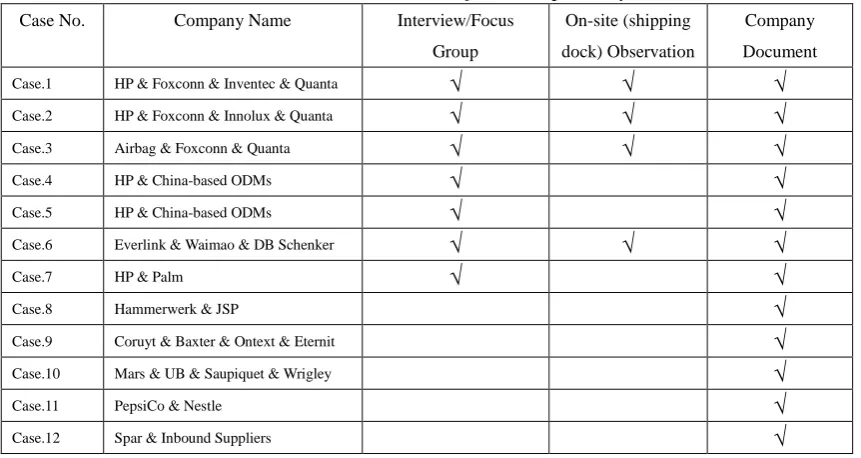
Table 3.1 – Data sources used for each primary case ... 71
Table 3.2 – Information regarding the interviewees ... 72
Table 3.3 – Main forms of remote interview. source: (King and Horrocks, 2010) ... 75
Table 3.4 – Steps for data analysis in this study (adapted from the general guideline in (Bryman, 2012, Gillham, 2000, Charmaz, 2006) ... 82
Table 3.5 – Example of code information ... 83
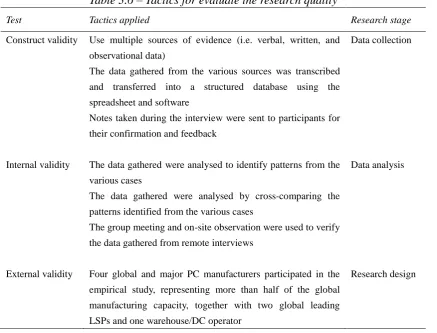
Table 3.6 – Tactics for evaluate the research quality ... 85
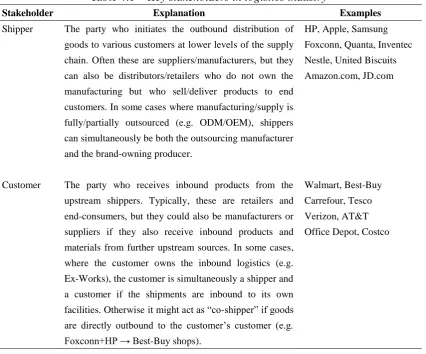
Table 4.1 – Key stakeholders in logistics industry ... 101
Table 4.2 – Performance indicators for measuring service level ... 111
Table 4.3 – Example of full-scale information sharing in PC manufacturing collaboration (source: Case.3) ... 120
Table 5.1 – Fill-rate in baseline configuration (Random SC) ... 178
Table 5.2 – Imbalance index for fill-rate under Random SC ... 179
Table 5.3 – Capacity utilization under the Random SC ... 180
Table 5.4 – Imbalance index for capacity utilization under scenario-R ... 184
Table 5.5 – Cumulative KPIs under Random SC ... 185
Table 5.6 – Imbalance index for cumulative KPIs under the Random SC ... 187
Table 5.7 – Customer total profits and imbalance under the Random SC ... 188
Table 5.8 – Fill-rate under the Performance-Based SC ... 190
Table 5.9 – Change percentages for fill-rate under the Performance-Based SC ... 191
Table 5.10 – Imbalance index for fill-rate under the Performance-Based SC ... 193
Table 5.11 – Change percentages for fill-rate imbalance under the Performance-Based SC ... 194
Table 5.12 – Capacity utilization under the Performance-Based SC ... 195
Table 5.13 – Change percentages for utilization under the Performance-Based SC . 195 Table 5.14 – Imbalance index for capacity utilization under the Performance-Based SC ... 197
Table 5.15 – Change percentages for utilization imbalance under the Performance-Based SC ... 198
Table 5.16 – Cumulative KPIs under the Performance-Based SC ... 198
Table 5.17 – Change percentages for cumulative KPIs under the Performance-Based SC ... 199
Table 5.18 – Imbalance index for cumulative KPIs under the Performance-Based SC ... 202
Table 5.19 – Change percentages in imbalance index for cumulative KPIs under the Performance-Based SC ... 202
Table 5.20 – Customer total profits and imbalance under the Performance-Based SC ... 204
Table 5.21 – Change percentages for customer total profits and imbalance under the Performance-Based SC ... 204
V
VI
List of Figures
Figure 1.1 – Difference between vertical and horizontal collaboration in logistics and
transport (Mason et al., 2007) ... 5
Figure 1.2 – Logistics cost comparison between China, USA, Japan (in GDP percentage) (Source: China Logistics Information Centre) ... 9
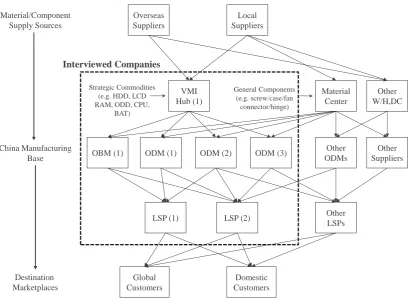
Figure 3.1 – Network view of interviewed companies in PC supply chain ... 73
Figure 3.3 – Example of comparing and analysing data from different sources ... 85
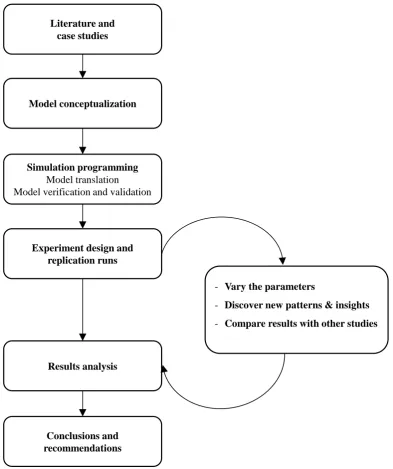
Figure 3.4 – Stages in a simulation study – adapted from Robinson et al. (2010) ... 91
Figure 4.1 – Key elements for developing logistics horizontal collaboration ... 96
Figure 4.2 – Structures of logistics horizontal collaboration ... 103
Figure 4.3 – An example of a hybrid horizontal collaboration structure ... 106
Figure 4.4 – Example of cost reduction in a French retail collaboration (Source: Case.10) ... 108
Figure 4.5 – Capacity utilization improvement through collaborative freight bundling between Hammerwerk and JSP (source: Case.8) ... 109
Figure 4.6 – CO2 emissions comparison between the modes of transport (source: (Hindley, 2013) ... 114
Figure 4.7– Example of CO2 emissions through collaborative transport (source: Case.8) ... 115
Figure 4.8 – Intensity of Collaboration: adapted from Lambert et al. (1999); Cruijssen (2006) ... 117
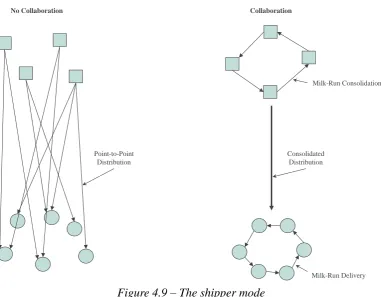
Figure 4.9 – The shipper mode ... 124
Figure 4.10 – Example of food distribution collaboration (source: Case.11) ... 125
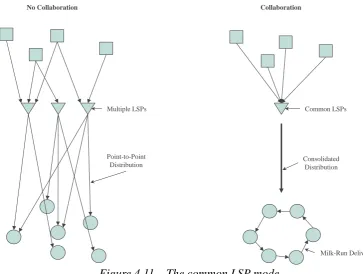
Figure 4.11 – The common LSP mode ... 127
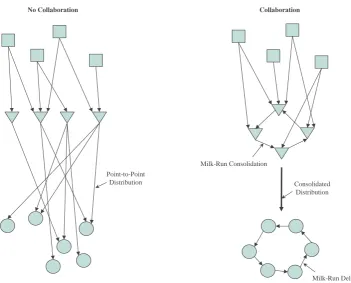
Figure 4.12 – The LSP mode ... 128
Figure 4.13 – Collaboration on front/back empty hauls ... 130
Figure 4.14 – Collaboration on shared warehouse... 131
Figure 4.15 – Example of collaboration through a shared warehouse (source: Case.5) ... 133
Figure 4.16– Modal split in EU 28 (source: Eurostat) ... 134
Figure 4.17 – Collaboration on freight modal shift ... 136
Figure 4.18 – Collaboration on freight modal shift ... 138
Figure 4.19 – A screenshot of the coordinated capacity allocation process in rail transport collaboration (source: Case.2) ... 138
Figure 4.20 – Collaboration on freight modal shift ... 139
Figure 4.21 – Collaborative group purchasing ... 141
Figure 4.22 – Collaborative service network ... 143
Figure 5.1 – Class diagram of the supply chain framework ... 149
Figure 5.2 – Sequence diagram of agent actions in the supply chain process ... 151
Figure 5.3 – Sequence diagram for the equal capacity sharing model ... 155
Figure 5.4 – Sequence diagram for the proportional capacity sharing strategy ... 157
VII
1
2
1.1 Background
Since the 1990s, the rapid developments in information technology and the fast pace of
globalization have brought a great change to the marketplace and business operations.
Under such circumstances, the business operations have become more complicated.
The business companies must view their operations from a totally new perspective – to
operate from a broader view in terms of time and space. Supply chain management is
developed from such a point of view which advocates that companies should act as a
network that is based upon the concepts of collaboration and process integration
(Sabath, 1998). This is because in today’s global environment it is “supply chains that
compete rather than companies” (Christopher, 2011).
Among the various supply chain activities, logistics is a key function since it acts as a
physical link that connects the companies in the supply chain, enabling the flow of
materials and resource (Coyle et al., 2003, Naim et al., 2006), making it a key integral
part of the overall supply chain management (Ellram, 1991). In the execution of supply
chain management, managing the logistics effectively is vital to enable the smooth
running of a supply chain system because the failures in the logistics service would
affect the business performance, either directly or indirectly, through sales, costs and
quality of service. Thus, in an era of fast changing marketplace and fierce competition,
mitigating the inefficiencies and risks in logistics can directly benefit the company’s
business operations and contribute to the achievement of sustainable competitive
advantage.
Entering into the 21st century, world economy growth has slowed down sharply and is
battling with severe depression following the global financial crisis starting from 2008.
In the meantime the pressure of market competition is increasing significantly at a
global scale, particularly for commodities and services. In this situation, more
companies are now trying to identify new ways and better ways to decrease operating
3
increasingly realized the importance of effective supply chain management to their
global business, and logistics as a key part of this. This in turn has elevated the need to
improve key logistics activities such as warehousing, transportation and distribution.
These activities are directly associated with the services needed to deliver products to
customers, and the associated costs. It is therefore now becoming critical that
companies start to re-think and re-build their logistics processes for the purpose of cost
saving and better delivery performance for customers.
Unfortunately, nowadays a great many companies are being troubled by the logistics
inefficiencies, reflected by issues such as underutilized transportation capacity, long
shipping lead time, high cost and a lack of sufficient scale (Cruijssen et al., 2010,
Palmer et al., 2012). In today’s marketplace, companies often consider two logistics
strategies for operating their supply chains (Abdur Razzaque and Chen Sheng, 1998).
1. Outsourcing logistics – the dominant approach adopted by many industries and
firms who want to concentrate on their core competency (Africk and Markeset,
1996, Foster, 1994) .
2. Self-building (in-house) logistics – adopted by traditional vertical integration
companies, or companies that increasingly believe they can build the logistics as a
core competency (e.g. Amazon, JD.com)
There are intrinsic disadvantages in following either of these models, however. The
first model (outsourcing) often results in high cost with poor stability, predictability and
flexibility in logistics service operations due to the shipper’s lack of direct control over
logistics. The shipper’s logistics performance is greatly affected by, and subject to, the
capability of the outsourced logistics service providers (LSPs), and this represents a
significant risk to the shipper’s ability to fulfil customer demand. The second model
(self-building) requires huge initial investment and entails significant challenges
regarding how to plan a better demand supply matching between the logistics capacity
4
to fill this capacity. If large sufficient, stable and structural freight flow cannot be
maintained, significant operating cost must be borne without creating any value which
negatively affects the overall business performance. In addition, most companies sell a
great variety of products with countless configurations, the demand for which is
extremely difficult, or impossible, to anticipate reliably, thereby creating a great risk
that the pre-positioned capacity will be either under-utilized or over-stretched.
Operational inefficiencies seem to be a common problem in either the outsourcing or
self-building logistics. One of the biggest root causes can be attributed to the
fragmentation in both the demand and supply resources (Cruijssen et al., 2010). Most
companies nowadays (shippers or logistics service providers) are highly dependent
upon their own logistics networks and capacity if they are to fulfil the demand from
their customers (Palmer et al., 2012). Due to the reactive and asset heavy nature of
logistics and transport businesses, operations efficiency is vulnerable to the fast
changing demand if the capacity utilization is completely planned for and subject to the
company’s own demand sources. Frequent capacity underutilization, on the one hand,
or shortages, on the other, can become a critical issue when the demand is not stable,
structural and predictable (Zhu et al., 2014). The unpredictability and structural
inefficiencies have been a long-standing problem in the logistics marketplace, since it
generally lacks an effective approach to connecting the existing available, but
fragmented, logistics resources and networks for more productive use. Consequently,
the logistics industry is undergoing a fundamental change in its operations style to
counterattack the logistics inefficiencies as well as the deficiencies found in the
current ways of managing logistics. One innovative logistics concept that has recently
emerged is Logistics Horizontal Collaboration (LHC), which aims to bring together the
compatible companies and parallel supply chains to share logistics capacity and
capabilities in order to significantly improve the efficiency, flexibility and stability for
5
1.2 The New Logistics Model - Horizontal Collaboration
In the past few years, logistics horizontal collaboration (LHC) has been gaining
attention as a new business concept that can help to make the logistics sector more
efficient, effective and sustainable. Horizontal collaboration in logistics is defined as
active collaboration between two or more firms that operate at the same level of the
supply chain and perform comparable logistics functions (Cruijssen et al., 2007a).
An important distinction from traditional supplier-to-customer logistics collaboration is
that horizontal collaboration encourages coordination and integration across rather than
along the supply chains (as shown in Figure 1.1). This collaboration could be organized
between suppliers upstream, or between customers downstream, who might belong to
different supply chains but who are willing to form partnerships to share part of their
logistics resources, such as transportation and warehousing. Under this logistics
paradigm, fragmented demand in logistics system can be effectively orchestrated to
enable large, stable and structural freight flow, while dispersed supply, such as transport
capacity, can be additionally deployed at the cross-supply chain network level where its
overall utilization rate can go up significantly, leading to greater cost savings.
6
One notable form of LHC is the collaborative distribution of goods between compatible
shippers. In traditional vertical logistics collaboration, major interactions are between
shippers and customers with the priority to coordinate the logistics process so that
relevant shipments could be delivered on-time. In such situations, the logistics
distributions from the various shippers to the various customers are independent and
separate. From the network perspective, there are considerable overlaps of the transport
networks and goods are moved in parallel supply chains, which is very inefficient.
Alternatively, horizontal logistics collaboration encourages shippers across these
parallel supply chains to work more closely and proactively to plan and consolidate
their goods in more synchronized ways, hence increasing the load utilization and
cutting down the cost before shipments are delivered to the next stage of the supply
chain.
Horizontal collaboration is in a sense an effective supplementation to supply chain
logistics vertical collaboration to enable better optimization over the entirety of the
logistics processes in the supply chain network. It can be expected that by collaborating
horizontally, considerable improvements can be achieved in terms of asset utilization,
total logistics cost and carbon footprint, while also, in many cases, improving the
service level towards customers. Horizontal collaboration has until now, however, not
been widely practised in the logistics marketplace, since its unfamiliar and complex
nature has made it difficult to implement broadly (Palmer et al., 2012). Consequently,
there is a strong need for both practitioners and researchers to contribute more relevant
research in this area, so that better understandings can be developed regarding the
forms and characteristics of such new collaboration model in logistics, eventually
facilitating more successful implementations and thus contributing to a future
7
1.3 Motivation
The motivation for this research is entirely driven by the practical issues and concerns I
experienced in the logistics industry. Before 2012 I worked in an American PC
manufacturing company based in China, and was responsible for architecting logistics
projects and systems. It was at that time I was deeply impressed by the complexity to
manage logistics, and how difficult it is to maintain the logistics operations efficiency,
the importance of which the company strongly emphasized and is striving for
excellence.
Unfortunately, logistics was often found to be the biggest constraint for this company,
along with its extended supply chain, reflected by the high cost, long order delivery
time, frequent capacity shortages or low utilization, unpredictability in demand and
unstable service, etc. These logistics issues significantly hampered the other operations
in the supply chain and prevented the company from retaining leadership in what was a
hyper-competitive marketplace.
More specifically, I was able to observe very low utilization and delays in the daily
logistics operations. This directly incurred high shipping cost for the company itself
and poor delivery service for customers. The main reason for this low utilization was a
lack of sufficient scale. For example, in order to maintain the delivery frequency and
lead time commitment for customers, the company had to ship out orders every day
regardless of whether the trucks, containers or airplane space were being efficiently
used. Furthermore, transportation solutions such as rail often required a minimum
volume threshold to provide the service. This led to difficulties in attracting sufficient
volume in a very short time window and hence delayed the transportation. High order
volatility and the unbalanced ordering pace and size from customers were also among
the root causes for low utilization and delays. Logistics capacity needed to be planned
in advance according to a forecast, but high demand variations led to the adoption of a
8
cope with uncertainty. Capacity in the logistics marketplace, however, is unlike
inventory that can be carried over: it is only usable for a specific time and if it is not
used it perishes, causing frequent waste and low utilization. On the other hand,
unbalanced order waves can pressurize the supply of capacity. Customers tended to
release big orders, often at the end of the order receiving cycle, creating extreme
challenges in preparing capacity in both production and logistics. In these
circumstances supply shortages were also inevitable, causing shipment delays.
These problems are deeply rooted in the current supply chain and logistics
configurations and show that using the traditional and internal optimization methods
are difficult and unlikely to lead to significant improvements. By analysing the freight
flow network, however it was found that many other manufacturers’ outbound logistics
networks were in parallel and were highly overlapped. These manufactures were all
centrally clustered in one part of China producing and shipping orders to the same
regions or the same customers. Many of them were also in collaborative relationships in
supply and manufacturing (the so called “vertically clustered supply chain”). The
question arising, therefore, is that if they can be clustered for manufacturing and supply,
why can they not be clustered to promote collaborative outbound logistics? In fact,
many opportunities for collaboration in logistics that could fundamentally change the
way the current logistics system behaves have been identified. Prior to I left this sector,
however, practical implementation of new paradigms were only just beginning with a
few trials in which I was involved. From the success of these trials, however, it was
evident that this new style of logistics management had much potential and it was this
realization that encouraged the decision to undertake further study of this newer kind of
collaborative logistics system.
From a broader perspective, the research also seeks to make a small contribution to the
development of the logistics industry in China. As can be seen from Figure 1.2, when
comparing the logistics cost in relation to the GDP of China, USA and Japan (the three
9
amount on logistics to support its GDP growth. The high cost percentage (near 1/5 GDP)
strongly indicates the low levels of efficiency in the current logistics operations within
the various industries constituting the Chinese economy. The problems of energy
wastage, traffic congestion, and environmental pollution are becoming a serious and
terrible fact in China, despite, or perhaps because of, its rapid growth. Poorly
implemented logistics have contributed greatly to the growing severity of these issues,
and this needs to be addressed urgently. Realistically, the Chinese economy has to
change its growth pattern from extensive to intensive, increasing quality rather than
quantity, as is always stressed by the state government. This requires logistics as the
key player in the economic activities to become more intensive rather than extensive
type of development. The concept of logistics horizontal collaboration strongly fits
with this strategic goal since it is much emphasized on maximizing the utilization of
resources in the current system without or reduces the need for adding new
supplies/resources. The Chinese Ministry of Commerce made a clear official statement
in early 2013 to encourage research and practice in collaborative and synchronized
distribution, which is a major type of horizontal collaboration in logistics and freight
transport, for the purposes of cost reduction and efficiency improvement.
Figure 1.2 – Logistics cost comparison between China, USA, Japan (in GDP percentage) (Source: China Logistics Information Centre)
10
significantly greater challenges for logistics. One typical example is the E-commerce
industry. The pace of development of E-commerce has become explosive since 2010
and it is now among the largest, as well as the most advanced, online marketplaces in
the world. With the hyper-growing population of customers shopping online every day,
logistics infrastructure and delivery services have become a terrible constraint. People
often have to wait for their orders delivered more than one week time forcing the
industry players to begin huge investment in E-commerce logistics. The dramatic
growth in E-commerce businesses has led to an equally dramatic increase in the number
of logistics companies offering delivery services, but most of these are SMEs with just
one or two trucks/vans. The high degree of fragmentation is the current situation for
E-commerce logistics. There has resulted in severe competition based on low price
which has in turn led to the E-commerce logistics very low profits, inefficient and poor
service performance among E-commerce logistics providers. To fundamentally change
this situation requires fundamentally different thinking. Logistics companies,
particularly small companies, need to be more collaborative than competitive to
consolidate their supply power so that they can explore better the economy of scale in
their operations to save cost, and to consolidate their distinguishing capabilities to offer
customers much better service. Thus because of the high number of small logistics
companies and the high level of fragmentation, logistics horizontal collaboration has a
great potential to explore and bring the potentialities of these logistics SMEs into full
play.
Furthermore, the recent communication with industry professionals have indicated
that the developments of E-commerce marketplace in China have triggered a number
of new trends that could profoundly affect the logistics styles, these include:
Order immediacy (E-commerce logistics is now putting an unprecedented
emphasis on delivery speed. Big companies are challenging to achieve delivery
within 24 hours, or less).
11
logistics delivery paths and modes. This leads to smaller and fragmented orders,
and further complexity to connect logistics to the various sales channels.
Horizontal collaboration can be helpful for sellers to aggregate and deliver these
small batch orders in economical and flexible ways).
Online to offline integration (O2O). (Online retailers are developing strategic
horizontal partnership with offline retailers to position inventory of goods nearest
to customers, and explore alternative ways for sending and receiving parcels.
Notable partnership example is seen between Walmart and JD.com).
Cutting out the middle man and reducing total logistics cost. Goods of origin
shippers (factories/farms...) conduct multi-batch-small-volume deliveries directly
to the community-based retailing outlets, rather than shipping to central and
regional warehouses for order fulfilment. (To shift to such delivery pattern it
requires intensive horizontal collaboration between shippers for trunk, urban and
last mile transport to ensure cost efficiency and service requirements).
Asset light E-commerce sellers seek industry wide alliances to build open and
shared logistics systems (e.g. Cainiao Network).
Asset heavy E-commerce sellers with strong self-building logistics (who also
declared themselves as “logistics companies”) have begun to open their transport
assets and network for social use, and with equal terms (e.g. JD.com).
Business crossover has become prevalent. E-commerce companies are investing
massively in building up their own logistics system nationwide, while traditional
logistics providers are also building up their own E-commerce, taking full
advantage of their robust logistics system. All have the target to enhance the
customer shopping experience, a great part of which is tied to the service quality in
logistics.
New and non-traditional entrants (typically technology and internet companies)
have started to challenge the traditional logistics styles. They have brought many
new technologies into the marketplace (e.g. cloud computing/internet of
things/drones/driverless cars), business models (e.g. crowdsourcing/sharing
12
Iterative Thinking, Craftsmen Spirit, Minimalism).
These new trends have brought many new changes and challenges for the management
of logistics operations, but on the other hand they have also served stimulate new
thinking and innovations to transform the traditional approaches to logistics. Logistics
horizontal collaboration represents a particularly promising aspect of these new
13
1.4 The Research Agenda
A review of the literature on horizontal collaboration in logistics and freight transport
(see chapter 2) reveals that there is a problem concerning how this horizontal
collaboration should be structured and organized. Many of the previous studies have
focused on the factors that are driving or prohibiting LHC, but fewer of them have
studied the dynamic practice of LHC. There is also a fundamental lack of
understanding in the literature regarding the distinguishing characteristics and forms of
LHC between companies, especially when LHC is embedded into the wider supply
chain context. Also, a lot of attention has been paid to studying the concept of
horizontal collaboration itself, but the explicit impact of horizontal collaboration on the
participating partners, as well as the supply chain system, remains understudied. Very
few studies have explored the process of collaboration and how it links to performance
behaviours.
The research agenda for this study is therefore to 1) examine the key elements which
can support the design of LHC, and make a classification of models for collaboration; 2)
model the collaboration process and work out what benefits would emerge from
participating in horizontal collaboration and how this collaboration can produce the
14
1.5 Expected Contribution of the Research
This study aims to contribute to the field of logistics horizontal collaboration in two
main ways. First it aims systematically to explore and classify the different forms of
collaboration by conducting a typological analysis. This can provide a study framework
for the better understanding of the distinguishing features among the alternative types
of collaboration, and how the collaboration can be structured and operated. Hence it
will contribute to knowledge in the design phase of horizontal collaboration for
logistics and transport.
The explicit modelling of the collaborative process and the effect on the participating
partners and supply chain system has rarely been attempted. This study, therefore, will
also aim to contribute to the development of knowledge concerning how to model the
various forms of collaboration in action and to examine the effect of this collaboration
on supply chain performance. This helps to improve the knowledge in the operations
phase of horizontal collaboration for logistics and transport.
This study is expected also to demonstrate that simulation modelling, specifically
agent-based simulation, is a useful tool to analyse and explain the behaviour patterns of
a supply chain logistics system, by explicitly defining and modelling the individuals of
the system. This is where the empirical approach cannot make the definitive
15
1.6 Structure of Thesis
Chapter 1 introduces the study background and points out some key issues and
constraints that impede the healthy development of the logistics industry. It then
introduces logistics horizontal collaboration (LHC) as the key focus of this study, and
as a means of providing innovative thinking and measures to cope with the challenges
of managing contemporary logistics and improving operations performance. Driven by
the current gaps in knowledge, the objectives for this study are set out and the
significance of the study is highlighted. This is then followed by an estimation of
contributions and an outline of the thesis structure.
In Chapter 2, the study focuses on examining the existing literature in respect to LHC
with the objective of developing knowledge on the state-of-art development in LHC,
thereby laying a research basis for this study. Based on these gaps in the literature,
research questions are developed to shape this study towards particular area of interests
and to situate this study among others. From the methodological point of departure, the
use of agent-based modelling in the supply chain context is also reviewed.
Chapter 3 clarifies the methodologies applied during the present study. It first justifies
the case study design, and explains the different data collection methods employed and
the means used to analyse the data and synthesize findings. Second, it introduces the
agent-based simulation to be applied after the case study, and demonstrates the purpose
and value of applying it for the study of some particular issues that cannot be effectively
addressed by other means. The links between the case study and the simulation are
clarified and the step-by-step process of building the simulation model is described.
Chapter 4 studies LHC from a qualitative perspective. In this Chapter, the key objective
is to examine the main elements that support the development of an LHC project, and to
make a classification of models for collaboration based on the dynamic characteristics
16
data collection and research process described in the research design in Chapter 3.
Chapter 5 studies LHC from the modelling perspective. It aims to quantify the benefits
and effects of participating in LHC. It begins with an illustration of the development of
a simulation model, which permits the findings drawn from the case studies and the
literature review to be taken into account. It then presents the simulation results for the
different experimental settings. The results are first analysed within each model setting
to find out the key insights. Then the results of all settings are cross-compared to
identify any further insights.
Chapter 6 discusses the main findings from the various parts of studies. The research
questions are revisited and answered. The implications of the research, its contributions
and limitations are discussed for practical and academic evaluation. The directions of
potential future studies are also discussed.
17
18
2.1 Introduction
The aim of this chapter is to review the relevant literature so as to lay a foundation for
the subsequent research design and research work. To place the study into the context of
existing knowledge, two research fields of the literature are surveyed.
In Section 2.2, the study investigates the literature focusing on the collaboration of
logistics in supply chain management. In the first place, the study provides a brief
discussion of the conventional logistics collaboration that is vertical in nature, and
illustrates the key concepts/approaches for logistics collaboration in the vertical supply
chain context. Secondly, the existing literature regarding LHC is thoroughly reviewed
and discussed. This contributes to the identification of the research gaps in the current
body of knowledge in this area and helps to inform the formulation of the research
questions in this study.
In Section 2.3, the research questions are developed based on the gaps identified in the
current literature regarding LHC and the methodological needs to conduct the study.
In Section 2.4, the study examines how the agent-based simulation (ABS) approach has
been used for modelling supply chain problems, in order to obtain useful insights with
regards to how the ABS model could be designed in this study, and to specify the
conditions and limitations of using this approach to model the supply chain issues.
19
2.2 The Collaboration of Logistics in Supply Chain Management
Collaboration in logistics is said to be achieved when two or more companies,
including the logistics service providers, enter into a strategic partnership and exchange
or share resources with the goal of making decisions and undertaking logistics related
activities that will generate benefits that they cannot (or only partially) generate
individually. The level of collaboration can range from information exchange, joint
planning, joint execution, to strategic alliance (Audy et al., 2010).
There are a variety of collaborative activities in the supply chain, including logistics
collaboration, which can be grouped into two main categories according to their
structure: vertical and horizontal (Simatupang and Sridharan, 2002). Vertical
collaboration takes place between partners (typically suppliers and customers) located
at different levels of the supply chain, while horizontal collaboration refers to
partnership between two or more unrelated or competing organizations that operate at
the same level of the supply chain (Barratt, 2004).
2.2.1 Vertical Collaboration in Logistics
Vertical collaboration has long been the dominant focus in logistics operations largely
due to the prevalence of supply chain management concept since 1990s. Supply chain
management often requires tight and seamless integrations between different
independent parties along the vertical chains for the purpose of better demand and
supply matching to drive down cost and increase quality and service. This mainly
focuses on the coordinated flow of materials and information throughout the whole
chain, using joint decision making processes and the management of relationships
between partners to achieve success (Christopher, 1992, Mangan et al., 2008). The need
to improve supply chain integration places increasing pressure on the logistics
operations, which act as the physical links that connect the fixed points in the supply
20
overall goal of successful supply chain management (Ellram, 1991). Morash and
Clinton (1997) note that effective supply chain integrations often stress the importance
of time compression, which will result in more frequent logistics deliveries so as to cut
down the stock holding at each channel echelon, as well as faster transit time that helps
to shrink the pipeline inventory hence saving cost and increasing responsiveness. In the
meantime, many supply chains are moving towards the adoption of a just-in-time
concept (Ohno, 1988, Womack et al., 2007), and this also bring out more significant
challenges in terms of managing the logistics activities both effectively and efficiently.
These challenges and incentives arising from the supply chain management largely
stimulate the need to organize the logistics operations towards more collaborative
approaches, involving both upstream and downstream players working together to plan
and execute the logistics flows better across the supply chain echelons. Thus, logistics
vertical collaboration has often been considered to be the key area for investigation and
development, both by practitioners and researchers.
There is extensive academic research on the aspects of vertical logistics collaborations
in supply chains. For instance, Stefansson (2006) and Knemeyer et al. (2003)
investigate the different types of 3PLs (third party logistics – a provider of outsourced
logistics services that encompass anything that involves management of the way
resources are moved to the areas where they are required (Africk and Markeset, 1996,
Foster, 1994) and the relations with supply chain partners to facilitate better organized
logistics flows across the supply chain. Meanwhile, Tate (1996), Moore (1998) and
Lambert et al. (1999) discuss the critical success factors for logistics partnerships, such
as information sharing, fairness, trust, etc.; Stank et al. (2003) measure the
collaborative logistics performance, such as supplier operational effectiveness, cost,
and customer satisfaction and loyalty, etc., resulting from such collaborative
partnerships. There are also a large number of studies on the specific types of logistics
vertical collaboration models between manufacturers and retailers. (e.g. Waller et al.
(1999); Slikker et al. (2005); Tyan et al. (2003); Esper and Williams (2003); etc.).
21
researched and practiced: Vendor-Managed Inventory (VMI) and Collaborative
Planning, Forecasting and Replenishment (CPFR). A brief illustration of these is given
below to offer a taste of the typical kinds of issues that vertical logistics collaboration
deals with.
Vendor-managed inventory (VMI) is a collaborative logistics replenishment model that
is widely utilized in IT and the retailing industry. In this model, the downstream
customers of the products (normally retailers) share the point of sales data (POS)
directly with the product suppliers, instead of supplying inaccurate forecasts, while
suppliers often fully take over control of the responsibility for the planning,
replenishment and management of their customer’s product inventory, usually at the
customer’s warehouse, although ownership is still kept by suppliers until the final
consumption is pulled through by customers. By operating in this way, significant
benefits can be reaped such as increased shelf availability for customers, and reduced
inventory cost resulting from better demand-supply matching (Chopra and Meindl,
2007, Salzarulo, 2006). Disney and Towill (2003) demonstrate at an operational level
how the adoption of a collaborative vendor-managed inventory strategy can also have a
beneficial effect on transport optimization and on increased flexibility.
In the USA, the widely adopted Collaborative Planning, Forecasting and
Replenishment (CPFR) model in supply chain management has also been extended to
have a logistics and transport dimension. Initially, the CPFR model mainly stressed the
importance of accuracy of the forecast (demand, order, and sales), which can be
improved by having upstream suppliers and downstream customers working more
closely (VICS, 2004). Later, however, it was extended to incorporate logistics and
transport planning, leading to the development of the “Collaborative Transportation
Management” (CTM) model. Sutherland (2003) defines CTM as “a holistic process
that brings together supply chain partners and logistics service providers to drive
inefficiencies out of the transport planning and execution process”. In particular, CTM
22
into “shipment forecasts”. Karolefsky (2001) adds that CTM constitutes “the missing
link” of supply chain collaboration. It means that the “order forecasts” stated by CPFR
cannot be fulfilled without the effective development of “logistics forecasts”. More
importantly, CTM includes not only the concept of building strong relations between
sellers and buyers, but also includes logistics service providers (Esper and Williams,
2003).
While many aspects of vertical collaboration in the supply chain have been considered,
much less attention has been devoted to horizontal logistics collaboration. The next
section therefore gives a thorough examination of the state of art development in this
23
2.2.2 Horizontal Collaboration in Logistics
According to Cruijssen (2006, 2007b), logistics horizontal collaboration (LHC) refers
to the active collaboration between two or more firms that operate at the same level of
the supply chain and perform comparable logistics functions. It is noticeable that in the
logistics and transport marketplace, generally LSPs consider horizontal collaboration to
be an interesting approach to reduce cost, improve service, or protect market positions,
among other things (Cruijssen et al., 2007a). Mason et al. (2007) point out that logistics
and transport provision often has to be reactive to fluctuating demand, and if the
relevant assets can be additionally deployed on parallel supply chains, their utilization
rate goes up by spreading the fixed costs of the assets among more activities, thus
producing a more attractive business proposition. There is therefore considerable
opportunity for research into horizontally collaborative solutions in the field of
logistics.
While vertical logistics collaborations have already been covered by an abundant body
of literature, research on horizontal collaboration in logistics is still in its infancy
(Cruijssen et al., 2007a, Schulz and Blecken, 2010).
To identify the most relevant contributions of LHC a search was performed among the
key international journal data bases (Business Source Premier (EBSCO), ProQuest ,
ABI, Emerald, Web of Science (WOS), Science Direct, Google Scholar), looking for
the term horizontal collaboration/cooperation/partnership/alliance AND
logistics/freight/transport(ation)/delivery/distribution within title, key-words and
abstract of the paper. The following sub-sections will discuss the relevant literature in
broadly chronological order. The major research focus and contributions will be
24
2.2.2.1 Early Concepts and Cases Studies
LHC was first addressed by Caputo and Mininno (1996), who suggested that, apart
from close collaboration between partners along the vertical supply chain, more effort
should be devoted to collaboration at the horizontal level of the supply chain, and that
considerable gains could be reaped if all related logistics activities could be initially
optimized before they were transferred to the next level of the supply chain. In fact, it is
argued that horizontal collaboration between institutions located at the same level of the
supply chain is one of the important preconditions for setting up a more efficient
vertical integration programme in the supply chain. Particularly, various potential
policies for coordinated activities of horizontal collaboration between shippers or
distributors are proposed, such as cross-sharing warehouses, standardization of
packaging and part numbers and joint distribution and purchasing. There were no real
cases of implementation of these strategies in the 1990s, however, indicating that the
majority of the practitioners and researchers at this time were unaware of this
innovative business concept.
Entering into the 21st century, some researchers began to take notice of this innovative
idea for operating logistics, with a few studies of some initial practices based on this
new collaboration concept. Both Bahrami (2002a) and Hageback et al. (2004)
undertook case studies to examine the cost savings from the economies of scale that can
be explored from a particular collaboration strategy called “collaborative transportation”
that aims to effectively merge partners’ respective distribution activities with the
purpose of increasing transport asset utilization, shipping frequency and reduce cost.
Both studies identified the positive results realized by implementing such collaboration
in their logistics operations and advise that such real life horizontal collaboration
practice can bring significant cost reductions ranging from 2.4% to 9.8% and to over
one-third depending on how it is organized and scaled up.
25
industry were illustrated by Mason et al. (2007). Examples such as coordinated pallet
distribution and collaborative commission of logistics IT services are proven to
generate unique value beyond the traditional practice. Their case study emphasized the
point that the newly innovative business models built on the concept of horizontal
collaboration have the potential further to optimize logistics operations and enhance
value solutions, thereby challenging many traditional methods for managing logistics.
2.2.2.2 Opportunities and Impediments
Since 2007, a growing awareness of the LHC concept and practice has attracted more
studies. Among these, a great portion has specially focused on investigating the
opportunities provided by and impediments facing LHC. With respect to the benefits of
horizontal collaboration in logistics, the idea that cost reduction is one of the most
relevant benefits is widely accepted, while the perceptions of the barriers to conducting
LHC tend to vary given the specific operational scenarios.
Firstly, from the theoretical perspective, Cruijssen et al. (2007b) conducted an
extensive literature review of the collaboration associated opportunities, impediments,
and facilitators, drawing on general management and organizational theories, which
provide some important implications for LHC. The major opportunities concluded for
LHC can be categorized as (1) cost and productivity; (2) customer service; and (3)
market position. For impediments, (1) partner selection; (2) determining and dividing
gains; (3) negotiation position; and (4) information and communication technology
(ICT) are the four main areas that can hamper LHC. In addition, major facilitators for
horizontal partnership are identified as (1) information sharing; (2) incentive alignment;
(3) relationship management; and (4) information technology.
To validate the literature review above, Cruijssen et al. (2007a) contributed a large scale
empirical survey on the opportunities and impediments for LHC and confirm that most
26
supported by LSPs. In particular, more than half of their surveyed LSP companies
considered that by collaborating horizontally a company’s productivity on its core
activities will have high potential to increase, hence reducing cost. The core activities in
the context of LSPs can refer to similar (or overlapping) business such as sharing of
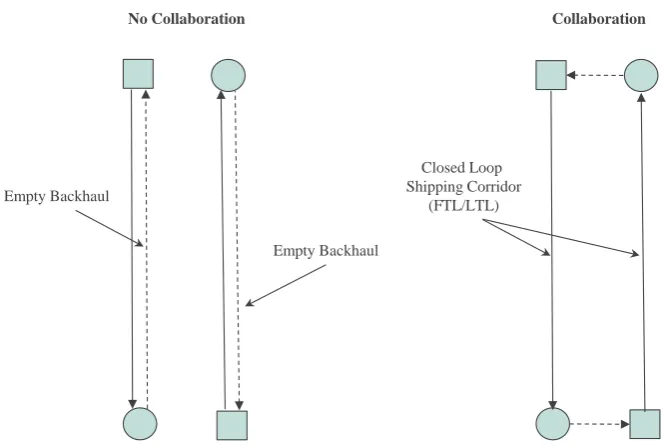
truck capacity to decrease empty mileage, better usage of storage facilities and
increased load factors. Interestingly, it was also found that customers do not expect
LSPs to collaborate horizontally, since this might potentially jeopardize their own
negotiation position in respect to individual LSPs as well as the vertical coordination
process along the supply chain. Collaboration between LSPs is only encouraged when
downstream customers could enjoy significant cost reductions. Therefore, horizontal
collaboration in the context of LSPs is mainly a means for LSPs to increase their own
productivity and cost efficiency, rather than as a reaction to requests from the demand
side. The most significant barriers for LSPs, meanwhile, are identified as partner
selection and fair allocation of shared workload and cost savings. The former indicates
the lack of a structural approach for developing horizontal collaboration, while the
latter reveals the issue of an imbalance in collaboration gains and bargaining power
between partners.
The thorough studies contributed by Cruijssen et al. (2007a), (2007b) have apparently
facilitated further work to explore the opportunities and impediments in respect to LHC.
Several studies of these are discussed next.
Schulz and Blecken (2010) found that there is a difference in weighting the
collaborative benefits between the commercial and public sectors. In the public sector,
greater importance is assigned to lead-time reductions and quality improvement, in
contrast with the unremitting focus on cost reduction in the commercial sector. In terms
of the barriers, a different ranking is also identified. The most troubling issues in the
public sector are about cultural differences, mutual mistrust, lack of transparency,
inadequate resources, and treating logistics as a core competence and hence rejecting
27
contextual factors that can influence the focus of collaboration. Another important
finding suggested that smaller sized organizations, in particular, can benefit more from
the horizontal collaboration by gaining access to logistics services that would otherwise
be impossible for them to access.
The benefits and barriers related to LHC have also been addressed by Hingley et al.
(2011), who investigated the role of fourth-party logistics (4PL) to coordinate partners
and optimize benefits (“A 4PL is an integrator that assembles the resources,
capabilities, and technology of its own organization and other organizations to design,
build and run comprehensive supply chain solutions” – Foster (1999). Key findings
indicated a number of benefits that would improve the current logistics operations such
as cost reduction, the potential for increased asset utilization, and the facilitation of a
more environmentally friendly approach to distribution management. The study found,
however, that only suppliers and LSPs are interested in participating in collaboration
managed by 4PL, with retailers being very unwilling to support 4PL and LHC. There
tend to be several underlying reasons for this: first, it was found most retailers
nowadays are large enough in size and scale through previous mergers and acquisitions
and that they may, therefore, have arrived at a point of horizontal saturation with a
general lack of motivation to participate LHC. Second, retailers’ predominant emphasis
on sustaining the service level and protecting sensitive and confidential data makes
them largely unwilling to collaborate and share physical distribution management with
other retailers. Third, horizontal collaboration between upstream suppliers and between
LSPs may negatively impact the service performance for retailers such as on time
delivery. In such a scenario, retaining supply chain control and secrecy means more to
retailers than the cost efficiencies realized through horizontal collaboration and 4PL.
This is in line with Cruijssen et al. (2007a), who pointed out that horizontal
collaboration is mainly a means for LSPs to increase their own productivity and cost
efficiency, rather than as a reaction to requests from the demand side. As a result,
retailers as gatekeepers and channel leaders are motivated more to safeguard their own
28
It is therefore hard for suppliers and LSPs to realize the synergic benefits from
horizontal collaboration without seriously taking into account the retailer’s dominant
power in the supply chain. An important question for future study is therefore how the
collaboration practice at the supply chain horizontal level could be organized in ways
that least endanger the vertical supply chain coordination and performance.
Cruijssen et al. (2010) further found that the current logistics market structure in
Belgium is highly fragmented, which leads to significantly low efficiency for LSPs.
LHC as a promising strategy can help to improve this overall efficiency. In addition, it
noticed that LHC is more frequently considered by LSPs as a “defensive” strategy
aimed at increasing operating efficiency and protecting market share, rather than an
“offensive” strategy to enter new markets or actively attract additional clients in present
markets. Furthermore, the study findings indicated that there should be a minimum
degree of efficiency and scale required for the partners so as to allow more effectively
coordinated activities to reap benefits and overcome impediments.
Determining and dividing cost and gains is one significant barrier that threatens
horizontal collaboration, but the current literature directly addressing this issue is
scarce, as mentioned by Cruijssen et al. (2007a). To fill this gap, Krajewska et al. (2008)
developed a model to study how to distribute cost and profits among freight carriers in a
horizontal partnership. In their model, game theory was used as an approach to cost and
profits sharing. Likewise, Audy et al. (2011) have studied a cost-savings sharing
approach that can provide satisfactory and meaningful allocation between partners.
On the basis of the Equal Profits Method and Alternative Cost Avoided Method, they
have proposed a new method with some modifications that support a stable and
profitable coalition. A case study using this method was conducted in the furniture
industry and the potential cost-savings were analysed.