Accepted Manuscript
Bayesian Estimation of Agent-Based Models
Jakob Grazzini, Matteo Richiardi, Mike Tsionas
PII: S0165-1889(17)30022-2
DOI: 10.1016/j.jedc.2017.01.014
Reference: DYNCON 3397
To appear in: Journal of Economic Dynamics & Control
Received date: 30 November 2015 Revised date: 24 January 2017 Accepted date: 30 January 2017
Please cite this article as: Jakob Grazzini, Matteo Richiardi, Mike Tsionas, Bayesian Estimation of Agent-Based Models,Journal of Economic Dynamics & Control(2017), doi:10.1016/j.jedc.2017.01.014
ACCEPTED MANUSCRIPT
Bayesian Estimation of Agent-Based Models
Jakob Grazzinia,b,c, Matteo Richiardid,e, and Mike Tsionasf
aCatholic University of Milan, Department of Economics and Finance, Italy.
bCatholic University of Milan, Complexity Lab in Economics, Italy.
cCESifo, Munich, Germany
dInstitute for New Economic Thinking and Nuffield College, Oxford, UK.
eUniversity of Torino, Department of Economics and Statistics, and Collegio Carlo Alberto, Italy
fLancaster University Management School, UK
February 3, 2017
Abstract
We consider Bayesian inference techniques for Agent-Based (AB) models, as an
alterna-tive to simulated minimum distance (SMD). Three computationally heavy steps are involved:
(i) simulating the model, (ii) estimating the likelihood and (iii) sampling from the
poste-rior distribution of the parameters. Computational complexity of AB models implies that
efficient techniques have to be used with respect to points (ii) and (iii), possibly involving
ap-proximations. We first discuss non-parametric (kernel density) estimation of the likelihood,
coupled with Markov chain Monte Carlo sampling schemes. We then turn to parametric
approximations of the likelihood, which can be derived by observing the distribution of the
simulation outcomes around the statistical equilibria, or by assuming a specific form for the
distribution of external deviations in the data. Finally, we introduce Approximate Bayesian
Computation techniques for likelihood-free estimation. These allow embedding SMD
meth-ods in a Bayesian framework, and are particularly suited when robust estimation is needed.
These techniques are first tested in a simple price discovery model with one parameter, and
then employed to estimate the behavioural macroeconomic model of De Grauwe (2012), with
nine unknown parameters.
ACCEPTED MANUSCRIPT
1
Introduction
Agent-based (AB) models are structural dynamical models characterized by three features:
(i) there are a multitude of objects that interact with each other and with the environment,
(ii) these objects are autonomous, that is there is no central, or ‘top-down’ control over their
behaviour and more generally on the dynamics of the system (e.g. a Walrasian auctioneer),
and (iii) aggregation is performed numerically (Richiardi, 2012). AB models are increasingly
used in disciplines as diverse as geography, anthropology, sociology, biology, political science,
epidemiology (Macal, 2016). In macroeconomics, they have been proposed as an alternative
to dynamic stochastic general equilibrium (DSGE) models, where the tenet of rational
expec-tations is replaced by an explicit modelling of learning and selection, thus allowing for more
heterogeneity in agents’ characteristics and behaviour and a more detailed account of the
(phys-ical and institutional) environment, leading to more complex interaction patterns (Richiardi,
2016).1
There is a small but growing literature on estimation of AB models. This is surveyed in
Grazzini and Richiardi (2015), who also show how to apply simulated minimum distance (SMD)
techniques to estimate the parameters, following a frequentist approach. The method of
simu-lated moments (MSM) and indirect inference (II), among other techniques, fall in this general
class. Typically, certain summary statistics have to be selected in advance in order to implement
the minimum-distance estimator, requiring additional sensitivity analysis to understand their
properties. Good properties of the summary statistics ensure good properties of the estimator,
e.g. consistency. Recently, Kukacka and Barunik (2016) have proposed non-parametric
simu-lated maximum likelihood, and apply it to the estimation of the model described in Brock and
Hommes (1998). Other contributions have introduced sophisticated validation methods aimed
at measuring the distance between real and simulated data, where the simulated data can either
come from the original AB model (Fabretti, 2013; Marks, 2013; Lamperti, 2015; Recchioni et al.,
2015; Barde, 2016; Guerini and Moneta, 2016), or from a surrogate model (Salle and Yildizoglu,
2014; Sani et al., 2016). Minimisation of such distance metrics within a SMD approach leads to
alternative estimators with respect to those commonly employed in the literature, such as MSM
or II, although the properties of these estimators, including consistency, and their associated
1For a plea for the AB approach, and a critique of the DSGE approach to macroeconomics, see Fagiolo and
ACCEPTED MANUSCRIPT
uncertainty have yet to be fully assessed.2
While the literature on calibration and SMD estimation of AB models is moving fast, the
Bayesian approach common for instance in the DSGE (dynamic stochastic general equilibrium)
literature has so far received less attention. In this note, we show how Bayesian methods can be
used to perform statistical inference in AB models. The advantages of Bayesian methods with
respect to the frequentist and the calibration approaches are twofold: (i) they do not require to
pre-select moments (MSM) or an auxiliary model (II), or other metrics (calibration) to evaluate
the distance between the real and the simulated time series, and (ii) they allow to incorporate
prior information, leading to a proper statistical treatment of the uncertainty of our knowledge,
and how it is updated given the available observations. Moreover, with respect to methods
that require the use of summary statistics (as MSM), the Bayesian approach fully exploits the
informational content of the data, hence achieving, at least asymptotically, greater efficiency.3
On the other hand, the Bayesian approach can mask identification problems (Canova, 2008;
Canova and Sala, 2009) by artificially adding curvature to the posterior with appropriately
selected (and often poorly justified) priors, in presence of a flat likelihood. This is a malpractice
that afflicts DSGE models (Fagiolo and Roventini, 2012, 2016), but that should not let us
jump to the conclusion to “throw the baby out with the bathwater”. A more serious potential
disadvantage of Bayesian methods, with respect to calibration techniques, is the computational
burden of estimating the likelihood function by simulation. To save on these computational
costs, in addition to using efficient sampling schemes in models with large parameters’ space,
several approximations can be introduced, whose appropriateness should be evaluated on a
case-by-case basis. These approximations might also involve giving up (i), and resorting again to
make inference based on the informational content of (generally insufficient) summary statistics,
an appropriate choice of which can also result in more robust estimation.
2As such, these techniques might be classified as advanced calibration. Kydland and Prescott (1996, p. 74)
distinguish calibration from estimation by suggesting that calibration is concerned with data tracking (finding the values of the parameters that make the model behave as close as possible to the real data), while estimation refers to the inferential effort to learn about the underlying values of the parameters: “[D]ata are used to calibrate the model economy so that it mimics the world as close as possible along a limited, but clearly specified, number of dimensions. Note that calibration is not an attempt at assessing the size of something: it is not estimation. Estimation is the determination of the approximate quantity of something”. Other authors, however, have a less clear-cut understanding of the two terms. For instance, Hansen and Heckman (1996, p. 91) say that “ [T]he distinction drawn between calibrating and estimating the parameters of a model is artificial at best. Moreover, the justification for what is called calibration is vague and confusing. In a profession that is already too segmented, the construction of such artificial distinctions is counterproductive.” This applies even more to a Bayesian approach to estimation, where no “true” values of the parameters are assumed to exist.
3The Bayesian estimator minimises the posterior expected loss with quadratic loss functions (mean squared
ACCEPTED MANUSCRIPT
Bayesian methods are commonly employed for estimating DSGE models.4 However, two
features of DSGE models make Bayesian estimation simpler: (i) they produce analytical
ex-pressions for the behaviour of the agents around the steady state, and (ii) they involve only
a limited number of different agents, hence equations (e.g. textbook-version NK models have
just three equations). Having analytical expressions for the steady state behaviour allows (log-)
linearisation5 and the application of a simple Kalman filter to derive the likelihood and perform
exact inference (on the approximated model). A limited number of equations implies that even
if linearisation is not imposed, and a more complicated filter is used, simulation of the model
is relatively fast. Still, the computational time required to repeatedly solve the model is an
issue in DSGE modelling, as recognised by Fern´andez-Villaverde et al. (2016): “[C]losed-form
solutions are the exception and typically not available for models used in serious empirical
ap-plications. [...] This ultimately leads to a trade-off: given a fixed amount of computational
resources, the more time is spent on solving a model conditional on a particularθ, e.g., through
the use of a sophisticated projection technique, the less often an estimation objective function
can be evaluated. For this reason, much of the empirical work relies on first-order perturbation
approximations of DSGE models, which can be obtained very quickly. The estimation of models
solved with numerically sophisticated projection methods is relatively rare, because it requires
a lot of computational resources.”
AB models almost never lead to closed form equations to describe the behaviour of the
agents in the stationary state (if any);6 moreover, heterogeneity is such that each individual
agent has to be simulated. Consequently, applications of Bayesian techniques requiring a high
number of simulations of the model have so far been scant.7
Another approach, which we follow in this paper, is to save on the time to compute the
likelihood, by approximating it. The two approaches can of course be combined, though we do
not pursue this line of research here.
4See the recent review by Fern´andez-Villaverde et al. (2016).
5Linearisation however is not neutral: it eliminates asymmetries, threshold effects and many other interesting
phenomena (Rubio-Ramirez and Fern´andez-Villaverde, 2005).
6An exception is the class of models considered in Alfarano et al. (2005, 2006, 2007).
7Ward et al. (2016) discuss the use of the the ensemble Kalman filter (EnKF) and present an application to a
model of individual mobility. EnKF (Evensen, 2009) is a particular class of particle filters (see section 3.5), and is widely used in weather forecasting, where the models are of extremely high order and non-linear, the initial states are highly uncertain, and a large number of measurements are available. EnKF makes the assumption that all probability distributions involved are Gaussian, though non-Gaussian processes can be modelled via Gaussian mixtures (Stordal et al., 2011).
ACCEPTED MANUSCRIPT
The paper is structured as follows. Section 2 formalises AB models; section 3 describes
the basic Bayesian techniques that can be used to make inference in AB models; section 4
offers a comparison of the different techniques in the simple model of price learning used in
Grazzini and Richiardi (2015), with one parameter; section 5 applies the most general of the
estimation strategies considered here to the macro model of De Grauwe (2012), with nine
estimated parameters; section 6 offers our concluding remarks.
2
AB models
An Agent-Based (AB) model is a Markov chain where the state of the system at timetis given
by the collection of all micro-states at time t Xt ≡ {xit}, i = 1. . . N, t = 1. . . T, where the
vector xit represents the micro-state of agent i in time period t. The evolution of each agent
can be written as
xi,t+1 =fi(Xt,Ξt,θ) (1)
where fi is a function taking values in Rk, Ξt ≡ {ξit} is a vector of stochastic elements and
θ∈Θis a parameter vector, with Θbeing a compact subset of RQ. We assume for simplicity that the model is ergodic, that is, the effects of the random drawsΞtfade away with time.8
Equation (1) allows us to identify the main differences with respect to DSGE models: the
functions f are typically complicated, possibly heterogeneous and involving discontinuities, if-else statements, etc.; even when they are simple, there can be many of them (one for each
agent); no equilibrium can be defined in terms of consistency of individual choices.9
A set of K aggregate statisticsyt≡ {ykt},k= 1. . . K can then be defined overXt:
yt=m(Xt). (2)
wheremis a function transforming the collection of all micro-statesXtin the aggregate statistics
yt. Eqs. (1)-(2) together give
yt+1 =g(Xt,Ξt,θ) (3)
One strand of the literature has looked at the use of Bayesian optimisation techniques to build emulators of AB models: the emulators then replace the AB models in a SMD framework. An application to demographic research is provided by Bijak et al. (2013).
8The theory of estimation of non-ergodic AB models is still under-explored, and it is the object of our current
research. Tests for non-ergodicity of the time series produced by an AB model are developed in Grazzini (2012).
9In rational expectation models, equilibrium is defined as a consistency condition in the behavioural equations:
ACCEPTED MANUSCRIPT
whereXtis predetermined. If the model is stationary, a long-run statistical equilibrium –called
‘absorbing’ in Grazzini and Richiardi (2015)– is reached after T∗ periods, where the state of
the system is independent of the initial conditionsX0 and the seedswhich governs the random
disturbances Ξ:10
y∗ =E[yt|t > T∗] =g∗(θ). (4)
Typically, we observe data
yRt+1=gR(XRt ,Ξt,θR,ut) (5)
and, in equilibrium,
ytR+1 =g∗R(θR,ut) (6)
whereutis a vector of disturbances (accounting for measurement errors, specification errors,
etc.), and the superscriptRrefers to the observed data. Note that, in general, the micro states
XRt are not observable, and only aggregate datayRt might be available.
SMD techniques work by comparing theoretical constructs computed over yt, µ(yt(θ)),
which depend on the structural parametersθ, with their observed counterparts µR, computed
onyR: a value ofθis selected in order to minimise the distance between the theoretical and
ob-served quantities. Because no closed form expression for the theoretical quantities can be found,
they are estimated by simulation, in the artificial data produced by the model. The method of
simulated moments (MSM), where the model is summarised by longitudinal moments11, and
indirect inference (II), where the model is summarised by the estimated coefficients of an
auxil-iary model, both fall into this class of estimators, as does simulated maximum likelihood (SML),
where the model is summarised by the probability of reproducing the raw observed data. With
respect to SML, standard Bayesian methods use the likelihood to derive a posterior distribution
of the parameters, as described in the next section.
adjustment after a shock. By converse, equilibria in AB models are defined only at the aggregate level and only in statistical terms, when macro-observables (eq. 2) become stationary (Grazzini and Richiardi, 2015).
10Non-ergodicity implies the existence of multiple equilibria. In a Bayesian framework, if a model is
non-ergodic the simulated data should come from different replications of the model with different random seeds, rather than from one (longer) simulation run. By converse, if the model is ergodic fixing the random seed allows a more precise estimation, as the changes in model behaviour when the parameters are changed are smoother.
Note thatycan be any transformation of the data. As an extreme example, in chaotic systems they may be properties of the orbits / attractors.
ACCEPTED MANUSCRIPT
3
Methods
The fundamental equation for Bayesian methods is a simple application of the Bayes theorem:
p θ|YR∝L θ;YRp(θ) (7)
wherep(θ) is the prior distribution of the parameters,L θ;YR≡p YR|θis the likelihood
of observing the dataYR≡yR
t ,t= 1. . . T given the value of the parameters, and p θ|YR
is the posterior distribution, that is the updated distribution once the information coming
from the observed data is properly considered. The prior distribution typically comes from
other studies or subjective evaluations. A uniform distribution in the allowed range of the
parameters is often used as a way to introduce ‘uninformative’ priors, though not such a thing
as an uninformative prior actually exists (Bernardo, 1997).12 What matters, the prior is a
distribution, which through application of Bayes theorem produces another distribution as an
output (by converse, maximising the likelihood would only produce a point estimate).
Sampling the posterior distribution p θ|YRinvolves two computationally intensive steps:
(i), for given values of θ, obtaining the likelihood L, (ii) iterating over different values of θ.
The resulting posterior is then normalized to have unit integral —for instance via a Simpson’s
rule, a common method for numerical integration.
Sections 3.1 to 3.3 below deal with problem (i), while section 3.4 is devoted to likelihood-free
methods and section 3.5 discusses problem (ii).
3.1 Non-parametric density estimation
Computation of the likelihood, for any given value of θ, is conceptually straightforward.
As-suming we are in a statistical equilibrium, the probability of observing the whole (unordered)
series of data YR≡yRt is simply
L θ;YR∝
T
Y
t=1
f yRt|θ. (8)
where we assume to be ‘blind’ with respect to all the other data pointsy−Rt when we evaluate
yRt. Any autocorrelation in{yt}would then lead to an increase in the variance of the estimated
12Sometimes a maximum entropy distribution is used as a ‘minimally informative’ prior; this however requires
ACCEPTED MANUSCRIPT
distribution of yt, and in turn to an increase in the variance ofL θ;YR.13
All we need is an estimate for the distribution ˜f(θ); we then evaluate the estimated
distri-bution ˜f(θ) at each observed ytR, and computeQf˜(yRt|θ).
Estimation of the density, for any value ofθ, is done by simulation: in a statistical
equilib-rium, the outcome fluctuates around a stationary level y∗(θ) = E[yt(θ)|t >T¯]. If we collect
the artificial data produced by the model in such a statistical equilibrium, we can construct a
probability distribution around y∗, and therefore evaluate the density at each observed data point yR
t . If the outcomes y(θ) were discrete, we would only have to count the frequency of
occurrence of each observed valueyR
t. With continuousy(θ), the likelihood has to be estimated
either non-parametrically or parametrically, under appropriate distributional assumptions. A
traditional non-parametric method is kernel density estimation (KDE), which basically
pro-duces histogram-smoothing: the artificial data are grouped in bins (the histogram), and then a
weighted moving average of the frequency of each bin is computed.14 The approximation bias
introduced by KDE can be reduced by using a large number of very small bins, but then the
variance in the estimate of the density grows. To see this, think about estimating the
prob-ability density function (PDF) when the data comes from any standard distribution, like an
exponential or a Gaussian. We can approximate the true PDFf(x) to arbitrary accuracy by a
piecewise-constant density (that is, by constructing an histogram), but, for a fixed set of bins,
we will still have an approximation error with respect to the true, continuous density.
3.2 Parametric estimation of the likelihood
The main problem with KDE is its computational cost (see section 4.2 below). A (faster)
alternative is to assume aparametric distribution for the density aroundy∗(θ):
yt+1=g∗(θ) +t. (10)
13As an example, think of an AR(1) process with mean 0: y
t+1 = ρyt+εt, where ρis the autocorrelation
coefficient and εt ∼ N(0, σε2). The unconditional distribution ofyt is yt ∼ N
0, ,σ2ε 1−ρ2
: an increase in the autocorrelation coefficientρincreases the variance of the distribution.
14More formally, kernel density estimation (KDE), given a simulated time series y(θ)
≡ {ys}, s = 1. . . S,
approximates the densityf(yR
t,θ), for each observed data pointytR, with:
˜
f(yRt|θ) =
1 Sh S X s=1 K qPK k=1 PS
s=1(ySks−yRkt)
2
h
(9)
whereK is a kernel function that places greater weight on valuesyksthat are closer toyRkt, is symmetric around
ACCEPTED MANUSCRIPT
Imposing additional information about the distribution of the simulation output can help
generate better estimates from a limited number of simulation runs. On the other hand, those
estimates may increase the bias if the assumed distribution does not conform to the true density
of the model output. Such an assumption can of course be tested in the artificial data, in the
relevant range ofθ (i.e. where the estimated coefficients lie). Use of parametric methods leads
tosyntetic likelihood orpseudo-likelihood estimation (Wood, 2010; Hartig et al., 2011).
The parametric and non-parametric methods discussed above use the output variability that
is predicted by the model, and use this information for inference. However, it is possible that the
model shows much less variability than the data. This can be due to fundamentalspecification
errors (the model is only a poor approximation of the real process, so that the mean model
predictions do not fit to the data),simplification errors (the model is a good approximation of
the real process, but there are additional stochastic processes that have acted on the data and
are not included in the model) or measurement errors (there is uncertainty about the data).
While the first type of errors calls for a re-specification of the model, the latter types could
in principle be dealt with by including additional processes that explain this variability within
the model. “However, particularly, when those processes are not of interest for the scientific
question asked, it is simpler and more parsimonious to express this unexplained variability
outside the stochastic simulation. One way to do this is adding anexternal error model with a
tractable likelihood on top of the results of the stochastic simulation” (Hartig et al., 2011):
ytR+1=g∗(θR) +ut. (11)
The validity of such a strategy depends on the quality of the assumption about the
distribu-tion of these external errors, given the model and the data. This assumpdistribu-tion cannot be tested
per se, as the variability in the real data comes both from the explained components (i.e. the
model) and from the unexplained ones (the external errors), the external errors being defined
as a residual.
The two parametric strategies (modelling the variability of model outcome and modelling
external errors that might affect the real data, in the stationary state) are often explored
separately. For instance, most studies that use the augmentation by external errors approach
ACCEPTED MANUSCRIPT
employ a synthetic likelihood do not consider external errors.15
Under the assumption that the distribution for or u is Gaussian, the likelihood is also Gaussian, with a mean which depends onθ. We are then able to write down an expression for
the likelihood –hence the posterior distribution, under a convenient specification of the priors
(see the Appendix). However, the likelihood needs in any case to be simulated, asg∗(θ) has no closed form expression. Therefore, the assumption of normality is easy to be replaced, if other
distributions appear to fit the data better than the normal, or there are theoretical reasons to
believe that the external errors are non-Gaussian.
3.3 Unconditional vs. conditional estimation
An important difference between estimation of AB models and estimation of models with exact
aggregation results (as in DSGE models) is that in the latter case the evolution of the aggregate
state of the system, yt+1, depends only on the current macro-state yt and the parameters θ,
with the set of micro statesXt not providing any further information. In terms of eq. (3), we
have
yt+1 =g(yt,ξt,θ) (30)
This can be restated in more general terms by saying that the aggregate representation of
the system, which is a projection of the original Markov chain where the state of the system at
timetis given by the collection of all the micro-states, is still a Markov chain –a condition called
lumpability (Kemeny and Snell, 1976).16 In such a case a better estimation of the likelihood
can be obtained.
Let f(yt+1|yt,θ) denote the distribution of y at time t+ 1 given the observables at t; the
likelihood function can be expressed as
L θ;YR=f yR0|θ
TY−1
t=0
f yRt+1|ytR,θ. (80)
Assuming f yR0|θ∝const.or that the initial state of the system is known with certainty, it is possible to initialise at any time step t the simulations with the observed values yRt , run D
different one-period ahead simulations (rather than 1 ‘long’ simulation lasting Dperiods) and
15It is in principle possible to combine the two approaches together, and explicit distributional assumptions
for both the model outcomes and the external errors, though there are no practical advantages.
16There are necessary and sufficient conditions for lumpability, and they have to do with symmetries in the
ACCEPTED MANUSCRIPT
estimate the conditional densities using ˜f(yR
t+1|yRt,θ) instead of ˜f(yRt|θ) in (8). The scheme is
more efficient because the simulated time series are constrained to remain closer to the observed
ones, hence the likelihood is estimated with more precision.17 It also allows to relax the weakly
stationarity assumption, as conditioning on yRt controls for persistence in the process.18 Note that eq. (80) holds generally. However, when the system is non lumpable the precise
way all the individual statesXtare re-initialised, in order to simulate the system, does matter.
Moreover, there might be multiple combinations of micro statesXtwhich give the same macro
stateyR
t , but different evolutionyt+1.19 In general, if eq. 30 does not hold (and in AB models
it typically does not hold, otherwise it would be more convenient to use a representative agent
formulation), and the macro-state yt+1 depends on the distribution of the unobserved
micro-statesXt, the unconditional approach is the only one feasible.
3.4 Likelihood-free methods
As we have seen, obtaining a non-parametric estimate of the likelihood can be computationally
heavy. Turning to parametric estimates, under the assumption of a fixed distributional form of
the variable of interest around a long-term stationary state predicted by the model —where the
variability is produced either by model uncertainty or external errors— can sometimes be too
restrictive. Originating from population genetics (Tavar´e et al., 1997; Fu and Li, 1997), where
the task of estimating the likelihood of the observed changes in DNA is impervious, a new set
of methods have appeared in the last fifteen years to produce approximations of the posterior
distributions without relying on the likelihood. These methods are labelled ‘likelihood-free’
methods, and the best known class is approximate Bayesian computation (ABC).20
In standard Bayesian methods, it is the likelihood function that provides the fit of the
model with the data —describing how plausible a particular parameter setθ is. The likelihood
is however often computationally impractical to evaluate. The basic idea of ABC is to replace
the evaluation of the likelihood with a 0-1 indicator, describing whether the model outcome is
close enough to the observed data. To allow such an assessment, the model outcome and the
data must first be summarised. Then, a distance between the simulated and the real data is
computed. The model is assumed to be close enough to the data if the distance falls within the
17To continue with our AR(1) example, the conditional distribution ofy
t+1givenytandρisyt+1∼N(ρyt, σ2ε).
18If persistence is of order higher than 1, conditioning on periods previous totis required. 19The latter would not be a problem if only we could be sure to draw the micro statesX
trandomly from the
set of micro states which aggregate toyRt, but in practice we can never be sure that this is the case.
ACCEPTED MANUSCRIPT
admitted tolerance. As such, there are three key ingredients in ABC: (i) the selection ofsummary
statistics, (ii) the definition of a distance measure, (iii) the definition of a tolerance threshold.
The choice of a distance measure is usually the least controversial point (the Euclidean distance
or weighted Euclidean distance, where the weights are given by the inverse of the standard
deviation of each summary statistics, is generally used). The choice of a tolerance threshold, as
we shall see, determines the trade-off between sampling error and approximation error, given
computing time. The choice of summary statistics is the most challenging, and we will discuss
it in greater details later in the section. Note that, by performing inference based on summary
statistics, ABC resembles SMD. Indeed, ABC can be seen as SMD embedded in a Bayesian
framework, which allows incorporation of the priors and quantification of uncertainty by means
of posterior distributions of the parameters. As in SMD, moments selection is left to the intuition
of the researcher, and then validated by sensitivity analysis on the model behaviour; however,
in complicated models finding the right moments could be a serious challenge. On the other
hand, the need to analyse the behaviour of the summary statistics prior to estimation prompts
a better understanding of the model behaviour, and can lead to more robust estimation.21
The basic ABC algorithm works as follows:
1. a candidate vectorθcis drawn from a prior distribution;
2. a simulation is run with parameters vectorθc, obtaining simulated data from the model
densityp(y|θc);
3. the candidate vector is either retained or dismissed depending whether the distance
be-tween the summary statistics computed on the artificial dataµ(y(θ)) and summary statis-tics computed on the real data µ(yR) is within or outside the admitted tolerance h:
d(µ,µR)≤h.
This is repeatedN times; the retained values of the parameters define an empirical approximated
posterior distribution. KDE can then be applied to smooth out the resulting histogram, and
obtain an estimate of the theoretical approximated posterior. Approximation error refers to
the fact that the posterior is approximated; sampling error refers to the fact that we learn
about the approximated posterior from a limited set of data. It is easy to see where the
can be found in Sottoriva and Tavar´e (2010).
21This has also been noted in DSGE modelling. Ruge-Murcia (2007) compares SMD to Bayesian
ACCEPTED MANUSCRIPT
approximation error comes from. While the true posterior distribution isp(θ|y=yR), in ABC
we getp(θ|µ(y))≈µ(yR).
If we set the tolerance threshold h → 0, and our statistics were sufficient summary
statis-tics22, we would get back to standard Bayesian inference, and sample from the exact posterior
distribution. However —and this is the whole point— because of the complexity of the
under-lying model the likelihood of observing the real data is tiny everywhere, so that acceptances are
impossible, or at least very rare. When h is too small, the distribution of accepted values of
θ is closer to the true posterior, and the approximation error is smaller; however, the number
of acceptances is usually too small to obtain a precise estimate of the (approximated) posterior
distribution: the sampling error increases. On the other hand, whenhis too large, the precision
of the estimate improves because we have more accepted values (the sampling error goes down),
but the approximation error gets bigger. In other words, we obtain a better estimate of a worse
object.
An alternative to choosingh in advance is to specify the number of acceptances nrequired
(e.g. n = 500): then, h is chosen (after the distance for every draw is computed) in order to
achieve that number of acceptances. Finally, note that the trade-off between sampling error
and approximation error is for a given number of draws (hence, a given computing time).
Drawing more candidates allows to reduce the approximation error (by decreasing h) without
increasing the sampling error. Stated more formally, ABC converges to the true posterior
as h → 0, N → ∞. In particular, it can be shown that the bias of the ABC estimate is
asymptotically proportional to h2, as h → 0. On the other hand, the computational cost for
generating n accepted ABC samples is proportional to nh−q, where q is the dimension of the
observations (Barber et al., 2015). The same authors show that the mean squared error (MSE)
of the estimates for constant expected computational costs is given by
MSE(h) =ah−2+bh4 (12)
for some constantsaandb. Minimisation of the MSE gives the optimal level of tolerance, given
a fixed amount of computational resources.23
The choice of summary statistics is at the same time the weak point of ABC and a great
22A summary statistics is said to be sufficient if “no other statistic that can be calculated from the same
sample provides any additional information as to the value of the parameter” (Fisher, 1922). Sufficient statistics satisfyp(θ|µ(yR)) =p(θ|yR).
ACCEPTED MANUSCRIPT
source of flexibility. For instance, by choosing as summary statistics longitudinal moments, or
the coefficients of an appropriate auxiliary model, it allows to embed the method of simulated
moments and indirect inference in a Bayesian setting, incorporating prior information. Also,
an appropriate choice of the summary statistics allows to makeconditional forecasts about the
evolution of the real world. Suppose an extreme case where we only condition on the state of
the system at timet: we wish to project the likely evolution of a system givenyt. We can then
simply set our summary statistics µ(y) = yRt : the ABC algorithm will retain any simulated trajectory that passes foryR
t , producing not only a (quite poor, in this case) approximation of
the posterior, but also conditional projections about future states.24
Any condition can in principle be used as a summary statistics: of course, the lower the
informational content of the condition, the poorer the approximation. However, there is also a
drawback in increasing the informational content of the summary statistics, and it comes again
from the trade-off between sampling error and approximation error. As Beaumont et al. (2002,
p. 2026) put it, “A crucial limitation of the [...] method is that only a small number of summary
statistics can usually be handled. Otherwise, either acceptance rates become prohibitively low
or the tolerance [...] must be increased, which can distort the approximation.” This is because
the asymptotic rate of converge of ABC to the true posterior distribution, ash → 0, N → ∞,
worsens with dim(µ). The problem of choosing appropriatelow dimensionalsummary statistics
that are informative about θ is an open issue in ABC. “The insidious issue is that it is rarely
possible to verify either sufficiency or insufficiency. Furthermore, if they are insufficient, it is
usually not possible to determine how badly they have distorted results. Said another way, you
know you are probably making errors, but you don’t know how large they are” (Holmes, 2015).
The topic is an active area of research. Recent years have seen the development of techniques
that provide guidance in the selection of the summary statistics (see e.g. Fearnhead and Prangle,
2012). Also, post-processing of the results can improve the quality of the approximation by
correcting the distribution ofθby the difference between the observed and simulated summary
statistics (Beaumont et al., 2002). Efficiency can be improved by assigning a continuation
probability to each simulation: the idea is to stop prematurely simulations that are likely to end
up in a rejection, and has originated thelazy ABC approach (Prangle, 2014).
24The case when it is possible to kill two birds (inference and conditional statements) with one stone is of
ACCEPTED MANUSCRIPT
3.5 Sampling from the posterior distribution
Application of the Bayes theorem, once the likelihood is known, allows to get a density for
the posterior distribution, at one given value of θ. However, to recover the whole shape of
the posterior distribution, many values have to be sampled. In simple models, exploration of
the parameters space can be accomplished by ‘brute force’ grid exploration: the parameters
space is sampled at regular (small) intervals. For instance, if there are two parameters that can
potentially vary continuously between 0 and 1, and we set the value of the step to .1, we have
11 values to consider for each parameter, and their combination gives 121 points to sample:
by discretising the parameters, we have reduced the size of the parameters space from R2 to
121 points. Multi-level grid search, where the grid is explored at smaller intervals in ranges
of the parameters’ space on the bases of the results of previous, looser, grid explorations, can
be devised to improve efficiency. However, the curse of dimensionality –the fact that when the
dimensionality increases, the volume of the parameters’ space increases so fast that sampling
becomes sparse– precludes adopting such an approach except when the number of the
param-eters is small. Grid exploration involves evaluating the density of the posterior distribution at
many points where it is practically zero, while more likely values of θ, where a finer search
might be valuable, are sampled with the same probability. Efficient sampling involves devising
algorithms where the sampling probability, rather than being constant, is proportional to the
posterior density.
There are four main classes ofefficient sampling schemes, to obtain samples from a function
ofθ, thetarget distribution(the posterior, in our case), which is unknown analytically but can be
evaluated point-wise for eachθ: (i) rejection sampling, (ii) importance sampling, (iii) Sequential
Monte Carlo, and (iv) Markov chain Monte Carlo.25 Here we provide only an intuition of how
they work, drawing extensively from the excellent survey by Hartig et al. (2011).26
Rejection sampling (RS).∗ The simplest possibility of generating a distribution that ap-proximates L(θ) is to sample random parameters θ and accept those proportionally to their
(point-wise approximated) value of L(θ). This approach can be slightly improved by
impor-tance sampling or stratified sampling methods such as the Latin hypercube design, but rejection
approaches encounter computational limitations when the dimensionality of the parameter space
25The literature on efficient sampling is huge —see for instance Kroese et al. (2011)— and many variants have
been proposed to the basic algorithms, including the use of quasi-Monte Carlo methods.
26The entries marked with a ‘*’ are excerpt from Hartig et al. (2011), where we have replaced φ in their
ACCEPTED MANUSCRIPT
becomes larger than typically 10-15 parameters.
Importance sampling (IS). The intuition behind importance sampling is to study the distributionL(θ) =p(θ|y) while sampling from another, simpler distribution q(θ) (called
im-portance distribution). This technique was born as a variance reduction technique, aimed at
increasing the likelihood to sample from an ‘important’ but small region by sampling from a
different distribution that overweights the important region (hence the name). Having
over-sampled the important region, we have to adjust our estimate somehow to account for having
sampled from this other distribution. This is done by re-weighting the sampled values by the
adjustment factor p(θ)/(q(θ)). Importance sampling and rejection sampling are similar in as
much both distort a sample from one distribution in order to sample from another. They also
share the limitation that they do not work well in high dimensions.
Sequential Monte Carlo methods (SMC).∗∗ Particle filters or sequential Monte Carlo methods (SMCs) work by filtering proposed values forθ to arrive at a sample of values drawn
from the desired distribution. In SMC each step of the algorithm containsN parameter
combi-nationsθi (particles), that are assigned weightsωi proportional to their likelihood or posterior
value L(θi) (see Arulampalam et al., 2002). When starting with a random sample of
param-eters, many particles may be assigned close to zero weights, meaning that they carry little
information for the inference (degeneracy). To avoid this, a resampling step is usually added
where a new set of particles is created based on the current weight distribution [...]. The
tra-ditional motivation for a particle filter is to include new data in each filter step, but the filter
may also be used to work on a fixed dataset or to subsequently add independent subsets of the
data.
The advantage of SMC –and of Markov chain Monte Carlo, see below– is that the time
needed to obtain acceptable convergence is typically much shorter than for rejection sampling,
because the sampling effort is concentrated in the areas of high likelihood or posterior density.
Markov chain Monte Carlo (MCMC).∗∗ MCMC sampling also try to concentrate the sampling effort in the areas of high likelihood or posterior density, based on previous samples.
MCMC algorithms construct a Markov chain of parameter values (θ1. . .θn), where the next
parameter combination θi+1 is chosen by proposing a random move conditional on the last
parameter combination θi, and accepted conditional on the ratio of L(θi+1)/L(θi). Given
that certain conditions are met (see, e.g. Andrieu et al., 2003), the Markov chain of parameter
ACCEPTED MANUSCRIPT
There are a number of MCMC samplers, the most popular of which is the
Metropolis-Hastings algorithm. In its simplest form, the random-walk Metropolis-Hastings, in each period
a candidateθc∼N θ(s),Vis drawn, given the current valueθ(s). The candidate is accepted with probability
α= min
1,
p(θc|yR)
pθ(s)|yR
(13)
in which case we setθ(s+1) =θc; else, we setθ(s+1) =θ(s)and we repeat the previous candidate.
With multiple parameters, a slightly more sophisticated version of the basic
Metropolis-Hastings algorithm can be used, which resembles the Gibbs sampler and is most useful when
choosing a particular covariance matrixV is not easy. The Gibbs sampler relies on drawing a samplenθ(s), s= 1. . . Soby drawing repeatedly from the conditional distributions
θj|YR,θ−j, j= 1. . . k
When these posterior conditional distributions are not known families, we use the following.
Draw a candidateθcj from the stochastic process
θjc=θsj+ηjε (14)
where εis random noise, and ηj is a parameter governing the acceptance rate of the MCMC.
The candidate is accepted with probability
α= min
1,
pθcj|YR,θ(−sj)
pθ(js)|YR,θ(s)
−j
(15)
in which case we set θ(js+1) = θc
j, otherwise we repeat the previous accepted value, θ
(s+1)
j =
θj(s). Each element of the parameter vector, θj ∈ θ is drawn sequentially, and the posterior
probability associated to each new candidate is computed holding the other parameters at
their last accepted values. The parameters ηj are adjusted so that approximately 25% of the
candidates are accepted.
A final note concerns efficient sampling in an ABC setting. The standard scheme for ABC
is, as we have seen, rejection sampling. Candidates are drawn from the prior distribution, and
ACCEPTED MANUSCRIPT
distribution differs significantly from the posterior. However, it is possible to employ ABC with
more efficient sampling schemes (see Sisson et al., 2016). For instance, rather than sampling
from the prior one could sample from an importance distribution q(θ). Candidate are then
accepted ifd(µ(θ),µR)≤h, with a weightp(θ)/q(θ). SMC methods can then be employed to
adaptively refine both the threshold and the importance distribution. MCMC methods can also
be employed, where new candidates depend on the current value of θ and are accepted with a
modified Metropolis-Hastings rule:
α= min
(
1, p(θ
c)1[d(S(θc),SR)≤h]
p(θ(s))1[d(S(θ(s)),SR)≤h]
)
(16)
wherep(θ) is the prior density, and1[d(S(θc),SR)≤h] is an indicator whether the simulation
outcome falls within the tolerance radius.
4
Comparison of different techniques on a simple model with 1
parameter
4.1 A price learning mechanism
As a testbed for the application of some of the Bayesian techniques described above, we first
consider the stock market model proposed in Cliff and Bruten (1997) and used by Grazzini and
Richiardi (2015). Participants in a stock market can trade by placing ask or bid limit orders in
an order book. Traders do not know the demand and supply schedule but they can observe the
order book; they cannot lend or borrow. The limit price of agentiin periodt is
pi,t =vi(1 +µi,t) (17)
where vi is the (constant) subjective value of the traded asset for agent i and µi,t is a profit
margin (positive for sellers and negative for buyers). In each period traders look at the book
and update their target priceτi,t: traders increase their target price if the last trade occurred
at a high price, and lower it otherwise. This in turns determines a change in the limit price:
ACCEPTED MANUSCRIPT
whereβi is a behavioural parameter determining how traders react to a difference between the
target price and the current pricepit. The new limit price is:
pi,t+1 =pi,t+ ∆i,t (19)
and the profit margin is coherently updated as follows:
µi,t+1 =
pi,t+ ∆i,t
vi −
1 (20)
For simplicity, it is assumed thatβi=β,∀i= 1, . . . , N. β is therefore the only parameter to be
estimated in the model.
We perform Monte Carlo experiments where the pseudo-true data are generated, as in
Grazzini and Richiardi (2015), with β = 0.55 and N = 11 buyers and sellers.27 We adopt a
uniform prior in [0,1]. We first estimate the model by KDE, with ‘brute force’ sampling of
the parameters space. Second, we replace grid exploration with MCMC sampling. We then
turn to parametric estimation of the likelihood, by considering augmentation of the model with
Gaussian errors. Finally, we experiment with a simple rejection sampling ABC algorithm to
embed the MSM strategy of Grazzini and Richiardi (2015) in a Bayesian framework.
4.2 Kernel density estimation
The model is simulated, for every value of the parameterβ, for 15,000 periods, once the long-run
stationary state has been reached.28 We employ a Gaussian kernel, with optimal bandwidth
h= 1.06ˆσS−0.2, where ˆσ is the estimated standard deviation in the simulated sample of sizeS
(Silverman, 1986, p. 45).29 Figure 1 depicts the (normalized) posterior obtained for one series
of pseudo-true data, computed on 100 equispaced values ofβ in the interval [.01,1], for different
numbers of simulated trading days.
27Given the smooth behaviour of the model with respect to the parameter —see Grazzini and Richiardi (2015),
in particular their figure 1 (p. 160)— estimation with other pseudo-true values of the parameters leads to similar performances.
28To determine when the long-run stationary state is reached, we apply the Runs test described in Grazzini
(2012). It turns out that discarding the first 500 periods of the simulation is enough to reach the stationary state, for any value of the parameter aboveβ=.01. Given the pseudo-true value used in the exercise, slightly restricting the range of our prior from [0,1] to [.01,1] makes no harm. As an alternative one could estimate the time required to reach stationarity as a function ofβand adopt a variable transient, or (ii) initialise the model at the equilibrium, hence getting rid of the transient altogether.
29The optimal bandwidth, also known asSilverman’s rule of thumb, is the value ofhthat minimises the mean
ACCEPTED MANUSCRIPT
0.35 0.4 0.45 0.5 0.55 0.6 0.65 0.7 0
10 20 30 40 50 60 70 80 90 100
[image:21.595.180.499.72.472.2]100 trading days 400 trading days 800 trading days 1500 trading days
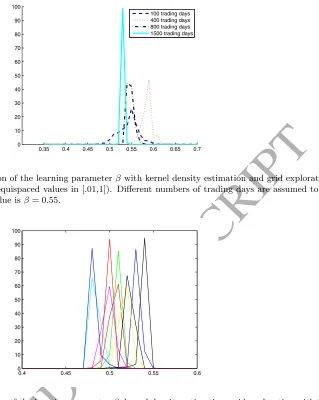
Figure 1: Posterior distribution of the learning parameterβwith kernel density estimation and grid exploration of the parameter space (100 equispaced values in [.01,1]). Different numbers of trading days are assumed to be observed. The pseudo-true value isβ= 0.55.
0.4 0.45 0.5 0.55 0.6 0
10 20 30 40 50 60 70 80 90 100
Figure 2: Posterior distribution of the learning parameterβ, kernel density estimation, grid exploration with 100 equispaced values in [.01,1], 1,500 observed periods, ten different random seeds. True value isβ= 0.55.
The posterior shrinks as the number of observations increases, though it converges to a
value slightly below 0.55. This is the effect of the bias introduced by KDE, and goes in an a
priori unknown direction.30 Experiments with different random seeds confirm the presence of
a (downward) bias (figure 2).
As for what concerns performance, it takes 7.2 secs to simulate 1,500 periods on our
com-puter.31 Performing KDE on the 1,500 simulated periods takes an additional 6.2 secs.
Simula-tion time and KDE scale up linearly with the number of periods that are simulated: the time
required to simulate the model for 15,000 periods and perform KDE is therefore 10×(7.2 + 6.2)
30By converse, the small sample bias associated with MSM, arising from non-linearities of the moment
func-tions, is of predictable direction (see Grazzini et al., 2012). Andrieu and Roberts (2009) propose a ‘pseudo-marginal approach’ to stochastic simulation in a MCMC Bayesian framework with an unbiased estimator of the likelihood.
31A Dell Precision R7910 with two 2.5 GHz Intel Xeon CPU E5-2680 v3 processors (each with 12 cores and 24
[image:21.595.193.489.75.245.2]ACCEPTED MANUSCRIPT
0 0.2 0.4 0.6 0.8 1 0
[image:22.595.191.487.74.234.2]0.5 1 1.5 2 2.5 3 3.5 4 4.5 5
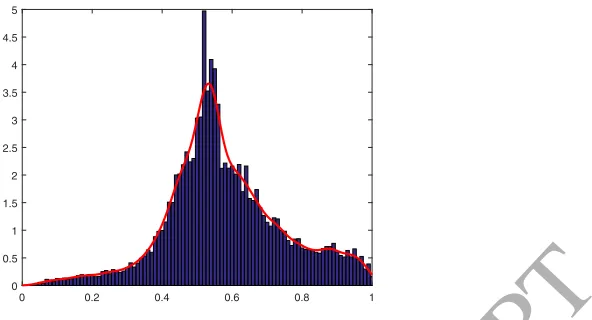
Figure 3: Posterior distribution of the learning parameterβwith kernel density estimation of the likelihood and MCMC sampling. 40,000 simulations of 15,000 trading days each are performed. 1,500 pseudo-true trading days are assumed to be observed. The pseudo-true value isβ= 0.55.
secs. As grid exploration, for the chosen density of the grid, requires sampling 100 values of the
parameter, total computing time is (100×10)×(7.2 + 6.2) secs = 3.7 hours.
Grid exploration performs very well with a small number of parameters (only one, in our
case), as no simulations are ‘wasted’. However, as the number of parameters increases, grid
ex-ploration becomes infeasible. We therefore experiment with a random walk Metropolis-Hastings
MCMC sampling scheme. We perform 40,000 simulations, each lasting 15,000 periods, using 40
parallel processes each lasting 1,000 simulations, discarding the first 100 simulations as burn-in.
For each simulation, KDE is performed. Figure 3 reports the posterior, using the same random
seed as in the ‘brute force’ grid exploration.
The posterior is much more dispersed than under ‘brute force’ grid exploration; at the same
time, computing time increases by a factor of 400 (from 100 to 40,000 simulations), requiring
parallelisation. The reason why MCMC sampling is much less efficient when grid exploration
is feasible (i.e. with a small number of parameters) is that all simulations are used in grid
exploration to produce the density in fig. 1, while most of the simulations end up being discarded
using MCMC sampling. On the other hand, the number of simulations required to achieve a
specific accuracy grows much slower with the number of parameters than in grid exploration.
4.3 Augmentation with external errors
As we have seen, computational costs in Bayesian estimation of AB models come from three
sources: (i) the time required for running one simulation, (ii) the time required for obtaining
ACCEPTED MANUSCRIPT
135 140 145 150 155 160 165 170 0
0.05 0.1 0.15 0.2 0.25 0.3 0.35
observed data fitted normal pdf
Figure 4: Price distribution in the stationary state,β= 0.55.
times that steps (i) and (ii) have to be repeated. We assume that the coding of the model
is already efficient, hence simulation time cannot be reduced.32 MCMC techniques, or other
efficient sampling methods, are the only feasible options when the number of parameters is not
small, but they perform poorly, with respect to ‘brute force’ grid exploration, in low-dimensional
spaces: hence, gains have to be searched elsewhere.
We then go parametric and assume Gaussian noise, as described in section 3.2. This
as-sumption finds some support in the simulated data, which however are much more concentrated
around the theoretical equilibrium value ofp= 150 (figure 4).
In spite of this discrepancy, computational experience with the new posterior suggests that
it performs very well. In figure 5 we present the new posteriors using grid exploration, which
quite understandably are smoother than those obtained under KDE, have only a slightly bigger
variance, and are more centered on the true value of the parameter (smaller bias).
Finally, because the posterior distribution of the learning parameter with MCMC sampling
is larger than with grid sampling, the bias in KDE estimation is less noticeable (see figure 3).
The posterior obtained assuming a Gaussian density is therefore very similar to the one obtained
with KDE, under MCMC sampling, and for the sake of brevity is not reported here.
The gains in terms of computing time are, on the other hand, impressive: estimation under
the normality assumption is practically instantaneous —it only takes 0.014 secs for simulation
(1,500 periods)— compared to 6.2 secs per simulation for KDE. Given that KDE accounted for
almost half of total computing times, both with grid exploration and with MCMC sampling,
computing costs are therefore also almost halved.
32An interesting approach, which is related to the normality assumption made in this section but is not further
ACCEPTED MANUSCRIPT
0.350 0.4 0.45 0.5 0.55 0.6 0.65 0.7 0.75 10
20 30 40 50 60 70 80 90
[image:24.595.194.489.76.245.2]100 trading days 400 trading days 800 trading days 1500 trading days
Figure 5: Posterior distribution of the learning parameterβwith Gaussian density estimation and grid exploration of the parameter space (100 equispaced values in [0,1]). Different numbers of trading days are assumed to be observed. The pseudo-true value isβ= 0.55.
4.4 Approximate Bayesian Computation
Our last exercise considers ABC techniques. Here, we use as our summary statistics the
stan-dard deviation of the price, that we know from Grazzini and Richiardi (2015) discriminates
well between different values of the parameter. We apply the most basic rejection sampling
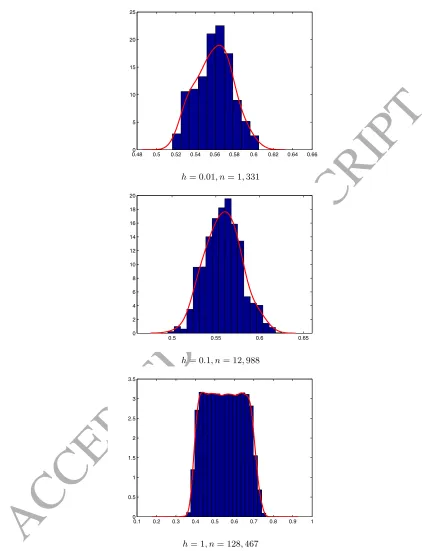
ABC algorithm. Figure 6 reports the posterior distributions obtained with 400,000 simulations
of 1,500 periods each (parallelised on 40 different cores), for different values of the tolerance
thresholdh.33
The number of acceptances, for a fixed computational cost (400,000 runs×1,500 periods =
600 millions simulated periods), closely follows equation 12, and is inversely proportional toh
(the number of dimensions being q= 1).
The trade-off between more accuracy but less precision, for small values ofh, and less accuracy
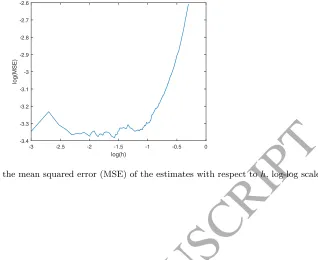
but more precision, for bigger values ofh, is evident. Figure 7 depicts how the empirical mean
squared error (M SEˆ ) changes withh, on a log-log scale:
ˆ
M SE(β(h)) =
Pn
i=1( ˆβi(h)−β)2
n = Var( ˆβ(h)) + bias( ˆβ(h))
2 (21)
The estimated MSE is concave in h.34 Given that the MSE starts increasing significantly
only for values of h > .1, a good compromise between the number of ABC samples and the
ability to shape a posterior distribution out of the Gaussian prior, in this application, is around
without actually performing all the simulations (O’Hagan, 2006; Bijak et al., 2013).
33This is computationally equivalent to 40,000 simulations of 15,000 periods each, as in our MCMC
experi-ments.
ACCEPTED MANUSCRIPT
0.480 0.5 0.52 0.54 0.56 0.58 0.6 0.62 0.64 0.66 5
10 15 20 25
h= 0.01, n= 1,331
0.5 0.55 0.6 0.65 0
2 4 6 8 10 12 14 16 18 20
h= 0.1, n= 12,988
0.1 0.2 0.3 0.4 0.5 0.6 0.7 0.8 0.9 1 0
0.5 1 1.5 2 2.5 3 3.5
[image:25.595.65.487.108.659.2]h= 1, n= 128,467
ACCEPTED MANUSCRIPT
-3 -2.5 -2 -1.5 -1 -0.5 0 log(h)
-3.4 -3.3 -3.2 -3.1 -3 -2.9 -2.8 -2.7 -2.6
log(MSE)
Figure 7: Sensitivity of the mean squared error (MSE) of the estimates with respect toh, log-log scale.
this value.
4.5 Performance
Table 1 summarises the performance of the different techniques, in our sample model, together
with a qualitative assessment. As expected, grid exploration is much more efficient than other
sampling schemes with only one parameter. Parametric approximation of the likelihood function
further reduces computing time by almost 50%. ABC achieves good results, but the rejection
sampling scheme implemented is highly inefficient, as it implies most runs of the model are
discarded. MCMC has the poorest performance, though there are wide margins of improvement
of the sampling algorithm.35
Inferential procedure Sampling Simulated periods Time per Qualitative assessment scheme (millions) simulated period
Non-parametric KDE Grid exploration 1.5 1.86 Very good precision, small bias
[image:26.595.171.489.76.336.2]Parametric Gaussian Grid exploration 1.5 1.00 Very good precision Non-parametric KDE MCMC 600 1.86 Poor precision Parametric Gaussian MCMC 600 1.00 Poor precision ABC Rejection sampling 600 1.00 Good precision
Table 1: Performance of different Bayesian techniques. Simulating one period (trading day) requires 0.0048 secs on our reference machine, normalised to 1 unit of time. Performing KDE requires an additional 0.0041 secs, hence adding 86% of computing time. Gaussian density estimation and ABC require practically no additional costs.
samples.
35These are explored in the vast literature on MCMC. Given the illustrative purpose of the paper, we adopted
ACCEPTED MANUSCRIPT
5
Estimation of a macro model with 9 parameters
Of all the techniques analysed in this paper, the non-parametric KDE estimation of the
like-lihood is the most general, as it does not rely neither on a functional approximation of the
likelihood, nor on the choice of specific summary statistics. In this section we apply it to the
estimation of the behavioural macroeconomic model of De Grauwe (2012). The model of De
Grauwe (2012) shares with large-scale macro agent-based models the necessity to simulate the
model in order to explore its properties. On the other hand, its simplicity makes it a good
choice for an illustrative application. The main difference between small-scale and large-scale
agent-based models is the computational time needed for each simulation run. This difference
is therefore quantitative, rather than qualitative, and to some extent can be dealt with recourse
to computer clusters or cloud computing.36
5.1 The model
This is a standard New Keynesian model, where heterogeneous agents use simple heuristics
to forecast the future, while selecting the forecasting rules that have delivered the highest
performance in the past. The aggregate behaviour of the model is described by the three
standard equations:
Aggregate Demand: yt =a1E˜tyt+1+ (1−a1)yt−1+a2(rt−E˜tπt+1) +t (22)
Aggregate Supply: πt =b1E˜tπt+1+ (1−b1)πt−1+b2yt+µt (23)
Taylor rule: rt =c1(πt−π∗) +c2yt+c3rt−1+ut (24)
where y is the output gap, r is the nominal interest rate, π is the inflation rate, π∗ = 0 is
the inflation target, and ˜E is the expectations operator, where the tilde above E refers to
expectations that are not formed rationally. Habit formation is usually invoked to justify the
presence of lagged output in the aggregate demand equation; a Calvo pricing rule plus some
indexation explains the presence of lagged inflation in the New Keynesian Phillips curve. De
Grauwe considers two forecasting rules which agents can adopt, a fundamentalist rule, where
agents believe that the output gap will revert to its equilibrium value of 0 in the next period,
and an adaptive rule, where agents believe that the output gap in the next period will be the
36Identification can of course be even more of an issue in complex models spanning many dimensions; however,
ACCEPTED MANUSCRIPT
same as in the previous period:37
Fundamentalist: E˜tfzt+1 = 0 (25)
Extrapolative: E˜tezt+1 =zt−1. (26)
where z = {y, π}. The model leads to a nice aggregation of expectations, where the market
forecast is simply an average of the two forecasts weighted by the fraction of adopters of each
rule:
˜
Etzt+1 = (1−pz,t) ˜Etfzt+1+pz,tE˜tezt+1 (27)
=pz,tE˜etzt+1
wherept is the probability that agents use an extrapolative rule.38
Agents measure the fitness of each rule,Uz,tf andUz,te , by its mean squared forecasting error
(MSFE), with geometrically declining weights for past errors. The probability that an agent
will adopt an extrapolative rule is then (Brock and Hommes, 1997)
pz,t=
exp(γUz,tf )
exp(γUz,tf ) +exp(γUe z,t)
. (28)
The model leads to (i) intermittent effectiveness of inflation targeting, with one regime where
the inflation rate remains close to the the inflation target and one regime where it fluctuates
wildly, and (ii) endogenous business cycles, originated by essentially unpredictable waves of
optimism and pessimism. These “animal spirits” are responsible for the the non-normality of
the distribution of the output gap (excess kurtosis and fat tails), which occurs even when the
model is fed with normally distributed shocks.39
37A similar model is developed in De´ak et al. (2015), where individuals and firms use Individual Learning rather
than Rational Expectation as a rationality benchmark. In Individual Learning, agents are rational regarding their individual decisions, but they have no macroeconomic model to form expectations of aggregate variables. The model is estimated in a way which is close to the Bayesian approach followed here.
38In the original article the notation is slightly more elaborated.
39De Grauwe (p. 490) explains the self-fulfilling mechanism which generates the business cycles as follows:
ACCEPTED MANUSCRIPT
Parameter Default Priors Notes
π∗ 0.0 (fixed) central banks inflation target
a1 0.5 U(0,3) coeff. of expected output in AD eq. τ =−1/a2 2.0 Γ(2,.5) coeff. of real interest rate in AD eq. b1 0.5 U(0,1) coeff. of expected inflation in AS eq. b2 0.5 U(0,1) coeff. of output in AS eq.
c1 2.0 (fixed) coeff. of inflation in Taylor eq. c2 0.5 (fixed) coeff. of output in Taylor eq.
c3 0.5 (fixed) interest smoothing parameter in Taylor eq. γ/10 5.0 B(2,2) intensity of choice parameter
σ1 0.1 Inv-Γ(.1,2) standard deviation of shocks in output σ2 0.1 Inv-Γ(.1,2) standard deviation of shocks in inflation
[image:29.595.82.497.71.289.2]σ3 0.1 Inv-Γ(.1,2) standard deviation of shocks in monetary policy ρ 0.5 U(0,1) speed of declining weights in MSFE (memory)
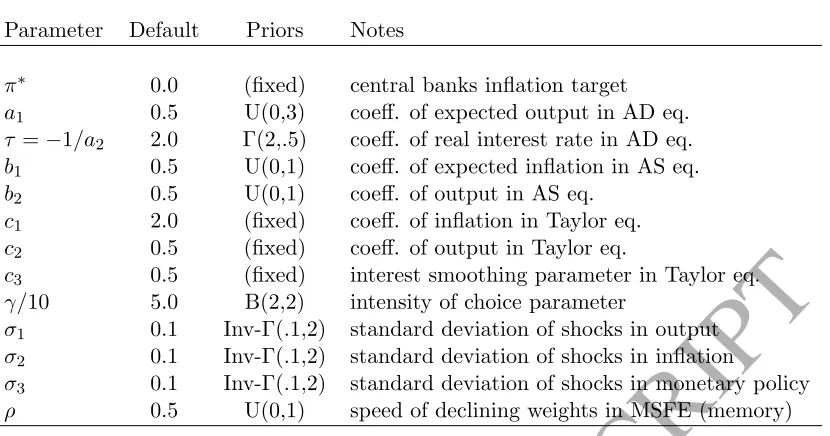
Table 2: Parameters, default values used for the Montecarlo experiment and priors in the behavioural macro model. The parameters of the Γ and Inv-Gammadistributions are the mean and standard deviation.
5.2 Estimation
Because the model leads to exact aggregation, it can be simulated using eqs. (22)-(24) and
(27)-(28), without having any agent actually doing anything. This permits using the
condi-tional estimation strategy outlined in section 3.3; however, to retain generality we perform an
unconditional estimation. The only difference with respect to a model where the aggregate
behaviour needs to be computed on the basis of the realised micro-states is therefore, as already
noted, a reduced computational time.
The model has 12 parameters (table 2), which in the original paper are calibrated (no
details are given on the calibration procedure). For simplicity, we keep the parameters of the
Taylor rule (c1, c2, c3) fixed to their calibrated values, the rationale being that they can be
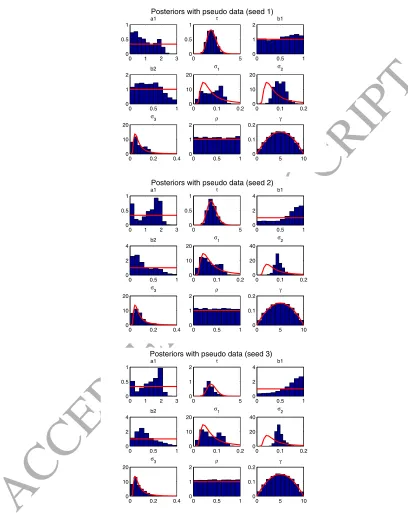
separately estimated in the data. We estimate the remaining 9 parameters using KDE (section
3.1), with the MCMC sampling scheme described in section 3.5. Our MCMC implementation
involves 6 parallel processes, each consisting of 270,0000 draws, where the initial 27,000 draws
are discarded (burn-out). For each draw, 5,000 periods are simulated.40
We use data on real GDP and the implicit price deflator of the GDP for the U.S., 1947Q1
therefore fashionable again. The economy turns around.
40Note that systematic grid exploration, which proved very effective in our one-parameter sample application,
is infeasible here: sampling all the combinations of 100 different values for each parameter would require 1009
(1×10¹⁸) simulation runs. To give an example, estimating a price learning model with 9 parameters —for instance due to heterogeneity in the learning ability of the agents— would require 3.7×10¹⁶ hours with systematic grid
![Figure 5: Posterior distribution of the learning parameterACCEPTED MANUSCRIPT βwith Gaussian density estimation and grid explorationof the parameter space (100 equispaced values in [0,1])](https://thumb-us.123doks.com/thumbv2/123dok_us/9367530.439377/24.595.194.489.76.245/posterior-distribution-parameteraccepted-manuscript-gaussian-estimation-explorationof-equispaced.webp)