Master Thesis at Machinefabriek Grisnich
How to Create and Transfer Knowledge for the Development of
Standard and Custom Products?
Simon Zomerdijk
S0069191
Master of Science Business Administration
Supervisor Twente University
Dr. Ir. J. Kraaijenbrink
Supervisor Aalborg University
Dr. B. Gregersen
Supervisors Grisnich
Preface
In front of you lies a Master Thesis about knowledge creation and knowledge transfer for the development of different product types. The particular research is done at a machine manufacturer that develops machines for the potato industry, loading and unloading of goods, and book sorting industry. The research focused on how the early stage of product development differs for either standard or custom products and had a focus on maximising the use of the available knowledge in the company.
I would like to thank a number of people, starting with Eric in den Bosch who made it possible for me to perform this research. Sikke Born, Jacob van Maanen, Jan Brouwer and Erik van Wijngaarden provided me with feedback on my thesis and helped me to develop a useful end product. On top of that I would like to thank the engineering department, Herman Baltus and Pieter Kaat for giving me a nice place to work and a good atmosphere. From the university I would like to thank Birgitte Gregersen for her support, my fellow students for their support and comments, especially my girlfriend Marije who has supported me throughout the entire thesis. Last, but definitely not least, I would like to give a special thanks to Jeroen Kraaijenbrink who has provided superb feedback and helped me to push myself to achieving the final result that lies in front of you. Without the support of all these people this would not have been the thesis it is today.
Executive Summary
This research is performed for Grisnich. Grisnich is a machine manufacturer that has been active on the market for almost 50 years. During this period several markets have been explored and different products were developed. During the last decade, however, product development has decreased and new products have barely emerged. In 2008 Tolsma Beheer B.V. acquired the company and a new management is appointed at Grisnich. Change needs to occur and developments need to be made according to the new management and that is why this research is done.
Many of the employees working at Grisnich have been working there for over ten years, meaning that there is a lot of knowledge on how the current products are made and about the industry. That is why knowledge is chosen as a starting point for this thesis. Further questioning showed that there are two main forms of products at Grisnich: standard products and custom products. Basically, these are standardised products and custom products that need to be designed completely according to customer specifications. Since the development of both of these product types has come to a standstill this research will focus on using knowledge creation and transfer for the development of different product types. This has resulted in the following central question:
How should knowledge for the development of standard and custom products be created and transferred at the engineering department of Grisnich to optimise the development process?
Knowledge creation and knowledge transfer are the main concepts of this research. Looking further into these concepts revealed six important elements of knowledge creation and transfer: (1) knowledge stock, (2) knowledge network, (3) organisational routines and processes, (4) learning factors, (5) motivation factors, and (6) communication factors. This results in a total of seventeen factors that are important for creating and transferring knowledge. Not all factors are evenly important throughout the development process that is why they were linked to a process. A problem solving process with a creativity phase where ideas need to be generated, the second phase a rough selection of the ideas needs to be made and further research on the ideas in the form of a business model needs to be done, the final phase is about selecting ideas that need to go through for further development and prototyping. Linking the factors to a particular phase allows concentrating on particular factors at a particular point in time.
Results on research on the current situation showed that no distinction is made between the sales process and the development process, making it impossible to relate it to the three-‐phase process of the ideal situation. Looking at the individual factors of knowledge management shows that also no distinction is made between the different product types or high priority is given to the creation and sharing of knowledge. Main problems lie in the communication, network and understanding of the bigger picture. There are problems with the acquisition of new knowledge, determining proper solutions, two-‐way communication between departments, redesigning of products, and quickly understanding new products. The current situation lies closer to the ideal situation for the development of standard products than it does to the development of custom products, with the current situation scored ideal on eight out of seventeen factors of knowledge creation and transfer for the development of standard products, while it scored ideal on only four for the development of custom products. Positive, however, was that there is knowledge available and changing the current methods can close the gap.
the generation of ideas. For the development of standard products this needs to be done individually, while for the development of custom products it is done in groups. This allows optimal idea generation. Third, the ideas are reduced to a number so a maximum of two ideas can be appointed to the group members. Each group member, or individual in the case of standard products, makes a business model in the fourth step of the method. This business model forces the ideas to become concrete and allows to compare them to current products in the case of standard products and to see the potential in the case of custom products. It also makes it possible to compare the ideas to each other and see which one has the most potential. Comparing and selecting is done in the last step. Here the ideas that have enough potential or are a significant improvement can go through for further development.
An additional benefit of this model is that it can be seen as a type of stage-‐gate model. This allows evaluating different stages of the development of products, but also deadlines can be given for individual stages making sure that progress is made. Currently no deadlines are given; with as result that often development gets overruled by the daily routines.
Table of Contents
1.
Introduction ... 1
1.1
Company Description ...1
1.2
Problem Analysis...2
1.3
Research Objective...3
1.3.1 Research Goal... 3
1.3.2 Relevance of the Research ... 3
1.4
Research Questions ...4
1.5
Research Strategy...5
1.5.1 Type of research... 5
1.5.2 Data collection and results... 5
1.6
Outline of this Thesis ...6
2
Theoretical Framework ... 7
2.1
Introduction of Key Concepts...7
2.2
Knowledge Creation ...8
2.2.1 Knowledge Stock... 8
2.2.2 Knowledge Networks ... 9
2.2.3 Organisational Routines and Processes...12
2.3
Knowledge transfer ... 14
2.3.1 Learning Factors...15
2.3.2 Motivational Factors...16
2.3.3 Communication Factors ...17
2.3.4 Summary ...18
2.4
Problem Solving Capability ... 19
2.4.1 Creativity...19
2.4.2 Comprehensiveness...21
2.4.3 Consensus...22
2.4.4 Tacit and Explicit Knowledge...22
2.5
Constructing a Framework for Knowledge Creation and Transfer ... 23
2.5.1 Elements of the Framework...23
2.5.2 Importance of the Factors during the Problem Solving Process ...24
2.5.3 A Balance for the Development of Different Product Types ...28
2.6
A Framework for the Creation and Transfer of Knowledge ... 29
3
Methodology... 31
3.1
Type of Research... 31
3.2
Methodological View... 31
3.3
Method for Data Collection... 32
3.3.1 Primary data collection ...32
3.3.2 Secondary data collection...34
3.3.3 Research Sample...35
3.4
Determination of Measurements... 36
3.4.1 Measurements for Knowledge Creation ...36
3.4.2 Measurements for Knowledge Transfer ...37
3.4.3 Measurements used in each Data Collection Method ...37
3.5
Method for Data Analysis... 38
3.5.1 Primary Data Analysis...38
3.5.2 Secondary Data Analysis ...40
3.5.3 Analysis Overview...40
3.6
Summary of Methodology... 40
4
The Current Situation of Knowledge Creation and Knowledge Transfer ... 41
4.1
Knowledge Stock... 41
[image:9.595.70.525.106.534.2]
4.1.2 Interpretation of the Knowledge Stock Results...43
4.2
Knowledge Network... 43
4.2.1 Results from Data Collection on Knowledge Network ...43
4.2.2 Interpretation of the Knowledge Network Results ...45
4.3
Organisational Routines and Processes... 46
4.3.1 Results from Data Collection on Organisational Routines and Processes ...46
4.3.2 Interpretation of the Organisational Routines and Processes Results...49
4.4
Learning Factors ... 51
4.4.1 Results from Data Collection on Learning Factors...51
4.4.2 Interpretation of the Learning Factors Results...53
4.5
Motivation... 54
4.5.1 Results from Data Collection on Motivation Factors ...54
4.5.2 Interpretation of the Motivation Factors Results...55
4.6
Communication Factors... 55
4.6.1 Results from Data Collection on Communication Factors...55
4.6.2 Interpretation of the Communication Factors Results ...56
4.7
Conclusion ... 57
5
Product Development Based on Knowledge Creation and Transfer... 59
5.1
The Creativity Phase ... 59
5.1.1 Step 1: The formulation of a Goal/Problem...60
5.1.2 Step 2: Organising a Creativity Session...63
5.1.3 Summary ...65
5.2
The Comprehensiveness Phase ... 66
5.2.1 Step 3: A Rough Selection of the Ideas...66
5.2.2 Step 4: Develop a Business Model...68
5.2.3 Summary ...69
5.3
The Consensus Phase... 70
5.3.1 Step 5: The Final Decision...70
5.3.2 Summary ...71
5.4
Grisnich’s Development Model for the Development of Different Products ... 71
6
Conclusion... 73
6.1
The Current and Ideal Situation of Knowledge Creation and Knowledge Transfer ... 73
6.2
Recommendations ... 74
6.2.1 Recommendations for Closing the Gab Between the Current and Ideal Situation ...74
6.2.2 Recommendations for Implementing the Method...74
6.3
Scientific Contribution of the Research ... 75
6.3.1 Limitations of the Research ...76
6.3.2 Suggestions for further Research ...76
References... 77
Appendix ... 81
A.
Determination of Measurements ... 81
1)
Measurements for Knowledge Creation... 81
2)
Measurements for Knowledge Transfer... 83
B.
List of Contact Categories... 85
1)
List of Contact Categories (Dutch Version)... 85
2)
List of Contact Categories (English Version)... 85
C.
List of Technologies... 87
1)
List of Technologies (Dutch Version) ... 87
2)
List of Technologies (English Version) ... 87
D.
Questionnaire... 89
2)
Questionnaire... 98
E.
Interview Example... 107
1)
Interview Example (Dutch Version) ...107
2)
Interview Example (English Version) ...109
F.
Development Tools... 113
1)
Goal from...113
2)
Creativity Techniques (Adapted from: Byttebier, 2002; Van Wulfen, 2006)...114
i) Assumptions...114
ii) Direct Analogy...114
iii) Superhero...115
iv) Personal Analogue...115
v) Flukes...115
vi) Free Incubation...116
vii) Guided Fantasy ...116
viii) SCAMPER ...116
3)
Business Model Form ...118
List of Figures
Figure 1 -‐ Research Questions and Outline ...5
Figure 2 -‐ Network Structures (Ahuja, 2000) ...11
Figure 3 -‐ Disaggregating Goals for Creativity (Litchfield, 2008)...20
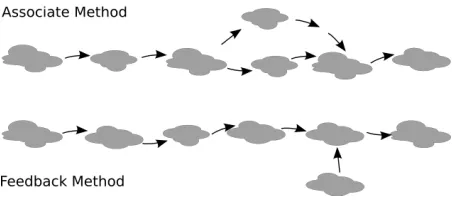
Figure 4 -‐ Thinking Methods (Byttebier, 2002) ...21
Figure 5 -‐ SECI model (Nonaka, 1994)...22
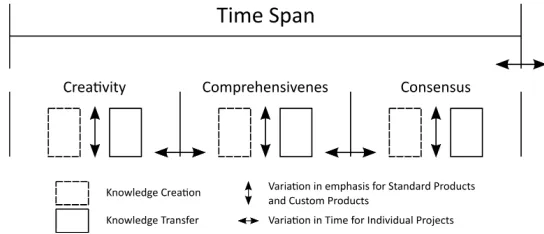
Figure 6 -‐ Theoretical Framework for Knowledge Creation and Knowledge Transfer ...24
Figure 7 -‐ Final Framework for the Creation and Transfer of Knowledge ...30
Figure 8 -‐ Paradigm and Operative Paradigm (Arbnor & Bjerke, 2009)...32
Figure 9 -‐ Hours spend by the Engineering Department ...41
Figure 10 – Time Spend on Different Product ...42
Figure 11 -‐ Time Spend on Different Products (Last Two Years) ...42
Figure 12 -‐ Knowledge Network of Grisnich ...44
Figure 13 -‐ Process Flow ...46
Figure 14 – AutoDesk® Productstream Professional Pro Window ...48
Figure 15 -‐ Influence of Departments in Development Process ...50
Figure 16 -‐ Idea Selection (Adapted from Byttebier, 2002) ...67
Figure 17 -‐ Relationship Between the Aspects of a Business Model...69
List of Tables
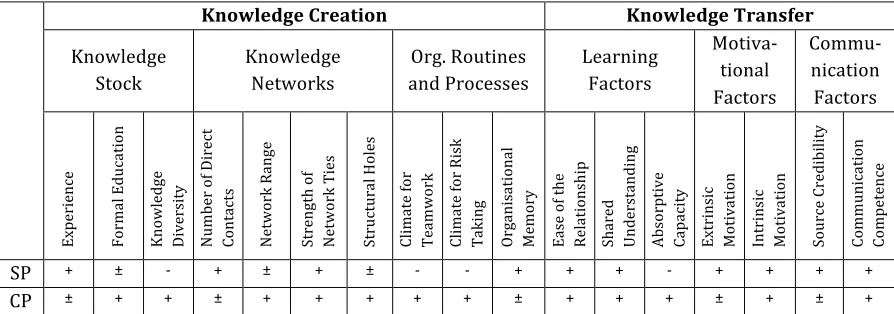
Table 1 -‐ Factors to Emphasise for Standard and Custom Products...18
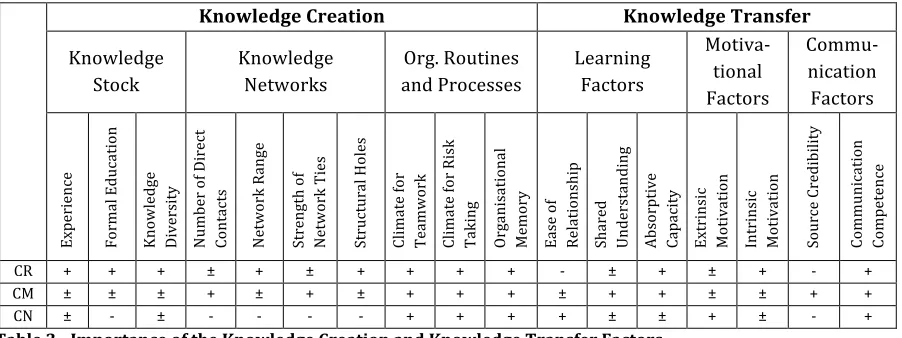
Table 2 -‐ Importance of the Knowledge Creation and Knowledge Transfer Factors...27
Table 3 -‐ Overview of Sample Size per Collection Method ...35
Table 4 -‐ Overview of Measurements for Different Data Collection Methods ...37
Table 5 -‐ Results Knowledge Stock...43
Table 6 -‐ Results Knowledge Network ...45
Table 7 -‐ Results Organisational Routines and Processes ...51
Table 8 -‐ Results Learning Factors...54
Table 9 -‐ Results Motivation Factors ...55
Table 10 -‐ Score of Information Sources ...56
Table 11 -‐ Results Communication Factors ...57
Table 12 -‐ Summary of Results...57
Table 13 -‐ Starting Point Creativity Phase...60
Table 14 -‐ Starting Point for the Comprehensiveness Phase ...66
Table 15 -‐ Aspects of a Business Model (adapted from: Osterwalder, 2005) ...68
Table 16 -‐ Starting Point for the Consensus Phase ...70
Table 17 -‐ Grisnich's Development Model...72
1.
Introduction
Knowledge plays an important role in today’s competitive environment (Grant, 1996). It is created and exchanged to develop new products and services. Not all products and services are the same so the need for creation and transfer of knowledge differs. Grisnich, the company for which this research is done, is a machine manufacturer and has standard products and custom products. Standard products are products that have been made before and only need a few adjustments before they can be produced. It are products with just a single purpose. For example, in the potato sorting chain, the unloading of the boxes in which the potatoes arrive. Custom products on the other hand are made according to customer specifications and require a lot of engineering before production can start. Both of these product types are placed in (new) installations that require the development of (a part of) the logistics of the potato sorting chain as well as redesigning some standard products within the whole layout. To be able to develop these different product types knowledge creation and knowledge transfer are needed. The question is do these two types of products require the same creation and exchange of knowledge? In other words how should knowledge be created and transferred for different product types? This thesis will try to answer this question.
1.1
Company Description
Grisnich is a machine manufacturer founded in 1963. The first products where silo storages for the cattle and poultry industry, soon followed by transport belts for the onion and potato industry. In 1989 Berend Grisnich became the successor of his father by becoming the new CEO of the company. Under his supervision telescopic transport belts and book sorting systems where developed. In 2008 Tolsma Beheer B.V. acquires Grisnich and the activities are reorganized in three core activities. These activities concern the making of machinery and installations for: sorting potatoes, loading and unloading of goods and book sorting. Developing machinery and installations for sorting potatoes still is the main activity of Grisnich. Currently, 53 people are working at Grisnich and an organisational change is taking place. Since 2008 Grisnich is no longer a family owned business, a management team leads the company. The desire of the management team is to focus more on product development and innovation. The engineering department provides the ideas for product development, or designs them according to customer specifications (given by the sales department). According to the management team there is a lack of structure for the development of new products; ideas are available but not communicated enough through the company. Grisnich’s main activities lie in the food-‐processing sector, which is often categorized as a low-‐tech industry (Tunzelmann & Acha, 2005). In the current situation no state-‐of-‐the-‐art technology is used, potatoes are sorted using sieves. On the contrary, the competition uses optical technology for sorting potatoes. All products manufactured at Grisnich at the moment are custom build; the industry however experiences a development towards standardized products. The products can be categorized into ‘standard’ products and new installations.
• New installations; are products that involve more of the entire chain of potato processing, for example from the delivery truck to the cutting machine for making French fries. During this process the potatoes have to be unloaded, sometimes stored, washed, sorted, and transported to the cutting machine. This means that installations have to be designed to serve several purposes, as well as efficient logistics. New installations, like standard products, often have to be fitted into the available space or be connected to existing lines of production. This means that the machinery used is never the same. Not only do these kinds of products require the engineering of the individual machinery, but also the creation of the logistics. This brings constraints to the use of transport belts that often have to be redesigned as well. Since these installations cover several purposes and are connected to other parts of the production process, cooperation with other suppliers is no exception with this kind of products. The time span for the development of this kind of products is obviously longer than of standard products.
To sum up, standard products are parts of installations and need only minor modifications before they can be produced. New installations require designing a new installation or the expansion of a current installation. Apart from the individual standard products designing a new installation also requires designing the logistics. Both product types can be made according to customer specifications. This means that Grisnich manufactures a range of standard and custom products that can be applied in an installation.
1.2
Problem Analysis
According to the management, the main problem lies in the development of new products. For the development of a product, one person is assigned to a project, which varies from a standard product to a complete installation. Deliberation takes place but mainly persons are working individually on a project. No master drawings are available, so each time a new project starts an old drawing is used as a starting point. A file system of photos of previous (completed) projects is available, but engineers are free to design solutions on their own. Working with this method and having to redesign products causes problems as indicated by the three examples below.
Before a new installation can be sold it has to be sketched. The development of a sketch involves the designing of the logistics and creation of an overview of the work involved in the total project. This together with an estimation of the price is called an offer. A lot of work is involved in making these offers and this consumes time of the engineering department. Since this is part of the development of a new installation the making of an offer is included in the development of a new installation. The downfall of making an offer is that it requires time of the engineering department and no money is made during the making of an offer.
Having one person assigned to a project and not making money while sketching the offer is not only time consuming, it also can lead to other problems. For example, having only one person making the offer has led to situations where obvious solutions are overlooked. At one particular project the aim was to minimize the number mobile transport belts needed in different setups. When the fourteenth version of the concept was presented to the customer he suggested why the mobile transport belts were not re-‐used in different situations this reduced the total amount of belts needed by one (at a cost of €50,000 per belt). Currently, all products have to be redesigned even if they are seen as standard products, or the product is produced several times in the past. It seems that all products require a lot of work even if it is a standard product. Drawings have to be redesigned each time a product is sold. This means that standard products are not standard at all. A consequence of having to redesign everything is that products are often more expensive than the competitors. Customers have mentioned this several times.
Knowledge is the most important resource for the development of products (Kogut & Zander, 1992; Grant, 1996). So, knowledge should be used for activities where it can contribute the most. This means that the engineering department should use their knowledge for the development of new products. The problem, that becomes clear from the examples above, is that there is not enough time available for the development of new products because all the time is consumed for redesigning existing products or making offers. This leads to the question is knowledge not available, or is it used incorrect?
In the engineering department a lot of experience is present, with employees working there for over 15 years. They possess a lot of knowledge, but communicate very little to each other about it. Individuals’ knowledge is seen as important, but also as something that makes an individual irreplaceable. As a consequence interaction only takes place when direct questions are asked. Having so much knowledge also temps to look in the past for solutions thereby slowing down the development of new knowledge. But, since knowledge is available there has to be a way in which this can be exploited. Therefore, a solution for the problem needs to be sought in the field of knowledge management. Knowledge management is concerned with the recognition, creation, transformation and distribution of knowledge (Gold, Malhotra, & Segars, 2001). Looking at the examples given above, especially knowledge creation and distribution are important. They can support the development of new products by making knowledge available to all the employees and support the creation of new knowledge by making it easier to combine existing knowledge (Smith, Collins, & Clark, 2005). Therefore knowledge creation and knowledge transfer are the focus areas in which the solutions are sought.
1.3
Research Objective
A solution for the problem should result in less time spent on the development of new products and thereby a more efficient development process. A lot of time is lost in the beginning of the development process (with making orders or redesigning products). By looking into the fields of knowledge creation and knowledge transfer an answer to this problem is sought.
1.3.1
Research Goal
The goal of this research is:
To provide recommendations on the creation and transfer of knowledge between individuals and departments to reduce the time required in the development process of different product types.
With these recommendations Grisnich should be able to develop products faster and introduce a method for the creation and transfer of knowledge. The research will also result in recommendations of how to deal with the different product types and the amount of knowledge creation and transfer they require.
1.3.2
Relevance of the Research
knowledge management fields and the practically applicable framework that results from the analysis. This is currently not present in the literature. This makes this thesis interesting from a scientific point of view.
1.4
Research Questions
The goal of this research is to provide recommendations about the creation and transfer of knowledge for different product types, in particular at the engineering department of Grisnich. This results in the central question:
How should knowledge for the development of standard and custom products be created and transferred at the engineering department of Grisnich to optimise the development process?
Definitions:
• Different product types; refers to the different products that Grisnich produces, these products are categorised as standard products or custom products.
• Knowledge creation; ‘[the extent to which individuals within the company] are capable of combining information and knowledge into new knowledge, and perceive value from the exchange and combination process’ (Smith et al., 2005, p. 347). For this thesis knowledge creation is the generation of new ideas and ability to solve problems by creating new solutions.
• Knowledge transfer; the exchange of useful knowledge between individuals (Levin & Cross, 2004). For this thesis knowledge transfer is the exchange of knowledge from previous projects into new ones. This can be interpersonal or from existing knowledge bases.
• Optimization; given the nature of the problem optimization is consuming the least amount of time and finding a balance between the development of the different product types.
• Development process; process of designing a new solution for the customer.
Additional insight in how creation and transfer of knowledge for the development of different product types can be done is needed to provide recommendations. This central question helps to gain this insight. Key terms of the central question are knowledge creation, knowledge transfer and (perhaps less explicitly) finding a balance in the development of different product types. The central question is concerned with how knowledge should be created and transferred (an ideal situation). This implies that the current situation and how to get from the current situation to the ideal situation also should be researched. Also the classification of the product types is important. Currently no distinction is made during the development of the product types. The first research question is concerned with determining the ideal situation for each of the product types:
1. How should, from a theoretical perspective, knowledge be created and transferred for standard and custom products to optimise the development process?
Theory can provide insight in how to create and transfer knowledge ideally. Therefore, the ideal situation is determined according to criteria derived from theory. These criteria are then used to analyse the current situation. Resulting in the research question:
2. How is knowledge currently created and transferred for standard and custom products at the engineering department of Grisnich?
recommendations one must know how to get from the current to the ideal situation. Resulting in the last research question:
3. What is needed to go from the current situation of knowledge creation and transfer for standard and custom products to the ideal situation of knowledge creation and transfer for standard and custom products?
Figure 1 - Research Questions and Outline
In Figure 1 the three-‐phase process of this research is displayed. Each of the three phases is concerned with a research question indicated by the grey rectangle. The adjacent white rectangles display the step that is taken to answer the research question of that phase. All research questions take into consideration standard and custom products and are concerned with the creation and transfer of knowledge.
1.5
Research Strategy
As said, Figure 1 displays the steps taken in this research. First, the ideal situation is determined by deriving criteria from theory. Second, the criteria from the theory of knowledge creation and transfer are used to analyse the current situation. Finally, the comparison of the current situation and the theory is made to provide recommendations about the creation and transfer of knowledge for standard and custom products.
1.5.1
Type of research
This thesis is a formal, descriptive study (Cooper & Schindler, 2006); its goal is to answer the central question stated earlier. Because a model for the development of different product types is made this study also has design characteristics (Verschuren & Doorewaard, 2005). It tries to find out how knowledge creation and transfer differ between standard and custom products at Grisnich to make the development of products less time consuming. In doing so it is a cross-‐sectional study in order to provide a snapshot in time (Cooper & Schindler, 2006). Execution of the research will take place at the location of Grisnich and researches a practical question using empirical data (see section 1.5.2 for data collection methods). The research can be categorised as a single case study (Verschuren & Doorewaard, 2005). It tries to do an in-‐ depth analysis on the particular situation of Grisnich and combines theory with practical data.
1.5.2
Data collection and results
[image:17.595.121.446.150.250.2]The last phase of the research is an analysis of the differences between the current situation and the theoretical ideal situation. The goal of this analysis is to determine the differences and provide recommendations on how to solve the differences. By minimizing the differences the current situation will come closer to the ideal situation improving the knowledge creation and transfer practices of the engineering department of Grisnich. This phase should result in a practical method for the creation and transfer of knowledge for the development of standard and custom products.
1.6
Outline of this Thesis
Throughout this chapter the research objectives, questions and methods are introduced. The next chapter provides the theoretical framework to explore the research questions. It forms the perspective of how to look at the problem at hand. Chapter 3 elaborates on the methodology of the research. This chapter explains the method for data collection, data analysis, and structure and methods of the research. Chapter 4 displays the results of the research based upon the theoretical framework and the data collection. Chapter 5 contains the analysis of the differences between the current and ideal situation and a method for minimizing these differences. Finally, chapter 6 is the conclusion of this thesis, which will consist of the concluding remarks of the research and the limitations of it.
2
Theoretical Framework
This chapter forms the theoretical framework that will function as the perspective to look at the research questions of this thesis. The theoretical framework consists of criteria and a process description for the creation and transfer of knowledge for different product types. Before these criteria can be established the fields of knowledge creation and knowledge transfer are explored. Important for the theoretical framework is the difference of knowledge creation and transfer of standard and custom products and the setting in which they have to be managed.
2.1
Introduction of Key Concepts
Creation and transfer of knowledge for different product types is the focus point of this thesis. Different product types are standard and custom products in this case. They seem contradicting to each other at this point, introducing them should provide a better understanding why this is the case. First, the concept of knowledge is introduced.
• Knowledge; and information are often used interchangeably, but are not the same. Knowledge is created and organized by the flow of information (Nonaka, 1994), in other words: information becomes knowledge when it is processed in the minds of individuals (Alavi & Leidner, 2001). Knowledge exists in two different forms, tacit and explicit knowledge (e.g. Nonaka, 1994). Explicit knowledge is characterized by the way it is expressed. It is knowledge in written form, meaning hard data, scientific formulas, patents, documents, manuals, etc. On the contrary tacit knowledge is mainly people-‐bound (e.g. know-‐how) and difficult to formalize (Nonaka, 1994; uit Beijerse, 2000). The conversion of these two kinds of knowledge is believed to be the core of knowledge creation (Nonaka, 1994; Nonaka & Takeuchi, 1995). Knowledge creation is further explored in section 2.2. The distinction between tacit and explicit knowledge is important because of the transferability of the two. Tacit knowledge is embedded into the minds of individuals and cannot be transferred as a separate entity. Explicit knowledge, on the other hand, has the character of a public good (Osterloh & Frey, 2000). The transfer of knowledge is explored in section 2.3.
• Standard products; are already introduced (see section 1.1), but not from a theoretical perspective. Standard products are related to the term standardisation. Standardisation refers to the homogeneity of products, components or processes (Ulrich, 1995). Standard products are seen as being homogeneous, in the sense that they can be produced multiple times for different customers. Scholars claim (e.g. Farrell & Saloner, 1985) that benefits from standardisation come from economies of scale. This indicates that standard products have to be mass, or at least batch produced to be beneficial. Standard products are also related to routine based work (Kelly & Littman, 2004). This means that the development of standard products often is done with routines known to the company. Focus points are often efficiency and low costs (Ulrich, 1995). Standardisation begins with the standardisation of the design (Lampel & Mintzberg, 1996).
2.2
Knowledge Creation
The creation of new knowledge is essential for companies in a competitive environment (Kogut & Zander, 1992). The capability of a company to create knowledge is defined by Smith et al. (2005) as the extent to which individuals have access to one another, are capable of combining information and knowledge into new knowledge, and perceive value from that process. In this sense combining refers ‘to the process of bringing together elements previously unconnected or by developing new way of combining elements previously associated’ (Smith et al., 2005, p. 347). And new knowledge refers to ‘discoveries about phenomena that were not known previously’ (McFadyen & Cannella, Jr., 2004, p. 735). Thus knowledge creation is the development of new knowledge by the process of combining previously known knowledge. Smith et al. (2005) suggest three categories of organisational resources that impact the capability to create knowledge, (1) stocks of individual knowledge, (2) networks of key employees, and (3) organisational routines and processes. These three resources combined define how well a company can create knowledge.
2.2.1
Knowledge Stock
The ability to create knowledge depends on the existing knowledge (Cohen & Levinthal, 1990; Smith et al., 2005). Existing knowledge can also be used by the management to determine a strategy (Nonaka, Toyama, & Konno, 2000). Therefore insight into the available knowledge is needed. The existing knowledge can be seen as a knowledge stock. This stock of knowledge is determined by using three factors: (1) experience, (2) formal education, and (3) knowledge diversity (Smith et al., 2005). The factors create an overview of the existing knowledge.
Experience
Experience is important, because new skills are more quickly learned if they share elements with the already acquired knowledge (Kogut & Zander, 1995). If one has extensive experience in an industry one will possess high amounts of tacit knowledge that can be brought in for the creation of new knowledge (Nonaka et al., 2000). So, the higher the experience the more an individual has to bring to the creation of knowledge (Smith et al., 2005). Studies in other fields have also highlighted the importance of industry experience (Wright & Wright, 2008). They stated the importance of industry experience by identifying frequently occurring error types and contributions to decisions. People with more experience tend to make fewer errors. Experience can also work against one, when one is so confident and only looks insight for new knowledge. The phenomenon is known as myopia (Wuyts, Colombo, Dutta, & Nooteboom, 2005). Relating this to the different product types of Grisnich means that experience is beneficial for the development of standard products. Experience of an individual can be used to fast remember previous projects and solutions from them. Since standard products are made more often the room for error is less. Experience can be beneficial in this case (Wright & Wright, 2008), because it results in an efficient determination of a new solution. On top of that standard products are often created using organisational routines, which means that experience also has benefits. For the development of custom products the point of Wuyts et al. (2005) has to be considered as well. It is true that experience makes sure that a lot of tacit knowledge can be brought in for the creation of new knowledge (Smith et al, 2005), but it can also mean that solutions are sought in the same direction. This can be good, but sometimes it is not. So for the development of custom products having a lot of experience can be positive as well as negative.
Formal Education
Having high cognitive capabilities is also good when having to absorb a lot of new knowledge (Wuyts et al., 2005). When developing custom products a lot of new knowledge needs to be absorbed, for example, the constraints of the location, previous installations, and cooperation with other suppliers of the production chain. On top of that the custom product has to be designed, so having a high level of formal education (and thereby a high ability to understand) helps to encounter these problems. Of course education is also important for the development of standard products, but it is less crucial. Since a lot of knowledge can be gathered from previous projects education does not add that much as it does when developing a new installation. Routines, for example, can also be learned by doing, meaning theoretical knowledge is less vital (Nonaka & Takeuchi, 1995). So, formal education is beneficial for the development of custom products, but not necessarily required for the development of standard products.
Knowledge Diversity
Although the knowledge of organisational members can be expressed in the two factors above, the diversity of knowledge within a group (e.g. a company) can influence the capability to create knowledge (Smith et al., 2005). A group of people with similar backgrounds is less likely to think of a solution not related to their individual background. But, a group of people with different backgrounds is more likely to come up with a solution not similar to their individual background thereby creating knowledge. Other scholars support this statement indicating the importance of multidisciplinary teams (e.g. Cohen & Levinthal, 1990; Nonaka et al., 2000). There has to be an overlap in knowledge however, because otherwise time is wasted trying to understand each other. A theoretical optimum can be achieved between understanding and novelty of knowledge indicated by the optimal cognitive distance (Wuyts et al., 2005).
Relating this to the product types of Grisnich means that for the development of standard products knowledge diversity is not necessarily needed. Because the products are relatively standard solutions can be sought within that knowledge domain. If, however, custom products need to be developed knowledge diversity is desirable. Because of this knowledge diversity the possibility to create a novel solution are higher due to the different knowledge backgrounds of the individuals (Smith et al., 2005). This means that custom products require knowledge diversity, while for standard products it is not necessarily needed.
2.2.2
Knowledge Networks
Networks can be looked upon from multiple perspectives, from an organisational perspective or an individual perspective for example. For this thesis networks are looked upon from the perspective of the individual. This is done, because knowledge originates in the minds of individuals (Nonaka, 1994). Nobody’s knowledge is the same, one person knows more than the other. This means that key knowledge employees (the ones that have a high knowledge stock) can be identified. These employees are valuable for the creation of knowledge (Chen & Edgington, 2005; Smith et al., 2005). Not only the identification of the key persons within a company is important, but also the business relations they possess (McFadyen & Cannella Jr., 2004). Key persons need to be highlighted, because they can provide insight into the knowledge of the company and can provide more information about the possibilities of knowledge creation (Smith et al., 2005). On top of that the networks these individuals possess have a major impact on the knowledge creation capabilities of a company (Smith et al., 2005).
Networks play an important role, because networks allow combining and sharing of knowledge and through networks knowledge becomes ‘official’. Knowledge creation requires that network members engage in discussions (McFadyen & Cannella, Jr., 2004). Looking at the network itself, there are three factors that determine the ‘strength’ of the network; (1) number of direct contacts, (2) network range, and (3) strength of the network ties (Smith et al., 2005).
Number of Direct Contacts
direct contacts is relevant, because the creation of knowledge benefits from having a large number of contacts. However, a nuance is in place, if the number of contacts rises the amount of time available to spend on each relation becomes less. McFadyen and Cannella Jr. (2004) argue that the number of relations and the effect on knowledge creation is not strictly linear, but has an optimal at some point. It is key to manage the number of direct contacts so that knowledge creation can be optimal.
Relating the benefit of number of direct contacts to the different product types of Grisnich is difficult, because the benefit often comes from the network range (Smith et al., 2005). Network range is concerned with knowledge diversity, while the number of direct contacts is not. Having said this means that the number of direct contacts has a positive effect for the development of standard products. The diversity of knowledge is not important for the development of these products (see section 2.2.1); therefore having a large pool of knowledge available has a positive effect. For custom products a large number of direct contacts also means a large knowledge pool to receive knowledge from. But this does not have to be positive, since the effect on the creation of knowledge is not linear (McFadyen & Cannella, Jr., 2004). It is therefore acceptable to state that a large number of direct contacts has no positive or negative effect for the development of custom products.
Network Range
Smith et al. (2005) define the network range as the scope of different types of contacts contained in a person’s network. It is comparable with the diversity of knowledge at individual level. Diversity of knowledge is beneficial for knowledge creation (Nonaka & Takeuchi, 1995), so is the network range. Organisations should avoid the risk of myopia, meaning that they only look inside for new knowledge (Wuyts et al., 2005). To compensate for this, inter-‐organisational contacts are necessary.
In section 2.2.1 knowledge diversity showed to have a positive effect on the creation of new ideas and thereby on the development of custom products. A broad network range can be seen as having a large diversity of knowledge available, meaning a positive effect on the development of custom products. On top of that it also ensures that myopia is avoided. For the development of standard products the main resource is the previous projects completed. The risk of myopia there is high. Having a broad network range means that one has a large knowledge pool to derive a solution from. In the case of custom products this is important, but for standard products this does not have to be. The knowledge about standard products is high internally. If one is aware of the consequences of myopia the network range has no positive or negative effect on the development of standard products.
Strength of Network Ties
A Relationship between individuals takes time to develop, as wells as the creation of knowledge from that relationship. The strength of a tie refers to the nature of the relationship, with closeness, long duration, and frequent contact characteristics of a strong tie (Smith et al., 2005). Strong ties are more likely to share valuable information and cooperate for mutual benefits (Smith et al., 2005). But that is not the only benefit of strong ties; they also provide more efficient exchanges of knowledge (McFadyen & Cannella, Jr., 2004). There is a downfall to this, because when ties become stronger and knowledge is exchanged more often the cognitive distance becomes smaller so as the novelty value of knowledge, allowing less exchange (Wuyts et al., 2005). McFadyen and Cannella Jr. (2004) argue an optimal strength for the creation of knowledge.
also help to seek for new knowledge, since one is also more likely to share valuable information to others. Thus, strong ties are also beneficial for the development of custom products.
Position in the network
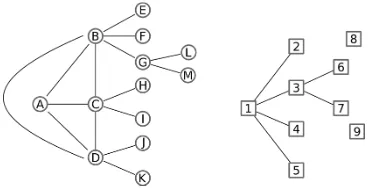
The network can be looked upon from different perspectives (Zaheer & Bell, 2005). Since this research focuses on internal knowledge creation and transfer practices the perspective to look at the network will be at the individual level. The position of a company in a network is related to the innovation capacity of that company (Ahuja, 2000). The same logic can be applied on individuals. A network consists of three aspects, direct ties, indirect ties and structural holes. Figure 2 and the explanatory example afterwards are adapted from Ahuja (2000). Ahuja’s (2000) original example was based on organisational level, while the example shown below is on individual level. The principle behind the direct ties, indirect ties and structural holes is the same on both levels of analysis.
Figure 2 - Network Structures (Ahuja, 2000)
Direct ties are direct contacts between partners; in Figure 2 Actor A is directly connected to B, C, and D so Actor A has three direct ties. Actor A also has nine (E though M) indirect ties. These are ties connected to the direct ties of Actor A. Although not directly connected to Actor A, Actor A can extract knowledge from actors E through M via their direct contacts. Gulati and Garguilo (1999) explain this as the power of indirect ties in a network (in: Ahuja, 2000). Actors A through D form a closed network, because they are all linked to each other. Actor 1 has more direct ties (four) but less indirect ties (two). Actors 1 through 5 are not all linked to each other and therefore defined as an open network. The missing links between companies 2 and 3, or 3 and 4 are called structural holes.
Relating this to different product types and what is said earlier (the number