Studies Towards the Total Synthesis and Structural
Elucidation of Leiodolide A
School of Chemistry
Fife, Scotland
Gregory Aldred
November 2014
Thesis submitted to the University of St Andrews in application
for the degree of Doctor of Philosophy
Declarations
Candidate’s declarations
I, Gregory Gordon Aldred, herby certify that this thesis, which is approximately 41,000 words in length, has been written by me, that it is the record of work carried out by me and that it has not been submitted in any previous application for a higher degree.
I was admitted as a research student in September 2010 and as a candidate for the degree of Doctor of Philosophy in November 2014; the higher study for which this is a record was carried out in the University of St Andrews between 2010 and 2014.
Date Signature of candidate
Supervisor’s declarations
I hereby certify that the candidate has fulfilled the conditions of the Resolutions and Regulations appropriate for the degree of Doctor of Philosophy in the University of St Andrews and that the candidate is qualified to submit this thesis in application for that degree.
Copyright Declarations
Restricted access
In submitting this thesis to the University of St Andrews I understand that I am giving permission for it to be made available for the use in accordance with the regulations of the University Library for the time being in force, subject to any copyright vested in the work not being affected thereby. I also understand that the title and the abstract will be published, and that a copy of the work may be made and supplied to any bona fide library or research worker, that my thesis will be electronically accessible for personal or research use unless exempt by award of any embargo as requested below, and that the library has the right to migrate my thesis into new electronic forms as required to ensure continued access to the thesis. I have obtained any third-party copyright permissions that may be required in order to allow such access and migration, or have requested the appropriate embargo below.
The following is an agreed request by candidate and supervisor regarding the electronic publication of this thesis:
Embargo on both all of printed copy and electronic copy for the same fixed period of one year on the following grounds: publication would preclude future publication.
Date Signature of candidate
Acknowledgements
I am indebted to a great many people for their substantial support throughout my postgraduate studies. The valuable knowledge and experience I have acquired, in such an enjoyable atmosphere, would not have been possible without these people, therefore I would like to express my gratitude to them.
First and foremost I would like to thank Dr Gordon Florence for giving me the opportunity to work in his group and on such a challenging project, as well as his continuous encouragement and advice throughout the whole of my studies. He has always had an open door for advice and welcoming to questions tapping into his deep knowledge of the subject area.
The Florence research group as a whole, both past and present with their lab camaraderie, professional advice, encouragement and friendship have made the working environment both rewarding and enjoyable. In particular I would like to thank: Katy Mould for laying much of the groundwork on the project and showing me the ropes in the lab during my first year; Joanne Morris for being an ear to bend in the lab with synthetic questions; My ACS and USA road trip buddy Lloyd Sayer, the journey certainly would not have been as fun without you and thank you for the almost unending task of proof reading for me; Andrew Fraser for keeping me from being homeless towards the end; Dr Eoin Gould, a late arrival to our little world, but I am grateful for your patience to my questions and sharing some of the proof reading burden; Euan Reid, you only spent a year in the lab but somehow I have still not managed to extricate you from my life. Your humour certainly got me through some of the rougher times, please do not lose the rings! Thank you also to Hollie McCarron and Matthew Helton for their input into the project during the course of their undergraduate studies.
Professor Andrew Smith and his group for their input during our joint group meeting sessions over the course of the project. The technical and administrative staff of the School of Chemistry for all their help over the years and especially to Mrs Melanja Smith and Dr Tomas Lebl of the NMR department; and the National Mass Spectrometry Facility (Swansea) and Mrs Caroline Horsburgh (St Andrews) for mass spectrometry. I am also grateful to the University of St Andrews and the EPSRC for their funding of the project.
Abstract
In 2006, the secondary metabolite leiodolide A (17) was isolated from a newly discovered deep-sea sponge of the genus Leiodermatium. The 19-membered macrolide represented a new class of mixed polyketide, nonribosomal, peptide synthetase natural products. A total synthesis of leiodolide A is yet to be achieved and is of specific interest, not only for its complex structure and undefined stereochemistry, but also the potent cytotoxic properties it possesses, particularly towards leukaemia, non-small cell lung and ovarian cancers.
A synthetic strategy for leiodolide A must be flexible to overcome the currently unresolved stereochemistry and a convergent route towards the synthesis of the molecule required three subunits. Following the earlier synthesis of the C21-C25 vinyl stannane fragment, this work describes the synthesis of the C1-C10 subunit in the both possible diastereomeric forms. The synthesis of the two required C13 epimers of the C11-C20 subunit is also detailed accompanied by an investigation into potential fragment coupling, in preparation for total synthesis.
13 13
N O
44 11
16 16
O O
HO
OMe
OH
24 24
HO O
OH
Cross-coupling
Mitsunobu lactonization
Cross-coupling
Compound numbering
All compounds intended towards the total synthesis of leiodolide A will be numbered according to the carbon chain of the natural product. This numbering is shown on the structure and is used in the 1H NMR assignments.
The naming of the compounds in the experimental section uses the IUPAC convention.
13 13
N 88
O 10 10
55 44 22
11 16 16
O O
HO
OMe
OH 19
19 21 21
24 24 HO
O
OH
List of Abbreviations
Å Angström
α alpha
[α] specific rotations
Ac acetyl
AIBN azobisisobutyronitrile
app apparent
aq aqueous
Ar aryl
atm atmosphere
β beta
9-BBN 9-borabicyclo(3.3.1)nonane BINOL 1,1’-bi-2,2’-naphthol
br broad
ºC degrees Celsius
calc calculated
cat catalytic
CDA chiral derivatising agents
c-Hex cyclohexyl
CMAE corrected mean absolute error conc concentration
CSA (+)-10-camphorsulfonic acid CuTC copper(I)-thiophene-2-carboxylate
δ delta
d doublet
dba dibenzylideneacetone DBB di-tert-butylbiphenyl
DCC N,N’-dicyclohexylcarbodiimide
DDQ 2,3-dichloro-5,6-dicyano-1,4-benzoquinone de diastereomeric excess
DIPT (+)-diisopropyl tartrate
dm decimetre
DMAP N,N-dimethyl-4-aminopyridine DMP Dess-Martin periodinane
DMPU 1,3-dimethyl-3,4,5,6-tetrahydro-2(1H)-pyrimidinone DMS dimethyl sulfide
DMSO dimethyl sulfoxide
dppf 1,1’-bis(diphenylphosphino) ferrocene d.r. diastereomeric ratio
E unspecified electrophile ee enantiomeric excess
Enz enzyme
eq equivalent
E.S. electrophilic susceptibility FDA Food and Drug Administration FMN flavin mononucleotide
g grams
γ gamma
GI50 50% growth inhibitory concentration
GIAO Gauge Including Atomic Orbitals
h hour
HF Hartree-Fock
HRMS high resolution mass spectrometry HWE Horner-Wadsworth-Emmons
i iso
IC50 50% inhibitory concentration
Im imidazole
Ipc isopinocampheyl
J 1H-1H coupling constant kcal mol-1 kilocalories per mole kJ mol-1 kilojoules per mole
L litres
LiHMDS lithium hexamethyldisilazide LPT lithium pyrrolidide-borane
m meta
m milli; multipet
M concentration in moles L-1
µ micro
MCMM Monte Carlo Multiple Minimum MHz megahertz
min minute
MMFF Merck Molecular Force Field
mol Mole
MS molecular sieves
MTPA α-methoxy-α-trifluoromethylphenylacetate MTPAA α-methoxy-α-trifluoromethylphenylacetic acid
MW microwave
NBS N-bromosuccinimide NCI National Cancer Institute
nCMD non-concerted metallation-deprotonation NMP N-Methyl-2-pyrrolidone
nOe nuclear Overhauser effect O.C. orbital coefficient
p para
PMB para-methoxybenzyl PMP para-methoxyphenyl ppm parts per million psi pounds per square inch
Pyr pyridine
q quartet
quant quantitative
r linear correlation coefficient R unspecified alkyl group
RT room temperature
t triplet
t tert
TBDPS tert-butyldiphenylsilyl TBS tert-butyldimethylsilyl
TEMPO 2,2,6,6-tetramethylpiperidine-1-oxyl TES triethylsilyl
Tf triflate
TFA trifluoroacetic acid TMS trimethylsilyl TIPS triisopropylsilyl
Ts tosyl
Table of Contents
Declaration i
Copyright declarations ii
Acknowledgements iv
Abstract vi
Compound numbering vii
List of abbreviations viii
Chapter One
1Introduction 1
1.1 Natural products 1
1.2 Lithistid sponges 3
1.2.1 Compounds extracted from lithistid sponges 4
1.3 Macrolides 5
1.4 Oxazoles in natural products 8
1.5 Leiodolide 12
1.5.1 Isolation of leiodolide A and B 12
1.5.2 Structural elucidation of leiodolide A and B 13
1.6 Stambuli synthesis of key leiodolide A fragments 16
1.6.1 Stambuli retrosynthetic analysis 16
1.6.2 Subunit synthesis 17
1.7 Fürstner synthesis of leiodolide B isomers 21
1.7.1 Fürstner retrosynthetic analysis 21
1.7.2 Subunit synthesis 22
1.7.3 Subunit assembly 25
1.8 Florence leiodolide A synthesis strategy 28
1.8.1 Retrosynthetic analysis 28
1.8.2 Previous work 29
Chapter Two
2 Synthesis of the C1-C10 subunit 32
2.1 Computational studies 32
2.1.3 Computational investigation of leiodolide A 37
2.2 C1-C10 Subunit 43
2.2.1 Retrosynthetic analysis 43
2.2.2 Synthesis of the C5-C10 fragment 44
2.3 Installation of C4 and C5 stereocentres 50
2.3.1 Vinylogous Mukaiyama aldol reaction 50
2.3.2 Vinylogous Mukaiyama aldol applied to leiodolide A 54
2.3.3 Boron-mediated aldol addition 57
2.3.4 Boron-mediated aldol addition for anti-C4-C5 bond construction 63
2.3.5 Boron-mediated aldol addition for syn-C4-C5 bond construction 67
2.3.6 TiCl4-mediated aldol addition for syn-C4-C5 bond construction 70
2.4 Summary 73
Chapter Three
3 Synthesis of the C11-C20 subunit 74
3.1 Retrosynthetic analysis 74
3.2 C11-C20 central core synthesis 75
3.3 Furnishing the southern segment of the C11-C20 subunit 76
3.4 Myers alkylation chemistry 77
3.4.1 Myers alkylation chemistry applied to (13R)-C11-C14 fragment 83
3.4.2 Myers alkylation chemistry applied to (13S)-C11-C14 fragment 84
3.5 C14-C15 bond construction 85
3.5.1 Kobayashi sulfonamide chemistry 86
3.5.2 Knochel’s application of sulfonamide chemistry 88
3.5.3 Application of sulfonamide chemistry to leiodolide A 88
3.5.4 Investigation of lithiating agents on the alkylation 89
3.5.5 Weinreb amide methodology for the (13R)-subunit 91
3.6 Diastereoselective C15 reduction investigation 94
3.7 Determination of the C15 absolute stereochemistry 97
3.8 Final functional group manipulation of C11-C20 subunit 98
3.9 Completion of the (13S)-C11-C20 subunit 99
3.10 Summary 101
Chapter Four
4.2 Suzuki-Miyaura cross-coupling 103
4.3 C-H activation coupling 107
4.4 Myers tosylhydrazone chemistry 109
4.5 Alkylation and deoxygenation 111
Chapter Five
5 Summary and future work 113
5.1 Summary 113
5.2 Future work 115
Chapter Six
6 Experimental 120
6.1 General procedures 120
6.2 Preparation of reagents 123
6.3 Experimental for Chapter Two 125
6.4 Experimental for Chapter Three 143
6.5 Experimental for Chapter Four 171
References 179
Chapter One
Introduction
1.1 Natural products
Natural products from all manner of living organisms have been used to treat various ailments and maladies for centuries. This has ranged from salicin, the precursor to modern day aspirin, taken from the leaves of the willow tree as a remedy for aches and fever by the ancient Assyrians and Egyptians; to the 16th century use of quinine,
obtained from the cinchona tree bark, for the treatment of malaria.1
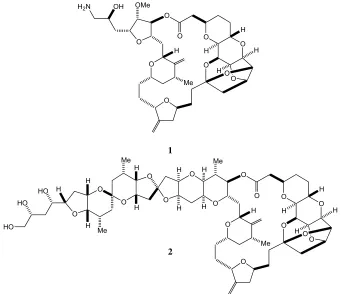
Figure 1.1: Eribulin (1) and halichondrin B (2)
The search continues for the next natural product success story and with an estimated 95% of the World’s oceans currently unexplored, the marine ecosystem continues to be a promising place to search.5 In recent years many novel bioactive metabolites have been isolated from marine organisms that have never been encountered in terrestrial organisms. The primary reason for the production of these compounds is defence. As many of these organisms are soft bodied and have no other form of physical protection, they must therefore rely upon these metabolites to guard them from predation.6 It is these metabolites that make ideal lead compounds for drug
discovery and development, especially with a recent report showing that over half the current prescription drugs contain a natural product derived active ingredient.7 The
demand for these natural products, often isolated in low natural abundance and from extremely rare species, means that synthetic pathways must be established for further investigation of their biological potential and possible use in treatment.
O O O O O O O O O Me H H H H H O
H2N OH OMe
1.2 Lithistid sponges
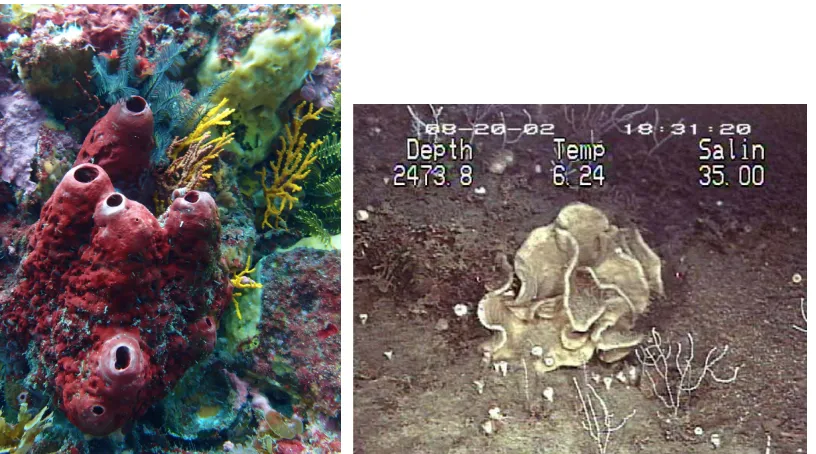
[image:19.595.177.418.338.635.2]The sponge order Lithistida is not a true order but a polyphyletic grouping of sponges, of diverse origins, and based upon the make up of their skeletons, comprising tightly interlocking siliceous spicules, named desmas (Figure 1.2).8,9 The spicules are needle like structures composed of silica and give the lithistid sponges a rock-hard consistency. The rigid desmas skeleton divides up the sponge in to the ectosome (external) and endosome (internal) tissues with the varying arrangements of the spicules defining the overall shape of the sponge. This variation leads to the vast array of physical external appearances of the sponge order for example Theonella swinhoei10 displaying tuberculate projections and Leiodermatium11 exhibiting thin flaring folded lamellae (Figure 1.3).
Figure 1.3: Lithistida order sponge examples Theonella swinhoei10 and
Leiodermatium11
This order of sponges is one principle avenue for investigation in terms of marine secondary metabolites, with new sub-species regularly being discovered and often containing novel bioactive compounds.12 These products encompass a wide range of molecular diversity including, but not limited to, macrolides, lipids, linear and cyclic peptides, alkaloids and sterols. They exhibit a variety of pharmacological properties such as, cytotoxicity, antimicrobial, antiviral and immunosuppressive activities. However the major limitation of investigating compounds derived from deep sea sponges, such as certain lithistids, is the logistics of species collection with natural habitats in depths of up to 500 metres.9 Nevertheless technical advances in recent years have seen huge developments in manned deep-sea submersibles, making exploration of these habitats feasible and further investigation of the metabolites possible.
1.2.1 Compounds extracted from lithistid sponges
A prime example of the diversity of the lithistid order of sponges is the Okinawan
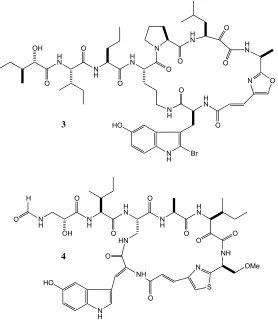
amino acid residues linked together. They also contain an α,β-unsaturated amide
conjugated to an oxazole (B-E)13 or thiazole (F-H, J-L)14 ring (Figure 1.4). Those worthy of particular mention are keramamides E and F (3 and 4), which showed cytotoxicity against human epidermoid carcinoma cells (IC50 of 1.6 and 1.4 µg/mL
respectively) and against murine lymphoma (L1210, IC50 of 1.55 and 2.0 µg/mL
[image:21.595.161.439.202.528.2]respectively).
Figure 1.4: Keramamide E (3) and F (4)
1.3 Macrolides
A commonly encountered subset of bioactive natural products are the polyketide macrolides, they possess a macrocyclic lactone functionality, with the cyclic ester containing more than eight atoms.15 They are also often highly oxygenated with both ether and hydroxyl groups, and contain numerous stereocentres. Marine derived macrolides exhibit a vast range of pharmacological activities including antiviral, antibiotic and cytotoxic properties making them desirable targets for innovative drug
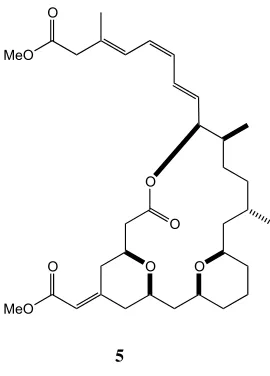
To date, marine organisms have provided numerous novel bioactive macrolides with a range of different action mechanisms. One such macrolide is (–)-exiguolide (5), originally obtained from the sponge Geodia exigua collected near Amami-Oshima, Japan (Figure 1.5).16 Following the isolation and elucidation, a total synthesis and biological testing of (–)-exiguolide has been carried out by Fuwa and co-workers.17
Figure 1.5: (–)-Exiguolide (5)
Fuwa found this new secondary metabolite to be a potent antiproliferation agent against a number of human cancer cell lines including, large cell lung carcinoma (NCI-H460, 0.01 µM), lung adenocarcinoma (A549, 0.59 µM), ovarian carcinoma
(SK-OV-3, 0.70 µM) and gastric carcinoma (MKN-74, 0.69 µM). Comparison of
(–)-exiguolide, using NCI COMPARE analysis, to more than 100 anticancer agents, including those targeting a DNA mode of action for example; intercalating and alkylating drugs, as well as topoisomerase II inhibitors, showed only minor similarities. Fuwa concluded that it was likely (–)-exiguolide may have a unique biological mode of action and since then has published further work exploring the bioactivity through the use of synthetic analogues.18 This work identified key functionalities on exiguolide that are essential in the antiproliferation activity (Figure 1.6).
O O
MeO O
O
O MeO
O
Figure 1.6: (–)-Exiguolide synthetic analogues and respective antiproliferative activity against human A549 cell lines
Fuwa showed that the C5 position was extremely important for activity, as although exchanging the methoxycarbonylmethylidene functionality for a hydroxyl (6) only saw a 5-fold drop in potency, masking the hydroxyl as the acetate (7) or introducing a methylene group (8) at C5 led to a complete loss in activity. They also found that the triene side chain at C19 was less important and could be replaced with a simpler diene-alkyl chain (9)without loss in potency compared to the C5 hydroxyl derivative, however truncating the side chain further (10) resulted in diminished activity. Fuwa is investigating this further through synthesis and evaluation of designed analogues, mouse xenograft studies and target identification.
55
O O
RO
O
O 19 19 MeO
O
6 R = H (2.9 µM)
7 R = Ac (>100 µM)
O O
H2C
O
O MeO
O
8 (>100 µM)
O O
HO
O
O
9E : Z = 5 : 1 (2.7 µM)
O O
HO
O
O
[image:23.595.158.440.70.438.2]1.4 Oxazoles in natural products
A number of marine derived natural products have been isolated containing one or more oxazole heterocycles, with the motif formed naturally through enzymatic synthesis (Scheme 1.1).19 The initial peptide precursor is assembled by cellular enzymes from genetically encoded amino acids serine or threonine. A zinc containing enzyme then coordinates with the carbonyl oxygen, activating the carbon for nucleophilic attack and stabilising the tetrahedral intermediate. Enzymatic bases can then deprotonate the nitrogen to form an imine, with zinc accepting the leaving hydroxide anion. A final oxidation step occurs, with flavin mononucleotide (FMN) acting as the biological oxidant, completing the oxazole synthesis.
Scheme 1.1: Biological oxazole synthesis
A particularly potent sub-group of oxazole containing metabolites are the tris-oxazole macrolides. They contain three consecutive oxazole moieties that form part of a lactone ring and often have elaborate side chains. Tris-oxazole macrolides possess numerous biological activities such as cytotoxic properties, antifungal activity and proteasomal-inhibition.20 One such family of these tris-oxazole macrolides are the kabiramides, isolated from a Thai marine sponge Pachastrissa nux found at a depth of 10-15 m.21 Biological assays established them to be both antimalarial (Plasodium falciparum K1) and cytotoxic for breast adenocarcinoma (MCF-7). Included in
Figure 1.7 are kabiramides B-D, G, J and K (11-16), with the tris-oxazole system clearly visible in the 25-membered lactone ring. The biological data shows the true potency of these compounds on sub-micromolar scale.
NH N H
O O
H
O Zn
B Enz
NH N O
O
Zn HB Enz
O
H
B Enz
NH N O
O Zn
B Enz
HB Enz OH
FMN FMNH2
NH N O
Figure 1.7: Kabiramide B (11), C (12), D (13), G (14), J (15) and K (16), including biological testing data 21
The cytotoxic properties of these metabolites usually involve a mechanism of action
via binding to actin, a multi-functional protein, which plays a vital part in many cellular functions including mechanical support, motility and cell division.20 Actin exists in two forms, a globular monomeric subunit, G-actin, or as a linear polymeric microfilament, F-Actin. The dynamic interchange from G-actin to the F-actin filaments is essential to cell motility and cytokinesis, the separation of cytoplasm prior to cell division. This dynamic process of assembly and disassembly is modulated by numerous actin-binding proteins, which include the gelsolin family of capping proteins. Gelsolin binds to the “barbed” fast growing ends of the microfilament preventing further monomer additions and thereby inhibiting the polymerisation. It has been shown, through X-ray crystallography, that these trisoxazole macrolides interact with actin in a hydrophobic cleft between the 1 and 3
H O
N
Me OMe O OMe N
O N O N O OMe
O OR2
OH OR1 O H O N
Me O OMe N
O N O N O OMe
O OR2
OH OR1 O 11 12 13 R1 CONH2 CONH2 H R2 Me Me H antimalarial IC50 (mM)
1.67 4.79 1.87
MCF-7 IC50 (mM)
0.45 0.47 0.02 14 15 16 R1 CONH2 CONH2 H R2 Me H Me antimalarial IC50 (mM)
NA 0.31 0.39
MCF-7 IC50 (mM)
subdomains (Figure 1.8) and thus allowing the long tail sections to participate in more extensive binding by becoming inserted in a further hydrophobic cavity deep within the actin structure.22
Figure 1.8: Two orientations of actin-kabiramide C complex (1.45 Å resolution)20
a)
[image:27.595.98.500.77.553.2]b) c)
Figure 1.9:a) Overlay of kabiramide C (red) and gelsolin (blue) based on the
superposition of the actin in their respective complexes. b) Space-fill representation of the interacting actin-kabiramide C residues. c) Space-fill representation of the
1.5 Leiodolide
1.5.1 Isolation of leiodolide A and B
In 2006 a new deep-sea marine sponge, of the genus Leiodermatium, was discovered by Fenical and co-workers.23,24 It was found in the Pacific Ocean off the coast of Palau in the protected Uchelbeluu Reef, and collected at a depth of 220 metres by manned submersible. The lyophilised sponge was exhaustively extracted with methanol, before separation and purification of the biological components. Following biological testing of the collected fractions, two were identified as displaying considerable cytotoxicity against human colon cancer cell lines. Subsequent isolation yielded two novel metabolites named leiodolide A (17, 8 mg, 0.001% dry weight,
Figure 1.10) and leiodolide B (18, 0.8 mg, 0.0001% dry weight). Identified as novel
19-membered macrolides, they were the first metabolites to be extracted from a
Leiodermatium genus sponge and a completely new class of mixed polyketide nonribosomal peptide natural products.
Figure 1.10: Leiodolide A (17) and B (18)
An initial National Cancer Institute 60-cell line panel biological assay was carried out on leiodolide A and showed significant cytotoxicity (mean GI50 = 2.0 µM). In
addition it showed enhanced potency towards non-small cell lung cancer (NCI-H522, GI50 = 0.26 µM), leukaemia (HL-60, GI50 = 0.26 µM) and ovarian cancer (OVCAR-3,
GI50 = 0.25 µM).
13 13 N 88 O 10 10 44 22 11 16 16 O O HO OMe OH 19 19 21 21 24 24 HO O OH
* 1313
1.5.2 Structural elucidation of leiodolide A and B
Structural determination of leiodolide A was carried out using a variety of NMR techniques in combination with high-resolution MALDI mass spectrometry. The mass
spectral analysis showed leiodolide A to have molecular mass of 598.2992 ([M + Na]+) with molecular formula of C31H45NO9 and consistent with the 1H and 13C NMR data. Analysis of the data received from COSY, HMBC, NOESY and
variable temperature NMR techniques showed leiodolide A to possess four olefinic carbon bonds, a conjugated oxazole-containing 19-membered macrolide core and an
α-hydroxyl-α-methyl carboxylic acid terminus side chain at C17.
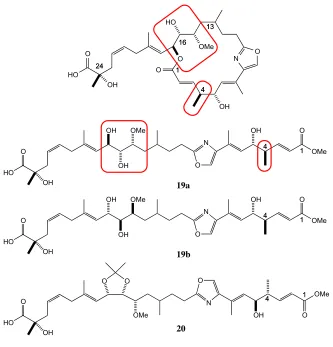
Ozonolysis degradation studies enabled the assignment of the C24 stereocentre through comparison of the chiral GC of the methylated product with authentic (R)- and (S)-dimethyl citramalate. Further derivatisation using Mosher’s methods was utilised in an attempt to assign the relative and absolute stereochemistry of the remaining stereogenic centres of leiodolide A. Initial ring opening of the lactone with sodium methoxide provided the methyl ester and 1,2-diol 19 (Figure 1.11), which was in turn treated with 2,2-dimethoxypropane and pyridinium p-toluenesulfonate to yield acetonide 20. It is at this point that the first indication to the apparent confusion regarding the stereochemistry at C4 and C5 can be observed. In a comparison of the published structures of leiodolide A (17)and the ring opened form (19a) a flip in the stereochemistry at C4 is clearly visible. This results in the C4-C5 stereochemistry being depicted with a syn configuration (with respect to the open chain form) in 17
Figure 1.11: Published leiodolide A degradation products. Highlighted areas indicating flip in stereochemistry
Further evidence for the stereochemical ambiguity at C4 and C5 arises from the derivatisation following reaction with α-methoxy-α-trifluoromethylphenyl acetic acid (MTPAA), using modified Mosher’s ester method to form tris-MTPA esters at C5, C16 and C24. The stereocentre at C5 was assigned as R with H6 exhibiting a large
negative Δδ(S-R) shift difference and Me4 a large positive value. The other surrounding
protons at H2, H3, and H4 however unexpectedly gave small negative shift values. It
was assumed that, due to the macrocyclic nature of leiodolide, the C16 ester is able to exert transannular interference, reaching across the ring, thus inducing the negative
Δδ(S-R) shift difference. Unfortunately with limited material they were unable to carry
out any further analysis on the centres at C4 and C5 leading Fenical to describe the suggested 4S,5R configuration as a “tenuous interpretation”.
13 13 N O 44 11 16 16 O O HO OMe OH 24 24 HO O OH HO O OH OH OH OMe O N 44 11 OMe O OH HO O OH OMe O
N 44 11
Further ambiguity arises from the undetermined C13 stereocentre, which due to its structural isolation from the rest of the molecule made it impossible to define the absolute stereochemistry of this methyl group using spectroscopic techniques alone.
Leiodolide B (18), co-isolated with leiodolide A, is hypothesised to be formed via
enzymatic bromination of 17, promoting cyclisation to form the THF ring (Scheme 1.2). Although it was not possible to assign the stereochemistry at the α-hydroxyl-α
-methyl carboxylic acid terminus C24 of leiodolide B due to lack of material, it was assumed, following this hypothesis to be the same as leiodolide A.
Scheme 1.2: Hypothesised biosynthesis of leiodolide B from leiodolide A
13
N O
4 1
16 O O
HO
OMe
OH 24
HO O
OH
13
N O
4 1
16
O O
OMe
OH 24
HO O
OH
O
Br
13
N O
4 1
16 O O
HO
OMe
OH 24
HO O
OH
Br Br O Enz
17
1.6 Stambuli synthesis of key leiodolide A fragments
To date there has been no reported synthesis of leiodolide A, with the only paper published on the synthesis of the molecule being by Stambuli et al., which documented the synthesis of their key fragments, but not their assembly.25 There has however been a synthesis of the published structure of leiodolide B by Fürstner et al., unfortunately the data acquired from their synthetic sample did not match that of the isolated natural product.26
1.6.1 Stambuli retrosynthetic analysis
Initial assessment by Stambuli, shown in Scheme 1.3, identified a disconnection between C18 and C19 to reveal the macrolide and envisaged the side chain (21) could be installed via a Julia olefination. The macrocycle could then be broken down further to three fragments, C1-C7 stannane 22, the oxazole ring (23) and polyoxygenated C11-C18 fragment 24, containing the unknown C13 stereocentre.
13 13
N O
44 11
16 16
O O
HO
OMe
OH 24
24 HO
O
OH Julia olefination
Mitsunobu lactonization
Stille coupling Negishi coupling
24 24 TMSEO
O
OH
SO2BT
N O
BuS
I SnBu3
44 11
OEt O
OH O
16 16 O 1313
Br OTES
OMe
21
22
1.6.2 Subunit synthesis
The C19-C25 subunit synthesis employed homopropargylic alcohol 25 (Scheme 1.4) as the starting point and following a Mitsunobu reaction with 2-thiobenzothiazole and oxidation with mCPBA afforded sulfone 26. The carbon skeleton of the subunit (27) was then completed via copper-mediated addition on to 2-methallyl chloride. From this point the carboxylic acid (28) could be accessed via Sharpless asymmetric dihydroxylation and TEMPO oxidation of the resultant primary alcohol. Final acid-catalysed protection as 2-(trimethylsilyl)ethyl ester 29 and (Z)-selective palladium catalysed alkyne reduction completed the fragment. Trimethylsilylether ester was chosen as the protecting group to allow a single final deprotection step, while also eliminating the need to carry out a selective saponification in the presence of the macrolide.
Scheme 1.4: Stambuli side chain 21 synthesis
The C1-C7 subunit was synthesised in three steps from Davies' SuperQuat oxazolidinone (30, Scheme 1.5) and known aldehyde (31), initially via an Evans aldol reaction to yield the alcohol (32). DIBAL cleavage of the chiral auxiliary revealed aldehyde 33 that underwent Horner-Wadsworth-Emmons (HWE) olefination to
OH
1. BTSH, PPh3, DIAD, THF 2. mCPBA, NaHCO3, CH2Cl2
86%
SO2BT
CuI, K2CO3, DMF 82%
SO2BT
1. K2OsO4•2H2O, (DHQ)2PHAL, K3Fe(CN)6, K2CO3, t-BuOH:H2O, 85% (90 e.e.) 2. TEMPO, NaClO2, NaClO, MeCN NaH2PO4 buffer, 90%
Cl
SO2BT
O
OH HO
SOCl2, TMS-EtOH 79% SO2BT
O
OH TMSEO
H2 (1 atm), Pd/BaSO4, CH2Cl2
99% O
OH TMSEO
SO2BT
21 29 28
Scheme 1.5: Stambuli synthesis of C1-C7 subunit 22
The oxazole fragment was synthesised over two steps from 2-thiooxazole 34 (Scheme
1.6) via a previously published method.27 This involved deprotonation with n-BuLi at
the 5-position followed by quenching with iodine to produce iodooxazole 35. A halogen dance rearrangement with LDA then gave access to 2-butylthio-4-iodooxazole (23).28
Scheme 1.6: Synthesis of oxazole fragment 23
The northern C11-C18 subunit was synthesised from known alcohol 36 (Scheme 1.7), which was initially converted to the methyl ether 37 before undergoing ring opening to the corresponding Weinreb amide. To prevent recyclisation back to lactone 37 on silica it was necessary to immediately protect the free hydroxyl as the triethylsilyl ether (38) before purification. DIBAL reduction of amide 38 to the aldehyde enabled homologation of the subunit via Wittig olefination with salt 39, resulting in olefin 40 in a 1 : 1 (E : Z) mixture.
N O
H O
SnBu3
+ Bu2BOTf, Et3N, CH2Cl2
99%
OH SnBu3 Xc
O
DIBAL, THF
OH SnBu3 H
O Ba(OH)2•8H2O, wet THF
76% (2 steps) (EtO)2P
O
OEt O
OH SnBu3 O
OEt O
O
Bn
30 31 32
22 33
N O BuS
N O BuS
N O BuS
n-BuLi, THF then I2
84%
LDA, THF then H2O
41% I
I
Scheme 1.7: Stambuli synthesis of C11-18 precursor 40
The next step, reduction of the alkene and benzyl deprotection, proved to be problematic as treatment with various palladium sources resulted in hydrogenolysis of the benzyl ether to alkane 41 (Scheme 1.8). This mechanistic pathway has been previously described with both homoallylic cyclopropanes29 and homoallylic ethyl ethers.30 It is a result of olefin migration to form palladium π-allyl species 42 followed by elimination of the benzyl ether.
Scheme 1.8: Hydrogenolysis pathway
This problem was solved by switching to a two-step platinum/palladium process previously utilised by Nicolaou in the synthesis of englerin A (Scheme 1.9).31 The epimeric alcohols (43a and 43b) were then separated by column chromatography and assigned through analysis of the X-ray structure of silyl deprotected alcohol 43b. The
O
O O
OH
OMe2SO4, K2CO3, (CH3)2CO 82% O O O OMe O O N O OMe OMe OTES O
1. MeNH(OMe)•HCl, AlMe3, THF
2. TESOTf, 2,6-lutidine, CH2Cl2
88% (2 steps)
1. DIBAL, THF 2. 39, n-BuLi, THF
72% (2 steps) E : Z = 1 : 1 O OMe OTES O OBn HO OBn
1. NBS, PPh3, CH2Cl2
2. n-BuLi, Ph3P+EtBr-, THF
75% (2 Steps)
Ph3P
OBn Br 36 37 38 40 39 O OMe OTES O OBn O OMe OTES O OBn Pd "Pd" O OMe OTES O Me
Appel conditions. The late stage formation of the stereocentre at the undefined C13 position gives rapid access to both epimers and will therefore aid in the determination of the overall stereochemistry of leiodolide A. Once the assignment has been determined, this methodology would not be suitable for future synthesis of leiodolide A as it generates a 50:50 ratio of the two possible optical isomers, therefore wasting half of the material synthesised. With all the required fragments in hand Stambuli is currently working on a coupling strategy to lead to the completion of leiodolide A.
Scheme 1.9: Synthesis of epimeric C11-C18 subunits 24a and 24b O
OMe OTES O
OBn
1. H2 (1 atm), Pt/C, PhMe
2. H2 (500 psi), Pd/C, EtOAc
88% (2 steps)
O **
OMe OTES O
OH
O
(R) (R)
OMe OTES O
OH
O
(S) (S)
OMe OTES O
OH
CBr4, PPh3, Et3N, CH2Cl2
88%
CBr4, PPh3, Et3N, CH2Cl2
91%
O
(S) (S)
OMe OTES O
Br
O
(R) (R)
OMe OTES O
Br
40 43
43a
43b
24a
1.7 Fürstner synthesis of leiodolide B isomers
[image:37.595.95.498.284.501.2]Fürstner and co-workers achieved their initial aim of synthesising the two possible published structures of the methyl ester of leiodolide B (44a and 44b, Figure 1.12), unfortunately the data obtained from the synthetic samples did not match that of the isolated natural product. Further work by Fürstner enabled the synthesis of two additional stereoisomers at C4 and C5 (44c and 44d) but they also failed to result in an authentic sample of leiodolide B, with the discrepancies in the data associated with the ambiguous C4,C5 region of the molecule.
Figure 1.12: Four diastereomers of leiodolide B methyl ester synthesised by Fürstner
1.7.1 Fürstner retrosynthetic analysis
In their retrosynthetic analysis of leiodolide B, a section of the molecule containing the polysubstituted THF ring as well as the undefined stereocentre at C13 was identified as the key fragment (45, Scheme 1.10). Following a disconnection of the lactone, further disconnections between C11-C12 as well as C21-C22 released this fragment along with the side chain subunit 46 and fragment 47 containing the oxazole motif.
N O
55 44 O O
OMe
OH MeO
O
HO
O
Br
N O
O O
OMe
OH MeO
O
HO
O
Br
N O
O O
OMe
OH MeO
O
HO
O
Br
N O
O O
OMe
OH MeO
O
HO
O
Br
44a (4S,5R,13R) 44b (4S,5R,13S)
Scheme 1.10: Fürstner retrosynthetic analysis
1.7.2 Subunit synthesis
Initial work focused on the synthesis of the key fragment, specifically the THF ring, which was formed in three steps from chiral epoxide 48 (Scheme 1.11). Conjugative ring opening of this epoxide in the presence of MeMgBr in conjunction with stoichiometric amounts of CuCN and P(OPh)3, yielded allenol 49. Dihydrofuran 50
could then be afforded via Marshall and Pinney Ag(I)-induced cyclisation conditions to efficiently transfer the chirality from the allenol to the product.32 The final two stereocentres could then be installed through bromo-esterfication with NBS in aqueous DMF to yield the fully elaborated THF ring (51).33 A series of protecting group manipulations was followed by a Dess-Martin oxidation, which allowed the incorporation of the unknown C13 stereocentre via addition of freshly prepared Grignard reagent of either stereoisomer of 52 (R-series shown for clarity). Addition of the enantioenriched C13 containing fragment at a late stage in the subunit synthesis is advantageous for future leiodolide B synthesis as it gives complete control over the
13 13
N O
44 11
16 16
O O
OMe
OH Wittig
olefination
Yamaguchi lactonization
Alkylation
24 24 HO
O
OH
O
Br
13 13
I 16
16
OH OMe O
Br H
O
N O
44 11
OH O
OH 24
24 O
O O
PPh3
Br
46
C13 stereochemistry. Final functional group manipulations of the resultant PMB ether
53 afforded the key C12-C21 subunit 45 as the required iodide.
Scheme 1.11: Fürstner (13S) poly-substituted THF subunit synthesis
Synthesis of the oxazole containing C3-C11 fragment 54 (Scheme 1.12) began with the installation of the C4 and C5 stereocentres by subjecting the stannylated aldehyde
31 to Evans boron-aldol conditions. The chiral auxiliary of aldol adduct 55 was then reductively cleaved with LiBH4 to yield the diol, which in turn was protected as an
acetal, before Stille cross-coupling with oxazole triflate 56 to complete the fragment.
OTBDPS
OTBS O
O
O Br TBDPSO
OTBS
BrMg 13
13 OPMB
O
OTIPS Br
TBDPSO OPMB
OH
OTBDPS •
OTBS HO
O TBDPSO
OTBS
O MeMgBr, CuCN,P(OPh)3,
THF, -40 ºC to RT AgNO(CH3)23CO, H, CaCO2O3,
91%
NBS, aq DMF, 10 ºC
64% 99%, d.r. > 95:5
1. NaHCO3, MeOH/H2O, 85% 2. TIPSOTf, 2,6-lutidine, CH2Cl2, 93% 3. Cl3CCOOH, THF/H2O, 86 % 4. DMP, pyridine, CH2Cl2, 0 ºC, 90%
5. 52, t-BuLi, Et2O, -78 ºC
O
OTIPS Br
TBDPSO I
OMe
1. LiHMDS, THF, MeOTf, -78 ºC to RT, 87 % 2. DDQ, CH2Cl2/H2O, 99% 3. I2 PPh3, imidazole CH2Cl2, 92%
48 49 50
51
52 53
Scheme 1.12: Synthesis of oxazole containing subunit
The final side chain terminus fragment (46) was synthesised in five steps from
L-malic acid 57 (Scheme 1.13). Initial protection with pivaldehyde afforded acid 58,
which then underwent diastereoselective methylation and borane reduction to yield alcohol 59. Conversion of the alcohol to the Wittig salt, via the intermediate iodide, then set the scene for coupling.
Scheme 1.13: Synthesis of side chain subunit
O
O N
O Ph
Bu3Sn H Bu3Sn
OH O
Xc
O O
PMP O N 1. LiBH4, THF, 0 ºC, 97%
2. 4-methoxybenzaldehyde dimethylacetal, cat CSA, DMF, 88%
3. 56 [Pd(PPh3)4] (70 mol%) CuTC, [Bu4N][Ph2PO2] DMF, 90%
N O
TfO Bu2BOTf, Et3N,
CH2Cl2, -50 ºC, 95%
31 55
56
54
O
HO OH
O O
OH
OH
O O
O O
O
O O O
O O
Pivaldehyde, H2SO4 cat., pentane, reflux, 50 %
1. LiHMDS, THF, MeI, -78 ºC to -20 ºC, 91 % 2. BH3•SMe2, THF -20 ºC to RT
1. I2, PPh3, Im, CH2Cl2, 41% 2. PPh3, MeCN, MW, 150 ºC, quant
PPh3
I
OH
46
57 58
1.7.3 Subunit assembly
The coupling strategy began with the key C12-C21 fragment and construction of the C11-C12 bond via alkylation (Scheme 1.14).34 Reductive ring opening of the PMP acetal of alkylation product 60 released the primary alcohol at C3 in readiness for macrolactonisation. Previous model studies in house had shown that side chain installation should be given priority, therefore temporary protection of the alcohol as the benzoate ester was carried out. Selective deprotection of the TBDPS ether at C21 in the presence of the TIPS ether, followed by Dess-Martin oxidation to aldehyde 61, enabled Wittig olefination with the ylide formed from phosphonium salt 46. Treatment of the C3-C25 advanced intermediate 62 with NaOMe in MeOH resulted in concomitant benzoate cleavage at C3 and conversion of the terminal acetal into the methyl ester. Further elaboration through HWE olefination with the aldehyde resulting from DMP oxidation at C3 yielded the completed open chain of leiodolide B (63). Silyl group deprotection followed by palladium catalysed unveiling of the
seco-acid at C1 enabled Yamaguchi lactonisation to form the macrolide ring. Final PMB cleavage afforded leiodolide B as the methyl ester 44a. The C13 epimeric methyl ester was synthesised in an analogous manner using the (13R)-THF subunit.
Comparisons of the methyl esters to the natural product data failed to produce a match, with small but significant differences in the spectra. As these initial comparisons were made between the free acid natural product and the methyl ester synthetic products, Fürstner attempted to clarify that the methyl ester was not the source of the difference in spectra, and therefore synthesised the free acid. Unfortunately they had great difficulty in selectively cleaving the methyl ester in the presence of the macrolide, however they were able to obtain a small quantity of the free acid 18 through saponification with excess Me3SnOH followed by HPLC
Scheme 1.14: Subunit coupling and completion of leiodolide B O OTIPS Br TBDPSO I OMe O O PMP O N O OTIPS Br TBDPSO OMe N O O O PMP
Et2NLi, THF, -78 ºC, 79%
O OTIPS Br OMe N O OPMB BzO O OTIPS Br OMe N O OPMB O O BzO O OTIPS Br OMe N O OPMB MeO O HO O O N O O O OMe OH RO O HO O Br
1. DIBAL, PhMe, -40 ºC, 75%
2. Benzoyl chloride, Hünigs base, DMAP, CH2Cl2, 80%
3. HF•Pyr, THF, Pyr, 0 ºC, 72% 4. DMP, CH2,Cl2, 0 ºC to RT
46, n-BuLi, THF, -78 ºC to RT, 71%
1. NaOMe, MeOH, 0 ºC to RT 2. DMP, CH2,Cl2, Pyr, 0 ºC to RT
3. Allyl diethyl phosphonoacetate, LiHMDS, THF, 72%
1. HF.pyridine, THF, Pyr, 76%
2. 4-MeC6H4SO2Na, [Pd(PPh3)4] (16 mol%), MeOH, THF
3. 2,4,6-trichlorobenzoyl chloride, PhMe, Et3N, DMAP, 45 ºC, 68%
4. DDQ, CH2Cl2 H2O, 0 ºC to RT, 47%
+
O O
H
44a R = Me
18 R = H Me3SnOH,
Upon further examination of the product data, especially the 13C NMR data, Fürstner found large discrepancies in chemical shifts between the isolated natural product and the (13S)- and (13R)-synthetic products. Believing it to be a related to the 4S,5R
ambiguity, the 4R,5S diastereomers of both epimers at C13 were synthesised, but the data from these was also inconsistent with the data from the elucidation paper (Figure 1.13). In particular, the C6,C7 and C21,C22 vinylic carbons show a large deviation (2-3 ppm) in chemical shift from that found in the natural product. Fürstner concluded that constitutional assignment still appeared correct with the chemical shift differences being too small to suggest misassigned geometries in these olefinic “hotspot” regions. He suggests that it is more likely that the disparity between the data sets comes from a subtle structural difference and Fürstner is currently attempting to ascertain this difference.
C# Isolated 4S,5R,13R 4S,5R,13S 4R,5S,13R 4S,5R,13S
4 45.1 44.7 44.5 45.6 46.2
5 71.7 72.0 72.0 71.9 71.6
6 131.2 128.3 128.0 128.9 129.5
7 125.5 128.4 129.2 129.1 128.4
8 143.3 143.1 143.6 143.7 143.5
19 84.0 84.5 84.7 84.4 84.2
20 37.6 37.3 37.3 37.5 37.8
21 126.5 127.9 127.9 127.9 127.8
22 130.4 128.4 128.4 128.5 128.5
23 39.2 39.2 39.2 39.2 39.2
24 76.4 75.7 75.7 75.8 75.7
[image:43.595.118.478.326.667.2]∆∂≥ 1 ppm, 0.5 ppm ≤∆∂ < 1 ppm, 0.3 ppm ≤∆∂ < 0.5 ppm
Figure 1.13: Comparison of the 13C NMR data between the isolated natural product
of leiodolide B (18) and Fürstner’s four synthetic diastereomeric esters ([D4]MeOH)
N
88 O
77 66 55 44 O O
OMe
OH 20
20 21 21 22 22
23 23 24 24 MeO
O
HO
O 19 19
1.8 Florence leiodolide A synthetic strategy
1.8.1 Retrosynthetic analysis
Any proposed strategy for the synthesis of leiodolide A must be flexible so as to take into account both the currently unidentified stereochemistry at C13 and the mounting uncertainty regarding the integrity of the stereocentres C4 and C5. Therefore a convergent approach that will accommodate the installation of these functionalities in an efficient manner is of paramount importance.
It is also important, within this strategy, to be able to manipulate the key subunits in such a way that mechanistically useful analogues can be produced. This is because the overall aim of this investigation is not just to ascertain the absolute stereochemistry of leiodolide A and establish a route to total synthesis, but also to explore the mechanism behind the bioactivity of leiodolide A, that is currently unidentified.
Scheme 1.15: Florence retrosynthetic analysis of leiodolide A
1.8.2 Previous work
Previous work in the group on the synthesis leiodolide A has focused on three areas; development of a vinylogous Mukaiyama aldol reaction (VMAR) for installation of C4 and C5 stereocentres (Scheme 1.16), completion of the C21-C25 side terminus fragment and synthetic efforts towards the C11-C20 subunit.35 A new syn approach to the VMAR would enable the rapid, asymmetric construction of the C1-C10 subunit and will be discussed in detail in the next chapter.
Scheme 1.16: General reaction scheme for 1,2-syn VMAR
13 13
N O
44 11
16 16
O O
HO
OMe
OH 24
24 HO
O
OH Cross-coupling
Mitsunobu lactonization
Cross-coupling
SnMe3 24
24 MeO
O
OTES
N O
I
44 11
OMe O
OTIPS
O 1313
I O
OMe PMBO
64
66 65 17
R O
H
OTBS
OMe +
O
OMe OH
The first step in the C21-C25 fragment synthesis was a one-pot allylation of methyl pyruvate to install the α-hydroxy α-methyl quaternary centre at C24 (Scheme 1.17). This was introduced via initial addition of allyl bromide to a prepared Sn(II) catecholate-(+)-diisopropyl tartrate (DIPT) catalyst, followed by the directed addition of the methyl pyruvate 67. The resulting allylated product 68 was produced in good yield and enantiomeric excess and the free hydroxyl was then protected as the triethylsilyl ether (TES).
Scheme 1.17: C24 quaternary stereocentre installation
Subjecting alkene 69 to ozonolysis conditions provided the aldehyde, which in turn could be converted to the dibromoalkene (70) by treatment with carbon tetrabromide and triphenylphosphine (Scheme 1.18). The final step involved a one-pot debromination, followed by Pd-mediated cross coupling to yield exclusively the (Z)-vinyl stannane. The selectivity of this two step process is a result of the initial highly stereoselective, oxidative palladium insertion into the least sterically hindered bromine-carbon bond. Transmetallation with tributyltin hydride followed by reductive elimination then yielded the (Z)-vinyl bromide, which undergoes standard cross-coupling with hexamethyl distannane to afford the completed subunit (64).
Scheme 1.18: Completion of C21-C25 subunit
MeO O
O
O Sn O
O
O CO2t-Bu
CO2t-Bu
CuI (cat), DBU, CH2Cl2, -78 ºC, 16 h 64%
ee = 86%
MeO O
HO
MeO O
TESO TESOTf, 2,6-lutidine
-78 ºC, 2 h 63%
67 68 69
MeO O
TESO
1. Na2CO3, O3, CH2Cl2
DMS, 2 min, 88% 2. CBr4, PPh3, CH2Cl2
-78 ºC, 3 h, 34%
MeO O
TESO
[Pd(PPh3)4] (5 mol%) n-Bu3SnH, PhH, 40 ºC
then (Me3Sn)2, Hünigs base,
80 ºC, 3 h, 17%
Br Br
MeO O
TESO
SnMe3
Work on the C11-C20 subunit unfortunately encountered difficulties due to the polyoxygenated nature of the fragment. These problems included poor reactivity of aldehydes to standard olefination conditions and difficulties involving protecting groups with; silyl migrations and a general lack of reactivity in both protection and deprotection of hydroxyl groups (Scheme 1.19). It was clear that a new route to this subunit must be devised and will therefore be one of the aims of this work.
Scheme 1.19: Previous C11-C20 problems
BzO OTBS
OH OMe
O TBSO
O OTBS
OR OMe BzO
TBSO
R = PMB, MOM, MTM, BOM
OTBS
OH OMe
O H
OTBS
OH OMe
O EtO KHMDS, 18-crown-6
THF, -78 ºC O EtO
Chapter Two
Synthesis of the C1-C10 subunit
2.1 Computational studies
The tenuous assignments given in the isolation paper, allied with the publication of Fürstner's work on leiodolide B,26 led to a computational investigation being undertaken to gain further insight into the C4, C5 and C13 stereocentres.
2.1.1 Bifulco computational chemistry
The use of computational modelling in the assignment of the stereochemistry of organic compounds was pioneered in 2002 by Bifulco and co-workers and has since become an increasingly popular tool to natural product chemists.36,37 They were able
to demonstrate that structural reassignments made following total synthesis of a number of natural products could, in fact, have been made through comparisons of the experimental and calculated chemical shift data. The computational data was calculated using an ab initio method at the Hartree-Fock (HF) level of theory for the geometry optimisation, which then allowed GIAO (Gauge Including Atomic Orbitals)
13C NMR chemical shift calculations to be made. The experimental and calculated 13C NMRdata were then compared to one another in a correlation plot, from which
Figure 2.1: The two possible structures for antidesmone
Bifulco followed up this work by applying it to more flexible organic compounds in a bid to distinguish between the four stereoisomers 73-76 (Figure 2.2).37 In an analogous manner, he calculated the optimised geometries of the most stable conformers (up to a limit of 25 kJ mol-1 from lowest energy conformer) for each stereoisomer. The GIAO 13C NMR chemical shift data could then be calculated for each conformer, with the Boltzmann-average for each carbon plotted against the experimental data. Using a Boltzmann-average value gives a greater weighting to the lower energy conformers whilst also taking into account the possibility of higher energy conformers being present. The correlation plot enabled him to calculate the
r values once again and these were used to assign both isomer 73 and 76, with a value of 0.999. Isomers 74 and 75 could be distinguished less unequivocally through the linear correlation coefficient (both 0.998), and it was therefore necessary to interpret the data using another parameter. This parameter was corrected mean absolute error (CMAE) or Δδ, defined as the difference between the scaled-calculated shift values and the experimental 13C NMR chemical shift values. Utilising this parameter it was possible to determine the departure of fit for a single 13C data point for each of the possible conformers considered. This approach removes the risk of systematic errors in the shift calculation and enabled the final two assignments to be made for 74 and
75. Following the publication of these two pieces of work these methods have been used by various groups in their stereostructural assignments and reassignments of numerous natural products.38–41
77
88 99 33 22 66
N H
44 55 11
O O
OMe 77
88 99 33 22 66
44
N
55 11
O
OMe
OH
71 72
Devations in carbon data
Experimental Calculated 71 Calculated 72
C2
132.2 132.6 157.9
C3
138.9 138.7 105.8
C4
Figure 2.2: The four stereoisomers investigated by Bifulco
2.1.2 Goodman CP3 and DP4 progression
Bifulco’s work was then taken forward by the Goodman group who identified that while the use of the Δδ parameter did reduce some of the systematic errors in the shift calculation, it failed to take into account that these errors could be different for different carbon types.42 They looked to remove the errors by comparing the
differences in calculated shift between two possible diastereoisomers with the differences in experimental shift. In doing this they developed a new parameter, CP3, which was significantly more reliable in making the correct stereostructural assignment than those employed by Bifulco. They were able to demonstrate the effectiveness of the new parameter on a range of structures including comparisons between pairs of diastereoisomers (for example 77 and 78 in Figure 2.3). This new parameter also offers a measure of the confidence level of the assignment (through Bayes’ theorem), using a combination of the 1H and 13C NMR data, rather than their individual use, offered the highest probability as to the correct assignment.
11
22 33
44
55 66 77 88
99
10 10 HO
HO HO
HO OH OH
OH
OH
OH OH OH
OH
73
75
74
Figure 2.3: Diastereoisomer pairs assigned with CP3 parameter
Unfortunately the CP3 parameter has one major limitation in that, for a given structure with only two possible diastereoisomers, it requires the experimental data for both isomers. This is extremely problematic when looking towards natural products with only a single isolation data set available that could have many possibly structural assignments. The Goodman group then looked, therefore, to develop a new methodology that would have the advantageous attributes of the CP3 work, without the necessity of the expensive and time-consuming task of synthesising all possible stereoisomers. The new method is the DP4 probability, which, rather than being a parameter obtained from the data, is a probability directly calculated from the data for each possible structure.43
The computational method employed is similar to the previous work by Bifulco with initial conformational searches conducted using the Monte Carlo Multiple Minimum (MCMM) method with the Merck Molecular Force Field (MMFF) and a 50 kJ mol-1 upper energy limit. All conformers that were within 10 kJ mol-1 of the global minimum were then carried forward for single-point ab initio calculations. The 10 kJ mol-1 cut off was found to be sufficient to get reliable results, an increase to 25 kJ mol-1in previous work did not lead to improved accuracy.44 The energy and GIAO shielding constants could then be carried out at the B3LYP level of theory with 6-31G(d,p) basis sets using the Jaguar programme. Using the shielding data, the NMR
66 77 44 55 33 OH 22 88 11 O OEt OH O OEt Position 1 2 3 4 5 6 7 8 77 176.85 48.45 74.26 138.21 121.90 122.50 121.06 11.67 78 174.57 48.32 76.55 139.59 121.50 122.56 121.01 18.42 77 175.50 46.52 73.73 141.53 125.94 128.05 127.31 10.95 78 175.67 47.08 76.12 141.58 126.53 128.24 127.77 14.27
13C Calculated 13C Experimental
77 78
shifts were calculated in the usual way after being subject to Boltzmann averaging. For the DP4 probabilities to be calculated extra data points are also required and these are obtained from a group of reference compounds (with known experimental data) to give a data set containing 1717 13C and 1794 1H shift data points. This provides the mean (µ) of 0, standard deviation (σ) of 2.306 ppm (13C) and 0.185 ppm (1H) and degrees of freedom (v) of 11.38 (13C) and 14.18 (1H). All of this data can then be simply put into an applet provided by the Goodman group or, alternative calculated longhand using the equation in Figure 2.4.
Figure 2.4: DP4 probability (based on Bayes’ theorem)43
Using this methodology Goodman was able to distinguish between the two possible isomers of nankaurine A (79 and 80, Figure 2.5) with only one set of experimental data. Nankaurine A, isolated in 2004 was initially assigned as 80 by Kobayashi,45
however in 2006 the same group reassigned the structure as 79.46 The configuration of
79 was finally confirmed by Overman in 2008, through the total synthesis of both isomers, followed by comparison to the isolation data.47
Figure 2.5: Possible structures of nankaurine A
Me N
H N
Me N
NH
The DP4 probability calculations of the 13C NMR shifts assigned structure 79 with a probability of 79.5% and structure 80 with a 20.5% chance of being correct. The same calculations carried out using the 1H NMR shift data identified a probability nearly
100% in favour of 79 and only a 3.2 x 10⁻⁶ % possibility of the data corresponding to
80. Combining the carbon and proton NMR data, the structure of nankaurine can be assigned as 79 with a near 100% probability and 80 with a 10-7 % possibility. This is in stark contrast with Bifulco’s CMAE Δδ parameter, which gives no clear indication as to the correct structure with a 50:50 likelihood of assignment. Goodman was able to further show the effectiveness of the DP4 probability in the assignment of the correct structure from eight possible isomers for neopeltolide (81, Figure 2.6) and both aspergillide A (82) and B (83). This evidence shows how powerful a tool computational chemistry, combined with DP4 probability calculations, can be in the field of natural product structural assignment.
Figure 2.6: Neopeltolide (81), aspergillide A (82) and B (83) probabilities
2.1.3 Computational investigation of leiodolide A
In the case of leiodolide A, there are eight diastereoisomer possibilities that may require synthesis, so any indications offered by computational analysis, not necessarily limited to identifying the correct isomer, but simply excluding the least likely configurations, is likely to save both considerable time and expense in the overall assignment and synthesis. Following Goodman’s approach, the eight possible configurations, accounting for the ambiguous stereochemistry at C4 and C5, as well as the unassigned stereocentre at C13, were investigated. The conformational searches
O O
HO O
82 (Probability 100%)
O O
HO O
83 (Probability 100%) O
O O
OMe
O O
N O
NH OMe O
were carried out using Macromodel, interfaced via Maestro, and the evaluations completed using MCMM method and the MMFF force field with an upper energy limit of 50 kJ mol-1. Use of this method identified 99 conformers that were within
[image:54.595.131.462.302.597.2]10 kJ mol-1 of the global minimum window for the 8 possible diastereomers, with the number found for each specific configuration shown in Figures 2.8 and 2.9. The high number of conformations is attributed to the number of rotatable bonds in the ring that, through rotation, enable small energy increases in one portion of the macrolide to be minimised else where around the ring. An overlay plot of 4S,5R,13S (Figure 2.7) gives a representative example of the possible conformations that the molecule can adopt within the relative energy window.
Figure 2.7: Overlay plot of 4S,5R,13S
Unfortunately computational issues hampered the ability to carry out the energy and GIAO shielding constant calculations. Nevertheless, significant observations could be made from the conformational search results of the eight diastereomers shown in
Figure 2.8: (13S) series lowest energy conformations (number of conformations found within 10 kJ mol-1 of the global minimum)
4S,5S,13S
(15 conformations found)
4S,5R,13S
(12 conformations found)
4R,5R,13S
(17 conformations found)
4R,5S,13S