ISSN Print: 2152-7180
DOI: 10.4236/psych.2017.814145 Dec. 6, 2017 2295 Psychology
Development and Validation of the
Self-Regulated Learning Test Anxiety Scale
Rayne A. Sperling
*, Philip M. Reeves, Amanda L. Gervais, James O. Sloan
The Pennsylvania State University, State College, PA, USA
Abstract
Four studies report the development and psychometric properties of the new Self-Regulated Learning Test Anxiety Scale (SRLTAS). The measure assesses aspects of test anxiety (TA) from a Self-Regulated Learning (SRL) perspective and provides evidence regarding areas of TA that may be targeted for subse-quent learning strategy interventions. Study 1 provided descriptive informa-tion, explored the factor structure, and addressed variance in TA across test item formats and student characteristics. Study 2 examined the stability of the SRLTAS and explored initial relations between the SRLTAS and other known TA measures. Study 3 provided confirmatory validity evidence and tested the factor structure in a new sample. Study 4 provided extended validity evidence as SRLTAS scores were examined with other representative SRL scores.
Keywords
Test Anxiety, Self-Regulated Learning, Motivation, Learning Strategies, Emotion
1. Introduction
In the last several decades, hundreds of published studies examined test anxiety (TA), as researchers and practitioners sought to better understand TA and re-lated constructs and simultaneously develop and test interventions to limit the de-bilitating effects of anxiety on test performance (e.g., Pintado, Sánchez-Mateos, & Escolar-Llamazares, 2016; von der Embse, Barterian, & Segool, 2013). Current research on TA has thrived in an era of high stakes testing where approximately 25% - 40% of students consistently experience TA. Despite the abundance of work that has been conducted, research continues to produce new insights (e.g.,
Bellinger, DeCaro, & Ralston, 2015; Putwain, Daly, Chamberlain, & Sadreddini, 2015). For example, Barrows, Dunn and Lloyd (2013) recently reported that test anxiety predicted exam scores and numerous studies have drawn additional
at-How to cite this paper: Sperling, R. A., Reeves, P. M., Gervais, A. L., & Sloan, J. O. (2017). Development and Validation of the Self-Regulated Learning Test Anxiety Scale. Psychology, 8, 2295-2320.
https://doi.org/10.4236/psych.2017.814145
Received: October 24, 2017 Accepted: December 3, 2017 Published: December 6, 2017
Copyright © 2017 by authors and Scientific Research Publishing Inc. This work is licensed under the Creative Commons Attribution International License (CC BY 4.0).
DOI: 10.4236/psych.2017.814145 2296 Psychology tention to the important role of students’ anxiety and other academic emotions (e.g., Pekrun, Goetz, Frenzel, Barchfeld, & Perry, 2011; Zuckerman, & Spiel-berger, 2015).
Test anxiety is generally conceptualized as a multidimensional construct that can be debilitating for students. A number of studies reported the negative im-pact of test anxiety on academic performance (Spielberger, Anton, & Bedell, 2015). For example, the results of a meta-analysis of 562 American studies con-ducted by Hembree (1988) showed that test anxiety significantly decreased stu-dents’ academic performance in elementary school through college. Also, test-anxious students are found to receive lower standardized achievement test scores, GPA, and class exam scores (Chapell et al., 2005; Everson, Millsap, & Rodriquez, 1991; Schwarzer, 1990).
Interestingly, however, limited research hints that small quantities of test an-xiety, similar to other forms of performance anan-xiety, might also serve to facilitate performance, consistent with the Yerkes-Dodson curve (e.g., Lyndon, et al., 2014). Therefore, the current conceptualization and definition of TA may need to be reexamined to include additional constructs. The purpose of this paper is to extend current views of TA through application of a self-regulated learning theoretical framework and to document the development of a new measure. The measure is presented with accompanying foundational psychometric informa-tion in our studies. Our intent is to provide a new tool that is brief, easily admi-nistered, and provides direction for subsequent targeted self-regulated learning strategies.
2. Defining Test Anxiety
Various definitions of test anxiety exist. A long held and widely accepted defini-tion, proposed by Spielberger and colleagues (1978), conceptualizes test anxiety as a situation-specific form of trait anxiety. Trait anxiety refers to stable individ-ual differences in propensity for anxiety proneness whereas state anxiety is a transitory emotional reaction that is characterized by subjective feelings of ten-sion, apprehenten-sion, nervousness, and worry; and is associated with physiological arousal. Test anxiety refers to the individual’s disposition to react with more in-tense tension, apprehension, nervousness, and worry and physiological arousal (state anxiety) when exposed to evaluative situations. Test-anxious students are generally higher in trait anxiety and tend to experience more excessive state an-xiety under evaluative situations.
DOI: 10.4236/psych.2017.814145 2297 Psychology cognition of performance outcomes in relation to examinations. The emotional-ity component refers to physiological and affective reactions including physio-logical arousal, physical symptoms, and unpleasant feelings such as tension and nervousness.
3. Measures of TA
There are numerous TA scales and inventories that are administered for varied purposes. Examples include those used as screening instruments in practice with clients and students such as the ten item Westside Test Anxiety Scale (e.g., WTAS; Driscoll, 2007). As well as several theoretically-based instruments that have been used primarily in research including the FRIEDBEN Test Anxiety Scale (the FTA) (Friedman & Bendas-Jacob, 1997), which is a three dimensional, 23-item measure that targets cognitive and physiological aspects of test anxiety with consideration of social denigration. Recently, Brooks and colleagues (2015)
developed a measure, the Test and Examination Anxiety Measure (TEAM), a 26 item measure that moves beyond worry and emotionality to target trait and state anxiety as well as distractibility, worry, and rumination scales. These represent but a few of the dozens of available measures.
However, perhaps the most commonly used in research is the Test Anxiety Inventory (TAI) developed by Spielberger (1980). The 20-item TAI has been translated into several languages and used internationally (e.g., Ali & Moshin, 2013; Fountoulakis et al., 2006). The TAI addresses emotionality and worry components of test anxiety. Many studies have reported psychometric properties of the TAI, including Benson & Tippets (1990), who reported confirmatory ana-lyses of 16 items from the original 20 item inventory, omitting four items that cross loaded on both the worry and emotionality scales.
Most existing test anxiety scales are conceptually related to the TAI in that they contain the identified worry and emotionality components of test anxiety (e.g., the Worry-Emotionality Questionnaire (W-E Q) Liebert & Morris (1967); the Inventory of Test Anxiety (ITA) (Osterhouse,1975); and the State Test An-xiety Scale (STAS) (Hong, 1998). Evidence supports importance of both worry and emotionality components of test anxiety and both are often considered crit-ical elements of the construct. The prevalence of these components of the TA construct within current measures reinforces this perception of TA. However, in the current work, we consider additional, broader, aspects of test anxiety.
DOI: 10.4236/psych.2017.814145 2298 Psychology serve as a descriptive tool or dependent measure. Subsequently, TAS measures are somewhat broader than other measures and incorporate more than worry and emotionality components. The TAS measures, however, differ in the theo-retical view employed when compared with the current studies.
Recently, Pekrun and colleagues (2004) developed the Test Emotions Ques-tionnaire. The TEQ addresses state and trait elements of the emotions of worry, pride, enjoyment, and boredom, as well as anxiety. Related instrumentation such as the Academic Emotions Questionnaire (AEQ) is used in recent research that specifically targets broader emotion elements of students’ experiences. (e.g.,
Goetz, Frenzel, Pekrun, Hall, & Lüdtke, 2007; Pekrun et al., 2011). These meas-ures represent a focus in the literature on students’ emotions more generally ra-ther than targeting anxiety and are not confined to testing contexts.
The MSLQ approaches TA slightly differently than the other measures and utilizes a similar theoretical framework as the presented SRLTAS. The MSLQ, often used as a general measure of self-regulated learning, contains a 5 item test anxiety scale. (e.g., Pintrich et al., 1993). These items comprise a scale of the mo-tivation component of the MSLQ inventory, and as suggested by the authors, scholars have administered the TA scale independently to assess college stu-dents’ test anxiety within a self-regulated learning framework (Credé & Phillips, 2011; Fitch, Marshall, & McCarthy, 2012). These items are considered indepen-dently of other scales and subscales of the MSLQ (e.g., Hilpert, Stempien, van der Hoeven Kraft, & Husman, 2013). The intent of such use is often to correlate TA with other motivation and self-regulated learning variables (e.g., Bembenut-ty, 2008) or examine TA in the context of course performance (e.g., Kitsantas, Winsler, & Huie, 2008), which serves important purposes. However, the MSLQTA lacks the theoretical and practical breadth of the newly developed, proposed, and tested SRLTAS measure.
4. The SRLTAS
Previous measures of test anxiety inform our understanding of the worry and emotionality components of TA, but generally, items on previous measures do not directly map to a self-regulated learning framework (e.g., Winne, 2005; Zimmerman, 2008), within a social learning perspective (e.g., Bandura,1977; 1986), and therefore SRLTAS items were designed with that purpose. This is in contrast to other measures of test anxiety that often approach the construct from a clinical (e.g., Schwarzer, 1990) or descriptive perspective (e.g., Driscoll, 2007).
DOI: 10.4236/psych.2017.814145 2299 Psychology
Nevgi, & Niemi, 2015; Wolters & Hussain, 2015).
There are several models of self-regulated learning (e.g., Puustinen & Pulkkinen, 2001). One often referenced model relies on a cyclic view of the self-regulatory processes as proposed by Zimmerman (2008). This cyclic phase model, situated within a social learning theory framework, recognizes the roles of metacogni-tion, motivational elements, and strategies with a self-regulatory framework. Of importance, the model imposes a temporal component to SRL, including itera-tive forethought, performance, and self-reflection phases, with students’ meta-cognition, motivation, and strategies represented at each phase. Test anxiety is both anticipatory and situational. Further, strategies to combat test anxiety may benefit from a better understanding of test anxiety during phases of a self- regu-lated learning cycle. Unlike other existing measures, SRLTAS items directly map to temporal aspects SRL and target TA in each phase.
Hembree’s (1988) meta-analysis noted differences in reported test anxiety when the test was either matching or multiple choice items with matching items eliciting less anxiety than multiple choice. Within a self-regulated learning framework, students may approach different types of tests with different strate-gies. Further, interventions may target both preparatory and in situ to the test strategies that differ based upon test format. Items on the SRLTAS specifically target TA by type of item.
In development of the SRTLAS consideration was given to work by Cassady and Johnson (2002), which focused on the cognitive components of test anxiety and expanded the traditional worry component of TA. In their work they in-cluded one cause of anxiety is in causing sorrow for parents. In recognition of the social context of learning, and consistent with Cassady and Johnson (2002)
and other recent research that focuses on the roles of the perceptions of teachers, parents, and peers on the motivational processes (e.g., Raufelder, Drury, Jage-now, Hoferichter, & Bukowski, 2013) our intent was to design an instrument from which data could inform learning strategies directly targeted to aspects of experienced anxiety. Items on the SRLTAS specifically address the perceived so-cial consequences of exam performance as important but understudied element of TA.
In summary the SRLTAS addresses several aspects of test anxiety not targeted in previous research and incorporates a much broader view of the nature of test anxiety within a self-regulatory framework. Specifically, the items on the meas-ure situate test anxiety within a social context and also examine the temporal re-lations among testing and anxiety. Of importance, the SRLTAS also considers potential beneficial aspects of test anxiety.
In these studies we examined properties of the SRLTAS. In Study 1 we de-scribe the measure. In Study 2, we test the stability of the measure. Data from studies 3 and 4 explore the construct validity of the SRLTAS though both con-vergent and discriminant strategies.
DOI: 10.4236/psych.2017.814145 2300 Psychology measurement of under-considered elements of test anxiety. Although numerous measures of text anxiety currently exist; the nature of these instruments varies considerably and none specifically address the aspects of test anxiety targeted in SRLTAS.
4.1. Study 1
The purpose of Study 1 was to describe the development of the SRLTAS, share item-level descriptive information, and explore the factor structure of the meas-ure. Several descriptive research questions guided this study.
1) Are there differences in students’ reported test anxiety based upon test type, gender, and class standing?
Previous research has indicated that females report more test anxiety than males (Everson et al., 1991; Kosmala-Anderson & Wallace, 2007: Hembree, 1988). As students become familiar with the expectations of post-secondary classwork and tests, we hypothesized that students’ anxiety would generally de-crease. We expected higher reported test anxiety on open ended versus recogni-tion types of test items (Nassar, Qaraeen, & Abu Naba’h, 2011).
2) Do students report that test anxiety benefits their performance? Some level of anxiety is known to result in optimum performance in a variety of settings (e.g., Ruiz, Raglin, & Hanin, 2015). Limited research suggests that test anxiety might also serve to facilitate examination performance (e.g., Alpert & Haber, 1960). In this study we hypothesized that some students would report benefits of test anxiety but this research question was exploratory as little re-search has reported the degree to which students’ perceive test anxiety is of ben-efit to their performance.
3) What is the underlying factor structure of the SRLTAS items? How does this factor structure relate to the theoretically grounded structure from which items were designed?
The intent of the development of the SRLTAS was to create a descriptive tool that adequately measures elements of TA from a SRL perspective for research purposes and that also informs learners of aspects of anxiety that could be tar-geted for subsequent strategy intervention. Although designed as an overall comprehensive measure, the SRLTAS scale was written to address five potential factors related to TA from previously under-represented recent empirical and theoretical components of effective learning situated in an established SRL theo-retical framework. To that end, three factors included items designed to measure temporal aspects of anxiety which occur before, during, and after the test. Addi-tionally, items were written to address anxiety related to the social consequences of test performance including the perceptions of consequences from parents, teachers, classmates, and friends. The final factor addressed anxiety related to test type. Items were developed to address the three primary types of tests stu-dents may experience: Multiple choice, essay, and short answer.
DOI: 10.4236/psych.2017.814145 2301 Psychology was not on the debilitating effects of anxiety, but the broader perspective that some level of test anxiety manifests itself within students as stress. This concep-tion is consistent with current views of academic achievement motivaconcep-tion that recognize everyday setbacks and challenges as part of the learning process (e.g.,
Martin & Marsh, 2008). Further, this perspective of test anxiety, as not debilitat-ing but rather a challenge is consistent with a self-regulated learndebilitat-ing framework that would suggest awareness and monitoring of affect is relevant for strategy intervention and academic performance (e.g. Zimmerman, 2008).
4.1.1. Method
Undergraduate students (n = 260) enrolled in a public, state-related American research university voluntarily participated in the study for extra course credit (1% of course grade) in accord with University Office of Research Protections procedures. Participants were provided informed consent documents and the SRLTAS was administered at the end of class by a researcher. The mean self- reported GPA for the sample in Study 1 was 3.38 and the mean reported SAT was 1178. The sample included 73% sophomores and 76% women.
Participants were students in two sections of an introductory course in Educational Psychology that enrolls 350 students from a cross section of stu-dents from dozens of majors. More than 40,000 stustu-dents enroll in the institu-tion and approximately 75% are White while approximately 5% of students represent students from each African American, Hispanic, and International backgrounds. For the remaining students, other ethnicity or no ethnicity was reported. To increase variance and external validity, participants answered the SRLTAS questions as they pertained to taking their next scheduled test in any
particular class and did not answer in relation to the course from which they
were recruited.
4.1.2. Measures
The 28-item SRLTAS scale was administered. Demographic data collected in-cluded academic major, self-reported SAT scores, academic class standing, and an item that asked participants to state the nature of the assessment for which they were answering the SRLTAS questions (e.g., multiple choice, short answer, essay, other).
DOI: 10.4236/psych.2017.814145 2302 Psychology
[image:8.595.82.538.246.745.2]4.1.3. Results
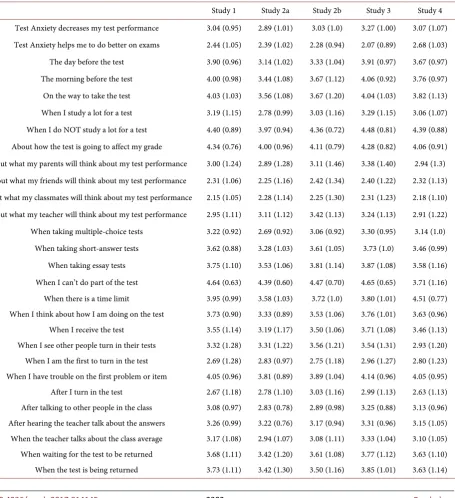
Table 1 presents the SRLTAS items, item-level means, and standard deviations from all studies. Item-level statistics suggest variance on the items given the Study 1 sample and evidence suggested the viability of the items as part of the overall scale. The internal consistency of the measure was strong (α = 0.90).
Gender differences were indicated in Study 1 t(258) = 5.278, p < 0.001 with women reporting significantly more anxiety than men. Students reported the greatest anxiety for multiple-choice exams with the least reported anxiety for es-say exams. However, differences across item formats were not significant F(3, 247) = 0.466, p = 0.71. Further, although the class standing data were not
Table 1. Item Level Descriptive Statistics for Items across Studies 1 - 4.
Study 1 Study 2a Study 2b Study 3 Study 4 Test Anxiety decreases my test performance 3.04 (0.95) 2.89 (1.01) 3.03 (1.0) 3.27 (1.00) 3.07 (1.07) Test Anxiety helps me to do better on exams 2.44 (1.05) 2.39 (1.02) 2.28 (0.94) 2.07 (0.89) 2.68 (1.03) The day before the test 3.90 (0.96) 3.14 (1.02) 3.33 (1.04) 3.91 (0.97) 3.67 (0.97) The morning before the test 4.00 (0.98) 3.44 (1.08) 3.67 (1.12) 4.06 (0.92) 3.76 (0.97) On the way to take the test 4.03 (1.03) 3.56 (1.08) 3.67 (1.20) 4.04 (1.03) 3.82 (1.13) When I study a lot for a test 3.19 (1.15) 2.78 (0.99) 3.03 (1.16) 3.29 (1.15) 3.06 (1.07) When I do NOT study a lot for a test 4.40 (0.89) 3.97 (0.94) 4.36 (0.72) 4.48 (0.81) 4.39 (0.88) About how the test is going to affect my grade 4.34 (0.76) 4.00 (0.96) 4.11 (0.79) 4.28 (0.82) 4.06 (0.91) About what my parents will think about my test performance 3.00 (1.24) 2.89 (1.28) 3.11 (1.46) 3.38 (1.40) 2.94 (1.3) About what my friends will think about my test performance 2.31 (1.06) 2.25 (1.16) 2.42 (1.34) 2.40 (1.22) 2.32 (1.13) About what my classmates will think about my test performance 2.15 (1.05) 2.28 (1.14) 2.25 (1.30) 2.31 (1.23) 2.18 (1.10) About what my teacher will think about my test performance 2.95 (1.11) 3.11 (1.12) 3.42 (1.13) 3.24 (1.13) 2.91 (1.22) When taking multiple-choice tests 3.22 (0.92) 2.69 (0.92) 3.06 (0.92) 3.30 (0.95) 3.14 (1.0)
DOI: 10.4236/psych.2017.814145 2303 Psychology normally distributed; descriptively, seniors, however did report the lowest an-xiety (m = 77.35; n = 20) with sophomores, the majority of the sample popula-tion, reporting the highest (m = 88.30, n = 157).
In response to the question as to whether students perceived that test anxiety increases or decreases their performance the mean on these individual items in-dicated that more students agree that TA hinders their performance (m = 3.04) rather than benefits their performance (m = 2.44). These items were only mod-erately, but significantly, negatively correlated (r = −0.249, p < 0.001).
An unrestricted Maximum likelihood factor analysis with Varimax rotation was conducted with the 26 items included (we omitted the benefit and hinder items). Cases were deleted using a listwise deletion and an eigenvalue of 1 was used to interpret the factor structure. This analysis yielded a six factor solution that accounted for 50.45% of the sample variance.
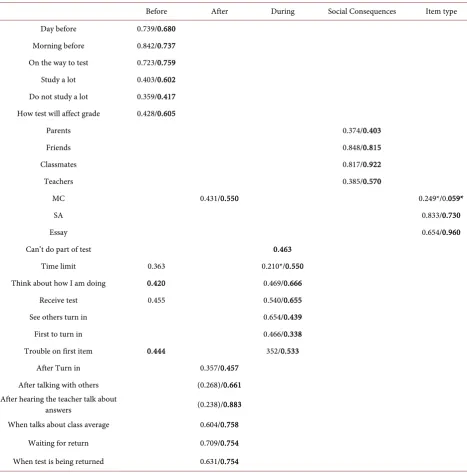
In constructing the SRLTAS we recognized the overall construct of TA but grounded the items based upon 5 perceived dimensions. When comparing the unrestricted 6 factor solution the vast majority of items affiliated with factors as expected. Only the last two items demonstrated loadings on the sixth factor. One item did not load on any factor (Can’t do part of test). One item, multiple choice test, did not load as expected. Table 2 provides the item factor loadings.
Given support for the underlying factor structure through the completely un-restricted analysis, we tested a second EFA but constrained the number of fac-tors to 5. Again, we used an orthogonal, Varimax rotation with a.4 item to factor criteria to interpret item loadings. The result was a model that accounted for 47% of the sample variance. Restricting the analysis to five factors generally supported the proposed factor structure, but yet demonstrated some items did not load as expected. For example, When taking multiple choice exams, loaded with items that represented the factor during the test, rather than the planned factor type of item.
In conclusion, Exploratory Factor Analyses from data in Study 1 indicated support for five factors: social consequences; to include concerns regarding how parents, friends, classmates and teachers may view test performance; item types; to include items related to anxiety across item formats; and temporal aspects of anxiety; that is how stress is felt before, during, and after an exam. Two individ-ual items concerned whether test anxiety helps or hinders performance. In Study 1, these two items we inversely correlated, as expected, but yet not strongly in-versely related to indicate that students did not simply endorse one or the other beliefs about the effects of test anxiety, but instead that participants held the be-lief that anxiety both helps and hinders potential performance.
4.1.4. Discussion
DOI: 10.4236/psych.2017.814145 2304 Psychology
Table 2. Exploratory Factor Analyses Rotated Factor Loadings for Study 1, 3.
Before After During Social Consequences Item type Day before 0.739/0.680
Morning before 0.842/0.737 On the way to test 0.723/0.759 Study a lot 0.403/0.602 Do not study a lot 0.359/0.417 How test will affect grade 0.428/0.605
Parents 0.374/0.403
Friends 0.848/0.815
Classmates 0.817/0.922
Teachers 0.385/0.570
MC 0.431/0.550 0.249*/0.059*
SA 0.833/0.730
Essay 0.654/0.960
Can’t do part of test 0.463
Time limit 0.363 0.210*/0.550
Think about how I am doing 0.420 0.469/0.666
Receive test 0.455 0.540/0.655
See others turn in 0.654/0.439
First to turn in 0.466/0.338
Trouble on first item 0.444 352/0.533 After Turn in 0.357/0.457
After talking with others (0.268)/0.661 After hearing the teacher talk about
answers (0.238)/0.883
When talks about class average 0.604/0.758 Waiting for return 0.709/0.754 When test is being returned 0.631/0.754
measurement. Given these findings we proceeded with additional tests of the in-strument.
4.2. Study 2
DOI: 10.4236/psych.2017.814145 2305 Psychology Two primary research questions guided Study 2.
1) What is the stability of the scores on the SRLTAS as reported by college students?
Although test anxiety has situational elements, we anticipated strong stability estimates for the SRLTAS in Study 2. Others have reported stability in college students’ test anxiety within a given semester. Cassady (2001) for example, re-ported strong stability estimates for both cognitive anxiety and bodily symp-toms. Pintrich and Garcia (1993) also reported stability of test anxiety and of cluster affiliations of college students who had been administered the Motivated Strategies for Learning Questionnaire.
2) Are there SRLTAS scores correlated with scores from existing TA measures?
The SRLTAS was developed to measure unique elements of test anxiety not well addressed with previous existing measures. However, scores on the SRLTAS were expected to be positively correlated with scores from the administration of other established test anxiety scales.
4.2.1. Method
University students (n = 36) enrolled in an introductory human development course voluntarily participated in the study for 1% course credit. The course in which students were enrolled fulfills a general education requirement at the in-stitution and enrolls students from a variety of majors. The measures in the study were administered via Qualtrics. All participants completed three rando-mized test anxiety scales once during the sixth week of the semester and then again during the ninth week of the semester. Spring break occurred between administrations so 4 weeks separated the two administrations. Students were in-structed to reference their next scheduled test in any class when answering the scales. This administration strategy ensured representative variance in regard to academic subjects as well as the types of assessments typically administered in University courses.
4.2.2. Measures
SRLTAS: The Self-Regulated Learning Test Anxiety Scale, first tested in Study 1
was developed from a social cognitive self-regulated learning theoretical frame-work. Factor analyses from Study 1 supported the multidimensional nature of the instrument. Exploratory Factor Analyses from Study 1 indicated support for five factors: social consequences; to include concerns regarding how parents, friends, classmates and teachers may view test performance; item types; to in-clude items related to anxiety across item formats; temporal aspects of anxiety; that is how stress is felt before, during, and after an exam. Two individual items also target the debilitating and beneficial effects of anxiety. Items and descriptive statistics appear in Table 1.
DOI: 10.4236/psych.2017.814145 2306 Psychology during tests”. TAS properties are well established through hundreds of studies and reliability estimates are known to be strong (Sarason, 1980). Previous re-search reported test-retest reliabilities for variations of the TAS as ranging from 0.80 - 0.87 (Sarason, 1980: p. 281).
MSLQTA: The Test Anxiety Scale of the Motivated Strategies for Learning
Questionnaire (Pintrich & Degroot, 1990; Pintrich et al., 1993) was also admi-nistered to participants. The MSLQTA is a general representative measure of test anxiety. The five items on the scale have consistently demonstrated sound inter-nal consistency reliability and strong item to factor correlations (e.g., Pintrich et al., 1993). The scale has demonstrated expected negative correlations with course performance (Pintrich et al., 1993). An example item includes: When I take tests
I think of the consequences of failing. In a meta-analysis of the often- used
measure, Credé and Phillips (2011) reported a mean reliability coefficient of 0.77 for the TA scale across previously reported research.
4.2.3. Results
[image:12.595.208.539.410.543.2]Table 1 presents the item level means and standard deviations for the SRLTAS for both the administrations in Study 2. Table 3 presents the scale descriptive sta-tistics of the three test anxiety scales at each administration. Reliability coefficients indicate that all measures demonstrated adequate internal consistency reliability.
Table 4 presents correlations among scales across administrations. Stability
Table 3. Scale level Descriptive Statistics for Study 2.
Measure Time Mean Deviation. Standard N Cronbach’s Alpha Number of Items
TAS Time 1 105.64 21.82 36 0.92 37 Time 2 105.56 21.26 36 0.92
MSLQTA Time 1 17.62 7.61 34 0.88 5 Time 2 16.21 6.51 34 0.82
SRLTAS Time 1 93.83 19.20 36 0.95 28 Time 2 89.25 18.69 36 0.95
[image:12.595.208.539.599.701.2]SRLTAS = Self-Regulated Learning Test Anxiety Scale; MSLQTA = Motivated Strategies for Learning Test Anxiety; TAS = Test Anxiety Scale. N = 36.
Table 4. Correlations among measures and stability estimates (in bold) for Study 2.
SRLTAS 1 SRLTAS 2 TAS 1 TAS 2 MSLQTA 1 SRLTAS 2 0.87***
TAS 1 0.78*** 0.73***
TAS 2 0.73*** 0.78*** 0.86***
MSLQTA 1 0.70*** 0.64*** 0.81*** 0.74***
DOI: 10.4236/psych.2017.814145 2307 Psychology estimates are presented in bold font. The SRLTAS as well as the TAS and the MSLQTA all demonstrated sound stability. Despite the low power from the li-mited sample, all inter-scale correlations demonstrated positive statistical signi-ficance indicating correspondence among these measures of test anxiety.
Given these demonstrated scale properties of the SRLTAS in conjunction with findings from Study 1, we next pursued Study 3 to further examine the construct validity of the SRLTAS with a larger sample of participants. Study 3 addressed two primary research questions.
1) How are scores on the SRLTAS correlated with scores from adminis-tration of other test anxiety measures?
Given findings from the relatively small sample examined in the stability analysis, we expected moderate to strong significant positive correlations among the three test anxiety scales in Study 3, which would provide initial construct support for the measure. While the scales administered target varied aspects of TA, overall TA should be correlated across measures.
2) Is the factor structure of the SRLTAS items as identified in Study 1 con-sistent in a second administration of the instrument with a new population? To address this question, the underlying factor structure of the SRLTAS was again explored in Study 3 to confirm and extend findings from Study 1.
4.3. Study 3
4.3.1. MethodParticipants (n = 260) were recruited during another semester of students enrolled in the same undergraduate course in Educational Psychology as Study 1. As with Study 2, the focus of the study was the items and scales. All scales ad-ministered in Study 2 were adad-ministered again in Study 3. Once again, the order of the scales was randomized during the administration through Qualtrics.
SRLTAS: The 28-item Self-Regulated Learning Test Anxiety Scale was
admi-nistered. Internal consistency reliability analysis for all items in the current sam-ple was 0.94.
TAS: The 37-item TAS (Sarason, 1977) was administered. Sarason (1977)
noted the multidimensional nature of the instrument. In the current administra-tion, the internal consistency of the scale was 0.90 and as indicated by a maxi-mum likelihood exploratory factor analysis with Varimax rotation, seven factors accounted for 47% of the sample variance.
MSLQTA:The 5-item MSLQTA (e.g., Pintrich et al., 1993) was again
admi-nistered. In Study 3 the reliability estimate for the scale was 0.84. Maximum like-lihood exploratory factor analysis from administration in this sample indicated the items loaded on one factor, which accounted for 51% of the sample variance. Additional research supports the consistency of these items through model fit analyses (Hilpert et al., 2013).
4.3.2. Results
DOI: 10.4236/psych.2017.814145 2308 Psychology
Table 5. Scale Level Descriptive Statistics for Study 3.
Measure Mean Std. Dev. N Cronbach’s Alpha Number of Items
TAS 108.44 19.57 243 0.90 37
MSLQTA 20.02 6.63 241 0.84 5
SRLTAS 98.77 17.88 242 0.94 28
[image:14.595.208.538.212.261.2]SRLTAS = Self-Regulated Learning Test Anxiety Scale; MSLQTA = Motivated Strategies for Learning Test Anxiety; TAS = Test Anxiety Scale.
Table 6. Correlations among Scales in Study 3.
Measure MSLQTA TAS
SRLTAS 0.65*** 0.76***
MSLQTA 0.74***
SRLTAS = Self-Regulated Learning Test Anxiety Scale; MSLQTA = Motivated Strategies for Learning Test Anxiety; TAS = Test Anxiety Scale. *** Correlation is significant p < 0.001 level.
Table 5 presents the scale level means and standard deviations and Table 6
presents the correlations among the scales administered in Study 3. To address the first research question in Study 3, as also indicated in Study 2, there were significant correlations among the test anxiety scales.
To address the second research question in Study 3, an exploratory factor analyses with a maximum likelihood method with Varimax rotation indicated 5 factors that accounted for 47% of the sample variance. Study 3 item loadings of the SRLTAS are presented in bold in Table 2. With few exceptions the factor structure in Study 3 replicated Study 1 findings. Item 11, regarding TA on multiple choice items loaded as it did in Study 1, with “after” rather than the expected, item type, items. In Study 3, item 14, regarding when one can’t do part of the test loaded with items intended on the “during” factor as originally proposed. This item had not loaded in Study 1. All other items loaded as expected, however, lending support for the intended underlying five factor structure of the scale.
4.3.3. Discussion
Findings from Studies 2 and 3 provide sound psychometric support for the SRLTAS. Consistent with expectations, relations between the SRLTAS and other known measures of test anxiety were generally moderate to strong. Although the SRLTAS focuses on elements of test anxiety not tackled in other instruments, the underlying experience of test anxiety would likely be experienced and reported across inventories. Therefore, significant moderate correlations were expected among the TA measures. With few exceptions, the factor structure as indicated with a new sample in Study 3 largely replicated that found in Study 1. Findings also supported stability of TA as measured across inventories and time. Such stability can inform interventions to target strategies for students to combat the ill effects of TA.
cor-DOI: 10.4236/psych.2017.814145 2309 Psychology relational question were addressed in Study 4.
1) What are the characteristics SRLTAS scores based upon respondent characteristics?
In Study 1, analyses indicated higher test anxiety for females than for males. We expected replication of this finding in Study 4. Further, test anxiety would be expected to decrease over the collegiate academic experience as learners become more familiar with collegiate expectations. Test type was also explored as a factor in students’ reported test anxiety in Study 4. In Study 4 we also examined whether test anxiety as measured by the SRLTAS was more prevalent in courses in a stu-dent’s major, where arguably the stakes are higher, than in elective courses.
2) How do scores on the SRLTAS relate to other important measures of student learning?
In Study 4 we explored the ability of SRLTAS scores to discriminate from other measures of student learning. To that end, the SRLTAS was administered with measures of two additional Self-regulated learning constructs: Self-efficacy and self-handicapping. We expected that TA as measured by the SRLTAS would be negatively related to self-efficacy and we expected a positive relationship be-tween TA and Self-handicapping.
Self-efficacy
One of the motivational constructs that is commonly suggested to have an important impact on test anxiety is self-efficacy. Self-efficacy refers to one’s per-ceived capabilities to organize and execute the courses of action required to achieve certain results (Bandura, 2006). That is, people with high efficacy for a task believe that they are capable of completing the given task successfully. Ban-dura (1986) has argued that self-efficacy is a critical determinant of human cog-nition, motivation, affect, and action. Self-efficacy helps to explain students’ ef-fort and persistence for academic tasks (Bandura, 1986; Pajares, 1996). Previous findings provide evidence that college students with high self-efficacy are more likely to seek challenges, put effort, and persevere in the face of difficulties
(Cervone & Peake, 1986; Holder, 2007). For example, Torres and Solberg (2001)
reported a positive relationship between academic self-efficacy and the number of hours students spent studying. In addition, a number of studies demonstrated that self-efficacy is related to the use of effective learning strategies that, in turn, result in higher achievement in college (Hsieh, Sullivan, Sass, & Guerra, 2012; Sins, van Joolingen, Savelsbergh, & van Hout-Wolters, 2008; Walker, Greene, & Mansell, 2006; Zajacova, Lynch, & Espenshade, 2005). For instance, Walker, Greene, and Mansell (2006) found that self-efficacy was predictive of deep cog-nitive processing among college students and Zajacova, Lynch, and Espenshade (2005) reported that self-efficacy was predictive of college GPA.
In addition to its influence on motivation and achievement, social cognitive theory posits that self-efficacy affects the level of stress and anxiety that people experience when confronted with a challenging task or situation. According to
DOI: 10.4236/psych.2017.814145 2310 Psychology construct apprehensive cognitions and, thus, are not intimidated by them. However, those who do not believe they can cope with expected obstacles expe-rience high levels of distress and anxiety arousal. A number of empirical findings have offered support for a negative association between self-efficacy and stress or test anxiety among college students (e.g., Barrows et al., 2013; Bandalos, Finney, & Geske, 2003; Bandalos, Yates, & Thorndike-Christ, 1995; Bong, Cho, Ahn, & Kim 2012; Gigliotti & Huff, 1995; Nie, Lau, & Liau, 2011; Onyeizugbo, 2010). For example, Kitsantas, Winsler and Huie (2008) reported a slight negative cor-relation between test anxiety and self-efficacy. In a study testing a model of achievement in statistics, Bandalos, Finney, and Geske (2003) found that test an-xiety had a meditational role in the relationship between self-efficacy and achievement. Given these previous findings, we anticipated TA as measured by the SRLTAS would demonstrate moderate negative relations to self-efficacy.
Self-handicapping
Self-handicapping is one form of avoidant behavior. People with self- handi-capping behaviors avoid situations in which they may be seen to have low abili-ty, in order to protect their self-worth and control subsequent negative affect
(Covington, 1992; Rhodewalt & Vohs, 2005). These individuals tend to avoid risk-taking, resist seeking help, and give up when faced with challenge. Similarly, self-handicapping behavior refers to a defensive strategy in which people create, or at least claim, obstacles in advance of performance on a task when potential failure would confirm that one’s ability is lacking (Rhodewalt & Vohs, 2005). That is, self-handicappers make an excuse to which future failure could be attri-buted. Protecting self-worth rather than achievement gain is of eminent impor-tance for them (Rhodewalt & Vohs, 2005). Examples of self-handicapping beha-vior include deliberately reducing effort, fooling around the night before a test, overcommitting on nonacademic tasks, such as too much employed work or extracurricular activities, or consuming alcohol prior to performance. Numerous studies have reported correlations between self-handicapping and test anxiety. For example, in a sample of college undergraduate students, Gadbois and Sturgeon (2011) administered the MSLQ and reported a significant positive correlation be-tween self-handicapping and test anxiety. We anticipated moderate positive corre-lation between TA as measured by the SRLTAS and self-handicapping.
4.4. Study 4
4.4.1. ParticipantsA new sample of participants from the same institution as those from Studies 1 - 3 volunteered to participate in the study. In this sample 262 students partici-pated (51 men; 211 women). Students in Study 4 represented 38 different ma-jors. The mean GPA reported for the sample was 3.40 while the mean reported combined Verbal and Math SAT was 1125.
4.4.2. Measures
DOI: 10.4236/psych.2017.814145 2311 Psychology The 10 item Generalized Self-Efficacy Scale (GSES) was administered to assess Generalized Self-efficacy. The English version of the GSES, which was originally developed in German, was published in 1995 (Schwarzer & Jerusalem, 1995) and slightly modified in 2000 (Scholz, Dona, Sud, & Schwarzer, 2002). Self-efficacy is often regarded as domain-specific (Bandura, 2006; Pajares, 1996). The GSES, in contrast, was designed to assess a broad and global sense of personal confidence in one’s coping ability across a wide range of demanding or novel situations
(Schwarzer, Bäßler, Kwiatek, Schröder, & Zhang, 1997). As such, the purpose of the instrument is not to measure self-efficacy for an individual task. An example item includes, “I can always manage to solve difficult problems if I try hard
enough.” The scale is widely used and is reported to be reliable and
unidimen-sional across dozens of nations (e.g., Canada, France, Korea, and India). In pre-vious multicultural validation studies the GSES has demonstrated adequate in-ternal consistency reliability (α = 0.86 - 0.94) (Luszczynska et al., 2005a; Luszczynska et al., 2005b). For administration in the current study, the scale was modified slightly in two ways. First, students answered each item on a 5 point, rather than 4 point Likert-type scale, ranging from 1 = Not at all true to 5 = Exactly true. This revision was made so items across instruments used similar scales. Second, the measure was also specifically altered to assess self-efficacy beliefs in relation to taking an exam. A similar revised version of the Generalized Self-Efficacy Scale was employed by Jackson (2002).
The Self-Handicapping Scale (SHS) (Jones & Rhodewalt, 1982), measures students’ propensity to use self-handicapping behavior. Students rated each item on a 5-point Likert-scale ranging from 1 = Disagree very much to 5 = Agree very much. Example items include, “I sometimes enjoy being mildly ill for a day or two because it takes off the pressure.” and “I admit that I am tempted to ratio-nalize when I don’t live up to other’s expectations.” Rhodewalt (1990) reported that the scale yielded acceptable internal consistency (α = 0.79) and stability (test-retest reliability r = 0.74) when administered in large group-testing sessions.
Study 4 also provided opportunity to examine and compare findings re-lated to demographic characteristics and scores on the SRLTAS and to further examine the factor structure of the measure.
4.4.3. Results
Table 1 provides the item level descriptives for the SRLTAS as administered in Study 4. Scale level descriptives for all measures as well as the SRLTAS as admi-nistered in Study 4 appear in Table 7. All measures illustrated sound internal consistency in this study. Correlational analyses, as found in Table 8, indicated that, as expected, the SRLTAS was negatively correlated with self-efficacy (r = −0.14, p < 0.05) and positively correlated with self-handicapping (r = 0.84, p < 0.01).
DOI: 10.4236/psych.2017.814145 2312 Psychology
Table 7. Scale Descriptive Statistics for Study 4.
Mean Standard Deviation Coefficient Alpha
SHS 69.37 9.54 0.73
GES 35.90 6.05 0.86
SRLTAS 97.12 17.9 0.93
SHS = Self-Handicapping Scale, GES = Generalized Self-Efficacy Scale, SRTLAS = Self-Regulated Learning Test Anxiety Scale. N = 261.
Table 8. Correlations among Scales in Study 4.
Measure GES SHS
SRLTAS 0.213*** 0.288***
GES −0.211***
SHS = Self-Handicapping Scale, GES = Generalized Self-Efficacy Scale, SRTLAS = Self-Regulated Learning Test Anxiety Scale. N = 261; ***. Correlation is significant p < 0.001.
self-handicapping. These findings are consistent with expectations and previous research but should be considered with caution given the disproportionate re-presentation of women in the current sample.
There was a slight negative correlation (rho = −0.11, p > 0.05) between re-ported test anxiety and class standing with more advanced students reporting less anxiety. This trend was not statistically significant. Interestingly the correlation between reported GPA and TA was also not significant (r = −0.003, p > .05). Stu-dents reported their anxiety on the class immediately following the course in which they were enrolled. Of interest is that test anxiety did not differ based upon whether the class was a required course or an elective t(254) = 0.467, p > 0.05).
Exploratory factor analyses conducted with Study 1 and Study 3 data demon-strated general consistency in the underlying factor structure of the SRLTAS and generally supported a five factor solution. Given the new sample in Study 4, maximum likelihood analyses with Varimax rotation forced 5 factors which ac-counted for 53% of the sample variance. Model fit using AMOS with the pre-viously identified factors, however, demonstrated relatively poor fit (CMin = 2.53; p < 0.001; GFI = 0.68; CFI; 0.87; RMSEA = 0.07). Based upon the CFA fit conducted with Study 4 data, item performance from data in Studies 1, 3 & 4 were further examined. Examination of the rotated factor matrix from the EFA and examination of fit indices, for example, indicated that as with Study 1 and Study 3, Item 11, the multiple choice item, intended to load with item type, dis-played poor fit. In Study 1, but not Study 3 exploratory factor analyses indicated item 14, can’t do part of the test, did not load on any factors.
4.4.4. Discussion
[image:18.595.207.539.212.261.2]DOI: 10.4236/psych.2017.814145 2313 Psychology of TA reported between required and non-required coursework. This study, in-tended to provide additional construct validity evidence through discrimination among other self-regulatory constructs, indicated that, as expected, scores from the SRLTAS were positively correlated with reports of higher self- handicapping and negatively correlated with endorsed generalized self-efficacy. These findings lend support for the SRLTAS. Descriptively five factors appear to support the measure. Confirmatory factor analysis of the five factors, however, indicated li-mited support for the independence of the proposed five factors of the scale.
5. Overall Discussion
Across four studies the 28 item SRLTAS (Items are found in Table 1) was de-veloped through creation of new items that were inspired by social learning theory and self-regulated learning theories. Through these lenses, TA was con-ceptualized as representative stress influenced by contextual and environmental variables. Unlike previous measures that targeted the emotionality and worry elements of TA, or TA generally; the intent of SRLTAS scale development was to examine dimensions of test anxiety not previously addressed. The SRLTAS was developed not only as a theoretically and empirically grounded tool for research but as an instrument with intent to guide practitioners with potential identifica-tion of contexts that result in increased anxiety for students that can be targeted with strategy interventions to decrease the negative results of such stress.
Across the studies, item and scale level descriptive statistics indicated adequate variance and reliability analysis indicated strong consistency. As with findings from previous TA research (e.g., Everson et al., 1991; Kosmala-Anderson & Wal-lace, 2007; Hembree, 1988) females reported greater anxiety and anxiety de-creased across grade levels as reported for Study 1 and 4. Study 2 provided strong stability evidence and initial construct support. Confirmatory construct validity evidence was found in Study 3, where correlations between the SRLTAS and other established measures were examined. Expected moderate significant correlations suggest support for the SRLTAS as a measure that captures elements of test anxiety. Direct overlap with previous measures was not anticipated as the SRLTAS was developed to capture unique elements of test anxiety not addressed with existing instrumentation.
Factor analyses of the instrument in Studies 1, 3, and 4 support interpretation of the SRLTAS as a multidimensional scale to include factors related to the social consequences of test anxiety (e.g., what others think), anxiety differences by types of test items, temporal aspects of test anxiety (e.g., varied anxiety in rela-tion to the administrarela-tion of the test), anxiety about the consequences of the test score, and the debilitating and beneficial effects of anxiety.
6. Limitations and Future Directions
DOI: 10.4236/psych.2017.814145 2314 Psychology suggest areas for future research. The samples in the studies presented consisted of college age learners enrolled in a research university and while the sample of students was representative of the University racially and ethnically, a higher percentage of females, known to be more test anxious, was present in each of the studies. Future research should test the SRLTAS with college students from oth-er majors. Furthoth-er future research with samples to include youngoth-er learnoth-ers, students enrolled in less competitive universities, and samples with larger repre-sentation of diverse students is needed. Further, additional research that ex-plores students’ behavior and experiences, rather than their reported stress and anxiety should be conducted. In this work, self-efficacy and self-handicapping were examined to illustrate the relationship between the SRLTAS and additional representative self-regulatory constructs. However, the relationship between TA as measured by the SRLTAS should also be examined in relation to other self-regulatory learning strategies and concepts such as help-seeking and metacogni-tion. Researching these constructs may provide additional insights into how targeted interventions could be designed to improve performance and reduce test anxiety.
Ideally, future research will also inform practice. The factors included in the SRLTAS allow individuals to determine how specific aspects of the testing situa-tion influence their experience of stress. Individuals could either use the infor-mation to attempt to regulate their own thoughts and behaviors during high pe-riods of anxiety by utilizing cognitive or behavioral relaxation techniques, or ex-ternal interventions and structures could be established to help students with debilitating anxiety.
Many programs have been developed to combat TA. Damer and Melendres (2011), for example developed a four-week group intervention program that fo-cuses on cognitive-behavioral strategies as well as study skills that are shared with college students. Others, such as Tatum, Lundervold, and Ament (2006)
and Larson and colleagues (2010) have focused on relaxation training. Tseng and Wang (2011), instead, applied guided imagery to combat students’ anxiety.
Future, research findings from the SRLTAS might direct such efforts to bene-fit students. For example, time could be set aside for students at the most benefi-cial time, as indicated by the SRLTAS, either before, after, or during tests, to en-gage in specific cognitive or behavioral relaxation techniques. Additionally, indi-vidual counseling sessions could be conducted for students whose perceptions of the social environment are causing excessive anxiety. If a large number of stu-dents in a given classroom or school experience similar levels of social based test anxiety, group counseling or instructional lessons could be designed in an at-tempt to reduce the overall anxiety in the group. The SRLTAS may inform the structure and target of future interventions, which could potentially be beneficial to students of all ages and specializations.
References
DOI: 10.4236/psych.2017.814145 2315 Psychology Alpert, R., & Haber, R. N. (1960). Anxiety in Academic Achievement Situations. Journal
of Abnormal and Social Psychology, 61, 207-215. https://doi.org/10.1037/h0045464
Bandalos, D. L., Finney, S. J., & Geske, J. A. (2003). A Model of Statistics Performance Based on Achievement Goal Theory. Journal of Educational Psychology, 95, 604. https://doi.org/10.1037/0022-0663.95.3.604
Bandalos, D. L., Yates, K., & Thorndike-Christ, T. (1995). Effects of Math Self-Concept, Perceived Self-Efficacy, and Attributions for Failure and Success on Test Anxiety. Journal of Educational Psychology, 87, 611.https://doi.org/10.1037/0022-0663.87.4.611
Bandura, A. (1986). The Explanatory and Predictive Scope of Self-Efficacy Theory. Jour-nal of Social and Clinical Psychology, 4, 359-373.
https://doi.org/10.1521/jscp.1986.4.3.359
Bandura, A. (1977). Social Learning Theory. Englewood Cliffs, NJ: Prentice Hall.
Bandura, A. (1986). Social Foundations of Thought and Action: A Social Cognitive Theory. Englewood Cliffs, NJ: Prentice-Hall.
Bandura, A. (1997). Self-Efficacy: The Exercise of Control. New York, NY: Freeman. Bandura, A. (2006). Adolescent Development from an Agentic Perspective. Self-Efficacy
Beliefs of Adolescents, 5.
Barrows, J., Dunn, S., & Lloyd, C. A. (2013). Anxiety, Self-Efficacy, and College Exam Grades. Universal Journal of Educational Research, 1, 204-208.
Bellinger, D. B., DeCaro, M. S., & Ralston, P. A. (2015). Mindfulness, Anxiety, and High-Stakes Mathematics Performance in the Laboratory and Classroom. Conscious-ness and Cognition, 37, 123-132.https://doi.org/10.1016/j.concog.2015.09.001
Bembenutty, H. (2008). Self-Regulation of Learning and Test Anxiety. Psychology Jour-nal, 5, 122-139.
Benson, J., & Tippets, E. (1990). Confirmatory Factor Analysis of the Test Anxiety In-ventory. Cross-Cultural Anxiety, 4, 149-156.
Bong, M., Cho, C., Ahn, H. S., & Kim, H. J. (2012). Comparison of Self-Beliefs for Pre-dicting Student Motivation and Achievement. Journal of Educational Research, 105, 336-352. https://doi.org/10.1080/00220671.2011.627401
Brooks, B. D., Alshafei, D., & Taylor, A. (2015). Development of the Test and Examina-tion Anxiety Measure (TEAM). Psi Chi Journal of Psychological Research, 20. https://doi.org/10.24839/2164-8204.JN20.1.2
Cassady, J. C. (2001). The Stability of Undergraduate Students’ Cognitive Test Anxiety Levels. Practical Assessment, Research & Evaluation, 7, 1-8.
Cassady, J. C., & Johnson, R. E. (2002). Cognitive Test Anxiety and Academic Perfor-mance. Contemporary Educational Psychology, 27, 270-295.
https://doi.org/10.1006/ceps.2001.1094
Cervone, D., & Peake, P. K. (1986). Anchoring, Efficacy, and Action: The Influence of Judgmental Heuristics on Self-Efficacy Judgments and Behavior. Journal of Personality and social Psychology, 50, 492.https://doi.org/10.1037/0022-3514.50.3.492
Chapell, M. S., Blanding, B. Z., Silverstein, M. E., Takahashi, M., Newman, B., Gubi, A., & McCann, N. (2005). Test Anxiety and Academic Performance in Undergraduate and Graduate Students. Journal of Educational Psychology, 97, 268-274.
https://doi.org/10.1037/0022-0663.97.2.268
Covington, M. V. (1992). Making the Grade: A Self-Worth Perspective on Motivation and School Reform. New York, NY: Cambridge University Press.
DOI: 10.4236/psych.2017.814145 2316 Psychology Credé, M., & Phillips, L. A. (2011). A Meta-Analytic Review of the Motivated Strategies
for Learning Questionnaire. Learning and Individual Differences, 21, 337-346. https://doi.org/10.1016/j.lindif.2011.03.002
Damer, D. E., & Melendres, L. T. (2011). “Tackling Test Anxiety”: A Group for College Students. Journal for Specialists in Group Work, 36, 163-177.
https://doi.org/10.1080/01933922.2011.586016
Driscoll, R. (2007). Westside Test Anxiety Scale Validation. Education Resources Infor-mation Center. http://www.testanxietycontrol.com/research/sv.pdf
Everson, H. T., Millsap, R. E., & Rodriguez, C. M. (1991). Isolating Gender Differences in Test Anxiety: A Confirmatory Factor Analysis of the Test Anxiety Inventory. Educa-tional and Psychological Measurement, 51, 243-251.
https://doi.org/10.1177/0013164491511024
Fitch, T., Marshall, J., & McCarthy, W. (2012). The Effect of Solution-Focused Groups on Self-Regulated Learning. Journal of College Student Development, 53, 586-595. https://doi.org/10.1353/csd.2012.0049
Fountoulakis, K. N., Papadopoulou, M., Kleanthous, S., Papadopoulou, A., Bizeli, V., Ni-matoudis, I., & Kaprinis, G. S. (2006). Reliability and Psychometric Properties of the Greek Translation of the State-Trait Anxiety Inventory form Y: Preliminary Data. An-nals of General Psychiatry, 5.
Friedman, I. A., & Bendas-Jacob, O. (1997). Measuring Perceived Test Anxiety in Ado-lescents: A Self-Report Scale. Educational and Psychological Measurement, 57, 1035-1046.https://doi.org/10.1177/0013164497057006012
Gadbois, S. A., & Sturgeon, R. D. (2011). Academic Self-Handicapping: Relationships with Learning Specific and General Self-Perceptions and Academic Performance over Time. British Journal of Educational Psychology, 81, 207-222.
https://doi.org/10.1348/000709910X522186
Gigliotti, R. J., & Huff, H. K. (1995). Role-Related Conflicts, Strains and Stresses of Old-er-Adult College Students. Sociological Focus, 28, 329-342.
https://doi.org/10.1080/00380237.1995.10571057
Goetz, T., Frenzel, A. C., Pekrun, R., Hall, N. C., & Lüdtke, O. (2007). Between- and Within-Domain Relations of Students’ Academic Emotions. Journal of Educational Psychology, 99, 715-733.https://doi.org/10.1037/0022-0663.99.4.715
Hembree, R. (1988). Correlates, Causes, Effects, and Treatment of Test Anxiety. Review of Educational Research, 58, 47-77.https://doi.org/10.3102/00346543058001047
Hilpert, J. C., Stempien, J., van der Hoeven Kraft, K. J., & Husman, J. (2013). Evidence for the Latent Factor Structure of the MSLQ A New Conceptualization of an Established Questionnaire. SAGE Open, 3, Article ID: 2158244013510305.
https://doi.org/10.1177/2158244013510305
Hoferichter, F., Raufelder, D., Ringeisen, T., Rohrmann, S., & Bukowski, W. M. (2015). Assessing the Multi-Faceted Nature of Test Anxiety among Secondary School Students: An English Version of the German Test Anxiety Questionnaire: PAF-E. The Journal of Psychology, 1-23.
Holder, B. (2007). An Investigation of Hope, Academics, Environment, and Motivation as Predictors of Persistence in Higher Education Online Programs. Internet and Higher Education, 10, 245-260.https://doi.org/10.1016/j.iheduc.2007.08.002
Hong, E. (1998). Differential Stability of Individual Differences in State and Trait Test Anxiety. Learning and Individual Differences, 10, 51-69.
DOI: 10.4236/psych.2017.814145 2317 Psychology Hsieh, P., Sullivan, J. R., Sass, D. A., & Guerra, N. S. (2012). Undergraduate Engineering Students’ Beliefs, Coping Strategies, and Academic Performance: An Evaluation of Theoretical Models. Journal of Experimental Education, 80, 196-218.
https://doi.org/10.1080/00220973.2011.596853
Jackson, J. W. (2002). Enhancing Self-Efficacy and Learning Performance. The Journal of Experimental Education, 70, 243-254.https://doi.org/10.1080/00220970209599508
Jones, E. E., & Rhodewalt, F. (1982). The Self-Handicapping Scale. Princeton, NJ: Prince-ton University.
Kitsantas, A., Winsler, A., & Huie, F. (2008). Self-Regulation and Ability Predictors of Academic Success during College: A Predictive Validity Study. Journal of Advanced Academics, 20, 42-68.https://doi.org/10.4219/jaa-2008-867
Kosmala-Anderson, J., & Wallace, L. M. (2007). Gender Differences in the Psychosomatic Reactions of Students Subjected to Examination Stress. Electronic Journal of Research in Educational Psychology, 5, 325-347.
Larson, H. A., El Ramahi, M. K., Conn, S. R., Estes, L. A., & Ghibellini, A. B. (2010). ducing Test Anxiety among Third Grade Students through the Implementation of Re-laxation Techniques. Journal of School Counseling, 8, 19.
Liebert, R. M., & Morris, L. W. (1967). Cognitive and Emotional Components of Test Anxiety: A Distinction and Some Initial Data. Psychological Reports, 20, 975-978. https://doi.org/10.2466/pr0.1967.20.3.975
Luszczynska, A., Scholz, U., & Schwarzer, R. (2005a). The General Self-Efficacy Scale: Multicultural Validation Studies. Journal of Psychology: Interdisciplinary and Applied, 139, 439-457.https://doi.org/10.3200/JRLP.139.5.439-457
Luszczynska, A., Gutierrez-Dona, B., & Schwarzer, R. (2005b). General Self-Efficacy in Various Domains of Human Functioning: Evidence from Five Countries. International Journal of Psychology, 40, 80-89.https://doi.org/10.1080/00207590444000041
Lyndon, M. P., Strom, J. M., Alyami, H. M., Yu, T. C., Wilson, N. C., Singh, P. P., Lema-nu, D. P., Yielder, J., & Hill, A. G. (2014). The Relationship between Academic Assess-ment and Psychological Distress among Medical Students: A Systematic Review. Pers-pectives on Medical Education, 3, 405-418.https://doi.org/10.1007/s40037-014-0148-6
Martin, A. J., & Marsh, H. W. (2008). Academic Buoyancy: Towards an Understanding of Students’ Everyday Academic Resilience. Journal of School Psychology, 46, 53-83. https://doi.org/10.1016/j.jsp.2007.01.002
Nassar, Y. H. B., Qaraeen, K., & Abu Naba’h, A. (2011). Secondary School Students’ Per-ceptions of Essay and Multiple-Choice Type Exams. Dirasat, Educational Sciences, 38. Nie, Y., Lau, S., & Liau, A. K. (2011). Role of Academic Self-Efficacy in Moderating the
Relation between Task Importance and Test Anxiety. Learning and Individual Differ-ences, 21, 736-741. https://doi.org/10.1016/j.lindif.2011.09.005
Onyeizugbo, E. U. (2010). Self-Efficacy, Gender and Trait Anxiety as Moderators of Test Anxiety. Electronic Journal of Research in Educational Psychology, 8, 299-312. Osterhouse, R. A. (1975). Classroom Anxiety and the Examination Performance of
Test-Anxious Students. The Journal of Educational Research, 247-250. https://doi.org/10.1080/00220671.1975.10884763
Pajares, F. (1996). Self-Efficacy Beliefs in Academic Settings. Review of Educational Re-search, 66, 543-578. https://doi.org/10.3102/00346543066004543
DOI: 10.4236/psych.2017.814145 2318 Psychology
https://doi.org/10.1016/j.cedpsych.2010.10.002
Pekrun, R., Goetz, T., Perry, R. P., Kramer, K., Hochstadt, M., & Molfenter, S. (2004). Beyond Test Anxiety: Development and Validation of the Test Emotions Questionnaire (TEQ). Anxiety, Stress & Coping, 17, 287-316.
https://doi.org/10.1080/10615800412331303847
Pintado, I. S., Sánchez-Mateos, J. D., & Escolar-Llamazares, M. C. (2016). A Stress Inocu-lation Program to Cope with Test Anxiety: Differential Efficacy as a Function of Worry or Emotionality. Avances en Psicología Latinoamericana, 34, 3-18.
https://doi.org/10.12804/apl34.1.2016.01
Pintrich, R. R., & DeGroot, E. V. (1990). Motivational and Self-Regulated Learning Components of Classroom Academic Performance. Journal of Educational Psychology, 82, 33-40.https://doi.org/10.1037/0022-0663.82.1.33
Pintrich, P., & García, T. (1993). Intraindividual Differences in Students’ Motivation and Self-Regulated Learning. German Journal of Educational Psychology, 7, 99-107. Pintrich, P. R., Smith, D. A. F., Garcia, T., & Mckeachie, W. T. (1993). Reliability and
Predictive Validity of the Motivated Strategies for Learning Questionnaire (MSLQ). Educational and Psychological Measurement, 53, 801-813.
https://doi.org/10.1177/0013164493053003024
Putwain, D. W., Daly, A. L., Chamberlain, S., & Sadreddini, S. (2015). Academically Buoyant Students Are Less Anxious about and Perform Better in High-Stakes Exami-nations. British Journal of Educational Psychology.https://doi.org/10.1111/bjep.12068
Puustinen, M., & Pulkkinen, L. (2001). Models of Self-Regulated Learning: A Review. Scandinavian Journal of Educational Research, 45, 269-286.
https://doi.org/10.1080/00313830120074206
Raufelder, D., Drury, K., Jagenow, D., Hoferichter, F., & Bukowski, W. (2013). Develop-ment and Validation of the Relationship and Motivation (REMO) Scale to Assess Stu-dents’ Perceptions of Peers and Teachers as Motivators in Adolescence. Learning and Individual Differences, 24, 182-189.https://doi.org/10.1016/j.lindif.2013.01.001
Rhodewalt, F. (1990). Self-Handicappers. In Self-Handicapping (pp. 69-106). Springer. https://doi.org/10.1007/978-1-4899-0861-2_3
Rhodewalt, F. & Vohs, K. D. (2005). Defensive Strategies, Motivation, and the Self: A Self-Regulatory Process View. In A. J. Elliot, & C. S. Dweck (Eds.), Handbook of Com-petence and Motivation (pp. 548-565). New York, NY: The Guilford Press.
Ruiz, M. C., Raglin, J. S., & Hanin, Y. L. (2015). The Individual Zones of Optimal Func-tioning (IZOF) Model (1978-2014): Historical Overview of Its Development and Use. International Journal of Sport and Exercise Psychology, 1-23.
Sarason, I. G. (1980). Introduction to the Study of Test Anxiety. In I. G. Sarason (Ed.), Test Anxiety: Theory, Research, and Applications (pp. 3-14). Hillsdale, NJ: Lawrence Erlbaum Associates.
Sarason, I. G. (1977). The Test Anxiety Scale: Concept and Research. In C. D. Spielberger, & I. G. Sarason (Eds.), Stress and Anxiety (pp. 193-216, Vol. 5). Washington DC: He-misphere Publishing Corp.
Sarason, S. B., Davidson, K., Lighthall, F., & Waite, R. (1958). A Test Anxiety Scale for Children. Child Development, 29, 105-113.https://doi.org/10.2307/1126274
Scholz, U., Doña, B. G., Sud, S., & Schwarzer, R. (2002). Is General Self-Efficacy a Uni-versal Construct? Psychometric Findings from 25 Countries. European Journal of Psy-chological Assessment, 18, 242.https://doi.org/10.1027//1015-5759.18.3.242
Ser-DOI: 10.4236/psych.2017.814145 2319 Psychology geant, & R. J. Takens (Eds.), European Perspectives in Psychology (pp. 225-244). Chichester: Wiley.
Schwarzer, R., Bäßler, J., Kwiatek, P., Schröder, K., & Zhang, J. X. (1997). The Assessment of Optimistic Self-Beliefs: Comparison of the German, Spanish, and Chinese Versions of the General Self.
Schwarzer, R., & Jerusalem, M. (1995). Generalized Self-Efficacy Scale. In J. Weinman, S. Wright, & M. Johnston (Eds.), Measures in Health Psychology: A User’s Portfolio. Causal and Control Beliefs (pp. 35-37).Windsor: NFER-NELSON.
Sins, P. H., van Joolingen, W. R., Savelsbergh, E. R., & Van Hout-Wolters, B. (2008). Mo-tivation and Performance within a Collaborative Computer-Based Modeling Task: Re-lations between Students’ Achievement Goal Orientation, Self-Efficacy, Cognitive Processing, and Achievement. Contemporary Educational Psychology, 33, 58-77.
https://doi.org/10.1016/j.cedpsych.2006.12.004
Spielberger, C. D. (1980). Test Anxiety Inventory. Mind Garden Incorporated.
Spielberger, C. D., Anton, W. D., & Bedell, J. (2015). The Nature and Treatment of Test Anxiety. In Emotions and Anxiety: New Concepts, Methods, and Applications (pp. 317-344).
Spielberger, C. D., Gonzalez, H. P., Taylor, C. J., Algaze, B., & Anton, W. D. (1978). Ex-amination Stress and Test Anxiety. In C. D. Spielberger, & I. G. Sarason (Eds.), Stress and Anxiety (Vol. 5, pp. 167-191). New York, NY: Hemisphere/Wiley.
Tatum, T., Lundervold, D. A., & Ament, P. (2006). Abbreviated Upright Behavioral Re-laxation Training for Test Anxiety among College Students: Initial Results. Interna-tional Journal of Behavioral Consultation and Therapy, 2, 475-480.
https://doi.org/10.1037/h0101001
Torres, J. B., & Solberg, V. S. (2001). Role of Self-Efficacy, Stress, Social Integration, and Family Support in Latino College Student Persistence and Health. Journal of Vocational Behavior, 59, 53-63.https://doi.org/10.1006/jvbe.2000.1785
Tseng, Y., & Wang, M. L. (2011). The Application of Guided Imagery to Reduce High School Students’ Test Anxiety. Journal of Youth Studies, 14, 98-110.
Virtanen, P., Nevgi, A., & Niemi, H. (2015). Self-Regulation in Higher Education: Stu-dents’ Motivational, Regulational and Learning Strategies, and Their Relationships to Study Success. Studies for the Learning Society, 3, 20-34.
https://doi.org/10.2478/sls-2013-0004
Von der Embse, N., Barterian, J., & Segool, N. (2013). Test Anxiety Interventions for Children and Adolescents: A Systematic Review of Treatment Studies from 2000-2010. Psychology in the Schools, 50, 57-71.https://doi.org/10.1002/pits.21660
Walker, C. O., Greene, B. A., & Mansell, R. A. (2006). Identification with Academics, In-trinsic/Extrinsic Motivation, and Self-Efficacy as Predictors of Cognitive Engagement. Learning and Individual Differences, 16, 1-12.
https://doi.org/10.1016/j.lindif.2005.06.004
Wine, J. (1971). Test Anxiety and Direction of Attention. Psychological Bulletin, 76, 92. https://doi.org/10.1037/h0031332
Winne, P. H. (2005). A Perspective on State-of-the-Art Research on Self-Regulated Learning. Instructional Science, 33, 559-565.
https://doi.org/10.1007/s11251-005-1280-9
DOI: 10.4236/psych.2017.814145 2320 Psychology Zajacova, A., Lynch, S. M., & Espenshade, T. J. (2005). Self-Efficacy, Stress, and Academic
Success in College. Research in Higher Education, 46, 677-706. https://doi.org/10.1007/s11162-004-4139-z
Zimmerman, B. J. (2008). Investigating Self-Regulation and Motivation: Historical Back-ground, Methodological Developments, and Future Prospects. American Educational Research Journal, 45, 166-183.https://doi.org/10.3102/0002831207312909