A thesis
submitted in fulfilment
requirements for
of
of Philosophy in
in the
of
by
Parnell Stirling
University of
Background to the Research ... ... ... ... 1
The Objectives of the Thesis ... .. ... . . . An Introduction to Rural Geography... 5
Continuing Relevance of Rural Geography... 7
Can Rural Areas Be Defined? ... 9
The Future of Rural Geography... ... 10
The Growing Use of Political Economy Concepts Within Rural Geography ... . The Structure of the Thesis ... .. THE THEORETICAL SETTING Introduction ...
21
The Role of Marxist Political Economy Within this An Outline of Marxist Political Economy ... . i) Class Creation and Class Exploitation ... .. ii) Commodity Exchange ... .. iii) Capital Accumulation (The Return to Capital) ... . iv) Modes of Production ... 31 S urnmary ... .
HOW APPROPRIATE ECONOMY
Introduction ... . What Insights Does Marxist Political to the Study of Rural Economic
Can Marxist Political Economy
State and its Role in Society ... .. The Restructuring of Labour and Social Relations:
Poli ti cal Economy Perspecti ve ... ... . ... . The Contribution of Marxist Political to Study of Agricultural Change .. ... ... . ... .
i) The Production and the gri cultural ii) The Future The Continuing
Perspective Within
Summa ... .
36
37
39
41
FOUR
SI
Introduction ... . The Broader Pressures on Fann, Business. and Household
Acti vity ... ... . .. ... ... ... 53
The Inclusion of a Broader Perspective Within Rural Geography ... ... ... ... 56
Assessing the Need for a Broader Research Approach ... , 59
PER.SPECTIVE MAKE TO THE RUR.AL Introduction ... . International Economic Conditions ... . i) International Trading Conditions ... . ii) International Exchange Rates ... . iii) International Inflation ... . iv) International Capital ... . v) Multinational Corporations ... . International Political Conditions ... . i) International Institutions ... . ii) Political Integration ... . iii) Political Intervention in International Trade and Finance ... . International Social Conditions ... . i) Cultural Integration Between States ... . ii) Growing Female PaIticipation in the Paid Labour Force ... . iii) The Spread of Ideas and Social Values Through the International Media ... . Summary A NATIONAL PERSPECTIVE IMPORTANT THE EXAMINATION OF RURAL CHANGE 61 62 63 67 71 75 77 80 81 85 87 90 91 93 95 96 Introduction . ... ... ... .... ... 98
National Economic Conditions ... 99
i) Domestic Inflation ... 100
ii) The New Zealand Financial Market ... 105
iii) Economic Competitiveness ... 109
National Political Conditions ... 112
i) Political Intervention in the New Zealand Econolny ... J 13 ii) Political Involvement in the Planning Process ... 1
iii) The Government as a Provider of Services ... ] National Social Conditions ... ... 128
i) The Breakdown of the Traditional Class and Power Structures thin Society... ... 1
EIGHT
iii) The Changing Social Structure of Households in
New Zealand ... 133
iv) Population Movement Within New Zealand ... 1
Conclusion .. ... ... ... .... .... ... 138
ntroduction .... ... .... ... ... .... ... ... .... ... 139
Local Physical Conditions ... 141
i) The Effect of Climatic Conditions on Land Use .... 141
ii) The Effect of Terrain Conditions on Transportation and Development ... 144
Local Economic Conditions ... 148
i) The Influence of Land Tenure on Property Management ... 149
ii) The Survival of Retail Services in Rural Communities ... 152
Local Political Conditions ... 158
i) The Role of Tenitorial and Ad Hoc Authorities Within the Planning System ... 158
ii) Local Authorities as Service Providers ... .... .... 162
Local Social Conditions ... 165
i) What Effect do Family and Personal Conditions Have on Decision Making ... 166
ii) The Social Priorities of Close-Knit Communities and Transitory Communities ... 168
Conclusion ... 170
THE CONTRIBUTION OF A BROADER RESEARCH APPROACH TO THE EXAMINATION OF RURAL ECONOMIC AND SOCIAL CHANGE
Introduction ... . A Broad Approach to the Changes in Rural Canterbury ... .
i) An Outline of the Case Study ... . ii) The Objectives of the Research ... . iii) The Selection of Canterbury as the Study Area ... . iv) The Time Frame of the Study ... . v) The Structure of the Study ... . The Statistical Basis of the Research ... .
ELEVEN
THE AND ITS DEVELOPMENT
Introduction ... ... ... ... 188
The Economic Environment Within Canterbury... 189
The Political Climate in Canterbury... 202
The Social Trends Within Canterbury... 210
SUI11mary ... ... ... ... 215
Introduction ... 216
The Retail Trends Within Canterbury... 217
The Changes in Rural Manufacturing ... 231
The Trends Within the Transport Sector ... 243
Summary ... 246
THE CHANGES AGRICULTURE AND THE GROWING PRESSURE UPON FARM LAND FROM ALTERNATIVE FORMS OF LAND USE Introduction ... ... ... 248
The Farming Patterns Within Canterbury... ... 249
i) The Trends in Agricultural Production ... 250
ii) The Employment Trends Within the Farming Sector ... ... ... 271
iii) The Increase in Farm Productivity Over the 1921 to 1991 Period ... 275
iv) The Trends in Property Ownership and Management ... 278
The Growing Importance of Forestry Within Canterbury... 282
The Attempts to Control Residential Development on Agricultural Land ... 288
Summary . ... ... ... 292
THE EMPLOYMENT AND POPULATION WITHIN CANTERBURY Introduction . ... ... ... ... ... .... ... 294
The Employment Patterns Over the 1921 to 1991 Period ... 295
The Population Trends Within Canterbury... 307
The Demographic Patterns Within the Canterbury Population ... ... ... 313
Background ... .. Impact of Declining Services on Communities
Canterbury ... ..
Introduction ... . i) The Increasing Proportion of Rural in
Paid Employment ... 333 ii) Growing Female Participation in Local
Government ... . iii) The Changing Structure of Rural Households ... 339
The Division of Responsibility on Agricultural
Properties ... 341 SUlnmary ... .
OF
GEOGRAPHY
Introduction .... ... .... ... ... ... ... 344 The Importance of a National/International in
Rural Geography ... 345 The Need for a Political and Social Perspective Within
Rural Geography... 348 The Continuing Need for a Local Perspective ... . The Future of Rural Geography... 354
"All that one can claim with any certainty as ... one's own .. , are the elTors and the
omissions" (Franklin, 1978: xiii)
course this I have upon material from a variety of sources, including;
management, sociology, and political science. The findings from this research have
helped to guide the study and to develop the major themes within the thesis. Without this
input the thesis would not have been possible. It is therefore important that I express my
gratitude to the researchers who have directly or indirectly contributed to this study.
r
also need to acknowledge the assistance I have received from the business and farmingcommunity within Canterbury. Their willingness to help 'yet another surveyor' was
extremely gratifying. Most respondents took a keen interest in what I was trying to achieve
and they provided both encouragement as well as nourishment (i.e tea and scones). T am
indebted especially to the group of respondents who allowed me to make repeated calls upon
their time, so that I could clarify points and gain additional information.
"To the farmers [and businesses] of Canterbury I am grateful for the readiness with
which they responded to the many requests I made of them" (Copland, 1920: vi)
I have also been assisted in undertaking this research by a number of government and private
agencies, such as the Department of Education, Universal Business Directories, and Tranz
Rail. I would like to thank these agencies for their support and for the time they put into
answering my requests for information. I would like to especially thank the staff of New
Zealand Archives, in both Christchurch and Wellington, who
r
have bombarded with requests·. Ii
A must to the staff members within who have
read and the thesis. I am indebted particularly to John Overton,
Doug . They must have on more one occasion if a
final draft would ever produced.
to studies
to
to
centres upon the need
will to outline
It will look at
to our
perspective into rural
farmers, business
political
within each region.
and for identifying the trade-offs
it helps to clarify the role
It sheds light on
Figure 1.1 Figure 1.2 Figure 2.1 Figure 2.2 Figure Figure 2.4 Figure 3.1 Figure 3.2
Figure 4.1
Figure t::: 1 _J.l
Figure c') J.£..
Figure 5.3
Figure 5.4 Fig\lre 5.5 Figure 6.1 Figure 6.2 Figure 6.3 Figure 6.4
Figure 6.5 ' - '
rIgure 6.6 Figure 6.7 Figure 6.8
Figure 7.1
Figure 7.2
Figure 7.3 Figure 7.4
Figure 7.5 Figure 8.1 Figure 8.2 Figure 9.1 Figure 9.2
Figure 9.3 Figure 9.4
Figure 10.1 Figure 10.2 (A)
Figure 10.2 (B)
\'
The Structure of the Thesis ... 16
The Canterbury Study Area ... ... 18
The Framework of the Thesis ... 24
Commodity Exchange Process ... 28
The Structure of a Mode of Production ... 32
Articulation of Modes of Production .. ... 34
Differential f'arm Rent ... ... ... 4-1-The Behavioural and Structural Influences on Migration ... ... ... ... ... 48
The Process of Rural Change (A Generalised Framework) " ... ... ... ... ... 57
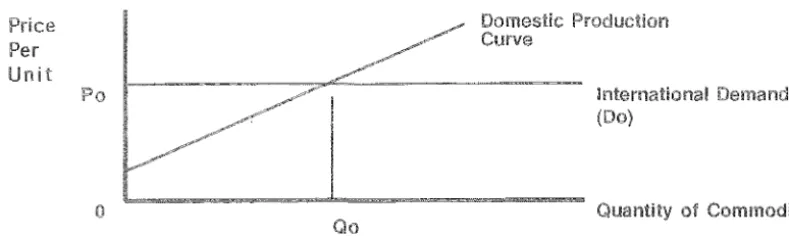
The Price Regime Facing Domestic Producers ... 64
f~verage Return for NZ Export Commodities (1919-20 to 1989-90) ... 65
The Effect of a Currencv Movement on the Production of a Co~modity ... 68
The Impact of a Devaluation on Producer Returns ... 69
The International Production Possibility Curve ... 73
Annual Rate of Inflation (1921 - 1990) ... 101
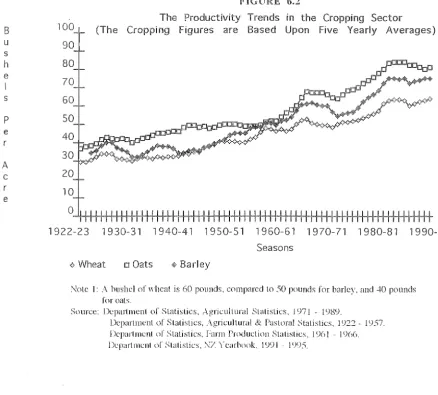
The Productivity Trends in the Cropping Sector ... 102
New Forestry Plantings (1921 - 1989) ... 115
The Effect of Increasing Production Costs on Profitability ... 117
Roading Improvements Within Canterbury... 118
The Structure of New Zealand's Support Payments ... 120
The Planning Environment Within New Zealand ... 123
Origin and Destination Factors IA~ffecting Internal ]\1i gration ... 0 • • • • • • • • 0 • • • • • • • • 0 • • • • • • • • • • • 0 . . . 135
Rainfall Pattern in Christchurch and Timaru (1920-1986) ... ... ... ... ... 143
A Portrait of the Terrain Conditions in the South Island ... ... 145
The Structure of Rural Stores in Finland ... 156
ScoPe of Local Authority Involvement in the Planning Process ... 159
Social Influences on Rural Behaviour ... 165
The Canterbury Study Area ... 175
The Centres Examined in the Case Study... 178
Roading Improvements Within Canterbury... 190
Average Return for NZ Export Commodities (1919-20 to 1989-90) '" .... '" ... ,. ... ... ... ... 191
The Declining Industrial Sector in Rural Canterbury... 196
Changes in the Agricultural Labour Force (Canterbury) ... 211
Figure 11.1 Figure 11.2 Figure 11.3
Figure 11.4 Figure 11.5 Figure 12.1 Figure 1
Figure 1 Figure 13.1
Figure 1
Figure D.I
VI
Commodity Returns 1919 - 1939 ... 256 The Trends Within the Commodity Market ... 259 Changes in Farm Investment Since the Mid
1980s ... . The Commodity Trends from 1965 to 1990 ... 269 The Increase in Cropping Yields ... .. Employment Difficulties Within Rural Canterbury... 305 The Changes Occurring in the Towns and Boroughs
of Rural Canterbury.... ... .... ... 311 Age-Sex Profiles of Selected Counties ... 314 The Changing Availability of Services Over Recent
Years ... ... 327 The Process of Rural Change (A Generalised
Framework) ... '" . ... ... 346
Table 1.1
Table
Tabl
Table
Table Table 6.6
Table 7.1
Table
Table 7.3
Table 8.1 Table Table 9.1 Table Table 9.3 Table 10.1 Table 1O.2 Table 10.3 Table 10.4 Table 10.5 Table 10.6 Table 10.7
Table 10.8 Table ILl Table 11 Table 11.3 Table 11.4 Table 11.5
Table 11.6
Table 12.1
\' II
The Strands of Research Within
Geography ... ' ' ' ' ' ' ., ... " ..
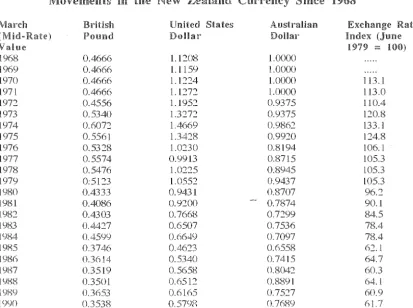
Movements in the Zealand in the New Zealand Inflation 1990) ... , ... . Capital Expenditure 1 to 1 in Iking vity ... ... 110
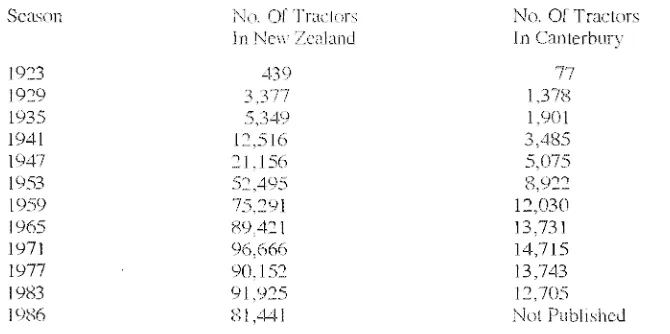
of Tractor Ownership in an ... 111
Government Assistance to the Rural Sector in 1960s and 1970s ... , ... .. of Participation in the New Zealand Education
S
stem . ... 131ghest Educational Standard ... I Increasing Female Participation in the Agricultural Labour Force ... . Roading Comparisons in Rural Canterbury ( 1966 and 1989) ... .. Changes in the Availability of Retail Services in Rural Canterbury ... . Local Authority Involvement in the Provision of (Prior to the 1989 Reorganisation) ... 1
Breakdown of the Case Study... ... ... ... 180
A vai1ability of Historical Records ... ... 1
Evolution of the New Zealand Economy... 206 Government Assistance to Primary Producers ... .. Male:Female Employment Ratio ... .. Retail Businesses in Mayfield and Waikari (1941) .. . Transportation Difficulties in Early Canterbury ... .. Retail Trends Within the Rural Community ... .. A Profile of the Retail Sector (1992 93) ... .. Major Industrial Activities in 1941 ... .. Trends in Rural Manufacturing ... .. Profile of the Manufacturing Businesses Within
(1992) ... . in the Transportation Sector ... .. Land Use Patterns in Canterbury (1922 - 1990) ... .
Trends in Canterbury (1921 - 1989) ... . Investment Over the 1967 - 1989 Period ... .. Decline in Paid Farm Labour (1921 - 1967) ... ..
Full Time Labour Trends in Canterbury (1975 -1990) ... , ... .
Trends in Selected Rural
(1 1 - 1941) ... . Trends in Selected Rural
\'111
Tabl Employment Trends in Selected
and Communities (1971 - 1986) ... .
Tabl Population Trends by Borough and
(1 1 - 1986) ... " ... . Changing Dependency Ratios the I to
1986 od ... ... ... ... 16 Breakdown Daily Travelling Times ... .
Employment as a Proportion of Total
oynlent ... .
Earnings of Vvomen in as a
Ea rn in g s ... , ., ... .
A vailability of Historical Records ... . Changes in the "Employment Status" Question ... 3 Full Amalgamations Between Local Authorities in
has been a growing debate during the 1980s and early 90s over the direction of rural
geography. The debate centres upon the role of broader social theory in geographical
analysis. The traditional approach to rural geography, as espoused by Clout (1972), has a
strong applied focus. The research from this area seeks to identify the characteristic types of
land use and settlement within a region. The geographers who follow this line of research
treat the different land use and settlement categories "as discrete spatial units for
investigation." (Robinson, 1990: 18). This approach can be seen in the wbrk of Gilg (1985)
and Pacione (1984). The argument against this approach is that it tends "to eschew them)'
and closer links with developments [in] other social science disciplines" (Robinson,
1990:]8). Instead of exploring the wider structures within society, these studies examine
events and phenomena in isolation.
Criticism of the traditional approach has gained momentum with the works of authors such
as Cloke (1989, 1990), Lawrence (1987), and Le Heron (1988, 1989(a), 1989(b)). They
have attacked the artificiality of this form of research and have called for a stronger
theoretical base to the study of rural activity. The incorporation of critical social theory is
seen as necessary if geographers are to identify the social and economic foundations on
which rural communities operate.
"agricultural change can not be explained without consideration of [the] social and
economic processes arising out of the capitalist and socialist modes of production"
(Bowler Ilbery, 1987: 330)
The incorporation of a stronger theoretical base has also helped geographers to develop "a
broader inter-disciplinary approach" (Robinson. ] 8) to the study ties
-
'"'-There has been resistance to a broader, more theoretical approach as it shifts the emphasis within rural geography from spatial considerations to the social structures within a
community (Cloke, 1990: ] 23). It has taken time for geographers to accept the need for this
form of analysis and to recognise the contribution it can make to our understanding of rural
development. The catalyst for this change has been the inability of traditional research
techniques to explain the economic restructuring and social ref o 1111 S of recent decades (Peet,
Peet Thlift, 1989). Traditional techniques have proved inadequate for this task,
as neglected the impact broader structural reforms are having upon the pattern of
business and household activity.
The pressure for a broader, more theoretical approach has come mainly from geographers
with a background in Marxist political economy (Cloke, 1989, 1990, Lawrence, 1987, Le
Heron, 1988, 1989(a), 1989(b), Robinson, 1990). The political economy approach argues
that the changes in land use and settlement can not be explained "in isolation, but by
reference to the underlying forces within capitalist society" (Cloke & Little, 1990: 11),
(Johnston, 1984: 474). The emphasis is on understanding the structures within rural society
and how changes in political and socio-economic conditions feed through to business and
household decision making.
The studies which have emerged from this area of research have provided a valuable
window into the rural economy and into the changes that have taken place over recent
decades. The political economy approach has helped geographers to better understand the
economIC structures within rural society and the role played by political institutions in
shaping business and household activity. The findings have also helped to identify the
linkages "between the state, capital and labour" (Bowler & Ilbery, 1987: 329), (Lawrence,
1987).
A broader research approach has not been accepted without reservation. There are concerns
that this trend is robbing rural geography of its distinctive character, by accepting that rural
and urban areas "are subject to the same basic underlying structures and processes"
-3-new If spatial foclIS is removed from rural is Ii to
tiate it from rural sociology or economics. Until this issue is is little likelihood reconciling the divergent views in the rural geography debate.
stilI coming to terms with of
doubts about the value of this approach and the role it is to play in rural concerns will be at the heart of this thesis. The thesis will U,-"L'OlIC
structural approach within rural geography.
It
will also to a broader framework can be combined with traditional geographical analysis. Thediscussion will look at whether there is still a place for a local perspective in rural geography
and what emphasis should be placed on the behavioural of individuals and
households. The intention is to show that a balance can be found between traditional
and the ideas espoused by broader theoretical studies.
principal reason for adopting a broader, more theoretical approach is to gain a better
appreciation of the forces which are driving businesses and households in their decision
making. Our understanding of these forces has been hampered by the narrow focus that is
taken in traditional geographical research. Geographers have emphasised local explanations
studying the changes in farm and business activity, rather than exploring the ties
the rural sector and the wider economy. Researchers need this setting as the
in the rural sector are being shaped increasingly by factors. This can be
seen in areas such as farm development where the level of is influenced as much
national and international conditions as by local considerations. farmers
a new investment they look closely at the state of the: commodity market; the
availability of capital; and the degree of government that is (i.e
to
direct supports). Difficulties in the ability of
se capital and to undertake ne"v to understand the broader
the of economic development
illustrates that
if they
--l-Identifying these broader conditions and the role they play in rural decision making will be
two of the key elements within this research. The thesis will study the political ties to the
wider economy, and the broader social and economic pressures that are facing businesses
and households. The research will pay particular attention to the social pressures within
rural communities. This is an area of geographical analysis which has received insufficient
attention recent years. A social perspective is important if geographers are to explain: the
breakdown in traditional employment barriers; the growing poverty in rural areas; and the
increasing pressures on social services. Researchers need to understand these developments
and the influence they are having upon rural activity as a whole.
Adopting a broader framework involves more than identifying the national and international
pressures on rural activity. It also involves developing an understanding of the relationships wi thin society. Researchers need to understand how rural businesses and households
interact, and what their response to political restructuring and economic reform is likely to
be. In developing this picture, it is impOliant to recognise the inter-related nature of events.
Changes in one area are likely to flow through to other aspects of rural life. This point can
be seen by looking at how tighter financial conditions at the household level have impacted
upon sporting participation and involvement in the voluntary sector. As economic
condi tions have tightened there have been growing pressures on households to find
additional employment. This has reduced the available time household members have for
outside activities. The consequence of this has been reduced participation in local sporting
activities and involvement in voluntary services, such as meals on wheels and home visits.
This relationship is just one of many which researchers need to have a better appreciation of.
The thesis will explore the nature of these relationships and how they influence the way
businesses and households respond to change.
In moving to a broader approach it is important not to lose sight of the traditional elements
which have made geography a distinctive area of research. These are the focus on
place and individual behaviour. ancing these elements with the insights provided by a
broader perspective will be a crucial part of this research. The thesis will argue that a
-5-economIc hehaviour that occur within a community or regIOn. A local perspective IS
important especially for interpreting how husinesses and households view the changes
around them and for identifying the factors that are shaping their decision making behaviour.
TO
on we the themes geography discuss what
researchers have been trying to achieve. Rural geography has its origins in the land use
studies of the mid nineteenth century. These studies generated interest in the rural economy
and in the changing nature of land and resource use. They showed that the land use patterns
within rural society are not random events. This point was demonstrated in the work of
10hann von Thtinen (1826). Von Thtinen showed that farmers make conscious decisions
about the types of production they are going to undertake, based upon cost and transport
considerations. This narrow focus on land and resource use has given way to a broader
examination of rural issues, through the inclusion of new strands of research.
The initial area of growth was in settlement research. From the turn of the century through
until the mid 1930s there was significant interest in the distribution and characteristics of
rural settlements. This interest came particularly from French geographers (Vidal de la
Blache, 1926). They examined the nature of rural settlements and the pressures that have
been moulding their development. Rural geography experienced a rapid period of growth
during the 1950s and 60s with the quantitative revolution. Greater access to statistical
modelling enabled geographers to explore the transportation systems within rural
communities and to study the spread of ideas and technology. More recently, geographers
have begun to examine the structures within society (Cloke, 1987, 1988). They have
explored the planning environment in rural communities, the role of the state in
development, and the interaction between producers and processing companies.
Rural geography now covers a wide range of issues, from the diffusion of new technology
-n-'['able 1. 1. that there are six distinct areas of thin
A
e body of research has developed around each of these areas,Studies The Growth or
The Growing lnnuence of in Farm Management
Patterns Population Trends (cohort dependency
ratios, fertility Migration Patterns
Farming Patterns (types of production/stocking) Business and Industrial Location
Planning Structures
Settlement Patterns Settlement Hierarchies
Service Patterns
Technological Development The Diffusion of Ideas and
The Willingness of Decision Makers to Accept Change
Dc\clopment Mobility Pallerns
Rail and Road Networks Spatial Reorganisation
important point to note about the development of rural of researchers to incorporate ideas from other disciplines,
has the
the case of rural migration, the underlying concepts are based upon work by the ninetieth century statistician,
(1889). A similar situation exists in the case of diffusion and location research.
industrial location models used in rural geography draw upon of two economists, Alonso (1964) and Losch (1954), while the diffusion in large
on sociological models (Wilkening 1958, and Jones, 1 to draw on
other continues in the 1 from
political economy to explain the role of IO"r.,,,""" and the
-7-Over the past decade there have been calls for a re-assessment of rural geography.
Researchers have been questioning the need for a rural perspective, given the high level of
integration that now exists between rural and urban communities (Hoggart 1988, 1990).
Integration has broken down the historical divisions between these two communities.
the two to three decades. blurring of the boundaries means that it is
no longer appropriate to talk about a distinct 'rural - urban' divide (Cloke, Le Heron, and
Roche, 1990: 13),
"[Any] division between rural and urban is highly problematic" (Robinson, 1990: 11)
The major factors encouraging integration have been the improvement in transport and
tele-communications. As transportation systems improve, rural communities are drawn
inextricably into the wider economy. This exposes rural businesses to competition from
urban centres and it improves the mobility of residents. The improvement in the roading
network also opens up rural communities to urban residents. The effect of this has been to
turn a growing number of rural centres (especially those surrounding major cities) into
commuter suburbs. These changes have been used to argue that the rural sector should be
studied as part of the wider economy, rather than as a separate field of research (Hoggart,
1990: 248).
Within rural geography there is an acceptance that the historical divisions between rural and
rural areas are becoming blurred. There remains however, strong support for a rural
perspective. Retaining a rural perspective is seen as important as communities do not
respond in a uniform manner to the changes in society. The way a community responds to
economic restructuring or to political reform varies, depending upon its employment,
popUlation, and social characteristics. This means that the findings from an urban study can
not be readily translated to a rural situation. The different social and economic
characteristics make direct compmisons problematic.
"rural areas have particular local features '" which give them a distinctive social
for a local perspective can be illustrated hy looking at business
rural communities and how they differ from urban areas. comm
c base compared to their urban neighbours (i.e farming,
the majority of cases, they have only one or two major on a narrow range of activities makes
to economic
of the
centres (Britton,
Zealand meat
Heron, Pawson (eds), 1
comm
more than a dozen meat processing plants have closed or been
In
a narrow
to
on
of closures have been in rural centres, such as Kaiapoi, Patea and Whakatu.
removed between 500 and 1,000 jobsl in each of these communities.
redundant employees have found it difficult to gain equivalent positions, as these
ties have a limited employment base, especially for skilled workers. This has
meant that a proportion of the redundant workers have been forced to migrate out
community. Urban centres have coped with the loss of employment more
, as they have a larger and more diversified employment base. Skilled workers
usually been able to find equivalent positions. often in the same industry. These
responses to economic change would be masked if researchers were to study the
rural and urban communities collectively. It is therefore important that the rural sector be studied in own context, rather than being examined as an extension of the urban
environment.
1 I addi
important factor in this debate has been the appropriateness of using general
models to trace the developments in rural society. Rural geographers have
use of models as they tend to be based upon urban criteria.
need to defined in their own context and that the policy tools used to
must come from the rural perspective" (Cloke
the rural sector, it is to use
are to rural environment. Urhan based models can not
used as they are tailored to the conditions within metropolitan areas (i.e they are based upon
the economic and social conditions within the urban sector).
Overall, this debate has shown that there is still a place in geography for rural orientated
research. Rural based studies are needed as they provi a valuable insight 111tO the way
communities respond to change. These insights can not gained
using general models, as they ignore the local stics within the rural economy
and Roche, 1990: 14). To understand the operation of the rural sector, it
is necessary to adopt research techniques that are tailored towards the rural environment.
RURAL AREAS BE DEFlNED?
"In general terms 'rural' has been regarded as refening to populations in areas of low
density and to small settlements" (Robinson, 1990: 11)
Delineating a boundary between rural and urban has been one of the most contentious issues
in geography and related disciplines. Numerous classifications have been produced, none of
which have become a standard definition. The major difficulty researchers face when
addressing this issue is the problem of perception.
"different cultural, demographic, environmental, political and socio-economic
circumstances ... lead ... residents, or more formally their governments, to emphasise
dissimilar attributes as key characteristics of 'their reality'." (Hoggart, Buller, Black,
1995: 21)
These differing perceptions are reflected in the administrative definitions used by
governments to define rural communities. In the case of Norway, localities are defined as
rural if they have less than 200 inhabitants, whereas III Italy and Spain the threshold is
10,000. The higher threshold in Italy and Spain reflects their historical pattern of settlement.
Rural communities III these countries usually have a sizeable market town at their centre.
This town is seen as an integral part of community. A number of governments go
beyond a simple popUlation threshold and measure density of popUlation over a area.
population
Denrnark,
of
than
~ 1
0-below 400 per square kilometre. A 51 lar situation occurs in
the population threshold is Stipp!
more detailed statistical explanations of 'rural' can
are defined as those "with a population of
cent of their economically active population
of communities"
definitions tend to be arbitrary their
a housing ty quotient.
found in the Netherlands.
of
but with more
excluding
are rural
areas. This means that the transitional zones around centres are usually
as urban when they should more correctly be seen as or semi-rural (Rind &
Hudson, 1 (1978) attempted to remedy this by developing an index of
rurality. was developed by identifying key social and economic of rural
communities. were then rated against these features and given an overall score.
The outcome was a detailed picture of rural, semi-rural, and urban districts. This approach
gIves a indication of the transitional zones around cities and areas of extreme
rurality. With this and similar approaches it is feasible to broadly define rural and semi-rural areas.
Earlier in this we discussed the debate over the use of broader social theory in rural
geography. is cruciaL as it will determine the future of the subject and the
it is viewed by
in
other disciplines. The attitude taken in this thesis, is that ruralgeographers need to broader social theory in order to gain a better understanding of
the rural the conditions which are shaping businesses and households
their decision conditions can not be identified by studying isolated events.
Only by looking at rural sector as a whole, is it possible to distinguish the causes of chan
continuous
to portray the rural
to a
a
appreciation in the research that
of one off events. The
environment which changes only
IS a
- 1
1-major economic shock or when new technology is introduced. This image needs to change
if a realistic picture of the rural sector is to emerge.
The debate within rural geography has shown that researchers need to understand the
economy before they can address the changes within the rural sector. This wider context is
important, if researchers are to understand the social and economic relationships thin
These relationships hold society together and they shape the way decision makers
interact. It is therefore essential that researchers have an understanding of these
relationships and the way they vary over time.
As part of this research, geographers need to clarify the role national and international
factors play in shaping rural activity. These wider conditions have a major influence on the
economic and social framework within the rural sector. There is however, only a limited
understanding of the way these factors influence local activity. It is therefore important that
researchers study the linkages between the rural sector and the wider economy. This point
can be highlighted by looking briefly at the linkages between the international commodity
market and the farming sector. The international market determines the demand for each
commodity and the prices that will be paid. This means that a change in international
demand will affect both farm output and profitability. This can be seen by looking at the
wool market. A decline in the wool market will reduce the price that farmers receive for
their production. The immediate effect of this is to decrease farm profitability. In the longer
term it will lead to a fall in farm production and to off-farm spending (Campbell, 1973).
This example illustrates that there is a strong linkage between the international market and
the local farming sector. It is therefore important that researchers study these linkages and
how they impact upon the rural economy.
There also needs to be a greater appreciation in the research that rural change is a continuous
process. At present, there is tendency to see rural change as a series of one-off political and
socio-economic events. This needs to change if researchers are to gain a better
understanding of the rural sector. The household structures within the rural
-12-is a gradual affair. Th-12-is means that it -12-is necessary to take a long term perspective whcn
studying the changes within a region. A good example of this is the increase in sealed
roading that has occurred over the 1926 to 1989 period in Canterbury. The yearly increase
in sealed roading did not exceed 150 kilometres, but the proportion of sealed roading has
risen from less than 1 % to over 50% (Local Authority Handbook, Local Authority
Statistics). The implications of this increase transport services and for personal mobility
have significant, but on a year by basis the improvement was negligible. In most
areas of activity it is important to take a long term perspective, if researchers are to
build up a clear picture of the changes that are taking place.
This section has concentrated on the need for geographers to explore broader social theory.
It is important however that researchers do not lose sight of the essential elements that
distinguish rural geography from other subject areas (i.e our focus on 'place'). Adopting a
broader framework should be seen as enabling geographers to better understand the local
processes at work. It should not be seen as superseding traditional avenues of research.
OF CONCEPTS RURAL
GEOGRAPHY
Since the early 1980s, researchers have been introducing theoretically based techniques into
rural geography. These new techniques have been used to study how the rural sector
operates and to identify the linkages between the rural community and the wider economy.
The major approach that has been used is Marxist political economy. Geographers have
been adopting this approach as it offers an insight into the functioning of society that has
previously been lacking. s is due to the fact that the political economy approach
recogmses "the importance of broader state. society, and class issues, and that local
characteristics are explained, not in isolation, but by reference to the underlying forces
within capitalist society" (Cloke & Little. 1990: 11). Researchers who have used this
approach, have found that it is a e in studying the operation of the rural sector.
"the use of a political-economy approach offers rural geographers expectations of
political
into the
(i)
-13-role played by the state and
, and the state" (Cloke. in Peet & Thrift
approach has been favoured by
of capital accumulation, and it explores
LH/"-'Cil'''''' of this, it is
state interventionlregulation, and class
of the approach and how it has
rural sector.
as it
to
economy,
an insight
ations
capital
have
our
political-economy concepts to contribute to an understanding of:
the organisation of the economy produces particular forms
investment (and disinvestment) in rural areas;
(ii) of social groups, their interests in I and, and environment,
interaction bet\Neen social groups and economic
(iii) in which, and the reasons why, the state operates as it does in response
to, or as an initiator
or
economic reorganization." (Cloke 1990: 4)At the heart of this approach is the concept that capital accumulation acts "as engine of
change in social and environmental formation" (Cloke, 1990: 124). is continuously being
in
the areas and activities of highest return. This produces anof restructuring, as capital shifts in search of surplus value. The consequence of this
shift is that areas a falling fate of return will see an outflow of to
those with a
development
return. means that there will be an uneven pattern of
investors out favourable settings for accumulation' (Cloke.
spatial terms there will be an outflow of capital from areas
have less favourable conditions for capital investment. Capital will flow to areas with a
favourable for "accumulation, perhaps because labour forces in locali
are atively
subsidies are
14).
ve compliant, or perhaps because in particular I state
-14-The movement of capital from one activity to another affects not only the economic structure
of a region, but also the social environment. It causes a re-distribution of political power and
it affects which classes have control over resource use (Nikitin , 1983). This shift in political
and resource control from one class to another has a major bearing on the a regIOn
develop. It affects which social groups have a say in decision making process and what
priorities are followed in the development a regIOn. These changing social conditions and
impact on a community are emphasised in political economy literature. This
contrasts th existing geographical approaches, which have tended to down play the
role of social conditions in shaping rural activity.
Another important issue that is addressed in political economy is the role of the state2 in
directing and facilitating change. The political economy literature looks at how the state
intervenes in the economy and what affect it has on the pattern of development. The work
looks particularly at the factors that are shaping political activity. A knowledge of the
political environment is important if rural geographers are to understand how local and
central government agencies influence business and household activity (Le Heron, 1988,
Taylor, 1989).
Finally, political economy has been used to draw together the different strands of research
within rural geography (i.e. land use, migration, transport, and agro-economic research).
This is necessary, as rural geography has been seen traditionally as a collection of issues,
rather than as a unified subject. The lack of an overall framework has been caused by the
empirical nature of the research. Geographers have undertaken detailed studies on issues
such as land use and settlement change, but they have not tried to link their findings to a
broader framework. broader framework is necessary, if researchers are to gain an
understanding of the rural sector as a whole. Political economy can provide this broader
framework. as it is a high level theoretical approach. It looks at the underlying economic
and social structures a society, rather than the physical trends that are occurring.
With this broader approach it is possible to the different strands of rural geography
-15-together. s
as a series of isol
it possible to study the rural Issues,
as a complete unit, rather
The thesis is
economy, in particular,
political economy will
to provide an adequate
The second part
sector and the
the
THESIS
four sections, as is }.. initial section is
two a Ci?,,,,,P'·"
political three will explore its
Chapter three will also to ctitique Marxist political
of a local perspective. discussion will argue that Marxist
to be supported by a behavioural/managerial perspective jf it is
for the thesis,
s (chapters four to seven) study ties between the rural
The discussion will look at how rural businesses and
households are constrained in their actions by broader political conditions and by
developments in the national and international economy, thesis will also look at the
impact changing social conditions are having upon community and household structures.
The objective in this is to build up an understanding of the broader conditions
which are shaping rural activity, This section will also be to examine the continuing
need for a local perspective within rural geography. The work wi11 study how local physical
and socio-economic conditions are able to modify the general pattern of rural activity.
The findings from this section will provide geographers with a better understanding of the
rural economy and of the conditions which are shaping farm, and community
development. The point that will stressed in this research is the need to view
events from a broader national and international perspective,
are to understand in the broader economy
level. The thesis will also stress the importance of looking
the causes of rural conditions are one
decision making. also to close attention to
IS if geographers
to
economic arena for
shaping rural
-16-outline of the political economy approach and how it can used in rural geography
A cll1ique of political economy
di:'\cussion on how national and
international processes affect the pattern of rural
A discussion on the role of' local conditions and how they modify rural activity
An examination of rural In
An of the condi tions which affect
rural decision makers in their actions
An evaluation of the benefits LUll.!
-17-to to
at a
a more
structures
111 are
CllOSffl case VV8S
111
aC'
e 0 historical exist from the early days
settlement. availability of long run data is more plentiful in Canterbury than in other
due to the presence of Lincoln Agricultural College Lincoln University). The
University has an extensive collection of agricultural, as well as more general rural material,
to source proved invaluable
course of is unmatched in other regions.
case IS to a rural
events and processes shaping
This detailed picture is needed, if the underlying economic and social structures within rural
Canterbury are to be To this detailed picture, the study has three major
parts to it:
covers an time frame, events and
processes to be
of national and international
the structures
3 The area includes the 'out-district' of Wailaki. This is the area north of the Vllaiwki River thaI is
tI1e Regional Council. This area has been included in the as it has links to the Iv1acKenzie
-18-Mackenzie
Sources: University of Auckland, Alias of New Zealand
Boundaries, '1986,
Local Government Commission, Final Reorganization Scheme fOl" the Canterbury Region, 1989,
Coastline
Boundaries
Boundary
-19-The study itself covers a time frame of seventy years. from 1921 to 1991. This was not an
arbitrary date, but was set by the availability of consistent records and by the nature of the
study area. The early 1920s saw the introduction of new land and livestock classification
systems, which made comparisons with earlier records impractical. The J was also a period of rapid expansion in the area of data collection g district roading statistics were
collected from 1 addition to these technical constraints the 1920s was selected as the
region was entering a new phase of its limits of agricultural
expansIOn, a territorial sense, had been attained in the previous decade, while the rural
population had reached a plateau. The 1920s was therefore a critical period in Canterbury's
development, as it witnessed the end of the colonial expansion phase and the beginning of a
new era of rural consolidation.
The second feature of this approach is that it incorporates national and international
processes within the research. The study examines how national and international
conditions have changed over the seventy year review period and it attempts to identify how
these changes have impacted upon the local setting. The following list gives an indication of
the type of issues that have been addressed.
(i) international commodity and trade patterns;
(ii) international financial and economic trends;
(iii) national legislative patterns for land use planning, transportation, and financial
credit;
(iv) national economic and social trends; and
(v) state policies towards agliculture, rural services, and related activities.
The inclusion of this material is critical to developing an understanding of how wider
processes can impact upon rural activities.
The final feature of this study is the depth of local material. The work incorporates a
detailed base of material on the physical, political, and socio-economic structures within
rural Canterbury. purpose in collecting this material was to build up an understanding
of the local decision making environment. IS if issues are to seen in their
-10-su
current structure
to out course
fi s
it can make to our
It
a is an appropriate tool for studying social and
be Marxist political economy and the concepts that have been
this approach. The political economy approach has been over the
to support the calls for a broader, more structural analysis of rural change.
been attracted to Marxist political economy as it provides an insight into
way communities are formed and how they are responding to restructuring 1978:).
It also an understanding of the wider processes within society, such as influence
policy on decision making and the role played by commodity In
business activity. insights, it is claimed, have enabled geographers to understand of the rural economy and of the decision making environment in which
businesses, and households operate (Bowler & Ilbery, 1987:
The attraction of Marxist political economy for this study is that
it
broadens the focus ofgeographical Instead of studying events in isolation geographers are able to
investigate the wider conditions within society.
"Marx took the view that no aspect of society could be analysed independently the
totali of social relations" (Robinson, 1990: 55)
Marxist political economy enables geographers to explore the conditions which
communities
opportunity to
broader social
which shape their pattern of development. It also provides an
the political context in which decisions are made
22
The principles of Marxist political economy and the argument for its uSlon In rural
geography will be presented in chapters two and three. Chapter two will introduce the key
concepts within Marxist political economy. The chapter will discuss the basis of these
concepts and how they enhance our understanding of societal change. Chapter three will
debate the contribution Marxist political economy can make to analysis. The chapter will
examine how a broader, stmctural approach can aid our understanding of the major processes
society (Le. economic restructuring, political intervention, and social refoffi1).
argument within this chapter is that the incorporation of a broader social perspective is
necessary if the underlying causes of rural change are to be identified.
Adopting a broader, more structural approach to rural geography should not be seen as
downgrading the role of local conditionsl pnd individual behaviour in the decision making
process. One of the strengths, and identifying features of rural geography has been its
emphasis upon 'place' and 'spatial diversity'. If this local perspective were to be lost, there
would be little to distinguish rural geography from related disciplines. This point was
stressed in chapter one. The chapter argued that the incorporation of a broader approach
should be viewed as adding another dimension to rural geography rather than as an attack
upon traditional research.
A local perspecti ve needs to be retained if geographers are to explain the variations in business
and household activity. Structural approaches are inappropriate for this task as they provide
general explanations of the processes shaping society. They can not be used to identify the
personal factors that cause individuals and households to vary their response to economic
restructuring or to social reform. To identify these factors it is necessary to retain a
behavioural/managerial perspective within rural geography. With this perspective
geographers are able to explore the local influences on rural behaviour and the way different
groups and individuals are coping with change. The continuing need for a
behavioural/managerial perspective will be debated in the later part of chapter three. The
~23~
Marxist political economy it comes to impacts of rural on a communitv. The discussion will
development thin rural society can not be adequately explained of a
local
will be used as the conceptual
the research and to provide a
major
analysis.
was chosen for this task as it brings to a conceptual
society. This overview is critical for understandi the political and
socio-economic environment within the rural economy. It provides an insight into the way
communities are structured and how they are conditioned by ll1 wider national
(Le Heron, 1989 (a): 17). A wider is essential as rural
communities are shaped increasingly by events at the national and international leveL
identified by researchers has been the movement of capital within an
process causes restructuring at an industry and community leveL This point
by oke, Le Heron, and Roche (1990: 14)
in
their study of the agricultural One of theeconomy.
was ill
sector in Zealand. They showed how the movement capital from one area of
production to another agriculture to forestry) can cause significant restructuring, at both
an economic and a social level. Another area which attention is the role of the
state in literature has shown that play an important role
in
regulating economic matters and in reducing the social tensions within a community (Cloke,
1990: 15, Cloke Little, 1
ic policy has a major impact upon economic and social structure of agriculture"
nO)
The points brought out in the political economy literature theSIS
social
the influence public policy
economic developments are having upon on
used to guide the study, The
vity and the impact broader
-2-1-The Practical Research
(The Social and Economic Trends Within Rural Canterbury)
political economy approach will also be used as the framework for the practical research.
a strong conceptual framework if the findings of the research are going to be
in a coherent manner. The political economy approach will be used to
a firm direction and to tie together the major strands of work on rural change.
This idea is shown graphically in Figure 1. The diagram shows how an overall framework
is when working with a variety of research issues. The political economy approach
helps to focus the practical research and to link the different areas of analysis. The lack of an
overall framework has been one of the major deficiencies with existing research.
political economy brings to the thesis a strong historical focus. political
approach society, and the rural economy, as an evolving entity, that is
political reform, and social restructuring.
the nature of rural change. helps to identify
the impact these changes are having upon and
-25-Marxist political economy has its origins in the writings of Karl Marx and Friedrich Engels in
the mid nineteenth century (Marx, (ed. Jorden), 1971, Marx & Engels, Feurer), 1959).
Their studies were essentially a critique of classical (bourgeoisie) economics and the capitalist
thei was capitalist sets a structure
conflicting groups" (Phelps, 985: 355). capitalist system organises society so
resources are channelled into the hands of a small section (class) of society. This
channelling of resources creates a situation where the majority of the population are compelled
to work for the capital owning class, as they lack the means of production to produce their
own basic necessities (clothing, food, and shelter). The creation of a working class and a
capital owning class opens up the possibility of an exploitative situation. Owners are able to
exploit the production of their workers by paying them only a proportion of their producti ve
value. This unequal situation is sustained by the state, which works to safeguard the system
(Marx (ed. Smelser), 1973: xix).
Marxist political economy is more than a simple debate on the inequalities within the capitalist
system. Marx and Engels used their writings to present an economic analysis of how
societies form and change over time. This framework looks beyond the bricks and mortar of
an economy and examines the underlying basis of society.
"Political economy is concerned with the social laws of production and distribution"
(Lange, 1963: 7)
Both authors believed that the existing economic perspectives failed to comprehend the true
nature of society. They contended that the changes within a community can only be identified
by gaining a "theoretical understanding of the base - or structure - of a mode of production"
(Johnston, 1984: 474). This involves identifying the social and power relations which form
the basis of a society and examining how these relations lead through to the economic and
institutional structures (political, legal, and administrative) which govern a state. In essence.
2
-2(,-classes, as these will determine the economic and institutional framework which will
evolve within a society.
"In the social production oflife, men enter into definite relations that are indispensable
and independent of their will. The total sum of these relations of production constitutes
the economic structure of society, real foundation, on which rises a legal and
superstructure to which correspond definite of social consciousness"
,In Resnick, I
The political economy approach is based upon a number of key concepts, which are used to
explain the formation and operation of society. These include:
i) class creation and class exploitation;
ii) commodity exchange;
iii) capital accumulation (the return to capital); and
iv) modes of production.
Each of these concepts is designed to highlight a major feature of the capitalist economic
system. Together these concepts are used to explain how societies are drawn into an
exchange situation and how this produces an unequal social and economic structure. In
particular, they are used to identify the underlying structural processes which shape a society.
i)
Class divisions occur when societies move away from a communal existence. Under a
communal structure each individual (or family) controls their own means of production2 .
This allows individuals to provide for their basic needs (food, clothing, and shelter) without
having to rely on others. this situation there is little, if any, potential for a class structure to
develop, as individuals produce solely for their own needs, rather than for exchange. Marx
argued that in communal societies there is only a single class of worker, as each member
common
the
event
-27-to the productive forces"
ty has access to land and to
families.
a a
to a situation resources
This produces a situation where groups within s
one IS
a
are
access to the means of production. This variation in access to the means of
is seen as the basis for class creation (Nikitin, 1983).
private P of resources creates a situation where the majority of population are
from the means of production. This concentration of resources makes it impossible
for to their own basic necessities. As a result of this, they are forced to
resource owning class. This need for employment is exploited by labour to
resource
labour.
class. Resource owners are able to draw off the surplus value
workers only a proportion of their true
surplus value is disguised by the wage system. Workers believe are
being paid for a full days work, when in fact, they are paid only to cover their basic
(food, and clothing) and to reproduce the household unit. The surplus
production (known as 'surplus labour time') is siphoned off by the resource owner.
divisions within a society are maintained by "a combination of economic, political
and : 62). In particular, it is important to look at the role of the state in perpetuating state supports the class system by legitimizing the
of and by a legal framework that safeguards the traditional
resource
to the less
as a
between commodities'
-2~
working class. This i
within society3.
of
smallest to a
relations between people in
1983: 41). The commodity ,,,'-'~HUH
payments
IS seen as a
: 41) is traded
shape of relations
is seen as the
central feature of the capitalist system. It separates the acts of and consumption,
and it is the means of realising the embodied value that is in an asset. An illustration of
the exchange can seen in Figure 2.2. In example the resource owner purchases commodi for production using money as the medium. After these
resources to produce an item of exchange the owner will on-sell the good for a
monetary return. resource owner will then start the process over
Process
(labour power/instruments of production)
(Commodi sold)
When a commodity is traded it both a use value (otherwise known as utility value), as weil as an abstract
commodity may
(labour value) (Harvey, 1982: use of a to the exchange value of the commodity. "The most
useful things are often ei (such as air) or very cheap of little
use to mankind often cost a as diamonds), Utility or use a
condi tion of and not reason (Nikirin. 1983: the
-29-a" com modi is related to factors r
ters that "commodities are
quantity of socially labour expended on
commodities are exchanged at the value of their
value only as a theoretical
gains will SI
diverge from the equilibtium level due to
and supply. This occurs as level of demand is unlikely to ever
supply. means that variations from the equiliblium price will be the norm, lte.
demand
of
than the
producer level there \vill be variations between the return each manufacturer
they incorporate different levels of labour and capital. means that some
producers
win
higher returns, as they incorporate more efficient manufacturingof capital accumulation is seen as a central element in the and
maintenance the capitalist economic system. At the base of this concept is the belief that
investors will move capital between activities and geographical ons search of
higher rates of return. an activity is not returning an acceptable rate of return the capital is
withdrawn or level of investment is run down over successive cycles of production.
To appreciate how the accumulation process operates it is necessary to examine how IS
used in the production Initially, capital (in a monetary fonn) is used to the tools of production
known as organic
which is
buildings, machinery, land, and technology), form of capital is
itself organic capital is incapable of producing a as it is
a return the capitalist must also
-30-exchange. When