Journal of Engineering and Applied Sciences 9 (10-12): 389-395, 2014 ISSN: 1816-949X
© Medwell Journals, 2014
Corresponding Author: Valeriy Ivchenko, Institute of Moscow State Computer Science, Radio Engineering and Electronics,
The Remotely Reconfigurable Intelligence of the Space-Based Mobile Robot
Valeriy Ivchenko, Petr Krug, Tatiana Morozova, Andrey Ostroukh and Sergey Pavelyev
1 1 1 2 3
Institute of Moscow State Computer Science, Radio Engineering and Electronics, Moscow, Russia
1
Department of Automation Control System, State Technical University MADI, Moscow, Russia
2
Department of Moscow Power Engineering Institute, National Research University, Moscow, Russia
3
Abstract: The problems of design and implementation of remotely reconfigurable intelligence for space-based robotic systems and specifically mobile robots are highlighted. The classification of reconfiguration technologies, the specifications of remote reconfiguration, the functional structure of remotely reconfigurable intelligence are described. The space-based mobile robot-explorer Tourist is presented.
Key words: Remote modification, mobile robot, reconfigurable computing, field-programmable gate array, tourist
INTRODUCTION ship) to the digital intellectual control module of the Long duration of planetary exploration missions, reconfiguration of FPGAs automatically.
taking months and years, imposes a specific set of
requirements on the design of space-based robotic CLASSIFICATION OF TECHNOLOGIES
systems such as: USED TO DESIGN RECONFIGURABLE
C High level of survivability, ability to continue to carry
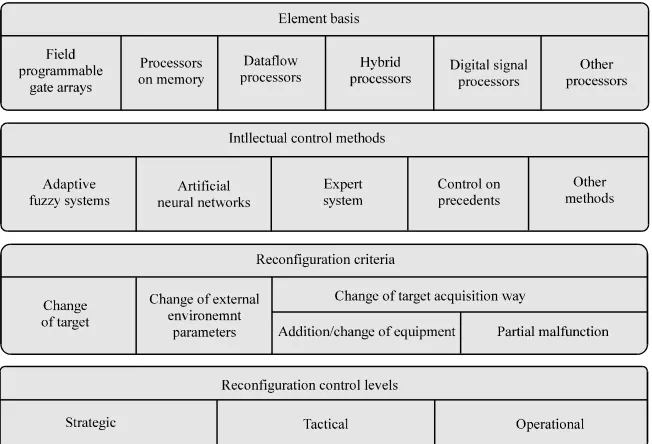
out the mission in case of partial malfunction of The technologies used to design reconfigurable mechanical parts, hardware or software as well as in intelligence of autonomous control systems and mobile case of unpredictable changes of external robots are presented on Fig. 1.
environment parameters Element basis defines the scale of the minimal
C High level of adaptability (reserve), ability to configuration block in the system. Systems on the basis continue to work in case of change of target (change of standard microprocessors contain blocks of the largest of mission) or change of target acquisition way scale (separate microprocessors) while FPGAs allow the Fulfillment of the earlier mentioned requirements is logic cells. Other types of element basis occupy possible if the intelligence of the space-based robotic intermediate position.
system has the ability to be reconfigured (modified) Specific requirements are imposed by the method of according to new emerging tasks on strategic or tactical realization of the intelligence in a space-based robotic level or the changing circumstances. This can be achieved system. Reconfigurable intelligence on the basis of by application of the reconfigurable computing artificial neural networks can be designed more efficiently technologies in the design of hardware on the basis of with the help of FPGAs which provide the most flexible Field-Programmable Gate Arrays (FPGA). The modern changes to configuration. Hybrid architecture is better level of technology in this field is represented by 20 nm suited for adaptive fuzzy systems, processors on memory scale FPGAs (16 nm scale under development), boasting for expert systems, etc. In each case, the optimal choice up to 50% higher performance compared to previous for realization of reconfigurable intelligence requires generation analogues with up to two times lower power detailed analysis of expected working conditions and consumption. Radiation tolerant FPGAs suited for internal specifications of the space-based robotic system. space-based missions possess total-dose tolerance from For space-based robotic systems with reconfigurable 300-1000 krad (Krug and Pavelyev, 2011). intelligence and mobile robots in particular an important Application of proposed technologies involves part plays the realization of control over system transmission of new or modified hardware configuration reconfiguration, since the decision to carry out remotely (from Earth or planetary exploration orbital reconfiguration may be taken automatically according to space-based mobile robot which carries out the
INTELLIGENCE
Fig. 1: Technologies used for realization of reconfigurable intelligence
a given set of criteria. Reconfiguration control in such problems to be taken care of for successful design of case should be run by its own intellectual algorithm which remotely reconfigurable intelligence for space-based may be different from the one used by the main robotic systems.
intelligence of the space-based robotic system. The Based on the analysis of common problems the method of realization of intellectual control over system following set of specifications for remotely reconfigurable reconfiguration is selected according to expected working intellectual control module of space-based robotic conditions, available computational resources and overall systems has been developed.
level of system automation. The set of specifications is divided into groups of Reconfiguration criteria for space-based robotic functional specifications, reliability and security systems can be divided into such general groups as specifications, system specifications and user interface change of target, change of external environment specifications.
parameters and change of target acquisition way which
includes emergency malfunction of part of the equipment Functional specifications:
and scheduled change of hardware or software. Highest C Reconfiguration of the intelligence in real time level of automation includes all of the earlier mentioned C Reconfiguration of the intelligence in background criteria but it is not always necessary. mode without interfering with the main functions of
Reconfiguration control can be carried out on the mobile robot
strategic level, including definition of general targets C Self-check and self-testing of the system after during the system’s operation and tactical level, including reconfiguration which ensures that new configuration the choice of optimal way to solve current problems starts running only after making sure the modified connected to the state of external environment. The intelligence of the space-based robotic system higher the level of control, the larger can be the scale of functions correctly
the minimal configuration block. For different control C Continuous work of the mobile robot for the duration levels individual methods of intellectual control over of the mission and after reaching the target with the system reconfiguration may be applied (Ivchenko et al., purpose of switching to other missions with the use
2012). of new remotely modified intelligence
SPECIFICATIONS FOR REMOTE Reliability and security specifications:
RECONFIGURATION C Standard means of authentication and integrity Reliability of hardware and software reconfiguration etc.) with the purpose of reliable transfer of in real-time environment is one of the most important configuration data for remote reconfiguration
J. Eng. Applied Sci., 9 (10-12): 389-395, 2014
C Return to the previous configuration in case of represent a platform for creation of high-efficiency negative self-check result without interrupting the
functioning of the space-based robotic system C Transfer, systematization and storage of
reconfiguration log in the database of remote control center
C Software in the remote control center should provide the operator with data on technical condition of the space-based robotic system
System specifications:
C Data exchange with other space-based robotic systems working in a group
C Reconfiguration of the intelligence should take into account configurations of similar space-based robotic systems working in a group with the purpose of maintaining compatibility and common standards on data exchange (Gerkey and Mataric, 2004)
C Initiation of self-check by remote control center or locally
C Informing the remote control center on the completion of reconfiguration steps and system status
C Alerting the remote control center about emergency C CPLD (Complex Programmable Logic Device), devices situations in remotely reconfigurable intellectual
control module
User interface specifications:
C Software in the remote control center should provide the operator with a comfortable interface to receive and evaluate the data on technical condition of the space-based robotic system
C User interface should be sufficient, logical and free of excessive information
C Main interface window should display current status of the space-based robotic system, its remotely reconfigurable intellectual control module and reconfiguration controller which in general corresponds to three-step light indication normal, attention, danger
C In case of a malfunction detected by neural network classifier within reconfiguration controller the operator should be able to get fast access to the information about the malfunction source and the triggers which caused the alarm
C Information should be organized in multi-level structure allowing gradual access to specific data without unnecessary details
PROGRAMMABLE LOGIC DEVICES
Prospective element basis for remotely reconfigurable intelligence are Programmable Logic Devices (PLD) which
reconfigurable digital circuits and devices with low project time and costs (Donohoe et al., 2000, 2007; Vladimirova and Zheng, 2005; Walker et al., 2007; Chen et al., 2010). Inner structure of modern PLD can be modified in real time which allows creation of devices with fast reconfiguration of executable functions on their basis. Remote modification of the intelligence of space-based robotic systems implemented on the basis of reconfigurable computing technologies and PLD is estimated to increase their life cycle in certain applications by 15-20%.
PLD represent one of the fast developing directions in modern digital electronics. The technology attracts designers with the ability to create digital devices with arbitrary internal structure with relative ease. Compared to Application Specific Integral Circuits (ASIC), design on the basis of PLD requires significantly less time and cost lower thanks to implementing changes by reconfiguration of the same logic device. Modern PLD in most cases correspond to one of the following architectures:
using non-volatile memory to store configuration data (Flash or EEPROM)
C FPGA (Field-Programmable Gate Array), devices using volatile memory to store configuration data which requires initialization after turning on the power supply
Modern high performance systems mostly use FPGAs which have significantly larger amount of logical cells and dedicated hardware resources for carrying out basic calculations.
HARDWARE RECONFIGURATION
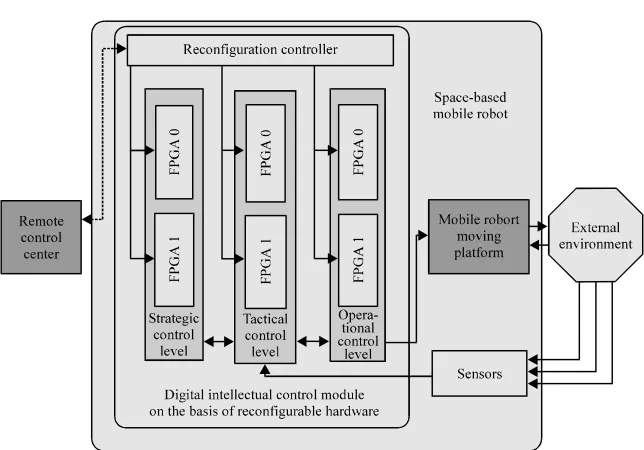
Fig. 2: Remote hardware reconfiguration diagram
loaded module and switch to usage of the new FPGA 2011; Gu and Hua, 2007; Lin et al., 2009; module without influencing performance of current critical Makoto, 2009; Plunkett et al., 2010; Huang et al., 2004): functions of the device.
The method of reliable reconfigurationuses two C Development of the principle of situational control standard functional modules: Reconfiguration server is when each class of possible system states located within the remote reconfiguration center which is corresponds to a given class of possible solutions connected to the space-based robotic system via network C The principle of hierarchical structure of the interface. Reconfiguration server remotely controls intellectual control system, including strategic groups of space-based robotic systems and supervises behavior planning level, tactical action planning reliable hardware reconfiguration. level, operational (actuator) level and sensors
Reconfiguration controller is a part of the digital C The principle of selecting modern intellectual intellectual control module within the space-based mobile technologies, suitable to solve problems on each robot. Reconfiguration controller may be a part of level of control hierarch
software or a separate processor and its task is controlling
the process of hardware reconfiguration. The earlier mentioned principles of space-based Proposed concept provides simple and automatic robotic systems design allow to implement a wide range hardware reconfiguration. The concept includes: of intellectual features necessary to work in partially C Automatic remote reconfiguration without operator According to the principle of situational control, each participation class of system states which is considered possible in the C Reconfiguration without physical exchange of process of research corresponds certain control solution
hardware (control signal, software or algorithmic control procedure,
C Simplifying the process of technological etc). Then each emerging situation observed and improvement of the device identified by sensors can be put into a certain class which C Running self-check and self-testing of digital already has the necessary control solution.
intellectual control module The principle of situational control on the basis of C Classification of emerging malfunctions with the help modern intellectual technologies demands a vast of artificial neural network knowledge base on the principles of design and goals of Fundamental basis for design of intellectual control different algorithms, characteristics of operational systems for robots and other complex dynamic objects mechanisms and the object of control. In this case, includes three key principles (Pryanichnikov et al., classification analysis of the stored knowledge in relation
uncertain or fully uncertain conditions.
J. Eng. Applied Sci., 9 (10-12): 389-395, 2014
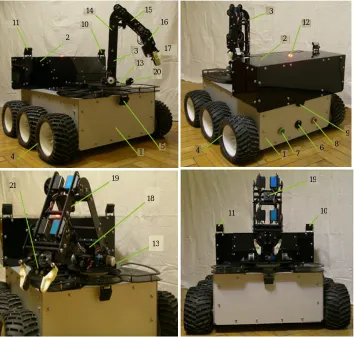
to current sensor data should provide parametric and environments (such as other planets) with the help of structural setup of control algorithms, modification of remote control (Ivchenko et al., 2012). The robot-explorer target acquisition program and change of target if it (Fig. 3):
becomes necessary.
The main architectural feature of such model of the C Travels across the ground imitating the surface of intellectual control system compared to the standard one Mars
is addition of ways to store and process the knowledge C Is controlled remotely with visualization provided by with the purpose of determination of features required in cameras mounted on the robot
uncertain conditions with random pattern of external C Imitates the changes of temperature, pressure, influences. Such influences include unplanned change of humidity, atmospheric gas composition, etc. on the targets, operational characteristics of the system or the surface of Mars
object of control, parameters of external environment, C Exchanges information with landing module by radio
etc. channel
If necessary, the system can be outfitted with the C Is equipped with remotely controlled robotic hand means of self-learning providing aggregation of (manipulator) designed for recovery of soil samples, experience and expanding the knowledge base. In setting up research equipment on the Mars surface general, the object of control may have complex and bringing it back to landing module
structure including several functionally dependent
subsystems. Tourist is composed of the chassis, control devices,
The hierarchy of dependencies determines robotic hand placed on the moving module and the decomposition of initial targets and control tasks into system of remote control located inside the planetary recursive sequence of embedded components. Such complex. Remote control system controls the moving distribution requires multi-level organization of the control module with the help of:
system with intellectual capabilities for analysis and
classification of current situation, creation of meaningful C Information about environment provided by a set of behavior strategy, planning of action sequence as well as cameras mounted on the moving module
generating operational laws according to given quality C Remote control of the main parameters of the moving coefficients. The structure of intellectual control system module
of a complex dynamic object has to fit the principle of
hierarchical structure and include strategic, tactical and Remote control system is also used for maintenance operational (actuator) levels as well as a set of necessary (charging the batteries of the moving module). Power
sensors (Fig. 2). supply is provided by a common AC source.
Consistency of separate circuits of control hierarchy Remote control system includes computer (notebook) is determined by the set of functional elements which with power supply, tabletop manipulator USB-mouse, provide the necessary level of data support in the process preset software and USB-COM adapter, USB adapter with of acquisition and aggregation of sensor data about four connecters, radio modem, video signal receiver, video current state and influences from external environment. acquisition device and battery charging device.
The structure of each level of intellectual control requires The moving module is powered by internal battery the usage of unique combination of individual data supporting continuous research for the duration of 2 h, representation models, data support, description of the after which it requires charging. Most of the details of the
object of control, etc. moving module are designed flat to support
SPACE-BASED MOBILE low production cost with high precision and quality.
ROBOT-EXPLORER “TOURIST” The moving module is composed of the chassis The space-based mobile robot-explorer Tourist (the in the back. The construction of chassis includes boxlike name stands for remotely operated robotic explorer for hull made of aluminum sheets on the surface of which are land areas) was created in the framework of research mounted:
program MARS-500 of the Institute of Biomedical
Problems of the Russian Academy of Sciences and C The six leading wheels, three on each side of the European Space Agency. Tourist was created to expand chassis
human capabilities in exploration of aggressive C Frontal camera on the front side of the hull
manufacturing with laser cutting which provides relatively
Fig. 3: External appearance of the space-based mobile robot-explorer tourist; 1 = Chassis; 2 = Control device; 3 = Manipulator hand; 4 = Wheels; 5 = Frontal camera; 6 = Charging connecter with cover; 7 = Green button ON; 8 = Red button OFF; 9 = Rear camera; 10 = Left camera; 11 = Right camera; 12 = Signal light ON; 13 = Foundation; 14 = Upper arm; 15 = Elbow; 16 = Hand; 17 = Fingers; 18 = Top camera; 19 = Observation camera; 20 = Laser range finder; 21 = Laser sight
C Charging connecter with cover, green button ON, red comprises the manipulator with fivedegrees of freedom button OFF, rear camera on the back side of the hull remotely controlled by operator and capable of picking up Inside the chassis are located six leading DC motors into special case at the foundation of the robotic hand. It on the axis of which wheels are mounted, step motor is also capable of taking an object out of the case and moving the robotic hand, battery, digital circuits of motor putting it on the surface.
drivers.
The wheels have one degree of freedom-rotating CONCLUSION
around the axis. The moving module takes turns by
rotating left or right wheels separately. Diameter of wheels Until recently the robot-explorer Tourist as well as is 200 mm. The number of wheels (6) was determined other space-based mobile robots had the disadvantage of according to the maximum load on each wheel. The requiring manual remote control. Inability of the mobile implemented turning method was chosen because of its robot to independently carry out interpretation of events,
simplicity. control operations necessary to reach mission target was
The robotic hand is designed for recovering samples caused by the lack of universal intelligence and from the surface of Mars, setting up sensors on the corresponding software capable of taking into account all surface and eventual recovery of the sensors for return to possible missions in advance and all possible situations the planetary complex. The structure of the robotic hand emerging in the course of planetary missions.
small load from the ground (up to 200 g) and putting it
17 11
2 10
14 15
16
20 13 3
4 1
5
3
2 12
4
1 7 6 8
9
21
19
18
13
11
19
J. Eng. Applied Sci., 9 (10-12): 389-395, 2014
IMPLEMENTATIONS Ivchenko, V.D., P.G. Krug, E.N. Matyukhina and Implementation of the proposed technologies of
remote modification of the intelligence would improve survivability and allow the mobile robot-explorer tourist and other similar space-based robotic systems to continue their work in case of change of their missions.
ACKNOWLEDGEMENT
The research was carried out with financial support of the Ministry of Education and Science of the Russian Federation in the framework of the Agreement No. 14.574.21.0102, 31.07.2014.
REFERENCES
Chen, F., G. Dai, Z. Gao, G. Xue and J. Zhang, 2010. Dynamic local reconfigurable system for real-time fault tolerance of hardware. CN 101788931 China, G06F11/00, January 29, 2010.
Donohoe, G.W., D.M. Buehler, K.J. Hass, W. Walker and P.S. Yeh, 2007. Field programmable processor array: Reconfigurable computing for space. Proceedings of the IEEE Aerospace Conference, March 3-10, 2007, Big Sky, MT., pp: 1-6.
Donohoe, G.W., K.J. Hass, S. Bruder and P.S. Yeh, 2000. A reconfigurable data path processor for space applications. Proceedings of the Military and Aerospace Programmable Logic Devices, September 24-28, 2000, Laurel, MD., pp: 24-28.
Gerkey, B.P. and M.J. Mataric, 2004. A formal analysis and taxonomy of task allocation in multi-robot systems. Int. J. Rob. Res., 23: 939-954.
Gu, S. and X. Hua, 2007. Dynamic reconfigurable instruction computer processor and implementing method. International Classification, G06F15/78, G06F15/76, August 8, 2007.
Huang, Z., S. Malik, N. Moreano and G. Araujo, 2004. The design of dynamically reconfigurable datapath coprocessors. J. ACM Trans. Embedded Comput. Syst., 3: 361-384.
S.A. Pavelev, 2012. The use of technology of reconfigurable intellect in autonomous control systems and mobile robots. Ind. Automat. Control Syst. Controllers, 11: 33-38.
Krug, P.G. and S.A. Pavelyev, 2011. The reconfigurable intelligence on the basis of the field programmable gate àrrays. Ind. Automat. Control Syst. Controllers, 5: 43-49.
Lin, Z., H. Ren, Z. Bingchun, Z. Zhongmin and Z. Zhangchun, 2009. Reconfigurable data processing platform. International Classification, G06F17/50, G06F15/78, January 21, 2009.
Makoto, H., 2009. Reconfigurable computing device and method for inspecting configuration data. US 2010036972 USA, G06F3/00, September 17, 2009. Plunkett, R.T., G. Heidari and P.L. Master, 2010. Method
and system for managing hardware resources to implement system functions using an adaptive computing architecture. U.S. Patent No. 7,752,419, U.S. Patent and Trademark Office, Washington, DC. Pryanichnikov, V.E., V.P. Andreev, V. Ivchenko, S.
Kuvshinov, E.A. Prysev, 2011. Adaptive environment for developing and programming of mobile robots. Proceedings of the 22th International DAAAM Symposium Intelligent Manufacturing and Automation: Theory, Practice and Education, November 23-26, 2011, Vienna.
Vladimirova, T. and D. Zheng, 2005. Reconfigurable system-a-chip based platform for satellite on-board computing. Proceedings of the 1st Annual ESA Workshop on Spacecraft Data Systems and Software, October 17-20, 2005, Noordwijk, The Netherlands, pp: 111-117.