Original Article
Evaluation of cluster nursing for elderly patients
during chronic respiratory failure
Jianrong Zhang1*, Yu’e Wu2*, Shuqing Zhang1*, Liuqin Xu3, Fengling Yang3, Lanxiang Lin4, Shaohong Lin5,
Qingping Huang3
Departments of 1Nursing, 2Neurology, 3Intensive Care Unit, Houjie Hospital of Dongguan, Dongguan, Guangdong Province, China; 4Department of Nursing, Shatian Hospital of Dongguan, Dongguan, Guangdong Province, China; 5Department of Nursing, Chang’an Hospital of Dongguan, Dongguan, Guangdong Province, China. *Equal con-tributors and co-first authors.
Received April 13, 2018; Accepted May 30, 2018; Epub August 15, 2018; Published August 30, 2018
Abstract: Objective: To investigate and evaluate the application effects of cluster nursing to elderly patients with chronic respiratory failure during mechanical ventilation and its role in preventing ventilator-associated pneumonia (VAP) and other complications. Methods: A total of 210 elderly patients receiving mechanical ventilation in the In-tensive Care Unit of Houjie Hospital of Dongguan from March 2015 to June 2017 were selected as research objects, who were randomly divided into the research group (n = 105) and the control group (n = 105). Patients in the control group were given conventional nursing, and those in the research group received cluster nursing on the basis of conventional nursing. The duration of mechanical ventilation, length of stay in the intensive care unit, and hospital-ization expenses after nursing, incidences of VAP and adverse reactions, blood gas analysis results before and after treatment, clinical total effective rate, evaluation of nursing comfort, and nursing satisfaction rate were compared between the two groups of patients. Results: In the research group, ventilator supporting time and length of stay were remarkably shorter, the hospitalization expenses were lower, and arterial partial pressure of oxygen, arterial partial pressure of carbon dioxide and other indexes after treatment were better than those in the control group. The differences between the two groups were statistically significant (all P<0.05). Incidences of VAP and adverse reactions in research group were decreased compared with those in the control group (both P<0.05), while the clini -cal effective rate was increased notably (P<0.05). The evaluation of comfort of the patients and satisfaction rate of the patients’ families with the nursing services in the research group were superior to those in the control group, and the differences had statistical significance (both P<0.05). Conclusion: Applying the cluster nursing mode can effectively ameliorate the respiratory conditions of the elderly patients with chronic respiratory failure, shorten the ventilator supporting time and length of stay, lower the mortality rate, reduce complications, facilitate the patients’ rehabilitation, and improve nursing comfort and satisfaction rate of the patients, which plays a very important role.
Keywords: Elderly patients, respiratory failure, ventilator-associated pneumonia, cluster nursing
Introduction
Most chronic respiratory failure in elderly pa- tients is an end stage of diseases developed from gradual exacerbation of bronchio-pulmo-nary diseases [1]. Its major clinical
manifesta-tions are insufficiency of the oxygen supply and
retention of carbon dioxide caused by gas exchange that cannot be maintained effectively in patients at a resting state [2]. If the disease is not corrected in time, it will lead to disorders of the metabolic system and dysfunction of multiple organs, increasing the mortality rate. It
is generally difficult to correct respiratory failure
by virtue of simple oxygen inhalation by nasal catheter, so mechanical ventilation therapy is needs to be performed in time [3].
weak body functions, their resistance to germs as well as coughing and expectorating ability
declines significantly, and their capability to
recover trauma is decreased remarkably. Therefore, reproduction of pathogens is in- creased constantly with prolonged mechanical
ventilation, finally resulting in a notably higher
VAP incidence in the elderly than in young adults [7].
Cluster nursing is type of nursing mode pro-posed on basis of evidence-based medicine [8]. Relevant studies conducted in China and foreign countries have demonstrated that clus-ter nursing plays crucial roles in standardizing nursing procedures in wards, providing high-quality medical services for patients, lowering the incidence of VAP and improving the enthusi-asm of health-care workers [9]. This study aims to assess the effects of the cluster nursing mode on elderly patients complicated with chronic respiratory failure and VAP by virtue of fairly detailed observation indexes. A total of 210 elderly patients with respiratory failure receiving mechanical ventilation in Houjie Hospital of Dongguan were selected and based on conventional nursing mode, cluster nursing methods were further integrated to investigate the effect of cluster nursing in improving the prognosis of elderly patients with respiratory failure.
Materials and methods
Selected objects and grouping
A total of 210 elderly patients treated with mechanical ventilation in Intensive Care Unit (ICU) of Houjie Hospital of Dongguan from March 2015 to June 2017 were selected as research objects, who were randomly divided into the research group (n = 105) and the con-trol group (n = 105). Patients in the concon-trol group received conventional nursing, and those in the research group received cluster nursing on basis of the conventional nursing. General information on the research objects included gender, age, type of primary disease, method of
establishing artificial airway as well as Acute
Physiology and Chronic Health Evaluation II score (APACHE II score), and Glasgow Coma Scale score (GCS score) evaluated through rel-evant scales.
Inclusion criteria: (1) all the patients’ guardians were fully informed of and agreed with the
tent of this study and signed the informed con-sent, and this study was reviewed by the Ethics Committee of Houjie Hospital of Dongguan. (2) patients were aged 60-89 years old. (3) all the patients received mechanical ventilation for
the first time, underwent artificial airway-assist -ed respiration within 72 hours after admission to the hospital and had no past history of respi-ratory diseases, with duration of ventilation >48 hours. (4) patients breathed at a resting state under standard atmospheric pressure, who were diagnosed with type II respiratory failure with partial pressure of oxygen (PaO2)
<60 mmHg and arterial partial pressure of car -bon dioxide (PaCO2) >50 mmHg [10].
Exclusion criteria: (1) patients receiving trache-al intubation outside the hospittrache-al and treated with mechanical ventilation at the time of admission; (2) patients diagnosed with pulmo-nary infection at the time of admission; (3) patients having pulmonary infection, weaning and death within 48 h after mechanical ventila-tion; (4) patients with other organ failures. Research methods
Conventional nursing methods in ICU were applied in the control group. Following the prin-ciple of aseptic operation, standardizing spu-tum suction was performed for the patients on time. The head of the bed was elevated
30°-45°, so as to prevent aspiration and reflux of
mmHg. Corresponding symptomatic treatment was applied to the patients according to the property of aspirated secretion. (4) Cuff pres-sure was monitored closely, and it was mea-sured accurately using a cuff pressure gauge at the time of nursing shift and airway-related operations on the patients every day. Generally, the pressure was maintained at 25-30 cmH2O. (5) The nursing staff supplemented the sterile
water for injection in the humidifier in time, and
the heat and moisture exchanger was replaced every 5-7 days. (6) Oral nursing was conducted three times a day, which was decided accord- ing to the hydrogen-ion concentration (pH value) in the patients’ oral cavity. (7) Enteral nutrition plus proton pump inhibitors were administered to patients undergoing long-term mechanical ventilation to reduce the reproduc-tion of bacteria colonized in the oral cavity. (8) In order to prevent deep vein thrombosis, anti-coagulants were utilized in clinic, and physio-therapy for the lower limb was performed using an air pressure wave therapeutic apparatus at the same time. (9) As for patients taking seda-tives, the sedatives were stopped and attempt
of weaning was made within a specified time
every day. (10) In the ward, the bacterial count
in the air was maintained at ≤4 colony-forming
units, the temperature was kept at 20-22°C, and the relative humidity was sustained at
tor, the body temperature was ≥38°C; there
were signs of pulmonary consolidation. Moist rales were audible through auscultation, novel
or progressive inflammatory lesions in the lung
were displayed on the chest X-ray, purulent secretions were visible in the respiratory tract, or new pathogens were obtained by means of sputum bacterial culture and isolation. Relevant laboratory indexes manifested white blood cell count >10 * 109/L or <4.0 * 109/L [12, 13].
Observation indexes
The observation indexes were as follows. (1) The duration of mechanical ventilation, length of stay in the ICU and hospitalization expenses of the two groups of patients were recorded. (2) The incidence of VAP and adverse reactions, such as airway mucosa injury, sputum obstruc-tion, deep vein thrombosis, and accidental extubation, were compared. (3) The results of blood gas analysis before and after treatment were compared between the two groups of patients. (4) As for evaluation of the clinical total effective rate, judgment was made on basis of the clinical symptom improvement in the patients. 1) Cured: The clinical symptoms of
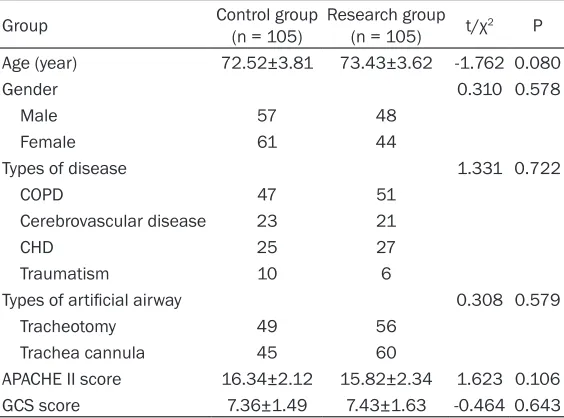
[image:3.612.91.373.97.306.2]the patients were improved significantly, wean -ing was feasible, no apparent positive signs were observed in pulmonary examination, and Table 1. Comparison of general information of two groups of
patients
Group Control group (n = 105) Research group (n = 105) t/χ2 P
Age (year) 72.52±3.81 73.43±3.62 -1.762 0.080
Gender 0.310 0.578
Male 57 48
Female 61 44
Types of disease 1.331 0.722
COPD 47 51
Cerebrovascular disease 23 21
CHD 25 27
Traumatism 10 6
Types of artificial airway 0.308 0.579
Tracheotomy 49 56
Trachea cannula 45 60
APACHE II score 16.34±2.12 15.82±2.34 1.623 0.106 GCS score 7.36±1.49 7.43±1.63 -0.464 0.643
Note: COPD, chronic obstructive pulmonary disease; CHD, coronary heart disease; APACHE, acute physiology and chronic health evaluation; GCS, Glasgow coma scale.
50%-60%. The time of air
puri-fication via a dynamic disinfec -tant apparatus was set in ac- cordance with the product de- scription, and the wards we- re ventilated regularly and dis-infected on schedule, of which the desktop and ground were wiped with disinfection solu-tion. (11) Attention was paid to the importance of communica-tion between doctors and pa- tients in the ICU. The doctors communicated with the pati- ents’ families about changes in disease conditions and the therapeutic methods in time, gaining trust of the patients and their families [11].
Evaluation criteria
ventila-Table 2. Comparison of relevant clinical indicators in two groups of patients
Group Duration of mechanical ventilation (day) Length of ICU stay (day) Hospitalization expense (Yuan) Control group (n = 105) 22.62±11.38 25.73±13.62 13,735.24±236.27 Research group (n = 105) 16.21±7.41 19.27±10.29 9,145.93±197.81
t 4.829 3.860 152.612
P <0.001 <0.001 <0.001
Note: ICU, Intensive Care Unit.
no pathogenic bacteria were discovered in spu-tum culture, blood culture and other relevant laboratory tests. 2) Progressed: The clinical symptoms were improved after treatment, posi-tive pulmonary signs disappeared, but none or a small quantity of pathogenic bacteria were discovered in blood and sputum culture, and intermittent weaning was feasible. 3) Inef- fective: The clinical symptoms of the patients were still obvious, positive pulmonary signs were present, and treatment with ventilator was needed. Clinical total effective rate = Number of case (cured + progressed)/total number of cases * 100%. (5) Nursing comfort was evaluated, including posture, physiology, psychology, oxygen inhalation, sputum expe- ctoration, and arteriovenous puncture. Each item was divided into 4 grades, namely, com-fortable, quite comcom-fortable, slightly uncomfort-able, and extremely uncomfortuncomfort-able, which we- re scored as 3 points, 2 points, 1 point, and 0 point, respectively. (6) Nursing satisfaction rate: According to the conditions of Houjie Hospital of Dongguan, the satisfaction of the patients’ families with the overall nursing qual-ity was evaluated by means of questionnaires containing 20 items with a total score of 100
points. Scoring standard: satisfied (≥85 points), basically satisfied (60-85 points) and dissatis
-fied (<60 points). Satisfaction rate = Number of case (satisfied + basically satisfied)/total num -ber of cases * 100%.
Statistical analysis
SPSS17.0 software, a statistical tool, was uti-lized to collect and analyze related data. Measurement data are presented as mean ± standard deviation (_x ± sd), and independent-samples t-test was performed to calculate dif-ference between groups. Enumeration data are expressed by ratio, and X2 test (exact proba-
bility test) was used for difference between
groups. P<0.05 suggests that the difference is statistically significant.
Results
General information
There were no statistically significant differenc -es in comparison of general information such as gender, age, type of primary disease,
meth-od of establishing artificial airway, APACHE II
score, and GCS score between the two groups of patients (all P>0.05) as shown in Table 1. Comparison of relevant clinical indicators
Both duration of mechanical ventilation and length of ICU stay of patients in the research group were remarkably shorter than those in the control group, and the differences were
sta-tistically significant (both P<0.05). The average
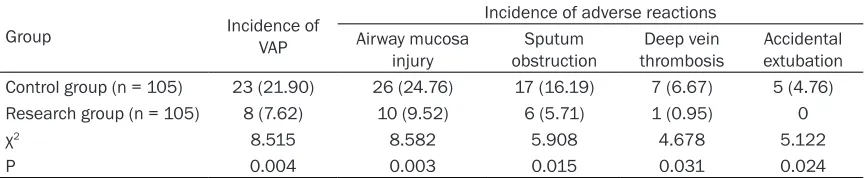
[image:4.612.89.523.88.163.2]hospitalization expense was RMB (9,145.93± 197.81) Yuan in research group, which was Table 3. Comparison of incidence of VAP and adverse reactions in two groups of patients (n, %)
Group Incidence of VAP
Incidence of adverse reactions Airway mucosa
injury obstructionSputum thrombosisDeep vein extubationAccidental Control group (n = 105) 23 (21.90) 26 (24.76) 17 (16.19) 7 (6.67) 5 (4.76) Research group (n = 105) 8 (7.62) 10 (9.52) 6 (5.71) 1 (0.95) 0
χ2 8.515 8.582 5.908 4.678 5.122
P 0.004 0.003 0.015 0.031 0.024
[image:4.612.90.523.211.300.2]Table 4. Comparison of indexes of blood gas analysis before and after nursing in two groups of pa-tients (mmHg)
Group PaCO2 PaO2
Before ventilation After ventilation Before ventilation After ventilation Control group (n = 105) 66.77±7.29 47.32±5.19 55.43±6.31 72.12±8.34 Research group (n = 105) 65.84±7.34 41.27±4.39 56.02±6.38 88.73±8.91
t 0.891 9.195 -0.685 -13.938
P 0.374 <0.001 0.494 <0.001
lower than that in control group (RMB (13,735.24±236.27) Yuan), with a statistically
significant difference (P<0.05) as shown in
Table 2.
Comparisons of incidence of VAP and adverse reactions
The incidence of VAP in the research group (7.62%) was decreased compared with that in the control group (21.90%), and the diffe-
rence was statistically significant (χ2 = 8.515,
P = 0.004). In the research group, the incidenc-es of airway mucosa injury, sputum obstruc-tion, deep vein thrombosis and accidental ex- tubation were 9.52%, 5.71%, 0.95% and 0, respectively, while those incidences in the con-trol group were 24.76%, 16.19%, 6.67% and 4.76%, respectively. The differences in the inci-dence of adverse reactions between the two
groups had statistical significance (all P<0.05)
as shown in Table 3.
Comparisons of indexes of blood gas analysis before and after nursing
The arterial blood of the two groups of patients was extracted for blood gas analysis before nursing of ventilation. There were no
statisti-cally significant differences in PaO2 and PaCO2 between the two groups of patients (both P>0.05). After the nursing, the PaO2 and PaCO2 levels were compared again between the two groups, and the results manifested statistically
significant differences (both P<0.05) as shown
in Table 4.
Comparison of clinical total effective rate
A total of 10 patients died of aggravated dis-ease in the control group, while 1 patient died in the research group. The research group had a remarkably higher clinical effective rate (94.28%) than the control group (78.10%), with
a statistically significant difference (P<0.05) as
shown in Table 5.
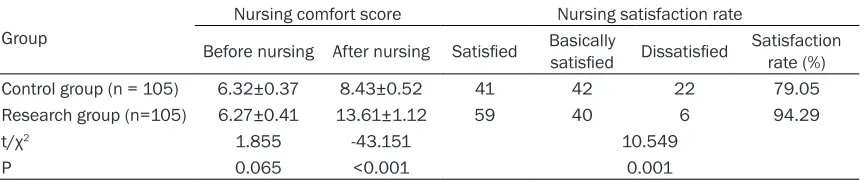
Comparisons of nursing comfort score and nursing satisfaction rate
There was no statistically significant difference
in the score of nursing comfort between the research group and the control group before nursing (P>0.05). After nursing, however, the score of nursing comfort in the research group was increased notably compared with that in the control group, and the difference was
sta-tistically significant (P<0.05). The nursing
sa-tisfaction rates in the research group and the control group were 94.29% and 79.05%, res- pectively, and the rate in the research group was higher than that in the control group, with a
statistically significant difference (P<0.05) a
shown in Table 6. Discussion
Elderly patients with respiratory failure become a population with high-risk VAP after mechani-cal ventilation due to advanced age, complica-tion with underlying diseases in most cases,
prolonged hospital stay and significantly
[image:5.612.90.522.214.283.2]de-clined immunity. In order to effectively improve Table 5. Comparison of clinical total effective rate in two groups of patients (n, %)
Group Cured Progressed Ineffective Died Clinical total effective rate Control group (n = 105) 50 (47.62) 32 (30.48) 13 (12.38) 10 (9.52) 82 (78.10) Research group (n = 105) 69 (65.71) 30 (28.58) 5 (4.76) 1 (0.95) 99 (94.29)
χ2 7.001 0.092 3.889 7.771 11.562
Table 6. Comparison of nursing comfort score and nursing satisfaction rate in two groups of patients
Group
Nursing comfort score Nursing satisfaction rate
Before nursing After nursing Satisfied Basically satisfied Dissatisfied Satisfaction rate (%)
Control group (n = 105) 6.32±0.37 8.43±0.52 41 42 22 79.05
Research group (n=105) 6.27±0.41 13.61±1.12 59 40 6 94.29
t/χ2 1.855 -43.151 10.549
P 0.065 <0.001 0.001
the prognosis of the elderly patients, the intro-duction of the cluster nursing philosophy into nursing services is a practice guideline for opti-mum nursing effects [14]. Cluster nursing is composed of oral nursing, posture nursing, nasal feeding nursing, deep vein nursing and
procedural sedation, which are beneficial to
comprehensive nursing for patients with severe diseases receiving mechanical ventilation [15]. In this study, there was only 1 death case in the research group, and the analysis on the cause of death indicated that the patients died of advanced age, past history of myocardial infarc-tion, pulmonary infection induced by long-term application of ventilator and heart failure. The incidence of VAP in patients receiving cluster nursing was 7.62%, and the mortality rate was 0.95%, which were remarkably lower than those in conventional nursing group. Addi- tionally, the incidences of various adverse reac-tions were lowered notably, which is basically consistent with the research by Guthrie et al. [16]. The reason is that the individualized clus-ter nursing protocols are formulated in
accor-dance with the specific disease conditions of
different patients during mechanical ventila-tion. Posture nursing, oral nursing, clearance of respiratory secretions and disinfection of venti-lator pipeline were implemented one by one, strictly complying with the aseptic principles [17]. Related studies have revealed that the incidence of VAP will be increased 1-3% if the duration of mechanical ventilation is extended for one day, and the risk of patients dying from VAP will be as high as 30-50%. Therefore, daily interruption of sedation can contribute to early
weaning of patient with the qualification of
weaning and extubation, thus shortening the duration of mechanical ventilation. In addition, intervention with cluster nursing can amelio-rate retention of carbon dioxide in the patients in an effective manner and accelerate their
recovery, which is in line with the findings in this
study [18].
The occurrence of VAP may prolong the hospital stay and increase hospitalization expenses, bringing great economic and life pressure to the patients and their families. As for patients in the research group who received cluster nursing, the hospital stay was shortened sig-
nificantly, the hospitalization expenses were
decreased notably, and the medical resources
were saved efficiently compared with those in
the control group, which are similar to the lite- rature reports [19].
Cluster nursing is currently identified as a type
of advanced nursing system which provides detailed nursing protocols on basis of the var-ied development processes of each disease. Meanwhile, it emphasizes on the
bio-psycho-social medical model and finally promotes the
effective improvement of patient’s prognosis [20]. The results of this study manifested that the nursing satisfaction rate and score on nursing comfort in research group treated with cluster nursing were obviously higher than those in control group. It is because attentions are paid to the physiological change of the patients in the process of cluster nursing, which focuses on eliminating nervousness and anxi-ety of the patients, thus increasing the nurs-
ing comfort and satisfaction significantly. All these are identical to the findings of previous
studies [21]. However, there were still 6 patients
dissatisfied with the nursing in this study, which
may be caused by difference in communication modes between different nursing staff and patients’ families. Moreover, a certain degree of difference exists in the educational level as well as relevant medical knowledge of the patients and their families, so the training of communication skills should be enhanced in future work, so as to further elevate the nursing satisfaction rate.
patients with chronic respiratory failure during the application of ventilator. Furthermore, it can increase the possibility of ventilator wean-ing, reduce hospital stay, alleviate the econom-ic burden on the patients and their families and remarkably improve the nursing satisfac-tion rate and nursing comfort. The innovasatisfac-tions of this study are as follows: there were fairly detailed observation indexes, evaluation on nursing comfort and satisfaction was integrat-ed, and more importance was attached to the physiological changes in the disease progres-sion at the same time.
Bias may exist in the results since the follow-up time was not long enough and the sample size was relatively small in this study. Therefore, prospective trials with a larger sample size and longer follow-up time will be performed in sub-sequent studies to testify the test results of this study, providing possible bases for exten-sive application of the cluster nursing mode in the clinic.
Disclosure of conflict of interest
None.
Address correspondence to: Qingping Huang, De- partment of Intensive Care Unit, Houjie Hospital of Dongguan, No.21 Hetian Avenue, Houjie Town, Dongguan 523945, Guangdong Province, China. Tel: +86-0769-85588409; E-mail: qingpinghuang- [email protected]
References
[1] Mendiratta P, Tang X, Collins RT, 2nd, Rycus P, Brogan TV and Prodhan P. Extracorporeal membrane oxygenation for respiratory failure in the elderly: a review of the Extracorporeal Life Support Organization registry. Asaio J 2014; 60: 385-390.
[2] Hillman D, Singh B, McArdle N and Eastwood P. Relationships between ventilatory impairment, sleep hypoventilation and type 2 respiratory failure. Respirology 2014; 19: 1106-1116. [3] Weiss SL, Asaro LA, Flori HR, Allen GL, Wypij D
and Curley MA. Multiple organ dysfunction in children mechanically ventilated for acute re-spiratory failure. Pediatr Crit Care Med 2017; 18: 319-329.
[4] Peleg AY and Hooper DC. Hospital-acquired in-fections due to gram-negative bacteria. N Engl J Med 2010; 362: 1804-1813.
[5] Bouadma L, Sonneville R, Garrouste-Orgeas M, Darmon M, Souweine B, Voiriot G, Kallel H,
Schwebel C, Goldgran-Toledano D, Dumenil AS, Argaud L, Ruckly S, Jamali S, Planquette B, Adrie C, Lucet JC, Azoulay E and Timsit JF. Ven-tilator-associated events: prevalence, out-come, and relationship with ventilator-associ-ated pneumonia. Crit Care Med 2015; 43: 1798-1806.
[6] Melsen WG, Rovers MM, Groenwold RH, Berg-mans DC, Camus C, Bauer TT, Hanisch EW, Klarin B, Koeman M, Krueger WA, Lacherade JC, Lorente L, Memish ZA, Morrow LE, Nardi G, van Nieuwenhoven CA, O’Keefe GE, Nakos G, Scannapieco FA, Seguin P, Staudinger T, Topeli A, Ferrer M and Bonten MJ. Attributable mor-tality of ventilator-associated pneumonia: a meta-analysis of individual patient data from randomised prevention studies. Lancet Infect Dis 2013; 13: 665-671.
[7] Tuon FF, Graf ME, Merlini A, Rocha JL, Stall-baum S, Arend LN and Pecoit-Filho R. Risk fac-tors for mortality in patients with ventilator- associated pneumonia caused by carba- penem-resistant Enterobacteriaceae. Braz J Infect Dis 2017; 21: 1-6.
[8] Damkliang J, Considine J, Kent B and Street M. Initial emergency nursing management of pa-tients with severe traumatic brain injury: devel-opment of an evidence-based care bundle for the Thai emergency department context. Aus-tralas Emerg Nurs J 2014; 17: 152-160. [9] Marini AL, Khan R and Mundekkadan S.
Multi-faceted bundle interventions shown effective in reducing VAP rates in our multidisciplinary ICUs. BMJ Qual Improv Rep 2016; 5: u205566. w2278
[10] Bastin AJ and Firmin R. Extracorporeal mem-brane oxygenation for severe acute respiratory failure in adults: NICE guidance. Heart 2011; 97: 1701-1703.
[11] Nseir S, Zerimech F, Fournier C, Lubret R, Ra-mon P, Durocher A and Balduyck M. Continu-ous control of tracheal cuff pressure and mi-croaspiration of gastric contents in critically ill patients. Am J Respir Crit Care Med 2011; 184: 1041-1047.
[12] American Thoracic Society. Infectious Diseas-es Society of America. GuidelinDiseas-es for the man-agement of adults with hospital-acquired, ven-tilator-associated, and healthcare-associated pneumonia. Am J Respir Crit Care Med 2005; 171: 388-416.
mechani-cally ventilated patients at a tertiary care cen-tre in Taiwan. Int J Antimicrob Agents 2011; 37: 10-15.
[14] Kao CC, Chiang HT, Chen CY, Hung CT, Chen YC, Su LH, Shi ZY, Liu JW, Liu CP, Chuang YC, Ko WC, Chen YH, Tseng SH, Lee CM, Lu MC and Hsueh PR; Infection Control Society of Taiwan. National bundle care program implementation to reduce ventilator-associated pneumonia in intensive care units in Taiwan. J Microbiol Im-munol Infect 2017.
[15] Zhao L, Liu L, Chen J, Yang C, Nie J and Zhang M. Ventilator bundle guided by context of JCI settings can effectively reduce the morbidity of ventilator-associated pneumonia. Chin Crit Care Med 2017; 29: 624-628.
[16] Guthrie PF, Rayborn S, Boatright J, Pearson V, Wieting R, Peterson R and Danahy M. Improv-ing resident oral health and adherence to a ventilator-associated pneumonia bundle in a skilled nursing facility. J Nurs Care Qual 2018.
[17] Roquilly A, Marret E, Abraham E and Aseh-noune K. Pneumonia prevention to decrease mortality in intensive care unit: a systematic review and meta-analysis. Clin Infect Dis 2015; 60: 64-75.
[18] Letchford E and Bench S. Ventilator-associated pneumonia and suction: a review of the litera-ture. Br J Nurs 2018; 27: 13-18.
[19] Kollef MH, Hamilton CW and Ernst FR. Eco-nomic impact of ventilator-associated pneu-monia in a large matched cohort. Infect Con-trol Hosp Epidemiol 2012; 33: 250-256. [20] Skaggs MKD, Daniels JF, Hodge AJ and
De-Camp VL. Using the evidence-based practice service nursing bundle to increase patient sat-isfaction. J Emerg Nurs 2018; 44: 37-45. [21] Weigand L. Customer service: the nursing