Original Article
Calcium intake and the risk of stroke
Xiao-Yan Feng1*, Zhi-Xing Wang2*, Tao Ma1, De-En Xu1, Nan-Fei Xu1, Yue-Nan Kong1, Hui-Hui Song1, Wen-Zhuo Dai1, Xiao-Jie Lu1
1Department of Neurosurgery and Neurology, Wuxi No. 2 People’s Hospital, Wuxi, Jiangsu, China; 2Department of
Neurosurgery, Zibo Central Hospital, Zibo, Shandong, China. *Equal contributors.
Received December 1, 2015; Accepted February 29, 2016; Epub August 15, 2016; Published August 30, 2016
Abstract: Objective: Prospective cohort studies have suggested that dietary calcium intake is associated with the risk of stroke; however, the results are inconsistent. We conducted a meta-analysis of published studies to assess the relationship between calcium intake from diet and the risk of stroke. Methods: We searched MEDLINE, EMBASE, and OVID for relevant studies until January 1, 2013. Included for analysis were prospective cohort studies that
reported relative risks with 95% confidence intervals (CI) for the association between calcium intake from diet and
the stroke risk. Categorical, heterogeneity, publication bias, and subgroup analyses were performed. Results: There were 492,755 participants from ten studies, with 9,329 cases of stroke. For the highest versus lowest category of dietary calcium intake, the relative risk of total stroke was 0.87 (95% CI: 0.73-1.00). The pooled relative risk was 0.80 (95% CI: 0.62-0.98) for ischemic stroke, 0.95 (95% CI: 0.59-1.33) for intracerebral hemorrhage; and 0.96 (95% CI: 0.60-1.33) for subarachnoid hemorrhage. An inverse association between dietary calcium intake and stroke risk was observed in Asian populations (RR 0.68, 95% CI: 0.56-0.80) and participants with < 800 mg/d aver-age dietary calcium intake (RR 0.74, 95% CI: 0.64-0.85). Conclusion: High dietary calcium intake was associated with a reduced risk of stroke, especially in ischemic stroke, Asian populations, and participants with < 800 mg/d average dietary calcium intake.
Keywords: Calcium, ischemic stroke, meta-analysis, prospective study
Introduction
Stroke is a most important cause of decease and disability global. In the United States, approximately 795,000 people have a stroke each year, and 6.4 million Americans are stroke survivors [1]. The need for prevention of stroke is extensively recognized [1]. Weight reduction, increased physical activity, and alcohol control are important for the prevention of stroke [2-4]; however, understanding the role of other life-style factors, especially diet and nutrition, may provide additional prevention strategies [5-8]. Calcium is a dietary factor with the potential to
influence the risk of stroke through several mechanisms, including influences on blood
pressure and insulin resistance [9, 10].
Calcium supplements, with or without vitamin D, have been recommended for the prevention or treatment of osteoporosis [11]. Recently, a meta-analysis of randomized controlled trials performed by Reid et al. [12] showed that
cal-cium supplements did not provide a statistically
significant increase in the risk of stroke.
However, the exact relationship between dietary calcium intake and the risk of stroke remains unclear and controversial. Two prospective studies showed that dietary calcium intake had
a significant inverse association with the risk of
stroke, [13, 14] but a recent European cohort study showed that increasing dietary calcium
intake did not confer significant stroke benefit
[15].
We performed a meta-analysis included pro-spective cohort studies, using strict criteria for inclusion, to evaluate the relationship between calcium intake from diet and the risk of total stroke and various stroke subtypes.
Subjects and methods
and the Preferred Reporting Items for Systemic Meta-analysis statement [16-18].
Literature search strategy
A systematic search of MEDLINE (from 1966 to January 1, 2013), EMBASE (from 1980 to January 1, 2013), and OVID (from 1950 to January 1, 2013) was performed using medical subject headings (MeSH) or free text words. The search terms were combined with out-comes (stroke, ischemic stroke, cerebral infarc-tion, intracerebral hemorrhage, subarachnoid hemorrhage, and cerebrovascular accident)
and the influencing factor (calcium intake,
dietary calcium, and total calcium). In addition, we searched the reference lists of relevant pri-mary study articles and reviews, meeting abstracts, and clinical guidelines. We did not contact authors of the primary studies for any additional information.
Selection criteria
Independent reviewers evaluated the selected studies using the inclusion criteria for the study. Consensus was reached for disagreements over inclusion of studies and interpretation of data. The inclusion criteria were as follows: 1) prospective cohort study; 2) adult population;
3) the influencing factor of interest was dietary
calcium intake; 4) the outcome was stroke; 5) risk estimates (relative risk [RR] or hazard
ratios [HR]) with the 95% confidence interval
(CI) for each category of baseline dietary calci-um intake and/or for dietary calcicalci-um intake as a continuous variable were reported; and 6) follow-up of at least 2 years (mean or median). Data extraction and quality assessment
Two independent reviewers extracted data by using a standard data collection form. Dis- crepancies were determined by discussion with another investigator. We extracted the follow-ing data: publication year, name of the study,
the last name of first author’s, country, sex and
age range of participants, recruitment time, study period, number of stroke cases, cohort size, method of stroke and calcium intake ascertainment, variables adjusted in the analy-sis, and risk estimates with corresponding
con-fidence intervals.
We also extracted the RRs and 95% CIs that
reflected the greatest degree of control for
potential confounders for use in the main anal-yses. Studies that did not meet the required criteria during the initial review were excluded from the study. Instead of providing aggregate scores, we assessed the quality of individual studies by reporting the key components of study designs, [16, 19] including characteris-tics of study populations, assessments of expo-sure and outcome, period of follow-up, and sta-tistical control for potential confounding factors.
Statistical analyses
We used RR to measure the association in the studies, with the HR also considered as the RR [20]. To summarize the relationship between calcium intake from diet and the risk of total stroke and stroke subtypes, the effect mea-sures were pooled for the highest versus lowest categories for calcium intake from diet. We used the random-effects model for all analyses
[21] and Cochran’s Q test and I2 index to assess heterogeneity between the selected studies [22]. As in Higgins et al., [23] I2 values of 25%, 50%, and 75% were considered low, moderate, and high, respectively. Funnel plot asymmetry was used to detect publication bias, was
mea-sured by Egger’s and Begg’s tests [24, 25] and the “trim and fill” procedure. The “trim and fill” method assumes that hypothetical “missing”
studies exist, inputs their RRs, and recalculates the pooled RR, thus incorporating the hypothet-ical missing studies [26].
We used subgroup analyses to identify the association between the total stroke risk and the relevant study characteristics (sex, mean age, length of follow-up, and number of cohorts) as possible sources of heterogeneity. Stata 10 (StataCorp, College Station, Texas, USA) was used for all the analyses.
Results
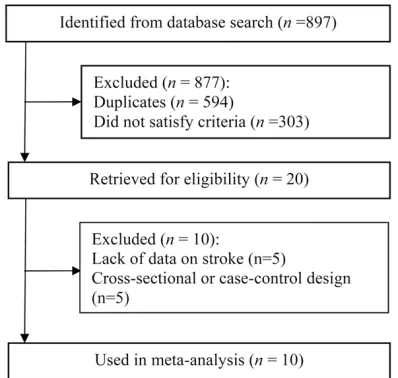
Figure 1 outlines the steps in our literature
search. There were 897 articles identified from
database search. After evaluations of titles and abstracts, we excluded 877 studies, 594 of which were duplicates in three databases, while another 303 did not satisfy criteria due to animal studies, other publication types or did not relate to the exposure or outcome. After
evaluating titles and abstracts, we identified 20
essential data. Ten studies met the inclusion
criteria for the final meta-analysis [13-15,
27-33]. The reviewers reached good agreement
on the inclusion of studies (Cohen’s unweight -ed κ = 0.90).
Study characteristics
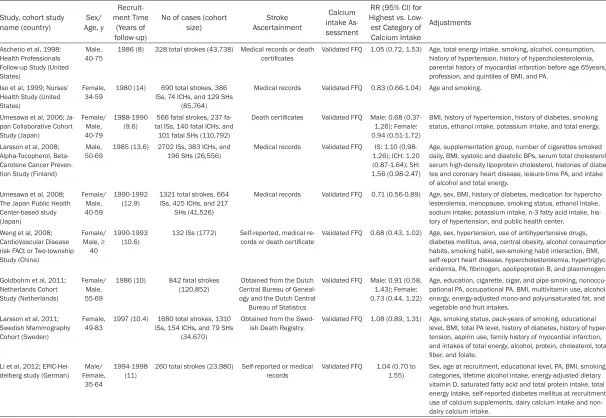
Table 1 lists the included studies. Our analysis included 492,755 participants from ten studies with 9,329 strokes. The selected cohort stud-ies were from seven different countrstud-ies (Two from the United States, [13, 31] two from Japan, [14, 32] one from the United States including Japanese participants [30], and one each from Finland, [29] Netherlands, [27] Sweden, [28] German, [15] and China [33]). Five studies recruited both male and female participants, [14, 15, 27, 32, 33] whereas three recruited only males [13, 29, 30] and two recruited only females [28, 31]. The age of the
participants included was ≥ 34 years. The
length of the studies ranged from 8 to 22 years (median, 11 years), and most of studies used food-frequency questionnaires for dietary assessment. The median intake of calcium was 1,145 mg/day for the highest categories and 395 mg/day for the lowest categories. The most frequent confounders we adjusted for included physical activity, smoking status, age, body mass index (BMI), hypertension/blood pressure, and alcohol consumption. The total energy intake was adjusted for in six studies, [15, 27-30, 32] and other dietary intakes were
adjusted for in five studies [14, 15, 27, 28, 32].
Main analysis
Ten prospective cohort studies [13-15, 27-33] with 492,755 participants and 9,329 stroke cases were included in this analysis. In the
meta-analysis, a statistically significant inverse
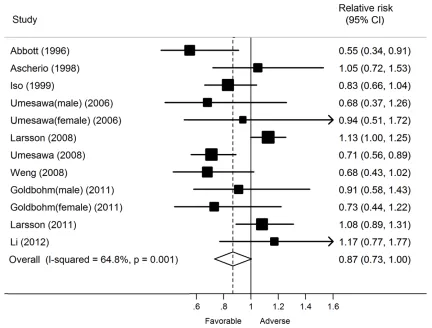
relationship was found between higher calcium intake from diet and the total stroke risk such that total stroke risk was 13% lower among the individuals with the highest intake of calcium form diet than among those with the lowest intake (RR, 0.87; 95% CI, 0.73-1.00) (Figure 2). There was moderate heterogeneity across studies (P < 0.01; I2 = 64.8%). Sensitivity analy-sis showed that the study conducted by Larsson et al. [29] contribute most to that heterogeneity and the exclusion of this led to a pooled esti-mate of RR of 0.82 (95% CI, 0.71-0.94). After exclusion of this cohort, there was low study heterogeneity (P = 010; I2 = 37.3%).
Five studies provided results for stroke sub-types, [14, 28, 29, 31, 32] and two studies reported only results for ischemic stroke [13, 33]. For these seven studies, the combined RRs for the highest versus lowest categories of calcium intake from diet were 0.80 (95% CI, 0.62-0.98) for ischemic stroke, 0.95 (95% CI, 0.59-1.33) for intracerebral hemorrhage, and 0.96 (95% CI, 0.60-1.33) for subarachnoid hemorrhage (Table 2).
Further stratified analyses show that an inverse
association between dietary calcium intake and stroke risk was observed in Asian popula-tions (RR 0.68, 95% CI: 0.56-0.80), while no association was observed in American popula-tions (RR 0.87, 95% CI: 0.70, 1.04) or in European populations (RR 1.07, 95% CI: 0.96,
1.18). Moreover, a statistically significant
inverse relation between dietary calcium intake and stroke risk was observed in participants with < 800 mg/d average dietary calcium intake (RR 0.74, 95% CI: 0.64-0.85), and no
association was observed in participants with ≥
800 mg/d average dietary calcium intake (RR 1.07, 95% CI: 0.96, 1.73).
Subgroup analyses
Table 2 shows the results of the subgroup
anal-yses stratified by study characteristics. Overall,
an inverse relationship between calcium intake from diet and total stroke risk was not
[image:3.612.90.289.72.261.2]substan-tially modified by age or length of follow-up. We
Table 1. Characteristics of the prospective studies included in the meta-analysis of published studies on calcium intake and the risk of stroke
Study, cohort study
name (country) Age, ySex/
Recruit-ment Time
(Years of follow-up)
No of cases (cohort
size) AscertainmentStroke
Calcium intake As-sessment
RR (95% CI) for Highest vs. Low-est Category of Calcium Intake
Adjustments
Ascherio et al, 1998; Health Professionals Follow-up Study (United States)
Male, 40-75
1986 (8) 328 total strokes (43,738) Medical records or death
certificates
Validated FFQ 1.05 (0.72, 1.53) Age, total energy intake, smoking, alcohol, consumption, history of hypertension, history of hypercholesterolemia, parental history of myocardial infarction before age 65years, profession, and quintiles of BMI, and PA.
Iso et al, 1999; Nurses’
Health Study (United States)
Female, 34-59
1980 (14) 690 total strokes, 386 ISs, 74 ICHs, and 129 SHs
(85,764)
Medical records Validated FFQ 0.83 (0.66-1.04) Age and smoking.
Umesawa et al, 2006; Ja-pan Collaborative Cohort Study (Japan) Female/ Male, 40-79 1988-1990 (9.6)
566 fatal strokes, 237 fa-tal ISs, 140 fafa-tal ICHs, and
101 fatal SHs (110,792)
Death certificates Validated FFQ Male: 0.68 (0.37-1.26); Female: 0.94 (0.51-1.72)
BMI, history of hypertension, history of diabetes, smoking status, ethanol intake, potassium intake, and total energy. Larsson et al, 2008;
Alpha-Tocopherol, Beta-Carotene Cancer Preven-tion Study (Finland)
Male,
50-69 1985 (13.6) 2702 ISs, 383 ICHs, and 196 SHs (26,556) Medical records Validated FFQ 1.26); ICH: 1.20 IS: 1.10 (0.98-(0.87-1.64); SH: 1.56 (0.98-2.47)
Age, supplementation group, number of cigarettes smoked daily, BMI, systolic and diastolic BPs, serum total cholesterol, serum high-density lipoprotein cholesterol, histories of diabe-tes and coronary heart disease, leisure-time PA, and intake of alcohol and total energy.
Umesawa et al, 2008; The Japan Public Health Center-based study (Japan) Female/ Male, 40-59 1990-1992
(12.9) 1321 total strokes, 664 ISs, 425 ICHs, and 217 SHs (41,526)
Medical records Validated FFQ 0.71 (0.56-0.89) Age, sex, BMI, history of diabetes, medication for hypercho-lesterolemia, menopause, smoking status, ethanol intake, sodium intake, potassium intake, n-3 fatty acid intake, his-tory of hypertension, and public health center.
Weng et al, 2008; CardioVascular Disease risk FACt or Two-township Study (China)
Female/
Male, ≥
40
1990-1993
(10.6) 132 ISs (1772) Self-reported, medical re-cords or death certificate Validated FFQ 0.68 (0.43, 1.02) Age, sex, hypertension, use of antihypertensive drugs, diabetes mellitus, area, central obesity, alcohol consumption habits, smoking habit, sex-smoking habit interaction, BMI, self-report heart disease, hypercholesterolemia,
hypertriglyc-eridemia, PA, fibrinogen, apolipoprotein B, and plasminogen.
Goldbohm et al, 2011; Netherlands Cohort Study (Netherlands)
Female/ Male, 55-69
1986 (10) 842 fatal strokes
(120,852) Central Bureau of Geneal-Obtained from the Dutch ogy and the Dutch Central
Bureau of Statistics
Validated FFQ Male: 0.91 (0.58, 1.43); Female: 0.73 (0.44, 1.22)
Age, education, cigarette, cigar, and pipe smoking, nonoccu-pational PA, occunonoccu-pational PA, BMI, multivitamin use, alcohol, energy, energy-adjusted mono-and polyunsaturated fat, and vegetable and fruit intakes.
Larsson et al, 2011; Swedish Mammography Cohort (Sweden)
Female,
49-83 1997 (10.4) 1680 total strokes, 1310 ISs, 154 ICHs, and 79 SHs (34,670)
Obtained from the
Swed-ish Death Registry. Validated FFQ 1.08 (0.89, 1.31) Age, smoking status, pack-years of smoking, educational level, BMI, total PA level, history of diabetes, history of hyper-tension, aspirin use, family history of myocardial infarction, and intakes of total energy, alcohol, protein, cholesterol, total
fiber, and folate.
Li et al, 2012;
EPIC-Hei-delberg study (German) Female, Male/ 35-64
1994-1998
(11) 260 total strokes (23,980) Self-reported or medical records Validated FFQ 1.04 (0.70 to 1.55) Sex, age at recruitment, educational level, PA, BMI, smoking categories, lifetime alcohol intake, energy-adjusted dietary vitamin D, saturated fatty acid and total protein intake, total energy intake, self-reported diabetes mellitus at recruitment, use of calcium supplements, dairy calcium intake and non-dairy calcium intake.
examined sex and number of cohorts as possi-ble sources of heterogeneity. The inverse asso-ciation was more pronounced among the
stud-ies that had ≥ 40,000 participants (RR, 0.79;
95% CI, 0.68-0.90), and there was no evidence of heterogeneity (P = 0.74, I2 = 0%). However, no association was seen among the studies with < 40,000 participants (RR, 0.92; 95% CI, 0.68- 1.16).
Publication bias
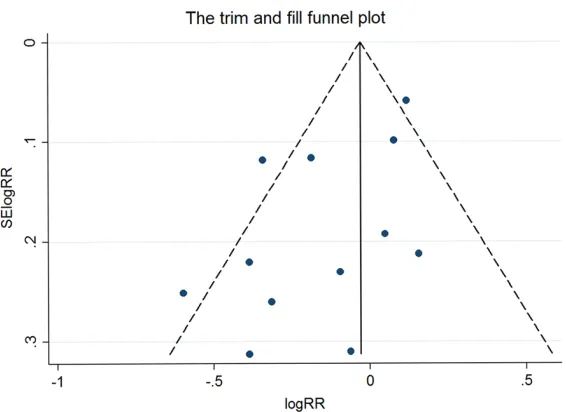
Visual inspection of the funnel plot showed
some asymmetry, and the Egger’s test suggest -ed that there was borderline evidence of publi-cation bias (P = 0.04), but the Begg’s test did
not (P = 0.22). The “trim and fill” method identi
-fied no possible missing studies (Figure 3).
Discussion
From this meta-analysis, we found that calcium intake from diet is inversely associated with the total stroke risk and ischemic stroke risk, but
not with hemorrhagic stroke risk. However, fewer cases of hemorrhagic stroke than total and ischemic strokes occurred, which may have reduced the statistical power when assessing the relationship between calcium intake from diet and the risk of hemorrhagic stroke. Moreover, the inverse association between dietary calcium intake and stroke risk was also observed in Asian populations (RR 0.68, 95% CI: 0.56-0.80) and participants with < 800 mg/d average dietary calcium intake (RR 0.74, 95% CI: 0.64-0.85).
The inverse relationship between calcium intake from diet and the risk of stroke appears to be limited to ischemic stroke. Several plau-sible mechanisms have been proposed for this relationship, including induction of direct and indirect vasodilation, improved endothelial
function, benefits on platelet aggregation, and
[image:5.612.90.522.73.401.2]tein ratio can improve vasodi-lation. Animal studies [37, 38] and trials in patients with hypercholesterolemia [39] ha- ve shown that calcium intake reduces serum total choles-terol by forming insoluble complexes with fatty acids, thus reducing their absorp-tion. Decreased plasma phos-phate and parathyroid hor-mone may also play a vital role in the vascular effects of increased calcium intake, thus reducing the risk of isch-emic stroke [35].
Calcium is particularly abun-dant in milk and other dairy products. Increased con-Table 2. Stratified analyses of relative risk of stroke according to calcium intake
No of
studies RR (95% CI) I2 (%) Q Sta-tistic HeterogeneityP Value for tween GroupsP Value Be-Overall studies
Stroke subtypes
Ischemic stroke 7 0.80 (0.62, 0.98) 70.9 24.07 < 0.01 Intracerebral hemorrhage stroke 5 0.95 (0.59, 1.33) 51.6 10.33 0.07 Subarachnoid hemorrhage stroke 5 0.96 (0.60, 1.33) 35.3 7.73 0.17 Average calium intake
< 800 mg/d 6 0.74 (0.64, 0.85) 2.9 6.18 0.40
≥ 800 mg/d 4 1.07 (0.96, 1.73) 4.1 4.17 0.38 Populations
American populations 2 0.87 (0.70, 1.04) 0 0.93 0.34 European populations 4 1.07 (0.96, 1.18) 6.9 4.30 0.37 Asian populations 4 0.68 (0.56, 0.80) 0 1.63 0.80 Subgroup analyses for total stroke
Gender
Male 5 0.88 (0.61, 1.15) 74.0 15.37 < 0.01 0.01
Female 4 0.92 (0.75, 1.08) 25.1 4.01 0.26
Both 3 0.77 (0.56, 0.97) 36.0 3.13 0.21
Age (years)
< 60 y 7 0.89 (0.72, 1.06) 21.73 67.8 < 0.01 0.58
≥ 60 y 3 0.83 (0.55, 1.10) 9.21 67.4 0.03 Length of follow-up (years)
< 11 5 0.91 (0.78, 1.04) 16.2 7.16 0.31 0.98
≥ 11 5 0.86 (0.83, 0.99) 83.4 24.08 < 0.01 No. of cohort
< 40,000 5 0.92 (0.68, 1.16) 78.6 18.66 < 0.01 < 0.01
[image:6.612.93.519.81.455.2]≥ 40,000 5 0.79 (0.68, 0.90) 0 3.52 0.74
Figure 3. The “trim and fill” funnel plot for meta-analysis of the association
[image:6.612.93.376.472.678.2]sumption of dairy products protects against ischemic strokes. In a prospective cohort study, Larsson et al. [40] showed that increased low-fat dairy consumption is associated with a reduced risk of total stroke (RR, 0.88; 95% CI, 0.80-0.97) and ischemic stroke (RR, 0.87; 95% CI, 0.78-0.98), but not hemorrhagic stroke (RR, 0.96; 95% CI, 0.74-1.25). Elwood et al., in a pooled-analysis of ten cohort studies, demon-strated that the highest quintile of milk con-sumption is related to a 16% reduction in isch-emic stroke risk when compared with the lowest quintile (odds ratio, 0.84; 95% CI, 0.78-0.90). Larsson et al. [41] conducted a dose-response meta-analysis to assess the relation-ship between calcium intake and stroke risk. They determined that calcium intake was inversely associated with risk of stroke in popu-lations with a low to moderate average calcium intake. These results are consistent with our
findings.
All of the studies used a prospective cohort design, which enhanced the generalizability of
the findings and minimized recall or selection
bias. Furthermore, this meta-analysis included a large total population and cohort of stroke patients (492,755 participants and > 9,000
stroke cases), which may significantly increase
the statistical power of this analysis.
Possible limitations of this study should be con-sidered. Because our meta-analysis was based on observational studies, we could not exclude the possibility that other factors could explain the observed relationship between calcium intake from diet and stroke risk. Although most study results were adjusted for physical activi-ty, smoking status, age, hypertension, BMI, or blood pressure, and alcohol consumption, the possibility of other confounding factors remains. Only three studies adjusted for
sup-plement intake. It is difficult to exclude the opportunity that specific effects of calcium or other nutrients or other beneficial food compo
-nents present in the patient’s diet were respon -sible for the observed association. This may have reduced the power of conclusions. Miscalculation of calcium intake from diet might have weakened the power of the relation-ship because the food-frequency questionnaire was self-administered, and errors could have led to an underestimation of the relative risk estimates. Potential publication bias might
have existed, as shown by the funnel plot and
the Egger’s test. However, the “trim and fill” analysis identified no possibly missing studies.
Finally, because of methodological differences between the individual studies, heterogeneity might have been introduced. After the sub-group analysis, we found that sex and numbers of cohorts were possible sources of heteroge-neity and might have reduced the power of conclusions.
In the United States, the Recommended Dietary Allowance of calcium set by the National Institute of Health for men and women aged 51-70 years is 1000 and 1200 mg/d, respec-tively. The approximate calcium content of some foods is as follows: 138 mg in 1 cup cot-tage cheese, 415 mg in 8 ounces low fat yogurt, 276 mg in 8 ounces milk, and 73 mg in 1 slice white bread [42]. According to a recent report by WHO, 5.5 million deaths occurred due to stroke in 2008 [43]. Given that the mortality for stroke is 1 in 3, a 13% reduction in the rate of stroke by increasing dietary calcium intake throughout the population could avert nearly 1 million deaths from stroke each year [44]. In summary, in our meta-analysis, we found a
significant inverse relationship between dietary
calcium intake and the total stroke risk, espe-cially in ischemic stroke, Asian populations, and participants with < 800 mg/d average dietary calcium intake. Furthermore, several
well-designed and stratified cohort studies,
with adequate control for confounding factors, are needed to gain a better understanding of the underlying biology of the link between dietary calcium intake and stroke risk.
Acknowledgements
This research received no specific grant from
any funding agency in the public, commercial,
or not-for-profit sectors.
Disclosure of conflict of interest
None.
Address correspondence to: Dr. Xiao-Jie Lu, De- partment of Neurosurgery and Neurology, Wuxi No.
2 People’s Hospital, 68 Zhongshan Road, Wuxi
References
[1] Goldstein LB, Bushnell CD, Adams RJ, Appel LJ, Braun LT, Chaturvedi S, Creager MA, Cule-bras A, Eckel RH, Hart RG, Hinchey JA, Howard VJ, Jauch EC, Levine SR, Meschia JF, Moore WS, Nixon JV, Pearson TA. Guidelines for the primary prevention of stroke: a guideline for healthcare professionals from the American Heart Association/American Stroke Associa-tion. Stroke 2011; 42: 517-84.
[2] Lee CD, Folsom AR, Blair SN. Physical activity and stroke risk: a meta-analysis. Stroke 2003; 34: 2475-81.
[3] Strazzullo P, D’Elia L, Cairella G, Garbagnati F, Cappuccio FP, Scalfi L. Excess body weight and
incidence of stroke: meta-analysis of prospec-tive studies with 2 million participants. Stroke 2010; 41: e418-26.
[4] Reynolds K, Lewis B, Nolen JD, Kinney GL, Sathya B, He J. Alcohol consumption and risk of stroke: a meta-analysis. JAMA 2003; 289: 579-88.
[5] Larsson SC, Orsini N, Wolk A. Dietary magne-sium intake and risk of stroke: a meta-analysis of prospective studies. Am J Clin Nutr 2012; 95: 362-6.
[6] Larsson SC, Orsini N, Wolk A. Dietary potassi-um intake and risk of stroke: a dose-response meta-analysis of prospective studies. Stroke 2011; 42: 2746-50.
[7] D’Elia L, Barba G, Cappuccio FP, Strazzullo P.
Potassium intake, stroke, and cardiovascular disease a meta-analysis of prospective stud-ies. J Am Coll Cardiol 2011; 57: 1210-9. [8] Strazzullo P, D’Elia L, Kandala NB, Cappuccio
FP. Salt intake, stroke, and cardiovascular dis-ease: meta-analysis of prospective studies. BMJ 2009; 339: b4567.
[9] Allender PS, Cutler JA, Follmann D, Cappuccio FP, Pryer J, Elliott P. Dietary calcium and blood pressure: a meta-analysis of randomized clini-cal trials. Ann Intern Med 1996; 124: 825-31. [10] Rashid P, Leonardi-Bee J, Bath P. Blood
pres-sure reduction and secondary prevention of stroke and other vascular events: a systematic review. Stroke 2003; 34: 2741-8.
[11] Qaseem A, Snow V, Shekelle P, Hopkins R Jr, Forciea MA, Owens DK. Pharmacologic treat-ment of low bone density or osteoporosis to prevent fractures: a clinical practice guideline from the American College of Physicians. Ann Intern Med 2008; 149: 404-15.
[12] Bolland MJ, Avenell A, Baron JA, Grey A, Ma-cLennan GS, Gamble GD, Reid IR. Effect of cal-cium supplements on risk of myocardial infarc-tion and cardiovascular events: meta-analysis. BMJ 2010; 341: c3691.
[13] Abbott RD, Curb JD, Rodriguez BL, Sharp DS,
Burchfiel CM, Yano K. Effect of dietary calcium
and milk consumption on risk of thromboem-bolic stroke in older middle-aged men. The Ho-nolulu Heart Program. Stroke 1996; 27: 813-8. [14] Umesawa M, Iso H, Ishihara J, Saito I, Kokubo
Y, Inoue M, Tsugane S. Dietary calcium intake and risks of stroke, its subtypes, and coronary heart disease in Japanese: the JPHC Study Co-hort I. Stroke 2008; 39: 2449-56.
[15] Li K, Kaaks R, Linseisen J, Rohrmann S. Asso-ciations of dietary calcium intake and calcium supplementation with myocardial infarction and stroke risk and overall cardiovascular mor-tality in the Heidelberg cohort of the European Prospective Investigation into Cancer and Nu-trition study (EPIC-Heidelberg). Heart 2012; 98: 920-5.
[16] Stroup DF, Berlin JA, Morton SC, Olkin I, Wil-liamson GD, Rennie D, Moher D, Becker BJ, Sipe TA, Thacker SB. Meta-analysis of observa-tional studies in epidemiology: a proposal for reporting. Meta-analysis Of Observational Studies in Epidemiology (MOOSE) group. JAMA 2000; 283: 2008-12.
[17] Liberati A, Altman DG, Tetzlaff J, Mulrow C, Gøtzsche PC, Ioannidis JP, Clarke M, Devereaux PJ, Kleijnen J, Moher D. The PRISMA statement for reporting systematic reviews and meta-analyses of studies that evaluate health care interventions: explanation and elaboration. Ann Intern Med 2009; 151: W65-94.
[18] Moher D, Liberati A, Tetzlaff J, Altman DG. Pre-ferred reporting items for systematic reviews and meta-analyses: the PRISMA statement. Ann Intern Med 2009; 151: 264-9, W64. [19] Dong JY, He K, Wang P, Qin LQ. Dietary fiber
intake and risk of breast cancer: a meta-analy-sis of prospective cohort studies. Am J Clin Nutr 2011; 94: 900-5.
[20] McNutt LA, Wu C, Xue X, Hafner JP. Estimating the relative risk in cohort studies and clinical trials of common outcomes. Am J Epidemiol 2003; 157: 940-3.
[21] DerSimonian R, Laird N. Meta-analysis in clini-cal trials. Control Clin Trials 1986; 7: 177-88. [22] Higgins JP, Thompson SG, Deeks JJ, Altman
DG. Measuring inconsistency in meta-analy-ses. BMJ 2003; 327: 557-60.
[23] Higgins JP, Thompson SG. Quantifying hetero-geneity in a meta-analysis. Stat Med 2002; 21: 1539-58.
[24] Egger M, Davey Smith G, Schneider M, Minder C. Bias in meta-analysis detected by a simple, graphical test. BMJ 1997; 315: 629-34. [25] Begg CB. A comparison of methods to detect
publication bias in meta-analysis by P. Ma-caskill, S. D. Walter and L. Irwig, Statistics in Medicine, 2001; 20:641-654. Stat Med 2002; 21: 1803; author reply 4.
[26] Peters JL, Sutton AJ, Jones DR, Abrams KR,
method in the presence of publication bias and between-study heterogeneity. Stat Med 2007; 26: 4544-62.
[27] Goldbohm RA, Chorus AM, Galindo Garre F, Schouten LJ, van den Brandt PA. Dairy con-sumption and 10-y total and cardiovascular mortality: a prospective cohort study in the Netherlands. Am J Clin Nutr 2011; 93: 615-27. [28] Larsson SC, Virtamo J, Wolk A. Potassium, cal-cium, and magnesium intakes and risk of stroke in women. Am J Epidemiol 2011; 174: 35-43.
[29] Larsson SC, Virtanen MJ, Mars M, Männistö S, Pietinen P, Albanes D, Virtamo J. Magnesium, calcium, potassium, and sodium intakes and risk of stroke in male smokers. Arch Intern Med 2008; 168: 459-65.
[30] Ascherio A, Rimm EB, Hernán MA, Giovannucci EL, Kawachi I, Stampfer MJ, Willett WC. Intake
of potassium, magnesium, calcium, and fiber
and risk of stroke among US men. Circulation 1998; 98: 1198-204.
[31] Iso H, Stampfer MJ, Manson JE, Rexrode K, Hennekens CH, Colditz GA, Speizer FE, Willett WC. Prospective study of calcium, potassium, and magnesium intake and risk of stroke in women. Stroke 1999; 30: 1772-9.
[32] Umesawa M, Iso H, Date C, Yamamoto A, Toyo-shima H, Watanabe Y, Kikuchi S, Koizumi A, Kondo T, Inaba Y, Tanabe N, Tamakoshi A. Di-etary intake of calcium in relation to mortality from cardiovascular disease: the JACC Study. Stroke 2006; 37: 20-6.
[33] Weng LC, Yeh WT, Bai CH, Chen HJ, Chuang SY, Chang HY, Lin BF, Chen KJ, Pan WH. Is isch-emic stroke risk related to folate status or oth-er nutrients correlated with folate intake? Stroke 2008; 39: 3152-8.
[34] Renaud S, Morazain R, Godsey F, Dumont E, Thevenon C, Martin JL, Mendy F. Nutrients, platelet function and composition in nine groups of French and British farmers. Athero-sclerosis 1986; 60: 37-48.
[35] Jolma P, Kööbi P, Kalliovalkama J, Kähönen M, Fan M, Saha H, Helin H, Lehtimäki T, Pörsti I. Increased calcium intake reduces plasma cho-lesterol and improves vasorelaxation in experi-mental renal failure. Am J Physiol Heart Circ Physiol 2003; 285: H1882-9.
[36] Garg R, Chaudhuri A, Munschauer F, Dandona P. Hyperglycemia, insulin, and acute ischemic
stroke: a mechanistic justification for a trial of
insulin infusion therapy. Stroke 2006; 37: 267-73.
[37] Renaud S, Ciavatti M, Thevenon C, Ripoll JP. Protective effects of dietary calcium and mag-nesium on platelet function and atherosclero-sis in rabbits fed saturated fat. Atheroscleroatherosclero-sis 1983; 47: 187-98.
[38] Thakur CP, Kumar SC. Influence of mustard oil
on cholesterol-induced atherosclerosis in albi-no rabbits. Atherosclerosis 1981; 39: 437-8. [39] Carlson LA, Olsson AG, Oro L, Rossner S.
Ef-fects of oral calcium upon serum cholesterol and triglycerides in patients with hyperlipid-emia. Atherosclerosis 1971; 14: 391-400. [40] Larsson SC, Virtamo J, Wolk A. Dairy
consump-tion and risk of stroke in Swedish women and men. Stroke 2012; 43: 1775-80.
[41] Larsson SC, Orsini N, Wolk A. Dietary calcium intake and risk of stroke: a dose-response me-ta-analysis. Am J Clin Nutr 2013; 97: 951-7. [42] NIH, Office of dietary supplements. Calcium:
Dietary Supplement Fact Sheet. Available: http://ods.od.nih.gov/factsheets/Calcium-HealthProfessional/, Accessed: 2013, Nov 21. [43] Shanthi Mendis PP and Bo Norrving. Global At-las on cardiovascular disease prevention and control. In: Shanthi Mendis PP and Bo Norrv-ing, editors. World Health Organization; 2011. [44] Strazzullo P, D’Elia L, Kandala NB, Cappuccio