Donald Campbell Sutherland
DC, LLD, FICC
chiropractic statesman and diplomat
Herbert J Vear,
DC, FCCS*
Joseph C Keating Jr,
PhD**
* Former President Western States Chiropractic College, Dean Emeritus, CMCC.
631 Stonebridge Lane, Pickering, Ontario, Canada L1W 3A6.
** Professor, Los Angeles College of Chiropractic, 16200 E. Amber Valley Drive, Whittier, CA 90609.
Introduction
The chiropractic profession in Canada has neglected to recognize and proclaim the significant profession building contributions made by pioneer chiropractors of this cen-tury and to preserve their contributions and accomplish-ments for future generations. And now, as we near the end of the 20th Century, the contributions and accomplish-ments of postwar pioneers may be lost as well.
The history of Canadian chiropractic is an exciting jour-ney infused with adventurous and audacious acts of re-solve and harmful improprieties. It is the authors’ wish that the history of Canadian chiropractic will be researched, written and published for future generations.
This abridged biography of Dr. Donald Sutherland was prepared, initially, to nominate him for the prestigious Lee-Homewood Award of the Association for History of Chiropractic. The authors hope that this effort will foster
more Canadian historic papers and to recognize that a Ca-nadian counterpart to the Lee-Homewood Award is long overdue.
Statesman and diplomat
Shortly after his appointment as the first Executive Direc-tor of the Canadian Chiropractic Association (CCA) and the Ontario Chiropractic Association (OCA) in 1956, his concern for national unity on such a fundamental principle as a definition for chiropractic as a health discipline, stand-ards and quality of chiropractic education, scope of prac-tice, and interdisciplinary cooperation became apparent. These early concerns were to dictate the remainder of his professional career. The objective of this paper is to dem-onstrate how his leadership met this career challenge.
Donald Campbell Sutherland was the first child born to George and Jessie Sutherland. He entered this world at
Le présent article retrace les 50 ans de carrière du Dr
Donald Sutherland, DC. Vous y trouverez ses réalisations politiques, cliniques, administratives et celles accomplies en matière de législation au cours de cette période. Ce faisant, les auteurs espèrent que cet article favorisera l’émergence de manuscrits historiques au Canada qui reconnaissent et documentent l’apport exceptionnel des pionniers de la chiropratique au XXe
siècle à l’érection de la profession.
(JACC 1999; 43(3): 183–188)
M O T S C L É S : chiropratique, histoire, Sutherland.
This paper chronicles the 50 year career of Dr. Donald Sutherland DC. Described are his political, clinical, legislative and administrative achievements
accomplished during that time period. The authors’ hope that this paper will foster more Canadian historic manuscripts recognizing and documenting the significant profession building contributions made by pioneering chiropractors of the 20th century.
(JCCA 1999; 43(3): 183–188)
Toronto on May 1, 1921. His only sister, Catherine, was born three years later. Don was educated in the Toronto Board of Education system and received his Junior Ma-triculation from North Toronto Collegiate Institute in 1941.
However, he would have to wait until World War 2 ended before earning his Senior Matriculation in 1946 from Hoffmeister Hall, an Army School established in Groningen, Holland following the end of hostilities.
Dr. Sutherland enlisted in the Princess Louise Fusiliers in 1942, a city of Halifax, Nova Scotia regiment. Heserved in Britain, Italy, France, Belgium and Holland with the 5th Canadian Armored Division as a regimental signaler until January 1946 when he received his discharge. His regi-ment’s function was that of a machine gun and mortar support group for the 11th Canadian Infantry Brigade of General Montgomery’s 8th Army.1
On his return to Canada, Don investigated several edu-cational opportunities, such as medicine and dentistry, be-fore deciding on chiropractic as a career choice. The Canadian Memorial Chiropractic College (CMCC) in To-ronto, Ontario had recently opened, which provided an opportunity for him to investigate chiropractic education
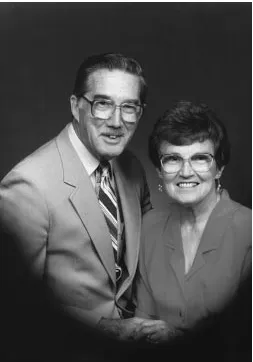
first hand. Canadian veterans received college and univer-sity educational financial support for the same length of time as time served in the armed forces. He enrolled in the 1946 fall class, the second class to enter CMCC. It was in 1948 that Don finally gave up his bachelorhood and mar-ried his wartime sweetheart, Mabel Eleanor Rodman. Don met Mabel just before his departure for Europe. They be-came better acquainted by exchanging nearly 400 letters over a period of four years, a form of courtship Don de-clines to recommend. They would have three children. Sadly Mabel died on May 19, 1993 after a long illness. Don received his Doctor of Chiropractic degree in May 1950, was licensed by the Board of Directors of Chiroprac-tic, Ontario (BDC) and entered practice in Toronto.1
Although Don remained in practice until 1961, the in-creasing administrative responsibilities on behalf of the Canadian Chiropractic Association (CCA) and the Ontario Chiropractic Association (OCA) compelled him to leave practice and devote all his energies to administration. Ac-tually he started his administrative career as a member of the Public Relations Committee of the CCA in 1955 and was appointed a delegate to the United Public Relations Committee (UPRC). The UPRC, which consisted of three
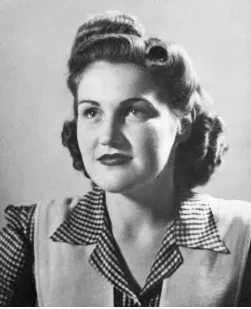
Figure 1 Don and his dad, George, 1942. Last leave before serving overseas. George was a veteran of WW 1.
appointed delegates from each of the NCA, ICA, and CCA, lasted until 1958 and ended because of a stalemate between the National Chiropractic Association (NCA) and the International Chiropractors Association (ICA) over is-sues of scope of practice and “philosophy.”2
The CCA received its charter in 1953, when it changed its name from the Dominion Council of Canadian Chiropractors. The new bylaws provided for the provincial associations to become formal divisions of the new CCA so that their combined memberships would be the mem-bership of the CCA. This created a strong national associa-tion with representaassocia-tion on its Board from all provincial associations. No other chiropractic organization in the world had such a structure – one which would allow it to speak clearly with one voice for the profession at a na-tional level. However, there were no funds available to finance the establishment and operation of a national of-fice. Up to that time, the CCA and the OCA had been
administered on a part time basis out of a chiropractor’s private office.
A committee was established to find a solution to this problem. The committee recommended that one full-time office be established, jointly financed and representing the three organizations. Dr. Sutherland was approached to serve as Executive Secretary of both the CCA and the OCA as well as Public Relations Director for the CMCC, and to be responsible for the operation of the new office. He accepted the new challenge and the title, which was later changed to Executive Director.3
Following his appointment as Executive Director, Don’s career became a series of complexities until the late
Figure 5 CMCC dedication, 1968, at the laying of the cornerstone on Bayview Avenue.
Figure 3 Mabel E. Rodman, 1943.
1970’s, such that only the highlights of that time can be recorded in this brief biographical review. The 1960s was the crucible from which the chiropractic profession ma-tured into a more significant player in primary health care across Canada. Although there were many participants in this quest for maturation, it was Donald Sutherland who was there for the entire journey. He was without doubt, the major arbitrator for the mix of opinions from across Canada. In addition, he became the principal researcher, collaborator, and writer of the numerous briefs and rebut-tal submissions which were necessary to present the chiro-practic chronicle for education, research, patient care, and professional responsibility.4 This was a significant part of
the profession’s effort to overcome the problems that ex-isted between the chiropractic and medical professions and to promote understanding and cooperation.5
The first of ten Royal Commissions, over a twelve-year period, was the Royal Commission on Health Services in 1961, chaired by Chief Justice Emmett Hall, who was ap-pointed by John Diefenbaker, Prime Minister of Canada. The Commission became commonly known as the Hall Commission. Although other Royal Commissions would emerge in the next decade, it was preparation for the Hall
Commission that dictated the manner in which the CCA, provincial associations, and the CMCC responded in com-ing years. Throughout this demandcom-ing time, Donald Suth-erland’s office was at the center of all planning.
Shortly after his appointment as Executive Director of the CCA, Don became acutely aware of the need for effec-tive communication with the members of the provincial affiliates if the profession was going to have a measure of success in reaching professional goals. In 1957, he became the founding Editor of the Canadian Chiropractic Journal, which was later renamed the Journal of the Canadian Chi-ropractic Association (JCCA). He continued as editor until 1976.
The first attempt at forming a World Chiropractic Or-ganization (WCO) began at the 1967 CCA Convention in Montreal. This initiative resulted from Don’s leadership; he stressed the need for international agreement on the education and practice of chiropractic. Representatives from several countries, responded to questions as a panel. A decision was made by those representatives to model the WCO, at the May 1968 European Chiropractic Union (ECU) conference in Burgenstock, Switzerland. Although the planning meeting was successful, later deliberations
failed for a number of political reasons. However, Don was appointed as the first Secretary of the WCO, a recog-nition of his dedication to chiropractic. It would be 20 years before the World Federation of Chiropractic evolved from this embryonic start. In 1976, Don was appointed the first president of CMCC following the resignation of Herbert J. Vear because of the flawed governance of the CMCC by the Board of Governors. It is to his credit that Don was able to introduce a presidential form of govern-ance to CMCC for the first time, something that two former administrators had not been able to accomplish. Starting in 1976, Don worked diligently to form a Cana-dian Council on Chiropractic Education that would pursue
a reciprocity agreement with the CCE (USA). He served on several CCE committees during his tenure as college president. The CMCC was granted accreditation status by CCE (Canada) which provided reciprocity with CCE (USA), on March 27, 1982. Don retired from CMCC in 1983, but continued as an active member of the profession. He has held office since his retirement in several profes-sional associations, for example, the Association for the History of Chiropractic, Canadian Chiropractic Historical Association (CCHA), Editor of the Canadian Chiropractic News (CCA News), contributing editor to Chiropractic Business and the CCE (Canada).
Dr. E. Maylon Drake, President of the Los Angeles Col-lege of Chiropractic (LACC) and the LACC Board of Trustees appointed Don to be the Interim President during a sabbatical for Dr. Drake who served the University of Southern California as a professor in its masters and doc-toral programs in the Orient6 from September through
December 15, 1983.
Dr. Sutherland’s professional stature is remembered, with respect, by those who worked closely with him during his long career. A former Chairman of the CMCC Board had this to say about Don, which is exemplary of what others have said and felt.
Dr. Sutherland successfully guided the College through the process of accreditation until it was awarded status with CCE (Canada) in 1982. By the time he stepped down as President in 1983, Dr. Sutherland had succeeded in establishing a presi-dential system of governance and had transformed CMCC from an institution similar in some respects to a proprietary trade school, into an internationally recognized college of higher learning in chiropractic with a reputation for financial stability, academic excellence and acclaimed research.7
Dr. Jean Moss,8 the current president of CMCC, had
this to say of Dr. Sutherland’s contributions:
Dr. Donald Sutherland’s numerous achievements over the past forty-eight years have been instrumental in the positive development of chiropractic in Canada. Dr. Sutherland has done much to promote national unity within the profession. He has ensured the development of national standards of practice and national standards of chiropractic education. He has successfully promoted the cooperation of chiropractors with other health care professionals through interdisciplinary
study and research. He has actively encouraged research re-lated to chiropractic. Many of the significant advancements over the past fifty years within the Canadian chiropractic profession had their roots in the work of Dr. Sutherland.
The most poignant memory of Don Sutherland comes from his secretary of nearly ten years, Ms Theresa Sheppard (formerly Barton), who is still with the CCA. It can be safely stated, that the CCA administrative office was two persons doing the work of three or four.
In 1968 when I was hired by Dr. Don Sutherland to work for the Canadian Chiropractic Association, I had no idea what a great person had come into my life. His kind and patient manner made it very easy for me to enjoy working for him as his secretary. I knew nothing of the profession at that time and he was the best teacher one could have during those formative years for chiropractic. Supporting him as he prepared endless briefs and documents for the completion of chiropractic legis-lation throughout Canada made my learning experience very interesting. His tireless attention to detail in all areas of his work made him one of the most important pioneers in the chiropractic profession and greatly contributed to the growth of chiropractic in this country. His natural professional man-nerisms contributed to the respect he received from all who met him.9
Don has been the recipient of almost every award known in Canada for chiropractors, including an Honorary Doctor of Laws degree from the National College of Chi-ropractic in 1983, which was granted on behalf of CMCC; the CCA Medal of Merit in 1994; the Queen’s Jubilee Medal in 1977, and Honorary Membership in provincial
chiropractic associations in Canada. Today, in his 77th year, Dr. Sutherland continues to work on behalf of the profession as a historian of the profession, as a member of the CCA’s Publications Committee, as a member of the Editorial Board of the JCCA, and as a willing collaborator in matters for the advancement of an ethical chiropractic.
Dr. Sutherland’s career in political and legislative achievement spans 50 years, which exceeds the historical era of an organized chiropractic, in Canada. He is, indeed, a chiropractic statesman and diplomat.
Acknowledgements
The authors want to thank all who responded to requests for personal thoughts on Dr. Sutherland. In particular, we want to thank Drs’ Douglas Brown, and Jean Moss, and Ms Theresa Sheppard (of the CCA) for their personal insights. This paper would not have been possible without the complete cooperation of Don Sutherland and his pen-chant for accuracy.
References
1 Sutherland DC. Curriculum vitae: 1998; p 1.
2 Sutherland DC. Professional unity. Can Chiro J 1958; 2(1):15–18.
3 Sutherland DC. Personal written communication. 1998; June.
4 Sutherland DC. The development of chiropractic in the Canadian Health Care System. JCCA 1993; 37(3):164–176. 5 Sutherland DC. Curriculum vitae: 1988; p 4.
6 Ambassadors’ Newsletter. Los Angeles College of Chiropractic. August 1983.
7 Brown DC. Written communication. 1998; May 15. 8 Moss J. Written communication. 1998; April.