Research article Available online www.ijsrr.org ISSN: 2279–0543
International Journal of Scientific Research and Reviews
Development of Secure Framework for Cache Using Phishem Guard
Algorithm
*1
G. Gopu and
2K. Thangadurai
*1Ph.D. (Category B) Research scholar, Bharathiar University, Coimbatore – 641 046, Tamilnadu, India. Email: [email protected],
2
Research Supervisor Bharathiar University, Bharathiar University, Coimbatore – 641046, Tamilnadu, India. Email: [email protected]
ABSTRACT:
Today, The security is a technical term which is more important part of human day to day life
and being involves in securing their day to day life from theft and malicious activities. Due to an
increasing of technological advancements, the domestic and international suspicious activities has
been increased. The electrical and electronic devices can be a tool to commit a targeted activity such
as phishing. Phishing involves in gathering sensitive information through e-mail and websites. The
article presents the role of abnormal traffic in electronic mail and intention with their way of
thinking, planning and performing attacks for their personal gain and as well as others grow up. We
mainly focused on security measures to prevent phishing on E-mail and to address “secure
framework for cache” using Pish EM algorithm.
KEYWORDS:
Introduction, Related work, Statement of the problem, Classification of Phishing,Research objectives, Proposed work, An Algorithmic Approach, Performance Evaluation.
*
Corresponding author:
G. Gopu
Ph.D. (Category B) Research scholar,
Bharathiar University,
Coimbatore – 641 046,
Tamilnadu, India.
1.
INTRODUCTION
People all over the world practices e-mail to stay in touch with relatives and share movements of
jay and sorrow, transfer important documents, forward meaningless junk to friends, play tricks and
even maintain conditional business deals, all within a matter of seconds. More and more individuals
and organizations depending upon e-mail for their daily dose of critical communication, some of
which may contain personal information, company secrets and sensitive information. Because of it’s
an importance, the suspicious attacks involving in different method by a professional and others for
their purpose or for others benefits. All these are happens only the intension of gaining something
from others work1.
2.
RELATED WORK
The study describes an algorithmic approach for a secure framework for a cache and relates the
review of literature to predict phishing attack on electronic mail service1,3. There are many similarities between E-mail and physical mail while exchanging information as mentioned bellow.
To send and receive email message, requires an Internet connection and access to a mail server
with standard protocol called SMTP.
When a message is sent, the email client sends the message to the SMTP server. If the recipient
of the email is local the message is kept on the server for accessing by the POP (Post Office
Protocol), IMAP (Internet Message Access Protocol) or other mail services for later retrieval.
If the recipient is remote, the SMTP server communicates with a Domain Name Server (DNS) to
find the corresponding IP address for the domain being sent to. Once the IP address has been
resolved, the SMTP server connects with the remote SMTP server and the mail is delivered to this
server for handling.
If the SMTP server sending the mail is unable to connect with the remote SMTP server, then the
message goes into a queue. Messages in this queue will be retried periodically. If the message is
still undelivered after a certain amount of time (30 hours by default), the message will be returned to
the sender as undelivered 3.
3.
REVIEW OF LITERATURE
The intention of study is to present a
comprehensive detail about different approaches
related to review of phishing email to achieve the
maximum accuracy result and improve the whole
3.1 Anomaly detection approach
The anomaly detection approach implies its choices on a profile of traditional network or system
behavior by applying statistical or machine learning techniques. Any event that doesn't match to the
current profile is taken into account as anomalous. Several experimental anomaly detection systems
exist and the non-technical developers also adopt the anomaly detection approach.
Hui Keng Lau et al. (2009) proposed an anomaly detection mechanism with adaptive normal
model that is inspired by immune system for email classification. This is motivated by the analogy
between immune system and the mail system architecture and also the learning and tolerance ability
of the immune network.
The strength of the anomaly detection approach is that prior knowledge of the security defects of
the target systems is not required. Thus, it is able to identify not only known but also unknown
suspicious activities. In addition, this approach can identify the suspicious actives that are caused by
the abuse of legitimate users or masqueraders without breaking security policy.
3.2 Hybrid approach
The hybrid approach consists of an identity-based detection component and a keywords retrieval
detection component both manipulating the DOM after the mail has been rendered in SMTP to get
around intentional obfuscations. It relies on individuality identification to find the domain of the
page’s stated identity, and inspects the authenticity of the header of page by comparing this extracted
domain with its own domain via executing the query of the form 4.
Ma et al. Proposed a research on developing tools and techniques to detect phishing email using
hybrid features. Phishing has become much suspicious, complex and sophisticated that it is able to
avoid filters and anti-phishing systems. Email servers now can be installed with malicious detection
devices since phishing emails have initiated a lot of researchers to work on creating these
techniques4.
3.3 Cache Management Approach
A cache feature is incorporated in DB2 universal database by modifying the engine code and
leveraging existing data functionality. This allows us to take advantage of DB2's sophisticated query
processing power for a secure data caching. As a result, the user queries can be executed at either the
local database cache or the remote backend server, or more importantly, the query can be partitioned
and then distributed to optimum execution.
Umamaheswari S (2014) proposed a research on Hybrid IDS that detects the anomalies and DCS
and cache management is done in the data cache framework. This framework consists of the Cache
Management architecture and the Cross Layer. The data packets are embedded with the control
packets CLCp and AISp to handle the node failure and misbehaviour.
3.4 Ant Colony Optimization (ACO) Approach
The importance of the Ant System (AS) resides mainly in being the prototype of a number of
ant algorithms which collectively implement the ACO paradigm. ACO is a class of optimization
algorithms modeled on the actions of an ant colony. ACO methods are applied to the problems that
need to find paths to goals.
Nada M.A.Al Salami (2009) proposed a hybrid algorithm to solve combinatorial optimization problem by
using Ant Colony and Genetic programming algorithms.
Subodh M. Iyengar et al. (2010) analysed the ant algorithms ARA and AntHocNet. The
performance of these algorithms is compared with AODV based on the effect of its routing
mechanisms on its routing efficacy. A modified version of ARA has also been suggested.
AGO strategies can be applied for knowledge acquisition other than routing. A novel algorithm
attempts to formulate a solution for the well-known knowledge acquisition problem of losing interest
in content based documents due to low familiarity. Documents are found via pheromones deposited
by such ant colony.
4.
STATEMENT OF THE PROBLEM
Even if the electronic mail service is widely used mode of communication it is not the safest and
most reliable. Virus infected e-mails and eavesdropping on network lines are the main reasons that
affect the reliability of internet e-mail communication23.
At this stage, it is an important to point out the insecurity in e-mail delivery pathway:
A user’s email messages can be compromised in four locations: the sender’s device, the network,
the server, and the recipient’s device. The first and last should be comprehensible to anyone,
regardless of tech savviness; email accounts are usually always logged in, so anyone sitting at a
computer or holding a phone should be able to read any email message they choose. Email services
rarely encrypt saved messages, so reading emails and attachments is as easy as opening the program
or navigating to the webpage.
An email message might travel through dozens of routers and switches on its way to a recipient,
and each transfer is an opportunity for suspicious activities. There is no guarantee that each
connection is equally secure. Email servers are rarely encrypted, because of the overhead costs of
access through security flaws can search vast swaths of emails for personal data. From sending to
receiving, saving to deleting, email is unbelievably insecure.
Even if the E-mail technology is equipped with strong anti-virus application and spam filters to
stop spam, viruses, and other malicious content reaches the network infrastructure with incredible
programming knowledge and their motivations such as phishing.
5.
CLASSIFICATION OF PHISHING
Phishing emails are sometimes focused on conjunction with spam emails. The two categories do
share one unifying attribute in that they are both unsolicited contacts. But there are substantive
differences between the two.
The key different between spam email and phishing email attack is the intended end action on the
part of the targeted user. With spam emails a webpage hires an intermediary spam to deluge large
numbers of email addresses with unsolicited offers for services. Some of these are of suspicious
activities. But the spammer only cares about the raw number of spam emails set and their conversion
rate into hits on the client's web site.
Phishers, as opposed to spammers, are serving their own goals. If a phisher sends out a phishing
email then he/she wants to collect the targeted user's information or resources for personal use.
Sometimes the attack itself belies the intended use of the user's information or resource. A phishing
email that requests details of financial accounts likely wants to use that information to steal money
out of the account in question. Whereas a phishing email that tries to exploit a software vulnerability
SPAM
PHISHING
NON CONTEN CONTEN
Figure 5.1 Relation between spam and phishing
on a user's computer wants the resources that come with being able to run software on someone else's
machine; bandwidth and disk space to name two.
Spam is the unsolicited emailing of offers for products and services. The users receiving the spam
emails may not be of the target audience for the products and services in question.
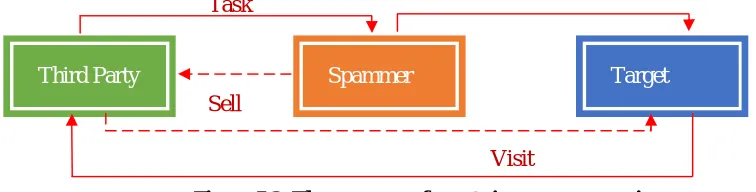
Figure 5.3: The sequence of events in a spam campaign
Figure 5.3 shows the events and messages involved in an end-to-end spam email campaign. In this
example, a third party has hired a spammer to send unsolicited product offers to email addresses
across the Internet. The goal is to entice some number of spam recipients into paying customers of
the third party. The target user doesn't need to ever interact again with the spammer again.
The theft of user login credentials is where phishing began. Once an attacker had a user's login
name and password the attacker could log in as that user and steal whatever resources that account
might have access to. In the case of the AOL account theft described previously, the attacker wants
to steal Internet access.
Figure 5.4: Phishing for account information
Figure 5.4 makes it immediately obvious what the difference between spamming and phishing.
The phisher wants to steal a target user's information for the purposes of making fraudulent
withdrawals from the target's user account.
6.
RESEARCH OBJECTIVES
The main objective of the study is to design and develop a framework for secure cache using
Phish EM guard algorithm for mail security awareness system1, 3, 11.
To give the nature of Email security on SMTP, and the fact that data security threats only
escalate.
To perform the analysis of existing security algorithms, clustering schemes and routing
protocols in SMTP.
Visit Task
Spammer
Third Party Target
Sell
Target
Phisher User
Phish
Bite
To design and develop a Hybrid Detection System model for communication network using
Ant Colony Optimization (ACO) to detect the anomalies in the network in order to make the
devices in email network safe and secure.
To design and develop a Data Caching Scheme (DCS) that improves the data accessibility
ratio and reduces the query delay by proposing a cache discovery algorithm using ACO.
To design an enhanced data cache framework by that improves security during the data
retrieval. This is achieved by embedding immunity into data packets thereby increasing data
accessibility and reduces query delay with the support of cross layer design approach and
clustering.
To address the development of framework to ensure and secure the data access on SMTP.
7.
PROPOSED WORK
We propose to adopt the research work is to produce new idea, knowledge and awareness in the
form of research methods. The study will design and develop framework for securing a data from
attack. These security methods will include authenticating routing updates, erecting a firewall,
detecting intrusion attempts and responding with group rekeying measures designed to isolate the
attacker1, 3.
It improves solutions to a problem. Here the study divides into two models theoretical and
simulation model. In the theoretical model study implies different security issues and their solutions.
In the simulation model run simulation with configuration and try to learn mechanisms which will
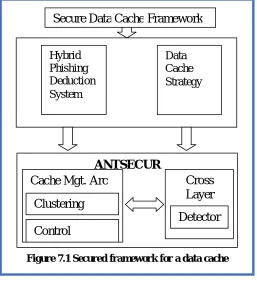
Figure 7.1 Secured framework for a data cache
Hybrid Phishing Deduction System
Data Cache Strategy
Secure Data Cache Framework
ANTSECUR
Cache Mgt. Arc Cross Layer
Control
help us to enforce security in SMTP3.
7.1 Secured architectural framework of a data cache
The Hybrid Phishing Deduction System detects the anomalies and Data Cache Strategy locates
and fetches the required data by cache discovery mechanism. The integration of Hybrid PDS and
cache management is done in the ANTSECUR Framework [3][4]. This framework consists of the
Cache Management architecture (Cache Mgt. Arc) and the Cross Layer. The data packets are
embedded with the control packets Cross Layer protocol and detector set to handle the node failure
and misbehavior.
8.
AN ALGORITHMIC APPROACH
There are many approaches under Swarm Intelligence, out of which Ant Colony Optimization
(ACO) Algorithm is proved to produce an optimized solution in automatic knowledge gathering
problems for awareness, robust routing, screening, tracking etc19,21,22. ACO is a class of optimization algorithms modeled on the actions of an ant colony. ACO methods are applied to the problems that
need to find paths to goals.
Real ants lay down pheromones directing each other to resources while exploring their
environment. The simulated 'ants' similarly record their positions and the quality of their solutions,
so that more ants trace better solutions in later simulation iterations. More the density of the
pheromone trails indicates that there is a food source present and each and every time, the ants travel
in the same path, they increase the density of the pheromones and thus making it as a strong source
of food. The paths less travelled by the ants have low density of pheromone trails which do not
indicate the strong source of food. This concept of ACO can be brought in analogous to the email
networks where the devices in the network exchange data packets between the other devices. These
type of exchanging of information is brought in by the ACO algorithm to route the information in the
shortest path.
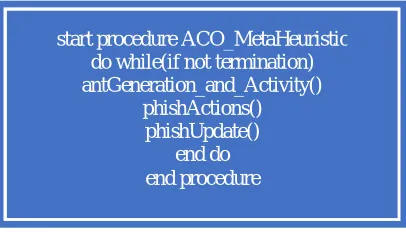
The following is the pseudo code of ACO.
The ant Generation_and_Activity function deals with the generation of ants, its movement and
activities related to it. Phish Actions() are used to implement centralized actions, which could not be
implemented by a single ant, such an invocation of localized optimized procedure or the update of
global information to be used to decide whether to bias the search process from a non-local
perspective. Phish Update is used to disappear trail values over time to avoid the unlimited
accumulation of trail values over a connection19,21, 22.
9.
PERFORMANCE EVALUATION
The proposed ANTSECUR framework was evaluated in an NS-2 simulation environment [30].
Different simulation scenarios have been performed. The performance of the proposed framework is
measured with packet delivery ratio and end to end delay. In the simulation, each host moves in the
simulation area following the random waypoint mobility model. The random waypoint model is used
for simulating the movement pattern of email data in SMTP. For 150 and 200 nodes simulation was
carried out in 1500*1000m. In Table 6.2, the simulation parameters are listed.
Table 9.1. ns-2 Simulation Parameters
Parameter Value
Transmission Range(M) 300
Bandwidth(Mbps) 3
Node Speed(M/s) 0-10
Routing Protocol Ant Phish Net
Pause Time(S) 100
Cache size (KB) 300
Average TTL (S) 100-3000
Zipf-like Parameter ( ) 0.5-1.0 Number of Data items 1000
No. of nodes 150,200
Request Interval(S) 10
Simulation Time 2000 sec.
To evaluate the performance of the proposed ANTSECUR framework, two scenarios based on
start procedure ACO_MetaHeuristic do while(if not termination) antGeneration_and_Activity()
phishActions() phishUpdate()
number of client nodes have been considered. There are five Tcl simulations run have been
conducted in 150 and 200 nodes, based on which average end to end delay and packet delivery ratio
has been obtained. Generally, misbehaving node may cause raise in delays, packet drop and reduce
throughput of the network. To reduce this factor AISp has been embedded within the data packet.
This prevents the network from nodes that cause abnormal behaviour.
Table 9.2. Network Performance on 150 nodes
(150 Nodes) Scenario1
Packet Delivery Ratio Delay
ANTSECUR AODV+COCA ANTSECUR AODV+COCA
1 96.51 91.38 195.33 223.39
2 95.03 90.25 234.53 258.04
3 92.92 89.57 142.70 160.41
4 96.06 89.42 254.68 321.93
5 97.38 93.96 191.44 238.47
Mean 95.58 90.92 203.74 240.44
SD 1.71 1.87 43.28 58.41
The mean value of packet delivery ratio and end to end delay of ANTSECUR framework
presented in Table 6.3 shows good performance than AODV+COCA as it contains cross layer
control CLC. This CLC manages path distraction due to node failure which certainly reduces end to
end delay. As there is decrease in delay, packet delivery ratio gets increased. But there is no
control for managing Path distraction in case of AODV+COCA. The delivery ratio was 95.58% in
the ANTSEC framework where it was 90.92% in case of AODV+COCA. ANTSEC framework has
22.91% efficient in reducing the delay and 7.70% efficient in improving the packet delivery ratio than
AODV+COCA while transmitting the packets.
Table 9.3. Statistical Analysis for 150 Nodes
150-nodes Mean SD t-value df p-value
PDR-ANTSEC vs. PDR-AODV+COCA 6.83 1.99 11.45 6 0.003
DELAY-ANTSEC vs. DELAY-AODV+COCA -53.73 29.71 -6.06 6 0.024
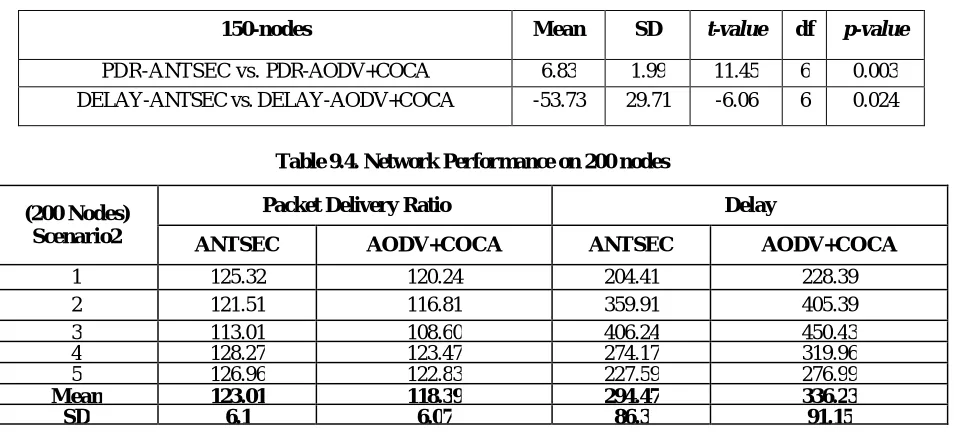
Table 9.4. Network Performance on 200 nodes
(200 Nodes) Scenario2
Packet Delivery Ratio Delay
ANTSEC AODV+COCA ANTSEC AODV+COCA
1 125.32 120.24 204.41 228.39
2 121.51 116.81 359.91 405.39
3 113.01 108.60 406.24 450.43
4 128.27 123.47 274.17 319.96
5 126.96 122.83 227.59 276.99
Mean 123.01 118.39 294.47 336.23
SD 6.1 6.07 86.3 91.15
ANTSECUR framework shows good performance in the Tcl simulation runs as specified in
Table 6.5. The delivery ratio was 92.26% in the ANTSEC framework where it was 88.79% in case
AODV+COCA takes around 252.17ms. The proposed framework has 12.42% efficient in reducing
the delay and 3.9% efficient in improving the packet delivery ratio than AODV+COCA while
transmitting the packets.
Table 9.5. Statistical Analysis for 200 Nodes
200-nodes Mean SD t-value df p-value
PDR-ANTSEC vs. PDR-AODV+COCA 4.63 0.36 37.92 5.33 0
DELAY-ANTSEC vs. DELAY-AODV+COCA -41.76 10.13 -12.29 5.33 0.001
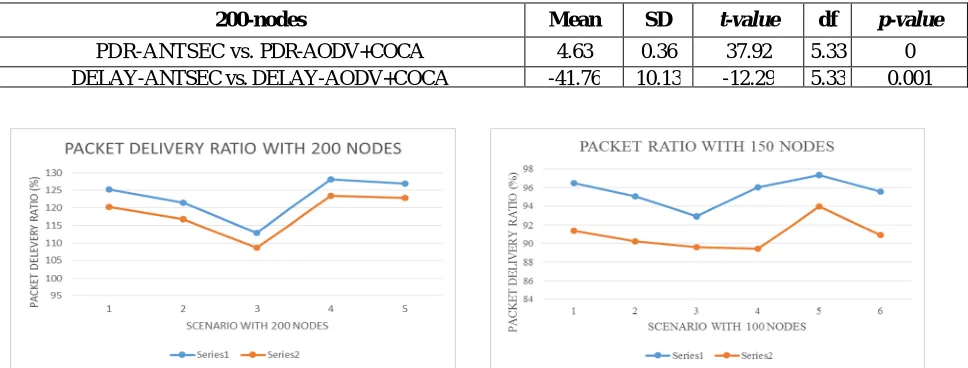
Figure 9.1 Packet Delivery Ratio with 200 Nodes
Figure 9.2 Delay with 200 Nodes
Figure 9.3 Packet Delivery Ratio with 150 Nodes
Figure 9.4 Delay with 150 Nodes
The packet delivery ratio of the network with 200 nodes and 150 nodes is depicted in the figure
9.1 and figure 9.3 respectively. The delay of the network with 200 nodes and 150 nodes is depicted
in figure 9.2 and figure 9.4 respectively.
The statistical paired t-test has been proposed to evaluate the significant difference between
proposed model and existing model with respect to Packet Delivery Ratio (PDR) and Packet Delay.
Hence, the proposed model has found significant effect on existing model with respect to PDR and
Delay in both the scenarios with 150 nodes and 200 nodes.
The ANTSECUR framework always outperforms AODV+COCA as it embeds ACO and Phish
EM; both factors make the proposed framework more efficient with higher PDR (Packet Delivery
Ratio). As the framework uses SMTP and the misbehaving nodes are identified by the email data
which are embedded into the Data Packets (DP) the end-to-end delay is lowered. From the above
including malicious nodes.
CONCLUSION
E-mail, being a global phenomenon is bound to attract many crimes such as phishing. Around
the world government has taken a key step in prevention of phishing E-Mail by the enactment of the
Information Technology Act and by giving exclusive powers to the police and other authorities to
tackle such crimes.
Similar efforts have been made to fight E-Crime by enacting national legislations but in the long
run, they may not prove to be as beneficial as desired. An effort is still wanted to formulate an
international law on the use of Internet to control this forthcoming danger of E-mail related crimes
and to achieve a crime free Cyber Space. Prevention they say is the best cure. Cyber Laws aim to
prevent cybercrimes through the use of penal provisions.
REFERENCES
1. Dr. K. Thangadurai, Gopu.G, “A secure data cache framework to deduct phishing E-Mail
using ACO technique” IJRAR January 2019, E-ISSN 2348-1269, P-ISSN 2349-5138.
2. Annu K Simon, Dr, S Subasree, “Design and Development of Enhanced Optimization
Techniques based on Ant Colony Systems”, IJIRST - International Journal for Innovative
Research in Science & Technology Volume3, Issue 04, ISSN (online): 2349-6010,
September 2016.
3. Dr. K. Thangadurai, Gopu.G, “A study on Ethical Phishing on E-mail networks and its
impacts in India”, Indian Journal of Science and Technology, Vol 9(45), DOI:
10.17485fijst/2016/69i45/90847, December 2016.
4. Karthika Renuka D, Visalakshi P, Girish R “A Hybrid ACO Based Feature Selection
Method for Email Spam Classification”, WSEAS transactions on computers, E-ISSN:
2871, 2015; 14.
5. Ankur Dumka, Ravi Tomar, J. C. Patni, Abhineet Anand, “Taxonomy of E-Mail Security
Protocol”, International Journal of Innovative Research in Computer and Communication
Engineering, April 2014; 2(4).
6. P. Rohini, K. Ramya, “Phishing Email Filtering Techniques A Survey”, Volume 2, Issue 1,
February 2011, Nov 2014; 17(1).
7. Gori Mohamed .J, M. Mohammed Mohideen, Mrs. Shahira Banu.N “E-Mail Phishing – An
open threat to everyone” International Journal of Scientific and Research Publications, ISSN
8. SANS the monthly security awareness newsletter for computer users, “Email Phishing
Attacks”, February 2013.
9. Phishing attack against MSN/Hotmail users - a new year, but old tricks still persist by
Graham Cluley, Monday, January 2013; 14.
10. N. Vijayalakshmi, E. Sivajothi, Dr. P. Vivekanandan, “Efficiency and Limitation of Secure
Protocol in Email Services”, International Journal of Engineering Sciences and Research
Technology, Nov-2012; 539-544.
11. Umamaheswari S, Radhamani G, “Clustering Schemes for Mobile Ad Hoc Networks: A
Review‟, IEEE sponsored Second International Conference on Computer Communication
and Informatics (ICCCI 2012), 2012.
12. Sunny gill, Gaurav Rupnar, Vaibhav Ramteke, Prof. Dipit Patil, Vijay M. Wadhai. “Email
Security Protocol”, International Journal of Computer Trends and Technology – March to
April Issue 2011.
13. Shamal Firake, Pravin Soni, Dr. B.B. Mesharam, “Phishing E-mail Analysis”, International
Journal of Computer Trends and Technology, February 2011; 2(1).
14. Hung-Min Sun, Bin-Tsan Hsieh, Hsin-Jia Hwang, “Secure E-mail Protocols Providing
Perfect Forward Secrecy”, February 2011; 2(1).
15. Mrs. K. Shanmugavadivu, Dr M. Madheswaran, “Caching Technique for Improving Data
Retrieval Performance in Mobile Ad Hoc Networks”, (IJCSIT) International Journal of
Computer Science and Information Technologies, 2010; 1(4): 249-255.
16. Nada M.A.Al Salami, M.A., “Ant Colony Optimization Algorithm‟, Ubi CC 2009; 4(3): 826.
17. Stuart McClure, Joel Scambray, George Kurtz, “Hacking Exposed 6 Network Security
Secrets & Solutions” 10th Anniversary Edition, 2009, the McGraw-Hill.
18. Chu Yan, Zhang Jian Pei, Zhao Chunhui, “Data Cache Strategy Based on Colony Algorithm in Mobile Computing Environment”, IEEE International Conference on
Internet Computing in Science and Engineering, 2008; 235-238.
19. Dorigo, M., Mauro Birattari, Thomas Stiizle, “Ant Colony Optimization”, IEEE Computational Intelligence magazine, November 2006.
20. M. Altinet, Q. Luo, S. Krishnamurthy, C. Mohan, H. Pirahesh, B. G. Lindsay, H. Woo, L.
Brown, “DB Cache: Database Caching for Web Application Servers”, 612, SIGMOD 2002.
21. Cordon, O., F. Herrera and T. Stützle, special issue on “Ant Colony Optimization”, Mathware and Soft Computing, November, 2002; IX: 2-3
Kauffman Publishers, 2001.
23. Ankit Fadia, “E-mail Hacking”, Vikas Publishing House Pvt. Ltd.
24. Rajendra Maurya “HACKING MADE EASY”, SCORPIO NET SECURITY SERVICES
Publication, 2nd Edition.
25. Agrawal, D. P. and Qing-An Zeng, “Introduction to Wireless and Mobile Systems”, 2005,
Brooks/Cole.
26. Andrew S. Tanenbaum, David J. Wetherall, “Computer Networks, Pearson”, 2011. 27. CISCO Security White Paper “Email Attacks: This Time its Personal”, June 2011.
28. Behrouz A, Forouzan, “Data Communications and Networking”, New Delhi: Tata
Hill, 2011.
29. Artail, H., Haidar Safa, Khaleel Mershad, Zahy Abou-Atme, Nabeel Sulieman, “COACS:
A Cooperative and Adaptive Caching System for MANETs”.
30. Network Simulator 2, http://www.isi.edu/nsnam/ns
31. Hacking : http://www.hackingarticles.in/
32. Mail Examiner: http://www.mailxaminer.com.
33. Email racer: http://www.cyberforensics.in/Products/emailtracer.aspx