Embedded Cloud For Antipiracy
Rushikesh Tade
Abstract: Modern Software organizations try to use variety of methods for reducing piracy. The article discusses some brief idea about how the piracy can be reduced with the combination of embedded system and cloud computing and how to use this concept in daily lif e of home users to organizations.
Index Terms: ARM,Cloud Computing, Debian, Linux, SaaS, Wireless Access Point.
————————————————————
1
I
NTRODUCTIONFOR many years many software organizations have fantasized about the safe and secure market which will give them the good profit for the work they have done and for achieving this goal they have tried many things. However, in recent decades have advancesin technologies in computer and internet technologiesmade measurable progress toward achieving that vision. These technologies have also allowed us to monitor the customers activity within the world with the software product .The work I present in this paper consist of the idea of the Cloud Computing Clashed with the tiny Computing devices and we will also see how this are going to start the an era. How this devices will work how to use them and what this system actually made up of.
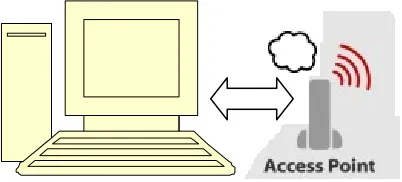
Fig. 1 – A conceptual illustration of Embedded based
wireless access point with cloud supportfor the antipiracy.
2
BACKGROUND
2.1 CLOUD COMPUTING
Cloud computing is the sharing of the resources over the network where resources may be of any form hardware or software. In other words it is a model providing web-based software, middleware, hardware on demand. By deploying technology as a service, you give users access only to the resources they need for a particular task. This prevents you from payingfor idle computing resources. Cloud computing can also go beyond costsavings by allowing your users to access the latest software andinfrastructure offerings to foster business innovation[1].
Local computers no longer have to do all the heavy lifting when it comes to running applications. The network of computers that make up the cloud handles them instead. Hardware and software demands on the user's side decrease. The only thing the user's computer needs to be able to run is the cloud computing systemsinterface software, which can be as simple as a Web browser, and the cloud's network takes care of the rest.[2]
2.2 DIFFRENT CLOUD COMPUTING MODELS
There are many types of public cloud computing:[3] Infrastructure as a service (IaaS)
Platform as a service (PaaS)
Software as a service (SaaS)
Network as a service (NaaS)
Storage as a service (STaaS)
Security as a service (SECaaS)
Data as a service (DaaS)
Desktop as a service (DaaS - see above)
Database as a service (DBaaS)
Test environment as a service (TEaaS)
API as a service (APIaaS)
Backend as a service (BaaS)
Integrated development environment as a service (IDEaaS)
Integration platform as a service (IPaaS)
______________________________
RushikeshTade, Department of Electronics and
Telecommunication Pune University.
237
Fig 2 – Cloud computinglogical Diagram
2.3 SaaS
Software as a Service (SaaS) is a software distribution model in which applications are hosted by a vendor or service provider and made available to customers over a network. Software as a Service allows organizations to access business functionality at a cost typically less than paying for licensed applications since SaaS pricing is based on a monthly fee.Also, because the software is hosted remotely, users don't need to invest in additional hardware. Software as a Service removes the need for organizations to handle the installation, set-up and often daily upkeep and maintenance.Software as a Service may also be referred to as simplyhosted applications.
Fig 3 – Overview software as a service.
Benefits of the SaaS model include:
Easier administration
automatic updates and patch management
Compatibility: All users will have the same version of software.
easier collaboration, for the same reason
Global accessibility.
2.4 LINUX
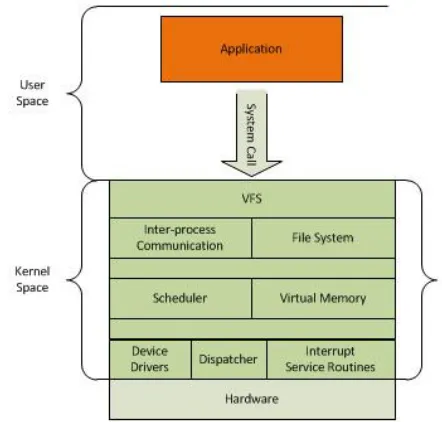
Linux is a Unix-like computer operating system assembled under the model of free and open source software development and distribution. The defining component of Linux is the Linux kernel, an operating system kernel first released 5 October 1991 by Linus Torvalds[4][5.] A distribution oriented toward desktop use will typically include the X Window System and an accompanying desktop environment such as GNOME or KDE Plasma. Some such distributions may include a less resource intensive desktop such as LXDE or XFCE for use on older or less powerful computers. A distribution intended to run as a server may omit all graphical environments from the standard install and instead include other software such as the Apache HTTP Server and an SSH server such as OpenSSH. Because Linux is freely redistributable, anyone may create a distribution for any intended use.Linux system uses a monolithic kernel where the entire operating system is working in kernel space and is alone in supervisor mode.
Fig 4 – Structure of monolithic kernel
2.5 ARM PROCESSOR
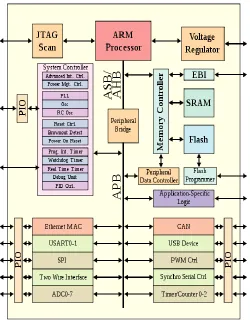
An ARM processor is any of several 32-bit RISC (reduced instruction set computer) microprocessor s developed by Advanced RISC Machines, Ltd. The ARM architecture was originally conceived by Acorn Computers Ltd. in the 1980s
Fig 5 – Microprocessor-based system on a chip
3
E
MBEDDED CLOUD FOR ANTIPIRACYWe focus our attention on making our embedded device related to the problemof antipiracy. Our System will consist of an arm processor powered device with wireless support and having some storage capacity which is required for our operating system and the cloud application serving. We are using Linux as an operating system of this device. This device will get connected to the computer network both via Wireless and the Ethernet connection. Wireless access point is secured by the WEP encryption.
Fig 6 – Showing the structure of the device
This device will also be connected to internet for the updates of the cloud application. Here have also bridged the two networks in case if the user wants to access the
internet then he will also be able to get connected to the internet. Previous methodsfor accomplishing the antipiracy can be divided into two approaches:providing the hardware in the form of CDs or USB devices and cloud based services. Whereas this kind of methods has certain disadvantages. In the first method of providing the hardware this hardware can be copied easily with Disc Coping tools. Second method of using cloud computing has the advantage of not getting copied but It requires fast internet connection which is not possible in rural areas and user has to be connected all the time when using the application, and if user wants to share the application then he has to share his login details to the person who is asking to share. This project is targeted to overcome these problems it has the security of the hardware which can’t be copied as it is getting read only by the network interfaces and it doesn’t actually require internet connection for working. The following figure shows the working diagram of the project. By using switch and multiple wireless clients we can use one device for multiple clients that means if the manufacturer has to sell multiple licenses then it is possible to share that with only one device.
Fig 7 – showing the working model of the embedded based wireless access point with cloud support for antipiracy.
3.1 SELECTION OF THE HARDWARE
Fig 8 - Showing the Raspberry Pi and ARM 11 based single chip computer.
239
TABLE I
Specification of Raspberry Pi[8][9]
Specification Details
SoC Broadcom BCM2835
Memory (SDRAM) 512 MB
USB 2.0 ports: 2
Onboard storage SD / MMC / SDIO card slot
Onboard network 10/100 Ethernet (8P8C)
USB adapter on the third port of the USB hub
Power ratings 700 mA (3.5 W)
We have used Netgear WNA 1100 as our wireless device. This small size device requires very less power. As a storage medium we have seleted transcend 16 GB SD card for our Pi.
3.2 SELECTION OF OPERATING SYSTEM
We have selected the TheRaspbian Linux distribution as an operating system of our device.Raspbian is based on Debian Wheezy (Debian 7.0) with faster floating point support. It provides over 35,000 available deb software packages, pre-compiled software bundled for easy installation on a Raspberry Pi computer[10].specifically tuned for optimal performance on the Raspberry Pi ARM11 hardware[11]. The Raspbian Linux distribution basically contains the LXDE desktop environment, the Openbox window manager, the Midori browser, software development tools and example source code for multimedia functions.Raspbian is a project of a small, dedicated team of developers, and is not affiliated with the Raspberry Pi Foundation.[10]
3.3 DEVELOPING THE CLOUD APPLICATION
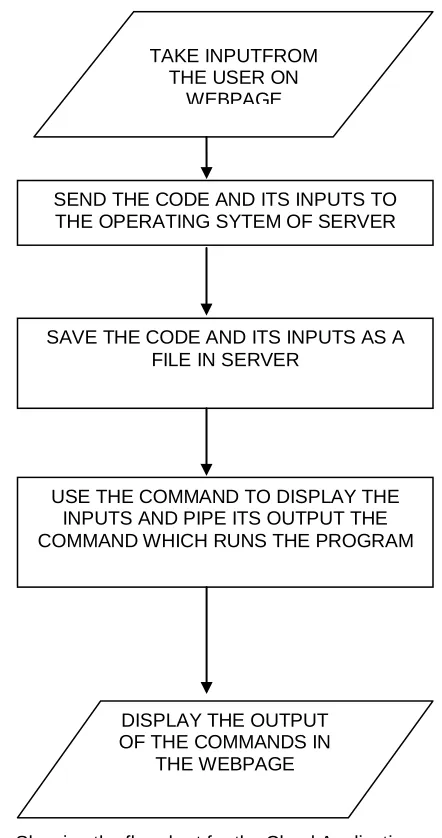
We have tried to develop the GCC and Python compiler as a cloud app. The idea was simple just to take input and executing it into the OS on server and forwarding the output of it to the webpage. We have used the GCC for C language, G++ for the C++ language. The Whole application is developed into the PHP language as it is capable with Linux platform and very lightweight and does not requires much memory. Executing the data into the operating systemis very easy in PHP.
Fig 9 – Showing the flowchart for the Cloud Application
3.4 SETTING UP THE DEVICE
After installing the operating system on the device we have installed the following packages for running the cloud application:
PHP5
Blitz
G++
Python 3.5
After installing the above packages we were able to run the cloud application on the local host of device. Then the next step was to configure the device to network interfaces LAN. Raspbian already comes with the Ethernet drivers we just configured that by editing the /etc/network/interfaces file in the system operating system. By making the interface of LAN as the DHCP we achieved the desired result .Now can successfully open the cloud application from any computer in t local area network. After getting the Local area connecting we have also installed the SSH server on the device so that if user or administrator wants to some work he don’t have to play with actual device instead he can do it from his own computer. For making the hotspot we have selected the netgear WNA1100 wireless adaptor. Raspian
TAKE INPUTFROM THE USER ON
WEBPAGE
SEND THE CODE AND ITS INPUTS TO THE OPERATING SYTEM OF SERVER
SAVE THE CODE AND ITS INPUTS AS A FILE IN SERVER
USE THE COMMAND TO DISPLAY THE INPUTS AND PIPE ITS OUTPUT THE COMMAND WHICH RUNS THE PROGRAM
DISPLAY THE OUTPUT OF THE COMMANDS IN
already had its device drivers installed in it. Next step was to create the wireless access point we have done it by using the application called hostapd which is helpful for creating a wi-fi hotspot. We have also bridged the Ethernet and the wireless so that user in the wireless network will be able to the access the internet.
4
CONCLUSION
In this article we have tried to present the embedded based wireless access point with cloud support for antipiracyaiming to develop a technologythat can help organization who suffers the loss in market due to piracy and tobe able to get better market with safe environment. Through this article we provide the basis andfoundation for developing this kind of devices,showing the different steps to implement an embedded based wireless access point with cloud support. The most important aspects to be taken into accountin order to have good results: the selection of the of the hardware to serve the powerful cloud application. It is always necessary to test the cloud application as per hardware. The results so far are very encouraging, in some cases the response timings are very fast .In future we are to be able to have more complex applications.
R
EFERENCES[1]. IBM, ―IBM cloud computing:Rethink IT. Reinvent business‖, IBM Cloud Computing overview United Kingdom, [online],http://www.ibm.com/cloud-computing/uk/en/,[Accessed: Dec. 2012].
[2]. Jonathan Strickland, ―How Cloud Computing Works‖,HowStuffWorks How Cloud Computing Works,[online],http://computer.howstuffworks.com/ cloud-computing/cloud-computing.htm ,[accessed : Jan. 2013]
[3]. Monaco, Ania, "A View Inside the Cloud", theinstitute.ieee.org (IEEE), 7 June 2012, [online],
http://theinstitute.ieee.org/technology-focus/technology-topic/a-view-inside-the-cloud [Accessed: August 21, 2012] .
[4]. Linus Benedict Torvalds,"Freeminix-like kernel sources for 386-AT",comp.os.minix,5 October 1991 [online],http://groups.google.com/group/comp.os.mi nix/msg/2194d253268b0a1b?pli=1[Accessed:30Se ptember 2011].
[5]. "What Is Linux: An Overview of the Linux Operating System" Linux.com ,3 Apr. 2009 ,[online] ,https://www.linux.com/learn/new-user-guides/376- linux-is-everywhere-an-overview-of-the-linux-operating-system [Accessed : Nov. 2012].
[6]. Kerry McGuire Balanza ―ARM from zero to billions
in 25 short years‖, ARM Community, 11 May 2010,
[online] , http://blogs.arm.com/smart-connected- devices/204-arm-from-zero-to-billions-in-25-short-years/ , [Accessed: Nov 2012].
[7]. Timothy PrickettMorgan ,ARM Holdings eager for PC and server expansion,The Register , 1 Feb
2011 [Online]
http://www.theregister.co.uk/2011/02/01/arm_holdi ngs_q4_2010_numbers/ , [Accessed : Jan. 2013 ].
[8]. "FAQs",Raspberry Pi Foundation, [online] http://www.raspberrypi.org/faqs , [Accessed : Oct. 2012].
[9]. "Verified USB Peripherals and SDHC Cards", Elinux.org,
[online]http://elinux.org/RaspberryPiBoardVerifiedP eripherals ,[Accessed: May,2012]
[10]. ―Welcome to Raspbian", Raspbian ,[online] ,http://www.raspbian.org/, [Accessed:July,2012].
[11]. "Available Distributions", Embedded Linux Wiki eLinux.org