http://www.sciencepublishinggroup.com/j/ijbecs doi: 10.11648/j.ijbecs.20190504.13
ISSN: 2472-1298 (Print); ISSN: 2472-1301 (Online)
Review Article
Review on Rational Use of Antmicrobials in Veterinary
Practice
Selamawit Fentahun Ali
School of Veterinary Medicine, Wollo University, Dessie, Ethiopia
Email address:
To cite this article:
Selamawit Fentahun Ali. Review on Rational Use of Antmicrobials in Veterinary Practice. International Journal of Biomedical Engineering and Clinical Science. Vol. 5, No. 4, 2019, pp. 70-77. doi: 10.11648/j.ijbecs.20190504.13
Received: August 21, 2019; Accepted: November 7, 2019; Published: November 14, 2019
Abstract:
Veterinary drugs are used as therapeutic, prophylactic and growth promotion. The review was conducted with theaim of assessing the rational use of veterinary antimicrobials. Veterinary drugs are used in livestock sector either rationally or irrationally. Rational use of veterinary drugs means sick animals receive medications appropriate to their clinical needs, in doses that meet their own individual requirements, for an adequate period, and at the lowest cost. Whereas irrational drug use are characterized by over prescription, omission, the use of inappropriate dosage, incorrect duration, misuse of drug, take unnecessary risk, over use /frequent use of drugs and not stick with withdrawal period of a drug. The review indicates veterinary drugs used irrationally due to lack of knowledgeable of healthcare providers, lack of treatment guidelines, essential drug lists and national formularies, lack of diagnostic support services such as laboratory services, self-medication and purchasing of antibiotics directly from pharmacies, street vendors or markets and inadequate supply of veterinary drugs. Irrational use of drugs leads to antimicrobial resistance which is the current global health threat to animals and human being. Hence, veterinary drugs, especially, antimicrobial agents should be prudently used, improve availability of key essential drugs on stock through good drug supply management to reduce misuse of drugs and therapeutic failure, keep the withdrawal period to safeguard the public as well the livestock from drug residual effects and development of antimicrobial resistance are recommended.
Keywords: Antimicrobials, Drugs, Irrational, Rational, Resistance
1. Introduction
Antibiotics are chemical substances naturally produced by various species of microorganisms such as bacteria and fungi that kill or inhibit the growth of other microorganisms. Among the major antibiotic sources include Strepyomyces, Pencilliums, Actinomycetes and Bacilli. It is estimated that about 100,000 tons of antibiotics are produced globally [1].
The terms antimicrobial, antibiotic and anti-infective encompass a wide variety of pharmaceutical agents that include antibacterial, antifungal, antiviral, and anti parasitic drugs. Antimicrobial drugs have been widely used for more than 50 years to improve both humans and animal health since the antibiotic golden age up to date. The discovery of antibiotics and antibacterial agents since1940srevolutionized the treatment of infectious bacterial disease that killed millions of people and animals during the pre-antibiotic
golden age worldwide [2].
Veterinary drugs are used in livestock sector either rationally or irrationally as therapeutic, prophylactic and growth promotion. Rational use of drugs is based on the use of right drug, at right dosage, right cost and right time which is well reflected in the world health organization [3]. The World health organization (WHO) estimates that more than half of all medicines are inappropriately prescribed, dispensed, or sold. Additionally, around 50% of patients fail to take their medicines correctly [4].
production of food animals and protecting public health, while irrational and irresponsible use may cause antimicrobial resistance [5].
Many of these drugs are abused by veterinarians as healthcare professionals and the general public where many farmers treat their sick animals’ with antibiotics/antibacterial drugs without seeking professional consultation. The problem is worse in developing countries that have privatized veterinary services making the cost of treatments to be very expensive for the farmers. Many farmers access these agents and treat their animals even in cases where use of antibiotic/antibacterial agents would be unnecessary. As a result of this, massive quantities of antibiotics/antibacterial drugs used are released in the environment thus increasing selection of the antibiotic bacterial resistance organisms that can spread from the animals to humans especially the bacterial zoonoses, increasing the cost of treatments in both animals and humans [6]. By contrast, developed countries such as Europe, are monitoring antibiotic use and taking action to combat irrational antibiotic use [7].
In 1973, the European Community (EC) commenced the withdrawal of some important antibiotic use as growth promoters in animal feed. After that, Sweden banned the use of all growth-promoting antibiotics in 1986. Avoparcin, bacitracin, spiramycin, tylosin, and virginiamycin were withdrawn as growth promoters in the European Union (EU) from 1995 to 1999, on the basis of precautionary principle. In 2006, all the uses of low-dose antibiotics (5up to 40 ppm) in food animals, including flavomycin, avilamycin, salinomycin, monensin, and other animal-specific antibiotics, were banned in the EU with the intention to avoid their negative impact of resistant development [5]. Currently the emergence of antibiotic/antibacterial resistance due to irrational drug use in medical and veterinary practice, food industries, agriculture and in communities is posing a global health problem [8].
Some research paper published on the evaluation of rational use of drugs on human in some parts of our country, Ethiopia revealed the presence of irrational drug use [9-10]. Similarly, in veterinary medicine, a study conducted by Beyene et al. [11] on rational use of veterinary drugs at Bishoftu veterinary clinic, central Ethiopia showed irrational drug use. Therefore the objectives of this review paper are to provide a highlight on rational and irrational use of veterinary drugs and to review the reasons for irrational use of antimicrobial drugs.
2. Litrature Review
2.1. Antimicrobial Drugs
Antimicrobial drugs are compounds that, in the body of animals, will kill or inhibit pathogenic microorganisms without or minimum adverse effects for the host. They are natural products of various species of fungi and bacteria that in low concentrations arouse death (bactericidal effect) or are causing growth inhibition (bacteriostatic effect) of microorganisms. These drugs are also including synthetic compounds that are structurally similar to the natural
products and have similar mechanism of actions [12]. The last 50 years may be considered as a “golden period”in the antibiotic development. In this period all so far known antibiotics were discovered and introduced in clinical practice. They led to the revolutionary changes in therapy of many diseases that in “pre-antibiotic era”were fatal. For example, mortality from pneumonia in human medicine was in range from 30 to 40 percent until 1940s, and after clinical introduction of penicillin’s its incidence reduced to less than 5 percent [13].
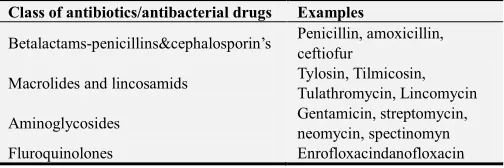
Most of the antibiotics were developed after the Second World Wars a consequence of strong development of chemical industry. In the last two or three decades, in clinical practice were introduced antimicrobial drugs with already known chemical structure, with better pharmacokinetic properties and wider spectrum of action [14]. These drugs mainly are members of fourth generation of cephalosporin’s (e.g. cefquinom, cefepimeand cefpirome), glycopeptides antibiotic teicoplanin aswell as newer carbapenems (meropenem) and macrolides (claritromycine, tulathromycine. Some of them, as well as members of third and fourth generationsof cephalosporin’s (ceftiofur, cefpodoxime, cefixime, and cefquinom), macrolides (tulathromycine) or carbapenems (imipenem) also are used in veterinary medicine today [15]. The use of antimicrobials in food animals creates an important source of antimicrobial-resistant bacteria that can spread to humans through the food supply. Improved management of the use of antimicrobials in food animals, particularly reducing the usage of those that are “critically important” for human medicine, is an important step toward preserving the benefits of antimicrobials for people. The World Health Organization has developed and applied criteria to rank antimicrobials according to their relative importance in human medicine. Clinicians, regulatory agencies, policy makers, and other stakeholders can use this ranking when developing risk management strategies for the use of antimicrobials in food production animals. The ranking allows stakeholders to focus risk management efforts on drugs used in food animals that are the most important to human medicine and, thus, need to be addressed most urgently, such as fluoroquinolones, macrolides, and third- and fourth-generation cephalosporin’s [16]. Several antibiotic/antibacterial drugs are used in the treatment of many bacterial diseases of animals’ especially in food-producing animals globally. Many of these agents are, at the same time, used in bacterial infections in humans (Table 1).
Table 1. Major class of antibiotics /antibacterial drugs shared by humans and animals.
Class of antibiotics/antibacterial drugs Examples
Betalactams-penicillins&cephalosporin’s Penicillin, amoxicillin, ceftiofur
Macrolides and lincosamids Tylosin, Tilmicosin,
Tulathromycin, Lincomycin
Aminoglycosides Gentamicin, streptomycin,
neomycin, spectinomyn
Class of antibiotics/antibacterial drugs Examples
Tetracyclines Tetracycline, ox tetracycline,
Chlortetracycline
Salfonamides
Sulfacytine, sulfadiazine, Sulfamethizole, sulfamethoxazole
Streptogramins Virginiamycin
Polypeptides Bacitracin
Phenicols Florfenicol
Bambermycin Bambermycin (Amprolium)
Quinoxalines Carbadox
Source: [17]
2.2. Uses of Antimicrobial Drugs
Veterinary drugs play essential role in livestock production they are generally used in farm animals for therapeutic and prophylactic purposes, growth promoter, preservation and processing of food and preslaughter control of stress which can be administered in the feed or in the drinking water [19-22]. They are used to prevent and control infectious and non-infectious diseases, assist in reducing stress due to environmental changes, vaccination and other management practices [18-20].
In addition, veterinary drugs are given in cases of disease, for rehydration or to prevent losses during transportation, enhance feed efficiency, promote animal growth, and improve productivity [19]. Many of the antibiotics used in treating bacterial infections in humans also have veterinary applications [20].
2.3. Method of Veterinary Drug Use
Rational drug use: Rational use of drugs is based on the use of right drug, at right dosage, right cost and right time which is well reflected in the world health organization. The promotion of rational drug use involves a wide range of activities such as adaptation of the essential drug concept, continuous training of health professional and the development of evidence based clinical guidelines. Unbiased and independent drug information, consumer education and regulatory strategies are also vital to promote rational drug use [3].
Irrational drug use: Irrational use of drug means misuse of drugs by the patient (i.e. patients receive medications inappropriate to their clinical needs, under or over dosing that meet their own individual requirements, and for inadequate period) [23].
Irrational use of drugs is a huge worldwide problem and extra care should be taken especially in pregnancy, for example unnecessary drugs are sometimes prescribed like multivitamins in large quantities for patient without nutritional problems or antibiotics, for patients without evidence of bacterial illness [24].
Irrational use of drugs in veterinary medicine have bigger problem when used on food producing animals. Because of not stick with the withdrawal period of drugs minimal quantities of drugs and their metabolites (residues) which remain in edible tissues or in animal products (meat, milk, eggs) induce certain harmful effects in humans as potential
consumers of such food [25].
Globally, more than half of all medicines are prescribed, dispensed or sold improperly, and 50 % of human patients fail to take them correctly. This is more wasteful, expensive and dangerous, both to the health of the individual patient and to the population as a whole that magnifies the problem of misuse of antimicrobial agents [3].
There are many factors that contribute to the irrational prescribing or use of medicines. These factors can be traced to various stages of the medicine use cycle, and can be broadly categorized in to those emanating from patients, prescribers, work place (health system), supply system (including industry influence), regulation, drug information or miss information or a combination of these factors [26-27].
Irrational prescribing can arise as a result of several internal or external factors. For instance, a prescriber-related factor is one of the major reasons for irrational use of drugs. The prescriber may lack adequate training, or there may be no adequate continuing education, resulting in the reliance on outdated prescribing practices which may have been learnt while under training. The lack of opportunities for on job continuing education is a challenge faced by many health professionals in resource-poor countries [27, 28]. Besides, not explain to patients how to take their medicines, economic incentives where prescribers gain income from dispensing or selling the medicines they prescribe, [29].
2.4. Significance of Rational Use of Antimicrobials
Generally, it has a role in increasing the quality of antibiotics/ antibacterial drug therapy available in the management of resistant diseases, increase resources that will be diverted to purchase expensive drugs to manage resistant diseases which may leads to lack of vital drugs used to treat other common diseases [30], to reduce risk of unwanted side effects such as adverse drug reactions, treatment failures, cost of treatment, antibiotic resistant bacterial diseases, demand for antibiotics and destruction of micro flora making such individuals more susceptible to opportunistic infections which totally increase socio-economic status among the human and animal population globally [31].
2.4.1. Increasing Animal Production
Antibiotic drugs have been widely used globally in animals for more than 50 years with tremendous benefits in animal production and economic development. Investigations in the laboratory showed that antibiotics as growth promoter was discovered in the 1940s, when it was observed that chicks improve in growth when fed bacterial shells of
Prophylactic use of antimicrobial drugs or use of these drugs with aim of animals growth stimulation, imply giving a smaller doses than therapeutic doses of antimicrobial drugs there by, this kind of drugs use: decrease risk from disease of bacterial etiology, improves feed utilization, and stimulates growth. Generally the role of antimicrobials in increasing animal production is by increasing diet digestibility and by improving food utilization efficiency (Van Lunen, 2003). Addition of drugs (chlortetracycline, sulfonamides, folic acid, sulfamethazine) in feed remarkably improve the consumption rate, milk secretion, productive efficiency and live birth rate [34]. Feeding antimicrobials to animals increase their weight gain. Antibiotics like tylosin supplementation can also improve the carcass quality by decreasing the fat thickness and increasing the lean meat of food animals [35].
Unlike in humans, an even larger proportion of antibiotics produced for veterinary use are utilized in animal herds or flocks for purposes other than treatment. A report by the Union of Concerned Scientists estimated that in the United States alone, the livestock producers use about 24.6 million pounds of antimicrobials for non therapeutic purposes, a volume about eight times greater than 3 million pounds estimated use for human medicine. About 80% of the antibiotics/antibacterial agents produced is used as feed additives in livestock production as growth enhancers and for prophylactic use due to the suppressed immune system caused by the overcrowding of the animals leading to stress [36].
2.4.2. Prevention and Treatment of Animal Disease
Over one hundred of antimicrobials, including β-lactams, aminoglycosides, tetracyclines, chloramphenicols, macrolides, sulfonamides, fluoroquinolones, lincosamides, polypeptides, and polyene, have been used in food-producing animals around the world. These antimicrobials have played an essential role in the prevention, treatment, and control of food animal diseases caused by pathogens, such as pathogenic E.coli, S. aureus, S. pneumonia, Actinobacilluspleuropneumoniae, mycoplasma, Vibrio, and others. Many ofthese agents are, at the same time, used in bacterial infections in humans. They cause a change in physiological, nutritional and metabolic processes of the animals. They are used in; Stimulation of intestinal synthesis of vitamins by bacteria, inhibition of harmful bacteria which may mildly pathogenic or toxin producing, improve energy efficiency of the gut, inhibition of bacterial cholytaurinhydrolase activity, nutrient sparing, involvement of nutrient pharmacokinetics especially absorption from the small intestinal epithelium and modification of rumen microbial metabolism [37].
2.4.3. Protection of Human from Zoonosis
There are more than two hundred diseases that are transmitted from animals to man and vice-versa. Humans acquire infection from animals during husbandry, health service delivery, leather industries, food processing plants, vaccine production laboratories, and from zoos during consumption of foods of animal origin (milk and meat from cattle, sheep, goats, poultry, pigs, and fish), and from egg. Among animal infectious Campylobacter spp., Salmonella spp., E. coli O157:H7, Vibrio parahaemolyticus, and
Aeromonashydrophila from animals pose great health threat to both humans and animals [38].
To some extent antimicrobial agents are guaranteed human food security and public health by controlling animal disease and preventing transmission of zoonotic pathogens from animal to humans. When added to animal feed or drinking water, this drug could significantly decrease the bacterial contamination in animal products. For example, virginiamycine decreases the contamination by
Campylobacter species and other food borne pathogens in animal carcasses [39]. Salinomycine reduce infections of type
C Clostridium in animals, neomycin in animals feed
significantly reduce the number of E.coli O157:H7 in animal faces, and gentamycin reduce bacterial count in poultry eggs and meat indicating that the risk of bacterial infection to humans decrease globally [40].
2.4.4. Reduce the Risk of Drug Resistance
Nowadays, in the clinical practice of human and veterinary medicine a large number of antimicrobial drugs are used throughout the world. Despite constant indicating of all failures and harmful effects of such use, it is present in every-day clinical practice. Most mistakes during antimicrobial therapy may occur when pathogenic microorganism is unknown and therapy starts empirically. Most often combinations of two or more antibiotic drugs are used. To avoid these mistakes, clinically confirmed, effective antibiotic combinations should be used. These combinations are useful in treating serious infections, mixed bacterial infections, when resistance occurs, enzymatic destruction of a drug, and in order to reduce toxicity [41]. Therefore, how to use antimicrobials, for effective treatment of bacterial and parasitic infections in food-producing animals, become the most important question for their use by avoiding the resistance development. Increasing awareness of antimicrobial resistance and promoting the rational use of antibiotics among prescribers and the general public are the key points to combating the unnecessary use of these drugs those results in bacterial resistance to the effective drugs [42].
2.5. Actions to Promote the Rational Use of Antimicrobials
2.5.1. Surveillance
2.5.2. Appropriate Storage of Drugs
Unless special storage conditions are stated, it is vital that drugs be stored in a dry, adequately ventilated, shady and cool store room. Cold storage conditions can be maintained by using refrigerators and freezers for products that may be degraded rapidly when kept at room temperature or even at cool places [44].
2.5.3. Drug Information
Informationabout drugs is rapidly expandingbecause of new drug products entering into drug markets and new informationaboutthedrugs,whicharealreadyinuse.Persons involvedindrugdispensinghavetomakethemselvesupdate withdruginformationinordertoprovidethisinformationfor patientsorfortheanimalsowner[44].
2.5.4. Use of Checklists for Surgical Procedures
Patientsundergoingsurgeryareathighriskofinfectionat thesurgicalsite,buttheseinfectionsarelargelypreventableif simple measures are taken consistently before, during, and after surgery. The use of checklists ensures adherence to common sense measures and demonstrated to improve outcomes,includingsurgery-relatedinfection[45].
2.5.5. Distributing Standard Treatment Guide Lines
Standard treatment guide lines should be developed at various levels, from the hospitals and veterinary clinics to the national level. These guidelines should be tailored to local situations and specific to levels of care. However, employees at all levels in the healthcare system often have little knowledge of the content of these STGs. One means of distributing STGs is through drug-bug ‘pocket cards’: these cards would provide summaries of locally recommended treatments for common conditions [46].
2.5.6. Good Dispensing of Drugs
It ensures that the correct drug is delivered to the right patient, in the required dosage and quantities, with clear instructions, and in package that maintains an acceptable potency and quality of the drug. Dispensing includes all the activities that occur between the time the prescription or oral request of the patient or care provider is presented and the drug or other items are issued to them. It is often carried out by pharmacy professionals. No matter where dispensing takes place or who does it, any error or failure in the dispensing process can seriously affect the care of the patient mainly with medical and economical consequences [44].
2.5.7. Adhering to Withdrawal Period
It is the interval between the last administration to the animals of the drug under normal condition of use and the time when treated animal can be slaughtered or the production of safe food stuffs [47]. Drug withdrawal time is the time required for drug residues to reach a safe concentration for human or animal consumption, and definedas maximum residual limit (MRL). Failure to follow recommended withdrawal time is often implicated in residual problems [48]. It is advisable to follow recommended
withdrawal time to avoid residual effects of drugs in the food of animal origin; that is, we have to check and observe the withdrawal period laid down for the particular medicine and food animals should not be sold for slaughter, or slaughtered before the end of withdrawal period [49].
2.5.8. Infection Control Intervention
Hospitals and veterinary clinics should create their own ecologyinthebacterial-humanandbacterial-animalinterface including hand-washing, isolationrooms, and limit catheter use in common and use of gloves and gowns. The use of antibiotics is much moreintense inhospitals andveterinary clinics than in the community, andhighly resistant bacteria maybefoundandspreadthere[50].
2.5.9. Educational Approaches
Continuing education of doctors, nurses, dentists, pharmacists, and veterinarians is a perpetually attractive opportunity for instructing these professionals about antibiotic use and resistance. In India, continuing education is beginning to be required for certain professionals. A new Medical Council of India (MCI) rule that doctors must attend 30 hours of continuing medical education every five years to maintain their licenses will help encourage such courses [51].
2.6. Consequences of Irrational Use of Veterinary Drugs
Antibiotic resistance is the ability of bacteria to resist the effect of an antibiotic. It is occurred where emerging strains of microorganisms like bacteria that have been found to survive antibiotic exposure or the bacteria are no longer susceptible to antibiotic drugs. Just a few years after the golden age of antimicrobials, warning signs of developing resistance were observed. It has now become clear that microorganisms are countering the impact of antimicrobial resistance at an often alarming speed. More and more bacteria with multiple drug resistance are also being observed. Although still surrounded by a number of controversies and debates as to the nature and gravity of this resistance phenomenon, various reports support the contention that the abuse and misuse of antibiotics is largely responsible for the developing resistance problems [52].
In developing countries, complex socio-economic and behavioral factors are associated with antibiotic resistance. There is a misuse of antibiotics by health professionals, unskilled practitioners, and laypersons; poor drug quality; unhygienic conditions accounting for spread of resistant bacteria; and inadequate surveillance [53].
has been raised for the use of antibiotics in animals that may represent a potential threat to human health because the resistant pathogens in animals may transmit to humans and cause treatment failure of human medicines. There is a positive correlation between antimicrobial resistance and the consumption of antibiotics [54].
Irrational antibiotics/antibacterial drug use is a global problem especially in the developing countries with poor healthcare systems. It refers to the failure to complete treatment, skipping of doses, reuse of leftovers and this leads to sub-therapeutic doses or toxicity of the drugs as well as failure of eradicating infectious bacteria and potentially promoting the emergence of bacterial resistance [55].
Antimicrobial resistance, a global problem, is particularly pressing in developing countries where the infectious disease burden is high and cost constrains the replacement of older antibiotics with newer, more expensive ones. Management of common and lethal bacterial infections has been critically compromised by the appearance and rapid spread of antibiotic resistant bacteria. One of the most important threats to modern medicine is the development of bacteria that are resistant to antibiotics, making bacterial infections more difficult or even impossible to treat. Over-use in intensively-produced farm animals is now believed to have played a major role in this global [56]. The emergence of anti- bacterial resistance has significantly contributed to the high cost of treatment of the resistant bacterial infections, exposure to the second and third-line drugs like for the case of the multi-drug resistant and extended-drug resistant which requires prolonged treatment with the drugs and also which are not only expensive, but also highly toxic to the patients [57].
The Global Antibiotic Resistance Partnership (GARP) was established to begin the process of developing actionable policy recommendations relevant to low and middle income countries. There is lack of development of newer and effective antibiotics by the pharmaceutical companies due to the high cost and the emergence of pathogenic resistant bacterial diseases. It is critical in the management of these diseases in future especially if nothing is done to preserve the existing few effective antibiotics/ antibacterial drugs. Irrational drug use can provoke the most serious disturbances, as are mutagenesis, carcinogenesis and teratogenesis. Therefore, today in clinical practice we must undertake care about frequency of application and dose of these drugs, and also about the possible side effects, which some of these drugs could provoke, and especially about those drugs whose use (because of proved toxicity) is banned [58]. Because of their toxicity, how for animals (to whom are applied) and also for the people, potential consumers of the products, which derived from those animals, Food and Drug Administration (FDA) has banned the use of some antimicrobials, as well as some other drugs in feed for animals l [59].
3. Conclusion
Rational use of drug is very important tool in the safe and effective treatment for the animals and humans. It improves quality of life for the patient and economically it is cost
effective. Beside this, it limits undesired toxicity and adverse effects, delay the development of drug resistance, drug residue and maximizes the benefits that can be derived from optimal use of medications. But factors like; lack of knowledgeable of professionals, lack of availability of medicine information such as clinical treatment guidelines, essential drug lists and national formularies, lack of diagnostic support services such as laboratory services, inappropriate medicine supply and appropriate ones are not provided, remain the major determinants to use drugs irrationally. The professional can play a multidisciplinary approach to the promotion of the rational use of antibiotics by providing proper information about drugs and instruction regarding the adverse drug reactions, inform the owner about the dosage schedule of drugs and withdrawal period of administered drugs.
References
[1] Clardy, J., Fischbach, M. and Currie, C. (2009): The natural history of antibiotics. Clin Microbiol. Rev., 19 (11): 437-441.
[2] EFSA, (2009): The European Union Summary Report on antimicrobial resistance in zoonotic and indicator bacteria from humans, animals and food in the European Union. EFSA Journal., 9 (7): 2154-2155.
[3] WHO, (World Health Organization). (2012): Rational use of medicines. World Health Organization «int/medicines/areas/rational Accessed». Pp. 18-7.
[4] WHO, (World Health Organization). (2004): The world medicin Situation; World health organization. Geneva, Switzerland.
[5] Marshall, B. M. and Levy, S. B. (2011): Food animals and antimicrobials: impacts on human health. ClinMicrobiolRev.,
24 (4): 718-733.
[6] Peeples, L. (2012): Antibiotic Resistance Spreads through Environment, Threatens Modern Medicine <http://www.huffingtonpost.com//htm>.
antibiotic-resistance-environment-livestock, 2012.
[7] Goosens, H., Ferech, M., VanderStichele, R. and Elseviers, M. (2005): For the ESAC project group. Outpatient antibiotic use in Europe and association with resistance: a cross- national database study. Lancet., 365: 579-587.
[8] Batas, V., Spiri, C. A., Petronijevic, R., Jankovic, S. and Milicevic, D. (2007): Determination of the metabolites ofnitro furan antibiotics in animal tissue and primary animalproducts by liquid chromatography-tandem mass spectrometry (LC-MS/MS). Tehnol. mesa., 48 (6): 242-249.
[9] Rehan, S., Singh, C., Tripathi, D. and Kela, K. (2001) Study of drug utilization pattern in dental OPD at tertiary care teaching hospital. Indian Journal Dental Researcher, 12: 51-56.
[10] Endale, G., Solomon, A., Wuletaw, A. and Asrat, A. (2013) Antibiotic prescribing pattern in a referral hospital in Ethiopia.
Africa Journal Pharmacology, 7 (38): 2657-2661.
[12] Kobal, S., Cupic, V., Muminovic, M. and Velev, R. (2007): Source of antimicrobials. Pharmacology for students of veterinary medicine. 3rd Edition, Pp, 277.
[13] Velev, R., Cupic, V., Muminovic, M., Kobalgrade. and Saraevo, S. (2007): Pharmacology for students of veterinary medicine. 3rd edition. Iowa State University Press, P, 89.
[14] Navashin, S. M. (1997): The science of antibiotics: a retrospective and view to the future. Antibiot Chemother., 42 (5): 3-9.
[15] Baggot, J., Giguere, S., Prescott, J., Walker, R. and Dowling,
M. (2006): Antimicrobial Therapy in Veterinary Medicine. Iowa State University Press. Ames. IA., 62: 221-248.
[16] Fredrick, (2009): Food safety and health control. American society for health. J. Cid. Food., 17 (2): 133-141.
[17] Chee-Sanford, J. C. (2013): Environmental Impacts of Antibiotic Use in the Animal Production Industry: Prevention of Infectious Diseases in Livestock and Wildlife, Pp, 25-28.
[18] Kabir, S. M. L., M. M. Rahman, M. B. Rahman, M. M. Rahman and S. U. Ahmed, 2004. The dynamics of probiotics on growth performance and immune response in broilers. Int. J. Poult. Sci., 3: 361-364.
[19] Kao Y-M, Chang M, Cheng C, Chou S. Multiresidue determination of veterinary drugs in chicken and swine muscles by high performance liquid chromatography. J Food Drug Anal. 2001; 9: 84–95.
[20] Kennedy, J., Codling, C. E., Jones, B. V., Dobson, A. D., and Marchesi, J. R. (2008). Diversity of microbes associated with the marine sponge, Haliclona simulans, isolated from Irish waters and identification of polyketide synthase genes from the sponge metagenome. Environ. Microbiol. 10, 1888–1902. doi: 10.1111/j.1462-2920.2008.01614.
[21] Graham, J., Haidt, J., and Nosek, B. (2007). The moral foundations of liberals and conservatives. Unpublished.
[22] Jensen, B. B. 1998. The impact of feed additives on the microbial ecology of the gut in young pigs. Journal of Animal and Feed Sciences, 7: 4564, Suppl. 1.
[23] Hanmant, A. and Priyadarshini, K. (2011). Prescription analysis to evaluate rational use of antimicrobials. Int J Pharmacol Biol Sci. BioMed Central.
[24] Akhtar MS, Divya V, Pillai K, Kiran D, Roy MS, Najmi AK, et al. Drug prescribing practices in paediatric department of a North Indian university teaching hospital. Asian J Pharm Clin Res. 2012; 5: 146–9.
[25] Sanders P. Veterinary drug residue control in the European Union. Technologija mesa. 2007; 1 (2): 59–68.
[26] Gurbani, N. (2011): Problems and impact of irrational medicines: Use and tools and interventionsto improve medicines use, Pharmacology, 43: 7.
[27] Ofori, R., Brhlikova, P. and Pollock, M. (2016): Prescribing indicators at primary health care centers withinthe WHO African region: A systematic analysis. Public Health, 16: 724.
[28] Naicker, S., Plange, J., Tutt, C. and Eastwood, B. (2009): Shortage of healthcare workers in developing countriesAfrica
Ethnics Diversity, 19: 60–64.
[29] Holloway, K. A. (2011): Promoting the rational use of antibiotics. Regional Adviser, Essential drugs and other medicines, World Health Organization, Regional Office for South-East Asia: Regio. Health., 15 (1): 122-130.
[30] APUA, 2012: The need to improve antibiotic use in food animals. The Alliance for the Prudent Use of Antibiotics.<http://www.tufts>.edu/med/apua/consumers/pers onal_home25_277960095 pdf. Accessed on 3rd May 2012.
[31] WHO, (2009): Medicines use in primary care in developing and transitional countries: Fact book summarizing results from studies reported between 1990 and 2006, Pp, 175-194.
[32] Van Lunen, T. A. (2003): Growth performance of pigs fed diets with and without tylosin phosphate supplementation and reared in a biosecure all-in all-out housing system. Can. Vet. J., 44: 571–576.
[33] Adams, H. R. (2001): Medical care to increase production efficiency. Veterinary Pharmacology and Therapeutics 8th Edition. Iowa State University Press, Pp, 868-897.
[34] Partanen, K., Siljander-Rasi, H., Pentikainen, J., Pelkonen, S. and Fossi, M. (2007): Effects of weaning age and formic acid-based feed additives on pigs from weaning to slaughter. Arch. Anim. Nutr., 61: 336–356.
[35] Cromwell, G. L., Stahly, T. S., Jensen, A. H., Plumlee, M. P.,
Krider, J. L. and Russett, J. C. (1984): Efficacy of thiopeptin as a growth promotant for growing barrows and gilts a cooperative study. J. Anim. Sci., 59: 892–895.
[36] Mellon, M., Benbrook, C., Benbrook, K. L. and Cambridge, M., y. (2001): Union of Concerned Scientists. Hogging it' Estimates of antimicrobial abuse in livestock.
[37] Food and Drug Administration Center for Veterinary Medicine, (2010): The Judicious Use of Medically Important Antimicrobial Drugs in Food- Producing Animals. Draft Guidance for Industry. NCBI. Antimicrobia., 74 (3): 417–433.
[38] Mellata, M. (2013): Human and avian extra intestinal pathogenic Escherichia coli: infections, zoonotic risks, and antibiotic resistance trends. Pathog. Dis., 10: 916–932.
[39] Hurd, H. S., Brudvig, J., Dickson, J., Mirceta, J., Polovinski, M. and Matthews, N. (2008): Swine health impact on carcass contamination and human food borne risk. Public Health Rep.,
123: 343–351.
[40] Elder, R. O., Keen, J. E., Wittum, T. E., Callaway, T. R., Edrington, T. S. and Anderson, R. C. (2002):“Intervention to reduce fecal shedding of enter hemorrhagic Escherichia coli O157:H7 in naturally infected cattle using neomycin sulfate,” in American Society of Animal Science/American Dairy Science Association Joint Meeting. Proc Natl. Acad Sci., 97: 2999-3003.
[41] Giguere, S. L., Baggot, J. F., Prescott, R. D. and Walker, S. (2006): Antimicrobial Drug Action and In teraction. 2nd Edition. Blackwell Publishing, Ames Iowa, USA, Pp, 219-221.
[42] Cars, O., Molstad, S., Struwe, J. and Strama, A. (2008): A Swedish working model for containment of antibiotic resistance. Euro. Surveillance., 13: 22–5.
[44] Drug Administration and control Authority of Ethiopia, (2005): Antimicrobial use, resistance and containment base line survey synthesis of findings. J. Plos. Org., 22: 563-566.
[45] Dellinger, E. P., Haynes, A. B., Weiser, T. G., Berry, W. R., Lipsitz, S. R. and Breizat, A. H. (2009): A surgical safety checklist to reduce morbidity and mortality in a global population. N Engl J Med., 360: 491–499.
[46] Guleria, R., Srivastava, R. K., RoyChaudhury, R., Ganguly, N. K., Bramhachari, S. K. and Singh, S. (2011): National Policy for Containment of Antimicrobial Resistance, (Academic press,
India).
[47] Kanneene J, Miller R. Problems associated with drug residues in beef from feeds and therapy. Review of Sci and Technol. 1997; 16: 694-708.
[48] GOV. UK: Guidance Veterinary medicines for livestock. Livestock and Food and farming, Department for Environment, Food & Rural Affairs. 2013.
[49] Gracey J, Collins D, Hvey R. Meat hygiene, 10th edition. Harcourt Brace Press, London. 1999; 299-319.
[50] Rhinehart, E., Goldmann, D. A., ORourke, E. J. (1991): Adaptation of the Centers for Disease Control guidelines for the prevention of nosocomial infection in a pediatric intensive care unit in Jakarta, Indonesia. Am J Med., 91: 213–220.
[51] Sinha, K. (2011): MCI plans to send docs back to lecture halls. Times of India April 5. AJNR Am J Neuradiol., 33: 1845–1850.
[52] Weese, J. S., Giguère, J. F., Prescott, J. D., Baggot, R. D.,
Walker, H. and Dowling, P. M. (2006): Prudent Use of Antimicrobials. J. Intern. Med., 20 (1): 55-62.
[53] Okeke, I. N., Lamikanra, A. and Edelman, R. (1999): Socioeconomic and behavioral factors leading to acquired bacterial resistance to antibiotics in developing countries.
Emerg Infect Dis., 5: 18-27.
[54] Monnet, D. L., Albrich, W. C. and Harbarth, S. (2004): Antibiotic selection pressure and resistance in Streptococcus pneumoniae and Streptococcuspyogenes. Emerg Infect Dis., 10: 514–517.
[55] Kardas, P., Devine, S., Golembesky, A. and Roberts, C. (2005): A systematic review and meta-analysis of misuse of antibiotic therapies in the community. International Journal of Antimicrob. Agen., 26: 106-113.
[56] WHO, 2011: Surgical Safety: Available from: <http://www.who.int/patientsafety/safesurgery/tools_resources /SSSL_Checklist_finalJun08.pdf.htm
[57] WHO, (2013): World Health Organization publications on tuberculosis.
<http://www.who.int/iris/bitstream/10665/91355/1/978924156 4656_eng.pdf,76.htm.
[58] Levine, O. S. and Cherian, T. (2007): Pneumococcal vaccination for Indian children. Indian Pediatr., 44: 491–496.