130
H. Louis et al Journal of Medicinal and Chemical Sciences Original Article
J. Med. Chem. Sci. 2019, 2(4): 130-139
J. Med. Chem. Sci. 2 (2019) 130-139
Journal Homepage:
http://jmchemsci.com
A Review on Classes, Extraction, Purification and Pharmaceutical Importance of
Plants Alkaloid
Hamzat T. Adejoke
a, Hitler Louis
b,c*, Oluwatobi O. Amusan
a, Gloria Apebende
ba
Department of Chemistry, University of Ilorin, Ilorin, Kwara State, Nigeria b
Department of Pure and Applied Chemistry, Faculty of Physical Sciences, University of Calabar, Calabar, Cross River State, Nigeria c
CAS Key Laboratory for Nanosystem and Hierarchical Fabrication, CAS Centre for Excellence in Nanoscience, National Centre for Nanoscience and Technology, University of Chinese Academy of Sciences, Beijing, China.
A R T I C L E I N F O A B S T R A C T
Article history:
Received: 27 August 2018 Revised: 13 January 2019 Accepted: 8 March 2019
The importance of natural products in the pharmaceuticalindustrycannot be abated because it playsvital role in the prevention and treatments of diseasessuch as cancer, malaria, pile etc. These natural products which include alkaloid, flavonoid, phenol, saponin and tannin are bioactive compounds in plant and essential in plant metabolic activities. All of these have been tested for their huge medicinal properties and therefore could serve as an alternative medicine in treatment of myriad ailments. Although, through the modern-day technologies, these bioactive compounds have been separated from the plants and synthesized into capsules and tablets for easy administration, usage and storage, there is a need to create awareness on the side-effects associated with excess or abuse of medicinal plants and to encourage rational use of natural resources for sustainability. Thus, this review gives an overview on pharmacological importance of named alkaloids, methods of extraction and purification of alkaloids in plant, laying emphasis on side-effects associated to the abuse of alkaloids or alkaloid derivative drugs.
Keywords:
Plants Alkaloids structure pharmacology
GRAPHICAL ABSTRACT
1. Introduction
lkaloids are group of naturally occurring chemical compounds that mostly contain basic nitrogen atoms produced by a large variety of organisms including bacteria, fungi, plants, and animals. It is one of the diverse groups of secondary metabolites which play an important role in the ecology of organisms and synthesize them by acting as a defense system against pathogens and animals. The applications of alkaloids are not restricted to biological control of herbivores but they also have pharmacological, veterinary and medical importance. They are natural products and have been playing a critical role in
the prevention and treatment of cancer and other disease around the world.Many systems of medicine like Ayurveda and Chinese medicine utilize natural products as the source of drugs for 100 decades.1 The secondary metabolites from the natural products serve as a foundation for the development of a large number of drugs. As compared to most other classes of natural compounds, alkaloids are characterized by a great structural diversity as there is no uniform classification of alkaloids. First, classification methods historically combined alkaloids by the common natural source, e. g., a certain type of plants. This classification was justified by the lack of knowledge about the chemical structure of alkaloids and is now considered obsolete.
A
131
H. Louis et al Journal of Medicinal and Chemical Sciences Original Article
Alkaloids exhibit a broad range of very specific pharmacological characteristics which can be used as a strong basis for the general classification of the wide spectrum of alkaloids derived from the plant kingdom, such as analgesic, central nervous system stimulants and depressants, anti-malarial, cardio-vascular drugs and the like. The role of alkaloids for the living organisms that produce them is still unclear. It was initially assumed that the alkaloids are the final products of nitrogenmetabolism in plants, as urea in mammals. It was later shown that alkaloid concentration varies over time, and this hypothesis was refuted. Most of the known functions of alkaloids are related to protection e.g. morphine is a popular analgesic. In addition, the presence of alkaloids in the plant prevents insects and chordate animals from eating it. However, some animals are adapted to alkaloids and even use them in their own metabolism. Such alkaloid-related substances as serotonin, dopamine and histamine are important neurotransmitters in animals. The superior potential of alkaloid-containing plants and their contained alkaloids which continue to contribute to the health and welfare of future generations in a sustainable manner have been demonstrated in several articles alongside their potential side-effects.2
Pharmaceutical importance of alkaloids
The first alkaloids for medicinal use were isolated at the beginning of 19th century, by Derosne (opium salt, narcotine) and Sertürner (principium somniferum, morphine). The chemical identification of morphine was carried in 1923, by Robinson and Gulland. So far, there are more than 20000 identified alkaloids and a number of them have played an important role in clinical practice.3 They present numerous biological activities such as being emetic, anticholinergic, antitumor, diuretic, sympathomimetic, antiviral, antihypertensive, analgesic, antidepressant, muscle relaxant, anti-inflammatory, antimicrobial, and antiulcer. The alkaloids have accepting nitrogen atom and one or more proton-donating amine hydrogen atoms, which form hydrogen bonds with proteins, enzymes, and receptors. Furthermore, they, generally, have functional groups such as phenolic hydroxyl which might be responsible for the exceptional bioactivity of the alkaloids.4 Antioxidant activities of alkaloids have also been presented in different experimental models and pathological conditions.5–7 Quinine and other cinchona alkaloids including quinidine, cinchonine and cinchonidine are effective against malaria;alkaloids belonging to beta-carboline group possess antimicrobial, anti-HIV and antiparasitic activities.8 Morphine is used in suppressingthe feeling of pain and boldine alkaloids have antioxidant activities.
Pharmaceutical Importance of Named Alkaloids
Morphine
Morphine is a pain medication which is found naturally in a number of plants and animals. It acts directly on the central nervous system(CNS) to decrease the feeling of pain. It can be taken for both acute pain and chronic pain either by mouth, being injected into a muscle or under the skin, intravenously, into the space around the spinal cord,
or rectally.9 As stated above, morphine was first isolated between 1803 and 1805 by Friedrich Sertürner. This is generally believed to be the first isolation of an active ingredientfrom poppy straw of the opium poppy. In 2013, approximately 523 tons of morphine was produced and approximately 45 tons were directly used for pain. About 70 percent of morphine is used to make other opioids such as hydromorphone, oxymorphoneand heroin. Morphine has also been used traditionally in the treatment of acute pulmonary edema, although there is little evidence to support this practice.10 Morphine is beneficial in reducing the symptom of shortness of breath due to both cancer and non-cancer causes.11, 12 Low dosage sustained-release of morphine significantly reduces breathlessness and minimal exertion from conditions such as advanced cancer or end-stage cardiorespiratory diseases.13
Side effects of morphine
Adverse effects of morphine include constipation by reducing gut motility. Clinical studies consistently conclude that morphine, like other opioids, often causes hypogonadism; a condition that causes poor functioning of testes in men and ovaries in women and also responsible for hormone imbalances in chronic users of both sexes. This side effect morphine is dose-dependent and occurs in both therapeutic and recreational users. Morphine can interfere with menstruation in women by suppressing levels of luteinizing hormone. Many studies suggest that the majority (perhaps as much as 90%) of chronic opioid users have opioid-induced hypogonadism. This effect may cause the increased likelihood of osteoporosis and bone fracture observed in chronic morphine users. Studies suggest that the effect is temporary. As of 2013, the effect of low-dose or acute use of morphine on the endocrine system is unclear.14 In terms of cognitive abilities, morphine may have a negative impact on anterograde and retrograde memory15, but these effects are minimal and transient.
132
H. Louis et al Journal of Medicinal and Chemical Sciences Original Article
Fig. 1. structures of morphine
Biosynthesis of morphine
Morphine is an endogenous opioid in humans that can be synthesized by and released from various human cells, including white blood cells. The morphine biosynthetic pathway in humans occur as follows:L-tyrosine → para-tyramine or L-DOPA → dopamine → (S)-norlaudanosoline
→ (S)-reticuline → 1, 2- dehydroretinulinium →(R) reticuline
→ salutaridine → salutaridinol → thebaine → neopinone → c odeinone→ codeine → morphine.16 It is also biosynthesized in the opium poppy from the tetrahydroisoquinoline reticuline . It is converted into salutaridine, thebaine, and oripavine. The enzymes which are involved in this process are the salutaridine synthase, salutaridine: NADPH 7-oxidoreductase and the codeinone reductase.17
Quinine
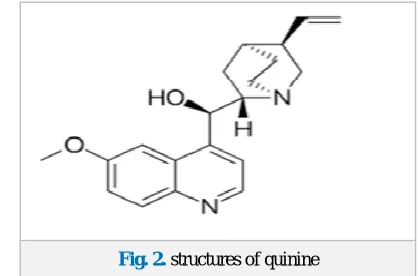
Malaria is one of the most widespread infectious diseases in the world. Nearly 1 million deaths of mostly children were caused by malaria. Currently, there are over 100 countries battling with malaria, of which 45 of these countries are within African region. In spite of the fact that malaria is curable and preventable, its prevalence increased in the 1980s and 1990s as the malaria parasites developed resistance to the commonly used malaria drugs. Migration, low standard of living, poor health care and insufficient human and technical resources limit the effectiveness of various intervention programs designed to control the disease. The principal goal of WHO, UNICEF, UNDP and the World Bank was to reduce the rate of malaria’s related mortality.18 As previously mentioned, quinine and other cinchona alkaloids including quinidine, cinchonine and cinchonidine are effective against malaria. The potency of these four cinchona alkaloids was evaluated in a clinical trial conducted from 1866 to 1868 in over 3000 patients using sulfate salt of the alkaloids to measure the cessation of febrile paroxysm. All four alkaloids were found to be effective with cure rate greater than 95%. However, quinine became the majorly used cinchona alkaloid for the treatment of malaria in 1980 due to dominance of South American cinchona bark which contains higher proportion of quinine.
Quinine has a swift action against intra-erythrocytic malaria parasites. It is rapidly absorbed both orally and intravenously, reaching peak concentration within few hours. The combination of quinine and clindamycin has proven highly efficacious against multidrug-resistant strains of Plasmodium falciparum, with 42 day cure rates of 100% in one study.19 The only concern with this combination is that it is usually not affordable for most people. During the second and third trimester of pregnancy, quinine monotherapy seems to have unacceptably low efficacy in areas with multidrug resistant malaria when compared to ACT and therefore not effective in treatment of malaria for a pregnant woman. The Interactions between HIV and malaria remain a major public health concern in areas affected by both diseases. Very few studies have evaluated the role of quinine in the management of malaria in HIV infected populations. The earliest study was done in the Congo in 1986 and it showed malaria cure rates of 92% in HIV infected patients treated with oral quinine with
comparable results in HIV-negative patients.20 In a subsequent study in the same region, no significant differences in treatment response were observed between children with progressive HIV infection and HIV-uninfected controls treated with oral quinine.
Fig. 2. structures of quinine
Quinine resistance
Over the years, malaria parasites have developed resistance to a number of commonly used anti-malarial drugs. However, the development of resistance to quinine has been slow with the drug retaining some activity but having its action delayed or diminished. Diminished sensitivity of P. falciparum to quinine has been widely documented in Asia and South America 21 but it seems relatively uncommon in Africa where conflicting results of no resistance22, 23 or varying degrees of resistance 24 have been reported.
Side effectof quinine
Quinine has a low therapeutic index, and adverse effects with its use are substantial.25 The side effects commonly seen at therapeutic concentrations are referred to as cinchonism, with mild forms including tinnitus, slight impairment of hearing, headache and nausea. Impairment of hearing is usually depend on concentration and it is reversible.26 More severe manifestations include vertigo, vomiting, abdominal pain, diarrhea, marked auditory loss, and visual symptoms, including loss of vision. Hypotension may occur if the drug is given too rapidly, and venous thrombosis may occur following intravenous injections. Intramuscular administration is painful and may cause sterile abscesses. Hypoglycaemia is yet another common side effect of quinine therapy 27, 28 and is a particular problem in pregnant women.29 Hypoglycaemia has been reported to occur in up to 32% of patients receiving quinine therapy. However in more recent studies, hypoglycaemia occurred in only 3% of adults and 2.8% of African children receiving quinine.30 Less frequent but more serious side effects of quinine therapy include skin eruptions, asthma, thrombocytopenia, hepatic injury and psychosis.
Biosynthesis of quinine
133
H. Louis et al Journal of Medicinal and Chemical Sciences Original Article
achieved31, but none of them can compete in economic terms with isolation of the alkaloid from natural sources. The first synthetic organic dye, mauveine, was discovered by William Henry Perkin in 1856 while he was attempting to synthesize quinine.
Boldine
The possibilities of preventing or retarding the deleterious effects associated with excessive production of reactive oxygen species (ROS) with the use of previously unexplored groups of natural products is now an attractive subject of research. Natural antioxidants have enjoyed an increasing recognition and popularity during the last decade owing to various side effects associated with the use of synthetic antioxidant. Moreover, the industrial use of natural antioxidants remained limited due to their often higher cost as they exist in limited quantity in their natural source and their relatively lower activity. Boldine and other related alkaloids have been shown to behave as potent antioxidants in anumber of experimental models. Various studies conducted by revealed that boldine is particularly efficient in food preservation. It was found to protect fish oil against spontaneous short and long-term oxygen dependent thermal peroxidation. Boldine displays antioxidant activity similar to that of quercetin and it has two to three time’sgreater activity than tocopherol, butylated hydroxyl lanisole(BHA) or butylated hydroxyl toluene(BHT).
Pharmacological activities,such as cyto-protective, anti-tumour promoting, anti-inflammatory, antipyretic and antiplatelet have beenassociated with the ability of boldine to scavenge highlyreactive free radicals.Boldine has antioxidant activity that effectively protects against free radical induced lipid peroxidation or enzyme inactivation. In addition to cytoprotective activity, it also has alpha-adrenergic antagonist activities in vascular tissue, and has also been reported to have hepato-protective effects.Herbal teas containing boldine are widely consumed in South America and boldo leaves are being continually exported to some European countries for further pharmaceutical processing to boldine containing concentrates which are later used as additive in food and pharmaceutical industries.The photo-protection activity was evidenced through the prevention of the UV induced-increase in skin temperature of the rodents. More recently, Rancan et al.32-34 investigated the photo-filtering properties of boldine in humans; he observed that the application of boldine (25 mm) onto a 12 cm2area of the back of volunteers protected their skin against erythema formation to an extent slightly lower than that of a commercial sun cream for which a UV-protection factor of 5 was informed. In the same study, it was observed that the in vitro irradiation of human T lymphocytes through a thin boldine-containing solution protected these cells against loss of viability with a potency even greater than that shown by octylmethoxycinnamate, a UV-Breference filter.
Fig.3. structure of Boldin
Side effect of boldine
The precedent of the prolonged pharmaceutical use of boldine and boldine-containing drug preparations suggests that boldine exhibits low toxicity. In fact, it requiresa relatively high dosage to induce side effects, toxicity or lethality in several mammalian species. Early studies by Kreitmair reported that 500 and 1000 mg/kg were required to induce the death of mice and guinea pigs, respectively. Considerably, lower doses of 250 and 50 mg/kg were required to induce the death of mice and guinea pigs, respectively, whereas 25 mg/kg were required to induce the death of cats.35 Most animals employed in the above studies were reported to die by respiratory failure. Studies conducted by Moreno et al. reported that boldine has no mutagenicity in several Ames tester strains, with or without prior metabolic activation. Subsequently, Tavares and Takahashi reported that boldine did not induce a statistically significant increase in the frequency of chromosome aberrations or sister chromatid exchanges in vitro in human peripheral blood lymphocytes (up to 40 g/mL) or in vivo. Regarding the toxicity of boldine in pregnancy, Almeida et al.36 observed that its acute administration to rats during their early pregnancy phase induced no foetus abortion and no foetal malformation when given per os (orally)at 500 mg/kg. A weak but significant abortive and teratogenic effect was evident at 800 mg/kg. Studying the effects of long-term administration, the same authors observed a low degree of hepatotoxicity, assessed by blood transaminases or urea levels, in rats given boldine daily at 800 mg/kg for 30 and 60 days but not seen at 500 mg/kg. No hepatic histological modifications were observed at a dose of 800 mg/kg administered for 90 days.37
Pilocarpine
134
H. Louis et al Journal of Medicinal and Chemical Sciences Original Article
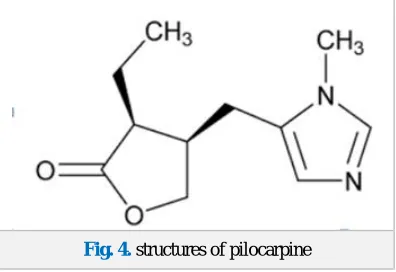
action facilitates the rate that aqueous humor leaves the eye to decrease intraocular pressure. In ophthalmology, pilocarpine is also used to reduce the possibility of glare at night from lights when the patient has undergone implantation of phakic intraocular lenses; the use of pilocarpine would reduce the size of the pupils, relieving these symptoms.
The most common concentration for this use is pilocarpine 1%, the weakest concentration. Pilocarpine is shown to be just as effective as apraclonidine in preventing intraocular pressure spikes after laser trabeculoplasty.41 It is used to stimulate sweat glands in a sweat test to measure the concentration of chloride and sodium that is excreted in sweat. It is used to diagnose cystic fibrosis.
Pilocarpine is available in both tablet and capsule formulation as well as a liquid-based preparation. The latter, however, has inherent instability and degradation problems .42 The drug exerts a broad spectrum of pharmacological effects with predominant muscarinic action. It can increase secretion by the exocrine glands, including the sweat, salivary, lacrimal, gastric, pancreatic and intestinal glands, and the mucous cells of the respiratory tract. In addition, pilocarpine also increases smooth muscle tone and motility in the intestinal and urinary tracts, gallbladder, biliary ducts, and bronchi.43, 44
Fig. 4. structures of pilocarpine
Biosynthesis of pilocarpine
Pilocarpine is found exclusively in species of Pilocarpus and the presence of other imidazole alkaloids has been reported in several species of the genus. Pilocarpine has several important pharmaceutical applications. Although several imidazole alkaloids related to pilocarpine have been reported in the previous years, little is still known about its biosynthetic route. At most, histidine has been reported as the precursor of pilocarpine.
Side effect of pilocarpine
Mild and tolerable adverse reactions are frequently reported during pilocarpine therapy, their incidence being dose-related .45, 46 Most of the adverse effect of pilocarpine is related to its non-selective action as a muscarinic receptor agonist. Pilocarpine has been known to cause excessive salivation, sweating,bronchial mucus secretion, bronchospasm, bradycar dia, vasodilation, and diarrhea. Eye drops can result in brow ache and chronic use in miosis. Reports showed an incidence of 65% for sweating in 31 patients treated with pilocarpine 5mg 3 times daily for 5months.45 However, no patients withdrew from therapy as a result of excessive sweating.Systemic injection of pilocarpine can compromise the blood brain barrier allowing pilocarpine to gain access to
the brain which can lead to chronic epilepsy. Epilepsy induced by injected pilocarpine has been used to develop animal models in rodents in order to study human epilepsy.
Caffeine
Around sixty plant species are known to contain caffeine. Common sources are the "beans" (seeds) of the two cultivated coffee plants, Coffea arabica and Coffea canephora (the quantity varies, but 1.3% is a typical value); in the leaves of the tea plant; and in kola nuts. Other sources include yaupon holly leaves, South American holly yerba mate leaves, seeds from Amazonian maple guarana berries, and Amazonian holly guayusa leaves. Temperate climates around the world have produced unrelated caffeine-containing plants. Caffeine in plants acts as a natural pesticide: it can paralyze and kill predator insects feeding on the plant. High caffeine levels are found in coffee seedlings when they are developing foliage and lack mechanical protection.Caffeine is the most widely consumed psychoactive drug in the world47 and one of the most comprehensively studied ingredients in the food supply. It occurs naturally in the leaves and seeds of many plants and has a taste bitter enough to deter pests.48 It is a constituent of many over-the-counter pain relievers and prescription drugs because the vasoconstriction and anti-inflammatory effects of the alkaloid act as a compliment to analgesics, in some cases increasing the effectiveness of pain relievers by up to 40%.49–53
Caffeine is used for general pain relief in medications such as Midol and Vanquis, which contains doses ranging from 33 to 60 mg. It is used therapeutically in combination with ergotamine to treat migraine headaches and in combination with non-steroidal anti-inflammatory analgesics. Anacin™, Excedrin, Goody’s headache powder, and pain reliever plus contain between 32 and 65 mg of caffeine, and prescription headache medications, including Fiorinal, Orphenadrine, and Synalgos, contain between 30 and 60 mg of caffeine. Besides, it is used as a somnolytic to counteract drowsiness (e. g., NoDoze and Vivarin each contain 200 mg of caffeine), to enhance seizure duration in electroconvulsive therapy, and to treat respiratory depression in neonates, postprandial hypotension, and obesity.55–57 Similar synergistic additive effects of caffeine and medications also occur in treatments for asthma and gall bladder diseases, attention deficit-hyperactivity disorder, shortness-of-breath in newborns, low blood pressure, and weight loss.58–62 Caffeine works by binding to adenosine receptors located in the central and peripheral nervous systems as well as in various organs, such as the heart, and blood vessels.It can have both positive and negative health effects. It can treat and prevent the premature infant breathing disorders bronchopulmonary dysplasia of prematurity and apnea of prematurity.
135
H. Louis et al Journal of Medicinal and Chemical Sciences Original Article
Toxicity of caffeine
Whether or not caffeine which can result in an addictive disorder depends on how addiction is defined. Compulsive caffeine consumption under any circumstances has not been observed, and caffeine is therefore not generally considered addictive.63 However, some diagnostic models, such as the ICDM-9 and ICD-10, include a classification of caffeine addiction under a broader diagnostic model.64 Some state that certain users can become addicted and therefore unable to decrease use even though they know there are negative health effects.65, 66 Withdrawal can cause mild to clinically significant distress or impairment in daily functioning. The frequency at which this occurs is reported at 11%, but in lab tests only half of the people who report withdrawal actually experience it, casting doubt on many claims of dependence.67 Mild physical dependence and withdrawal symptoms may occur upon abstinence, with greater than 100 mg caffeine per day, although these symptoms last no longer than a day.68 Some symptoms associated with psychological dependence may also occur during withdrawal.69 Caffeine dependence can involve withdrawal symptoms such as fatigue, headache, irritability, depressed mood, reduced contentedness, inability to concentrate, sleepiness or drowsiness, stomach pain, and joint pain.70, 71 Death from caffeine ingestion appears to be rare. This rarity may be related, in part, to the marked gastric irritation from caffeine that results in spontaneous emesis. Nevertheless, several hospitalizations and some deaths from caffeine toxicity have been reported. For example, between 2005 and 2011, there were 79,438 emergency room visits attributable to overconsumption of energy products containing high levels of caffeine in patients aged 12 years and older.69
Aconitine
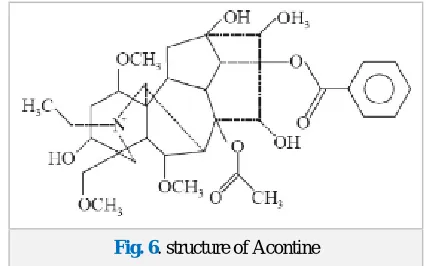
Aconitine is an alkaloid toxin produced by the Aconitum plant, it is also known as devil's helmet or monkshood. Monkshood is notorious for its toxic properties. In China, aconitine is also used in small doses as an analgesic and blood coagulant.The medicinal plant species of Aconitum are a rich source of alkaloids and flavanoids, many of which exhibit broad spectrum of activity. Also isolated and identified are various polysaccharides and free fatty acids. The pharmacological analysis of Aconitum species and their compounds have shown various therapeutic effects. The key points of the scientific research have been the effects of the diterpene alkaloids on the central nervous system and the heart. Their antimicrobial and cytotoxic effects have also been studied. As a widely used Chinese herbal medicine, the tubers and roots of Aconitum (Ranunculaceae) are commonly applied for various diseases, such as collapse, syncope, rheumatic fever, painful joints, gastroenteritis, diarrhoea, oedema, bronchial asthma, various tumours, and some endocrinal disorders like irregular menstruation. However, the cardio and neurotoxicities of this drug is potentially lethal, and the improper use of Aconitum in China, India, Japan and some other countries still results in a high risk of severe intoxications. Based upon the regulations stipulated by the State. Food and Drug Administration of China, only the processed, detoxified tubers and roots of Aconitum are allowed to be administered orally, used in clinical decoctions
and adopted as raw materials for pharmaceutical manufacturing. To date, more than 70 traditional and modern techniques are applied for processing Aconitum roots for medicinal use. In recent years, a large number of studieshave
investigated the toxicological and
pharmacologicalcharacteristics of Aconitum, their main alkaloids and their derivatives. The active components of Aconitum have been reported to have significant pharmacological and biological features.Different species of this genus exhibit antipyretic, anti-inflammatory, analgesic, astringent and anti-diarrheal activities. Besides, they also show strong antioxidant and antimicrobial activity. Effect of several Aconitum alkaloids on central nervous system was screened by Ameri (1998) after dividing them in three different groups comprising of highly toxic, less toxic and reduced toxic alkaloids on the basis of their structure. It has been reported that aconitine cause persistent activation of Na+ channels in heart, skeletal muscles, CNS by blocking their inactivation.72 It has been reported that aconitine cause persistent activation of Na+ channels in heart, skeletal muscles, CNS by blocking their inactivation.The initial research focused on the cardiovascular (arrhythmogenic) toxicity of Aconitum alkaloids and especially AC. The marked cardiac activity of diterpene alkaloids is mainly due to their effect on the voltage-gated Na+ channels.73
Fig. 6. structure of Acontine
Biosynthesis of aconitine
Aconitine is naturally synthesized by the monkshood plant via the terpenoid biosynthesis pathway (MEP chloroplast pathway). Approximately 700 naturally occurring C19-diterpenoid alkaloids have been isolated and identified, but the biosynthesis of only a few of these alkaloids is well understood. Likewise, only a few alkaloids of the aconitine family have been synthesized in the laboratory.
Toxicity of aconitine
136
H. Louis et al Journal of Medicinal and Chemical Sciences Original Article
sweating, difficulty breathing, confusion, headache, and lacrimation.75
Harmine
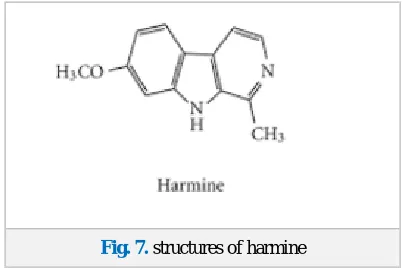
The use of harmine as a multi-purpose traditional medicine has been translated into several commercial applications and it is a highly valued phytoconstituent in the natural health, food and research area. Harmine has many traditional medicinal uses and pharmacological activity such as antimicrobial, anti-HIV and antiparasitic properties. Scientific studies conducted and verified many of the traditional uses including anti-inflammatory, antimicrobial, anti-parasitic and anti-cancer effects. Harmine has the ability to stimulate dopamine release in the brain. Dopamine is a neurotransmitter responsible for sending signals to the nerve cells.Harmine possesses anxiolytic, behavioral effects and anti-tumor potential both in vitro and in vivo.76 It has some dual effectson the upstroke of the action potential of atrial muscle.77 Pharmacological activities ofharmine against several microorganisms have been investigated and no remarkable inhibitory activity against all the tested organisms was reported except in Fusarium moniliforme.Harmine and substances containing it have been used in conjunction with many other drugs in various scientific experiments,it is also a useful fluorescent pH indicator. Harmine is currently the only known drug that induces rapid mitosis and mass growth of pancreatic alpha (α) and beta (β) cells in adult humans. These cells (alpha and beta) are normally very resistant to growth stimulation in the adult stage of a human's life, as the cell mass is optimum at around age 10 and remains unchanged from there on. Other similar drugs have been successful in triggering beta cell proliferation in rats/mice and pigs, however these drugs were met with very limited to no success in human subjects.
Harmine was found to increase the diminished beta cell mass of diabetic people to clinically significant levels for a short time: this property proves very useful in a possible harmine-based treatment for both Type 1 and Type 2 Diabetes. It is known to be a potent inhibitor of the DYRK1A enzyme pathway and this is thought to be the main mechanism by which harmine can induce alpha and beta cell proliferation in vivo. DYRK1A is an enzyme that plays a definitive role in suppressing/regulating cell proliferation, therefore it understandable that the partial blocking of DYRK1A increases the growth of certain cells, including pancreatic α and β cells.
Fig. 7. structures of harmine
Biosynthesis of harmine
The Shikimate acid pathway yields the aromatic amino acid, L-tryptophan. Decarboxylation of L-tryptophan by aromatic L-amino acid decarboxylase (AADC) produces tryptamine (I) containing a nucleophilic center at the C-2 carbon of the indole ring due to the adjacent nitrogen atom that enables the participation in a mannich-type reaction. Rearrangements enable the formation of a Schiff base from tryptamine, which then reacts with pyruvate in II to form a β-carboline carboxylic acid. The β-carboline carboxylic acid subsequently undergoes decarboxylation to produce 1-methyl β -carboline III. Hydroxylation followed by methylation in IV yields harmaline, the oxidation of harmaline is accompanied by the loss of water and effectively generates harmine.
Toxicity of harmine
Oral or intravenous harmine doses ranging from 30–300 mg have caused agitation, bradycardia or tachycardia, blurred vision, hypotension, paresthesias and hallucinations. It has recently been shown in the Journal of Photochemistry and Photobiology that beta-carboline alkaloids such as harmine, bind with DNA and also exhibit anti-tumor properties. Harmine has been shown to bind one hundred times more effectively than its close analogue harmaline. The consequences of this are currently not well understood.78
Extraction of Alkaloids
Due to the structural diversity of alkaloids, there is no single method of their extraction from natural raw materials.79 Most methods exploit the property of most alkaloids to be soluble in organic solvents but not in water, and the opposite tendency of their salts. Most plants contain several alkaloids. Their mixture is extracted first and then individual alkaloids are separated.81,82 Plants are thoroughly ground before extraction.79, 80 Most alkaloids are present in the raw plants in the form of salts of organic acids.80
Extraction with base
Base extraction is achieved by processing the raw plant material with alkaline solutions and extracting the alkaloid bases with organic solvents, such as 1,2-dichloroethane, chloroform, diethyl ether or benzene. Then, the impurities are dissolved by weak acids; this converts alkaloid bases into salts that are washed away with water. If necessary, an aqueous solution of alkaloid salts is again made alkaline and treated with an organic solvent. The process is repeated until the desired purity is achieved.
Extraction with water or acidic water
137
H. Louis et al Journal of Medicinal and Chemical Sciences Original Article
is changing alkaloids molecules into small molecule organic acid salts of inorganic acids, increasing the solubility in water, and the extraction method is relatively simple. However, the main drawback of this method is the need for more extraction solution, difficulty concentrating, and presence of water-soluble impurities.
Extraction of alcohol solvent
Both free alkaloids and alkaloid salts which can be dissolved in methanol, ethanol, alcohol reflux, percolation or immersed can be used to extract them. The advantage of alcohol extraction is that different alkaloids or alkaline salts can be suited, in addition to the water-soluble impurities such as polysaccharides, proteins are less extracted. But its drawback is that more fat-soluble impurities are co extracted. Acidic water- alkaline - extraction methods can be used to remove fat-soluble impurities using appropriate lipophilic organic solvent such as chloroform, benzene, ether and methylene chloride to extract and recover solvent.79
Extraction with acid
In the acidic extraction, the raw plant material is processed by a weak acidic solution (e.g., acetic acid in water, ethanol, or methanol). A base is then added to convert alkaloids to basic forms that are extracted with organic solvent (if the extraction was performed with alcohol, it is removed first, and the remainder is dissolved in water). The solution is purified as described above.81
Seperation and Purification of Alkaloids
Generally, medical plants which often contain a variety of alkaloids, mostly obtained by extracting, are a mixture of alkaloids. Alkaloids are separated from their mixture using their different solubility in certain solvents and different reactivity with certain reagents or by distillation according to the solubility of different alkaloids or alkaloid salt. Each monomer of total alkaloids has different polarity, their solubility varies in an organic solvent and the difference can be used to separate the alkaloids.
Separation According to Special Functional Group Present
Some alkaloid molecules contain phenolic hydroxyl or carboxyl group such as Lactone or lactam structure, these groups or structures can occur in reversible chemical reaction, so they can be used for separation. Phenolic alkaloids form a salt which are soluble in water in alkaline conditions, so they can be separated from the general alkaloids. For example, in the opium alkaloids, morphine has phenolic hydroxyl and codeine possess no phenolic hydroxyl, with sodium hydroxide solution treating opium alkaloids solution; morphine forms salt and dissolves and codeine precipitates, so the two can be separated. Lactone or lactam structure alkaloids can be saponified by heating in an alkaline aqueous solution to generate open-loop and form carboxylic acid salt which is water-soluble, so can separate from other alkaloids, they can synthesize primary alkaloids and precipitate in acid conditions.81
Separation by Precipitation method
We can use precipitation reagent precipitate Water-soluble alkaloids from the aqueous solution, and separate water-soluble impurities which are remaining in the filtrate, in order to obtain higher purity water-soluble alkaloids or salts. Commonly, Reye ammonium salt precipitation reagent in the laboratory is used.
Separation by simple extraction method
If the desired ingredients are fat-soluble, organic solvents such as benzene, chloroform or ethers can be with water conducting liquid-liquid extraction to remove water-soluble ingredients such as sugars and inorganic salts. If the desired ingredients are hydrophilic substance, the water solution can be extracted with the weak lipophilic solvents such as ethyl acetate, butanol, pentanol acetate. The extraction and separation of alkaloids to obtain active ingredients by liquid – liquid extraction method is often done according to the differences of the nature of active ingredients or in coexistence of impurities as certain type of component distribution coefficient which changed significantly with some methods.79
Fractionation method
For the separation of the system of immiscible liquids, different boiling points can be used for fractionation, and then refining and purification, this method is often used in the volatile oils and purification of liquid alkaloids. To prevent some of the ingredients in the volatile oil being destroyed when boiling, vacuum distillation is often used. In general, the boiling point of the liquid mixture is above 100 ℃, the solution can be repeatedly fractionated several times to achieve the purpose of separation. If the difference of the boiling point is below 25℃, the use of fractionating column is needed.
Conclusion
Considering the importance of the drugs from the natural sources, a new era has been developed in which synthetic drugs are replaced to a great extent by the herbal medicines due to the serious side effects associated with the use of synthetic drugs. Nature has blessed us with numerous types of medicines from plants, animals, marine sources and microbes and they are gaining more and more importance in the field of novel drug discovery.Isolation and purification of alkaloids is the key and the most difficult aspect of herbal medicine research and development.Besides, some of the traditional separation and purification technology problems are low yield and high cost of purification. This review gives an overview on pharmacological importance of named alkaloids, toxicology and methods of extraction and purification of plant alkaloids which may be useful for researchers to investigate the medicinal potentials of these alkaloids and may also help in the development of new drugs for the treatment of various diseases.
138
H. Louis et al Journal of Medicinal and Chemical Sciences Original Article
1. A. G. Atanasov, B. Waltenberger, E. M. Pferschy-Wenzig, T. Linder, C. Wawrosch, P. Uhrin, V. Temml, L. Wang, S. Schwaiger, E. H. Heiss, J. M. Rollinger, D. Schuster, J. M. Breuss, V. Bochkov, M. D. Mihovilovic, B. Kopp, R. Bauer, V. M. Dirsch, H. Stuppner. Biotechnol. Adv. 2015, 33, 1582-614.
2. A. Geoffrey, M. Q. Cordell, R. Norman. Farnsworth. Res. 2001, 15, 183–205.
3. A. Staniek, A. Bouwmeester, H. Fraser, P. D. Kayser. Biotechnol Journal. 2013, 8, 1159–1171.
4. T. P. Cushnie, B. Q. Cushnie, A. J. Lamb. Int. J. Antimicrobial Agents . 2014, 44, 377–386.
5. R. Gupta, V. Sharma. Toxicology Int. 2011, 18, 94–98. 6. D. Li, J. Guo, W. Bin. Arch. Pharm. Res. 2016, 39, 871–
877.
7. G. A. Czapski, W. Szypuła, M. Kudlik. Folia Neuropath. 2014, 52, 394–406.
8. N. Bouayad, K. Rharrabe, M. Lamhamdi, N. G. Nourouti, F. Sayah. Saudi. J. Biol. Sci. 2011, 19, 73-80.
9. G. B Stefano, R. Ptáček, H. Kuželová, R. M. Kream. Folia Biol. 2012, 58, 49–56.
10. P. J. Wiffen, B. Wee, R. A. Moore. The Cochrane Database of Systematic Reviews 4: CD003868.
Doi:10.1002/14651858.CD003868.pub4. PMID27105021
11. D. Schrijvers, F. Van Fraeyenhove. Cancer J. 16 , 514– 20.
Doi:10.1097/PPO.0b013e3181f28a8d. PMID 20890149.
12. F. Naqvi, F. Cervo, Fields S Geriatrics. 64, 8–10, 12– 4. PMID 20722311.
13. M. B. Parshall, R. M. Schwartzstein, L. Adams, R.B. Banzett, H. L. Manning, J. Bourbeau, P. M. Calverley, A. G. Gift, A. Harver, S. C. Lareau, D. A Mahler, P. M. Meek, D. E. O'Donnell. Am. J. Respir. Crit. Care Med. 2012, 185, 435–52.
14. S. Colameco, J. S. Coren. J Am Osteopath Assoc. 2009, 109, 20–5.
15. J. Friswell, C. Phillips, J. Holding, C. J. Morgan, B. Brandner, H. V. Curran. Psychopharm. 2008. 198, 243– 50.
16. M. D. Rockwood, A. Charles A. Rockwood and Wilkins' fractures in children. Philadelphia, Pa.: Lippincott Williams & Wilkins. 2009 , ISBN 978-1-58255-784-7. 17. M. J. Brennan Am. J. Med. 2013, 3,126.
18. S. M. Dobson. New Jersey: Humana Press. 2001, 15-25. 19. R. McGready, T. Cho, L. Samuel Villega, A. Brockman ,
S. Looareesuwan , N. J. White, F. Nosten. Trans R Soc Trop Med Hyg. 2001, 95, 651-656.
20. A. E. Greenberg, W. Nsa , R.W. Ryder, M. Medi, M. Nzeza, N. Kitadi, M. Baangi, N. Malanda, F. Davachi, S. E. Hassig, A. Zaire. Engl. J. Med. 1991, 325, 105-109. 21. H. Tinto, C. Rwagacondo, C. Karema, D. Mupfasoni,
W. Vandoren, E. Rusanganwa, A. Erhart, C. Van Overmeir, E. Van Marck, U. D’Alessandro. Trans. R. Soc. Trop. Med. Hyg. 2006, 100 , 509-514.
22. A. O. Toure, L. P. Kone, R. Jambou, T. D. Konan, S. Demba, G. E. Beugre, M. Kone. Sante. 2008, 18, 43-47. 23. B. Pradines, M. M. Mamfoumbi, D. Parzy, M. O. Medang, C. Lebeau, J. R. M. Mbina , J. C. Doury, M. Kombila. J. Parasitol. 1998, 117, 541-545.
24. H. Y. Myint, P. Tipmanee, F. Nosten, N. P. Day, S. Pukrittayakamee, S. Looareesuwan, N. J. White. Trans. R. Soc. Trop. Med. Hyg. 2004, 98, 73-81.
25. WHO: Severe and complicated malaria. Trans. R. Soc. Trop. Med. Hyg. 2000, 94,1-90.
26. K. K. Karlsson, U. Hellgren, G. Alvan, L. Rombo . Trans. R. Soc. Trop. Med. Hyg. 1990, 84, 765-767. 27. N. J. White. Br. J. Clin. Pharmacol. 1992, 34, 1-10. 28. W. Okitolonda, C. Delacollette, M. Malengreau, J. C.
Henquin. H. Br. Med. J. (Clin Res Ed). 1987, 295, 716-718.
29. S. Looareesuwan, R. E. Phillips. N. J. White, S. Kietinun, J. Karbwang. C. Rackow, R.C.Turner, D. A. Warrell, Lancet 1985, 2,4-8.
30. A. Dondorp, F. Nosten, K. Stepniewska, N. Day, N. White. A randomised trial and Lancet. 2005, 366, 717-725.
31. T. S. Kaufman, E. A. Rúveda. (2005). "Die Jagd auf Chinin: Angewandte Chemie Int Edition. 2005, 117, 876- 907.
32. A. Valenzuela, S. Nieto, B. K. Cassels, H. J. Speisky. Am. Oil. Chem. Soc. 1991, 68, 935–937.
33. H. R. Griffiths, R. Mistry, K. E. Herbert, J. Lunec . Crit. Rev. Clin. Lab. Sci. 1998, 35, 189–237.
34. M. E. Hidalgo, I. Gonzalez, F. Toro, E. Fern , H. Andez, I. Speisky. Jimenez, Cosmet. Toiletries. 1998, 113, 59–66. 35. F. Rancan, S. Rosan, K. Boehm, E. Fernandez, M. E.
Hidalgo, W. Quihot, C. Rubio, F. Boehm H. Piazena, U. J. Oltmanns. Photochem. Photobiol. 2002, 68 , 133–139. 36. D. C. Tavares, C. S. Takahashi, Mutat. Res. 1994, 321,
139–145.
37. E. R. Almeida, A. M. Melo, H. Xavier. Phytother. Res. 2000, 14 , 99–102.
38. I. N. De Abreu, A. C. Sawaya, H. F. Eberlin, N. Marcos, P. Mazzafera. (2005). Plant. Soc. for In Vitro Biology. 2005, 41, 806–811.
39. A. Rosin, Romania.1991, 35 ,53–55.
40. L. Zhang, J.S. Weizer, D.C. Musch. Cochrane Database Syst Rev. 2017, 2 (2): CD010746.
41. R.K. Prasad. Chem. and Synth. Med. Agents. (Expanding Knowledge of Drug Chemistry). Book Rix. 2017.
42. W. Sneader. Drug Discovery: A History. John Wiley & Sons. 2005, 98.
43. World Health Organization. Model List of Essen. Med. (PDF). 2015. Retrieved 8 December 2016.
44. MOl Pharma. Salagen (pilocarpine hydrochloride): USA. 2018.
45.Oral pilocarpine for xerostomia. Med. Lett. Drugs Ther. 1994, 36, 76.
46. J. T. Johnson , G. A. Ferretti, W. J Nethery. N Engl. J Med. 1993, 329, 390-395.
47. P. C. Fox, J. C. Atkinson, A. A. Macynski. Arch. Intern. Med. 1991, 151, 1149-1152.
48. A. Nehlig. Neurosci. Biobehav. Rev. 1999, 23, 563–576. 49. M. Friedman. Mol Nutr. Food Res. 2007, 51, 116–134. 50. J. R. Migliardi, J. J. Armellino, M. Friedman, D. B.
Gillings, W. T Beaver. Clin. Pharmacol. Ther. 1994, 56, 179.
51. R. B. Lipton, W. F. Stewart, R. E. Ryan, J. Jr, Saper, S. Silberstein, F. Sheftell. Arch. Neurol. 1998, 55, 210–217. 52. A.V. Krymchantowski. profile of drug consumption. Arq.
Neuropsiquiatr. 2003, 61,43–47.
139
H. Louis et al Journal of Medicinal and Chemical Sciences Original Article
54. B. Renner, G. Clarke, T. Grattan, A. Beisel, C. Mueller, U. Werner, J. Clin. Pharmacol. 2007, 47, 715–726.
55. R. Gerull, H. Manser, H. Kuster, T. Arenz, M. Nelle, S. Arenz. Acta. Paediatr. 2013, 102,1154–1159.
56. A. C. Ong, P.K. Myint, J. F. Potter. J. Am. Geriatr. Soc. 2014, 62, 649–661.
57. T. Ohara, K. Muroyama, Y. Yamamoto, S. Murosaki .J. Nutr. 2016, 15, 7.
58. A. Pinkhasov, M. Biglow, S. Chandra, T. Pica. J. Pharm. Pract. 2016, 29, 177–180.
59. P. E. Stephenson. Ann. Intern. Med. 1983, 98,641–653. 60. S. H. Snyder, P. Sklar. J. Psychiatr. Res. 1984, 18, 91–
106.
61. G. Misciagna, C. Leoci, V. Guerra, M. Chiloiro, S. Elba, J. Petruzzi.Eur. J Gastroenterol. Hepatol. 1996, 8, 585– 593.
62. M. F. Leitzmann, W. C. Willett, E. B. Rimm, M. J. Stampfer, D. Spiegelman, G. A. Colditz, JAMA. 1999, 281, 2106–2112.
63. E. J. Welsh, A. Bara, E. Barley, C. J. Cates. Caffeine for asthma. Cochrane Database Syst. Rev 2010, 1:CD001112.10.1002/14651858.CD001112.pub2
64. A. J. Budney, J. A. Emond. "Caffeine addiction. 2004, 109, 1771–1772.
65. S. E. Meredith, L. M. Juliano, J. R. Hughes, R. R. Griffiths. J of Caffeine Res. 2013, 3 , 114–130.
66. A. Riba , J. Tasman, J. A. Kay, M. B. Lieberman, M. B. First. Psychiatry (Fourth ed.). 2014, 1446.
67. J. L. Temple. Neurosci. and Biobehavioral Rev. 2009, 33 , 793–806.
68. R. C. Malenka, E. J Nestler, S. E. Hyman. Reinforcement and Addictive Disorders. 2009, 15, 375. 69. L. M. Juliano, R. R. Griffiths. Psychopharmacology.
2004, 176, 1–29.
70. S. Y. Wang, G. K. Wang. Voltage-gated sodium channels as primary targets of diverse lipid-soluble neurotoxins. Cell Signal. 2003, 15, 151–159.
71. T. Sawanobori, Y. Hirano, M. Hiraoka. Jpn. J. Physiol. 1987, 37, 59–79.
72. L. Bertilsson, Y. Q. Lou, Y. L. Du, Y. Liu, T. Y. Kuang, X. M. Liao, K. Y. Wang, J. Reviriego, L. Iselius, F. Sjöqvist. Clin. Pharmaco. and Therap. 1992, 51, 388–397. 73. T.Y. Chan. Clin. Toxicol. 2009, 47, 279–285.
74. J. Berlin, C. Rugenhagen, N. Greidziak, I. Kuzovkina, L. Witte, V. Wray, Phytochem. 1993, 33, 593–97. 75. E. Yarnell, K. Abascal. Alternat. & Complemen. Therap.
2001, 7, 138–143.
76. S. Nafasi, M. Bonsaii, P. Maali, M. A. Khalizadeh, F. Manouchehri. J. Phytochem Photobiol B. 2010,100, 84– 91.
77. M. Hesse. Alkaloids: Nature's Curse or Blessing. J. Med. Chem. 2003, 46, 88.
78. N. I. Grinkevich, L. N. Safronich. The chemical analysis of medicinal plants: Springer Inter. pub. DOI: 10.1007/978-3-319-51620-2.
79. C. Zhang. Herbal. med. 1997, 28, 17.
80. E. Fattorusso, O. Taglialatela-Scafati. Modern Alkaloids: Structure, Isolation, Synthesis and Biol. 2008. Wiley-VCH. ISBN 978-3-527-31521-5.
81. H. Yanli, G. Li, J. Xiaohong. Food Sci. 2007, 28, 12-14. 82. (a) S. Sajjadifar, Chem. Methodol. 2019, 1, 1-11; (b) H. Veisi, A. Sedrpoushan, P. Mohammadi, A.R. Faraji, S. Sajjadifar, RSC Advances 2014, 4, 25898; (c) S. Sajjadifar, M.A. Zolfigol, G. Chehardoli, S. Miri, International Journal of ChemTech Research 2013, 5, 422; (d) E.R. Nezhad, S. Sajjadifar, Z. Abbasi, S. Rezayati, Journal of Sciences, Islamic Republic of Iran, 2013, 25, 127; (e) H. Louis; G.K. Fidelis, T.T. Fidelis, S. Onoshe, J. Med. Chem. Sci. 2019, 2, 41-75.