ARTIGO ORIGINAL
AMP
STUDENT
Musculoskeletal Injuries in Competitive Rowers
Lesões Músculo-Esqueléticas em Remadores de Competição
1. Mestrado Integrado em Medicina. Faculdade de Medicina. Universidade do Porto. Porto. Portugal. 2. Center for Health Technology and Services Research (CINTESIS). Porto. Portugal.
3. Medicina Desportiva. Departamento de Medicina. Faculdade de Medicina. Universidade do Porto. Porto. Portugal.
Autor correspondente: Francisco Bernardes. [email protected]
Recebido: 05 de Março de 2015 - Aceite: 11 de Junho de 2015 | Copyright © Ordem dos Médicos 2015
Francisco BERNARDES1, Alfredo MENDES-CASTRO1,2, José RAMOS3, Ovídio COSTA3
Acta Med Port 2015 Jul-Aug;28(4):427-434
RESUMO
Introdução: O objetivo deste estudo foi a avaliação das lesões ocorridas ao longo da vida desportiva de remadores de competição seniores portugueses.
Material e Métodos: Enviámos um questionário a todos os remadores seniores medalhados nos campeonatos nacionais na época de 2013-2014. Analisámos variáveis biométricas, localização anatómica, tipo e circunstâncias de ocorrência de lesões, tratamentos efetuados e tempos de inatividade. Para análise estatística utilizámos métodos paramétricos e não paramétricos com níveis de con-fiança de 95% (p < 0,05).
Resultados: Responderam 18 dos 18 remadores femininos e 74 dos 77 masculinos. Os femininos apresentaram idades, estaturas e pesos significativamente mais baixos e remaram mais parelhos (p < 0,05). O número de anos de prática e de lesões por remador foram semelhantes, entre femininos e masculinos. A idade média da primeira lesão foi significativamente mais precoce nos femininos (p < 0,001), nos quais se registaram mais lesões progressivas do que agudas, embora de forma não significativa. Tanto nos femininos como nos masculinos, a localização anatómica e o tipo de lesão mais frequentes foram a região lombar e a contratura muscular, com maior ocorrência no inverno e na primavera, em terra, durante os treinos. A inatividade por lesão foi superior nos femininos, embora de forma não significativa.
Discussão: Os resultados que diferiram dos reportados por outros autores podem estar relacionados com diferenças nas populações estudadas ou com outros fatores que necessitam de ser esclarecidos.
Conclusão: As lesões dos remadores de competição portugueses, associadas provavelmente a um nível competitivo menos expres-sivo dos nossos atletas, foram menos graves do que as geralmente referidas na literatura.
Palavras-chave: Lesões em Atletas; Portugal; Sistema Musculoesquelético/lesões.
ABSTRACT
Introduction: The objective of this study was the assessment of the injuries occurred over the competitive rowing lifetime of Portuguese senior rowers.
Material and Methods: We sent a questionnaire to all Portuguese senior rowers medalled in the national championships during the 2013-2014 season. We analysed biometric variables, anatomic location, type and circumstances of injury occurrence, type of treatment provided and time of inactivity. For statistical analysis we used parametric and non-parametric statistics with 95% confidence levels (p
< 0.05).
Results: The questionnaire was answered by 18 of the 18 female and 74 of the 77 male rowers. Females had significantly lower ages, heights and weights and rowed more often sculling boats (p < 0.05). The number of years of practice, as well as the number of injuries per rower was similar, for both females and males. The mean age at the first injury was significantly lower in females (p < 0.001), who also had more progressive lesions than acute ones, although not significantly. In both, the most frequent anatomical location and type of injury were the lumbar region and muscular pathology, with a higher occurrence in winter and spring, during land training. Females sustained longer periods of inactivity, but not significantly.
Discussion: The results that were different from those reported by other authors may be related with differences in the studied populations or with other factors that need to be clarified.
Conclusion: The injuries sustained by the Portuguese competitive rowers, probably associated with a lower competitive exposure of our athletes, were less severe than those generally reported in the literature.
Keywords: Athletic Injuries; Musculoskeletal System/injuries; Portugal.
INTRODUCTION
Rowing is a sport involving approximately 1,600 athletes in Portugal,1 is highly demanding 2 and ranked third with the highest number of participants in the 20083 and 20124 Olympic Games. It is regarded as a safe sport, although it may be associated to acute or chronic injuries, related to trauma or overuse. Injuries may result in temporarily stopping or even quitting from sports practice.2-5 Some
ARTIGO ORIGINAL
AMP
STUDENT
recorded on a database at the Australian Institute of Sport, among female and male national team athletes taking place during an average of 18.5 to 18.6-month trials.6 The same occurred in the prospective study by Wilson et al. describing the injuries that occurred in 8 female and 12 male Irish national team athletes over a 12-month period and reported by telephone.7 In addition, another retrospective study by Teitz et al. analysed just the back-pain persistence in high school rowers, in a period ranging from 0 to 20 years upon the end of their sports activity.8
Our study aimed to assess musculoskeletal sport-related lifelong injuries in still-active Portuguese Senior competitive rowers. According to a research in Scielo and PubMed with the “injuries or trauma or traumatic or lesion or lesions or pain or fracture or hernia” and “rowers or rowing” queries, this was the first study ever performed in Portugal.
MATERIAL AND METHODS
A questionnaire was sent to all awarded senior male and female rowers in the 2013-2014 sprint and endurance Portuguese National Championships, selected from the
Federação Portuguesa de Remo website,9 upon request for
participation sent to the athletes, coaches and club officers during the National Sprint Championship held in July 2014. A closed-ended questionnaire was designed regarding gender, age, body weight, height and weight division (light or heavyweight), as well as regarding boat or shell types (sculling or sweep rowing, i.e. boats with two or with one oar per rower), anatomical location and type of rowing-related injury, throughout sporting life in training or
competing, on and off-water. In addition, questions were included regarding injury data (rower’s age group, month of the year, training or competition, workout time and clinical presentation) and regarding treatment and sports outcome. Generic expressions were used to describe injuries, close to those adopted in similar studies and easily understood by the athletes.6,7,10-12
Injury was defined as any pain, physical disability or other similar situation needing treatment and preventing the athlete from training or competing. This definition was included in the questionnaire, in which the most frequently described injuries were also specified as closed-ended questions, such as fracture, luxation, muscle injury, tendonitis and pain (when apart from this complaint, no other injury was evident). Every non-surgical treatment involving rest, physiotherapy or drugs was considered as medical.
The questionnaire, previously tested with two athletes for question clarification, was applied via the internet and/or physically. Participation in the study was always voluntary, upon clarification of the nature and aim of the study. Data were anonymized and responses were always autonomous with no interference from the authors.
Data were recorded in an anonymized database and were validated by the authors. In order to follow uniform criteria, expressions like ligament ‘fissure’, ‘disruption’ or ‘rupture’ were considered under the same category, such as bone ‘fissure’ or ‘fracture’.
Injuries were ranked by gender, time spent in preventive actions, boat type, anatomical location, type of injury, type
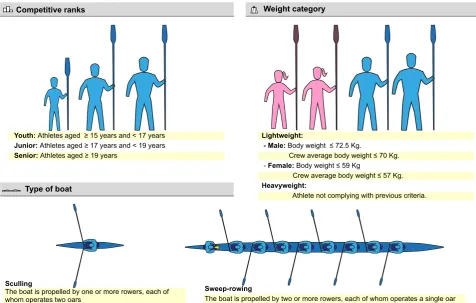
Figure 1 – Technical glossary related to rowing
Competitive ranks
Youth: Athletes aged ≥ 15 years and < 17 years
Junior: Athletes aged ≥ 17 years and < 19 years
Senior: Athletes aged ≥ 19 years
Lightweight:
- Male: Body weight ≤ 72.5 Kg.
Crew average body weight ≤ 70 Kg. - Female: Body weight ≤ 59 Kg
Crew average body weight ≤ 57 Kg.
Heavyweight:
Athlete not complying with previous criteria.
Weight category
Type of boat
Sculling
The boat is propelled by one or more rowers, each of whom operates two oars
Sweep-rowing
ARTIGO ORIGINAL
AMP
STUDENT
of treatment and impact on sports activity.
The statistical analysis used SPSS Statistics (version 22; Armonk, NY: IBM corp.) and Excel 2013 (2013; Redmond, WA: Microsoft Corp.) software. The type of distribution of variables was assessed with the Kolmogorov-Smirnov and Shapiro-Wilk tests. The results were presented as average (standard deviation), median (rank) or proportions (95% confidence intervals – 95% CI) and the analysis of 95% CI and t-test, Mann-Whitney or chi-square tests were used according to the type of variable, with 95% confidence intervals (p < 0.05). The 95% CI were estimated using the non-continuity-corrected version of the Wilson’s method. Our study was approved by the Ethics Committee of the Social Sciences Department from the Faculty of Medicine of the University of Porto.
Rowing technical definitions are shown in Fig. 1.
RESULTS
In total, 92 responses were obtained from the 95 eligible rowers (18 from 18 female and 74 from 77 male rowers). We found that female rowers showed significantly lower age, body weight and height, with more participation in sculling competitive rowing in the National Championships than male rowers (p < 0.001), as shown in Table 1. However, distribution in heavy vs. lightweight, number of years of rowing practice, number of attended injury-prevention educational sessions and level of concern regarding injuries was similar in both genders. The low number of injury-prevention educational sessions held (zero median number of sessions per year) should be mentioned.
The first injury occurred significantly earlier (17 versus
21 years, p < 0.001) in female than in male athletes in whom this occurred with higher statistical significance in senior ranking (83%, 95% CI: 75 - 88%). However, the number of injuries per athlete in competitive rowing, as well as global and relapsing injury risk were similar in both genders (Table 2). In addition, heavy athletes, with a similar gender distribution, showed a higher risk of injury than lightweight athletes (90%, 95% CI: 77% - 96% versus 43%, 95% CI: 30 - 57%, data not shown). The eight national team athletes included in the study (all male and lightweight; two sculling, four sweep and two sculling and sweep rowers) showed 100% (95% CI: 68 - 100%) and 33% (95% CI: 1 - 70%) global and relapsing injury risk, respectively (data not shown).
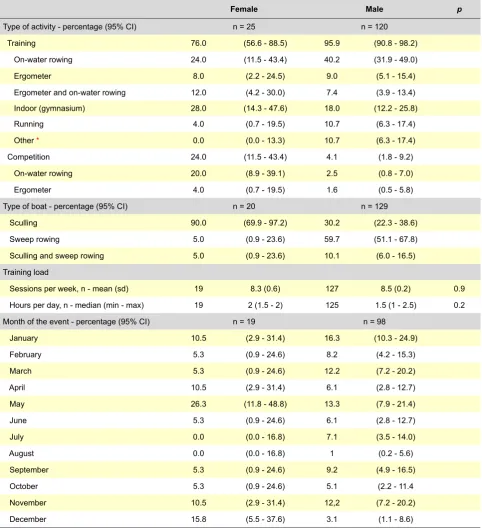
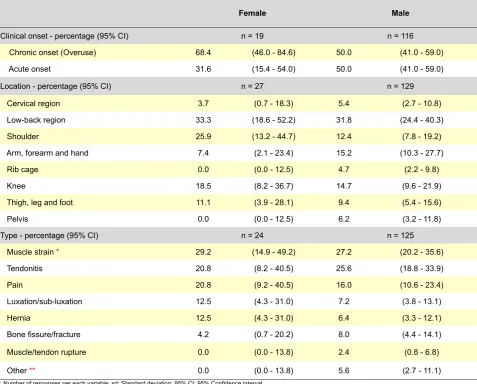
Most injuries globally occurred in training, in winter and in spring (Table 3). Gymnasium off-water activity was mostly associated to injuries suffered by female in contrast to on-water activity which was mostly associated to injuries in male rowers. Female rowers also presented with significantly more competitive-related injuries than male rowers (24%, 95% CI: 11.5 – 43.4% versus 4.2%, 95% CI: 1.8 – 9.4%), namely in river rowing (20%, 95% CI: 8.9 – 39.1% versus 2.5%, 95% CI: 0.9 – 7.1%). Most injuries occurred in sculling among female and in sweep rowing among male rowers. Although non-significant, female rowers reported a higher frequency of chronic (68.4%, 95% CI: 46.0 – 84.6%) than acute onset injuries (31.6%, 95% CI: 15.4 – 54.0%), with no differences found in male rowers (Table 4). In addition, low-back region (33.3 and 31.8%) was the most frequent anatomical location and muscle strains (29.2 and 27.2%) the most frequent type of injury occurring in female
Table 1 - Global biometric and sports characteristics of the participants (18 female and 74 male athletes) in our study
Female Male p
n n
Age, in years - mean (min - max) 18 21 (19 - 43) 72 24 (18 - 42) 0.02 Height, in cm - mean (sd) 18 167 (1.4) 73 181 (0.7) < 0.001 Body weight, in Kg - mean (sd) 18 60 (1.5) 71 78 (1) < 0.001 Heavyweight rowers - percentage (95% CI) 18 28 (13 - 51) 74 45 (34 - 56)
National team - percentage (95% CI) 18 0 (0 - 18) 74 11 (6 - 20)
Years of sport life, average (sd) 17 10 (1.2) 70 12 (0.6) 0.07 Number of training sessions per week, median (min - max) 16 9 (5 - 14) 71 7 (4 - 14) 0.90 Number of hours per training session, median (min - max) 16 2 (1.5 - 2) 71 1.5 (1 - 2.5) 0.20 Concerned with injuries - percentage (95% CI) 17 88 (66 - 97) 74 76 (65 - 84)
Number of educational sessions on the previous season,
median (min - max) 8 0 (0 - 2) 60 0 (0 - 5) 0.60
Type of boat used in national championships
Sculling - percentage (95% CI) 18 100 (82 - 100) 74 20 (13 - 31) Sweep rowing - percentage (95% CI) 18 0 (0 - 18) 74 49 (38 - 60) Sculling & sweep rowing - percentage (95% CI) 18 0 (0 - 18) 74 31 (22 - 42)
ARTIGO ORIGINAL
AMP
STUDENT
our study.
The number of educational sessions on injury prevention was very low. More than half of the athletes responded zero sessions over the last season (Table 1). This particular issue, analysed by some authors, although not specifically related to rowing, deserves more research given the importance of injury prevention in health status and sporting dynamics of athletes.
A 1.0 injury per athlete (both genders), during an average 12-year sporting career (Table 2) is in contrast to the results found by Hickey et al. showing a much higher average number of injuries (0.85 to 1.51 injuries per year, in female and male athletes, respectively),6 as well as those found by Wilson et al., showing a 2.2 injuries per year, on average (n = 20).7 The higher injury rate described by other authors may be explained by individual characteristics of the athletes involved in their study, as well as by a greater exposure to strain by these athletes (all Olympic athletes).6,7 No study, apart from ours, ever analysed the risk of relapsing injury, which was higher in our group of heavyweight athletes. The first injury occurred significantly earlier and in younger female athletes than in male. This result, associated to a significantly younger age of female athletes, with similar sporting lifetimes to the male athletes, may show that female athletes start and quit earlier from rowing, with different injury patterns. These data should lead our attention to an earlier risk of injury in female athletes found in our study, as well as to a higher risk of injury in Olympic athletes, submitted to higher strain loads, found by other authors.6,7
Most injuries during an athlete’s sporting career occur in training, in winter and in spring. These results are in line with previous publications, showing a higher risk of injury in training activities18 and during the time before competition which occurs in Portugal mainly in March and in July.9 It should also be mentioned that female athletes have shown more indoor training and on-water competition-related injuries than male athletes. This was not assessed in any other published study and suggests that the Portuguese female athletes may enter competitions with sub-optimal and male rowers, respectively.
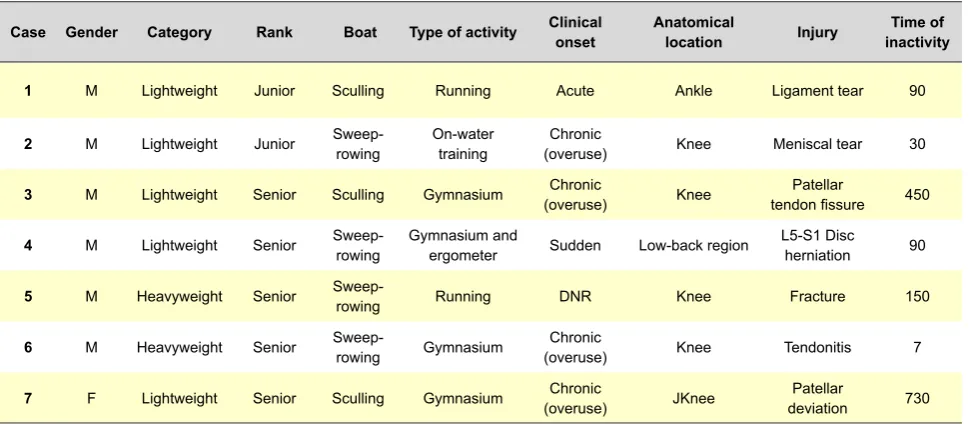
Most treatments were medical, although there was a non-significant tendency to injury-related longer treatment duration (21 versus 14 days), time off training (14 versus 7 days) and conditioning training (30 versus 14 days) in female rowers (Table 5). A descriptive analysis regarding the cases who underwent surgery is shown in Table 6.
DISCUSSION
The rowing injuries sustained by Portuguese athletes during their competitive career were assessed based on the responses to a questionnaire, as these data were not available from any institutional record. This is in line with other similar studies13,14 and studies based on the analysis of existing clinical records3,4,6 as well as prospective studies7 are scarce. We recognize the limitations of retrospective studies and therefore careful data validation as well as a careful analysis of the results are required.
The selection of our group of patients including all awarded rowers in national championships over a sporting season aimed to represent the most qualified Portuguese rowers. The number of participants in our study was above those described by other authors, such as Wilson et al. whose study involved 20 from 26 eligible participants.7 Gender-related differences were found in our study (Table 1) and may explain for some of the differences found in injury patterns. Biometric differences, usually associated to gender, are particularly important and different studies on biomechanics showed a higher susceptibility of the female biotype to a certain type of injury, namely of the thoracic region.15-17 As regards the differences found in boat types, the situation is not clear. We can only reach a conclusion regarding the male rowers, as these have practiced in different types of boats, unlike female rowers, that have only used sculling boats. It should be mentioned that no statistically significant relationship was found between injuries and boat type (Table 3). Wilson et al. did not find any statistically significant difference in injuries sustained by sculling vs. sweep rowers. However, these authors found cervical spine injuries exclusively in sculling rowers,7 unlike
Table 2 - Total number, general risk and risk of relapsing injury, per athlete, age, in years and competitive rank at the time of the first injury over the sports life of the group of participants (18 female and 74 male athletes) in our study
Female Male p
n n
Number of injuries / athlete, median (min - max) 18 1 (0 - 6) 74 1 (0 - 8) 0.38
Risk of injury / athlete, proportion (95% CI) 18 0.67 (0.44 - 0.84) 74 0.80 (0.69 - 0.87)
Risk of relapsing injury / athlete, proportion (95% CI) 12 0.67 (0.39 - 0.86) 59 0.61 (0.48 - 0.72)
Age at the time of the first injury, mean (sd) 9 17 (0.8) 55 21 (0.6) < 0.001
Rank at the time of the first injury
Youth - Junior - percentage (95% CI) 20 35 (18 - 57) 126 17 (12 - 25)
Senior - percentage (95% CI) 20 65 (43 - 82) 126 83 (75 - 88)
ARTIGO ORIGINAL
AMP
STUDENT
on-water training preparation.
Chronic onset (overuse) injuries were the most frequent in female rowers, although non-significantly. These were also more frequent, although statistically significant, in the studies by Yang J et al.,5 Smoljanovic et al.19 and Hickey et al.6 involving high-school, Olympic junior and senior rowers, respectively.
The most frequent anatomical location and injury type found, both in female and male rowers were low-back region and muscle strain. These results are in line with Hickey et
al. as regards male rowers, whilst female rowers showed a predominance of thoracic injuries, namely rib-cage stress fractures,6 centre stage in this domain.20-24 Our results are also in line with the study by Wilson et al. as regards an injury’s most frequent location although in contrast to these authors, who found mainly articular cartilage injuries.7 In further studies, a better anatomical, pathophysiological and nosological characterization of injuries may lead us towards more specific conclusions. This was not possible, even in our study, nor in the abovementioned studies6,7 in which
Table 3 - Type of activity, type of boat, training load and month when the injury took place
Female Male p
Type of activity - percentage (95% CI) n = 25 n = 120 Training 76.0 (56.6 - 88.5) 95.9 (90.8 - 98.2) On-water rowing 24.0 (11.5 - 43.4) 40.2 (31.9 - 49.0) Ergometer 8.0 (2.2 - 24.5) 9.0 (5.1 - 15.4) Ergometer and on-water rowing 12.0 (4.2 - 30.0) 7.4 (3.9 - 13.4) Indoor (gymnasium) 28.0 (14.3 - 47.6) 18.0 (12.2 - 25.8) Running 4.0 (0.7 - 19.5) 10.7 (6.3 - 17.4) Other * 0.0 (0.0 - 13.3) 10.7 (6.3 - 17.4) Competition 24.0 (11.5 - 43.4) 4.1 (1.8 - 9.2) On-water rowing 20.0 (8.9 - 39.1) 2.5 (0.8 - 7.0) Ergometer 4.0 (0.7 - 19.5) 1.6 (0.5 - 5.8) Type of boat - percentage (95% CI) n = 20 n = 129 Sculling 90.0 (69.9 - 97.2) 30.2 (22.3 - 38.6) Sweep rowing 5.0 (0.9 - 23.6) 59.7 (51.1 - 67.8) Sculling and sweep rowing 5.0 (0.9 - 23.6) 10.1 (6.0 - 16.5) Training load
Sessions per week, n - mean (sd) 19 8.3 (0.6) 127 8.5 (0.2) 0.9 Hours per day, n - median (min - max) 19 2 (1.5 - 2) 125 1.5 (1 - 2.5) 0.2 Month of the event - percentage (95% CI) n = 19 n = 98
January 10.5 (2.9 - 31.4) 16.3 (10.3 - 24.9)
February 5.3 (0.9 - 24.6) 8.2 (4.2 - 15.3)
March 5.3 (0.9 - 24.6) 12.2 (7.2 - 20.2)
April 10.5 (2.9 - 31.4) 6.1 (2.8 - 12.7)
May 26.3 (11.8 - 48.8) 13.3 (7.9 - 21.4)
June 5.3 (0.9 - 24.6) 6.1 (2.8 - 12.7)
July 0.0 (0.0 - 16.8) 7.1 (3.5 - 14.0)
August 0.0 (0.0 - 16.8) 1 (0.2 - 5.6)
September 5.3 (0.9 - 24.6) 9.2 (4.9 - 16.5)
October 5.3 (0.9 - 24.6) 5.1 (2.2 - 11.4
November 10.5 (2.9 - 31.4) 12,2 (7.2 - 20.2)
December 15.8 (5.5 - 37.6) 3.1 (1.1 - 8.6)
ARTIGO ORIGINAL
AMP
STUDENT
data collection was based in questionnaires designed to be responded by athletes with no medical knowledge.
Most injuries required medical therapy, nevertheless with a statistically non-significant tendency towards a longer
time of treatment and injury-related inactivity in female rowers, as described by Hickey et al.6
Surgery was predominantly associated to male athletes and to knee injuries, although statistically not significantly.
Table 4 - Clinical onset, location and type of injury
Female Male
Clinical onset - percentage (95% CI) n = 19 n = 116 Chronic onset (Overuse) 68.4 (46.0 - 84.6) 50.0 (41.0 - 59.0) Acute onset 31.6 (15.4 - 54.0) 50.0 (41.0 - 59.0)
Location - percentage (95% CI) n = 27 n = 129
Cervical region 3.7 (0.7 - 18.3) 5.4 (2.7 - 10.8) Low-back region 33.3 (18.6 - 52.2) 31.8 (24.4 - 40.3)
Shoulder 25.9 (13.2 - 44.7) 12.4 (7.8 - 19.2)
Arm, forearm and hand 7.4 (2.1 - 23.4) 15.2 (10.3 - 27.7)
Rib cage 0.0 (0.0 - 12.5) 4.7 (2.2 - 9.8)
Knee 18.5 (8.2 - 36.7) 14.7 (9.6 - 21.9)
Thigh, leg and foot 11.1 (3.9 - 28.1) 9.4 (5.4 - 15.6)
Pelvis 0.0 (0.0 - 12.5) 6.2 (3.2 - 11.8)
Type - percentage (95% CI) n = 24 n = 125
Muscle strain * 29.2 (14.9 - 49.2) 27.2 (20.2 - 35.6)
Tendonitis 20.8 (8.2 - 40.5) 25.6 (18.8 - 33.9)
Pain 20.8 (9.2 - 40.5) 16.0 (10.6 - 23.4)
Luxation/sub-luxation 12.5 (4.3 - 31.0) 7.2 (3.8 - 13.1)
Hernia 12.5 (4.3 - 31.0) 6.4 (3.3 - 12.1)
Bone fissure/fracture 4.2 (0.7 - 20.2) 8.0 (4.4 - 14.1)
Muscle/tendon rupture 0.0 (0.0 - 13.8) 2.4 (0.8 - 6.8)
Other ** 0.0 (0.0 - 13.8) 5.6 (2.7 - 11.1)
n: Number of responses per each variable; sd: Standard deviation; 95% CI: 95% Confidence interval. * 1 female and 4 male athletes responded ‘muscle fatigue’.
** sacroiliitis, 1 meniscal tear, 1 forearm compartment syndrome, 1 apophysitis.
Table 5 -Type of treatment, conditioned training, days of treatment and sporting inactivity per injury
Female Male p
Type of treatment / injury n = 27 n = 126
Medical - percentage (95% CI) 96.3 (81.7 - 99.3) 95.2 (90.0 - 97.8)
Surgical - percentage (95% CI) 3.7 (0.6 - 18.2) 4.8 (2.2 - 10.0)
n = 25 n = 119
Days of treatment / injury, n - median (min - max) 21 (0 - 730) 14 (0 - 540) 0.45
Days of training inactivity / injury, n - median (min - max) 14 (0 - 730) 7 (0 - 730) 0.57
Dias of conditioning work / injury, n - median (min - max) 30 (0 - 730) 14 (0 - 300) 0.08
ARTIGO ORIGINAL
AMP
STUDENT
On the contrary, Hickey et al. found more surgical cases among female athletes, although also without any statistical significance.6
Beyond the limitations to our study, it should be mentioned that no study ever assessed the number of rowers that quitted rowing due to an injury, as all the studies only involved active rowers. Therefore, the incidence and severity of injuries in rowers may be significantly undervalued, missing the most severe cases that may have resulted in a permanent drop-out from competitive practice. Future studies should determine whether the differences found between our study and other authors were only related to the use of different equipment and methods or were also related to other factors.
CONCLUSIONS
Our study showed for the first time that injuries sustained by Portuguese competitive rowers are similar to those described in literature, as regards its anatomical location, type and circumstances of the injury. The study also showed that Portuguese female rowers have a risk of injury occurrence significantly earlier than in male rowers and that heavyweight have a higher risk of relapsing injury than lightweight rowers. The time devoted by rowing clubs to education on injury prevention was very scarce and surgery was predominantly associated to male athletes and to knee
injuries. These data should be taken into consideration and need to be clarified in further larger studies.
HUMAN AND ANIMAL PROTECTION / DATA CONFIDENTIALITY
The authors declare that the study was approved by the Ethics Committee of the Social Sciences Department at the Faculty of Medicine of the University of Porto.
ACKNOWLEDGMENTS
The authors wish to acknowledge the Ethics Committee of the Social Sciences Department at the Faculty of Medicine of the University of Porto for their report, Manuel Jorge Marques, PhD student at the University of Kent, United Kingdom, for the review of the abstract in English and the President of the Rowing Portuguese Federation, Luís Ahrens Teixeira, for the cooperation in disclosing this study to the club officers.
CONFLICTS OF INTEREST
The authors declare that there were no conflicts of interest in writing this manuscript.
FINANCIAL SUPPORT
The authors declare that there was no financial support in writing this manuscript.
Table 6 - Surgical cases
Case Gender Category Rank Boat Type of activity Clinical onset Anatomical location Injury inactivityTime of
1 M Lightweight Junior Sculling Running Acute Ankle Ligament tear 90
2 M Lightweight Junior Sweep-rowing On-water training (overuse)Chronic Knee Meniscal tear 30
3 M Lightweight Senior Sculling Gymnasium (overuse)Chronic Knee tendon fissurePatellar 450
4 M Lightweight Senior Sweep-rowing Gymnasium and ergometer Sudden Low-back region L5-S1 Disc herniation 90
5 M Heavyweight Senior Sweep-rowing Running DNR Knee Fracture 150
6 M Heavyweight Senior Sweep-rowing Gymnasium (overuse)Chronic Knee Tendonitis 7
7 F Lightweight Senior Sculling Gymnasium (overuse)Chronic JKnee deviationPatellar 730 M: Male; F: Female. Time of inactivity, days estimated, converting responses given in ‘weeks’, ‘months’ or ‘years’. DNR: did not respond.
REFERENCES
1. Instituto Português do Desporto e Juventude; [consultado 2014 Set 9]. Disponível em: http://www.idesporto.pt/conteudo.aspx?id=103. 2. Shephard RJ. Science and medicine of rowing: a review. J Sports Sci.
1998;16:603-20.
3. Junge A, Engebretsen L, Mountjoy ML, Alonso JM, Renström PA, Aubry MJ, et al. Sports injuries during the Summer Olympic Games 2008. Am J Sports Med. 2009;37:2165-72.
4. Engebretsen L, Soligard T, Steffen K, Alonso JM, Aubry M, Budgett R, et al. Sports injuries and illnesses during the London Summer Olympic Games 2012. Br J Sports Med. 2013;47:407-14.
5. Yang J, Tibbetts AS, Covassin T, Cheng G, Nayar S, Heiden E. Epidemiology of overuse and acute injuries among competitive collegiate athletes. J Athl Train. 2012;47:198-204.
6. Hickey GJ, Fricker PA, McDonald WA. Injuries to elite rowers over a 10-yr period. Med Sci Sports Exerc. 1997;29:1567-72.
7. Wilson F, Gissane C, Gormley J, Simms C. A 12-month prospective cohort study of injury in international rowers. Br J Sports Med. 2010;44:207-14.
ARTIGO ORIGINAL
AMP
STUDENT
9. Federação Portuguesa de Remo; [consultado 2014 Set 9]. Disponível em: https://www.facebook.com/FederacaoPortuguesaRemo.
10. Hosea TM, Hannafin JA. Rowing injuries. Sports Health. 2012;4:236-45. 11. Karlson KA. Rowing injuries: identifying and treating musculoskeletal and nonmusculoskeletal conditions. Phys Sportsmed. 2000;28:40-50. 12. Karlson KA. Rowing: sport-specific concerns for the team physician.
Curr Sports Med Rep. 2012;11:257-61.
13. Fernandes RS. Incidência, tipo e mecanismo de lesões no remo segundo a perceção dos remadores. Rev Bras Activ Fis Saude. 2007;12:181. 14. Antunes A, Duarte F, Santos-Carvalho M, Seara M, Oliveira P, Pinto R.
Influência da flexibilidade de isquiotibiais na lombalgia do remador – estudo de 89 casos. Livro de resumos do XXXIII Congresso Nacional de Ortopedia e Traumatologia. Centro de Congressos do Algarve. 2013:33. 15. McNally E, Wilson D, Seiler S. Rowing injuries. Semin Musculoskelet
Radiol. 2005;9:379-96.
16. Rumball JS, Lebrun CM, Di Ciacca SR, Orlando K. Rowing injuries. Sports Med. 2005;35:537-55.
17. Howell DW. Muskuloskeletal profile and incidence of musculoskeletal injuries in lightweight women rowers. Am J Sports Med. 1984;12:278-82. 18. Brosh S, Jenner JR. Injuries to rowers. Br J Sports Med. 1988;22:169.
19. Smoljanovic T, Bojanic I, Hannafin JA, Hren D, Delimar D, Pecina M. Traumatic and overuse injuries among international elite junior rowers. Am J Sports Med. 2009;37:1193-9.
20. McDonnell LK, Hume PA, Nolte V. Rib stress fractures among rowers: definition, epidemiology, mechanisms, risk factors and effectiveness of injury prevention strategies. Sports Med. 2011;41:883-901.
21. Dragoni S, Giombini A, Di Cesare A, Ripani M, Magliani G. Stress fractures of the ribs in elite competitive rowers: a report of nine cases. Skeletal Radiol. 2007;36:951-4.
22. Vinther A, Kanstrup IL, Christiansen E, Alkjaer T, Larsson B, Magnusson SP, et al. Exercise-induced rib stress fractures: potential risk factors related to thoracic muscle co-contraction and movement pattern. Scand J Med Sci Sports. 2006;16:188-96.
23. Vinther A, Kanstrup IL, Christiansen E, Alkjaer T, Larsson B, Magnusson SP, et al. Exercise-induced rib stress fractures: influence of reduced bone mineral density. Scand J Med Sci Sports. 2005;15:95-9. 24. Smoljanovic T, Bojanic I, Pollock CL, Radonic R. Rib stress fracture in
Francisco BERNARDES, Alfredo MENDES-CASTRO, José RAMOS, Ovídio COSTA