EXPERT PANEL MEMBERS Wiley V. Chan, MD, Co-Chair*
Thomas A. Pearson, MD, MPH, PhD, FAHA, Co-Chair* Glen C. Bennett, MPH†
William C. Cushman, MD, FAHA*‡ Thomas A. Gaziano, MD, MSc* Paul N. Gorman, MD, PhD* Joel Handler, MD*
Harlan M. Krumholz, MD, ScM, FACC, FAHA* Robert F. Kushner, MD*
Thomas D. MacKenzie, MD, MSPH* Ralph L. Sacco, MD, FAHA*
Sidney C. Smith, Jr, MD, FACC, FAHA* Victor J. Stevens, PhD*
Barbara L. Wells, PhD*§
METHODOLOGY MEMBERS║
Graciela Castillo, MPH Susan K.R. Heil, PhD Jennifer Stephens, MPH
Julie C. Jacobson Vann, PhD, MS, RN
ACC/AHA Special Report: Clinical Practice Guideline
Implementation Strategies: A Summary of Systematic
Reviews by the NHLBI Implementation Science Work Group
A Report of the American College of Cardiology/American Heart Association
Task Force on Clinical Practice Guidelines
© 2017 by the American College of Cardiology Foundation and the American Heart Association, Inc.
Key Words: AHA Scientific
Statements ◼ cost ◼ detailing
◼ effectiveness ◼ evidence-based
◼ incentives ◼ interventions
◼ reminders ◼ systematic review *Implementation Science Work Group, National Heart, Lung, and Blood Institute. †Center for
Translation Research and Implementation Science; National Heart, Lung, and Blood Institute. ‡Veterans Affairs Medical Center, Memphis, TN. §Division of Cardiovascular Sciences, National Heart, Lung, and Blood Institute. ║American Institutes for Research conducted the systematic review under a contract with the National Heart, Lung, and Blood Institute.
The American Heart Association requests that this document be cited as follows: Chan WV, Pearson TA, Bennett GC, Castillo G, Cushman WC, Gaziano TA, Gorman PN, Handler J, Heil SKR, Krumholz HM, Kushner RF, MacKenzie TD, Sacco RL, Smith SC Jr, Stephens J, Stevens VJ, Vann JCJ, Wells BL. ACC/AHA special report: clinical practice guideline implementation strategies: a summary of systematic reviews by the NHLBI Implementation Science Work Group: a report of the American College of Cardiology Foundation/American Heart Association Task Force on Clinical Practice Guidelines. Circulation. 2017;135:e122–e137.
ACC/AHA Task Force Members, see page e129.
SPECIAL REPOR
T
BACKGROUND: In 2008, the National Heart, Lung, and Blood Institute convened an Implementation Science Work Group to assess evidence-based strategies for effectively implementing clinical practice guidelines. This was part of a larger effort to update existing clinical practice guidelines on cholesterol, blood pressure, and overweight/obesity.
OBJECTIVES: Review evidence from the published implementation science literature and identify effective or promising strategies to enhance the adoption and implementation of clinical practice guidelines.
METHODS: This systematic review was conducted on 4 critical questions, each focusing on the adoption and effectiveness of 4 intervention strategies: (1) reminders, (2) educational outreach visits, (3) audit and feedback, and (4) provider incentives. A scoping review of the Rx for Change database of systematic reviews was used to identify promising guideline implementation interventions aimed at providers. Inclusion and exclusion criteria were developed a priori for each question, and the published literature was initially searched up to 2012, and then updated with a supplemental search to 2015. Two independent reviewers screened the returned citations to identify relevant reviews and rated the quality of each included review.
RESULTS: Audit and feedback and educational outreach visits were generally effective in improving both process of care (15 of 21 reviews and 12 of 13 reviews, respectively) and clinical outcomes (7 of 12 reviews and 3 of 5 reviews, respectively). Provider incentives showed mixed effectiveness for improving both process of care (3 of 4 reviews) and clinical outcomes (3 reviews equally distributed between generally effective, mixed, and generally ineffective). Reminders showed mixed effectiveness for improving process of care outcomes (27 reviews with 11 mixed and 3 generally ineffective results) and were generally ineffective for clinical outcomes (18 reviews with 6 mixed and 9 generally ineffective results). Educational outreach visits (2 of 2 reviews), reminders (3 of 4 reviews), and provider incentives (1 of 1 review) were generally effective for cost reduction. Educational outreach visits (1 of 1 review) and provider incentives (1 of 1 review) were also generally effective for cost-effectiveness outcomes. Barriers to clinician adoption or adherence to guidelines included time constraints (8 reviews/overviews); limited staffing resources (2 overviews); timing (5 reviews/overviews); clinician skepticism (5 reviews/overviews); clinician knowledge of guidelines (4 reviews/overviews); and higher age of the clinician (1 overview). Facilitating factors included guideline characteristics such as format, resources, and end-user involvement (6 reviews/overviews); involving stakeholders (5 reviews/overviews); leadership support (5 reviews/
overviews); scope of implementation (5 reviews/overviews); organizational culture such as multidisciplinary teams and low-baseline adherence (9 reviews/overviews); and electronic guidelines systems (3 reviews).
CONCLUSION: The strategies of audit and feedback and educational outreach visits were generally effective in improving both process of care and clinical outcomes. Reminders and provider incentives showed mixed effectiveness, or were generally ineffective. No general conclusion could be reached about cost effectiveness, because of limitations in the evidence. Important gaps exist in the evidence on effectiveness of implementation interventions, especially regarding clinical outcomes, cost effectiveness and contextual issues affecting successful implementation.
TABLE OF CONTENTS
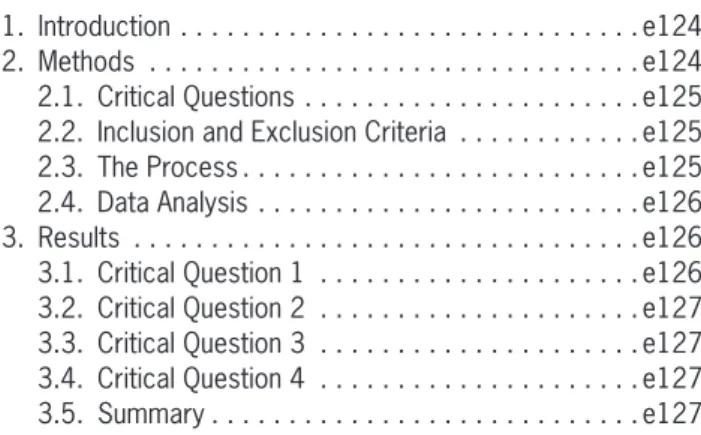
1. Introduction . . . e124 2. Methods . . . e124 2.1. Critical Questions . . . e125 2.2. Inclusion and Exclusion Criteria . . . e125 2.3. The Process . . . e125 2.4. Data Analysis . . . e126 3. Results . . . e126 3.1. Critical Question 1 . . . e126 3.2. Critical Question 2 . . . e127 3.3. Critical Question 3 . . . e127 3.4. Critical Question 4 . . . e127 3.5. Summary . . . e127
4. Discussion . . . e127 4.1. Common Themes in the Evidence
and Practice Implications. . . e127 4.2. Report Limitations. . . e128 4.3. Research Gaps . . . e128 5. Perspectives . . . e129 5.1. Translation Outlook 1 . . . e129 5.2. Translation Outlook 2 . . . e129 5.3. Translation Outlook 3 . . . e129 References . . . e130 Figures and Tables
Figure 1. Multilevel Model of CPG
Implementation Strategies . . . e132 Figure 2. Selection of Articles for Inclusion in the Report . . .e133
Table 1. Definition of Intervention Strategies. . . e132 Table 2. Overall Effectiveness Across All Included
Studies by Intervention, Type, and Outcome . . . e133 Table 3. CQ 1: Summary of Systematic Reviews by
Intervention, Effectiveness Rating, and Quality . . . e133 Table 4. CQ 3: Contextual Factors That Appear
to Hinder the Success of the Intervention Strategies. . . e134 Table 5. CQ 4: Contextual Factors That Appear to
Facilitate the Success of the Intervention Strategies. . . e134 Table 6. Suggested Actions to Address Key
Research Needs . . . e134 Appendix 1. Author Relationships With Industry
and Other Entities. . . e135 Appendix 2. Reviewer Relationships With Industry
and Other Entities. . . e137
1. INTRODUCTION
The National Heart, Lung, and Blood Institute (NHLBI) be-gan to sponsor development of clinical practice guide-lines (CPGs) in the 1970s to promote application of re-search findings for prevention, detection, and treatment of cardiovascular, lung, and blood diseases. In 2008, the NHLBI established expert panels to update the guide-lines for high blood cholesterol, high blood pressure, and overweight/obesity using rigorous, systematic evidence reviews. Concurrently, 3 crosscutting work groups were formed to address risk assessment, lifestyle, and implementation. In 2013, the NHLBI initiated collabora-tion with the American College of Cardiology (ACC) and American Heart Association (AHA) to work with other organizations to complete, publish, and widely dissemi-nate these guidelines. Beginning in 2014, the ACC/AHA Task Force on Clinical Practice Guidelines began updat-ing these guidelines with collaboratupdat-ing organizations as an ongoing process to incorporate emerging evidence.
The uneven implementation of evidence-based CPGs is widely recognized as a continuing challenge to improv-ing public health.1,2 Consistent with the new
collabora-tive partnership model for developing guidelines based on NHLBI-sponsored systematic evidence reviews,3 the
Implementation Science Work Group (ISWG) systemati-cally reviewed the evidence from translation research to identify strategies shown to be effective or promising for improving the delivery of evidence-based care. The ISWG focused on healthcare delivery at both clinician and sys-tems levels, while considering various intervention ap-proaches, settings, contexts, and barriers commonly seen in healthcare systems. Although patient adherence to guideline recommendations is essential to achieve meaningful clinical outcomes, in this report, the NHLBI focused on the critical first steps of provider adoption and adherence. The NHLBI commissioned this report to advance the field of implementation science and inform the knowledge translation process.
2. METHODS
The ISWG developed a conceptual framework—based on the Multilevel Approaches Toward Community Health (MATCH) model4—to define 4 levels where guideline
implementation strategies can be initiated: the policy level, clinical institution level, provider level, and pa-tient level. This conceptual framework is illustrated in Figure 1. Superimposed onto the strategies derived from the MATCH model is the current taxonomy of in-terventions aimed at achieving practice change used by the Cochrane Effective Practice and Organisation of Care (EPOC) Group5: Professional Interventions,
Finan-cial Interventions, Organizational Interventions (with sub-categories for Provider-oriented, Patient-oriented, and Structural interventions), and Regulatory Interventions. In Figure 1, this taxonomy is denoted in parentheses next to extant elements of the model.
The ISWG used the existing Rx for Change database of systematic reviews on healthcare intervention strate-gies, compiled by the Canadian Agency for Drugs and Technologies in Health6 for its initial scoping review to
identify promising guideline implementation interven-tions aimed at providers. The results clearly identified 3 intervention strategies aimed at providers with some evidence of effectiveness: academic detailing, audit and feedback, and provider reminders. A fourth interven-tion strategy—provider incentives—was also selected because of evidence of effectiveness in Europe and its increasing use in US healthcare systems. Evaluation was limited to these 4 interventions because, beyond the in-tervention strategies themselves, ISWG was keenly inter-ested in cost effectiveness, effect on clinical outcomes, and contextual issues affecting the success of the inter-ventions. Additionally, given the practical considerations (eg, cost, time, training) associated with implementation interventions, the 4 strategies also likely vary in the re-sources and infrastructure required to make them both viable and successful in applied settings. Such consider-ations are likely to be of interest to stakeholders interest-ed in supporting widespread adoption of the guidelines. The 4 strategies were mapped to their EPOC equivalent as defined in Table 1. Hereafter, the EPOC terminology will be used.
As shown in Figure 1, beyond the clinical institution, the clinician, and the patient, policy-level factors and the social, cultural, and physical environment influ-ence guideline implementation. Three of the interven-tions that are the focus of this report are strategies classified by EPOC as Professional Interventions (ie, educational outreach visits, audit and feedback, and reminders), all falling into the “clinical institution” box of the MATCH model. The fourth intervention—provider incentives—represents an EPOC Financial Interven-tion, but it too falls into the clinical institution box of the MATCH model. Thus, the scope of this report is
SPECIAL REPOR
T
limited to a subset of interventions intended to affect providers through the clinical institution. Most of the evidence assessed the impact of the interventions on “Clinician Intermediate Outcomes” (Figure 1), although several reviews reported “Patient Intermediate Out-comes” (particularly patient risk factors) and some “Patient Hard Outcomes” (eg, mortality).
In early 2012, with the adult cardiovascular disease (CVD) risk reduction guidelines in the final stages and over budget, the NHLBI decided to use systematic re-views (SRs) instead of primary studies for the implemen-tation science systematic report. Accordingly, the NHLBI contracted with the American Institutes for Research to conduct the initial SR, which included 48 reviews pub-lished through 2012. A supplemental search to 2015 identified 7 additional reviews. This evaluation of SRs and overviews of synthesized evidence incorporated in-formation that focused primarily on 3 distinct outcome categories: process-of-care; clinical effectiveness; and cost effectiveness. Although less-frequently reported, patient satisfaction and clinician satisfaction also were explored. The report focused on the 4 intervention strat-egies selected by the ISWG.
See the Online Data Supplement for additional details on the process and methods.
2.1. Critical Questions
Directed by the NHLBI, and with support from the SR contractor, the ISWG constructed critical questions (CQs) most relevant to identifying effective strategies to improve the delivery of evidence-based care. The 4 criti-cal questions were:
CQ1. Does the evidence support the effectiveness of the selected intervention strategies (ie, edu-cational outreach visits, reminders, audit and feedback, and provider incentives) in particular practice settings or for specific categories of health professionals?
CQ2. What are the cost considerations of implement-ing the selected intervention strategies (ie, edu-cational outreach visits, reminders, audit and feedback, and provider incentives)?
CQ3. What are the contextual barriers—financial, organizational, and regulatory—that hinder or limit clinician adherence to and the adoption of CPGs, as encouraged by the selected interven-tion strategies?
CQ4. What policy or regulatory, organizational, and financial characteristics or factors influence the success of the selected clinical-institution level intervention strategies (ie, educational outreach visits, reminders, audit and feedback, and provider incentives) in achieving the imple-mentation of guidelines and affecting profes-sional practice behaviors?
2.2. Inclusion and Exclusion Criteria
Inclusion and exclusion criteria were developed (a priori) for each CQ. Reviews were excluded if they did not focus on CPGs or on the implementation of a clinical practice that directly affected patient care. Reviews were also excluded if they did not include interventions aimed at clinicians or focused on the implementation of adminis-trative practices.
For CQs 1 and 2, the ISWG selected SRs that focused on the implementation of CPGs or a clinical practice di-rectly affecting patient care and aimed at clinicians. For CQs 3 and 4, we selected both SRs and overviews of SRs that focused on contextual issues affecting guide-line implementation.
The ISWG included any health condition or disease, setting, outcome, or population. Studies could include process-of-care (eg, medication ordering, lab order-ing), clinical effectiveness (eg, blood pressure reduc-tion), or other types of outcomes (eg, cost and utili-zation and clinician satisfaction). Studies that focused solely on interventions targeting patients, such as those examining patient education or patient reminders, were excluded.
The search was limited to English-language resources.
2.3. The Process
The ISWG maintained a separation of the collection and compilation of the evidence and the final conclusions. The NHLBI contractor conducted the initial systematic search of the published literature up to 2012 from relevant bibliographic databases (ie, the Cochrane Li-brary, PubMed, and other National Library of Medicine sources, such as the Health Services and Technology Assessment Texts and research summaries, reviews, and reports from the Agency for Healthcare Research and Quality evidence-based practice centers) for each critical question. Two independent reviewers (G.C., J.S.) screened the returned citations to identify relevant SRs and overviews, and the rigorous validation procedures were applied to ensure that the selected articles met the preestablished inclusion and exclusion criteria. Pairs of independent raters (G.C., J.S., J.J.V., and S.H.) determined the quality of each included SR, using the Assessment of Multiple Systematic Reviews (AMSTAR) tool.7 With oversight from a paired senior researcher
(G.C. or J.J.V.), 2 research analysts abstracted relevant information from the included SRs. A second senior re-searcher (JS) examined 20% of the abstractions to en-sure consistency and quality. A senior researcher (G.C.) constructed summary evidence tables with review by a principal researcher (S.H.) for quality control. The tables display the evidence in a manageable format to answer specific parts of the CQ. The contractor also prepared a draft analytic report.
The supplemental search (2012–2015), study selection, and study quality rating was conducted by an independent contractor procured by the ACC and the AHA. The lead NHLBI staff (G.C.B.) extracted relevant information from the included SRs and constructed summary evidence tables.
Using the draft report and summary evidence tables, the ISWG reviewed the consistency of the findings with the strength of the evidence and finalized the report.
2.4. Data Analysis
For CQs 1 and 2, the ISWG used an approach that de-termined the effectiveness of interventions in each SR based on a count of studies with positive outcomes re-gardless of statistical significance.8 They used these
following 3 categories to characterize the effective-ness of the interventions on each outcome in each review:
1. Generally effective: More than two thirds of the reviewed studies had positive intervention effects. 2. Mixed effectiveness: One third to two thirds of
the reviewed studies showed positive intervention effects.
3. Generally ineffective: Less than one third of the reviewed studies showed positive intervention effects.
The assessment of overall effectiveness was derived from the preponderance of effectiveness estimates in the individual reviews. Statistical significance of the ef-fect is not implied in this categorization. This classifica-tion scheme is used to provide a sense of the proporclassifica-tion of studies showing a positive effect.
For CQs 3 and 4, conclusions are drawn from the con-tractor’s qualitative coding of included reviews during ar-ticle abstraction for a variety of categories of contextual factors identified a priori. Themes were identified and summarized in post hoc analyses to develop general ob-servations about the contextual factors that might sup-port or hinder the implementation of guidelines.
3. RESULTS
Two independent reviewers screened 826 articles and 55 were selected and were abstracted for this report. Included were 39 SRs, and 16 overviews of SRs. The SRs were rated using the 11-point AMSTAR tool—23 received a score of ≥8 and were considered good-quality and 16 received a score of 7 to 4 and were consider fair-quality. Seven other SRs were rated “poor” with scores ≤3 and were excluded and not used for answering the critical questions. Figure 2 illustrates the selection process.
3.1. Critical Question 1
Does the evidence support the effectiveness of the se-lected intervention strategies (ie, educational outreach
visits, reminders, audit and feedback, and provider in-centives) in particular practice settings or for specific categories of health professionals?
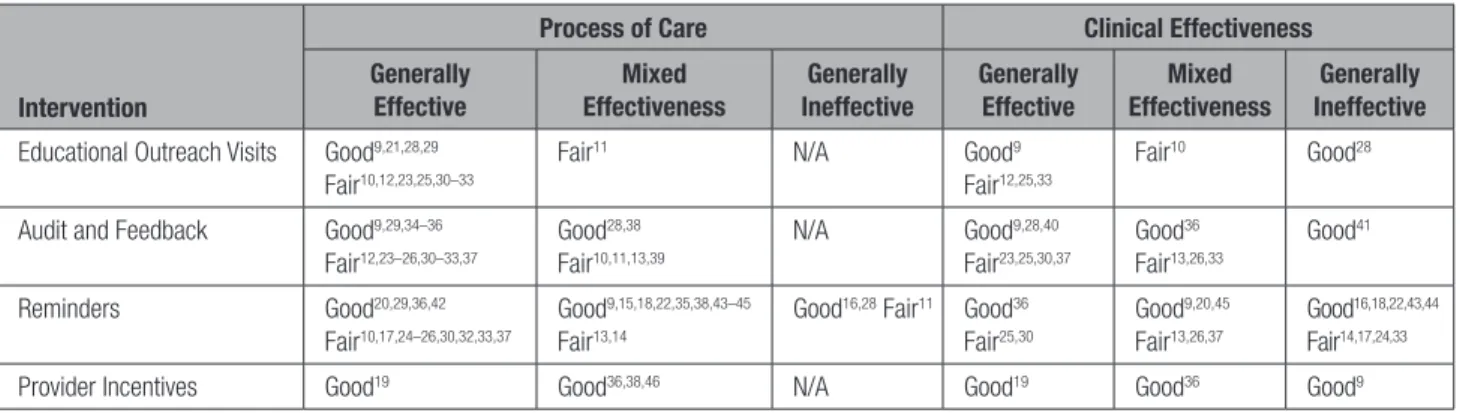
SRs rated “good” and “fair” were used to answer CQ 1. Table 2 shows the classification of the overall effective-ness of each intervention for process-of-care outcomes and clinical effectiveness outcomes across the full set of included reviews. Table 3 provides expanded detail, summarized from available information by study quality of the effectiveness of each intervention for process-of-care outcomes and clinical effectiveness outcomes.
In summary, educational outreach visits showed general effectiveness in 12 of 13 SRs for process-of-care outcomes, particularly in prescribing behaviors. Five SRs reported clinical effectiveness outcomes for educational outreach visits. Three of 5 SRs and 14 of the 19 included studies showed clinical effectiveness. A good-quality SR on hypertension9 found that
educa-tional outreach visits improved both process of care and clinical outcomes (reductions in median systolic and diastolic blood pressure). When only the included CVD risk reduction studies were considered, 1 fair-quality SR10 showed general effectiveness, and 1
fair-quality SR11 showed mixed effectiveness for process
of care outcomes.
Audit and feedback interventions were considered in 23 SRs (9 good quality) and showed general effective-ness for both process-of-care outcomes, particularly in clinician adherence to guidelines, and for clinical out-comes. Audit and feedback showed improved process of care and clinical outcomes for the management of hypertension.9 Four fair-quality SRs also included
some studies on CVD risk reduction and 3 of these reviews10–12 showed general effectiveness for process
of care. Conversely, the fourth fair-quality SR13 showed
general ineffectiveness in improving CVD process of care outcomes.
Reminders were considered in 27 SRs—15 were good quality. These SRs showed mixed effectiveness for process-of-care outcomes overall but general effec-tiveness for prescribing behaviors. However, reminders were generally ineffective for clinical outcomes. The results were similar when only the CVD risk reduction studies were considered in 8 SRs.9,11,13–18 However,
re-minders were generally effective in improving clinical outcomes for hypertension.9
Provider incentive interventions were included in 5 good-quality SRs and showed mixed effectiveness for both process-of-care and clinical outcomes—most of the positive outcomes were related to diabetes mellitus and asthma. When CVD risk reduction studies were analyzed separately, 1 good-quality SR19 found general
effective-ness for both process of care and clinical outcomes. However, provider incentives were generally ineffective for improving clinical outcomes for hypertension in an-other good-quality SR.9
SPECIAL REPOR
T
3.2. Critical Question 2
What are the cost considerations of implementing the se-lected intervention strategies (ie, educational outreach visits, reminders, audit and feedback, and provider in-centives)?
SRs rated “good” and “fair” were also used to answer CQ 2. Cost considerations refer to cost reduction and cost-effectiveness outcomes based on utilization mea-sures resulting from implementing the selected interven-tion strategies. The studies in the SRs differ in the way they examined cost. Some calculated the amount saved per physician, cost per prescription, prescribing costs, per-patient cost avoidance, patient out-of-pocket costs, and hospitals’ return on investment. The SRs also dif-fered in the utilization measures they examined. Some measured length of stay, the use of preventive servic-es, or visits to health professionals. Most of the cost-effectiveness assessments consisted of >1 intervention versus a nonintervention control, or they compared in-terventions. In combination, all these factors made it dif-ficult to reach conclusions about the cost effectiveness of different interventions.
Five good-quality SRs18–22 and 3 fair-quality SRs23–25
provided information about intervention costs or cost reductions. Four good-quality SRs19–22 included studies
that reported cost-effectiveness outcomes but none con-ducted a cost-effectiveness study as a main component of the review (often because of a lack of data).
Educational outreach visits were generally effective in reducing costs in 2 reviews21,25 and showed cost
ef-fectiveness in 1 good-quality review.21 Two fair-quality
re-views23,25 reported cost-reduction findings (length of stay
and lab costs) for audit and feedback interventions and the results showed mixed effectiveness. Reminders were generally effective in reducing cost in 3 reviews18,24,25
and showed mixed effectiveness in another.20
Remind-ers were also cost effective in 1 review22 and the
re-sults showed mixed effectiveness in another.20 Although
based only on 1 good-quality review,19 provider incentive
interventions reduced costs and were cost effective.
3.3. Critical Question 3
What are the contextual barriers—financial, organiza-tional, and regulatory—that hinder or limit clinician ad-herence to and the adoption of CPGs, as encouraged by the selected intervention strategies?
Table 4 summarizes several barriers that were report-ed to influence clinician adoption or adherence to CPGs.
3.4. Critical Question 4
What policy or regulatory, organizational, and financial characteristics or factors influence the success of the selected clinical-institution level intervention strategies (ie, educational outreach visits, reminders, audit and
feedback, and provider incentives) in achieving the im-plementation of guidelines and affecting professional practice behaviors?
Table 5 presents the evidence for several factors that appear to facilitate the success of the intervention strat-egies. Three reviews21,24,26 assessed the effect of
vari-ous interventions alone compared with combinations of interventions. These reviews concluded that multifaceted interventions are more likely to be effective than single interventions in influencing process of care outcomes.
3.5. Summary
This summary of SRs and overview of reviews found gen-eral effectiveness for 2 of the 4 selected implementation interventions (educational outreach visits and audit and feedback) for improving process of care and clinical out-comes. Regarding the impact of characteristics of the interventions, multifaceted interventions appeared to be more effective. However, the paucity of controlled head-to-head comparisons and limitations in the evidence al-lowed only an estimate of general effectiveness, without the ability to determine whether the overall effects of the interventions were statistically significant, or more importantly, clinically meaningful.
No conclusions can be drawn regarding the effective-ness of the intervention strategies to improve process of care and clinical outcomes related to the treatment of CVD risk factors since most reviews did not focus on or include studies on these conditions. However, 1 good-quality review focused on hypertension and 4 fair-good-quality reviews included some studies on hypertension and dys-lipidemia. The results from these few reviews suggest that implementation interventions are potentially as ef-fective in CVD risk reductions as in other areas.
No general conclusion could be reached about the cost of implementing the selected intervention strate-gies. Although good-quality reviews generally reported cost-savings associated with an intervention, many of the interventions were multifaceted in nature; thus, the total cost associated with any component of an interven-tion was difficult to discern. Furthermore, cost effective-ness was not explicitly evaluated.
4. DISCUSSION
4.1. Common Themes in the Evidence and
Practice Implications
The evidence generally showed greater increase in CPG adherence in practices with low-baseline adher-ence. Given the success of multifaceted interventions, and the beneficial impact of stakeholder involvement in developing the intervention and a priori assessment of local needs, implementation efforts should emphasize the need for implementers to understand their current
practices and how their organizations’ practices may vary from forthcoming CPG recommendations. A self-assessment toolkit could be an important aid to prac-tices when determining which of several implementa-tion strategies might best suit their particular needs, context, and goals.
4.2. Report Limitations
Data used in this report were not retrieved from the primary studies, thus limiting information on the details of the interventions and results to that reported by the review authors. Second, this report used a qualitative synthesis of the evidence, which does not allow an as-sessment of the size of any expected benefits from the implementation of an implementation strategy. The re-port also relied heavily on the judgments of the authors of the SRs and the quality of the reviews. Third, analysis in this report is limited to 4 interventions aimed at provid-ers and did not explore systems-level implementation. Other interventions might have shown effectiveness if they had been included. Fourth, the implementation of the 4 intervention strategies varied within reviews. Some reviews assessed single interventions, whereas others assessed multifaceted interventions. Fifth, many evalu-ations did not report sufficient contextual information to assess their potential influence on implementation ef-forts (eg, patient demographics, comorbid conditions, insurance coverage). Another major concern is that only a small number of the included studies provided informa-tion about clinical effectiveness and cost outcomes, and only a few provided comparisons of cost effectiveness.
Finally, in reviews of SRs, there is always the risk that an included study may appear in multiple reviews and the overlap presents the potential for double counting the results from individual studies. The ISWG addressed this potential risk in answering CQ 1 (process and clinical outcomes) and CQ 2 (cost) primarily by using only SRs where the included studies were clearly referenced and could be checked across reviews and did not include SRs that were updated by more recent reviews. For re-views with overlapping studies, the ISWG first consid-ered whether counting or not counting the overlap would change the assessment of effectiveness of the interven-tions in this report. If it would not change the effective-ness, we counted the study in both reviews. However, if counting the overlap would change the effectiveness, we first considered the quality of the reviews, and if the overlapping reviews were of equal quality, counted the study in the most recent review. For example, if a study appeared in a good-quality review and a fair-quality re-view, we counted the study in the good-quality review and not in the fair-quality review. Finally, in SRs that up-dated a component (ie, interventions aimed at people with diabetes mellitus) of an SR, we counted the studies from the latest review and the studies minus the updated
component from the older SR. The overlap was substan-tial for CQ 3 (barriers) and CQ 4 (facilitators), where SRs were combined with overviews of SRs. However, this overlap was inconsequential because the findings for CQs 3 and 4 were not based on study counts.
4.3. Research Gaps
Future research in CPG implementation interventions should address important design limitations in current studies and key gaps in the evidence base (Table 6). An important design limitation is the lack of explicit declara-tion or standardized terminology for the implementer and target of the interventions. Evidence is sorely needed on more tangible outcomes, such as clinical outcomes and cost effectiveness, in addition to intermediate or process outcomes. Simply demonstrating an effective implementation in one setting is not a guarantee that the same results will be found in other settings. Thus, additional SRs and empirical research are needed to better understand the effectiveness of implementation strategies with differing characteristics, in a variety of settings, with different types of clinicians, and targeting specific types of diseases or conditions—especially the control of CVD risk factors. Although multifaceted inter-ventions rather than single interinter-ventions appear to be effective strategies for increasing CPG implementation, identifying the combinations of strategies that are most effective and in which contexts is important.
Innovative research methods and study designs are needed to leverage electronic health records (EHRs) as they might bolster implementation science in many ways. Specifically, electronic clinical data may improve the abil-ity to target patients (eg, by diagnosis) for appropriate CPGs. Clinic and health system EHRs may have the ability to efficiently provide feedback on progress in achieving rel-evant CPG measures (eg, biomarkers) for an entire clinic or healthcare system, not strictly at the patient or clinician level. And for implementation research, EHRs may stream-line planning and conducting other aspects of implemen-tation trials (eg, more accurately determine event rates, eligible patients). EHRs might also be able to follow patient health outcomes on a long-term basis, beyond the typical length of clinical trials. The evolution of EHRs will likely in-clude the development and embedding of risk models ca-pable to enable targeting people with specific risk profiles. The use of networks of EHRs, such as those in the PCORI (Patient-Centered Outcomes Research Institute) Clinical Data Research Networks, could provide remarkable op-portunities to study implementation strategies or even ex-ploit the natural variation in strategies across centers. With many large and diverse patient populations now receiving care that is documented in EHRs, large population-based studies are becoming increasingly practical. Such prag-matic studies have the advantage of including the general population of patients and not just a carefully selected set
SPECIAL REPOR
T
of participants in a randomized controlled trial. Although such studies may not have the precision of measurement commonly seen in rigorous trials, their benefit comes in the assessment of important clinical outcomes for entire populations of patients.
Finally, the good-quality reviews in this report are largely based on evidence from randomized controlled-trial study designs. Traditional randomized controlled trials are quite different from the context in which real-world implementation and behavior change occur. An ob-servational, more qualitative approach may be needed to better understand how the preceding contextual issues and other drivers affect the success of an implementa-tion intervenimplementa-tion. An example of a qualitative approach is The Dartmouth Institute for Health Policy and Clini-cal Practice benchmarking study of how “best-in-class” health systems use clinical decision support.27 Such an
outcomes-oriented approach would allow better evalua-tion of provider incentives, audit and feedback, educa-tional outreach visits, reminders, and other interventions chosen to advance the implementation of CPGs.
In summary, there is some evidence that guideline implementation interventions are effective for both pro-cess of care and clinical outcomes. Limited evidence suggests that implementation interventions are gener-ally effective at reducing costs, and in even more-limited evidence, that they are cost effective. Qualitative analy-sis suggests recurring themes regarding barriers and facilitators of success. Given the mixed results seen in many implementation studies, additional research fo-cused on intervention effectiveness is needed, with spe-cial emphasis on improving methods and study designs, increasing the use of pragmatic trials, and determining how to enhance the utility of electronic clinical data. Also, more studies are needed on clinical outcomes, cost effectiveness and the influence of contextual fac-tors on effectiveness of interventions. Studies done in real-world healthcare delivery systems and qualitative re-search may help address some of these important gaps in current evidence.
5. PERSPECTIVES
5.1. Translation Outlook 1
Audit and feedback and educational outreach visits were generally effective for improving both process of care and clinical outcomes while provider incentives showed mixed effectiveness. Reminders showed mixed effective-ness for process of care and were generally ineffective for improving clinical outcomes.
5.2. Translation Outlook 2
Multifaceted interventions were more effective than a single intervention strategy.
5.3. Translation Outlook 3
Additional research is needed on intervention effective-ness, with special emphasis on improving methods and study designs, increasing the use pragmatic trials, lever-aging electronic clinical data, and evaluating cost effec-tiveness of interventions.
ACC/AHA TASK FORCE MEMBERS
Jonathan L. Halperin, MD, FACC, FAHA, Chair; Glenn N. Levine, MD, FACC, FAHA, Chair-Elect; Sana M. Al-Khatib, MD, MHS, FACC, FAHA; Kim K. Birtcher, PharmD, MS, AACC; Biykem Bozkurt, MD, PhD, FACC, FAHA; Ralph G. Brindis, MD, MPH, MACC; Joaquin E. Cigarroa, MD, FACC; Lesley H. Curtis, PhD, FAHA; Lee A. Fleisher, MD, FACC, FAHA; Federico Gentile, MD, FACC; Samuel Gidding, MD, FAHA; Mark A. Hlatky, MD, FACC; John Ikonomidis, MD, PhD, FAHA; José Joglar, MD, FACC, FAHA; Susan J. Pressler, PhD, RN, FAHA; Duminda N. Wijeysundera, MD, PhD
PRESIDENTS AND STAFF
American College of Cardiology
Richard A. Chazal, MD, FACC, President Shalom Jacobovitz, Chief Executive OfficerWilliam J. Oetgen, MD, MBA, FACC, Executive Vice Presi-dent, Science, Education, Quality, and Publications Amelia Scholtz, PhD, Publications Manager, Science,
Education, Quality, and Publications
American College of Cardiology/American Heart
Association
Lisa Bradfield, CAE, Director, Guideline Methodology and Policy
Abdul R. Abdullah, MD, Associate Science and Medicine Advisor
Allison Rabinowitz, MPH, Project Manager, Science and Clinical Policy
American Heart Association
Steven R. Houser, PhD, FAHA, President Nancy Brown, Chief Executive Officer
Rose Marie Robertson, MD, FAHA, Chief Science and Medicine Officer
Gayle R. Whitman, PhD, RN, FAHA, FAAN, Senior Vice President, Office of Science Operations
Comilla Sasson, MD, PHD, FACEP, Vice President, Sci-ence and Medicine
Jody Hundley, Production Manager, Scientific Publica-tions, Office of Science Operations
ACKNOWLEDGMENTS
NHLBI Staff: Janet M. de Jesus, MS, RD; Kathryn McMurry, MS; Susan T. Shero, MS, RN.
Former NHLBI Staff: Denise Simons-Morton, MD, PhD; Mary Hand, MSPH, RN.
This project was funded in whole or in part with federal funds from the National Heart, Lung, and Blood Institute, Na-tional Institutes of Health, US Department of Health and Human Services, under GSA contract No. GS-10F-0112J, Order No. HHSN2268201100098U.
FOOTNOTES
This document was approved by the American College of Car-diology Board of Trustees and the American Heart Association Science Advisory and Coordinating Committee and Executive Committee in October 2016.
The online Data Supplement is available with this article at http://circ.ahajournals.org/lookup/suppl/doi:10.1161/CIR. 0000000000000481/-/DC1.
This article has been copublished in the Journal of the American College of Cardiology.
Copies: This document is available on the World Wide Web sites of the American College of Cardiology (www.acc.org) and the American Heart Association (professional.heart.org). A copy of the document is available at http://professional. heart.org/statements by using either “Search for Guidelines & Statements” or the “Browse by Topic” area. To purchase additional reprints, call 843-216-2533 or e-mail kelle.ramsay@ wolterskluwer.com.
Expert peer review of AHA Scientific Statements is conducted by the AHA Office of Science Operations. For more on AHA statements and guidelines development, visit http://professional.heart.org/statements. Select the “Guidelines & Statements” drop-down menu, then click “Publication Development.”
Permissions: Multiple copies, modification, alteration, en-hancement, and/or distribution of this document are not per-mitted without the express permission of the American Heart Association. Instructions for obtaining permission are located at http://www.heart.org/HEARTORG/General/Copyright-Per-mission-Guidelines_UCM_300404_Article.jsp. A link to the “Copyright Permissions Request Form” appears on the right side of the page.
Circulation is available at http://circ.ahajournals.org.
REFERENCES
1. National Heart, Lung, and Blood Institute. NHLBI Cardiovascular Disease Thought Leaders Meeting Report: Research Translation, Dissemination, and Application - Moving Toward a New Vision and Strategic Framework. 2005. Available at: http://www.nhlbi.nih. gov/health-pro/resources/heart/cardiovascular-disease-thought-leaders-meeting-report. Accessed January 1, 2012.
2. Cabana MD, Rand CS, Powe NR, et al. Why don’t physicians follow clinical practice guidelines? A framework for improvement. JAMA. 1999; 282:1458–65.
3. Gibbons GH, Shurin SB, Mensah GA, et al. Refocusing the agenda on cardiovascular guidelines: an announcement from the National Heart, Lung, and Blood Institute. Circulation. 2013;128:1713–15.
4. Simons-Morton DG, Simons-Morton BG, Parcel GS, et al. Influ-encing personal and environmental conditions for community health: a multilevel intervention model. Fam Community Health. 1988;11:25–35.
5. Effective Practice and Organisation of Care (EPOC). EPOC Tax-onomy. Available at: https://epoc.cochrane.org/epoc-taxTax-onomy. Accessed March 23, 2012.
6. Canadian Agency for Drugs and Technologies in Health. Rx for Change Database. Available at: http://www.cadth.ca/en/resourc-es/rx-for-change. Accessed December 1, 2012.
7. Shea BJ, Grimshaw JM, Wells GA, et al. Development of AMSTAR: a measurement tool to assess the methodological quality of sys-tematic reviews. BMC Med Res Methodol. 2007;7:10.
8. Cheung A, Weir M, Mayhew A, et al. Overview of systematic re-views of the effectiveness of reminders in improving healthcare professional behavior. Syst Rev. 2012;1:36.
9. Walsh J, McDonald KM, Shojania KG, et al. Closing the Quality Gap: A Critical Analysis of Quality Improvement Strategies (Vol. 3: Hyper-tension Care). Technical Reviews, No. 9.3. Rockville, MD: Agency for Healthcare Research and Quality, U.S. Department of Health and Human Services, January 2005. Available at: http://www.ncbi.nlm. nih.gov/books/NBK43920/. Accessed December 1, 2012. 10. Lu CY, Ross-Degnan D, Soumerai SB, et al. Interventions designed
to improve the quality and efficiency of medication use in man-aged care: a critical review of the literature - 2001–2007. BMC Health Serv Res. 2008; 8:75.
11. Ostini R, Hegney D, Jackson C, et al. Systematic review of interven-tions to improve prescribing. Ann Pharmacother. 2009;43:502– 13.
12. Pearson SA, Ross-Degnan D, Payson A, et al. Changing medica-tion use in managed care: a critical review of the available evi-dence. Am J Manag Care. 2003;9:715–31.
13. Weingarten SR, Henning JM, Badamgarav E, et al. Interventions used in disease management programmes for patients with chronic illness-which ones work? Meta-analysis of published re-ports. BMJ. 2002;325:925.
14. Bryan C, Boren SAThe use and effectiveness of electronic clini-cal decision support tools in the ambulatory/primary care set-ting: a systematic review of the literature. Inform Prim Care. 2008;16:79–91.
15. Damiani G, Pinnarelli L, Colosimo SC, et al. The effectiveness of computerized clinical guidelines in the process of care: a system-atic review. BMC Health Serv Res. 2010;10:2.
16. Heselmans A, Van de Velde S, Donceel P, et al. Effectiveness of electronic guideline-based implementation systems in ambulatory care settings - a systematic review. Implement Sci. 2009;4:82. 17. Robertson J, Walkom E, Pearson SA, et al. The impact of
pharma-cy computerised clinical decision support on prescribing, clinical and patient outcomes: a systematic review of the literature. Int J Pharm Pract. 2010; 18:69–87.
18. Roshanov PS, Misra S, Gerstein HC, et al. Computerized clini-cal decision support systems for chronic disease management: a decision-maker-researcher partnership systematic review. Imple-ment Sci. 2011;6:92.
19. Van Herck P, De Smedt D, Annemans L, et al. Systematic review: effects, design choices, and context of pay-for-performance in health care. BMC Health Serv Res. 2010;10:247.
20. Bright TJ, Wong A, Dhurjati R, et al. Effect of clinical deci-sion-support systems: a systematic review. Ann Intern Med. 2012;157:29–43.
21. O’Brien MA, Rogers S, Jamtvedt G, et al. Educational outreach visits: effects on professional practice and health care outcomes. Cochrane Database Syst Rev. 2007;(4):CD000409.
22. Sahota N, Lloyd R, Ramakrishna A, et al. Computerized clinical de-cision support systems for acute care management: a dede-cision- decision-maker-researcher partnership systematic review of effects on pro-cess of care and patient outcomes. Implement Sci. 2011;6:91.
SPECIAL REPOR
T
23. Siddiqi K, Newell J, Robinson M. Getting evidence into practice: what works in developing countries? Int J Qual Health Care. 2005;17:447–54.
24. Tooher R, Middleton P, Pham C, et al. A systematic review of strategies to improve prophylaxis for venous thromboembolism in hospitals. Ann Surg. 2005;241:397–415.
25. Cortoos PJ, Simoens S, Peetermans W, et al. Implementing a hos-pital guideline on pneumonia: a semi-quantitative review. Int J Qual Health Care. 2007;19:358–67.
26. Mauger B, Marbella A, Pines E, et al. Implementing quality im-provement strategies to reduce healthcare-associated infections: a systematic review. Am J Infect Control. 2014;42:S274–83. 27. Caruso D, Kerrigan CL, Mastanduno MP, et al. Improving
Value-Based Care and Outcomes of Clinical Populations in an Electronic Health Record System Environment. A Technical Report. The Dart-mouth Institute for Health Policy and Clinical Practice; 2011. 28. Bravata DM, Sundaram V, Lewis R, et al. Closing the Quality Gap:
A Critical Analysis of Quality Improvement Strategies (Vol. 5: Asth-ma Care). Technical Reviews, No. 9.5. Rockville, MD: Agency for Healthcare Research and Quality, U.S. Department of Health and Human Services, 2007. Available at: http://www.ncbi.nlm.nih. gov/books/NBK43968/. Accessed September 18, 2016. 29. Grimshaw JM, Thomas RE, MacLennan G, et al. Effectiveness and
efficiency of guideline dissemination and implementation strate-gies. Health Technol Assess. 2004;8:iii-iv;1–72.
30. Chaillet N, Dube E, Dugas M, et al. Evidence-based strategies for implementing guidelines in obstetrics: a systematic review. Obstet Gynecol. 2006;108:1234–45.
31. Lineker SC, Husted JA. Educational interventions for implementa-tion of arthritis clinical practice guidelines in primary care: effects on health professional behavior. J Rheumatol. 2010;37:1562–9. 32. Menon A, Korner-Bitensky N, Kastner M, et al. Strategies for
re-habilitation professionals to move evidence-based knowledge into practice: a systematic review. J Rehabil Med. 2009;41:1024–32. 33. Gagliardi AR, Alhabib S. Trends in guideline implementation: a
scoping systematic review. Implement Sci. 2015;10:54. 34. Ivers N, Jamtvedt G, Flottorp S, et al. Audit and feedback: effects
on professional practice and healthcare outcomes. Cochrane Da-tabase Syst Rev. 2012;6:CD000259.
35. Mansell G, Shapley M, Jordan JL, et al. Interventions to reduce primary care delay in cancer referral: a systematic review. Br J Gen Pract. 2011; 61:e821–35.
36. Okelo SO, Butz AM, Sharma R, et al. Interventions to Modify Health Care Provider Adherence to Asthma Guidelines. Compara-tive EffecCompara-tiveness Reviews, No. 95. Rockville, MD: Agency for Healthcare Research and Quality, U.S. Department of Health and Human Services; 2013. Available at: http://www.ncbi.nlm.nih. gov/books/NBK144097/. Accessed September 16, 2016. 37. Mahan CE, Spyropoulos AC. Venous thromboembolism
preven-tion: a systematic review of methods to improve prophylaxis and decrease events in the hospitalized patient. Hosp Pract. 2010;38:97–108.
38. Stone EG, Morton SC, Hulscher ME, et al. Interventions that in-crease use of adult immunization and cancer screening services: a meta-analysis. Ann Intern Med. 2002;136:641–51.
39. Collinsworth AW, Priest EL, Campbell CR, et al. A review of multifaceted care approaches for the prevention and
mitiga-tion of delirium in intensive care units. J Intens Care Med. 2016;31:127–41.
40. Chaillet N, Dumont AEvidenbased strategies for reducing ce-sarean section rates: a meta-analysis. Birth. 2007;34:53–64. 41. Khunpradit S, Tavender E, Lumbiganon P, et al. Non-clinical
inter-ventions for reducing unnecessary caesarean section. Cochrane Database Syst Rev. 2011:CD005528.
42. Kawamoto K, Houlihan CA, Balas EA, et al. Improving clinical practice using clinical decision support systems: a systematic review of trials to identify features critical to success. BMJ. 2005;330:765.
43. Nieuwlaat R, Connolly SJ, Mackay JA, et al. Computerized clini-cal decision support systems for therapeutic drug monitoring and dosing: a decision-maker-researcher partnership systematic review. Implement Sci. 2011;6:90.
44. Tan K, Dear PR, Newell SJ. Clinical decision support systems for neonatal care. Cochrane Database Syst Rev. 2005;2:CD004211. 45. Jeffery R, Iserman E, Haynes RB. CDSS Systematic Review Team.
Can computerized clinical decision support systems improve diabetes management? A systematic review and meta-analysis. Diabet Med. 2013;30:739–45.
46. Scott A, Sivey P, Ait Ouakrim D, et al. The effect of financial incen-tives on the quality of health care provided by primary care physi-cians. Cochrane Database Syst Rev. 2011;9:CD008451. 47. Carlsen B, Glenton C, Pope C. Thou shalt versus thou shalt not: a
meta-synthesis of GPs’ attitudes to clinical practice guidelines. Br J Gen Pract. 2007;57:971–8.
48. Francke AL, Smit MC, de Veer AJ, et al. Factors influencing the im-plementation of clinical guidelines for health care professionals: a systematic meta-review. BMC Med Inform Decis Mak. 2008;8:38. 49. Schunemann HJ, Cook D, Grimshaw J, et al. Antithrombotic and
thrombolytic therapy: from evidence to application: the Seventh ACCP Conference on Antithrombotic and Thrombolytic Therapy. Chest. 2004;126:688S–96S.
50. Simpson SH, Marrie TJ, Majumdar SR. Do guidelines guide pneu-monia practice? A systematic review of interventions and barriers to best practice in the management of community-acquired pneu-monia. Respir Care Clin N Am. 2005;11:1–13.
51. Salam RA, Lassi ZS, Das JK, et al. Evidence from district level inputs to improve quality of care for maternal and newborn health: interventions and findings. Reprod Health. 2014;11 (Suppl 2):S3. 52. Dulko D. Audit and feedback as a clinical practice guideline imple-mentation strategy: a model for acute care nurse practitioners. Worldviews Evid Based Nurs. 2007;4 (Suppl 2):200–9.
53. Grimshaw JM, Shirran L, Thomas R, et al. Changing provider be-havior: an overview of systematic reviews of interventions. Med Care. 2001;39 (Suppl 2):II2–45.
54. Grindrod KA, Patel P, Martin JE. What interventions should phar-macists employ to impact health practitioners’ prescribing prac-tices? Ann Pharmacother. 2006;40:1546–57.
55. Jamtvedt G, Young JM, Kristoffersen DT, et al. Audit and feed-back: effects on professional practice and health care outcomes. Cochrane Database Syst Rev. 2006;2:CD000259.
56. Brouwers MC, Garcia K, Makarski J, et al. The landscape of knowl-edge translation interventions in cancer control: what do we know and where to next? A review of systematic reviews. Implement Sci. 2011;6:130.
Figure 1. Multilevel Model of CPG Implementation Strategies.
Figure 1 presents strategies to implement guidelines recommendations at 4 levels—policy, clinical institution, provider, and patient—to improve patient health.
CPG indicates clinical practice guidelines; FI-P, financial intervention-provider; OI-P, organizational intervention-provider; OI-Pt, organizational intervention-patient; OI-S, organizational intervention-structural; PI, professional intervention; and RI, regulatory intervention.
Table 1. Definition of Intervention Strategies
Intervention EPOC Equivalent EPOC Definition
Provider Reminders Reminders Patient or encounter specific information, provided verbally, on paper or on a computer screen, which is designed or intended to prompt a health professional to recall information. This would usually be encountered through their general education; in the medical records or through interactions with peers, and so remind them to perform or avoid some action to aid individual patient care. Computer-aided decision support and drugs dosage are included.
Academic Detailing Educational Outreach Visits
Use of a trained person who met with providers in their practice settings to give information with the intent of changing the provider’s practice. The information given may have included feedback on the performance of the provider(s).
Audit and Feedback Audit and Feedback Any summary of clinical performance of health care over a specified period of time. The summary may also have included recommendations for clinical action. The information may have been obtained from medical records, computerized databases, or observations from patients. Pay for Performance Provider Incentives Provider received direct or indirect financial reward or benefit for doing specific action. (Provider
here means an individual. This is distinct from the EPOC term “institution incentives,” which is defined as: institution or group of providers received direct or indirect financial rewards or benefits for doing specific action.)
EPOC indicates Effective Practice and Organisation of Care.
SPECIAL REPOR
T
Figure 2. Selection of Articles for Inclusion in the Report.
Figure 2 presents the study selection process from the initial search returns through title and abstract review and full-text review to select the 55 systematic reviews and overviews used in this report. ISWG indicates Implementation Science Work Group.
Table 2. Overall Effectiveness Across All Included Studies by Intervention, Type, and Outcome
Intervention
Process-of-Care Outcomes
Clinical Effectiveness
Outcomes Educational outreach visits Generally effective Generally effective Audit and feedback Generally effective Generally effective Reminders Mixed effectiveness Generally ineffective Provider incentives Mixed effectiveness Mixed effectiveness
Table 3. CQ 1: Summary of Systematic Reviews by Intervention, Effectiveness Rating, and Quality
Intervention
Process of Care Clinical Effectiveness
Generally Effective
Mixed Effectiveness
Generally Ineffective
Generally Effective
Mixed Effectiveness
Generally Ineffective Educational Outreach Visits Good9,21,28,29
Fair10,12,23,25,30–33
Fair11 N/A Good9
Fair12,25,33
Fair10 Good28
Audit and Feedback Good9,29,34–36 Fair12,23–26,30–33,37
Good28,38 Fair10,11,13,39
N/A Good9,28,40 Fair23,25,30,37
Good36 Fair13,26,33
Good41
Reminders Good20,29,36,42 Fair10,17,24–26,30,32,33,37
Good9,15,18,22,35,38,43–45 Fair13,14
Good16,28 Fair11 Good36 Fair25,30
Good9,20,45 Fair13,26,37
Good16,18,22,43,44 Fair14,17,24,33
Provider Incentives Good19 Good36,38,46 N/A Good19 Good36 Good9
CQ indicates clinical question; and N/A, not applicable.
Table 4. CQ 3: Contextual Factors That Appear to Hinder the Success of the Intervention Strategies
Context Key Barriers
Organizational Time16,17,30,47–51 Human resources48,49 Clinician
Knowledge, Attitudes, and Beliefs
Skepticism—concern about evidence base of guidelines, lack of universal acceptance of recommendations, implied rationing of services, fear of litigation24,47,49–51
Lack of knowledge of guidelines24,32,49,50 Age—older or more experienced clinicians less inclined to use48
Workflow and Timing
Timing and effectiveness—barrier to effectiveness if further away from point of decision making42,52–55
CQ indicates clinical question.
Table 5. CQ 4: Contextual Factors That Appear to Facilitate the Success of the Intervention Strategies
Context Key Facilitators
Characteristics of Guidelines
Short and simple format47 Provide patient pamphlets47 Easy to understand and use48
Minimal resources needed to implement48 Involving end-users in guidelines development, implementation, and testing15,48,50,52
Use of computerized guidelines in practice settings15,16 Involving
Stakeholders
Involvement in planning, developing, or leading interventions designed to influence practice patterns and clinical outcomes19,30,34,40,56 Leadership Leader’s social influence is recognized30
Formal leadership40
Local management support and enthusiasm24,51 Adequate time to promote new practice24 Scope of
Implementation
Provider incentives—more broadly implemented in the United Kingdom with more consistent results than in the United States19
Multifaceted interventions are more likely to be effective than single interventions24,26,53,54 Organizational
Culture
Multidisciplinary teams, coordination of care, pace of change, a blame-free culture, and a history of quality improvement9,19,28,38
Low-baseline adherence19,29,34,38,40,46,55 Workflow and
Timing
Electronic guidelines systems
Integration with computers used in practice16,17 Reminders automatic—clinicians not required
to seek information42
CQ indicates clinical question.
Table 6. Suggested Actions to Address Key Research Needs
Suggested Actions Research Needs Address Study Design
Issues
Clear descriptions of study methods and the interventions
Explicit implementer and target of intervention
Standardized measures of outcomes and descriptions of practice settings Conduct New
Research to Test the Effectiveness of Interventions
Effect on clinical outcomes, rather than intermediate outcomes
Cost effectiveness
Effect of multicomponent interventions, including specific combinations of interventions Effect of policy-level interventions, for example:
Reimbursement Accreditation
Publicly reported quality metrics Effect of interventions targeting varieties of: Settings, including baseline workflows Clinician types
Types of diseases and conditions Focus Evaluations on
Contextual Factors
Organizational and practice context Involvement of stakeholders and leadership Integration with workflow
Implementation scope Duration
Timing Leverage EHR Data
and Tools
Mine data for observational studies Platform for pragmatic prospective studies Access longer-term data than RCTs Aggregate data and/or interventions by key factors, for example:
Patient characteristics Clinician characteristics Clinic
Healthcare delivery system Conduct Qualitative
and Observational Research
Effectiveness in diverse populations Drivers of success in real-world implementations
Contextual issues not amenable to RCTs
EHR indicates electronic health record; and RCTs, randomized controlled trials.
SPECIAL REPOR
T
Appendix 1. Author Relationships with Industry and Other Entities (Comprehensive)—ACC/AHA Special Report: Clinical Practice Guideline Implementation Strategies: A Summary of Systematic Reviews by the NHLBI Implementation Science Work Group (2012–2016)
Committee
Member Employment Consultant Speakers Bureau
Ownership/ Partnership/
Principal ResearchPersonal
Institutional, Organizational,
or Other
Financial Benefit WitnessExpert Wiley V. Chan,
Co-Chair
Kaiser Permanente Northwest— Director of Guidelines and Evidence-Based Medicine (through 2014 and as a
consultant currently)
None None None • PCORI • Community Clinics Health Network
None
Thomas A. Pearson, Co-Chair
University of Rochester Medical Center—Executive Vice President
for Research and Education
None None None • NCATS
• NHLBI • PCORI
None None
Glen C. Bennett NHLBI—Program Coordinator None None None None None None
Graciela Castillo
American Institutes for Research—Senior Researcher
None None None None None None
William C. Cushman
The University of Tennessee Health Science Center— Professor, Preventative Medicine
None None None None None None
Thomas A. Gaziano
Harvard Medical School— Assistant Professor; Brigham and
Women’s Hospital—Associate Physician in Cardiovascular
Medicine
None None None • NHLBI
• NIA
None None
Paul N. Gorman
Oregon Health and Science University—Associate Professor
None None None • AHRQ
• National Science Foundation
None None
Joel Handler Southern California Permanente Medical Group—Staff Physician
None None None None None None
Susan K.R. Heil
American Institutes for Research—Health and Social
Development
None None None None None None
Julie C. Jacobson Vann
The University of North Carolina at Chapel Hill—Associate Professor
None None None None None None
Harlan M. Krumholz
Yale-New Haven Hospital— Director
• United Healthcare
None None • Medtronic • Johnson &
Johnson
None None
Robert F. Kushner
Northwestern University— Professor in Medicine
• Novo Nordisk • Weight
Watchers • Zafgen • Retrofit • Takeda
None None • Aspire Bariatrics
None None
Thomas D. MacKenzie
Denver Health Foundation—Chief Quality Officer
None None None • NCATS
• NHLBI • PCORI
None None
(Continued )
Ralph L. Sacco University of Miami Health System—Chairman and Professor Department of
Neurology
• Boehringer Ingelheim
None None • NINDS
• AHA • Duke Clinical
Research Institute (DSMB) • UCSF
(DSMB)
None None
Sidney C. Smith, Jr.
University of North Carolina at Chapel Hill—Professor of
Medicine
None None None None None None
Jennifer Stephens
Johns Hopkins University— Graduate Student
None None None None None None
Victor J. Stevens
Kaiser Permanente Center for Health Research—Research
Scientist
None None None • NIH None None
Barbara L. Wells
National Institutes of Health— Health Scientist Administrator
None None None None None None
This table reflects the healthcare-related relationships of authors with industry and other entities provided by the panel during the document development process (2012–2016). Both compensated and uncompensated relationships are reported. These relationships were reviewed and updated in conjunction with all meetings and conference calls of the panel during the document development process. To review the NHLBI comprehensive policies for managing relationships with industry and other entities, please refer to http://www.nhlbi.nih.gov/guidelines/cvd_adult/coi-rwi_policy.htm.
AHA indicates American Heart Association; AHRQ, Agency for Healthcare Research and Quality; DSMB, data safety monitoring board; NCATS, National Center for Advancing Translational Sciences; NHLBI, National Heart, Lung, and Blood Institute; NIA, National Institute on Aging; NIH, National Institutes of Health; NINDS, National Institute of Neurological Disorders and Stroke; PCORI, Patient-Centered Outcomes Research Institute; and UCSF, University of California, San Francisco.
Appendix 1. Continued
Committee
Member Employment Consultant Speakers Bureau
Ownership/ Partnership/
Principal ResearchPersonal
Institutional, Organizational,
or Other
Financial Benefit WitnessExpert
SPECIAL REPOR
T
Appendix 2. Reviewer Relationships with Industry and Other Entities (Comprehensive)—ACC/AHA Special Report: Clinical Practice Guideline Implementation Strategies: A Summary of Systematic Reviews by the NHLBI Implementation Science Work Group (March 2016)
Reviewer Representation Employment Consultant Speakers Bureau
Ownership/ Partnership/
Principal ResearchPersonal
Institutional, Organizational,
or Other Financial
Benefit WitnessExpert Ralph G.
Brindis
Official Reviewer—
ACC/AHA Task Force on Clinical Practice
Guidelines
University of California—Clinical
Professor of Medicine
• ACC* • FDA CV Device
Panel†
None None • State of California OSHPD†
None None
David C. Goff, Jr.
Official Reviewer—AHA
Wake Forest University Public Health Sciences Internal
Medicine— Professor
None None None • NIH* • AHA*
• Colorado School of Public Health†
None
Edward P. Havranek
Official Reviewer—AHA
Denver Health Medical Center—
Cardiologist
• AHA* • NHLBI* • PCORI*
None None None None None
Robert C. Hendel
Official Reviewer—ACC
Board of Trustees
University of Miami Cardiac Imaging
and Outpatient Services—Director
• Adenosine Therapeutics • Astellas
Pharma*
None None None None None
Srinivas Murali
Official Reviewer—ACC
Board of Governors
Allegheny Health Network—Director,
Cardiovascular Institute
• Actelion • Bayer
• Actelion None • Cardiokinetics • CVRx • Gilead • Actelion • Lung, LLC • Bayer
None None
John A. Spertus
Official Reviewer—AHA
Saint Luke’s Mid America Heart Institute—Director,
Health Outcomes Research; University of Missouri-Kansas City—Professor
• Amgen • Bayer
• Copyright for SAQ, KCCQ, and PAQ • Janssen
Pharmaceuticals • Novartis* • Regeneron† • United Healthcare
(Scientific Advisory Board)
None • Health Outcomes Sciences*
• ACC* • AHA† • Lilly* • Gilead
Sciences*
None None
This table represents the relationships of reviewers with industry and other entities that were disclosed at the time of peer review, including those not deemed to be relevant to this document. The table does not necessarily reflect relationships with industry at the time of publication. A person is deemed to have a significant interest in a business if the interest represents ownership of ≥5% of the voting stock or share of the business entity, or ownership of ≥$5000 of the fair market value of the business entity, or if funds received by the person from the business entity exceed 5% of the person’s gross income for the previous year. A relationship is considered to be modest if it is less than significant under the preceding definition. Relationships that exist with no financial benefit are also included for the purpose of transparency. Names are listed in alphabetical order.
*Significant relationship. †No financial benefit.
ACC indicates American College of Cardiology; AHA, American Heart Association; CV, cardiovascular; FDA, US Food and Drug Administration; KCCQ, Kansas City Cardiomyopathy Questionnaire; NHLBI, National Heart, Lung, and Blood Institute; NIH, National Institutes of Health; OSHPD, Office of Statewide Health Planning and Development; PAQ, Peripheral Artery Questionnaire; PCORI, Patient-Centered Outcomes Research Institute; SAQ, Seattle Angina Questionnaire.