A Systematic Review of Interventions to Improve the Communication of Advanced Directives and Medication Administration Records for Elderly Patients
Transferring Between Nursing Homes and Acute Care Hospitals
By
Michael A. LaMantia
A Master's Paper submitted to the faculty of the University of North Carolina at Chapel Hill
in partial fulfillment ofthe requirements for the degree of Master of Public Health in
the Public Health Leadership Program
Chapel Hill
ABSTRACT Objectives:
To conduct a systematic review of the literature to identify interventions that can improve the communication of advanced care directives and accurate and appropriate medication lists for elderly patients transferring between nursing homes and acute care hospitals. Methods:
The MEDLINE, ISI, and EBSCO Host databases were searched from inception to February 17, 2008 for appropriate articles. All abstracts identified by a prespecified strategy were reviewed. Studies met inclusion criteria if their design was of a randomized control trial, pre/post observational trial, or post-intervention observational study.
Data regarding each study were abstracted from the manuscript by the reviewer to a standardized collection instrument and details regarding type of study, study population, intervention, and results were recorded in evidence tables.
Results:
Six hundred ninety-six titles were identified by the pre-specified search strategies. Eighteen articles were submitted for full review. Thirteen articles did not meet
Conclusions:
INTRODUCTION
Aging: International and Domestic Scope
The baby boom generation, those persons born in the post-World War II era between 1946 and 1964, represent a population cohort that is quickly approaching the age ofretirement. International leaders and researchers around the globe recognize that the graying ofthis generation will present a major challenge to the financing and provision of health care.1·6 The World Health Organization (WHO) reports that the cohort over age 60 is the fastest growing segment of the global population and that due to decreases in fertility rates and increases in life-expectancy world-wide, many nations will face
adjustments in the age composition of their populations in corning years. 1 By WHO and United Nations estimates, approximately 35% of Japan's population and 34% ofltaly's population will be above age 60 in 2025. China's aging population, alone, is expected to swell from 134 million inhabitants over age 60 in 2002 to 287 million in 2025.
Accordingly, the WHO has identified the promotion of"healthy and active ageing" as a key policy concern for leaders worldwide.
In the United States, a similar shift in the nation's demographics can be expected. As the American population of approximately 80 million baby boomers continues to age, demographers project that the number of people over age 60 will increase from 46.9 million in 2002 to 86.1 million in 2025. 1• 7 Colloquially, this phenomenon has been
Impact of the Baby Boom Generation on Future Health Care Expenditures:
Beyond Future Disability Projections to Quality
It is generally held that health care costs for a population cohort will increase, as the cohort ages, chronic disease accumulates in the group, and disability levels rise4' 8
According to the Centers for Disease Control (CDC), it is currently three to five times more expensive to provide health care to someone over age 65 than to someone under age 65. Based on demographic shifts alone, national health care spending in the United States is predicted to increase 25% by 20303 These figures are based partially on predictions of future disability and take into account data demonstrating that the profile of the baby boom generation differs fundamentally from previous generations in its members' level of educational attainment as well as racial and ethnic composition7' 9 According to the National InstihJte on Aging (NIA),9 the US population over age 65 in 2030 will be more diverse than it was in 2003, with the elderly Hispanic population increasing from 6% to 11%, the elderly Black population increasing from 8% to 10%, and the non-Hispanic White population decreasing from 83% to 72% of people over age 65. Current data from the National Center for Health Statistics10 show that Black and Hispanic elderly have higher total personal care needs than White elderly, spurring partially predictions of the need for increases in spending across the continuum of long-term care. As the baby boom generation ages, gerontologists and health economists have raised concerns that disability and health care costs for this cohort may threaten the future solvency of federally-sponsored health insurance for the elderly.4
that disability rates in the elderly are decreasing and that annual costs to Medicare to maintain patients in a non-disabled state are decreasing too.11' 12 Research by others
holds that care for those persons near death, and not in all elderly, may be the true driver of increases in health care spending, 13 while further work by other groups shows that there are a number of complex reasons for increases in health care spending and that "the aging of the population is not an adequate explanation."14 In any case, it remains unclear if improvements in access to care and the application of future developed health care technologies will mitigate rates of health care use in the disabled elderly population.
Defining the Target Population of Elderly: Frailty, Vulnerability, and Nursing
Home Residents
In the medical literature, a great deal of attention has been paid to defining
subgroups of the elderly population who differ fundamentally from the "well" elderly and who might benefit from targeted intervention. This population of patients is sometimes described as the "frail elderly," though the definition of this term has evolved over the last several decades. 19 In recent work, Fried et al. state, "It is generally agreed that frailty is a state of high vulnerability for adverse health outcomes, including disability,
dependency, falls, need for long-term care, and mortality (p 256)." Despite this clear definition, the challenge until recently has been in formulating an operational definition of this concept. 20 In an attempt to conuect the manifestations of aging with their root cause, some researchers have sought to define frailty by the presence of serum markers of disease, though this work is on-going21 More recently, however, others have argued that "frailty is a distinct entity recognized by clinicians, with multiple possible manifestations and no single manifestation, by itself, being sufficient or essential in the presentation (p 257). "20 Indeed, an operational definition for "frailty" has been proposed, "based on the presence of a critical mass of three or more core 'frail' elements, with the core entities being weakness, poor endurance, weight loss, low physical activity, and slow gait speed (p 257)."20
or death) and older people at moderately high risk (p 1691)."22 We can see that these definitions of the vulnerable and frail elderly, while seeking to explain similar
phenomena, may describe two different subpopulations of patients, if serum markers are used to define frailty, or may define the same subpopulation if the operational definition of frailty proposed by Fried et al.20 is employed.
Elderly nursing home patients on the whole though, might easily be described as either frail or vulnerable. Frail or vulnerable elderly patients may indeed live in assisted living facilities or at home in the community and be at risk for dependency. However, given their high number of comorbidities and their high degree of reliance on others for assistance with the activities of daily living, elderly nursing home residents compose a dependent population of individuals. By studying this population of patients who may be at higher risk for adverse outcomes, we may ultimately be able to understand how to provide better coordinated, quality health care to all elderly adults.
Nursing Homes, Hospitals and Transitional Care
nursing horne population, it is evident that nursing horne residents represent a group of elderly who may not be able to adequately communicate details of or participate in the administration of their own plan of care.
The communication of accurate medical information is fundamental to providing seamless, coherent care to all patients as they transfer between nodes in our health care system. However, when elderly patients cannot participate in this process, as many nursing horne residents cmmot due to frailty or vulnerability, these patients are at risk for "falling through the cracks. "25 Inevitably, with each transition of care, there are
opportunities for miscommunication of patient care information. And it is this
miscommunication of information that challenges our splintered health care system as elderly patients consequently suffer through repeat hospitalizations, iatrogenic
complications, and uncoordinated and poor quality care.
Indeed, transitions of elderly between acute care hospitals and nursing homes are a frequent occurrence. Recent data show that most nursing horne admissions originate from hospital discharges and that there are 549 hospital admissions per I 000 nursing horne beds per year23 It is estimated that nursing horne residents account for 2-3% of all emergency room visits.23 Once hospitalized, elderly patients have a high likelihood of being transferred to another institution and of being rehospitalized. Studies show that 23% of hospitalized elderly patients are transferred to another institution at hospital discharge and that 19% of patients transferred from a hospital to a skilled nursing facility will be transferred back to the hospital within 30 days25
Persons with Complex Care Needs. 26 In this document, the AGS defined transitional care as "a set of actions designed to ensure the coordination and continuity ofhealthcare as patients transfer between different locations or different levels of care within the same location." The AGS identified that during transitions in care, "patients are at risk for medical errors, service duplication, inappropriate care, and critical elements of the care plan 'falling through the cracks." While many clinicians might agree from their own anectodotal experience that patients with complex care needs are at risk for error, overtreatment, and undertreatrnent as a result of poor transitional care, it has been more difficult to define study outcomes that might be representative of high quality
transitional care. As Terrell and Miller note27, it is difficult to report if nursing horne
residents receive high quality transitional care due to "the lack of operational definitions for quality transitional care (p 37)" in the literature.
Prior Work
Conceptually, however, the provision of effective transitional care can be understood as a summation of several key steps: communication between sending and receiving clinicians, preparation of the caregiver and patient for the transition,
reconciliation of patients' pre and post-hospitalization medication lists, arrangement of a plan for follow-up of outstanding tests and for an appointment with the receiving
of transitions of care that occur daily in clinical practice, and have called for further research to be conducted. 25• 28 Indeed, no clear definition of study outcomes that might define high quality transitional have emerged or been adopted. And, to date, no single, clear method of ensuring the smooth transition of care of elderly between acute care hospitals and skilled nursing facilities has emerged and been widely implemented.
Proposed Research Question
In order to understand the types of interventions that might be useful in ensuring high quality transitional care of elderly nursing horne residents to and from acute care hospitals, it may be potentially useful to explore the literature for successful interventions that have resulted in the effective communication of two key pieces of medical
information: accurate and appropriate medication lists and advanced care directives. Medication associated errors have been identified as a major source of morbidity and mortality in transitional care29• 30 Previously completed advanced care directives are
often not available to hospital physicians31 , though when present, can influence medical decision making. 32 If interventions that ease the communication of reconciled
medication lists and advanced care directives can be identified, they may allow
extrapolation and application oftheir constituent techniques to other components in the transitional care process. To determine the existence of such interventions, I will conduct a systematic review of the literature to examine the following clinical questions: a) "Can a clinical intervention improve the communication of accurate and appropriate
METHODS
Data Sources and Search Strategy
To identify articles addressing my research questions regarding transitional care of the elderly, I performed an electronic search of the MEDLINE, lSI Web of
Knowledge, and EBSCO Host databases. I was assisted in the formulation of a search strategy and the selection of relevant search terms by a research librarian at the Health Sciences Library of the University ofNorth Carolina at Chapel Hill.
MEDLINE search
The MEDLINE database was searched from inception to February 17, 2008 initially for the combined MeSH terms: nursing home AND hospital with the query limited to practice guidelines, meta-analyses, clinical trials and randomized control trials that were published in English. Results from the initial search were then matched with the MeSH terms: patient transfer OR patient discharge OR medication systems, hospital
OR medication errors OR advanced directives OR resuscitation orders OR advanced directive adherence. All abstracts identified by this search strategy were reviewed. Abstracts were selected for full review if the article met pre-specified inclusion and exclusion criteria.
lSI Web of Knowledge search
The ISI web database was searched from 1955 to 2008 for articles or reviews in the English language that matched the search terms: nursing home AND hospital.
OR advanced directive* OR resuscitation order* OR medication reconciliation*. Titles
identified by this method were then reviewed with relevant abstracts pulled for further review. From these abstracts, articles were identified for full review by applying the same criteria for full review described above in the MEDLINE search.
EBSCO Host search
The EBSCO Host database was searched from 1955 to 2008 using for research articles or peer reviewed articles in the English language that matched the search terms:
nursing home AND hospital AND transfer* OR discharge* OR error* OR advanced
directive* OR resuscitation order* OR medication reconciliation* in the abstract. The
search was limited to articles that had an abstract available. Titles identified by this method were then reviewed with relevant abstracts pulled for further review. From these abstracts, articles were identified for full review by applying the same criteria for full review described above in the MEDLINE search.
Additional Articles
Additional articles for full review were suggested by other geriatric specialists, were known already to the author, or were identified from a review of selected articles' bibliographies.
Inclusion and Exclusion Criteria
did not describe the intervention undertaken to improve communication of advanced directives or medication lists, if they described interventions of frail elderly transferring from the hospital to home, or if in describing a population of elderly residing in the community and in nursing homes, data was not presented separately for each sub-population.
Data Extraction/Data Quality Assessment
Data regarding each study were abstracted from the manuscript by the reviewer to a standardized collection instrument. Details regarding type of study, study population, intervention, and results were recorded in evidence tables. Judgments were made of each study's potential for selection and measurement bias as well as potential for confounding (low, moderate, or high). Each study was then assigned a judgment of its internal
RESULTS
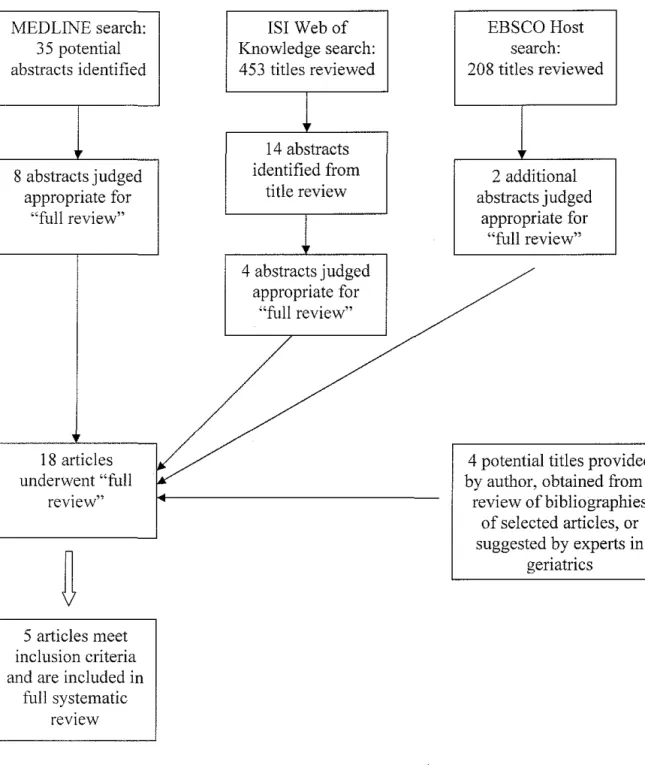
Six hundred ninety-six titles were identified by the pre-specified search strategies (Figure 1). After review of the title and abstracts, fourteen articles were initially found to meet the search criteria. Four additional articles were submitted to full review as
potentially relevant, based on the suggestion ofthe study author or by other experts in geriatric medicine. In total, eighteen articles were reviewed for potential inclusion in the final systematic review. 33'50
Of the eighteen articles submitted for full review, thirteen articles did not meet inclusion/exclusion criteria and five articles33'37 were determined to describe
interventions that resulted in the enhanced transition of appropriate medication lists or advanced directives between skilled nursing facilities and acute care hospital settings, whether to the emergency department or inpatient units. Of these articles, two articles36· 37
described interventions that resulted in the enhanced transmission of advanced
directives, two articles33· 34 described interventions that resulted in the better transmission
of medication lists, and one35 article described an intervention that accomplished both of these goals.
Of the three studies33-35 that described interventions that affected transmission of
Of the three studies35-37 that described interventions that affected the transmission
of advanced directives, one36 was an observational study of the effect of an intervention upon a cohort of individuals, one study7 involved a chart review performed before and after an intervention, and the final study5 was the combined prospective observational study and cross-sectional convenience survey described above.
- - - · ·
Reference Design/Presence of Comp<~:rison Group
---3~--~~----. .. .
Crotty et al. · Smgle-blmd RCT.
Barry et al. 34
Madden et a!. 35
Tolle et al.36
Terrell ct al.37
Comparison group described.
Observational study. No comparison group described.
Prospective observational study with cross-sectional survey. No comparison group described.
Prospective chart review of cohort of individuals. No comparison group described.
Observational study pre and post-intervention. Comparison group described.
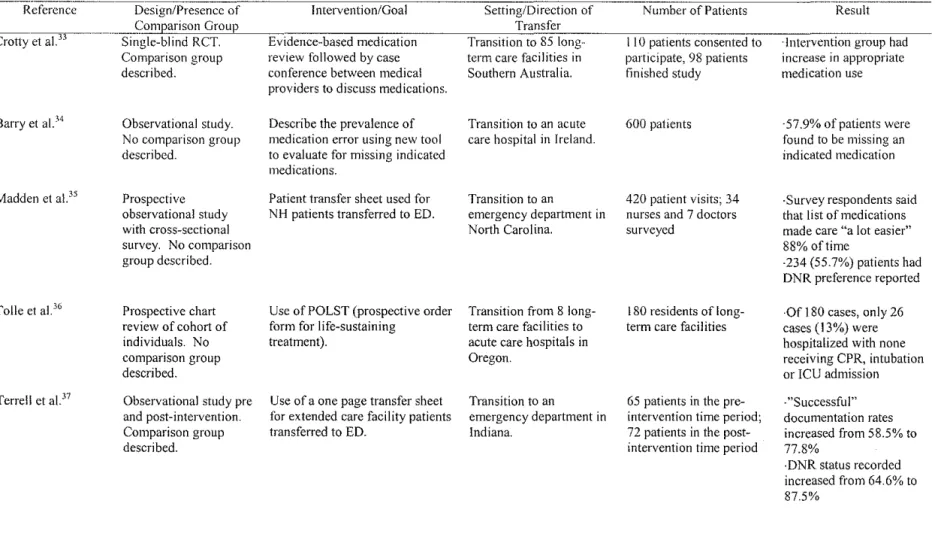
Table 1. Overview of 5 Studies Included in Review
Intervention/Goal
Evidence-based medication review followed by case conference between medical providers to discuss medications.
Describe the prevalence of medication error using new tool to evaluate for missing indicated medications.
Patient transfer sheet used for NH patients transferred to ED.
Use of POLST (prospective order form for life-sustaining
treatment).
Use of a one page transfer sheet for extended care facility patients transferred to ED.
Setting/Direction of Transfer Transition to 85 long-term care facilities in Southern Australia.
Transition to an acute care hospital in Ireland.
Transition to an
emergency department in North Carolina.
Transition from 8 long-term care facilities to acute care hospitals in Oregon.
Transition to an
emergency department in Indiana.
Number of Patients
II 0 patients consented to participate, 98 patients finished study
600 patients
420 patient visits; 34 nurses and 7 doctors surveyed
180 residents of long-term care facilities
65 patients in the pre-intervention time period; 72 patients in the post-intervention time period
Result
·Intervention group had increase in appropriate medication use
·57.9% of patients were found to be missing an indicated medication
-Survey respondents said that Jist of medications made care "a lot easier" 88% of time
·234 (55.7%) patients had DNR preference reported
·Of !80 cases, only 26 cases ( 13%) were hospitalized with none receiving CPR, intubation or ICU admission
·"Successful" documentation rates increased from 58.5% to 77.8%
MEDLINE search: 3 5 potential abstracts identified
8 abstracts judged appropriate for
"'full review"
18 articles underwent "full
review"
5 articles meet inclusion criteria and are included in
full systematic review
lSI Web of Knowledge search: 453 titles reviewed
14 abstracts identified from
title review
4 abstracts judged appropriate for
"full review"
EBSCO Host search: 208 titles reviewed
2 additional abstracts judged
appropriate for "full review"
4 potential titles provided by author, obtained from a
review of bibliographies of selected articles, or suggested by experts in
geriatrics
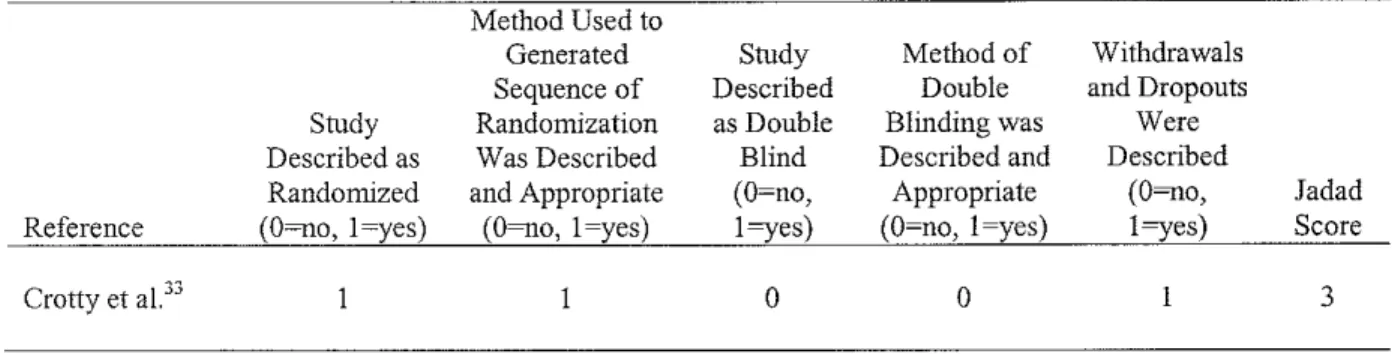
Table 2. Jadad score for Quality Assessment of Randomized Control Trial: Low (0 to 2), Moderate (3 to 4 ), and High ( 5)
Method Used to
Generated Study Method of Withdrawals
Sequence of Described Double and Dropouts
Study Randomization as Double Blinding was Were
Described as Was Described Blind Described and Described
Randomized and Appropriate (O~no, Appropriate co~o,
Reference co~o. !~yes) co~o. !~yes) I ryes) (O~no, !~yes) !ryes)
Crotty et al.33 0 0
Interventions to Improve Communication of Appropriate Medication Regimens
Of the five included studies, three33-35 addressed the transfer of appropriate
medication regimens for elderly patients transitioning into a hospital or a nursing home. Each of the studies were of differing research design and described different interventions in settings in three countries that were performed among a varying number of patients with a range of results.
Crotty el al33 describe a single blind randomized control trial of a pharmacy consultant intervention powered to detect an increase in appropriate medication use for patients admitted to skilled nursing facilities in Southern Australia after hospitalization. Based on prior studies, the authors predicted that 110 patients would be needed in both study arms to have a 90% power to detect a 4.0 point decrease in the MAl (Medication Appropriateness Index) used in this study over an 8 week period. In turn, 686 patients were considered for inclusion; of these, 122 met inclusion criteria and 110 eventually consented to participation and were enrolled in the study. At baseline, the control and intervention patients were similar in most aspects, except in one area: the intervention group was slightly healthier, though this difference was not statistically significant.
Jadad Score
At discharge from the hospital, the control group was given standard pharmacy care while the intervention group's providers were provided with an evidence-based medication review of the patient's medications within 10 to 14 days oftheir admission to the nursing home. Between post-hospital days 14 and 28, the study pharmacist then met with the subjects' medical providers and pharmacists to review appropriateness of the patient's medication regimen. Approximately 10 weeks after hospital discharge, other pharmacists, blinded to group assigrnnent, conducted medication reviews of both control and intervention patients' medication regimens and calculated a MAI score.
Subsequently, a chart review was undertaken to assess for secondary outcomes: unplanned emergency department visits, adverse drug events, falls, changes in patient mobility, as well as evidence for confusion or increased pain.
Using an intention-to-treat analysis, Crotty eta!. found a statistically significant difference between the MAI score of control and intervention patients of 4 points on an
18 point scale, indicating that intervention patients had more appropriate use of
medications than control patients at the study's conclusion. Similar numbers of patients were lost from each study arm during the course of the interventiol). When these patients were excluded from the analysis, intervention patients showed better controlled pain scores and lower hospital usage rates than control patients.
In the second identified study, Barry et al.34 describe the development and
Delphi process. The instrument was designed to detect prescribing omissions in patients at the time of hospitalization. Subsequently, the authors report on data they collected on the discovered rates of omitted appropriate medication use in elderly hospitalized
patients.
The START instrument comprises 22 evidence-based prescribing indicators for medications that the expert panel felt should be used frequently by geriatric patients. It covers 6 different organ systems and includes indications to use medications in a variety of clinical circumstances, from ace-inhibitors after an acute myocardial infarction to calcium and vitamin D supplementation for maintenance of bone health. In a series of 600 elderly patients sequentially admitted to the hospital, Barry eta!. report that 57.9% of patients were found to have an omitted (never prescribed) medication that did not have an obvious contraindication in their pharmacy regimen. The most frequently omitted
medications were atorvastatin in !56 patients who had an indication for its use, warfarin in 57 patients with chronic atrial fibrillation, and ramipril in 48 patients with chronic heart failure. There was no report in this study of whether the introduction of the START instrument in this hospital resulted in these patients being placed successfully on these indicated medications by their medical providers.
Form" and adapted to the local community's needs. Included on this form was a section where the patient's current medication regimen could be recorded, as well as the time of the last given dose of medication.
Over a 12-month period of observation, results were collected on the
demographics and reasons for transfer of 420 patients who were seen in the emergency department from nine nursing facilities. No information was collected as to the accuracy of transmitted medication administration lists. However, during the course of the study, a survey regarding the transfer form's ability to improve providers' ability to care for their patients was administered to a cross-sectional convenience sample of 34 nurses and 7 physicians in the emergency department. Of these 41 providers surveyed, 88 %replied that the list of medications included in the transfer form document made providing care to these elderly patients "a lot easier" than previously.
Interventions to Improve Communication of Advanced Directives
Of the five studies analyzed in this systematic review, three35-37 addressed the
transfer of advanced directives for elderly patients into a hospital or a nursing home. Each of the studies was of differing research design and described different interventions that were performed among differing numbers of patients.
however, there is no indication of how often providers were aware of the presence of DNR orders or living will forms for this same population of patients presenting to the emergency department prior to this intervention .
In the second identified study that addresses the communication of advanced directives, Tolle et al36 describe the influence of a POLST (prospective order form for life-sustaining treatment) on end-of-life care provided to residents of 8 skilled nursing facilities in Oregon. Performing a chart review of a prospectively identified cohort of 180 individuals who had a POLST form completed with an indication to "transfer only if comfort measures fail," the authors collected data over a 12-month period for all patients on discharges, health status changes, hospitalizations, and deaths as well as admitting diagnosis, treatment provided, and circumstances of transfer if a patient was admitted to the hospital. Presence of the POLST form in the patient's chart was also recorded at the end of the study period.
In this population of elderly nursing home residents, Tolle et a!. report that POLST forms were found in 169 of 180 (94%) patients at the end of the study period, with a statement that on "occasion" the form was not transferred with the patient appropriately across care settings. There are no hard figures, however, reported in this study as to the frequency that POLST forms were available on patient transfer from the skilled nursing facility to the hospital. Over the course of a year, in this population of
26 cases, no patient was admitted to an intensive care unit, intubated, or received CPR. Among the patients who died in this study, 95% died in their skilled nursing facility. In the study, however, no hospitalization rates or rates of ICU admission, ventilator use, or CPR administration were reported for this population prior to this intervention.
In the third identified study, Terrell et al.37 report the results of a pre- and post-intervention observational study on the "successful" communication of 11 pieces of medical information for nursing home patients transferring to an emergency department in Indiana after the implementation of a one page ED transfer form. The transfer form used in this study was developed from interviews with "out-of-hospital personnel" as well as emergency room doctors and nurses. Chart abstraction was performed to assess presence of 11 pieces of medical information in the charts of all patients transferring from one of ten "study" nursing homes during a three month pre-intervention period and then again, during a three month period after implementation of the transfer form. The 11 pieces of medical information to be listed on the transfer form included the patient's name and demographic information, the patient's usual mental and functional status, the reason for the patient's transfer and the patient's DNR status.
DISCUSSION
Elderly nursing home residents transitioning care between skilled nursing facilities and acute care hospitals are often beset by a combination of physical and cognitive impairments that leave them unable to aid in the transfer of key information needed to ensure the continuity of their health care. Though medication errors have been identified as a major source of morbidity and mortality for patients transitioning between nodes on the continuum of care29' 30, there is no clear, single intervention identified in our
literature search that has been shown to improve the communication of accurate and appropriate medication lists bidirectionally between nursing homes and hospitals. In this systematic review, only three articles were identified in the literature that described interventions meant to evaluate the communication of appropriate medication lists for patients on transfer. And, though these studies utilized a variety of research designs and were conducted in a variety of settings in three different countries, they illustrate the potential feasibility of distinct aspects of separate interventions to contribute to the improved communication of medication regimens.
department providers found these transfer forms an improvement over the usual method of communicating medication lists.
In further studies, Barry et al. and Crotty el al. describe interventions to evaluate the medication lists of patients either admitted to or discharged from the hospital,
respectively.JJ, 34 Barry et al describe the design and testing of a new tool to evaluate for missing indicated medication for patients admitted to the hospital. 34 While this tool does not evaluate the accuracy of a patient's medication list on admission, the tool may be useful in evaluating this list for potentially omitted and indicated medications. Crotty et al. demonstrate that a pharmacist-led review of patients' medication lists on admission to a long-term care facility from the hospital can increase the appropriate use of
medications33 Both of these studies, though not seeking to improve the accurate transmission of medication administration records, demonstrate that some form of review, whether done by use of a tool or performed by a pharmacist, may identify omitted medications and increase appropriate medication use on transfer. This outcome may ultimately be a more important goal to achieve than just accurately reporting the medication administration record on patient transfer.
Honoring a patient's recorded wishes is a central goal in modern, patient-centered health care. Often, however, the documents that facilitate the communication of these wishes are not present at the time of a patient's transfer to the hospital.31• 32 Even when a
transfer sheet is used, data from work by Madden et al. show that only 55.7% of nursing home patients have their DNR preference reported on transfer to an emergency
increased the recording of patients' DNR statns from 64.6% to 87.5%37 And, among a cohort of 180 residents of long-term care facilities in Oregon who desired transfer to a hospital "only if comfort measures fail," Tolle eta!. demonstrate that with use of the POLST form only 26 cases were hospitalized with none receiving CPR, intnbation or ICU admission36 Importantly, from these studies, we can conclude that there is evidence that a hospital transfer document may improve the communication of resuscitation
preferences for skilled nursing facility patients transitioning to a hospital.
current methods oftransitioning patients between nodes on the continuum of care if we are to ensure the delivery of coordinated, high quality health services.
From this review of the literature, it is evident that there is a paucity of articles that test interventions to improve the transitional care provided to vulnerable and frail elderly as they transfer between hospitals and nursing homes. Beyond this, it is clear that the authors of the studies included in our review have used differing outcome measures to define their vision of what constitutes the improved provision of care. Fundamentally, the fact that there is no standardized set of clinical outcomes used in these studies can be seen as a reflection of the present difficulty in defining high quality transitional care and of the relative youth of this field of scientific inquiry.
Indeed, the body of literature in transitional care is hampered by the absence of universally agreed-upon and applicable descriptions of which end-points define high quality transitions. 51 Researchers in the field have previously described various
processes that they believe are associated with high quality care and have developed tools that address discrepancies for some transitions made by some populations of elderly patients 52-55 Without operational definitions of quality transitional care though and without a national body coordinating research efforts, researchers risk continuing to work towards disparate care end points, in uncoordinated endeavors situated in siloed research centers. To date, policy statements on the importance of transitional care have been made without randomized control trial-based evidence of just what excellent transitional care should look like in all its forms. Ultimately, we may need the results of larger,
organizations such as the Centers for Medicare and Medicaid Services to develop operational definitions of high quality transitional care.
Limitations
This study may be limited by the search strategy employed, its review of English-language only articles, and publication bias. To limit the impact of these potential biases, the search strategy was developed with the assistance of a research librarian and articles that were known to the author previously were included in the review. It is
acknowledged that the interventions described in the reviewed studies were performed in a variety of health care systems and with a limited number of patients, which may
constrain the external validity of their results. CONCLUSION
The accurate communication of key patient information is one of several
REFERENCES
1. World Health Organization. Active ageing: A policy framework. World Health Organization; April2002. Available from:
http://whqlibdoc.who.int/hq/2002/WHO _NMH_NPH _ 02.8.pdf. Accessed January 26, 2008.
2. Spillman BC, Lubitz J. The effect of longevity on spending for acute and long-term care. N Eng! J Med. 2000;342:1409-1415.
3. Centers for Disease Control and Prevention (CDC). State of aging and health in america 2007 .. 2007. Available from: http://www.cdc.gov/aging/pdf/saha_2007.pdf. Accessed March 21, 2008.
4. Boult C, Boult LB, Morishita L, Dowd B, Kane RL, Urdangarin CF. A randomized clinical trial of outpatient geriatric evaluation and management. JAm Geriatr Soc.
2001 ;49:351-359.
5. Hunter W, Wang W, Worsley A. Retirement planning and expectations of australian babyboomers: Are they ready to retire? Ann NY Acad Sci. 2007;1114:267-278.
6. Institute of Medicine. Report brief: Retooling for an aging america: Building the health care workforce. 2008. Available from:
http://www .iom.edu/Obj ect.File/Master/53/507/Healthcare Workforce_ RB. pdf.
from: http://www3.brookings.edu/views/articles/200705frey.pdf. Accessed January 26, 2008.
8. Evans RG, McMaster University, Program for Research on Social and Economic Dimensions of an Aging Population. Apocalypse no: Population Aging and the Future of
Health Care Systems. SEDAP Research Program; 2001.
9. National Institute on Aging.
Dramatic changes in U.S. aging highlighted in new census [press release]. . March 9, 2006. Available from: http://www.nih.gov/news/pr/mar2006/nia-09.htm. Accessed March 21,2008.
I 0. Centers for Disease Control and Prevention (CDC), National Center for Health Statistics. Trends in health and aging ... Available from:
http://www.cdc.gov/nchs/agingact.htm. Accessed March 21, 2008.
II. Manton KG. Recent declines in chronic disability in the elderly U.S. population: Risk factors and future dynamics. Annu Rev Public Health. 2007.
12. Manton KG, Lamb VL, Gu X. Medicare cost effects of recent U.S. disability trends in the elderly: Future implications. J Aging Health. 2007;19:359-381.
13. Seshamani M, Gray A. Ageing and health-care expenditure: The red herring argument revisited. Health Econ. 2004;13:303-314.
14. Bodenheimer T. High and rising health care costs. part 1: Seeking an explanation.
15. Institute of Medicine (U.S.). Connnittee on Quality of Health Care in America, ebrary I. Crossing the quality chasm. Washington, D.C.: National Academy Press; 2001:337. Available from:
http :1/eresources.lib. unc.edu/ external_ db/external_ database_ auth.htrnl? A =P% 7CF=N% 7 CID=1405%7CREL=AAL%7CURL=http://libproxy.lib.unc.edu/login?url=http://site.ebr ary.com/lib/uncch/Doc?id= 10032412.
16. Jencks SF, Cuerdon T, Burwen DR, eta!. Quality of medical care delivered to medicare beneficiaries: A profile at state and national levels. JAMA.
2000;284:1670-1676.
17. Wenger NS, Solomon DH, Roth CP, et al. The quality of medical care provided to vulnerable community-dwelling older patients. Ann Intern Med. 2003; 139:740.
18. Reuben DB. Better care for older people with chronic diseases: An emerging vision.
JAMA: The Journal of the American Medical Association. 2007;298:2673.
19. Rockwood K, Fox RA, Stolee P, Robertson D, Beattie BL. Frailty in elderly people: An evolving concept. CMAJ. 1994;150:489-495.
20. Fried LP, Fem1cci L, Darer J, Williamson JD, Anderson G. Untangling the concepts of disability, frailty, and comorbidity: Implications for improved targeting and care. J
Gerontal A Bioi Sci Med Sci. 2004;59:255-263.
21. Hamerman D. Toward an understanding of frailty. Ann Intern Med.
22. Saliba D, Elliott M, Rubenstein LZ, et a!. The vulnerable elders survey: A tool for identifying vulnerable older people in the community. JAm Geriatr Soc. 2001 ;49: 1691-1699.
23. Katz P, Karuza J. Chapter 16- nursing-home care. In: Geriatrics Review Syllabus: A Core Curriculum in Geriatric Medicine. 6th ed. New York, NY: American Geriatrics Society; 2006:119-125.
24. Murtaugh CM, Litke A. Transitions through postacute and long-term care settings: Patterns of use and outcomes for a national cohort of elders. Med Care. 2002;40:227 -236.
25. Coleman EA. Falling through the cracks: Challenges and opportunities for improving transitional care for persons with continuous complex care needs. JAm Geriatr Soc.
2003;51 :549-555.
26. Coleman EA, Boult C, American Geriatrics Society Health Care Systems Committee. Improving the quality of transitional care for persons with complex care needs. JAm Geriatr Soc. 2003;51 :556-557.
27. Terrell KM, Miller DK. Critical review of transitional care between nursing homes and emergency departments. ANNALS OF LONG TERM CARE. 2007;15:33.
29. Page RL,2nd, Ruscin JM. The risk of adverse drug events and hospital-related morbidity and mortality among older adults with potentially inappropriate medication use. Am J Geriatr Pharmacother. 2006;4:297-305.
30. Coleman EA, Smith JD, Raha D, Min SJ. Posthospital medication discrepancies: Prevalence and contributing factors. Arch Intern Med. 2005;165:1842-1847.
31. Travers D, Kjervik D, Katz L. Insufficient access to elderly patients' advance directives in the emergency department. In: Key Aspects of Preventing and Managing
Chronic Illness. Springer Pub. Co.: Springer Pub. Co.; 2001:207.
32. Morrison RS, Olson E, Mertz KR, Meier DE. The inaccessibility of advance
directives on transfer from ambulatory to acute care settings. JAMA. 1995;274:478-482.
33. Crotty M, Rowett D, Spurling L, Giles LC, Phillips PA. Does the addition of a pharmacist transition coordinator improve evidence-based medication management and health outcomes in older adults moving from the hospital to a long-term care facility? results of a randomized, controlled trial. Am J Geriatr Pharmacother. 2004;2:257-264.
34. Barry P, Gallagher P, Ryan C, O'mahony D. START (screening tool to alert doctors to the right treatment) an evidence-based screening tool to detect prescribing omissions in elderly patients. Age Ageing. 2007.
35. Madden C, Garrett J, Busby-Whitehead J. The interface between nursing homes and emergency departments: A community effort to improve transfer of information. A cad
36. Tolle SW, Tilden VP, Nelson CA, Dunn PM. A prospective study of the efficacy of the physician order form for life-sustaining treatment. JAm Geriatr Soc. 1998;46:1097-1102.
37. Terrell KM, Brizendine EJ, Bean WF, eta!. An extended care facility-to-emergency department transfer form improves communication. Acad Emerg Med. 2005;12:114-118.
38. Midlov P, Bergkvist A, Bondesson A, Eriksson T, Hoglund P. Medication errors when transferring elderly patients between primary health care and hospital care. Pharm
World Sci. 2005;27:116-120.
39. Pauls MA, Singer PA, Dubinsky I. Communicating advance directives from long-term care facilities to emergency departments. J Em erg Me d. 200 I ;21 :83-89.
40. Ghusn HF, Teasdale TA, Jordan D. Continuity of do-not resuscitate orders between hospital and nursing home settings. JAm Geriatr Soc. 1997;45:465-469.
41. Jones JS, Dwyer PR, White LJ, Firman R. Patient transfer from nursing home to emergency department: Outcomes and policy implications. Acad Emerg Med.
1997;4:908-915.
42. Hansen FR, Spedtsberg K, Schroll M. Geriatric follow-up by home visits after discharge from hospital: A randomized controlled trial. Age Ageing. 1992;21 :445-450.
44. Morrison RS, Olson E, Mertz KR, Meier DE. The inaccessibility of advance
directives on transfer from ambulatory to acute care settings. JAMA. 1995;274:478-482.
45. Schmidt TA, Hickman SE, Tolle SW, Brooks HS. The physician orders for life-sustaining treatment program: Oregon emergency medical technicians' practical experiences and attitudes. JAm Geriatr Soc. 2004;52: 1430-1434.
46. Dai YT, Chang Y, Hsieh CY, Tai TY. Effectiveness of a pilot project of discharge planning in taiwan. Res Nurs Health. 2003;26:53-63.
47. MercerS, Robinson S. Educating nursing home nurses on efficient use of the emergency department. Journal of Emergency Nursing. 2008;34:74-76.
48. Naylor MD, Bowles KH, Brooten D. Patient problems and advanced practice nurse interventions during transitional care. Public Health Nurs. 2000; 17:94-102.
49. Boockvar K, Fishman E, Kyriacou CK, Monias A, Gavi S, Cortes T. Adverse events due to discontinuations in drug use and dose changes in patients transferred between acute and long-term care facilities. Arch Intern Med. 2004;164:545-550.
50. Lahn M, Friedman B, Bijur P, Haughey M, Gallagher EJ. Advance directives in skilled nursing facility residents transferred to emergency departments. Acad Emerg Med.
2001;8:1158-1162.
Measurement: Accelerating Improvement. Washington, D.C.: National Academies Press; 2006:250.
52. Halasyamani L, Kripalani S, Coleman E, et a!. Transition of care for hospitalized elderly patients--development of a discharge checklist for hospitalists. J Hosp Med.
2006;1 :354-360.
53. Kripalani S, Jackson AT, Schnipper JL, Coleman EA. Promoting effective transitions of care at hospital discharge: A review of key issues for hospitalists. J Hosp Med.
2007;2:314-323.
54. Smith JD, Coleman EA, Min SJ. A new tool for identifying discrepancies in postacute medications for community-dwelling older adults. American Journal of Geriatric
Pharmacotherapy. 2004;2:141-148.
55. Coleman EA, Parry C, Chalmers SA, ChughA, Mahoney E. The central role of performance measurement in improving the quality of transitional care. Home Health