1
A Context-Aware Method for Verifying User
Identity in Pervasive Computing Environments
Mohammed M. Hassoun Al-Jawad
School of Computing, Science and Engineering
University of Salford
Manchester, UK
Submitted in Partial Fulfilment of the Requirements of
I
ABSTRACT
The necessity of verifying user identity is a crucial element of any system to avoid potential identity attacks. Selecting an appropriate verification method impacts on the system’s overall behaviour since it is a trade-off between security and usability. It is even more significant when that system is situated in a pervasive environment since this type of environment is more vulnerable to such attacks. Any proposed method for this environment needs to be seamless (non-intrusive) and secure. As users in such environments tend to access a variety of resources across multiple networking domains, verifying their identity in a secure way requires a real-time verification method. Therefore, a seamless verification process with a reliable level of security is required.
Most existing methods of user identity verification are obtrusive, as they are not devised to work within a pervasive computing environment. This obtrusiveness is particularly germane when the main system uses more than one method in the verification process to enhance system security. Most existing solutions are either unaware of the context of the user, or context-aware but rely on part of the context. The context (current status) of a user can be determined through some primitives such as time and location, which are interpreted in a meaningful user context such as role or privilege.
II
about the user’s context. The rules of the fuzzy system were derived by extracting experts’ opinions and casting that knowledge into a fuzzy inference engine. The inference engine makes the system capable of taking decisions in a similar way to that of experienced security personnel. The output of the inference engine is a trust value which reflects how much trust the system has in the claimed identity of the user. Thus, the system interprets the current context of the user into a trust value which eventually enables the system to determine the trustworthiness of the claimed identity. Results obtained from extensive testing of the implemented system on the designated simulator show that the proposed approach as a primary method for user identity verification in pervasive computing environments maintains satisfactory rates in specificity, sensitivity and accuracy. It maintains two aspects: security and seamless access to secured resources in pervasive computing environments.
III
TABLE OF CONTENTS
ABSTRACT ... I TABLE OF CONTENTS ... III
TABLE OF FIGURES ... 1
LIST OF TABLES ... 3
LIST OF ACRONYMS ... 4
ACKNOWLEDGEMENT ... 6
Chapter 1 Introduction ... 7
1.1 Introduction ... 7
1.2 Research Problem ... 8
1.3 Research Motivation ... 10
1.4 Research Aim and Objectives ... 11
1.5 Research Questions ... 12
1.6 Research Methodology ... 12
1.7 Thesis Layout ... 15
Chapter 2 Review of Digital Identity and Context-Awareness ... 16
2.1 Introduction ... 16
2.2 Pervasive Computing ... 17
2.3 Related Work ... 19
2.4 Identity ... 20
2.4.1 Identity Management ... 22
2.5 Authentication Factors ... 23
2.5.1 Knowledge (something you know) ... 24
2.5.2 Possession (something you have) ... 24
IV
2.6 Context-Awareness ... 25
2.6.1 Context and Context-Aware ... 25
2.6.2 Context-Aware Taxonomy ... 30
2.6.3 Context Acquisition (Sensing)... 32
2.6.4 Context Interpreting ... 33
2.7 Summary ... 36
Chapter 3 CAIV Analytical Model ... 38
3.1 Introduction ... 38
3.2 Context Parameters ... 40
3.2.1 Mapping an Activity to User Preferences ... 43
3.2.2 Mapping an Activity to User’s Ambient Objects ... 45
3.2.3 Mapping an Activity to User History ... 47
3.2.4 Mapping an Activity to User Calendar ... 51
3.3 Conclusion ... 54
Chapter 4 CAIV Architecture and Design ... 55
4.1 Introduction ... 55
4.2 Overview of the CAIV Inference ... 56
4.3 Components of an Identity Inferring System ... 56
4.3.1 User Preferences ... 58
4.3.2 Calendar ... 59
4.3.3 Ambient Objects ... 61
4.3.4 History Logs ... 62
4.4 CAIV Trust Algorithm ... 63
4.5 CAIV Scenarios ... 66
4.5.1 Scenarios ... 68
4.6 The Reasoning Layer Design ... 74
4.6.1 Fuzzy Rules ... 77
V
4.7 Summary ... 85
Chapter 5 CAIV Implementation and Testing ... 86
5.1 Introduction ... 86
5.2 Test Data Structure and Generation ... 87
5.2.1 Datasets ... 88
5.3 Simulator Environment ... 89
5.4 CAIV Environment System Design ... 90
5.5 CAIV Simulation Module ... 93
5.6 CAIV Prototype ... 95
5.7 Summary ... 102
Chapter 6 Critical Evaluation ... 103
6.1 Overview ... 103
6.2 Synthetic Data ... 104
6.3 Threshold Selection ... 106
6.3.1 Experiment 1 ... 106
6.3.2 Experiment 2 ... 107
6.3.3 Confusion Matrix ... 108
6.3.4 False Negative Rate and False Positive Rate ... 108
6.3.5 Accuracy... 109
6.4 Results ... 114
6.5 Summary ... 114
Chapter 7 Conclusion and Future Work ... 116
7.1 Conclusion ... 116
7.2 Future work ... 119
PUBLICATIONS ... 120
VI
APPENDICES ... 142
Appendix A CAIV Inference Engine Rules ... 142
Appendix B CAIV Prototype on Raspberry Pi 3 Code Sample ... 151
Appendix C Sample Data of Legitimate User History log on 1-7-2016 of Experiment 1 ... 153
Appendix D Sample Data of Illegitimate User History log on 1-7-2016 of Experiment 2 ... 156
Appendix E Experiment 1 Simulator - Python Source Code ... 159
1
TABLE OF FIGURES
FIGURE 1.1: RESEARCH PROCESS FLOW CHART ... 14
FIGURE 2.1: CONTEXT PRIMITIVES (JAROUCHEH, LIU AND SMITH, 2010)... 29
FIGURE 3.1: EVENT COMPONENTS ... 39
FIGURE 3.2: USER PROFILE DEPENDENCY ... 41
FIGURE 4.1 : CAIV PARAMETERS UNION TO INFER USER IDENTITY ... 57
FIGURE 4.2 : CAIV ARCHITECTURE ... 65
FIGURE 4.3: GENERAL FLOW OF CAIV VERIFICATION PROCESS ... 66
FIGURE 4.4 : BUILDING SCENARIOS PHASES ... 67
FIGURE 4.5: OVERVIEW DIAGRAM OF A FUZZY SYSTEM ... 75
FIGURE 4.6: ARCHITECTURE OF A FUZZY EXPERT SYSTEM... 78
FIGURE 4.7 : CAIV FUZZY TRUST MODEL ... 79
FIGURE 4.8 : FUZZY DECISION ENGINE RULES ... 80
FIGURE 4.9 : FUZZY MEMBERSHIP FUNCTIONS OF TRUST LINGUISTIC TERMS (OUTPUT) ... 81
FIGURE 4.10 : FUZZY MEMBERSHIP FUNCTIONS OF INPUT LINGUISTIC TERMS ... 82
FIGURE 4.11: INTERDEPENDENCY BETWEEN TWO CONTEXT PARAMETERS AND TRUST ... 84
FIGURE 4.12: RULES AGGREGATIONS AND OUTPUTS ... 85
FIGURE 5.1 : CAIV SIMULATION PHASES... 89
FIGURE 5.2: CAIV ENVIRONMENT BUILDING MAP ... 90
2
FIGURE 5.4: STATE MACHINE DIAGRAM OF CAIV ... 92
FIGURE 5.5 : SNAPSHOT OF HISTORY LOG TABLE IN THE CAIV SIMULATOR DATABASE ... 95
FIGURE 5.6: CAIV TERMINAL HARDWARE COMPONENTS ... 96
FIGURE 5.7 : BASIC 16X2 CHARACTER LCD (A,B) ... 97
FIGURE 5.8: RFID TAGS ... 97
FIGURE 5.9: CAIV TERMINAL ... 98
FIGURE 5.10 : CAIV TERMINAL (CENTRALISED APPROACH) ... 100
FIGURE 5.11: CAIV TERMINAL (DECENTRALISED APPROACH) ... 100
FIGURE 5.12: PROFILE LOGIN PAGE ... 101
FIGURE 5.13: ADD/MODIFY NEW EVENT PAGE ... 101
FIGURE 6.1: DESTINATION LOCATION FREQUENCIES OF CAIV DATASET OF LEGITIMATE USERS ... 105
FIGURE 6.2: DESTINATION LOCATION FREQUENCIES OF CAIV DATASET OF ILLEGITIMATE USERS ... 105
FIGURE 6.3: HISTORY LOG TABLE ... 107
FIGURE 6.4: FRR RATES OF DIFFERENT THRESHOLDS ... 111
FIGURE 6.5: FAR RATES OF DIFFERENT THRESHOLDS ... 111
FIGURE 6.6: FALSE POSITIVE CASES OF ILLEGITIMATE USER EXPERIMENT, 0.4 THRESHOLD VALUE ... 113
3
LIST OF TABLES
TABLE 2-1: COMMONLY USED PHYSICAL SENSOR TYPES... 33
TABLE 4-1: SAMPLE DATA OF USER PREFERENCES ... 58
TABLE 4-2: SAMPLE DATA OF CALENDAR ... 59
TABLE 4-3: SAMPLE DATA OF AMBIENT OBJECTS ... 61
TABLE 4-4: SAMPLE DATA OF USER’S HISTORY LOGS ... 62
TABLE 4-5: PARAMETERS COMBINATIONS TABLE ... 70
TABLE 4-6: COMPARISON OF TECHNIQUES IN TERMS OF MODELLING CAPABILITIES (GRAY AND MACDONELL, 1997) ... 76
TABLE 5-1: CAIV HARDWARE COMPONENTS TASKS ... 98
TABLE 6-1: CONFUSION MATRIX AND COMMON PERFORMANCE METRICS ... 108
TABLE 6-2: FRR AND FAR RATES OF DIFFERENT THRESHOLDS ... 110
4
LIST OF ACRONYMS
BLE Bluetooth Low Energy
CAIV Context-Aware Identity Verification CIA Credential, Integrity and Availability
DBMS Database Management System
ERD Entity Relationship Diagram
FAR False Acceptance Rate
FN False Negative
FNR False Negative Rate
FP False Positivize
FPR False Positive Rate
FRR False Rejection Rate
H2H Human to Human
H2M Human to Machine
HAK Authentication Methods (Something you Have, You Are and You Know)
IETF Internet Engineering Task Force
5
M2H Machine to Human
M2M Machine to Machine
MAC Media Access Control
NFC Near Field Communication
PC Personal Computer
PIR Motion Motion Passive Infrared Sensor
RFC Request for Comments
RFID Radio Frequency Identification
SAML Security Assertion Mark-up Language
TN True Negative
TP True Positive
Ubicomp Ubiquitous Computing
URI Uniform Resource Identifier
W4H Where, When, Who, What, and How questions
6
ACKNOWLEDGEMENT
First and foremost, I would like to thank my supervisor, Dr. Adil Al-Yasiri, without whose help and support it would not be possible to complete this thesis. His advice and guidance helped me to achieve my research goals. During the research, I occasionally diverted off the right track and he always helped to point me back in the right direction.
My late Dad, my Mum, my wife, my daughter, my son, my friends, brothers and sisters gave me the power and the motivation to complete my research. My Dad’s motivational words are still there in my memory, along with my Mum’s wishes and prayers which bring me up whenever I tumble. The smiles of my wife and my kids which bring me joy. My brothers, sisters and friends encourage and support me in overcoming any difficulties that I have faced.
I thank my sponsor, the Iraqi government, which is represented by the Ministry of Higher Education in Iraq and the Iraqi Cultural Attaché in London. I appreciate their support and help during my journey.
Thanks to our Iraqi troop heroes who sacrificed their lives to defend our homeland. I am inspired by them to proceed and complete my research, regardless of any difficulties.
To my beloved country, Iraq, which is still recovering from the deep wounds caused by inhumane attacks faced over the last six decades.
7
Chapter 1
Introduction
1.1
Introduction
The proliferation of smart things over the last decade has brought a mature smart environment to the fore. The smart environment (a pervasive computing environment) has different characteristics and challenges that make it more vulnerable than a traditional computing environment.
Context-awareness is one pervasive computing characteristic. It emerges as a key area of research in pervasive computing. Context-aware systems can adapt their operations to the current context of the user without explicit user intervention and thus can increase usability and effectiveness by taking environmental context into account (Baldauf, 2007). Context-aware solutions can be used in different aspects of our life, e.g. healthcare, industry, tourism, education and others. However, pervasive computing has both challenges and opportunities.
8
main authentication methods to verify user’s identity. In this thesis, HAK is used as an abbreviation of those three most common authentication methods, namely, something you Have, something you Are, and something you Know. Verification achieved by traditional HAK methods have many drawbacks in term of usability, latency, complexity, security and privacy; therefore, there is a need to devise a new method which is tailored and designed to the pervasive environment, which is one of the motivations behind our proposal.
1.2
Research Problem
9
Da Rocha & Endler (2012) and Chen & Kotz (2000) argued that location is the most dominant context in use while others are rarely used. “Only location-aware applications have been widely deployed, producing some commercial products” (Da Rocha and Endler, 2012). Covington et al. (2002) stated that “We can no longer assume that user “sessions” will persist for extended periods with the same authentication and authorization credentials”.
For the reasons above, a new unobtrusive and non-distractive real time verification method of user identity is required for such a dynamic and challenging environment. The new method has distinctive features to overcome the current challenges with existing approaches. It needs to maintain the available context to determine whether a particular activity is performed by a trusted user or an intruder. It will be argued that user context can be used to ascertain a level of trust of that user activity. Furthermore, Li, Martínez and Rubio (2017) described the benefit of maintaining the available context as the key to achieve context awareness.
10
1.3
Research Motivation
11
1.4
Research Aim and Objectives
This research aims to develop a new verification method of user identity which relies on multi-context parameters. The method guarantees a seamless verification process. Added to this, there are five specific objectives which are illustrated below:
i. To understand context parameters of pervasive computing environment and discover the association between them and the user identity.
ii. To propose a new method that relies on multi-context parameters to verify a user’s identity.
iii. To speed up the verification process by reducing the lengthy initial learning process by relying on a proper reasoning method.
iv. To build a simulator mimicking real scenarios of the system to test and evaluate the performance of the CAIV method.
v. To build a prototype of the CAIV method and integrate it with an information system.
12
1.5
Research Questions
In the conducted research, two key questions are addressed which are illustrated below: i. What are the relevant context parameters that we can use to verify a user’s identity?
ii. What is the best reasoning method to predict a user’s identity by using these parameters?
1.6
Research Methodology
Research has more than one definition and different types. Research interoperates with logic which is part of a scientific method. The research type can be selected according to the research environment.
Ostle & Mensing (1975) define research as “An inquiry into the nature of, the reasons for, and the consequences of any particular set of circumstances, whether these conditions are experimentally controlled or recorded just as they occur”. Added to that, it implies those researchers who are interested in the repeatability of the results and their extension to more general and complicated scenarios, while Kothari (2004) defines research as a scientific investigation art which leads to adding an original contribution to existing knowledge. This investigation is going to be achieved by researchers. Kothari stated that the duty of researchers is to find the problem and formulate it to be susceptible to research. That problem (the research problem) needs to be solved in a systematic way which is called a research methodology.
13
“Scientific method attempts to achieve this ideal by experimentation, observation, logical arguments from accepted postulates and a combination of these three in varying proportions.” (Ostle and Mensing, 1975). Logic plays a significant role in formulating propositions explicitly and accurately in the scientific method. The purpose of experimentation is to test the hypotheses and find if there is a new relationship among variables if existed (Kothari, 2004).
Hence, the research involves the testing of the precision of CAIV against different situations. Therefore, the adopted research methodology is based on empirical research and the scientific method. Empirical research relies on experience or observation; the research conclusions are based on data which are capable of being verified by observation or experiment.
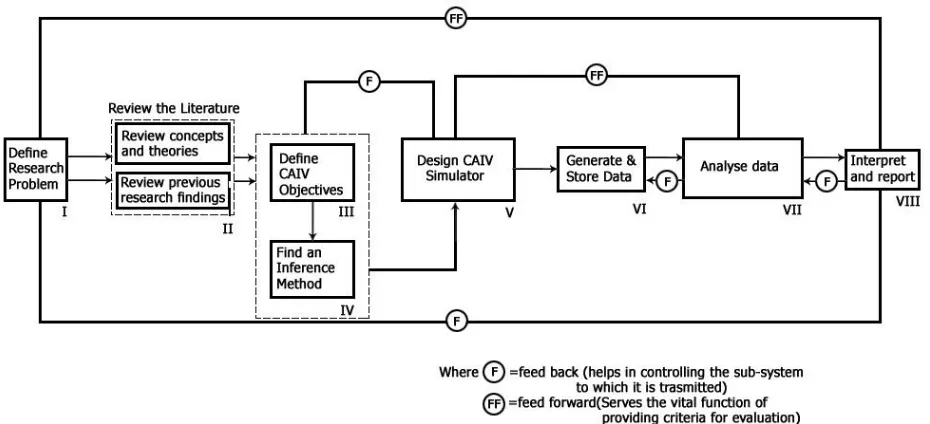
The following steps describe the research methodology process according to the adopted methodology:
i. Identify the research problem by relying on the state of the art.
ii. Perform a literature review of previous studies.
iii. Review some related work to specify the most significant parameters of the context. Then select those parameters to be applied as an input to the system.
iv. Define research objectives.
v. Find an inference method that complies with the research objectives.
vi. Develop a framework based on the selected inference method in step v.
14
[image:21.612.87.552.186.398.2]viii. Evaluate the developed system which is built according to the proposed framework.
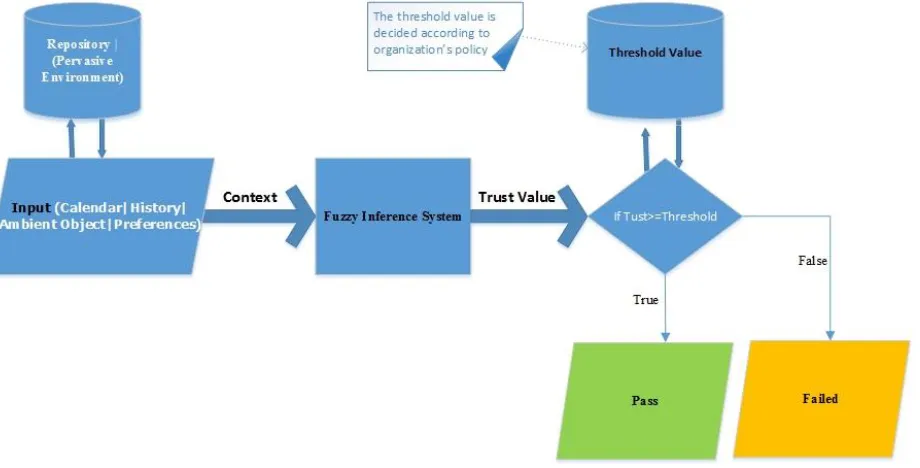
Figure 1.1 shows the CAIV research process. It illustrates the steps required to define the problem, formulate the solution, design, test and interpret the results.
15
1.7
Thesis Layout
The thesis is organised as follows.
➢ Chapter One gives an introductory description of my approach performance and goals as well as challenges and limitations. Furthermore, research objectives and questions are enumerated.
➢ Chapter Two explores the literature review and lists some related work. This includes identity, authentication factors, fuzzy logic and context-awareness. It discussed the reason behind using fuzzy logic and how this makes the solution more elastic.
➢ Chapter Three presents an analytical model of the system.
➢ Chapter Four gives an overview of the CAIV elements, architecture, scenarios and prediction method selection.
➢ Chapter Five reviews the dataset description and design, the simulator design and implementation and the CAIV prototype.
➢ Chapter Six presents the system’s dataset generation, experiments implementation, threshold selection and a discussion of the result.
16
Chapter 2
Review of Digital Identity and
Context-Awareness
2.1
Introduction
17
computing environment device such as a desktop computer is situated in a fixed location and belongs to a certain domain while a pervasive computing device, for example, a tablet, may be used in different locations and across multiple domains. Moving the user within a smart environment makes the system request the user’s identity verification every time the user wishes to access a secure facility.
The process of verifying a user’s identity in a pervasive computing environment is a real-time identity verification. It requires an instant response to the user’s request and at the same time protects the user from any identity attack. This means that any proposed solution encounters a trade-off between security and usability, which remains an open issue. Context-awareness is an approach that is used to facilitate the interaction between the user and the system. There is a potential benefit of using it in the identity verification process.
2.2
Pervasive Computing
18
are surrounding the device and these variables change over time. For instance, devices move among various domains within a specific environment and need to interact with the system’s environments in these domains. There are different definitions, synonyms, challenges and opportunities within a pervasive computing environment.
Pervasive computing is also described as ubiquitous computing (ubicomp), ambient intelligence, everywhere (Greenfield, 2010), physical computing, the internet of things (IoT) or haptic computing. Each term asserts a specific aspect; however, they share common aspects such as portability, connectivity, usability and adaptability.
Weiser (1991) defined pervasive computing as “The most profound technologies are those that disappear. They weave themselves into the fabric of everyday life until they are indistinguishable from it”. Moreover, he described pervasive computing as invisible computing and calm technology.
19
2.3
Related Work
The state of the art shows different approaches which have used context-awareness in various areas such as healthcare, daily activity, security, etc. These approaches use different parameters from the context to facilitate the interaction between the user and the systems in the pervasive environment and make that interaction seamless. Furthermore, there are several security approaches that also use context to enhance the identity verification process.
Jia et al. (2014) proposed to adjust the authentication configuration of the user according to the context, and they stated that it is a trade-off between security and convenience while the user is in different contexts.
Maintaining limited parameters is another issue in using context-awareness in security. Nishiki & Tanaka (2005) used two parameters from context: user location and profiles. Jang et al. (2010) used context in security by proposing context-awareness role-based access control (RBAC); however, they relied on the user’s profile and environment, and they tended to infer the service rather than the identity. Other approaches have a limited scope, such as that used by Kim & Lee (2006) that used context-awareness in security but it was limited to the home domain.
20
scope, the CAIV framework will be applied in ubiquitous computing, while there is an approach by Hayashi et al. (2013) in which they used context-awareness to make authentication scalable in a mobile computing environment.
2.4
Identity
There are different definitions of identity in the literature. Deng (2011) defined identity as “the way individuals and groups define themselves and are defined by others on the basis of race, ethnicity, religion, language, and culture” while Taylor (1989) has another definition: “my identity is defined by the commitments and identifications which provide the frame or horizon within which I can try to determine from case to case what is good, or valuable, or what ought to be done, or what I endorse or oppose”. From the two definitions above, it can be concluded that identity can be a claim of owning a facility or it might be the responsibility’s boundaries which embody the person’s identity. Also, Rundle et al. (2007) defined identity as “a limited notion of a set of claims”, which supports the Deng definition. However, Bishop (2002) stated that identity covers a wider range of subjects, not just people. Subjects of identities can be software agents (e.g. Web services and user client software) and hardware devices (e.g. PCs, mobile phones and network equipment).
21
Rountree (2012) classified identity into two types: physical identity and digital identity. Rountree has a definition of identity in general: “your identity is the set of characteristics that make you who you are”. He believed that physical identity and digital identity are not similar; however, they are conceptually the same. The difference between them is that it is easy to hide the characteristics of digital identity from a potential attacker, which is the opposite of physical identity. Additionally, he stated that trust is a vital factor in identity verification.
“An identity of an individual person may comprise many partial identities of which each represents the person in a specific context or role. A partial identity is a subset of attribute values of a complete identity, where a complete identity is the union of all attribute values of all identities of this person” (Pfitzmann and Hansen, 2010). They argue that identity (combined identity) represents the combination of different attributes from specific context and it is not a single attribute. A combined identity represents the comprehensive identifier of the user. This identity is a real representation of the user. Added to that, the Identity itself can be an attribute inside other concepts.
For instance, Al-Karkhi, Al-Yasiri and Linge (2015) included the identity as an attribute of user activity as shown in Equation 2-1 below:
22 2.4.1 Identity Management
Identity management is an administrative area which is used to maintain digital identity during the identity life cycle (creation, modification and revocation). It organises and controls a user’s access to the system services and resources. Identity is defined and classified in the identity management context in a way that makes it different from other disciplines.
Windley (2005) illustrated an identity concept that called tiers of identity. Tier 1 (My Identity) has its attributes (traits) derived from the person himself. These attributes make them unique (physical and psychological traits). Tier 2 (Shared Identity) attributes are derived from the environment which is assigned to a person by a third party to identify them temporarily, e.g. a driver’s licence, credit card, health insurance, etc. Tier 3 (Abstracted Identity) deals with the identity of groups and with profiling, which is used to track a person or expose them to direct advertising.
ITU-T (2009) has another classification of identity. They stated that an identity consists of three different types of data: identifier, credentials and attributes.
• Identifiers are a series of digits, characters and symbols or any other form of data used to identify a subject. Identifiers can be scoped by time or space or by both. For example, a URI is globally unique over time. Pseudonyms can be temporal and efficient only for a specific service. Some examples are user account names, passport numbers, mobile phone numbers, employee numbers, pseudonyms and URI.
23
1994) and SAML assertions (Hughes and Maler, 2005). Establishing a claim can be based on one or more credentials.
• Attributes are a set of data that describe the characteristics of a subject. The data include fundamental information for identifying a subject (e.g. full name, domicile and date of birth), his/her preferences and information generated based on his/her activities. Some examples include family names, domiciles, ages, genders, roles, titles, affiliations, activity records and reputation.
2.5
Authentication Factors
The process of verifying a user’s identity is called electronic authentication (e-authentication) or authentication. This process can be performed through different approaches. These approaches are called factors which are used to verify a user’s identity. Presently, there are three authentication factors (HAK methods). However, they are named differently. Cristofaro (2014) named authentication factors as 1) knowledge, something the user knows, e.g. a password; 2) possession, something the user has, e.g. a security token (also called a hardware token); 3) inherence, something the user is, e.g. a biometric characteristic, while the State Service Commission of New Zealand defined these factors as something you know, something you have or something you are (Commission, 2006).
24
is called multi-factor authentication. The next three sections illustrate the three authentication factors.
2.5.1 Knowledge (something you know)
Knowledge-based authentication relies on a shared secret between the system and the validating user (Chun-Li, Hung-Min and Hwang, 2001). This secret can be generated by the user or by the system. Knowledge-based authentication has four categories: password (phrase), passcode, pattern recognition and challenge question. The password is the most common category (Cranor and Garfinkel, 2008). A password is less costly and is easy to use and maintain. However, it is vulnerable to replay attacks, shoulder surfing, password theft, etc. One of the reasons passwords became the dominant method of authentication in early computer systems is because of the accessibility they afforded to users (Morris and Thompson, 1979). It is classified as a well known method, because it is more usable than other methods.
2.5.2 Possession (something you have)
25 2.5.3 Inherence (something you are)
Inherence authentication factors are unique physical traits of the user such as iris, fingerprint, voice or face recognition or vein patterns; this is called biometrics or biometry. Biometrics have two subcategories: traditional biometrics and behavioural biometrics. Traditionally, biometrics rely on physical traits while behavioural biometrics rely on a behaviour trait that is acquired over time versus physiological characteristics or a physical trait (Schumacher, 2012). It is possible to breach both of them. However, the available technology makes traditional biometrics more vulnerable to biometric spoofing.
Added to this, two other approaches have proposed a fourth authentication factor but they have not yet been approved. Brainard et al. (2006) claimed to add somebody you know as a fourth authentication factor and Choi and Zage (2012) claimed to add the location of the user, “where you are,” as a new authentication factor.
2.6
Context-Awareness
Context-awareness is a technology which makes the actor (user, device) adapt, interact or link with the environment or with each other in an unobtrusive way without distracting the user during sophisticated operations. There are different definitions of the context and context-awareness in the literature.
2.6.1 Context and Context-Aware
26
27
Context can be used to adapt the system’s functions according to any change in the context, a facility called context-awareness. The first time context-awareness was discussed in 1995 by Schilit et al. as software that “adapts according to its location of use, the collection of nearby people and objects, as well as changes to those objects over time”(Schilit and York, 1995). Hong defined it as follows, “Context-aware systems can provide users with better service based on analysing physical context and personal context such as user schedule, user preferences and so on” (Hong, Suh and Kim, 2009). Context-awareness is used in this regard to make the adapted systems of the concept more usable and user-friendly. Context-awareness has also been described as being when “A system is context-aware if it uses context to provide relevant information or services to the user; or both of them, where relevancy depends on the user’s task” (Abowd et al., 1999).
Context-aware applications are becoming more prevalent and can exist in the areas of wearable computing, mobile computing, robotics, adaptive and intelligent user interfaces, augmented reality, adaptive computing, intelligent environments and context-sensitive interfaces (Krumm, 2009). Additionally, context-awareness has become somewhat synonymous with other terms such as adaptive (Brown, 1996), situated (Hull, Neaves and Bedford-Roberts, 1997) and environment directed (Fickas, Kortuem and Segall, 1997), context sensitive (Rekimoto, Ayatsuka and Hayashi, 1998).
According to previous definitions of context-awareness, Krumm (2009) classified context-aware computing into two categories: using context and adapting to context.
28
devices and the local environment (Hull et al., 1997; Pascoe, 1998; Ryan et al., 1998). The second definition uses context to automate a software system, to modify an interface that will maximise computing service flexibility (Dey, 1998; Salber et al., 1999).
The second category is “adapting to context”. It includes context-aware applications which dynamically change or adapt their behaviour based on the context of the application and the user (Schilit, Theimer and Welch, 1993; Brown, Bovey and Chen, 1997; Ward, Jones and Hopper, 1997; Abowd et al., 1998, 1999; Kortuem, Segall and Bauer, 1998; Salber et al., 1999). Ryan et al. (1998) define them as applications that monitor input from environmental sensors and allow users to select from a range of physical and logical contexts according to their current interests or activities. This category is slightly more restrictive than the previous one by identifying the method in which applications act upon context. Brown (1998) defines context-aware applications as applications that automatically provide information and take action according to the user’s present context as detected by sensors. He also adopts a narrow view of context-aware computing by stating that these actions can take the form of presenting information to the user, executing a program according to context or configuring a graphical layout according to context.
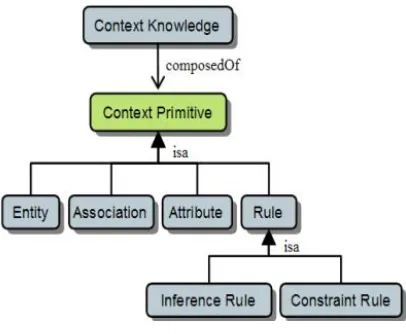
Jaroucheh et al. (2010) represented context knowledge as the context primitive which represents the base context constructs: entity classes, entity attributes, entities associations and rules, as shown below in Figure 2.1.
• Entity class: represents a group of entities (e.g. users, places, devices, etc.) sharing some properties.
29
• Association class: represents a relationship between one entity and either another entity or an attribute.
[image:36.612.246.449.314.481.2]• Rule class: two types of rule can be identified: (i) Consistency rules provide a mechanism for context consistency by specifying conditions that must be held in the context information. For example, consistency rules could specify that if the person is cooking, s/he must be in the kitchen. (ii) Inference rules are used to generate new context information after reasoning on an existing one. For example, an inference rule could conclude that a person is sleeping if the light is off and it is night time.
Figure 2.1: Context Primitives (Jaroucheh, Liu and Smith, 2010)
30 2.6.2 Context-Aware Taxonomy
There are different taxonomies for context-awareness. These are three core taxonomies: first, a taxonomy presented by Schilit & York (1995) which has two orthogonal dimensions: 1- The task obtains information or executes a command, 2- The task is executed manually or automatically. This taxonomy brings four terms: first, proximate selection applications; information retrieval is manual based by the user according to the available context to list-related objects or places which are linked to the user to facilitate the user’s choice (preferences). Second, automatic contextual configuration, where information retrieval is automated based on available context without user intervention; the system creates an automatic binding according to context. Third, contextual command applications that execute commands for the user manually based on the context. Finally, context-trigger actions, an application that executes commands for the user according to the context simply based on if-then rules; if the combination of context exists, the service executes automatically.
31
digital data with the user’s context. A user can view the data when they are in that associated context.
The third taxonomy is presented by Abowd et al. (1999), whereby they combine the ideas of the two approaches above and take into account the three major differences. Similar to Pascoe’s taxonomy, it is a list of context-aware features that context-aware applications may support. There are three categories:
1. Presentation of information and services to a user
2. Automatic execution of a service
3. Tagging of context to information for later retrieval
Abowd et al. (1999) claimed that their taxonomy has two benefits; the first is that it further specifies the types of application for which the researchers provide support. The second benefit is that it describes the types of feature that developers should be thinking about when building context-aware applications.
32 2.6.3 Context Acquisition (Sensing)
Chen (2004) presents three different approaches of how to acquire contextual information:
(1) Direct sensor access. The client software gathers the sensed information from a local built-in device.
(2) Middleware infrastructure. It uses encapsulation methods by introducing a layered architecture to context-aware systems with the intention of hiding low-level sensing details. (3) Context server. The next logical step is to permit multiple clients to access remote data
sources.
Indulska & Sutton (2003) classified sensors into three groups:
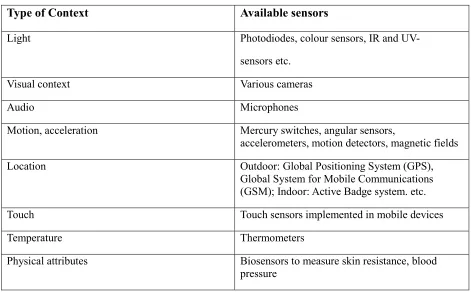
• Physical sensors: the most frequently used types of sensor are physical sensors. Many hardware sensors are available today which are capable of capturing almost any physical data. Table 2-1 shows some examples of physical sensors (Schmidt and Van Laerhoven, 2001).
• Virtual sensors: these source context data from software applications or services. For example, physical location can be sensed by an electronic calendar, emails, etc. Other context attributes can be user activity such as mouse movement and keyboard input.
33
Table 2-1: Commonly Used Physical Sensor Types Type of Context Available sensors
Light Photodiodes, colour sensors, IR and UV-
sensors etc.
Visual context Various cameras
Audio Microphones
Motion, acceleration Mercury switches, angular sensors,
accelerometers, motion detectors, magnetic fields
Location Outdoor: Global Positioning System (GPS),
Global System for Mobile Communications (GSM); Indoor: Active Badge system. etc.
Touch Touch sensors implemented in mobile devices
Temperature Thermometers
Physical attributes Biosensors to measure skin resistance, blood pressure
Chen & Kotz (2000) describe four sensing mechanisms: location, low-level context beyond location, high levels of context and context changes.
2.6.4 Context Interpreting
34
Krumm makes a comparison between rules and machine learning which can be used to overbalance of rules. Context-aware applications are most commonly designed from a set of if-then rules, such as:
IF the application senses a particular situation, THEN it should perform a particular action.
Rules are easy to create because all the knowledge for each rule is represented in a homogeneous format and rule-based systems are relatively easy to build because there is a large number of existing rules engines that determine when a rule has been satisfied. Rules are also relatively intuitive and are thus easy to work with (Krumm, 2009).
Additionally, there are some disadvantages of applying machine learning. As it is applied to learn the probabilistic relationships between the situation and adaptions, that relationship may be difficult to learn, it may require a significant amount of data to learn, it is hard to debug and may not be intuitive to the application developer or end user.
35
36
2.7
Summary
Reviewing the literature on both identity and context-awareness gives us a clear vision of the challenges and opportunities of these two correlated fields. Context-awareness relies on context and is deployed mainly in pervasive computing. User identity verification is one of the challenges in pervasive computing environment because of the environment variances. The pervasive environment is different from a traditional computing environment since the user (object, user) is moving around and does not have a fixed location. In a traditional computing environment, the PC has a fixed location for a month or a year(s), while a smart object can move between locations during an hour or a day. The available verification methods of user identity were devised for the traditional computing environment and reused in pervasive computing. Using them in the pervasive computing environment systems make the system vulnerable to intruder attacks such as spoofing.
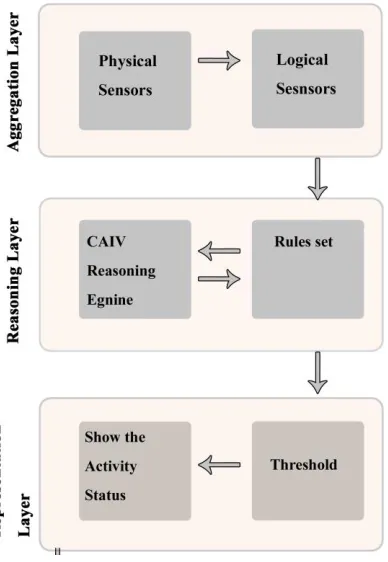
Context-awareness has different taxonomies. However, they share a common goal. The unique goal is how to make use of the available context and provide the user with a convenient service without user intervention. It aggregates data about the user from physical or logical sensors and interprets them to trigger an action within the system.
37
38
Chapter 3
CAIV Analytical Model
3.1
Introduction
39
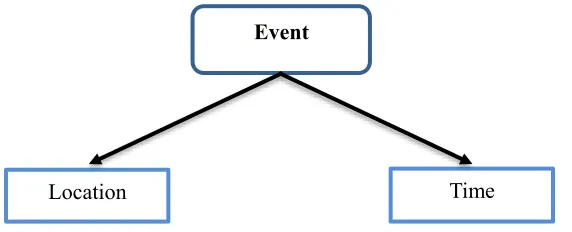
[image:46.612.173.459.232.348.2]Events play a major role in everyday life, organising and depicting the way that the user interacts with a certain environment. Laliwala & Chaudhary (2008) refer to the event as an entity that relies on two components, which are time and location; Craig and Whitty(2017 defined the event as a record of location and time For instance, the calendar events in the user diary have two main significant components which are time and location, as shown below in Figure 3.1.
Figure 3.1: Event Components
We believe that each component of the event represents a part of the truth; confirming one or both of these components by context parameter can affects the truth value positively. The obtained value of truth for each context parameter is interpreted as the probability of attending the user at a certain (current) location and time. The union of truth values of context parameters is the trust value. The trust value represents how far the system is confident that the claimed identity is considered as a genuine user identity. The next sections illustrate the trust value extraction and show how this value is aggregated, mapped and banded together from each parameter of CAIV model.
Event
40
3.2
Context Parameters
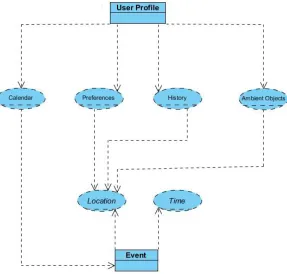
41
Figure 3.2: User Profile Dependency
A user profile defined in terms of the context parameters as described in (3-1) is:
𝑼𝒄 = [𝑪𝒂𝒍, 𝑨𝒎𝒃, 𝑷𝒓𝒆𝒇, 𝑯𝒊𝒔𝒕] 3-1
Where: 𝑈𝑐 – the user profile (context)
𝐶𝑎𝑙 – usercalendar events
𝐴𝑚𝑏 – ambient objects assigned to the user
𝑃𝑟𝑒𝑓 – user’s preferences
42 𝑈: set of registered users.
𝐿: set of locations.
Each of the profile elements defined in terms of the location (𝐿), and time (𝑡) where the user behaviour (activities) performed. Therefore, we define a function that represents each of these parameters as follows:
𝐶𝑎𝑙 = 𝑓𝑐(𝐿, 𝑡)
𝐴𝑚𝑏 = 𝑓𝑎(𝐿, 𝑡)
𝑃𝑟𝑒𝑓 = 𝑓𝑝(𝐿, 𝑡)
𝐻𝑖𝑠𝑡 = 𝑓ℎ(𝐿, 𝑡)
Hence (3-1) can be re-written as:
𝑼𝒄 = 𝒇 (𝑳, 𝒕) 3-2
where f is an aggregation of 𝑓𝑝, 𝑓𝑎, 𝑓ℎ and 𝑓𝑐 .
Also, a user behaviour is defined in terms of the activities (A) performed within the pervasive environment. An activity defined as a tuple (vector) of user identity, resource location and time of accessing the resource as described in Equation 2-1:
𝑨 = [𝒊𝒅, 𝑳, 𝒕]
In order to use the user activity to infer the user’s identity, it mapped to the user profile, such that:
43
3-3 asserts that the user’s identity is a measure of mapping a user’s activity to the user’s profile. We call this as the system’s Trust in the user. Therefore 3-3 can be restated as:
𝑻𝒓𝒖𝒔𝒕 = 𝑹𝑴(𝑨, 𝑼𝒄) 3-4
3-4 represents the basis of CAIV’s verification process. In the next sections, we explain how each of the functions 𝑓𝑐, 𝑓𝑎, 𝑓𝑝 and 𝑓ℎ represents the trust value of the corresponding parameter of Uc.
3.2.1 Mapping an Activity to User Preferences
User Preferences are those locations that the user tends to visit frequently. Each preferred location is stored with a description, location and the probability of attending a user in that location. Section 4.3.1 provides further details about this parameter. The mathematical representation of this parameter is as follows:
Given a user j with an identity 𝑖𝑑𝑗, there is a list of preferences 𝑃𝑟𝑗such that:
𝑃𝑟𝑗 = {𝑝𝑟jv ∶ 𝑣 = 1, … , 𝑞𝑗} where 𝑞𝑗is the number of preferences for user j
Each user preference is represented as a tuple (vector) as follows:
𝑝𝑟jv = [𝑑𝑒𝑠𝑐𝑟, 𝑖𝑑𝑗, 𝑙𝑣, 𝑤𝑝𝑣]
where 𝑑𝑒𝑠𝑐𝑟 - textual description of 𝑝𝑟jv
𝑙𝑣 - the location where 𝑝𝑟jv is associated with that preference
44
As an example, a user id1 registers one preference as swimming with weight 0.5; then this preference is stored in the system as:
𝑝𝑟18= [′𝑆𝑤𝑖𝑚𝑚𝑖𝑛𝑔′, 𝑖𝑑1, 𝑙𝑜𝑐_8, 0.5]
Now as user j performs an activity (𝑎, 𝑒. 𝑔. 𝑠𝑤𝑖𝑝𝑒 𝑡ℎ𝑒 𝑐𝑎𝑟𝑑) as in instance of 𝐴,
see Equation 2-1, Al-Karkhi, Al-Yasiri and Linge (2015) defined activity as:
𝑎 = [𝑖𝑑𝑗, 𝑙𝑎, 𝑡𝑎]
The system maps activity (𝑎) to each preference in 𝑃𝑟j such that a list of weight values (WP) is produced, as follows:
𝑾𝑷 = {∀ 𝒑𝒓𝒋𝒗 ∈ 𝑷𝒓𝐣, 𝒘𝒑𝒋𝒗, 𝐢𝐟 𝒍𝒂 = 𝒍𝒗
𝟎, 𝒐𝒕𝒉𝒆𝒓𝒘𝒊𝒔𝒆 3-5
Now let 𝑓𝑝𝑟be a function representing the contribution of the preferences context to the trust such that:
𝒇𝒑𝒓= 𝐦𝐚𝐱(𝑾𝑷) 3-6
45
3.2.2 Mapping an Activity to User’s Ambient Objects
Pervasive computing has smart objects equipped with a communication technology such as Bluetooth, Wi-Fi, RFID and others. Identifying these objects and link them to the user make the system more confident about the user identity. Each object has an identifier (physical, MAC address, SN), description, location. The object can be owned by a user, group of users, or a location. Section 4.3.3 provides more details about ambient object. The mathematical representation of an ambient object is as follows:
Given a user j with an identity 𝑖𝑑𝑗, there is a list of ambient objects 𝐴𝑂𝑗such that:
𝐴𝑂𝑗 = {𝑎𝑜jk ∶ 𝑘 = 1, … , 𝑜𝑗} where 𝑜𝑗is the number of ambient objects for user j
Each ambient object is represented as a tuple (vector) as follows:
𝑎𝑜jk = [𝑖𝑑𝑒𝑛𝑡𝑖𝑓𝑖𝑒𝑟, 𝑑𝑒𝑠𝑐𝑟, 𝑜𝑤𝑛𝑒𝑟𝑠ℎ𝑖𝑝, 𝑖𝑑𝑗, 𝑙𝑘]
where
𝑖𝑑𝑒𝑛𝑡𝑖𝑓𝑖𝑒𝑟 - is the object identifier if it exists
𝑑𝑒𝑠𝑐𝑟 - textual description of 𝑎𝑜jk
𝑜𝑤𝑛𝑒𝑟𝑠ℎ𝑖𝑝 - determines the ownership of the device (whether owned by one user, more than one user, or a location)
46
𝑤𝑎𝑘 = 𝑓(𝑜𝑤𝑛𝑒𝑟𝑠ℎ𝑖𝑝) = {
𝑤𝑚 𝑖𝑓 𝑜𝑤𝑛𝑒𝑟𝑠ℎ𝑖𝑝 = ′𝑚𝑢𝑙𝑡𝑖𝑝𝑙𝑒 𝑢𝑠𝑒𝑟′ 𝑤𝑙 𝑖𝑓 𝑜𝑤𝑛𝑒𝑟𝑠ℎ𝑖𝑠ℎ𝑖𝑝 = ′𝑙𝑜𝑐𝑎𝑡𝑖𝑜𝑛′ 𝑤𝑢 𝑖𝑓 𝑜𝑤𝑛𝑒𝑟𝑠ℎ𝑖𝑝 = ′𝑢𝑠𝑒𝑟′
Where
𝑤𝑎𝑘 - 𝐴𝑚𝑏𝑖𝑒𝑛𝑡 𝑜𝑏𝑗𝑒𝑐𝑡 𝑤𝑒𝑖𝑔ℎ𝑡, 𝑤𝑎𝑘∈ [0,1]
Now as user j performs an activity (𝑎) as in instance of 𝐴, see Equation 2-1:
𝑎 = [𝑖𝑑𝑗, 𝑙𝑎, 𝑡𝑎]
The system maps activity (𝑎) to each ambient object in 𝐴𝑂j such that a list of weight values (WA) is produced, as follows:
𝑾𝑨 = {∀ 𝒂𝒐𝒋𝒌 ∈ 𝑨𝑶𝐣, 𝒘𝒂𝒌, 𝐢𝐟 𝒍𝒂 = 𝒍𝒌 𝒐𝒓 𝒊𝒅𝒂 = 𝒊𝒅𝒌 𝟎, 𝒐𝒕𝒉𝒆𝒓𝒘𝒊𝒔𝒆
where 𝒍𝒂the location of activity(𝒂) 3-7
Now let 𝑓𝑎be a function representing the contribution of the ambient object context to the trust such that:
𝒇𝒂= 𝐦𝐚𝐱(𝑾𝑨) 3-8
47
belong to a person (𝑤𝑢). Alternatively, the system administrator can assign the proper value based on ambient objects ownership.
Three examples are covering the potential scenarios. Firstly, user𝑖𝑑2registers one of his devices and that device is owned by 𝑖𝑑2, the function 𝑤𝑎𝑘 calculates the ambient object weigh.
𝑎𝑜2 = [′18 − 67 − 80 − 5𝐷 − 3𝐹 − 4𝐵′, ′𝑀𝑎𝑐𝑏𝑜𝑜𝑘′, ′𝑜𝑛𝑒 𝑢𝑠𝑒𝑟′, 𝑖𝑑
2, 𝑛𝑢𝑙𝑙]
Secondly, user𝑖𝑑3 and user𝑖𝑑4 are both registered one of their device and, that device is owned by 𝑖𝑑3 𝑎𝑛𝑑 𝑖𝑑4, the function 𝑤𝑎𝑘 calculates the ambient object weigh.
𝑎𝑜3 = [′23 − 𝐴7 − 𝐷0 − 5𝐴 − 4𝐵 − 42′, ′𝐿𝑎𝑝𝑡𝑜𝑝′, ′𝑚𝑜𝑟𝑒 𝑡ℎ𝑎𝑛 𝑜𝑛𝑒 𝑢𝑠𝑒𝑟′, 𝑖𝑑3, 𝑛𝑢𝑙𝑙]
𝑎𝑜3 = [′23 − 𝐴7 − 𝐷0 − 5𝐴 − 4𝐵 − 42′, ′𝐿𝑎𝑝𝑡𝑜𝑝′, 𝑚𝑜𝑟𝑒 𝑡ℎ𝑎𝑛 𝑜𝑛𝑒 𝑢𝑠𝑒𝑟′, 𝑖𝑑4, 𝑛𝑢𝑙𝑙]
Finally, 𝑎𝑜4 is an object belongs to main office (𝑙𝑜𝑐_9), a registered user was holding that device and heading to the main office door.
𝑎𝑜49 = [′𝑖𝑃𝑎𝑑′, ′𝑙𝑜𝑐𝑎𝑡𝑖𝑜𝑛′, 𝑖𝑑4, 𝑙𝑜𝑐_9]
3.2.3 Mapping an Activity to User History
48
The history probability relies on Markov chain. Markov chain is stochastic a process named after Andrey Markov a Russian mathematician. It is called memoryless since it is categorised as a random process. In a Markov chain, the probability of an event at any point in time is a function of the likelihood with which events occurred at previous time periods (Luger, 2005). Time-homogeneous Markov chain with one-step transition probability has been used in CAIV modelling since we don’t need more than one step transitions between the environment locations, (3-9) showing the Markov Chain formula.
𝐏 = [
𝒑𝟏𝟏 𝒑𝟏𝟐 𝒑𝟏𝟑 ⋯ 𝒑𝟏𝒈
⋮ ⋱ ⋮
𝒑𝒊𝟏 𝒑𝐢𝟐 𝒑𝐢𝟑 ⋯ 𝒑𝒊𝒈] 3-9 (Behrends, 2000)
Where:
- 𝑖, 𝑔 is the number of locations in the pervasive computing environment
- 0 ≤ 𝑝𝑖𝑔≤ 1
- 𝑖, 𝑔 ∈ 𝐿
- ∑𝑛 𝑝𝑖𝑔
g=1 = 1
∀ 𝑖𝑑
𝑗∃!
𝑃
𝑗Given a user j with an identity 𝑖𝑑𝑗, there is a list of potential locations (based on the
environment’s available locations) which are possible to be attended by users; the history logs of the users stored in the history log (𝐻𝑗) such that:
49
Each user history log is represented as a tuple (vector) as follows:
ℎjn= [𝑖𝑑𝑗, 𝑙𝑛, 𝑠𝑡𝑎𝑡𝑛, 𝑝𝑙𝑛, 𝑡𝑛] where
𝑖𝑑𝑗 - the identifier of user j
𝑙𝑛 - the location where the activity is performed
𝑠𝑡𝑎𝑡𝑛 – the history log status, success =1, or failed =0
𝑝𝑙𝑛 - pre-visited location of 𝑙𝑛
𝑡𝑛 - is the time of the activity
Now as user j performs an activity (𝑎, 𝑒. 𝑔. 𝑠𝑤𝑖𝑝𝑒 𝑡ℎ𝑒 𝑐𝑎𝑟𝑑) as in instance of 𝐴,
see Equation 2-1:
𝑎 = [𝑖𝑑𝑗, 𝑙𝑎, 𝑡𝑎]
To find the probability (History Weight (WH)) of attending the activity location,
𝑤ℎ𝑎 = P( 𝑝𝑙𝑎, 𝑙𝑎)𝑗, 𝑝𝑙𝑎, 𝑙𝑎 ∈ 𝐿,
𝑤ℎ𝑎 - the weight of user j to be at the activity location when he moved from the previous location 𝑝𝑙𝑎 which stored in ℎjn
, 𝑤ℎ𝑎 ∈ [0,1],
50
The system maps activity (𝑎) to each history in 𝐻j such that a list of weight values (WH) is produced, as follows:
𝒇𝒉 = 𝑾𝑯 = {∀ 𝒉 ∈ 𝑯𝐣, 𝒘𝒉𝟎,𝒂, 𝐢𝐟 𝒍𝒂= 𝒍𝒏 , 𝒕𝒏 = 𝒕𝒐𝒕𝒉𝒆𝒓𝒘𝒊𝒔𝒆𝒂, 𝒔𝒕𝒂𝒕𝒏 = 𝟏 𝒂𝒏𝒅 𝒑𝒍𝒂= 𝒑𝒍𝒏
3-10
As an example, a user 𝑖𝑑1with pre-visited location (𝑙𝑜𝑐4) is heading to the destination (𝑙𝑜𝑐7), the system was able to calculate the history weight of that activity which is 0.6. The history weight can find it by the system, based on Markov Chain method which manipulated the history logs of the past month; the history record had been stored as follows:
ℎ17 = [𝑖𝑑1, 𝑙𝑜𝑐7, 1, 𝑙𝑜𝑐4, ′2016 − 12 − 12 9: 00′]
Now let 𝑓ℎbe a function representing the contribution of the history context to the trust such that:
3-10 showed that the system maps the activity (𝑎) to the history log associated with location 𝑙𝑎. The weighting value is determined by Markov Chain algorithm for each associated pair of (pre-visited and destination locations) and determine how much is that weight 𝑤ℎ𝑘 if existed based on the number of visits to that location on a period of time. For instance, the user 1 had three history logs from location 4 to three different locations; which are[𝑖𝑑1, 𝑙𝑜𝑐_2, 𝑙𝑜𝑐_4] the calculated 𝑝47 is
51
once from loc_4 to loc_6 over the past month. Based on the number of visits for location 2,7,6; the weight(probability) has been calculated for each potential location.
3.2.4 Mapping an Activity to User Calendar
Calendar event organises and stores information about location(s) that the user tends to access in the pervasive computing environment. The iCalendar format is used to help the CAIV model to understand the priority of each event. According to iCalendar, the event has three different types, which are VEVENT, VTODO, and VJOURNAL. Section 4.3.2 illustrates further details about iCalendar. The mathematical representation of Calendar event as follows:
Given a user j with an identity 𝑖𝑑𝑗, there is a list of calendar events 𝐶𝑗such that:
𝐶𝑗 = {𝑐js ∶ 𝑠 = 1, … , 𝑒𝑣𝑗}, 𝑒𝑣𝑗is the number of calendar events for user j
Each calendar event is represented as a tuple (vector) as follows:
𝑐js= [𝑑𝑒𝑠𝑐𝑟, 𝑡𝑦𝑝𝑒, 𝑡𝑠, 𝑖𝑑𝑗, 𝑙𝑠]
where
𝑑𝑒𝑠𝑐𝑟 - textual description of 𝑐jk
type - the event type; it has three kinds (vjounal, vtodo, and vevent)
, they are ranked low, medium, and high respectively
52 𝑙𝑠 - the location where 𝑐jk is associated
𝒘𝒆𝒔 = 𝒇(𝒕𝒚𝒑𝒆) = {
𝒘𝒋 𝒊𝒇 𝒕𝒚𝒑𝒆 = 𝐯𝐣𝐨𝐮𝐧𝐚𝐥 𝒘𝒕 𝒊𝒇 𝒕𝒚𝒑𝒆 = 𝐯𝐭𝐨𝐝𝐨 𝒘𝒆 𝒊𝒇 𝒕𝒚𝒑𝒆 = 𝐯𝐞𝐯𝐞𝐧𝐭
3-11
Now as user j performs an activity (𝑎, 𝑒. 𝑔. 𝑠𝑤𝑖𝑝𝑒 𝑡ℎ𝑒 𝑐𝑎𝑟𝑑) as instance of 𝐴, see Equation 2-1:
𝑎 = [𝑖𝑑𝑗, 𝑙𝑎, 𝑡𝑎]
The system maps activity (𝑎) to each calendar in 𝐶j such that a list of weight values (WE) is produced, as follows:
𝑾𝑬 = {∀ 𝒄 ∈ 𝑪𝐣, 𝒘𝒆𝒔, 𝐢𝐟 𝒍𝒂= 𝒍𝒔 𝒂𝒏𝒅 |𝒕𝒂− 𝒕𝒔| ≤ 𝒕𝒕
𝟎, 𝒐𝒕𝒉𝒆𝒓𝒘𝒊𝒔𝒆 3-12
Where:
𝑤𝑒𝑠 - is a derivative weight based on calendar type of 𝑐js, 𝑤𝑒𝑠 ∈ [0,1]
𝑡𝑡 - is the time tolerance in minutes
Now let 𝑓𝑐be a function representing the contribution of the calendar context to the trust such that:
𝒇𝒄 = 𝐦𝐚𝐱(𝑾𝑬) 3-13
3-13 states that the system maps the activity (𝑎) to the calendar associated with location 𝑙𝑎, time
53
calendar types with low, medium and high respectively. The importance of calendar type has been decided based on their knowledge and the description of those three types.
Since the event type has three categories, there are three different use cases of calendar tuples.
Use Case 1
Firstly, a registered user with id1 has added a calendar event (IoT seminar) as a vjournal type. Accordingly, the calendar tuple of that event is stored in the system as:
𝑐110 = [′𝐼𝑜𝑇 𝑠𝑒𝑚𝑖𝑛𝑎𝑟′, ′𝑣𝑗𝑜𝑢𝑟𝑛𝑎𝑙′, ′2016 − 12 − 12 11: 00′, 𝑖𝑑1, 𝑙𝑜𝑐_10]
Use Case 2
Secondly, a registered user with id2 has added a calendar event (Fog Computing Workshop) as a vtodo type. Accordingly, the calendar tuple of that event stored in the system as:
𝑐222= [′𝐹𝑜𝑔 𝑐𝑜𝑚𝑝𝑢𝑡𝑖𝑛𝑔 𝑤𝑜𝑟𝑘𝑠ℎ𝑜𝑝′, ′𝑣𝑡𝑜𝑑𝑜′, ′2016 − 12 − 12 02: 00′, 𝑖𝑑2, 𝑙𝑜𝑐_22]
Use Case 3
Finally, a registered user with id3 has added a calendar event (Advance Programming II) as a vevent type. Accordingly, the calendar tuple of that event stored in the system as:
54
3.3
Conclusion
To sum up the CAIV approach; it is required to come up with a result or conclusion of each profile. That profile represents the available context at a certain time and location. As illustrated above in (3-4) and the way in which it maps these parameters to infer the trust value, therefore, there is a need to use an inferring technique to find the trust value. A reasong method need to be used to infer the trust value by using a Multiple Input Single Output (MISO) approach. The four inputs are interpreted into a single output. That output represents the trust value which consequently reflects how much the system trusts that user in a certain event.
Therefore, the target formula for user j is as illustrated in 3-14 below:
55
Chapter 4
CAIV Architecture
and Design
4.1
Introduction
56
4.2
Overview of the CAIV Inference
Reasoning is the practice of inferring information about some unobservable aspect of a situation based on information about the observed parts of the situation (Bhatnagar and Kanal, 1992). There are several methods can be used to build the reasoning engine. Fuzzy logic is chosen for the ensuing reasons in section 4.6 There are two types of fuzzy inference systems, which are Sugeno and Mamdani. Mamdani has been used to infer the trust value of the user since it uses membership function rather than constant function.
There are seven types of inference methods: deduction, induction, default reasoning, non-monotonic reasoning, analogy, abduction and heuristics. Deductive logical reasoning relies on previous facts to derive a conclusion. Heuristics are based on rules of thumb which are extracted from experience (Novák, 1999).
The heuristics approach is used to find CAIV’s fuzzy rules. Later on, these rules are utilised by a deductive logic approach in the reasoning process. Ross (2009) mentioned that fuzzy logic is primarily used in deductive reasoning.
4.3
Components of an Identity Inferring System
57
The primary parameters have been acquired from the pervasive environment based on W4H classification for context data (Truong, Abowd and Brotherton, 2001). We advocate their approach with some modifications to mapping them into our system:
• Who are the activity participants? (Identity) (Ambient Objects) • Where does the activity take place? (Location) (Event Location) • When does the activity take place? (Time) (Event Time)
• What does the user prefer? (User Preferences)
• How was the user behaving before? (History Previous Logs)
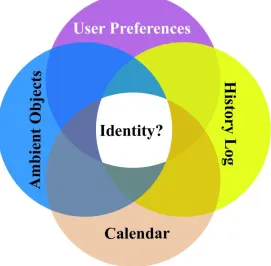
[image:64.612.184.455.374.640.2]ambient objects, calendar event, user preference and history log are used as inputs to the system to infer (verify) the user’s identity as shown in Figure 4.1 below.
58 4.3.1 User Preferences
User preferences are the locations that the user would like or prefer to visit if he/she has spare time in order to tailor a system based on them. There are two approaches to finding user preferences. It can be fixed or dynamic. The fixed one can be aggregated from the user directly during the user’s registration process; the system asks the user to answer a few questions. These questions are related to the user’s preferences and hobbies, if applicable. Consequently, these answers are used to weight the destination locations which are related to the preferences.
For instance, ranked questions with a rating scale (seldom, occasionally and frequently) can be used to feed the system with the user preferences which consequently can be utilised as input to the CAIV system; the rating scale is respectively ranked as low, medium, high. The other approach is used to infer a user’s preferences without user intervention such as that used by Lin and Fu (2007), which used Bayesian Network in the learning process; the data are aggregated over a period of time and then the system learns from these data the user preference. In the CAIV’s case, the first approach has been chosen because of the lack of data and that help to speed up the test and evaluation process. Table 4-1 shows the sample of three answers of a user’s questions about preferable places that they are likely to visit if they have spare time.
Table 4-1: Sample Data of User Preferences
Preference variables Preference Preference’s question Answers Location representation
P 1 Reading Frequently L1
P 2 Play Tennis Seldom L2
59 4.3.2 Calendar
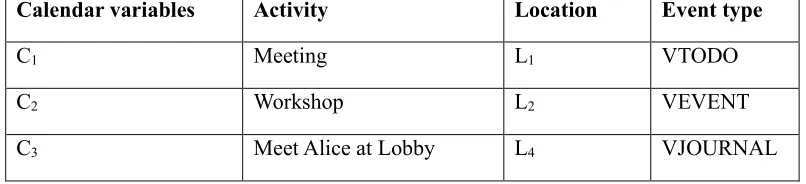
[image:66.612.118.521.404.496.2]The calendar organises users’ tasks and helps them to fulfil their commitments at the work environment. It includes all important notes and events. It records notes (e.g. event, task, meeting, lecture and others) which are noted with an associated location and time. These notes are stored in a specific form in the system, such as iCalendar. The event should be completely noted on the calendar, and any missing parts (location or time) make that event unusable. The standard iCalendar is used to make the proposed solution interoperable with any existed solution (system) that already uses iCalendar. The iCalendar has three main types of event. Journal entry (VJOURNAL), To-do (VTODO) and Events (VEVENT). They are ranked as low, medium, high, respectively. Table 4-2 is the sample data of the calendar.
Table 4-2: Sample Data of Calendar
Calendar variables Activity Location Event type
C1 Meeting L1 VTODO
C2 Workshop L2 VEVENT
C3 Meet Alice at Lobby L4 VJOURNAL
4.3.2.1 iCalendar
60
It is used to send tasks and events between internet users. iCalendar was proposed by Dawson et al. (1998) and published as RFC2445 by the IETF.
Events (VEVENT) describes an event, for a specific period of time which has a DTSTART as a start time and DTEND as an end time. This event can be taken into account after the user accepts the calendar event. To-do (VTODO) is a long-term event which can be achieved by additional time. The SEQUENCE element is used to maintain the number of times it shows how many times the event has been modified. Journal entry (VJOURNAL) is a journal entry. It works as a note reminder. It does not affect the status of the user (Free, Busy). Below is a sample file of iCalendar version 1.0 (Dawson et al., 1998).
ICalendar sample code:
BEGIN: VCALENDAR
VERSION: 1.0
BEGIN: VEVENT
CATEGORIES: MEETING
STATUS: TENTATIVE
DTSTART: 19960401T033000Z
DTEND: 19960401T043000Z
SUMMARY: Your Proposal Review
DESCRIPTION: Steve and John to review newest proposal material
CLASS: PRIVATE
END: VEVENT
61 4.3.3 Ambient Objects
Ubiquitous technology is growing exponentially and appearing everywhere. Therefore, this technology needs to be exploited in CAIV’s approach to facilitate a user’s identity verification. It exists in many different things around us in the pervasive environment, such as smart objects and devices. These objects are most likely to be equipped with a connectivity technologies; these technologies are Wi-Fi, BLE, RFID, NFC, etc.
In the CAIV method, ambient objects are classified based on possession into three types. The ambient object is owned by only one user, a location or by a group of users. An ambient object means any object(s) surrounding the user during the identity verification process which is (are) detectable by the CIAV terminal sensors. Schilit et al. (1994) described the ambient object implicitly by “who you are with”. The possession is assigned to the object in the registration phase; Table 4-3 shows three different objects with three different possession types.
Table 4-3: Sample Data of Ambient Objects
Ambien Object Identifier Object Possession User ID
A1 Laptop Owned by User ID1
A2 Book Owned by Group of
Users
ID1
A3 Mug1 Owned by Location -