Munich Personal RePEc Archive
A Note on Within-group Cooperation
and Between-group Interaction in the
Private Provision of Public Goods
Hattori, Keisuke
Osaka University of Economics
6 July 2011
Online at
https://mpra.ub.uni-muenchen.de/32045/
A Note on Within-group Cooperation and Between-group
Interaction in the Private Provision of Public Goods
∗Keisuke Hattori†
Osaka University of Economics
Version: July 6, 2011
Abstract
Using a simple two-group model of the private provision of public goods, this paper investigates how endogenous formation of within-group cooperation is affected by differ-ent types and degrees of between-group interactions. We show that when between-group interactions are of the same directions and weak (strong), within-group cooperation for providing public goods will (will not) occur in each group for strategic reasons. On the other hand, when between-group interactions are of the opposite directions or unidirec-tional, within-group cooperation will necessarily occur. In addition, endogenous formation of cooperation is independent of absolute (individual) levels of income as well as income distribution between agents, which corresponds to an extended version of Warr’s neutral-ity theorem. We also show whether endogenous formation of within-group cooperation is beneficial or harmful to each group crucially depends on the degree of between-group interactions. The variation in the interaction degree leads to three different types of games concerning welfare consequences: the Prisoners’ Dilemma, Coordination Game, and Invis-ible Hand.
Keywords: Private provision, Public goods, Cooperation.
JEL classification: H41, C72.
∗This work was supported by Special Research Aid in Osaka University of Economics, 2010-2011.
†Faculty of Economics, Osaka University of Economics, 2-2-8, Osumi, Higashiyodogawa-ku, Osaka 533-8533,
1
Introduction
It is well known that when public goods are privately provided by individuals in a certain group, they can jointly increase their individual payoffs by cooperating to provide the public goods. However, such cooperation may not be as beneficial to them as non-cooperation if there are other outside (third-party) individuals or groups that strategically interact with them through public goods consumption. This is because cooperation in one group may induce negative reactions from other individuals or groups. In other words, the related individuals’ or groups’ reactions must be considered when calculating the profitability of cooperative provision of public goods in a certain group.
Economists have investigated the profitability of cooperation in providing public goods considering third-party behavior in a wide variety of topics. For example, in the context of military alliances or arm races, Bruce (1990) and Ihori (2001) demonstrate that all allied countries may be worse off when the allies cooperate on defense spending rather than when they do not if there are certain adversary alliances. This is because cooperative increase in defense spending in one alliance induces the adversary alliances to increase their defense spending. In the context of foreign aid, Torsvik (2005) considers a case where several altruistic donors provide aid to alleviate poverty in another country. He shows that donor cooperation may adversely change the domestic policy in the receiving country by aggravating the crowding
out problem; thus, it may not be beneficial for the donors.1
In the context of horizontal mergers, Salant et al. (1983) indicate that in a Cournot model with symmetric firms, a merger (or a cartel) will not be profitable because of the outside firms’ business stealing reactions. In addition, a considerable number of studies on a public-goods experiment investigate the
effectiveness of intergroup competition in promoting cooperative behavior.2
The common element among these studies is that cooperative provision of public goods within one group
depends on the nature of their interaction with other (outside) agents or groups.3
Using a simple model of the private provision of public goods with two distinct groups, this study investigates the effects of variations in between-group interactions on endogenous
forma-tion of within-group cooperative strategies. The model has two stages: first, the cooperation
stage where agents decide whether to cooperate with other agents in the same group when
providing a group-specific public good; second, thecontribution stagewhere agents voluntarily
contribute to the public good. The amount of group-specific public good in one group has
positive or negative effects on that in another group, which we callbetween-group interactions.
Within this framework, we examine the endogenous determination of within-group cooperation and its welfare implications.
This study contributes to the literature in three ways. First, we show that endogenous formation of within-group cooperation crucially depends on the characteristics of
between-1
For an empirical study on foreign aid including the public-good nature of the aid and strategic interaction among donor countries, see Mascarenhas and Sandler (2006).
2
See Bornstein and Ben-Yossef (1994), Bornstein et al. (2002), Tan and Bolle (2007), and Reuben and Tyran (2010) among many others for this point.
3
group interactions, and not on any other variable. In the case of asymmetric direction of between-group interactions (i.e., the case where one group’s contributions to public goods have positive external effects on agents in another group, but the reverse has negative external effects) and unidirectional interaction (i.e., the case where one group’s contributions have positive or negative external effects on another group, but the reverse of either has no effect on the group), within-group cooperation necessarily emerges in each group. In the case of symmetric direction of between-group interactions, cooperation (non-cooperation) emerges in each group if the between-group interactions are weak (strong). If they are intermediate, a coordination situation emerges.
Second, we show that within-group income redistribution has no effect on the equilibrium utility of each agent as well as endogenous formation of cooperation, corresponding to the extended version of Warr’s neutrality theorem (1983). Furthermore, interestingly, we obtain the result that between-group income redistribution and any kind of income changes have no effect on the result of endogenous formation of cooperation. These results correspond to the extended version of Warr’s neutrality theorem concerning formation of cooperation.
Finally, we answer the question of whether endogenous formation of cooperation yields a superior outcome. We show that the variation of between-group interactions yields three dif-ferent types of games in the cooperation stage: the Prisoners’ Dilemma (PD), Coordination Game (CG), and Invisible Hand (IH). PD situations arise if between-group interactions are strongly positive or moderately negative. In the former case of strongly positive interactions, endogenous formation of cooperation leads to mutual non-cooperation, which is Pareto dom-inated by mutual cooperation. In the latter case of moderately negative interactions, it leads to mutual cooperation, which is Pareto dominated by mutual non-cooperation. CG situa-tions arise if between-group interacsitua-tions are rather strong either positively or negatively. In both cases, coordination situations emerge when deciding whether to cooperate. IH situations arise if between-group interactions are strongly negative and relatively weak, either positively or negatively. In these cases, self-interest in both groups is sufficient to guarantee a Pareto superior outcome.
Our simple framework of the model is applicable to a wide variety of socio-economic prob-lems. Investigation of the case with negative between-group interactions can apply to problems such as arms races between two military alliances and advertising competitions between two
tourist sites. The case with positive interactions corresponds to CO2 reductions between two
infiltrating their national borders is not beneficial to domestic militaries in the above context.4
The paper is organized as follows. Section 2 presents the basic model. Section 3 characterizes the possible Nash equilibria in the second stage (contribution stage). Section 4 investigates endogenous formation of intra-group cooperation in the first stage (cooperation stage). Then, we characterize the subgame-perfect Nash equilibrium of the game. Section 5 conducts welfare analysis in the symmetric group case, and Section 6 concludes the paper.
2
The Model
Consider two groupsA and B. Each group i ∈ {A, B} consists of two agents 1 and 2: agent
A1 andA2 are in groupA andB1 andB2 are in groupB.5
In each group, there is one
group-specific public good that is voluntarily provided by group members k∈ {1,2}. Let agent ik’s
(agentk in groupi) contributions to the group-specific public good begik and let
GA=gA1+gA2, and GB=gB1+gB2
be the total amount of group-specific public goods in groups A and B, respectively (i.e., the
group-specific public goods are pure public goods for its members). Agent k in group i is
assumed to have initial endowment (income)yik, and allocates it between private consumption
xik and contribution gik so as to maximize utilities. To make analyses simple and clear, we
postulate a simple utility function:
Uik =Uik(xik,Ψi) =xik×Ψi, (1)
where Ψi is the total amount of public goods enjoyed (consumed) by members in groupi.6 We
specify groupi’s consumption of public goods Ψi as:
Ψi =Fi+Gi+γiGj, (2)
where Fi >0 is an initial endowment of group-specific public goods,7 Gj (j 6=i∈ {A, B}) is
the level of public goods provided by the other group, andγi∈[−1,1] represents the direction
and degree of externalities of public goods provided by groupj to group i.8
Parameterγirepresents between-group interaction, and the combination ofγiandγjenables
us to describe diverse socio-economic situations: If γi is positive (negative), then the public
good of group j (Gj) has positive (negative) externality on group i’s public good. If γi = 1
for all i = {A, B}, then the public good is a standard pure public good where each group’s
4
For the two counterterrorism policies, pre-emption and deterrence, see Sandler and Siqueira (2006).
5
In this paper, we assume that the two groups and their members are exogenously determined by geographical, institutional, or historical reasons. Therefore, we do not consider the reconstruction of the group members and the movement of individuals between the groups.
6
The utility function implies that the marginal propensity to consume public goods is 1/2, which seems to be quite high. Although the utility specification appears to be rather ad hoc, it enables us to derive certain interesting theoretical results concerning the relationship between within-group cooperation and between-group interaction. In addition, our corollary is qualitatively unchanged if we assume a more general utility function.
7
The initial endowment of group-specific public goodsFiis incorporated into Ψiin order to assure that the
total amount of public goods in groupiis positive; Ψi>0.
8
contribution to the public good is perfectly substitutable. An archetypical example of this is voluntary reduction of greenhouse gas emissions by two countries, each of which have two
districts.9
Ifγi =−1 for alli={A, B}, then the amount of public goods is reduced exactly by
the public goods provided by the other group. An archetypical example is arms race between two military blocks, each of which has two countries (Ihori 2001). National defense is a pure public good for countries in the same block, and an equal increase in national defense by two
blocks leaves the national security of both blocks unchanged. If γi > 0 and γj < 0, then
the amount of public goods in group i is augmented by increases in Gj, but the amount of
public goods in groupjis reduced by increases inGi. An example of this asymmetric direction
of externalities is the relationship between domestic and foreign militaries against terrorists:
countryj’s efforts to eliminate terrorists hiding in country j reduce country i’s risk of being
attacked; thus, they are beneficial to country i. However, country i’s efforts to prevent the
terrorists from infiltrating its national border increase country j’s risk of domestic terrorism
and are not beneficial to countryj.
The budget constraint of each agent is given byxik+gik =yik, whereyik is the exogenously
given endowed resources (incomes) of agent ik. Notationally, let
YA=yA1+yA2, YB=yB1+yB2
be the total endowed resources of groupA and B, respectively.
The timing of the game is as follows; in the first stage of the game (cooperation stage), each
agent simultaneously decides whether to cooperate in providing group-specific public goods with other agents in the same group, taking the other group’s decision on cooperation as
given. In the second stage of the game (contribution stage), each agent determines his/her
vol-untary contributions to group-specific public goods either cooperatively or non-cooperatively according to the commitment in the cooperation stage.
3
Equilibrium in the Contribution Stage
We solve the model backwards. In the second stage, we have four cases to consider: (1) Case NN refers to the situation where each agent non-cooperatively determines his/her own contribution to group-specific public goods in both groups, taking the behavior of every other agent as given. (2) Case CN refers to the situation where agents in group A cooperatively decide their contribution and each agent in group B non-cooperatively decides his/her contribution. (3) Case NC refers to the opposite of case CN, i.e., the situation where group A does not cooperate but group B does. (4) Case CC refers to the situation where in both group, agents
cooperatively determines their contributions to group-specific public goods.10
9
The case with γi > 0 and γj = 0 can illustrate a situation of unidirectional transboundary pollutions
where countryj’s pollution harms countryjand partly countryi, and members of countryitry to prevent the pollutants from entering their country.
10
3.1 Case NN: Cooperation does not occur in both groups
In the case where within-group cooperation does not occur in both groups, the reaction function
of agentkin group ican be derived by maximizing (1) with respect toxik and gik, subject to
his/her budget constraint, while taking Gj as given. For i, j ={A, B}, k, l={1,2}, we have
gik =
1
2(yik−Fi)−
1
2(gil+γiGj). (3)
Clearly, agentik’s contribution to public goods is a strategic substitute for agentil’s
contribu-tion, and is also a strategic substitute (complement) for the other group’s contribution when
γi is positive (negative). We obtain the second-stage equilibriumgik andGi:
gikN N = 3Fi+ 2yik(3−γiγj)−yil(3−2γiγj)−γi(Yj−2Fj)
9−4γiγj
, (4a)
GN Ni = 3(Yi−2Fi)−2γi(Yj −2Fj)
9−4γiγj
. (4b)
Similarly, we have agentik’s utility in the second-stage Nash equilibrium:
UikN N =
[
3Fi+ (3−2γiγj)Yi+γi(Yj−2Fj)
]2
(9−4γiγj)2
. (5)
We find thatUN N
ik andGN Ni depend on total incomeYi andYj and not on its individual income
(yik andyjk). This implies that ex-ante within-group income redistribution does not affect the
equilibrium utility of all agents in both groups, which corresponds to the famous neutrality
result demonstrated by Warr (1983) and Bergstrom et al. (1986). However, ex-ante income
redistribution amongdifferent groups affects the utility of agents as well as the total amount
of public goods unlessγA=γB= 1. Since (3−2γiγj)> γi holds for allγi, γj ∈[−1,1], we find
that income redistribution among different groups benefits the recipient and harms the donor
agents. Note that whenγA=γB = 1, both intra-group and inter-group income redistributions
do not affect the equilibrium unless all agents continue to make positive contributions after the redistribution.
3.2 Case CC: Cooperation occurs in both groups
We next consider the case CC where cooperation occurs in both groups. In each group, contribution to public goods are decided by maximizing the sum of group members’ utility
∑
kUik= (Yi−Gi)(Fi+Gi+γiGj) subject to budget constraint xi1+xi2+Gi =Yi givenGj.
Thus, we have the following reaction function:
Gi =
1
2(Yi−Fi)−
1
2γiGj. (6)
Because of the existence of within-group cooperation, there is no strategic relationship between agents in the same group. Thus, we have
GCCi =
2 (Yi−Fi)−γi(Yj−Fj)
4−γiγj
, (7)
UikCC = [2Fi+ (2−γiγj)Yi+γj(Yj−Fj)]
2
2(4−γiγj)2
It follows from (7) and (8) that within-group income redistribution does not affect the amount of public goods and the utility in Nash equilibrium, while between-group income redistribution
does affect them (except for the case ofγA=γB= 1).11
3.3 Cases CN and NC: One group cooperates and the other does not
We next consider the cases where one group decides to cooperate, while another decides not to cooperate in the first stage. Here, we derive the equilibrium of case CN where members in
groupA cooperate while members in groupB do not.
It can be easily confirmed that group A’s reaction function is given as (6), while that of
agents in group B is given as (3). In the equilibrium, the amount of groupA’s public goods,
individual contributions made by members in group B, and the amount of group B’s public
goods are obtained by
GCNA = 3 (YA−FA)−γA(YB−2FB)
6−2γAγB
, (9a)
gBkCN = (4−γAγB)yBk−(2−γAγB)yBl−γB(YA−FA)−2FB
6−2γAγB
, (9b)
GCNB = YB−2FB−γB(YA−FA)
3−γAγB
. (9c)
The equilibrium utility of each member is obtained by
UAkCN = [3FA+ (3−2γAγB)YA+γA(YB−2FB)]
2
8(3−γAγB)2
, (10a)
UBkCN =
[2FB+ (2−γAγB)YB+γB(YA−FA)]
2
4(3−γAγB)2
. (10b)
Note that regardless of whether a group cooperates, intra-group income redistribution does not affect the total amount of public goods and the utility of all agents.
Finally, the equilibrium outcomegAkN C,GN CA ,GN CB ,UAkN C, andUBkN C in the reverse case (Case
NC) can easily be obtained by replacingA toB in Eqs. (9a), (9b), (9c), (10a), and (10b).
4
Equilibrium in the Cooperation Stage
We now characterize the cooperation stage where each agent simultaneously decides whether to cooperate with their group members. Figure 1 shows the payoff matrix for the cooperation
stage. In the figure,N is the strategy ‘N ot Cooperate’ and C is the strategy ‘Cooperate.’
Now we define Γ≡γAγB ∈[−1,1]. We obtain the following lemmas:
Lemma 1 UCC
Ak RUAkN C and UBkCC RUBkCN hold when Γ⋚
(
2−√2)
≈0.59.
11
We assume that, irrespective of income heterogeneities among agents, xik andgik in cooperating group i
A-member
B-member
N C
N UAkN N,UBkN N UAkN C,UBkN C
C UCN
[image:9.595.198.411.84.156.2]Ak ,UBkCN UAkCC,UBkCC
Figure 1: Cooperation game in normal form (N: Not cooperate; C: Cooprate)
Proof. Using and arranging (8) and (10b), we have
UAkCC−UAkN C =
[
2FA+ (2−Γ)YA+γA(YB−FB)
]2
4(4−Γ)2(3
−Γ)2
[
2−4Γ + Γ2],
UBkCC−UBkCN =
[
2FB+ (2−Γ)YB+γB(YA−FA)]
2
4(4−Γ)2
(3−Γ)2
[
2−4Γ + Γ2]
.
Thus, we find that when another group choosesCooperate, each group benefits from choosing
Cooperateif and only if [2−4Γ + Γ2
]>0 (i.e., Γ<2−√2≈0.59).
The lemma implies that the strategy Cooperate is the best response to another group’s
Cooperateif the interdependencies are not very strong in the same direction or are opposite
directions (Γ<0.59). In contrast, the strategyN ot Cooperateis the best response to another
group’sCooperateif the interdependency is strong in the same direction (Γ>0.59).
Interest-ingly, this condition is the same for all agents even when yik, Yi, and Fi differ among agents
or groups.
Lemma 2 UAkCN RUAkN N and UBkN C RUBkN N hold when Γ⋚3(2−√2)/4≈0.44.
Proof. Using and arranging Eqs. (5) and (10a), we have
UAkCN −UAkN N =
[
3FA+ (3−2Γ)YA+γA(YB−FB)
]2
8(3−Γ)2(9
−4Γ)2
[
9−24Γ + 8Γ2],
UBkN C −UBkN N =
[
3FB+ (3−2Γ)YB+γB(YA−FA)
]2
8(3−Γ)2(9
−4Γ)2
[
9−24Γ + 8Γ2]
.
Thus, we find that the strategyCooperate is the best response to another group’sCooperate
if and only if [9−24Γ + 8Γ2
]>0 (i.e., Γ<3(2−√2)/4≈0.44).
The lemma implies that the strategy Cooperate is the best response to another group’s
N ot Cooperate if the interdependencies are not very strong in the same direction and are
opposite directions (Γ < 0.44). The threshold value of Γ is smaller than that in Lemma 1.
Also note that, as in Lemma 1, the condition is the same for all agents when yik, Yi, and Fi
differ among agents or groups.
From Lemmas 1 and 2, we have the following proposition.
(i) (C, C) is a unique Nash equilibrium for Γ∈[−1,0.44),
(ii) (C, C) and (N, N) are two Nash equilibria for Γ∈[0.44,0.59].
(iii) (N, N) is a unique Nash equilibrium forΓ∈(0.59,1].
This proposition holds independently of yik, Yi, Fi for all i∈ {A, B} and k∈ {1,2} as long as all agents are positive contributors in equilibrium.
Proof. Immediately from Lemmas 1 and 2.
Proposition 1 implies when γA and γB have opposite signs (i.e., asymmetric direction of
between-group interactions), Γ must be negative implying that cooperation necessarily occurs
in each group.12
When between-group interactions are in the same direction and are sufficiently weak (strong), cooperation occurs (does not occur) in each group. More interestingly, the
threshold level of Γ is the same for each group irrespective of the difference ofyik,Yi,Fi. The
striking properties of the results are summarized by the following corollary:
Corollary As long as all agents are positive contributors in equilibrium,
(a) income redistribution within a group has no effect on the equilibrium utility of each agent as well as the decision to cooperate,
(b) income redistribution between groups has no effect on the decision to cooperate.
(c) any kind of income growth has no effect on the decision to cooperate.
(a) corresponds to the famous Warr’s neutrality theorem (Warr 1983). Corollary-(b) and -(c) are novel and can be considered as new types of neutrality properties: the agents’ choice between cooperating or not is independent of absolute income levels, income distribu-tions, and initial levels of group-specific public goods.
5
Welfare Implications
We next investigate whether endogenous formation of within-group cooperation is beneficial for
both groups. For the sake of simplicity, we hereafter assume that both groups are symmetric13
(FA =FB = F and YA =YB = Y) and the directions of between-group interactions are the
same between groups (γA=γB =γ).14 Thus, we have the following lemma:
Lemma 3 In the symmetric case,UCC
ik RUikN N holds when γ R(
√
2−2)/2≈ −0.29.
12
In addition, when between-group interactions are unidirectional (i.e., either γA or γB equals zero, then
cooperation necessarily occurs in each group.
13
Note that we still allow the income differences between agents as long as the sum of the members’ income are same between the two groups.
14
The welfare effect of endogenous formation of within-group cooperation in the case of asymmetric directions of between-group interactions seems to be obvious. If γA >0 andγB <0, then cooperation occurs in both
Proof. From a symmetric assumption (i.e., FA=FB=F,YA=YB =Y, and γA=γB=γ)
and Eqs. (5) and (8), we have
UikCC−UikN N =
[
F+Y(1 +γ)]2
2(2 +γ)2
(3 + 2γ)2
[
1 + 4γ+ 2γ2],
which has the positive sign if (1 + 4γ+ 2γ2
)>0. This condition leads toγ <−(2 +√2)/2≈
−1.70 andγ >−(2−√2)/2≈ −0.29. Becauseγ ∈[−1,1], we have proven thatγ >(<)−0.29
is sufficient forUCC
ik >(<) UikN N.
This lemma implies that when the externality is negative and sufficiently strong that γ <
−0.29, then the situation where within-group cooperation occurs take in both groups is Pareto
dominated by the situation where cooperation does not occur in both groups.
Proposition 2 In a symmetric equilibrium,
(i) For γ ∈[−1,−0.77), the Nash equilibrium (N, N)Pareto dominates the outcome (C, C).
(ii) For γ ∈ [−0.77,−0.66), the Nash equilibria are (N, N) and (C, C), and the outcome
(N, N) Pareto dominates the outcome(C, C).
(iii) For γ ∈[−0.66,−0.29), the Nash equilibrium (C, C) is Pareto dominated by the outcome
(N, N).
(iv) Forγ ∈[−0.29,0.66), the Nash equilibrium(C, C)Pareto dominates the outcome(N, N).
(v) Forγ ∈[0.66,0.77), the Nash equilibria are (N, N) and (C, C), and the outcome (C, C)
Pareto dominates the outcome(N, N).
(vi) Forγ ∈[0.77,1], the Nash equilibrium(N, N)is Pareto dominated by the outcome(C, C).
Proof. Applying the symmetric assumption to Lemmas 1 and 2, we have
UAkCC RUAkN C ⇔ |γ|⋚±
√
2−√2≈ ±0.77,
UAkCN RUAkN N ⇔ |γ|⋚±
√
3(2−√2)
2 ≈ ±0.66.
Thus, the strategyCooperateis the dominant strategy for−0.66≤γ <0.66, and the strategy
N ot Cooperate is the dominant strategy for γ <−0.77 and γ ≥0.77. If−0.77 ≤γ <−0.66
and 0.66 ≤ γ < 0.77, (N, N) and (C, C) are both Nash equilibria in the cooperation stage.
Combining them with Lemma 3 proves the proposition. .
Proposition 2 indicates the welfare implication of within-group cooperation. Figure 2
illus-trates the results. The prisoners’ dilemma (PD) situations emerge when γ ∈ [−0.66,−0.29)
and γ ∈[0.77,1], which are represented by the dark shaded areas in the figure. In the former
situation (γ ∈[−0.66,−0.29)), within-group cooperation emerges in both groups, but the
util-ity of each agent is smaller compared to that in mutual non-cooperation. In the latter situation
(γ ∈[0.77,1]), no cooperation occurs even though mutual within-group cooperation is
!!" !" !!" !"
!!" !" !!" !"
!#" #"
!!" !" !#" #"
!#" #" !#" #"
!#" #" !!" !"
!#" #"
!#" #" !!" !"
!$ !%&'' !%&(( !%&)* % %&(( %&'' $ +,-./0/1
20341, !056
[image:12.595.81.526.71.153.2]764 +48344 ,9 :41;44/!83,<= ./1430>1.,/!Γ"
Figure 2: Nash and Pareto-dominant (symmetric) equilibria and the degree of between-group interactions
and γ ∈ [−0.29,0.66). IH situations mean that endogenous decisions to cooperate lead to
Pareto superior outcomes. In the former situation (γ ∈[−1,−0.77)), the between-group
inter-actions are strongly negative; thus, each group cannot cooperate out of fear that cooperation will induce another group to contribute more. Thus, mutual non-cooperation is beneficial to all agents in this arms race situation. In the latter situation, between-group interactions are positively or negatively mild. Therefore, each group can decide whether to cooperate, without much regard for another group’s reaction, stimulating beneficial mutual cooperation. Finally,
the coordination game (CG) situations emerge when γ ∈[−0.77,−0.66) and γ ∈[0.66,0.77),
which are represented by the lighter shaded areas in Figure 2. In the former (latter) situation, mutual non-cooperation (cooperation) is better for all agents, but there are two Nash equilibria
(N, N) and (C, C).15
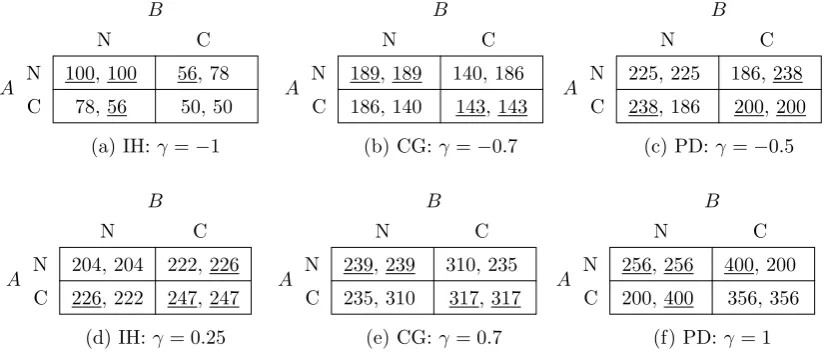
Figure 3 provides numerical examples in which the parameter values are
(Y = 20, F = 10) for negative γ and (Y = 20, F = 0) for positiveγ.16
In each payoff matrix, players’ best responses are underlined. The figure confirms the results shown in Proposition 2.
6
Concluding Remarks
When externalities exist both within and beyond the boundaries of a group, within-group cooperation may not occur for strategic reasons. This paper studies the effect of between-group interaction on endogenous determination of within-group cooperation in a simple two-group model of private provision of public goods. Our major results can be summarized as follows. First, between-group interactions play a dominant role in promoting within-group cooperation. In particular, when between-group interactions are in the same direction and weak (strong), within-group cooperation to provide public goods will (will not) occur in each group. On the other hand, when between-group interactions are in opposite directions or unidirectional, within-group cooperation will necessarily occur. Second, endogenous formation of cooperation is independent of the absolute (individual) levels of income as well as of income distributions
15
We can solve the coordination issue regarding multiple Nash equilibria by using the concept of risk dominance as defined by Harsanyi and Selten (1988). If we apply this concept, tedious calculations indicate that γ <
−0.7002 is sufficient to ensure the equilibrium (N, N) to be a risk-dominant equilibrium in the former situation. Likewise,γ <0.7144 is sufficient to ensure the equilibrium (C, C) to be a risk-dominant equilibrium in the latter situation. In addition, if we consider the case where decisions to cooperate are made sequentially in the first stage, the unique Nash equilibrium coincides with Pareto dominant equilibrium.
16
A
B
N C
N 100, 100 56, 78 C 78, 56 50, 50 (a) IH:γ=−1
A
B
N C
N 189, 189 140, 186 C 186, 140 143, 143
(b) CG:γ=−0.7
A
B
N C
N 225, 225 186, 238 C 238, 186 200, 200
(c) PD:γ=−0.5
A
B
N C N 204, 204 222, 226 C 226, 222 247, 247 (d) IH:γ= 0.25
A
B
N C
N 239, 239 310, 235 C 235, 310 317, 317
(e) CG:γ= 0.7
A
B
N C
N 256, 256 400, 200 C 200, 400 356, 356
[image:13.595.97.512.84.261.2](f) PD:γ= 1
Figure 3: Numerical Examples: Y = 20,F = 10 (whenγ ≤0), F = 0 (whenγ >0).
between agents. This result corresponds to an extended version of Warr’s neutrality theorem. Finally, we show whether endogenous formation of within-group cooperation is beneficial or harmful to each group depending on the degree of between-group interactions. The variation in the interaction degree yields three different types of games in the cooperation stage: the Prisoners’ Dilemma, Coordination Game, and Invisible Hand.
Admittedly, our analysis is conducted in a highly simplified framework and may overlook several features. First, we assume both the number of members in each group and the number of groups to be two. The differences between group sizes will affect the profitability of forming within-group cooperation in each group. Second, we consider only the linear representation of between-group externalities (i.e., we assume that one group’s contributions have linear effects on another group’s public goods provisions). However, between-group interactions concerning public goods provision may be diverse, including non-linear relationships such as conflict be-tween two groups (e.g., Niou and Tan 2005), contest bebe-tween two groups (e.g., Baik 2008), and rent-seeking between two groups (e.g., Baik and Lee 2000; Cheikbossian 2010). Thus, our re-sults obtained from the linear specification of between-group interactions should be interpreted as a benchmark. Finally, the validity of our theoretical results on endogenous formation of co-operation could be tested by laboratory experiments. For instance, Bornstein and Ben-Yossef (1994), Bornstein et al. (2002), and Reuben and Tyran (2010) experimentally investigate the effects of inter-group competition or conflict on intra-group cooperation. It will be interesting to experimentally investigate how within-group cooperation is affected by different types and degrees of between-group interactions. These issues will be examined in future research.
Appendix
In this appendix, we investigate whether agents have unilateral incentive to cooperate across
group boundaries. We consider the case where agentsA1 andB1 cooperate with each other and
joint payoffsUA1+UB1, givengA2 and gB2. Agent A2 (B2) independently chooses gA2 (gB2)
so as to maximize its own payoffUA2 (UB2). We assume that all agents are symmetric. Then,
after some manipulations, we obtain the equilibrium utility of agentsA1 and B1 as
UA1∪B1 A1 =U
A1∪B1 B1 =
[F+ (1 +γ)Y]
(3 +γ)2
(3 + 2γ)2.
Thus, we have
UAA11∪B1−UAN N1 =−
γ[
F + (1 +γ)Y]2[
3 +γ(3 +γ)]
(1 +γ)(3 +γ)2(3 + 2γ)2 R0⇔ γ⋚0.
This shows that agents have (do not have) incentives for unilaterally cooperating with an
agent in another group forγ < 0 (γ >0). The intuition is quite straightforward: if
between-group interactions are positive, agentsA2 andB2 can free ride on increases in the amount of
public goods that are brought about by cooperation between agentsA1 andB1. On the other
hand, if between-group interactions are negative, agentsA2 and B2 reluctantly increase their
contribution because the amount of public goods is reduced by cooperation between agentsA1
and B2.
References
[1] Baik, K.H., Lee, S., (2000) Two-Stage Rent-Seeking Contests with Carryovers, Public Choice 103, 285-296.
[2] Baik, K.H., (2008) Contests with Group-specific Public-good Prizes, Social Choice and Welfare 30, 103-117.
[3] Barrett, S., (2007) Why to Cooperate. The Incentive to Supply Global Public Goods, Oxford University Press, Oxford.
[4] Bergstrom, T., Blume, L., Varian, V., (1986) On the Private Provision of Public Good, Journal of Public Economics 35, 53-73.
[5] Bornstein, G., Ben-Yossef, M., (1994) Cooperation in Intergroup and Single-Group Social Dilemmas, Journal of Experimental Social Psychology 30, 52-67.
[6] Bornstein, G., Gneezy, U., Nagel, R., (2002) The Effect of Intergroup Competition on Group Coordination: An Experimental Study, Games and Economic Behavior 41, 1-25.
[7] Bruce, N., (1990) Defense Expenditures by Countries in Allied and Adversarial Relation-ships, Defense Economics 1, 179-195.
[8] Cheikbossian, G., (2008) Heterogenous Groups and Rent-seeking for Public Goods, Euro-pean Journal of Political Economy 24, 133-150.
[10] Ihori, T., (2001) Defense Expenditures and Allied Cooperation, Journal of Conflict Reso-lution 44, 854-867.
[11] Harsanyi, J.C., Selten, R., (1988) A Game Theory of Equilibrium Selection in Games, Cambridge, MA, MIT Press.
[12] Kitchen, D.M., Beehner J.C., (2007) Factors Affecting Individual Participation in Goup-level Aggression among Non-human Primates, Behaviour 144, 1551-1581.
[13] Mascarenhas, R., Sandler, T., (2006) Do Donors Cooperatively Fund Foreign Aid?, Review of International Organization 1, 337-357.
[14] Niou, E.M., Tan, G., (2005) External Threat and Collective Action, Economic Inquiry 43, 519-530.
[15] Reuben, E., Tyran, J.R., (2010) Everyone is a Winner: Promoting Cooperation through All-can-win Intergroup Competition, European Journal of Political Economy 26, 25-35.
[16] Salant, S.W., Switzer, S., Reynolds, R.J., (1983) Losses from Horizontal Merger: The Effects of an Exogenous Change in Industry Structure on Cournot-Nash Equilibrium, Quar-terly Journal of Economics 98, 185-199.
[17] Sandler, T., (1997) Global Challenges, Cambridge University Press, Cambridge, UK.
[18] Sandler, T., Siqueira, K., (2006) Global Terrorism: Deterrence versus Pre-emption, Cana-dian Journal of Economics 39, 1370-1387.
[19] Tan, J.H.W., Bolle, F., (2007) Team competition and the public goods game, Economics Letters 96, 133-139.
[20] Torsvik, G., (2005) Foreign economic aid; should donors cooperate? Journal of Develop-ment Economics 77, 503-515.