EFFECTIVENESS OF STRUCTURED TEACHING PROGRAMME ON KNOWLEDGE
AND PRACTICES REGARDING LIFESTYLE MODIFICATIONS AMONG PATIENTS
WITH HYPERTENSION AND DIABETES MELLITUS.
Ms. Swapna M K., Asst. Prof, Amity College of Nursing, Amity University, Gurgaon
Abstract
Hypertension and Diabetes Mellitus are among the most Common chronic
Non-Communicable diseases and multifactorial disorders affecting both developed and
developing countries including India.The best prevention for these complications of these
diseases is control of the blood pressure and blood sugar . Effective management in
hypertension and Diabetes Mellitus requires a multisectorial approach. It is necessary to
create public awareness of this danger and this study is intended to find out the knowledge
and practice of lifestyle modification among these patients.An evaluative approach with
quasi experimental non-equivalent pre-test post-test design was adopted for the study.
Through non-probability Convenient sampling technique 100 samples were selected, 50
each in experimental and control group. Formal written permission was obtained from the
authorities of the urban community; informed consent was obtained from patients to conduct
the study. A structured knowledge questionnaire was used to assess the knowledge of
hypertensive and Diabetes Mellitus patients on lifestyle modification in hypertension and
Diabetes and practice rating scale was used to assess their practice. Data was analysed using
descriptive and inferential statistics.
KEYWORDS:Hypertension, Diabetes Mellitus, lifestyle modification, knowledge, practice.
Introduction
India is experiencing a rapid increase in noncommunicable diseases (NCDs) while still
grappling with a high burden of infectious diseases and maternal and child health conditions .
Cardiovascular disease which is the leading cause of disease burden as measured by
disability-adjusted life years in the country, caused an estimated 25% of India’s NCD burden
in 2016. Hypertension is a major risk factor for CVD, particularly ischemic heart disease and
stroke. While the prevalence of hypertension declined in many high-income countries from
1975 to 2015, it rose substantially in most low-income and middle-income countries, and
especially in South Asia. In a recent nationally representative study among 1.3 million adults
in India, we found that 25% of adults had raised blood pressure (BP), with even young adult s
aged 18–25 years having a substantial prevalence.
Hypertension is not a disease but it is an important risk factor for cardiovascular
complications. It can be defined as a condition where blood pressure is elevated to an extent
where clinical benefit is obtained from blood pressure lowering.Hypertension is the leading
preventable cause of death worldwide. According to the National Family Health Survey,
which screened 22.5 million people across India in 2017, one out of every eight Indian
suffers from hypertension. It is commonly known as high blood pressure and contributes to
57 per cent of stroke deaths, and 24 per cent of coronary artery deaths.With changing
lifestyles and gender roles, the impact of hypertension can be seen in both men and women.
It therefore becomes extremely important to be aware of how high blood pressure affects the
body to keep it in control and prevent fatalities.
The prevalence of hypertension in the last six decades has increased from 2% to 15% among
the rural residents in India. According to directorate general of health services ,ministry of
health and family welfare , government of India , the overall prevalence of hypertension in
India by 2020 will be 159/1000 population.
In India, diabetes is rapidly reaching the place of potential epidemic with more than 62
million diabetic persons, and it is expected to rise up to 79.4 million individuals in the year
2030. Diabetes is a metabolic disease defined by hyperglycemia due to defects in insulin
secretion, insulin action, or both. The chronic hyperglycemia of diabetes affects many of the
body systems which include eyes, kidneys, nerves, heart, and blood vessels. It is increasing
prevalence and associated health complications pressurize to crunch the financial gains in
developing countries. Changes in dietary the conventional lifestyle constitutes vigorous
physical activity followed by food rich in high fiber, whole grain-based diet, vegetables, and
fruits. Physical inactivity is known to be associated with obesity, diabetes, hypertension, and
moderate-to-vigorous intensity aerobic exercise at least 5 days a week or a total of 150 min/week, and
some type of strength training at least 2 times/week in addition to aerobic activity.
Lifestyle modification is indicated for all patients with hypertension and diabetes Mellitus
Patients regardless of drug therapy , because it may reduce or even abolish the need for
antihypertensive and diabetic drugs. In addition to the immediate goal of lowering blood
pressure, the recommended lifestyle changes confer a range of lowering blood pressure , the
recommended lifestyle change confer a range of health benefits , including better outcomes
of common chronic diseases. Healthy life style changes are an important first step for
lowering blood pressure and sugar level. Making lifestyle adjustments is key to maintaining
normal blood pressure and sugar level.This study was motivated to carry out this study to
bring awareness among hypertensive and Diabetes Mellitus patients on lifestyle
modification, in the control of hypertension and Diabetes Mellitus due to changes in
people’s lifestyle, work related stress and altered food habits. After an extensive review of
literature, the researcher has taken up this study to educate the hypertensive and Diabetes
subjects on lifestyle modification.
Objectives
1. To assess the pretest level of knowledge and practice regarding Lifestyle
modification of Patients with Hypertension and Diabetes Mellitus before the administration of structured teaching Programme in experimental group.
2. To administer structured teaching Programme on Lifestyle modification of
Hypertension and Diabetes Mellitus among the patients in experimental group
3. To assess the pretest level of knowledge and practice regarding Lifestyle
modification of Patients with Hypertension and Diabetes Mellitus before the administration of structured teaching Programme in control group.
4. To assess the post test level of knowledge and practice regarding Lifestyle
modification of Patients with Hypertension and Diabetes Mellitus after the administration of structured teaching Programme in in experimental group.
5. To assess the post test level of knowledge and Practice regarding Lifestyle
modification of Patients with Hypertension and Diabetes Mellitus after the administration of structured teaching Programme in control group
6. To Compare the Pretest and Post test Knowledge and Practice score regarding
Lifestyle modification of Patients with Hypertension and Diabetes Mellitus in experimental group
7. To Compare the Pretest and Post test level of knowledge and Practice score
Methodology
Quasi Experimental Research Approach
Design - Non Equivalent Pre test Post test Design
Study Settting- Primary Health Centre ( Kasan )
Population – Patients suffering from both Hypertension and DM
Sample- Patients suffering from both hypertension and DM fulfilling inclusion and exclusion criteria
Sampling Technique- Convenient sampling
Sample size- 100
Results and Discussion Result
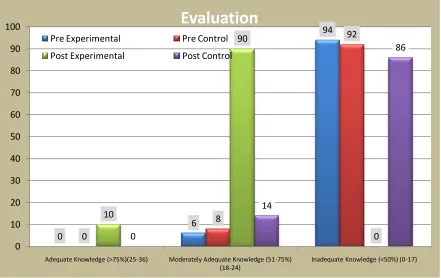
Table. 1 Comparison of pretest and post test knowledge score with in experimental and control Group
CRITERIA MEASURE OF KNOWLEDGE SCORE
Score Level Pre
Experimental Pre Control
Post Experimental
Post Control
Adequate Knowledge
(>75%)(25-36) 0(0%) 0(0%) 5(10%) 0(0%)
Moderately Adequate
Knowledge (51-75%) (18-24) 3(6%) 4(8%) 45(90%) 7(14%)
Inadequate Knowledge
(<50%) (0-17) 47(94%) 46(92%) 0(0%) 43(86%)
Figure No: 1Comparison of pretest and post test knowledge score with in experimental and control Group
0 6 94 0 8 92 10 90 0 0 14 86 0 10 20 30 40 50 60 70 80 90 100
Adequate Knowledge (>75%)(25-36) Moderately Adequate Knowledge (51-75%) (18-24)
Inadequate Knowledge (<50%) (0-17)
Evaluation
Pre Experimental Pre Control
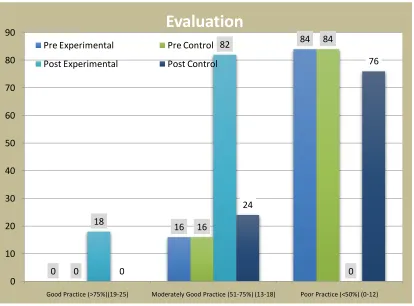
[image:5.612.91.532.390.668.2]Table. 2 Comparison of pretest and post test practice score with in experimental and control Group
CRITERIA MEASURE OF PRACTICE SCORE
Score Level Pre
Experimental Pre Control
Post
Experimental Post Control
Good Practice
(>75%)(19-25) 0(0%) 0(0%) 9(18%) 0(0%)
Moderately Good
Practice (51-75%)
(13-18)
8(16%) 8(16%) 41(82%) 12(24%)
Poor Practice (<50%)
(0-12) 42(84%) 42(84%) 0(0%) 38(76%)
Figure No: 2Comparison of pretest and post test practice score with in experimental and control Group
0
16
84
0
16
84
18
82
0 0
24
76
0 10 20 30 40 50 60 70 80 90
Good Practice (>75%)(19-25) Moderately Good Practice (51-75%) (13-18) Poor Practice (<50%) (0-12)
Evaluation
Pre Experimental Pre Control
[image:6.612.93.507.371.677.2]Discussion
Findings of the present study reveal that in the pre-test of the patients in the experimental
group 94% obtained inadequate knowledge score, 6% obtained moderate and no one had
adequate knowledge score. Most of subjects (16%) had average practice, and 42% had poor
practice. Whereas in the control group 46% patients obtained inadequate knowledge score,
8% obtained moderate and no patientshad adequate knowledge score. In the post-test of the
patients in the experimental group 10% obtained adequate knowledge score and 90%
obtained moderate knowledge score. The majority of subjects (18%) had average practice,
41% had good practice whereas in the control group 14% had moderate knowledge score,
and 12% had adequate knowledge. The majority of subjects had average practice score.
Conclusion
More such teaching programme is required for the public to get free from silent killer
diseases. The data suggest that the high prevalence of DM and Hypertension is intimately
related to lifestyle. Thus, changing the habits of our population from an unhealthy lifestyle to
a healthy lifestyle can be an effective strategy for the prevention of Hypertension and
Diabetes Mellitus.
Bibliography
1.
Benjaminwedrro. (2012). High blood pressure. [online]. Available from:URL:http://www.iowagarlic.com/a159763-high-blood-pressure-vs-garlic.cfm
2.
Gupta P. Hypertension. A companion to heart disease. 4th ed. Canada: W. B. SaundersCompany; 2008.
3.
Chandrababu R. Effectiveness of self instructional module on the knowledge oflifestyle modification of hypertensives among patients with hypertension. Nightingale
Nursing Times 2012 Aug;1(8):30.
4.
Morton PG. Critical care nursing a holistic approach. 9th ed. China: Wolters KluverHealth; 2009.
5.
Rodrigo M Lago, Premranjan P Singh and Richard W Nesto, Diabetes and10,667
6.
Amanda N. Long, DOand Samuel Dagogo-Jack, MD, The Comorbidities of Diabetesand Hypertension: Mechanisms and Approach to Target Organ Protection, J
ClinHypertens (Greenwich). 2011 April ; 13(4): 244–251.
7.
R. Klein, B. E. K. Klein, K. E. Lee, K. J. Cruickshanks, and S. E. Moss, ―Theincidence of hypertension in insulin-dependent diabetes,‖, Archives of Internal
Medicine, vol.156,no.6, pp.622–627, 1996.
8.
Shashank R. Joshi ,BanshiSaboo, , MurugaVadivale et al, Prevalence of Diagnosedand Undiagnosed Diabetes and Hypertension in India—Results from the Screening
India’s Twin Epidemic (SITE) Study, Diabetes technology & therapeutics volume 14,
number 1, 2012, 8-15.