S T U D Y P R O T O C O L
Open Access
Feasibility of an online mindfulness-based
program for patients with melanoma: study
protocol for a randomised controlled trial
Lahiru Russell
1*, Anna Ugalde
1, Donna Milne
2, Meinir Krishnasamy
3,7, Eric O (Seung Chul)
4, David W Austin
4,
Richard Chambers
5, Liliana Orellana
6and Patricia M Livingston
1Abstract
Background:People with a melanoma diagnosis are at risk of recurrence, developing a new primary or experiencing disease progression. Previous studies have suggested that fear of a cancer recurrence is clinically relevant in this group of patients and, if not addressed, can lead to distress. Mindfulness-based interventions have been shown to alleviate symptoms of anxiety and depression among various groups of cancer patients. Online mindfulness-based interventions have the potential to reach people unable to attend face-to-face interventions due to limitations such as cancer-related illness, transportation or time constraints. This study aims to (1) examine whether individuals with a melanoma diagnosis are willing to participate and adhere to a 6-week online mindfulness-based intervention and (2) explore potential benefits of the program on fear of cancer recurrence, worries, rumination, perceived stress and trait mindfulness to inform the design of a clinical trial.
Methods/design:This is a single-site randomised controlled trial of a feasibility study. Seventy-five participants with stage 2c or 3 melanoma will be recruited from a melanoma outpatient clinic and randomised (2:1) either to an online mindfulness-based program (intervention) or to usual care (control). The intervention is a 6-week program specifically developed for this study. It consists of videos describing the concept of mindfulness, short daily guided meditation practices (5–10 min), automated meditation reminders and instructions for applying mindfulness in daily life to enhance wellbeing. All participants will complete questionnaires at baseline and at 6-week
post-randomisation. Participants in the control group will be given access to the online program at the end of the study. Primary outcomes are overall recruitment; retention; extent of questionnaire completion; and usability and
acceptability of, and adherence to, the program. The secondary outcomes are fear of cancer recurrence, worries, rumination, perceived stress and trait mindfulness measured using validated instruments.
Discussion:This feasibility study will evaluate participants’satisfaction with the program and identify barriers to recruitment and adherence. The recruitment and data collection process will highlight methodological aspects to address in the planning of a larger scale study assessing the impact of an online mindfulness-based intervention on fear of cancer recurrence and wellbeing.
Trial registration:Australian New Zealand Clinical Trials Registry,ACTRN12617000081314. Registered on 16 January 2017.
Keywords:Mindfulness, Internet-based, Feasibility, Pilot, Cancer, Melanoma
* Correspondence:[email protected]
1Deakin University, School of Nursing and Midwifery, Faculty of Health, Geelong, Australia
Full list of author information is available at the end of the article
Background
Melanoma affects over 232,000 people worldwide each year [1]. People who have received treatment for melan-oma are up to nine times more likely to develop a new melanoma, and this risk remains elevated for more than 20 years after the initial diagnosis [2]. The risk that the melanoma comes back locally or in another part of the body after it has been treated (i.e. recurrence) is related to the clinical characteristics of the tumour (i.e. thick-ness, ulceration and spread) and is estimated overall to be 9% [2]. Thick primaries, ulcerated lesions or regional lymph node metastases, corresponding to stages 2b, 2c, 3 or 4 according to the melanoma TNM staging system [3], have a high risk of relapse with 5-year mortality rates of 20–80% [3].
Fears and concerns about a melanoma recurrence are common among melanoma survivors. In a large multi-centre study examining the supportive care needs, anx-iety, depression and quality of life among patients diagnosed with melanoma, the main concerns were the risk of recurrence (17%), fear of metastatic disease (17%) and uncertainty regarding outcomes if metastatic disease is detected (16%) [4]. Furthermore, a high proportion (72%) of melanoma survivors with a history of at least one diagnosis of melanoma reported clinically relevant fear of cancer recurrence (FCR) [5].
FCR is a rational and normal response to a stressful event, but if the fear persists and is not resolved through coping or adaptation, it may lead to psychological dis-tress such as anxiety or depression [6]. In patients with melanoma, psychological distress is associated with delay in seeking medical advice [7] and poor psychological ad-justment, which is related to disease progression through immunological response to stress [8].
FCR is often viewed as a multidimensional phenomenon, with an emotional component of anxiety and cognitive as-pects of worry, preoccupation and intrusive thoughts [9]. Maladaptive information processing styles, such as worry-ing or ruminatworry-ing uncontrollably over cancer-related infor-mation, were positively correlated with FCR [10]. A theoretical formulation of FCR, proposed by Fardell and colleagues, suggests that attentional bias towards worri-some and unhelpful thoughts underlies the association be-tween maladaptive information processing and FCR [11]. According to this formulation, teaching skills to cultivate attentional flexibility and mindful awareness of thoughts could have therapeutic benefits [11]. These skills are at the core of mindfulness-based interventions [12].
Mindfulness is a state of mind in which one pays at-tention to the present moment in a non-judgmental, curious, accepting and decentred way [12–14]. In this state, thoughts and feelings are observed as temporary events in the mind, instead of a reflection of oneself or reality. Through detached self-observation, individuals
learn to reflect on situations and are able to respond in more adaptive ways instead of reacting in an automatic, habitual pattern [12]. Hence, the practice of observing one’s thoughts, emotions and body sensations, with dis-cernment rather than judgment, is believed to be a start-ing point linkstart-ing mindfulness practice and psychological wellbeing [15, 16]. Supporting this idea, a meta-analysis exploring the mechanisms underlying the therapeutic ef-fects of mindfulness-based interventions (MBIs) on psy-chological outcomes demonstrated that mindfulness positively mediates the effects of the interventions on mental health outcomes, such as depression, stress and anxiety, while rumination and worry negatively mediate these same outcomes [17].
In MBIs, the cultivation of mindfulness is practised in two distinct and concurrent ways, namely formal and in-formal practices. The in-formal practice of mindfulness meditation can be done in different ways (e.g. walking, movement, sitting) [12,18,19]. These practices strengthen attention regulation and allow observation of mental habits such as rumination [18,19]. As the practice evolves, the meditator gains clarity of mind and greater awareness of his or her mental and emotional fluctuations, enabling them to alter reactive cognitive and emotional habits re-lated to mental distress [20].
Through informal practice, the individual is encour-aged to bring a similar approach of awareness to daily activities. Paying attention to the sensory experience of each moment keeps the attention more in the present moment and reduces worry and rumination [12]. Regular meditation builds the attention founda-tion for informal practice, and together they lead to increased mindfulness in everyday life [21, 22].
In oncology settings, a meta-analysis of 22 studies on patients with different cancer types and stages reported moderate benefits of MBIs in reducing symptoms of anxiety and depression [23]. A recent trial demonstrated the efficacy of a MBI in assisting breast cancer survivors to cope with their fear of recurrence [24], with partici-pants randomly assigned to a 6-week MBI showing sig-nificant improvements in FCR.
this type of intervention might be acceptable in a similar cohort [28]. An online Mindfulness-Based Cancer Recovery program initially tested for feasibility with dis-tressed participants completing treatment for different types of cancer showed positive effects on mood disturb-ance, stress symptoms, spirituality and mindfully acting with awareness [29].
The current study will assess the feasibility of deliver-ing an online mindfulness-based program to patients af-fected by melanoma. It will examine patterns of usage and content relevance to inform the design of a larger randomised control trial.
Aims and objectives
The overall aim of the study is to examine the feasibility and acceptability of an online mindfulness-based pro-gram among people who have completed treatment for melanoma.
The primary objective of the study will be to assess the feasibility of conducting a larger scale randomised con-trol trial by evaluating:
– Overall recruitment, retention and questionnaire completion rates
– Adherence to, and usability and acceptability of, the online program
The secondary objectives will be to assess the potential benefit of the intervention on fear of cancer recurrence, worry, rumination, perceived stress and trait mindfulness compared to a usual-care group and to provide effect size and variance estimates for these outcomes to inform the design of a larger clinical trial.
Methods/design
Design
The development of the study protocol followed the SPIRIT (Standard Protocol Items: Recommendations for Interventional Trials) guidelines [30] (Additional file 1). The description of the intervention followed the TIDieR (Template for Intervention Description and Replication) guidelines [31] (Additional file2).
This study is a single-centre, randomised controlled pilot study. The control group will continue to receive care from their treatment centre as usual, while partici-pants in the intervention group will receive access to a 6-week online mindfulness program as well as their usual care. The groups will be compared to assess the potential effect of the intervention on a series of out-come measures. Measurements will take place at base-line (i.e. before randomisation) and at the end of the study (i.e. 6 weeks after randomisation). In the interven-tion group, participant engagement with, and usability and acceptability of, the program will be assessed weekly
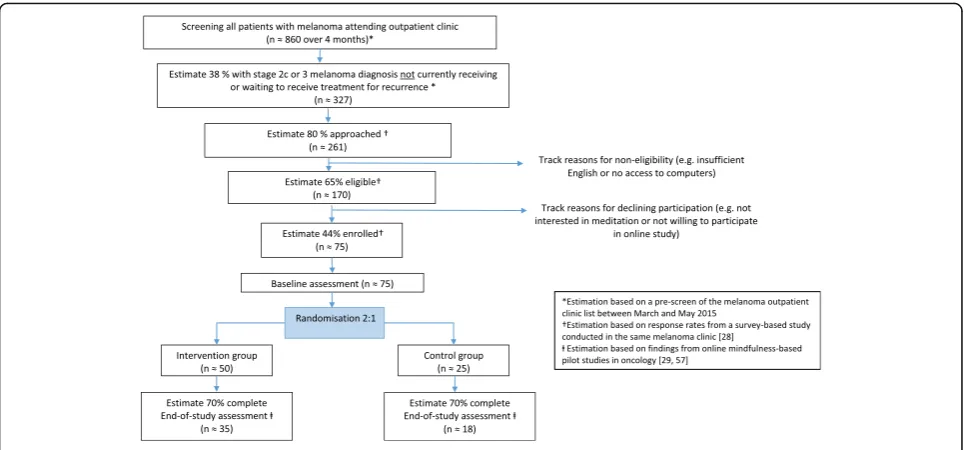
through a short questionnaire. The overall design and participant flow through the trial is illustrated in Fig.1.
Clearance to conduct this study was granted by the hu-man research ethics committees of the recruitment centre (HREC/16/PMCC/139) on 4 January 2017 and by Deakin University (DUHREC 2017-036) on 6 February 2017.
Eligibility criteria
Participants will be included if they have a melanoma diagnosis of stage 2c, 3a, 3b or 3c and completed their last treatment within the past 5 years, are 18 years or older, have sufficient understanding of English to con-sent and participate, and have access to the Internet.
Patients with a history of distant metastasis will be ex-cluded as the disease trajectory of stage 4 melanoma re-mains unpredictable and generally incurable when compared to other stages with high risk of recurrence [32,33]. Patients will also be excluded if they have a se-vere cognitive impairment or intellectual disability, as re-ported in the medical record or determined by the treating clinician or oncology nurse, or are due to com-mence or currently receiving treatment for a melanoma recurrence or a second melanoma.
Setting and recruitment process
Recruitment will take place in the melanoma outpatient clinics of a major metropolitan cancer centre in Melbourne, Australia. Patients will be identified through the melanoma outpatient database and study eligibility determined using electronic medical records.
During the follow-up consultation, clinicians will in-form patients of their eligibility and will invite them to meet with the researcher at the end of the consultation to learn more about the study.
Patients will be reminded that participation is volun-tary and their decision to participate or not will have no impact on their clinical care. A patient information package will be provided to each interested patient, and the researcher will follow up by telephone as agreed with patients to answer any questions related to the project.
Randomisation
Participants are randomised (2:1) to the intervention or control group stratified by sex, time since treatment completion (≤12 months, >12 months), and meditation experience (yes/no). A random sequence will be gener-ated for each one of the eight strata using block ran-domisation. For every three participants enrolled in each stratum, two will be allocated to the intervention group and one to the control group. Random sequences will be embedded in the online system, ensuring allocation con-cealment. Study personnel will not have access to the se-quences and will be blind to group assignment. After randomisation, participants will be unblinded to group assignment, as the intervention does not allow for blind-ing. All questionnaires will be completed online, which will reduce the influence of researcher bias. Given the nature of the intervention and the context in which participants are recruited, i.e. outpatient clinic, we can-not rule out the usual risks of bias due to participants not being blinded to treatment allocation. However, in this study, all surveys will be completed online; health practitioners have no involvement in the collection or assessment of any of the trial outcomes. Unequal ran-domisation, where the number of participants allocated to the intervention group exceeds that in the control group, has been identified as a suitable approach in early-phase studies where the aim is to explore various dimensions of the intervention, such as patterns and fre-quencies of usage [34].
Intervention group—online mindfulness-based program
The intervention was developed for the purpose of this study by the authors, including a clinical psychologist
(RC) with expertise in delivering mindfulness-based pro-grams (e.g. [35]), cancer nurses and researchers (AU, LO, DM, MK and PL) with expertise in developing and evaluating cancer supportive care interventions (e.g. [36–38]), and a psychology researcher (DA) and website developer (EO) with expertise in developing and evaluat-ing online interventions (e.g. [39]). The website content was initially developed by two of the authors (RC and LR) and finalised by consensus.
The intervention is a 6-week online mindfulness-based program designed to (1) help patients understand the potential benefits of using mindfulness in their day-to-day life and (2) support the establishment of daily medi-tation practice. Each week of the program explores a dif-ferent topic, which builds on the topics explored in former weeks.
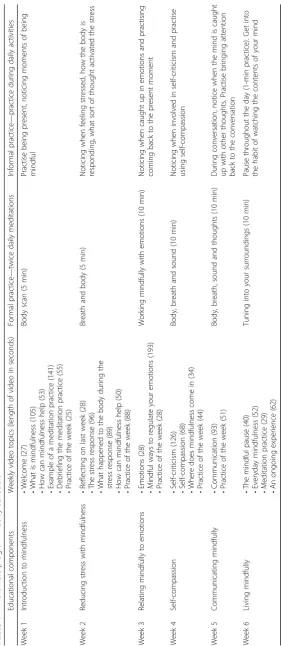
The program includes three weekly components: (1) an educational component to increase participants’ knowledge about the meaning of mindfulness, its appli-cation in everyday life and potential benefits; (2) a
for-mal meditation practice to strengthen attention
regulation and learn to observe mental habits such as rumination or worry; (3) aninformal practiceto encour-age participants to integrate mindfulness into their daily activities. Table1describes these components in further detail.
Participants will receive an automatically generated email at the end of each week with a link to a brief ques-tionnaire inquiring about their level of engagement with the program. Following completion of the questionnaire, participants will be directed to the website. Each topic of the program is explained through a short video ranging from 25 s to 3 min. The script of the videos is available
[image:4.595.57.540.87.312.2]for downloading and printing in PDF format so that par-ticipants can keep a copy of it should they wish to use it at a later stage. At the end of each video, participants will be reminded to continue with their daily meditation practice (formal practice) and will be given a specific mindfulness task to practise during their daily activities (informal practice).
To support participants with establishing a meditation routine, emails containing a link to a short, guided medi-tation audio file, voiced by co-author RC, will be sent twice daily. These emails will serve as reminders to meditate and will provide easy access to the meditation practice of the week.
The website has a section addressing common ques-tions about meditation, which is available at any time throughout the course of the program. The development of this section was informed by (1) answers to a survey conducted in a similar study population about the practice of meditation [28] and (2) questions raised by par-ticipants of a commercially available meditation-based program designed for new meditators in the general population [40].
Participants will have access to the mindfulness pro-gram at any time every day of the week via the hyperlink sent in the emails.
Control group—usual care
Participants in the control group will continue to receive their usual care. They will complete baseline and post-6-week assessments. Upon completion of the final assessment, the control group will be offered the online mindfulness program.
Study discontinuation
Reasons for which participants may wish to discontinue the program may be varied, e.g. lack of time, lost interest in the program, or feeling too unwell. Participants who wish to discontinue will be invited to voluntarily inform the study team by email and provide reasons for discon-tinuation. Due to the self-guided, anonymous and auto-mated nature of the intervention, the study team will not be able to initiate communication with participants who ceased interacting with the website.
Data collection
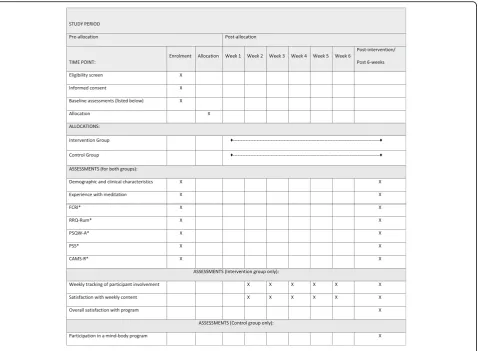
Figure 2 illustrates the overall schedule and time com-mitment for trial participants in both groups.
All assessments will be performed online through the Qualtrics platform. At baseline, participants’demographic information (i.e. sex, age, education, marital status and current employment status), previous meditation experi-ence and preferred time to receive email reminders will be obtained. Clinical information (i.e. stage of melanoma, dates of diagnosis and treatment, types of treatment
received and time since the end of treatment) will be col-lected from medical records, with participants’consent.
In order to retain patients’anonymity, all data will be non-identifiable and stored in password-protected, encrypted files at Deakin University.
Outcome measures
Fear of Cancer Recurrence Inventory
This 42-item Fear of Cancer Recurrence Inventory (FCRI) questionnaire is a multidimensional FCR scale intended for use with all cancer patients. Items were de-veloped on the basis of a cognitive–behavioural formula-tion of FCR [41]. The FCRI consists of seven domains: triggers, severity, psychological distress, functional im-pairment, reassurance, insight and coping strategies. It has shown high internal consistency and good construct and criterion validity in a group of adults with different cancer types [42] and in adults with a history of melan-oma [5].
Rumination/Reflection Questionnaire–Rumination subscale
Ruminative thoughts are measured using the 12-item Rumination subscale that measures “ruminative self-attention”, the tendency to dwell on, rehash or re-evaluate events or experiences [43]. Items are rated on a 5-point Likert scale from “strongly disagree” (1) to
“strongly agree”(5). The scale showed good internal reli-ability in a sample of newly diagnosed colon cancer pa-tients and mixed cancer papa-tients (Cronbach’s α = 0.90 and 0.92, respectively) [44, 45]. In a sample of women post-cancer treatment, where a majority were breast cancer patients, Rumination/Reflection Questionnaire – Rumination subscale (RRQ-Rum) scores were negatively correlated with mindfulness change scores (r =−0.34,
P= 0.03) [46].
Penn State Worry Questionnaire–Abbreviated
Worries are measured using the Penn State Worry Questionnaire – Abbreviated (PSWQ-A), an eight-item scale [47] adapted from the PSWQ that assesses trait worry by capturing the excessiveness, prevalence and uncontrollability of clinical worry [48]. Items on the PSWQ-A are rated from 1 (not at all) to 5 (very typical), and total scores range from 8 to 40, with higher scores indicating greater worry. The PSWQ-A is a valid and re-liable measure for use among older adults [47] and women with cancer [49] with internal consistency of 0. 87 and 0.96, respectively.
Cognitive and Affective Mindfulness Scale–Revised
experience and is designed to capture mindfulness as a gen-eral daily experience [50]. The questionnaire comprises four domains of mindfulness (attention, present-focus, awareness and acceptance/non-judgment). Participants are asked to rate on a 4-point Likert scale how much they relate to each statement. Possible responses are 1 = rarely/not at all, 2 = sometimes, 3 = often and 4 = almost always.
Compared to other measures of mindfulness, the CAMS-R is unique in that it is related to psychological distress [51], which is highly relevant to the current study population [52].
Perceived Stress Scale
The Perceived Stress Scale (PSS; 10-item version) is a self-report questionnaire measuring the global percep-tion of stress [53]. The items were designed to evaluate how unpredictable, uncontrollable and overloaded re-spondents find their lives. The scale has internal consistency ranging from 0.75 to 0.86 [54]. Consistent with this range, studies measuring perception of stress
in people with prostate cancer [55] and breast cancer [56] had Cronbach’sαof 0.78 and 0.87, respectively.
Assessment of intervention content relevance
At the end of each week, a short questionnaire will ask participants if the weekly topic was beneficial and what aspects of the program were liked or disliked. At week 6, additional three questions ask about the overall helpful-ness of the mindfulhelpful-ness program and feature that were the most liked or disliked.
Adherence tracking and meditation log
Google Analytics will be used to track participants’ on-line activity, including login date/times, navigation pat-terns, page views and duration, and features used (video, audio and document downloads). At the end of each week, a set of three questions will capture information on any use of other types of meditation unrelated to the intervention, and frequency and duration of practice. Another three questions will estimate the amount of in-formal practice over the past week, and the specific use of the weekly topic, using a 5-point Likert scale.
[image:7.595.61.540.87.438.2]Controlling for existing mindfulness experience in the control group
In order to control for the potential influence of an ex-ternal mindfulness-based program in the control group, participants will answer a question included in the end-of-study questionnaire about whether they have enrolled in a mindfulness-based program during the past 6 weeks.
Sample size
We aim to enrol 75 participants over a 5-month period. The target sample size of 75 participants (50 in the intervention group, 25 in the control group) meets rec-ommendations for pilot studies aimed at evaluating feasibility and estimating variance to inform sample size and power calculations for a main trial [57]. The 5-month recruitment period was informed by (1) screening past melanoma clinic lists for eligible patients at the can-cer centre over a period of 3 months, (2) findings from a survey-based study among people with melanoma [28], and (3) an estimated 70% participation rate based on findings from online mindfulness-based pilot studies for patients with cancer [29,58] (Fig.1).
Analysis plan
Descriptive statistics will be used to present participants’ characteristics. Demographic and clinical characteristics, and experience with meditation will be compared be-tween intervention and control groups, using t test or Wilcoxon rank-test (for continuous variables) depending on the outcome distribution and chi-square or Fisher’s exact test (for categorical variables).
Primary objective—feasibility
Descriptive statistics will be used to present feasibility data. The overall study feasibility will be assessed through the following measures:
– Proportion of people approached (target: 80%): number of people approached as a proportion of those meeting clinical eligibility. Reasons for not approaching will be summarised.
– Proportion of people eligible for the study (target: 65%): number of people meeting all eligibility criteria as a proportion of those approached. Reasons for non-eligibility criteria and declining participation will be summarised.
– Proportion of people enrolled (target: 45%): number of people completing the baseline questionnaire as a proportion of those eligible.
– Completion rate (target: 70%): number of
participants completing the end-of-study assessment as a proportion of those enrolled. It will not be pos-sible to capture reasons for non-completion as there
will be no interaction between the researcher and participants once they are enrolled in the study.
The intervention feasibility will be assessed through the following measures:
– Meditation adherence rate (target: 70%): number of guided meditations listened to per week over the total number of meditation sessions scheduled (14 sessions/week)
– Rate of adherence to weekly sessions (target: 50%): the number of videos viewed over the total number of videos scheduled per week
– Engagement with the intervention: recording website navigation patterns and features used (video, audio and document downloads)
– Content relevance: type of benefits experienced and aspects of the program most liked and disliked (data collected through weekly questionnaires)
Secondary objectives—potential efficacy of intervention on outcome measures
To explore the potential efficacy of the intervention on any of the secondary outcomes (i.e. fear of cancer recur-rence, worry, rumination, perceived stress and trait mindfulness), a linear mixed model will be fitted includ-ing group (intervention, control), time (pre, post) and the interaction group by time as fixed effects and partici-pant as a random effect. We will additionally adjust for any characteristics or scores showing clear evidence of imbalance at baseline. All analyses will be undertaken on an intention-to-treat (ITT) basis, i.e. participants will be analysed as randomised regardless of adherence.
In addition, potential association between overall meditation time and the secondary outcome measures will be assessed in the intervention group. Weekly medi-tation time will be defined as the maximum between time collected from Google Analytics and time self-reported in the weekly questionnaires.
Results of this study will be prepared in accordance with the CONSORT 2010 statement: extension to ran-domised pilot and feasibility trials [59].
Data monitoring
Given the short length of the intervention and the length of the data collection period, an external data monitor-ing committee is not considered necessary and an in-terim analysis will not be performed. Nonetheless, members of the research team are regularly updated with recruitment status and study progression.
Managing potential risk associated with participation
contact the researcher by email or phone for assistance. Counselling or other appropriate support will then be provided by the clinic staff who are not members of the research team. In addition, participants will receive in the study information pack contact for external support services such as Lifeline services or mindhealthconnect. org.au.
Protocol amendments
Potential protocol modifications will be submitted for approval by the relevant human research ethics commit-tees before being implemented.
Dissemination policy
The research team intend to disseminate outcomes from this study in peer-reviewed journals and at relevant con-ferences. Participants will have access to study results on request.
Discussion
This is the first study to address the specific issue of FCR among people with melanoma using an online MBI. In the emerging field of online MBIs in oncology, many fundamental questions specific to the online deliv-ery mode remain unanswered, including (1) which as-pects of an online MBI are the most engaging and (2) can patients learn the basic skills of mindfulness and benefit from a mindfulness program without interacting with a trained therapist? This study aims to answer these questions.
This paper describes the protocol for a pilot RCT with embedded process evaluations aiming to assess eligibil-ity, enrolment and retention rates, barriers to recruit-ment, questionnaire completion rate, and intervention participation and content relevance. This study will support the design of a full-scale RCT with a longer follow-up period, and information collected from the recruitment process will highlight methodological aspects to address in the planning of a larger scale study. Participants’ interaction with the website and engagement with the inter-vention will inform whether this self-managed program has the capacity to engage participants into learning about and practising mindfulness skills. This information is collected on a weekly basis and will allow to address specific aspects of the program.
Given the positive impact of face-to-face MBIs on can-cer patients, an online approach has the potential to provide similar support to individuals unable to attend face-to-face programs.
Trial status
Recruitment commenced in February 2017 and is ongoing.
Additional files
Additional file 1:SPIRIT 2013 Checklist. (DOC 121 kb)
Additional file 2:The TIDieR (Template for Intervention Description and Replication) Checklist. (DOCX 31 kb)
Abbreviations
CAMS-R:Cognitive and Affective Mindfulness Scale–Revised; FCR: Fear of cancer recurrence; FCRI: Fear of Cancer Recurrence Inventory;
MBI: Mindfulness-based intervention; PSQW-A: Penn State Worry
Questionnaire–Abbreviated; PSS: Perceived Stress Scale;
RRQ-Rum: Rumination/Reflection Questionnaire–Rumination subscale
Acknowledgements
The authors would like to thank Luke Barisic for directing and producing the videos on the website.
Funding
This project is part of LR’s Ph.D. candidature, which is funded by a Deakin
University scholarship.
Availability of data and materials Not applicable.
Authors’contributions
LR co-conceived the study and drafted the protocol and study materials. AU, LO, DM, MK and PL co-conceived the study and contributed to the design of the study. LO contributed to the recruitment rate estimations and the design of the study. RC contributed to the design and drafting of the intervention. EO co-conceived and developed the website for the intervention. DA contributed to the website development and conceptualisation of the data capturing process. All authors read and approved the final version.
Ethics approval and consent to participate
All procedures performed in studies involving human participants will be in accordance with the ethical standards of the institutional research committee and with the 1964 Helsinki declaration and its later amendments or comparable ethical standards. Informed consent will be obtained from all individual participants included in the study.
Consent for publication Not applicable.
Competing interests
The authors declare that they have no competing interests.
Publisher’s Note
Springer Nature remains neutral with regard to jurisdictional claims in published maps and institutional affiliations.
Author details
1Deakin University, School of Nursing and Midwifery, Faculty of Health, Geelong, Australia.2Skin and Melanoma Services/Department of Cancer Experiences Research, Peter MacCallum Cancer Centre, Melbourne, Australia. 3Department of Nursing, School of Health Sciences, University of Melbourne, Melbourne, Australia.4Deakin University, School of Psychology, Faculty of Health, Geelong, Australia.5Campus Community Division, Monash University, Clayton, Australia.6Deakin University, Biostatistics Unit, Faculty of Health, Geelong, Australia.7Victorian Comprehensive Cancer Centre, Melbourne, Victoria, Australia.
Received: 23 May 2017 Accepted: 8 March 2018
References
1. Ferlay J, Soerjomataram I, Dikshit R, Eser S, Mathers C, Rebelo M, et al.
patterns in GLOBOCAN 2012. Int J Cancer. 2015;136:E359–86.https://doi.org/ 10.1002/ijc.29210.
2. Bradford PT, Freedman D, Goldstein AM, Tucker MA. Increased risk of
second primary cancers after a diagnosis of melanoma. Arch Dermatol.
2010;146:265–72.https://doi.org/10.1001/archdermatol.2010.2.
3. Balch CM, Gershenwald JE, Soong S-j, Thompson JF, Atkins MB, Byrd DR, et
al. Final version of 2009 AJCC melanoma staging and classification. J Clin
Oncol. 2009;27:6199–206.https://doi.org/10.1200/JCO.2009.23.4799.
4. Beesley VL, Smithers BM, Khosrotehrani K, Khatun M, O'Rourke P,
Hughes MCB, et al. Supportive care needs, anxiety, depression and quality of life amongst newly diagnosed patients with localised invasive cutaneous melanoma in Queensland, Australia. Psycho-Oncology.
2015;24:763–70.
5. Costa DS, Dieng M, Cust AE, Butow PN, Kasparian NA. Psychometric
properties of the Fear of Cancer Recurrence Inventory: an item response
theory approach. Psycho-Oncol. 2016;25(7):832–8.
6. Kasparian NA. Psychological stress and melanoma: are we meeting our
patients’psychological needs? Clin Dermatol. 2013;31:41–6.https://doi.org/
10.1016/j.clindermatol.2011.11.005.
7. Boyle DA. Psychological adjustment to the melanoma experience. Semin
Oncol Nurs. 2003;19:70–7.https://doi.org/10.1053/sonu.2003.50006.
8. Levy SM, Heiden LA, Friedman H. Personality and social factors in cancer
outcome. Person Dis. 1990:254–79.
9. Simard S, Savard J, Ivers H. Fear of cancer recurrence: specific profiles and
nature of intrusive thoughts. J Cancer Surviv. 2010;4:361–71.https://doi.org/
10.1007/s11764-010-0136-8.
10. Butow P, Kelly S, Thewes B, Hruby G, Sharpe L, Beith J. Attentional bias and
metacognitions in cancer survivors with high fear of cancer recurrence.
Psycho-Oncology. 2015;24:416–23.
11. Fardell JE, Thewes B, Turner J, Gilchrist J, Sharpe L, Girgis A, et al. Fear of
cancer recurrence: a theoretical review and novel cognitive processing
formulation. J Cancer Surviv. 2016;10(4):663–73.
12. Bishop SR, Lau M, Shapiro S, Carlson L, Anderson ND, Carmody J, et al.
Mindfulness: a proposed operational definition. Clin Psychol Sci Pract.
2004;11:230–41.
13. Kabat-Zinn J. Wherever you go, there you are: mindfulness meditation in
everyday life: Hyperion; 1994. ISBN:0786880708
14. Walsh R, Shapiro SL. The meeting of meditative disciplines and Western
psychology: a mutually enriching dialogue. Am Psychol. 2006;61:227–39.
https://doi.org/10.1037/0003-066X.61.3.227.
15. Chiesa A, Anselmi R, Serretti A. Psychological mechanisms of
mindfulness-based interventions: what do we know? Holist Nurs Pract. 2014;28:124–48.
https://doi.org/10.1097/HNP.0000000000000017.
16. Wolkin JR. Cultivating multiple aspects of attention through mindfulness
meditation accounts for psychological well-being through decreased
rumination. Psychol Res Behav Manag. 2015;8:171–80.https://doi.org/10.
2147/PRBM.S31458.
17. Gu J, Strauss C, Bond R, Cavanagh K. How do mindfulness-based cognitive
therapy and mindfulness-based stress reduction improve mental health and wellbeing? A systematic review and meta-analysis of mediation studies. Clin
Psychol Rev. 2015;37:1–12.
18. Kabat-Zinn J. An outpatient program in behavioral medicine for chronic
pain patients based on the practice of mindfulness meditation: theoretical
considerations and preliminary results. Gen Hosp Psychiatry. 1982;4:33–47.
19. Hölzel BK, Lazar SW, Gard T, Schuman-Olivier Z, Vago DR, Ott U. How does
mindfulness meditation work? Proposing mechanisms of action from a
conceptual and neural perspective. Perspect Psychol Sci. 2011;6:537–59.
https://doi.org/10.1177/1745691611419671.
20. Lutz A, Slagter HA, Dunne JD, Davidson RJ. Attention regulation and
monitoring in meditation. Trends Cogn Sci. 2008;12:163–9.https://doi.org/
10.1016/j.tics.2008.01.005. PMCID:2693206
21. Hanley AW, Warner AR, Dehili VM, Canto AI, Garland EL. Washing dishes to
wash the dishes: brief instruction in an informal mindfulness practice.
Mindfulness. 2015;6:1095–103.https://doi.org/10.1007/s12671-014-0360-9.
22. Thompson BL, Waltz J. Everyday mindfulness and mindfulness meditation:
overlapping constructs or not? Pers Individ Dif. 2007;43:1875–85.https://doi.
org/10.1016/j.paid.2007.06.017.
23. Piet J, Würtzen H, Zachariae R. The effect of mindfulness-based therapy
on symptoms of anxiety and depression in adult cancer patients and survivors: a systematic review and meta-analysis. J Consult Clin Psychol. 2012;80:1007.
24. Lengacher CA, Reich RR, Paterson CL, Ramesar S, Park JY, Alinat C, et al.
Examination of broad symptom improvement resulting from mindfulness-based stress reduction in breast cancer survivors: a randomized controlled
trial. J Clin Oncol. 2016;https://doi.org/10.1200/jco.2015.65.7874.
25. Andersson G, Titov N. Advantages and limitations of Internet-based
interventions for common mental disorders. World Psychiatry. 2014;13:4–11.
https://doi.org/10.1002/wps.20083.
26. Gardner-Nix J, Backman S, Barbati J, Grummitt J. Evaluating distance
education of a mindfulness-based meditation programme for chronic pain
management. J Telemed Telecare. 2008;14:88–92.
27. Thompson NJ, Patel AH, Selwa LM, Stoll SC, Begley CE, Johnson EK, et al.
Expanding the efficacy of Project UPLIFT: distance delivery of mindfulness-based depression prevention to people with epilepsy. J Consult Clin Psychol. 2015;83:304.
28. Russell L, Orellana L, Ugalde A, Milne D, Krishnasamy M, Chambers R, et al.
Exploring knowledge, attitudes, and practice associated with meditation among patients with melanoma. Integr Cancer Ther. 2017:
1534735417699514. doi:https://doi.org/10.1177/1534735417699514.
29. Zernicke KA, Campbell TS, Speca M, McCabe-Ruff K, Flowers S, Carlson LE. A
randomized wait-list controlled trial of feasibility and efficacy of an online mindfulness-based cancer recovery program: the eTherapy for cancer
applying mindfulness trial. Psychosom Med. 2014;76:257–67.
30. Chan A-W, Tetzlaff JM, Altman DG, Laupacis A, Gøtzsche PC, Krleža-JerićK,
et al. SPIRIT 2013 statement: defining standard protocol items for clinical
trials. Ann Intern Med. 2013(158):200–7.
https://doi.org/10.7326/0003-4819-158-3-201302050-00583.
31. Hoffmann TC, Glasziou PP, Boutron I, Milne R, Perera R, Moher D, et al.
Better reporting of interventions: template for intervention description and
replication (TIDieR) checklist and guide. BMJ. 2014;348https://doi.org/10.
1136/bmj.g1687.
32. Garbe C, Peris K, Hauschild A, Saiag P, Middleton M, Bastholt L, et al.
Diagnosis and treatment of melanoma. European consensus-based
interdisciplinary guideline–update 2016. Eur J Cancer. 2016;63:201–17.
https://doi.org/10.1016/j.ejca.2016.05.005.
33. Tolk H, Satzger I, Mohr P, Zimmer L, Weide B, Schäd S, et al. Complete
remission of metastatic melanoma upon BRAF inhibitor treatment–what
happens after discontinuation? Melanoma Res. 2015;25:362–6.
34. Hey SP, Kimmelman J. The questionable use of unequal allocation in
confirmatory trials. Neurology. 2014;82:77–9.https://doi.org/10.1212/01.wnl.
0000438226.10353.1c.
35. Chambers R, Ulbrick M. Mindful relationships: creating genuine connections
with ourselves and others: Exisle Publishing; 2016. ISBN:1775592766
36. Krishnasamy M, Milne D. Understanding care complexity in ambulatory
patients with cancer to inform workforce utilisation and optimise patient outcomes. Aust Nurs Midwif J. 2014;22:35.
37. Milne D, Sheeran L, Holmes M, Tidhar G, Aranda S. Trialling a patient-led
cancer care website in an acute cancer care setting. J Res Nurs. 2012;17: 538–54.https://doi.org/10.1177/1744987112458668.
38. Ugalde A, Haynes K, Boltong A, White V, Krishnasamy M, Schofield P, et al.
Self-guided interventions for managing psychological distress in people with
cancer—a systematic review. Patient Educ Couns. 2017;100(5):846–57.
39. Wootten AC, Meyer D, Abbott JAM, Chisholm K, Austin DW, Klein B, et al.
An online psychological intervention can improve the sexual satisfaction of men following treatment for localized prostate cancer: outcomes of a randomised controlled trial evaluating my road ahead. Psychooncology.
2016;https://doi.org/10.1002/pon.4244.
40. Meditation made simpler.https://www.headspace.com/. Accessed 15
May 2017.
41. Lee-Jones C, Humphris G, Dixon R, Bebbington HM. Fear of cancer recurrence—a
literature review and proposed cognitive formulation to explain exacerbation of
recurrence fears. Psychooncology. 1997;6:95–105.
https://doi.org/10.1002/(SICI)1099-1611(199706)6:2<95::AID-PON250>3.0.CO;2-B.
42. Simard S, Savard J. Fear of Cancer Recurrence Inventory: development and
initial validation of a multidimensional measure of fear of cancer recurrence.
Support Care Cancer. 2009;17:241–51.
43. Trapnell PD, Campbell JD. Private self-consciousness and the five-factor model
of personality: distinguishing rumination from reflection. J Pers Soc Psychol. 1999;76:284.
44. Thomsen DK, Jensen AB, Jensen T, Mehlsen MY, Pedersen CG, Zachariae R.
Rumination, reflection and distress: an 8-month prospective study of
45. Labelle LE, Campbell TS, Faris P, Carlson LE. Mediators of Mindfulness-Based Stress Reduction (MBSR): assessing the timing and sequence of change in
cancer patients. J Clin Psychol. 2015;71:21–40.
46. Campbell TS, Labelle LE, Bacon SL, Faris P, Carlson LE. Impact of
mindfulness-based stress reduction (MBSR) on attention, rumination and resting blood pressure in women with cancer: a waitlist-controlled study.
J Behav Med. 2012;35:262–71.
47. Hopko DR, Reas DL, Beck JG, Stanley MA, Wetherell JL, Novy DM, et al.
Assessing worry in older adults: confirmatory factor analysis of the Penn State Worry Questionnaire and psychometric properties of an abbreviated
model. Psychol Assess. 2003;15:173–83.https://doi.org/10.1037/1040-3590.
15.2.173.
48. Meyer TJ, Miller ML, Metzger RL, Borkovec TD. Development and validation
of the penn state worry questionnaire. Behav Res Ther. 1990;28:487–95.
https://doi.org/10.1016/0005-7967(90)90135-6.
49. Wu SM, Schuler TA, Edwards MC, Yang H-C, Brothers BM. Factor analytic
and item response theory evaluation of the Penn State Worry Questionnaire
in women with cancer. Qual Life Res. 2013;22:1441–9.https://doi.org/10.
1007/s11136-012-0253-0.
50. Feldman G, Hayes A, Kumar S, Greeson J, Laurenceau J-P. Mindfulness and
emotion regulation: the development and initial validation of the Cognitive and Affective Mindfulness Scale-Revised (CAMS-R). J Psychopathol Behav
Assess. 2007;29:177–90.
51. Bergomi C, Tschacher W, Kupper Z. The assessment of mindfulness with
self-report measures: existing scales and open issues. Mindfulness.
2013;4:191–202.
52. Kasparian NA, McLoone JK, Butow PN. Psychological responses and coping
strategies among patients with malignant melanoma: a systematic review
of the literature. Arch Dermatol. 2009;145:1415–27.https://doi.org/10.1001/
archdermatol.2009.308.
53. Cohen S, Kamarck T, Mermelstein R. A global measure of perceived stress.
J Health Soc Behav. 1983:385–96.
54. Cohen S, Williams G. Perceived stress in a probability sample of the United
States. In: Spacapan S, Oskamp S, editors. The social psychology of health.
Newbury Park: Sage; 1988. p. 31–68.
55. Curtis R, Groarke A, Sullivan F. Stress and self-efficacy predict psychological
adjustment at diagnosis of prostate cancer. Sci Rep. 2014;4:5569.https://doi.
org/10.1038/srep05569.
56. Golden-Kreutz DM, Thornton LM, Wells-Di Gregorio S, Frierson GM, Jim HS,
Carpenter KM, et al. Traumatic stress, perceived global stress, and life events: prospectively predicting quality of life in breast cancer patients. Health Psychol. 2005;24:288.
57. Sim J, Lewis M. The size of a pilot study for a clinical trial should be
calculated in relation to considerations of precision and efficiency. J Clin
Epidemiol. 2012;65:301–8.https://doi.org/10.1016/j.jclinepi.2011.07.011.
58. Everts FZB, van der Lee ML, de Jager Meezenbroek E. Web-based individual
mindfulness-based cognitive therapy for cancer-related fatigue—a pilot
study. Intern Interv. 2015;2:200–13.
59. Eldridge SM, Chan CL, Campbell MJ, Bond CM, Hopewell S, Thabane L, et al.
CONSORT 2010 statement: extension to randomised pilot and feasibility trials. Pilot Feas Stud. 2016;2:64.
• We accept pre-submission inquiries
• Our selector tool helps you to find the most relevant journal • We provide round the clock customer support
• Convenient online submission • Thorough peer review
• Inclusion in PubMed and all major indexing services • Maximum visibility for your research
Submit your manuscript at www.biomedcentral.com/submit