2016 International Conference on Manufacturing Science and Information Engineering (ICMSIE 2016) ISBN: 978-1-60595-325-0
The Researching of Flow Characteristic of
Rectangular Microchannel Flow with
Different Geometry Parameters
XIAOMING PAN and YIFENG CHEN
ABSTRACT
In order to research flow characteristics for geometric parameters of microchannel, this paper made a flow test for different microchannel. The result told us that the hydraulic diameter was not only factor to affect fluid flow in microchannel, but also including depth, width can also affect fluid flow in microchannel. With the same as depth to width ratio, the decreasing of hydraulic diameter or length to diameter ratio can make mass flow value and P0 value
increasing. On the other hand, with the same length to diameter and different width to diameter ratio of microchannel, decreasing of width to diameter ratio made increasing of mass flow value and P0 value. The results of this study
showed that hydraulic, geometry size were all influencing fluid flow in microchannel.1
INTRODUCTION
The flow characteristics of rectangular microchannel has been a focus of research on micro scale fluid mechanics. Analyzing and researching of different size, Reynolds number, Flow field, Flow resistance and so on[1]. It has important guiding significance on the characteristics of microelectronics technology, plant, fluid mechanics, micro irrigation, blood flow, physical mechanics and other engineering practice[2].
Domestic and foreign scholars have carried out a lot of researching to clarify the law of fluid flow in microchannel[3]. Some researchers made different length or width for research object to microchannel[4], other researchers made different
height for research object to microchannel, and so on. Their research results give us a guide line for further research.
It is found that many factors, such as the shape of micro channel, the hydraulic diameter, the hydraulic diameter, the ratio of length to diameter, and so on, may affect work performance of microchannel. In order to know the reasons of the influence of those factors, this paper made a large number of experimental and theoretical studies were needed. In this paper, the flow characteristics of distilled water were used in this study, made different types hydraulic diameters, different depth and width ratios, in order to understand the changing law of microchannel parameters.
1.TEST DEVICE
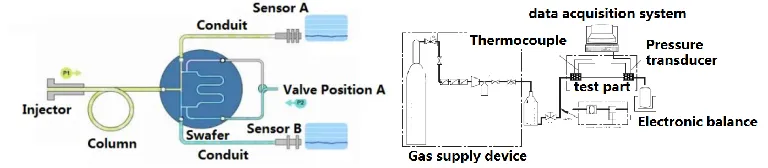
[image:2.612.96.480.395.479.2]Experimental microchannel made by pure copper, the external rectangular microchannel was located in the center of a column, which as shown in Figure 1. This structure of the microchannel was difference to the traditional microchannel. To avoid the interaction between adjacent flow channels, the test microchannel had unique structure.
Figure 1. The structure of micro channel. Figure 2. Test device.
] , max[ / ] ,
min[h w h w
(1)
Test device as shown in Figure 2. Using nitrogen with high pressure
three types filtering which minimum filter pore diameter was 1 μm.
2.DATA SUMMARY AND ANALYSIS
2.1 Test Data Processing
In our whole experiment processing, all data were collected at the end of the test micro channel, and the nitrogen pressure was not changed. In order to reduce the human error, the same test process was put on and it should be repeated at least 3 times, and using numerical statistics method to further reduce data error.
The pressure difference between the two ends of test micro channel, of course including fluids mass flow, and other parameters, according to the formula (1), (2).
2
1 2
u L D
p h
(2)
In the formula, Δp was the pressure drop at both ends in test microchannel, Pa;
ρ was the fluid density, kg/m³; U was the fluids velocity, m/s; Qa was mass flow,
kg/h.
Poiseuille number of fluid flow in a microchannel is obtained by the formula (3), that is
e
R
P0
(3)
The P0 values in the rectangular channel can be found in the calculation of
literature[4].
2.2 Analysis of the Influence of Hydraulic Diameter of Test Liquid
In order to explore the impact of micro channel with different hydraulic diameter of test liquid, this paper respectively test different micro channel, using different hydraulic diameter, and the test data was shown as Figure 3, 4.
But from Figure 4, although the hydraulic diameter of 1# micro channel is smaller than that of the 2# microchannel, the test liquid mass fluid was approximately equal, which was not consistent with the Figure 3 conclusion. The reason of the phenomenon may be that the length diameter ratio of different micro channel had a certain effect on the flow. The length and diameter ratio of micro channel 4#, 5# were close, the inlet effect is equivalent to the extent of the fluid disturbance and the hydraulic diameter was the main factor affecting the flow characteristics, so with smaller hydraulic diameter, the greater mass flow value was.
Figure 3. The test data of 3# and 4#. Figure 4. The test data of 1# and 2#.
2.3 Analysis of the Influence of Flow Depth and Width
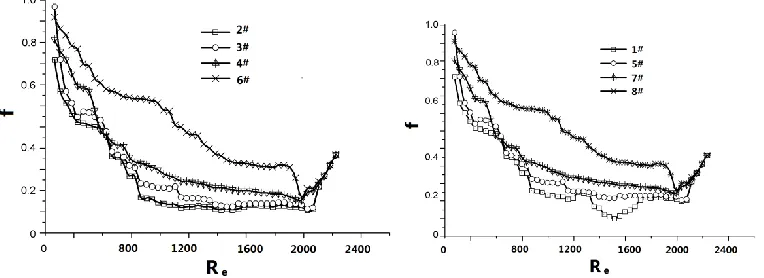
[image:4.612.99.484.244.402.2]From Formula (3), we can know, depth to width ratio was an important parameter which influencing on the flow, different depth to width ratio, we can get different characteristic of test flow in different micro channel. The mass flow values and P0 values were drawn in Figure 5 and Figure 6.
[image:4.612.101.483.525.664.2]Figure 5 and Figure 6, told that, microchannel 6# with the largest depth and width ratio, the Re of experimental values are greater than the theoretical
prediction values which was 250, while other Re was about 200. So, we got
further study for Re values and depth and width ratio which together affect from laminar to transitional flows into microchannel. With increased hydraulic diameter gradually into 2#,4#,8# microchannel, we didn`t had corresponding trend of mass flow value, P0 value, but depth to width ratio was a big influence
reason which corresponds to mass flow value and P0 value maximum. Although
the depth to width ratio was the biggest, the hydraulic diameter of 2# was smaller than 3# and 5#, the mass flow value and P0 value were smallest. The analysis
showed that the mass flow and P0 values were not simple proportional change,
especially for microchannel, it was affected by hydraulic diameter, width and length ratio of geometric parameters. This was in agreement with the experimental results of the literature[4]. But the depth to width and length diameter ratio and the hydraulic diameter specific affects rectangular microchannel fluid flow characteristics, still need further research.
In addition from the Figure 3-6 also can see, under the range of less than 2000 Re, the mass flow values or P0 values obtained by the experiment is more than the
theoretical prediction values, because the flow characteristics of fluid flow in rectangular microchannel were different from the conventional scale.
3.CONCLUSIONS
Through the study of flow characteristics in many rectangular microchannel using distilled water, it can get the following conclusions:
1)For the same microchannel, the reduction of hydraulic diameter and length diameter ratio for mass flow values and P0 values will be increased.
2)In the study area of this test, the influence of depth to width ratio was larger than other parameters for fluid flow in rectangular microchannel.
3)It was the hydraulic diameter, width to diameter ratio and length to diameter of geometric parameters all complex function.
ACKNOWLEDGEMENTS
REFERENCES
1. Bai Lu, Zhu Chunying, Fu Taobao, et al. Gas-liquid flow distribution of parallel microchannels[J]. CIESC Journal, 2014,65(1):108-115.
2. Yong Yumei, Yang Chao, Jiang Yi, et al. Numerical simulation of immiscible Liquid-liquid flow in microchannels using lattice Boltzmann method[J]. SCIENTIA SINICA Chimica, 2010, 40(12):1880-1893.
3. Zhong Zhuhai, Liu Lei, Fan Huiqing, et al. Experimental Study on Flow Characteristics in Rectangular and Circular Microchannels[J]. Proceeding of the CSEE, 2012 32(14):76-81. 4. Zhang Ping, Xu Lei, Deng Yong-bo. Dynamic Effect in Process of Stopping Capillary by