University of South Carolina
Scholar Commons
Theses and Dissertations
2016
Influence of Thyroid Disorders On Pregnancy
Outcomes
Brittany Sullivan
University of South Carolina
Follow this and additional works at:https://scholarcommons.sc.edu/etd
Part of theEpidemiology Commons
This Open Access Thesis is brought to you by Scholar Commons. It has been accepted for inclusion in Theses and Dissertations by an authorized administrator of Scholar Commons. For more information, please [email protected].
Recommended Citation
Sullivan, B.(2016).Influence of Thyroid Disorders On Pregnancy Outcomes.(Master's thesis). Retrieved from
INFLUENCE OF THYROID DISORDERS ON PREGNANCY OUTCOMES
by
Brittany Sullivan
Bachelor of Science University of Delaware, 2014
Submitted in Partial Fulfillment of the Requirements
For the Degree of Master of Science in Public Health in
Epidemiology
Norman J. Arnold School of Public Health
University of South Carolina
2016
Accepted by:
Nansi Boghossian, Director of Thesis
Jihong Liu, Reader
Marco Geraci, Reader
ii
ABSTRACT
Objective: The objective of this thesis is to investigate the effects of maternal thyroid
dysfunction on maternal pregnancy outcomes.
Setting and Participants: The NICHD Consecutive Pregnancy data set contains
information on a total of 114,679 pregnancies from 51,086 women who delivered ≥ 20
weeks of gestation. The data come from 20 different hospitals throughout the state of
Utah and were collected between the years of 2002 to 2010.
Main Outcomes: Main outcomes of interest included: breech presentation,
chorioamnionitis, gestational diabetes, gestational hypertension, hemorrhage,
inductions, placental abruption, placental previa, preterm birth, premature rupture of
membranes (PROM), preeclampsia, and superimposed preeclampsia.
Methods: Results are presented as RRs with 95% CIs. RRs are obtained from modified
Poisson regression models. Analyses are to singleton pregnancies. All results are
adjusted for insurance, parity, race/ethnicity, age, smoking, and other chronic diseases.
Results: We found that hypothyroidism is significantly associated with gestational
1.07-iv
1.63], inductions [RR: 0.98, 95%CI: 0.96-0.99] and preterm birth [RR: 1.23, 95% CI:
1.08-1.41] after adjusting for confounders. Hyperthyroidism was found to be significantly
associated with gestational diabetes [RR: 2.47, 95% CI: 1.28-4.76], preterm birth [RR:
2.31, 95% CI: 1.61-3.32], and preeclampsia [RR: 2.65, 95% CI: 1.44-4.87] after adjusting
for confounders. Unspecified thyroid disorders were significantly associated with
gestational hypertension [RR: 1.24, 95% CI: 1.01-1.53], placental abruption [RR: 1.29,
95% CI: 1.01-1.64], and preterm birth [RR: 1.20, 95% CI: 1.05-1.37] after adjusting for
confounders. Adjusted results for other thyroid disorders were not significant.
Conclusions: The results of this study suggest that the presence of a thyroid disorder
increases the risk of adverse outcomes during pregnancy. This supports previous
findings but more research involving large racially diverse cohorts with available data on
treatment is needed to further understand the complex association between thyroid
TABLE OF CONTENTS
ABSTRACT ... iii
LIST OF TABLES ... viii
LIST OF FIGURES ... ix
LIST OF ABBREVIATIONS ... x
CHAPTER 1INTRODUCTION ... 1
1.1BACKGROUND ... 1
1.2HYPOTHYROIDISM ... 1
1.3HYPERTHYROIDISM ... 2
1.4PURPOSE AND SPECIFIC AIMS ... 3
1.5ORGANIZATION OF THESIS ... 3
CHAPTER 2LITERATURE REVIEW ... 4
2.1THYROID DISORDERS AND PREGNANCY ... 4
2.2HYPOTHYROIDISM DURING PREGNANCY ... 6
2.3HYPERTHYROIDISM DURING PREGNANCY... 8
2.4GAPS IN THE LITERATURE ... 8
2.5MOVING FORWARD ... 9
CHAPTER 3METHODS ... 16
vi
3.3 OUTCOMES OF INTEREST ... 18
3.4 POTENTIAL CONFOUNDERS ... 19
3.5 ANALYSIS ... 20
CHAPTER 4RESULTS ... 22
4.1STUDY POPULATION ... 22
4.2HYPOTHYROIDISM ... 23
4.3HYPERTHYROIDISM ... 24
4.4OTHER THYROID DISORDERS ... 24
4.5UNSPECIFIED THYROID DISORDERS... 25
4.6SENSITIVITY ANALYSIS ... 25
CHAPTER 5DISCUSSION ... 33
5.1SUMMARY OF RESULTS ... 33
5.2HYPOTHYROIDISM ... 33
5.3HYPERTHYROIDISM ... 35
5.4OTHER THYROID DISORDERS ... 36
5.5UNSPECIFIED THYROID DISORDERS... 36
5.6DIFFERENCES IN THE LITERATURE ... 37
5.7STRENGTHS AND LIMITATIONS ... 37
5.8FUTURE STUDIES ... 38
5.9CONCLUSIONS ... 39
APPENDIX A–FULL TABLES FROM SASOUTPUT OF MULTIVARIATE POISSON REGRESSION WITH
viii
LIST OF TABLES
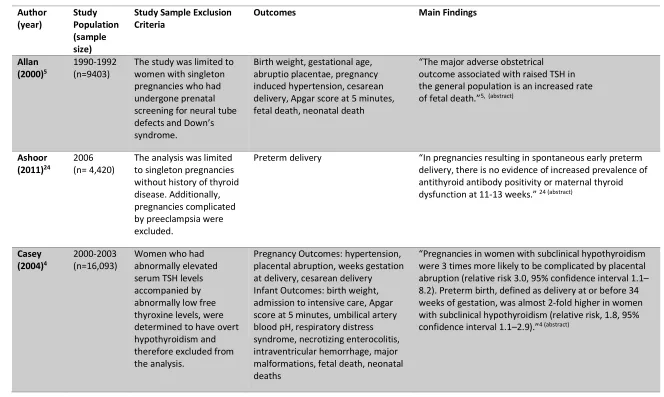
Table 2.1 Epidemiologic studies on the association between thyroid disorders and
pregnancy ... 10
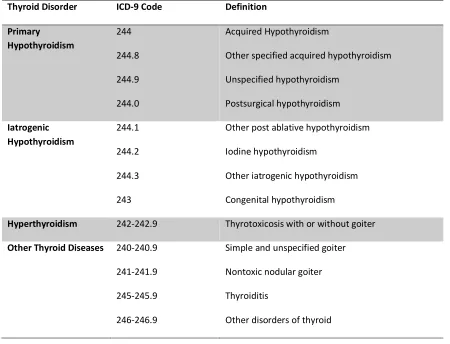
Table 3.1 Classification of Thyroid Disorder as Classified in the International Classification of Diseases, Ninth Edition (ICD-9) ... 17
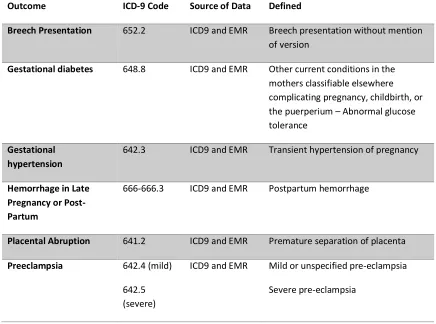
Table 3.2 Classification of Outcomes of Interest ... 18
Table 4.1 Demographic Data by Thyroid Disease Status ... 27
Table 4.2 Unadjusted Relative Risks of Adverse Pregnancy Outcomes among Women with Thyroid Diseases in the NICHD Consecutive Pregnancies Data Set ... 30
Table 4.3 Relative Risks of Adverse Pregnancy Outcomes among Women with Thyroid Diseases in the NICHD Consecutive Pregnancies Data Set ... 31
Table 4.4Relative Risks of Adverse Pregnancy Outcomes from Sensitivity Analysis Restricted to First Delivery ... 32
Table A.1 Breech Presentation ... 45
Table A.2 Gestational Diabetes Mellitus ... 46
Table A.3 Gestational Hypertension ... 47
Table A.4 Hemorrhage ... 48
Table A.5 Inductions ... 49
Table A.6 Placental Abruption ... 50
Table A.7 Preterm Birth ... 51
Table A.8 PROM ... 52
Table A.9 Preeclampsia ... 53
LIST OF FIGURES
x
LIST OF ABBREVIATIONS
CI ... Confidence Interval
GEE... Generalized Estimating Equations
ICD-9 ... International Classification of Diseases, Ninth Edition
NICHD ...National Institute of Child Health and Human Development
OR ... Odds Ratio
RR... Relative Risk
SAS ... Statistical Analysis Software
TSH ... Thyroid Stimulating Hormone
CHAPTER
1
INTRODUCTION
1.1 BACKGROUND
Thyroid disorders are the second most common endocrine disorders affecting
women during their reproductive years and can impact up to 4% of all pregnancies1. Of
all thyroid disorders, hypothyroidism is the most prevalent, impacting approximately
2-3% of all pregnancies 2. Hyperthyroidism is far less prevalent, impacting approximately
0.2% of all pregnancies2. Thyroid disorders during pregnancy have been associated with
a various number of adverse outcomes among both mothers and newborns. Specifically,
multiple studies have found hypothyroidism to be associated with anemia, postpartum
hemorrhage, placental abruption, gestational diabetes, cardiac dysfunction, preterm
birth, miscarriage and fetal death 3-6, 9-14. Additionally, studies have found
hyperthyroidism to be associated with an increased risk for hypertension during
pregnancy, maternal heart failure, preterm birth, miscarriage, and stillbirth7-9, 11-12.
1.2 HYPOTHYROIDISM
Hypothyroidism, also referred to as underactive thyroid, is a condition in which
the thyroid gland does not produce a sufficient amount of thyroid hormone15. As a
2
menstrual periods, pale or dry skin, depression, weakness, and increased sensitivity to
cold temperatures15,16. Hypothyroidism can be caused by numerous disorders and by
conditions, some of the most common being: viral infections, autoimmune disorders,
pregnancy, medications, radiation treatments, pituitary tumors, and congenital birth
defects16. A diagnosis of hypothyroidism results from the presence of symptoms, and
high levels of thyroid-stimulating hormone and low levels of thyroxine as determined by
laboratory tests15. Hypothyroidism is generally treated with hormone replacement
therapy which has shown to be effective in reducing the effects of the disease15.
However, if left untreated, the symptoms may become more severe and can lead to
difficulty in breathing, mental health problems, goiter, heart complications, and
life-threatening coma16.
1.3 HYPERTHYROIDISM
Hyperthyroidism is a condition in which the thyroid produces too much of the
thyroid hormone17. This results in an overactive thyroid and can produce symptoms
such as weight loss, chest pain, palpitations, diarrhea, nervousness, difficulty
concentrating, fatigue, and increased appetite17, 18. Hyperthyroidism can be caused from
various conditions and diseases including but not limited to: Graves’ disease, consuming
too much iodine, noncancerous growths of the thyroid or pituitary gland, and
inflammation of the thyroid due to viral infections, medications, or pregnancy17, 18.
Diagnosis involves the presence of symptoms in addition to blood tests indicating high
levels of thyroxine and low levels of thyroid stimulating hormone18. Additionally, radio
treatment options for hyperthyroidism involve the use of antithyroid drugs, the removal
of thyroid gland tissue, and radioiodine therapy17, 18. It is important to note that
treatment of hyperthyroidism has the potential to result in hypothyroidism, which
ultimately will lead to the requirement of lifetime hormone replacement therapy18.
1.4 PURPOSE AND SPECIFIC AIMS
The purpose of this paper will be to further examine the association between
thyroid disorders and adverse pregnancy outcomes. Based on previous findings, we
hypothesize that thyroid disorders are associated with increased risks of adverse
maternal outcomes. This study’s aims and objectives is to evaluate the association of
thyroid disorders on adverse pregnancy outcomes, specifically, hypothyroidism,
hyperthyroidism, other thyroid disorders, and unspecified thyroid disorders.
1.5 ORGANIZATION OF THESIS
Chapter I has provided sufficient background information on both the exposure
and outcomes of interest, in addition to outlining the main aims and objectives of this
thesis. Chapter II will consist of a literature review covering previous findings on the
influence of thyroid disorders on pregnancy outcomes and demonstrate how this thesis
will address some questions. Chapter III will explain in detail the methods of research
and statistical techniques used to analyze the data. The results of the analyses will be
presented in Chapter IV. Chapter V will provide a summary and conclusion of the
4
CHAPTER 2
LITERATURE REVIEW
2.1 THYROID DISORDERS AND PREGNANCY
Thyroid disorders are fairly common during pregnancy and have been shown to
impact up to 4% of all pregnancies1. Pregnancy results in a number of physiological and
hormonal changes that may alter thyroid function2. In order to maintain normal energy
and lipid metabolism, normal thyroid function is needed9. It is postulated that
inadequate regulation of thyroid hormones may result in adverse outcomes during
pregnancy 2, 3, 9. Additionally, weight gain or lipid disturbances that are often associated
with hypothyroidism may increase the risk of adverse pregnancy outcomes9, 3.
One of the largest studies that investigated the relationship between thyroid
disorders and maternal outcomes is by Männistö et al9. The main objective of this study
was to investigate pregnancy complications (hypertensive diseases, diabetes, preterm
birth, cesarean sections, inductions, and intensive care unit admissions) associated with
both common and uncommon forms of thyroid disease9. Data from the Consortium on
Safe Labor (2002–2008), a retrospective US cohort, were analyzed using multivariable
logistic regression fitted by generalized estimating equations in order to obtain odds
The study found primary hypothyroidism to be significantly associated with
increased odds of preeclampsia [OR: 1.47; 99% CI: 1.20, 1.81], superimposed
preeclampsia [OR: 2.25; 99% CI: 1.53, 3.29], gestational diabetes [OR: 1.57; 99% CI:1.33,
1.86], preterm birth [OR: 1.34 ; 99% CI: 1.17,1.53], induction [OR:1.15; 99% CI:
1.04,1.28], cesarean section [pre-labor OR: 1.31; 99% CI: 1.11,1.54; after spontaneous
labor OR:1.38; 99% CI:1.14,1.66], and ICU admissions [OR: 2.08; 99% CI: 1.04, 4.15]9.
Iatrogenic hypothyroidism was significantly associated with the increased odds of
placental abruption [OR: 2.89; 99% CI: 1.14, 7.36], breech presentation [OR: 2.09; 99%
CI: 1.07, 4.07], and cesarean section after spontaneous labor [OR: 2.05; 99% CI: 1.01,
4.16]9. Hyperthyroidism was significantly associated with the increased odds of
placental abruption [OR: 2.89; 99% CI: 1.14, 7.36), breech presentation [OR: 2.09; 99%
CI: 1.07, 4.07], and cesarean section after spontaneous labor [OR: 2.05; 99% CI: 1.01,
4.16]9. These results indicate that thyroid diseases are associated with significant
increases in morbidity during pregnancy and are consistent with previous research 3-14.
Additionally, one particular paper by Becks et al, stresses that both maternal and
neonatal outcomes in pregnancy are adversely affected by multiple thyroid disorders,
especially if they go undiagnosed or untreated10. Medici et al also found that even small
subclinical variations in thyroid function have been associated with detrimental
pregnancy outcomes, including low birth weight and pregnancy loss14. These studies
support the findings by Männistö and support the association between thyroid disorders
6
on the association between thyroid disorders and pregnancy can be found in table 2.1 at
the end of the chapter.
2.2 HYPOTHYROIDISM DURING PREGNANCY
Studies have shown hypothyroidism to be significantly associated with adverse
pregnancy complications3-6, 9-14,19-20. Maraka et al conducted a systematic review and
meta-analysis of results from randomized trials and cohort studies to further investigate
the relationship between hypothyroidism and pregnancy outcomes19. They focused on
the following main outcomes: pregnancy loss, preterm labor, preterm delivery,
gestational hypertension, preeclampsia, eclampsia, gestational diabetes, placental
complications, premature rupture of membranes, cesarean delivery, intrauterine
growth restriction, low birth weight (≤2500 g), low Apgar score (≤7 at 5 min), small for
gestational age, and neonatal death19. The pooled estimates showed that pregnancy
loss [RR 2.01; 95% CI 1.66–2.44], placental abruption [RR 2.14; 95% CI 1.23–3.70],
premature rupture of membranes (PROM) [RR 1.43; 95% CI 1.04–1.95], and neonatal
death [RR 2.58; 95% CI 1.41–4.73] were significantly increased among women with
hypothyroidism as compared to women without a thyroid condition19. A different
meta-analysis conducted by Sheehan investigated the relationship between maternal thyroid
disease and preterm birth and found similar results in regards to adverse outcomes and
thyroid disorders20. Specifically, the results of the study indicated that overt
hypothyroidism was positively associated with preterm birth with an OR of 1.19 and a
Other studies have also found hypothyroidism to be associated with an
increased risk of adverse pregnancy complications3-6. Casey et al investigated this
relationship between hypothyroidism and pregnancy outcomes such as hypertension,
preterm birth, low birth weight, placental abruption, and fetal death4. Most notably the
results of the study found pregnancies in women with hypothyroidism to be 3 times
more likely to be complicated by placental abruption [RR: 3.0, 95% CI: 1.1-8.2] and
almost 2 times as likely to experience preterm birth [RR: 1.8, 95% CI: 1.1-2.9]4. Allan et
al examined the relationship between pregnancy complications and thyroid deficiency5.
Specifically, the study looked at vaginal bleeding, premature delivery, low birthweight,
abruptio placentae, pregnancy induced hypertension, need for cesarean section, low
Apgar scores, and fetal and neonatal death5. The results indicated that fetal death is
significantly associated with thyroid-stimulating hormone (TSH) deficiency and other
major adverse obstetrical outcomes 5.
Davis et al also investigated the relationship between hypothyroidism and
pregnancy outcomes3 and showed that hypothyroidism was associated with a slight
insignificant increase in preeclampsia, placental abruption, anemia, postpartum
hemorrhage, cardiac dysfunction, and adverse perinatal outcomes3. The study also
emphasized the importance of proper treatment of thyroid disorders in reducing
adverse pregnancy outcomes in women with thyroid disorders3. However, the results
were not statistically significant, which was most likely a result of the limited sample
8
2.3 HYPERTHYROIDISM DURING PREGNANCY
Hyperthyroidism has also been found to be associated with adverse pregnancy
outcomes. However, there has been far less research on hyperthyroidism compared to
hypothyroidism given its lower prevalence. Previous research indicates that
hyperthyroidism is associated with increased risks of adverse outcomes such as preterm
birth, low birth weight, placental complications, cardiomyopathy, retinopathy of
prematurity, and neonatal thyroid diseases7-9, 11-12, 19-20.
Millar et al, examined if controlling hyperthyroidism during pregnancy reduces
the risk of low birth weight and preeclampsia7. The results of the study showed that lack
of control of hyperthyroidism significantly increases the risk of low birth weight infants
[OR: 9.24, 95% CI 5.47-15.6] and severe preeclampsia [OR: 4.74, 95% CI: 1.14-19.7]7.
Davis et al also investigated the adverse effects of hyperthyroidism and its control on
pregnancy outcomes8. The study compared pregnancy outcomes for women who were
both treated and untreated for hyperthyroidism during pregnancy8. The results of the
study showed that hyperthyroidism is associated with an increased risk of stillbirth,
preterm birth, and maternal heart failure in both women who had been treated for
hyperthyroidism and in those who had not received treatment8.
2.4 GAPS IN THE LITERATURE
Previous research has indicated that thyroid disorders are associated with
obstetrical, labor, and delivery complications3-6, 9-14,19-22. However, not all previous
studies have found this to be consistently true23-26. While some studies did find
3-14, the associations were not significant 23-26. These inconsistencies in the literature may
be the result of differences in populations, definition of thyroid dysfunction, and
patient’s baseline characteristics27.
Additionally, there have been a limited number of large contemporary studies
that have investigated the influence of thyroid disorders on adverse pregnancy
outcomes. This is especially true for hyperthyroidism which has been found to affect
0.2% of all pregnancies2. Given the low rate of hyperthyroidism, the association
between hyperthyroidism and pregnancy outcomes has not been explored in as great
detail as hypothyroidism and therefore more research is needed to further understand
this association.2
2.5 MOVING FORWARD
This paper will investigate the relationship between thyroid disorders and
maternal outcomes. Based on previous findings, we hypothesize that the presence of
10
Table 2.1 Epidemiologic studies on the association between thyroid disorders and pregnancy
Author (year) Study Population (sample size)
Study Sample Exclusion Criteria
Outcomes Main Findings
Allan (2000)5
1990-1992 (n=9403)
The study was limited to women with singleton pregnancies who had undergone prenatal screening for neural tube defects and Down’s syndrome.
Birth weight, gestational age, abruptio placentae, pregnancy induced hypertension, cesarean delivery, Apgar score at 5 minutes, fetal death, neonatal death
“The major adverse obstetrical outcome associated with raised TSH in the general population is an increased rate of fetal death.”5, (abstract)
Ashoor (2011)24
2006 (n= 4,420)
The analysis was limited to singleton pregnancies without history of thyroid disease. Additionally, pregnancies complicated by preeclampsia were excluded.
Preterm delivery “In pregnancies resulting in spontaneous early preterm
delivery, there is no evidence of increased prevalence of antithyroid antibody positivity or maternal thyroid dysfunction at 11-13 weeks.” 24 (abstract)
Casey (2004)4
2000-2003 (n=16,093)
Women who had abnormally elevated serum TSH levels accompanied by abnormally low free thyroxine levels, were determined to have overt hypothyroidism and therefore excluded from the analysis.
Pregnancy Outcomes: hypertension, placental abruption, weeks gestation at delivery, cesarean delivery Infant Outcomes: birth weight, admission to intensive care, Apgar score at 5 minutes, umbilical artery blood pH, respiratory distress syndrome, necrotizing enterocolitis, intraventricular hemorrhage, major malformations, fetal death, neonatal deaths
11
Chen (2014)27
(n=8012) Analysis excluded women with the following conditions: overt thyroid disorder, previous or present use of thyroxin or anti-thyroid drugs, other autoimmune disease, congenital heart disease, and elevated serum transaminase or creatinine level.
Gestational hypertension (GH), gestational diabetes mellitus, placenta previa, placental abruption, prelabor rupture of membranes (PROM), premature delivery, intrauterine growth restriction (IUGR), fetal distress, low birth weight (LBW; live birth weight <= 2500 g), stillbirth, and malformation
“Compared with euthyroid status, SCH was associated with higher rates of GH (1.819% vs. 3.504%, P = 0.020; chi(2) = 7.345; odds ratio (OR), 2.243; 95% confidence interval (CI), 1.251-4.024), PROM (4.973% vs. 8.625%, P = 0.002; chi(2) = 72.102; adjusted OR, 6.014; 95% CI, 3.975-9.099), IUGR (1.008% vs. 2.965%, <0.001; chi(2) = 13.272; adjusted OR, 3.336; 95% CI, 1.745-6.377), and LBW (1.885% vs. 4.582%, P<0.001; chi(2) = 13.558; adjusted OR, 2.919; 95% CI, 1.650-5.163).”27 (Abstract)
Cleary-Goldman (2008)23
1999-2002 (n= 10,990)
The analysis was limited to singleton intrauterine pregnancy without evidence of anencephaly or cystic hygroma.
Miscarriage, gestational hypertension, preeclampsia,
gestational diabetes , Placenta previa, placental abruption , preterm labor, preterm premature rupture of membranes, preterm delivery, low birth weight, macrosomia, and perinatal mortality
“Subclinical hypothyroidism was not associated with adverse outcomes. In the first trimester,
hypothyroxinemia was associated with preterm labor (adjusted odds ratio [aOR] 1.62; 95% confidence interval [CI] 1.00-2.62) and macrosomia (aOR 1.97; 95% Cl 1.37-2.83). In the second trimester, it was associated with gestational diabetes (aOR 1.7; 95% Cl 1.02-2.84). Fifteen percent (1,585 of 10,990) in the first and 14% (1,491 of 10,990) in the second trimester had antithyroid
antibodies. When both antibodies were positive in either trimester, there was an increased risk for preterm premature rupture of membranes (P=.002 and P <.001, respectively)…Maternal thyroid hypofunction is not associated with a consistent pattern of adverse outcomes.” 23
Davis (1989)8
1974-1985 (n=60)
The analysis was limited to singleton pregnancies that were complicated by thyrotoxicosis.
Thyroxine, pulse rate, preeclampsia, gestational age, pregnancy weight gain, heart failure, thyrotoxicosis, hypothyroidism, goiter, birth weight, abortions, still births
12
Karakosta (2012)6
2007-2008 (n=1170)
The study was limited to women with singleton pregnancies.
Gestational diabetes, gestational hypertension/preeclampsia, cesarean section, preterm delivery, low birth weight, and small-for-gestational-age neonates.
“The combination of high TSH and thyroid autoimmunity in early pregnancy was associated with a 4-fold increased risk for gestational diabetes [relative risk (RR) 4.3, 95% confidence interval (CI) 2.1-8.9)] and a 3-fold increased risk for low birth weight neonates (RR 3.1,95% CI 1.2-8.0) after adjustment for several confounders. Women positive for thyroid antibodies without elevated TSH levels in early pregnancy were at high risk for
spontaneous preterm delivery (RR 1.7, 95% CI 1.1-2.8), whereas the combined effect of high TSH and positive thyroid antibodies did not show an association with preterm birth.” 6 (abstract)
Karakosta (2012)25
2007-2008 (n=1170)
Analysis was limited to singleton pregnancies. Participants who did not provide blood samples or provided serum samples after the 18th week of gestation were excluded. Additionally, women with incomplete information on outcome variables were also excluded.
Gestational diabetes, gestational hypertension/preeclampsia, cesarean section, preterm delivery, low birth weight, and small-for-gestational-age neonates.
“The combination of high TSH and thyroid autoimmunity in early pregnancy was associated with a 4-fold increased risk for gestational diabetes [relative risk (RR) 4.3, 95% confidence interval (CI) 2.1-8.9)] and a 3-fold increased risk for low birth weight neonates (RR 3.1,95% CI 1.2-8.0) after adjustment for several confounders. Women positive for thyroid antibodies without elevated TSH levels in early pregnancy were at high risk for
spontaneous preterm delivery (RR 1.7, 95% CI 1.1-2.8), whereas the combined effect of high TSH and positive thyroid antibodies did not show an association with preterm birth.” 25 (abstract)
León (2015)22
(n= 2170) Analysis was limited to women with singleton pregnancies.
Birthweight, small and large for gestational age (SGA/LGA), and preterm delivery
“An inverse association of fT4 and TSH with birthweight
was found, the former remaining when restricted to euthyroid women. High fT4 levels were also associated
with an increased risk of SGA [odds ratio, 95% confidence interval (CI) 1.28 (95% CI 1.08, 1.51)]. Mean birthweight was higher in the hypothyroxinaemic group (β = 109,
P < 0.01). Iodine intake and UIC were not associated with
birth outcomes… High maternal fT4 levels during the first
13
increased risk of SGA newborns, suggesting that maternal thyroid function may affect fetal growth, even within the normal range.” 22 (abstract)
Männistö (2013)9
2002-2008 (n=223,512)
The analysis was limited to singleton pregnancies. Women diagnosed with chronic hypertension were excluded from the analyses of gestational hypertension and
preeclampsia. Additionally women who were
diagnosed with
preexisting diabetes were excluded from the analyses of gestational diabetes.
Pre-labor cesarean section, induction, spontaneous labor, route of delivery, preterm birth (<37 gestational weeks), late preterm birth (delivery between 34 and <37 weeks), early preterm birth (<34 weeks), gestational diabetes, gestational hypertension, preeclampsia, superimposed preeclampsia, placental abruption, threatened preterm birth, placenta previa, hemorrhage in late pregnancy or postpartum, chorioamnionitis, premature rupture of membranes (PROM), preterm premature rupture of membranes (PPROM) (PROM <37 weeks), breech presentation, maternal intensive care unit (ICU) admission, and maternal death.
“Primary hypothyroidism was associated with increased odds of preeclampsia (OR = 1.47, 99% CI = 1.20-1.81), superimposed preeclampsia (OR = 2.25, 99% CI = 1.53-3.29), gestational diabetes (OR = 1.57, 99% CI = 1.33-1.86), preterm birth (OR = 1.34, 99% CI = 1.17-1.53), induction (OR = 1.15, 99% CI = 1.04-1.28), cesarean section (prelabor, OR = 1.31, 99% CI = 1.11-1.54; after spontaneous labor OR = 1.38, 99% CI = 1.14-1.66), and ICU admission (OR = 2.08, 99% CI = 1.04-4.15). Iatrogenic hypothyroidism was associated with increased odds of placental abruption (OR = 2.89, 99% CI = 1.14-7.36), breech presentation (OR = 2.09, 99% CI = 1.07-4.07), and cesarean section after spontaneous labor (OR = 2.05, 99% CI = 1.01-4.16). Hyperthyroidism was associated with increased odds of preeclampsia (OR = 1.78, 99% CI = 1.08-2.94), superimposed preeclampsia (OR = 3.64, 99% CI = 1.82-7.29), preterm birth (OR = 1.81, 99% CI = 1.32-2.49), induction (OR = 1.40, 99% CI = 1.06-1.86), and ICU admission (OR = 3.70, 99% CI = 1.16-11.80).” 9 (abstract)
Männistö (2013)13
2002-2008 (n=223,512)
The analysis was limited to singleton pregnancies.
Respiratory distress syndrome, intracerebral hemorrhage, seizures, oliguria, cardiomyopathy, peri- or intraventricular hemorrhage, necrotizing enterocolitis, retinopathy of prematurity, sepsis, transient tachypnea, anemia, apnea, asphyxia, infectious pneumonia, and aspiration
“Hyperthyroidism and primary hypothyroidism were associated with sepsis, respiratory distress syndrome, transient tachypnea, and apnea. Iatrogenic
hypothyroidism was associated with sepsis and neonatal anemia. Hyperthyroidism was also associated with rare outcomes (prevalence, <1%) including cardiomyopathy, retinopathy of prematurity, and neonatal thyroid diseases.” 13 (abstract
Männistö
21
14
adjusted birth weight, and absolute and relative placental weight.
Thyroid dysfunction early in pregnancy seems to affect fetal and placental growth.” 21(abstract)
Männistö (2010)26
1985-1986 (n = 5805)
Analysis was limited to mothers with singleton pregnancies. Women with previous diagnoses diabetes, hypertension, or thyroid disease of before pregnancy were excluded from analyses of the disease in question.
preeclampsia and gestational diabetes
“Thyroid dysfunction and antibodies were not associated with pregnancy complications. Overt hypothyroidism was associated with subsequent maternal thyroid disease [hazard ratio (HR) (95% confidence interval), 17.7 (7.8-40.6)] and diabetes [6.0 (2.2-16.4)]. Subclinical hypothyroidism [3.3 (1.6-6.9)], TPO-Ab-positivity [4.2 (2.3-7.4)], and TG-Ab-positivity [3.3 (1.9-6.0)] were also associated with later thyroid disease. No association was found between thyroid dysfunction/antibodies and hypertension or overall mortality.”23 (abstract)
Maraka (2016)19
(n=3995) Cohort studies as randomized control trials were examined. Studies that lacked the required information to determine eligibility, and studies that reported on a mixed population of SCH and OH during pregnancy were excluded.
Pregnancy loss, preterm labor, preterm delivery, gestational hypertension, preeclampsia , eclampsia, gestational diabetes, placental abruption, placenta previa, premature rupture of membranes, cesarean delivery, intrauterine growth restriction, low birth weight, low Apgar score, small for gestational age, and neonatal death
“Compared with euthyroid pregnant women, pregnant women with SCH were at higher risk for pregnancy loss (relative risk [RR] 2.01 [confidence interval (CI) 1.66-2.44]), placental abruption (RR 2.14 [CI 1.23-3.70]), premature rupture of membranes (RR 1.43 [CI 1.04-1.95]), and neonatal death (RR 2.58 [CI 1.41-4.73]).” 19 (abstract)
Millar (1994)7
(n=181) Analysis was limited to hyperthyroid women with singleton pregnancies.
Preeclampsia, birth weight, preterm birth
15
uncontrolled women compared with those who were controlled during their pregnancies.” 7 (abstract)
Sheehan (2015)20
(n=2,532, 704)
Analysis was limited to prospective cohort and case-control studies where the exposure of interest was maternal thyroid disease and the outcome of interest was preterm birth.
Preterm Birth “The combined OR of preterm delivery for pregnant
women with overt hypothyroidism compared with the reference group was 1.19 (95% CI, 1.12–1.26; P < .00001). There was also a significant risk of preterm birth in women with hyperthyroidism (OR, 1.24 [95%, CI 1.17– 1.31]; P < .00001). Subclinical hypothyroidism and isolated hypothyroxinemia showed no significant increase in OR.”20 (abstract)
Wilson (2012)28
(n=24,883) Women with evidence of overt thyroid disease were excluded from the
analyses.
Hypertension and other
cardiovascular-related conditions during pregnancy
16
CHAPTER 3
METHODS
3.1 STUDY POPULATION
The NICHD Consecutive Pregnancy data set contains information on a total of
114,679 pregnancies from 51,086 women who delivered at least twice after 20 weeks of
gestation. The data comes from 20 different hospitals throughout the state of Utah and
were collected between the years of 2002 to 2010. Information was extracted by
hospitals from antepartum and labor and delivery summary electronic medical records.
Patient information such as demographics, past medical history, reproductive and
prenatal history, pregnancy, labor and delivery outcomes, postpartum and neonatal
information were available. Labor and delivery records included data on both the time
and date of admission, cervical exam on admission, labor and delivery characteristics,
indications for induction, and indications for cesarean. International Classification of
Diseases-9 codes from maternal and newborn discharge summaries and patient medical
records were used to classify the outcomes of each delivery.
3.2 EXPOSURE OF INTEREST
The exposure of interest was maternal thyroid disease and was determined
using electronic medical records and International Classification of Diseases-Ninth
Edition (ICD-9) codes. Thyroid disease was categorized as no thyroid disease (referent
thyroid diseases (simple or nontoxic goiter, thyroiditis, and other thyroid disorders
including benign and malignant thyroid nodules), and unspecified thyroid diseases
(reported in the medical record but without a discharge ICD-9 diagnostic code). A
detailed classification of the exposures of interest can be found in table 3.1.
Additionally, it is important to note that if there were not enough observations available
within each category, they were combined to aid in the analyses. Specifically, due to a
limited number of cases of iatrogenic hypothyroidism (n=28), the category was
combined with primary hypothyroidism. Furthermore, once a mother was diagnosed
with a thyroid disorder, all subsequent pregnancies were assumed to be affected.
Table 3.1 Classification of Thyroid Disorder as Classified in the International Classification of Diseases, Ninth Edition (ICD-9) 9, 28
Thyroid Disorder ICD-9 Code Definition
Primary
Hypothyroidism
244
244.8
244.9
244.0
Acquired Hypothyroidism
Other specified acquired hypothyroidism
Unspecified hypothyroidism
Postsurgical hypothyroidism
Iatrogenic Hypothyroidism
244.1
244.2
244.3
243
Other post ablative hypothyroidism
Iodine hypothyroidism
Other iatrogenic hypothyroidism
Congenital hypothyroidism
Hyperthyroidism 242-242.9 Thyrotoxicosis with or without goiter
Other Thyroid Diseases 240-240.9
241-241.9
245-245.9
Simple and unspecified goiter
Nontoxic nodular goiter
18
193
226
Malignant neoplasm of thyroid gland
Benign neoplasm of thyroid glands
3.3 OUTCOMES OF INTEREST
Outcomes of interest were also classified using electronic medical records and
International Classification of Diseases-9 (ICD-9) codes. Key outcomes of interest
included: breech presentation, gestational diabetes, gestational hypertension,
hemorrhage, inductions, placental abruption, preterm birth, PROM, preeclampsia, and
superimposed preeclampsia. The ICD-9 codes and definitions of these outcomes are
listed in Table 3.2.
Table 3.2 Classification of Outcomes of Interest 9,28
Outcome ICD-9 Code Source of Data Defined
Breech Presentation 652.2 ICD9 and EMR Breech presentation without mention of version
Gestational diabetes 648.8 ICD9 and EMR Other current conditions in the mothers classifiable elsewhere complicating pregnancy, childbirth, or the puerperium – Abnormal glucose tolerance
Gestational hypertension
642.3 ICD9 and EMR Transient hypertension of pregnancy
Hemorrhage in Late Pregnancy or Post-Partum
666-666.3 ICD9 and EMR Postpartum hemorrhage
Placental Abruption 641.2 ICD9 and EMR Premature separation of placenta
Preeclampsia 642.4 (mild)
642.5 (severe)
ICD9 and EMR Mild or unspecified pre-eclampsia
Premature Rupture of Membranes
658.1 ICD9 and EMR Premature rupture of membranes
Preterm Birth 644.2 ICD9 and EMR <37 Weeks Gestation
Superimposed Preeclampsia
642.7 ICD9 and EMR Pre-eclampsia or eclampsia
superimposed on pre-existing hypertension
3.4 POTENTIAL CONFOUNDERS
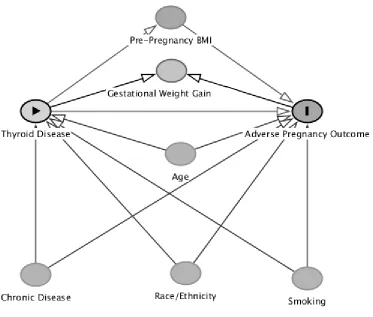
Covariates included in the model for thyroid disorders and adverse maternal
outcomes are as follows: maternal age, race/ethnicity, smoking status, hospital of birth,
parity, insurance status, and other chronic diseases (diabetes, chronic hypertension,
heart disease, renal disease, depression, seizure disorder, and asthma). Despite the
knowledge that gestational weight gain is often associated with several of the proposed
outcomes of interest, it will not be adjusted for in the analyses29. This is due to the fact
that thyroid diseases are known to cause weight gain or loss, therefore making it a
collider in the exposure disease pathway9, 29. Thus, adjusting for gestational weight gain
would potentially introduce bias into the results9,29. Additionally, we are only interested
in estimating the total effect of the exposure, so no adjustment for gestational weight
gain will be made. In regards to pre-pregnancy BMI, it will be regarded as a mediator in
the relationship between thyroid disease and pregnancy outcomes. This is due to the
fact that thyroid disorders can cause weight loss and gain which influences BMI and in
turn influences pregnancy outcomes. Therefore, given its position as a mediator in the
over-20
adjustment bias. These relationships are illustrated in the directed acyclic graph (DAG)
below.
Figure 3.1 Directed Acyclic Graph46
3.5 ANALYSIS
The analysis was limited to singleton pregnancies (n=113,288). Multivariate
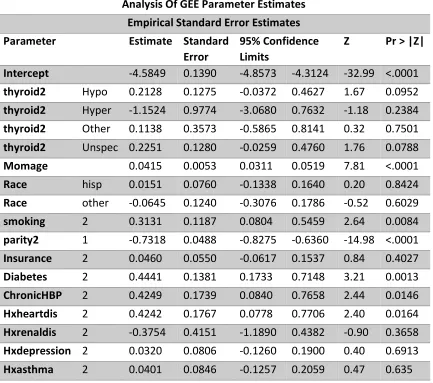
Poisson regression with generalized estimating equations was used as the primary
method of analysis30. For all analyses, the no thyroid disease category served as the
comparison group. Results are presented as RRs with their 95% CIs. Estimates of the
exposure-outcome relationship were obtained, after adjusting for insurance, parity, race
and ethnicity, age, smoking, and other chronic diseases. For the analyses of gestational
(n=1,103). For the analyses of gestational diabetes, women with preexisting diabetes
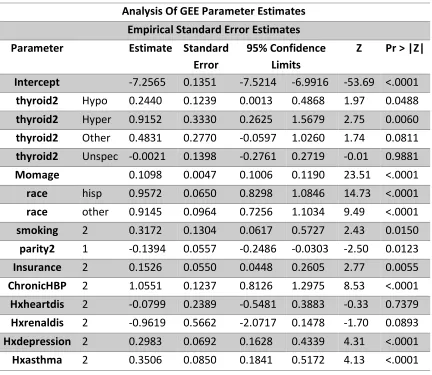
were excluded (n=1,819). Results from SAS outputs of multivariate Poisson regression
with generalized estimating equations can be found in Appendix A. Additionally, a
sensitivity analysis restricting the sample to women with their first delivery only was
conducted using Poisson regression with generalized estimating equations (n= 50628).
Statistical significance was set at the 5% level. Statistical analyses were carried out using
22
CHAPTER 4
RESULTS
4.1 STUDY POPULATION
Hypothyroidism complicated 2.25% of pregnancies, hyperthyroidism
complicated 0.14% of pregnancies, other thyroid disorders complicated .27% of
pregnancies, and unspecified thyroid disorders impacted 2.21% of pregnancies. The
prevalence of thyroid disorders was fairly consistent amongst hospitals and across the
years. A total of 878 (.86%) women who did not have a thyroid disorder in the first
pregnancy developed a thyroid disorder by the time of the second pregnancy (data not
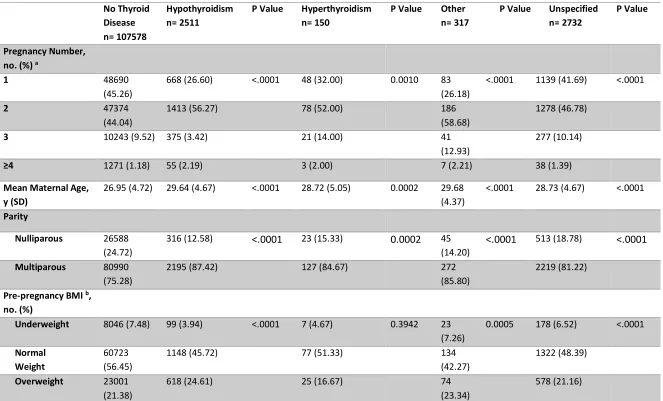
shown). Table 4.1 provides demographic information for the study population by
thyroid disease status.
Compared to women without a thyroid disorder, women with hypothyroidism
were significantly more likely to be older, have higher BMIs, be married, have private
insurance, be White, and suffer from the following chronic diseases: diabetes,
hypertension, heart disease, and depression. Compared to women without a thyroid
disorder, women with hyperthyroidism were significantly more likely to be older in age,
be multiparous, be married, and to not suffer from renal disease. Compared to women
likely to be older in age, have higher BMIs, be married, have private insurance, be
White, and suffer from the following chronic diseases: diabetes and depression.
Compared to women without a thyroid disorder, women with unspecified
thyroid disorders were significantly more likely to be older in age, have higher BMIs,
have private insurance, be White, smoke, and suffer from the following chronic
diseases: diabetes, hypertension, asthma, heart disease, renal disease, and depression.
Outcomes of interest included breech presentation (n=2,259), gestational
diabetes (n=2,096), gestational hypertension (n=3,367), hemorrhage (n=2,909),
inductions (n=43,794), placental abruption (n= 2,205), preterm birth (n=9,773), PROM
(n=1953), preeclampsia (n=2,813), and superimposed preeclampsia (n=220).
4.2 HYPOTHYROIDISM
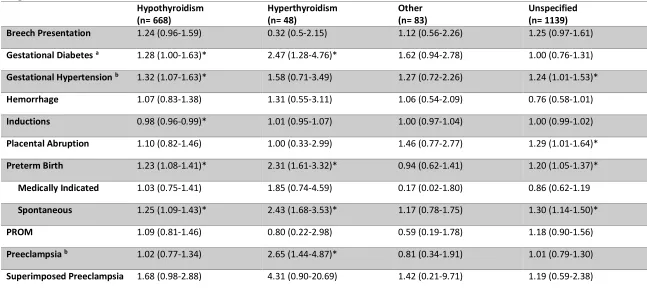
Unadjusted and adjusted results are presented in Tables 4.2 and 4.3,
respectively. In the crude model, hypothyroidism was significantly associated with
gestational diabetes [RR: 1.65, 95% CI: 1.30-2.08], preterm birth [RR: 1.27, 95% CI:
1.11-1.45], spontaneous preterm birth [RR: 1.31, 95% CI: 1.81-3.79], and superimposed
preeclampsia [RR: 4.00, 95% CI: 2.40-6.67] (Table 4.2). After adjusting for insurance,
parity, race/ethnicity, age, smoking, and other chronic diseases, hypothyroidism was
significantly associated with gestational diabetes [RR: 1.28, 95% CI: 1.00-1.63],
gestational hypertension [RR: 1.32, 95% CI: 1.07-1.63], inductions [RR: 0.98, 95% CI:
24
was no longer significant. The adjusted results for breech presentation, hemorrhage,
placental abruption, PROM, and preeclampsia were not statistically significant.
4.3 HYPERTHRYOIDISM
In the crude model, hyperthyroidism was found to be significantly associated
with gestational diabetes [RR: 2.93, 95% CI: 1.49-5.79], preterm birth [RR: 2.38, 95% CI:
1.66-3.41], spontaneous preterm birth [RR: 2.62, 95% CI: 1.81-3.79], and preeclampsia
[RR: 2.52, 95% CI 1.37-4.63]. After adjusting for insurance, parity, race/ethnicity, age,
smoking, and other chronic diseases, hyperthyroidism was found to be significantly
associated with gestational diabetes [RR: 2.47, 95% CI: 1.28-4.76], preterm birth [RR:
2.31, 95% CI: 1.61-3.32], spontaneous preterm birth [RR: 2.43, 95% CI: 1.68-3.53] and
preeclampsia [RR: 2.65, 95% CI: 1.44-4.87]. The adjusted results for breech presentation,
gestational hypertension, hemorrhage, inductions, placental abruption, PROM, and
superimposed preeclampsia were not statistically significant.
4.4 OTHER THYROID DISORDERS
In the crude model, other thyroid disorders were found to be significantly
associated with gestational diabetes [RR: 1.95, 95% CI: 1.15-3.32]. After adjusting for
insurance, parity, race/ethnicity, age, smoking, and other chronic diseases, other thyroid
disorders were not found to be significantly associated with any of the outcomes of
4.5 UNSPECIFIED THYROID DISORDERS
In the crude model, unspecified thyroid disorders were found to be associated
with breech presentation [RR: 1.30, 95% CI: 1.01-1.67], gestational hypertension [RR:
1.26, 95% CI: 1.02-1.55], inductions [RR: 1.02, 95% CI: 1.00-1.03], placental abruption
[RR: 1.30, 95% CI: 1.01-1.64], preterm birth [RR: 1.19, 95% CI: 1.04-1.36], spontaneous
preterm birth [RR:1.33, 95% CI: 1.16-1.53], and superimposed preeclampsia [RR: 2.20,
95% CI: 1.04-3.91]. After adjusting for insurance, parity, race/ethnicity, age, smoking,
and other chronic diseases, unspecified thyroid disorders were found to be significantly
associated with gestational hypertension [RR: 1.24, 95% CI: 1.01-1.53], placental
abruption [RR: 1.29, 95% CI: 1.01-1.64], preterm birth [RR: 1.20, 95% CI: 1.05-1.37], and
spontaneous preterm birth [RR:1.30, 95% CI: 1.14-1.50]. Results for breech
presentation, gestational diabetes, hemorrhage, inductions, preterm birth, PROM,
preeclampsia, and superimposed preeclampsia were not statistically significant.
4.6 SENSITIVITY ANALYSIS
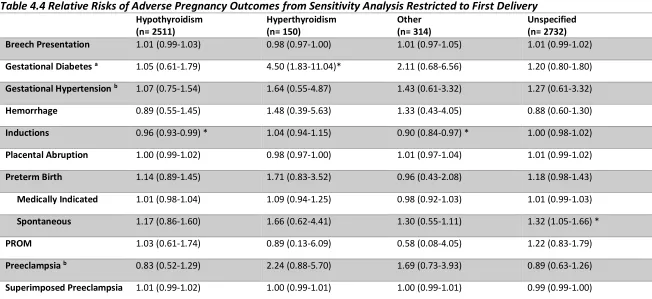
In the sensitivity analysis restricted to the first delivery, the results remained
generally similar in regards to the direction of the association, although there was a loss
of significance due to smaller sample sizes and a diminished statistical power. The
associations between hypothyroidism and gestational diabetes [RR: 1.05; 95%CI:
0.61-1.79], gestational hypertension [RR:1.07; 95%CI: 0.75-1.54], and preterm birth [RR:1.14,
95%CI: 0.89-1.45] became null. The associations between hyperthyroidism and both
26
gestational hypertension [RR:1.01; 95%CI: 0.99-1.02]and placental abruption [RR:1.01;
95%CI: 0.99-1.02] became null. Results from the sensitivity analysis are displayed in
27
Table 4.1 Demographic Data by Thyroid Disease Status
No Thyroid Disease n= 107578
Hypothyroidism n= 2511
P Value Hyperthyroidism n= 150
P Value Other n= 317
P Value Unspecified n= 2732
P Value
Pregnancy Number, no. (%) a
1 48690
(45.26)
668 (26.60) <.0001 48 (32.00) 0.0010 83
(26.18)
<.0001 1139 (41.69) <.0001
2 47374
(44.04)
1413 (56.27) 78 (52.00) 186
(58.68)
1278 (46.78)
3 10243 (9.52) 375 (3.42) 21 (14.00) 41
(12.93)
277 (10.14)
≥4 1271 (1.18) 55 (2.19) 3 (2.00) 7 (2.21) 38 (1.39)
Mean Maternal Age, y (SD)
26.95 (4.72) 29.64 (4.67) <.0001 28.72 (5.05) 0.0002 29.68
(4.37)
<.0001 28.73 (4.67) <.0001
Parity
Nulliparous 26588 (24.72)
316 (12.58) <.0001 23 (15.33) 0.0002 45
(14.20)
<.0001 513 (18.78) <.0001
Multiparous 80990 (75.28)
2195 (87.42) 127 (84.67) 272
(85.80)
2219 (81.22)
Pre-pregnancy BMI b,
no. (%)
Underweight 8046 (7.48) 99 (3.94) <.0001 7 (4.67) 0.3942 23
(7.26)
0.0005 178 (6.52) <.0001
Normal Weight
60723 (56.45)
1148 (45.72) 77 (51.33) 134
(42.27)
1322 (48.39)
28
Obese 15808
(14.69)
646 (25.73) 41 (27.34) 86
(27.13)
654 (23.94)
Marital Status c, no.
(%)
Married 106309
(98.82)
2477 (98.65) <.0001 148 (98.67) <.0001 314
(99.05)
<.0001 2693 (98.57) <.0001
Unmarried 1269 (1.18) 34 (1.35) 2 (1.33) 3 (0.95) 39 (1.43)
Insurance Status
Private 78987
(73.42)
2037 (8.1.12) <.0001 116 (77.33) 0.3314 265
(83.60)
<.0001 2239 (81.95) <.0001
Public 28591
(26.58)
474 (18.88) 34 (22.67) 52
(16.40)
493 (18.05)
Race Ethnicity, no. (%)
Non-Hispanic White
92501 (85.99)
2364 (94.23) <.0001 135 (90.00) 0.3447 301
(94.95)
<.0001 2569 (94.03) <.0001
Hispanic 11563
(10.75)
113 (4.33) 5 (3.33) 11
(3.47)
121 (4.33)
Asian/Pacific Islander
2310 (2.14) 19 (0.74) 8 (5.33) 4 (1.26) 22 (0.81)
Black 479 (0.45) 7 (0.28) 0 (0.00) 0 (0.00) 7 (0.26)
Other 725 (0.67) 8 (0.31) 2 (1.33) 1 (0.32) 13 (0.48)
Maternal Chronic Disease, no. (%)
Diabetes 1597 (1.48) 110 (4.28) <.0001 4 (2.67) 0.3742 13
(4.10)
0.0308 95 (3.48) <.0001
29
Asthma 6719 (6.25) 188 (7.49) 0.0582 15 (10.00) 0.2173 24
(7.57)
0.3744 211 (7.72) 0.0179
Heart Disease 922 (0.86) 63 (2.51) <.0001 1 (0.67) 0.7753 5 (1.58) 0.3043 47 (1.72) 0.0050
Renal Disease 348 (0.32) 15 (0.60) 0.1156 0 (0.00) <.0001 0 (0.00) <.0001 23 (0.84) 0.0063
Gastrointestinal Disease
1269 (1.18) 34 (1.35) 0.5190 2 (1.33) 0.8694 3 (0.95) 0.6687 39 (1.43) 0.3136
Depression 8255 (7.67) 392 (15.61) <.0001 20 (13.33) 0.0630 48
(15.14)
0.0003 279 (10.21) <.0001
Smokingd, no. (%) 3040 (2.83) 58 (2.31) 0.1690 8 (5.33) 0.3013 8 (2.52) 0.7296 49 (1.79) 0.0008
P values were obtained from binary regression using generalized estimating equations to account for correlated data with no thyroid disease as comparison group.
a All women contributed a minimum of 2 pregnancies to the data set.
b Maternal BMI is categorized as underweight if BMI is <18.5 kg/m2, normal weight if BMI is 18.5 to 24.9 kg/m2, overweight if BMI is
25.0 to 29.9 kg/m2, obese if BMI
is ≥30.0
30
Table 4.2 Unadjusted Relative Risks of Adverse Pregnancy Outcomes among Women with Thyroid Diseases in the NICHD Consecutive Pregnancies Data Set
Hypothyroidism n= 2511
Hyperthyroidism n= 150
Other n= 317
Unspecified n= 2732
Breech Presentation 1.28 (0.99-1.65) 0.31 (0.04-2.34) 1.26 (0.57-2.35) 1.30 (1.01-1.67)*
Gestational Diabetes a 1.65 (1.30-2.08)* 2.93 (1.49-5.79)* 1.95 (1.15-3.32)* 1.10 (0.84-1.45)
Gestational Hypertension b 1.23 (0.99-1.52) 1.43 (0.62-3.27) 1.24 (0.70-2.20) 1.26 (1.02-1.55)*
Hemorrhage 1.01 (0.79-1.31) 1.25 (0.52-3.01) 0.99 (0.50-1.94) 0.72 (0.54-0.95)
Inductions 1.00 (0.98-1.01) 1.02 (0.96-1.08) 1.02 (0.98-1.06) 1.02 (1.00-1.03)*
Placental Abruption 1.14 (0.86-1.52) 1.04 (0.34-3.17) 1.50 (0.79-2.83) 1.30 (1.01-1.64)*
Preterm Birth 1.27 (1.11-1.45)* 2.38 (1.66-3.41)* 0.94 (0.63-1.40) 1.19 (1.04-1.36)*
Medically Indicated 1.12 (0.82-1.52) 1.84 (0.74-4.57) 0.17 (0.02-1.71) 0.86 (0.61-1.19)
Spontaneous 1.31 (1.14-1.50)* 2.62 (1.81-3.79)* 1.20 (0.81-1.77) 1.33 (1.16-1.53)*
PROM 1.01 (0.75-1.35) 0.80 (0.21-3.03) 0.55 (0.19-1.65) 1.12 (0.85-1.47)
Preeclampsia b 0.91 (0.68-1.21) 2.52 (1.37-4.63)* 0.75 (0.31-1.81) 0.98 (0.76-1.26)
Superimposed Preeclampsia 4.00 (2.40-6.67)* 3.85 (0.62-24.04) 2.07 (0.38-11.17) 2.02 (1.04-3.91)*
All numbers are RRs with 95% CIs. RRs are obtained from multivariate Poisson regression with generalized estimating equations. Analysis was limited to singleton pregnancies. No thyroid disease (n=108875) served as the reference group.
*Indicates significant results.
a Women with preexisting diabetes were excluded from the analyses of gestational diabetes.
31
Table 4.3 Relative Risks of Adverse Pregnancy Outcomes among Women with Thyroid Diseases in the NICHD Consecutive Pregnancies Data Set
Hypothyroidism (n= 668)
Hyperthyroidism (n= 48)
Other (n= 83)
Unspecified (n= 1139)
Breech Presentation 1.24 (0.96-1.59) 0.32 (0.5-2.15) 1.12 (0.56-2.26) 1.25 (0.97-1.61)
Gestational Diabetes a 1.28 (1.00-1.63)* 2.47 (1.28-4.76)* 1.62 (0.94-2.78) 1.00 (0.76-1.31)
Gestational Hypertension b 1.32 (1.07-1.63)* 1.58 (0.71-3.49) 1.27 (0.72-2.26) 1.24 (1.01-1.53)*
Hemorrhage 1.07 (0.83-1.38) 1.31 (0.55-3.11) 1.06 (0.54-2.09) 0.76 (0.58-1.01)
Inductions 0.98 (0.96-0.99)* 1.01 (0.95-1.07) 1.00 (0.97-1.04) 1.00 (0.99-1.02)
Placental Abruption 1.10 (0.82-1.46) 1.00 (0.33-2.99) 1.46 (0.77-2.77) 1.29 (1.01-1.64)*
Preterm Birth 1.23 (1.08-1.41)* 2.31 (1.61-3.32)* 0.94 (0.62-1.41) 1.20 (1.05-1.37)*
Medically Indicated 1.03 (0.75-1.41) 1.85 (0.74-4.59) 0.17 (0.02-1.80) 0.86 (0.62-1.19
Spontaneous 1.25 (1.09-1.43)* 2.43 (1.68-3.53)* 1.17 (0.78-1.75) 1.30 (1.14-1.50)*
PROM 1.09 (0.81-1.46) 0.80 (0.22-2.98) 0.59 (0.19-1.78) 1.18 (0.90-1.56)
Preeclampsia b 1.02 (0.77-1.34) 2.65 (1.44-4.87)* 0.81 (0.34-1.91) 1.01 (0.79-1.30)
Superimposed Preeclampsia 1.68 (0.98-2.88) 4.31 (0.90-20.69) 1.42 (0.21-9.71) 1.19 (0.59-2.38)
All numbers are RRs with 95% CIs. RRs are obtained from multivariate Poisson regression with generalized estimating equations. All results are adjusted for insurance, parity, race/ethnicity, age, smoking, and other chronic diseases. Analysis was limited to singleton pregnancies. No thyroid disease (n=108875) served as the reference group.
*Indicates significant results.
a Women with preexisting diabetes were excluded from the analyses of gestational diabetes.
3
2
Table 4.4 Relative Risks of Adverse Pregnancy Outcomes from Sensitivity Analysis Restricted to First Delivery
Hypothyroidism (n= 2511)
Hyperthyroidism (n= 150)
Other (n= 314)
Unspecified (n= 2732)
Breech Presentation 1.01 (0.99-1.03) 0.98 (0.97-1.00) 1.01 (0.97-1.05) 1.01 (0.99-1.02)
Gestational Diabetes a 1.05 (0.61-1.79) 4.50 (1.83-11.04)* 2.11 (0.68-6.56) 1.20 (0.80-1.80)
Gestational Hypertension b 1.07 (0.75-1.54) 1.64 (0.55-4.87) 1.43 (0.61-3.32) 1.27 (0.61-3.32)
Hemorrhage 0.89 (0.55-1.45) 1.48 (0.39-5.63) 1.33 (0.43-4.05) 0.88 (0.60-1.30)
Inductions 0.96 (0.93-0.99) * 1.04 (0.94-1.15) 0.90 (0.84-0.97) * 1.00 (0.98-1.02)
Placental Abruption 1.00 (0.99-1.02) 0.98 (0.97-1.00) 1.01 (0.97-1.04) 1.01 (0.99-1.02)
Preterm Birth 1.14 (0.89-1.45) 1.71 (0.83-3.52) 0.96 (0.43-2.08) 1.18 (0.98-1.43)
Medically Indicated 1.01 (0.98-1.04) 1.09 (0.94-1.25) 0.98 (0.92-1.03) 1.01 (0.99-1.03)
Spontaneous 1.17 (0.86-1.60) 1.66 (0.62-4.41) 1.30 (0.55-1.11) 1.32 (1.05-1.66) *
PROM 1.03 (0.61-1.74) 0.89 (0.13-6.09) 0.58 (0.08-4.05) 1.22 (0.83-1.79)
Preeclampsia b 0.83 (0.52-1.29) 2.24 (0.88-5.70) 1.69 (0.73-3.93) 0.89 (0.63-1.26)
Superimposed Preeclampsia 1.01 (0.99-1.02) 1.00 (0.99-1.01) 1.00 (0.99-1.01) 0.99 (0.99-1.00)
All numbers are RRs with 95% CIs. RRs are obtained from multivariate Poisson regression with generalized estimating equations. All results are adjusted for insurance, parity, race/ethnicity, age, smoking, and other chronic diseases. Analysis was restricted to the first delivery and limited to singleton pregnancies. No thyroid disease (n=108875) served as the reference group.
*Indicates significant results.
a Women with preexisting diabetes were excluded from the analyses of gestational diabetes.
CHAPTER 5
DISCUSSION
5.1 SUMMARY OF RESULTS
In summary, the results suggest that the presence of a thyroid disorder increases
the risk of adverse outcomes during pregnancy. This is consistent with the majority of
previous findings-6, 9-14,19-20. Hypothyroidism, hyperthyroidism, and unspecified thyroid
disorders were found to be associated with various adverse pregnancy outcomes. No
significant findings were found for other thyroid disorders.
5.2 HYPOTHYROIDISM
In the adjusted model, hypothyroidism was found to be associated with
gestational diabetes, gestational hypertension, inductions, and preterm birth, which is
consistent with the literature2,4,9,20,23,27,28. Specifically, in regards to preterm birth, it
would appear hypothyroidism is positively associated with an increased risk of
spontaneous preterm birth. Most of the literature has failed to specifically investigate
the influence of thyroid disorders on induced and spontaneous preterm birth, but the
literature does suggest that hyperthyroidism is positively associated with preterm birth
in general 20. Männistö et al found hypothyroidism to be significantly associated with
34
between hypothyroidism and both preterm birth and gestational diabetes23. Findings in
the literature also indicate that hypothyroidism is associated with an increased risk of
gestational hypertension27,28. Specifically, Chen et al found hypothyroidism to be
associated with higher rates of gestational hypertension compared to women without a
thyroid condition27. This supports the results from this analysis.
Research indicates that thyroid hormones influence various aspects of pregnancy
and fetal growth2. Pregnancy results in a number of physiological and hormonal changes
that may alter thyroid function2. In order to maintain normal energy and lipid
metabolism, normal thyroid function is needed9. Additionally, weight gain or lipid
disturbances that are often associated with hypothyroidism may increase the risk of
adverse pregnancy outcomes9,37. Barber et al suggests that thyroid hormones play a key
role in placentation and regulation of early pregnancy, offering a potential explanation
for the association between hypothyroidism and gestational hypertension and preterm
birth38. Additionally, thyroid hormones regulate cardiovascular activities and blood
pressure, and long-term thyroid hormone disorder can result in cardiovascular
dysfunction27. This offers more insight into the association between hypothyroidism and
gestational hypertension. In regards to gestational diabetes, changes in weight and
energy metabolism may offer a potential explanation for the association between
5.3 HYPERTHYROIDISM
In the adjusted model, hyperthyroidism was found to be associated with
gestational diabetes, preterm birth, and preeclampsia. Specifically, in regards to
preterm birth, it appears that after categorizing the outcome into spontaneous and
induced preterm birth, it appears that spontaneous preterm birth drives this
association. Most of the literature has failed to investigate these categories of preterm
birth, but the literature does suggest that hyperthyroidism is positively associated with
preterm birth 6, 9, 20, 25. Specifically, Männistö et al found hyperthyroidism to be
associated with almost double the odds of having a preterm delivery compared to
individuals without a thyroid disorder9. Previous research has postulated that this
association is directly related to the presence of thyroid antibodies20. More specifically,
positive thyroid peroxidase antibodies have been linked to preterm delivery, however
further research is required to identify the biological mechanism20.
Additionally, studies within the literature support the findings on gestational
diabetes 6, 25. Furthermore, the observed association between hyperthyroidism and
preeclampsia is supported by the literature7, 9. Both Männistö et al and Millar et al
found a significant association between hyperthyroidism and preeclampsia7,9. Millar et
al further investigated this association and found the association between preeclampsia
and hyperthyroidism to be stronger amongst women not properly treating their
condition7. Given that previous research has indicated that the proper management of
36
this suggests that the abundance of thyroid hormone during pregnancy may be the
underlying cause of many of these adverse outcomes9,39.
5.4 OTHER THYROID DISORDERS
Other thyroid disorders were not found to be significantly associated with any of
the adverse pregnancy outcomes looked at in this study. Männistö et al examined the
relationship between other thyroid disorders and pregnancy outcomes and also
reported null findings9. However, the Männistö study results did find a significant
association between other thyroid disorders and PROM [RR:2.02; 95% CI: 1.23–3.30]9.
Potential explanations for the null results will be discussed later in the chapter.
5.5 UNSPECIFIED THYROID DISORDERS
Unspecified thyroid disorders were found to be associated with gestational
hypertension, placental abruption, and preterm birth, which is consistent with previous
research6, 9,19, 20, 23, 25,27,28. Using a similar definition of unspecified thyroid disorders,
Männistö et al found unspecified thyroid disorders to be associated with placental
abruption and preterm birth9. The literature also suggests that gestational hypertension
is associated with thyroid disorders27, 28. Again, this is likely attributable to the influence
of thyroid hormones on various aspects of pregnancy and fetal growth2. Due to the fact
that this group only had their thyroid disease status noted in their medical records and
did not have specific diagnoses included in their discharge summaries, it is possible that
the individuals in this group may have had milder disease or disease that was not
5.6 DIFFERENCES IN THE LITERATURE
While the majority of studies within the literature found associations between
thyroid disorders and adverse pregnancy outcomes to exist, not all studies found this to
be true23-26. Additionally, this study failed to find significant results with various adverse
outcomes such as breech presentation, hemorrhage, PROM, and superimposed
preeclampsia, all of which have been previously found to have an association with
thyroid disorders. These differences can be attributed to variation in the study
populations, inconsistent definitions of thyroid dysfunction and outcomes of interest,
differences in inclusion criteria, small sample sizes, and differences in patient’s baseline
characteristics.
5.7 STRENGTHS AND LIMITATIONS
One particular strength of this study is the large sample size. This allowed us to
examine less common outcomes and exposures. Additionally, a strength of this study
lies in its ability to distinguish between spontaneous and induced preterm birth.
Previous studies have failed to break preterm birth down into these categories and
investigate these specific relationships20. Given the knowledge that thyroid disorders are
associated with adverse maternal outcomes, many of which are indications for
induction, we would expect to see an increased risk of induced preterm birth. However,
no significant results were found for induced preterm birth. Thyroid disorders
38
hypothyroxinemia may be associated with this increased risk of spontaneous preterm
delivery40.
However, despite the strengths of this study, there are some key limitations that
need to be noted. Given the limited racial and ethnic diversity in the data, the findings
might not be generalizable. However, the homogeneous nature of the study population
can be seen as potentially beneficial reducing the possibility of residual confounding.
Additionally, it is important to note that information on treatment of thyroid disorders
during pregnancy was not available. As a result, we were unable to explore whether
inadequate treatment was the cause of adverse pregnancy outcomes or if adverse
pregnancy outcomes were a result of increased risk caused by the presence of a thyroid
disease itself. Given the fact that data on treatment wasn’t collected or adjusted for in
the model, there was a potential for residual confounding.
5.8 FUTURE STUDIES
Previous research has indicated that race and ethnicity may be an important
modifying factor between the association of thyroid disorders and adverse pregnancy
outcomes9, 31. This study contained a sample of women that was not racially and
ethnically diverse, and therefore did not allow the influence of race on the association
between thyroid disorders and adverse pregnancy outcomes to be studied. Throughout
the literature, other studies have also had limited diversity and have failed to investigate
ethnic disparities have been documented throughout multiple aspects of both health
and health care41-45.
As previously mentioned, this study lacked detailed information of treatment of
individuals suffering from thyroid disorders. This is also true for other studies
throughout the literature. It is understood that uncontrolled thyroid disease poses a
significant threat to both the mother and fetus, however, the optimal treatment
method is still unknown23. Some researchers hypothesize that specific treatment
methods may pose additional risks during pregnancy23. As such, more research is
needed to understand the influence of specific treatments of different thyroid disorders
and how these may impact pregnancy outcomes.
5.9 CONCLUSIONS
The results of this study suggest that the presence of a thyroid disorder increases
the risk of adverse outcomes during pregnancy. Specifically, this is true for
hypothyroidism, hyperthyroidism, and unspecified thyroid diseases. This supports
previous findings but more research involving large racially diverse cohorts with
available data on treatment is still needed to further understand the complex