Perversion Inaccessible Routing Scheme for
Broadcasting Trade in Wireless Networks
Yalavarthi Sirisindhura
#1, Y Rajesh Babu
#2 #P.G. Scholar in CSE,
#Assistant Professor, Department of CSE
Priyadarshini Institute of Technology & Sciences for Women, Chintalpudi, Tenali, Andhra Pradesh, India
ABSTRACT
An Application flow it contains broadcast trade is taken into account. Reducing the level of video distortion is essential per user perspective. Real-time wireless communications is the emerging theory in the field of wireless networks. The routing metrics depicted for wireless networks and application uses new model concentrates on the area of wireless network. The dynamic modify network models causes periodic connectivity which results in large packet loss. Video data in real time requires special algorithms that can overcome the losses of packets in the insufficient networks. The proposing method is observation of streamed traffic throughout the network .Also security hindered the use of open peer to peer networks for commercial data delivery. The basic idea is to propose to change dynamic data leakage detection model is robust to the variation of the video lengths. It changes the detection results in the environment subjected to variation in size of videos. A routing protocol for reducing distortion in videos is designed based on the framework routing model. The protocol designed is efficient in minimizing video distortion end-to-end by distributing the frames in the paths through priority based. We evaluate via tested experiments that our protocol is efficient in reducing the video distortion and minimizing the user experience degradation.
Index Terms: Routing, Protocol Design, wireless network, video distortion, distortion minimization, information leakage and content delivery.
1.
INTRODUCTION
The real time video application such as: YouTube Microsoft Network Videos. The vast majority don't perused as much as they used to and when they do read, they tend to skim-read which implies the significance of composed duplicate can be lost or misinterpreted [2].With a plenitude of content pushed to the purchasers and representatives consistently, so a well- designed video depicts a brand new
innovation to the business requirements. The intrigued demand on the video is due to three reasons: Cost effectiveness, increased productivity and consistency. The primary employments of videos [3] incorporate Training and Tutorial, where corporate video first picked up with training and keeps on being one of the best employments of video servicing. Online Video is a savvy substitute for the training classes. It can likewise effectively coordinate video into online management tools. The decision of the flow made by such typical routing protocol depends upon the network parameters. Here we are mainly considered with the improvement of the user perceived video quality by accounting the application requirements. The losses in the GOP are in stark contrast with the traditional routing metric like expected transmission count (ETX) [4] where the links are treated independently. In this project we are considering an analytical model [5] to characterize the dynamic behavior of the process which describes the frame losses in the GOP as the video is delivered on an end-to-end path. We also capture how the choice of path for an end-to-end flow effects the performance of the flow in terms of video distortion by using this model as it is built based on a multilayer approach.
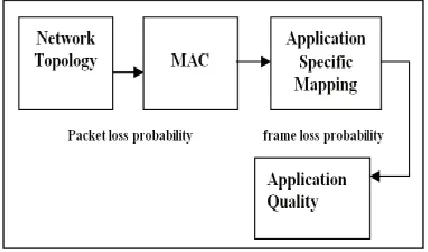
Fig. 1: System Architecture of an Analytical Model with Multilayer Approach
organization, the sensor system must be reexamined, so we can convey mixed media content with a specific level of Quality of Service (QoS). Subsequent to the need to minimize the energy utilization has driven the vast majority of the examination in the sensor node organization, systems to productively convey application-level QoS, and to delineate prerequisites to the network-layer measurements. As WMSNs are imagined to have no extra assets other than the incorporation of interactive media sensors, new methodologies should be proposed.
Our contributions during this paper are as follows:
Developing an analytical framework to find the effect of routing on video distortion:The framework facilitates the computation of routes that are optimum in terms of achieving the minimum distortion.
Design of a sensible routing protocol for distortion resilient video delivery
2.
RELATED WORK
Standards just like the MPEG-4 [6] and also the H.264/AVC [7] give tips on how a video clip should be encoded for a transmission over a communication system supported layered cryptography. H.264/AVC is newest video cryptography commonplace of the ITU-T Video cryptography experts group and the ISO/IEC picture consultants group. This article provides a summary of the technical features of H.264/AVC, describes profiles and applications for the quality, and descriptions the history of the standardization method. The videos with tricky theft are the principle of licensed innovation within the boundary of P2P networks. Paid customers might wrongfully share copyrighted content records with unpaid customers. Such online theft has ruined the utilization of open P2P systems for business content delivery. It proposes a proactive content harming plan to stop colluders also, privateers from asserted copyright encroachments in P2P document sharing. It explores the execution of the proposed technique under a trusted system environment with the videos of various lengths. Video spilling application [8] manages a few P2P system is utilized to manufacture the live and online video spilling administrations on the web at the low cost. In order to detect illegal content streaming by using traffic pattern which are constructed from the amount of traffic routers? It
prevent content leakage from user s side. However, delay occurs due to large length of videos [9] To improve the Quality of Service multipath routing schemes are used in video transmission and routing is focused on Multiple Description Coding [10], [11]. Disjoint paths are calculated using information collected at the destination node and this is an extension of Dynamic Source Routing which is used to support multipath video transmission. The routing scheme designed here is based totally on simulation without any analysis [12]. Disjoint paths in [11] are calculated by scheduling a given set of path lengths and there is no performance metric defined directly with video quality and instead delay constraints are used in the optimization. This is defined using a rate distortion model and used in an optimization problem. Wireless ad hoc networks use MDC for video multicasting. Selection of routes using optimization problem is a complex issue. The Analytical framework [13] is developed to model the effects of wireless channel fading on video distortion , were the model, only valid for single-hop communication. Our approach not only differs in model for video distortion, but also on the fact that we use LC, which is more popular in applications today. The model assumed over here is a flat model so all the nodes in the model are given the equal importance and perform the same set of tasks.
3.
PROPOSED SYSTEM
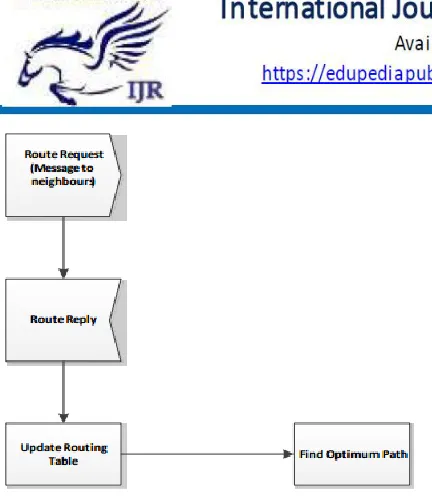
Figure 2 - Flowchart for application-aware routing (Source Node)
These advances improve the dispersion of any kind of data over the Internet. Initial a normal client in a protected system gets streaming content from a content server. At that point with the utilization of a P2P spilling programming, the normal yet vindictive client redistributes the spilling content to non standard clients Content spillage is not really recognized or blocked by watermarking and DRM-based strategies.
1. Leakage Detection Criterion
The cross-relationship coordinating estimation is performed on both the activity designs produced through time space based calculation and those created through parcel size based calculation.
Fig.3. Working flow of proposed approach Then again, the DP coordinating estimation is performed on activity designs produced through
parcel size based estimation. Accordingly, a predefined quality is utilized as the choice limit. Regardless a fixed choice limit is chosen by contrasting the separation registered through DP coordinating with the choice limit the separation not exactly the edge demonstrates that the thought about the similar traffic patterns. If we need to retransmit the parcel that is lost, we need to proceed with the yes alternative, and then the chart begins representation of video streaming. If we say no, the spilling gets ceased there by itself.
2. Multichip-Induced Challenges
The end-to-end paths between nodes in MANETs often consist of multiple hops, cause a handful of challenges. One such challenge is that end-to-end delay increases almost linearly with the number of hops. Thus there exists an upper bound for the number of hops while still providing a sufficiently low end-to-end delay, especially for live streaming. This limitation is demonstrated in [14] With ten hops for video conferencing, images in their test-bed are bad. Other findings indicate that more than three hops cause delay above 250 ms, which is not acceptable in case of live streaming End-to end packet loss rates are also significantly increased in multi hop wireless networks, where each error prone wireless link adds to the overall packet loss probability.
4.
PROTOCOL DESIGN
compute. The information from the sampling process can be used to solve the optimization problem.
Algorithm: Path discovery
Input: source node s , destination node d Input: Frame size F
Output: route R from s to d
1: \* DSR Route Discovery phase*\S 2: send Route Request
3: receive Route Reply (ni , ETXi ) messages 4: N =∆ {node-ids ni from route reply messages} 5: 6: /*Path Discovery Initialization Phase*/ 7: n ←s
8: c← F
9: B =∆ {(d,c) | 0 ≤ c ≤ F} 10: R←[]
11: x←(n,c) 12: append x to R
13: 14:/ * Path computation*/ 15: repeat
16: u *← next_node_in_optimal path(x,B ,N ) 17: ĉ=E[Cnew| Ccur=c]
18: n ←u * 19: c ←ĉ 20: x←(n,c) 21: append x to R 22: N ←N -{ u* } 23: until x B
This source routing is an open-loop control problem where all the decisions are made at the beginning itself. The selection process is not known by the source node priory because of the randomness of the second component of the state. It has to estimate at each stage and use this estimate to make a decision for that stage.
5.
RESULTS
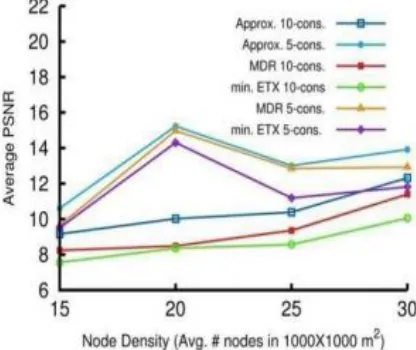
We represent the performance gains of the proposed routing theme via extensive simulations and tested experiments. We tend to use the network simulator ns-2 that provides a full protocol stack for a wireless multi-hop network. The first technique estimates the ETX value for every link between a node and its neighbors for all the nodes within the network. The mechanism broadcasts periodically little probe messages of size 32bytes and checks for acknowledgments from the neighbors of the node. The routing policy computes the minimum ETX path from the source to a destination and uses that path to transfer the video packets. The second technique
implements the protocol defined in implementation so as to compute the routes on the wireless network that achieve minimum video distortion. We tend to use id which consists of a collection of tools for the analysis of the quality of video that's transmitted over a true or simulated network. To evaluate the performance of the MDR protocol, we tend to compare it against the minimum ETX routing theme. If they happen to be neighbors, we discard that pair and repeat the method till we tend to select a source and destination that are over one hop apart. Every set of experiments is repeated 10 times, and therefore the average value is reported in every case.
Fig. 4 Average PSNR for five and ten video connections
Tested Experiments
The experiment setup consists of an initial raw video processed using the H.264 encoder with a most GOP size of thirty frames. The traffic load ranges from two to twelve synchronous video flows, where the sender and receiver pairs are randomly selected. Each situation is repeated five times. To capture the effect of the ETX-based and MDR routing schemes on the user expertise, we tend to measure the average MOS because the number of synchronous video flows in the network will increase.
6.
CONCLUSION
user. Towards this, an analytical model is constructed which attach the video distortion to the underlying packet loss probabilities. By using dynamic programming approach, an optimal path between the source and destination is found. Unlike the traditional ETX metrics this approach takes into account the correlation among packet loss. The framework permits to formulate a routing policy for minimizing distortion, based on that we tend to design a practical routing theme that's evaluated via extensive simulations and tested experiments. The user experience regarding the degradation is kept to minimum by using this analytical framework.
7.
FUTURE WORK
Multiple videos can be sent to destination node at a time. The Text message sent along with video can be encrypted using cipher text methods. Frequent path and transmission errors are handled by adding redundancy by utilizing redundant network routes. To select most advantageous transmission parameters it seems extensively accepted that cross-layer parameter exchanges are essential. The future work of this paper is to minimize the users experienced degradation and to decrease the distortion more than 20%.
REFERENCES
[1] ISO/IEC JTC1/SC29/WG11, “ISO/IEC 14496— Coding of audio-visual objects,” standards/mpeg-4/mpeg-4.htm
[2] S. K. Das, A. Mukherjee, S. Bandyopadhyay, K. Paul, and D. Saha, "Improving quality-of-service in ad hoc wireless networks
[3] Y. M. Lu and V. W. S. Wong, "An energy-efficient multipath routing protocol for wireless sensor networks," International Journal of Communication Systems, vol. 20, no. 7, pp. 747-766, 2007
[4] D. S. J. D. Couto, D. Aguayo, J.Bicket, R. Morris,“A highthroughput path metric for multi-hop wireless routing,” In Proc. 9th MobiCom, San Diego, CA, USA, Sep., 2003, pp. 134-146.
[5] M. T. Ivrlac, L. U. Choi, E. Steinbach, J. A. Nossek, “Models and analysis of streaming video transmission over wireless fading channels,” Signal Process., Image Commun., Vol. 24, No. 8, pp. 651-665, Sep. 2009.
[6] [1] T.Wiegand,G.J. Sullivan, G. Bjontegaard, and A. ,―Overview of the H.264/AVC video coding standard, vol. 13, no. 7, pp. 560– 576, Jul. 2003. [7]D.S.J.D.Couto,D.Aguayo,J.Bicket,andR.Morris, A high-throughput path metric for multi-hop wireless routing,‖ in Proc. 9 εobiCom, San Diego, CA, USA, Sep. 2003, pp. 134–146.
[8] X. Hou, D. Tipper, and J. Kabara, "Label-based multipath routing (LMR) in wireless sensor routing," in Proceedings of the 6th International Symposium on Advanced Radio Technologies, Boulder, CO, 2004.
[9] Y. M. Lu and V. W. S. Wong, "An energy-efficient multipath routing protocol for wireless sensor networks," International Journal of Communication Systems, vol. 20, no. 7, pp. 747-766, 2007
[10] W. Wei and A. Zakhor, “Robust multipath source routing protocol (RMPSR) for video communication over wireless ad hoc networks,” in Proc. IEEE ICME, Taipei, Taiwan, Jun. 2004, pp. 1379–1382.
[11] J. Chen, S.-H. G. Chan, and V. O. Li, “Multipath routing for video delivery over bandwidth-limited networks,” IEEE J. Sel. Areas Commun., vol. 22, no. 10, pp. 1920–1932, Dec. 2010.
[12] S. Mao, Y. T. Hou, X. Cheng, H. D. Sherali, S. F. Midkiff, and Y.- Q. Zhang, “On routing for multiple description video over wireless ad hoc networks,” IEEE Trans. Multimedia, vol. 8, no. 5, pp. 1063– 1074, Oct. 2006
[13] M. T. Ivrlac, L. U. Choi, E. Steinbach, J. A. Nossek, “Models and analysis of streaming video transmission over wireless fading channels,” Signal Process., Image Commun., Vol. 24, No. 8, pp. 651-665, Sep. 2009.
[14] Hortelano, J., Cano, J.C., Calafate, C.T., Manzoni, P.: Evaluating the performance of real time videoconferencing in ad hoc networks through emulation. In: PADS ’08: Proceedings of the 22nd Workshop on Principles of Advanced and Distributed Simulation, Washington, DC, USA, pp. 119–126. IEEE Computer Society (2008)
AUTHOR DETAILS
Yalavarthi Srisindhura born
in Pedapudi,Amruthaluru
Md,Guntur Dt, AP. I received B.Tech in CSE from GVR&S College Of Engineering & Technology, Budampadu, Guntur dt, AP,ANU Guntur in the year 2013. Presently she is pursuing M.TECH in CSE from Priyadarshini Institute Of Technology & Science For Women, Chinthalapudi,Duggirala Md,Guntur Dt ,Andhra pradesh, India.
Y.Rajesh Babu received B.Tech (CSE) Degree from Vignan’s Lara Institute of Technology & Science in 2012 and M.Tech
(CSE) Degree from