Automatic and human evaluation study of a rule-based and a statistical
Catalan-Spanish machine translation systems
Marta R. Costa-juss`a∗, Mireia Farr ´us†, Jos´e B. Mari ˜no†, Jos´e A. R. Fonollosa†
∗Barcelona Media Research Center,
Av. Diagonal 177, 08018 Barcelona, Spain [email protected]
†Universitat Polit`ecnica de Catalunya – TALP Research Center,
Jordi Girona 1-3, 08034 Barcelona, Spain
{mfarrus, canton, adrian}@gps.tsc.upc.edu
Abstract
Machine translation systems can be classified into rule-based and corpus-based approaches, in terms of their core technol-ogy. Since both paradigms have largely been used during the last years, one of the aims in the research community is to know how these systems differ in terms of translation quality. To this end, this paper reports a study and comparison of a rule-based and a corpus-based (particularly, statistical) Catalan-Spanish machine translation systems, both of them freely available in the web. The translation quality analysis is performed under two different domains: journalistic and medical. The systems are evaluated by using standard automatic measures, as well as by native human evaluators. Automatic results show that the statistical system performs better than the rule-based system. Human judgements show that in the Spanish-to-Catalan direction the statistical system also performs better than the rule-based system, while in the Catalan-to-Spanish direction is the other way round. Although the statistical system obtains the best automatic scores, its errors tend to be more penalized by human judgements than the errors of the rule-based system. This can be explained because statistical errors are usually unexpected and they do not follow any pattern.
1. Introduction
Machine Translation (MT) is a subfield of computa-tional linguistics that investigates the use of computer software to translate text from one given source guage to another target language. Since natural lan-guages are highly complex, MT becomes a difficult task. Many words have multiple meanings, sentences may have various readings, and certain grammatical relations in one language might not exist in another language. Moreover, there are non-linguistic factors such as the need of having a world knowledge to per-form a translation. In order to face the MT challenge, many dependencies have to be taken into account. These are often weak and vague, which makes it rarely possible to describe simple and relevant rules that hold without exception for different language pairs. Increasing computational power picked the current in-terest in MT. As a consequence, available machine translation systems in the web are becoming more and more popular. Nowadays, the most widely used MT systems use the rule-based and the statistical ap-proaches. Moreover, there have been several research works which combine both technologies. Our study is intended to reinforce the system combination research works (Matusov et al., 2008) by further analysing both the structure of the two technologies. In the specific case of Catalan-Spanish translation, there are available
systems that use either a rule-based or a statistical MT system. Section 2. provides a comparison of the rule-based and the statistical-rule-based systems at the level of core technology. Also it describes the general advan-tages and disadvanadvan-tages of each approach. Section 3. reports a brief description of two Catalan-Spanish MT freely-available systems: Translendium as rule-based system and UPC as statistical system. Section 4. de-scribes the experimental framework used to compare the cited systems. Section 5. and 6. provide a deep comparison by using automatic and human evaluation, respectively. Finally, Section 7. presents the conclu-sions.
2. Rule-based vs. Statistical-based machine translation
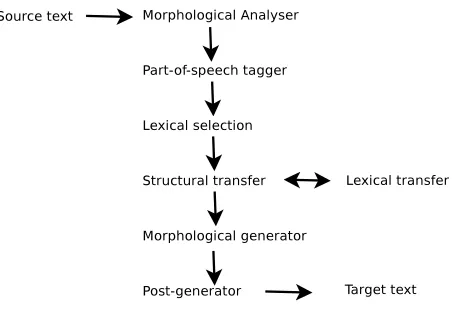
Rule-based machine translation (RBMT) systems were the first commercial machine translation sys-tems. Much more complex than translating word to word, these systems develop linguistic rules that al-low the words to be put in different places, to have different meaning depending on context, etc. The Georgetown-IBM experiment in 1954 was one of the first rule-based machine translation systems and Sys-tran was one of the first companies to develop RBMT systems.
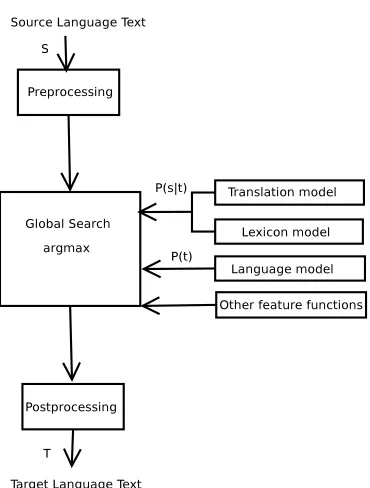
Figure 2: Architecture of the SMT approach based on
the log-linear framework approximation.
estimated from multiple segmentation of the aligned bilingual corpora by using relative frequencies. The translation problem has also been approached from the finite-state perspective as the most natural way for integrating speech recognition and machine translation into a speech-to-speech translation system (Vidal, 1997; Bangalore and Riccardi, 2000; Casacu-berta, 2001). The Ngram-based system implements a translation model based on this finite-state perspective (de Gispert and Mari˜no, 2002) which is used along with a log-linear combination of additional feature functions (Mari˜no et al., 2006).
In addition to the translation model, SMT systems use the language model, which is usually formulated as a probability distribution over strings that attempts to reflect how likely a string occurs inside a language (Chen and Goodman, 1998). Statistical MT systems make use of the samen-gram language models as do speech recognition and other applications. The lan-guage model component is monolingual, so acquiring training data is relatively easy.
The lexical models allow the SMT systems to com-pute another probability to the translation units based on the probability of translating word per word of the unit. The probability estimated by lexical mod-els tends to be in some situations less sparse than the probability given directly by the translation model. Many additional feature functions can also be intro-duced in the SMT framework to improve the transla-tion, like the word or the phrase bonus.
Different approaches of MT have complementary pros
and cons. Main core advantages and disadvantages of both approaches are shown in Figure 3. At this point, no comparison is made at the level of performance, which will be studied later in the paper.
3. Freely available Catalan-Spanish MT systems: brief description
Two Catalan-Spanish MT systems available in the web are introduced in this section. Obviously, there are more translation systems available in the web. How-ever, we decided to take two systems (one of each core technology) to make a first comparison study. As RBMT system we include Translendium which is the official Catalan Government machine translation system. As statistical SMT system, we include the UPC system which was developed in the Universitat Polit`ecnica de Catalunya. Next, a brief description of each system and its corporation is presented.
• Translendium (http://www.translendium.com)
Translendium S.L., located in Barcelona, de-velops the Lucy Translator (LT) machine trans-lation system, previously called Comprendium. Translendium is a Catalan company, subsidiary
of the European group Lucy Software. The
Translendium team is composed by linguists, lex-icographers and computer scientists with more than 15 years experience in the machine trans-lation field.
The system consists of a translation engine, with a modular structure of computational grammars and lexicons that makes possible to carry out a morphosyntactic analysis of the source text and then transfers it into the target language. This engine can be connected to translation memory modules and to a professional lexicon editor. Ad-ditionally, it can be accessed through a multi-user task distribution server either from a web client or from a professional single user client.
• UPC (http://www.n-ii.org/ )
This system has been developed at the Universi-tat Polit`ecnica de Catalunya (UPC) and the work has been funded by the European Union under the integrated project TC-STAR: Technology and Corpora for Speech to Speech Translation (IST-2002-FP6-506738), and the Spanish Government under the project AVIVAVOZ: Technologies for Speech-to-Speech Translation (TEC2006-13694-C03-01).
opti-Advantages Disadvantages RBMT
Based on linguistic theories Requires linguistic rules and dictionaries
Adequate for languages with limited resources Human Language Inconsistency (i.e. exception to the rules) Does not require many computational resources Disambiguation problems
Easy to perform error analysis Local translations, Language dependent Expensive to maintain and extend SMT
No linguistic knowledge required Requires parallel text
Reduces the human cost Requires high computational resources
Easy to build Difficult to perform error analysis
Easy to maintain (if data available) Problems with pairs of languages with different morphology/order Trained with human translations (extract knowledge from corpus) No linguistic background
Independent from the the pair of languages
Figure 3: Brief comparison of the advantages and disadvantages of the RBMT and SMT systems.
mised log-linear combination of additional fea-tures. Thus the system is mainly statistical; how-ever, a series of additional linguistic rules is in-cluded in order to solve some errors caused by the statistical translation, such as the ambiguity in adjective and possessive pronouns, orthographic errors or time expressions, among others.
Since time expressions differ largely in both lan-guages, a detection-translation-generation mod-ule is added. The same procedure is used in the numbers, since many of them were were not included in the training corpus. Other un-known words apart from numbers were solved by including a Spanish-Catalan dictionary as a post-process after the translation, and by a spell checker in order to avoid wrong-written —and thus unknown— words as input. The system is continuously actualised by adding new corpora and the feedback of the users.
In the following sections, these systems are compared and they are all used with their respective versions date of 1st of April 2009.
4. Experimental Framework
The aim of this section is to define an experimental framework in which the systems presented above can be compared both manually and automatically. The idea is to report the main differences in performance terms between the state-of-the-art rule-based and sta-tistical systems. In the following sections, the results are reported through two different evaluation types: automatic and manual.
Two test sets are defined in order to perform the evalu-ation. The first one is a compilation of journalistic ma-terial. The Spanish source test corpus consists of 711 sentences extracted from El Pa´ıs and La Vanguardia newspapers, and the Catalan source test corpus con-sists of 813 sentences extracted from the Avui news-paper and transcriptions from the TV program `Agora.
For each set and each direction of translation, two manual references are provided. Table 1 shows the number of sentences, words and vocabulary used for each language.
Spanish Catalan
Sentences 711 813
Words 15974 17099
Vocabulary 5702 5540
Table 1: Corpus statistics for the journalistic
Catalan-Spanish test set.
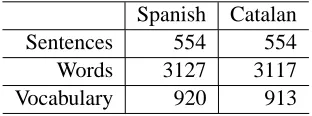
A second test corpus is provided within the medicine domain. This medical corpus was kindly provided by the UniversalDoctor Project company, which fo-cuses on facilitating communication between health-care providers and patients from various origins (http://www.universaldoctor.com). The medical cor-pus consists of 554 parallel sentences and only one manual reference for each direction of translation was available. Table 2 shows the number of sentences, words and vocabulary used for each language.
5. Automatic evaluation
Automatic evaluation is one of the most crucial issues in the development stage of a MT system, given that other types of evaluation are usually expensive. Error rate is typically measured by comparing the system output against a set of human references, according to an evaluation metric at choice. In this paper, we
Spanish Catalan
Sentences 554 554
Words 3127 3117
Vocabulary 920 913
Table 2: Corpus statistics for the medical
present the results with the well-known BLEU (Pap-ineni et al., 2002) and TER (Snover et al., 2006). Tables 3 and 4 show the results obtained through auto-matic evaluations in the journalistic and medical cor-pora, respectively. It can be clearly seen that, in the journalistic translations, the UPC statistical system perform better in terms of automatic evaluation than the Translendium rule-based system. These results may be explained by the fact that the UPC statistical system is trained with journalistic corpora, since these kind of corpora can be easily collected.
Es2Ca Ca2Es
BLEU TER BLEU TER
Transl 85.97 11.04 87.81 7.83
UPC 86.54 10.76 88.58 7.80
Table 3: Automatic evaluation using the journalistic
corpus.
Es2Ca Ca2Es
BLEU TER BLEU TER
Transl 56.30 32.60 53.31 37.71
UPC 56.66 32.18 55.34 34.26
Table 4: Automatic evaluation using the medical
cor-pus.
In the Spanish-to-Catalan medical translation results, Translendium provides the best translation in terms of TER but not in terms of BLEU. However, in the Catalan-to-Spanish medical translation, UPC offers the best system.
Although results tend to show coherence in all au-tomatic measures (except in the Spanish-to-Catalan medical translation) —which gives more consistency to the evaluation— all measures present several de-ficiencies that cast serious doubts on the coherence with human criteria and on its usefulness, both for sentence-level error analysis and for system-level comparison (Callison-Burch et al., 2006). The follow-ing section presents a human evaluation.
6. Human evaluation
The comparison between different translation system outputs was performed by 10 different human eval-uators. All the evaluators were bilingual in Catalan and Spanish, therefore, no reference of translation was shown to them, in order to avoid any bias in their eval-uation.
Each judge was asked to make a system-to-system (pairwise) comparison. Each annotator evaluated 200 randomly extracted translation pairs, and assessed in
Es2Ca UPC
Transl 48%
Ca2Es UPC
Transl 56%
Figure 5: Human judgements after the
system-to-system comparison using the journalistic corpus. Re-sults show in which percentage the system in the left column was marked as better than the system in the upper row.
Es2Ca UPC
Transl 48%
Ca2Es UPC
Transl 69%
Figure 6: Human judgements after the
system-to-system comparison using the medical corpus. Results show in which percentage the system in the left column was marked as better than the system in the upper row.
each case whether one system produced a better trans-lation than the other one, or whether the two outputs were equivalent. Figure 4 shows an example of the screenshot shown to the annotator. Each judge evalu-ated 200 hundred sentences in each direction and test set. Therefore, a total number of 4000 judgements was collected for each journalistic and medical test sets. Table 5 and 6 show average results in percentage for the journalistic corpus and for the medical corpus, re-spectively.
In Catalan-to-Spanish translations, Translendium shows the best performance, while in the Spanish-to-Catalan translations the best performance is provided by UPC system.
When comparing automatic measures and human judgements, results are coherent in the Spanish-to-Catalan direction. Automatic measures and human judgements correlate better when comparing systems of the same core technology, which is not the case of this work.
7. Conclusions
The aim of this work was to analyse the main differ-ences in terms of performance between a rule-based and a statistical machine translation systems in the specific case of Catalan-Spanish pair. In this paper, two different kinds of evaluation have been carried out in order to compare them.
LINE 39
————————-Source: Cal que hi hagi oferta per a tothom.
(1): Hace falta que haya ofrecida para todo el mundo. (2): Es necesario que haya oferta para todos.
Which translation was better (0 for same quality)?
Figure 4: Screenshot of the human evaluation when comparing system-to-system.
The statistical system errors tend to be more penalized by human judgements than the errors of the rule-based system. This can be explained because statistical er-rors are usually unexpected and they do not follow any pattern.
When considering both evaluations together, we are able to conclude that UPC tends to perform better than Translendium in the journalistic domain. Moreover, the Translendium rule-based system tends to perform better than UPC in the medical domain. This may be explained because the statistical system is trained with journalistic corpora. Further system combination re-search work may take into account these results. In the future, it will be interesting to perform a deeper manual evaluation comparing more systems in order to find out: which are the kind of errors committed by each system and how does the type of error affect the human evaluation.
8. Acknowledgements
This work has been partially funded by the Span-ish Department of Education and Science through the Juan de la Cierva fellowship program and the BUCEADOR project (TEC2009-14094-C04-01). The authors also wants to thank the Barcelona Media Inno-vation Centre for its support and permission to publish this research and the UniversalDoctor Project for pro-viding the medical test material.
9. References
S. Bangalore and G. Riccardi. 2000. Finite-state mod-els for lexical reordering in spoken language trans-lation. In Proc. of the 6th Int. Conf. on Spoken
Lan-guage Processing, ICSLP’02, volume 4, pages 422–
425, Beijing, October.
C. Callison-Burch, M. Osborne, and P. Koehn. 2006. Re-evaluating the role of BLEU in machine transla-tion research. In Proc. of the 11th Conf. of the
Euro-pean Chapter of the Association for Computational Linguistics, pages 249–256, Trento, Italy, March.
F. Casacuberta. 2001. Finite-state transducers for speech-input translation. In IEEE Automatic
Speech Recognition and Understanding Workshop, ASRU, pages 375–380, Trento.
S. F. Chen and J. T. Goodman. 1998. An empirical study of smoothing techniques for language model-ing. Technical report, Harvard University.
A. de Gispert and J.B. Mari˜no. 2002. Using x-grams for speech-to-speech translation. In Proc. of the
7th Int. Conf. on Spoken Language Processing, IC-SLP’02, pages 1885–1888, Denver.
A. O. Gonz´alez, G. Boleda, M. Melero, and T. Badia. 2005. Traducci´on autom´atica estad´ıstica basada en n-gramas. Procesamiento del Lenguaje Natural,
SELPN, 35:69–76.
J.B. Mari˜no, R.E. Banchs, J.M. Crego, A. de Gispert, P. Lambert, J.A.R. Fonollosa, and M.R. Costa-juss`a. 2006. N-gram based machine translation.
Compu-tational Linguistics, 32(4):527–549, December.
E. Matusov, G. Leusch, R. E. Banchs, N. Bertoldi, D. Dechelotte, M. Federico, M. Kolss, Y. Lee, J. B. Marino, M. Paulik, S. Roukos, H. Schwenk, and H. Ney. 2008. System combination for machine translation of spoken and written language. IEEE
Transactions on Audio, Speech and Language Pro-cessing, 16(7):1222–1237, September.
F.J. Och. 2003. Minimum error rate training in statis-tical machine translation. In Proc. of the 41th
An-nual Meeting of the Association for Computational Linguistics, pages 160–167, Sapporo, July.
K. Papineni, S. Roukos, T. Ward, and W-J. Zhu. 2002. Bleu: A method for automatic evaluation of ma-chine translation. In Proc. of the 40th Annual
Meet-ing of the Association for Computational LMeet-inguis- Linguis-tics, pages 311–318, Philadelphia, PA, July.
M. Snover, B. E. Dorr, R. Schwartz, L. Micciulla, and J. Makhou. 2006. A study of translation edit rate with targeted human annotation. In Proc. of the 5th
Conf. of the Association for Machine Translation in the Americas, AMTA’06, Boston,USA.
E. Vidal. 1997. Finite-state speech-to-speech transla-tion. In Proc. Int. Conf. on Acoustics Speech and