Some Tests of an Unsupervised Model of Language Acquisition
Bo Pedersen and Shimon Edelman
Department of Psychology Cornell University Ithaca, NY 14853, USA
{bp64,se37}@cornell.edu
Zach Solan, David Horn, Eytan Ruppin
Faculty of Exact Sciences Tel Aviv University Tel Aviv, Israel 69978
{zsolan,horn,ruppin}@post.tau.ac.il
Abstract
We outline an unsupervised language acquisition algorithm and offer some psycholinguistic support
for a model based on it. Our approach
resem-bles the Construction Grammar in its general phi-losophy, and the Tree Adjoining Grammar in its computational characteristics. The model is trained on a corpus of transcribed child-directed speech (CHILDES). The model’s ability to process novel inputs makes it capable of taking various standard tests of English that rely on forced-choice judgment and on magnitude estimation of linguistic accept-ability. We report encouraging results from several such tests, and discuss the limitations revealed by other tests in our present method of dealing with novel stimuli.
1 The empirical problem of language acquisition
The largely unsupervised, amazingly fast and al-most invariably successful learning stint that is lan-guage acquisition by children has long been the envy of computer scientists (Bod, 1998; Clark, 2001; Roberts and Atwell, 2002) and a daunting enigma for linguists (Chomsky, 1986; Elman et al., 1996). Computational models of language acqui-sition or “ grammar induction” are usually divided into two categories, depending on whether they sub-scribe to the classical generative theory of syn-tax, or invoke “ general-purpose” statistical learning mechanisms. We believe that polarization between classical and statistical approaches to syntax ham-pers the integration of the stronger aspects of each method into a common powerful framework. On the one hand, the statistical approach is geared to take advantage of the considerable progress made to date in the areas of distributed representation and probabilistic learning, yet generic “ connection-ist” architectures are ill-suited to the abstraction and processing of symbolic information. On the other hand, classical rule-based systems excel in just those tasks, yet are brittle and difficult to train.
We are developing an approach to the acquisi-tion of distribuacquisi-tional informaacquisi-tion from raw input (e.g., transcribed speech corpora) that also supports the distillation of structural regularities comparable to those captured by Context Sensitive Grammars out of the accrued statistical knowledge. In think-ing about such regularities, we adopt Langacker’s notion of grammar as “ simply an inventory of
lin-guistic units” ((Langacker, 1987), p.63). To
de-tect potentially useful units, we identify and pro-cess partially redundant sentences that share the same word sequences. We note that the detection of paradigmatic variation within a slot in a set of otherwise identical aligned sequences (syntagms) is the basis for the classical distributional theory of language (Harris, 1954), as well as for some mod-ern work (van Zaanen, 2000). Likewise, the
pat-tern — the syntagm and the equivalence class of
complementary-distribution symbols that may ap-pear in its open slot — is the main representational
building block of our system,ADIOS(for Automatic
DIstillation Of Structure).
Our goal in the present short paper is to illus-trate some of the capabilities of the representa-tions learned by our method vis a vis standard tests used by developmental psychologists, by second-language instructors, and by linguists. Thus, the
main computational principles behind the ADIOS
model are outlined here only briefl y. The
algo-rithmic details of our approach and accounts of its learning from CHILDES corpora appear elsewhere (Solan et al., 2003a; Solan et al., 2003b; Solan et al., 2004; Edelman et al., 2004).
2 The principles behind theADIOS
algorithm
The representational power ofADIOSand its
P84 thatP58 P63
E63 E64 P48
E64 Beth|Cindy|George|Jim|Joe|Pam|P49 | P51
P48 , doesn't it
P51 theE50
P49 aE50
E50 bird|cat|cow|dog|horse|rabbit
P61 whoE62
E62 adores|loves|scolds|worships
E53 Beth|Cindy|George|Jim|Joe|Pam
E85 annoyes|bothers|disturbes|worries
P58 E60 E64
E60 flies|jumps|laughs
th a t B e th C in d y G e o rg e J im J o e P a m a b ir d c a t c o w d o g h o rs e ra b b it th e b ir d c a t c o w d o g h o rs e ra b b it fl ie s ju m p s la u g h s a n n o y e s b o th e rs d is tu rb s w o rr ie s B e th C in d y G e o rg e J im J o e P a m w h o a d o re s lo v e s s c o ld s w o rs h ip s B e th C in d y G e o rg e J im J o e P a m a b ir d c a t c o w d o g h o rs e ra b b it th e b ir d c a t c o w d o g h o rs e ra b b it
,
d o e s n 't it 50 49 50 51 64 60 5885 53 62
61 50 49 50 51 64 48 63 84 0.0001 B e th C in d y G e o rg e J
im Joe
P a m 35 b e lie v e s th a t 34 B e th C in d y G e o rg e J
im Joe
P a m 35 th in k s th a t 38 39 B e th C in d y G e o rg e J
im Joe
P a m 35 b e lie v e s th a t 34 B e th C in d y G e o rg e J
im Joe
P a m 35 b e lie v e s th a t 34 B e th C in d y G e o rg e J
im Joe
P a m 35 th in k s th a t 38 39 52 71 54 54
Joe thinks that George thinks that Cindy believes that George thinks that Pam thinks that ...
that the bird jumps disturbes Jim who adores the cat, doesn't it?
th a t B e th C in d y G e o rg e J im J o e P a m a b ir d c a t c o w d o g h o rs e ra b b it th e b ir d c a t c o w d o g h o rs e ra b b it fl ie s ju m p s la u g h s a n n o y e s b o th e rs d is tu rb s w o rr ie s B e th C in d y G e o rg e J im J o e P a m w h o a d o re s lo v e s s c o ld s w o rs h ip s B e th C in d y G e o rg e J im J o e P a m a b ir d c a t c o w d o g h o rs e ra b b it th e b ir d c a t c o w d o g h o rs e ra b b it
,
d o e s n 't it 50 49 50 51 64 60 5885 53 62
61 50 49 50 51 64 48 63 84 0.0001 B e th C in d y G e o rg e J im J o e P a m 35 b e lie v e s th a t 34 B e th C in d y G e o rg e J im J o e P a m 35 th in k s th a t 38 39 B e th C in d y G e o rg e J im J o e P a m 35 b e lie v e s th a t 34 B e th C in d y G e o rg e J im J o e P a m 35 b e lie v e s th a t 34 B e th C in d y G e o rg e J im J o e P a m 35 th in k s th a t 38 39 52 71 54 54
Joe thinks that George thinks that Cindy believes that George thinks that Pam thinks that ...
that the bird jumps disturbes Jim who adores the cat, doesn't it?
P84 "that" P58 P63 E63 E64 P48
E64 "Beth" | "Cindy" | "George" | "Jim" | "Joe" | "Pam" | P49 | P51 P48 "," "doesn't" "it"
P51 "the" E50 P49 "a" E50
E50 "bird" | "cat" | "cow" | "dog" | "horse" | "rabbit" P61 "who" E62
E62 "adores" | "loves" | "scolds" | "worships" E53 "Beth" | "Cindy" | "George" | "Jim" | "Joe" | "Pam" E85 "annoyes" | "bothers" | "disturbes" | "worries" P58 E60 E64
E60 "flies" | "jumps" | "laughs"
Long Range Dependency
Figure 1: Left: a pattern (presented in a tree form), capturing a long range dependency (equivalence class labels are underscored). This and other examples here were distilled from a 400-sentence corpus generated by a 40-rule Context Free Grammar. Right: the same pattern recast as a set of rewriting rules that can be seen as a Context Free Grammar fragment.
th in k s th a t 55 th in k s th a t 84 210 b a rk s m e o w s 73 a n d 92 a th e 89 b ir d c a t c o w d o g h o rs e ra b b it 109 fl ie s ju m p s la u g h s 65 114 , d o e s n 't s h e ? 178 B e th C in d y G e o rg e J
im Joe
P a m 75 B e th C in d y P a m 56 B e th C in d y G e o rg e J
im Joe
P
a
m
75
P210 P55 P84
BEGINP55P84 BEGIN E56 "thinks" "that" P84
P55 P84 P178 P55 E75 "thinks" "that" P178
Agreement
Pam Beth and Jim think that Joe thinks that George thinks that Cindy believes that Jim who adores a cat meows and the bird flies , don't they?
that Pam laughs worries a dog , doesn't it?
that a cow jumps disturbs Jim who loves a horse , doesn't it?
Joe and Beth think that Jim believes that the rabb it meows and Pam who scolds the dog laughs , don't they?
that Joe is eager to please disturbs the bird.
Cindy thinks that Jim believes that to read is tough .
Beth thinks that Jim believes that Beth who loves a horse meows and the horse jumps , doesn't sh e?
that Pam is tough to please worries the cat.
re a d 53 is to u g h 1440.5 to p le a s e re a d 53 52 1 is e a s y 1111 1230.5 to p le a s e 521 th a t B e th C in d y G e o rg e J
im Joe
P a m 55 is e a g e r e a s y to u g h 71 to p le a s e re a d 53 52 1 a n n o y e s b o th e rs d is tu rb s w o rr ie s 67 66 1 70 0.27 B e th C in d y G e o rg e J im 55 74 0.027 B E G IN th in k s th a t 55 th in k s th a t 84 210 b a rk s m e o w s 73 a n d 92 a th e 89 b ir d c a t c o w d o g h o rs e ra b b it 109 fl ie s ju m p s la u g h s 65 114 , d o e s n 't s h e ? 178 B e th C in d y G e o rg e J
im Joe
P a m 75 B e th C in d y P a m 56 B e th C in d y G e o rg e J
im Joe
P
a
m
75
P210 P55 P84
BEGINP55P84 BEGIN E56 "thinks" "that" P84 P55 P84 P178 P55 E75 "thinks" "that" P178
Agreement
Pam Beth and Jim think that Joe thinks that George thinks that Cindy believes that Jim who adores a cat meows and the bird flies , don't they?
that Pam laughs worries a dog , doesn't it?
that a cow jumps disturbs Jim who loves a horse , doesn't it?
Joe and Beth think that Jim believes that the rabb it meows and Pam who scolds the dog laughs , don't they?
that Joe is eager to please disturbs the bird.
Cindy thinks that Jim believes that to read is tough .
Beth thinks that Jim believes that Beth who loves a horse meows and the horse jumps , doesn't sh e?
that Pam is tough to please worries the cat.
re a d 53 is to u g h 1440.5 to p le a s e re a d 53 52 1 is e a s y 1111 1230.5 to p le a s e 52 1 th a t B e th C in d y G e o rg e J
im Joe
P a m 55 is e a g e r e a s y to u g h 71 to p le a s e re a d 53 52 1 a n n o y e s b o th e rs d is tu rb s w o rr ie s 67 66 1 70 0.27 B e th C in d y G e o rg e J im 55 74 0.027 B E G IN
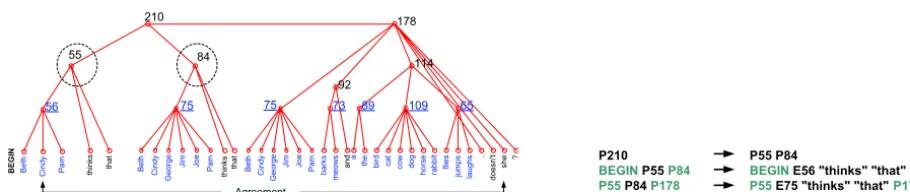
Figure 2: Left: because ADIOSdoes not rewire all the occurrences of a specific pattern, but only those that
share the same context, its power is comparable to that of Context Sensitive Grammars. In this example, equivalence class #75 is not extended to subsume the subject position, because that position appears in a different context (e.g., immediately to the right of the symbol BEGIN). Thus, long-range agreement is enforced and over-generalization prevented. Right: the context-sensitive “ rules” corresponding to pattern #210.
Probabilistic inference of pattern significance.
ADIOS represents a corpus of sentences as an
ini-tially highly redundant directed graph, which can be informally visualized as a tangle of strands that are partially segregated into bundles. Each of these con-sists of some strands clumped together; a bundle is formed when two or more strands join together and run in parallel and is dissolved when more strands leave the bundle than stay in. In a given corpus, there will be many bundles, with each strand (sen-tence) possibly participating in several. Our algo-rithm, described in detail in (Solan et al., 2004), identifies significant bundles that balance high com-pression (small size of the bundle “ lexicon” ) against good generalization (the ability to generate new grammatical sentences by splicing together various strand fragments each of which belongs to a differ-ent bundle).
Context sensitivity of patterns. A pattern is an
abstraction of a bundle of sentences that are identi-cal up to variation in one place, where one of several symbols — the members of the equivalence class associated with the pattern — may appear
(Fig-ure 1). Because this variation is only allowed in the context specified by the pattern, the generaliza-tion afforded by a set of patterns is inherently safer than in approaches that posit globally valid cate-gories (“ parts of speech” ) and rules (“ grammar” ).
The reliance of ADIOS on many context-sensitive
patterns rather than on traditional rules can be com-pared both to the Construction Grammar (discussed later) and to Langacker’s concept of the grammar as a collection of “ patterns of all intermediate degrees of generality” ((Langacker, 1987), p.46).
Hierarchical structure of patterns. The ADIOS
[image:2.604.67.529.76.194.2] [image:2.604.64.519.267.363.2]3 Related computational and linguistic formalisms and psycholinguistic findings
UnlikeADIOS, very few existing algorithms for
un-supervised language acquisition use raw, unanno-tated corpus data (as opposed, say, to sentences con-verted into sequences of POS tags). The only work described in a recent review (Roberts and Atwell, 2002) as completely unsupervised — the GraSp model (Henrichsen, 2002) — does attempt to in-duce syntax from raw transcribed speech, yet it is not completely data-driven in that it makes a prior commitment to a particular theory of syntax (Cate-gorial Grammar, complete with a pre-specified set of allowed categories). Because of the unique na-ture of our chosen challenge — finding strucna-ture in language rather than imposing it — the follow-ing brief survey of grammar induction focuses on contrasts and comparisons to approaches that gen-erally stop short of attempting to do what our al-gorithm does. We distinguish between approaches that are motivated computationally (Local Grammar and Variable Order Markov models, and Tree Ad-joining Grammar, discussed elsewhere (Edelman et al., 2004), and those whose main motivation is lin-guistic and cognitive psychological (Cognitive and Construction grammars, discussed below).
Local Grammar and Markov models. In
cap-turing the regularities inherent in multiple
criss-crossing paths through a corpus, ADIOS
su-perficially resembles finite-state Local Grammars (Gross, 1997) and Variable Order Markov (VOM) models (Guyon and Pereira, 1995). The VOM
ap-proach starts by postulating a maximum-n
struc-ture, which is then fitted to the data by maximizing
the likelihood of the training corpus. The ADIOS
philosophy differs from the VOM approach in sev-eral key respects. First, rather than fitting a model to the data, we use the data to construct a (recur-sively structured) graph. Thus, our algorithm nat-urally addresses the inference of the graph’s struc-ture, a task that is more difficult than the estima-tion of parameters for a given configuraestima-tion.
Sec-ond, becauseADIOSworks from the bottom up in a recursive, data-driven fashion, it is less susceptible to complexity issues. It can be used on huge graphs, and may yield very large patterns, which in a VOM model would correspond to an unmanageably high
ordern. Third,ADIOS transcends the idea of VOM
structure, in the following sense. Consider a set of patterns of the formb1[c1]b2[c2]b3, etc. The
equiv-alence classes[·]may include vertices of the graph
(both words and word patterns turned into nodes), wild cards (i.e., any node), as well as ambivalent cards (any node or no node). This means that the
terminal-level length of the string represented by a pattern does not have to be of a fixed length. This goes conceptually beyond the variable order Markov structure:b2[c2]b3do not have to appear in a Markov chain of a finite order||b2||+||c2||+||b3|| because the size of [c2]is ill-defined, as explained above. Fourth, as we showed earlier (Figure 2),
ADIOSincorporates both context-sensitive
substitu-tion and recursion.
Tree Adjoining Grammar. The proper place in
the Chomsky hierarchy for the class of strings ac-cepted by our model is between Context Free and
Context Sensitive Languages. The pattern-based
representations employed by ADIOS have
counter-parts for each of the two composition operations, substitution and adjoining, that characterize a Tree Adjoining Grammar, or TAG, developed by Joshi and others (Joshi and Schabes, 1997). Specifically, both substitution and adjoining are subsumed in the
relationships that hold amongADIOSpatterns, such
as the membership of one pattern in another. Con-sider a patternPi and its equivalence class E(Pi);
any other patternPj ∈ E(Pi)can be seen as
substi-tutable inPi. Likewise, ifPj ∈ E(Pi),Pk ∈ E(Pi)
andPk ∈ E(Pj), then the patternPj can be seen
as adjoinable to Pi. Because of this
correspon-dence between the TAG operations and the ADIOS
patterns, we believe that the latter represent regu-larities that are best described by Mildly Context-Sensitive Language formalism (Joshi and Schabes,
1997). Importantly, because the ADIOS patterns
are learned from data, they already incorporate the constraints on substitution and adjoining that in the original TAG framework must be specified manu-ally.
Psychological and linguistic evidence for
pattern-based representations. Recent advances in
un-derstanding the psychological role of representa-tions based on what we call patterns, or
construc-tions (Goldberg, 2003), focus on the use of
Cognitive Grammar; Construction Grammar.
The main methodological tenets of ADIOS —
pop-ulating the lexicon with “ units” of varying com-plexity and degree of entrenchment, and using cognition-general mechanisms for learning and rep-resentation — fit the spirit of the foundations of
Cognitive Grammar (Langacker, 1987). At the
same time, whereas the cognitive grammarians typ-ically face the chore of hand-crafting structures that would refl ect the logic of language as they
per-ceive it, ADIOS discovers the primitives of
gram-mar empirically and autonomously. The same is
true also for the comparison betweenADIOSand the
various Construction Grammars (Goldberg, 2003; Croft, 2001), which are all hand-crafted. A con-struction grammar consists of elements that differ in their complexity and in the degree to which they are specified: an idiom such as “ big deal” is a fully specified, immutable construction, whereas the ex-pression “ the X, the Y” – as in “ the more, the bet-ter” (Kay and Fillmore, 1999) – is a partially
spec-ified template. The patterns learned byADIOS
like-wise vary along the dimensions of complexity and specificity (e.g., not every pattern has an equiva-lence class).
4 ADIOS: a psycholinguistic evaluation
To illustrate the applicability of our method to real data, we first describe briefl y the outcome of run-ning it on a subset of the CHILDES collection (MacWhinney and Snow, 1985), consisting of tran-scribed speech directed at children. The corpus we
selected contained 300,000sentences (1.3 million
tokens) produced by parents. After 14 real-time days, the algorithm (version 7.3) identified 3400 patterns and 3200 equivalence classes. The outcome was encouraging: the algorithm found intuitively significant patterns and produced semantically ad-equate corresponding equivalence sets. The algo-rithm’s ability to recombine and reuse the acquired patterns is exemplified in the legend of Figure 3, which lists some of the novel sentences it generated.
The input module. The ADIOS system’s input
module allows it to process a novel sentence by
forming its distributed representation in terms of ac-tivities of existing patterns. We stress that this
mod-ule plays a crucial role in the tests described below, all of which require dealing with novel inputs.
Fig-ure 4 shows the activation of two patterns (#141 and #120) by a phrase that contains a word in a novel context (stay), as well as another word never before
encountered in any context (5pm).
Acceptability of correct and perturbed novel
sen-tences. To test the quality of the representations
d
o
y
o
u
14380
w
a
n
n
a
w
a
n
t to 14379
15041
15040
I
'm wa s
14378
th
o
u
g
h
t
y
o
u
14818
w
e
re
14819
15540
15539
g
o
n
n
a
g
o
in
g
14383
to
14384
15544
15543
16544
g
o to
th
e
16543 (0.25)
(1) (1) (1) (1) (1)
(1) (1)
(1)
(1)
(0.33)
4
8 9 7 6 5
3
11 2 1
le
t ' s 14335
(1) 14374
I
'm wa s
14378
th
o
u
g
h
t
y
o
u
14818
w
e
re
14819
15540
15539(1)
g
o
n
n
a
g
o
in
g
14383
to
14384
15544
15543(0.33)
16556
c
h
a
n
g
e
h
e
r
y
o
u
r
16557
16555(0.14)
(1) (1)
(1) (1)
(1)
10
12
13
14 1516
17 18
[image:4.604.315.525.77.289.2]19
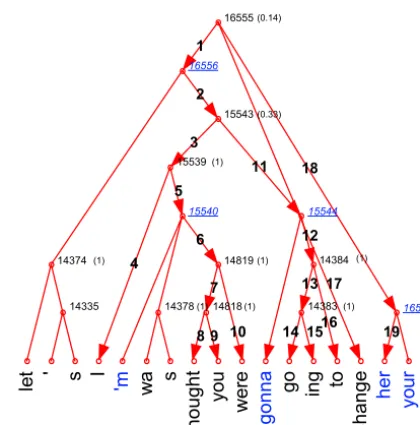
Figure 3: a typical pattern extracted from the
CHILDES collection (MacWhinney and Snow, 1985). Hundreds of such patterns and equivalence classes (underscored) together constitute a concise representation of the raw data. Some of the phrases that can be described/generated by these patterns
are: let’s change her. . . ; I thought you were
gonna change her. . . ; I was going to change
your. . . ; none of these appear in the training data,
illustrating the ability of ADIOSto generalize. The
generation process operates as a depth-first search of the tree corresponding to a pattern. For details see (Solan et al., 2003a; Solan et al., 2004).
(patterns and their associated equivalence classes)
acquired by ADIOS, we have examined their
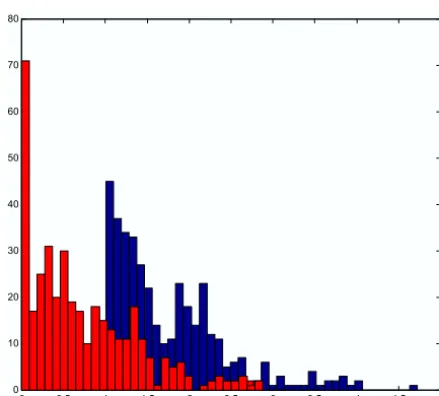
abil-ity to support various kinds of grammaticalabil-ity judg-ments. The first experiment we report sought to make a distinction between a set of (presumably grammatical) CHILDES sentences not seen by the algorithm during training, and the same sentences in which the word order has been perturbed. We
first trained the model on 10,000 sentences from
CHILDES, then compared its performance on (1)
1000previously unseen sentences and (2) the same
sentences in each of which a single random word
order switch has been carried out. The results,
shown in Figure 5, indicate a substantial
sensitiv-ity of theADIOSinput module to simple deviations
from grammaticality in novel data, even after a very brief training.
Learnability of nonadjacent dependencies
Within the ADIOS framework, the “ nonadjacent
Wednesday
BEGIN Beth Cindy George
Joe
Jim Pam
and are liv work ing
141...activation level: 0.972
74
C0 C1 C2 C3 C4 C5 C6 C7 C8 C9 C10C11C12C13 W8=1.0
W 0=1.0
C14C15C16C17C18
play
Beth Cindy
George
Joe
Jim Pam
86
112 113
W15=0.8
until
tomorrow
Friday
Monday Saturday Sunday Thursday Tuesday
Wednesday
next
month week winter END
120...activation level: 0.667
100
93
89 119
C0 C1 C2 C3 C4 C5 C6 C7 C8 C9 C10C11C12C13
W13=1.0 W0=1.0
W
2..8=ε
W
[image:5.604.76.515.72.217.2]1=ε
Figure 4: The two most active patterns responding to the partially novel inputJoe and Beth are staying
until 5pm. Leaf activation, which is proportional to the mutual information between input words and various
members of the equivalence classes, is propagated upward by taking the average at each junction (Solan et al., 2003a).
0 0.5 1 1.5 2 2.5 3 3.5 4 4.5 5
0 10 20 30 40 50 60 70 80
Figure 5: Grammaticality of perturbed sentences (CHILDES data). The figure shows a histogram of the input module output values for two kinds of stimuli: novel grammatical sentences (dark/blue), and sentences obtained from these by a single word-order permutation (light/red).
G´omez showed that the ability of subjects to learn
a language L1 of the form {aXd, bXe, cXf}1,
as measured by their ability to distinguish it implicitly from L2={aXe, bXf, cXd}, depends
on the amount of variation introduced at X. We
replicated this experiment by training ADIOS on
432 strings from L1, with |X| = 2,6,12,24. The
stimuli were the same strings as in the original experiment, with the individual letters serving as the basic symbols. A subsequent test resulted in
1
Symbolsa−fhere stand for nonce words such as pel, vot,
or dak, whereasXdenotes a slot in which a subset of 24 other
nonce words may appear.
a perfect acceptance of L1 and a perfect rejection
of L2. Training with the original words (rather
than letters) as the basic symbols resulted in L2
rejection rates of 0%,55%,100%, and 100%,
respectively, for |X| = 2,6,12,24. Thus, the
ADIOSperformance both mirrors that of the human
subjects and suggests a potentially interesting new effect (of the granularity of the input stimuli) that may be explored in further psycholinguistic studies.
A developmental test. The CASL test
(Compre-hensive Assessment of Spoken Language) is widely used in the USA to assess language comprehen-sion in children (Carrow-Woolfolk, 1999). One of its many components is a grammaticality judgment test, which consists of 57 sentences and is admin-istered as follows: a sentence is read to the child, who then has to decide whether or not it is correct. If not, the child has to suggest a correct version of the sentence. For every incorrect sentence, the test lists 2-3 acceptable correct ones. The present
ver-sion of theADIOSalgorithm can compare sentences
but cannot score single sentences. We therefore ig-nored 11 out of the 57 sentences, which were correct to begin with. The remaining 46 incorrect sentences
and their corrected versions were scored byADIOS
(which for this test had been trained on a 300,000-sentence corpus from the CHILDES database); the highest scoring sentence in each trial was inter-preted as the model’s choice. The model labeled 17 of the test sentences correctly, yielding a score of 108 (100 = norm) for the age interval 7-0 through 7-2. This score is the norm for the age interval 8-3 through 8-5.2
2
ADIOSwas undecided about the majority of the other
[image:5.604.66.286.296.494.2]Figure 6: The results of several grammaticality tests (the G¨oteborg ESL test is described in the text).
ESL test (forced choice). We next used a
stan-dard test developed for English as Second Lan-guage (ESL) classes, which has been administered
in G¨oteborg (Sweden) to more than 10,000 upper
secondary levels students (that is, children who typ-ically had 9 years of school, but only 6-7 years of
English). The test consists of100three-choice
ques-tions, such asShe asked me at once(choices:
come, to come, coming) and The tickets have
been paid for, so you not worry(choices:may,
dare, need); the average score for the population
mentioned is65%. As before, the choice given the
highest score by the algorithm won; if two choices received the same top score, the answer was “ don’t know” . The algorithm’s performance in this and several other tests is summarized in Figure 6 (these tests have been conducted with an earlier version of the algorithm (Solan et al., 2003a)). In the ESL test,
ADIOS scored at just under 60%; compare this to
the45%precision (with20%recall) achieved by a
straightforward bi-gram benchmark.3
ESL test (magnitude estimation). In this
exper-iment, six subjects were asked to provide magni-tude estimates of linguistic acceptability
(Gurman-Bard et al., 1996) for all the 3×100sentences in
the G¨oteborg ESL test. The test was paper based and included the instructions from (Keller, 2000). No measures were taken to randomize the order of the sentences or otherwise control the experiment.
The same 300 sentences were processed byADIOS,
whose responses were normalized by dividing the output by the sum of each triplet’s score. The re-sults indicate a significant correlation (R2
= 6.3%,
p < 0.001) between the scores produced by the
sub-jects and by ADIOS. In some cases the scores of
3
Chance performance in this test is33%. We note that the
corpus used here was too small to train ann-gram model for
n >2; thus, our algorithm effectively overcomes the problem of sparse data by putting the available data to a better use.
ADIOSare equal, which usually indicates that there
are too many unfamiliar words. Omitting these
sen-tences yields a significantR2 = 9.7%,p < 0.001;
removing sentences for which the choices score
al-most equally (within10%) results inR2
= 12.7%,
p <0.001.4
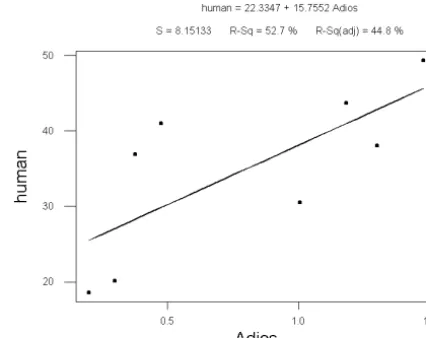
Figure 7: Magnitude estimation study from Keller,
plotted against the ADIOS score on the same
sen-tences (R2
= 0.53, p < 0.05). The sentences (ranked by increasing score) are:
How many men did you destroy the picture of? How many men did you destroy a picture of? How many men did you take the picture of? How many men did you take a picture of? Which man did you destroy the picture of? Which man did you destroy a picture of? Which man did you take the picture of? Which man did you take a picture of?
Modeling Keller’s data. A manuscript by Frank
Keller lists magnitude estimation data for eight
sen-tences.5 We compared these to the scores
pro-duced by ADIOS, and obtained a significant
corre-lation (Figure 7). The input module seems
capa-ble of dealing with the substitution of a with the
or of take with destroy, and it does reasonably
well on the substitution of How many menwith
Which man. We conjecture that this performance
can be improved by a more sophisticated normal-ization of the score produced by the input module, which should do a better job quantifying the cover (Edelman, 2004) of a novel sentence by the stored patterns. The limitations of the present version of the model became apparent when we tested it on the
4
Four of the subjects only filled out the test partially (the numbers of responses were 300, 300, 186, 159, 96, 60), but the correlation was highly significant despite the missing data.
5
52 sentences from Keller’s dissertation, using his
magnitude estimation method (Keller, 2000).6 For
these sentences, no correlation was found between the human and the model scores. One of the more challenging aspects of this set is the central role of
pronoun binding in many of the sentences, e.g.,The
woman/Each woman saw Peter’s photograph
of her/herself/him/himself. Moreover, this test set
contains examples of context effects, where infor-mation in an earlier sentence can help resolve a later ambiguity. Thus, many of the grammatical contrasts that appear in Keller’s test sentences are too subtle
for the present version of the ADIOS input module
to handle.
Acceptability of correct and perturbed
artifi-cial sentences. In this experiment 64 random
sen-tences was produced with a CFG. For uniformity the sentence length was kept within 15-20 words. 16 of the sentences had two adjacent words switched and another 16 had two random words switched. The 64 sentences were presented to 17 subjects, who placed each on a computer screen at a lateral position re-fl ecting the perceived acceptability. As expected, the perturbed sentences were rated as less
accept-able than the non-perturbed ones (R2
= 50.3%with
p < 0.01). We controlled for sentence number, for
how high on the screen the sentence was placed, for the reaction time and for sentence length; only the latter had a significant contribution to the correla-tion. The random permutations scored significantly
(p < 0.01) lower than the adjacent permutations.
Furthermore, the variance in the scores of the ran-domly permuted sentences was significantly larger
(p < 0.005), suggesting that this kind of
permu-tation violates the sentence structure more severely, but may also sometimes create acceptable sentences
by chance. Previous tests showed thatADIOSis very
good at recognizing perturbed CFG-generated sen-tences as such, but it remains to be seen whether or
notADIOSalso exhibits differential behavior on the
adjacent and non-adjacent permutations.
Acceptability of ADIOS-generated sentences.
ADIOS was trained on 12,700 sentences (out of a
total of 12,966 sentences) in the ATIS (Air Travel Information System) corpus; the remaining 226 sen-tences were used for precision/recall tests. Because
6
We remark that this methodology is not without its prob-lems. As one of our linguistically naive subjects remarked, “ The instructions were (purposefully?) vague about what I was supposed to judge — understandability, grammar, correct use of language, or getting the point through. . . ” . Indeed, the scores in a magnitude experiment must be composites of sev-eral factors — at the very least, well-formedness and meaning-fulness. We are presently exploring various means of acquiring and dealing with such multidimensional “ acceptability” data.
ADIOS is sensitive to the presentation order of the
training sentences, 30 instances were trained on
ran-domized versions of the training set. Eight
hu-man subjects were then asked to estimate accept-ability of 20 sentences from the original corpus, in-termixed randomly with 20 sentences generated by
the trained versions ofADIOS. The precision,
calcu-lated as the average number of sentences accepted by the subjects divided by the total number of
sen-tences in the set (20), was0.73±0.2for sentences
from the original corpus and 0.67 ±0.07 for the
sentences generated by ADIOS. Thus, the ADIOS
-generated sentences are, on the average, as accept-able to human subjects as the original ones.
5 Concluding remarks
The ADIOS approach to the representation of
linguistic knowledge resembles the Construction Grammar in its general philosophy (e.g., in its re-liance on structural generalizations rather than on syntax projected by the lexicon), and the Tree Ad-joining Grammar in its computational capacity (e.g., in its apparent ability to accept Mildly Context Sen-sitive Languages). The representations learned by
the ADIOS algorithm are truly emergent from the
(unannotated) corpus data. Previous studies focused on the algorithm that makes such learning possible (Solan et al., 2004; Edelman et al., 2004). In the present paper, we concentrated on testing the input module that allows the acquired patterns to be used in processing novel stimuli.
The results of the tests we described here are en-couraging, but there is clearly room for improve-ment. We believe that the most pressing issue in this regard is developing a conceptually and com-putationally well-founded approach to the notion of cover (that is, a distributed representation of a novel sentence in terms of the existing patterns). Intu-itively, the best case, which should receive the top score, is when there is a single pattern that precisely covers the entire input, possibly in addition to other evoked patterns that are only partially active. We are currently investigating various approaches to scor-ing distributed representations in which several pat-terns are highly active. A crucial constraint that ap-plies to such cases is that a good cover should give a proper expression to the subtleties of long-range de-pendencies and binding, many of which are already
captured by theADIOSlearning algorithm.
Acknowledgments. Supported by the US-Israel
References
R. Bod. 1998. Beyond grammar: an
experience-based theory of language. CSLI Publications,
Stanford, US.
T. Cameron-Faulkner, E. Lieven, and M. Tomasello. 2003. A construction-based analysis of child di-rected speech. Cognitive Science, 27:843–874. E. Carrow-Woolfolk. 1999. Comprehensive
As-sessment of Spoken Language (CASL). AGS
Pub-lishing, Circle Pines, MN.
N. Chomsky. 1986. Knowledge of language: its
na-ture, origin, and use. Praeger, New York.
A. Clark. 2001. Unsupervised Language
Acquisi-tion: Theory and Practice. Ph.D. thesis, COGS,
U. of Sussex.
W. Croft. 2001. Radical Construction Grammar:
syntactic theory in typological perspective.
Ox-ford U. Press, OxOx-ford.
P. W. Culicover. 1999. Syntactic nuts: hard cases,
syntactic theory, and language acquisition.
Ox-ford U. Press, OxOx-ford.
S. Edelman, Z. Solan, D. Horn, and E. Ruppin. 2004. Bridging computational, formal and psy-cholinguistic approaches to language. In Proc. of
the 26th Conference of the Cognitive Science So-ciety, Chicago, IL.
S. Edelman. 2004. Bridging language with the
rest of cognition: computational, algorithmic
and neurobiological issues and methods. In
M. Gonzalez-Marquez, M. J. Spivey, S. Coulson, and I. Mittelberg, eds., Proc. of the Ithaca
work-shop on Empirical Methods in Cognitive Linguis-tics. John Benjamins.
J. L. Elman, E. A. Bates, M. H. Johnson, A. Karmiloff-Smith, D. Parisi, and K. Plunkett. 1996. Rethinking innateness: A connectionist
perspective on development. MIT Press,
Cam-bridge, MA.
A. E. Goldberg. 2003. Constructions: a new theo-retical approach to language. Trends in Cognitive
Sciences, 7:219–224.
R. L. G´omez. 2002. Variability and detection
of invariant structure. Psychological Science,
13:431–436.
M. Gross. 1997. The construction of local gram-mars. In E. Roche and Y. Schab`es, eds.,
Finite-State Language Processing, pages 329–354. MIT
Press, Cambridge, MA.
E. Gurman-Bard, D. Robertson, and A. Sorace. 1996. Magnitude estimation of linguistic accept-ability. Language, 72:32–68.
I. Guyon and F. Pereira. 1995. Design of a linguis-tic postprocessor using Variable Memory Length
Markov Models. In Proc. 3rd Int’l Conf.
Doc-ument Analysis and Recogition, pages 454–457,
Montreal, Canada.
Z. S. Harris. 1954. Distributional structure. Word, 10:140–162.
P. J. Henrichsen. 2002. GraSp: Grammar learning form unlabeled speech corpora. In Proceedings
of CoNLL-2002, pages 22–28. Taipei, Taiwan.
A. Joshi and Y. Schabes. 1997. Tree-Adjoining Grammars. In G. Rozenberg and A. Salomaa, eds., Handbook of Formal Languages, volume 3, pages 69 – 124. Springer, Berlin.
P. Kay and C. J. Fillmore. 1999. Grammatical constructions and linguistic generalizations: the What’s X Doing Y? construction. Language, 75:1–33.
F. Keller. 2000. Gradience in Grammar:
Experi-mental and Computational Aspects of Degrees of Grammaticality. Ph.D. thesis, U. of Edinburgh.
R. W. Langacker. 1987. Foundations of
cogni-tive grammar, volume I: theoretical prerequisites.
Stanford U. Press, Stanford, CA.
B. MacWhinney and C. Snow. 1985. The Child Language Exchange System. Journal of
Compu-tational Lingustics, 12:271–296.
A. Roberts and E. Atwell. 2002. Unsupervised grammar inference systems for natural language. Technical Report 2002.20, School of Computing, U. of Leeds.
J. R. Saffran, R. N. Aslin, and E. L. Newport. 1996. Statistical learning by 8-month-old infants.
Sci-ence, 274:1926–1928.
Z. Solan, E. Ruppin, D. Horn, and S. Edelman. 2003a. Automatic acquisition and efficient rep-resentation of syntactic structures. In S. Thrun, editor, Advances in Neural Information
Process-ing, volume 15, Cambridge, MA. MIT Press.
Z. Solan, E. Ruppin, D. Horn, and S. Edelman. 2003b. Unsupervised efficient learning and rep-resentation of language structure. In R. Alter-man and D. Kirsh, eds., Proc. 25th Conference
of the Cognitive Science Society, Hillsdale, NJ.
Erlbaum.
Z. Solan, D. Horn, E. Ruppin, and S. Edelman. 2004. Unsupervised context sensitive language acquisition from a large corpus. In L. Saul, ed-itor, Advances in Neural Information Processing, volume 16, Cambridge, MA. MIT Press.
M. van Zaanen. 2000. ABL: Alignment-Based Learning. In COLING 2000 - Proceedings of the
18th International Conference on Computational Linguistics, pages 961–967.
A. Wray. 2002. Formulaic language and the