R E S E A R C H A R T I C L E
Open Access
Predictors and prevention of flow insufficiency
due to limited flow demand
Hiroyuki Nakajima
1*, Atsushi Iguchi
1, Mimiko Tabata
1, Hiroyuki Koike
1, Kozo Morita
1, Ken Takahashi
1,
Toshihisa Asakura
1, Shigeyuki Nishimura
2and Hiroshi Niinami
1Abstract
Background:We investigated the impacts of flow demand and native coronary stenosis on graft flow and patency. Methods:We reviewed the angiograms of 549 bypass grafts in 301 patients who underwent off-pump coronary artery bypass grafting since 2007. Grafts consisted of 237 internal thoracic artery to left anterior descending artery; 97 internal thoracic artery and 52 saphenous vein grafts to left circumflex artery; and 109 gastroepiploic artery and 54 saphenous vein grafts to right coronary artery. We selected only individual bypass grafts created as the sole bypass graft to the coronary vascular region. Flow insufficiency was defined as≤20 ml/min measured intraoperatively. When a significant difference in the incidence of flow insufficiency or“not functional”occurred between higher and lower values rather than the particular minimal luminal diameter value, the highest value was defined as the cut-off minimal luminal diameter. Distal lesions were defined as stenosis at segment #4, 7, 8, 12, 13, 14, or 15.
Results:Flow insufficiency was found in 112/549 (20.4%) bypass grafts. For internal thoracic artery to left circumflex artery grafts, the cut-off minimal luminal diameter for proximal and distal lesions was 1.25 mm and 0.75 mm, respectively. For gastroepiploic artery to right coronary artery grafts, the cut-off minimal luminal diameter was 0.82 mm for proximal lesions (p = 0.005), while 10 (71%) of 14 gastroepiploic artery grafts for distal lesions presented with flow insufficiency. Univariate and multivariate analysis identified a distal lesion (odds ratio (OR): 3.12, p < 0.0001); minimal luminal diameter greater than the cut-off value (OR: 3.64, p < 0.0001); right coronary artery (OR: 18.2, p = 0.0002) and left circumflex artery (OR; 2.29, p = 0.009) grafting; and a history of myocardial infarction in the grafted region (OR: 2.21, p = 0.02) as significant predictors of flow insufficiency.
Conclusions:Both competitive flow and insufficient flow demand cause graft failure. For distal lesions, more severe stenosis is necessary to avoid graft failure, compared with proximal lesions. A revascularization strategy for distal lesions should be discussed separately from that for proximal lesions.
Keywords:Coronary artery bypass graft, CABG arterial grafts, CABG venous grafts, Myocardial ischemia, Off-pump surgery
Background
Following coronary artery bypass grafting (CABG), graft flow is determined by flow demand in the grafted region balanced against the native coronary flow. Prevention of competitive flow has been discussed for appropriate graft flow and long-term patency of arterial grafts. However, the impacts of flow demand in the revascularized region on graft flow and patency have not been fully delineated.
Insufficient graft flow in the arterial graft is a reported major predictor of graft failure within one year [1,2]. Thrombosis and intimal hyperplasia can cause failure of saphenous vein grafts (SVG) within 1 year, while athero-sclerosis is considered the main cause of SVG failure after 1 year [3].
In this study, we focused on prevention of graft failure relatively early postoperatively. We examined the pos-sible factors associated with flow demand, which in-cluded the stenosis location, history of myocardial infarction in the grafted region, ventricular function, and native coronary flow, which included the cut-off minimal * Correspondence:[email protected]
1The Department of Cardiovascular Surgery, Saitama International Medical
Center, Saitama Medical University, 1397-1 Yamane, Hidaka, Saitama 350-1298, Japan
Full list of author information is available at the end of the article
luminal diameter (MLD) combined with the stenosis location.
Methods
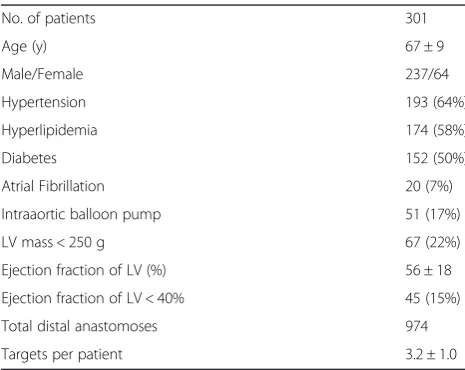
We retrospectively reviewed the pre- and postoperative coronary angiograms and flowmetry results of 301 pa-tients who underwent off-pump CABG and postopera-tive angiography between 2007 and June 2013. To examine the size of the revascularized region, we se-lected only simple configuration bypass grafts for ana-lysis. We included 549 individual bypass grafts (Table 1), that were created as the only bypass graft to the coron-ary vascular region, such as the left anterior descending artery (LAD), left circumflex artery (LCX), and right cor-onary artery (RCA), and that were evaluated by postop-erative catheter angiography. The study was approved by Institutional Review Board of Saitama International Medical Center. Grafts included 237 in-situ internal thoracic artery (ITA) to LAD bypass grafts; 97 in-situ ITA to LCX; 52 aorto-coronary SVG to LCX; 109 in-situ gastroepiploic artery (GEA) to RCA; and 54 aorto-coronary SVG to RCA (Table 2). We excluded sequential and composite grafts and bypass grafts with other com-binations of graft material and target branch, and pa-tients who had no postoperative angiography. We also excluded bypass grafts which were anastomosed to two or more targets in the same vascular region. For ex-ample, when there was a bypass graft to the diagonal branch, the concomitant in-situ ITA to LAD bypass graft was excluded. One in-situ ITA that had localized dissection because of surgical trauma was also excluded. There were 237 males and 64 females in this study with a mean age of 67 ± 9 years. Of these, 120 (52%) patients had diabetes mellitus. The number of distal anastomoses was 3.2 ± 1.1 per patient and 20 (6.6%) patients had per-sistent atrial fibrillation before and during operation.
Our standard operative technique is off-pump CABG with in-situ arterial grafts. All grafts were≥1.5 mm or more in diameter. The bilateral ITA was used for pa-tients with an active lifestyle who were < 80 years old. For patients with severe chronic obstructive pulmonary disease, chronic kidney disease, or insulin-dependent diabetes mellitus, the SVG was commonly used for LCX grafting. For RCA grafting, the use of GEA depended on the surgeon’s decision, based on estimated operative risk, severity of the proximal stenosis, vessel size, or a previ-ous or future abdominal operation. After completion of anastomosis, graft flow was measured by a transit time flow meter (Medi-Stim AS, Oslo, Norway) and recorded for all patients. To determine the influence of flow de-mand, we examined the grafted vascular region (such as LAD, LCX, or RCA), gender, history of myocardial in-farction in the grafted region and any history of percu-taneous coronary intervention to the grafted region, left ventricular ejection fraction, atrial fibrillation, and left ventricular mass.
Early postoperative coronary angiography was per-formed during hospitalization approximately two weeks after surgery. Cardiologists independently evaluated the severity of native coronary artery stenosis and anatom-ical and functional graft patency. The definition MLD in the present study was as follows: MLD (mm) was mea-sured at the narrowest stenotic lesion proximal to the anastomotic site in preoperative or early postoperative angiography using the Toshiba Cardio Agent® system (Toshiba Medical Systems Co., Tokyo, Japan).
Proximal lesions were defined as stenosis at segment #1, 2, 3, 5, 6, or 11, while distal lesions were defined as stenosis at segment #4, 7, 8, 12, 13, 14, or 15. Flow insuf-ficiency (FI) was defined as≤20 ml/min during intraop-erative transit-time flowmetry. Not functional (NF) was defined as occlusion and string sign, which was a diffuse narrowing of the arterial conduit opacified with delayed antegrade flow. When a significant difference in the inci-dence of FI or NF was detected between higher and
Table 1 Patients’baseline characteristics
No. of patients 301
Age (y) 67 ± 9
Male/Female 237/64
Hypertension 193 (64%)
Hyperlipidemia 174 (58%)
Diabetes 152 (50%)
Atrial Fibrillation 20 (7%)
Intraaortic balloon pump 51 (17%)
LV mass < 250 g 67 (22%)
Ejection fraction of LV (%) 56 ± 18
Ejection fraction of LV < 40% 45 (15%)
Total distal anastomoses 974
Targets per patient 3.2 ± 1.0
LV: left ventricle.
Table 2 Bypass graft characteristics
Bypass grafts analyzed 549
in-situ ITA to LAD 237
in-situ ITA to LCX 97
aorto-coronary SVG to LCX 52
in-situ GEA to RCA 109
aorto-coronary SVG to RCA 54
History of MI in the grafted region 88 (16%)
History of PCI in the grafted region 73 (13%)
lower values rather than the particular MLD value, the highest value was defined as the cut-off MLD.
The mean follow-up period was 12 ± 15 months. Late angiography (> 6 months) was performed for 23 (7.6%) patients for clinical reasons and the mean interval be-tween CABG and angiography was 2.5 ± 7.5 (0.1–46) months.
Statistical analysis
The continuous variables are expressed as means ± stand-ard deviation. The data of two independent groups were compared by chi-square test and multivariate analysis was performed using logistic regression. A cut-off p-value of 0.20 in the univariate analyses was used to select variables for inclusion in multivariate models. Statistical analyses were performed using SPSS software (SPSS8.0 Inc., Chicago, IL, USA) and outcome differences were consid-ered statistically significant with p < 0.05.
Figure 1Incidence of not functional (NF) for in-situ ITA, SVG, and GEA with and without flow insufficiency (FI).The rate of NF was significantly higher in bypass grafts with FI for all graft materials. FI: flow insufficiency, GEA: gastroepiploic artery, ITA: internal thoracic artery, NF: not functional, SVG: saphenous vein graft.
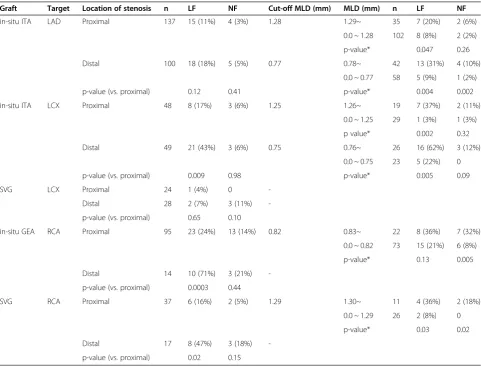
Table 3 Cut-off MLD and the incidence of LF and NF
Graft Target Location of stenosis n LF NF Cut-off MLD (mm) MLD (mm) n LF NF
in-situ ITA LAD Proximal 137 15 (11%) 4 (3%) 1.28 1.29~ 35 7 (20%) 2 (6%)
0.0 ~ 1.28 102 8 (8%) 2 (2%)
p-value* 0.047 0.26
Distal 100 18 (18%) 5 (5%) 0.77 0.78~ 42 13 (31%) 4 (10%)
0.0 ~ 0.77 58 5 (9%) 1 (2%)
p-value (vs. proximal) 0.12 0.41 p-value* 0.004 0.002
in-situ ITA LCX Proximal 48 8 (17%) 3 (6%) 1.25 1.26~ 19 7 (37%) 2 (11%)
0.0 ~ 1.25 29 1 (3%) 1 (3%)
p value* 0.002 0.32
Distal 49 21 (43%) 3 (6%) 0.75 0.76~ 26 16 (62%) 3 (12%)
0.0 ~ 0.75 23 5 (22%) 0
p-value (vs. proximal) 0.009 0.98 p-value* 0.005 0.09
SVG LCX Proximal 24 1 (4%) 0
-Distal 28 2 (7%) 3 (11%)
-p-value (vs. proximal) 0.65 0.10
in-situ GEA RCA Proximal 95 23 (24%) 13 (14%) 0.82 0.83~ 22 8 (36%) 7 (32%)
0.0 ~ 0.82 73 15 (21%) 6 (8%)
p-value* 0.13 0.005
Distal 14 10 (71%) 3 (21%)
-p-value (vs. proximal) 0.0003 0.44
SVG RCA Proximal 37 6 (16%) 2 (5%) 1.29 1.30~ 11 4 (36%) 2 (18%)
0.0 ~ 1.29 26 2 (8%) 0
p-value* 0.03 0.02
Distal 17 8 (47%) 3 (18%)
-p-value (vs. proximal) 0.02 0.15
Results
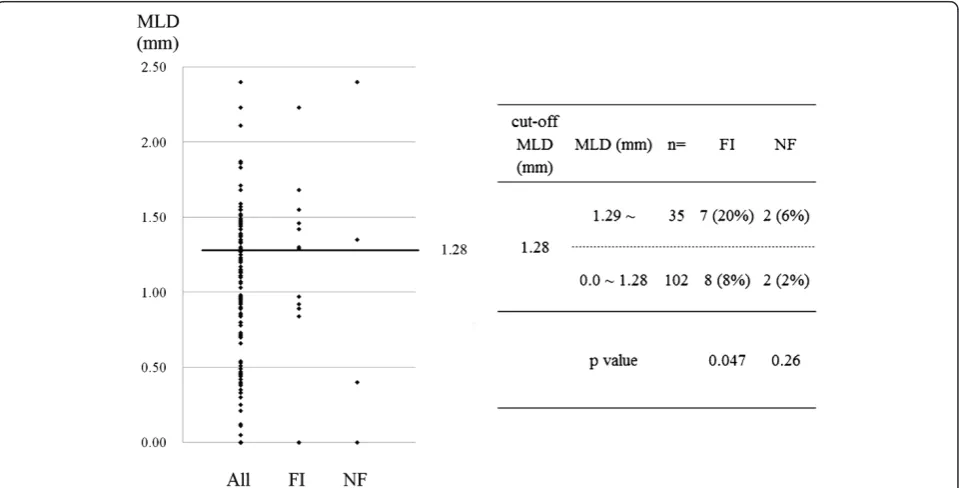
As shown in Figure 1, there were significant correlations between FI and NF for GEA (p = 0.002), SVG (p = 0.0007), and ITA (p = 0.004) (Figure 1). Overall, 112/549 (20.4%) bypass grafts were assessed as FI and 39/549 (7.0%) were assessed as NF and the incidences of FI and NF are sum-marized in Table 3. For ITA to LAD, the cut-off MLD was 1.28 mm for proximal lesions (p = 0.04) (Figure 2) and 0.77 mm for distal lesions (p = 0.004). For ITA to LCX, the cut-off MLD was 1.25 mm for proximal lesions (p = 0.002), and 0.75 mm for distal lesions (p = 0.005). There was no significant cut-off MLD for SVG to LCX. For GEA to RCA, the cut-off MLD was 0.82 mm for prox-imal lesions (p = 0.005), while 10 of 14 (71%) GEA for dis-tal lesions presented with FI, irrespective of MLD. For SVG to RCA the cut-off MLD was 1.29 mm for proximal lesions (p = .001), while 8 of 17 (47%) SVG for distal le-sions presented with FI with no cut-off value (Table 3).
There were significant differences in the incidence of FI between proximal and distal lesions for ITA to LCX (p = 0.009), GEA to RCA (p = 0.0003), and SVG to RCA (p = 0.02) (Table 3). There was no cut-off value for SVG to LCX with proximal and distal lesions, and SVG and GEA to RCA with distal lesions.
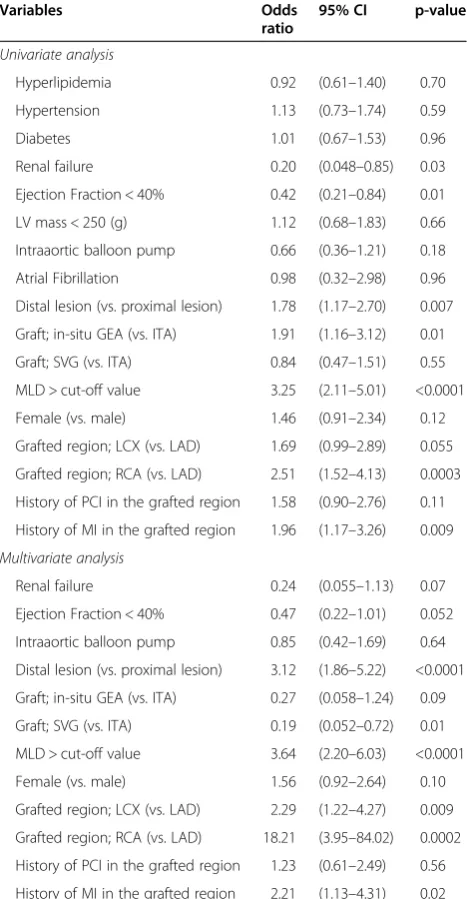
Univariate logistic regression analyses demonstrated that renal failure, ejection fraction < 40%, a distal lesion, graft type, MLD > cut-off value, grafted region of LCX and RCA, and a history of myocardial infarction in the grafted region significantly correlated with FI. Using
multivariate analysis, MLD greater than the cut-off value (odds ratio (OR): 3.64, p < 0.0001); a distal lesion (OR: 3.12, p < 0.0001); RCA (OR: 18.2, p = 0.0002) and LCX (OR: 2.29, p = 0.009) regions; and a history of myocardial infarction in the grafted region (OR: 2.21, p = 0.02) were significant predictors of FI (Table 4).
Discussion
Graft failure resulting from insufficient flow can be a major issue in current surgical revascularization. Intraop-erative flow has been generally accepted as a predictor of patency in arterial and venous bypass grafts [4,5]; however, the cut-off value remains controversial. Di Giammarco and colleagues reported that graft flow < 15 ml/min was a significant predictor of early graft occlusion of arterial and venous grafts [6] with more than half of all bypass grafts with < 15 ml/min occluding within several months [6]. Tokuda and colleagues suggested cut-off values of 15 ml/ min for LCX and 20 ml/min for RCA [7]. In the present study, FI was defined as≤20 ml/min and our definition was not used for detection of technical failure, but to as-sess the increased risk of graft failure. The value was con-sidered acceptable because FI significantly predicted future NF. Choosing this value added the advantage to this study that graft flow was not biased by cardiopulmonary bypass and cardiac ischemia [8]. When discussing the cut-off value for intraoperative reanastomosis, anticipating flow demand in the grafted region is essential.
With graft capacity, two additional factors influence graft flow. The first is flow demand in the grafted region. Insufficient demand can cause insufficient graft flow and resultant occlusion, even when no competitive flow oc-curs. In contrast, abundant flow demand, meaning low peripheral vascular resistance or good run-off, is associ-ated with abundant viable myocardium in the grafted re-gion, and is considered beneficial for graft patency. Despite this information, little has been proven regard-ing flow demand. In this study, we examined the detailed
factors regarding flow demand, which are influenced by the size of the revascularized region and myocardial con-dition. The second factor is native coronary flow. Frac-tional flow reserve (FFR) is the most reliable current assessment method for the functional significance of the stenosis, compared with conventional visual assessment, especially for moderately stenotic lesions [9,10]. However, a possible disadvantage is that FFR can be affected by col-lateral vessels to other vascular regions with chronic total occlusion in multi-vessel disease [11,12]. We presume that competitive flow can be efficiently avoided by preoperative FFR measurement but graft failure associated with insuffi-cient flow demand will remain.
MLD is another useful alternative when evaluating na-tive coronary stenosis [13]. Fishier and colleagues dem-onstrated that when MLD was > 1.4 mm, or stenosis was calculated as < 60% by quantitative coronary angiog-raphy, FFR was > 0.75 and stenosis was not considered to be functionally significant [14]. In aiming to improve predictive value, we examined MLD in combination with stenosis location, rather than assess MLD alone.
Graft selection for LCX and RCA is a major concern. For LCX, in-situ ITA grafting should be considered first because of improved long-term clinical outcomes [15]. However, using SVG is appropriate in select patients, when failure of ITA is highly likely. For GEA to RCA grafting, Suma and colleagues suggested≥90% stenosis [16], and Kim and colleagues recommended > 80% sten-osis and revision of its inflow to the ascending aorta or ITA if graft flow is < 15 ml/min [17]. Glineur and col-leagues reported that in-situ GEA was not suitable for MLD > 1.1 mm [13].
The implications of this study are as follows: Irrespect-ive of the relatIrrespect-ively short follow-up period, FI was sig-nificantly associated with graft failure, and therefore, avoiding FI should be necessary for long-term patency. We found that, even with the same graft material or the same vascular region, the cut-off MLD varied according to flow demand in the grafted region. The stenosis loca-tion, which correlates with flow demand, was significantly associated with FI and postoperative graft function. For distal lesions, more severe stenosis with small MLD was necessary to prevent graft failure, because of the small size of the revascularized region. Especially for RCA with distal lesions, the incidence of FI was extremely high, irrespect-ive of graft type and stenosis severity likely because of the limited flow demand. Therefore, grafting indications should be carefully determined according to not only the stenosis severity, but also stenosis location and the viabil-ity of that region.
Dion and colleagues have recommended sequential SVG grafting to the distal portion of RCA and LCX [18]. Gao and colleagues also showed that sequential SVG provided a higher patency rate [4] and adjusting the
Table 4 Predictors of flow insufficiency for the 549 bypass grafts
Variables Odds
ratio
95% CI p-value
Univariate analysis
Hyperlipidemia 0.92 (0.61–1.40) 0.70
Hypertension 1.13 (0.73–1.74) 0.59
Diabetes 1.01 (0.67–1.53) 0.96
Renal failure 0.20 (0.048–0.85) 0.03
Ejection Fraction < 40% 0.42 (0.21–0.84) 0.01
LV mass < 250 (g) 1.12 (0.68–1.83) 0.66
Intraaortic balloon pump 0.66 (0.36–1.21) 0.18
Atrial Fibrillation 0.98 (0.32–2.98) 0.96
Distal lesion (vs. proximal lesion) 1.78 (1.17–2.70) 0.007
Graft; in-situ GEA (vs. ITA) 1.91 (1.16–3.12) 0.01
Graft; SVG (vs. ITA) 0.84 (0.47–1.51) 0.55
MLD > cut-off value 3.25 (2.11–5.01) <0.0001
Female (vs. male) 1.46 (0.91–2.34) 0.12
Grafted region; LCX (vs. LAD) 1.69 (0.99–2.89) 0.055
Grafted region; RCA (vs. LAD) 2.51 (1.52–4.13) 0.0003
History of PCI in the grafted region 1.58 (0.90–2.76) 0.11
History of MI in the grafted region 1.96 (1.17–3.26) 0.009
Multivariate analysis
Renal failure 0.24 (0.055–1.13) 0.07
Ejection Fraction < 40% 0.47 (0.22–1.01) 0.052
Intraaortic balloon pump 0.85 (0.42–1.69) 0.64
Distal lesion (vs. proximal lesion) 3.12 (1.86–5.22) <0.0001
Graft; in-situ GEA (vs. ITA) 0.27 (0.058–1.24) 0.09
Graft; SVG (vs. ITA) 0.19 (0.052–0.72) 0.01
MLD > cut-off value 3.64 (2.20–6.03) <0.0001
Female (vs. male) 1.56 (0.92–2.64) 0.10
Grafted region; LCX (vs. LAD) 2.29 (1.22–4.27) 0.009
Grafted region; RCA (vs. LAD) 18.21 (3.95–84.02) 0.0002
History of PCI in the grafted region 1.23 (0.61–2.49) 0.56
History of MI in the grafted region 2.21 (1.13–4.31) 0.02
graft length and angle for sequential anastomoses is con-sidered technically easy in off-pump procedures. Conse-quently, for RCA with a distal lesion, sequential grafting combined with the LCX branch with good run-off may be preferable.
A history of myocardial infarction in the grafted region significantly correlated with FI but left ventricular mass and ejection fraction did not correlate with outcomes in this study. Future studies involving quantified assess-ment of regional flow demand are needed.
Regarding conduit choice, our results confirmed that SVG was more reliable than arterial grafts when MLD is larger than the cut-off value for arterial grafts and lower than that for SVG. This finding is consistent with the conduit choice for RCA reported by Glineur and col-leagues [19]. If MLD is larger than the cut-off value for SVG, deferral of grafting or stent implantation can be considered.
No cut-off value was identified for SVG to LCX with proximal and distal lesions, and SVG and GEA to RCA with distal lesions. We suggest two reasons for this ab-sence of a cut-off MLD. The first is independence from the native coronary flow and the second is the particu-larly small flow demand in the relevant area, such as with a distal lesion in RCA, as discussed earlier.
The limitations of this study are as follows: First, this study was not prospective or randomized; therefore, we could not perform flow measurements while correcting for physiological conditions, such as heart rate and blood pressure. Second, we selected only those bypass grafts created as the sole bypass graft to the coronary vascular region. This study was performed to determine the impact of flow demand, which is associated with the size of the revascularized region and myocardial condition. Therefore, it was necessary to exclude sequential grafts and patients with two or more bypass grafts in the same vascular region to minimize bias. Despite this, bias regard-ing the dominancy of three vascular regions could not be eliminated. Third, peripheral vascular resistance and re-covery of vasoreactivity commonly decrease postopera-tively [20] and these could not be assessed in this study.
Conclusions
In conclusion, for bypass targets with MLD greater than the cut-off value, a distal lesion, or history of myocardial infarction, in-situ arterial grafts should be applied care-fully, especially in RCA and LCX regions. Both competi-tive flow and insufficient flow demand can cause early graft failure. To prevent IF resulting from insufficient demand, it is essential to assess both flow demand and native vessels. The combination of MLD and stenosis lo-cation is efficient in predicting graft functionality and conduit choice. Accurate anticipation of graft flow by quantifying flow demand is future research areas.
Abbreviations
CABG:Coronary artery bypass grafting; FI: Flow insufficiency;
GEA: Gastroepiploic artery; ITA: Internal thoracic artery; MLD: Minimal luminal diameter; NF: Not functional; LAD: Left anterior descending artery; LCX: Left circumflex artery; SVG: Saphenous vein graft.
Competing interests
The authors declare that they have no competing interests.
Authors’contributions
HNa analyzed the data and was involved in writing the manuscript. AI participated in the study design. MT participated in writing the manuscript. KH and KM participated in data collection. KT participated in the design of the study and performed the statistical analysis. SN collected data. TA and HNi conceived the study, and participated in its design and coordination and helped draft the manuscript. All authors read and approved the final manuscript.
Author details
1
The Department of Cardiovascular Surgery, Saitama International Medical Center, Saitama Medical University, 1397-1 Yamane, Hidaka, Saitama 350-1298, Japan.2The Department of Cardiology, Saitama International Medical Center, Saitama Medical University, 1397-1 Yamane, Hidaka, Saitama 350-1298, Japan.
Received: 3 August 2014 Accepted: 20 November 2014
References
1. Parvaiz I, Lund JT, Kelbek H:The arterial sling operation: one year follow-up.
Ann Thorac Surg2005,80:1375–1380.
2. Tagusari O, Kobayashi J, Bando K, Niwaya K, Nakajima H, Ishida M, Nakatani T, Yagihara T, Kitamura S:Early adaptation of the left internal thoracic artery as a blood source of y-composite radial artery grafts in off-pump coronary artery bypass grafting.Heart Surg Forum2003,6:E93–E98. 3. Sabik JF 3rd:Understanding saphenous vein graft patency.Circulation
2011,124(3):273–275.
4. Gao C, Wang M, Wang G, Xiao C, Wu Y, Li B, Ye W:Patency of sequential and individual saphenous vein grafts after off-pump coronary artery bypass grafting.J Card Surg2010,25(6):633–637.
5. Nakajima H, Kobayashi J, Toda K, Fujita T, Shimahara Y, Kasahara Y, Kitamura S:A 10-year angiographic follow-up of competitive flow in sequential and composite arterial grafts.Eur J Cardiothorac Surg2011,40(2):399–404. 6. Di Giammarco G, Pano M, Cirmeni S, Pelini P, Vitolla G, Di Mauro M:
Predictive value of intraoperative transit-time flow measurement for short-term graft patency in coronary surgery.J Thorac Cardiovasc Surg 2006,132(3):468–474.
7. Tokuda Y, Song MH, Ueda Y, Usui A, Akita T:Predicting early coronary artery bypass graft failure by intraoperative transit time flow measurement.Ann Thorac Surg2007,84(6):1928–1933.
8. Balacumaraswami L, Abu-Omar Y, Selvanayagam J, Pigott D, Taggart DP:
The effects of on-pump and off-pump coronary artery bypass grafting on intraoperative graft flow in arterial and venous conduits defined by a flow/pressure ratio.J Thorac Cardiovasc Surg2008,135(3):533–539. 9. Hamilos M, Muller O, Cuisset T, Ntalianis A, Chlouverakis G, Sarno G, Nelis O,
Bartunek J, Vanderheyden M, Wyffels E, Barbato E, Heyndrickx GR, Wijns W, De Bruyne B:Long-term clinical outcome after fractional flow reserve-guided treatment in patients with angiographically equivocal left main coronary artery stenosis.Circulation2009,120(15):1505–1512.
10. Tobis J, Azarbal B, Slavin L:Assessment of intermediate severity coronary lesions in the catheterization laboratory.J Am Coll Cardiol2007,
49(8):839–848.
11. Sachdeva R, Agrawal M, Flynn SE, Werner GS, Uretsky BF:Reversal of ischemia of donor artery myocardium after recanalization of a chronic total occlusion.Catheter Cardiovasc Interv2013,82(4):E453–E458. 12. Kurisu S, Mitsuba N, Ishibashi K, Kato Y, Dohi Y, Nishioka K, Kihara Y:A pitfall
of fractional flow reserve associated with the presence of collateral circulation.Intern Med2011,50:2811–2813.
comparison of gastroepiploic artery, saphenous vein, and right internal thoracic artery grafts.J Thorac Cardiovasc Surg2011,142(5):980–988. 14. Fischer JJ, Samady H, McPherson JA, Sarembock IJ, Powers ER, Gimple LW,
Ragosta M:Comparison between visual assessment and quantitative angiography versus fractional flow reserve for native coronary narrowings of moderate severity.Am J Cardiol2002,90(3):210–215. 15. Schmidt SE, Jones JW, Thornby JI, Miller CC, Beall AC:Improved survival
with multiple left-sided bilateral internal thoracic artery grafts.
Ann Thorac Surg1997,64:9–14.
16. Suma H, Tanabe H, Takahashi A, Horii T, Isomura T, Hirose H, Amano A:
Twenty years experience with the gastroepiploic artery graft for CABG.
Circulation2007,116:I188–I191.
17. Kim KB, Cho KR, Choi JS, Lee HJ:Right gastroepiploic artery for
revascularization of the right coronary territory in off-pump total arterial revascularization: strategies to improve patency.Ann Thorac Surg2006,
81(6):2135–2141.
18. Dion R, Glineur D, Derouck D, Verhelst R, Noirhomme P, El Khoury G, Degrave E, Hanet C:Complementary saphenous grafting: long-term follow-up.J Thorac Cardiovasc Surg2001,122(2):296–304.
19. Glineur D, Hanet C, Poncelet A, D’hoore W, Funken JC, Rubay J, Astarci P, Lacroix V, Verhelst R, Etienne PY, Noirhomme P, El Khoury G:Comparison of saphenous vein graft versus right gastroepiploic artery to revascularize the right coronary artery: a prospective randomized clinical, functional, and angiographic midterm evaluation.J Thorac Cardiovasc Surg2008,
136(2):482–488.
20. Gurne O, Chenu P, Polidori C, Louagie Y, Buche M, Haxhe JP, Eucher P, Marchandise B, Schroeder E:Functional evaluation of internal mammary artery bypass grafts in the early and late postoperative periods.J Am Coll Cardiol1995,25:1120–1128.
doi:10.1186/s13019-014-0188-3
Cite this article as:Nakajimaet al.:Predictors and prevention of flow insufficiency due to limited flow demand.Journal of Cardiothoracic Surgery20149:188.
Submit your next manuscript to BioMed Central and take full advantage of:
• Convenient online submission
• Thorough peer review
• No space constraints or color figure charges
• Immediate publication on acceptance
• Inclusion in PubMed, CAS, Scopus and Google Scholar
• Research which is freely available for redistribution