Chronic Opioid Therapy (COT) Safety Guideline
For Patients with Chronic Non-Cancer Pain
Major Changes as of August 2014 ... 2
Background ... 2
Prescribing ... 3
Management of Patients on COT ... 5
Tapering and Discontinuation ... 8
Treatment of Withdrawal Symptoms ... 9
Referral Criteria ... 10
Evidence Summary and References ... 11
Guideline Development Process and Team ... 13
Appendix A: Opioid Risk Tool (ORT) ... 14
Appendix B: Opioid Risk Tool (ORT) Scoring ... 15
Appendix C: Urine Drug Screening ... 16
Last guideline approval: August 2014
Major Changes as of August 2014
Monitoring has been simplified so that all components (assessment, drug screening, care plan update) are done at the same frequency, per intensity level:
o Low-intensity: once per year
o Moderate-intensity: twice per year
o High-intensity: at least twice per year
A standardized risk screening tool—the Opioid Risk Tool (ORT)—has been added for use at initial and follow-up visits. (See pp. 14–15 for ORT and scoring.)
Numerous SmartPhrases have been condensed into three main ones:
o .opioidvisit now includes prompts for each element of the evaluation.
o .opioidproblist has been shortened.
o .opioidcareplan has been cleaned up, and the infrequently used letter has been removed. Guidance on rapid discontinuation of opioids has been added.
The guideline has been reorganized to improve usability; detailed urine drug screening information is now in an appendix.
Background
Safe and effective chronic opioid therapy (COT) for chronic non-cancer pain requires clinical skills and knowledge in both the principles of opioid prescribing and in the assessment and management of risks associated with aberrant opioid use–related behaviors. By all following these guidelines, we minimize practice variation, which ultimately increases both patient and provider satisfaction. These guidelines are in compliance with the State of Washington regulations on the treatment of patients on chronic opioid therapy (WAC 296-20-03030-03085).
As chronic non-cancer pain is often a complex biopsychosocial condition, clinicians who prescribe chronic opioid therapy should routinely integrate psychotherapeutic interventions, functional restoration,
interdisciplinary treatment as needed and available, and other adjunctive non-opioid therapies.
Target population
The recommendations in this guideline apply to patients with chronic non-cancer pain who are either already on COT or are being considered for initiation of COT.
Chronic non-cancer pain is pain in which the causes cannot be removed or otherwise treated and no relief or cure has been found after reasonable efforts (Washington State Department of Health 1996).
Chronic opioid therapy isdaily or near-daily doses of opioid medication (American Pain Society-American Academy of Pain Medicine [Chou 2009]).
New FDA indications for COT
Prescribing
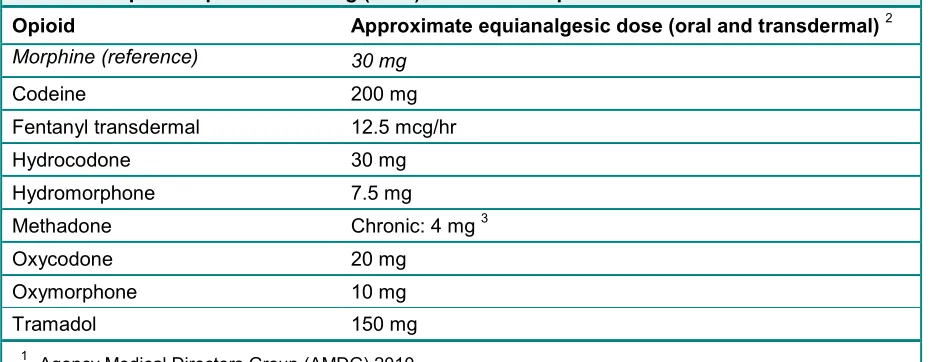
Morphine equivalent dosing (MED)
All conversions between opioids are estimates generally based on “equianalgesic dosing,” or ED. Patient variability in response to these EDs can be large, due primarily to genetic factors and incomplete cross-tolerance. Additionally, methadone has unique characteristics that make it difficult to translate dose to MED.
Table 1. Morphine equivalent dosing (MED) for selected opioids 1
Opioid Approximate equianalgesic dose (oral and transdermal) 2
Morphine (reference) 30 mg
Codeine 200 mg
Fentanyl transdermal 12.5 mcg/hr
Hydrocodone 30 mg
Hydromorphone 7.5 mg Methadone Chronic: 4 mg 3
Oxycodone 20 mg
Oxymorphone 10 mg
Tramadol 150 mg
1 Agency Medical Directors Group (AMDG) 2010.
2 Adapted from VA 2003 and FDA labeling.
3 Equianalgesic dosing ratios between methadone and other opioids are complex, thus requiring slow, cautious conversion (Ayonrinde 2000).
MED calculator online
Maximum acetaminophen dosing
Table 2. Maximum acetaminophen doses for acute and long-term use
Acute use Long-term use Well adults
Maximum single dose 650 mg 1,000 mg
Maximum daily dose 3,000 mg 3,000 mg 1, 2
Elderly patients and patients with alcohol misuse or liver disease
Maximum single dose 650 mg —
Maximum daily dose 1,500 mg 1,000–1,500 mg
1 Patients on 3,000 mg or more of acetaminophen per day should have liver enzymes monitored every 6–
12 months.
2 While FDA acetaminophen dosing recommendations allow for up to 4 grams per day in patients with
normal liver functioning, Group Health COT guidelines do not recommend that patients typically exceed 3 grams per day. Dosing at 4 grams per day confers increased risks of hepatotoxicity, thus providers utilizing doses greater than 3 grams per day should carefully assess patients for benefit and toxicity risks.
Prescribing considerations
Clinicians involved in treating a patient on COT are expected to clarify—both among themselves and for the patient—which clinician holds primary responsibility for prescribing. Chronic non-cancer pain patients should receive all chronic pain management prescriptions from one physician and one pharmacy whenever possible.
Before writing a prescription, clinicians are encouraged to:
- Calculate and document the total morphine equivalent dose; doing this can help assess the magnitude of seemingly small incremental dosage changes over time. See “Morphine equivalent dosing,” p. 3.
- Calculate and document the total acetaminophen dose, including prescribed and over-the-counter, being sure not to exceed the amounts in Table 2 (above).
When writing prescriptions, provide explicit directions:
- Order medication in multiples of 7 days and include “to last __ days.”
- Consider setting up refills on Tuesday through Thursday so that they don’t fall on a Monday or Friday, when patients and/or providers are more likely to be on vacation.
-Providers may prescribe up to 3 months (84 days) of medication for patients who are stable.
- Provide specific instructions (e.g., schedule for taking).
NEVER prescribe long-acting medication on an as-needed basis.
Adverse effects of opioids
Serious side effects may include:
Slowed breathing that can cause death. This is more likely for patients who: have sleep apnea or chronic lung disease; are on higher opioid doses; take more medicine than prescribed; or mix opioids with alcohol, other prescription medicines (such as sleep aids, muscle relaxers, and tranquilizers) or street drugs.
Physical dependence, tolerance or addiction to opioids. Patients with physical dependence will experience withdrawal if they stop suddenly. Patients with tolerance need to take more of the medicine to get the same effect. Patients with addiction are not able to control their use of opioids even if they want to, which may result in harmful outcomes.
Babies born to mothers taking opioids will be dependent on opioids at birth. Women who are trying to get pregnant should not take opioids. Women who become pregnant while taking opioids should consult with their physician to make a plan to stop the medication.
Common side effects may include: Constipation
Depression Fatigue
Itching (a side effect and not an allergic reaction) Nausea or vomiting
Decreased sex drive (decreased testosterone) Low blood pressure
Difficulty with urination Insomnia
Increased sensitivity to pain (hyperalgesia) Impaired immune system
Management of Patients on COT
Note: Opioids should be prescribed only after determining that alternative therapies do not deliver
adequate pain relief (CDC 2010).
Components of a COT visit
1. Encounter
Epic Tip: Use the SmartPhrase .opioidvisit to include all recommended elements of the initial or follow-up COT visit.
When initiating or monitoring chronic opioid therapy, perform and document the following:
Medical screening for issues that affect opioid risk (e.g., pulmonary, cardiac, renal or hepatic disease; obstructive sleep apnea; pregnancy risk)
Patient history and physical exam Pain and function assessment
There are a variety of tools for assessing pain and function. There is no evidence that one is superior to another.
To determine baseline values (when considering initiation) and to assess patients’ ongoing response to COT, Group Health recommends, at a minimum, using the two standard questions below to assess function and pain. The questions are drawn from the Graded Chronic Pain Scale:
1. In the last month, how much has pain interfered with your daily activities? Use a scale from 0 to 10, where 0 is "no interference" and 10 is "unable to carry on any activities." Score interpretation:1–3 = mild pain-related interference; 4–6 = moderate; 7–10 = severe
2. In the last month, on average, how would you rate your pain? Use a scale from 0 to 10, where 0 is "no pain" and 10 is "pain as bad as could be." [That is, your usual pain at times you were in pain.]
Prescription monitoring
Check the patient’s record in the Washington State Prescription Monitoring Program database. This is a central database that keeps track of schedule II–V medications that patients receive at any pharmacy in the state of Washington. We strongly encourage you to check this database before agreeing (or continuing) the use of chronic opioid therapy for a patient. You can sign up for an account on the website. http://www.wapmp.org
Opioid risk assessment with the Opioid Risk Tool
There are a number of validated tools for assessing the potential risks associated with COT. While there is no evidence to support using one tool over another, Group Health recommends using the Opioid Risk Tool (ORT) (see Appendix A and B, pp. 14–15). The ORT is recommended by the Washington State Agency Medical Directors’ Group, commonly used, and available at no cost.
Depression screening with the PHQ-9 (See the Adult and Adolescent Depression Guideline.)
Alcohol use screening as needed with the AUDIT-C (See the Adult Unhealthy Drinking Screening & Intervention Guideline.)
Drug use screening as needed with the Drug Use Questionnaire for Adults (DAST-10).
Urine drug screening
Urine drug screening (UDS) provides objective data regarding patients who are managing chronic pain, and can be used to directly improve patient safety. For their safety, it is important that patients take opioids as prescribed, and this test helps assess whether they are doing that. At Group Health, UDS is for medical purposes only. We do not collect samples for use in a court of law or for workplace testing.
Apart from its use in initiation of COT and in ongoing monitoring, UDS should also be ordered when seeing patients already on COT who are new to the health plan and without records.
It is strongly recommended that the clinician have a discussion with the patient before the UDS that includes:
o The purpose for testing o What will be screened for o What results the patient expects
o Prescriptions or any other drugs the patient has taken o Time and dose of last dose of opioids
o Actions that may be taken based on the results of the screen o Possibility of cost to the patient
Patients should be notified that the results will become part of their permanent medical record.
For more detailed information on urine drug screening, see Appendix C (p. 16).
2. Problem List
Epic Tip: Use the SmartPhrase .opioidproblist to establish and update the problem list.
3. Care Plan
Epic Tip: Use the SmartPhrase .opioidcareplan to include all elements of the treatment plan.
Intensity and frequency of monitoring
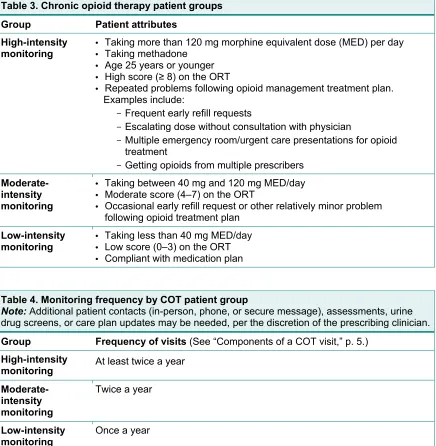
The intensity of monitoring is determined by the “patient attributes” in Table 3. Patients should be placed in the highest-intensity group for which they meet at least one of the criteria.
Table 3. Chronic opioid therapy patient groups
Group Patient attributes High-intensity
monitoring
• Taking more than 120 mg morphine equivalent dose (MED) per day • Taking methadone
• Age 25 years or younger • High score ( 8) on the ORT
• Repeated problems following opioid management treatment plan. Examples include:
- Frequent early refill requests
- Escalating dose without consultation with physician
- Multiple emergency room/urgent care presentations for opioid treatment
- Getting opioids from multiple prescribers
Moderate-intensity monitoring
• Taking between 40 mg and 120 mg MED/day • Moderate score (4–7) on the ORT
• Occasional early refill request or other relatively minor problem following opioid treatment plan
Low-intensity monitoring
• Taking less than 40 mg MED/day • Low score (0–3) on the ORT • Compliant with medication plan
Table 4. Monitoring frequency by COT patient group
Note:Additional patient contacts (in-person, phone, or secure message), assessments, urine
drug screens, or care plan updates may be needed, per the discretion of the prescribing clinician.
Group Frequency of visits (See “Components of a COT visit,” p. 5.)
High-intensity
monitoring At least twice a year
Moderate-intensity monitoring
Twice a year
Low-intensity monitoring
Tapering and Discontinuation
Presurgical tapering
Tapering opioids is not required before surgery, but avoid escalating the dose before surgery. Set appropriate expectations with patients that their pain management needs will be met following surgery, with the understanding that they will return to their preoperative dose (or less) following surgery.
Clinical indications for tapering opioid therapy
In the following circumstances, it may be necessary to adjust or discontinue opioid therapy:
Table 5. Clinical indications for tapering opioid therapy (See Referral Criteria, p. 10.)
Indication Taper method
Medication adverse effects indicate risks are greater than benefit, or
Comorbidities increase risk of complication, or
Morphine equivalent dose exceeds recommended threshold.
10% per week
Function and pain are not improved, or
Tolerance has developed with long-term opioid prescription, or
Comorbidities increase risk of complication.
10% every 2–4 weeks
Urine drug screen is consistent with substance abuse concerns, or
Patient’s behavior suggests possible misuse or diversion of medication. Such behaviors might include:
o Selling prescription drugs
o Forging prescriptions
o Stealing or borrowing drugs
o Frequently losing prescriptions
o Aggressive demand for opioids
o Injecting oral/topical opioids
o Unsanctioned use of opioids
o Unsanctioned dose escalation
o Concurrent use of illicit drugs
o Getting opioids from multiple prescribers
o Recurring emergency department visits for chronic pain management
Rapid discontinuation:
15–33% per day over 3–7 days
and/or
Treatment of Withdrawal Symptoms
When opioids are rapidly discontinued (see Table 5, above) or stopped immediately, withdrawal
symptoms can occur. The typical time course for symptom development depends on the particular opioid used by the patient.
• Short-acting opioids (e.g., heroin or oxycodone): Withdrawal symptoms begin 8–12 hours after last use and peak 48–72 hours after last use.
• Long-acting opioids (e.g., methadone or buprenorphine): Withdrawal symptoms begin more gradually, with a few symptoms in the first 24–48 hours, a peak in symptoms 3–5 days after last use, and some symptoms continuing for up to a few weeks.
While opioid withdrawal is unpleasant, it is not dangerous to patients. Medications for withdrawal symptoms are listed in Table 6 below.
Table 6. Medications used to treat symptoms during gradual taper
Target symptoms Medication Dosing
Hypertension, tremors, sweats, anxiety, restlessness
Clonidine 1 0.1 mg three times daily as needed for 3 days
Anxiety, restlessness Hydroxyzine 2 or
Diphenhydramine 2
25 mg every 6 hours as needed
Insomnia Hydroxyzine 2 or
Diphenhydramine 2
25–50 mg daily at bedtime as needed
Nausea/vomiting Promethazine 2 25 mg every 6 hours as needed Metoclopramide 10 mg every 6 hours as needed
Dyspepsia Calcium carbonate 500 mg 1–2 tabs every 8 hours as needed Mylanta, Milk of Magnesia Follow package instructions.
Pain, fever Acetaminophen (Tylenol) 500 mg every 4 hours (not to exceed 3 g/24 hours)
Ibuprofen 400 mg every 4 hours as needed
Diarrhea Loperamide 4 mg initially, then 2 mg every loose stool as needed
Diphenozyphenolate/Atropine 5 mg/0.05 mg every 6 hours as needed Muscle spasm Methocarbamol 1,000 mg every 6 hours as needed
1 Clonidine is not FDA-approved for this use, although evidence supports use in this setting. Group Health
recommends clonidine as the first-line agent, as it is effective in many patients. As a non-opioid treatment option, it is readily available statewide and does not have extra restrictions on prescribing. Monitor blood pressure and pulse. Dosing of clonidine depends on whether patient is acutely withdrawing or gradually being tapered.
Referral Criteria
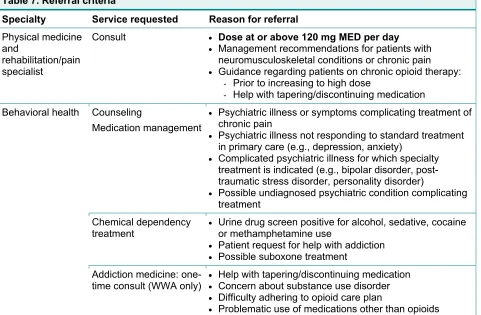
Table 7. Referral criteria
Specialty Service requested Reason for referral
Physical medicine and
rehabilitation/pain specialist
Consult Dose at or above 120 mg MED per day
Management recommendations for patients with neuromusculoskeletal conditions or chronic pain Guidance regarding patients on chronic opioid therapy:
- Prior to increasing to high dose
- Help with tapering/discontinuing medication
Behavioral health Counseling
Medication management
Psychiatric illness or symptoms complicating treatment of chronic pain
Psychiatric illness not responding to standard treatment in primary care (e.g., depression, anxiety)
Complicated psychiatric illness for which specialty treatment is indicated (e.g., bipolar disorder, post-traumatic stress disorder, personality disorder)
Possible undiagnosed psychiatric condition complicating treatment
Chemical dependency
treatment Urine drug screen positive for alcohol, sedative, cocaine or methamphetamine use Patient request for help with addiction
Possible suboxone treatment Addiction medicine:
one-time consult (WWA only)
Help with tapering/discontinuing medication Concern about substance use disorder Difficulty adhering to opioid care plan
Problematic use of medications other than opioids
Evidence Summary and References
Methods and sources
To develop the Chronic Opioid Therapy Safety guideline, Group Health has:
Considered recommendations from externally developed evidence-based guidelines and/or recommendations of organizations that establish community standards.
Reviewed additional literature using an evidence-based process, including systematic literature search, critical appraisal, and evidence synthesis.
Externally developed guidelines considered
2013 American Society of interventional Pain Physicians (ASIPP) 2013 Washington State Department of Labor & Industries (L&I) 2013 Institute for Clinical Systems Improvement (ICSI)
2011 American College of Occupational and Environmental Medicine (ACOEM) 2010 Veterans Affairs & Department of Defense (VA/DoD)
2010 Kaiser Permanente (KP)
2010 Agency Medical Directors group (AMDG)
2010 Canadian National Opioid Use Guideline Group (NOUGG)
2009 American Pain Society & American Academy of Pain Medicine (APS/AAPM)
Additional evidence review
The Group Health guideline team reviewed additional evidence in the following areas: Urine drug testing
Indications for long-term opioid use Screening tools
Urine drug testing
The literature search did not reveal any randomized controlled trials (RCTs) that examined the effect of urine drug screening on clinical outcomes, on compliance with chronic opioid therapy, or on reducing aberrant drug-related behavior. There were also no published trials that compared random urine testing with routine testing. The published studies on urine drug testing had methodological limitations.
Indications for long-term opioid use
Studies examining the long-term efficacy of opioid therapy were rare. One Cochrane review, completed in 2010, examined the safety and effectiveness of long term opioid management (defined as 6 months) for chronic non-cancer pain. Data from 26 studies including 4,893 participants were pooled and analyzed. With only one RCT included in analysis and the remainder of studies comprised of case series or uncontrolled trials, the evidence for improvement in quality of life and function was inconclusive and provided only weak evidence to support pain relief in well-selected patients (Nobel 2010).
Screening tools
References
Agency Medical Directors’ Group. Interagency Guideline on Opioid Dosing for Chronic Non-cancer Pain. Washington State Agency Medical Directors’ Group: 2010. Available online at
http://www.agencymeddirectors.wa.gov/Files/OpioidGdline.pdf. Accessed July 16, 2014.
Ayonrinde OT, Bridge DT. The rediscovery of methadone for cancer pain management. Med J Aust. 2000 Nov 20;173(10):538–540.
Centers for Disease Control and Prevention. Adult use of prescription opioid pain medications—Utah, 2008. MMWR. 2010 Feb. 19;59(06)153–157. Available online at
http://www.cdc.gov/mmwr/preview/mmwrhtml/mm5906a1.htm. Accessed July 16, 2014.
Chou R, Fanciullo GJ, Fine PG, et al; American Pain Society-American Academy of Pain Medicine Opioids Guidelines Panel. Clinical guidelines for the use of chronic opioid therapy in chronic noncancer pain. J Pain. 2009 Feb;10(2):113–130.
Food and Drug Administration. FDA announces safety labeling changes and postmarket study
requirements for extended-release and long-acting opioid analgesics [news release]. Silver Spring, MD: U.S. Food and Drug Administration; September 10, 2013.
http://www.fda.gov/NewsEvents/Newsroom/PressAnnouncements/ucm367726.htm. Accessed July 16, 2014.
Nobel M, Treadwell JR, Tregear SJ, et al. Long-term opioid management for chronic noncancer pain. Cochrane Database of Systematic Reviews. 2010, Issue 1. Art. No.: CD006605.
DOI:10.1002/14651858.CD006605.pub2.
Washington State Department of Health, Medical Quality Assurance Commission. Guidelines for the Management of Pain. 1996.
Guideline Development Process and Team
Development process
This guideline was adapted from externally developed evidence-based guidelines and organizations that establish the community standards for chronic opioid therapy for chronic non-cancer pain. The Group Health guideline team reviewed additional evidence using an evidence-based process, including systematic literature search, critical appraisal, and evidence synthesis. For details, see Evidence Summary and References.
This edition of the guideline was approved for publication by the Guideline Oversight Group in August 2014.
Team
The following specialties were represented on the development and/or update team: behavioral health, clinical laboratory, family medicine, pharmacy, and physical medicine and rehabilitation.
Clinician lead: Chris Thayer, MD, Medical Director of Clinical Knowledge and Support, [email protected]
Guideline coordinator: Avra Cohen, MN, Clinical Improvement & Prevention, [email protected]
Randi Beck, MD, Physical Medicine and Rehabilitation
Ryan Caldeiro, MD, Chemical Dependency Services, Behavioral Health Marty Levine, MD, Family Medicine
Quinn Jenkins, MPH, Clinical Epidemiologist, Clinical Improvement & Prevention
Robyn Mayfield, Patient Health Education Resources, Clinical Improvement & Prevention Kim Riddell, MD, Clinical Lab
Grant Scull, MD, Family Medicine
Ann Stedronsky, Clinical Publications, Clinical Improvement & Prevention Melissa Sturgis, PharmD, BCACP, Pharmacy
Disclosure of conflict of interest
Group Health Cooperative requires that team members participating on a guideline team disclose and resolve all potential conflicts of interest that arise from financial relationships between a guideline team member or guideline team member's spouse or partner and any commercial interests or proprietary entity that provides or produces health care–related products and/or services relevant to the content of the guideline.
Appendix A. Opioid Risk Tool (ORT)
Date
Patient Name
OPIOID RISK TOOL
Mark each box that
applies
Item score if female
Item score if
male
1. Family History of Substance Abuse Alcohol 1 3
Illegal Drugs 2 3
Prescription Drugs 4 4
2. Personal History of Substance Abuse Alcohol 3 3
Illegal Drugs 4 4
Prescription Drugs 5 5
3. Age (Mark box if 16–45) 1 1
4. History of Preadolescent Sexual Abuse 3 0
5. Psychological Disease Attention Deficit Disorder, Obsessive Compulsive
Disorder, Bipolar, Schizophrenia
2 2
Depression 1 1
TOTAL _______ ________
Appendix B. Opioid Risk Tool (ORT) Scoring
Total Score Risk Category Low Risk 0–3
Moderate Risk 4–7 High Risk > 8
Appendix C. Urine Drug Screening
Specimen collection and integrity
To reduce the risk of adulteration, all specimens must be collected in the provider’s office or the laboratory. Group Health does not test specifically for adulteration but will reject samples with strange odors.
Dilute urines
Dilute urine is defined as a creatinine less than 20 mg/dL. A dilute sample could lead to a false negative result on a drug screen. Known causes of dilute samples include the following: diuretics, excessive water intake prior to the test, diabetes insipidus, anemia, muscle wastage of any kind, leukemia, or a vegetarian diet. Diabetes has a characteristic clinical presentation with hypertension and electrolyte abnormalities. In a patient with a history of normal labs, this result would be unexpected and evaluated as such.
Table C1. Urine drug screens for routine management – Western Washington
There are two drug screens available to order in Epic. The Opioid Management UDS is recommended for routine management of this patient population. (For drug abuse/urgent needs only, see Table C.) Epic order code: GHL4252
Opioid Management UDS
Only available on a routine basis. Not available as STAT. Recommended for: Patients on chronic opioid therapy
Additional information: This panel automatically orders a test for opiates at a lower
therapeutic level with reported metabolites for all orders. In addition, it screens for methadone and other drugs, with a confirmation test at an outside reference lab for all positives, except THC and TCA.
THC confirmation must be ordered in addition to opioid management UDS.
TCA cannot be confirmed on urine specimen. Provider must follow up with serum TCA confirmatory test.
Initial opiate screen: 300 ng/mL
All are automatically sent to an outside lab for testing at the lower therapeutic level.
Initial oxycodone screen: 100 ng/mL
All are automatically sent to an outside lab for testing at the lower therapeutic level.
Reflex test cut-off for opiates: 20 ng/mL
Sent to outside reference lab. Reflex test cut-off for oxycodone: 20 ng/mL
Sent to outside reference lab.
Screen includes: Amphetamine
Methamphetamine MDMA
Cocaine Opioids Barbiturates
Benzodiazepines Methadone THC (marijuana) PCP
TCA
Turnaround time: 3 days (to allow for outside testing)
Table C1. Urine drug screens for routine management – Western Washington, continued
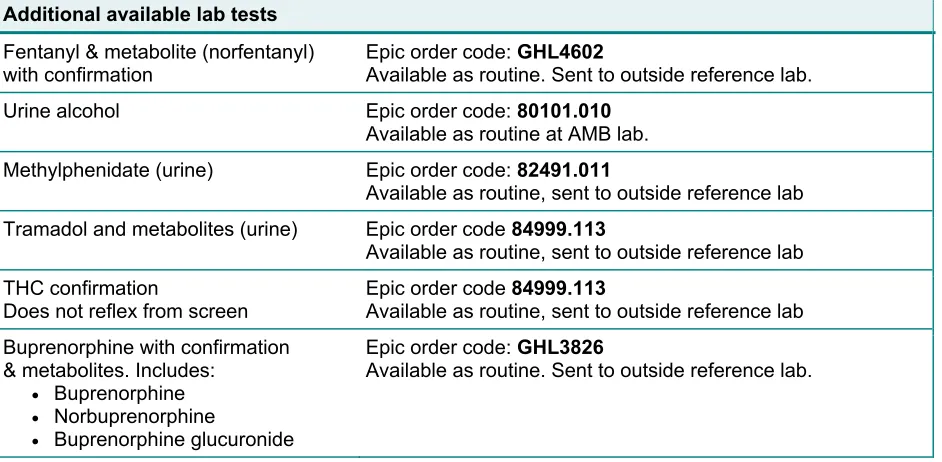
Additional available lab tests
Fentanyl & metabolite (norfentanyl)
with confirmation Epic order code: Available as routine. Sent to outside reference lab. GHL4602 Urine alcohol Epic order code: 80101.010
Available as routine at AMB lab. Methylphenidate (urine) Epic order code: 82491.011
Available as routine, sent to outside reference lab Tramadol and metabolites (urine) Epic order code 84999.113
Available as routine, sent to outside reference lab THC confirmation
Does not reflex from screen
Epic order code 84999.113
Available as routine, sent to outside reference lab Buprenorphine with confirmation
& metabolites. Includes: Buprenorphine Norbuprenorphine
Buprenorphine glucuronide
Epic order code: GHL3826
Available as routine. Sent to outside reference lab.
Table C2. Urine drug screens for routine management – Eastern Washington
There are four PAML drug screens (Pain Management 7, 10, 13, 17) available to order in Epic. The PAML Pain Management 10 Panel is recommended for routine management of this patient population.
Epic order code: 80101.Z183
Pain Management 10 Panel
Only available on a routine basis. Not available as STAT. Recommended for: Patients on chronic opioid therapy
Additional information: This panel automatically confirms positive screen results without additional charges.
Reflex test cut-off for opioids: 20 ng/mL
Screen includes: Alcohol
Amphetamine Methamphetamine THC (marijuana) Cocaine
Opioids
Propoxyphene Barbiturates Benzodiazepines Methadone PCP
Turnaround time: 2 days
Additional available lab screens
Fentanyl & metabolite (norfentanyl)
with confirmation Epic order code: Available as routine. 83925.Z26
MDMA Epic order code: 80100.Z55
Available as routine.
TCA (Serum Specimen) Epic order code: 80299.Z16
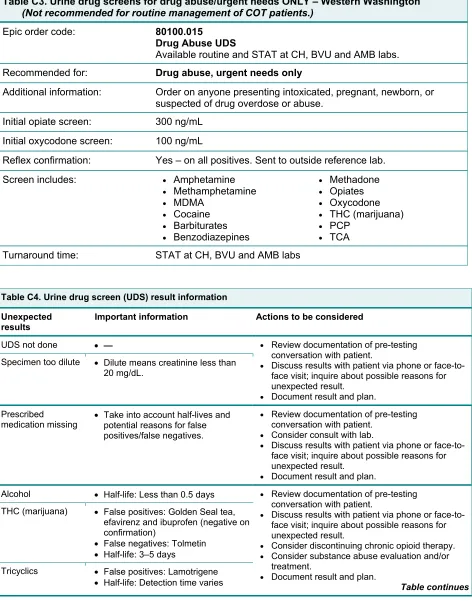
Table C3. Urine drug screens for drug abuse/urgent needs ONLY – Western Washington
(Not recommended for routine management of COT patients.)
Epic order code: 80100.015 Drug Abuse UDS
Available routine and STAT at CH, BVU and AMB labs. Recommended for: Drug abuse, urgent needs only
Additional information: Order on anyone presenting intoxicated, pregnant, newborn, or suspected of drug overdose or abuse.
Initial opiate screen: 300 ng/mL
Initial oxycodone screen: 100 ng/mL
Reflex confirmation: Yes – on all positives. Sent to outside reference lab.
Screen includes: Amphetamine
Methamphetamine MDMA Cocaine Barbiturates Benzodiazepines Methadone Opiates Oxycodone THC (marijuana) PCP TCA Turnaround time: STAT at CH, BVU and AMB labs
Table C4. Urine drug screen (UDS) result information
Unexpected results
Important information Actions to be considered
UDS not done — Review documentation of pre-testing
conversation with patient.
Discuss results with patient via phone or face-to-face visit; inquire about possible reasons for unexpected result.
Document result and plan. Specimen too dilute Dilute means creatinine less than
20mg/dL.
Prescribed
medication missing Take into account half-lives and potential reasons for false positives/false negatives.
Review documentation of pre-testing conversation with patient.
Consider consult with lab.
Discuss results with patient via phone or face-to-face visit; inquire about possible reasons for unexpected result.
Document result and plan.
Alcohol Half-life: Less than 0.5 days Review documentation of pre-testing conversation with patient.
Discuss results with patient via phone or face-to-face visit; inquire about possible reasons for unexpected result.
Consider discontinuing chronic opioid therapy. Consider substance abuse evaluation and/or treatment.
Document result and plan.
Table continues THC (marijuana) False positives: Golden Seal tea,
efavirenz and ibuprofen (negative on confirmation)
False negatives: Tolmetin Half-life: 3–5 days
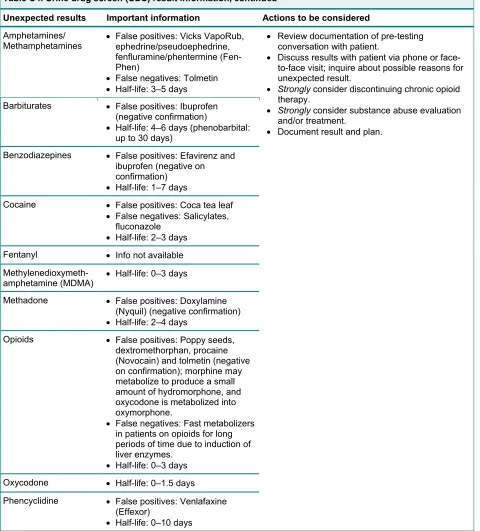
Table C4. Urine drug screen (UDS) result information, continued
Unexpected results Important information Actions to be considered
Amphetamines/
Methamphetamines False positives: Vicks VapoRub, ephedrine/pseudoephedrine, fenfluramine/phentermine (Fen-Phen)
False negatives: Tolmetin Half-life: 3–5 days
Review documentation of pre-testing conversation with patient.
Discuss results with patient via phone or face-to-face visit; inquire about possible reasons for unexpected result.
Strongly consider discontinuing chronic opioid therapy.
Strongly consider substance abuse evaluation and/or treatment.
Document result and plan. Barbiturates False positives: Ibuprofen
(negative confirmation)
Half-life: 4–6 days (phenobarbital: up to 30 days)
Benzodiazepines False positives: Efavirenz and ibuprofen (negative on confirmation)
Half-life: 1–7 days
Cocaine False positives: Coca tea leaf False negatives: Salicylates,
fluconazole Half-life: 2–3 days Fentanyl Info not available
Methylenedioxymeth-amphetamine (MDMA) Half-life: 0–3 days
Methadone False positives: Doxylamine (Nyquil) (negative confirmation) Half-life: 2–4 days
Opioids False positives: Poppy seeds, dextromethorphan, procaine (Novocain) and tolmetin (negative on confirmation); morphine may metabolize to produce a small amount of hydromorphone, and oxycodone is metabolized into oxymorphone.
False negatives: Fast metabolizers in patients on opioids for long periods of time due to induction of liver enzymes.
Half-life: 0–3 days Oxycodone Half-life: 0–1.5 days Phencyclidine False positives: Venlafaxine
(Effexor)