R E S E A R C H
Open Access
The phenotypic impact of the male-specific
region of chromosome-Y in inbred mating:
the role of genetic variants and gene
duplications in multiple inbred rat strains
Jeremy W. Prokop
1,2,3*, Shirng-Wern Tsaih
2, Allison B. Faber
2,3, Shannon Boehme
4, Adam C. Underwood
5,
Samuel Troyer
4, Lauren Playl
4, Amy Milsted
4, Monte E. Turner
4, Daniel Ely
4, Almir S. Martins
6, Marek Tutaj
2,
Jozef Lazar
1,2,3, Melinda R. Dwinell
2,3and Howard J. Jacob
1,2,3Abstract
Backgound:The male-specific region of chromosome-Y (MSY) contributes to phenotypes outside of testis
development and has a high rate of evolution between mammalian species. With a lack of genomic crossover, MSY is one of the few genomic areas under similar variation and evolutionary selection in inbred and outbred animal populations, allowing for an assessment of evolutionary mechanisms to translate between the populations.
Methods:Using next-generation sequencing, MSY consomic strains, molecular characterization, and large-scale phenotyping, we present here regions of MSY that contribute to inbred strain phenotypes.
Results:We have shown that (1) MSY of rat has nine autosomal gene transposition events with strain-specific selection; (2) sequence variants in MSY occur with a 1.98-fold higher number of variants than other chromosomes in seven sequenced rat strains; (3)Sry, the most studied MSY gene, has undergone extensive gene duplications, driving ubiquitous expression not seen in human or mouse; (4) the expression profile ofSryin the rat is driven by the insertion of theSry2copy into an intron of the ubiquitously expressed Kdm5d gene in antisense orientation, but due to several loss of function mutations in theSry2protein, nuclear localization and transcriptional control are decreased; (5) expression ofSrycopies other thanSry2in the rat overlaps with the expression profile for humanSRY; (6) gene duplications and sequence variants (P76T) ofSrycan be selected for phenotypes such as high blood pressure and androgen receptor signaling within inbred mating; and most importantly, (7) per chromosome size, MSY contributes to higher strain-specific phenotypic variation relative to all other chromosomes, with 53
phenotypes showing both a male to female and consomic cross significance.
Conclusion:The data presented supports a high probability of MSY genetic variation altering a broad range of inbred rat phenotypes.
Keywords:MSY,Rattus norvegicus, Inbred mating,Sry,Med14y,Ube2q2y, Gene duplications, Phenotypic variation
* Correspondence:[email protected]
1
HudsonAlpha Institute for Biotechnology, 601 Genome Way, Huntsville, AL 35806, USA
2Human and Molecular Genetics Center, Medical College of Wisconsin,
Milwaukee, WI 53226, USA
Full list of author information is available at the end of the article
Background
Recent analysis of the male-specific region of chromosome-Y (MSY) has identified a core set of genes found throughout mammalian evolution [1]. While many of these genes contribute to classical sex determination and testis function in mammals, they add-itionally contribute to the maintenance of X-Y gene ex-pression levels and numerous sex disparities in diseases [2, 3]. The association of human age-related loss of MSY with mortality age in males [4], in combination with a ubiquitous expression profile for several human MSY genes [3], signifies functional importance of genes resid-ing on MSY to normal biological functions outside of sex determination. Disease associations for MSY include cardiovascular disorders, asthma, autoimmune disorders, birth defects, neurological/psychiatric disorders (includ-ing schizophrenia and Parkinson disease), and many cancers [3, 5]. Due to the lack of the MSY to undergo re-combination, it is one of the largest linkage disequilib-rium (LD) blocks within the human genome; therefore, identifying the causal variants from haplotypes is very difficult using human genomics alone, making it as diffi-cult as autosomal variant analysis before the completion of the 1000 Genomes Project. With the complex genet-ics of the MSY, research into this field has also been slo-wed by the lack of animal congenic mapping and the lack of high-throughput characterizations in MSY animal consomic models.
However, the high mutation rate within MSY and an identical inheritance pathway between outbred and in-bred animals could allow for comparative genomics in animal models to help identify MSY genes that are in-volved in phenotypes outside of sex determination, and therefore could be used to look for variants in human that contribute to disease. To date, no animal models with both genetics and high-throughput phenotyping have been developed to study these broad phenotypic contributions of MSY genetics.
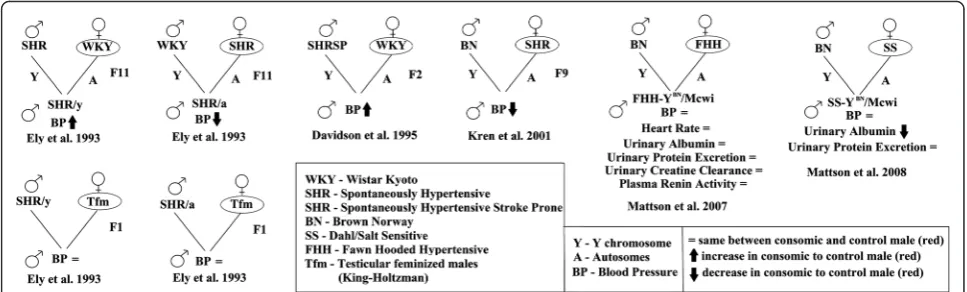
Sex differences in cardiovascular disease have been shown previously [6]. MSY haplotypes in human correl-ate with increased risk of coronary artery disease and blood pressure [7, 8]. The rat (Rattus norvegicus) has been a model organism for MSY contributions to blood pressure regulation for 25 years [9], but has lacked MSY sequence information until 2014, making it impossible to determine mechanisms of MSY phenotypic contribu-tions. Consomic rats generated introgressing MSY be-tween common strains of rats by our group and others for SHR to WKY [10], WKY to SHR [10], SHRSP to WKY [11], BN to SHR [12], BN to FHH [13], and BN to SS [14] have suggested strain-specific contributions of the rat MSY to blood pressure and kidney function (Fig. 1, strain abbreviations can be found in the figure). An interplay between MSY and androgen receptor signaling
has been previously suggested for the SHR blood pres-sure regulation [10]. An F1 cross of the SHR/y (consomic of the SHR MSY onto WKY autosomes) to the testicular feminized rat (Tfm) repressed the role of MSY on blood pressure [10], but no understanding of the mechanisms behind this has yet been discovered.
Due to a high mutation rate of MSY, combined with a lack of chromosomal crossover, it is hypothesized that many inbred rat strains have had genetic variants on MSY selected upon for phenotypic traits such as blood pressure. These genetic variants of rat MSY may influence similar genes as those involved in human disease or MSY evolu-tion throughout speciaevolu-tion, allowing researchers to nar-row down the large human haplotype block to individual genes involved in these processes. As the rat commonly serves as a model for understanding sex differences through hormones, it is critical to define the genetics of strain-specific changes that may also serve to alter sex dif-ferences, resulting in a fuller understanding of both gen-etic and hormone contributions to sex differences in our model organisms. Therefore, we have undertaken an ana-lysis of MSY genes in the most commonly researched strains of rat, which have previously had autosomal ge-nomes sequenced [15]. The characterization of genes within rat MSY, variants within multiple inbred lines, mo-lecular characterization of several protein-coding variants, and a large-scale analysis of MSY phenotyping for several strains will contribute to future development of animal models to study the role of MSY genes.
Methods
Utilizing the SNVs in the male to female genome ana-lyses below, SNVs were identified that are within 20 bases of each other for the various male-specific SNVs. These sites then had a BLAST analysis done against HTGS files of the rat to confirm they are present on chromosome-Y BAC sequences. Then using these se-quences with the SNVs (Additional file 1: Table S1), the 160 male RNAseq files of the Rat BodyMap were ana-lyzed for tissue expression using BLAST with the above parameters.
Analysis of whole-genome sequencing data for chromosome-Y SNVs and indels
The DNA of seven male rat genomes (ACI, FHH, FHL, SBH, SBN, SR, and SS) was sequenced with the Illumina HiSeq2000 platform (Illumina, Inc., San Diego, CA) at the Medical College of Wisconsin. The Rnor_6.0 rat assembly containing the SHR/Akr chromosome-Y was ob-tained and indexed with BWA (version 0.7.7). Paired-end reads of each male rat genome were aligned to Rnor_6.0 reference sequences with BWA-MEM (version 0.7.7). Read pairing information and flags in the alignment were further cleaned up with fixmate in SAMtools (version 1.1). Duplicates were marked with Picard (version 1.108) prior to variant detection. Variants were called using the Genome Analysis Toolkit (GATK) UnifiedGenotyper (version 3.2.2) with the parameter setting suggested by the best practice (https://www.broadinstitute.org/gatk/guide/ best-practices?bpm=DNAseq).
DNA analysis for chromosome-Y genes in multiple rat strains
Analysis of Sry copies in genomic DNA reads of eight male rat strains (SHR- ERR224462, WKY- ERR224468, FHH- ERX199109, FHL- ERX199110, ACI- ERX199106, SR- ERX199124, SS- ERX199126, Fischer 344- ERR224448)
was performed by BLAST analysis of SRA files using Sry-specific SNVs to differentiate the multiple copies (Additional file 1: Table S1). One female genome (LE-ERR224452) was used as a negative control.
Whole-genome sequence reads from 20 inbred rat strains (BBDP, LE/Stm, MHS, MNS, WAG, ACI, F344/ NCrl, FHH, FHL, LEW, LEW/NClrBR, LH, LL, LN, SBH, SBN, SHRSP/Gla, SR/Jr, SS/Jr, SS_JrHsdMcwi) were aligned to the rat reference genome Rnor_5.0 (lacking MSY) using BWA, and SNVs were identified in all samples using GATK. The ratio of alternative to ref-erence reads in each strain was calculated from the GATK variant calls to determine zygosity at each locus. With a compiled list of SNVs, we also determined if the genomic DNA sequenced for each of these 20 strains was male (and male contaminated female) or female with BLAST analysis of the reads using theSry1 coding sequence. In order to identify male-specific SNVs in the whole genome, those genomes that were female were then set to allele frequency of 0 % for SNVs while the male genomes were set to anything between 0.1 and 99.9 %. Additionally, we choose to identify strain-specific SNVs in the males again using 0 % allele fre-quency for the female genomes, setting one male allele frequency at a time to 0 %, and setting all other male allele frequency to 0.1–99.9 %. For each variant, the average allele frequency was calculated for all male rat strains for each SNV and then averaged over the mul-tiple SNVs located within a single gene, calculating the standard error of the mean (SEM) of the later.
stored at−80 °C until use. RNA was isolated using RNA STAT 60 (Tel-Test Inc, Friendswood, TX) and precipi-tated with isopropanol. The removal of residual DNA from RNA samples by DNase was carried out using TURBO DNA-free DNase enzyme (Ambion, Waltham, MA). RNA concentration and quality was determined with a Nanodrop ND-1000 Spectrophotometer. Reverse transcription of RNA was performed with ArrayScript Reverse Transcriptase (Ambion) and RtallS-A primer (5′- GGACAGTAAGTAGGTTAGCT-3′) that isSryand strand specific. Real-time PCR was performed with SYBR Green (Applied Biosystems, Waltham, MA) using Sry L (5′-GCG CCC CAT GAA TGC AT-3′) andSry R (5′-TGG GAT TCT GTT GAG CCA ACT-3′) primer set on an ABI Prism 7700 Real-Time PCR System.ΔCT values were analyzed via two-way ANOVA, tissue by strain with age and rat number as random effects, followed by Tukey post hoc test. Differences were con-sidered significant at P< 0.05. Fragment analysis was performed as previously described [17]. In short, using the cDNA of above following by PCR reactions with GoTaq Flexi DNA Polymerase (Promega, Fitchburg, WI) with 5'S2L (5′-CCA TCT CTG ACT TCC TGG TTG-3′) and RtallS-B (5′-AGT AGG TTA GCT GCT GCT AG-3′) primers. The amplicon was then labeled with three separate PCR reactions to differentiate the copies using NED-*P1mod(5′-GAA TGC ATT TAT GGT GTG GTC CCG-3′) with S1502G1rev(5′-TAG TGG AAC TGG TGC TGC TG-3′), dCAP-Sry1 HindIII(5′-AGA
ATT CAG AGA TCA GCA AGC T-3′) with
S1502G1rev*-VIC(5′-TAG TGG AAC TGG TGC TGC TG-3′), and 5'S2L with M1*-FAM(5′-TTT GTT GAG GCA ACT TCA CGC TGC-3′). The dCAP reaction was digested with HinfI restriction enzyme. Samples were run on an Applied Biosystems 3130xl Genetic Analyzer using 5.5 % v/v GeneScan LIZ 600 sizing standard (Applied Biosystems). Data was interpreted with GeneMapper version 4.0.
SRY2 luciferase and cellular localization studies
The Sry responsive luciferase reporter, pGL3/AR600, was produced by amplifying and inserting 590 bases of 5′ UTR from rat androgen receptor, isolated from a single ♂SHR/y rat with primers 5′-GTA CCA TGG TTT AGC TTG TCT CTA GCT TCC ACC-3′and 5′ -CAC CCG GGT AAC TCC CTT TGG CTG A-3′. Amplicons were cleaved using endonucleases NcoI and SmaI, and the resulting restriction fragments were then gel extracted and inserted into pGL3 vector (Promega) opened with the same enzymes. Assembly of all native pEF1/Sry1, 2, and 3 effector constructs and truncated or site spe-cifically mutated effector constructs was generated.
Chinese hamster ovary (CHO) cells were cultured at 37 °C in HAM’s F12K medium (Sigma-Aldrich, St. Louis,
MO) supplemented with 10 mM HEPES and 10 % FBS (Atlanta Biologicals) in a humidified atmosphere with 5 % CO2. Prior to cotransfection, cells were seeded to
24-well cassettes (6.6 × 10³cells/cm2) and incubated for 16 h. Each well was transiently cotransfected with 50 ng effector plasmid, 500 ng firefly luciferase reporter (pGL/ AR600), and 500 pg of control construct, phRL-null Renilla (Promega), using SuperFect transfection reagent (Qiagen, Venlo, Netherlands) following the manufac-ture’s protocol. After 24 h incubation, CHO cells were processed for luciferase activity using the reagents and protocol provided in the Dual-Luciferase® Reporter (DRL™) Assay System (Promega). Luciferase to Renilla ratios were obtained from measurements collected on a Turner Biosystems 20/20n luminometer and were used to calculate pGL3/AR600 reporter activity of each Sry effector construct relative to reporter activity obtained from CHO transfected with an pEF1/Myc C vector con-taining no insert. Data reported represent means ± SEM of three trials conducted in triplicate with each Sry effector construct. Statistical analysis was performed by using one-way ANOVA and a post hoc Student-Newman-Kuels test and Student’s t test where applic-able. Analyses were run on SigmaStat software (Jandel Scientific, San Rafael, CA) with significance assumed at P< 0.05.
diluted in a blocking solution at 1:300 and 1:1000, re-spectively. After a 1-h incubation at 22 °C, blots were washed in PBS, following a 1-h incubation with a don-key anti-goat HRP conjugate (Bethyl Laboratories) di-luted to 1:3000 in blocking solution. Bands were detected using SuperSignal West Pico Chemiluminescent substrate (Thermo Fisher Scientific Inc.) and visualized with a Kodak 2200 Gel Logic Imaging system. All assays included a control lane containing cell extracts obtained from cells transfected with an expression vector contain-ing no insert.
Protein modeling
Models for the nonHMGSry protein were generated using the ab initio modeling server Quark [18]. Each of the top five models were run for 10 ns of molecular dy-namic simulations using YASARA with the Amber03 force field [19], 0.997 g/mL water, pKa of 7.4, and mass fraction of 0.9 %. The Z-score, wrong isomers, and cis-peptide bonds were calculated using the YASARA2 force field. Combining these calculations with the analysis of movement throughout the molecular dy-namic simulations, the models were ranked to deter-mine the most likely structure. The nonHMGSry protein sequence was also analyzed for functional mo-tifs using ELM [20].
SRY-AR synergistic regulation assay
Luciferase assays on the Sry1 and AR600 promoters were performed and analyzed as previously published [21]. The SRY/AR synergistic regulation experiments were performed using charcoal stripped fetal bovine serum (Innovative Research, Novi, MI) with or without the addition of 100 nM testosterone (Sigma-Aldrich). The hSRY P131T corresponds to the variation seen in SRY1 (P76) to SRY3 (T76) [22]. Androgen receptor (AR) expression vector was purchased from ATCC (vector #80005, hARa [CL7a-AR 160–910]). For each transfec-tion, 100 ng of expression vector was used per well with single protein expressions using 50 ng of vector (hSRY, AR, or P73T) with 50 ng of empty vector and double transfections (hSRY/P131T with AR) using 50 ng of each. All constructs were sequence confirmed on an ABI 3130xl using BigDye Terminator v3.1.
Sry3 electroporation and blood pressure studies
A total of ten animals (normotensive WKY rats) were used for three experimental groups. There were three empty vector animals and seven Sry3-treated animals. All of the empty vector animals and four of the Sry3 animals received drug treatment with olmesartan medoxomil. Animals received a standard 12-h light/ dark cycle and were given standard rat chow (22.5 % protein, 52 % carbohydrate, and 6 % fat by weight,
Prolab 3000, Agway, Syracuse, NY) and water ad libi-tum. Rats were individually housed in polycarbonate cages (48 cm × 27 cm × 20 cm) with heat‐treated bedding (Sani Chips, R.J.Murphy, Rochelle Park, NJ). Cage changes were performed once a week, scheduled so as not to inter-fere with blood or urine sampling.
Animals were implanted with an aorta telemetry device (model-PAC40; Data Sciences International, St. Paul, MN), and baseline measurements of systolic pressure, diastolic pressure, heart rate, and activity were collected (RPC-1 and Dataquest A.R.T., Data Sciences International). All animals were monitored for telemetry measurements throughout the study, at 30‐min intervals, except for the 24‐h periods that animals spent in metabolic cages. Animals were allowed to recover from telemetry surgery for 1 week be-fore a baseline metabolic cage study was done.
All animals were injected and electroporated with PEF1(−) or PEF1/Sry3 (25μg) into the left kidney as pre-viously performed [23], which represents day 1 of the study. On day 6, the first 24‐hour urine was taken followed by the first plasma sample on day 8. On day 14, animals were given sham- or olmesartan-treated drinking water. The drug was given for 1 week total, and on day 17, a second 24‐h urine was taken followed by a second plasma on day 19. Drug treatment was then stopped and time was given to allow the drug to leave the system. On day 25, a final 24‐h urine was collected followed by a final plasma sample on day 27. All the above animal experi-ments were approved by the University of Akron IACUC.
Phenotype analysis of BNxFHH and BNxSS consomic panels The chromosome-Y consomic rats were generated as part of the PhysGen Program for Genomic Applications (http://pga.mcw.edu). Detailed phenotyping protocols are posted on the website. Briefly, six phenotyping protocols (Lung, Respiratory, Cardiac, Renal, Vascular, Biochemistry) were run in parallel using ten male and ten female rats per protocol. Rats were studied between 6 and 10 weeks of age and under control conditions or under diet or en-vironmental stress. The consomic rats were studied using the same protocols and quality controls as pre-viously described [24]. Phenotypes listed to significantly differ were determined using adjustedP values <0.05 in the consomic strain (for example SS-YBN/Mcwi) com-pared to the parental strain (for example the SS). The adjustedPvalues were calculated by the Mann-Whitney test followed by a Bonferroni adjustment for multiple tests. All animal experiments were approved by the Medical College of Wisconsin IACUC.
Results
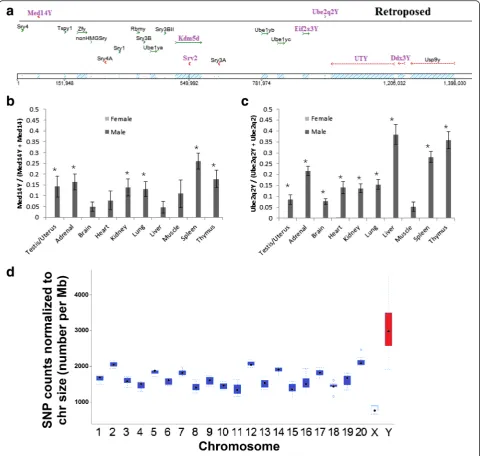
confirmed in rat [2] and thus would be primary MSY genes of interest in translatable human disease. All nine conserved genes are expressed in rat testis, with five genes (Eif2s3y, Ddx3y, Uty, Kdm5d, and Sry) expressed in all ten male tissues of the Rat BodyMap project (Table 1).Sryis well known to have undergone gene du-plication, with variants defining 11 genes: Sry1, Sry2, Sry3, Sry3A, Sry3B, Sry3BI, Sry3BII, Sry3C, Sry4, Sry4A, andnonHMGSry[21]. Most of these SNPs for individual Sry genes could be mapped onto the rat MSY sequence relative to other human shared genes (Fig. 2a).
Autosomal gene duplications onto the rat MSY
While identifying Sry copies in the SHR MSY sequence, we found transposable elements were likely causal for duplication of Sry genes and also identified two non-MSY genes, Med14Yand Limd2Y, that have been dupli-cated from the X chromosome and autosomes onto the rat MSY [21]. However, the confirmation of these and other duplicated genes onto rat MSY is difficult due to repetitive sequence. To confirm duplicated genes, we developed a novel sequence analysis, comparing variants of genes identified in males but not females, using whole-genome sequencing.
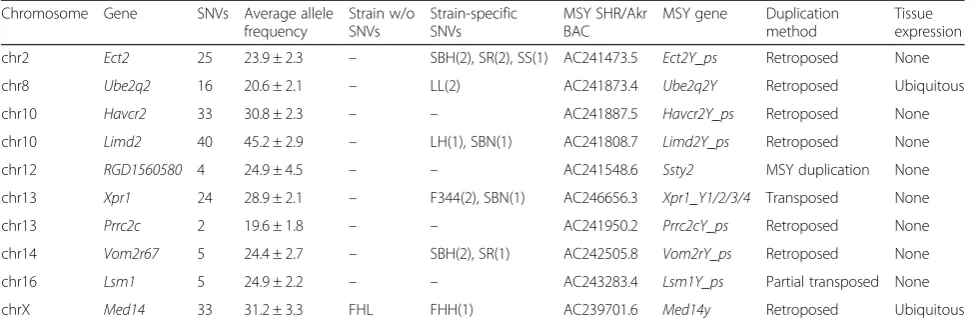
The absolute sex for all reads of 23 sequenced rat ge-nomes was determined, identifying Sry sequence reads in 18 genomes; thus, only 5 genomes are 100 % female DNA (Additional file 1: Table S2). This approach allows for Sry-contaminated female sequences to be treated as males, thus treating SNPs of duplicated genes of males that could also be included with equal probability asSry sequence. Following alignment of reads to the Rnor 5.0 genome (lacks MSY sequence), all single-nucleotide vari-ants (SNVs) found in protein-coding genes of male ge-nomes and not female gege-nomes identified a subset of genes potentially inserted onto MSY (Table 2). Nine genes are found to have specific SNVs in all 18 male rat genomes with an average allele frequency of 30.7 % over 2790 SNVs, close to the 33 % expected frequency for a
variant found in an autosomal gene that has been dupli-cated onto the MSY. The duplidupli-cated Limd2 was con-firmed by this analysis for all strains; however, Med14 was not. Removing individual male genomes from the analysis, we were able to identify strain-specific variants in male duplicated genes, such as the lack of 33 Med14 SNVs in the FHL rat strain, suggesting this gene is not present in the FHL MSY.
Clustered male-specific SNVs from the analysis above (two or more SNVs located within 20 bases), allowing for single-read detection of multiple variants found throughout male rat strains, were used to screen MSY bacterial artificial chromosomes (BACs) and also the Rat BodyMap datasets. Each of the specific SNV sites was detected in SHR MSY sequencing BACs (Table 1), con-firming with a secondary sequencing approach the exist-ence of the duplicated genes into the MSY. This identification on MSY BACs also allowed for a predic-tion of the mechanism of duplicapredic-tion. Seven genes were identified as retroposed (i.e., spliced genes reinserted onto MSY), one as a MSY gene that duplicated to an autosome (RGD1560580) and two as transposed genes (i.e., contains normal introns of gene). Using the Rat BodyMap dataset in combination with the male-specific SNVs, expression was detected for only two retroposed genes, Med14Y (Fig. 2b) and Ube2q2Y (GenBank KM610331, Fig. 2c), in male and not female RNAseq datasets.
Med14Y(Fig. 2b) andUbe2q2Y (Fig. 2c) are expressed in all male but not female tissues of the Rat BodyMap dataset, with their MSY location shown on Fig. 2a. In comparison to Med14Yand Ube2q2Y, Limd2Y has only three detectable reads out of the 13.3 billion analyzed and also contains one mutation resulting in the deletion of a Zn coordination site required for structural folding [25] and additional nonsense mutations (Additional file 1: Figure S1). The combination of a lack of transcription and mutations that would inhibit protein function suggests that Limd2Y has become a pseudogene (Limd2Y-ps) on rat MSY in all sequenced male strains. Initial analysis of our rat variant visualizer tool, based on Rnor 3.4 genome alignment lacking MSY sequence, on the rat genome database (http://rgd.mcw.edu/rgdweb/front/ config.html) for all strains showed that these variants for all autosomal genes inserted into the MSY were present at around 1/3 allele frequency in the data-base. This suggests a possibility of researchers to mis-identify MSY gene variants as heterozygous variants in autosomal genes.
To update this information and add ChY gene vari-ants between strains, a new strain genome compari-son tool was created. We sequenced male genomes for seven strains (ACI, FHH, FHL, SBH, SBN, SR, SS) and aligned them onto the Rnor 6.0 assembly that
Table 1Conserved Y chromosome genes found in rat
Accession number Y chromosome SHR BAC
Primary tissue expression in rat
EIF2S3Y GATN01000003.1 AC242953.5 Ubiquitous
ZFY GATN01000010.1 AC239865.4 Testis
USP9Y GATN01000001.1 AC242055.4 Testis
DDX3Y GATN01000002.1 AC242055.4 Ubiquitous
UTY GATN01000009.1 AC241873.4 Ubiquitous
UBE1Y EF690356.2 AC242953.5 Testis
KDM5D GATN01000004.1 AC242859.2 Ubiquitous
RBMY GATN01000006.1 AC239817.2 Testis
includes newly sequenced MSY. The number of single-nucleotide variants (SNVs) was calculated for each strain and was made relative to total chromo-some size (Additional file 1: Table S3). The analysis shows a 1.98 ± 0.06-fold elevation of SNVs on MSY relative to all other chromosomes (Fig. 2d), a value that is similar with previous rodent MSY sequencing
work [26] confirming MSY wide rate in nearly every analyzed rat strain. To resolve this issue with variant analysis, we have developed and released a new Variant Visualizer from the rat genome database (http:// rgd.mcw.edu/rgdweb/front/config.html?mapKey=360) for variants called from Rnor 6.0 alignment for seven different rat strains.
Sryduplicated genes in commonly used rat strains Sry is expressed in numerous human tissues [3]. An overlap of many tissues, such as kidney, is seen for the expression ofSry in primates and rat that are not found in the mouse [27]. This expression is novel toSryas it is not seen forSox3, the ChrX homolog of Sry[27]. How-ever, the expression profile of ratSry is ubiquitous while in human it is not [3]. Unlike the human genome, the rat genome contains 11 functionally distinct copies of Sry (http://bmcgenomics.biomedcentral.com/ articles/10.1186/1471-2164-14-792) likely amplified through gene conversion at repetitive elements [21]. The existence of these 11 copies has only been per-formed in two strains to date (SHR and WKY), and an expression profile for each copy has never been performed in detail before. Thus, the overlapping function between Sry in rat and human would be bet-ter understood by a copy-specific expression analysis in multiple laboratory strains of rats.
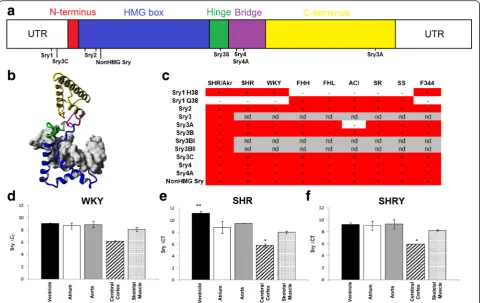
The advancing technology of next-generation sequen-cing allows for the identification of multipleSrygenes at sequence resolution in both genome and transcriptome, further enhancing our capabilities in segregating mul-tiple Sry copies. Utilizing SNVs (Fig. 3a) unique to spe-cific copies of ratSry (protein shown in Fig. 3b), 8 of 11 Sry copies are confirmed in SHR, WKY, FHH, FHL, SR, SS, and F344 inbred rat strains (Fig. 3c). The remaining Sry3 copy is unable to be differentiated (nd, not deter-mined) from Sry3BI/3BII due to short reads used in next-generation sequencing. Our initial work using real-time PCR (Fig. 3d) confirms Sry multiple tissue expres-sion in the rat; however, now that we have established the existence of at least 8 Sry copies in the majority of commonly used rat strains, a more detailed analysis of Sry copies expression is needed.
A fragment analysis protocol was initially developed to identify copy expression specificity, particularly for the
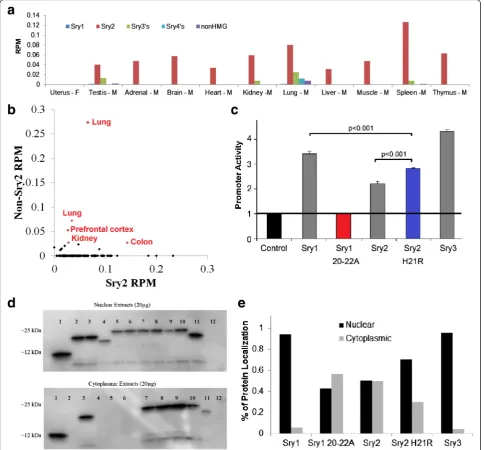
Sry2gene. Using this approach,Sry2is observed to have the highest expression ofSrycopies in most tissues [17]; however, this approach is limited to the analysis of only a few Sry copies that have variants altering restriction sites. The Rat BodyMap dataset allows, for the first time, the ability to assess expression of each Srycopy in mul-tiple tissues (Fig. 4a). In agreement with our SHR and WKY fragment analysis, Sry2 is the predominantly expressed copy throughout all tissues. To assess Sry ex-pression in other rat strains, we utilized publically avail-able RNAseq datasets in NCBI. Sry transcripts are detected in 197 separate rat RNAseq datasets; however, only 15 of these datasets contain transcripts that are from non-Sry2copies (Fig. 4b). ThisSry2copy, found so ubiquitously transcribed, is located within an intron, in the antisense orientation, of the ubiquitously expressed Kdm5dgene (Fig. 2a) suggesting the location of the gene insertion has possibly driven elevated expression. Likely to compensate for this elevated expression, SRY2 rapidly accumulated an amino acid mutation (H21R) within the N-terminal nuclear localization site (nNLS) that alters the ability of SRY2 to activate transcription (Fig. 4c) and localize the protein within the nucleus (Fig. 4d, e). Add-itionally, we have previously shown that SRY2 variants located in the glutamine-rich region (deletion of 13 amino acids corresponding to changes in Sry2 location in SDS-PAGE of Fig. 4d) decrease transcriptional control [21]; however, these mutations and the complete re-moval of the glutamine-rich region (Fig. 4d, lane 4) do not alter nuclear localization (Fig. 4d), only transcrip-tional control.
Of the tissues analyzed from the Rat BodyMap and publically available RNAseq datasets, the testis, kidney, lung, spleen, brain, and colon show expression of non-Sry2 copies. Interestingly, the list of rat tissues express-ing non-Sry2 genes (all Sry genes excluding Sry2) over-laps nearly perfectly with our previous analysis of the
Table 2Autosomal gene duplication to MSY
Chromosome Gene SNVs Average allele frequency
Strain w/o SNVs
Strain-specific SNVs
MSY SHR/Akr BAC
MSY gene Duplication method
Tissue expression
chr2 Ect2 25 23.9 ± 2.3 – SBH(2), SR(2), SS(1) AC241473.5 Ect2Y_ps Retroposed None
chr8 Ube2q2 16 20.6 ± 2.1 – LL(2) AC241873.4 Ube2q2Y Retroposed Ubiquitous
chr10 Havcr2 33 30.8 ± 2.3 – – AC241887.5 Havcr2Y_ps Retroposed None
chr10 Limd2 40 45.2 ± 2.9 – LH(1), SBN(1) AC241808.7 Limd2Y_ps Retroposed None
chr12 RGD1560580 4 24.9 ± 4.5 – – AC241548.6 Ssty2 MSY duplication None
chr13 Xpr1 24 28.9 ± 2.1 – F344(2), SBN(1) AC246656.3 Xpr1_Y1/2/3/4 Transposed None
chr13 Prrc2c 2 19.6 ± 1.8 – – AC241950.2 Prrc2cY_ps Retroposed None
chr14 Vom2r67 5 24.4 ± 2.7 – SBH(2), SR(1) AC242505.8 Vom2rY_ps Retroposed None
chr16 Lsm1 5 24.9 ± 2.2 – – AC243283.4 Lsm1Y_ps Partial transposed None
human protein atlas expression profile for human SRY [3]. The lung contains a vast array ofSrycopies (Fig. 4a) including the highly conserved nonHMGSry (GenBank KC215141.1) that contains a frame shift mutation dir-ectly before the high-mobility group (HMG) domain, but still codes for an open reading frame. This is the first time transcripts from nonHMGSryhave been identified. Protein modeling, molecular dynamic simulations, and functional motif analysis of this novel protein elucidate regions of structural order, possible nuclear localization motif, 14-3-3 binding motif, and a degradation box sug-gesting functional impact for transcripts from this rat conserved gene (Additional file 1: Figure S2).
Mapping of genes in MSY consomic SHR to WKY crosses (Fig. 1) resolved that the SHR rat has a duplica-tion of an Sry3 gene relative to other analyzed strains [28]. The cross of the SHR/y consomic animal to the Tfm rat model (Fig. 1) blocks MSY blood pressure eleva-tion, suggesting that there is interplay between the Sry3 locus and AR signaling. SRY has previously been shown
the overexpression of human SRY within the rat kidney, this suggests a high probability of SRY involvement in blood pressure regulation and potentially hypertension, with the rat serving to provide mechanistic understand-ing of SRY within the kidney.
MSY of other rat strains contributes to phenotypic diversity
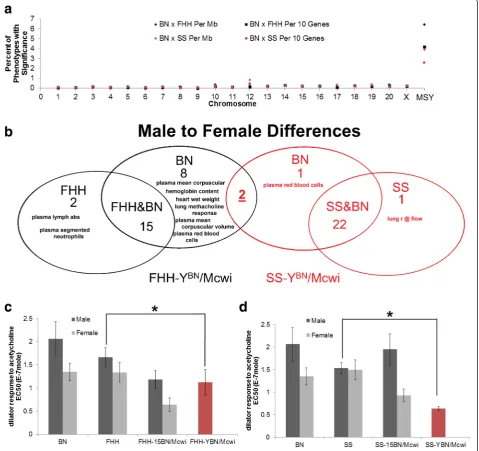
As part of two large systematic rat consomic panels created and phenotyped by our PhysGen Program for Genomic Applications [13, 14], data for MSY consomic rats provides the first large-scale phenotyping for MSY contributions. Phenotypes were measured on consomic FHH-YBN/Mcwi (BN MSY introgressed onto FHH genomic background) and SS-YBN/Mcwi (BN MSY introgressed onto SS genomic background). In FHH-YBN/Mcwi and SS-YBN/Mcwi, 131 and 223 phenotypes respectively were measured. When comparing values for FHH-YBN/Mcwi to male FHH rats, 28 phenotypes are significantly different (Additional file 1: Table S5). When comparing values for SS-YBN/Mcwi to male SS rats, 29 phenotypes are significantly different (Additional file 1: Table S6). As a percent of total phenotypes observed to be significantly different in the consomic relative to parental strain per megabase (Mb) of DNA, MSY has a 36.09 ± 3.84-fold (47.23 ± 6.17-fold in BNxFHH and 24.95 ± 3.05-fold in BNxSS) higher contribution to phenotypes than any other chromosome consomic generated (Fig. 6a). Although chromosome size of the MSY differs between rat strains [12], there has yet been evidence of non-MSY sequence driving the changes in size; thus, the genes present in the se-quenced SHR are also likely to drive the phenotypes altered by MSY consomics through either copy num-ber variants or SNVs. This is the first evidence that
many broad phenotypes in rat lab strains reflect, at least in part, MSY variation.
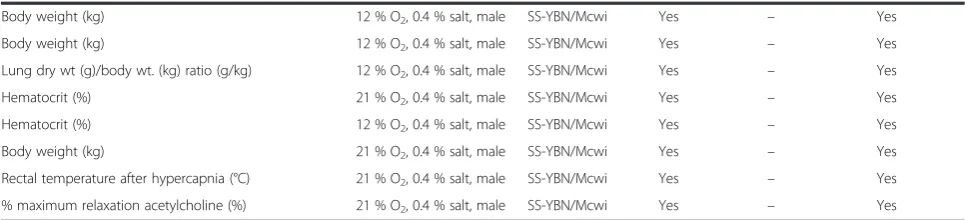
Additional analysis of MSY contribution can be ob-served by comparing male to female phenotypes for a particular strain. From the 28 FHH-YBN/Mcwi and 29 SS-YBN/Mcwi significant phenotypes, the difference be-tween male to female parental animals (BN, FHH, and SS) was calculated for each phenotype (Table 3). Of the traits seen significantly altered in FHH-YBN/Mcwi, 15 pheno-types show a significant sex difference in both FHH and BN, while only 2 phenotypes show FHH sex specific dif-ferences and 10 phenotypes show BN sex-specific differ-ences (Fig. 6b and Table 3). Of the phenotypes seen significantly altered in SS-YBN/Mcwi, 22 phenotypes show sex differences in both SS and BN, while 1 phenotype shows SS sex-specific difference and 3 phenotypes show BN sex-specific differences (Fig. 6b and Table 3).
suggesting chromosome 15 is responsible for BN-specific sex difference in acetylcholine response, but MSY may have evolved to partially attenuate this re-sponse in the BN rat (Fig. 6d, e).
Discussion
Table 3MSY altered phenotypes with differences in male to female rat strains
Phenotype Rat treatment Consomic with
significant change
Male to female BN significant
Male to female FHH significant
Male to female SS significant
Plasma lymph abs (E3) 12 % O2, 0.4 % salt, male FHH-YBN/Mcwi No Yes –
Plasma segmented neutrophils (E3) 12 % O2, 0.4 % salt, male FHH-YBN/Mcwi No Yes –
Plasma mean corpuscular hemoglobin content (pg) 12 % O2, 0.4 % salt, male FHH-YBN/Mcwi Yes No –
Plasma mean corpuscular volume (fL) 12 % O2, 0.4 % salt, male FHH-YBN/Mcwi Yes No –
Plasma red blood cell (E6/μL) 21 % O2, 0.4 % salt, male FHH-YBN/Mcwi Yes No –
Pre-ischemic heart wet weight (g) 12 % O2, 0.4 % salt, male FHH-YBN/Mcwi Yes No –
Pre-ischemic heart wet weight (g) 21 % O2, 0.4 % salt, male FHH-YBN/Mcwi Yes No –
Pre-ischemic left ventricle developed pressure (mmHg) 12 % O2, 0.4 % salt, male FHH-YBN/Mcwi Yes No –
Pre-ischemic left ventricle systolic pressure (mmHg) 12 % O2, 0.4 % salt, male FHH-YBN/Mcwi Yes No –
Methacholine ED50 (mg/kg) 21 % O2, 0.4 % salt, male FHH-YBN/Mcwi Yes No –
Dilator response to acetylcholine EC50 (E-7 mole) 21 % O2, 0.4 % salt, male FHH-YBN/Mcwi Yes No –
Dilator response to acetylcholine Log EC50 (Log molar) 21 % O2, 0.4 % salt, male FHH-YBN/Mcwi Yes No –
Plasma alk phos (U/L) 21 % O2, 0.4 % salt, male FHH-YBN/Mcwi Yes Yes –
Plasma globulin (g/dL) 21 % O2, 0.4 % salt, male FHH-YBN/Mcwi Yes Yes –
Plasma hematocrit (%) 21 % O2, 0.4 % salt, male FHH-YBN/Mcwi Yes Yes –
Plasma hemoglobin (g/dL) 21 % O2, 0.4 % salt, male FHH-YBN/Mcwi Yes Yes –
Plasma phosphorus (mg/dL) 21 % O2, 0.4 % salt, male FHH-YBN/Mcwi Yes Yes –
Plasma total protein (g/dL) 21 % O2, 0.4 % salt, male FHH-YBN/Mcwi Yes Yes –
Plasma white blood cell count (E3/μL) 12 % O2, 0.4 % salt, male FHH-YBN/Mcwi Yes Yes –
Ischemic peak contracture (mmHg) 12 % O2, 0.4 % salt, male FHH-YBN/Mcwi Yes Yes –
Body weight (kg) 12 % O2, 0.4 % salt, male FHH-YBN/Mcwi Yes Yes –
Body weight (kg) 12 % O2, 0.4 % salt, male FHH-YBN/Mcwi Yes Yes –
Body weight (kg) 21 % O2, 0.4 % salt, male FHH-YBN/Mcwi Yes Yes –
Lung dry wt (g)/body wt. (kg) ratio (g/kg) 21 % O2, 0.4 % salt, male FHH-YBN/Mcwi Yes Yes –
Hematocrit (%) 21 % O2, 0.4 % salt, male FHH-YBN/Mcwi Yes Yes –
Rt ventricle/left ventricle weight ratio (w/wratio) 12 % O2, 0.4 % salt, male FHH-YBN/Mcwi Yes Yes –
Body weight 21 % O2, 0.4 % salt, male FHH-YBN/Mcwi Yes Yes –
r @flow = 100 ml/min/g (mmHg × min × kg × ml−1) 21 % O
2, 0.4 % salt, male SS-YBN/Mcwi No – Yes
Plasma red blood cell (E6/μL) 21 % O2, 0.4 % salt, male SS-YBN/Mcwi Yes – No
Dilator response to acetylcholine EC50 (E-7 mole) 21 % O2, 0.4 % salt, male SS-YBN/Mcwi Yes – No
Dilator response to acetylcholine Log EC50 (Log molar) 21 % O2, 0.4 % salt, male SS-YBN/Mcwi Yes – No
Plasma calcium (mg/dL) 21 % O2, 0.4 % salt, male SS-YBN/Mcwi Yes – Yes
Plasma globulin (g/dL) 21 % O2, 0.4 % Salt, Male SS-YBN/Mcwi Yes – Yes
Plasma globulin (g/dL) 12 % O2, 0.4 % salt, male SS-YBN/Mcwi Yes – Yes
Plasma hematocrit (%) 12 % O2, 0.4 % salt, male SS-YBN/Mcwi Yes – Yes
Plasma hemoglobin (g/dL) 21 % O2, 0.4 % salt, male SS-YBN/Mcwi Yes – Yes
Plasma hemoglobin (g/dL) 12 % O2, 0.4 % salt, male SS-YBN/Mcwi Yes – Yes
Plasma mono abs (E3) 21 % O2, 0.4 % salt, male SS-YBN/Mcwi Yes – Yes
Plasma potassium (mmol/L) 21 % O2, 0.4 % salt, male SS-YBN/Mcwi Yes – Yes
Plasma red blood cell (E6/μL) 12 % O2, 0.4 % Salt, Male SS-YBN/Mcwi Yes – Yes
Plasma total protein (g/dL) 12 % O2, 0.4 % salt, male SS-YBN/Mcwi Yes – Yes
Ischemic time to onset of contracture (s) 12 % O2, 0.4 % salt, male SS-YBN/Mcwi Yes – Yes
Ischemic time to peak contracture (s) 12 % O2, 0.4 % salt, male SS-YBN/Mcwi Yes – Yes
Pre-ischemic heart rate (beats/min) 12 % O2, 0.4 % salt, male SS-YBN/Mcwi Yes – Yes
Although many new tools are emerging to study human genetic-to-phenotype associations (such as iPS, organoid culturing, CRISPR/Cas9, and patient cell analysis), studying complex multi-tissue phenotypes and the ability to identify causal variants/genes to disease in a large genomic environment of thousands of inherited variants (such as the MSY) seen in the human still requires ani-mal models. This paper set out to begin defining rat MSY genes in several commonly used rat strains to create models to study MSY variant contributions to phenotypes. The SHR MSY consomic rat (Fig. 1) has served as a model organism for studying the contribu-tion of MSY genes, such as the SHR-specific Sry3gene [28], in cardiovascular phenotypes. We have shown in this paper that the protein product ofSry3can alter an-drogen receptor synergistic feedback and that delivery into the rat kidney results in pronounced blood pressure elevation that is blocked by a RAS inhibitor. This sug-gests a molecular mechanism into the repression of blood pressure response seen in the SHR/y cross to the Tfm rat, showing a synergistic response between MSY genetics and hormone signaling. Our identification of a relationship between genetic variation in ratSryand blood pressure through the RAS promises to facilitate further studies of such a potential mechanistic link between hu-man SRY and blood pressure regulation [22, 27].
Previous data for Sry in both rat and mouse suggest that the gene contributes to diverse phenotypes such as brain development [30] and that MSY genes in the mouse contribute to a number of phenotypes [3]; how-ever, a large-scale phenotyping project has not yet been performed for any consomic animal strains before this paper. In this paper, we have shown that MSY per DNA base has a large phenotypic diversity between rat strains, a likely result of being a region within the genome to have uncontrolled mutations in inbred mating due to a lack of genetic crossover to remove de novo variants. This also highlights the importance of maintaining no-menclature on isolated breeding of strains, as MSY con-tinues to diverge in separate mating locations and can result in different phenotypes based on mating location. This concept is supported by work in comparing the
SHR/Akr MSY consomic with the SHR/Crl consomic, which lacks the Sry3 duplication that results in blood pressure elevation [28] and thus lacks a blood pressure association [31]. This paper would also suggest a poten-tial importance of mitochondrial genomics, as many of the inheritance patterns for that region would be under similar evolution as MSY in inbred animals; however, few studies have focused on this to date.
Furthermore, we have shown the expression profile for nine MSY genes found in rat and human. Using whole-genome sequencing reads from male rats, seven copies ofSryhave been confirmed for the first time in multiple commonly used laboratory rat strains. The onlySrycopy found ubiquitously expressed, Sry2, was inserted into an intron of the antisense strand of the ubiquitously expressed Kdm5d gene and also contains mutations damaging to nuclear localization and transcriptional regulation. With initial fragment analysis protocols only amplifying Sry2 in an orientation-dependent manner, without amplifying Kdm5d introns, the high expression ofSry2is likely driven by global chromatin state around the Kdm5d gene and is not transcripts detected from Kdm5d intron background of RNAseq. This highlights the fact that the location of genomic insertion can drive an expression profile; however, instead of being able to select on the removal of the gene as would be done on autosomes, MSY sequence has likely been selected on to remove functionality of the protein, maintaining future bulk of MSY contrary to previous MSY degradation the-ories. Other functionalSrycopies are found expressed in specific tissues including the testis, kidney, lung, and spleen, similar to the expression profile of human SRY. This suggests that “undifferentiated” Sry gene copy ex-pression data (generated by techniques such as real-time PCR) biases the understanding of specific Sry copies, with the use of sequencing-based technologies or our fragment analysis protocol (can separate out Sry2 from other copies), a more reliable method for Sryexpression analysis in future rat work.
The technique of identifying male-specific variants in duplicated genes, although utilized here only in rat, could be used in the future to identify additional
Table 3MSY altered phenotypes with differences in male to female rat strains(Continued)
Body weight (kg) 12 % O2, 0.4 % salt, male SS-YBN/Mcwi Yes – Yes
Body weight (kg) 12 % O2, 0.4 % salt, male SS-YBN/Mcwi Yes – Yes
Lung dry wt (g)/body wt. (kg) ratio (g/kg) 12 % O2, 0.4 % salt, male SS-YBN/Mcwi Yes – Yes
Hematocrit (%) 21 % O2, 0.4 % salt, male SS-YBN/Mcwi Yes – Yes
Hematocrit (%) 12 % O2, 0.4 % salt, male SS-YBN/Mcwi Yes – Yes
Body weight (kg) 21 % O2, 0.4 % salt, male SS-YBN/Mcwi Yes – Yes
Rectal temperature after hypercapnia (°C) 21 % O2, 0.4 % salt, male SS-YBN/Mcwi Yes – Yes
mammalian species-specific duplications onto MSY. The assembly of MSYs from several mammals has elucidated duplication events such as CDY [32], FLJ36031Y [33], ZNF280AY[34], and MBTPS2Y [1]. However, with only a handful of sequenced MSYs in mammals, the extent of such gene duplications throughout mammalian evolu-tion is unknown. The technique shown here is capable of identifying MSY duplications from reads of several male (or male-contaminated female samples) and female whole-genome sequences, a task that has become rela-tively inexpensive with next-generation sequencing technologies.
Gene duplication has been recognized as a driver of phenotypic changes for human diseases [35]. Studying duplication of autosomal genes onto MSY provides a unique opportunity to understand mechanisms and se-lective pressure of gene duplication, in addition to asses-sing the current status of our genomic scaffold. Of seven duplication events detected in our work, only two genes were found as expressed transcripts, with five becoming pseudogenes. Of the two genes that maintain expression, it is shown that Med14y was not present in rat strains such as FHL. Duplication of Ube2q2, a gene associated with kidney function [36], onto MSY was initially con-sidered a pseudogene in SHR sequence annotation [2]. However, when analyzing the F344 sequence, transcripts were found ubiquitously expressed from MSY (using the male-specific SNVs). Analysis of 197 male RNAseq sets from the rat identified 35 additional RNAseq data-sets to have detectable Ube2q2Y transcripts, suggesting strain-specific stratification in expression. The repetitive nature of rat MSY has made it challenging to generate a complete MSY sequence for rat. The analysis of Sryand autosomal gene duplications on MSY can serve as markers for completeness of our current assemblies. For example, the SNVs found in Sry3C or pseudogenes Ect2Y_ps, Havcr2Y_ps, Prrc2cY_ps, and Vom2rY_ps, which have been confirmed in multiple male rat ge-nomes, are not found in the current Rnor 6.0 MSY as-sembly. These therefore serve as valuable markers in the future for completing a rat MSY sequence.
Conclusions
Tools to genetically modify rat strains are rapidly in-creasing in use [37], allowing for the assessment of a single-gene modification in the vast array of genetic landscapes [15] present in rat research. Identification and characterization of rat MSY genes in this paper opens the door for rat MSY gene editing to study sex dif-ferences in diseases. Hopefully, this approach can narrow down the large haplotype block of human MSY to spe-cific genes that contribute to disease association and also suggest approaches that can be used for other species (mouse and primates) to study future MSY phenotype
contributions. We now have a causal relationship estab-lished in the SHR MSY for the Srygene to cardiovascu-lar disease, allowing for focus on human variants in MSY haplotype groups associated with cardiovascular disease to the SRY gene regions, while also implicating AR signaling to influence blood pressure control through SRY synergistic transcriptional regulation.
Utilizing a new male/female SNV segregating approach based on whole-genome sequence reads, we have shown a promising new technique in identifying gene duplica-tions onto MSY that may be critical in identifying species-specific duplication events. Two (Med14Y and Ube2q2Y) functional MSY retroposed genes (out of ten duplication events shared in most rat strains analyzed) are shown in this paper to have strain-specific variation. The strain-specific outcomes of these duplication events and the high mutation rate of MSY in inbred rat popula-tions suggest a major concern, particularly in light of the phenotypic role MSY is shown to have in this paper. Two consomic panels of inbred rats show MSY to con-tribute 36-fold more per chromosome size to inbred strain phenotypes than any other chromosome in the rat genome. The combination of approaches taken in this paper to analyze rat MSY genes highlights the import-ance of MSY to phenotype/disease, suggesting inbred models such as rat are ideal to dissect mechanisms of human MSY genes involved in sex differences. Once gene-to-phenotype relationships are established for these animal models, we envisage that the research commu-nity might exploit CRISPR/Cas9 modification of human cell lines to investigate relationships between human MSY variants to disease states.
Additional file
Additional file 1: Tables S1–S6 and Figures S1–S2.Table S1. Sequences used in BLAST analysis. Table S2. Detection of sex in sequenced rat genomes.Table S3.Analysis of SNPs for various rat strains.Table S4.Analysis of Sry expression from publically available RNAseq datasets. Table S5. Phenotypes with significant difference between the FHH-YBN/Mcwi (BN Y chromosome consomic with FHH au-tosomes) relative to the FHH strain out of >200 phenotypes tested. Table S6. Phenotypes that showed a significant difference between the SS-YBN/ Mcwi (BN Y chromosome consomic with SS autosomes) relative to the SS strain out of >200 phenotypes tested.Figure S1.Limd2y_ps on the Y chromosome.Figure S2.NonHMGSry protein models and prediction of functionality. (PDF 1180 kb)
Abbreviations
AR:Androgen receptor; MSY: Male-specific region of the Y chromosome; RAS: Renin-angiotensin system.
Competing interests
The authors declare that they have no competing interests.
Authors’contributions
ACU performed Sry2 functional studies. ST performed assays for SRY-AR synergistic regulation. LP, AM, MET, and ASM performed and interpreted expression analysis ofSry. MT organized and developed the RN6.0 variant visualizer tool. JWP, JL, HJJ, and MRD advised and oversaw project completion. JWP wrote the manuscript and all authors approved its submission.
Acknowledgements
We thank the Human Genome Sequencing Center at Baylor College of Medicine for the public database deposits of finished rat MSY BAC sequences. We thank Helen Skaletsky, Jennifer Hughes, and David Page of the Whitehead Institute, Howard Hughes Medical Institute, and Massachusetts Institute of Technology for providing a list of SHR identified genes and help with the analysis of SHR sequencing BACs. In addition, we thank Dr. Leming Shi of Fudan University for the approval and help in utilizing the Rat BodyMap dataset. The sequence forUbe2q2Yis deposited in GenBank (KM610331). This work was supported by the National Institutes of Health (grant number R01 HL071579 to D.E., R01 HL069321 to H.J.J., K01 ES025435 to J.W.P.) and the American Heart Association (PRE 7380033 to J.W.P.).
Author details
1HudsonAlpha Institute for Biotechnology, 601 Genome Way, Huntsville, AL
35806, USA.2Human and Molecular Genetics Center, Medical College of Wisconsin, Milwaukee, WI 53226, USA.3Department of Physiology, Medical
College of Wisconsin, Milwaukee, WI 53226, USA.4Department of Biology, The University of Akron, Akron, OH 44325, USA.5Department of Mathematics
and Science, Walsh University, North Canton, OH 44720, USA.6Núcleo de Fisiologia Geral e Genômica Funcional-ICB-Universidade Federal de Minas Gerais (UFMG), Belo Horizonte, Minas Gerais, Brazil.
Received: 4 November 2015 Accepted: 26 January 2016
References
1. Cortez D, Marin R, Toledo-Flores D, Froidevaux L, Liechti A, Waters PD, et al. Origins and functional evolution of Y chromosomes across mammals. Nature. 2014;508:488–93.
2. Bellott DW, Hughes JF, Skaletsky H, Brown LG, Pyntikova T, Cho T-J, et al. Mammalian Y chromosomes retain widely expressed dosage-sensitive regulators. Nature. 2014;508:494–9.
3. Prokop JW, Deschepper CF. Chromosome Y genetic variants: impact in animal models and on human disease. Physiol Genomics. 2015: physiolgenomics.00074.2015.
4. Forsberg LA, Rasi C, Malmqvist N, Davies H, Pasupulati S, Pakalapati G, et al. Mosaic loss of chromosome Y in peripheral blood is associated with shorter survival and higher risk of cancer. Nat Genet. 2014;46:624–8.
5. Ober C, Loisel DA, Gilad Y. Sex-specific genetic architecture of human disease. Nat Rev Genet. 2008;9:911–22.
6. Rossouw JE. Hormones, genetic factors, and gender differences in cardiovascular disease. Cardiovasc Res. 2002;53:550–7.
7. Bloomer LDS, Nelson CP, Eales J, Denniff M, Christofidou P, Debiec R, et al. Male-specific region of the Y chromosome and cardiovascular risk: phylogenetic analysis and gene expression studies. Arterioscler Thromb Vasc Biol. 2013;33:1722–7.
8. Charchar FJ, Bloomer LD, Barnes TA, Cowley MJ, Nelson CP, Wang Y, et al. Inheritance of coronary artery disease in men: an analysis of the role of the Y chromosome. Lancet. 2012;379:915–22.
9. Ely DL, Turner ME. Hypertension in the spontaneously hypertensive rat is linked to the Y chromosome. Hypertension. 1990;16:277–81.
10. Ely DL, Daneshvar H, Turner ME, Johnson ML, Salisbury RL. The hypertensive Y chromosome elevates blood pressure in F11 normotensive rats. Hypertension. 1993;21(6 Pt 2):1071–5.
11. Davidson AO, Schork N, Jaques BC, Kelman AW, Sutcliffe RG, Reid JL, et al. Blood pressure in genetically hypertensive rats. Influence of the Y chromosome. Hypertension. 1995;26:452–9.
12. Kren V, Qi N, Krenova D, Zidek V, Sladká M, Jáchymová M, et al. Y-chromosome transfer induces changes in blood pressure and blood lipids in SHR. Hypertension. 2001;37:1147–52.
13. Mattson DL, Dwinell MR, Greene AS, Kwitek AE, Roman RJ, Cowley AW, et al. Chromosomal mapping of the genetic basis of hypertension and renal disease in FHH rats. Am J Physiol Renal Physiol. 2007;293:F1905–1914.
14. Mattson DL, Dwinell MR, Greene AS, Kwitek AE, Roman RJ, Jacob HJ, et al. Chromosome substitution reveals the genetic basis of Dahl salt-sensitive hypertension and renal disease. Am J Physiol Renal Physiol. 2008;295:F837–842. 15. Atanur SS, Diaz AG, Maratou K, Sarkis A, Rotival M, Game L, et al. Genome
sequencing reveals loci under artificial selection that underlie disease phenotypes in the laboratory rat. Cell. 2013;154:691–703.
16. Yu Y, Fuscoe JC, Zhao C, Guo C, Jia M, Qing T, et al. A rat RNA-Seq transcriptomic BodyMap across 11 organs and 4 developmental stages. Nat Commun. 2014;5:3230.
17. Turner M, Martin C, Martins A, Dunmire J, Farkas J, Ely D, et al. Genomic and expression analysis of multipleSryloci from a singleRattus norvegicusY chromosome. BMC Genet. 2007;8:11.
18. Xu D, Zhang Y.Ab initioprotein structure assembly using continuous structure fragments and optimized knowledge-based force field. Proteins. 2012;80:1715–35.
19. Duan Y, Wu C, Chowdhury S, Lee MC, Xiong G, Zhang W, et al. A point-charge force field for molecular mechanics simulations of proteins based on condensed-phase quantum mechanical calculations. J Comput Chem. 2003;24:1999–2012.
20. Dinkel H, Michael S, Weatheritt RJ, Davey NE, Roey KV, Altenberg B, et al. ELM—the database of eukaryotic linear motifs. Nucleic Acids Res. 2011:gkr1064.
21. Prokop JW, Underwood AC, Turner ME, Miller N, Pietrzak D, Scott S, et al. Analysis of Sry duplications on the Rattus norvegicus Y-chromosome. BMC Genomics. 2013;14:792.
22. Prokop JW, Watanabe IKM, Turner ME, Underwood AC, Martins AS, Milsted A. From rat to human: regulation of renin-angiotensin system genes by sry. Int J Hypertens. 2012;2012:724240.
23. Ely D, Boehme S, Dunphy G, Hart M, Chiarappa F, Miller B, et al. The Sry3 Y chromosome locus elevates blood pressure and renin-angiotensin system indexes. Gend Med. 2011;8:126–38.
24. Kwitek AE, Jacob HJ, Baker JE, Dwinell MR, Forster HV, Greene AS, et al. BN phenome: detailed characterization of the cardiovascular, renal, and pulmonary systems of the sequenced rat. Physiol Genomics. 2006;25:303–13. 25. Peng H, Talebzadeh-Farrooji M, Osborne MJ, Prokop JW, McDonald PC,
Karar J, et al. LIMD2 is a small LIM-only protein overexpressed in metastatic lesions that regulates cell motility and tumor progression by directly binding to and activating the integrin-linked kinase. Cancer Res. 2014;74:1390–403.
26. Chang BH, Shimmin LC, Shyue SK, Hewett-Emmett D, Li WH. Weak male-driven molecular evolution in rodents. Proc Natl Acad Sci U S A. 1994;91:827–31.
27. Araujo FC, Milsted A, Watanabe IKM, Puerto HLD, Santos RAS, Lazar J, et al. Similarities and differences of X and Y chromosome homologous genes, SRY and SOX3, in regulating the renin-angiotensin system promoters. Physiol Genomics. 2015:physiolgenomics.00138.2014.
28. Turner ME, Farkas J, Dunmire J, Ely D, Milsted A. Which Sry locus is the hypertensive Y chromosome locus? Hypertension. 2008;53:430–5. 29. Yuan X, Lu ML, Li T, Balk SP. SRY interacts with and negatively regulates
androgen receptor transcriptional activity. J Biol Chem. 2001;276:46647–54. 30. Turner ME, Ely D, Prokop J, Milsted A. Sry, more than testis determination?
Am J Physiol Regul Integr Comp Physiol. 2011;301(3):R561–571. 31. Vincent M, Kaiser MA, Orea V, Lodwick D, Samani NJ. Hypertension in the
spontaneously hypertensive rat and the sex chromosomes. Hypertension. 1994;23:161–6.
32. Lahn BT, Page DC. Retroposition of autosomal mRNA yielded testis-specific gene family on human Y chromosome. Nat Genet. 1999;21:429–33. 33. Murphy WJ, Pearks Wilkerson AJ, Raudsepp T, Agarwala R, Schäffer AA,
Stanyon R, et al. Novel gene acquisition on carnivore Y chromosomes. PLoS Genet. 2006;2:e43.
34. Yang Y, Chang T-C, Yasue H, Bharti AK, Retzel EF, Liu W-S. ZNF280BY and ZNF280AY: autosome derived Y-chromosome gene families in Bovidae. BMC Genomics. 2011;12:13.
35. Conrad B, Antonarakis SE. Gene duplication: a drive for phenotypic diversity and cause of human disease. Annu Rev Genomics Hum Genet. 2007;8:17–35. 36. Köttgen A, Pattaro C, Böger CA, Fuchsberger C, Olden M, Glazer NL, et al.
New loci associated with kidney function and chronic kidney disease. Nat Genet. 2010;42:376–84.