University of New Orleans University of New Orleans
ScholarWorks@UNO
ScholarWorks@UNO
University of New Orleans Theses and
Dissertations Dissertations and Theses
5-14-2010
Understanding Reading Intervention from a Child's Perspective:
Understanding Reading Intervention from a Child's Perspective:
Interviews with Adolescents, Parents, and Teachers
Interviews with Adolescents, Parents, and Teachers
Lori Juhas Despaux University of New Orleans
Follow this and additional works at: https://scholarworks.uno.edu/td
Part of the Education Commons
Recommended Citation Recommended Citation
Despaux, Lori Juhas, "Understanding Reading Intervention from a Child's Perspective: Interviews with Adolescents, Parents, and Teachers" (2010). University of New Orleans Theses and Dissertations. 1109. https://scholarworks.uno.edu/td/1109
This Dissertation is protected by copyright and/or related rights. It has been brought to you by ScholarWorks@UNO with permission from the rights-holder(s). You are free to use this Dissertation in any way that is permitted by the copyright and related rights legislation that applies to your use. For other uses you need to obtain permission from the rights-holder(s) directly, unless additional rights are indicated by a Creative Commons license in the record and/ or on the work itself.
Understanding Reading Intervention from a Child’s Perspective: Interviews with Adolescents, Parents, and Teachers
A Dissertation
Submitted to the Graduate Faculty of the University of New Orleans
in partial fulfillment of the requirements for the degree of
Doctor of Philosophy in
Curriculum and Instruction
by
Lori Juhas Despaux
B.S., magna cum laude, Loyola University New Orleans, 2003 M.S., Loyola University New Orleans, 2004
M.S.+30, University of New Orleans, 2007
ACKNOWLEDGEMENTS
I would be remiss not to thank those who supported me in this journey.
First and foremost, I give thanks to Jesus Christ who heard my prayers when I was discouraged and gave me the strength I needed when I was tired.
I am also incredibly grateful for my sweet and patient husband and my precious son. I realize how much they have sacrificed so that I could work to accomplish this lifelong goal. In addition, I am especially appreciative of my loving parents who have inspired me and believed in me since the day I was born. To my mom, my best friend, thank you for always saying just what I needed to hear. I would not have made it without your encouragement. And to my dad, thank you for always making me feel so smart even as a little girl. In your mind, I was finished with this degree before I ever enrolled in the first course.
I also owe special thanks to my sister, Jodi, my number one supporter. I will be forever indebted to you for taking care of Hokie for me on so many evenings and weekends. One top of that, your interest in my deadlines and the way you made me laugh along the way will never be forgotten.
In fact, to all of my sisters and brothers, Hollie, Tracie, Jodi, Joe, and Johnny, thank you all for the phone calls, the emails, and the support. You all are such an important part of my life, and I love each of you very much.
Next, to Dr. Speaker, my major professor, it is impossible for me to fully express my gratitude for the hard work and effort you invested in supporting my research. Countless meetings, emails, phone calls, and revisions have all added up to this grand prize.
And to all of my committee members, thank you for taking such integral roles. Dr.
so many ways personally and professionally. To Dr. Bedford, thank you for supervising independent studies for me and for directing me towards narrative inquiry. Your encouraging emails offered just the encouragement I needed at just the right times. And of course, to Dr. Chauvin, thank you for teaching me so many important things outside of what can be learned at a university or from a textbook.
I would also like to thank my friend, Barat, for her help with this project and for supporting me as my peer reviewer.
Table of Contents
List of Tables ... xii
Abstract ... xiii
CHAPTER ONE: INTRODUCTION Introduction ...15
Background of the Study ...16
Statement of the Problem ...20
Significance of the Study ...21
Implications for Policy and Practice ...22
Research Questions ...23
General Methodological Approach ...24
Introduction to Narrative Inquiry and Rational ...24
Participant Criteria ...25
Data Collection: Interviewing and Observing ...25
Data Analysis ...26
Theoretical Framework ...26
Identification of Stance ...26
Limitations and Delimitations...27
Site and Respondent Selection ...27
Interviews and Data Collection ...27
Observations ...28
Bias Monitoring ...28
Trustworthiness ...29
Definitions of Terms ...29
CHAPTER TWO: REVIEW OF RELATED LITERATURE
Overview of the Manuscript ...36
Introduction ...36
The Problem Still Exists ...37
Many Children Still Cannot Read ...37
Models of Reading Intervention ...37
Strategies Shown to Accelerate Reading Growth ...43
Teacher Knowledge ...50
Student Perspective ...54
Chapter Summary ...59
CHAPTER THREE: METHODOLOGY Introduction ...61
Guiding Questions ...61
Researcher Stance ...62
Rationale and Implications of a Constructivist Stance ...62
Theoretical Concerns for a Constructivist Stance ...63
Autobiographical Disclosure ...65
The Phenomenon to be Observed ...66
The Context of the Phenomena ...67
Plans for Access ...67
Descriptions of Types of Informants to be Sought ...68
Sampling Method ...69
Procedures for Conducting the Study ...70
Log of Planned Activities ...73
Guiding Questions ...73
Interviewing ...74
Observational Techniques ...75
Observational Notes ...76
Data Analysis ...76
Developing a Method ...77
Analytic Tool ...79
Narrative Analysis ...80
Trustworthiness ...82
Triangulation ...83
Peer Debriefing ...84
Referential Adequacy ...84
Member Checking ...85
Transferability ...85
Dependability and Confirmability ...86
Summary ...87
CHAPTER FOUR: THE STORIES TOLD FROM DIXON Introduction ...88
The Research Context ...88
School Structure ...88
Participant I: Jonathan...89
Interview Structure and Context ...89
Jonathan’s Story ...90
Polyvocal Analysis of Jonathan’s Narrative ...93
Participant II: Jenna ...99
Interview Structure and Context ...99
Jenna’s Story ...100
Polyvocal Analysis of Jenna’s Narrative ...103
In her Mother’s Eyes ...106
Contrast and Comparison of Jonathan and Jenna’s Experiences ...108
Chapter Summary ...111
CHAPTER FIVE: THE STORIES TOLD FROM TALL OAKS The Research Context ...112
School Structure ...112
Participant I: Aaron ...112
Interview Structure and Context ...113
Aaron’s Story ...114
Polyvocal Analysis of Aaron’s Narrative ...117
In his Mother’s Eyes ...120
Participant II: Andie ...122
Interview Structure and Context ...122
Andie’s Story ...123
Polyvocal Analysis of Andie’s Narrative ...125
In her Mother’s Eyes ...129
Contrast and Comparison of Aaron and Andie’s Experiences ...131
Chapter Summary ...133
CHAPTER SIX: THE STORIES TOLD FROM JACKSON SCHOOL The Research Context ...134
Participant I: Samantha ...135
Interview Structure and Context ...135
Samantha’s Story ...135
Polyvocal Analysis of Samantha’s Narrative ...137
In her Mother’s Eyes ...140
Participant II: Edward ...142
Interview Structure and Context ...142
Edward’s Story...142
Polyvocal Analysis of Edward’s Narrative ...144
In his Mother’s Eyes ...147
Contrast and Comparison of Samantha and Edward’s Experiences ...149
Chapter Summary ...150
CHAPTER SEVEN: REVIEWING THE NARRATIVES ACROSS CASES Introduction ...151
Research Questions, Answers, and Themes ...152
Discussion of Major Themes ...186
Theme I ...187
Theme II ...190
Theme III ...192
Summary of Answers to Research Questions and Themes ...194
Chapter Conclusion ...195
CHAPTER EIGHT: CONCLUSIONS AND RECOMMENDATIONS Introduction ...196
Purpose of the Study and Research Questions ...196
Findings and Current Research ...200
Major Themes ...205
Considerations for Future Research ...209
Summary of the Study ...210
REFERENCES ...212
APPENDICES Appendix A: Student Interview Guide ...229
Appendix B: Teacher Interview Guide ...230
Appendix C: Parent Interview Guide ...232
Appendix D: Self Interview Guide ...233
Appendix E: Observational Protocol ...234
Appendix F: Parent/Adult Consent ...235
Appendix G: Parental Consent...236
Appendix H: Teacher Consent ...237
Appendix I: Written Child Assent ...238
Appendix K: Jonathan’s Transcript ...239
Appendix L: TJ and MaryAnn’s Transcript ...243
Appendix M: Jenna’s Transcript ...256
Appendix N: Brenda’s Transcript ...260
Appendix O: Andie’s Transcript ...263
Appendix P: Caroline’s Transcript ...266
Appendix Q: Aaron’s Transcript ...268
Appendix R: Jamie’s Transcript ...272
Appendix S: Tammy’s Transcript ...275
Appendix T: Samantha’s Transcript ...279
Appendix U: Becca’s Transcript ...282
Appendix W: Violet’s Transcript...287
Appendix X: Charley’s Transcript ...290
Appendix Y: Story Map of Jonathan’s Narrative ...296
Appendix Z: Story Map of Jenna’s Narrative ...297
Appendix AA: Story Map of Aaron’s Narrative...298
Appendix BB: Story Map of Andie’s Narrative ...299
Appendix CC: Story Map of Samantha’s Narrative ...300
Appendix DD: Story Map of Edward’s Narrative ...301
Appendix EE: Self-Interview ...302
Appendix FF: Observation at Dixon ...306
Appendix GG: Observation at Tall Oaks ...308
Appendix HH: IRB Approval ...309
LIST OF TABLES TABLE
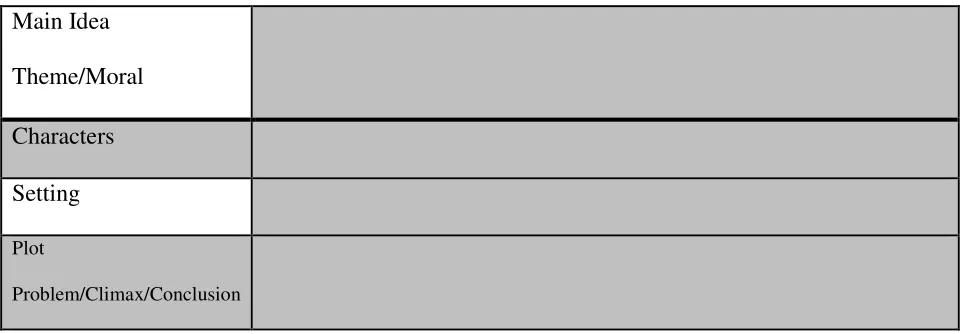
1 Story Map of Participant’s Narrative ...79
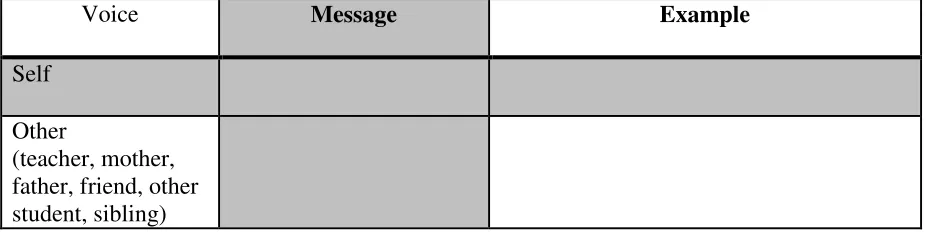
2 Voice ...80
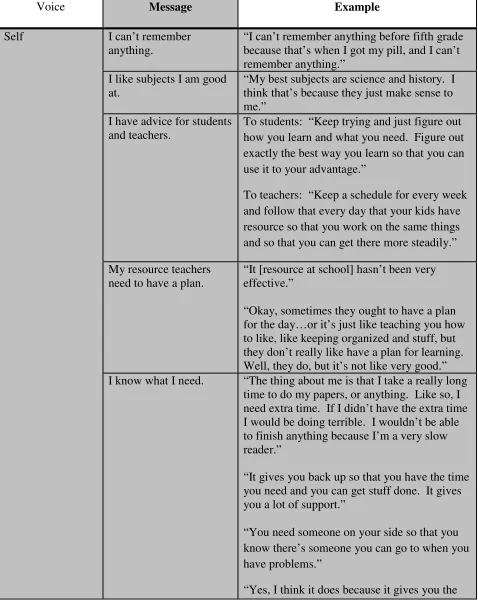
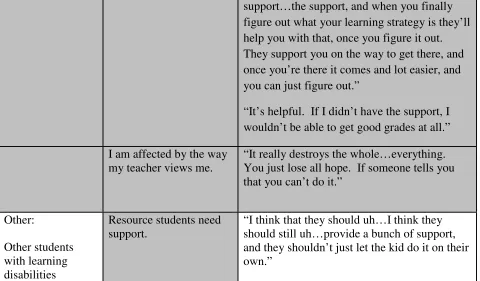
3 Polyvocal Analysis of Jonathan’s Narrative ...93
4 Polyvocal Analysis of Jenna’s Narrative ...103
5 Polyvocal Analysis of Aaron’s Narrative ...117
6 Polyvocal Analysis of Andie’s Narrative ...126
7 Polyvocal Analysis of Samantha’s Narrative ...137
8 Polyvocal Analysis of Edward’s Narrative ...144
9 Cross Case Analysis Based on Guiding Research Question #1 ...155
10 Cross Case Analysis Based on Guiding Research Question #2 ...159
11 Cross Case Analysis Based on Guiding Research Question #3 ...162
12 Cross Case Analysis Based on Guiding Research Question #4 ...166
13 Cross Case Analysis Based on Guiding Research Question #5 ...173
14 Cross Case Analysis Based on Guiding Research Question #6 ...177
15 Cross Case Analysis Based on Guiding Research Question #7 ...184
16 Theme I ...187
ABSTRACT
This qualitative phenomenological study explored the perceptions and experiences of the middle school students who participated in learning center support as elementary students in independent schools. There were 16 participants from three sites included in the study: six students, seven parents, and three learning specialists. The research questions guiding this study included: (1) What are the perspectives of students on the impact of the learning center
experience in regard to reading development? (2) How does the child’s discernment of how he or she is perceived academically by his or her reading teacher contribute to/hinder the process of learning to read? (3) How does a child’s sensitivity to being identified as needing extra support in learning to read affect/support the experience? (4) What do students, parents, and teachers think about learning centers? (5) How do children perceive reading teacher effectiveness and successful reading instruction? (6) How does a child’s perception of a model of reading
intervention inform the planning of teachers, interventionists, and reading specialists? (7) What do students think about the activities they participate during learning center time?
Literature reviewed for the study included the existence of the reading problem in the United States, models of reading intervention, strategies shown to accelerate reading growth, teacher knowledge, and student perspectives. Data was collected in the form of interviews and observations, and was reviewed in consideration of narrative inquiry, typological analysis, and polyvocal analysis. All participant responses were considered across cases with specific attention given to the guiding research questions.
provided few details. Nonetheless, the student participants offered specific recommendations on how to improve the learning center structure. Parent interviews shored up varying perspectives and recommendations for ways that the structure of the learning center should remain the same and also how it should change. Finally, learning specialists shared their views and experiences and added a richer understanding to the study in general.
Three major themes emerged from the data. First, that students and parents attach a stigma to resource support. Second, that students and parents feel like they had to give something up because of their participation in the learning center. And third, methodological issues on the structure of the interviews were raised.
Findings and current research were connected, and considerations for future research were made.
CHAPTER ONE
Introduction
This study investigated the experiences of struggling readers who have received learning center support during their elementary school years. The President’s Commission on Excellence in Special Education (2002) estimated that two out of every five children were placed because of reading difficulties, and more than 90 percent of students identified prior to fifth grade as
learning disabled are so identified primarily because of difficulties in reading (Kavale & Reese, 1992; Lerner, 1989). This study, therefore, sought to understand what has been persistently lacking in reading research. That is, it was designed to tell multiple stories, each from a child’s perspective, of the experiences of reading intervention through participation in learning center support. This study was an exploration into the following:
(1) the lived experiences of the students who participate in learning center support, (2) consideration of the model in which the intervention was provided,
(3) the child’s perception of the effectiveness of the teacher providing the instruction, (4) the perceptions of teachers,
(5) and the perceptions of parents.
framework are described, and limitations and delimitations are addressed. The chapter concludes with an overview of the manuscript and its organization.
Background of the Study
In the past three decades, research from several fields—including cognitive psychology, linguistics, and education—has greatly expanded our understanding of how children learn to read and why some youngsters experience reading difficulties (Spear-Swerling, 2007). It comes as no surprise, then, that learning to read and write proficiently is the cornerstone of academic
achievement and the foundation for success across the curriculum (Wilson & Trainin, 2007). Accordingly, Miles, Stegle, Hubbs, Henk, & Mallette (2004) add that the success of elementary schools is largely measured by the literacy levels of its students. Teaching students how to read in the elementary years is an obvious high priority. Yet, despite the fact that instruction in core reading programs embrace evidenced-based practices, some children fail to acquire basic reading skills and are likely to be considered at risk for reading failure (Foorman & Torgesen, 2001; O’Connor, 2000, Torgeson, 2000). For this reason in part, special education laws such as the Individuals with Disabilities Act (IDEA) were created with an emphasis on the identification process, and more recently, a shift in providing educational support and intervention to
struggling readers early. This is also reflected in the Reading First provisions of the No Child Left Behind Act, which calls for proven methods of instruction provided by highly qualified teachers to reduce the incidence of reading difficulties.
environment in which students have more opportunities to practice skills and receive increased feedback from teachers (Helf, Cooke, & Flowers, 2008), organization of such in the general classroom is met with challenge (Schumm, Moody, & Vaughn, 2000), and criticism of the pull-out method dates back to the original Title I funding initiated through the Elementary and Secondary Education Act of 1965. Nonetheless, researchers have thoroughly investigated the effects of in-class support and resource room services (Schumm, Moody, & Vaugh, 2000; Helf, Cooke, Flowers, 2008; Miles, Stegle, Hubbs, Henk, & Mallette, 2004), the role of one-on-one individual instruction in reading (Clay, 1993; 2002; 2006; Frey, 2006; Gapp, Zalud, Pietrzak, 2009), and more recently the attention given to Torgeson’s (2000) Response to Intervention Model (RTI) which was developed to identify and support learners who may be struggling in reading. In spite of the well-developed knowledge base supporting the value of interventions that have been demonstrated to have positive outcomes, these interventions are not widely employed in typical classroom instruction, and models of service delivery for students with reading and learning disabilities implemented in schools are often ineffective (Denton, Vaughn & Fletcher, 2003). Moreover, there is still the issue of matching the learner to the interventions that have been shown to accelerate reading growth, as well as the knowledge, skills, dispositions, and performance of the teacher providing the intervention.
asserts that the United States has not yet tackled the policy changes that would provide such high quality instruction. Teachers, reading specialists, reading interventionists, reading tutors (adults from within the school or outside the school), cross-age tutors (older children), peer tutors, paraprofessional assistants, special educators (who may or may not have much additional literacy knowledge/training), mentors (various ages), and reading coaches are all the network of
individuals who may play a role in delivering such instruction. Fitzharris, Jones, and Crawford (2008) posit that knowing what teachers know and how they practice is necessary to ensure that there are professionals in every classroom meeting the diverse needs of students. Guskey (2000) agrees, and adds that teacher knowledge and procedures are tied to student outcomes.
Consequently, one of the most important findings in the research on teaching is that highly trained teachers make a significant difference in student achievement (Ferguson, 1991; Feguson & Ladd, 1996). Agreeably, in its position statement on excellent reading teachers, the
International Reading Association (2000) asserts that every child deserves excellent reading teachers because teachers make a difference in children’s reading achievement and motivation.
Correspondingly, Spear-Swerling (2007) discusses the challenging task schools face given the considerable knowledge base required by teachers of reading. The extensive disciplinary knowledge required to teach beginning reading well to children with diverse needs has often been underestimated (Moats, 1994; Nation Academy of Education, 2005). Spear-Swerling (2007) argues that a few hours of class time does not sufficiently prepare prospective teachers to acquire certain kinds of knowledge. She adds, that because of the practical constraints of a 4- or even 5- year degree, teacher preparation programs must set priorities for pre-service teachers’ learning, and some content may receive far less emphasis than is ideal.
Denten, Vaugh, and Fletcher (2003) suggest that there are two obvious sources of
professional development if teachers are to be adequately prepared to meet the needs of students with learning disabilities: (1) pre-service education must more comprehensively and effectively prepare teachers, and (2) ongoing in-service programs must be designed to better meet the needs of practicing teachers. The situation as it is, places novice teachers in the difficult position of being expected to meet the needs of both beginning and struggling students by teaching reading well.
In short, teaching reading and learning to read are complex endeavors. A child’s
experience with any given model of intervention is significant to reading success. In addition to external factors such as reading intervention models, learner assessment procedures, and
effective teachers, motivation and perception are central to student achievement (Wilson & Trainin, 2007; Ruddell & Speaker, 1985). In particular, teachers have strong effects on children’s motivation to read (Ruddell, 1995; Skinner 1993). Consequently, there is
simple. Controversy over models and disagreement among professionals is alive and well, and we still face the challenge of teachers who have not been fully prepared or equipped to provide the intricate detailed type of instruction needed to teach reading well.
Research has considered all of these components, and in fact, still debates them. What is persistently lacking is knowledge of the student perspective of those who participate in the models and interventions we design. If teachers and researchers knew more about student
experiences, then perhaps we could improve reading instruction, intervention, and proficiency by directly addressing the individual needs of the learners. The idea that there is a “best approach” should be rejected. What seems to be missing from the policy discussions is the idea that there are many different approaches that need consideration, and there are new assessment processes to identify which approach should be matched to the learner.
Statement of the Problem
There are various literacy support services for reading intervention programs in
An important hypothesis was that literacy support services could be enhanced and improved if student perception is explored, and the elementary school experiences of the students who actually participate in the support services are known.
Significance of the Study
The call for excellent reading instruction is loud. The reality that readers still struggle is apparent, and the fact that our methods and models for reading instruction and intervention are imperfect is clear. If we learned more from the struggling reader, we could improve our efforts, our instruction, and ultimately the experiences and literacy gains of the child. Children need different types of instruction and various models of reading intervention during different phases of their education. One size does not fit all in this case. Instead, learning from the lived
experiences of the struggling reader will help us understand more deeply what really works, what does not, and perhaps what we never would have thought about otherwise.
according to Dewey (1938), education must be based on experience--which is always the actual life-experience of some individual.
Implications for Policy and Practice
My phenomenological investigation into understanding the experiences of struggling readers during the elementary years who participate in reading intervention contributes new knowledge to reading professionals and to the field of reading, in general. Researchers and teachers already know a great deal about researched-based reading instruction, pedagogy, and the components of the models to deliver such instruction. We also seem to agree on the need for early reading intervention and the existence of the readers who continue to struggle despite our efforts. Historically, blame has been pointed in every direction. The “reading wars” of the 1980s received an enormous amount of attention. Various instructional models such as whole group, small group, one-on-one, and pull-out have also been investigated by both proponents and critics. Lack of teacher knowledge and the state of teacher preparation have been considered part of the problem as well. The fact that some students still experience difficulty when learning to read may be inescapable, but perhaps what we can do is channel our efforts into improving the reading intervention experiences of the struggling reader.
Understanding their viewpoints could likely change our thinking, our planning, and our beliefs about effective reading instruction and intervention.
Research Questions
The purpose of this study was to investigate phenomenologically the experiences of students who participate in literacy support services. Through a lens of advocacy, the focus was on learning from the experiences of students. Methods of inquiry included interviews,
observations, and phenomenological reflection (Creswell, 2009).
The omnibus question was this: What are the experiences of students (more specifically, struggling readers) who participated in reading intervention through learning centers in independent schools?
A. Questions related to student experience:
a What are the perspectives of students on the impact of the learning center experience in regard to reading development?
b How does the child’s discernment of how he/she is perceived academically by his/her reading teacher contribute to/hinder the process of learning to read? c How does a child’s sensitivity to being identified as needing extra support in
learning to read affect/support the experience?
d What do students, parents, and teachers think about learning centers? B. Questions related to teaching/models:
f How does a child’s perception of a model of reading intervention inform the planning of teachers, interventionists, and reading specialists?
g What do students think about the activities they participate in during learning center time?
These questions are profound and interesting. They were explored through careful interviewing and intentional listening.
General Methodological Approach
Introduction to Narrative Inquiry and Rationale
Participant Criteria
Participants for this study have received learning center support during their elementary school years at one of the identified independent schools in Louisiana. Independent schools were selected for the present study because these institutions actually have access to the funds that may be needed in order to make changes. Moreover, students who have learning disabilities and attend independent schools seem to be working at a greater disadvantage than their higher performing peers compared to those students in typical education settings. Participants for this study were also presently in middle school. One male and one female student informant were recruited from each site. In addition, parent and teacher informants were sought because they played major roles in the journeys of the students who participated in learning center support.
Data Collection: Interviewing and Observing
Interviewing was selected as the primary source for data collection. Glesne’s (1999) chapter in Becoming Qualitative Researchers, on interviewing techniques and questioning was used as a guide for developing the interview protocol. Glesne (1999) writes that good
researchers ask questions in the context of purposes. Sometimes people stick to their original questions, but in qualitative research, questions may be added, eliminated, or replaced. With this advice in mind, open-ended questions were drafted and submitted to two graduate professors for approval.
observations served as a frame of reference in regard to the learning center model each school employs. Teachers and students were not necessarily observed in this case.
Data Analysis
Lieblich, Tuval-Mashiach and Zilber (1998) have pointed out that the flexible nature of narrative methodology has tended to preclude the development of prescriptive methods and procedures. Figuring out how to analyze the data for this investigation was quite a challenge. The process is described in chapter three.
Theoretical Framework
Identification of Stance
Walford (2001) asserts, “All research is researching yourself.” We cannot even begin to think about and organize our research without self-examination. But unpacking assumptions is no simple matter. The very nature of assumptions is that they are unexamined, which makes them intellectually tricky from the start (Hatch, 2002). Decisions about research always involve individual choices, which Walford (2001) believes often evolve from previous personal
experiences and commitments.
It is necessary for researchers to examine their own “grand theories” and consider the way in which they believe the world works, and how that will influence the design and
a constructivist, the belief is that multiple realities exist that are inherently unique to the individuals who experience the world through their own points of view. Lincoln and Guba (1994) add that realities are apprehendable in the form of abstract mental construction that are experientially based, local, and specific.
Operating under this constructivist paradigm, Hatch (2002) writes that researchers and the participants in their studies are joined together in the process of co-construction. That is, epistemologies are both individually and socially constructed. It is through mutual engagement that researchers and respondents construct the subjective reality that is under investigation (Mishler, 1986). Likewise, it is undesirable for constructivist researchers to be objective and distant.
Limitations and Delimitations
Site and Respondent Selection
Glesne (1999) maintains, “Part of demonstrating the trustworthiness of your data is to realize the limitations of your study” (Glesne, 1999, p.152). For this study, only three
Interviews and Data Collection
Only one interview per informant was conducted. That is, students, parents, and teachers participated in one interview each, in consideration of and respect for schedules and time. This is the truth of the matter because of time constraints and the willingness of the respondents. Shyness was an issue with the student participants, and scheduling was difficult with both the teacher and parent informants. There was also the concern of students at this age and their ability to reflect.
Observations
Observations took place at two of the participating schools, but one model was
impossible to observe because it no longer exists. To be more specific, the model in which two of the middle school students participated in during their elementary tenure has been modified dramatically. This school has changed the model of intervention from an on-sight learning center model to a case manager model in which the learning specialists coordinate the hired tutors and do not provide the intervention themselves. The good news; however, is that the learning specialist who did provide the intervention to these middle school students under the “old model” was available to be interviewed.
Bias Monitoring
The researcher’s role in narrative inquiry is a comprehensive one in which the researcher works to understand experience, listen to the stories of her participants, and retell those stories. In consideration of lived experiences, the researcher also must explicate her assumptions and pre-understandings. Of this challenge, Van Manen (1990) writes, “The problem with
wish to investigate, but that we know too much.” Van Manen (1990) continues by explaining how our common sense pre-understandings predispose us to interpret the nature of the
phenomenon before we have even come to grips with the significance of the phenomenological
question. Glesne (1999) adds that continual alertness of our own biases will assist in producing
more trustworthy interpretations.
Bias seems inescapable; it is insistently inherent in all aspects of life. My best efforts to monitor researcher biases include a written autobiographical disclosure, a self interview, journal entries, and interview guides that were written very carefully to be open-ended in such a way that invites the respondents to be honest without my influence.
Trustworthiness
Establishing trustworthiness for the study is discussed at length in the chapter three, but for now, Lincoln and Guba (1985), Merriam (1988), Miles and Huberman (1994), Litchman (2006), and Glesne (1999) all influenced the design of the study in meeting trustworthiness criteria including credibility, transferability, dependability, and confirmability. Specifically, the credibility of my work was supported by activities increasing the probability that credible findings were produced including: a self-interview, triangulation, peer debriefing, referential adequacy, member checks (Lincoln & Guba, 1985, pp.301-315), and an autobiographical disclosure (Merriam, 1988).
Definitions of Terms
Comprehension: Reading comprehension is the act of understanding and interpreting the
information within a text (NRP, 2000).
Differentiated instruction: DI involves providing students with different avenues to acquiring
content; to processing, constructing, or making sense of ideas; and to developing teaching products so that all students within a classroom can learn effectively, regardless of differences in ability (Tomlinson, 2001).
Fluency: Oral reading fluency is the ability to read text aloud with accuracy, speed, and proper
expression (NRP, 2000).
Inclusion: Inclusion, in the context of education, is the practice in which students with special educational needs spend most or all of their time with non-disabled students (Smith, 2007).
Individuals with Disabilities Act (IDEA): The Individuals with Disabilities Education Act
(IDEA) is a United States federal law that governs how states and public agencies provide early intervention, special education, and related services to children with disabilities
(20.S.C. § 1412(a)(21)(B)(i).
International Reading Association: Since 1956, IRA has been a nonprofit, global network of
individuals and institutions committed to worldwide literacy. More than 85,000 members strong,
the Association supports literacy professionals through a wide range of resources, advocacy
efforts, volunteerism, and professional activities. Members promote high levels of literacy for all
by: improving the quality of reading instruction, disseminating research and information about
reading, and encouraging the lifetime reading habit (IRA, retrieved Nov.11, 2009 from
Learning Center: In independent schools, learning centers resemble resource rooms in which
children spend portions of their school day receiving specialized instruction in a specific area of need. In most cases, this instruction happens either in small groups or one-on-one, and is provided by a specialized professional.
Learning Specialist: In independent schools, this term is used as a title for teachers who provide
the support services to the students who attend the learning center. Learning specialists in some cases are reading specialists, but in all cases must hold master’s degrees.
No Child Left Behind Act (NCLB): According to Public Law 107 - 110 – “An act to close the
achievement gap with accountability, flexibility, and choice, so that no child is left behind.” Perspective: In this case, perspective is the state of one's ideas, the facts known to one, etc., in
having a meaningful interrelationship (Dictionary.com, definition retrieved November 17, 2009
from www.dictionary.com)
Phonemic Awareness: Phonemic awareness is the ability to hear and the individual manipulate
sounds within words. The sounds within words are called phonemes, so awareness of these sounds is called phonemic awareness (NRP, 2000).
Phonics: Phonics instruction teaches students to use the relationship between letters and sounds
to translate printed text into pronunciation (NRP, 2000).
Pull-out: A pull-out program specific to independent schools is one in which students with
Reading intervention: Reading intervention is specialized instruction provided to struggling
readers based specifically on areas of weaknesses in reading.
Reading Specialist: A reading specialist is a person who has met state standards and holds at
least a master’s degree in reading.
Resource room: A resource room is the physical location where students who receive support
services gather. In this study, the “learning center” is the label used in independent schools in place of the resource room.
Small group instruction: Instruction to students in groups no larger than five.
Struggling reader: For this study, a struggling reader is a student who has been identified as
needing extra support in the processes of learning to read. The criterion for this determination differs somewhat for each participating site, but all schools require some sort of reading assessment, whether formal or informal, to be used in the decision.
Vocabulary instruction: Vocabulary here refers to word meanings and vocabulary instruction is
about the learning of word meanings (NRP, 2000).
Chapter Summary
Research on reading over the last three decades has experienced one of the most dramatic increases in knowledge and understanding in the history of education (Denton, Vaugh, &
struggle and some children still do not learn to read. McGill-Franzen and Allington (1991) point out that although billions of federal and state tax dollars have been targeted for educational services, and these literacy services have been in place for over a quarter of a century, all U.S. children still do not learn to read (McGill-Franzen & Allington, 1991).
The number of children who struggle when learning to read is staggering. Many teachers and administrators agree that early intervention is critical and effective when properly
administered. However, reading professionals continue to debate the best approach to intervention, and teachers are not adequately trained to teach reading well. The existing literature has considered all of this.
What we still do not know are the perspectives of the children who actually participate in the models we design. If we took more seriously their experiences, then we could improve our instruction, the way we look at reading intervention, and ultimately the journey of becoming literate for the struggling reader.
Overview of the Manuscript
There are five chapters in this dissertation that discuss the student experience of
participating in learning centers. Chapter one begins with an overview and introduction of my intentions. This is followed by the background for the study and the statement of the problem. Next, the significance of the study is described as well as the lens through which the study is viewed. Implications for policy and practice lead to the purpose statement and the main research question and subquestions guiding the investigation. Finally, the general methodological
discussed, and terms specific to the inquiry are defined. A chapter summary concludes the section.
Chapter two presents a summary, evaluation, and critical review of the existing literature related to four major concepts: reading intervention models, strategies that have been shown to accelerate reading growth, teacher effectiveness and knowledge, and student experience
(performance and perception) in reading development. Each section begins with an overview and ends with a summary connective to the larger study. The review of literature serves as a springboard for presenting my conceptual and theoretical framework, and addresses each of the key concepts in my mental model.
Chapter three presents the methodology of the study. It begins with the identification of my constructivist stance which addresses the rationale and implications of the stance, as well as theoretical concerns for a constructivist stance. This is followed by an autobiographical
disclosure. Next, chapter three provides a detailed description of procedures for conducting the study. It also addresses selection of the participants, detailed data collection procedures, and full descriptions of analytical techniques used, as well as justification for those techniques. Once the measures taken to establish trustworthiness are described, the narrative concluding the chapter shows how my study approach addresses my research questions and my conceptual framework.
Chapter seven includes a cross-case analysis in consideration of the guiding research questions. Discussion and charts demonstrate the findings and emergent themes.
Finally, chapter eight includes discussion and conclusions. The findings are analyzed and related to existing knowledge. Conclusions are drawn with respect to each research question. Likewise, implications for both research and practice are discussed, and finally,
CHAPTER TWO
REVIEW OF RELATED LITERATURE
Introduction
This review of literature addresses four major concepts related to the experiences of students who participate in learning centers which include: an overview of service delivery models related to reading intervention, a description of strategies that have been shown to accelerate reading growth, a discussion of teacher knowledge and its implications, and finally a synthesis of what is known about students’ perspectives of literacy intervention.
The literature review begins with a discussion of the profundity of the issue of struggling readers in the United States. The reality is that despite all efforts, children still experience difficulty when learning to read, especially students with learning disabilities. What follows is a discussion of the models that may be employed when providing reading intervention to
struggling readers. In this section, the debate over the physical location of where specialized instruction takes place is addressed and is considered from the vantage point of the students who actually participate in the service models. Thoughtful of more than just the location of reading instruction, time is spent describing research-based characteristics of instructional strategies that have been shown to accelerate reading growth. What is acknowledged on top of that, is the role of teacher knowledge in implementing the strategies that have been shown to be effective. Lastly, a discussion of the research that has been conducted on students’ perspectives is
The Problem Still Exists:
Many Children Still Cannot Read
Every child has a right to literacy. McGill-Franzen and Allington pointedly ask, “Why is it that after countless millions, nay billions, of federal and state dollars targeted for extra
educational service, and a quarter century of trying, all U.S. children still don’t learn to read?” (McGill-Franzen & Allington, 1991, p.86). It is not that professionals do not want children to learn to read. Of course they do. In their article, “Becoming an Engaged Reader,” Scharer, Pinnell, Lyons, and Fountas (2005) make two promises to every child: “We will teach you to read, and we will help you become a reader—a literate person who experiences the power and joy of comprehending” (Scharer et al., 2005, p.24). This promise is nothing new. Over twenty years ago, Secretary of Education, William Bennett (1986), wrote that the “Elementary school must assume as its sublime and most solemn responsibility the task of teaching every child in it to read” (Bennett, 1986, p.21). Back then, and even now, professionals certainly want to teach children to read, and now know much more about doing so effectively, but what is persistently lacking is knowledge of how students actually perceive and experience their literacy journey. Little is known about the experiences of students through their eyes. Similar to the promise of literacy for all children, the same goal lies in the design of learning centers and reading
intervention.
Models of Reading Intervention
particular model operates as well as its philosophical underpinnings, will contribute to a deeper understanding of the participants’ experiences as they describe them.
In ideal cases, reading intervention happens in smaller groups, but the thought of whether that intervention should take place in the context of the general classroom setting or in a resource room has been up for debate for quite some time. Over the last two decades, parents,
professionals, and policymakers alike, have raised concern about the appropriateness of settings separate from the general education classroom (Vaughn & Klinger, 1998). Although many professionals in education prefer providing support services in their general classrooms instead of providing assistance in resource rooms, the move toward full-time inclusion has not been without controversy (Fuchs & Fuchs, 1995; Roberts & Mather, 1995). On the one hand,
proponents of fulltime inclusion have argued that no separate knowledge base exists in resource room settings, and further, pull-out programs have failed to bring about desired benefits (Wang, Reynolds, & Walberg, 1994/1995). Elbaum, Vaughn, Hughes, and Moody (1999) also found many problems associated with pull-out programs such as the undifferentiated groups which are associated with poor outcomes in reading for students, group sizes that are too large and provide insufficient intensity, and the practice of instructional approaches that may impede the
effectiveness of resource room reading programs. Additionally, Miles, Stegle, Hubbs, Henk, and Mallette (2004) noted that at-risk students missed important instructional time in the general classroom because of their participation in a pull-out program. These researchers further testify that teachers were hesitant to introduce new skills during this time because they knew
various failure syndromes like learned helplessness. Finding out more from the learner’s perspective is essential.
Miles, et al. (2004) also reported that parents felt that there was a stigma attached to many pull-put programs. All of these concerns are valid, but it is noteworthy that all of these concerns are the concerns of adults, not the students who actually participate in the service models. Only a limited number of studies examining the perspectives of children who
participate in the programs could be located (Vaughn & Bos, 1987; Jenkins, Heinan, 1989; Bear, Juvonen, McInery, 1993; Whinner, 1995; Padeliadu, Zigmond, 1996; Klinger, Vaughn, Schumm, Cohen, & Forgan, 1998).
Nonetheless, many professionals express worry about the idea of inclusion for all
students and its appropriateness as the only service delivery option (Vaughn & Schumm, 1995). According to Public Law 94-142, individualized instruction must be available to students with disabilities, but that may not always occur in the context of the general classroom setting. In fact, the history of instruction for students with learning disabilities in the general education classrooms has been bleak (Vaughn & Klinger, 1998). Many teachers feel inadequately prepared to teach students with learning disabilities (Spear-Swerling, 2007; Moats, 1994, and Vaughn, 2006). Teachers also face the challenge of addressing the needs of all the students in their classrooms, emotionally, physically, academically, and intellectually. While proponents of full-time inclusion believe that self-esteem and friendships will increase, studies have shown (Bryan & Bryan, 1978; Gresham, 1984; Vaughn, Elbaum, & Schumm, 2000) that students with learning disabilities are frequently the least popular and most rejected students in the classroom.
when given a choice, the majority of students would prefer to be in the resource room. Where the intervention actually takes place is an important component in understanding the lived experiences of students. How students feel about that setting is even more important.
While reading instruction can happen in either the context of the general classroom setting, or in the resource room, at those locations it can take different shapes in terms of size and design. Next, small group reading intervention is discussed, as well as one-on-one tutoring.
Many struggling readers in independent schools receive reading instruction in either a small group, or in some cases, one-on-one. The idea of small group reading intervention almost seems to be an obvious choice. There is substantial evidence that suggests very small groups can be quite effective (Allington, 2002; Pinnell, Lyons, Deford, Bryk, & Seltzer, 1994; Vaughn, Gersten, & Chard, 2000; Helf, Cooke, & Flowers, 2009). In this case, children receive
concludes her statement with her view, as well as the research that she is aware of, that suggests students at risk benefit from more intense and specific instructional time rather than more time in large groups where special education is virtually either very difficult or impossible to provide (Vaugh, 2006). In agreement, Miles, Stegle, Hubbs, Henk, and Mallette (2004) report that their “Anna Plan” reaffirms the value of small-group instruction in that it is an effective way to meet the individual literacy needs of students by targeting their strengths. This sort of small group intervention seems to work well when the participants have similar instructional needs
(Allington, 2006). Insight into the benefits of providing reading instruction to small groups of students is central to the larger theme of designing purposeful learning centers for effective reading intervention.
Yet another, more intensive approach is the use of one-to-one instruction. In thinking about one-to-one instruction from a historical standpoint, it began with its prominence in institutional settings. Students with specific types of disabilities were sent to institutionalized schools where issues of safety and comfort were a priority and education was a secondary goal. Instruction was often performed individually (Winzer, 1993). In terms of effective reading intervention, the research available demonstrates that one-to-one expert tutoring is simply the most powerful approach. Many schools use Reading Recovery as a first grade early intervention for children who are most at-risk for reading failure (Gapp, Zalud, Pietrzak, 2009). Reading Recovery was designed to be a supplementary pull-out intervention to provide special
Szymczuk 2003; Lyons, Pinnell & DeFord, 1993; Lukas, 2001; Ruhe & Moore, 2005; Schmitt & Gregory, 2005). These researchers have found that students who successfully complete their series of Reading Recovery lessons and discontinue the need for intervention tend to remain within average performance of their peer groups in years to follow.
Camilli, Vargas, and Yurecko (2003) also found that one-to-one tutoring had a significant impact. Likewise, Frey (2006) makes a case for the use of 1:1 instruction that is often delivered in the general education classroom as a model for providing students with disabilities with access to specialized assistance. Of this approach, Frey (2006) identified three advantages to using 1:1 instruction: (1) 1:1 instruction provides students with the opportunity to preview activities, (2) 1:1 instruction means that students can review concepts first introduced in the content area subjects, and (3) 1:1 instruction allows students to receive instruction on concepts not being taught in general education settings (Frey, 2006, p.207).
All children can indeed benefit from one-to-one instruction, but organizing it is nothing short of a challenge. Moody, Vaughn, and Schumm (1997) have reported that many teachers state that they rarely have time to work with students in a one-to-one capacity, despite the fact that the practice of a knowledgeable adult offering reading instruction to an individual student has been a valued approach in American education for quite some time. Regardless of the challenge, Elbaum, Vaughn, Hughes, and Moody (2000) found in their meta-analysis of 31 studies that “Well-designed, reliably implemented, one-to-one interventions can make significant contributions to improved reading outcomes for many students whose poor reading skills place them at risk for academic failure” (p.617).
(small group) instruction is more efficient than is the 1:1 grouping instruction in consideration of time and resources, as well as overall reading gains. Other evidence also supports the idea that very small groups can be just as effective (Allington, 2002; Pinnell, Lyons, Deford, Bryk, & Seltzer, 1994; Vaughn, Gersten, & Chard, 2000), noting that one-to-one instruction is not always a realistic possibility.
Small group reading instruction is the best-case scenario for many students, but what actually happens during those small groups is of greater importance. The only real way to
authentically begin to understand what happens during small group reading instruction is to bring in the perspective of the learners involved.
Strategies Shown to Accelerate Reading Growth
Poor readers form a very diverse group of students who differ in many ways, including how they respond to instruction (Al Otaiba & Fuchs, 2006; Kamps & Greenwood, 2005). Such an assortment of students makes it difficult to achieve common reading goals for all students in a classroom (Allington, 1991, Vaughn & Schumm, 1995), and the details of the instruction will vary for every struggling reader (Allington 2006). Elbaum, Vaughn, Hughes, and Moody (1999) suggest that the model of instructional delivery is not where the answer lies for successful
instruction in reading, but rather the implementation of high-quality effective remedial
Allington (in press) identifies eight characteristics of “good” reading intervention:
(1) very small groups or tutoring (2) majority of time engaged in reading, (3) match between reader and text level, (4) use of texts interesting to the student (5) coordination with core classroom (6) expands daily reading activity (7) meaning and meta-cognitive focus (8) expert teacher delivers intervention
These characteristics are described in detail and expanded upon based on what Allington and several other reading researchers have found to be effective.
First on the list is the idea of providing instruction in very small groups or one-on-one. In terms of effective instruction, the research available demonstrates that one-to-one tutoring is simply the most powerful approach (Camilli, Vargas, & Yurecko, 2006; Frey, 2006).
Struggling readers need time to practice reading. Vaughn (2006) identifies time spent reading as a critical principle. In her interview, she comments, “They [at-risk readers] need lots of
opportunities to read texts that they can read and that they want to read” (Chamberlain, 2006, p.172). Vaughn also discusses how it is very hard to make progress at anything if you do not spend a considerable amount of time practicing it. In most cases, people spend more time participating in activities that they are good at and enjoy. This is not coincidental. Guthrie (2004) pointed out that really good readers spend approximately 500% more time engaged in reading than do struggling readers. Drawing from his conclusions, teachers should attempt to increase the time the least proficient readers spend engaged with reading by 200%-500% (Guthre, 2004, p.1). In other words, if the typical fourth grader reads for 20 minutes a day, Guthre would argue for an increase of 100 minutes per day. Stanovich (2000) also agrees that extensive reading is a critical component of the development of reading proficiency. Allington (2006) identifies reading volume as widely neglected in the design of reading intervention for struggling readers.
Another principle element of reading instruction that has been shown to accelerate reading growth is matching the reader and the text level (Allington, 2006). According to Allington (2002), “It seems so obvious—students need textbooks that they can actually read” (Allington, 2006, p.16). Evidence on the value of matching readers and books dates all the back to the 1940s with Bett’s (1949) study which also included fluency and comprehension. Matching students to appropriate texts might be bold for some in consideration of the move to reject district plans for all children to be required to read the same books, and in some cases, be on the same page, on the same day. Such a practice seems highly unrealistic, as well as
differentiated instruction (2003). Further, O’Connor’s (2000) research provides another
demonstration that students fail to benefit much from reading instruction and texts that are not on their level. Providing students with texts that frustrate them does not support an effective
approach to literacy intervention. Supplying texts that are appropriate can be especially challenging in content area subjects, but it is definitely possible, and indeed needed if students are to experience success.
As an extension to matching readers to texts, students should also be interested in what they read. Scharer, Pinnell, Lyons, and Fountas (2005) ask, “If we teach students through stories that do not make sense to them, what are they learning about the act of reading?” (Scharer, et al, 2005, p.24). They suppose that the joy of reading diminishes without interesting and engaging texts, and further suggest that texts captivate students even at the beginning levels. Speaker and Speaker (1991) agree and call it an important goal of a literacy program to develop readers who actually enjoy the things they read.
Setting up a classroom or learning center that has a rich supply of interesting texts
Interesting texts imply that meaning is made. Good reading programs support students in making meaningful connections, as one of the goals of reading is indeed to understand what has been read. A major criticism of pull-out programs is that children are removed from the
instruction of the general classroom to be taught skills in isolation that they have later have difficulty applying in context. Allington (2006) calls for “coherence and balance” with
classroom teachers and interventionists. Johnston, Allington, and Afflerbach (1985) interviewed classroom teachers and interventionists and found that no teacher could consistently discuss or describe what their students did during intervention lessons. Further, McGill-Franzen and Allington (1990) found that teachers were using incompatible instructional reading materials that would probably confuse the struggling readers. Though these findings are dated, this reality still exists in many schools today.
“Coherence and balance” also calls for classroom reading plans that emphasize the important components of reading instruction which include: phonemics awareness, phonics, fluency, vocabulary, and comprehension (NRP, 2000). A plan that overemphasizes one critical element, and fails to give attention to another, such as oral reading over silent reading and comprehension does not provide the balance needed in effective intervention plans (Allington, 2006).
Furthermore, good reading instruction expands the daily reading activity. That is, extensive reading is critical to the development of reading proficiency (Krashen, 2001; Stanovich, 2000). Students need to practice the skills that have been introduced during the reading lesson throughout the course of the day in other content areas to work towards
unrelated alternate activities, such as homework, math problems, or art projects. Meaningful connections must be made during reading instruction time and throughout the day. When students are given choice, Turner (1995) has documented greater student ownership of the work and greater engagement with the work. Organizing reading across the content areas and choice in the general classroom calls for creativity, and this has been accomplished by the exemplary teachers described by Allington (2006). He observed that students in these environments read whole books, successfully completed individual and small group research projects, and worked on tasks that integrate reading, writing, and social studies.
Taking into account the way in which students think about their own thinking is another important piece. Building meta-cognition, and making connections and meaning during reading instruction are critical elements (Allington, in press). This can be accomplished by use of think-alouds, modeling, and explicit teaching. Scharer, Pinnell, Lyons, and Fountas (2005) discuss teaching in a way that gives students clear insight into what effective readers do when they read. As such, they recommend modeling how effective readers think within the text, how effective readers think beyond the text, and how effective readers think about the text (original emphasis). Using explicit modeling and thinking aloud with struggling readers demystifies the strategies that proficient readers employ.
In addition to the reading strategies discussed above which include: very small groups or tutoring, majority of time engaged in reading, match between reader and text level, use of texts interesting to student, coordination with core classroom, expanding daily reading activity, and meaning and meta-cognitive focus, the National Reading Panel (2000) identifies five key elements to effective reading instruction in general. In its report, the NRP (2000) calls for instruction in phonics, phonemic awareness, fluency, comprehension, and vocabulary. All of these skills can be addressed through use of the reading strategies discussed above that are shown to accelerate reading growth. In short, Allington (in press) summarizes what he has learned about effective reading instruction from a decade of studying exemplary elementary classroom teachers. After hundreds of days of classroom observations and hundreds of
interviews with teachers and students, Allington (in press) sketches six common features—the 6 Ts of effective literacy instruction which include: time, texts, teach, talk, tasks, and test. As a conclusion to the discussion on effective literacy instruction, examples or explanations of each follow.
(1) Time—Teachers plan a large percentage of time for just reading. Allington (in press) terms this as the “reading and writing vs. stuff” ratio.
(2) Texts—Children need an enormous supply of books that they can successfully read in order to become proficient.
(3) Teach—Allington (in press) describes good teaching with a focus on the notion of active instruction, and “the modeling and demonstration of the useful strategies that good readers employ.”
(5) Tasks—Teachers plan for meaningful tasks by greater use of longer assignments and reduced emphasis on filling the day with many shorter tasks.
(6) Test—Teacher assessment is authentic. It is based more on an emphasis on improvement and effort as opposed to achievement status.
All of these traits are important to this study because students made mention of them when they shared their experiences. These traits, as well as the characteristics described, have been identified by reading experts as essential components of effective literacy instruction. Of particular interest is the view from the student of what role these practices played in their journeys.
Teacher Knowledge
suggest that this resistance to differentiation may be a product of a lack of teacher knowledge. On top of that, Miles, Stegle, Hubs, Henk, and Mallette (2004) found that teachers are diverse in their philosophies and delivery methods, and these differences tended to be based on teachers’ education and experience.
In short, the broad range of knowledge required to teach beginning reading well to children with diverse needs has repeatedly been underestimated (Moats, 1994; National
Academy of Education, 2005). Of this knowledge, Spear-Swerling (2007) advises that teachers have information about, “the structure of English; the abilities involved in early reading,
including not only phonemic awareness, phonics, and reading fluency, but also listening comprehension and vocabulary; and the individual differences that impact learning to read” (Spear-Swerling, 2007, p. 306). In order to gain this in-depth understanding of literacy instruction, teacher preparation programs must do a sufficient job of preparing teachers by designing programs that set priorities for reading, given the considerable knowledge base required. Spear-Swerling (2007) discusses this challenge in consideration of the practical constraints of a 4- or even 5- year degree in which some content may very well receive far less emphasis than is ideal.
Basically the reality is this: the time spent in elementary education programs on teaching reading is not sufficient for teachers to acquire the specific knowledge needed to teach reading well (Moats, 1994; Spear-Swerling & Brucker, 2003, 2004).
pre-service and in-pre-service levels. They recommend that pre-pre-service and in-pre-service teacher education must provide teachers with a better understanding of literacy methods and procedures which necessitates knowledge of, “classroom management, collaboration skills for working with volunteers and other professionals, formal assessment of reading competency, ongoing informal assessment of reading progress, and appropriate instructional practices for various grouping sizes” (Schumm, Moody, & Vaughn, 2000, p.487). Similarly, Denton, Vaughn, and Fletcher (2003) identify two obvious sources of professional development that require adjustment if teachers are to be adequately prepared to meet the needs of students with reading and learning disabilities: “(1) pre-service education must more comprehensively and effectively prepare teachers, and (2) ongoing in-service programs must be designed to better meet the needs of practicing teachers” (Denton, Vaughn, & Fletcher, 2003, p.205). Denton et al. (2003) go on to explain that if models of service delivery for students with learning disabilities are to undergo reform, then so must the preparation of teachers. One challenge they identify is that college professors are not encouraged or supported to make changes because the typical university promotion and tenure system does not reward professors who spend a great deal of time
supervising their students in field experiences. And in some cases, these professors are penalized when their productivity is assessed because they have had little time to engage in research
(Denton, Vaughn, & Fletcher, 2003).
and Miles, Stegle, Hubbs, Henk, and Mallette (2004) found that diversity in philosophy and delivery methods tended to be based on teachers’ education and experiences. As Denton, Vaughn, and Fletcher (2003) see it, “Teachers are likely to use what they learn in college and to adopt the beliefs of those who prepared them, implying that pre-service preparation has the potential to directly influence outcomes for students who are having difficulty learning to read” (Denton, Vaughn, and Fletcher, 2004, p.206).
Although the profession continues to advocate for better teaching practices to meet the needs of individual learners (Frey, 2006), requirements at the state and federal levels do not consistently require advanced expertise in reading for positions as a reading specialist, reading teacher, or reading coach. Allington (2006) calls this, “a question of credentials” (p.16). He explains that despite the mandates of the No Child Left Behind (NCLB) Act that all teachers must demonstrate that they are highly qualified, reading specialists, reading teachers, and reading coaches must only demonstrate the same reading qualifications as elementary classroom teachers in most states. Allington (2006) goes on to clarify that it is not that classroom teachers should not be highly qualified to teach reading, it is just that one would expect that the qualifications for reading specialists and reading coaches would substantially exceed those for that classroom teachers must meet. Allington’s (2006) argument is summed up in that any attempt to improve the quality of reading instruction would call for the focus of policymakers on ensuring that all schools employ credentialed reading specialists and coaches.
All of this matters because evidence shows that when expert teachers deliver reading intervention, reading growth is accelerated (Allington, in press). Allington (2006) states,