in the population sciences published by the Max Planck Institute for Demographic Research Konrad-Zuse Str. 1, D-18057 Rostock · GERMANY www.demographic-research.org
DEMOGRAPHIC RESEARCH
VOLUME 22, ARTICLE 28, PAGES 891-932
PUBLISHED 11 MAY 2010
http://www.demographic-research.org/Volumes/Vol22/28/ DOI: 10.4054/DemRes.2010.22.28
Research Article
Effects of education on second births
before and after societal transition:
Evidence from the Estonian GGS
Martin Klesment
Allan Puur
© 2010 Martin Klesment & Allan Puur.
This open-access work is published under the terms of the Creative Commons Attribution NonCommercial License 2.0 Germany, which permits use, reproduction & distribution in any medium for non-commercial purposes, provided the original author(s) and source are given credit.
1 Introduction 892
2 Theoretical perspectives 893
3 The Estonian setting 896
4 Data and analytic approach 899 4.1 Variables, hypotheses, and operationalisation 899
4.1.1 Educational attainment 900
4.1.2 Educational enrolment 902
4.1.3 Other covariates 904
4.2 Model fitting 906
5 Results 907
5.1 Main effects 907
5.2 Interaction effects 912
6 Summary and discussion of the findings 916
7 Acknowledgements 920
Effects of education on second births
before and after societal transition:
Evidence from the Estonian GGS
Martin Klesment1
Allan Puur2
Abstract
This article examines the influence of educational attainment and enrolment on second births in Estonia, comparing the patterns before and after the onset of the societal transformation of the 1990s. While many Northern and Western European countries have shown a positive relationship between female education and second births, this pattern has not been found in Central and East European countries. Against that background, Estonia offers an interesting case with noticeably high second birth intensities for highly educated women. In the state socialist period, after controlling for the influence of other characteristics, including the partner's education, women with tertiary education were found to have higher second birth intensity than women from any lower educational strata. In the postsocialist period, the difference has grown smaller, but women with tertiary education still display a significantly higher transition rate to second birth than their counterparts with secondary education. Following the presentation of empirical findings, the article discusses the mechanisms that could underlie the observed relationship between education and fertility decisions in the changing societal context. The analysis employs microdata from the Estonian Generations and Gender Survey (GGS), conducted in 2004-05.
1 Estonian Institute for Population Studies, Tallinn University, P.O.Box 3012, Tallinn 10504, Estonia. E-mail:
2 Estonian Institute for Population Studies, Tallinn University, P.O.Box 3012, Tallinn 10504, Estonia. E-mail:
1. Introduction
Contemporary fertility in Europe is characterised by sizeable contrasts that have emerged over the past two decades. Larger regions of the continent seem to form relatively coherent units within which countries experience similar levels and trends of childbearing (Frejka and Sardon 2004; Frejka and Sobotka 2008). To an important extent, the crystallization of these new divides relates to variations in parity distribution, and the progression to second (and third) births. In this context, for a number of reasons the relationship between female education and higher order births has attracted considerable scholarly interest. In the diffusionist framework, women with advanced education are regarded as trendsetters who introduce novel behaviours that are subsequently adopted by other groups. From another angle, the comparison of fertility patterns among women with different levels of schooling contributes to the understanding of opportunities and constraints within which childbearing decisions are made. Last but not least, as the proportion of young people who attain higher education has been rising with each successive cohort, educational differentials are influencing fertility trends on the aggregate level.
The prevailing explanatory framework in research focusing on the relationship between education and fertility originates in microeconomic theories that predicted largely negative consequences of women's increased educational attainment and economic autonomy (Becker 1993; Cigno 1994). From the late 1980s, however, the evidence has been accumulating showing that highly educated women exhibit elevated second birth intensity compared to their less educated counterparts. Geographically, these results pertain to countries of Northern Europe (Gerster et al. 2007; Hoem and Hoem 1989; Kravdal 2007; Vikat 2004) and Western Europe (Hoem, Prskawetz, and Neyer 2001; Kreyenfeld 2002; Köppen 2006). At the same time, virtually all findings obtained from Central and Eastern Europe (e.g., Koytcheva 2006; Muresan 2007; Olàh 2003; Perelli-Harris 2008; Rieck 2006) have failed to demonstrate a similar pattern and conform with the argument of economic theory.
noticeable recovery that brought fertility rates to one of that highest levels among the postsocialist countries (Eurostat 2009).
Given the significance of second births in setting contemporary fertility levels, this article focuses on the transition from the first to second parity, with particular interest in the ways in which educational attainment and enrolment status have influenced progression from first to second birth as the country has moved from one social system to another. Although there are numerous analyses published on various aspects of fertility development in Estonia (e.g., Katus 1991; 1994; 1997; 2000; 2003; Katus et al. 2009), the educational differences in childbearing have not been systematically explored. The study employs microdata from the Estonian Generations and Gender Survey of 2004-05. Structurally, the article consists of six sections. Following the introduction, the article provides a brief discussion of the theoretical framework. The third section describes the general fertility trend of the country and contextual features that are relevant for the analysis. The fourth section presents the data, hypotheses and analytic approach. The fifth section focuses on empirical findings, obtained by means of multivariate event-history models. A summary and discussion of the findings rounds out the study.
2. Theoretical perspectives
Education can be seen as a measure of personal achievement, income potential, and social status since more highly educated people usually earn more than those with less education. It is also a signal of individual autonomy, for one would expect highly educated individuals to be more independent from others, and perhaps also from the general norms of society. In the life course perspective, the discussion of the relationship between education and childbearing is facilitated by the distinction between the effects of the educational level or attainment and school enrolment.3
Most studies of the relationship between educational attainment and fertility consider in some form the microeconomic theory of the New Home Economics as a starting point (Becker 1993; Cigno 1994). The theory posits that as women receive education on an equal footing with men and have an access to improved opportunities in the labour market, the costs of childbearing increase. Primarily this relates to opportunity costs, in the form of lost earnings, slower career advancement, and the depreciation of professional skills. Assuming that the education level of a woman reflects her career prospects and income potential, a negative relationship between
3 Hoem, Neyer, and Andersson (2006a; 2006b) have recently demonstrated sizeable variation in childbearing
female education and fertility is expected. In addition, it has been suggested that higher educational attainment entails stronger preference for the “quality” of children, which under the limited resources available, leads to a lower number of offspring (Becker 1993; Gustafsson and Kalwij 2006).
The inverse relationship between educational attainment and fertility is also predicted by the theory of the Second Demographic Transition (SDT), though the latter points to a different mechanism, the shift in cultural values, as the driving force behind the changes in demographic behaviour (Van de Kaa 1987). Doubting that a purely economic explanation would prove adequate, the framework of the SDT emphasises a move away from traditional family-oriented values toward individualisation and self-realisation, coupled with the shift from religious attachments toward secularism. In this context, Lesthaeghe (1995) regards 'female emancipation' as a central element in his theory of secular fertility decline. As the highly educated strata of the population form an avant-garde in all these developments, it leads to the notion that more highly educated women strive for greater independence from family life and want to have fewer children than others.
Despite the wide appeal of these theoretical frameworks, over the past years the assumption of a negative association between women's educational attainment (economic independence) and fertility has proven increasingly controversial from both theoretical and empirical points of view. The view that gender-specific division of work and family life are favourable to the family has been criticized on the grounds that it entails considerable risks to the well-being of the family. Oppenheimer (1994; 1997) has pointed out that a dual-income family is less vulnerable to economic risks if one of the partners should be unable to provide his/her contribution. In a modern dual-income context, highly educated women should be particularly attractive partners and women's employment can be viewed as a highly adaptive strategy rather than a threat to the family as a social institution. With regard to the SDT, for instance Hoem, Prskawetz, and Neyer (2001), contest the notion that a higher degree of individualism must lead to a lower level of natality at the life stage addressed in the present study. Furthermore, the authors express doubt that highly educated women have necessarily less family-oriented values.
be attributed to family- and gender-related welfare state policies. Today, it is widely acknowledged that the stance of public policies supporting the compatibility of work with family life and gender equity in the domestic sphere can play an important role in modulating the relationship between women's education, labour market participation, and fertility (e.g., Gornick, Meyers, and Ross 1998; Esping-Andersen 1999; McDonald 2000; Morgan 2003). As has been shown, countries which disburden women of some of the costs that accompany parenthood, are currently experiencing higher fertility rates.
By contrast, Central and Eastern Europe has demonstrated prevailingly negative, or in part non-positive, association between women's educational attainment and second birth intensities. This finding appears common in recent country studies pertaining to Bulgaria (Koytcheva 2006), Hungary (Olàh 2003), Romania (Muresan 2007), Russia (Rieck 2006), and Ukraine (Perelli-Harris 2008). Kreyenfeld (2004) for East-Germany has reported reduced second birth rates among women with low education, but also in that study second birth intensities for highly educated women do not exceed those among women with medium level of education. Thus, quite interestingly, the most unequivocal support for the assertion of microeconomic rational choice theory comes from the group of countries which only recently opted for the market economy. Authors of these studies have attributed the negative educational gradient to the outcomes of rapid societal change that involved the deterioration of living standards, downscaling the policies meant to facilitate the combination of employment and parenthood, reduction of child-care benefits on the one hand, and increased returns from education, and exposure to new ideas on the other. While the proposed mechanism is plausible for the years after 1990, the argument stemming from microeconomic theory appears less convincing for the period of state socialism.4
The effect of educational enrolment on childbearing appears consistently negative in the empirical literature. This effect has been reported for many countries and many different levels of the educational system, including a number of studies on second births referred to in this section. The mechanisms by which participation in education is thought to suppress childbearing, temporarily or permanently, may be diverse. First of all, as a child needs to be cared for and the care is time-consuming in the early stage of parenthood, family formation could threaten the successful completion of a study programme and put the whole career strategy of young adults in jeopardy (e.g., Hoem 1986; Liefbroer and Corijn 1999). Furthermore, childbearing entails short-term costs that may be difficult to meet for students and therefore, it may be regarded as economically advantageous to postpone childbearing until a decent family income can
4 Of the studies focusing on the Central and East European countries that have separately analysed the period
be secured. The latter motive can be strengthened by the institution of earnings-related parental leave (e.g., Andersson et al. 2009; Rönsen 2004; Vikat 2004). Finally, there may be norms against childbearing while being a student, as suggested by, for instance, Blossfeld and Huinink (1991).
Based on these theoretical and empirical considerations, we will investigate the influence of both main aspects of education, educational attainment, and participation, on the progression from first to second birth in Estonia. Aside from the general pattern, we are interested in the transformation of the relationship during transition from state socialism to a market economy context. Our hypotheses and analytic approach are presented in the fourth section of the article, but before that, the next section briefly outlines some general features of demographic, economic, and cultural developments of the setting that are relevant to the analysis.
3. The Estonian setting
The demographic development of Estonia shared several commonalities with the countries of Northern and Western Europe. Fertility indices derived from the Princeton project show that the onset of the fertility transition dates back to the mid-19th century (Coale, Anderson, and Härm 1979; Coale and Watkins 1986). The similarity of fertility trends in Estonia, and in Northern and Western Europe, disappeared in the aftermath of the Second World War, when Estonia was incorporated into the Soviet Union. In the 1950s and 1960s, unlike other nations that had witnessed low fertility in the prewar years, Estonia failed to experience a baby-boom (Frejka and Sardon 2004). In that period, Estonia was characterised by one of the lowest fertility levels in the world. In the late 1960s, contrary to the trends emerging in the pioneering countries of the second demographic transition, Estonian fertility rates increased and stayed close to replacement level until the turn of the 1990s (Katus, Puur, and Sakkeus 2000).
These two features — the absence of a baby-boom as well as of a baby-bust — translated into a noticeable stability of the postwar Estonian fertility level up to the 1990s (see Figure I in the Appendix). The second-order total fertility rate (TFR) shows an upward trend rising from the 1960s until the late 1980s.5 Apart from the increase in
the progression ratios from first to second birth, at least two additional factors contributed to this trend. First, the observed rise reflected the changes in lower parities in the parity distribution, in particular the decline in the proportion of childlessness that
5 The second-order total fertility rates are computed as the sum of age-order-specific fertility rates (i.e., the
followed the fall of the European marriage pattern.6 Second, the upward trend was
strengethened by the prolonged shift towards earlier childbearing and shorter birth intervals. As a consequence, in the 1980s Estonia featured very high second-order fertility rates in the European context (Figure II in the Appendix).
Turning to the institutional framework, the Soviet authorities followed a strategy of far-reaching centralisation and introduced uniform models in virtually all sectors of administration (Kahk and Tarvel 1997; Mertelsmann 2003). With regards to education, the decades until the late 1960s witnessed a rapid expansion of enrolment in upper secondary and tertiary levels.7 The previously existing gender gap was closed relatively
early in Estonia — in tertiary education, this occurred in the cohorts born at the beginning of the 1940s, who completed their studies mainly in the 1960s; in upper secondary education, a reversed gender gap can be traced back to the birth cohorts of the 1930s. In subsequent generations the proportion of university graduates appeared systematically higher among women, with female advantage expanding towards younger generations (Katus, Puur, and Sakkeus 2000). In the 1970s and 1980s, replacement-level fertility coexisted with very high levels of female labour force participation. In international comparison, Estonia ranked top with respect to female employment, and women were overwhelmingly to be found in full-time jobs (Puur 1995).
The societal context included various provisions to facilitate the reconciliation between women's employment and family. A central element in this field was the provision of public childcare that expanded rapidly following the early postwar decades. From 1968, women were entitled to take unpaid leave until the child's first birthday, without losing their jobs and also to maintain an uninterrupted employment record. Further extension of provisions, which started in some parts of the USSR in 1981, came to Estonia in 1984 when the duration of partly paid parental leave (at a flat rate of benefits, less than 20% of the average wage) was extended to one year, and unpaid leave to 18 months (Katus, Puur, and Põldma 2002).
With respect to demographic trends, the 1990s witnessed a period of plunging fertility level to a new low. In Estonia, the period TFR fell to a maximum low of 1.28 in 1998. Roughly half of the observed decline in the TFR is attributable to the sudden postponement of childbearing (Katus et al. 2009). Regarding second order births, the slump of the 1990s appears more extensive compared to the Central and East European average (Figure II in the Appendix). The scale of decline stems from the combination of a very high level of second order fertility in the 1980s on one side, and the steepness
6 Among the native population, the proportion of childless women decreased from 25% in the cohorts born in
the early 20th century to 7-8% in the birth cohorts of the 1950s (Katus, Puur, and Põldma 2002).
7 In the 1970s and 1980s, the increase of tertiary education enrolment ceased reflecting the stagnation of the
of decrease in the 1990s on the other. After reaching the lowest point, however, fertility rates began to increase at the beginning of the 21st century. Despite the postponement in childbearing well in progress, in 2008 the TFR had reached 1.66. With these levels, Estonia has featured the highest fertility among the countries of Central and Eastern Europe.
As elsewhere in the countries of the Eastern bloc, shifts in demographic behaviour progressed in the context of an extensive societal transformation. In Estonia, these changes were perhaps even more dramatic than was the case in the countries of Central Europe (Aslund 2007). The abolition of mechanisms that sustained full employment during state socialism and subsequent large-scale re-allocation of labour implied a reduction in employment opportunities. After reaching bottom in the year 2000, employment rates have significantly recovered, reaching 73% among working age males and 66% among females on the eve of the current recession. As part-time employment is not widely practised, in terms of the full-time equvalent employment rate (64% in 2007), Estonian women have the strongest attachment to the labour market among the EU member states (European Commission 2008 ). In the field of education, the 1990s witnessed a sharp rise in educational participation at postsecondary and tertiary levels. The transition period has also witnessed a further feminisation of higher education, with more than 61% female students Estonia ranks close to the top among the EU member states.
4. Data and analytic approach
Our empirical analysis is based on data extracted from a national survey carried out in Estonia in 2004-05, in the context of the Generations and Gender Programme (UNECE 2005; Vikat et al. 2007). Of the 11,197 eligible respondents sampled, 5,034 women and 2,821 men were interviewed. The overall response rate was 70.2%, with the response rate for females (73.4%) being somewhat higher than it was for males (65.9 %). Further information on the survey methodology, data quality, and the results, are available in the two volumes of standard tabulations (Katus, Puur, and Põldma 2008; Puur, Põldma, and Sakkeus 2009).
As the present study focuses on second births in the female population, we consider respondents who appear ‘at risk’ of a second birth, i.e., women who have had at least one biological child recorded. Further selection is made on the basis of country of origin. We exclude postwar immigrants and their descendants, because demographic, structural, and cultural contexts in which respondents belonging to foreignborn populations experience family formation and childbearing may have been substantially different from the native Estonian population. We do not intend to address the differences between native and foreign-born Estonians in this article.8 Finally, we also
exclude cases of multiple first births (23 cases).
After these manipulations our working sample includes 2,923 women with one child, being at risk of having another child. Of these respondents, 2,060 gave birth to a second child before the time of interview. In addition, we also included the second births expected by women who were pregnant during the survey and reported the date of childbirth (28 cases). As a result, our final dataset contains 2,923 individuals and 2,088 events. The proportion of respondents who had a second child during the period of observation is 71.4%.
4.1. Variables, hypotheses, and operationalisation
The event under study in this article are second births, and the intensity of its occurence during the life course is analysed as the dependent variable. To analyse the transition from first to second birth a series of multiplicative intensity regression models were estimated. In the models, the duration from first birth to second birth constitutes the time axis, along which the transition from the origin to destination state occurs. We start measuring the time of being at risk from the moment of the first (live) birth; the
8 Previous analyses have revealed systematic differences in the demographic patterns between native and
exposure is measured in monthly precision, as is the timing of the following events and changes in the value of time-varying covariates. In most cases, the process time variable is identical with the age of the first child, but not necessarily, as the analysis does not account for the death of a child.9 The respondents are followed until the birth
of the second child, or until censoring at the interview, whichever comes first. For a more realistic representation of time at risk we also censor women at parity one at 15 years after the first birth (and lose two second births out of 2,088 by doing this).
We use piecewise constant exponential models, i.e., the basic time factor is defined as a categorical variable, with process time being divided into smaller units. In this article, we apply yearly intervals until the 10th ordinal year since the first birth. We assume that the second birth intensity is constant within each of our preselected intervals, but let it vary between intervals. In accordance with the theoretical considerations outlined in the previous sections, the independent variables of main interest in this study relate to educational attainment and enrolment. When analysing the effect of women's education on the intensity of second birth, we control for a set of demographic factors, partner's characteristics and social background of the respondent. In the following, we briefly discuss the specification of our covariates and hypotheses attached to them.
4.1.1. Educational attainment
Previous research has revealed that the association between education and childbearing depends very much on how and when educational characteristics are measured (e.g., Hoem 1996; Kreyenfeld 2002; Kravdal 2001; 2007). Taking advantage of the complete educational histories collected in the Estonian GGS, with the exact time for starting and ending studies at successive levels of education, and interruptions in the educational career, educational attainment is operationalised as a time-varying covariate. Although only a relatively small minority of women complete their schooling after entering parenthood10, several authors have emphasised the importance of using the current
rather than final educational level. Analyses employing the latter approach tend to be anticipatory, involving a risk of yielding biased estimates on the effects of educational attainment (Hoem and Kreyenfeld 2006a; Hoem and Kreyenfeld 2006b).
For the classification of different educational qualifications that have existed in Estonia during the lifetimes of the birth cohorts covered by our data, we have grouped them into four categories, as follows:
9 In our working sample, 35 women (1.6%) lost the first child before having the next one.
10 In the Estonian GGS, in younger cohorts 12-13% of women completed their educational career after first
• “Basic” means compulsory general education at the levels which are inferior to upper secondary education. Since the late 1980s, the duration of basic education has been nine years, earlier in the postwar period it was seven or eight years.
• “Secondary” means general education at the upper secondary level (high-school, gymnasium). The duration of such education is currently 12 years, earlier it was 11 years.11
• “Vocational” means education that followed the graduation from lower levels of general education (primary or basic) or from upper secondary general education (high-school, gymnasium). With reference to the period before 1990s, the so-called specialised secondary education (technical schools, medical schools, music and arts schools, etc.) are also included in this category. The duration of such education currently ranges between 10-15 years.
• “Tertiary” means academic education that followed upper secondary education. All are holders of an academic degree in this category, as are graduates from non-academic higher education programmes which have emerged in the 1990s. The minimum duration of such education is currently about 15 years.
In formulating our hypotheses with respect to educational attainment, we considered the transformation of the societal context in which childbearing occurs. As discussed earlier in the article, before the 1990s the labour market returns to education were low (Noorkõiv et al. 1998). The earnings were set according to centrally administered wage grids which tended to favour blue-collar workers and left little room for individual variation. Somewhat simplifying the matter, higher wages could be attained through employment in the privileged sectors of economy (e.g., heavy industry) rather than from individual effort (McAuley 1981). Under state-guaranteed full employment and highly structured employment tracks, work interruptions related to childbirth were rarely punished in terms of career options or depreciation of human capital.
Against this background we assume that before the 1990s the cost of having children was not markedly differentiated; which translates into a weak association between educational attainment and the likelihood of second birth. A similar assertion, in an explicit or implicit form, can be found in most previous studies addressing the relationship between female educational attainment and fertility in the state socialist
11 In the schools with Russian as the main language of instruction, the duration of secondary education was
settings. However, should a significant difference between educational groups occur, the findings from previous studies (Koytcheva 2006; Muresan 2007; Olàh 2003; Perelli-Harris 2008) would lead one to assume an inverse relationship with higher second birth intensities among the less educated strata of the population.
Extending the hypothesis to the 1990s, it is logical to expect an increasing differentiation across educational level. In the postsocialist period, the importance of education increased dramatically and new opportunities opened up, above all for highly educated people. This change is perhaps best exemplified by labour market returns to education: in comparison to basic education, higher education translated into a 69% wage premium in 1994, whereas in 1989 the difference had been only 11% (Noorkõiv et al. 1998). Together with their greater impact on household income and the higher risk of skill depreciation, these shifts imply increasing opportunity costs of childbearing among the highly educated, and hence a negative association between educational attainment and childbearing.12 The inverse relationship could also be strengthened by
the deterioration of the relative labour market position among the less educated women. With poor prospects on the labour market, they may seek uncertainty reduction in motherhood, which brings order and stability to the life course. A strengthening negative education gradient of second birth intensities seems to be a common finding in the studies on Eastern Europe, which have compared the situation before and after societal transition (Koytcheva 2006; Muresan 2007; Perelli-Harris 2008; Rieck 2006).
4.1.2. Educational enrolment
Our second explanatory variable measures educational enrolment. This time-varying variable draws on activity histories of the respondents which provide information on the spells of employment, unemployment, and economic inactivity. In the survey, the activity history started from the month the respondent turned 14 and considered all changes in the status of the respondent on a monthly basis.13
In the present specification, different activities are grouped into four categories/statuses. The status of the primary interest in this study, the enrolment in education, refers to studying as the main activity of the respondent. The reference category in our multivariate models is employment, with no distinction between full-
12 In the microeconomic framework, a competing hypothesis could be derived from the strengthening income
effect. The income effect implies that higher earnings help highly educated people to cope better with the direct costs of childbearing and rearing. However, empirical studies have found little support to this hypothesis in transition countries.
13 According to the interviewers instructions, activity spells with duration of three months or longer had to be
and part-time employment work (as the latter has not been widespread in Estonia).14
Regarding non-employment, the distinction was made between two statuses which are associated with strongly differentiated intensities of second birth. Home attachment combines maternity and parental leave as well as other spells of economic inactivity during which women stayed out of employment, taking care of children and the family. The residual category combines all other statuses of non-employment, including unemployment, economic inactivity for health reasons, retirement etc.
In accordance with a common finding from previous studies, we expect a negative effect of educational enrolment on second birth intensities. Compared to educational attainment, relatively fewer studies have analysed the change in the effect of educational enrolment during societal transition at that stage of the life course. For Bulgaria, Koytcheva (2006) observed that the negative impact of being enroled in studies became stronger in the 1990s, which she interprets as support for the notion that childbearing was more compatible with studying during the state socialist regime. Indirectly, these results have been corroborated by the analyses by Kreyenfeld (2004) who compared the transition to first birth in East and West Germany before the fall of the Berlin wall and found that educational participation and parenthood were more compatible in the German Democratic Republic (GDR) than in the Federal Republic of Germany (FRG). In another article, she observes the strengthening negative effect of educational enrolment on first birth intensities in the GDR after 1990 (Kreyenfeld 2006). For the Czech Republic a similar finding pertaining to first births is reported by Kantorova (2006).15
Against that background it seems plausible that the compatibility between educational enrolment and childbearing has (further) decreased compared to the period of state socialism that existed in Estonia. In the market economy setting, there is a strong motivation for young people to complete their education and attain a secure footing in the labour market before having children, particularly before getting beyond the first parity. In Estonia’s case, this argument may be strengthened by the strongly market-centred stance of housing policies and the relatively high cost of tuition in tertiary education16.
14 In our dataset, with the cut-off level of 35 working hours per week a mere 6.6% of employment episodes
could be regarded as part-time work.
15 In the referred studies focusing on first births, the authors have combined educational attainment and
enrolment into a single covariate which hampers the comparability between their results and ours. The same is true for the study by Rieck (2006) on Russia and Muresan (2007) on Romania.
16 The share of students fully paying tuition themselves exceeded 50% in 2003 in Estonia (ESA 2004). The
4.1.3. Other covariates
Other covariates included in our models include a calendar period, age at first birth, partnership status, partner's educational attainment, and selected characteristics pertaining to the background of respondents.
Calendar period is used to contrast childbearing behaviour before and after the onset of societal transition. In Estonia, the political shift started to gain momentum in 1987-88 and culminated with dissolution of the Soviet Union in August 1991; in turn, the fall of the old political regime removed the roadblocks for major systemic reforms to follow. From the range of options, we chose 1990 as a borderline. Among other factors, our delineation is grounded in the fact that 1990 marks the beginning of the decline in period fertility measures in Estonia.17 In addition to contrasting the two
societies, we were keen to see whether the period of state socialism represents a homogeneous time period, or if we were able to detect significant shifts in the association between education and childbearing. For that purpose, we split the Soviet period into two subperiods: before 1968 and 1968-1989. In terms of fertility, 1968 witnessed the sharpest annual increase of the period TFR (on average +6%, more among the native population) since the end of the Second World War. As noted earlier in the article, in that year women in the former Soviet Union became entitled to (unpaid) childcare leave until the child's first birthday, which followed maternity leave (eight weeks in case of delivery without medical complications). But it is obvious that the variable picks up not only the changes in the specific policy sector but more general shifts in society. The calendar period is operationalised as a time-varying covariate: if exposure time extends to more than one calendar period, it is split at the beginning of the calendar year, dividing the periods. Analytically, we employ this variable to build interactions and test the hypotheses related to our education variables.
With the age at first birth we intend to control for indirect influence of educational attainment. This indirect influence stems from the fact that, partly or entirely due to longer participation in education, women with different educational levels tend to start childbearing at different ages. In our dataset, the median age of first birth is 22.3 years among native women with basic education, 22.6 years among those with upper secondary education and 24.9 years among university graduates. It has been hypothesised that given the time left until the biological limit of the reproductive period, women with higher education tend to have their children in a shorter time-span than their less educated counterparts. Kreyenfeld (2002) has termed the corresponding phenomenon a "time-squeeze" that could provide an explanation for elevated second birth intensities among highly educated women. An alternative explanation for the
17 In 1990 the number of live births was 8.3% less than in the preceding year. It was the largest decline of
same pattern relates to work accelerated childbearing. As suggested by Ní Brolcháin (1986a; 1986b) in order to minimise both missed earnings and the risks of a depreciation of human capital, it might be rational for career-oriented women to space their births close together. Whatever the mechanism, in the event history models the described effect could be detected as a reduction in the strength of the effect of educational attainment on birth intensities that follows the inclusion of the age at first birth among the covariates. From a technical point of view, Britta Hoem (1996) elaborated this approach by proposing the use of relative instead of absolute age at first birth in this context.18 Although a significant time-squeeze effect seems not very likely
in the Estonian context with comparatively early onset of childbearing, we include the age at first birth in our models, with absolute as well as relative specification. In the case of the former, the age of the mother is grouped into six categories (under 18, 19-22, 23-26, 27-30, 31-35, and 36+); in the latter case, the distinction is made between younger and older ages of childbearing, relative to the mean of each educational group.
The chance that a woman has a child depends in part on her partnership status, which in turn is influenced by education. For instance, an earlier study based on the Estonian Family and Fertility Survey (FFS) revealed that women with university education had a somewhat lower propensity to start a conjugal union than their less educated counterparts (Katus et al. 2007). Further, the type of partnership may also be important. There are no recent analyses focusing on the effects of partnership status on the likelihood of second birth in Estonia, but to account for plausible differences, we include partnership status as a control in our models.
The need to consider a partner's educationstems from the educational homogamy in couple formation. There is a tendency for better educated women to form partnerships with better educated men, and vice versa (Blossfeld and Timm 2003; Schwartz and Mare 2005). Educational homogamy can be very important when analysing the role of women's education in fertility decisions. Analyses pertaining to countries with persistent male breadwinner traditions have revealed that without considering a partner's characteristics one might easily overestimate the role of the woman's educational attainment for the transition to second birth (Hoem, Prskawetz, and Neyer 2001; Kreyenfeld 2002; Köppen 2006). Although a male breadwinner model has been rare in Estonia both before and after the societal transition, we choose to include the partner's education as a control variable in our models. The variable has been specified as a time-varying covariate with three levels (low, medium, and high)
18 According to B. Hoem's argument, educational groups may hold different standards with respect to the
that changes from one partnership to another.19 Spells without a partner were coded as
missing information.
Additionally we introduce some background characteristics that refer to the respondents' childhood experiences and are known to have an influence on fertility decisions. Our background characteristics include number of siblings (0, 1, 2, 3+) at the parental home and the type of settlement in which they grow up (urban vs. rural).20
From the analytical point of view, some background factors may simultaneously affect the educational attainment and fertility and thus contribute to spurious relationship between education and fertility. In principle, such factors may capture unobserved heterogeneity and push the education-fertility relationship in either direction (Kravdal 2007). Any major change in the model estimates for education that follows the inclusion of background characteristics signals the possibility of such confounding influence.
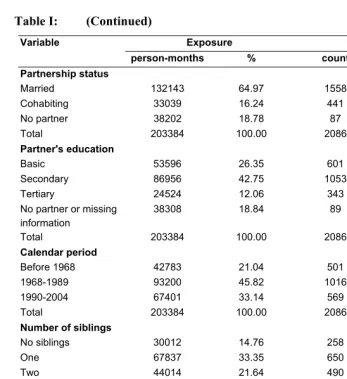
Appendix Table I provides information on the number of events and exposure time at different levels of covariates included in the models.
4.2. Model fitting
We apply a piecewise constant-hazard regression model to analyse the relationship between the above described education variables and the transition from first to second parity. The process time starts at first birth and defines the baseline hazard (risk) of conceiving a second child. The process time ends eight months before the second birth; it may also end 15 years after first birth. The specification of our main effects model can be written as follows:
}
1 2
( ) ( ) exp{ ( )
r t =h t αx +βx t
where r is the hazard rate, h is the baseline hazard,
α
x1 is the vector of coefficients fortime-constant covariates (age at first birth, number of siblings, settlement type of parental home) and βx2 for time-varying covariates (educational attainment, activity
status, calendar period, partner's education).
19 For partners, the information is limited to highest education attained. We proceed as if the partner's
education had been completed before conceiving a child. Although this is not necessarily true for all male partners, we assume that the bias introduced by this misspecification is harmless for a second child.
20 At the stage of exploratory analyses, we experimented with a broader range of background characteristics.
Our modeling strategy is straightfoward. We start with examining the main effects, for that purpose we estimate a series of hierarchical models. The initial model includes only duration, educational attainment, and enrolment, to which we then stepwise add other covariates, monitoring the changes in the effects of education variables. The main effects models are estimated for the entire dataset and do not distinguish between the patterns before and after the societal transition. To account for the latter, we proceed with interactions between calendar period and the main independent variables.
Statistical software used to fit the event history models is Stata version 10. The results, produced as maximum likelihood estimates of the effect parameters of the model, are presented in the form of relative risk.
5. Results
5.1. Main effects
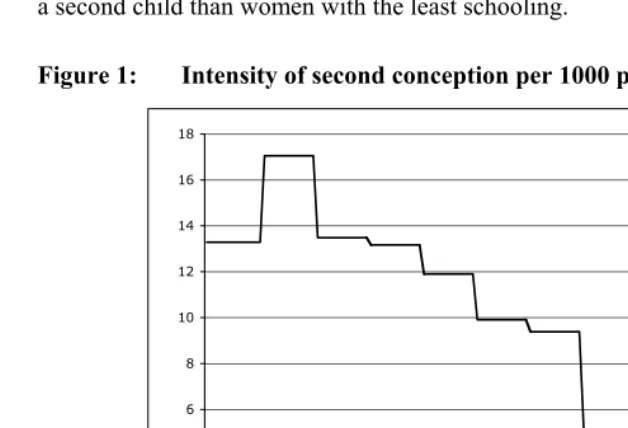
Figure 1 displays the overall baseline hazard — the absolute intensity of second conception per 1000 person months; the scale of the figure measures process time elapsed since the birth of the first child. The presented data reveal that in Estonia, women have conceived a second child, overwhelmingly, after a short first birth time period. The baseline hazard peaks between 24 and 36 months after the first birth. After 48 months, the likelihood of having a second child decreases with a particularly steep decline occuring 7-8 years after a first birth. The introduction of independent and control variables in the model somewhat reduces the rate of decline at longer durations, however, the general shape of the baseline hazard remains unaltered.
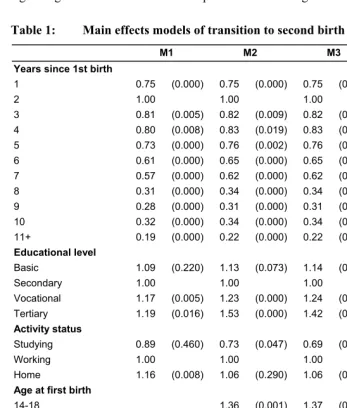
Table 1 summarises the results from a series of multiplicative main effects models. The initial model includes, besides the duration variable, educational attainment and activity status, to which we then stepwise add other covariates.
implies that women with tertiary or vocational degrees have a higher propensity to have a second child than women with the least schooling.
Figure 1: Intensity of second conception per 1000 person-months
0 2 4 6 8 10 12 14 16 18
0 12 24 36 48 60 72 84 96 108 120 132
Months since 1st birth
Source: Estonian GGS, authors' estimates.
A further unanticipated finding is the relatively weak association between educational enrolment and our dependent variable. Being enroled in education implies only an 11% lower risk of having a second child than for the reference group (employed). Given the size of our working sample, the effect does not reach the level of statistical significance. Being on maternity leave with the first child or being a homemaker has a slight positive influence on the likelihood of second birth but we do not discuss the findings pertaining to this category in detail since the issue falls beyond the central interest of the article.
without a partner than for the reference category (married). Living in a consensual union is associated with a slightly higher likelihood of a second birth than marriage, signalling advanced disconnection of procreation from registered marriage.
Table 1: Main effects models of transition to second birth in Estonia
M1 M2 M3 M4 Years since 1st birth
1 0.75 (0.000) 0.75 (0.000) 0.75 (0.000) 0.72 (0.000)
2 1.00 1.00 1.00 1.00
3 0.81 (0.005) 0.82 (0.009) 0.82 (0.009) 0.84 (0.019)
4 0.80 (0.008) 0.83 (0.019) 0.83 (0.021) 0.85 (0.051)
5 0.73 (0.000) 0.76 (0.002) 0.76 (0.003) 0.79 (0.008)
6 0.61 (0.000) 0.65 (0.000) 0.65 (0.000) 0.67 (0.000)
7 0.57 (0.000) 0.62 (0.000) 0.62 (0.000) 0.64 (0.000)
8 0.31 (0.000) 0.34 (0.000) 0.34 (0.000) 0.35 (0.000)
9 0.28 (0.000) 0.31 (0.000) 0.31 (0.000) 0.32 (0.000)
10 0.32 (0.000) 0.34 (0.000) 0.34 (0.000) 0.36 (0.000)
11+ 0.19 (0.000) 0.22 (0.000) 0.22 (0.000) 0.23 (0.000)
Educational level
Basic 1.09 (0.220) 1.13 (0.073) 1.14 (0.059) 1.08 (0.326)
Secondary 1.00 1.00 1.00 1.00
Vocational 1.17 (0.005) 1.23 (0.000) 1.24 (0.000) 1.22 (0.001)
Tertiary 1.19 (0.016) 1.53 (0.000) 1.42 (0.000) 1.52 (0.000)
Activity status
Studying 0.89 (0.460) 0.73 (0.047) 0.69 (0.019) 0.75 (0.062)
Working 1.00 1.00 1.00 1.00
Home 1.16 (0.008) 1.06 (0.290) 1.06 (0.280) 1.14 (0.027)
Age at first birth
14-18 1.36 (0.001) 1.37 (0.000) 1.43 (0.000)
19-22 1.25 (0.000) 1.26 (0.000) 1.29 (0.000)
23-26 1.00 1.00 1.00
27-30 0.72 (0.000) 0.72 (0.000) 0.71 (0.000)
31-35 0.42 (0.000) 0.42 (0.000) 0.41 (0.000)
36+ 0.33 (0.000) 0.32 (0.000) 0.30 (0.000)
Partnership status
Married 1.00 1.00 1.00
Cohabiting 1.06 (0.276) 1.07 (0.211) 1.18 (0.005)
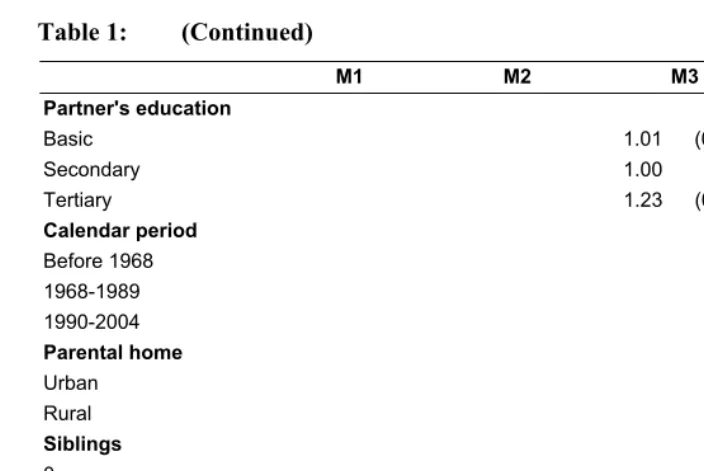
Table 1: (Continued)
M1 M2 M3 M4 Partner's education
Basic 1.01 (0.824) 0.95 (0.380)
Secondary 1.00 1.00
Tertiary 1.23 (0.002) 1.23 (0.002)
Calendar period
Before 1968 0.88 (0.030)
1968-1989 1.00
1990-2004 0.74 (0.000)
Parental home
Urban 1.00
Rural 1.13 (0.010)
Siblings
0 0.97 (0.637)
1 1.00
2 1.18 (0.006)
3+ 1.20 (0.002)
LL0 -4681 -4681 -4681 -4681
LL -4414 -4149 -4144 -4112
Source: Estonian GGS, authors' estimates.
Notes: p-values in parentheses. Missing values not shown but controlled for.
and reaches the level of statistical significance in the second model.21 The stepwise
insertion of control variables (not shown in Table 1) revealed that the strengthening of the effects of independent variables primarily relates to women's age at first birth. Adding partnership status to the model implied only a marginal change in the estimates.22
In the third model, we additionally include a control for partner's education. Like women, highly educated men at parity one have a higher chance of having a second child: it is 23% higher than for the reference group (upper secondary education), the difference being statistically significant. Being without partner, i.e., no partner's education available (coded as missing, not shown in the table), did not show any statistical significance. Regarding women, the consideration of partner's education removes some of the effect of a woman's own educational attainment among the highly educated. For women with tertiary education, the positive effect is reduced from 53% to 42%. In other words, part of the strongly positive effect of women's high level of education stems from educational homogamy, i.e., the fact that highly educated women tend to have better educated partners which stimulates fertility (e.g., Kreyenfeld 2002). Despite its importance, the comparison of models 2 and 3 shows that the partner's education accounts for less than one quarter of the overall effect of women's own educational attainment. This finding complies with the expectation that in the institutional context of Estonia, characterised by the dual-earner family model, very high levels of female labour force participation, and female advantage in tertiary education, both the woman's education as well as the partner's education has its own role as a predictor for the second birth rate. Similar results have been reported in previous studies for Denmark, France and Norway (Gerster et al. 2007; Kravdal 2007; Köppen 2006). Unlike educational attainment, the effect of participation in education is further strengthened in the third model.
In the final model, we include calendar period and two covariates pertaining to the parental home and childhood environment. The effect of the calendar period is fully in accord with our expectation and the general account of Estonian fertility trend presented earlier in the article. For the period 1990-2004, the model shows a noticeable reduction in the second birth risks, but at the same time, also in the early postwar
21 Alternatively, following the suggestion by B. Hoem (1996) we used a relative specification of age at first
birth. We partitioned women's ages into two groups for each level of education, those having first birth at a younger age than average and those having it at an older age than average. With this specification, the effect of educational attainment did not strengthen but remained unaltered. The effect of educational enrolment grew stronger as it was the case for the model with absolute age at first birth.
22 Following the inclusion of partnership status in the model, the relative risk associated with tertiary
decades, fertility was lower than that in the reference period 1968-1989.23 Women who
have three or more siblings have a 20% higher chance of having a second child than those who come from a two-child family. For those who have been socialised in the rural milieu, the transition rate to second birth is 13% higher. The inclusion of background characteristics slightly reduces the effect of educational enrolment and attainment, except for tertiary education which again reaches over 50%. In the stage of exploratory analysis, we experimented with a wider range of background characteristics (e.g., education of parents, religiosity) but their inclusion did not introduce any further change into the effects of our independent variables.
To sum up the main findings, contrary to our hypothesis on educational attainment, the findings from the main effects models reveal a consistently positive and statistically significant effect of vocational and tertiary educational level. For the latter, the association is also relatively strong: in the final model, highly educated women have a risk that is 52% higher than for the reference group with (upper) secondary education. No less importantly, with some alteration across successive models, the effect persists after the inclusion of controls for the age at the onset of childbearing, partnership status, partner's education, calendar period, and socio-demographic background. On the other hand, the effect of low educational attainment appears less consistent; although the gradient remains marginally positive in the final model, it fails to reach the level of statistical significance and is no match for the effect observed for higher levels of education. The results for educational participation are generally in line with our expectation, indicating an inverse association between the second birth risk and school enrolment: studying indeed appears less compatible with having an additional child than other common activity statuses.
5.2. Interaction effects
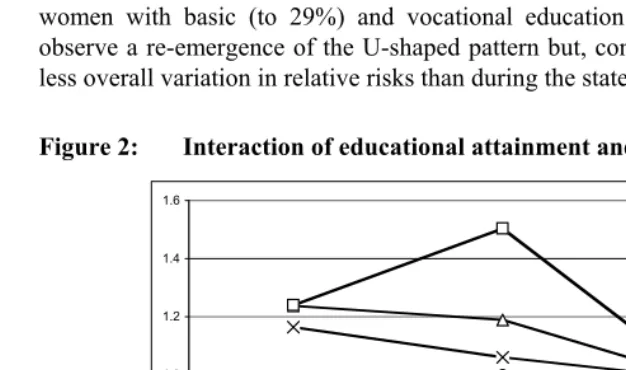
To gain insight into the changes in the effect of education, we employ an interaction between a calendar period and education variables, instead of considering them separately as in the previous section. The results of the interaction for educational attainment are plotted in Figure 2 and the values of relative risks can be seen in Table 2; women with (upper) secondary education in 1968-1989 constitute the reference category.
23 We have also fitted a model with a more detailed division of calendar periods. In that model, not presented
There are two ways of reading the table, and interpreting the figure. As our main interest lies with patterns before and after the societal transition, we first look at them column-wise in order to see how second birth risk is affected by educational attainment in each period. In the previous sections, we assumed fairly small differences during state socialism. Low returns to education in the labour market, state-guaranteed full employment, highly structured career paths, and the broad coverage of public childcare were thought to translate into relatively low and similar opportunity costs across women with low and high educational attainment. Quite contrary to our expectation, however, the data reveal the largest differences associated with educational attainment during the period of state socialism. In addition, the pattern is not uniform but alters from one subperiod to another.
Table 2: Interaction of educational attainment and calendar period
before 1968 1968-1989 1990-2004
Basic 1.16 1.06 0.98
Secondary 0.75 1.00 0.75
Vocational 1.24 1.19 0.97
Tertiary 1.24 1.50 0.95
Source: Estonian GGS, authors' estimates.
Note: Missing values not shown but controlled for. Control variables as in M4 in Table 1.
to have a second child increased as compared to previous decades, while the opposite was true for those with basic and vocational education.
Regarding the period since 1990, our assumption was that after the transition, educational differences will increase, and possibly, a negative gradient for the educational level could emerge as more educated women will encounter the increasing opportunity costs of childbearing. This assertion is partly confirmed as women with tertiary education experienced the sharpest decrease in second birth risks. At the same time, however, the relative risk for higher education did not change in respect to sign and a moderate positive effect (25%) persists. If we examine the change of the pattern row-wise, then we can observe strengthening of a positive gradient in relative risks for women with basic (to 29%) and vocational education (28%). As a result, we can observe a re-emergence of the U-shaped pattern but, contrary to our expectation, with less overall variation in relative risks than during the state socialist regime.
Figure 2: Interaction of educational attainment and calendar period
0.4 0.6 0.8 1.0 1.2 1.4 1.6
before 1968 1968-1989 1990-2004 Basic Secondary Vocational Tertiary
Source: Estonian GGS, authors' estimates.
Note: Missing values not shown but controlled for. Control variables as in M4 in Table 1.
a second child was strongest in the first period. Before 1968, women currently enroled in education had 62% lower likelihood of having a second birth than employed women. In the 1970s and 1980s, most of this incompatibility ceased to exist as the difference dwindled to 6%. After 1990, the risk of having a second child fell for both employed and studying women. For the latter, the decline was slightly less steep, reducing the difference in relative risks to a mere 3%. However, regarding educational enrolment the interaction results should be taken with caution, as the exposure time and number of occurrences in this category are very limited (see Table I in the Appendix).
Figure 3: Interaction of educational enrolment and calendar period
0.2 0.4 0.6 0.8 1.0 1.2
before 1968 1968-1989 1990-2004
Employed
In education
Source: Estonian GGS, authors' estimates.
Note: Missing values and category "Home attached" not shown. Control variables as in M4 in Table 1.
Table 3: Interaction of educational enrolment and calendar period
before 1968 1968-1989 1990-2004
Employed 0.95 1.00 0.77
In education 0.36 0.94 0.75
Source: Estonian GGS, authors' estimates.
6. Summary and discussion of the findings
In this article, we have addressed the transition to second birth in Estonia using the data from the 2004-2005 GGS. The central focus of the article was on the relationship between women's current educational attainment and enrolment, and the propensity to have a second child. Aside from the general pattern, we were interested in the shifts in childbearing patterns before and after the societal transition of the 1990s. To analyse the effect of education on second birth risks, we estimated a series of piecewise constant-intensity regression models. The major findings from the empirical investigation can be summarised as follows:
• Unlike previous studies of Eastern Europeancountries, we found a positive and relatively strong effect of high educational attainment on second birth risks in Estonia. The elevated intensity of second births for women with vocational and tertiary education appears to be a genuine result and is not due to misspecification of the model. The effect persists after controlling for the age at the onset of childbearing, both in absolute and relative terms, partnership status, and partner's education, and socio-demographic background characteristics.
• In the main effects models, women with low educational attainment exhibited a slightly positive gradient of second birth risks. However, it did not reach the level of statistical significance.
• Participation in education has a prevailingly negative effect on the propensity to have a second child, indicating that school enrolment is less compatible with childbearing than other major activity statuses (employment, home attachment) of women.
• Comparing the patterns before and after societal transition, the positive gradient of second birth risks became weaker for women with high educational attainment. Although the decrease in second birth risk was largest among the highly educated, it neither disappeared nor reversed in direction, as we had initially postulated. As the relative risk of women with a low level of education grew stronger, the relationship between educational attainment and the transition to second birth returned to the U-shape, observed in the earlier stage of state socialism. The range of educational differences in terms of second birth risks appears largest not in the aftermath of the recent societal transition but in the 1950s and 1960s.
this aspect of education, the largest differences were once again characteristic of the period before 1968.
How then have these patterns arisen and how might we interpret them in the light of our theoretical considerations?
The increasing compatibility between educational enrolment in the 1970s and 1980s, compared to the earlier decades, may in part reflect the trends in the timing of childbearing and the duration of education. Within the Estonian GGS cohort range, there was a prolonged shift towards earlier childbearing that reached its lowest point in the generations born in the late 1950s and early 1960s. In these cohorts the median age of mother at second birth was slightly below 26 years of age. It seems plausible that the concurrent increase in the duration of education facilitated an increasing overlap between the educational and family transitions. Consequently, the proportion of women who completed their education after having a first child rose from 3% in the earliest GGS cohorts to 13% among those born around the turn of the 1960s. Among those who attained tertiary education, this sequence of the life course events was characteristic for nearly one in three women in these generations. Aside from the factors that drove the shift towards earlier childbearing, the compatibility between school enrolment and family formation was evidently facilitated by the relatively low cost of being in education at that period.
In interpreting the developments after 1990, it is important to note that the overall risk of second birth significantly declined for all activity statuses, though the reduction was not disproportionately greater among those currently participating in education. This result may seem somewhat unexpected and difficult to interpret given the noticeable increase in the costs of education. In our opinion, other factors, including the marked rise in educational enrolment among young people in their 20s and early 30s that has occurred after 1990 and a vigorous shift away from the highly standardised career tracks characteristic of state socialism have evidently offset the effect of the former.
Evidently, the jobs of highly educated women are demanding and require stronger commitment. An indirect support for this argument comes from the somewhat longer working hours of the highly educated, more frequent incidence of multiple jobholding among them and a more pronounced shift towards shorter durations of home attachment that emerged over the past decade (Klesment and Puur 2010).
The strengthening or re-emergence of the positive gradient of the low educational attainment lends some support to the uncertainty reduction hypothesis. According to the latter, women with poor prospects in the labour market seek uncertainty reduction by motherhood, which offers the possibility for self-realisation in the family sphere. This notion gains some further support from the higher value attached to children among women with a low level of schooling (Katus, Puur, and Põldma 2008). It is important to note that the re-emergence of the positive gradient does not stem from an increase in the second birth risks among the less educated but rather from a somewhat slower decline of second birth rates compared to women who attained more schooling.
Perhaps the most intriguing finding in this article is the persistence of the positive gradient of second birth risks among highly educated women — it was remarkably strong in the decades of state socialism and did not fade away after 1990. An essential contributing factor may be sought from the institutional framework, which has evidently reduced the opportunity costs of childbearing for highly educated women. First of all, this relates to public childcare, which had already reached remarkably high coverage by the 1960s, of which availability and affordability deteriorated only temporarily, for a short period after 1990. Though the policy impact argument seems valid, it is not sufficient on its own to account for the observed pattern. The incompleteness of the policy argument can be highlighted by the comparison of Estonia to other countries of Eastern Europe that shared basically similar features in respect of the institutional framework; however, none of the studies on these countries referred to in this article, have reported a positive gradient of second birth risks for highly educated women.
2006; Eurostat 2009) and comparative studies drawing on the FFS programme (e.g., Macura and Klijzing 1997; Prioux 2006; Sobotka 2004; Sobotka and Toulemon 2008) point to the advanced position of Estonia in terms of the spread of the new family forms and the disconnection of childbearing from marriage, which is considered a hallmark of the second demographic transition.
The similar position of Estonia in both transitions may not be incidental but may instead reflect the path dependence or continuity of demographic development, notwithstanding the intervening shifts in societal norms. The country's current international ranking with respect to female labour force attachment, retreat of marriage, and diversity of living arrangements, which goes hand-in-hand with the highest fertility levels in the former state socialist countries, seems to corroborate the same notion. A few years ago, the same connection was noted by Lesthaeghe and Surkyn (2002: 216). They wrote that “those countries with the faster rate of transition in household structures will be the first to move to fertility recuperation ..., and hence to be the first to recover to more acceptable levels of subreplacement fertility.” The evidence presented in this article for Estonia indicates that the latter assertation has become a fact of life. It appears quite conceivable that the observed positive effect of high educational attainment on second birth risks also represents a characteristic of new fertility regimes that have come to the fore in the countries of Northern and Western Europe in recent decades. For instance, in their recent analysis of fertility patterns in the Nordic countries Andersson et al. (2009: 339) pay considerable attention to education, concluding that “small or declining educational differences in completed fertility in all countries, is one indication in this direction.”
7. Acknowledgements
References
Andersson, G., Rønsen, M., Knudsen, L.B., Lappegård, T., Neyer, G., Skrede, K., Teschner, K., and Vikat, A. (2009). Cohort fertility patterns in the Nordic countries. Demographic Research 20(14): 313-352. doi:10.4054/ DemRes.2009.20.14.
Aslund, A. (2007). How capitalism was built: The transformation of Central and Eastern Europe, Russia and central Asia. Cambridge: Cambridge University Press.
Becker, G.S. (1993). A treatise on the family. Enlarged Edition. Cambridge: Harvard University Press.
Blossfeld, H.-P. and Huinink, J. (1991). Human capital investments or norms of role transition? How women's schooling and career affect the process of family
formation. The American Journal of Sociology 97(1): 143-168.
doi:10.1086/229743.
Blossfeld, H.-P. and Timm, A. (eds.) (2003). Who marries whom? Educational systems as marriage markets in modern societies. Dordrecht, Boston, and London: Kluwer Academic Publishers.
Cigno, A. (1994). Economics of the family. Oxford: Clarendon Press.
Coale, A. (1994). Nuptiality and Fertility in USSR Republics and Neighboring Populations. In: Lutz, W., Scherbov, S., and Volkov, A. (eds.). Demographic Trends and Patterns in the Soviet Union Before 1991. London and New York: Routledge: 3-17.
Coale, A., Anderson, B., and Härm, E. (1979). Human fertility in Russia since the nineteenth century. Princeton: Princeton University Press.
Coale, A. and Watkins, S. (eds.) (1986). The decline of fertility in Europe. Princeton: Princeton University Press.
Council of Europe (2006). Recent demographic developments in Europe 2005. Strasbourg: Council of Europe Publishing.
Ermisch, J.F. (1989). Purchased child care, optimal family size, and mother's employment: Theory and econometric analysis. Journal of Population Economics 2(2): 79-102. doi:10.1007/BF00522403.
ESA (2004). Higher education 1993-2003. Tallinn: Statistical Office of Estonia. Esping-Andersen, G. (1999). Social foundations of postindustrial economics.
Cambridge: Polity Press. doi:10.1093/0198742002.001.0001.
European Commission (2008). Employment in Europe 2008. Luxembourg: Office for Official Publications of the European Communities.
Eurostat (2009). Eurostat database. [electronic resource]. http://epp.eurostat.ec.europe.eu/portal (10.07.2009).
Frejka, T. and Sardon, J.-P. (eds.) (2004). Childbearing trends and prospects in low fertility countries. A cohort analysis. Dordrecht, Boston, and London: Kluwer Academic Publishers.
Frejka, T. and Sobotka, T. (2008). Overview Chapter 1: Fertility in Europe: Diverse, delayed and below replacement. Demographic Research SC7: Childbearing trends and policies in Europe 19(3): 15-46. doi:10.4054/DemRes.2008.19.3. Gerster, M., Keiding, N., Knudsen, L.B., and Strandberg-Larsen, K. (2007). Education
and second birth rates in Denmark 1981-1994. Demographic Research 17(8): 181-210. doi:10.4054/DemRes.2007.17.8.
Gornick, J.C., Meyers, M.K., and Ross, K.E. (1998). Public policies and the employment of mothers: A cross-national study. Social Science Quarterly 79(1): 35-54.
Gustafsson, S. and Kalwij, A. (eds.) (2006). Education and postponement of maternity: Economic analyses for industrialized countries. Berlin: Springer.
Hoem, B. (1996). The social meaning of the age at second birth for third-birth fertility: A methodological note on the need to sometimes respecify an intermediate variable. Yearbook of Population Research in Finland 33: 333-339.
Hoem, B. and Hoem, J.M. (1989). The impact of women's employment on second and third births in modern Sweden. Population Studies 43(1): 47-67.
doi:10.1080/0032472031000143846.
Hoem, J.M. (1986). The impact of education on modern family-union initiation.