2017 International Conference on Computer Science and Application Engineering (CSAE 2017) ISBN: 978-1-60595-505-6
Intelligent Optimization Framework based on Benchmarking
Daoxue Liu* and Anshi Xie
China Institute for SMEs, Zhejiang University of Technology, NO.18, Chaowang Road, 310014 Hangzhou, China
ABSTRACT
A general framework for intelligent optimization was proposed in this paper, which was based on the guiding principles and specific methods of benchmarking.
INTRODUCTION
According to the principle of optimization and the general characteristic, the existing intelligent optimization algorithms (IOAs) can be divided into four categories. 1) Evolutionary Computation: Although the specific search techniques are different, the same optimization idea is to imitate the evolutionary process of biology, and generate candidate solutions by selecting, crossover and mutation. Genetic Algorithm is the typical representative. 2) Swarm Intelligence: They are mainly inspired by the behavior of social insects or animals. The most well-known are Particle Swarm Optimization and Ant Colony Optimization. 3) Phenomenon Algorithms: They are mainly inspired by the internal rules behind the various physical phenomena. The physical phenomena are varied. It can be predicted that this kind of IOAs will usher in a wave of a high tide of prosperity. 4) Other Meta heuristic Approach: In addition to the above three categories, there is another one. They should not be categorized as the optimization algorithm. In essence, they should be considered as unique search strategies and search ideas, like Simulated Annealing Algorithm, Taboo Search, Variable Neighborhood Algorithm, and Predatory Search.
enumeration". Comparing with the traditional optimization methods based on strict mathematical logic, this is a kind of brand-new intelligent computation thought. At present, almost all the existing IOAs, including the algorithm framework proposed in this paper, are all failed to escape from this mode of thinking.
ALGORITHM FRAMEWORK BASED BENCHMARKING PHILOSOPHY
INPUT
Parameters Initialization
E v al u a t e t h e f i t n e ss o f e ac h individual and the average fitness of each niche population
Establish the local benchmark and the global benchmark
Record and update the optimal solution(s)
Benchmark swap and(or) individual migration
Criteria satisfied?
OUTPUT the result Criteria satisfied? Yes Yes No No Get improved ?
Each individual executes global benchmarking
Gene restoration
[image:3.612.111.487.50.343.2]Each individual executes local benchmarking Gene restoration Each individual executes self-learning Gene restoration Get improved ? Get improved ? No No No Yes, next Yes, next Yes, next
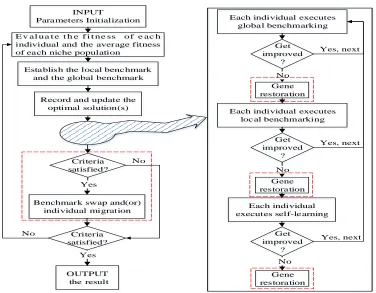
Figure 1. The basic flowchart of benchmarking algorithm.
The Framework of Benchmarking Algorithm
FACTORS IN THE DESIGN OF BA
In the design of specific BA, the following factors have significant impacts, which need to focus on consideration.
a) Probability Rules of The Operators in BA: Traditionally, the "intelligence" of IOAs is mainly reflected in the probability rules, which determined the probability of operators in IOAs. Therefore, there are always some probability equations in IOAs. However, the "intelligence" of BA depends on the organizing tactics rather than the probability rules. Since the probabilities of operators in BA, including global benchmarking, local benchmarking, self-learning and tentative learning, have no need to set initial values and are all set as random values during the running process. That is, the BA proposed here, does not need any so-called "adaptive", "intelligent" probability rules. BA's operators just need to be organized according to the guiding principles mentioned later, it will be sufficiently "intelligent".
local benchmark. Moreover, for the local optimal individual, there are two different cases as well. The first is that the local benchmark is served by the local optimal individual to the current generation. The second is that the local benchmark is served by the local optimal individual in the current generation.
c) The position of tentative learning: Tentative learning refers to that the tentative strategy is used in the process of benchmarking. That is, after benchmarking, the individual will automatically return to the state before benchmarking if its fitness value has not been improved accordingly. This can be achieved by gene resetting. The tentative learning strategy plays a role in protecting good genes from damage, which should be embedded in the three operators of global benchmarking, local benchmarking and self-learning. Whether the tentative learning is necessary or not, and where it is placed, depends on the specific circumstances.
d) The step size of benchmarking under the float encoding scheme. In the after-mentioned basic operators, for the sake of simplicity, the factor of step size was set to a random value between 0 and 1. Many experiments showed that if the step size was adaptively adjusted according to the fitness value of the individual, the search result is better.
THE SIMPLE BENCHMARKING ALGORITHM
The simple benchmarking algorithm (SBA), mainly refers to such a set of configurations. The global benchmark is served by the global optimal individual to the current generation. The local benchmark is served by the local optimal individual in the current generation. The tentative learning strategy is nested in the global benchmarking and the local benchmarking. The probability of global benchmarking, local benchmarking and self-learning are completely set as a random value between 0 and 1. The pseudo code of SBA is shown as follows.
Step1: Initialize the number of niche populations in the ecosystem and the number of individuals in each niche population. Initialize the stop condition, etc.
Step2: Evaluate the fitness value of each individual, and set the global benchmark and the local benchmark according to the guiding principles of benchmarking.
Step3: Each individual executes global benchmarking; if not improved, it will implement local benchmarking; if not yet improved, it will carry out self-learning.
Step4: If the iteration stop condition is not satisfied, turn to Step2, otherwise output the benchmark(s) and decode it (them), and you will get the required global and/or local extreme value.
OTHER VERSIONS OF BENCHMARKING ALGORITHM
Guiding Principles and Specific Methods of Benchmarking
The general idea of the intelligent optimization theory based on benchmarking philosophy is studying and emulating the good example. However, its core idea is the guiding principles of benchmarking and the specific methods of studying and emulating. The former is the guiding ideology of designing specific algorithms for specific problems.
THE GUIDING PRINCIPLES OF BENCHMARKING
a) Benchmark record is updated in real time. While the algorithm is running, both the best individual in each niche population and the best individual in the whole ecosystem generated in each round iteration, are recorded with a record-keeping. That is, the local benchmark and the global benchmark generated in each round iteration are recorded, and constantly updated in real time.
b) Studying and emulating chosen on demand. Benchmarking includes three behaviors, which consists of emulating the global benchmark, emulating the local benchmark, and self-learning. Based on different practical problems and different selection criteria, we can design different optimization algorithms according to whether to implement certain emulating behavior. For example, the three emulating behaviors do not need to be executed in sequence. After emulating the global benchmark, if the individual did not get improvement, then it will emulate the local benchmark. Otherwise, it will quit from the current round of iteration.
THE SPECIFIC METHODS OF BENCHMARKING
a) Emulating Method based on 0/1 Encoding Scheme. There are three common 0/1 encoding modes, binary code, gray code and one-hot code. If 0/1 encoding modes were adopted, the degree of difference between two individuals is measured by the Hamming Distance. The studying and emulating method is just to reduce the Hamming Distance between itself and the benchmark object.
b) Emulating method based on float encoding scheme. If the float encoding scheme was adopted, the degree of differences between two individuals could be characterized by the concept of distance, and the degree of similarity between two individuals can be represented by the correlation coefficient. For the concept of distance, the Minkowski Distance [1] is perfect. In practical applications, based on the data structure and the features of the problem to be solved, it is better to convert Minkowski Distance to Manhattan Distance [2], Euclidean Distance, or Chebyshev Distance [3] by selecting appropriate parameters. For the correlation coefficient, based on the data structure and actual demand, it is also possible to choose appropriate calculation methods, for example, Pearson Correlation Coefficient [4], Cosine Similarity, Tanimoto Coefficient [5], Spearman Correlation Coefficient [4], or Kendall Correlation Coefficient [6], etc. When float encoding mode is used in the IOAs, the studying and emulating method is to reduce the Minkowski Distance between one itself and the benchmark object, or (and) increase the correlation coefficient between one itself and the benchmark object.
c) Emulating Method based on Character(s) or Boolean Encoding Scheme. Many of the problems in science, engineering, and management, especially in the field of data science, the model must use symbolic functions to build. For example, the usual commodity evaluation and recommendation problems in E-commerce, it involved human-computer interaction. In this case, it often required character or string encoding scheme, or Boolean encoding scheme. When a character(s) or Boolean coding mode is used in the IOAs, the degree of differences and similarity between two individuals can be represented by Levenshtein Distance, Jaro-Winkler Distance, Jaccard Coefficient, etc. The studying and emulating method is just to reduce the degree of differences between one with itself and the benchmark object, and (or) to increase the degree of similarity between one of itself and the benchmark object by gene editing.
THE OPERATORS IN BENCHMARKING ALGORITHM
CONCLUSIONS
Similar to other IOAs, this theory proposed here is easy to achieve through programming. And the actual effect is not bad as well. However, comparing with the operations research methods, there are still two issues needing further study. Firstly, it lacks rigorous and comprehensive mathematical basis. For some problems, it is still necessary for more scientific research based on mathematical analysis. Like the density of the individual, the optimization probability, and convergence of the algorithm, the complexity, and precision of the algorithm, etc. Second, it is proposed mainly for the single objective optimization problems with weak constraints. For multi-objective problems with complex and harsh constraints in the field of science, engineering, and management, how to coordinate these conflicting targets and deal with those complex and harsh constraints, there is no discussion. It is also the focus of the next stage of the study.
ACKNOWLEDGEMENT
This research is supported by the research fund from "Collaborative innovation center for Transformation and Upgrading of Micro, Small and Medium Enterprises, Zhejiang University of Technology", "Zhejiang Provincial Key Research Base of Philosophy and Social Sciences-Research Centre for Technology Innovation and Enterprise Internationalization", “The National Social Science Fund Project of China (No. 14BJY084)”, “Zhejiang philosophy and social science planning project (Key project , No. 13NDJC004Z)”.
REFERENCES
1. J. M. M. Casanovas and Montserrat. 2012. "A New Minkowski Distance Based on Induced Aggregation Operators," International Journal of Computational Intelligence Systems, 2, pp. 123-133.
2. R. Niedermeier and P. Sanders. 1996. On the Manhattan-Distance Between Points on
Space-Filling Mesh-Indexings. Univ., Fak. für Informati.
3. N. Krivulin. 2012. "Algebraic solutions to multidimensional minimax location problems with Chebyshev distance," WSEAS Transactions on Mathematics, 10(6):191-200.
4. J. Hauke and T. Kossowski. 2011. "Comparison of Values of Pearson's and Spearman's Correlation Coefficients on the Same Sets of Data," Quaestiones Geographicae, 30(2):87-93. 5. Jeffrey W. Godden, L. Xue, and J. Bajorath. 2000."Combinatorial Preferences Affect Molecular
Similarity/Diversity Calculations Using Binary Fingerprints and Tanimoto Coefficients,"
Journal of Chemical Information & Computer Sciences, 40(1):163-6.
6. H. Abdi and T. K. r. c. coefficient, The Kendall Rank Correlation Coefficient (Encyclopedia of